Article

Enhancing Urban and Peri-Urban Zoning Using Spatially Constrained Clustering: Evidence from the Jakarta–Bandung Mega-Urban Region


by
Nur Zahro Charissa Rahma
1,
Ernan Rustiadi
1,2,* and
Andrea Emma Pravitasari
1,2
1
Regional Development Planning Division, Department of Soil Science and Land Resources, Faculty of Agriculture, IPB University, Bogor 16680, Indonesia
2
Center for Regional System Analysis, Planning and Development (CRESTPENT), IPB University, Bogor 16680, Indonesia
*
Author to whom correspondence should be addressed.
Land 2026, 15(4), 534; https://doi.org/10.3390/land15040534
Submission received: 13 February 2026 / Revised: 19 March 2026 / Accepted: 21 March 2026 / Published: 25 March 2026
(This article belongs to the Section Land Use, Impact Assessment and Sustainability)

Abstract

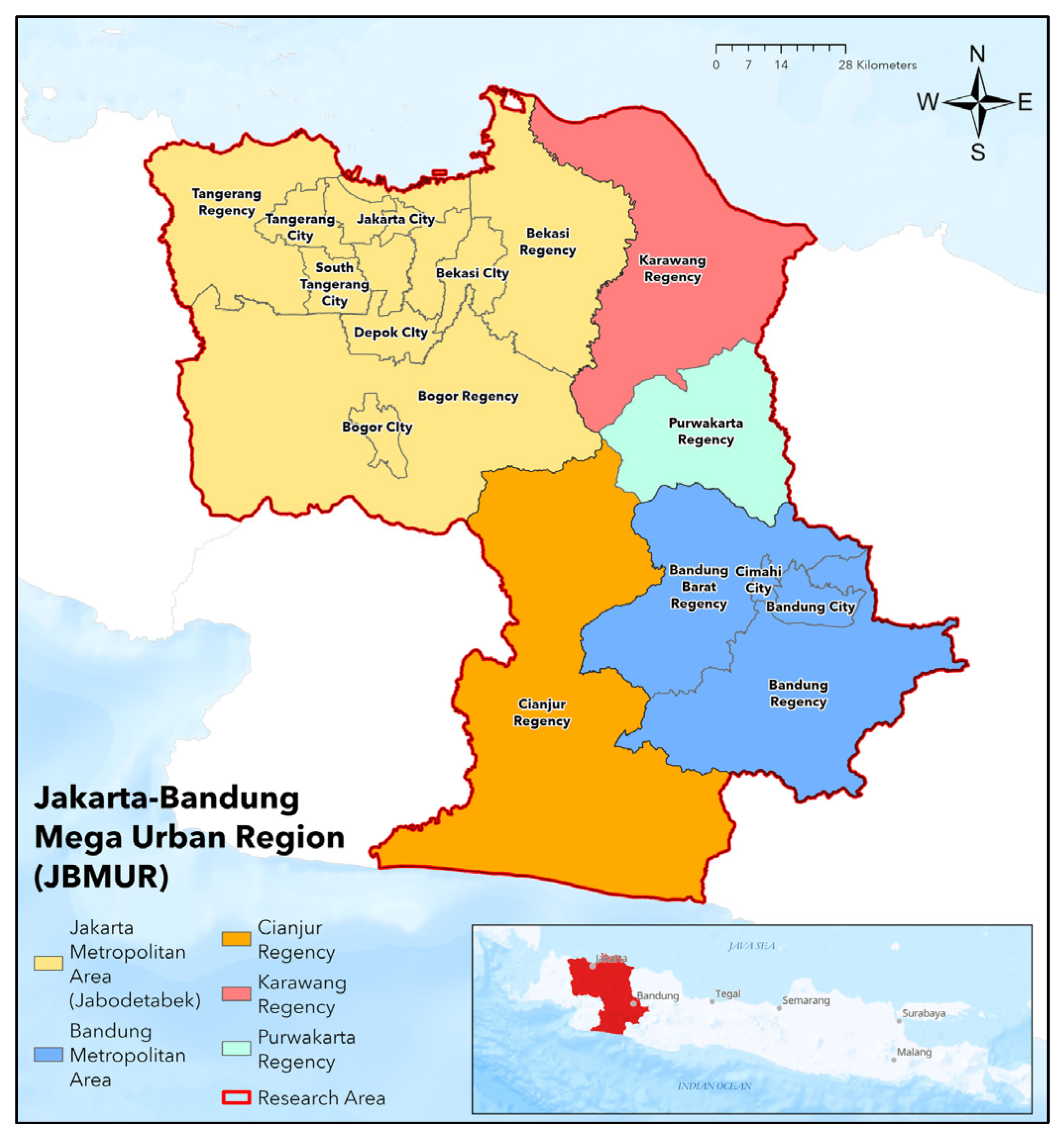
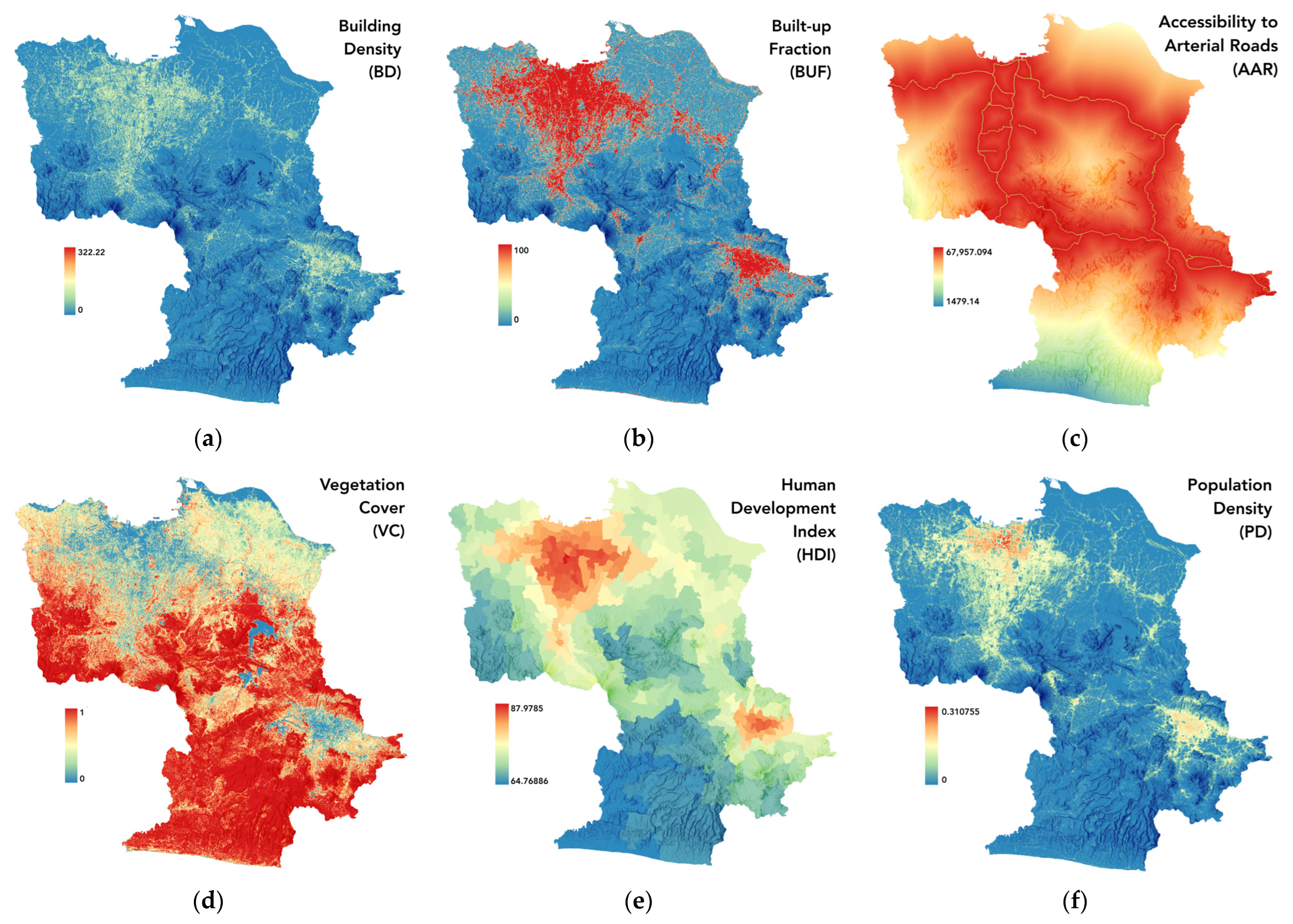
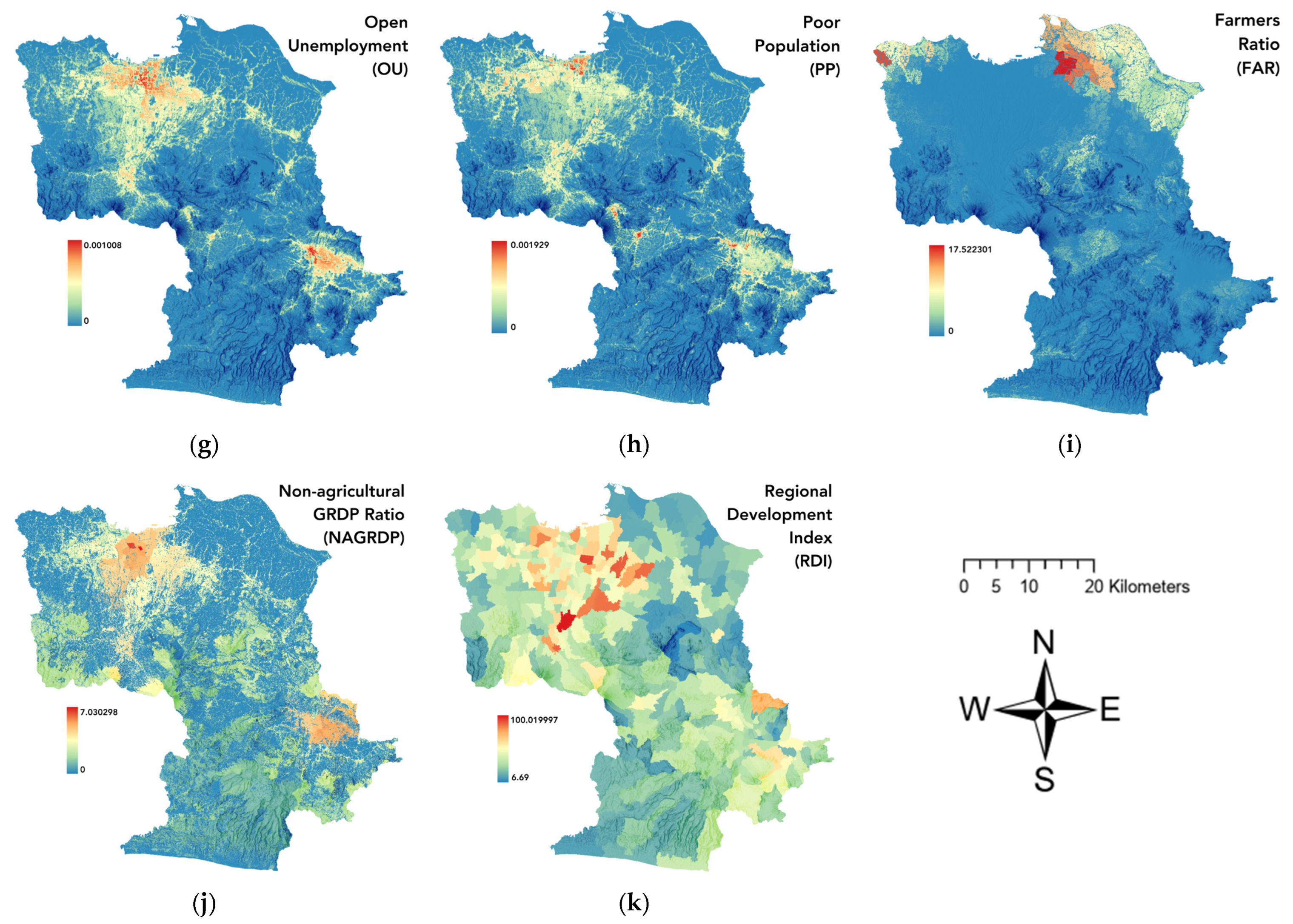
Rapid urbanization in the Global South has intensified the formation of mega-urban regions, where conventional urban–rural classifications often fail to capture the complexity of peri-urban systems. In the Jakarta–Bandung Mega-Urban Region (JBMUR), rapid land-use change and socio-economic transformation have produced hybrid landscapes that challenge binary zoning approaches. This study aims to delineate urban, peri-urban, and rural spatial structures using a spatially constrained clustering framework and to evaluate the performance of the Rustiadi Quantitative Zoning Method-2 (RQZM-2) compared with conventional non-spatial clustering (Non-RQZM). Built-environment, accessibility, environmental, and socio-economic indicators derived from remote sensing and spatially disaggregated statistical data were analyzed using grid-based K-Means clustering. Comparative validation using internal metrics, stability analysis, spatial coherence diagnostics, and statistical differentiation tests indicates that RQZM-2 produces more stable, spatially coherent, and interpretable clusters than conventional clustering. The validated four-cluster solution identifies compact urban cores, extensive peri-urban transition belts, and two distinct rural sub-types, revealing a functionally differentiated regional structure across the JBMUR. These findings demonstrate that incorporating spatial contextualization into clustering improves the empirical representation of peri-urban spatial continuity and provides a robust analytical basis for spatial zoning and regional planning in rapidly urbanizing mega-urban regions.
Keywords: peri-urbanization; spatial clustering; RQZM-2; mega-urban region; Jakarta–Bandung; Jabodetabek peri-urbanization; spatial clustering; RQZM-2; mega-urban region; Jakarta–Bandung; Jabodetabek