1. Introduction
Commercial complexes are functionally evolving from single-purpose consumption venues to integrated “urban public space hubs” in the global shift from incremental urban growth to stock renewal [
1]. Their role in promoting social engagement and forming urban identity has grown in importance as essential urban nodes that integrate social contact, cultural experience, and community services [
2]. However, given China’s high-density urbanization, this transition poses significant practical challenges [
3].
Using Guangzhou as a case study, the macro-level commercial spatial structure has changed to a “one-core, multi-point” framework under the direction of the Guangzhou Commercial Network Layout Plan (2020–2035), which is the main hub of the Guangdong-Hong Kong-Macao Greater Bay Area [
4]. However, there are several micro-level issues that these complexes’ public areas must deal with, such as hyper-density, functional homogenization, and stalling spatial quality. According to empirical data, the average Floor Area Ratio (FAR) of Guangzhou’s typical commercial complexes is 6.50 ± 2.17, indicating a high level of spatial polarization [
5,
6]. Ironically, there has not been a corresponding improvement in spatial vitality as a result of this increase in physical density. The “Density–Efficacy Paradox”—in which high-intensity development without human-centered design may actually suppress social interaction due to disproportionate spatial scales or poor environmental quality—is echoed in many projects that suffer from “scale without vitality” or “flow without dwell time [
7,
8]”.
The research now in publication presents a variety of viewpoints on commercial vitality, but a cohesive analytical framework is still problematic [
9]. Early research, based on retail geography, concentrated on customer behavior and macro-accessibility [
10,
11]. Research on “place-making” and social performance changed as a result of the “humanistic turn” in urban studies. Montgomery (1998) offered the “activity-accessibility-comfort” triad [
12], whereas Whyte (1980) recognized microenvironmental characteristics that promote interaction [
13]. Space syntax and polycentric theory have been used to examine social flows from a morphological point of view [
14]. At the same time, Bertolini’s (2012) “node-place model” offered a framework for comprehending how urban attractions and transportation hubs interact together [
15].
Despite these developments, a crucial study gap still exists: current studies frequently split into macro-locational analysis or micro-behavioral observations, missing a multifaceted, measurable framework that incorporates transport synergy, performance feedback, and spatial supply. In the complex environment of high-density Asian cities, this fragmentation makes it challenging to identify the structural restrictions and generative mechanisms of vitality [
16]. In order to close this gap, this study develops an integrated analytical framework for Guangzhou with three developmental goals in mind:
- 1.
Create a Multidimensional Measurement System: Incorporate systemic connectedness (accessibility and synergy), usage performance (public activity and social benefits), and spatial form (development intensity and polycentricity) into a comparable evaluation index [
17].
- 2.
Examine Internal Mechanisms and Spatial Differentiation: Use structural equation modeling (SEM), K-means clustering, and spatial analysis to measure vitality patterns and test supply-demand conflicts and driving variables empirically.
- 3.
Offer Differentiated Optimization Pathways: Create tiered solutions for commercial complexes of different kinds and locations, from operational management to spatial design interventions.
This study makes two contributions. In theory, it provides a cross-disciplinary operational tool by bridging social performance theory, spatial morphology, and transport synergy [
18]. In practical terms, it provides evidence-based support for human-centered design and improved governance in the Greater Bay Area, ultimately fostering an inclusive, resilient, and sustainable urban living environment.
3. Results
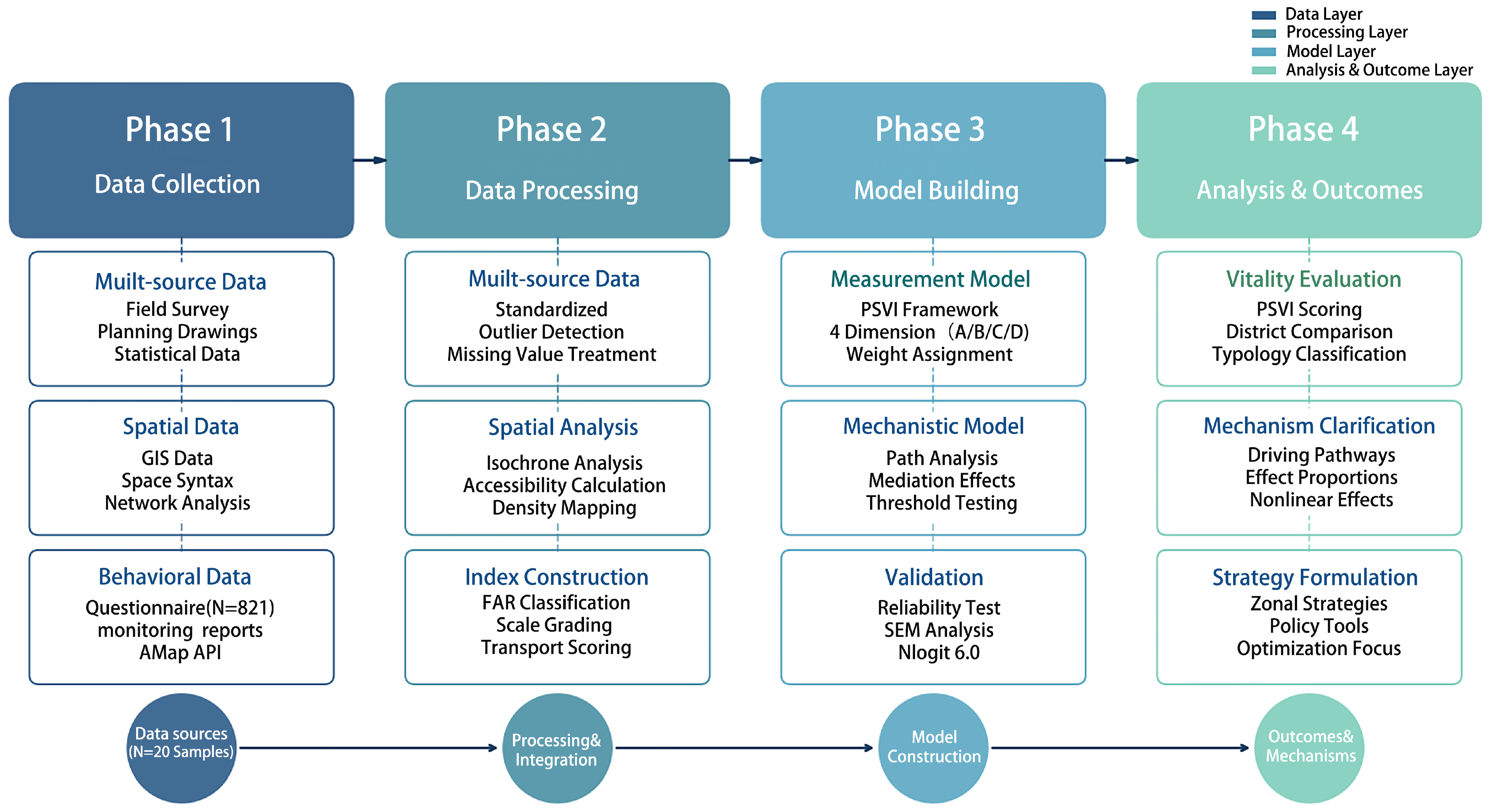
The empirical results for the 20 commercial complex samples in Guangzhou are methodically presented in this section. The Public Space Vitality Index (PSVI) and the created multidimensional evaluation framework serve as the foundation for the analysis’s four main elements, which are development intensity, spatial structure, utilization efficacy, and economic vitality. It also thoroughly investigates the peculiarities of their spatial differentiation and the underlying mechanisms that underlie these patterns.
3.1. Development Intensity: Empirical Support for the “Density–Efficacy Paradox” and Zonal Differentiation
The commercial complexes in Guangzhou have a clear core–periphery zonal structure in terms of development intensity.
With an average construction scale of 335,200 m2, the sample mean for the floor area ratio (FAR) is 6.50 (standard deviation = 2.17), suggesting a general pattern of high-intensity development. From the Tianhe CBD (mean FAR = 11.2) to the center urban transition areas (Yuexiu and Haizhu; FAR = 7.5–8.5) and suburban new towns (Baiyun and Panyu; FAR = 5.0–6.5), the FAR gradually decreases spatially until it reaches its lowest point in the outlying districts (Huadu; FAR ≈ 3.8). The traditional urban land rent gradient model is exactly in line with this spatial distribution.
The study’s main conclusion is that there is a significant “density–efficacy paradox.” The FAR and the public space efficacy index have a slight and statistically negligible positive association, according to Pearson correlation analysis (r = 0.32, p > 0.05).
This empirical finding strongly implies that high-quality, high-performing public spaces are not always the outcome of simply increasing physical development density. As a result, it emphasizes how important it is to move away from density-driven development paradigms and toward a focus on logical functional configuration and spatial form optimization.
3.2. Three Differentiation Typologies and Polycentric Networks in Spatial Structure
The average activity node index (α-index) for the sample set is 6.40, according to the space syntax analysis. This value is much greater than that of conventional, stand-alone commercial buildings, indicating that a polycentric network structure has become a common spatial feature of Guangzhou’s business complexes.
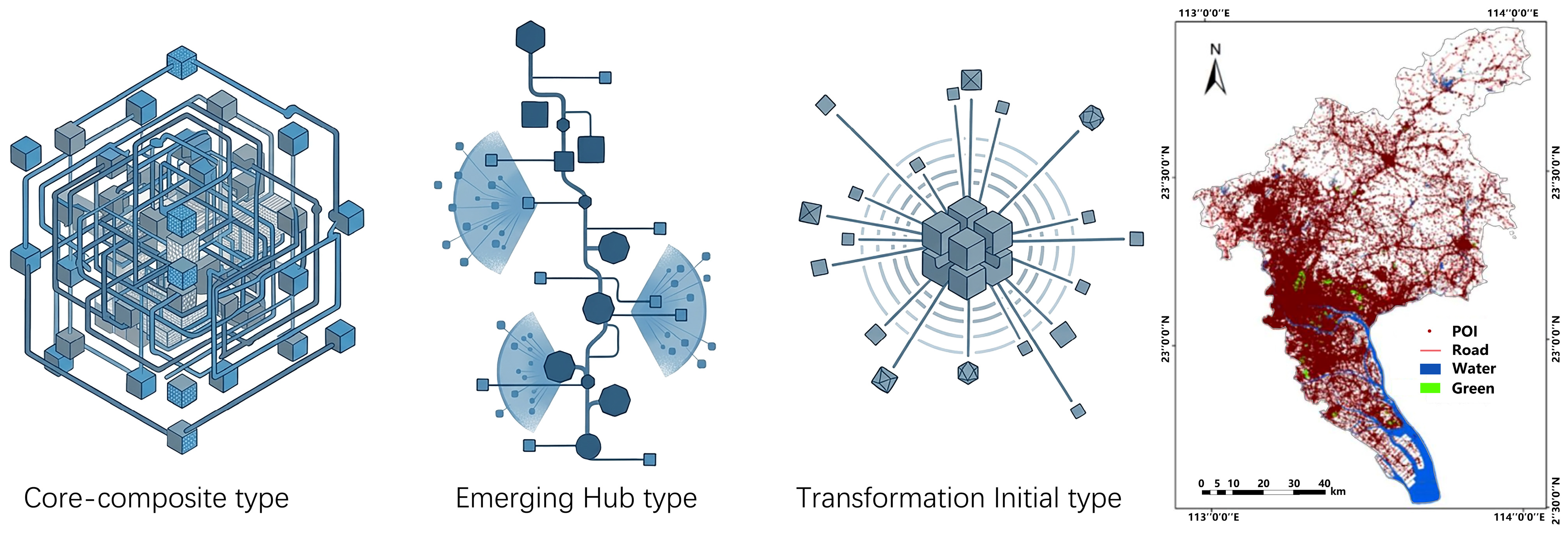
Three archetypal spatial structure typologies were found based on the spatial differentiation of the
α-index (
Figure 2):
- 1.
Core Composite Typology: Mostly found in developed urban centers like the districts of Tianhe and Yuexiu. These initiatives successfully create a comprehensive three-dimensional network by achieving a profound functional mix through vertical integration and horizontal extension. The Grandview Mall, for example, has a three-dimensional, stacked structure that combines retail, leisure, and cultural tourism (α > 8.0). Similarly, Yuexiu district complexes use elevated pedestrian skywalks (α = 6.8 ± 0.6) and underground commercial streets to methodically enhance multilevel connections.
- 2.
Emerging Hub Typology: These complexes, which are concentrated in areas like Baiyun and Panyu, are usually anchored by emerging commercial districts or transit hubs. Along the main pedestrian flow corridors, their spatial nodes are positioned in a sequential, linear arrangement. The Baiyun district’s transit-oriented development (TOD) projects have the highest index values (α > 10.0), whilst Panyu’s Wanbo commercial district has established a unique secondary network of functional centers (α = 8.3 ± 0.4).
- 3.
Transitional Primary Typology: Mostly seen in Liwan and Haizhu districts’ earlier projects or early-stage urban revitalization initiatives. These complexes have weak internode connection and a comparatively simple spatial organization. As a result, their polycentric networks (α = 3.6 ± 0.3) are still in the early stages of formation.
3.3. Overall Medium–High Level of Usage Efficacy with Structural Imbalances
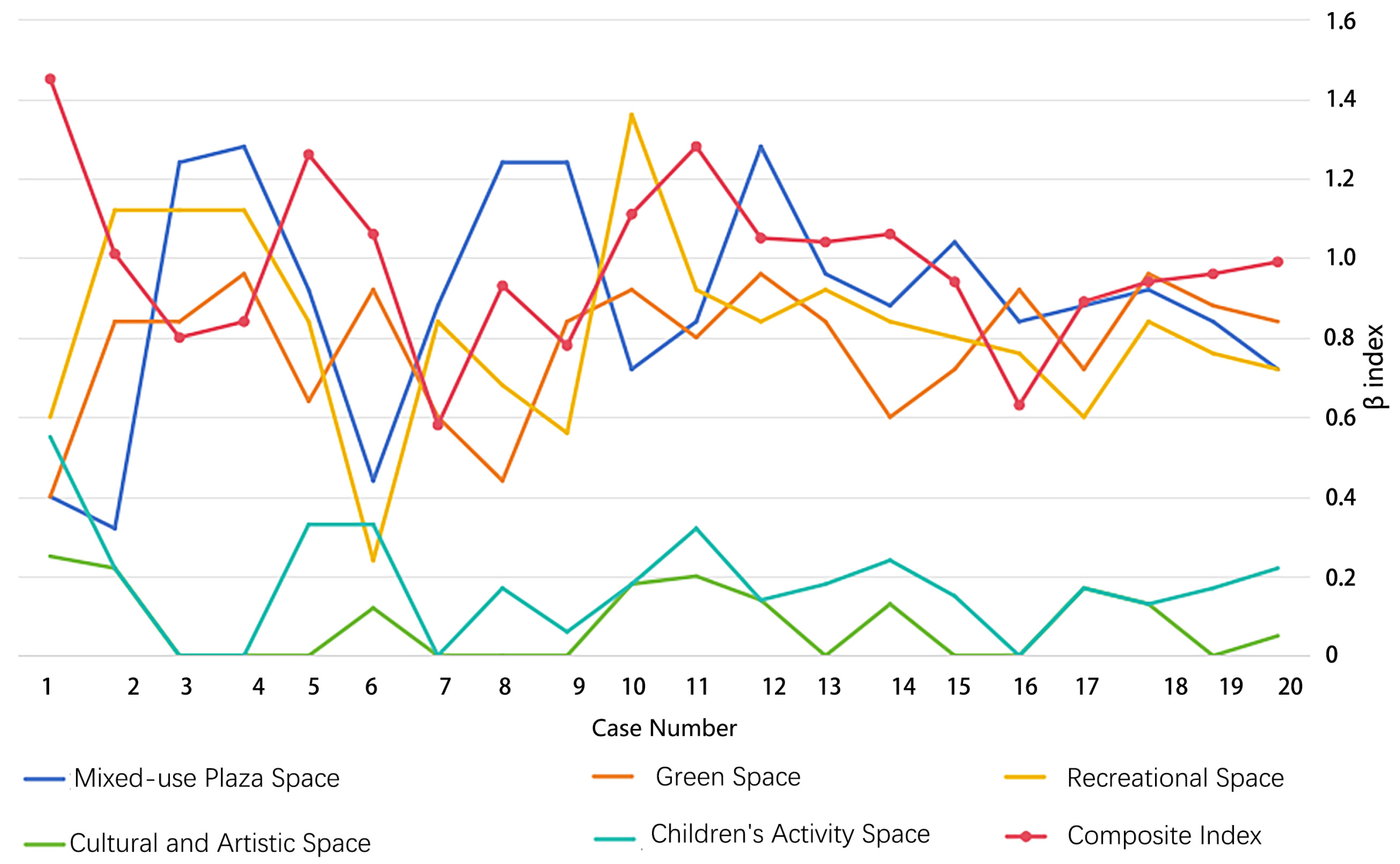
The public spaces of Guangzhou’s commercial complexes have a moderately high overall efficacy, as indicated by the sample mean for the public space efficacy index (
β) of 0.81 (±0.07). Nonetheless, there are notable internal structural abnormalities (
Table 10,
Figure 3). The main conclusions are summarized as follows:
Efficacy Components’ Advantages and Disadvantages: As the fundamental forces behind spatial vitality, basic functional areas like composite plazas and leisure/social interaction spaces often have higher efficacy (average ratings of 0.21 and 0.20, respectively). On the other hand, with an average efficacy score of just 0.11, cultural and creative areas show the greatest inadequacy. However, particular case studies show significant possibilities for focused development; for example, the Grandview Mall’s cultural and artistic area was 42% more effective once a museum was strategically added.
Severe Supply Demand Imbalance Among Important User Groups:
- 1.
Youth Cultural Demand Deficit: Questionnaire analysis targeting the core 18–35-year-old demographic reveals an intense demand for cultural and artistic experiences (scored at 0.27). When compared to the current average supply level (0.11), this results in a whopping 145% deficit, which is the most significant supply–demand mismatch in this research area.
- 2.
Lack of Functional Spaces Focused on Families: The average dwell time of family groups decreases by about 35% in complexes with severe deficiencies in children’s activity areas (β < 0.10). The possibility of conversion to consumption is directly reduced by this decline.
- 3.
“Uneven Development” in Functional Configuration: A lot of initiatives follow the pattern of “excellence in single metrics, but holistic imbalance.” The Yuehai Financial Center and TaiKoo Hui, for instance, are office-driven complexes that score highly on greening and recreational areas but completely lack cultural, artistic, and kid-friendly activities. As a result, their functional configurations continue to be out of step with the various, actualized needs of the larger user base.
3.4. Morphological Clustering and Gradient Patterns in the Association of Economic Vitality
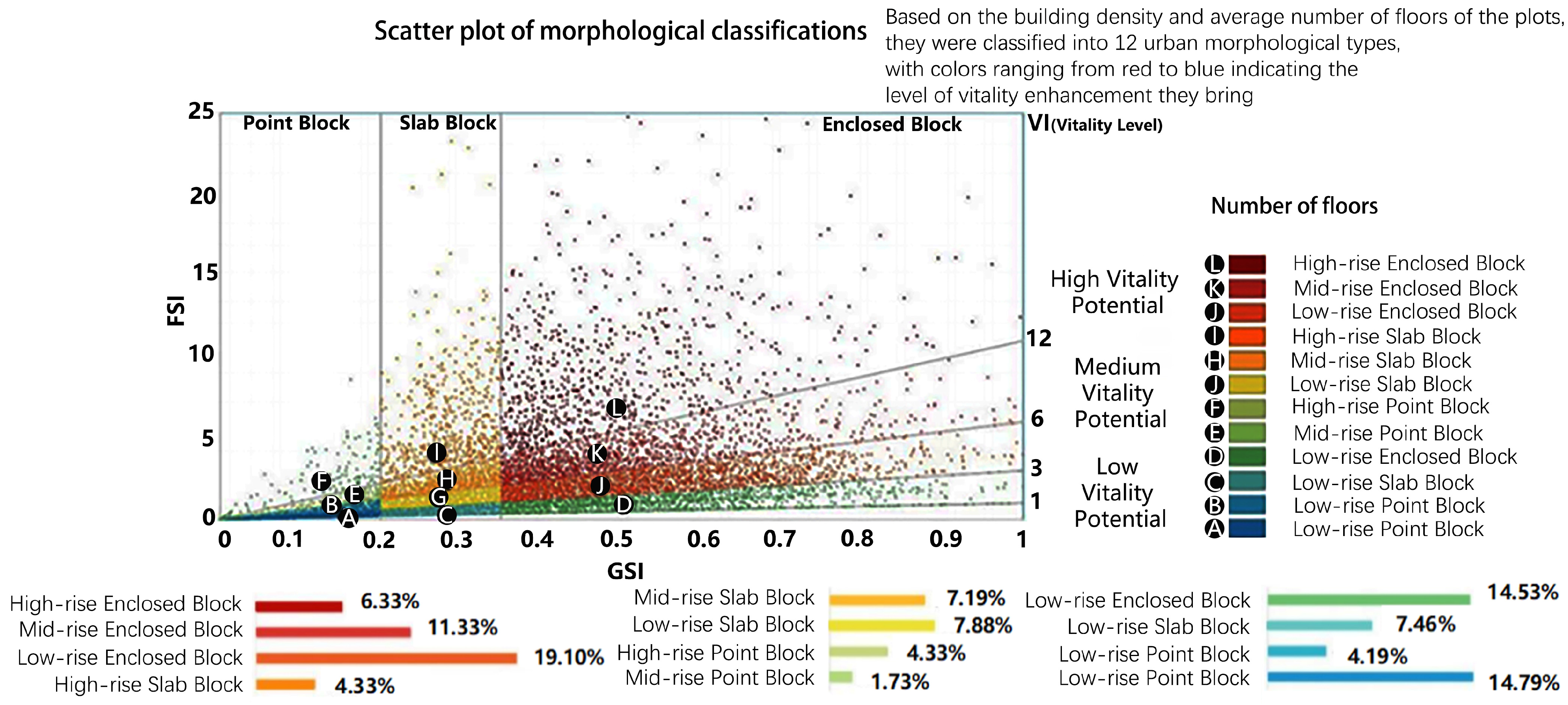
The 20 examples were divided into four different spatial morphological typologies using a K-means cluster analysis. These typologies show a strong link with the public space vitality index (PSVI) (
Figure 4,
Table 11).
- 1.
Low-rise Enclosed and High-Rise Enclosed Typologies: These designs, which are primarily found in urban core locations, have the highest average PSVI scores (0.85 and 0.82, respectively), making them high-vitality zones. Positive “eyes on the street” effects and strong opportunities for social engagement are greatly aided by their spatial features, particularly indoor–outdoor permeability and vertical functional mixing.
- 2.
Linear Sequential Typology: This layout, which is efficiency-focused and has an average PSVI of 0.76, indicating medium–high vitality, is frequently found in developing hub regions.
- 3.
Single-Core Agglomerated Typology: This typology has the lowest average PSVI (0.61, indicating medium–low vitality) and is concentrated in transitional development zones. Its mono-functional features and straightforward structural design naturally limit the creation of spatial liveliness.
A clear vitality gradient appears throughout this study area based on the PSVI’s spatial distribution:
Tianhe district (driven by commercial agglomeration effects) and Panyu district (driven by a dual culture tourism and commerce concept) are the anchors of Tier 1 (PSVI ≥ 0.80).
Tier 2 (0.60 ≤ PSVI < 0.80): Consists of a few developments spread around the districts of Yuexiu, Haizhu, and Baiyun.
Tier 3 (PSVI < 0.60): Located in districts like Liwan and Huadu, these projects are primarily traditional or monofunctional.
Differences in morphological efficiency are further explained by analyzing building density (ε). Through high building density, high-vitality developments (such as the Guangzhou International Finance Center, ε = 66.7%; Panyu Wanda Plaza, ε = 67.2%) successfully accomplish spatial intensification and vitality agglomeration. On the other hand, land utilization in low-vitality projects (like Baiyun Yuesheng Plaza, ε = 16.8%) is noticeably inefficient. Together, our results show that by arranging pedestrian flows and influencing user experiences, spatial morphology both directly contributes to and significantly impacts the production mechanisms of economic vitality. During the stock regeneration stage of urban development, this produces solid empirical evidence to direct targeted spatial optimization.
4. Discussion
This part seeks to clarify the generative mechanisms of public space vitality and pinpoint important structural inconsistencies, building on the previous empirical findings. We suggest a tiered optimization approach that is adapted to the larger urban spatial pattern using structural equation modeling (SEM) and systematic analysis.
4.1. Verification of Vitality Driving Mechanisms and Determination of Important Discrepancies
This study reveals the tripartite driving factors and underlying structural conflicts that govern the creation of public space vitality within Guangzhou’s commercial complexes by combining SEM and multiple regression analyses.
4.1.1. Multidimensional Driving Mechanisms: Quantitative Validation
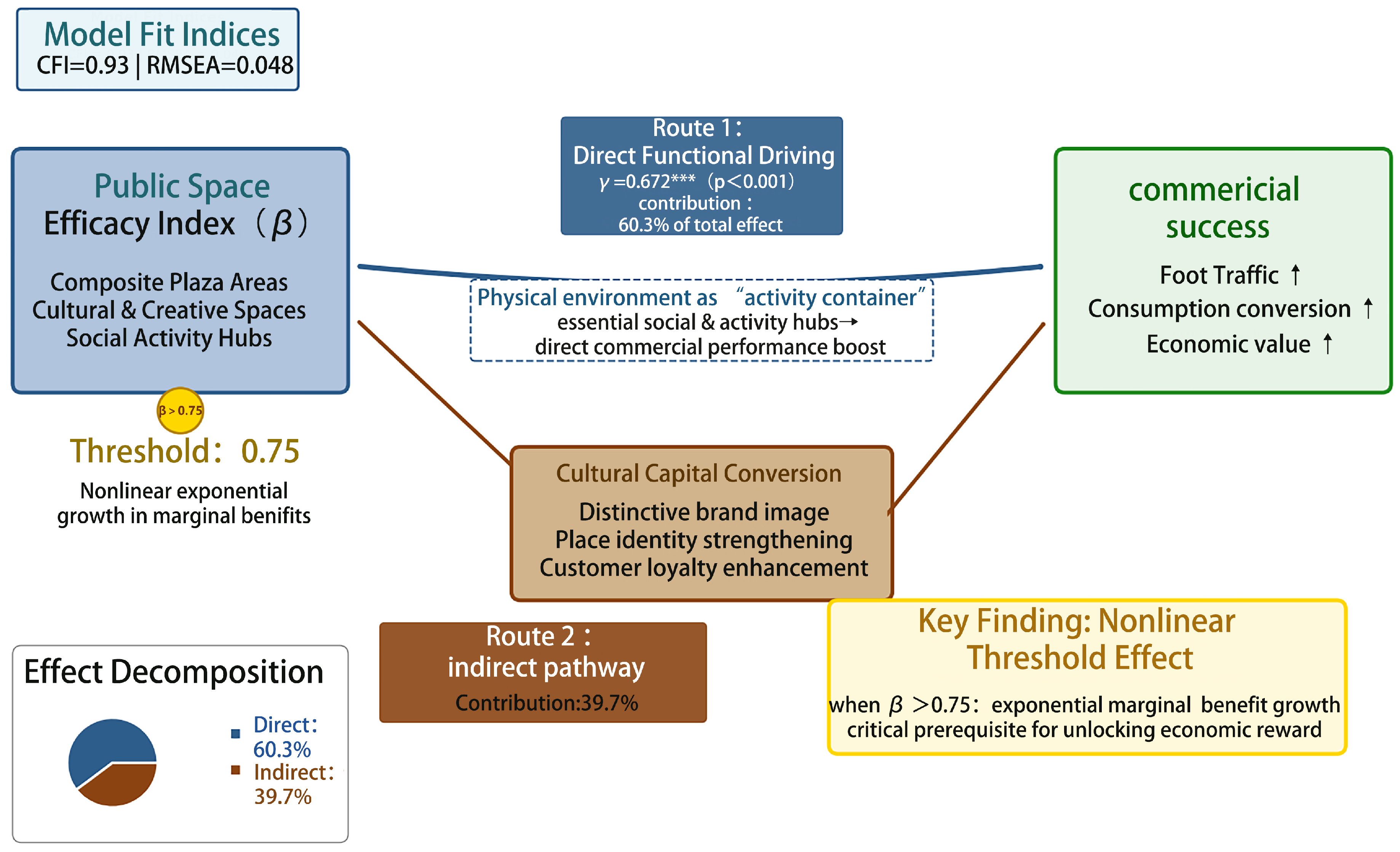
With a strong model fit (CFI = 0.93, RMSEA = 0.048), the SEM analysis confirmed the intricate mechanisms by which public space efficacy affects commercial success.
The findings show a key threshold effect and two complementing driving routes (
Figure 5,
Table 12):
- 1.
Direct Functional Driving Route: Commercial performance is directly and significantly improved by composite plaza areas, which serve as essential social and activity hubs (standardized path coefficient γ = 0.682, p < 0.001). This pathway contributes almost 60.3% of the overall effect, highlighting the essential function of physical environment as a “activity container.”
- 2.
Indirect Cultural Capital Conversion Pathway: The main method that cultural and creative places contribute is through indirect effects, which produce a substantial mediating influence that makes up 39.7% of the overall impact. These areas indirectly increase economic value by developing a distinctive brand image, strengthening location identification, and encouraging client loyalty. This provides empirical support for the strategic necessity and conversion value of “cultural capital” in urban commercial settings.
- 3.
Nonlinear Efficacy Conversion Threshold: According to the analysis, there is a strong nonlinear increase in the marginal benefit on foot traffic and consumption conversion after the public space efficacy index (β) exceeds a key threshold of 0.75. This result demonstrates that attaining “sufficiently high” spatial efficacy is a crucial prerequisite for unlocking exponential economic rewards and provides a precise quantitative standard for spatial quality optimization.
Figure 5.
Model of the Driving Path from Public Space Efficiency to Commercial Performance. *** p < 0.001|Dual pathways: functional (γ=0.682) & cultural (39.7%), ↑ Threshold > 0.75.
Figure 5.
Model of the Driving Path from Public Space Efficiency to Commercial Performance. *** p < 0.001|Dual pathways: functional (γ=0.682) & cultural (39.7%), ↑ Threshold > 0.75.
Table 12.
Examination of Driving Routes from Commercial Performance to Spatial Efficacy.
Table 12.
Examination of Driving Routes from Commercial Performance to Spatial Efficacy.
| Driving Pathway Type | Typical Space Type | Path Coefficient (γ) | Effect (%) | Mechanism of Action |
|---|
| Direct Functional Driving | Composite Plaza | γ = 0.682 *** | 60.3 | Core social hub |
| Indirect Cultural Conversion | Cultural & Artistic | Significant | 39.7 | Brand image shaping |
| Efficacy Conversion Threshold Effect | Comprehensive | β > 0.75 | - | Nonlinear growth. |
4.1.2. Identifying Fundamental Structural Inconsistencies
- 1.
Youth Cultural Consumption’s Supply-Side Deficit: The core 18–35 group has a demand intensity of 0.27 for cultural and artistic events, which is a huge 145% deficiency when contrasted to the existing average supply level (0.11), as the efficacy analysis makes clear. The functional layout of the majority of current projects, which are still mostly dominated by homogenized retail, contrasts sharply with this demographic’s strong demand for experiential consumption—such as “cultural check-ins” and “artistic socializing.”
- 2.
Underperformance of Climate-Responsive Design: The assessed contribution of current green areas to thermal comfort is just 0.15, given Guangzhou’s typical hot and humid subtropical climate (average annual temperature of 22 °C and relative humidity of 78%). This is much less than the theoretical potential value of 0.22. This disparity reveals a crucial gap between aesthetic form and environmental performance, since a significant percentage of “passive” or solely decorative landscape designs are ineffective at reducing summer heat stress.
- 3.
Functional Mix: Breadth at the Expense of Depth: The homogeneity index for particular subcategories is still disproportionately high (
θ = 6.3 ± 1.1), despite the sampled complexes performing well in terms of the richness of major business categories (
φ = 4.2 ± 0.6). Additionally, the percentage of deep-experiential and cultural formats—which are essential for successfully increasing visitor dwell time—is typically less than 20%. This illustrates how present functional configurations lack depth of experience and distinctiveness on a systemic level (
Table 13).
4.2. Spatial Differentiation-Based Tiered Optimization Strategy System
This study suggests a three-tiered, coordinated strategy framework—macro-regional direction, meso-typological optimization, and micro-efficacy enhancement—to successfully handle the aforementioned driving factors and structural contradictions. This multiscalar strategy is clearly in line with the general commercial spatial pattern of gradient diffusion and core polarization in Guangzhou.
4.2.1. Macro-Level: Control of Differentiated Zonal Development
Each region’s unique developmental stages and fundamental structural issues must be taken into consideration when implementing targeted planning controls and policy interventions (
Table 14).
- 1.
Core Polarization Zones (such as Tianhe and Yuexiu core areas): Overdevelopment and excessive traffic load demands are the main sources of conflict in these locations. The developmental strategy has to shift from incremental expansion to functional replacement and stock quality improvement. Enforcing strict floor area ratio (FAR) caps (e.g., FAR ≤ 12.0) and implementing transferable development rights (TDRs) to encourage the conversion of construction intensity into superior public spaces and cultural amenities are two ways to operationalize this transformation.
- 2.
Possible Improvement Zones (such as developing regions in Baiyun and Panyu): Functional homogenization and a clear lack of spatial identity are the main issues in these zones. Land-grant requirements that require a minimum threshold (≥30%) for unique theme forms (e.g., family-oriented, cultural-creative, or sports-centric spaces) should be incorporated into interventions. Targeted fiscal subsidies should be added to these regulations in order to actively direct differential development.
- 3.
Peripheral Transition Zones, such as the periphery of Nansha and Huadu: Chronic inadequacies in vitality and inefficient spatial sprawl are characteristics of these areas. To stop disorderly expansion, TDR methods must be applied in concert with strategic industry-introduction agreements. In order to stimulate commercial vitality through industrial integration, planners must simultaneously proactively establish unique anchor roles, such as exhibition-trade centers and hubs for technology innovation.
Table 14.
Differentiated Zonal Development Control Strategies.
Table 14.
Differentiated Zonal Development Control Strategies.
| Zone Type | Representative Areas | Core Problems | Control Strategy | Policy Tools |
|---|
| Core Polarization Zone | Core areas of Tianhe, Yuexiu | Over-development, traffic congestion | FAR cap control (FAR ≤ 12.0) | TDR, Functional replacement incentives |
| Potential Enhancement Zone | Emerging areas of Baiyun, Panyu | Functional homogenization, lack of distinctiveness | Thematic format ratio requirement (≥30%) | Land grant condition binding, Fiscal subsidies |
| Peripheral Transition Zone | Outer areas of Huadu, Nansha | Inefficient sprawl, low vitality | TDR + Functional implantation | TDR mechanism, Industry-introduction agreements |
4.2.2. Meso-Level: Enhancing Land Use and Transportation Cooperation
Deepening TOD Standards: Stricter coordination indicators must be put in place to guarantee true synergy between commercial operations and transportation hubs. For example, if a commercial development next to a transit station has a floor area ratio (FAR) of at least 4.0, it must also meet the following requirements: a road network density of at least 8.0 km/km2, a land-use functional mix (entropy value) of at least 0.7, and the availability of at least three seamless pedestrian access points that connect directly to the station.
Accurate Injection of Functions with Regional Characteristics:
Promote the combination of “commerce + R&D + exhibition” by setting up specialized professional venues including shared laboratories, technology showrooms, and pitch centers in the Innovation Industry Zones (Huangpu and Nansha districts).
Historical and Cultural Zones (Liwan and Yuexiu districts): Promote “local cultural translation” by using modern design languages to adapt historic features, such Xiguan houses and Lingnan gardens, into immersive consuming environments.
Create an integrated ecosystem with “themed attractions, distinctive commerce, and resort accommodation” for Cultural Tourism and Leisure Zones (Panyu and Huadu districts) in order to efficiently extend the consumption chain.
4.2.3. Micro-Level: Accurate Improvement of Spatial Effectiveness
Three feasible micro-level optimization projects are suggested to address the structural flaws that have been precisely discovered (
Table 15):
Cultural Capital Conversion Initiative: By implementing strategic interventions like art curation, local intellectual property (IP) implantation, and digital interactive exhibitions, this initiative seeks to raise the severely low efficacy of cultural spaces (0.11) to 0.15–0.20. A 20–30% rise in brand premium and a 15–25% increase in pedestrian foot traffic are anticipated results.
Family-Friendly Ecosystem Construction Initiative: This initiative calls for the systematic arrangement of safe play areas, parent–child rooms, designated rest and observation areas, and cooperative retail and food and beverage (F&B) establishments in order to address the lack of kid-friendly spaces and increase family dwell times. The goal is to enhance family dwell time by 30–50% in order to boost associated consumption by 25–40%.
Initiative for Proactive Climate-Responsive Design: Urban design must go beyond just cosmetic greening in order to enhance thermal comfort in Guangzhou’s hot and muggy climate. Strict promotion of active environmental control technologies is necessary, such as wind-guiding wall designs, evaporative mist cooling, and vertical greening. The goal is to lower the summertime perceived outdoor temperature by 1.5–2.5 °C, greatly improving public spaces’ environmental appeal.
5. Conclusions
In order to integrate geographical supply, spatial performance, and system connectivity, this study develops and uses a multidimensional analytical framework. It analyzes the vitality qualities and clarifies the generative mechanisms of public spaces in Guangzhou’s commercial complexes using a mixed-methods approach that blends an entropy-weight TOPSIS model with structural equation modeling (SEM). Below are specific findings, policy implications, study limitations, and future research directions.
5.1. Principal Findings and Scholarly Input
Three interconnected aspects summarize the main conclusions of this study, which together contribute to the theoretical understanding of commercial spatial vitality in high-density urban environments:
Empirical Disclosure of the “Density–Efficacy Paradox” and Reexamination of Spatial Patterns: This study verifies that there is a clear core–periphery gradient in the development intensity of Guangzhou’s commercial complexes. However, the econometric study reveals a crucial paradox: the Public Space Efficacy Index (β) and the floor area ratio (FAR) have only a weak and statistically negligible positive connection (r = 0.32, p > 0.05). The linear assumption that high-intensity development inevitably ensures high vitality is empirically challenged by this. As a result, it indicates that the developmental logic of urban commercial spaces urgently has to change from depending on the “scale dividends” of incremental expansion to seeking the “quality dividends” of stock enhancement through structural optimization.
Quantitative Diagnosis of Supply Demand Deficits and Structural Imbalances: This study achieves a rigorous quantitative evaluation of spatial social performance by operationalizing the Public Space Efficacy Index (β). The findings show that acute structural supply-demand imbalances continue even when overall efficacy is reasonably good (β = 0.81 ± 0.07). Most notably, the core youth population (18–35 years old) has a demand intensity of 0.27 for cultural and creative places, which is significantly higher than the present supply level of 0.11 and results in a 145% gap. Additionally, the study provides a precise quantitative benchmark for focused quality interventions by identifying a critical threshold (β > 0.75) at which spatial efficacy starts to exert a significant nonlinear impact on economic returns.
Empirical Validation of Dual-Pathway Vitality Generation and Cultural Capital Conversion: A composite mechanism for vitality generation is outlined by the SEM analysis. The physical basis of vitality is the “direct functional driving” pathway (anchored by composite plaza spaces, γ = 0.682). Concurrently, value leapfrogging is sparked by the “indirect cultural capital conversion” pathway, which is mediated by cultural and artistic places and accounts for 39.7% of the mediating effect. This provides a solid theoretical foundation for transforming commercial complexes from uniform “consumption containers” into highly distinctive “cultural destinations.” It also empirically supports the enormous conversion potential of “cultural capital” within commercial spaces.
5.2. Policy and Practical Implications
Based on these findings, this research suggests three forward-thinking approaches to the management and enhancement of commercial areas in densely populated areas:
A Change in Planning Control Paradigm: From “Intensity Indicators” to “Performance Covenants”: Conventional planning frameworks depend too heavily on intensity indicators like building density and FAR. Instead, planners could incorporate minimum functional ratios (such as cultural spaces ≥ 15%) and public space performance indicators (such as the β index) directly into land-grant conditions or urban renewal agreements, so creating “performance covenants.” Transferable development rights (TDR) mechanisms can be used in core regions to achieve comprehensive territorial enhancement by directly connecting development intensity to improvements in public space quality.
Synergistic Upgrades in Urban Design: Building an Integrated “Form–Function–Transportation–Climate” Framework: To stress integrated systemic synergy, architectural design must go beyond simple morphological development. High-permeability road networks (density ≥ 8.0 km/km2), a high functional mix (entropy value ≥ 0.7), seamless multimodal transit integration, and proactive climate-responsive design (e.g., vertical greening, wind channeling, and advanced shading) should all be required by design standards linked to high development intensity (e.g., FAR ≥ 4.0). This is especially important for maintaining year-round spatial vibrancy and reducing Guangzhou’s hot and muggy climate.
Fundamental Renewal and Remodeling of Operations: From “Space Leasing” to “Scene Operation” and “Cultural Value-Added”: Initiatives for stock regeneration must switch from upgrading hardware to curating experiential content. To incentivize operators to incorporate art curation and intangible cultural asset revival, policymakers should implement “cultural value-added” incentive systems (such as FAR bonuses or specialized funding). Concurrently, the methodical development of a “child-friendly–family rest–associated consumption” ecology can significantly release latent consumption potential by extending the stay time of high-yield family demographics by 30–50%.
5.3. Research Restrictions and Prospects for the Future
Although this study provides valuable insights, it recognizes some methodological and data constraints that set the direction for future research:
Theoretical Expansion: Combining Spatial Configuration Theory with Multisensory Environmental Perception: To more accurately examine pedestrian movement and interaction patterns via the lenses of spatial topology and visual connectivity, future research should integrate space syntax and visual graph theory. Additionally, expanding quantitative assessments to include multisensory environmental factors (such as lighting, thermal comfort, and acoustics) will fully reveal the integrated influence of environmental perception on spatial vitality.
Methodological Innovation: Building a Multisource Big Data Dynamic Monitoring Platform: Future studies should incorporate mobile signaling data, Wi-Fi probes, user-generated content (UGC) from social media, and Internet of Things (IoT) sensor networks to overcome the static constraints present in cross-sectional data. The development of a dynamic, long-term monitoring database will be made easier by this integration. This strategy will allow a methodological jump from static evaluation to dynamic process simulation and predictive policy scenario forecasting when paired with cutting-edge tools like agent-based modeling (ABM).
Realistic Extension: Examining Universal Standards for Typified Public Areas: The study’s analytical approach can be modified and used for other types of urban public spaces, like waterfront promenades, historic districts, and important transit hubs. Evaluating its explanatory capacity in various scenarios can help create standards for vitality assessment that are applicable to all situations. In the end, this will offer methodical, empirically supported, and extremely practical strategies for fostering more inclusive, resilient, and spatially just urban living environments.