Article

Urban Form and Community Structure: Comparing Tree and Semilattice Neighbourhoods for Sustainable Development in Jerusalem


by
Shlomit Flint Ashery
Department of Environment, Planning and Sustainability, Bar Ilan University, Ramat Gan 5290002, Israel
Land 2026, 15(3), 474; https://doi.org/10.3390/land15030474
Submission received: 4 February 2026 / Revised: 25 February 2026 / Accepted: 11 March 2026 / Published: 16 March 2026

Abstract

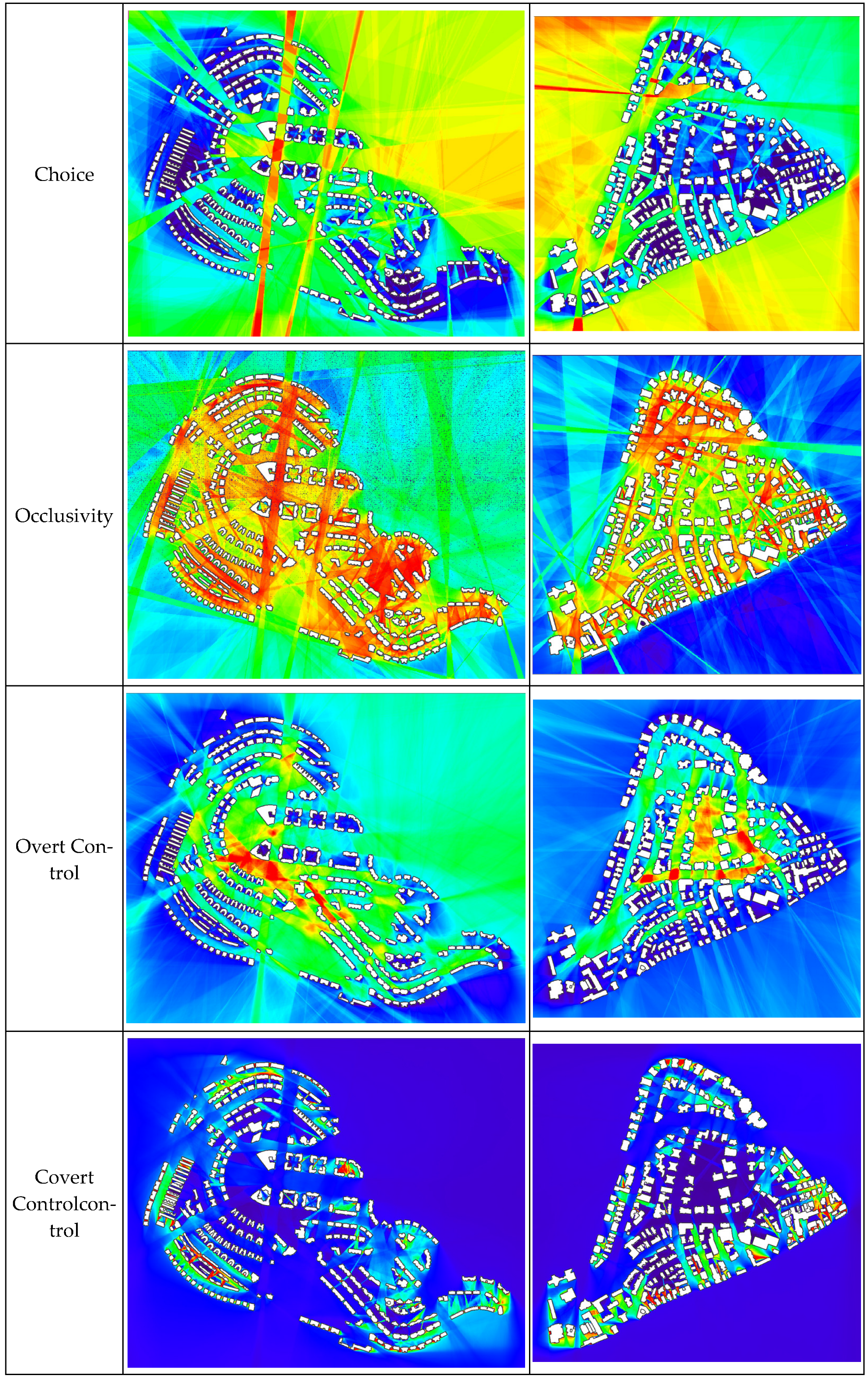
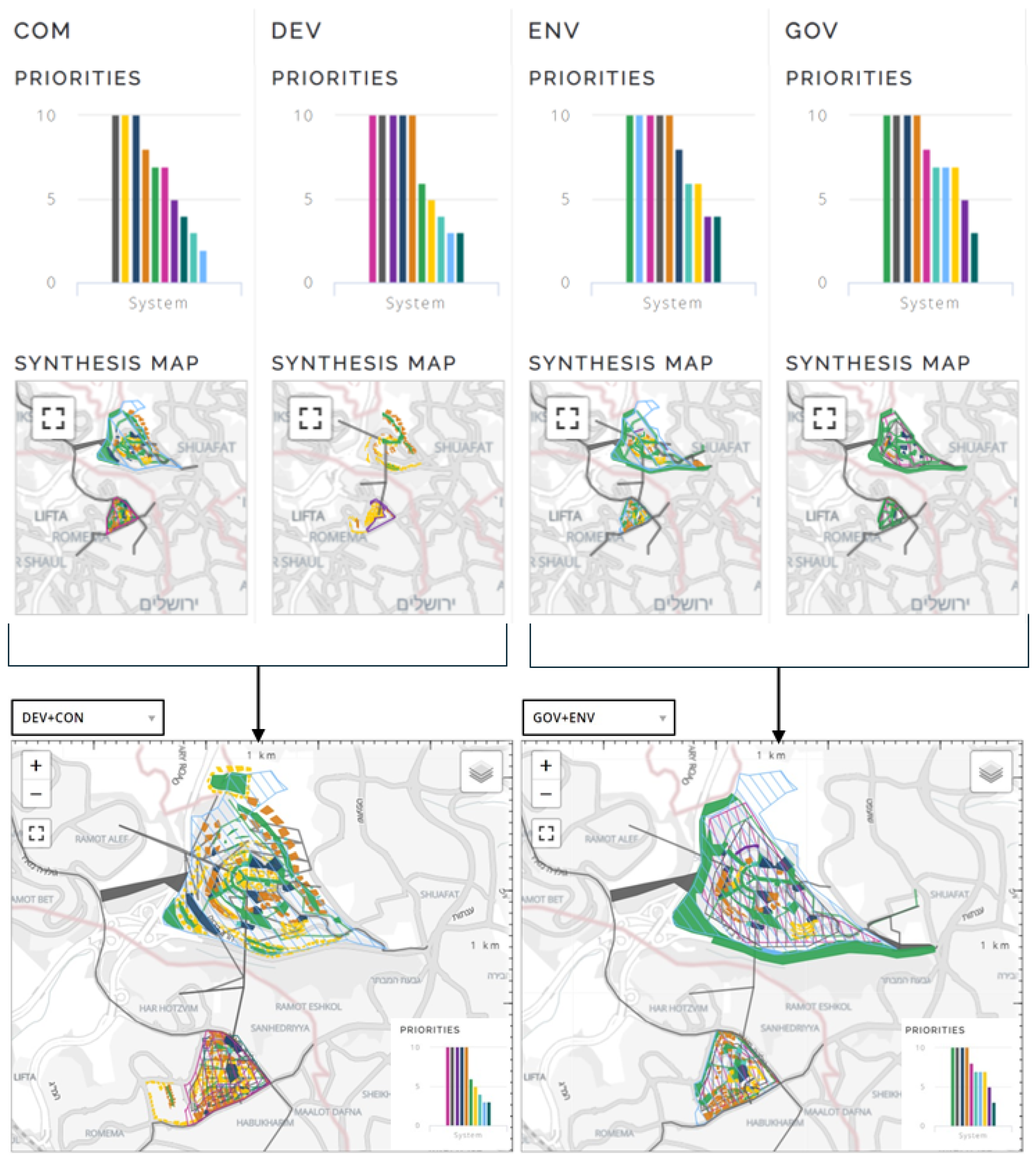
Cities are complex land systems where spatial form mediates welfare, connectivity, and community-based adaptation. This study compares two Haredi neighbourhoods in Jerusalem, Ezrat Torah (an organically evolved semilattice) and Ramat Shlomo (a planned tree-type enclave), to examine how urban morphology interacts with planning logics to shape sustainability trade-offs. We integrated graph-based meshedness (α-index), aggregate isovist cascade analysis, and a geodesign-supported negotiation to evaluate the land-use mix, visibility structure, and network redundancy and to co-design 2045 scenarios across housing, transport, green, and social infrastructure. Findings showed that semilattice fabrics support richer overlaps among social and spatial subsystems, enabling incremental, lower-conflict adjustments towards sustainability objectives, whereas tree-like structures lock units into hierarchical compartments, constraining adaptation. Methodologically, the paper operationalises Alexander’s structure–life hypothesis with reproducible indicators and demonstrates how geodesign can align community preferences with broader sustainability goals. The contribution is twofold: (i) empirical evidence on how neighbourhood morphology conditions welfare–connectivity–resilience outcomes; and (ii) a transferable, negotiation-centred workflow for planning in culturally cohesive urban enclaves.
Keywords: sustainable development; planning theory; tree vs. semilattice; “from the root”; the branch model; geodesign sustainable development; planning theory; tree vs. semilattice; “from the root”; the branch model; geodesign