1. Introduction
In the history of participation, participatory processes were initiated to reduce inequalities of power in society; they are conceptualised as “self-organisation” and as civic-initiated action to influence the urban environment.
Collaborative planning plays a crucial role by offering methods and tools to raise awareness of urban challenges and enabling communities to co-develop practical solutions. By fostering cooperation among municipal authorities, associations, and civic groups, this approach seeks to balance bottom-up initiatives with institutional support, ensuring more inclusive and sustainable urban transformations [
1].
The paper addresses this question through Bologna as the primary case study, while using the CrAFt New European Bauhaus Impact Model (NEB IM) as an evaluative lens to read patterns emerging across 17 NEB-inspired participatory projects. Rather than ranking projects or claiming causal effectiveness, the analysis uses the NEB IM as a pattern-reading exercise to identify recurring strengths and imbalances across governance, social, environmental, and economic dimensions. A key finding of the paper is that participatory and governance dimensions appear comparatively more developed than technical, environmental, and economic integration, highlighting both the promise and the limits of commons-based approaches for climate-neutral transitions.
1.1. Collaboration Pacts in Bologna
Since 2011, Bologna has begun developing and implementing policies addressing the city’s social, economic, and political aspects, following the City as a Commons approach and urban collaborative governance. “The Regulation on Collaboration Between Citizens and the City for the Care and Regeneration of Urban Commons”, published in 2014, served as the key reference in this process, offering a policy toolbox [
2]. Collaboration pacts are identified as the main legal instrument to finalise and establish public-community partnerships.
The leading actors involved in collaboration pacts are local officials/Public Administration, representative groups of citizens/local inhabitants, local Non-Governmental Organizations (NGOs), and local businesses. During the first years (2014–2016), the agreements approved addressed both tangible and intangible assets and faced different levels of complexity, but they all shared a strong dialogue and relationship between citizens and the municipality. In 2014–2016, 261 proposals were developed, and 245 collaboration pacts were signed within the municipal territory regarding different fields: maintenance of green spaces, public spaces, and schools; interventions to improve bicycle paths, roads, and squares; and for the elimination of architectural barriers, and renovation [
3].
These collaboration pacts are central to the argument of this paper because they show how Bologna translated collaborative governance into operational instruments that could later support broader climate-transition agendas. De Nictolis and Iaione presented the results of the analysis of 280 collaboration pacts developed and signed after the publication of the Regulation (2014) [
4] following four metrics: (1) institutional catchment area (namely the urban level, i.e., city, neighbourhood, multiple neighbourhoods, both city and neighbourhood); (2) implementation of public-community partnerships; (3) types of activities (from simple and easy care to complex regeneration projects of urban spaces or buildings); (4) if the agreement brings an economic reward to its signatories or redistributes resources. The analysis was conducted in two phases: the first consisted of analysing the text of 280 collaboration pacts and other information from “Iperbole” [
5] meetings and reports; the second stage focused on surveys and interviews with a group of signatories (about 28%).
Since the introduction of the Regulation, Bologna has generated hundreds of collaboration pacts, demonstrating not only the diffusion of participatory practices but also the city’s growing governance capacity to stabilise relations between communities and institutions. Most pacts were signed between a neighbourhood representative and a municipal authority, often the mayor. Notably, 59% of signatories did not reside in the neighbourhood, highlighting the pacts’ role in fostering citywide networking. Most pacts (66%) were implemented at the neighbourhood level, with 26% at the city level and only 7% spanning multiple urban or citywide scales. Regarding partnership structures, 69% were bilateral (municipality and a single actor, such as an NGO or business), while 28% were multilateral but mono-stakeholder (involving multiple actors from the same category), and only 3% were multilateral and multi-stakeholder (engaging diverse actors). Cross-referencing scale and partnership types, most bilateral (86%) and multilateral, multi-stakeholder (57%) pacts were at the neighbourhood level, while 65% of mono-stakeholder, multilateral pacts were citywide. The most significant city + neighbourhood pacts (29%) were multilateral and multi-stakeholder. Finally, multilateral and multi-stakeholder partnerships were particularly prevalent (50%) in urban regeneration initiatives, reflecting the complexity of these initiatives.
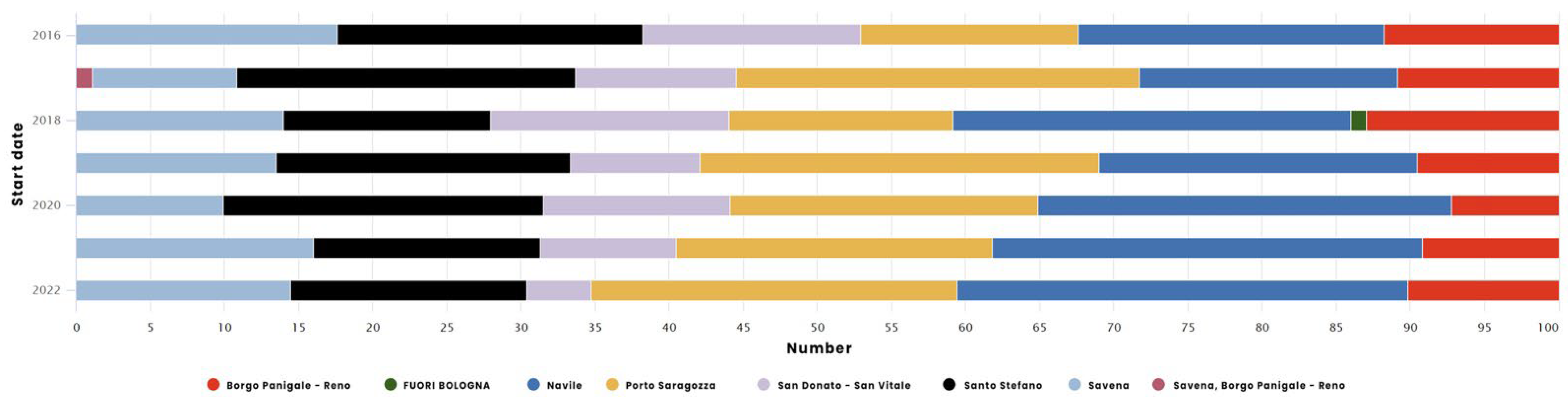
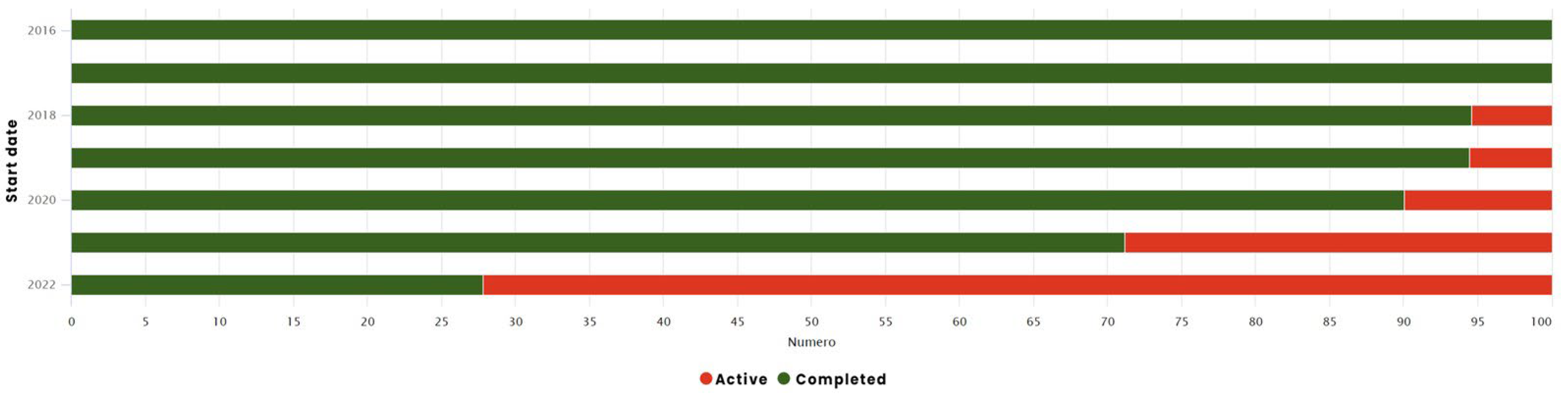
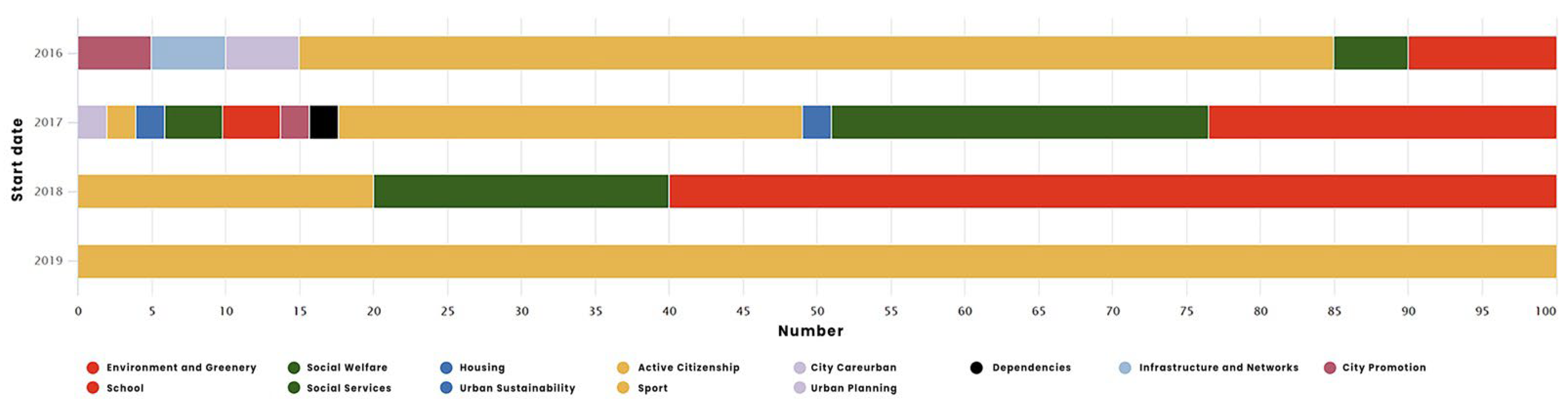
The following charts show the different statuses (
Figure 1), the thematic areas (
Figure 2), and the neighbourhoods of the collaboration pacts signed from 2016 to the present (
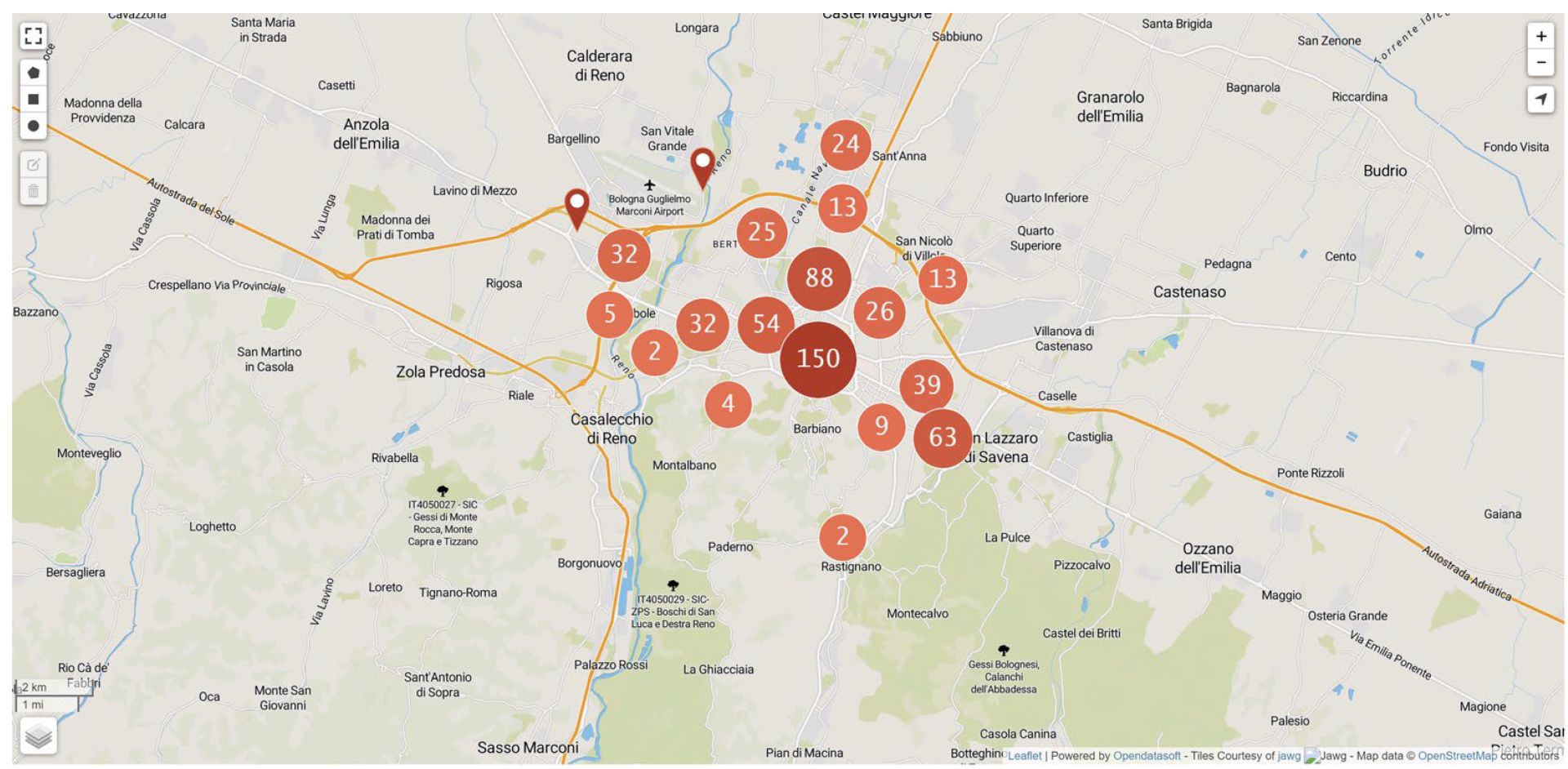
Figure 3). More detailed information about each collaboration pact of the period 2016-present can be collected by consulting the map of the city (
Figure 4).
Today, the proposal for collaboration pacts can be submitted via the “Iperbole” Civic Network Community platform. Collaboration pacts signed in 2016-present can be downloaded from “Partecipa–Elenco dei Patti di Collaborazione” [
6] (List of collaboration pacts) and consulted. The collaboration pacts are short documents (5–6 pages) with a similar structure: the title with the name of the collaboration pact and the subjects involved; objectives and actions for shared care (object of the proposal); modes of collaboration; personal data; reporting, evaluation, and supervision; forms of support; duration, suspension and withdrawal; liability. Then, they are signed by the representative of the association/society and the neighbourhood director. This role is important because it serves as a mediator between local governance and the residents of a specific neighbourhood. Thus, it is fundamental because it ensures the stability of the community, advocacy, and economic resources. Moreover, this role serves as a “bridge” between the city representatives, the private sector, NGOs, and citizens for a multi-layer governance in the public space.
This paper builds on these instruments not by re-evaluating the whole pact system, but by examining how they underpin Bologna’s contemporary effort to connect commoning practices with CCCs implementation.
1.2. The City as a Commons Approach
An important example of a collaborative model as a practical action is the “Collaborare è Bologna” [
7] initiative, with over 800 collaborative pacts whose approach was systematised under the umbrella of the “City as a Commons”. Thus, the City as a Commons approach incorporates the different collaborative pacts into a model of participatory processes and co-creation between the city and its citizens, emphasising stakeholders’ engagement and the active role of citizens in various initiatives [
8]. This approach is founded on the principle that the city, as an organic whole, can adapt, transform, make, and remake itself in response to citizens’ needs and requirements. Participatory processes, such as co-creating, co-designing, and co-governing, are promoted through cooperation among local administrations, municipalities, citizens, and key facilitators, including local associations, economic actors, and other stakeholders. The concept conveys that the city consists of urban commons that everyone takes care of and that enable regeneration practices. The model of “urban collaborative governance” focuses on social and economic equity and inclusion, founded on collaborative democracy, social and economic equity, co-design processes, pooling economies, and collaborative practices such as co-production and co-working.
However, the City as a Commons approach should not be understood as a generic synonym for participatory planning. While participatory planning often refers to consultation or involvement within predefined institutional processes, the concept of common good implies a stronger role for citizens and organised communities as co-producers and co-managers of urban transformation. In this sense, the City as a Commons approach is distinguished by its emphasis on shared responsibility, long-term care, and institutional arrangements that enable communities not only to be heard, but also to act. In Bologna, the collaboration pacts described in
Section 1.1 provide the concrete policy tools through which this shift from participation to a commoning approach has been operationalised.
1.3. The Climate City Contracts
The Climate City Contracts (CCCs) are part of a multi-level governance structure that supports cities and their key local actors in their journey toward climate neutrality, alongside the Cities Mission Platform NetZeroCities (NZC) [
9]. They are being developed at local and national levels, so there is a need for structured cooperation, which includes working with other projects and initiatives, the Cities Mission and its Board, CrAFt, CapaCITIES, and New European Bauhaus (NEB) and Mission communities and projects. Sharing knowledge and experiences on the development and implementation of CCCs is crucial in order for cities to succeed in their transition to climate neutrality, by and with citizens. CrAFt contributed to this effort by building and documenting participatory structures within its three sandbox cities, Amsterdam, Bologna, and Prague, and its network of over 70 cities [
10].
CCCs can therefore be understood not only as political commitments, but also as technical-planning and governance instruments: they combine a strategic roadmap, a portfolio of actions and investments, and a framework for multi-level negotiation among municipal, regional, national, and European actors, which requires structured collaboration and stakeholder engagement [
11]. Their relevance lies in their capacity to connect long-term climate targets with concrete implementation pathways, institutional coordination, and stakeholder mobilisation. In this respect, the CrAFt project aims to make a considerable contribution to the NEB Alliance. Launched in Bologna in May 2023, the NEB Alliance aims to bring together NEB-forward projects and initiatives in systematically testing approaches on the ground, through the following mutual actions: documenting their added value for different stakeholders; creating a joint evidence base; making these stories available at the fingertips of cities and communities of different levels of capacity and competency; informing policymakers at national and European levels on the need for systemic changes in governance. Through the NEB Alliance, it is possible to raise awareness of Bologna’s rich field experience with the City as a Commons approach, broadly known, and promote cooperation to share similar examples as inspiration for the development and implementation of CCCs.
1.4. The City as a Commons and the CCCs
More recently, the City as a Commons approach has been directed towards the urgent objectives of climate neutrality, aligning participatory urban governance with the implementation needs of CCCs and the NEB values of sustainability, beauty, and inclusiveness. In this perspective, the City as a Commons does not merely complement the CCCs at a conceptual level but provides a governance framework capable of operationalizing them.
Within this framework, citizens, communities, and local stakeholders are not treated merely as consultees or beneficiaries of climate policies, but as co-producers of urban transformation, actively contributing to the design, implementation, and monitoring of climate actions. This shift is particularly relevant for CCCs, whose success depends on mobilising local capacities, building trust, and fostering long-term civic commitment to climate neutrality.
This has led the City of Bologna to proceed with the implementation of the CCCs and engage concretely different parts of the society through the participatory experiences described above. All the concepts and practices of the City as a Commons are in common with the CCCs, as they enable innovative forms of civic engagement through the creation of Living labs. In fact, since 2017, Fondazione IU Rusconi Ghigi, that is a private Foundation for Urban Innovation (formerly called FIU—Fondazione Innovazione Urbana) [
12] in cooperation with the Municipality of Bologna, has coordinated the so-called District Labs, “spaces for democratic interaction open to everyone” [
13] that allows for the implementation of about 60 projects for participatory budgeting through neighbourhood public assemblies and online topic meetings.
Additionally, the CCCs are key instruments within the NZC Mission platform and the Cities Mission, as they are designed to support cities in their transition to climate neutrality. They function as multi-level co-creation tools that:
Identify policy gaps and steer climate transition strategies;
Coordinate with stakeholders and national and EU authorities to create the necessary conditions for climate neutrality;
Serve as a one-stop shop for multi-level negotiations, facilitating urban climate actions. CCCs promote inclusive governance, circular economic models, and innovative urban planning, integrating digital technologies and new management approaches.
The CCCs are signed by the Mayor, the European Commission, and other national/regional authorities, ensuring a full institutional commitment. A core component of CCCs is civic engagement through “living labs”, fostering experimental, inclusive, and participatory activities to drive local climate solutions. Given the urgency of climate goals, CCCs push cities to adopt innovative, context-specific strategies, requiring a deep transformation of traditional governance models.
The study aims to examine how commoning processes and City as a Commons tools can help operationalize CCC implementation in practice, rather than treating participation as a parallel or merely symbolic dimension of climate policy. At the same time, the paper acknowledges the tension between low-threshold, light-touch participatory engagement, often operationalised through temporary interventions, and the hard requirements of the transition to climate neutrality, including technical, environmental, economic, and monitoring demands, as well as anchoring and financing requirements [
14]. For this reason, the case of Bologna is analysed not as proof that participation automatically delivers climate neutrality, but as a concrete example of how collaborative governance can support the implementation of CCC, while revealing gaps and limitations that require further institutional and technical integration.
The involvement of diverse target stakeholders through a co-design process is crucial to successfully developing the City as a Commons initiatives and CCCs based on the NEB [
15] principles. For active stakeholders’ involvement to be effective and efficient, it is first necessary to increase their level of awareness of the importance of their role in the process. The organisation of events, both at a large scale and for small groups, always accompanied by the presence of people from governance, fosters this process of gaining awareness and trust in the community.
2. Participatory Urban Regeneration Strategies
Within the City as a Commons framework, urban regeneration is conceived as a collective practice grounded in collaboration, proximity, and experimentation. Regeneration initiatives become platforms for activating urban commons, fostering civic responsibility, and testing new governance arrangements at the neighbourhood level. This approach shifts the focus from predefined master plans to an iterative and adaptive process, where temporary interventions, tactical urbanism, and living labs play a central role.
2.1. Tactical Urbanism Examples in the Urban Reshaping of Bologna
As discussed in the previous paragraphs, collaborative pacts [
16] have played a key role in shaping the City as a Commons approach. From this perspective, it is important to examine how emblematic examples from the local experiences in Bologna have embodied this approach in everyday life through practices of tactical urbanism. These practices follow a cycle of monitoring, temporary intervention, and evaluation using tools like surveys and observations to refine the final design based on citizen feedback. A key example is Bologna’s 2020 Emergency Pedestrian Plan, which transformed selected roads into pedestrian areas through experimental and creative interventions. The plan introduced three types of pedestrianisation:
Safety spaces near schools;
Playgrounds with painted games;
Broader urban regeneration projects.
These efforts aimed to enhance the quality level of public space, social interaction, and environmental issues, with final designs potentially refined through architectural competitions.
Some key examples of tactical urbanism interventions are reported below. These interventions are important because they concretely include the City as a Commons approach by providing new forms of collaboration among key stakeholders like the Municipality of Bologna, the Academia and research Institutions, and the urban facilitation provided by Fondazione IU Rusconi Ghigi.
The following cases are strategically relevant to collaborative governance because they show how temporary and low-threshold interventions can function as operational devices for testing new relationships between public authorities, intermediary institutions, and local communities. In each case, the intervention is not only a spatial redesign exercise, but also a governance process through which responsibilities, uses, and future directions are collectively explored.
2.1.1. The Pedestrianisation of via Milano
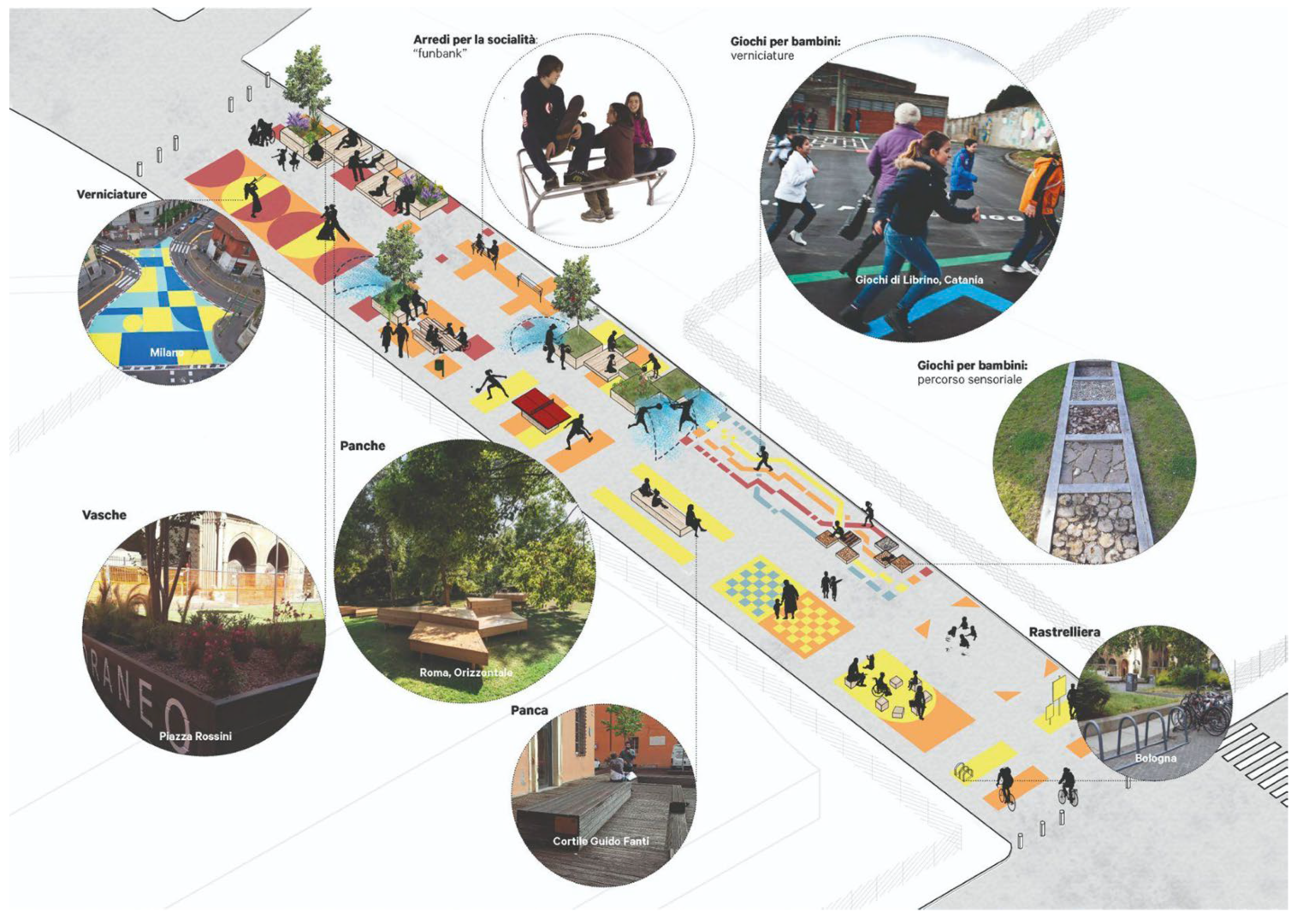
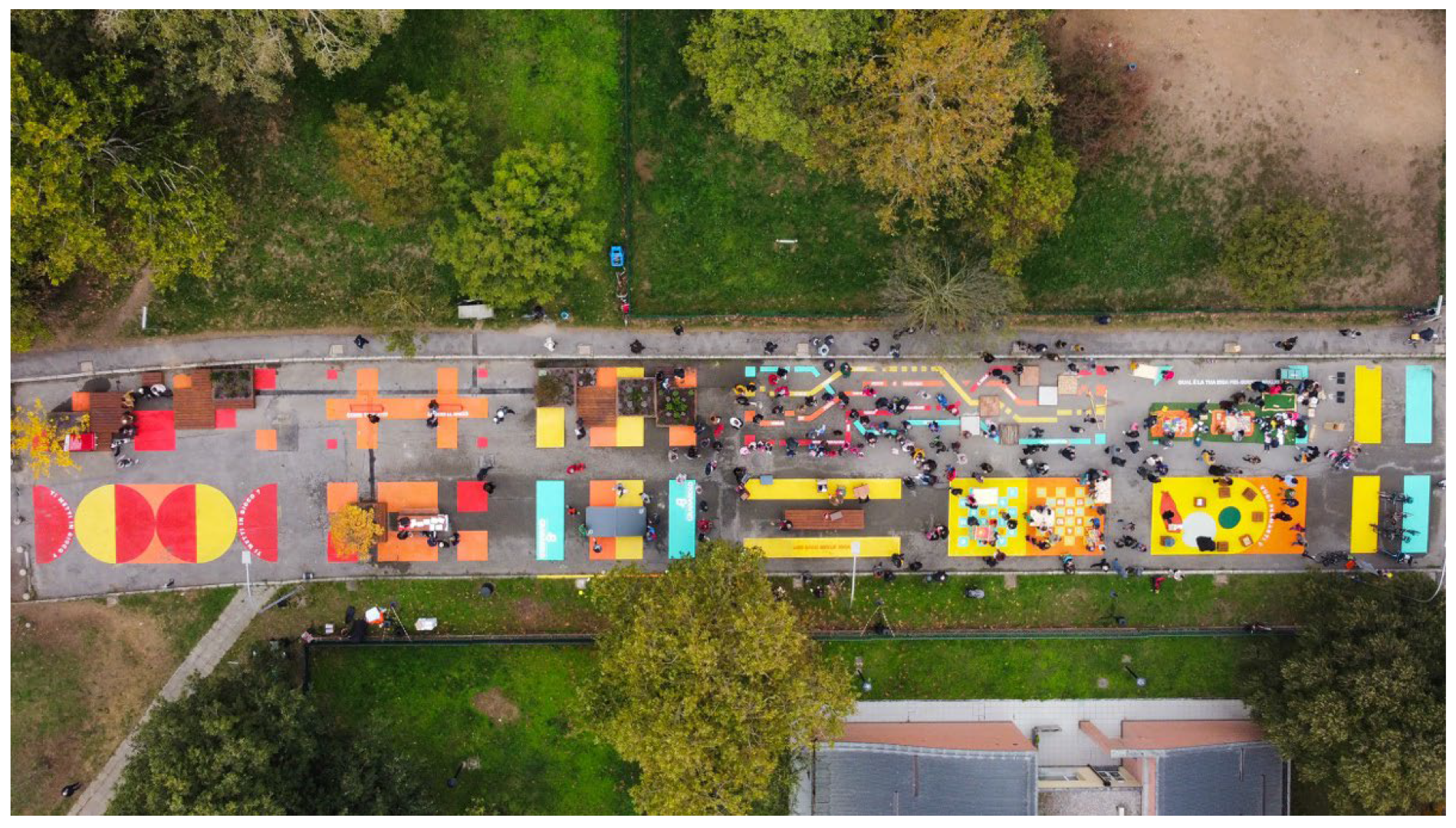
The pedestrianisation of Via Milano (
Figure 5 and
Figure 6) transforms an 80 m driveway into a pedestrian-friendly zone, restricting motorised traffic while allowing pedestrians, cyclists, and light vehicles [
16]. Located in a public housing area, the intervention is part of the “Plan for Pedestrian and Emergency Cycling” [
17] and aims to promote sustainable mobility. Through an innovative temporary setup, the project seeks to maximise the cultural, recreational, and sporting potential of public space. The intervention is open-ended, allowing people of all ages to interpret and use the space freely. Its design, featuring engaging colours and materials, fosters curiosity and encourages participation in the transformation process. Observations during the experimental phase will inform the final adaptation of the space.
This case is strategically relevant because it shows how a mobility intervention can also become a collaborative governance exercise at the neighbourhood level, linking public-space redesign with shared experimentation and feedback-based adaptation. The Municipality of Bologna provided the institutional framework and mobility strategy, Fondazione IU Rusconi Ghigi supported facilitation and communication, research actors contributed to observation and interpretation, and residents were involved as everyday users whose practices and feedback informed the ongoing evaluation of the space. The main observable qualitative signals in this case concern changes in safety perception, patterns of use, and behavioural adaptation, particularly in relation to pedestrian appropriation, informal social interaction, and reduced car dominance. The most relevant steps in this case were temporary implementation, in situ observation, and iterative adaptation, as the intervention was explicitly designed to evolve through use and monitoring rather than being defined once and for all. In this sense, Via Milano translates the City as a Commons approach into a concrete pathway from light-touch participatory engagement and experimentation toward more stable forms of public-space governance compatible with CCC implementation objectives.
2.1.2. Realisation of a Schoolyard in via Procaccini
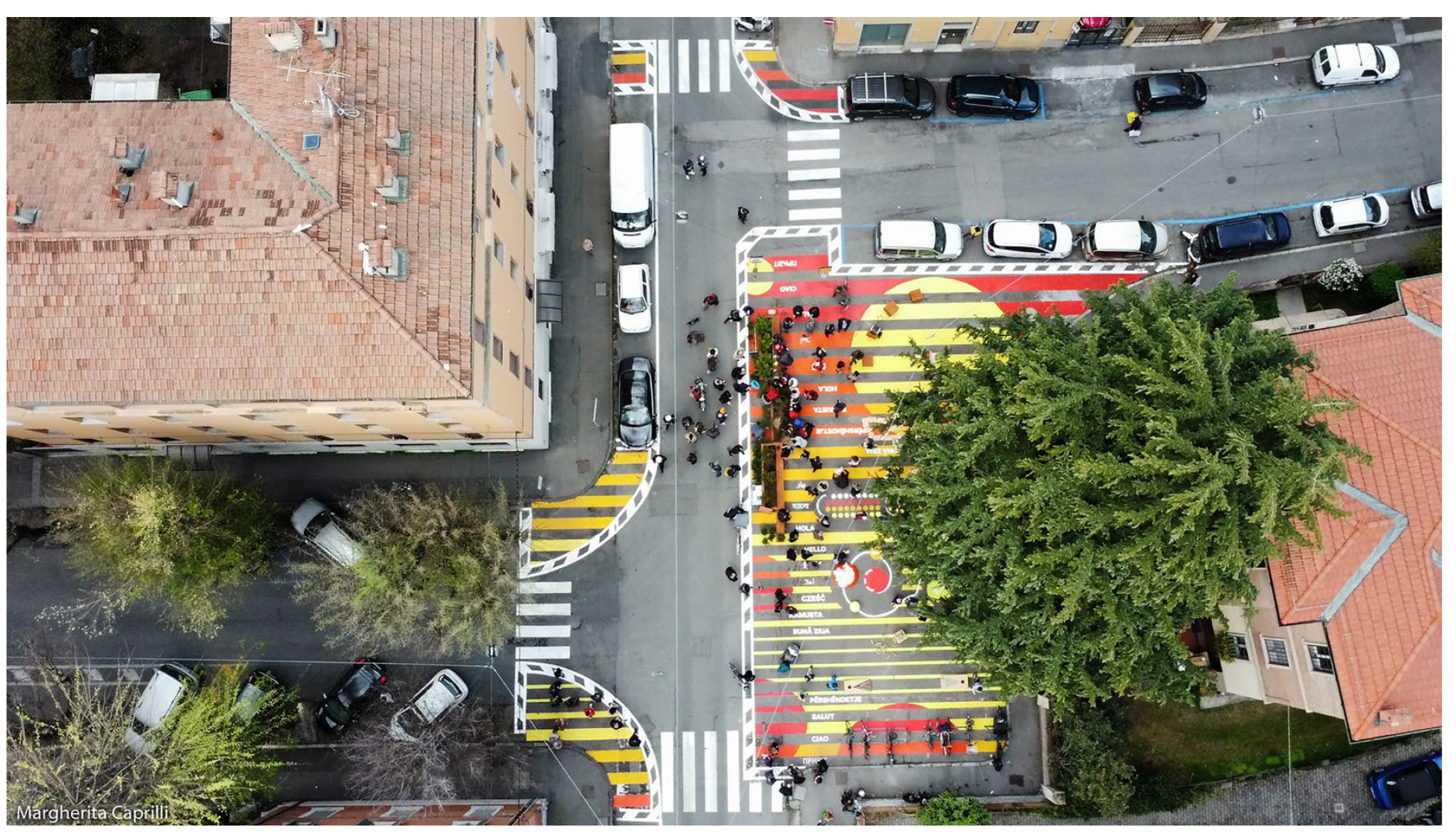
The Via Procaccini intervention (
Figure 7) created Bologna’s first schoolyard, a temporary pedestrian space near the “Testoni Fioravanti” Middle School [
20]. Led by Fondazione IU Rusconi Ghigi and the Municipality of Bologna, the project enhances student safety and encourages play and social interaction. The 300-square-metre pedestrianised area features painted markings, seating, play elements, and plant installations, fostering curiosity and community participation in reimagining the space. The intervention lasts about one year. Depending on how the space is used in this period, the definitive transformation of the area will be carried out, considering the uses that people made of the space during this first experimentation.
This intervention is strategically relevant because it connects collaborative governance with everyday urban welfare, demonstrating how a school-adjacent public space can become a testing ground for safer, more inclusive, and community-oriented mobility solutions. The Municipality and Fondazione IU Rusconi Ghigi played a leading role in design and implementation, while schools, families, students, and nearby residents contributed as key users and co-interpreters of the space through their everyday practices and reactions. The most relevant qualitative indicators here concern perceived safety, intensity and diversity of use, children’s play behaviour, and the emergence of new forms of social interaction around the school entrance. The most relevant steps in this case were co-design, temporary activation, and evaluation through use, since the final transformation depends on how the space is appropriated and interpreted during the experimental phase. As in Via Milano, the intervention shows how tactical urbanism can bridge participatory action and longer-term urban transformation, turning local engagement into a potential enabling condition for broader CCC implementation goals.
2.1.3. The DumBO Space as an Evolving Project of Co-Creation
Another example of experimentation and active citizen engagement is “DumBO” [
21], a temporary urban regeneration space. The name stands for Distretto Urbano Multifunzionale di Bologna (Multifunctional Urban District of Bologna), a place where creativity, culture, and community collide. During the CrAFt project, DumBO space, thanks to these characteristics, has been used as a pilot case study for the Sandbox cities.
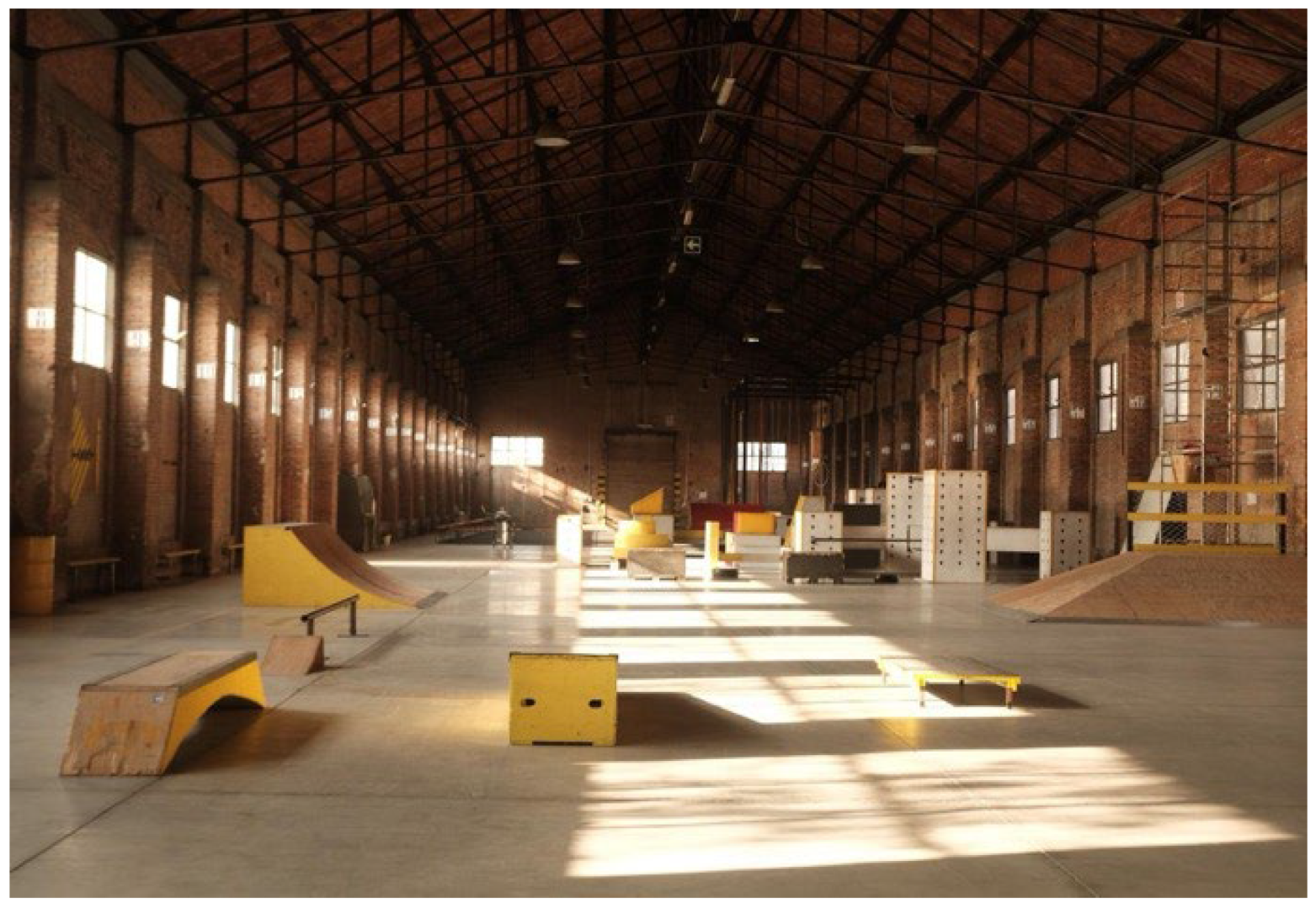
The space is characterised as: “The old railyard where DumBO is located is almost 40,000 square metres. It remains the property of FS Sistemi Urbani—a company 100% owned by the Italian State Railways—that has the task of redeveloping and enhancing infrastructures that are no longer functional for railway operations. The space is temporarily licensed for four years to a joint venture composed of Open Group and Eventeria. The area includes six buildings totaling over 18,000 square meters, plus 20,000 square metres of outdoor space” (
Figure 8) [
22].
The temporary nature of the concession enables a trial-and-error approach, allowing different strategies for space management, community engagement, and environmental sustainability to be tested and refined. This experimental character has fostered a flexible and adaptive research model, where findings are continuously adjusted in response to emerging insights, as an example of the temporary use of spaces open to the territory and citizen participation. To ensure that the project stays true to its values, a Scientific Committee was created with consulting functions to support the method and the path of co-design of activities and the use of space.
The Scientific Committee includes some influential players in the community, such as the Municipality of Bologna, Dipartimento Cultura e Promozione della città (Department of Culture and Promotion of the City), Fondazione IU Rusconi Ghigi, Legacoop Bologna, and the architectural firm Performa Architettura + Urbanistica. They work together to ensure the project remains inclusive, sustainable, and innovative.
The DumBO space promotes local identity and engages local artists, professionals, and communities to regenerate abandoned places. By reusing these areas and integrating collective art expressions, DumBO serves as a co-collaborative example of urban regeneration. At its core, the DumBO project is grounded in the principles of the NEB, promoting sustainability and economic development through an inclusive and alternative community-driven approach. The result is a distinctive urban space that reflects a spirit of collaboration, creativity, and renewal.
The research group of the University of Bologna (UNIBO) experimented with different tools, such as the NEB IM [
23] and the engagement of students with “Core groups” and STEAM (Science, Technology, Engineering, Arts, and Mathematics) team activities [
24]. This approach has strengthened the collaborative spirit among the many coexisting communities, each expressing unique initiatives that promote a sustainable, inclusive, and aesthetically enriching way of living and experiencing the city. From public debates to live art, citizens actively contribute to the project and participate throughout the entire process.
At this stage, DumBO incorporates elements of tactical urbanism and collaborative methods to engage a wide range of stakeholders. It serves as a compelling example of how the City as a Commons approach can be applied to an urban regeneration project, respecting the identity of the place and the communities that inhabit and shape it.
Some key details about the space are that the project of DumBO involves a strategic area of the city, and it has a solid experimental connotation as an example of the temporary use of spaces open to the territory and citizen participation. To ensure that the project stays true to its values, a Scientific Committee was created with consulting functions to support the method and the path of co-design of activities and the use of the land [
25].
DumBO is strategically relevant to collaborative governance because it operates at a larger, more complex scale than street-based tactical interventions, enabling testing of co-creation, temporary use, and institutional learning in a multifunctional urban regeneration setting. In this case, the Municipality, Fondazione IU Rusconi Ghigi, UNIBO, the Scientific Committee, cultural operators, and local communities played differentiated but complementary roles in enabling experimentation, monitoring activities, and shaping the evolving use of the site. The most relevant qualitative signals concern patterns of participation, diversity of activities, continuity of engagement, and the capacity of the space to support inclusive, sustainable, and culturally productive forms of urban use. The most relevant steps in this case were stakeholder convening, co-design of activities, and iterative governance through temporary use, since the project evolved through continuous adjustment rather than a fixed regeneration blueprint. DumBO therefore extends the City as a Commons approach from local tactical interventions to a broader regenerative environment, offering a bridge between participatory urban experimentation and the more complex governance demands associated with CCC implementation.
Taken together, the cases of Via Milano and Via Procaccini show how tactical urbanism can operate as a low-threshold yet institutionally supported form of commoning, in which temporary interventions generate evidence, build trust, and foster shared learning. Across these examples, the Municipality provided the regulatory and strategic framework, Fondazione IU Rusconi Ghigi acted as facilitator and intermediary, research actors supported observation and interpretation, and residents, families, and users contributed through everyday practices and feedback. The main outcomes observed across the cases concern perceived safety, activation of public space, increased social interaction, and the testing of new mobility and use patterns, while the main lesson for collaborative governance is that temporary and reversible interventions can help align civic participation with longer-term public decision-making. In this sense, these experiences illustrate how “soft” participatory processes can generate operational knowledge and governance capacity that are relevant for the implementation of CCCs.
2.2. The Sandbox Methodology Applied in the CrAFt Project’s Cities
The sandbox approach refers to a methodological framework that enables cities to experiment with innovative governance models, participatory processes, and urban interventions within controlled yet real-life environments. Rather than implementing a predefined solution at full scale, the sandbox approach promotes iterative testing, learning, and adaptation, allowing institutions and communities to explore new practices while managing risks. In the CrAFt project, the three Sandbox cities—Amsterdam, Bologna, and Prague—have worked together since 2022 to create new forms of collaborative governance models and active ecosystems of social participation.
According to the project and the research so far, a possible definition of “urban sandboxing” is as follows: “Urban sandboxing refers to creating temporary, low-cost and adaptable interventions in public spaces within a city, typically to test new ideas, designs or policies before committing to permanent changes. The term ‘sandbox’ is based on the idea of a playground where children are encouraged to experiment and test their ideas without fear of failure. Similarly, urban sandboxing encourages experimentation in public spaces to improve the urban environment and enhance the quality of life for residents. This approach often involves collaboration among urban planners, designers, community members, and other stakeholders to create innovative, flexible solutions that can be adapted and refined over time. Urban sandboxing can take many forms, including pop-up parks, temporary bike lanes, community gardens, and public art installations. By providing a platform for experimentation and collaboration, urban Sandboxing can help cities become more resilient, sustainable, and responsive to the needs of their residents” [
24,
26].
In this context, it is useful to distinguish between a living lab and a sandbox. A living lab is generally understood as a place-based co-creation setting in which users, institutions, and other stakeholders collaboratively explore needs, test ideas, and generate situated knowledge. A sandbox, by contrast, places greater emphasis on the governance framework of experimentation: it provides a structured environment with rules, monitoring, feedback loops, and learning cycles through which innovations can be tested before wider institutional uptake. This distinction is particularly relevant for CCCs because sandboxing helps translate broad climate-neutrality ambitions into manageable experimental processes that can be assessed, refined, and potentially scaled up.
Within the context of CCCs, the sandbox approach is particularly relevant, as CCCs are conceived as adaptive and evolving instruments rather than fixed policy documents. By treating specific urban areas or projects as sandboxes, cities can pilot collaborative governance tools, engage stakeholders in the co-design process, and assess social, environmental, and procedural impacts before scaling up interventions. In line with the City as a Commons framework, sandbox environments function as living laboratories where urban commons are activated through experimentation, proximity-based engagement, and institutional flexibility. This approach supports continuous feedback loops between citizens and public authorities, strengthening trust and enabling more resilient and inclusive urban transitions.
In Bologna, the DumBO space was selected as a pilot case due to its capacity to embody the core principles of the City as a Commons approach within a participatory urban regeneration process. As a former industrial site transformed into a multifunctional civic and cultural space, it represents a hybrid environment where temporary uses, cultural production, and collaborative governance intersect. Moreover, DumBO operates at a scale that allows for institutional learning while remaining embedded in the urban fabric, functioning as a living laboratory where governance tools, temporary interventions, and collaborative practices can be observed, assessed, and adapted.
3. Methodology for Assessing Urban Regeneration Interventions
This study adopts a qualitative single-case study design centred on Bologna, combined with a tool-demonstration component based on the application of the CrAFt NEB IM. The aim is not to produce a causal impact evaluation, but to understand how the City as a Commons approach can support CCCs implementation and to explore how the NEB IM can be used as an interpretive and decision-support tool. The analysis focuses on two interconnected units: (i) Bologna’s governance instruments and selected urban regeneration/tactical urbanism experiences, examined as the primary case study; (ii) a set of 17 NEB-inspired participatory projects collected within the CrAFt project, used as a reference set for comparative pattern reading across impact dimensions. The study draws on multiple qualitative sources, including: municipal and policy documents; documentation of collaboration pacts; documents related to CCC and CrAFt activities; project reports and web pages; visual materials and project outputs; and documentation produced by partners within the CrAFt project. These materials are used to reconstruct governance arrangements, project characteristics, and the presence of indicators associated with the NEB IM dimensions. Bologna was selected as the primary case because of its long-standing institutionalisation of the City as a Commons approach and its active role within CrAFt and the CCC context. The Bologna examples discussed in the paper were selected because they are representative of participatory urban regeneration practices in which commoning, temporary intervention, and collaborative governance intersect. The 17 projects collected through CrAFt were included because they are NEB-inspired, participatory in orientation, and sufficiently documented to support a qualitative indicator-based reading.
In Bologna, the leading actors responsible for implementing the City as a Commons approach are the Municipality of Bologna with its Europe and International Sector Office, the Fondazione IU Rusconi Ghigi, and the UNIBO. These actors jointly operate within a governance framework explicitly oriented toward supporting CCCs, where collaborative urban regeneration is conceived as a key implementation pathway rather than a parallel policy domain.
The purpose is to understand how co-creation can involve residents and professionals in various roles: local experts, decision-makers, users, and generators of local solutions, among others. Therefore, it is essential to promote broad engagement across civil society, including public and private sectors such as grassroots and cultural organisations, intergenerational local communities, academia, non-governmental organisations, and more. This inclusive approach reflects the City as a Commons assumption that climate-neutral transitions depend on distributed capacities and on the activation of diverse forms of situated knowledge across society.
As part of the CrAFt project [
27] (which started in May 2022 and closed in April 2025), participatory initiatives and European experiences have been gathered to highlight the value of collaboration among diverse stakeholders. Several project partners contributed case studies and input based on their specific expertise and fields of implementation. These contributions form the comparative reference corpus used in the present paper, but they do not alter the primary case-study focus on Bologna. The selection of these projects, carried out collaboratively with the partners during the initial months of the CrAFt project, aims to broaden the City’s vision as a Commons at an international level and to compare different approaches aligned with the NEB’s values. In this sense, the methodology relies on distributed knowledge production, where partners act not only as providers of case studies but as co-producers of comparative insights relevant for governance innovation and CCC development.
In this context, the experiences of the Swedish and Spanish Mission Cities [
28] and their national networks are particularly relevant. These cities have acknowledged the importance of integrating NEB principles into their CCCs. They emphasise the need to develop Contracts that are firmly rooted in and supported by local communities, considering local contexts, cultural heritage, and encouraging a shared sense of ownership, confirming the relevance of participatory urban regeneration as a strategic governance layer for ensuring local legitimacy and long-term commitment to CCCs’ objectives.
3.1. Analysis of the Best Practices
This paragraph presents an analysis of best practices through an applied methodology to the CrAFt project to co-create a solid common base of collaboration across Europe towards climate neutrality. The approach emphasises selecting illustrative international case studies that demonstrate successful strategies and innovative solutions in similar contexts. In methodological terms, these cases are not treated as a statistically representative sample, but as a purposive set of relevant experiences used to test the analytical applicability of the NEB IM in participatory urban regeneration contexts. Additionally, integrating the NEB IM [
23] provides a comprehensive framework for evaluating the social, aesthetic, and ecological dimensions of each case. This combination ensures a holistic understanding of effective practices, guiding subsequent project development and fostering sustainable, community-centred design solutions aligned with European priorities. The methodology is therefore designed not as a benchmarking exercise but as a decision-support tool to inform adaptive governance processes and CCC implementation.
In this perspective, each partner contributing to CrAFt-Featured Outputs [
29] has provided a selection of relevant case studies of participatory projects and initiatives consistent with the City as a Commons principles as referred to in the previous sections. All the collected cases have been critically analysed by the UNIBO research group using a set of indicators divided into five main clusters: environmental, social, cultural-artistic, economic, and process.
Each case study was evaluated following the clusters and their indicators—corresponding respectively to the pillars and impact categories of the NEB IM—using a Likert-type scale to provide a qualitative assessment of each cluster’s implementation level. A score was assigned to each cluster based on the identification of indicators representing the project’s main application. The scoring system is not intended to produce rankings, but to support comparative and pre–post assessment, enabling the identification of patterns, gaps, and learning trajectories across projects and contexts. This score varies from 1 to 5, depending on the level of implementation of each project, based on the number of indicators highlighted (
Table 1). The method for assessing scores for individual clusters is explained in more detail in the following
Section 3.2.
Moreover, specific indicators of each category were underlined to clarify the implementation sub-areas better and identify differences and joint features. This indicator-based reading supports iterative monitoring processes, consistent with the understanding of CCCs as evolving and adaptive instruments.
3.2. The CrAFt NEB IM as a Tool for Guiding the Urban Regeneration
The CrAFt NEB IM (
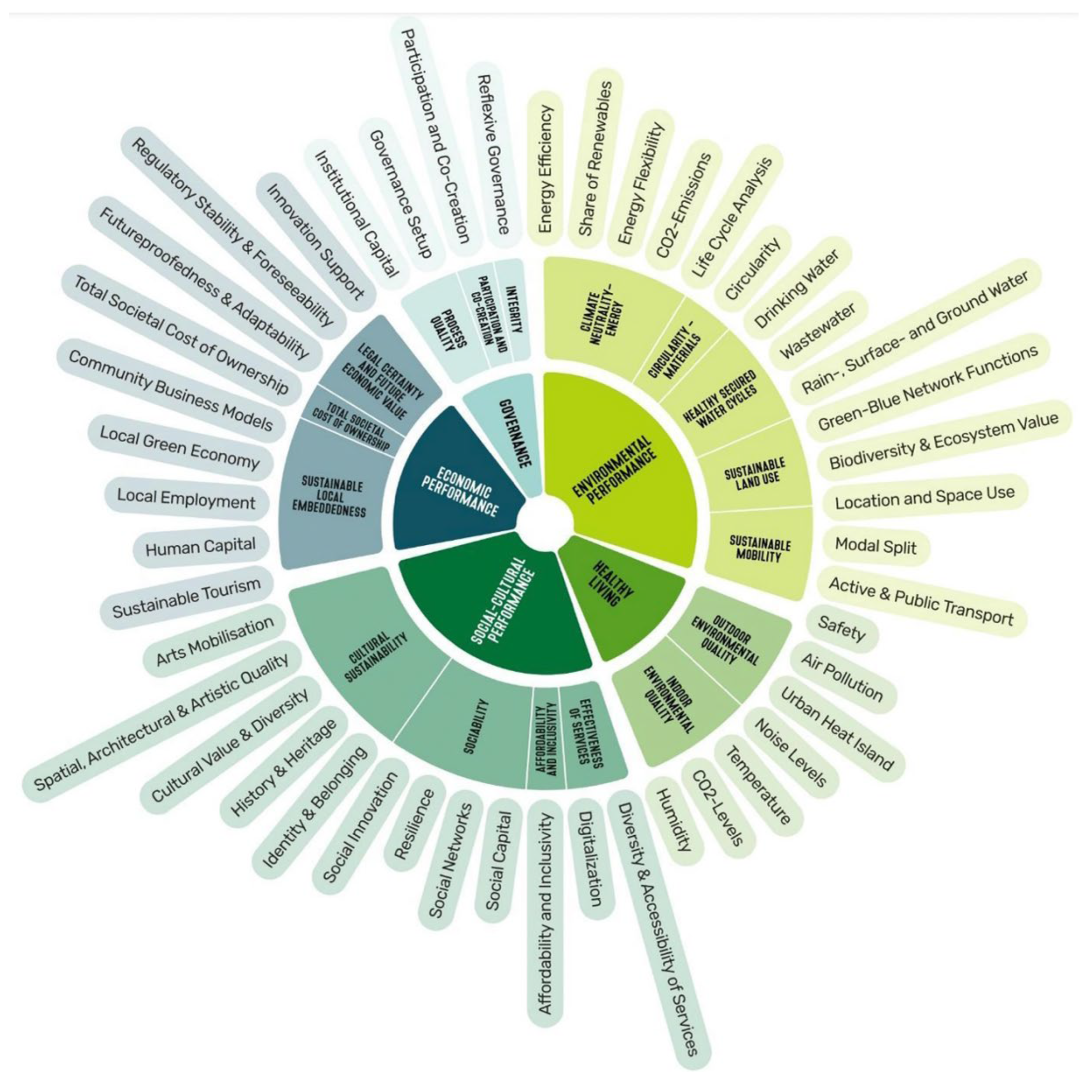
Figure 9) developed in CrAFt further enhances the integration and synergies of the City as a Commons approach with the CCC and the NZC objectives, by addressing technical gaps in environmental and economic aspects, ensuring that complex projects are supported by solid stakeholder networks. Artistic-cultural aspects are further emphasised to highlight the role of urban creativity in social inclusion. Social integration, accessibility, and public–private space connections are also set as key elements to foster equity and collective responsibility. Process scalability and iterability are stressed to ensure the long-term success of collaborative urban projects at a citywide level. In this respect, the NEB IM operationalizes City as a Commons principles into CCC-relevant indicators, translating collaborative governance values into evaluable dimensions for climate-neutral urban transitions.
The NEB IM considers five main intervention domains, called “pillars” (the first ring, starting from the centre of the compass), and 17 impact categories (the second ring). The five pillars consist of the well-known triple bottom line for sustainable development (planet, people, prosperity), complemented by a pillar on quality of life and one on governance. The 17 impact categories refer to essential aspects of integrated sustainable development (ecological, infrastructural, social, cultural, economic, aesthetic, legal, etc.). In order to achieve a balanced approach towards integrated sustainability, inclusivity, and beauty, it is recommended that all 17 categories be considered. As one can observe, there is no distinct category for “physical space”. Indeed, in CrAFt’s NEB IM, physical space is handled as a cross-cutting category, serving as a carrier for all the other functions, including urban governance and development processes. Across the 17 impact categories, the present research has identified a range of relevant indicators based on both methodological research and dialogues with CrAFt Cities and their stakeholders. As illustrated in
Figure 9, the IM proposes a list of 46 indicators (third ring) as an indicative set of primary Key Performance Indicators (KPIs) that are already well known and widely used by most cities. The list is intended to guide the selection of indicators from existing sets and reporting tools already in use by the city, the project, or the process at stake. At the same time, the pillars, impact categories, and suggested indicators help identify potential gaps and additional opportunities.
The evaluation framework for urban projects presented in this paper follows three main steps:
Project identification—Includes basic project details (name, location, duration, coordinators, and objectives), along with implementation phases and outcomes.
Visual communication—Uses images to effectively convey the project experience. The visual graphic helps to summarise key points and use them in different urban contexts to facilitate communication and optimise time resources. In fact, it creates a common language given the diversity of cities and people involved, from city experts to citizens.
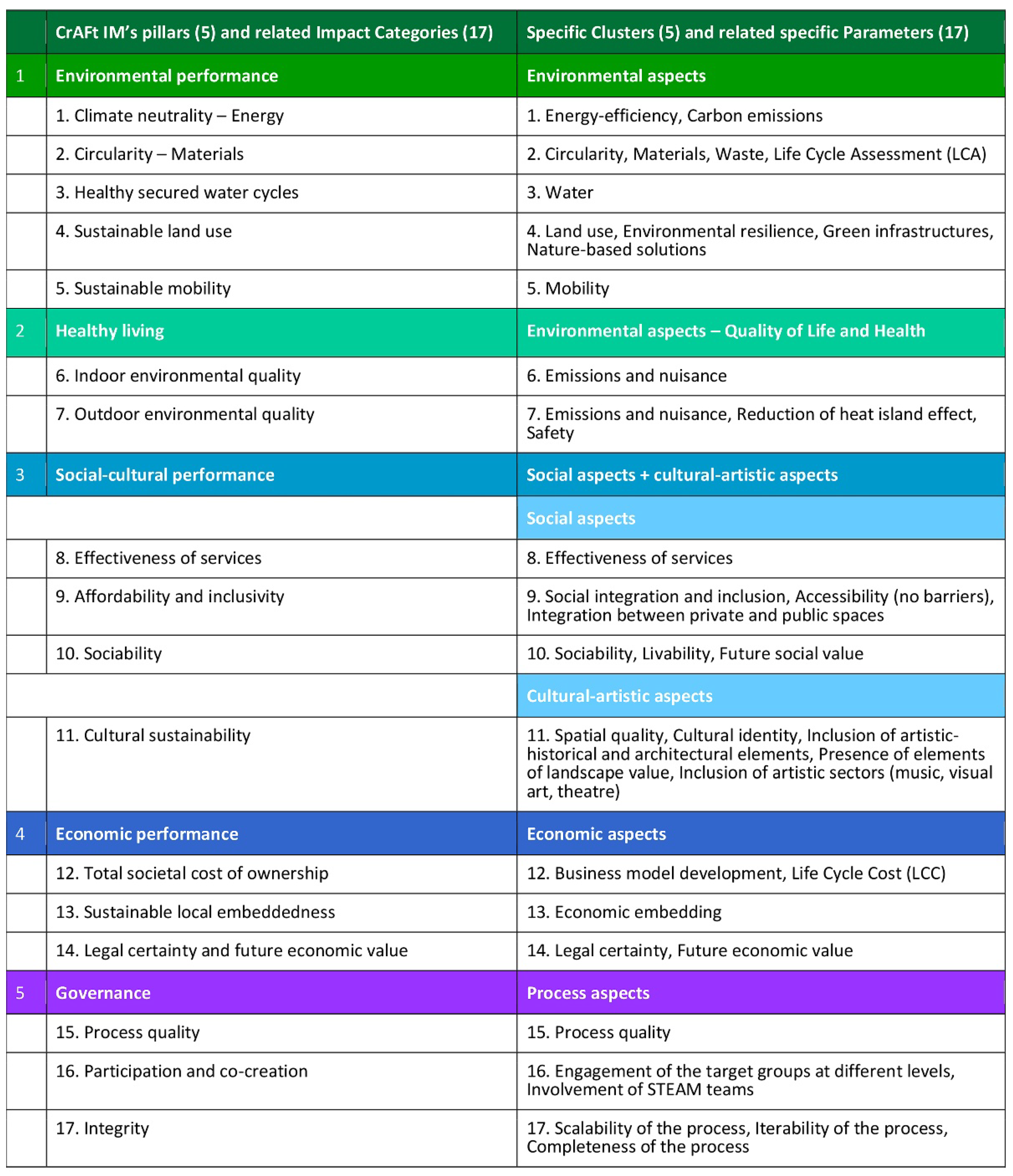
Assessment based on specific clusters and parameters relevant for NEB values and the City as a Commons approach—Projects are analysed through sustainability, aesthetics, and inclusion criteria, aligning with the City as a Commons approach and the CrAFt NEB IM. Indeed, to perform a qualitative assessment of the expected impacts in terms of NEB values as well as the City as a Commons’ involvement, the research developed a set of specific clusters and parameters, corresponding respectively to the pillars and impact categories defined by the CrAFt project as represented in
Figure 10.
In the latter step, the link and comparison between the CrAFt IM’s pillars and impact categories and the specific clusters and indicators, illustrated in
Figure 10, is aimed at highlighting the slight differences among them. It is important to point out that these differences do not jeopardise the objectives and the results of the process, but, on the contrary, are made in the light of the City as a Commons approach and the Bologna experience. In fact, the CrAFt IM with its pillars and categories is well aligned with the City as a Commons approach; it widens and better clarifies more technical parameters (but necessary) addressed to lacking implementation areas in the implementation of the City as a Commons in Bologna, which usually refers to more complex collaborative projects. This is an important consideration regarding the definition and effectiveness of CCCs: as the complexity of a project increases, there needs to be a solid, structured stakeholder network in place to effectively support its implementation and sustainability over time.
The 17 projects listed below were retained because they combine three conditions relevant to the purposes of this study: alignment with NEB values, a participatory or collaborative governance orientation, and sufficient documentation to support qualitative indicator-based assessment.
The following
Table 2 lists the 17 cases collected from the partners of CrAFt relevant in terms of implementation of NEB values and adoption of a City as a Commons approach: (1) Circular Buiksloterham; (2) De Ceuvel; (3) IDOLS—Increasing Demand by Offering LearningS; (4) Build the City; How people are changing their cities; (5) Cultural and Creative Cities and Spaces (CCSC)—a policy project co-funded by the Creative Europe Programme of the European Union; (6) Agents of Transformation (AOT)—A student driven platform for systemic change through art and design; (7) Office for Para-Pedagogical Activities, division of the Danube Transformation Agency for Agency; (8) FAST 45—Futures Art School Trends 2045 (Erasmus+ Knowledge Alliance); (9) “Grätzloase—wir verwandeln den Freiraum!” (Grätzloase—we transform the open space!); (10) Healthy Streets for London Prioritising walking, cycling and public transport to create a healthy city; (11) Nordic Urban Lab 2020, art and performance in public space-Studio Athens; (12) Political Poetic (Politico Poetico)—“Così sarà! La città che vogliamo” [This is how it will be! Our ideal city]; (13) ROCK—Regeneration and Optimisation of Cultural heritage in creative and Knowledge cities; (14) “Co-Bologna” the collaboration pact in “LabGov” international network; (15) “Collaborare è Bologna” project in Bologna; (16) “Via Milano Pedonale” project in Bologna; (17) “Piazza Scolastica on via Procaccini” in Bologna.
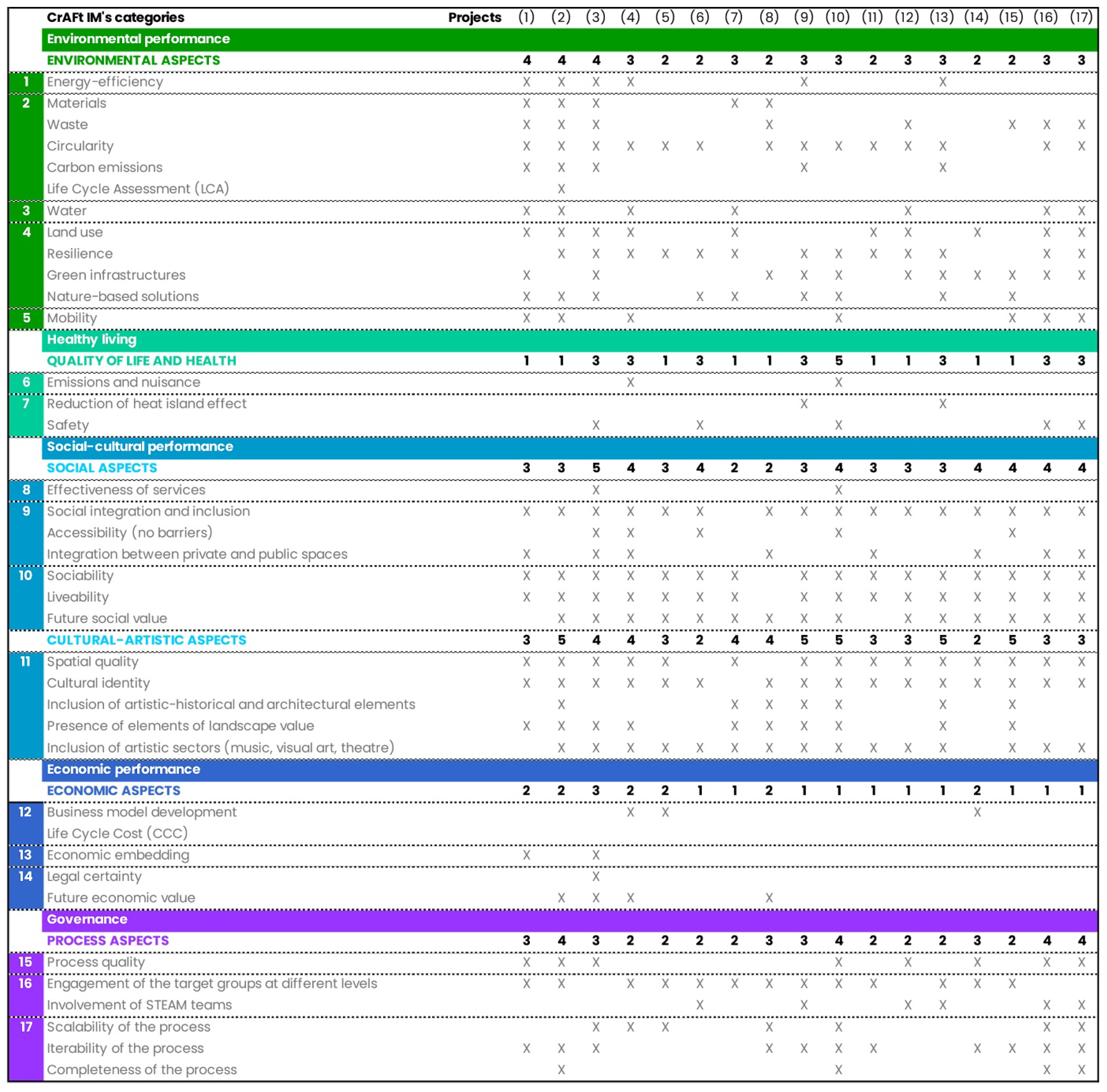
The projects collected are located in different European cities and regions and focus on participatory initiatives centred on the design sector, cultural initiatives, and students’ involvement. The selection reports past and ongoing experiences in different contexts, which are extremely relevant in terms of NEB values and the City as a Commons, where governance and social performance (quality of life) are the core elements. Their inclusion is therefore intended to support comparative interpretation across dimensions rather than to establish equivalence across contexts or produce a formal ranking of project quality. The analyses carried out by the UNIBO research group consisted of assessing the presence and level of relevance of the six clusters identified for each selected project, as represented in
Figure 11. As represented in
Figure 11, a score was assigned to each cluster based on the identification of indicators representing the project’s main application. The scoring system is not intended to produce rankings, but to support comparative and pre–post assessment, enabling the identification of patterns, gaps, and learning trajectories across projects and contexts. This score varies from 1 to 5, depending on the level of implementation of each project, based on the number of indicators highlighted (
Table 1).
Specifically, for each selected project, the implementation of each individual parameter was assessed using a binary [yes/no] value. Based on the number of parameters considered for each cluster, representing the percentage of implementation of the parameters related to the cluster, an overall score ranging from 2 to 5 was assigned to the cluster. If no parameters were considered, the cluster was assigned a score of 1.
The outcomes could be used as shared knowledge about relevant experiences for the City as a Commons implementation at the European level. They permit the identification of challenges, interconnections, opportunities, and enhancements associated with actual projects and experiments. They can be used to steer future projects and initiatives, and confirm or deny the analysis results on Bologna collaboration pacts. In line with the methodological position stated above, these outcomes should be understood as interpretive and exploratory: they are useful for identifying recurring patterns and informing future governance choices, but they do not provide a standalone measure of long-term effectiveness. The primary objective is to assess which projects implemented the different specific clusters (Environmental aspects; Environmental aspects—Quality of life and health; Social aspects and cultural-artistic aspects; Economic aspect; Process aspects) and the corresponding CrAFt IM’s categories (Environmental performance; Healthy living; Social-cultural performance; Economic performance; Governance). Results of this analysis will be discussed in the following
Section 4.
4. Discussion on NEB Impact Model Categories
Bologna’s experience with its history of collaborative urbanism certainly provides a valuable foundation for further analysis and implementation of citizens’ and stakeholders’ engagement towards the adoption of climate-neutral strategies. The city’s long journey toward realising a “collaborative city” through the City as a Commons approach has highlighted both critical challenges and strong potential.
Citizen participation is and remains central to this transformation, with participatory processes and urban laboratories serving as key tools for fostering engagement. Collaboration pacts play a crucial role in legitimising citizen-led initiatives, transforming them from simple proposals into concrete actions that generate urban change.
While collaboration pacts have enabled small but meaningful local-scale projects, the next step involves scaling up these initiatives to the neighbourhood and city levels. This requires a well-structured network of collaborative actors capable of addressing more complex urban issues. These findings confirm that participatory governance represents a necessary but not sufficient condition for achieving climate neutrality, requiring complementary technical, environmental, and economic capacities.
As clarified in the methodology, the discussion in this section combines two levels of analysis: Bologna as the primary case study and the set of 17 CrAFt NEB-inspired projects as a comparative reference set for interpretive pattern reading. The purpose is not to rank projects or to claim causal effectiveness, but to use the NEB IM dimensions to identify recurrent strengths, gaps, and governance implications relevant to CCCs.
The following (
Section 4.1,
Section 4.2,
Section 4.3,
Section 4.4 and
Section 4.5) present a critical analysis of the results obtained, ordered according to the percentage of selected projects belonging to the thematic dimensions corresponding to the five CrAFt IM’s pillars: (i) Governance and process dimension; (ii) Social and Cultural dimension; (iii) Environmental and Technical dimension; (iv) Healthy Living and Quality of Life dimension; (v) Economic dimension. The analysis starts with the most frequently addressed dimensions and ends with the least addressed ones.
4.1. Governance and Process Dimension
In line with the objectives of the approaches, methods, and tools described previously, it is important to focus on the international level to enable a comparative analysis of selected participatory projects across Europe. Within this comparative reference set, governance and process dimensions emerge as the most consistently developed across projects. This assessment, guided by the City as a Commons framework and NEB values (sustainability, aesthetics, and inclusion), helps identify trends and priorities in different urban contexts.
The analysis suggests that stakeholder engagement, process iterability, and participatory co-creation are the strongest recurring dimensions across the 17 projects. This result is coherent with the Bologna case, where collaboration pacts, urban laboratories, and temporary interventions have progressively built institutional routines for civic engagement and collective action.
However, strong governance performance does not automatically translate into climate impact unless it is explicitly coupled with environmental performance indicators and implementation capacity, in addition to the fact that the depth of implementation varies across projects when examined through specific indicators. The integration of multiple impact categories is essential for comprehensive urban transformation, and further analysis is needed to address currently underrepresented factors, such as financial sustainability. In particular, the limited integration of economic sustainability emerges as a critical risk for CCCs, as the absence of viable financial models may undermine the long-term feasibility of otherwise inclusive and well-governed initiatives. A broader study will help refine these insights and ensure a balanced approach to assessing collaborative urban projects.
4.2. Social and Cultural Dimension
The projects collected in this document and delivered by CrAFt partners are located in different European cities and regions. They focus on participatory initiatives centred on the design sector, cultural initiatives, and student involvement. The selection reports past and ongoing experiences across different contexts, which are highly relevant to NEB values and the City as a Commons, where governance and social performance (quality of life) are the core elements. A second major pattern concerns the strength of social and cultural-artistic dimensions. Across the reference set, most projects demonstrate strong implementation in social integration, inclusion, sociability, liveability, and cultural identity. Specific analyses are intended to determine which projects implement the IM’s categories and which are the most frequent ones to integrate some reflections according to the City as a Commons experience that can also be useful for CCCs. For these reasons, some preliminary analyses were conducted to better understand and communicate the valuable outcomes within this deliverable’s framework.
These analyses and outcomes are not intended as a statistical basis. Rather, they are to be used as a shared knowledge about relevant experiences for the City as a Commons implementation at the European level. They allow us to discover some criticalities, connections, potentialities, and improvements that belong to real projects and experimentations. They can be used to steer future projects and initiatives, and confirm or deny the analysis results on Bologna collaboration pacts.
This prevalence of social-cultural implementation is significant because it shows that participatory urban regeneration is particularly effective in creating relational value, collective visibility, and symbolic ownership of transformation processes. At the same time, it also suggests that many projects remain stronger in mobilising communities than in translating that mobilisation into measurable environmental or economic transformation.
4.3. Environmental and Technical Dimension
The first aim is to assess which projects implemented the different impact categories (environmental aspects, quality of life and health, social aspects, cultural-artistic aspects, process aspects, and economic aspects) and the corresponding CrAFt IM’s categories (technical-environmental performance, healthy environment (physical) quality of life, quality of life—social performance, governance and economic performance).
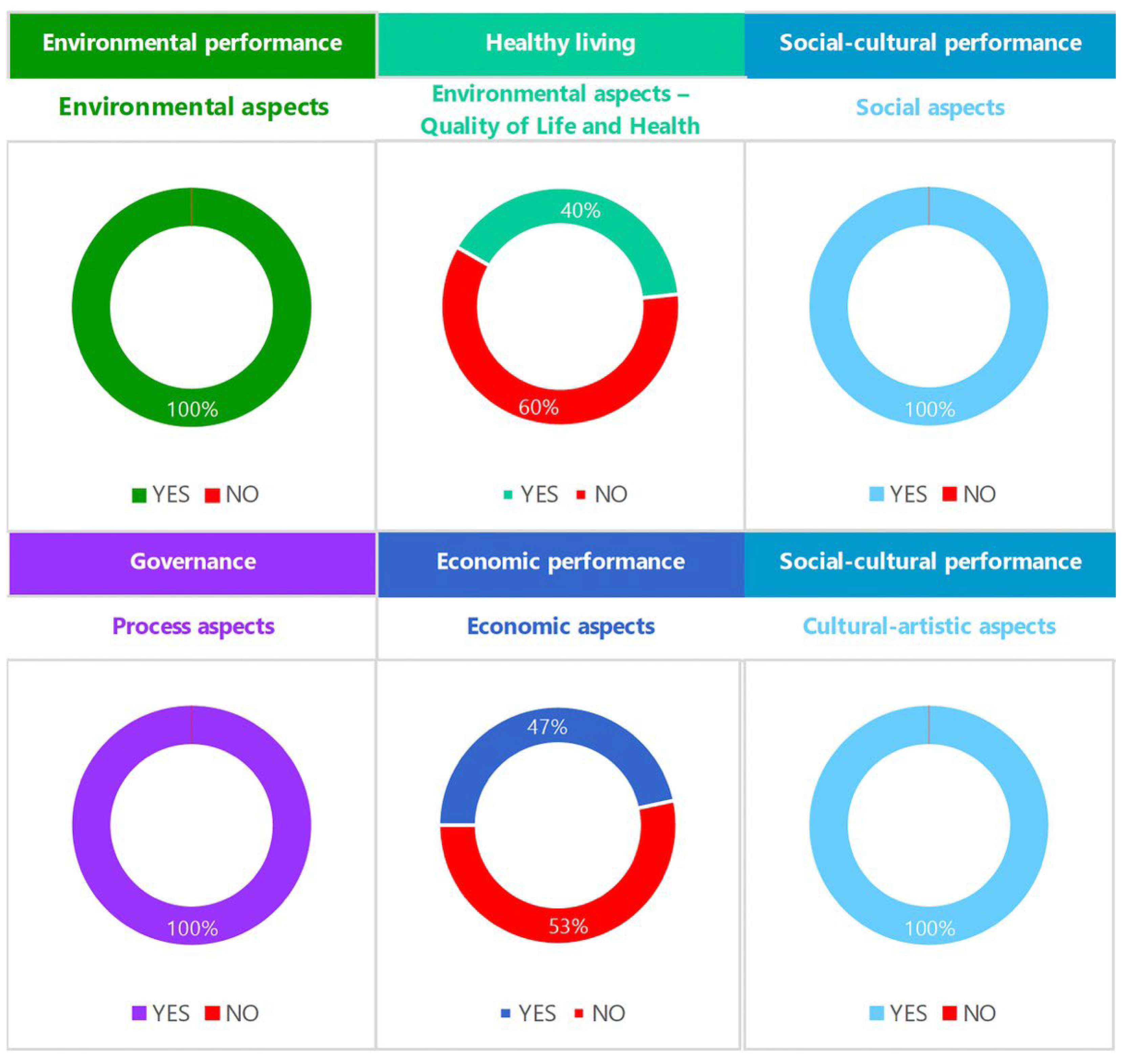
Thus, the first results, based on analysis by the aforementioned CrAFt partners, show that the totality of the projects focuses on the following clusters: Environmental performance, Social-cultural performance, and Governance. However, only less than half of them are interested in the clusters below: Healthy living and Economic performance (
Figure 12). This distribution indicates that broad reference to environmental themes is common, but that deeper implementation of technical-environmental criteria is much more uneven. This imbalance suggests that participatory urban regeneration initiatives, while strong in governance innovation, must be further aligned with the economic and environmental requirements of CCCs to effectively contribute to climate-neutral transitions.
Further analyses, looking at the indicators of the different categories, allow for determining how the various projects prioritise their interests/actions within the same category and how they implemented them (e.g., even if all the projects implemented environmental aspects, the level of implementation can be very different if we look closer at the indicators).
Useful reflections come from the critical analysis of the implementation of the CrAFt IM categories. These analyses pointed out the predominance of the implementation in social performance and governance, followed by technical-environmental performance if we consider half of its indicators (i.e., circularity, resilience, green infrastructures, nature-based solutions, and sustainable land use). Furthermore, the preliminary findings confirm the importance of integrating actions and strategies that consider multiple impact categories. These initial insights will be further examined through a more systematic and comprehensive analysis. In particular, some currently underrepresented criteria—such as financial aspects—may be the result of a biased selection of examples provided by the project partners.
In
Section 3.2, the impact categories of the NEB IM were presented, along with an overview of how the projects collected by CrAFt partners reflect these dimensions. Starting with technical and environmental performance, most projects address circularity, resilience, green infrastructure, nature-based solutions, and sustainable land use. However, fewer than half of the projects implement aspects such as energy efficiency, carbon emissions, waste and material management, water use, mobility, and Life Cycle Analysis (LCA). This is clearly visible in
Figure 11, where the rows corresponding to these indicators have many blank values (indicating non-implementation of the parameter), unlike others, where “X” values predominate (indicating a high level of implementation).
From the perspective of CCC implementation, this is a crucial finding. It suggests that participatory and place-based urban regeneration can generate enabling conditions for climate transition, but does not automatically ensure the incorporation of the more technical indicators required for climate-neutral pathways. In other words, commoning processes may support legitimacy, stewardship, and local mobilisation, but these strengths must be coupled with stronger technical integration to fully contribute to climate-neutral targets.
4.4. Healthy Living and Quality of Life Dimension
Regarding the healthy environment and quality of life, a smaller number of projects include measures related to outdoor and indoor environmental quality, such as emissions and nuisances, reduction in the urban heat island effect, and safety. When it comes to social aspects and overall quality of life, nearly all projects embody social integration and inclusion, sociability, liveability, and the creation of future social value. Conversely, fewer than half address the integration of public and private spaces, barrier-free accessibility, and only two projects include the effectiveness of services; though this, along with the cultural-artistic dimension, represents the highest level of implementation. This pattern suggests an important distinction between perceived and relational quality of life, which is often strongly addressed, and more technical or service-oriented dimensions of healthy living, which are less systematically embedded. For Bologna, this distinction is particularly relevant because many tactical and participatory interventions are effective in activating public space and improving social use, but may require additional institutional and technical layers to address health-related environmental performance more comprehensively.
4.5. Economic Dimension
On the economic front, the majority of projects show a low level of implementation. Economic aspects, along with those linked to healthy environments and quality of life, remain the least developed among the evaluated criteria. Finally, governance emerges as a central focus across all projects. High levels of implementation are observed in areas such as stakeholder engagement at multiple levels, process iterability, and participatory approaches, including co-creation.
The limited integration of economic sustainability emerges as one of the clearest weaknesses in the reference set. This is particularly important for CCCs, because climate-neutral transitions require not only social legitimacy and governance capacity, but also financially viable pathways, long-term maintenance models, and institutional resources capable of sustaining implementation over time. Without such economic grounding, there is a risk that participatory initiatives remain locally meaningful but structurally fragile.
4.6. Tension and Limitations of Participatory Commons Governance in Climate-Neutral Transition
The results discussed above should also be read in light of some broader tensions that affect participatory and commons-oriented governance. First, representativeness remains a central issue: actors who participate most actively are not always socially or territorially representative of the wider population [
42,
43]. Second, power asymmetries may persist even within collaborative settings, as institutions, organised groups, and better-resourced actors often retain greater capacity to shape agendas and outcomes [
42,
43,
44]. Third, participation fatigue may emerge when engagement processes are repeated without producing visible long-term effects or when they rely excessively on voluntary civic commitment [
42]. Fourth, administrative capacity and continuity are crucial because collaborative governance requires time, facilitation, mediation, and institutional support that are not always available at scale [
43]. Finally, scalability remains a structural challenge: approaches that work well in tactical, neighbourhood-based, or temporary interventions may be difficult to translate into citywide or long-term climate-neutral transformation without stronger technical and financial integration [
43].
These tensions are well documented in the wider literature on participation and collaborative governance and should not be overlooked when interpreting Bologna’s experience. Classic works on participation have long warned against tokenism and unequal power distribution, while later critical literature has highlighted the risk that participation may mask domination, exclusion, or institutional asymmetry rather than resolve it [
42,
44,
45]. More recent debates on climate-neutral and just urban transitions further stress that governance innovation must be assessed not only in terms of inclusion, but also in terms of equity, implementation capacity, and distributional effects. For this reason, the present paper does not interpret Bologna as proof that participation automatically produces climate neutrality; rather, it presents the case as a situated example showing both the enabling role and the limits of commons-based governance in relation to CCC implementation [
45].
4.7. Interim Implications for Bologna and CCC Implementation
Taken together, the NEB IM pattern reading suggests that Bologna’s City as a Commons approach provides a strong governance and social basis for collaborative urban transformation, but that this basis must be more systematically connected to environmental, economic, and technical dimensions if it is to fully support CCC implementation [
43]. The value of the Bologna case lies, therefore, not only in showing that participatory instruments such as collaboration pacts, tactical urbanism, and urban laboratories can activate communities, but also in showing where these instruments require reinforcement in order to address the harder requirements of climate-neutral transition [
43]. In this sense, the NEB IM functions as a useful interpretive tool for revealing both strengths and imbalances, thereby supporting more reflexive and integrated urban governance [
42].
5. Conclusions
The City as a Commons approach in Bologna, initiated in 2014, has provided valuable insights into methodologies, tools, and outcomes that help the implementation of CCCs. The approach is based on collaboration pacts, and the Regulation on Collaboration for Urban Commons within the municipal policy “Collaborare è Bologna”. Key initiatives include the “Partecipa” platform for submitting collaboration pacts, which legitimise cooperation among citizens, the Municipality, and various local actors (businesses, NGOs, associations, etc.). In the present paper, Bologna is discussed as a primary and situated case study through which to explore how a City as a Commons approach can support CCC implementation, rather than as a universally transferable model or a formal impact evaluation. In this sense, Bologna is not presented merely as a local best practice, but as a governance laboratory where collaborative tools are tested to extract transferable principles for climate-neutral urban transitions and CCC implementation at the European level.
The first outcomes related to the implementation of the Bologna Regulations positively affected the city in terms of the number of collaborative initiatives. However, at the same time, it highlighted the importance of creating a network of stakeholders and collective economic institutions that could provide significant financial support, acting at the neighbourhood level and throughout the entire city. The many small and local initiatives with positive results are valuable applications of a model that can potentially be scaled up to the neighbourhood and city level with respect to the City as a Commons approach. Nevertheless, the experience shows that scalability is not an automatic outcome of directly applicable solutions; thus, it requires dedicated institutional coordination, economic infrastructures, and long-term financial mechanisms capable of supporting collective action beyond the experimental phase. This point is particularly relevant for CCC implementation, where capacity, financing structures, and continuity over time must align with participatory legitimacy.
The implementation at the neighbourhood level is a necessary step toward realising the City as a Commons. In fact, the city needs “to invest in a policy strategy that targets neighbourhoods” [
46], not only for civic engagement but as productive units of inclusive collective economic development. This involves conceiving the city as an engine of inclusive economic development, in which neighbourhoods are spaces or platforms where communities can identify common interests and begin to co-produce or co-manage services with centralised coordination. At the same time, the analysis of the 17 NEB-inspired participatory projects through the CrAFt NEB IM suggests that the strongest dimensions are governance and social-cultural ones, while environmental and especially economic dimensions remain less developed. This imbalance does not diminish the value of participatory governance, but it indicates that commoning approaches alone are not sufficient to deliver climate neutrality unless they are more systematically connected to technical-environmental performance, monitoring frameworks, and economic sustainability. From a CCC’s perspective, neighbourhoods represent the privileged scale for activating living labs, enabling the translation of citywide climate objectives into locally grounded, participatory, and implementable actions.
The Municipality of Bologna, alongside urban facilitation through Fondazione IU Rusconi Ghigi, plays a central role in managing collaborative initiatives and securing funding. More recent projects integrating tactical urbanism, along with past and ongoing collaboration pacts, serve as reference models for participatory governance. These initiatives, supported by the co-city protocol and District Labs, foster citizen engagement and co-creation in urban regeneration.
The international expansion of the City as a Commons approach, aligned with NEB values, aims to compare Bologna’s experience with other contexts, focusing on key outcomes and achievements. A crucial aspect is linking the analysis of selected projects to the CrAFt NEB IM to establish a common qualitative assessment framework. Rather than providing statistical measurements, this approach highlights critical issues, potentialities, and connections among case studies. In this context, monitoring is conceived as a process-oriented and iterative activity rather than a purely ex-post assessment. The use of the CrAFt NEB IM supports a comparative pre–post evaluation logic, allowing cities to document baseline conditions, track changes during implementation, and qualitatively assess social, cultural, environmental, and procedural impacts over time. This approach is consistent with the understanding of CCCs as evolving instruments and with the experimental nature of commons-based urban regeneration. This comparative perspective contributes to building a shared evidence base that can support policy learning for CCC development, informing governance innovation not only at the local but also at the national and European levels. All projects emphasise social, cultural, and procedural dimensions, particularly in terms of sociability, affordability, inclusivity, participation, co-creation, and cultural sustainability—core principles of the City as a Commons.
The need for more participatory projects comes from both citizens and public administrations, driven by the need for more inclusive and collaborative governance beyond rigid hierarchical structures. Culture plays a key role in engaging communities, breaking stereotypes, and revitalising urban commons, contributing to a more equitable and sustainable future in diverse societies. In this context, culture plays a strategic role not only in community engagement and the reactivation of urban commons, but also as a lever for behavioural change, social acceptance, and collective commitment to climate-neutral transition pathways.
Public-civil partnerships, rooted in the City as a Commons approach, enable shared governance, co-design, and collective action for the common good. The growing need for civil-public partnerships calls for urban policies that adapt to new forms of cooperation.
While many selected projects emphasise sustainability, beauty, and inclusivity, fewer integrate economic and environmental aspects, which are essential for long-term impact. This limitation is particularly critical in relation to CCCs: without the integration of economic viability and technical-environmental performance, such as energy efficiency, material cycles, emissions reduction, and environmental quality, participatory projects risk remaining procedural or symbolic, rather than becoming effective drivers of climate neutrality. In this respect, the absence of structured pre–post monitoring frameworks further limits the capacity of participatory projects to demonstrate their contribution to climate objectives. Without baseline data and follow-up evaluation, it becomes difficult to assess whether collaborative actions effectively improve environmental performance or generate durable economic value. To ensure lasting change, participatory projects must incorporate technical-environmental factors (energy, materials, air/noise quality) alongside social, cultural, and governance elements. A holistic approach is necessary to structurally transform cities and sustain urban commons over time.
In order to make the City as a Commons approach concretely implementable and replicable, it would be important to define an application protocol that can guide all stakeholders involved in the urban transformation process towards a shared project outcome, as referred in CrAFt Cookbook [
47] and the development and implementation of CCCs within the NZC platform to the Cities Mission. In this respect, the CrAFt NEB IM should be understood not as a ranking device, but as an interpretive and decision-support tool that can help structure a multi-stakeholder application protocol, reveal strengths and imbalances across dimensions, and support more reflexive project design, monitoring, and adaptation.
Considering the experience in Bologna, we recommend that such an application protocol be based on the “co-city” protocol, collaboration pacts and initiatives, and focus on the following elements:
Identifying urban commons/urban elements to be included and relevant for the transition to climate neutrality;
Defining participatory processes for fostering the discussion with scheduled meetings (or other events) with experts, municipal technicians, scholars, and professionals that can provide effective support for the development of feasible proposals;
Creating a strong network of stakeholders managed at the municipal level and then “distributed” at the neighbourhood or local levels, respecting the different implementation areas of the projects. In this way, it is possible to have an overall view of the network that can be shared at lower levels or even higher levels (if more cities are connected within the same network);
Proposing different types of partnerships in relation to the complexity of the interventions, promoting highly transformative interventions with multi-stakeholder engagement; Including funding tools and financial opportunities supported by a business and financial model to assess the sustainability of the project over time;
Defining a common list of types of interventions and categories, referring to the CrAFt NEB IM categories and indicators, to determine the basic level of implementation necessary to meet the minimum target towards climate neutrality. These certainly include a certain level of adaptation to local circumstances.
Defining the monitoring and evaluation model, supported by an evaluation board, to assess the project before acceptance, during implementation, and at the end, also ensures variety and alignment across the different proposals, avoiding redundancy. More specifically, these recommendations concern different but connected implementation levels: municipal administration and city-wide governance, neighbourhood-based actors and local networks, and broader multi-stakeholder platforms involving external partners.
This paper outlined the main principles, background, and recent experiences in Bologna. Its contribution is twofold: first, it documents how a City as a Commons approach can be operationalised within the CCC context; second, it shows how an indicator-based tool such as the NEB IM can support structured reflection on governance, social, environmental, and economic dimensions of participatory urban transformation. Its main goal was to identify some valuable elements of this approach in terms of governance models and participatory processes that can be used in the transition to climate neutrality. The approach is holistic, and many experimental methodologies, such as the example of “sandboxing the city” and innovative tools, like the NEB IM, can make the process smoother for societies to manage the challenges of climate change. The NEB values (sustainable, beautiful, inclusive) help in that direction by engaging the communities in this non-linear process. At the same time, the Bologna case also confirms that participatory governance should not be interpreted uncritically: its enabling role must be assessed together with its limitations, especially in relation to power asymmetries, long-term delivery, and the difficulty of scaling up from local experimentation to systemic climate action. Future research may therefore extend the comparative analysis to a broader set of cities and refine monitoring processes capable of connecting collaborative governance with measurable environmental and economic outcomes over time.




 ,
,