Article

From Earth Observation to Land Administration: Structuring Sentinel-1 Flood Information Within an ISO 19152 (LADM) Multipurpose Cadastre

by
Daniel Flores-Rozas
1,2
1
Escuela Técnica Superior de Ingenieros en Topografía, Geodesia y Cartografía, Universidad Politécnica de Madrid, 28031 Madrid, Spain
2
Departamento Ingeniería Geoespacial y Ambiente (DIGEA), Facultad de Ingeniería, Universidad de Santiago de Chile, Santiago 9170022, Chile
Land 2026, 15(3), 452; https://doi.org/10.3390/land15030452
Submission received: 23 January 2026 / Revised: 4 March 2026 / Accepted: 10 March 2026 / Published: 12 March 2026
(This article belongs to the Special Issue Strategic Planning for Urban Sustainability (Second Edition))

Abstract

Urban flood risk management in southern Chile is often constrained by fragmented territorial information, discontinuous hydrological records, and weak integration between hazard assessment and formal land-administration systems. These limitations are particularly evident in persistently cloudy cities such as Temuco, where optical satellite imagery is frequently unusable. This study examines how satellite-derived flood observations can be incorporated into municipal land-administration practices. Flood-prone areas were identified using multitemporal Sentinel-1 SAR imagery (2018–2025) and integrated into a municipal multipurpose cadastre structured according to the ISO 19152 Land Administration Domain Model (LADM). Rather than remaining as standalone GIS maps, detected inundation areas were translated into standardized cadastral entities representing spatial units and hazard-related planning constraints. The analysis identified recurrent flooding along the Cautín River floodplain, characterized by strong winter seasonality and increasing exposure linked to urban expansion. More importantly, the results demonstrate that satellite-based hazard observations can be structured as interoperable administrative information with defined semantics, temporal validity, and traceable data sources. The proposed framework enables flood information to support territorial planning, emergency preparedness, and municipal risk management without altering property legal status. By linking Earth observation data with cadastral information infrastructures, the study provides a replicable approach for integrating environmental observations into land-administration systems in regions affected by institutional fragmentation and recurring hydrometeorological hazards.

1. Introduction

The climatic conditions of southern Chile are characterized by a temperate humid climate with persistent cloud cover and intense winter precipitation [1]. These conditions limit the effective use of optical remote sensing and reduce the temporal continuity of conventional geospatial analyses [2]. This situation is particularly critical in the city of Temuco, capital of the Araucanía Region, where the confluence of the Cautín and Quillén rivers and patterns of unplanned urban expansion substantially increase exposure to extreme hydrometeorological events, including recurrent urban flooding and waterlogging [3,4]. Between 2018 and 2025, the General Water Directorate (DGA) reported several overflow events of the Cautín River affecting residential neighborhoods, transport infrastructure, and basic services [5].
In persistently cloudy environments, Sentinel-1 imagery from the European Space Agency’s Copernicus program provides a practical alternative for flood monitoring. As an active radar sensor, it acquires data under all weather conditions, both day and night [6,7,8]. Operating in Interferometric Wide Swath (IW) mode, Sentinel-1 enables systematic and repeated observation of large areas, making it suitable for analyzing flood occurrence and recurrence patterns [8,9]. Numerous studies have demonstrated that changes in SAR backscatter can be used to detect flooded surfaces and monitor surface moisture dynamics [7,8,9].
At the same time, Chilean municipalities have been advancing the development of multipurpose cadastres to integrate legal, administrative, and spatial information in support of planning and risk management. In this context, the ISO 19152 Land Administration Domain Model (LADM) [10] provides the international reference framework for structuring land-administration information. Recent extensions of the standard (ISO 19152-1:2024 and ISO 19152-5:2025) [11] expand its capacity to represent planning constraints, hazard-related areas, and multidimensional spatial units within formal governance systems [12]. However, flood detection alone is insufficient if the resulting information cannot be incorporated into planning systems.
Despite these advances, remote sensing and land-administration research have largely progressed independently. Remote sensing studies typically focus on mapping flood extent and recurrence, while land-administration research concentrates on the legal and institutional representation of spatial units and restrictions. Consequently, there remains no operational and reproducible method for translating satellite-derived flood observations into structured land-administration information compliant with ISO 19152 (LADM) [13]. Flood maps often remain thematic GIS layers rather than administrative data capable of supporting planning and regulatory processes [12].
This study addresses this gap by assessing whether multitemporal flood information derived from Sentinel-1 imagery (2018–2025) for the city of Temuco can be organized as interoperable land-administration data within a municipal multipurpose cadastre based on ISO 19152 (LADM) [14]. The objective is not to improve flood detection itself, but to develop and demonstrate a replicable framework that converts SAR-derived flood observations into standardized cadastral entities.
The proposed workflow links satellite-detected flood events with cadastral parcels, administrative units, and public-law restrictions. In this way, hazard information derived from remote sensing can be incorporated into land-administration processes rather than remaining as standalone maps. The framework enables municipalities to identify exposure to flooding within existing planning and cadastral systems while preserving the observational origin and temporal validity of the data. Its main contribution is demonstrating, at the municipal scale and in a context of institutional fragmentation, how Earth observation data can function as spatial information that supports governance, territorial planning, and risk management.

2. Hypothesis

This study examines whether flood information derived from Sentinel-1 imagery can be systematically organized as interoperable land-administration data following the semantics of ISO 19152 (LADM). The working hypothesis is that SAR-derived flood observations can be consistently represented as standardized cadastral entities (specifically spatial units and associated restriction-type objects), while preserving their source and temporal validity. In this way, the information becomes technically interoperable with municipal land-administration information systems. Any institutional improvement is considered a potential implication rather than a directly measured outcome.

3. Study Area and Data Sources

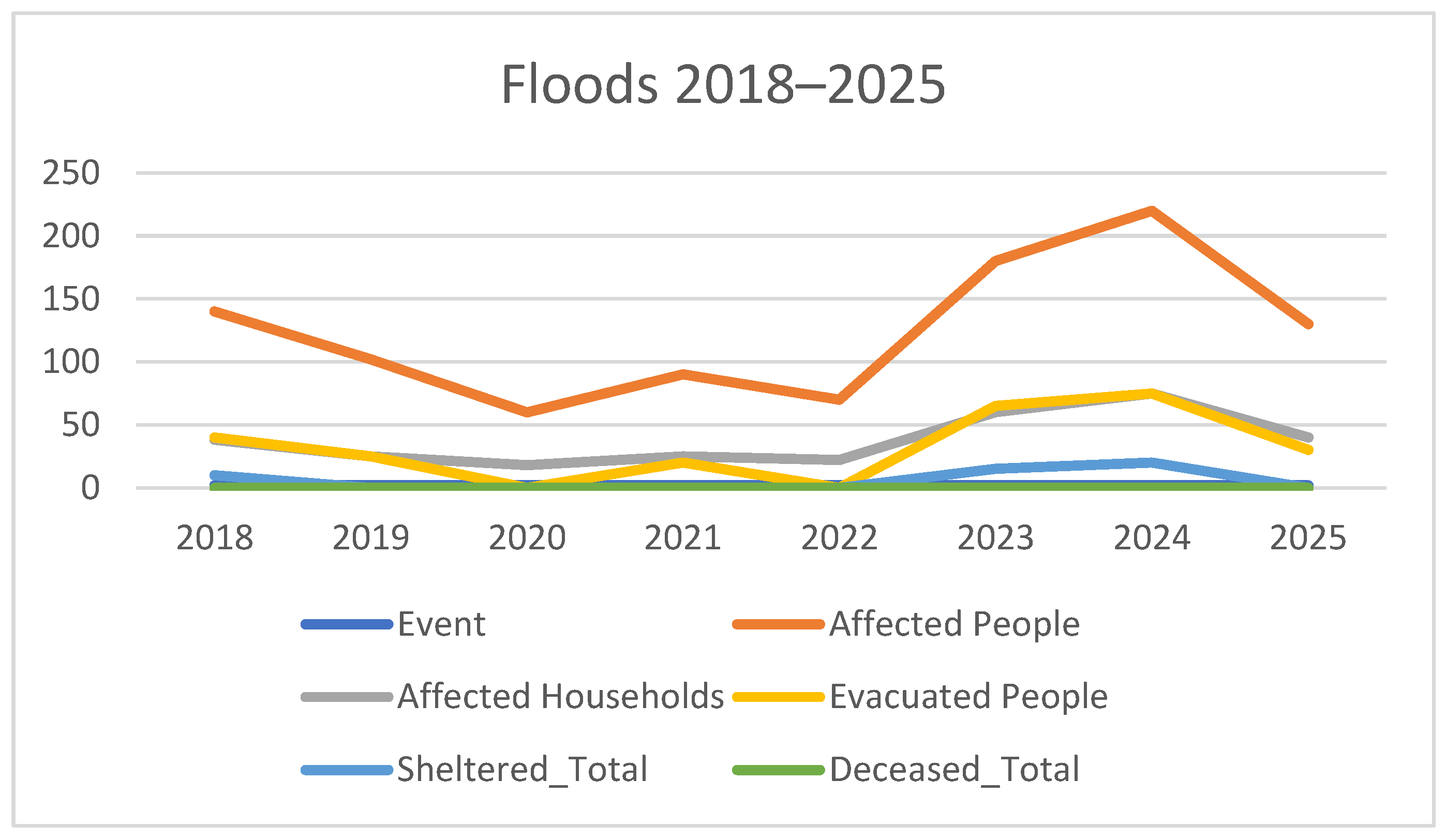
This study covers the period from 2018 to 2025 and focuses on the urban area of Temuco, located within the Cautín River basin in the Araucanía Region of Chile. The region is characterised by marked climatic variability, with pronounced winter seasonality and a documented history of recurrent flooding events affecting both residential areas and critical infrastructure [3]. Figure 1 illustrates the spatial distribution of flooded areas and the associated population and housing affected during the 2018–2025 period.

4. Methodological Framework

4.1. SAR Flood Observation Production

4.1.1. Acquisition and Processing of Sentinel-1 Data

Sentinel-1 Ground Range Detected (GRD) imagery acquired in Interferometric Wide Swath (IW) mode with dual VV/VH polarizations was used in this study. The data were downloaded from the Copernicus Open Access Hub platform [15,16]. The Sentinel-1 time series were processed using ArcGIS Pro software 3.2 (Esri Inc., Redlands, CA, USA). Standard preprocessing steps were applied, including thermal noise removal, radiometric calibration, and geometric (terrain) correction.
For Sentinel-1 GRD products, radiometric calibration converts the recorded digital numbers into normalized radar backscatter coefficients (σ0) using calibration parameters included in the sensor metadata. Unlike Single Look Complex (SLC) data, GRD products contain only detected intensity values and do not preserve the complex SAR signal. The calibration therefore produces σ0 backscatter values expressed in decibels (dB), which describe the relative scattering behavior of the surface and enable consistent comparison across multiple acquisition dates.
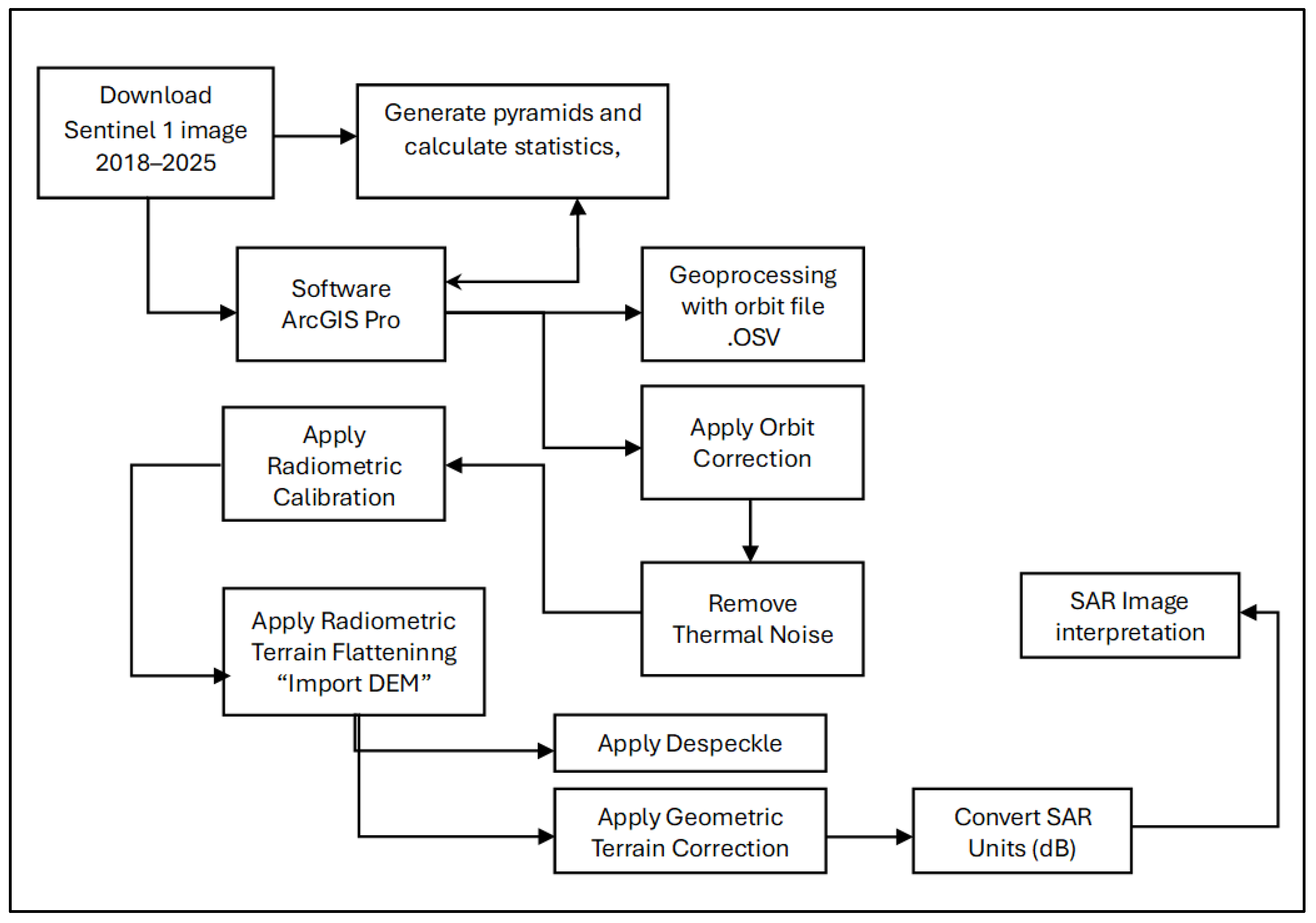
Figure 2 illustrates the sequential preprocessing workflow applied to Sentinel-1 SAR imagery using ArcGIS Pro 3.2, from data acquisition to radiometric calibration, noise removal, speckle filtering, and terrain correction.
This workflow follows standard SAR preprocessing procedures and ensures radiometric and geometric consistency across the multitemporal Sentinel-1 image series prior to flood detection and change analysis.
To support multitemporal analysis, the calibrated sigma nought (σ0) values were converted to a logarithmic scale and expressed in decibels (dB). This transformation reduces the radiometric dynamic range and highlights relative differences in backscatter between acquisition dates, thereby improving the detection of flood-related surface changes. The resulting raster datasets were stored in Cloud Raster Format (CRF), enabling efficient multitemporal processing within the ArcGIS Pro 3.2 environment. The calibrated backscatter coefficient (σ0, in dB) represents the proportion of radar energy backscattered toward the sensor.
Significant variations in SAR backscatter were interpreted as indicators of the presence or absence of surface water, as flooded surfaces typically produce specular reflections that markedly reduce the radar signal returned to the sensor [17,18].
To reduce speckle noise inherent to SAR imagery [19], an adaptive Lee filter was applied [20]. Flood detection was based on a differential approach that compares reference images acquired before and after flood events, allowing the analysis of temporal variations in backscatter. This approach enabled the definition of pixel-based dynamic thresholds, facilitating the discrimination among wet surfaces, saturated soils, and fully flooded areas. The change-detection methodology is formally expressed in Equation (3).
Accordingly, flood detection was based on the temporal variation in SAR backscatter (σ0, in dB), computed as the difference between post-event and pre-event calibrated σ0 values at the pixel level, as expressed in Equation (1).
Δσ0(i, j) = σ0t2(i, j) − σ0t1(i, j)
where σ0t1 corresponds to the pre-event backscatter coefficient and σ0t2 to the post-event acquisition. Negative Δσ0 values indicate a reduction in backscatter associated with the presence of open surface water due to specular reflection.

4.1.2. Event Definition and Image Pairing

Event definition. A flood event [21] was defined as a hydrometeorological episode affecting the Cautín River floodplain and nearby urban areas in Temuco. Events were identified using official records from the National Service for Disaster Prevention and Response (SENAPRED), hydrometric data from the General Water Directorate (DGA) when available, and municipal or emergency reports. Each event was assigned an approximate start [22] date based on the earliest official alert or documented report of river overflow.
Pre-/post-event image pairing. For each event, a pre-event reference image (t1) and a post-event image (t2) were selected [23] from the Sentinel-1 GRD time series (IW mode, VV/VH). The pre-event image (t1) was the closest acquisition within a 30-day period before the event, giving priority to dates without reported flooding. The post-event image (t2) [24] corresponded to the first available acquisition after the reported onset of the event.
When several acquisitions were available during the same hydrological episode, the image showing the largest mapped flood extent was selected as t2, in order to better approximate peak inundation within the limitations of the Sentinel-1 revisit cycle.
Temporal mismatch and interpretation. Satellite acquisitions do not necessarily coincide with the exact peak of a flood [23]; the flood polygons derived from the selected t2 image represent inundation conditions at the time of satellite overpass. As a result, they may underestimate the true maximum extent of rapidly evolving events.
For multi-day flood episodes, an optional event-level composite was created by merging (union) flood polygons from successive post-event acquisitions, allowing the maximum observed extent during the event period to be represented more accurately.

4.1.3. Flood Detection Rule and Threshold Determination

Flood detection was based on the radiometric change in Sentinel-1 backscatter coefficients between pre-event (t1) and post-event (t2) acquisitions. After radiometric calibration and terrain correction, the σ0 backscatter coefficient (in dB) was used as the physical variable representing surface scattering conditions [8].
For each pixel, a change detection metric was computed as
Δσ0 = σ0t2 − σ0t1
where σ0(t1) corresponds to the pre-event reference state and σ0(t2) to the post-event acquisition. Flooded surfaces are expected to produce a marked decrease in backscatter due to specular reflection from open water.
A pixel was classified as flooded when the decrease in backscatter satisfied
Δσ0 ≤ −3 dB (VV polarization)
The VV polarization was used as the main detection band because of its higher sensitivity to open water in urban and peri-urban floodplains. The VH polarization was used as a complementary indicator to reduce false detections in vegetated areas; pixels showing increased VH backscatter, typically associated with vegetation volume scattering, were excluded from the flooded class [24].
To reduce speckle noise and isolated misclassifications, spatial filtering was applied. A minimum mapping unit of nine connected pixels (about 900 m2 at 10 m resolution) was enforced using a connectivity filter. Areas located on slopes greater than 5°, derived from the DEM, were removed to limit radar shadow and layover effects. Permanent water bodies identified in pre-event imagery were also masked so that only newly inundated areas were retained.
The selected threshold and filtering parameters fall within ranges commonly reported in Sentinel-1 flood-mapping studies and were chosen to balance omission and commission errors while maintaining operational reproducibility.

4.1.4. Identification and Analysis of Flooding Events

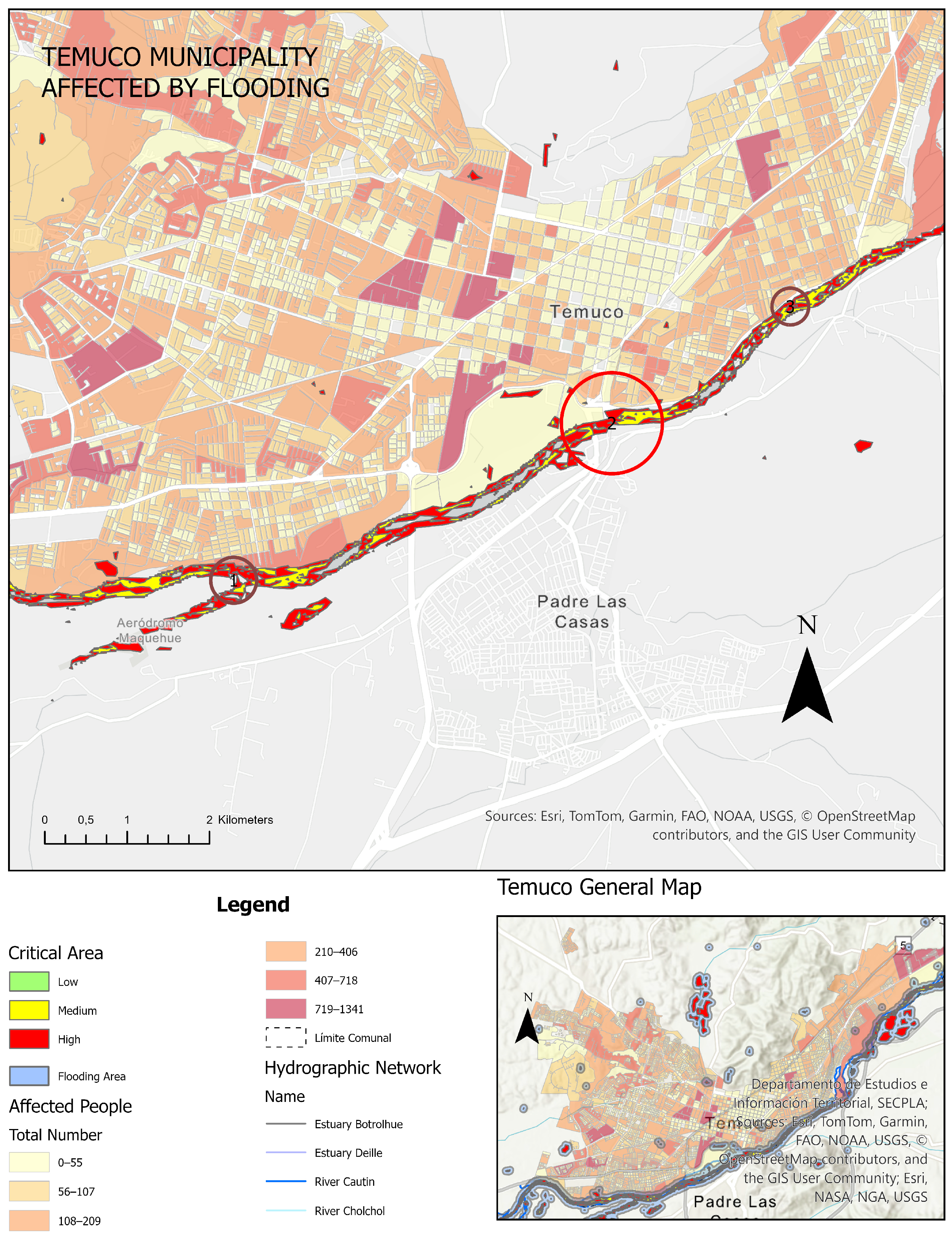
A temporal analysis of the CRF time series was performed to identify areas affected by recurrent flooding within the Cautín River basin. Flood events were classified according to their magnitude and persistence, based on the temporal behaviour of backscatter variations [18]. This approach enabled the systematic delineation of flood-prone sectors associated with the main river channel and secondary drainage networks, which were subsequently used for exposure analysis and spatial integration within the cadastral framework (see Figure 3).
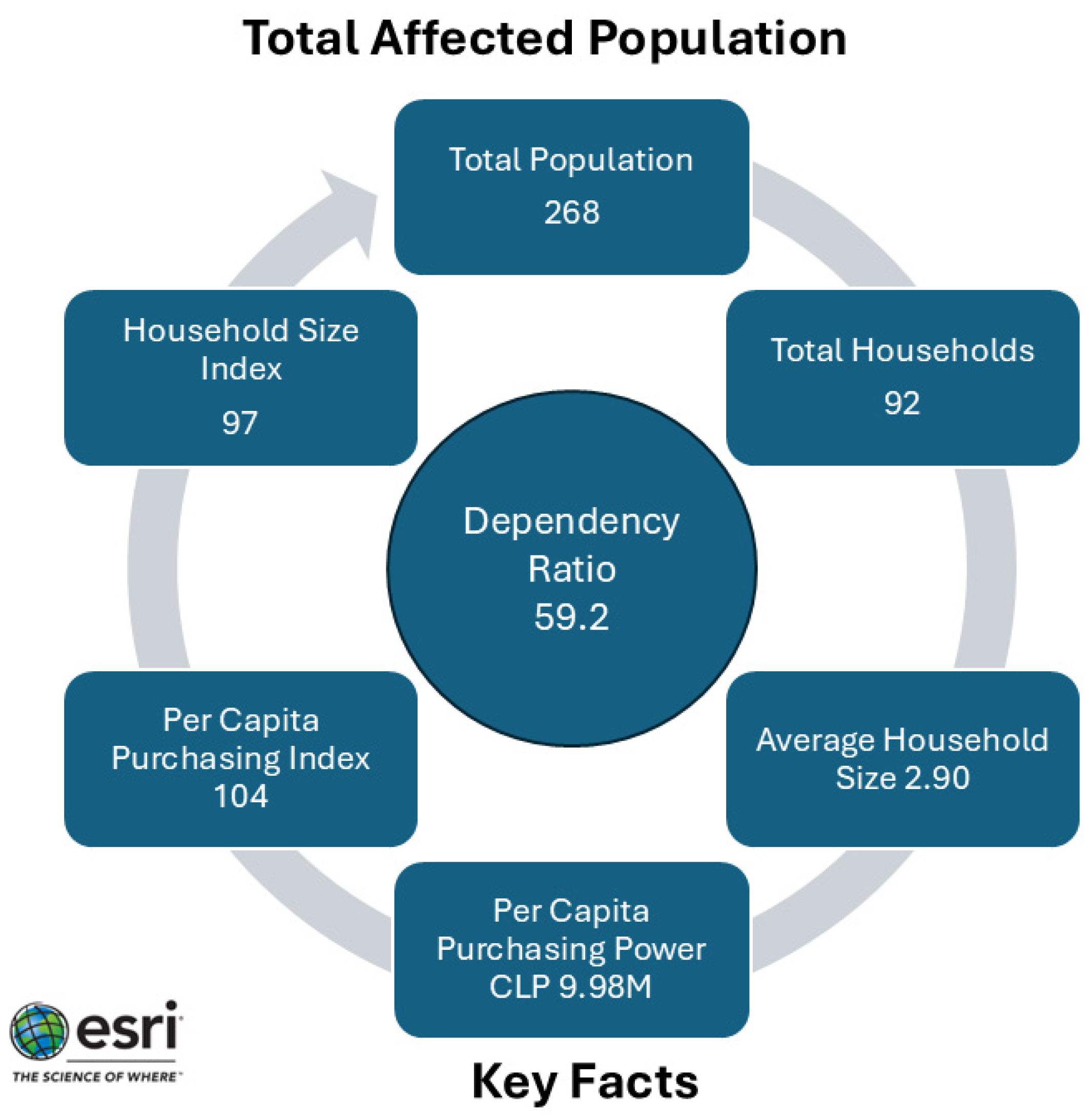
Based on the flood exposure areas delineated in Figure 4, a socio-demographic analysis was conducted to characterise the population potentially affected by recurrent flooding events.
The identification of the exposed population was carried out through the spatial intersection of flood polygons with official census layers provided by the National Statistics Institute (INE), spatially projected at the local level, together with municipal housing records (Figure 4). Although census data in Chile are not directly managed by municipalities, their use is common practice in territorial planning and community-level risk management. This approach follows a methodology similar to that proposed by Tellman et al. (2021) [25], combining remote sensing outputs with statistical information to indirectly estimate the population at risk based on the hydrological classification derived from the SAR analysis.
Flood-prone areas were subsequently classified into low, medium, and high risk levels following qualitative schemes widely applied in disaster risk management and land-use planning. These schemes define risk categories based on a combined assessment of event intensity and temporal recurrence [26]. Within this framework, areas exhibiting moderate reductions in SAR backscatter and low recurrence were classified as Low risk, whereas more pronounced decreases in backscatter (close to −10 dB or greater) and recurrent flood events were classified as Medium or High risk, consistent with thresholds reported in the literature for SAR-based flood detection [23,24,25,26,27,28]. This correspondence enabled physical metrics derived from SAR analysis to be translated into semantic attributes incorporated into the CL_FloodRiskZone class of the LADM-based cadastral model, thereby strengthening traceability between remote sensing observations, hydrological analysis, and cadastral representation of flood risk.

4.2. Exposure Assessment

Population exposure was estimated through the spatial intersection of flood polygons with census and municipal housing layers, following a methodology validated by Tellman et al. (2021) [25]. The procedure assumes a proportional distribution of inhabitants within residential units and allows an approximation of the number of people potentially located within the observed inundation areas.

4.3. Transformation into LADM Object

This section constitutes the second methodological component of the research. While Section 4.1 describes how flood events are detected from Sentinel-1 observations, the following procedure explains how those environmental observations are transformed into standardized land-administration information according to ISO 19152 (LADM) semantics. The objective is therefore not further flood analysis but the formal structuring of hazard information as administrative objects.

Integration into the Multipurpose Cadastre (LADM)

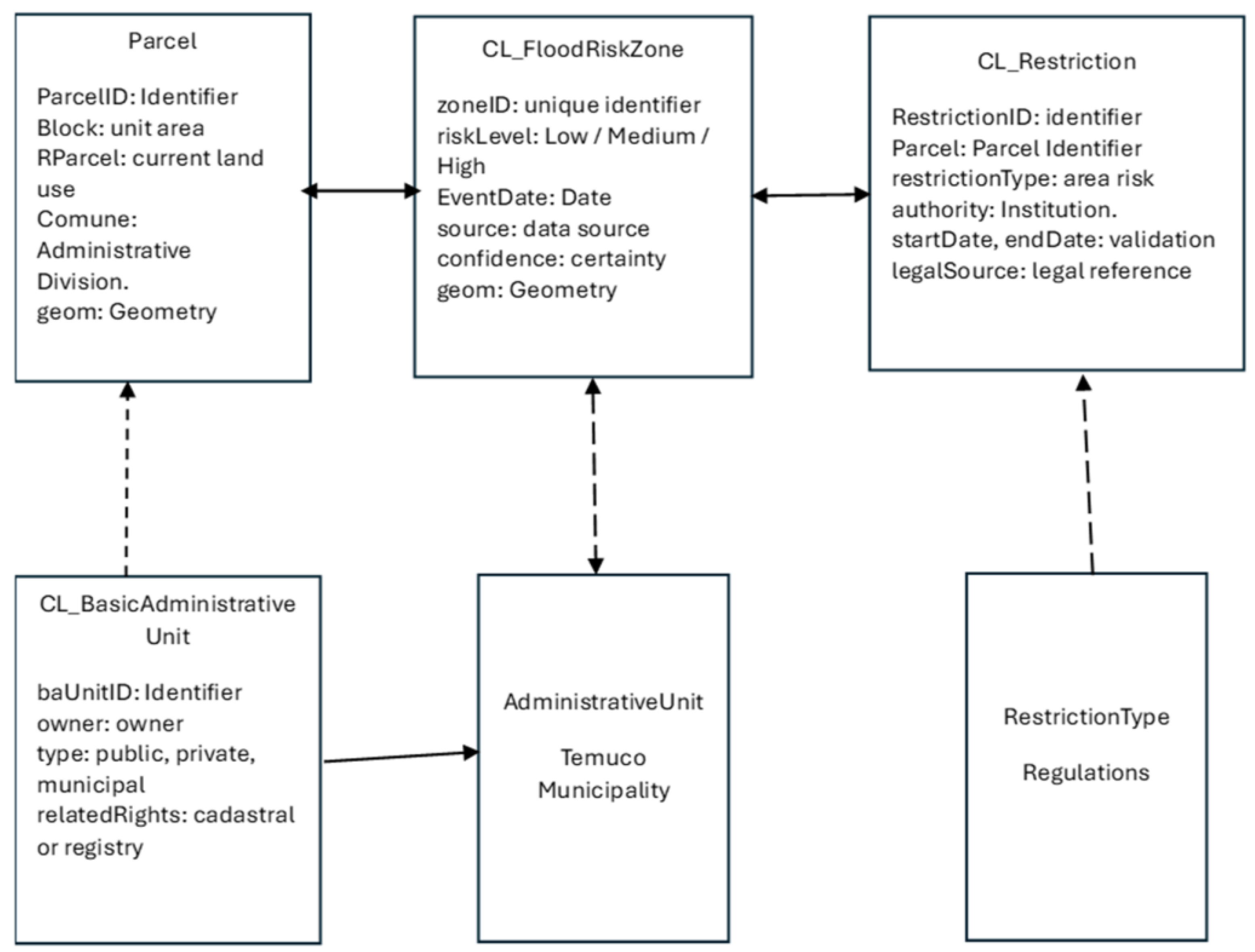
The flood polygons derived from the SAR-based analysis were integrated into a municipal geodatabase structured in accordance with the ISO 19152 Land Administration Domain Model (LADM, Edition II) standard [11]. A thematic submodel for hydrological risk was designed and linked to the Spatial Planning Information package (Part 5, ISO 19152-5:2025), enabling each flooded area to be formally associated with spatial units (CL_SpatialUnit), public law restriction zones (CL_Restriction), and administrative units (CL_BAUnit). This modelling approach ensures consistency between flood-related spatial information, land administration entities, and regulatory frameworks within the multipurpose cadastral system (Figure 5).
This modelling approach enables the explicit establishment of relationships between flood-affected areas and the land administration components defined by the LADM, thereby supporting hydrological risk management, territorial planning, and regulatory decision-making at the municipal level. The main entities and their relationships implemented within the proposed cadastral model are summarised in Table 1.
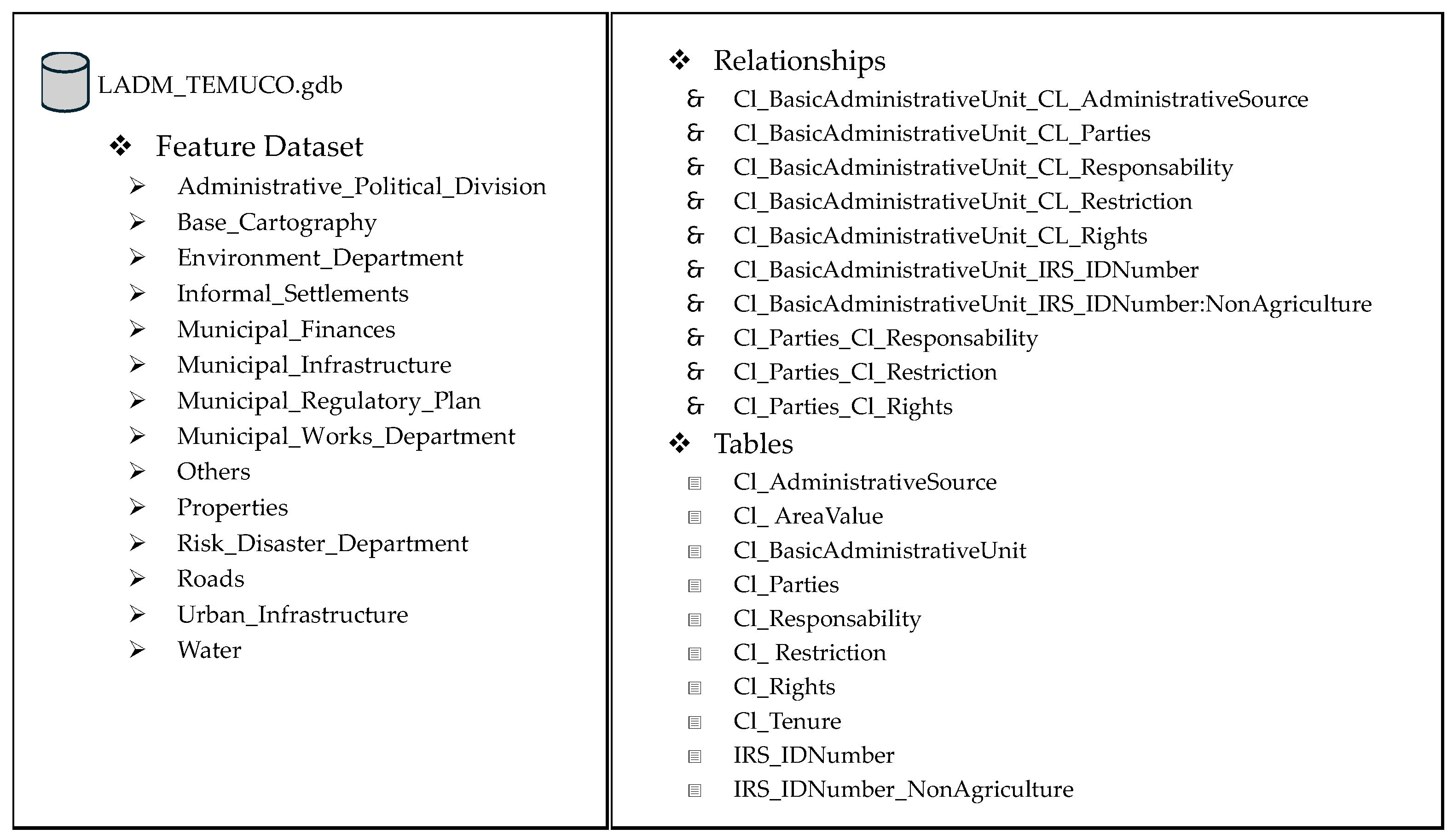
As illustrated in Figure 6 and summarised in Table 1, the CL_FloodRiskZone entity represents areas subject to flooding, while the remaining entities correspond to the core components of the ISO 19152 Land Administration Domain Model (LADM). These relationships are implemented within a municipal geodatabase structure, enabling the operational integration of flood-related spatial information with administrative, legal, and regulatory elements, as shown in Figure 6.
This model was adopted as the institutional reference for organizing spatial information with potential planning and legal relevance. Within this framework, flood-affected areas were represented as spatial units that can be linked to restriction-type entities and administrative units according to LADM semantics. In this study, these restriction objects are understood as administratively structured planning constraints related to hazard exposure, rather than automatically enforceable legal regulations.
This configuration supports semantic interoperability with other territorial databases and municipal information systems, including property and land-use cadastres, hydrological datasets, infrastructure layers, and spatial data infrastructures based on OGC standards [12,29].
Flood-related geospatial information was stored using the Cloud Raster Format (CRF), which enables continuous updating and efficient access from both web-based platforms and desktop geographic information systems. This configuration supports institutional interoperability at the municipal level by enabling shared and synchronized access to flood information across cadastral services, planning departments, and risk management units. The use of consistent datasets across technical analysis, planning, and decision-support processes contributes to reducing data redundancy and improving interdepartmental coordination. This approach is consistent with the principles of an interoperable multipurpose cadastre, as proposed by Lemmen and Van Oosterom [29,30], and demonstrates the potential of the proposed framework to support evidence-based territorial management at the municipal scale.
Finally, integrating flood zones within the LADM allows them to be represented as standardized spatial units and linked to restriction-type entities through the CL_Restriction class. In this study, these objects do not represent legally enacted restrictions, but rather administratively structured hazard information that can be considered by planning authorities.
In the municipal context of Temuco, the resulting datasets can be connected to territorial planning instruments and land-use regulations related to hydrological risk exposure. The information can also be periodically updated as new flood events are identified from Sentinel-1 imagery, maintaining traceability between observation data, planning processes, and administrative analysis, rather than creating legal obligations on its own.
This study adopts a mixed methodological approach that combines multitemporal analysis of synthetic aperture radar (SAR) imagery acquired by the Sentinel-1 satellite with the integration of the resulting geospatial products into a multipurpose cadastral model structured according to the ISO 19152 Land Administration Domain Model (LADM) standard [11]. The methodological framework aims to link detected flood events with the spatial, legal, and administrative units of the municipal cadastre, providing information usable for risk management in the municipality of Temuco.
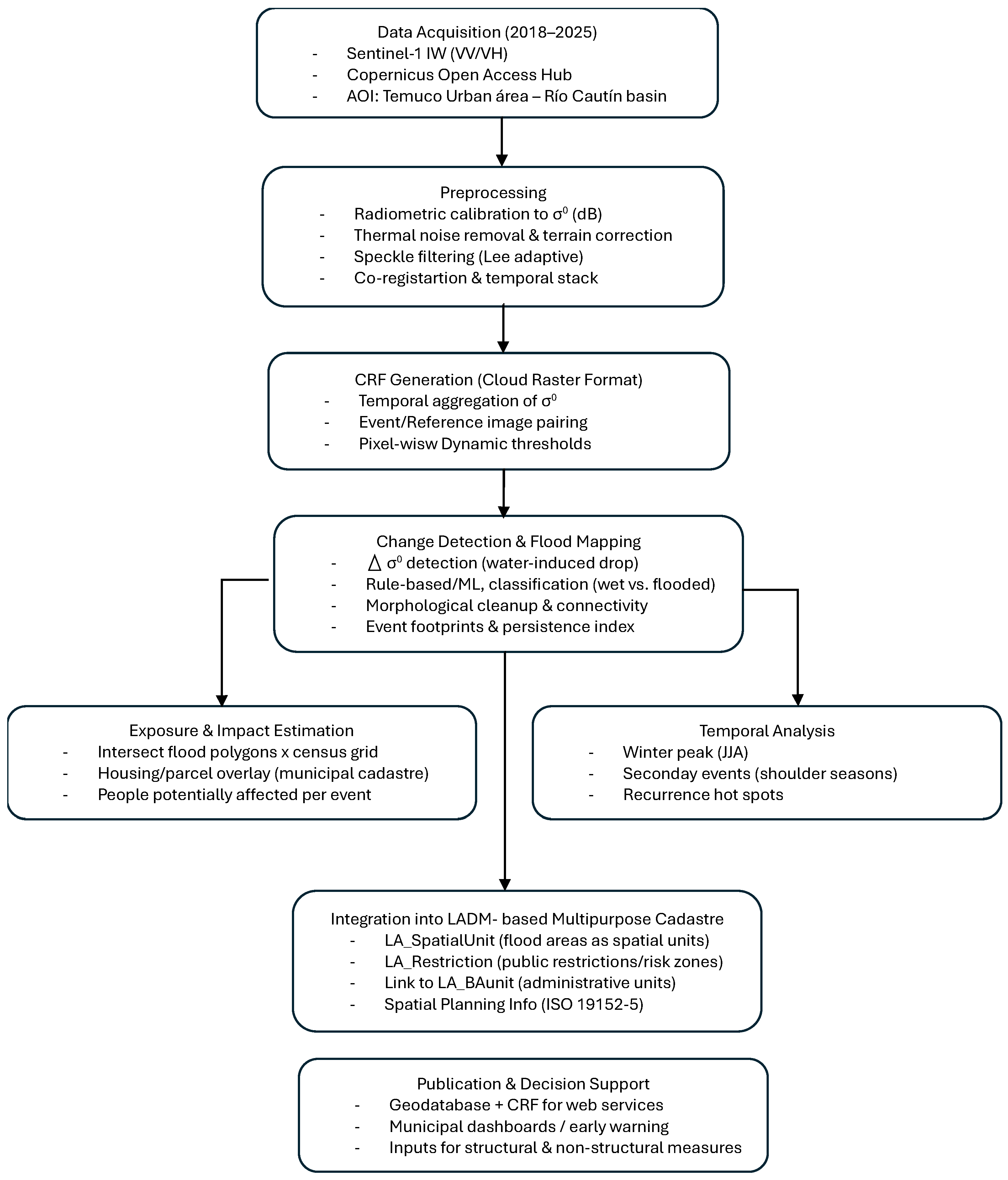
The methodological workflow illustrated in Figure 7 presents a structured and replicable framework for integrating multitemporal satellite-derived flood information into local cadastral systems. The workflow encompasses data acquisition, SAR preprocessing, flood detection and mapping, exposure and temporal analyses, and the subsequent integration of flood-related outputs into an LADM-based multipurpose cadastre, ultimately supporting risk reduction and the enhancement of urban resilience at the municipal level.
The workflow encompasses SAR data acquisition [9] and preprocessing [10], the generation of calibrated backscatter coefficients (σ0), stored in Cloud Raster Format (CRF) [11], pixel-based change detection and flood mapping [15], multitemporal and exposure analyses, and the structured incorporation of flood-prone areas as spatial units associated with restriction-type entities within the cadastral data model [13,31]. Rather than establishing legal constraints or demonstrating implemented policy actions, the approach organizes hazard information in a standardized form that can be used within administrative and planning processes related to disaster risk management and territorial planning.

5. Validation and Uncertainty

5.1. Validation and Uncertainty Assessment

The reliability of the flood-mapping results was assessed using independent reference information rather than in situ measurements, which are usually unavailable for historical urban flood events [7]. Validation was therefore carried out by comparing the mapped floods with external evidence sources, including official emergency reports from SENAPRED, municipal situation reports, photographic documentation, and local news records describing the areas affected during each event.
For selected events, the spatial correspondence between mapped flood areas and documented impact locations was visually examined. This included affected neighborhoods, streets, and reported river overflow points. Agreement was considered satisfactory when the mapped flood polygons overlapped these documented locations and followed the expected geomorphological pattern of the Cautín River floodplain and nearby low-lying urban sectors.
The analysis does not include a pixel-by-pixel accuracy assessment, but rather an event-level plausibility validation [32], which is appropriate for retrospective SAR flood mapping in urban environments. The results should therefore be interpreted as a conservative estimate of inundation extent, constrained by the acquisition timing and spatial resolution of Sentinel-1. Rapidly evolving floods may be partially underestimated if peak inundation occurred between satellite overpasses.
The main sources of uncertainty include speckle noise, double-bounce scattering in dense urban areas [23], increased vegetation backscatter under shallow flooding, and the limited ability to detect inundation beneath dense tree canopy. In addition, the revisit interval of Sentinel-1 may create a temporal mismatch between the actual flood peak and the time of observation.
For these reasons, the resulting flood maps should be interpreted as observation-based indicators of hazard presence rather than precise hydrodynamic flood boundaries.

5.2. Error Sources and SAR Limitations

Although SAR imagery offers clear advantages for flood monitoring in persistently cloudy regions, several physical and observational limitations affect how flood extent derived from Sentinel-1 data should be interpreted. These limitations arise from the behavior of microwave backscatter itself rather than from the processing workflow.
In urban areas, flooding does not always produce a decrease in backscatter. Vertical structures such as buildings, fences, and street infrastructure can create double-bounce scattering [33], where radar signals reflect between the water surface and vertical objects. This interaction may increase backscatter values, causing some flooded urban sectors to remain undetected or to appear as non-flooded.
Floodplains covered by vegetation introduce additional uncertainty. When shallow water is present beneath vegetation, the interaction between water and plant stems increases volume scattering [34], particularly in the VH polarization. As a result, flooded vegetated areas may be misclassified as non-flooded surfaces or saturated soil.
Topography also affects detection accuracy. Radar shadow and layover can occur on steep slopes or near embankments, producing low backscatter values that are not related to the presence of water. To reduce this effect, areas with slopes greater than 5° were excluded from the analysis; however, some misclassification may still occur along riverbanks and around urban structures.
The method is also less sensitive to shallow or turbid flooding. Muddy surfaces and saturated soils can produce backscatter [35] responses similar to dry ground, making it difficult to distinguish open water from moist soil conditions. Likewise, flooding beneath dense tree canopy may go undetected, since the radar signal interacts mainly with the vegetation layer rather than the underlying water surface.
Finally, the temporal resolution of Sentinel-1 (a 6–12-day revisit interval depending on the orbit configuration) introduces uncertainty during rapidly evolving hydrological events. The mapped flood extent therefore reflects conditions observed at the time of satellite acquisition [23] rather than the actual peak of the flood.
Consequently, the resulting flood polygons should be interpreted as observation-based indicators of flood occurrence and minimum inundation extent, rather than precise hydraulic flood boundaries.

6. Conceptual Framework: From Earth Observation to Land Administration

After the flood-prone areas were detected and validated, the resulting polygons were incorporated into a land-administration information structure. Instead of being treated as standalone thematic GIS layers, the validated flood observations were transformed into standardized land-administration objects based on the ISO 19152 Land Administration Domain Model (LADM) [12].
This step does not involve further hydrological modelling. Instead, it consists of translating the validated flood polygons into semantically defined administrative entities so that the observations can be handled as interoperable land-administration information [36]. This transformation allows satellite-derived observations to be managed as administrative information rather than remaining solely as cartographic flood maps.
To demonstrate integration consistent with established standards, the flood information derived from Sentinel-1 observations was mapped onto the conceptual structure of the ISO 19152 Land Administration Domain Model (LADM). The validated flood polygons were mapped onto the ISO 19152 (LADM) conceptual schema to define their administrative representation; each detected feature was translated into a semantically defined land-administration entity [37]. This required determining how a physical observation (a flooded surface) relates to a cadastral spatial unit, an administrative unit, and a public-law restriction. The mapping is formalized in Table 1. This mapping defines the data structure used in the subsequent results section, where the standardized administrative objects derived from the SAR observations are analyzed.
Table 2 specifies the correspondence between the remote-sensing observations and the LADM classes and attributes used in the municipal geodatabase.

7. Results

7.1. Observed Flood Patterns

7.1.1. Spatial Patterns of Flooding

The multitemporal analysis of Sentinel-1 SAR imagery (2018–2025) enabled a consistent spatio-temporal characterization of observed urban flooding patterns in the municipality of Temuco. The results reveal consistent patterns of flood recurrence, spatial extent, and population exposure that had not previously been systematically documented at the municipal scale. Validation of the detected flood-prone areas was performed through comparison with official reports from the National Service for Disaster Prevention and Response (SENAPRED) [38,39], records from the General Water Directorate [40], as well as press reports and municipal data sources [37]. Approximately 80% of the flood events detected using SAR coincided spatially and temporally with officially documented flood records, confirming a strong correspondence between SAR-based detections and historically reported flooding episodes affecting the Cautín River and associated urban drainage systems.
The spatial analysis identified three critical areas within the Cautín River floodplain where flooding occurs recurrently over time, particularly during the winter season [11,41]. These areas are associated with a combination of geomorphological conditions, hydroclimatic drivers, and patterns of urban development [42,43].
The Bajos del Cautín–Amanecer sector exhibited the highest susceptibility to flooding during the study period, experiencing recurrent flood events between 2018 and 2025. This behaviour is largely explained by its location within a low-lying floodplain characterised by predominantly clay-rich, poorly drained soils, which favour the formation and persistence of surface water following river overflow events [44]. A second critical area was identified at the confluence of the Cautín River and the Botrolhue stream, where flooding is primarily associated with rapid river level rises triggered by intense frontal precipitation events. In this sector, a clear correspondence was observed between abrupt decreases in SAR backscatter values and hydrometric records from DGA monitoring stations for the 2018–2024 period, supporting the plausibility of the SAR-derived flood interpretation for monitoring hydrological extremes [11].
Finally, peri-urban areas undergoing irregular urban expansion, particularly Labranza and Fundo El Carmen, exhibited flood events of more limited spatial extent but greater temporal persistence. These events are mainly linked to overflow of secondary drainage channels and structural deficiencies in urban stormwater systems, reflecting conditions where urban growth has outpaced the capacity of existing hydraulic infrastructure [38,39].
Overall, the identified flooding patterns are consistent with findings from international studies highlighting the effectiveness of SAR data for detecting persistent and recurrent flooding in floodplain environments [23,24]. The results further demonstrate the combined influence of natural and anthropogenic factors on flood recurrence in urban and peri-urban areas of Temuco, underscoring the value of multitemporal Sentinel-1 analysis as a robust tool for identifying and characterising flood-prone areas [11,41,45].

7.1.2. Temporal Dynamics of Flood Events (2018–2025)

The temporal analysis of flood events detected from the Sentinel-1 time series indicates a strong concentration during the winter months (June–August), consistent with the regional rainfall regime of southern Chile [43].
In addition to this dominant seasonal pattern, flood events were also identified outside the winter period, particularly in April, September, and November. These occurrences reflect an increased temporal dispersion of flooding events throughout the year and are consistent with recent studies reporting a higher frequency of extreme hydroclimatic events in southern Chile [38,43].
The analysis further revealed interannual variability in flood extent, with the years 2020 and 2023 exhibiting a greater average flooded area per event. This pattern suggests that antecedent soil moisture and catchment saturation conditions play a significant role in modulating flood extent, in line with findings reported by Misra (2025) [7], who emphasised the sensitivity of SAR-based flood detection to pre-event hydrological conditions.
Multitemporal comparisons also indicate progressive urban expansion into flood-prone areas, particularly along the southern margin of the Cautín River. This expansion has increased the number of residential properties located within zones of high flood recurrence. Similar trends have been documented at the global scale by Tellman et al. (2021) [25], who reported a systematic increase in population exposure within floodplains, including in regions with advanced land management systems.

7.1.3. Flood Magnitude and Backscatter Response

Regarding flood magnitude, the spatial extent of flooded areas ranged from approximately 17 ha during minor events to more than 70 ha during major flood episodes, particularly in 2020, 2023, and 2024. These variations highlight the combined influence of hydroclimatic forcing, antecedent moisture conditions, and urban development patterns on flood dynamics within the study area.
Estimates derived from SAR backscatter variations (σ0, VV/VH polarization) revealed reductions in SAR backscatter ranging from approximately −5 to −12 dB within flooded areas. These values are consistent with thresholds reported in comparable SAR-based flood detection studies [15,46] providing further support for the validity of the applied pixel-based dynamic threshold approach.

7.1.4. Population Exposure

The results indicate that between 180 and 240 individuals were exposed per flood event across the three identified critical sectors. Considering the cumulative recurrence of flood events between 2018 and 2025, the cumulative number of potentially affected individuals exceeds 2000 over the study period.

7.1.5. Synthesis of Results

Overall, the results demonstrate clear spatial and temporal patterns of flooding in Temuco, quantify population exposure, and provide empirically validated flood metrics derived from multitemporal SAR analysis.

7.2. Administrative Information Produced

Practical Implementation Example

To illustrate the practical application of the proposed framework, a representative parcel-level example was implemented within the municipal cadastral environment. A flood polygon derived from the Sentinel-1 analysis was intersected with the Temuco cadastral parcel layer, and parcels overlapping the mapped inundation area were automatically identified using spatial overlay operations.
For each affected parcel, the cadastral administrative unit (LA_BAUnit) was linked to a spatial unit representing the flood-prone area (CL_FloodRiskZone, specialization of LA_SpatialUnit). The relationship was recorded through a restriction-type entity (CL_Restriction), indicating that the parcel is located within an area exposed to hydrological hazard.
The resulting record does not establish a legally binding limitation by itself but creates a structured administrative information entry associated with the parcel. The record contains: (i) parcel identifier, (ii) flood-event date, (iii) hazard type (river flooding), (iv) data source (Sentinel-1 SAR), and (v) observation timestamp. This information can be consulted together with other cadastral attributes within the municipal information system.
From an operational standpoint, the procedure enables municipal staff to identify which properties are located in flood-prone areas without altering their legal status. Instead, the system provides standardized information that can support planning analysis, emergency preparedness, and risk communication activities.
This example shows how satellite-derived hazard information can be converted into a land-administration record with defined semantics and a traceable source. Rather than serving as a regulatory instrument, the cadastral model functions as an information infrastructure that incorporates environmental observations into territorial management workflows.

8. Discussion

8.1. Implications for Territorial Planning and Land Governance

The Municipality of Temuco has implemented the ArcGIS geospatial platform as the technological foundation for strengthening territorial analysis and management capabilities, particularly in relation to hydrometeorological risk events. This platform integrates a set of specialised applications, including geospatial viewers, interactive dashboards, and territorial cadastral tools, designed to support dynamic spatial assessment and informed decision-making during emergency situations. As a result, this implementation can support interoperability and coordination among municipal departments involved in territorial planning, infrastructure management, and risk and disaster response.
Beyond the mapped flood extent and population exposure, documented flood events in Temuco have also produced indirect impacts affecting urban functionality. In addition to direct exposure, several indirect impacts were documented during major flood events, including temporary road closures, disruptions to public transport services, and interruptions in the supply of electricity and drinking water. These impacts are consistent with national assessments identifying the municipality of Temuco as highly vulnerable to flooding associated with the Cautín River [5,38].
From a land-use planning perspective, the presence of consolidated urban areas within flood-prone zones reveals persistent gaps in risk-informed territorial planning. These findings underscore the need to strengthen regulatory and planning instruments through the systematic incorporation of flood hazard information, particularly in rapidly expanding urban and peri-urban areas.
The use of Sentinel-1 SAR imagery enables the development of a replicable and semi-automated monitoring system capable of supporting early warning mechanisms and periodic flood risk assessments. This is especially relevant in regions characterised by high cloud cover, such as southern Chile, where optical remote sensing is frequently constrained.
The identification of backscatter reductions ranging from approximately −5 to −12 dB in flooded areas is consistent with the physical response of smooth water surfaces to C-band radar signals, as widely reported in the literature. This reinforces the suitability of SAR-based approaches for operational flood monitoring and risk management at the municipal level.
A key contribution of this research lies in the integration of SAR-derived flood information into a multipurpose cadastral framework based on ISO 19152 (LADM). This integration enables flood-prone areas, which are traditionally addressed through thematic cartography, to be represented as administratively structured information entities within the cadastral information system.
The representation of flood risk zones through the CL_FloodRiskZone class, and their linkage to CL_SpatialUnit, CL_Restriction, and CL_BAUnit, provides several institutional advantages. These include potential traceability and interoperability between municipal departments, consistency in territorial updates, and a sustainable framework for risk-sensitive land administration.
This approach addresses longstanding institutional fragmentation between hydrological studies, cadastral systems, land-use planning, and emergency management. By establishing a unified and standardised territorial repository, the proposed SAR–LADM integration can support coordinated decision-making, urban planning units, municipal works departments, and civil protection agencies.
These findings are consistent with international trends that identify LADM as a key framework for enhancing land governance, supporting interoperability, and integrating risk information into land administration systems.

8.2. Reliability of EO-Derived Hazard Information

The results obtained for the municipality of Temuco are consistent with findings reported in international studies that have applied SAR-based approaches for flood detection and monitoring. Similar patterns have been documented with respect to marked backscatter reductions in flooded areas, higher flood recurrence in alluvial floodplains, an increasing occurrence of flood events outside the traditional wet season, and growing population exposure in flood-prone zones.
A comparative synthesis between the findings observed in Temuco and evidence reported in international literature is presented in Table 3, highlighting a strong convergence between local results and global patterns identified using SAR-based flood mapping techniques. This consistency supports the methodological robustness of the proposed approach and reinforces its scientific relevance.
The observed convergence in backscatter behaviour, flood recurrence dynamics, and exposure trends suggests that the results obtained at the municipal scale are representative of broader hydrological processes documented in comparable climatic and geomorphological contexts.
This convergence supports the methodological robustness of the proposed approach and confirms the relevance of the results beyond the local study area.
While the multitemporal analysis of Sentinel-1 SAR imagery effectively captures the extent and recurrence of urban flooding, the approach primarily characterises flooded areas at the time of satellite acquisition. The integration of two-dimensional hydrodynamic models and high-resolution LiDAR data would further enhance the framework by enabling the estimation of flood depth, duration, and flow dynamics, particularly in complex urban environments.
Additionally, the incorporation of geospatial artificial intelligence techniques and predictive machine learning models represents a natural evolution of the proposed framework. Such approaches could support automation, improve forecasting capabilities, and strengthen municipal early warning systems. These extensions would expand the applicability of the model without altering its conceptual foundation based on LADM, and would facilitate its transfer to other natural hazards, such as landslides or wildfires.

9. Conclusions

The main contribution of this study lies in demonstrating that flood observations derived from Earth observation data can be systematically translated into standardized land-administration information. Rather than evaluating institutional performance, the research develops and tests a reproducible framework that structures Sentinel-1 SAR flood observations within the ISO 19152 (LADM) conceptual model at the municipal scale.
The multitemporal analysis enabled the identification of spatial and seasonal patterns of flood recurrence in the municipality of Temuco and the representation of these observations as interoperable spatial units with defined attributes, metadata, and traceable sources. The results do not indicate a direct improvement in governance or regulation; instead, they demonstrate that satellite-derived hazard information can be formally organized within a cadastral information environment.
Under this approach, the framework produces structured spatial information that may support planning, emergency preparedness, and risk communication while maintaining transparency regarding the origin and timing of the observations. The model does not create legally binding restrictions or replace hydraulic flood hazard maps; rather, it provides observation-based information that can assist administrative analysis and territorial planning processes.
From an applied perspective, the study illustrates how international land-administration standards can incorporate environmental observations without altering the core structure of the LADM. This is particularly relevant for municipalities exposed to recurrent flooding and lacking operational multipurpose cadastres, where standardized hazard information can be integrated into existing planning and cadastral workflows.
Although the SAR analysis focuses on flood extent and recurrence, the framework can be extended in the future through the integration of hydrodynamic modelling, higher-resolution topographic data, and additional geospatial datasets. Such developments would increase analytical detail while preserving the modular and transferable nature of the proposed approach.

Funding

This research received no external funding.

Institutional Review Board Statement

Not applicable.

Informed Consent Statement

Not applicable.

Data Availability Statement

Sentinel-1 data are publicly available through the Copernicus Open Access Hub. Derived flood-extent layers and cadastral integration outputs are available from the corresponding author upon reasonable request.

Conflicts of Interest

The author declares no conflicts of interest.

References

  1. Balocchi, F.; Galleguillos, M.; Rivera, D.; Stehr, A.; Arumi, J.L.; Pizarro, R.; Garcia-Chevesich, P.; Iroumé, A.; Armesto, J.J.; Hervé-Fernández, P.; et al. Forest Hydrology in Chile: Past, Present, and Future. J. Hydrol. 2023, 616, 128681. [Google Scholar] [CrossRef]
  2. Rodríguez-López, L.; Duran-Llacer, I.; González-Rodríguez, L.; Cardenas, R.; Urrutia, R. Retrieving Water Turbidity in Araucanian Lakes (South-Central Chile) Based on Multispectral Landsat Imagery. Remote Sens. 2021, 13, 3133. [Google Scholar] [CrossRef]
  3. Padilla, D. Institutional Records and Analysis of River Overflow and Flood Risks during the 21st Century on the Banks of the Cautín River, La Araucanía Region; Universidad Autonoma de Chile: Temuco, Chile, 2024. [Google Scholar]
  4. Ministry of the Environment (MMA). Regional Environmental Plan of La Araucanía 2022–2030; Government of Chile: Temuco, Chile, 2022.
  5. General Water Directorate (DGA). Hydrometeorological and Hydrological Records for the Cautín River Basin; Government of Chile: Santiago, Chile, 2019.
  6. Rahman, A.; Prasetyo, Y.; Suryanto, W. Rapid Flood Inundation Mapping Using Multi-Temporal Sentinel-1 SAR: An Example from Kendari City. J. Geosains Remote Sens. 2024, 5, 15–26. [Google Scholar] [CrossRef]
  7. Misra, A.; White, K.; Nsutezo, S.F.; Straka, W.; Lavista, J. Mapping Global Floods with 10 Years of Satellite Radar Data. Nat. Commun. 2025, 16, 5762. [Google Scholar] [CrossRef] [PubMed]
  8. Martinis, S.; Kersten, J.; Twele, A. A Fully Automated TerraSAR-X Based Flood Service. ISPRS J. Photogramm. Remote Sens. 2015, 104, 203–212. [Google Scholar] [CrossRef]
  9. Torres, R.; Snoeij, P.; Geudtner, D.; Bibby, D.; Davidson, M.; Attema, E.; Potin, P.; Rommen, B.; Floury, N.; Brown, M.; et al. GMES Sentinel-1 Mission. Remote Sens. Environ. 2012, 120, 9–24. [Google Scholar] [CrossRef]
  10. ISO 19152:2012; Geographic Information—Land Administration Domain Model (LADM). ISO: Geneva, Switzerland, 2012.
  11. ISO 19152-1:2024; Land Administration—Land Administration Domain Model (LADM)—Part 1: Fundamentals. ISO: Geneva, Switzerland, 2024.
  12. Ibrahim Mahmoud, M.; Duker, A.; Conrad, C.; Thiel, M.; Shaba Ahmad, H. Analysis of Settlement Expansion and Urban Growth Modelling Using Geoinformation for Assessing Potential Impacts of Urbanization on Climate in Abuja City, Nigeria. Remote Sens. 2016, 8, 220. [Google Scholar] [CrossRef]
  13. Van Oosterom, P.J.M. The Land Administration Domain Model (LADM) An Overview; International Federation of Surveyors (FIG): Copenhagen, Denmark, 2025; Volume 84, p. 44. [Google Scholar]
  14. Enemark, S. Fit-For-Purpose Land Administration: Joint FIG/World Bank Publication; FIG: Copenhagen, Denmark, 2014; ISBN 978-87-92853-10-3. [Google Scholar]
  15. Kim, S.-Y.; Lee, Y.; Park, S.-E. On Flood Detection Using Dual-Polarimetric SAR Observation. Remote Sens. 2025, 17, 1931. [Google Scholar] [CrossRef]
  16. Pulvirenti, L.; Chini, M.; Pierdicca, N.; Guerriero, L.; Ferrazzoli, P. Flood Monitoring Using Multi-Temporal COSMO-SkyMed Data: Image Segmentation and Signature Interpretation. Remote Sens. Environ. 2011, 115, 990–1002. [Google Scholar] [CrossRef]
  17. Schlaffer, S.; Matgen, P.; Hollaus, M.; Wagner, W. Flood Detection from Multi-Temporal SAR Data Using Harmonic Analysis and Change Detection. Int. J. Appl. Earth Obs. Geoinf. 2015, 38, 15–24. [Google Scholar] [CrossRef]
  18. Rana, V.K.; Suryanarayana, T.M.V. Evaluation of SAR Speckle Filter Technique for Inundation Mapping. Remote Sens. Appl. Soc. Environ. 2019, 16, 100271. [Google Scholar] [CrossRef]
  19. Mullissa, A.; Vollrath, A.; Odongo-Braun, C.; Slagter, B.; Balling, J.; Gou, Y.; Gorelick, N.; Reiche, J. Sentinel-1 SAR Backscatter Analysis Ready Data Preparation in Google Earth Engine. Remote Sens. 2021, 13, 1954. [Google Scholar] [CrossRef]
  20. Hundecha, Y.; Parajka, J.; Viglione, A. Assessment of Past Flood Changes across Europe Based on Flood-Generating Processes. Hydrol. Sci. J. 2020, 65, 1830–1847. [Google Scholar] [CrossRef]
  21. Nied, M.; Pardowitz, T.; Nissen, K.; Ulbrich, U.; Hundecha, Y.; Merz, B. On the Relationship between Hydro-Meteorological Patterns and Flood Types. J. Hydrol. 2014, 519, 3249–3262. [Google Scholar] [CrossRef]
  22. Twele, A.; Cao, W.; Plank, S.; Martinis, S. Sentinel-1-Based Flood Mapping: A Fully Automated Processing Chain. Int. J. Remote Sens. 2016, 37, 2990–3004. [Google Scholar] [CrossRef]
  23. Schumann, G.J.-P.; Bates, P.D. The Need for a High-Accuracy, Open-Access Global DEM. Front. Earth Sci. 2018, 6, 225. [Google Scholar] [CrossRef]
  24. Henry, J.B.; Chastanet, P.; Fellah, K.; Desnos, Y.L. ENVISAT Multipolarised ASAR Data for Flood Mapping. In Proceedings of the IGARSS 2003. 2003 IEEE International Geoscience and Remote Sensing Symposium. Proceedings (IEEE Cat. No.03CH37477); IEEE: Toulouse, France, 2003; Volume 2, pp. 1136–1138. [Google Scholar]
  25. Tellman, B.; Sullivan, J.A.; Kuhn, C.; Kettner, A.J.; Doyle, C.S.; Brakenridge, G.R.; Erickson, T.A.; Slayback, D.A. Satellite Imaging Reveals Increased Proportion of Population Exposed to Floods. Nature 2021, 596, 80–86. [Google Scholar] [CrossRef] [PubMed]
  26. Merz, B.; Thieken, A.H.; Gocht, M. Flood Risk Mapping at the Local Scale: Concepts and Challenges. In Flood Risk Management in Europe; Begum, S., Stive, M.J.F., Hall, J.W., Eds.; Advances in Natural and Technological Hazards Research; Springer: Dordrecht, The Netherlands, 2007; Volume 25, pp. 231–251. ISBN 978-1-4020-4199-0. [Google Scholar]
  27. Martinis, S.; Rieke, C. Backscatter Analysis Using Multi-Temporal and Multi-Frequency SAR Data in the Context of Flood Mapping at River Saale, Germany. Remote Sens. 2015, 7, 7732–7752. [Google Scholar] [CrossRef]
  28. Plank, S. Rapid Damage Assessment by Means of Multi-Temporal SAR—A Comprehensive Review and Outlook to Sentinel-1. Remote Sens. 2014, 6, 4870–4906. [Google Scholar] [CrossRef]
  29. Kara, A.; Lemmen, C.; Van Oosterom, P.; Kalogianni, E.; Alattas, A.; Indrajit, A. Design of the New Structure and Capabilities of LADM Edition II Including 3D Aspects. Land Use Policy 2024, 137, 107003. [Google Scholar] [CrossRef]
  30. Chen, M.; Van Oosterom, P.; Kalogianni, E.; Dijkstra, P.; Lemmen, C. Bridging Sustainable Development Goals and Land Administration: The Role of the ISO 19152 Land Administration Domain Model in SDG Indicator Formalization. Land 2024, 13, 491. [Google Scholar] [CrossRef]
  31. Bartha, G.; Kocsis, S.; European Commission. Directive 2007/2/EC of the European Parliament and of the Council Establishing an Infrastructure for Spatial Information in the European Community (INSPIRE); European Commission: Brussels, Belgium, 2007. [Google Scholar]
  32. Giustarini, L.; Hostache, R.; Matgen, P.; Schumann, G.J.-P.; Bates, P.D.; Mason, D.C. A Change Detection Approach to Flood Mapping in Urban Areas Using TerraSAR-X. IEEE Trans. Geosci. Remote Sens. 2013, 51, 2417–2430. [Google Scholar] [CrossRef]
  33. Baghermanesh, S.S.; Jabari, S.; McGrath, H. Urban Flood Detection Using TerraSAR-X and SAR Simulated Reflectivity Maps. Remote Sens. 2022, 14, 6154. [Google Scholar] [CrossRef]
  34. Dellepiane, S.; Angiati, E.; Vernazza, G. Processing and Segmentation of COSMO-SkyMed Images for Flood Monitoring. In Proceedings of the 2010 IEEE International Geoscience and Remote Sensing Symposium; IEEE: Honolulu, HI, USA, 2010; pp. 4807–4810. [Google Scholar]
  35. Schumann, G. Preface: Remote Sensing in Flood Monitoring and Management. Remote Sens. 2015, 7, 17013–17015. [Google Scholar] [CrossRef]
  36. Alonso-Sarria, F.; Valdivieso-Ros, C.; Molina-Pérez, G. Detecting Flooded Areas Using Sentinel-1 SAR Imagery. Remote Sens. 2025, 17, 1368. [Google Scholar] [CrossRef]
  37. Kalantari, M.; Rajabifard, A.; Wallace, J.; Williamson, I. Spatially Referenced Legal Property Objects. Land Use Policy 2008, 25, 173–181. [Google Scholar] [CrossRef]
  38. Servicio Nacional de Prevención y Respuesta ante Desastres (SENAPRED). National Situation Report on Hydrometeorological Events; SENAPRED: Santiago, Chile, 2024. [Google Scholar]
  39. Servicio Nacional de Prevención y Respuesta ante Desastres (SENAPRED). Hazard Sheet: Floods; SENAPRED: Santiago, Chile, 2023. [Google Scholar]
  40. Sistema Nacional de Información de Recursos Hídricos (SNIRH). National Water Resources Information System; SNIRH: Santiago, Chile, 2024. [Google Scholar]
  41. Schumann, G.; Bates, P.D.; Horritt, M.S.; Matgen, P.; Pappenberger, F. Progress in Integration of Remote Sensing–Derived Flood Extent and Stage Data and Hydraulic Models. Rev. Geophys. 2009, 47, 2008RG000274. [Google Scholar] [CrossRef]
  42. Nardi, F.; Annis, A.; Di Baldassarre, G.; Vivoni, E.R.; Grimaldi, S. GFPLAIN250m, a Global High-Resolution Dataset of Earth’s Floodplains. Sci. Data 2019, 6, 180309. [Google Scholar] [CrossRef]
  43. Garreaud, R.D.; Boisier, J.P.; Rondanelli, R.; Montecinos, A.; Sepúlveda, H.H.; Veloso-Aguila, D. The Central Chile Mega Drought (2010–2018): A Climate Dynamics Perspective. Int. J. Climatol. 2020, 40, 421–439. [Google Scholar] [CrossRef]
  44. Mayor, T. Estudio Fundado de Riesgos; Universidad Mayor: Santiago, Chile, 2015. [Google Scholar]
  45. Alsdorf, D.E.; Rodríguez, E.; Lettenmaier, D.P. Measuring Surface Water from Space. Rev. Geophys. 2007, 45, 2006RG000197. [Google Scholar] [CrossRef]
  46. Haghighi, M.H. Large-Scale Mapping of Flood Using Sentinel-1 Radar Remote Sensing. Int. Arch. Photogramm. Remote Sens. Spat. Inf. Sci. 2022, XLIII-B3-2022, 1097–1102. [Google Scholar] [CrossRef]
Figure 1. Temporal evolution of flood impacts in the municipality of Temuco between 2018 and 2025, expressed as the annual number of affected people, affected properties, and recorded fatalities. Sources: National Emergency Network of the Araucanía Region; ONEMI; SENAPRED; Municipality of Temuco.
Land 15 00452 g001
Figure 2. Sentinel-1 SAR preprocessing workflow implemented in ArcGIS Pro 3.2, including orbit correction, thermal noise removal, radiometric calibration, terrain flattening, speckle filtering, geometric terrain correction, and conversion to backscatter units (dB).
Land 15 00452 g002
Figure 3. Spatial distribution of flood-affected areas in the municipality of Temuco during the 2018–2025 period, showing flood-prone zones along the Cautín River in relation to census-based population density, residential units, and identified critical areas.
Land 15 00452 g003
Figure 4. Socio-demographic characteristics of the population exposed to flood-prone urban areas in Temuco.
Land 15 00452 g004
Figure 5. Thematic submodel for hydrological flood risk integrating flood-derived spatial information into the ISO 19152 (LADM) framework, showing the relationships between flood risk zones (CL_FloodRiskZone), parcels (Parcel), administrative units (CL_BAUnit), and public law restrictions (CL_Restriction) within the municipal cadastral system of Temuco. Dashed arrows represent data flow, while solid arrows represent processing steps.
Land 15 00452 g005
Figure 6. Implementation of the ISO 19152 (LADM) data model within a municipal geodatabase environment, illustrating flood-related feature classes, datasets, and their relationships as configured in ArcGIS Pro 3.2.
Land 15 00452 g006
Figure 7. Methodological workflow combining standard SAR preprocessing and multitemporal flood mapping with the structured integration of flood-derived spatial objects into an LADM-based multipurpose cadastral data model at the municipal scale.
Land 15 00452 g007
Table 1. Flood-related entities and relationships implemented in the LADM-based multipurpose cadastral model for hydrological risk representation.
Entity (Feature)RelationshipsAssociated LADM Components
CL_FloodRiskZoneParcel
CL_Restriction
CL_BasicAdministrativeUnit
ParcelCL_FloodRiskZoneCL_Restriction
CL_RestrictionCL_FloodRiskZoneCL_BasicAdministrativeUnit
CL_BasicAdministrativeUnitParcelCL_Restriction
CL_AdministrativeUnit
Table 2. Mapping between SAR-derived flood information and ISO 19152 (LADM) land-administration entities.
Remote-Sensing OutputGIS RepresentationLADM Package/ClassAttribute (Example)Meaning in Land AdministrationTemporal/Source Metadata
Backscatter decrease detected in Sentinel-1 (Δσ0)Raster change detection cellNot stored in LADM (observation stage)Δσ0VV, Δσ0VHPhysical observation of surface waterAcquisition date (Sentinel-1), orbit, polarization
Flood extent polygonVector polygon layer (Flood footprint)LA_SpatialUnit (specialized: CL_FloodRiskZone)geometry, riskLevelSpatial unit representing hazard-affected areaEvent date, processing date, satellite source
Recurrent flood areaClassified flood-hazard zoneLA_SpatialUnitGrouprecurrenceClassIdentification of hazard-prone zoneMultitemporal period (2018–2025)
Parcel intersectionOverlay with cadastral parcelsLA_BAUnitbaUnitIDAdministrative unit (property) potentially affectedMunicipal cadastral database
Flood restrictionRegulatory zone layerLA_RestrictionrestrictionType = hydrological riskAdministrative planning constraint derived from hazard informationValidity period, issuing authority
Link parcel–restrictionRelationship classLA_RRR (Restriction relationship)share, descriptionLegal/administrative linkage between parcel and restrictionOrdinance or planning reference
Affected populationCensus overlayExternal administrative dataset (linked attribute)populationExposedIndicator supporting planning and risk managementCensus year, INE source
Confidence levelMetadata fieldLADM source attributesource, quality, confidenceReliability of spatial administrative informationProcessing method and validation source
Table 3. Comparison between flood-related findings in Temuco and evidence reported in international SAR-based studies.
Discovery in TemucoInternational Evidence
Marked decrease in backscatter (~−10 dB) in flooded areasPulvirenti et al. (2011); Haghighi et al. (2022) [16,46]
Greater recurrence in floodplainsMisra et al. (2025); Schlaffer et al. (2015) [7,17]
Increase in off-season eventsGarreaud et al. (2020) [43]
Increase in exposed populationTellman et al. (2021) [25]
Usefulness of SAR in highly cloudy conditionsTorres et al. (2012) [9]
Disclaimer/Publisher’s Note: The statements, opinions and data contained in all publications are solely those of the individual author(s) and contributor(s) and not of MDPI and/or the editor(s). MDPI and/or the editor(s) disclaim responsibility for any injury to people or property resulting from any ideas, methods, instructions or products referred to in the content.