Application of GIS Technology in Soil Quality Management and Agricultural Development Orientation in Vietnam

Abstract
1. Introduction
2. Study Area
3. Research Methods
3.1. Collection of Secondary Data
- -
- Socio-economic development reports and reports on the current status of agricultural development in An Duong District.
- -
- Data on natural conditions (climate, hydrology, topography, and natural resources), land-related data (land use types and soil quality), agricultural statistics (cultivated area, livestock numbers, yields, and output), and population data (population size, labor force, income), among others.
- -
- Soil type maps and zoning maps that were collected from the Department of Agriculture and Environment of Hai Phong City.
- -
- Administrative maps and maps showing the current status of agricultural land that were collected at the Department of Agriculture and Environment of An Duong District.
3.2. Field Survey Method
3.3. Soil Sampling and Analysis Methods
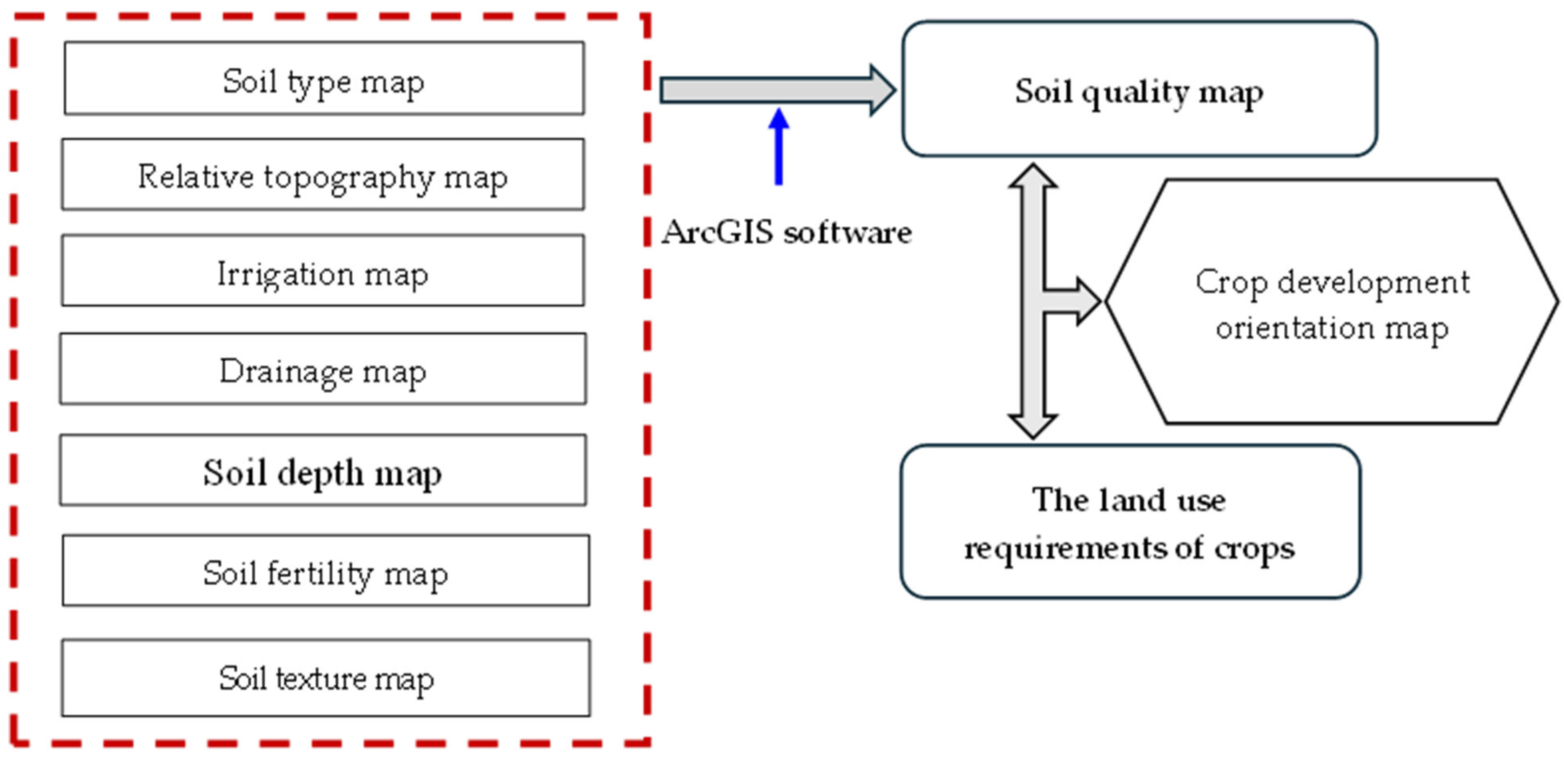
3.4. Construct Single-Factor Maps
- -
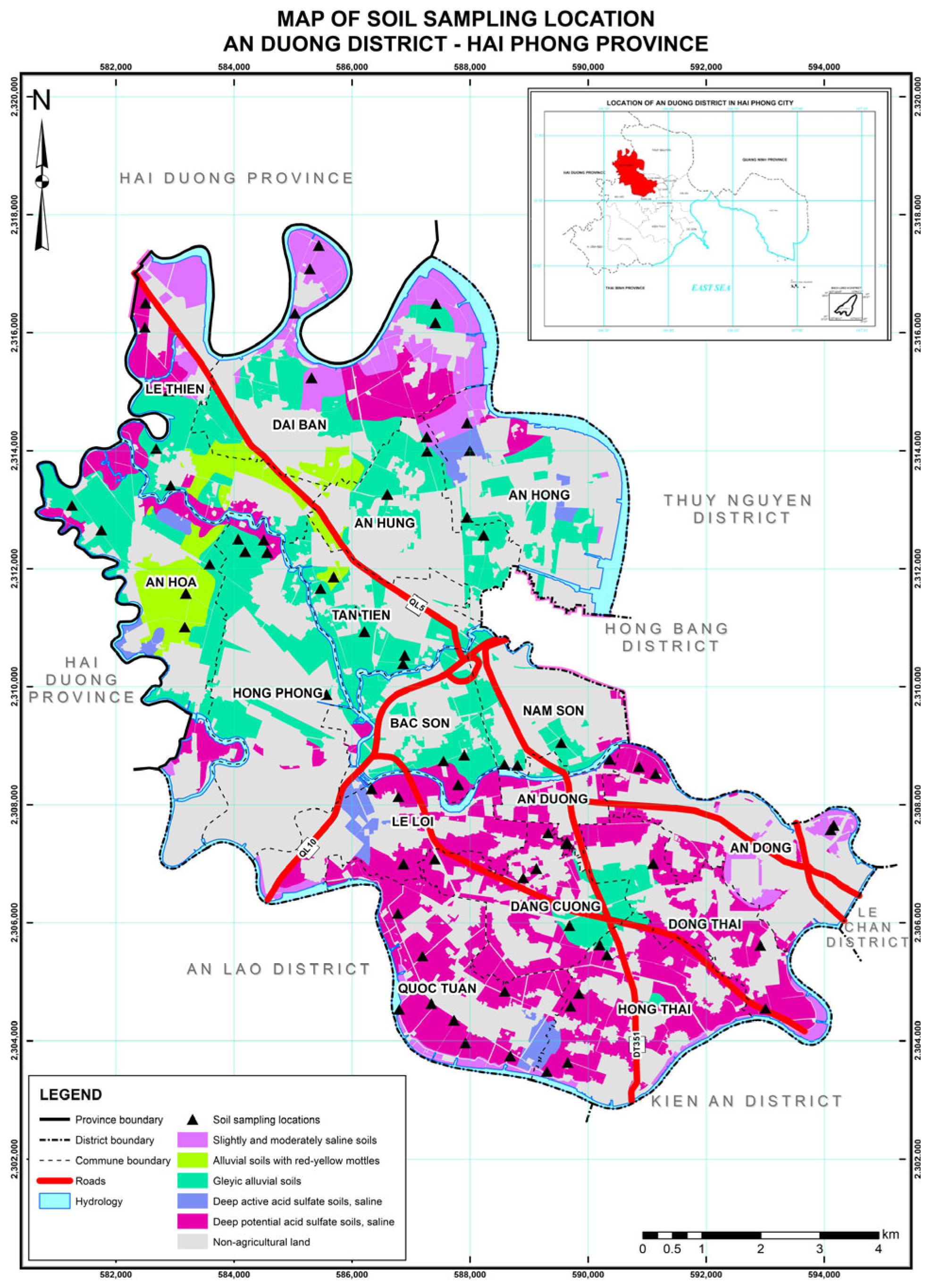
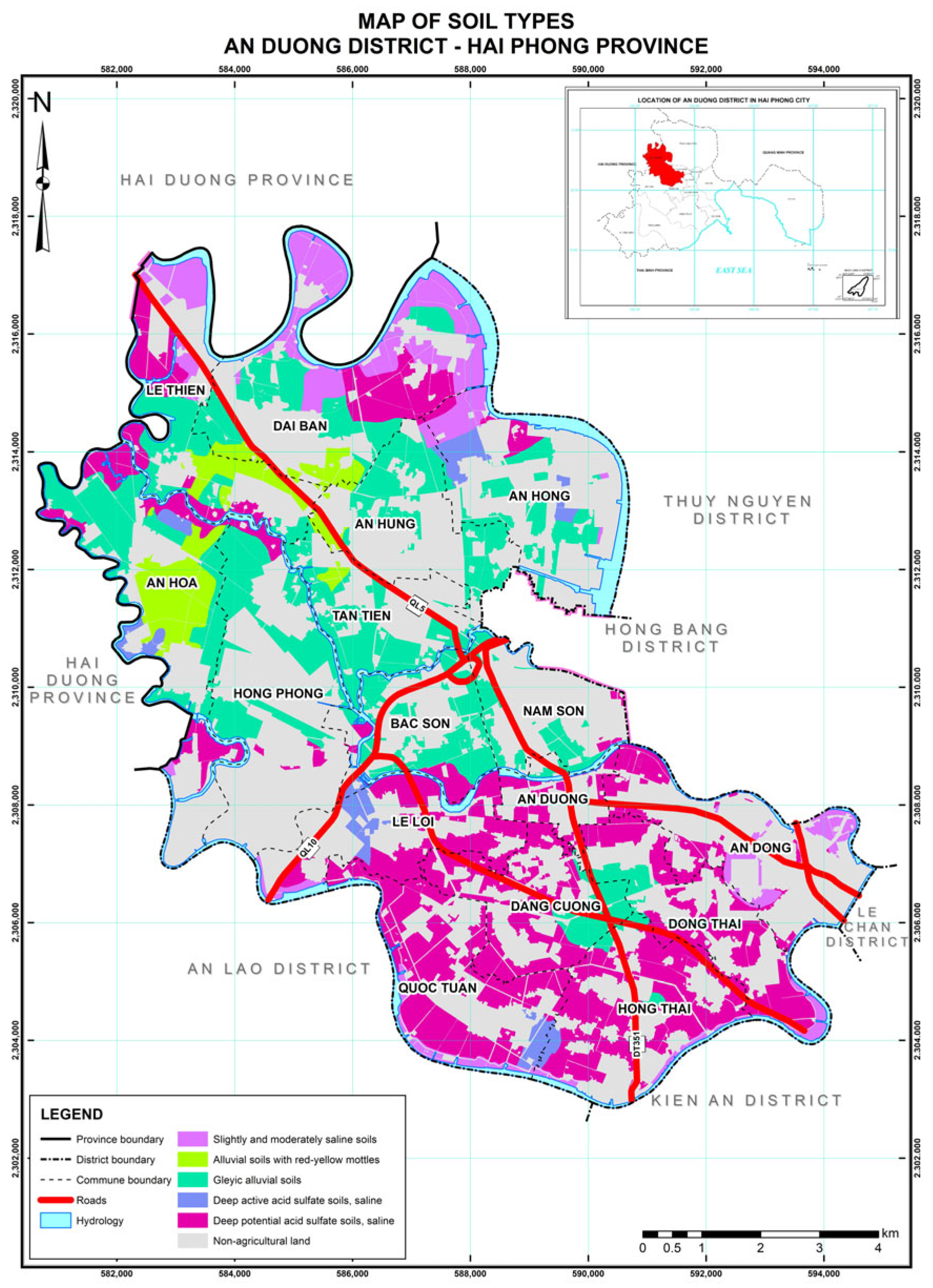
- Soil type map is derived from the land classification map of Hai Phong city, compiled in 2022. The total agricultural production land area of An Duong District is 4757.4 ha, of which slightly to moderately saline soils account for 586.7 ha, representing 12.33% of the total area. Alluvial soils with mottled horizons (Pf) cover 333.37 ha (7.01%). Deep active acid sulfate soils with salinity (Sj2M) occupy 169.67 ha, accounting for 3.57%. The two dominant soil types are deep potential acid sulfate soils with salinity (Sp2M) and gleyed alluvial soils (Pg), covering 1956.47 ha (41.12%) and 1711.19 ha (35.97%), respectively. Spatially, alluvial soils are mainly distributed in the northern communes of the district, whereas acid sulfate soils are predominantly found in the southern areas. Saline soils are primarily located along river systems within the district (Figure 3).
- -
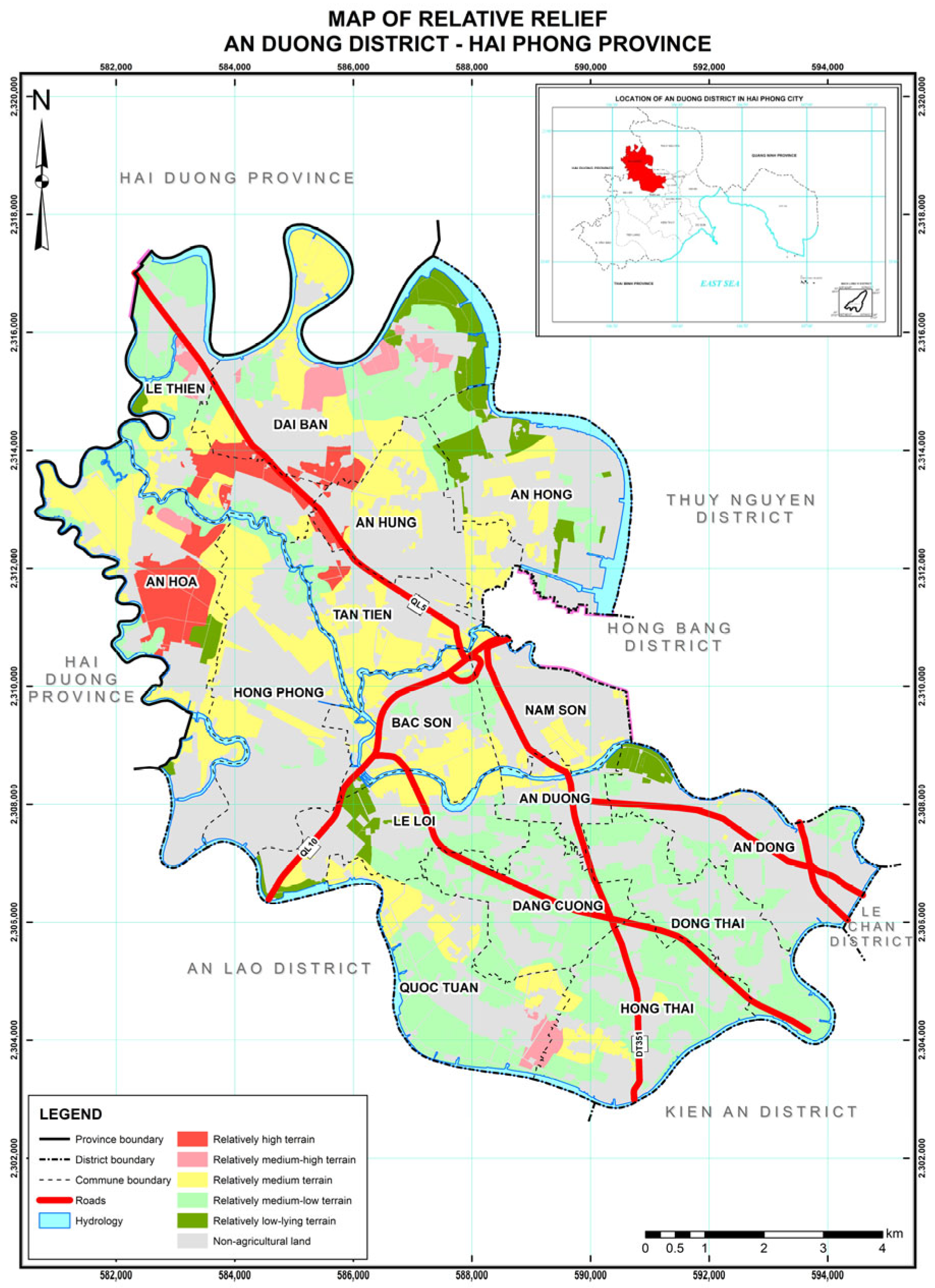
- Relative topographic map: To create the relative topographic map, we collected secondary information on topographic features from the Department of Agriculture and Environment of An Duong District, then combined it with field surveys. An Duong District is characterized by typical deltaic terrain with relatively minor elevation differences. Agricultural land was classified into five relative topographic categories: relatively low terrain covering 348.15 ha (7.32%); relatively low-lying “van” terrain accounting for 2181.23 ha (45.85%); relatively “van” terrain covering 1733.77 ha (34.44%); relatively high “van” terrain occupying 160.88 ha (3.38%); and relatively high terrain covering 333.37 ha (7.01%) (Figure 4).Figure 3. Map of Soil types ò An Duong District, Hai Phong province of Vietnam.
 Figure 4. Map of Relative relief of An Duong District, Hai Phong province of Vietnam.

- -
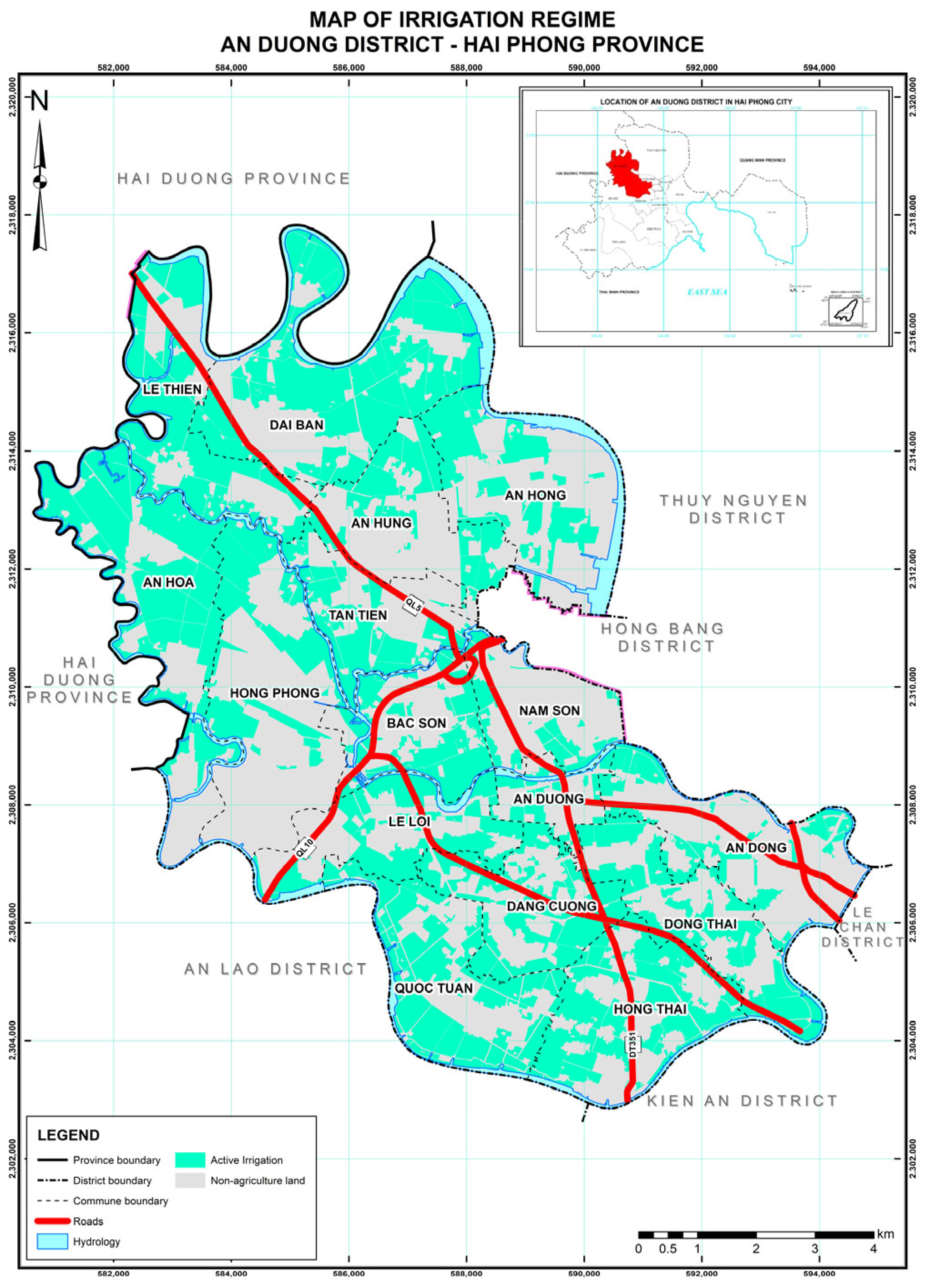
- Irrigation regime map: Data on irrigated area for agricultural production was collected from the Department of Agriculture and Environment of An Duong District. Survey results indicate that 100% of agricultural land in An Duong District is supplied with controlled irrigation through the existing irrigation and drainage infrastructure, ensuring full irrigation coverage (Figure 5).
- -
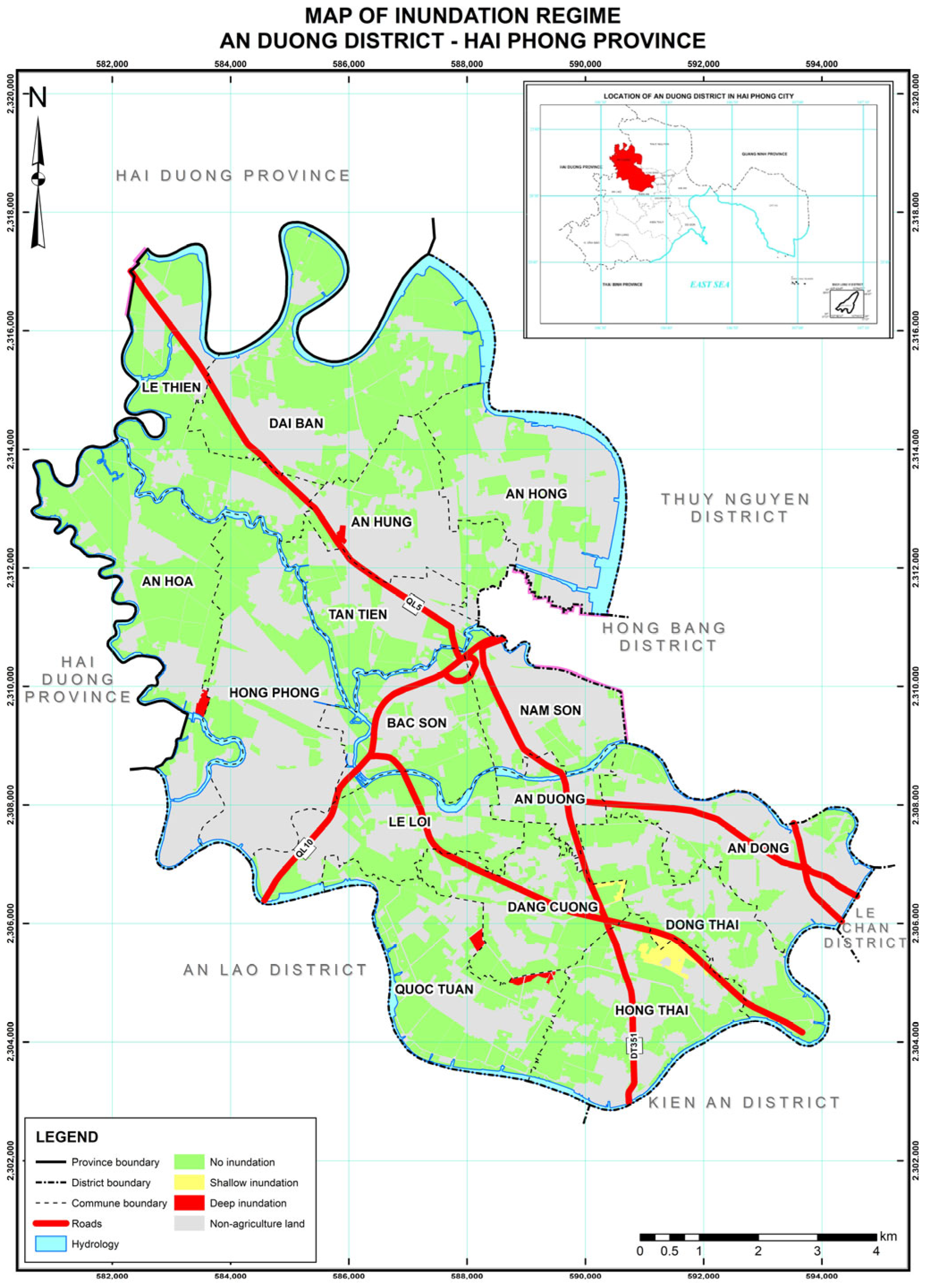
- Inudation regime map: This map was developed based on three criteria: severe flooding, slight flooding, and no flooding. Current assessment results show that 98.52% (4686.78 ha) of the district’s agricultural land is not affected by flooding. Only 1.48% (64.02 ha) is affected by flooding, of which 22.18 ha experience severe flooding and 41.84 ha are subject to slight flooding (Figure 6).Figure 5. Map of Irrigation regime of An Duong District, Hai Phong province.
 Figure 6. Map of Inudation regime of An Duong District, Hai Phong province.


- -
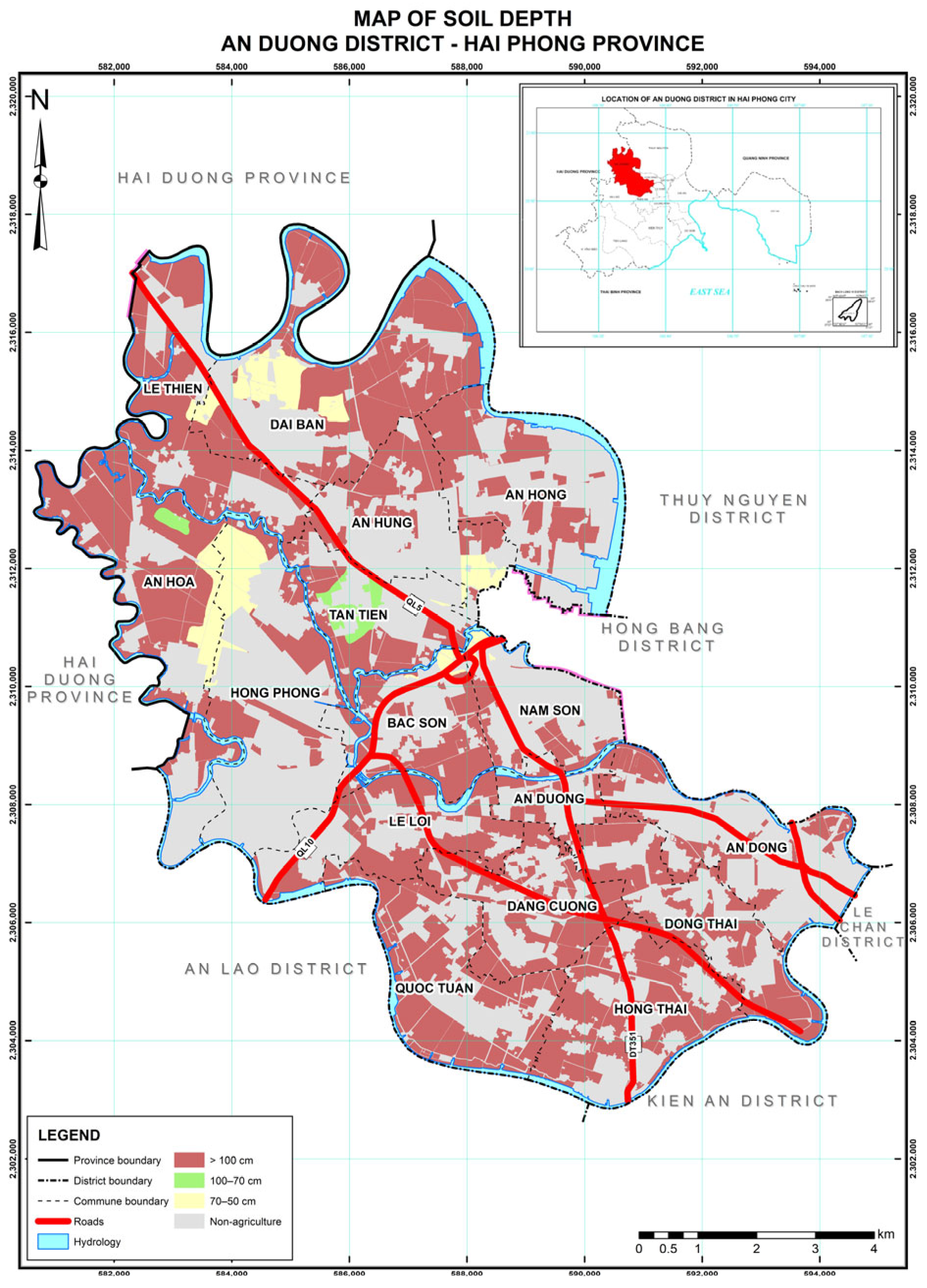
- Soil depth map: The thickness of the cultivated soil layer is determined based on secondary data and consultation with experts and agricultural management officials at the Department of Agriculture and Environment of An Duong District. Soil depth plays a crucial role in crop growth and development, as different crops require specific soil depth conditions. Soil depth was determined from the surface layer to the parent material. The soils in the study area were classified into three depth categories: deep soils (>100 cm), covering 4363.46 ha (91.72%); moderately deep soils (70–100 cm), accounting for 61.24 ha (1.29%); and shallow soils (50–70 cm), covering 332.7 ha (6.99%) (Figure 7).
- -
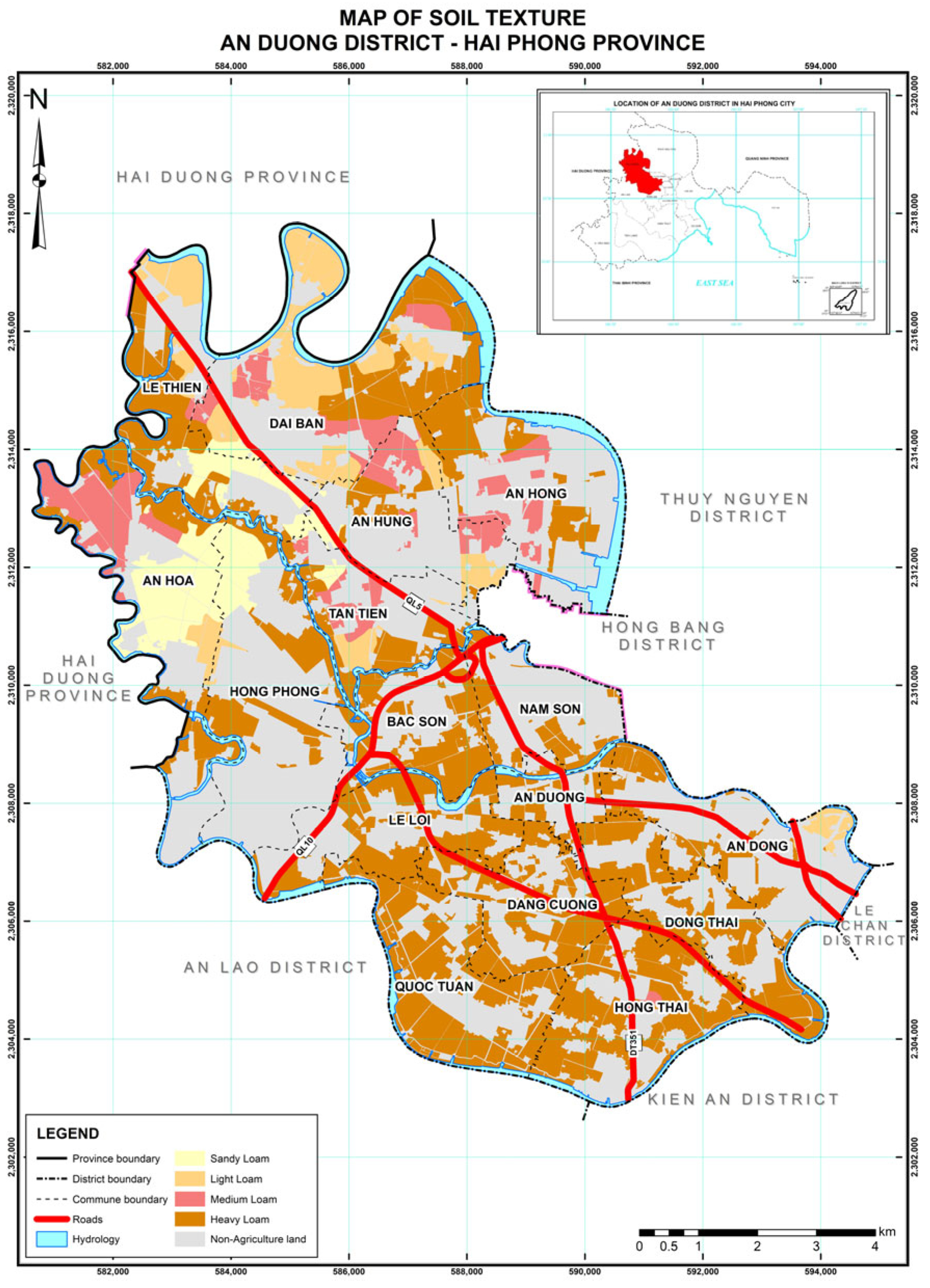
- Soil texture map: Soil mechanical composition data was obtained from the analysis of 96 soil samples in An Duong District. The soil texture map of An Duong District was developed based on four texture classes: sandy loam, light loam, medium loam, and heavy loam. The results show that agricultural land in the district is predominantly heavy loam, accounting for 68.78% (3272.18 ha). Light loam and medium loam soils account for 11.29% (536.97 ha) and 10.71% (509.55 ha), respectively. Sandy loam soils occupy the smallest proportion, accounting for only 9.22% (438.71 ha) (Figure 8).Figure 7. Map of Soil depth of An Duong District, Hai Phong province.
 Figure 8. Map of Soil texture of An Duong District, Hai Phong province.

- -
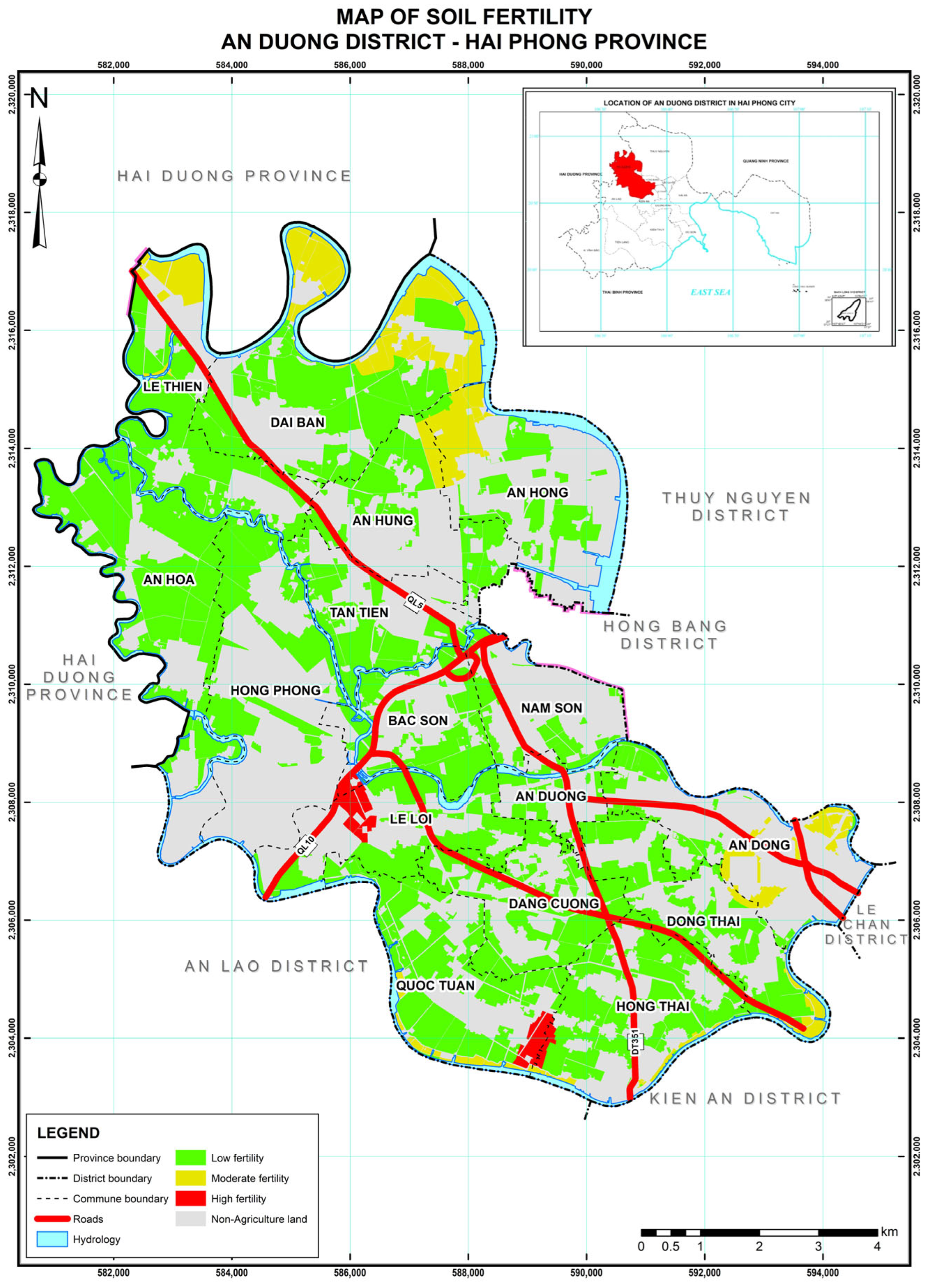
- Soil fertility map: Soil fertility, also referred to as soil productivity, represents the integrated capacity of soil to provide favorable conditions for plant growth and development, including adequate nutrient availability in plant-available forms, suitable moisture and temperature conditions, appropriate aeration for plant respiration and microbial activity, absence of toxic substances and weeds, and a loose soil structure. To construct a soil fertility map for An Duong District, we used the Multi-Criteria Evaluation (MCE) method, which includes the following specific steps:
3.5. Method for Developing the Crop Development Orientation Map
3.6. Data Processing
4. Results
4.1. Current Status of Agricultural Soil Quality Analysis in An Duong District
4.2. Results of Soil Quality Mapping in An Duong District
4.3. Results of Developing the Crop Development Orientation Map for An Duong District
5. Discussion
5.1. Trends in Agricultural Development Associated with Ecotourism in An Duong District, Hai Phong
5.2. Planning and Development of Key Agricultural Crops
5.3. Analysis of the Advantages and Disadvantages of GIS Applications in Soil Quality Management
6. Conclusions
Author Contributions
Funding
Data Availability Statement
Conflicts of Interest
References
- FAO; UNDP. Integrating Agriculture in National Adaptation Plans (NAP-Ag) Programme: Viet Nam Case Study; FAO: Rome, Italy; UNDP: New York, NY, USA, 2020; p. 6. Available online: https://www.adaptation-undp.org/resources/experiences-integrating-agriculture-sectoral-and-national-adaptation-planning-processes (accessed on 20 January 2026).
- FAO. Trade Reform and Food Security. 2003. Available online: https://www.fao.org/4/y4671e/y4671e00.htm (accessed on 20 January 2026).
- Hasegawa, T.; Sakurai, G.; Fujimori, S.; Takahashi, K.; Hijioka, Y.; Masui, T. Extreme climate events increase the risk of global food insecurity and adaptation needs. Nat. Food 2021, 2, 587–595. [Google Scholar] [CrossRef] [Scilit] [PubMed]
- Kummu, M.; Heino, M.; Taka, M.; Varis, O.; Viviroli, D. Climate change risks pushing one-third of global food production outside the safe climatic space. One Earth 2021, 4, 720–729. [Google Scholar] [CrossRef] [Scilit] [PubMed]
- Van Dijk, M.; Morley, T.; Rau, M.L.; Saghai, Y. A meta-analysis of projected global food demand and population at risk of hunger for the period 2010–2050. Nat. Food 2021, 4, 416–426. [Google Scholar] [CrossRef] [Scilit] [PubMed]
- World Bank. Sea Level Rise from Global Warming: Potential Impact on Developing Countries; DECRG Research Paper; World Bank: Washington, DC, USA, 2007. [Google Scholar]
- Germanwatch. Global Climate Risk Index 2020; Germanwatch e.V.: Bonn, Germany, 2020; Available online: https://www.germanwatch.org/en/cri (accessed on 20 January 2026).
- Phuong, T.T.; Bien, T.V.; Son, T.N.; Vien, D.T.; Tien, D.N.H. Climate change and livelihood vulnerability of the rice farmers in the North Central Region of Vietnam: A case study in Nghe An province, Vietnam. Environ. Chall. 2022, 7, 100460. [Google Scholar] [CrossRef] [Scilit]
- Phuong, T.T.; Vien, T.D.; Son, C.T.; Thuy, D.T.; Grieving, S. Impact of Climate Change on Agricultural Production and Food Security: A Case Study in the Mekong River Delta of Vietnam. Sustainability 2024, 16, 7776. [Google Scholar] [CrossRef] [Scilit]
- MONRE—Ministry of Natural Resources and Environment in Vietnam. National State of the Environment Report 2016–2020; MONRE: Hanoi, Vietnam, 2020; 190p.
- MARD—Ministry of Agriculture and Rural Development. Report on the Summary of the Agricultural and Rural Development Sector in 2022 and the Implementation of the Plan for 2023; MARD: Hanoi, Vietnam, 2022.
- Vien, T.D. Climate change and its impact on agriculture in Vietnam. J. Int. Soc. Southeast Asian Agric. Sci. 2011, 17, 17–21. [Google Scholar]
- ADB—Asian Development Bank. Viet Nam: Environment and Climate Change Assessment; Asian Development Bank: Mandaluyong City, Philippines, 2013. [Google Scholar]
- Phuong, T.T.; Vien, D.T.; Khue, P.V.; Trung, D.N.; Son, C.T.; Loc, N.D.; Cong, H.V. Factors influencing agricultural land transformation for climate change adaptation in Can Loc district, Ha Tinh province, Vietnam. Environ. Sustain. Indic. 2025, 25, 100576. [Google Scholar] [CrossRef] [Scilit]
- Vietnam’s Government. Decree No. 112/2024/ND-CP Dated September 11, 2024, of the Government of Vietnam Has Detailed Regulations on Rice-Growing Land; Vietnam’s Government: Hanoi, Vietnam, 2024.
- Nguyen, T.; Roehrig, F.; Grosjean, G.; Tran, D.; Vu, T. Climate Smart Agriculture in Vietnam; CSA Country Profiles for Asia Series; International Center for Tropical Agriculture (CIAT): Hanoi, Vietnam; The Food and Agriculture Organization: Rome, Italy, 2017. [Google Scholar]
- Vietnam Irrigated Agriculture Improvement Project. Vietnam—Irrigated Agriculture Improvement; World Bank: Washington, DC, USA, 2022. [Google Scholar]
- Phuong, T.T.; Duc, V.T.; Truong, S.C.; Thanh, T.D.; Huu, D.N.; Scholz, W. Analyzing factors influencing land use planning for sustainable land resource management in Vietnam: A case study of dan Phuong district in Hanoi city. Sustainability 2023, 15, 16557. [Google Scholar]
- Vietnam National Assembly. Law No. 31/2024/QH15 on Land Law; Vietnam National Assembly: Hanoi, Vietnam, 2024.
- Prime Minister of Vietnam. Decision No. 749/QD-TTg on Apprpving the “National Digital Transformation Program to 2025, with Orientation Towards 2030”; Prime Minister of Vietnam: Hanoi, Vietnam, 2020. [Google Scholar]
- Thuy, D.T.; Phuong, T.T.; Ba, N.K.V. Applying remote sensing data to assess the level of drought in Loc Ha district, Ha Tinh province. Agric. Rural Dev. 2020, 9, 124–130. [Google Scholar]
- Ha, M.K.; Phuong, T.T.; Anh, H.P.; Thuy, D.T.; Son, T.C.; Hoa, N.X. Assessment of the current status of soil quality and types of land degradation in Quang Ninh province, Vietnam. IOP Conf. Ser. Earth Environ. Sci. 2024, 1345, 012020. [Google Scholar] [CrossRef] [Scilit]
- Loc, N.D.; Chou, T.Y.; Chen, M.H.; Hoang, T.V.; Tran, T.P. A GIS-based multicriteria analysis of land suitability for groundnut crop in Nghe An province, Vietnam. Int. J. Geoinform. 2021, 17, 85–95. [Google Scholar] [CrossRef] [Scilit]
- Binh, N.T.; Duyen, D.H.; Thuy, D.T. Application of GIS in land unit mapping and evaluation of land suitability for agriculture in Uong Bi district—Quang Ninh province. IOP Conf. Ser. Earth Environ. Sci. 2024, 1345, 012017. [Google Scholar] [CrossRef] [Scilit]
- Hai Phong Department of Agriculture and Environment. Environmental Protection Report 2023; Hai Phong Department of Agriculture and Environment: Hai Phong, Vietnam, 2023. [Google Scholar]
- MONRE—Ministry of Natural Resources and Environment. Circular No. 60/2015/TT-BTNMT of the Ministry of Natural Resources and Environment: Regulations on Technical Aspects of Land Survey and Assessment; MONRE: Hanoi, Vietnam, 2015.
- TCVN 4198:2014; Soils—Laboratory Methods for Particle—Size Analysis. Vietnam Ministry of Construction: Hanoi, Vietnam, 2014.
- TCVN 5979:2007 (ISO 10390:2005); Soil Quality—Determination of pH. Vietnam Ministry of Science and Technology: Hanoi, Vietnam, 2007.
- TCVN 6644:2000 (ISO 14235: 1998); Soil Quality—Determination of Organic Carbon by Sulfochromic Oxidation. Vietnam Ministry of Science and Technology: Hanoi, Vietnam, 2000.
- TCVN 6645:2000 (ISO 13878: 1998); Soil Quality—Determination of Total Nitrogen Content by Dry Combustion (“Elemental Analysis”). Vietnam Ministry of Science and Technology: Hanoi, Vietnam, 2000.
- TCVN 6499:1999 (ISO 11263: 1994); Soil Quality—Determination of Phosphorus—Spectrometric Determination of Phosphorus Soluble in Sodium Hydrogen Carbonate Solution. Vietnam Ministry of Science and Technology: Hanoi, Vietnam, 1999.
- ISO 5310:1986; Fertilizers—Determination of Potassium Content—Titrimetric Method. International Organization for Standardization: Geneva, Switzerland, 1986.
- TCVN 8568:2010; Soil Quality—Method for Determination of Cation Exchange Capacity (CEC) by Ammonium Acetate Method. Vietnam Ministry of Science and Technology: Hanoi, Vietnam, 2020.
- U.S. EPA—United State Enviromental Protection Agency. Method 200.7: Determination of Metals and Trace Elements in Water and Wastes by Inductively Coupled Plasma-Atomic Emission Spectrometry; Revision 4.4; United State Enviromental Protection Agency: Cincinnati, OH, USA, 1994.
- Abdellatif, M.A.; El Baroudy, A.A.; Arshad, M.; Mahmoud, E.K.; Saleh, A.M.; Moghanm, F.S.; Shaltout, K.H.; Eid, E.M.; Shokr, M.S. A GIS-Based Approach for the Quantitative Assessment of Soil Quality and Sustainable Agriculture. Sustainability 2021, 13, 13438. [Google Scholar] [CrossRef] [Scilit]
- El Baroudy, A.A.; Ali, A.M.; Mohamed, E.S.; Moghanm, F.S.; Shokr, M.S.; Savin, I.; Poddubsky, A.; Ding, Z.; Kheir, A.M.S.; Aldosari, A.A.; et al. Modeling Land Suitability for Rice Crop Using Remote Sensing and Soil Quality Indicators: The Case Study of the Nile Delta. Sustainability 2020, 12, 9653. [Google Scholar] [CrossRef] [Scilit]
- Abdulmanov, R.; Miftakhov, I.; Ishbulatov, M.; Galeev, E.; Shafeeva, E. Comparison of the effectiveness of GIS based interpolation methods for estimating the spatial distribution of agrochemical soil properties. Environ. Technol. Innov. 2020, 24, 101970. [Google Scholar] [CrossRef] [Scilit]
- Lanki, A.D.; Onwu, C.A. Geographic Information System (GIS) Application in Soil Fertility Management: A Review. J. Glob. Agric. Ecol. 2024, 16, 29–40. [Google Scholar] [CrossRef] [Scilit]
- Ha, D.V.; Linh, N.X.; Huyen, N.T.T.; Tu, D.T. Application of GIS technology and multi-criteria analysis methods in evaluating the reasonableness of land planning plan for educational and training establishments for the period 2021–2030 in Ha Tinh City, Ha Tinh Province. Environment 2024, 2, 4–8. [Google Scholar]
- Kheybari, S.; Rezaie, F.M.; Farazmand, H. Analytic network process: An overview of applications. Appl. Math. Comput. 2020, 367, 124780. [Google Scholar] [CrossRef] [Scilit]






| No. | Parameter | Symbol | Analytical Method |
|---|---|---|---|
| I | Soil quality parameters | ||
| 1 | Particle size distribution | - | TCVN 4198:2014 [27] |
| 2 | Soil acidity | pH (KCl) | TCVN 5979:2007 (ISO 10390:2005) [28] |
| 3 | Soil organic matter | OM | TCVN 6644:2000 (ISO 14235:1998) [29] |
| 4 | Total nitrogen | Nts | TCVN 6645:2000 (ISO 13878:1998) [30] |
| 5 | Total potassium | Kts | TCVN6499:1999 (ISO 11263:1994) [31] |
| 6 | Total phosphorus | Pts | ISO 5310:1986 [32] |
| 7 | Cation exchange capacity | CEC | TCVN8568:2010 [33] |
| II | Soil pollution parameters | ||
| 1 | Copper | Cu | US EPA Method 200.7 [34] |
| 2 | Lead | Pb | US EPA Method 200.7 [34] |
| 3 | Zinc | Zn | US EPA Method 200.7 [34] |
| 4 | Cadmium | Cd | US EPA Method 200.7 [34] |
| No | Indicators | IR | SCp | G | SPp | Weight |
|---|---|---|---|---|---|---|
| 1 | Irrigation regime (IR) | 1 | 5 | 3 | 7 | 0.56 |
| 2 | Soil chemical properties (SCp) | 1/5 | 1 | 1/3 | 3 | 0.12 |
| 3 | Soil type (G) | 1/3 | 3 | 1 | 5 | 0.26 |
| 4 | Soil physical properties (SPp) | 1/7 | 1/3 | 1/5 | 1 | 0.06 |
| No | Indicators | CEC | pH | OM | Nutrition | Weight |
|---|---|---|---|---|---|---|
| 1 | CEC | 1 | 3 | 5 | 7 | 0.56 |
| 2 | pH | 1/3 | 1 | 3 | 5 | 0.26 |
| 3 | OM | 1/5 | 1/3 | 1 | 3 | 0.12 |
| 4 | Nutrition (Nts, Kts, and Pts) | 1/7 | 1/5 | 1/3 | 1 | 0.06 |
| Indicators | Leveling | Symbol | Xi | Si |
|---|---|---|---|---|
| 1. Soil type | C, Cg, M, Pc, Pe, Pf, Pg, Sp | G1 | 50% | 0.13000 |
| B, Cb, Cc, Fa, Fe, Fl, Fp, Fq, Fs, Mn, Sj, X, Xg | G2 | 30% | 0.07800 | |
| E, Ha, Hq, Mm | G3 | 20% | 0.05200 | |
| 2. Soil texture | Medium loam | TPCG2 | 50% | 0.02250 |
| Heavy loam | TPCG3 | 30% | 0.01350 | |
| Light loam | TPCG1 | 20% | 0.00900 | |
| 3. Soil acidity (pH) | ≥6.0–≤7.0 | PH1 | 50% | 0.01560 |
| ≥4.0–5.0 and ≥5.0–≤6.0 | PH2 | 30% | 0.00936 | |
| <4.0 and >7.0 | PH3 | 20% | 0.00624 | |
| 4. Total organic matter (OM%) | ≥2.0 | OM1 | 50% | 0.00720 |
| ≥1.0–2.0 | OM2 | 30% | 0.00432 | |
| <1.0 | OM3 | 20% | 0.00288 | |
| 6. Nutrition (NPK) | Rich | NPK1 | 50% | 0.00360 |
| Medium | NPK2 | 30% | 0.00216 | |
| Poor | NPK3 | 20% | 0.00144 | |
| 7. CEC (lđl/100 g soil) | ≥25 | CEC1 | 50% | 0.03360 |
| ≥10–25 | CEC2 | 30% | 0.02016 | |
| <10 | CEC3 | 20% | 0.01344 | |
| 8. Irrigation regime (T) | Active irrigation | T1 | 40% | 0.22400 |
| Semi-active irrigation | T2 | 35% | 0.19600 | |
| Rainwater irrigation | T3 | 25% | 0.14000 |
| No | Fertility Level | Symbol | Classification of Total Fertility Value S |
|---|---|---|---|
| 1 | Hight | DP1 | >0.5 |
| 2 | Medium | DP2 | ≥0.35–≤0.5 |
| 3 | Low | DP3 | <0.35 |
| No | Type of Single-Factor Map | Indicator Classification | Code |
|---|---|---|---|
| 1 | Soil type | Slightly and moderately saline soils (M) | G1 |
| Alluvial soils with loamy texture (Pf) | G2 | ||
| Acid sulfate soils with clayey texture (Pg) | G3 | ||
| Deep active acid sulfate soils, saline (Sj2M) | G4 | ||
| Deep potential acid sulfate soils, saline (Sp2M) | G5 | ||
| 2 | Relative topography | Low relative elevation | DHTD1 |
| Relatively low-lying terrain | DHTD2 | ||
| Medium relative elevation | DHTD3 | ||
| Relatively high terrain | DHTD4 | ||
| High relative elevation | DHTD5 | ||
| 3 | Irrigation | Rainfed | I1 |
| Irrigated | I2 | ||
| 4 | Drainage | Poor drainage (severe waterlogging) | N1 |
| Moderate drainage (slight waterlogging) | N2 | ||
| Well-drained (no waterlogging) | N3 | ||
| 5 | Soil depth | >100 cm | D1 |
| 100–70 cm | D2 | ||
| 70–50 cm | D3 | ||
| 6 | Soil fertility | Low fertility | DP1 |
| Medium fertility | DP2 | ||
| High fertility | DP3 | ||
| 7 | Soil texture | Sandy loam | TPCG1 |
| Light loam | TPCG2 | ||
| Medium loam | TPCG3 | ||
| Heavy loam | TPCG4 |
| Crop Type | Land Quality Characteristics | Land Suitability Level | |||
|---|---|---|---|---|---|
| S1 | S2 | S3 | N | ||
| Rice | Soil type | Pg, Pf | Sj2M, Sp2M | M | Non-agricultural land |
| Soil texture | Heavy loam | Medium loam | Light loam, sandy loam | Sand | |
| Soil fertility | DP3; DP2 | DP1 | - | - | |
| Topsoil depth (cm) | >75 | 50–75 | 20–<50 | <20 | |
| Irrigation | Fully irrigated | Fully irrigated | Semi-irrigated | Non-irrigated | |
| Drainage | No waterlogging | No waterlogging | Slight waterlogging | - | |
| Relative topography | High levee, medium levee, low levee | High | Low-lying | - | |
| Vegetables | Soil type | Pf, Pg | Sj2M, Sp2M | M | Non-agricultural land |
| Soil texture | Light loam, sandy loam | Medium loam | Heavy loam | Sand | |
| Soil fertility | DP3; DP2 | DP1 | - | - | |
| Topsoil depth (cm) | >60 | 50–60 | 20 < 50 | <20 | |
| Irrigation | Fully irrigated | Fully irrigated | Semi-irrigated | Non-irrigated | |
| Drainage | No waterlogging | No waterlogging | Slight waterlogging | - | |
| Relative topography | High, very high levee | Medium levee | Low levee | Depressed | |
| Maize | Soil type | Pf | Pg | Sj2M, Sp2M | M |
| Soil texture | Medium loam | Light loam | Heavy loam | Sand | |
| Soil fertility | DP3; DP2 | DP1 | - | - | |
| Topsoil depth (cm) | >75 | 50–75 | 20–<50 | <20 | |
| Irrigation | Fully irrigated | Fully irrigated | Semi-irrigated | Non-irrigated | |
| Drainage | No waterlogging | No waterlogging | Slight waterlogging | - | |
| Relative topography | High, very high levee | Medium levee | Low levee | Depressed | |
| Fruit trees | Soil type | Pf | Pg | Sj2M, Sp2M | M |
| Soil texture | Medium loam | Light loam | Heavy loam, sandy loam | Sand | |
| Soil fertility | DP3; DP2 | DP1 | - | - | |
| Cation exchange capacity (CEC, meq/100 g) | >20 | 10–20 | <10 | - | |
| Irrigation | Fully irrigated | Fully irrigated | Semi-irrigated | Non-irrigated | |
| Drainage | No waterlogging | No waterlogging | Slight waterlogging | - | |
| Relative topography | High, very high levee | Medium levee | Low levee | Depressed | |
| Flowers | Soil type | Pf | Pg | Sj2M, Sp2M | M |
| Soil texture | Medium loam | Light loam, sandy loam | Heavy loam | Sand | |
| Soil fertility | DP3; DP2 | DP1 | - | - | |
| Topsoil depth (cm) | >60 | 50–60 | 20–<50 | <20 | |
| Irrigation | Fully irrigated | Fully irrigated | Semi-irrigated | Non-irrigated | |
| Drainage | No waterlogging | No waterlogging | Slight waterlogging | - | |
| Relative topography | High, very high levee | Medium levee | Low levee | Depressed | |
| Potato | Soil type | Pf | Pg | Sj2M, Sp2M | M |
| Soil texture | Light loam, sandy loam | Medium loam | Heavy loam | Sand | |
| Soil fertility | DP3 | DP2 | DP1 | - | |
| Topsoil depth (cm) | >100 | 75–100 | 50–75 | <50 | |
| Irrigation | Fully irrigated | Fully irrigated | Semi-irrigated | Non-irrigated | |
| Drainage | No waterlogging | No waterlogging | Slight waterlogging | - | |
| Relative topography | High, very high levee | Medium levee | Low levee | Depressed | |
| Soil Quality Indicators | Unit | Average | ±SD | |
|---|---|---|---|---|
| Physico-chemical properties | pH | 5.34 | 0.68 | |
| CEC | ldl/100 g soil | 16.81 | 6.57 | |
| OM | % | 3.75 | 1.60 | |
| Total nitrogen | 0.23 | 0.08 | ||
| Total phosphorus | 0.06 | 0.03 | ||
| Total potassium | 1.31 | 0.18 | ||
| Particle size distribution | Sand | 29.05 | 18.05 | |
| Silt | 36.19 | 8.50 | ||
| Clay | 34.76 | 10.60 | ||
| Heavy metals | Cu | mg/kg soil | 28.94 | 28.46 |
| Pb | 31.68 | 19.96 | ||
| Zn | 71.80 | 33.27 | ||
| Cd | 0.41 | 0.14 | ||
| No. | Crop Type | Land Suitability Level | |||||||
|---|---|---|---|---|---|---|---|---|---|
| S1 | S2 | S3 | N | ||||||
| Area (ha) | Ratio (%) | Area (ha) | Ratio (%) | Area (ha) | Ratio (%) | Area (ha) | Ratio (%) | ||
| 1 | Rice | - | 0 | 3252.7 | 68.4 | 1478.9 | 31.1 | 22.2 | 0.47 |
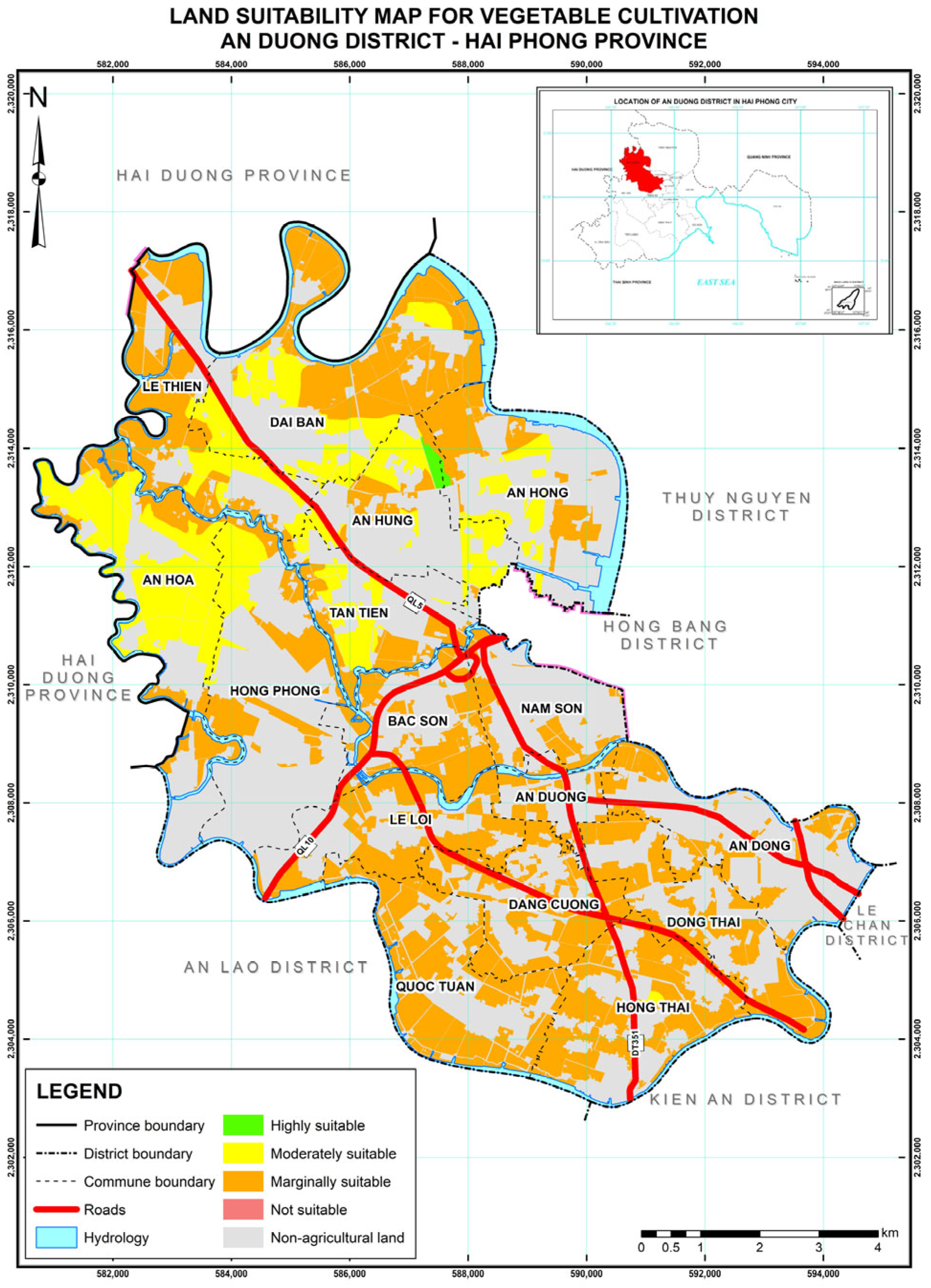
| 2 | Vegetables | 17.9 | 0.4 | 1166.6 | 24.5 | 3569.3 | 75.1 | - | 0 |
| 3 | Maize | - | 0 | 1166.1 | 24.5 | 3001.0 | 63.1 | 586.7 | 12.34 |
| 4 | Fruit trees | - | 0 | 578.4 | 12.2 | 3588.7 | 75.5 | 586.7 | 12.34 |
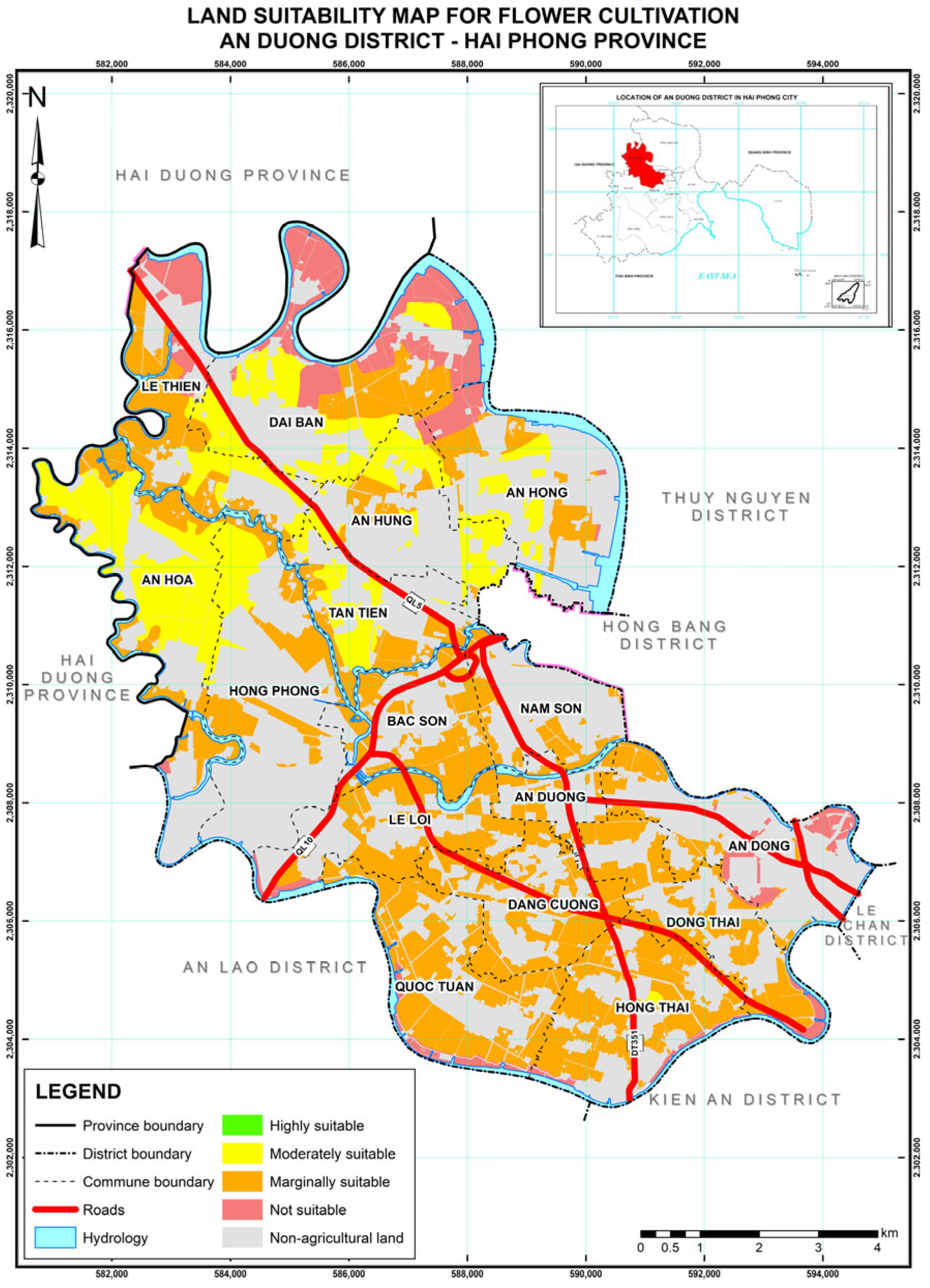
| 5 | Flower | - | 0 | 1166.1 | 24.5 | 3001.0 | 63.1 | 586.7 | 12.34 |
| 6 | Potato | - | 0 | 20.8 | 0.4 | 4146.4 | 87.2 | 586.7 | 12.34 |
Disclaimer/Publisher’s Note: The statements, opinions and data contained in all publications are solely those of the individual author(s) and contributor(s) and not of MDPI and/or the editor(s). MDPI and/or the editor(s) disclaim responsibility for any injury to people or property resulting from any ideas, methods, instructions or products referred to in the content. |
© 2026 by the authors. Licensee MDPI, Basel, Switzerland. This article is an open access article distributed under the terms and conditions of the Creative Commons Attribution (CC BY) license.
Share and Cite
Hanh, N.T.H.; Thuy, D.T.; Trung, N.D.; Nui, N.H.; Son, C.T. Application of GIS Technology in Soil Quality Management and Agricultural Development Orientation in Vietnam. Land 2026, 15, 445. https://doi.org/10.3390/land15030445
Hanh NTH, Thuy DT, Trung ND, Nui NH, Son CT. Application of GIS Technology in Soil Quality Management and Agricultural Development Orientation in Vietnam. Land. 2026; 15(3):445. https://doi.org/10.3390/land15030445
Chicago/Turabian StyleHanh, Nguyen Thi Hong, Doan Thanh Thuy, Nguyen Dinh Trung, Nguyen Hai Nui, and Cao Truong Son. 2026. "Application of GIS Technology in Soil Quality Management and Agricultural Development Orientation in Vietnam" Land 15, no. 3: 445. https://doi.org/10.3390/land15030445
APA StyleHanh, N. T. H., Thuy, D. T., Trung, N. D., Nui, N. H., & Son, C. T. (2026). Application of GIS Technology in Soil Quality Management and Agricultural Development Orientation in Vietnam. Land, 15(3), 445. https://doi.org/10.3390/land15030445