4.1. Spatial Structure of Attractions and Objective Accessibility Differences
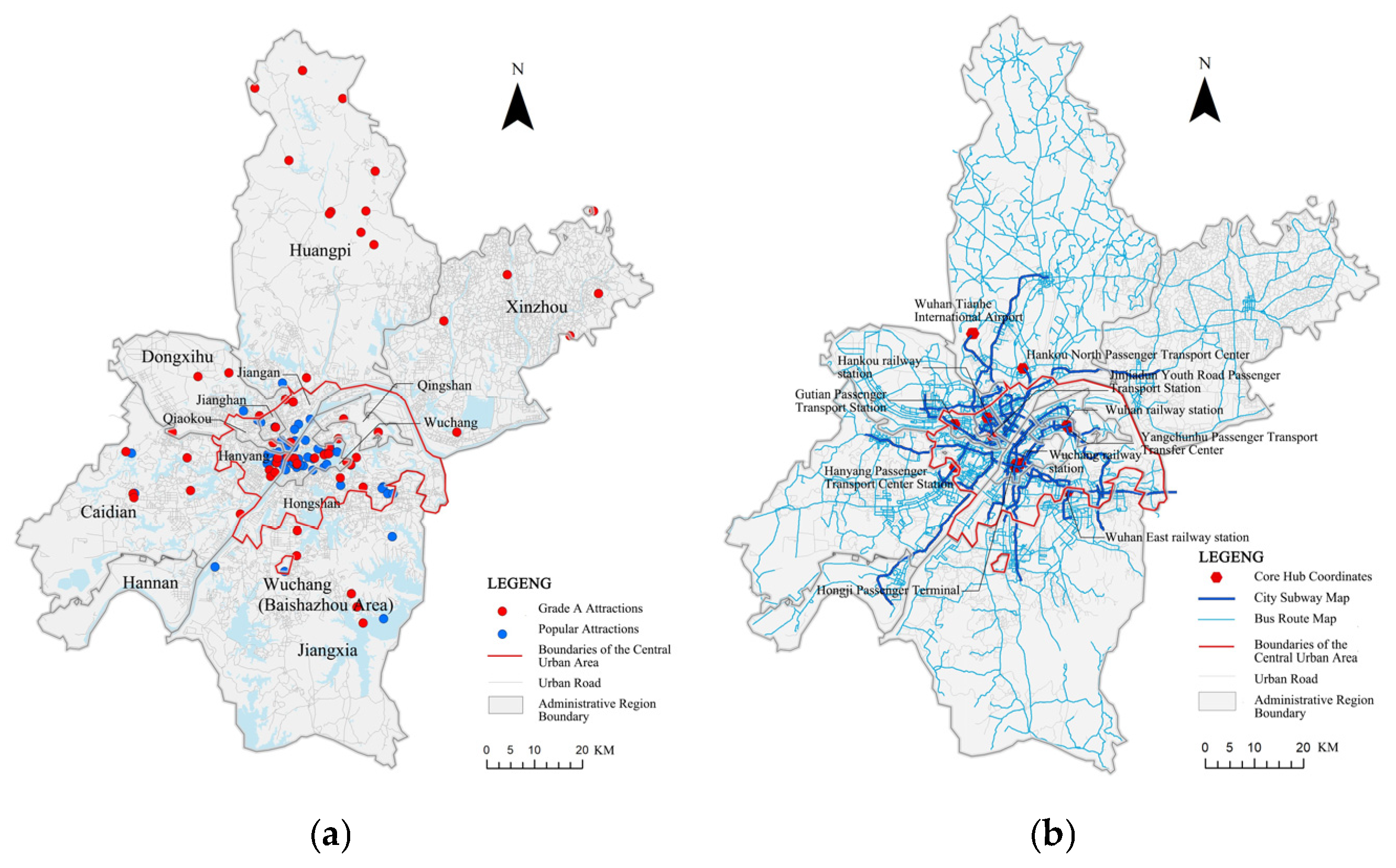
Kernel density analysis reveals (
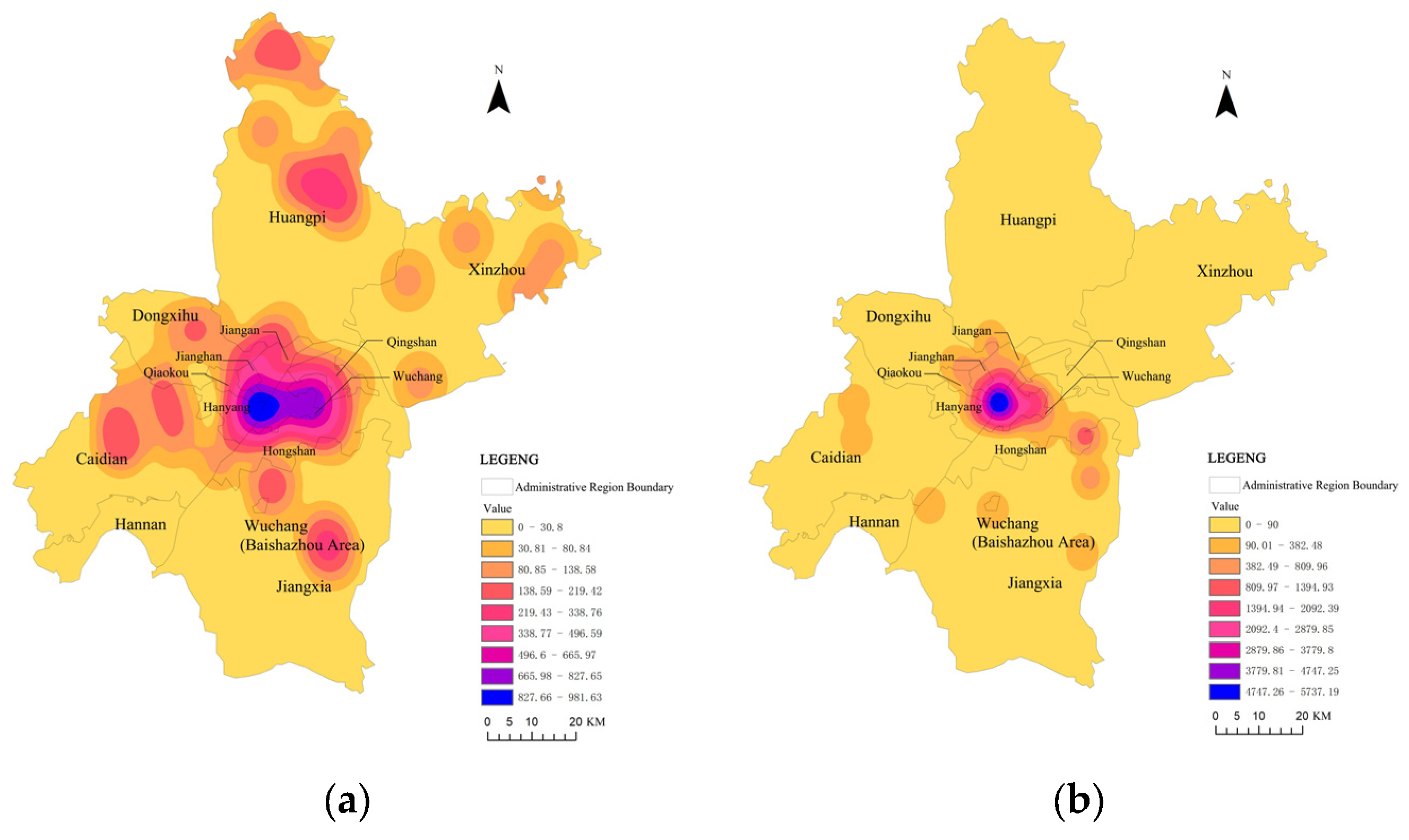
Figure 4) that popular unrated attractions in Wuhan are highly concentrated in the central urban area, forming multiple high-density clusters along rail transit corridors and core commercial districts. In contrast, Grade A attractions exhibit a zoned distribution pattern in distant suburban areas such as Huangpi, Jiangxia, and Xinzhou, demonstrating higher overall spatial dispersion. ANN results indicate (
Table 1) that the R-values for popular attractions are significantly lower than those for Grade A attractions, suggesting stronger clustering among the former and greater reliance on urban living zones and rail transit corridors.
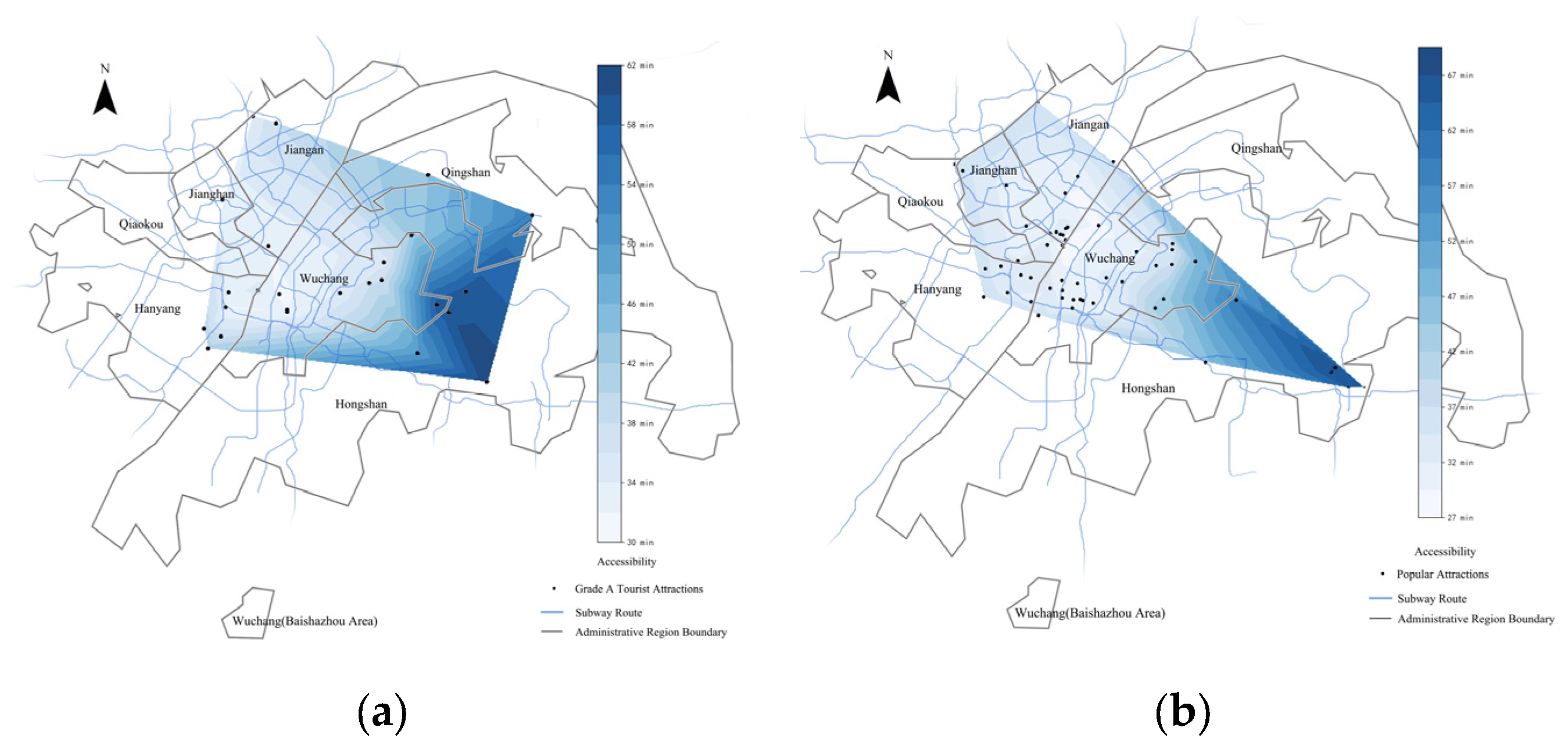
Regarding objective public transport accessibility, origin-destination travel times from multiple integrated transport hubs reveal that popular attractions generally lie within shorter time zones, forming a continuous “high-accessibility core zone” around the main urban area. Average travel times for Grade A attractions are notably longer, with large low-accessibility patches emerging in distant suburban regions. Interpolation results at the central urban scale further reveal (
Figure 5) that popular attractions form nearly “areal” high-accessibility cores in areas with good rail coverage, while Grade A attractions predominantly exhibit a “point-axis” structure overlapping along rivers and rail corridors. Some Grade A attractions located at rail peripheries or in areas with insufficient bus coverage show distinct high-value outliers.
Mann–Whitney U test results (
Table 2) indicate that the difference in public transit travel time distributions between Grade A attractions and popular attractions within the central urban area is statistically significant at the 0.01 level. Popular attractions exhibit lower average and median travel times than Grade A attractions. Taken together with the observed spatial distributions, this difference is consistent with a structural alignment between transit-rich central corridors and the locations of popular unrated attractions, which are embedded in everyday urban leisure and commercial areas. By contrast, many A-rated attractions are located in more peripheral suburban districts; under the structural OD model used here, these sites tend to fall into longer travel-time zones, reflecting a spatial separation between attraction grade distribution and network-based travel-time accessibility in the gateway-entry scenario.
By functional type, the Kruskal–Wallis H test (
Table 3) indicates a statistically significant overall difference in OD-based public transport travel times among attraction categories (H = 11.00,
p = 0.012). Natural attractions show the longest mean travel time (86.64 min) and the largest dispersion (SD = 67.49), suggesting a pronounced right-skewed/“long-tail” distribution in network travel times. Cultural and urban leisure attractions have intermediate mean values (61.55 and 64.89 min) but also relatively large standard deviations (61.30 and 54.79), indicating substantial within-category heterogeneity—i.e., some sites fall within centrally accessible travel-time ranges, while others are located in more peripheral travel-time zones under the gateway-origin OD scenario. In contrast, comprehensive attractions exhibit the shortest mean travel time (38.72 min) and a comparatively low dispersion (SD = 10.80), implying a more concentrated distribution of travel times within this category. Overall, the results suggest that accessibility, as measured by OD-based travel time in this modeling setting, varies not only across functional types but also within several categories, with dispersion patterns differing markedly between “comprehensive” and “natural/cultural/urban leisure” groups.
4.2. Perceived Accessibility Topic Structure and Hierarchical Type Differences
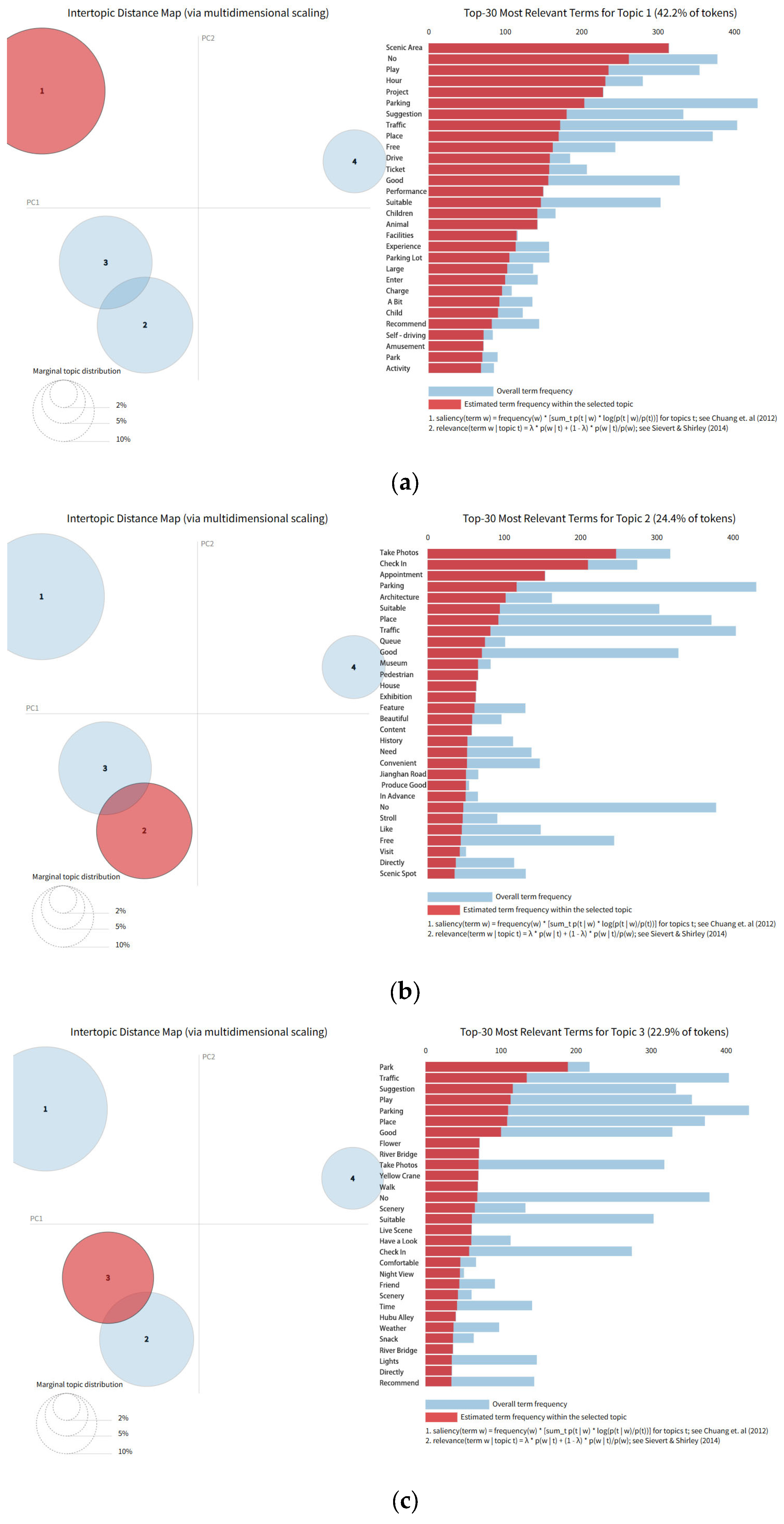
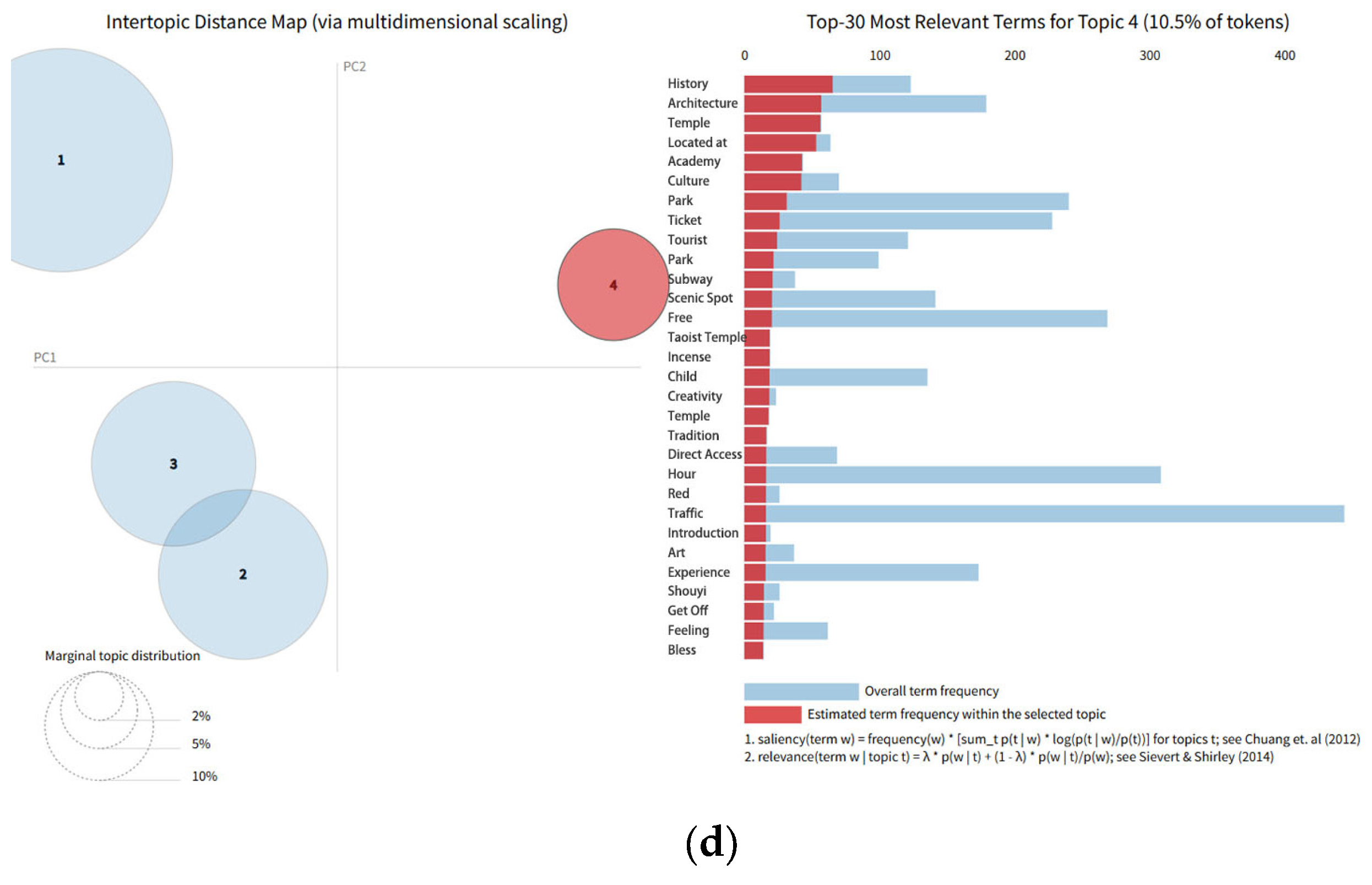
The topic distance map generated by pyLDAvis reveals that the four topics are relatively distinct in the two-dimensional space, with only Topic 2 and Topic 3 showing some overlap. Overall, they exhibit good separability, indicating that the model can reliably capture different dimensions of concern in visitors’ accessibility-related comments. The marginal proportions of the four topics across the entire corpus are 42.2%, 24.4%, 22.9%, and 10.5%, respectively. The topic weight structure is relatively concentrated yet maintains a degree of diversity (
Figure 6).
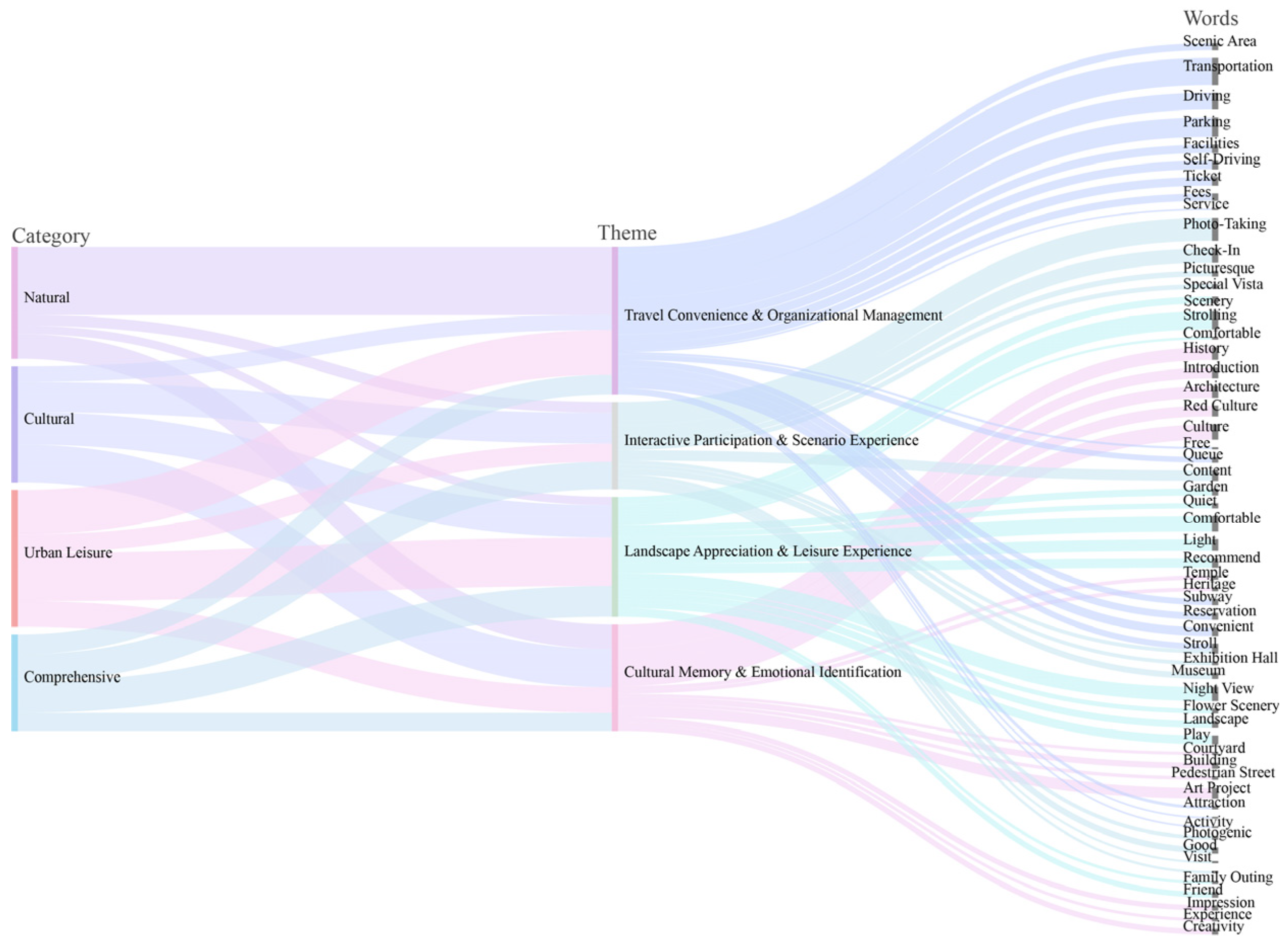
Based on the LDA results, visitor reviews exhibit four dominant thematic clusters (
Table A1). Topic 1 (“Travel Convenience and Organizational Management”) accounts for the largest share of topic probability and includes transport connectivity and on-site organization keywords. Topic 2 (“Interactive Participation and Scenario Experience”) corresponds to expressions related to engagement and activity participation. Topic 3 (“Landscape Appreciation and Leisure Experience”) reflects environmental comfort and recreational ambiance. Topic 4 (“Cultural Memory and Emotional Affinity”) captures vocabulary associated with cultural meaning and emotional attachment. These topics represent probabilistic patterns of word co-occurrence within the review corpus rather than discrete experiential mechanisms.
To clarify the link to transport accessibility, it should be noted that transport perception in user-generated reviews is often expressed in an embedded manner rather than as a standalone attribute. Access-related terms (e.g., transfer, walking distance, guidance, queueing, and parking) frequently co-occur with broader experiential descriptions, because visitors tend to narrate the trip, the last-mile approach, and on-site movement together with what they did and felt at the destination. In this sense, Topic 1 summarizes the most explicit transport-and-organization discourse, whereas Topics 2–4 describe dominant experiential contexts within which access-related evaluations are commonly articulated (e.g., activity participation accompanied by references to wayfinding and internal circulation; leisure/landscape narratives accompanied by last-mile walking comfort; cultural/emotional narratives accompanied by tolerance of time/effort).
The LDA results suggest that transport-related expressions coexist with experiential and cultural dimensions in visitor discourse. While transport convenience appears prominently in review content, environmental, participatory, and cultural vocabulary also occur with substantial probability, indicating a multi-dimensional structure of perception within the textual corpus.
On the functional type dimension, based on the hierarchical classification, we further grouped and analyzed the four topic probabilities derived from the LDA model across natural, cultural, urban leisure, and comprehensive/other attractions (
Table 4 and
Figure 7). The results suggest a four-topic perception structure, but the emphasis varies systematically by attraction type. Topic 1, “Travel Convenience and Organizational Management” (42.2%), captures the most explicit access discourse (e.g., transfers, waiting, queueing, guidance, parking, and entrance management) and tends to be more salient for natural and urban leisure sites, where last-mile access and on-site circulation are frequently discussed. Topic 2, “Interactive Participation and Immersive Experience” (24.4%), is not a transport topic per se; rather, it represents activity-oriented narratives in which access-related expressions often appear as practical constraints (e.g., internal wayfinding, circulation between activity zones, crowding/queueing, and time coordination). This topic is relatively more prominent for comprehensive/other attractions, consistent with diversified visit purposes and organizational needs. Topic 3, “Landscape Appreciation and Leisure Atmosphere” (22.9%), is comparatively more pronounced for cultural attractions, indicating that transport-related perceptions are often articulated together with walking comfort and environmental ambience. and Topic 4, “Cultural Memory and Emotional Resonance” (10.5%), shows higher prominence in natural and urban leisure categories, suggesting that time/effort tolerance and affective appraisal may co-occur with transport-related judgments in these contexts. In contrast, comprehensive/other attractions display a more balanced thematic distribution, implying more diversified narratives. Overall, rather than being isolated dimensions, these topics represent contextual frames in which visitors articulate transport-related perceptions, linking “efficiency of arrival” with the last-mile and on-site access experience.
- (1)
Natural attractions show relatively higher average probabilities for Topic 1 and Topic 4 compared to other categories. This pattern corresponds to the co-occurrence of transport-related and environmental or cultural vocabulary within reviews of these sites.
- (2)
Cultural attractions exhibit comparatively higher probabilities for Topic 3, indicating a stronger presence of landscape- and leisure-related expressions in visitor comments.
- (3)
Urban leisure attractions display relatively higher probabilities for Topic 4 and Topic 1, reflecting the joint appearance of accessibility-related and identity-related vocabulary within the corpus.
- (4)
Comprehensive/other attractions demonstrate a more balanced distribution of topic probabilities, with moderate emphasis on Topic 2, suggesting diversified experiential expressions in reviews.
Overall, differences in thematic probability distributions across attraction types indicate that functional categories are associated with distinct patterns of transport-related and experiential language use. These patterns provide contextual insight into how accessibility-related discourse is embedded within broader visitor experience narratives, without implying causal mechanisms or behavioral intentions.
4.3. Coupling Types and Typical Scenarios of Objective–Perceived Accessibility
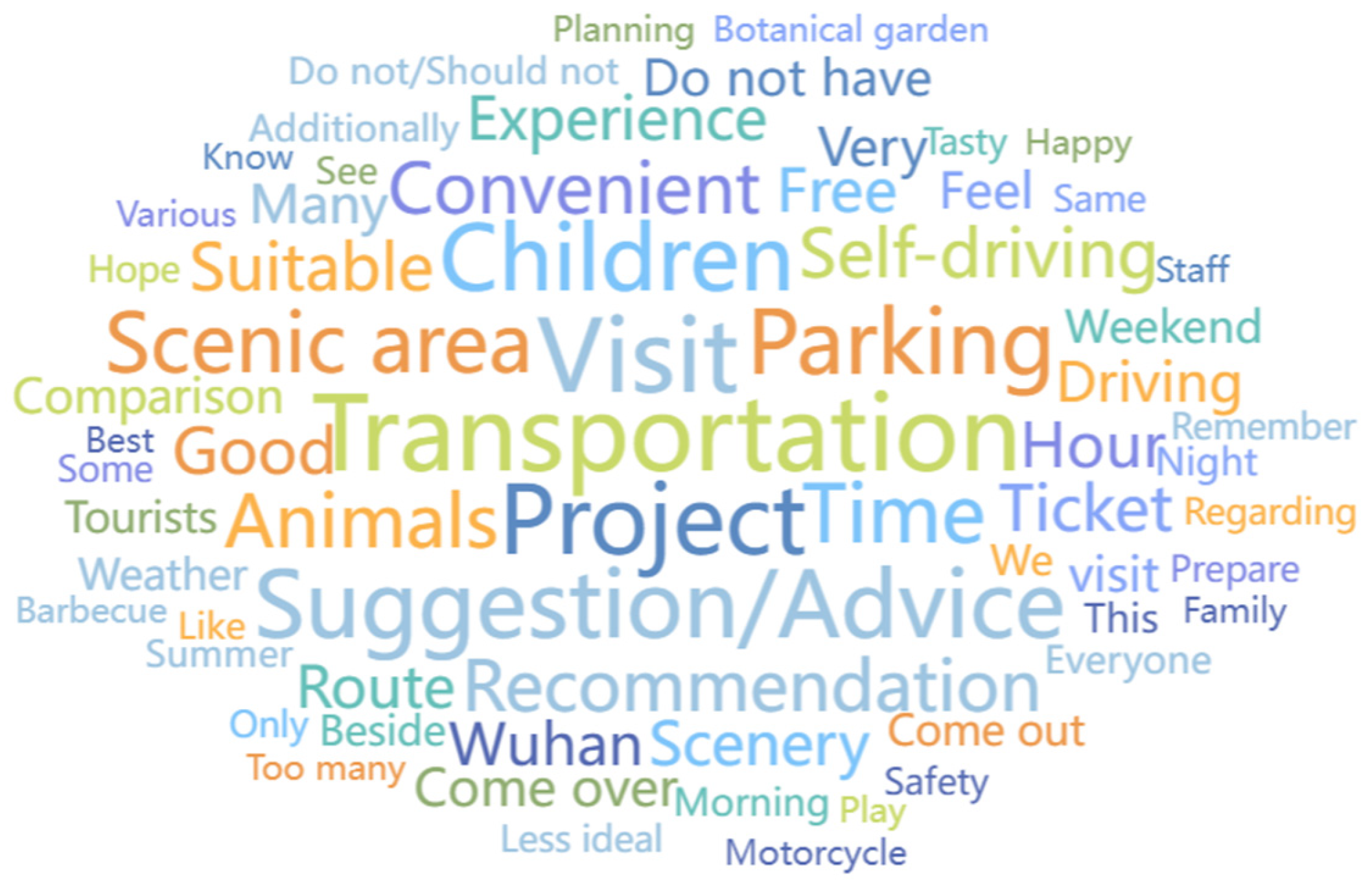
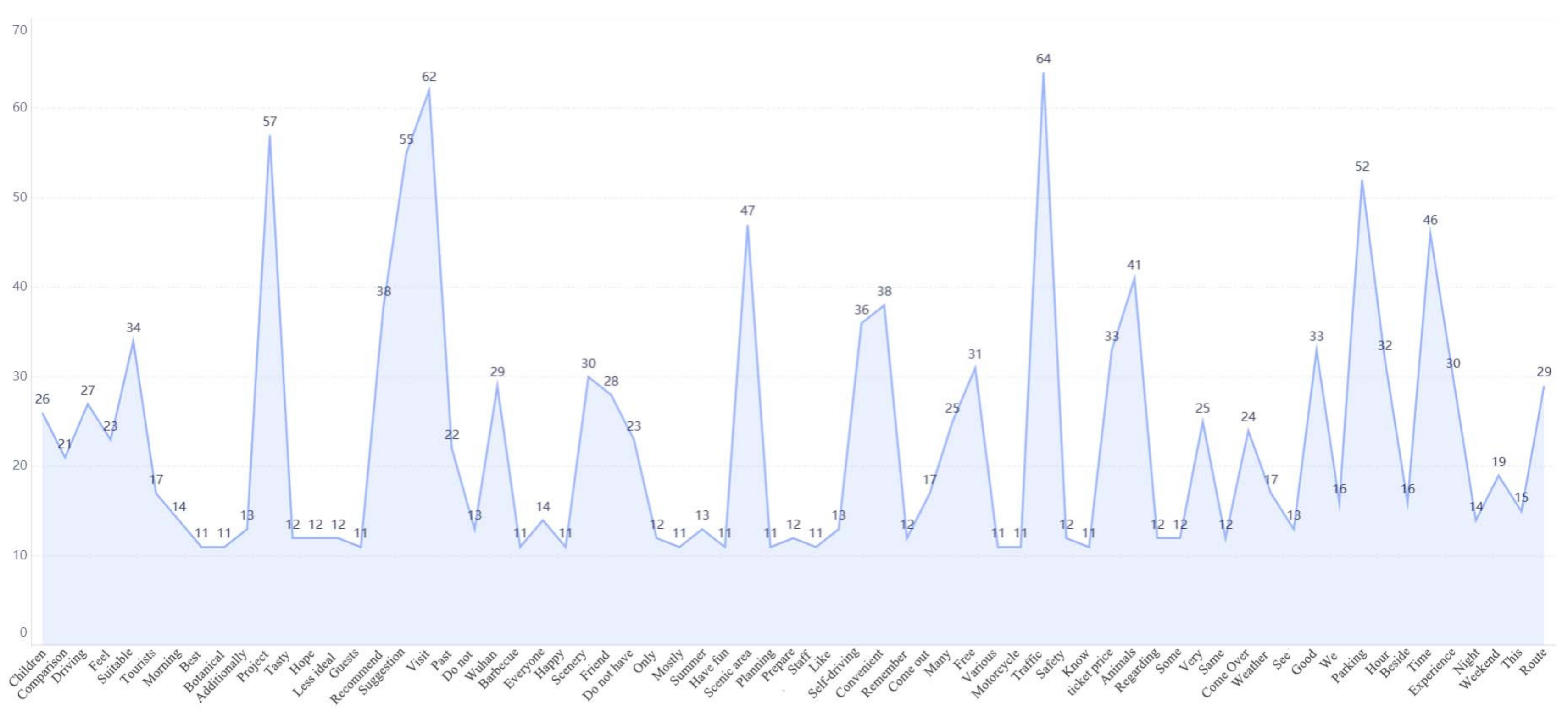
A word frequency analysis was first conducted on the overall reviews of Wuhan’s attractions, and word clouds were generated to visualize the general evaluation of these sites by visitors. The word clouds intuitively display the high-frequency terms in the reviews (
Figure 8 and
Figure 9). It can be observed that terms such as “transportation,” “parking,” “self-driving,” “route,” and “convenient” appear frequently, indicating that visitors’ perception of attraction accessibility primarily focuses on travel modes and transportation connectivity and service conditions. Among these, terms related to self-driving and parking are particularly prominent, reflecting a high reliance on motorized travel conditions during actual trips, especially in family or parent–child travel scenarios, where transportation convenience significantly impacts the overall experience. Simultaneously, frequent mentions of “time,” “hours,” and “weekend” suggest that visitors have a strong perception of travel time costs. When transportation connections are efficient, attractions are more likely to be described as “suitable” or “recommended”.
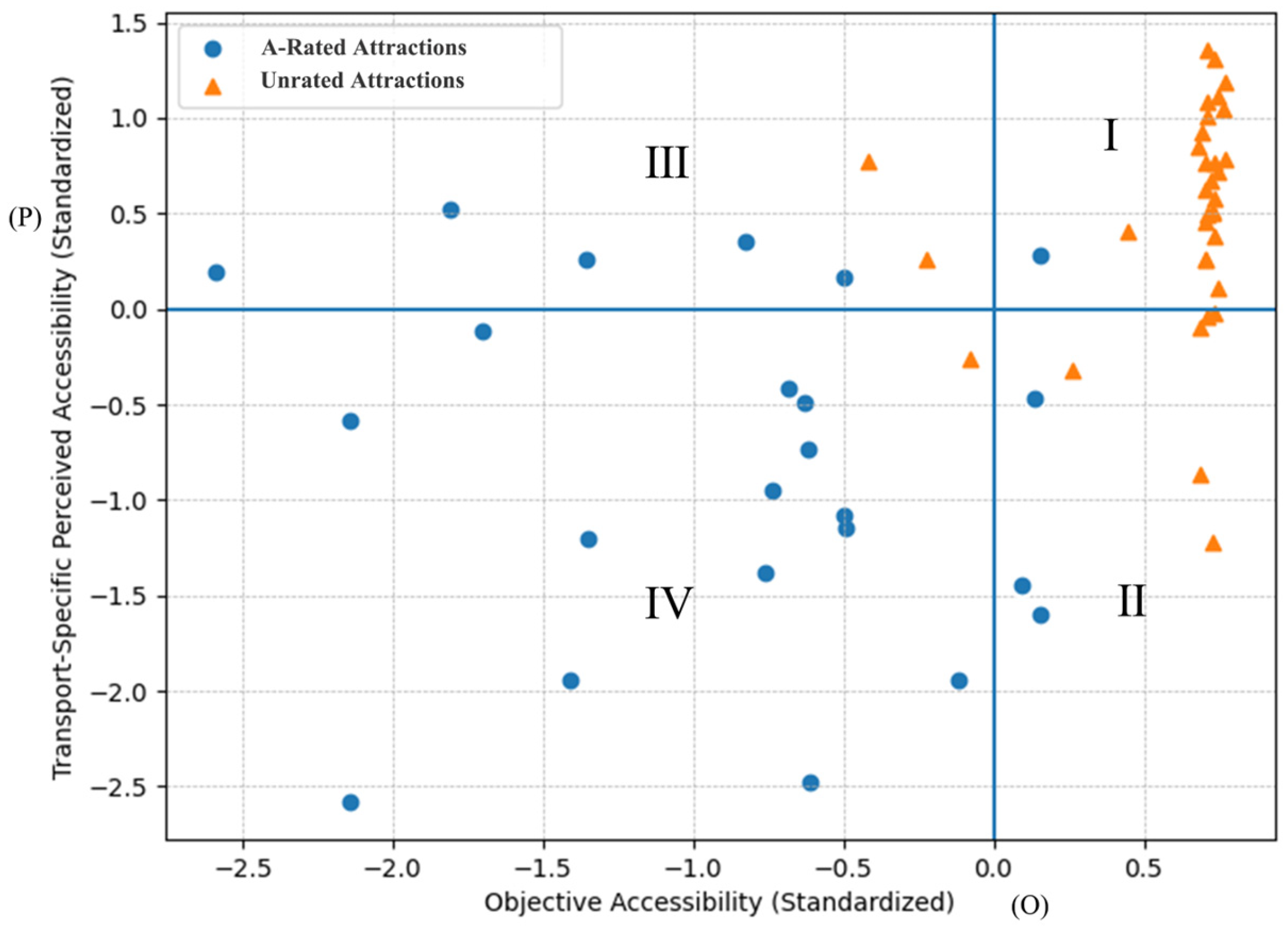
Based on the objective and perceived accessibility indices, a quadrant analysis was conducted to identify coupling types among the sampled attractions (
Figure 10). This reveals four distinct categories: Type I (High–High), Type II (High–Low), Type III (Low–High), and Type IV (Low–Low) (
Table 5). Overall, about two-thirds of attractions perform well in at least one dimension, yet nearly one-fifth remain in the “double-disadvantage” quadrant (Type IV). The quadrant membership is robust to alternative friction-adjusted objective impedance scenarios: no attraction changes quadrant across the tested specifications (0/48 switches;
Appendix C). For interpretation, both axes in
Figure 10 are Z-standardized indices; the zero lines represent the sample mean after standardization. The upper-right quadrant indicates above-average objective accessibility and above-average transport-specific perceived accessibility, whereas the lower-left quadrant indicates a double disadvantage on both dimensions.
- (1)
Type I (High Objective & High Transport-Specific Perceived Accessibility).
Type I attractions are typically located in areas with dense metro/bus coverage, such as central districts and waterfront corridors. Under the gateway-origin OD scenario, they show shorter modeled travel times and thus higher objective accessibility. Transport-specific reviews frequently mention low walking distance to stations/stops, straightforward wayfinding, and relatively smooth transfers (e.g., “close to the metro,” “easy to find,” “few transfers”), indicating an alignment between network-based accessibility and visitors’ reported access convenience. This type represents a relatively consistent coupling pattern in which both the modeled travel-time indicator and transport-related perceptions point in the same direction.
- (2)
Type II (High Objective & Low Transport-Specific Perceived Accessibility).
Type II attractions are often located in the central urban area and exhibit high objective accessibility (short OD travel times), yet receive lower transport-specific perceived ratings. In transport-related comments, negative perceptions are more often associated with end-to-end access frictions that are not fully captured by the simplified OD metric, such as crowding and queuing at entrances, weak last-mile continuity (e.g., long or uncomfortable walks from stops), complex internal circulation, unclear signage/wayfinding, and transfer/waiting uncertainty during peak periods. In other words, although these sites are “close” in modeled travel time, visitors may still report inconvenience due to on-the-ground access conditions and operational factors along the final segment of the trip. This mismatch pattern highlights that high network proximity does not necessarily translate into a smooth perceived access process.
- (3)
Type III (Low Objective & High Transport-Specific Perceived Accessibility).
Type III attractions are commonly located in suburban or peripheral areas with longer modeled travel times and, in some cases, multiple transfers, resulting in lower objective accessibility. Nevertheless, transport-specific perceptions are relatively positive. Reviews frequently refer to access arrangements that reduce perceived friction despite longer distances, such as clear route guidance, direct shuttle/bus services at certain times, convenient parking, or a relatively manageable last-mile connection once arriving at a nearby node. Such comments suggest that visitors’ perceived access convenience can remain favorable when the access process is well-organized and information is clear, even if the modeled travel time is longer. This type can be interpreted as “managed accessibility,” where service organization and last-mile conditions partially offset time-based disadvantages.
- (4)
Type IV (Low Objective & Low Transport-Specific Perceived Accessibility).
Type IV attractions perform poorly on both dimensions: longer OD travel times under the gateway-origin scenario and lower transport-specific perceived accessibility. These sites are generally located on the urban fringe or in remote suburban districts. Transport-related reviews more frequently report difficulties such as limited route options, multiple transfers, longer waiting time, inconvenient last-mile walking, insufficient signage/route guidance, and constraints on parking or pick-up/drop-off. The convergence of longer modeled travel times and negative transport-related perceptions suggests a double-disadvantage coupling pattern, where both network-based accessibility and the reported access experience are relatively weak.