Article

Analysis of Accessibility to Major Tourist Attractions in Wuhan from Subjective and Objective Perspectives

1
School of Civil Engineering and Architecture, Wuhan Institute of Technology, Wuhan 430073, China
2
Village Culture and Human Settlements Research Center, Wuhan Institute of Technology, Wuhan 430073, China
*
Author to whom correspondence should be addressed.
Land 2026, 15(3), 426; https://doi.org/10.3390/land15030426
Submission received: 20 January 2026 / Revised: 1 March 2026 / Accepted: 3 March 2026 / Published: 5 March 2026

Abstract

In the context of rapid urban tourism expansion and the growing emphasis on equitable and sustainable transport development, understanding how transport systems support different types of attractions has become increasingly important. This study investigates how attraction hierarchy and functional type interact with public transport accessibility to shape urban tourism patterns and equity. Whereas prior work emphasizes objective metrics, the alignment between perceived accessibility and actual transport conditions remains understudied. Using Wuhan’s A-rated and popular unrated attractions as a case, we have developed an innovative “ objective–perceived coupling framework that integrates GIS network analysis, travel cost matrix, non-parametric testing, and online comment text mining methods to examine how scenic spot levels (A-level and unrated popular scenic spots) and functional types interact with the public transportation system from both objective and perceptual dimensions. Results show: (1) A-rated attractions cluster in suburbs with low accessibility, while unrated sites concentrate centrally with high rail-bus connectivity, revealing a “high-grade–low-accessibility” mismatch. (2) Accessibility varies by type: natural sites are lowest, cultural/leisure venues intermediate, and comprehensive sites highest due to multimodal hub proximity. (3) Sentiment and topic analyses based on transport-related review content suggest that some A-rated attractions receive less favorable evaluations of access conditions (e.g., transfers, waiting, last-mile walking, wayfinding, and parking), whereas many popular unrated sites are evaluated more positively in these transport-specific aspects. (4) Quadrant analysis shows many highly rated attractions fall into a “low objective–low perceived” disadvantage, while most unrated ones exhibit strong objective–perceived coupling. These findings underscore structural imbalances among administrative grading, attraction function, and transit provision, offering evidence for optimizing public transport service to tourist attractions. They help optimize the spatial structure of urban tourism, improve resource allocation efficiency, guide differentiated scenic spot development strategies, and promote sustainable and experience-oriented urban tourism governance.

1. Introduction

In the context of global efforts to revitalize economies and transform urban industries, tourism has solidified its role as a critical engine for stimulating consumption and fostering employment. To harness this potential, integrating transportation systems with tourist destinations has become a central policy focus internationally, as seen in initiatives like the UK’s Tourism Recovery Plan and Australia’s tourism support policies [1,2]. China’s Domestic Tourism Enhancement Plan (2023–2025) explicitly advocates for linking tourism corridors with transport infrastructure to unlock consumption potential [3]. At the local level, cities like Wuhan have implemented measures to stimulate tourism through financial support and optimized service supply, highlighting the practical drive to leverage policy for spatial and economic vitality [4].
As a major transportation hub, Wuhan possesses diverse tourism resources. However, its urban structure, characterized by the division of two rivers and clustered development, has led to a distinct spatial pattern of attractions. High-grade (A-rated) scenic areas are often located in the distant suburbs, while popular, unrated sites cluster in the central city. This distribution creates a dual challenge: peripheral attractions suffer from inadequate public transport coverage, while central ones face congestion pressures. Coordinating this “central-peripheral” disparity through optimized public transport supply and connectivity is therefore a pressing issue for achieving sustainable urban tourism.
To address these gaps, this study takes Wuhan as a case and constructs a dual-perspective (“objective-perceived”) framework to evaluate public transport accessibility. We integrate GIS network analysis, non-parametric statistical tests, and text mining of online reviews to systematically investigate: (1) the disparities in objective accessibility among attractions of different grades and functional types, identifying potential “grade-accessibility mismatches”; (2) the multidimensional structure of visitors’ perceived accessibility derived from review sentiment and topics; and (3) the coupling patterns and spatial-attribute distribution of objective and perceived accessibility.
Compared to prior work, this study contributes by: (1) integrating attraction hierarchy and functional type within a multi-scale spatial analysis to holistically examine their interplay with public transport; (2) explicitly defining and quantifying “perceived accessibility” using sentiment analysis and LDA topic modeling of user reviews, enriching the experiential dimension of accessibility research; and (3) developing a quadrant coupling model based on objective and perceived indices to identify typologies of match and mismatch, providing a actionable framework for targeted transport planning and attraction management.

Literature Review

Existing studies on tourism–transport interactions can be broadly summarized into three strands. The first strand focuses on the spatial structure of attractions and tourism spaces, commonly using GIS-based methods such as kernel density estimation and clustering indices to identify agglomeration patterns along development axes or around historical cores [5,6,7,8,9,10,11,12,13,14,15,16,17,18,19,20]. The second strand evaluates destination accessibility using objective indicators (e.g., travel time and network-based costs) and examines how transport infrastructures such as metro systems or highway corridors reshape tourism mobility and destination reachability [21,22,23,24,25,26,27,28,29,30,31]. A third and growing strand leverages online reviews and text mining to capture destination image and experience, providing a bottom-up perspective on visitor evaluations [32,33,34,35,36,37,38,39,40,41]. Collectively, this literature suggests that attraction hierarchy and functional type influence both spatial location and transport service conditions [42], yet these influences are rarely examined in an integrated manner.
Despite these advances, several gaps persist. First, attraction distribution and transport accessibility are often studied separately, with limited attention to their coupling patterns across different spatial scales [21,43]. Second, accessibility assessments remain dominated by objective metrics, whereas “perceived accessibility”—how visitors subjectively evaluate transport convenience and access experience—remains underdeveloped in terms of systematic operationalization and quantitative comparison. Although review mining has been widely applied, perceived measures are frequently proxied by overall sentiment or satisfaction rather than being explicitly anchored to transport-related content, and explicit coupling between perceived and objective accessibility is still scarce. Third, comparisons across attraction grades and functional types often remain descriptive, lacking a unified framework that can reveal systematic match/mismatch patterns.
A key reason to integrate “objective–perceived accessibility” with attraction classification is that attraction hierarchy and functional type condition both the travel organization and the access experience. Different grades and functions are associated with distinct spatial locations and visit purposes, which shape sensitivity to transfers, waiting time, last-mile walking, wayfinding, and on-site organization. As a result, similar objective travel-time conditions may be evaluated differently in perception across attraction categories, and conversely, high experiential value may coexist with longer trips. Linking objective and perceived accessibility while stratifying by attraction grade and function, therefore, helps identify where transport provision aligns with visitor experience and where systematic mismatches occur.

2. Study Area and Data

2.1. Overview of the Study Area

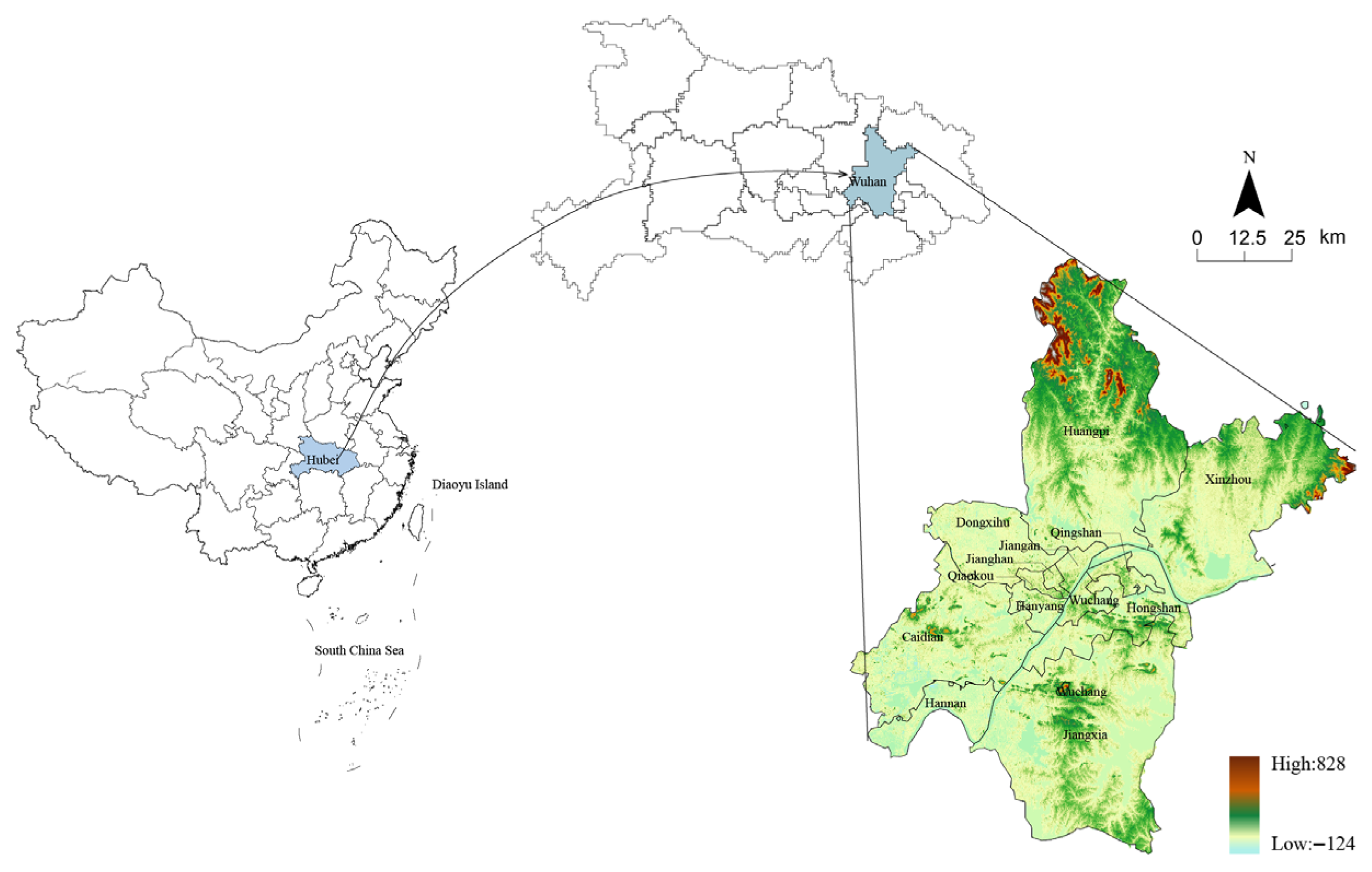
Wuhan, a core city of the Yangtze River Midstream Urban Agglomeration in central China (Figure 1), is a major national transportation hub and a significant tourism destination. Administratively, it comprises 13 districts, with the central urban area formed by Jiang’an, Jianghan, Qiaokou, Hanyang, Wuchang, Qingshan, and Hongshan districts.
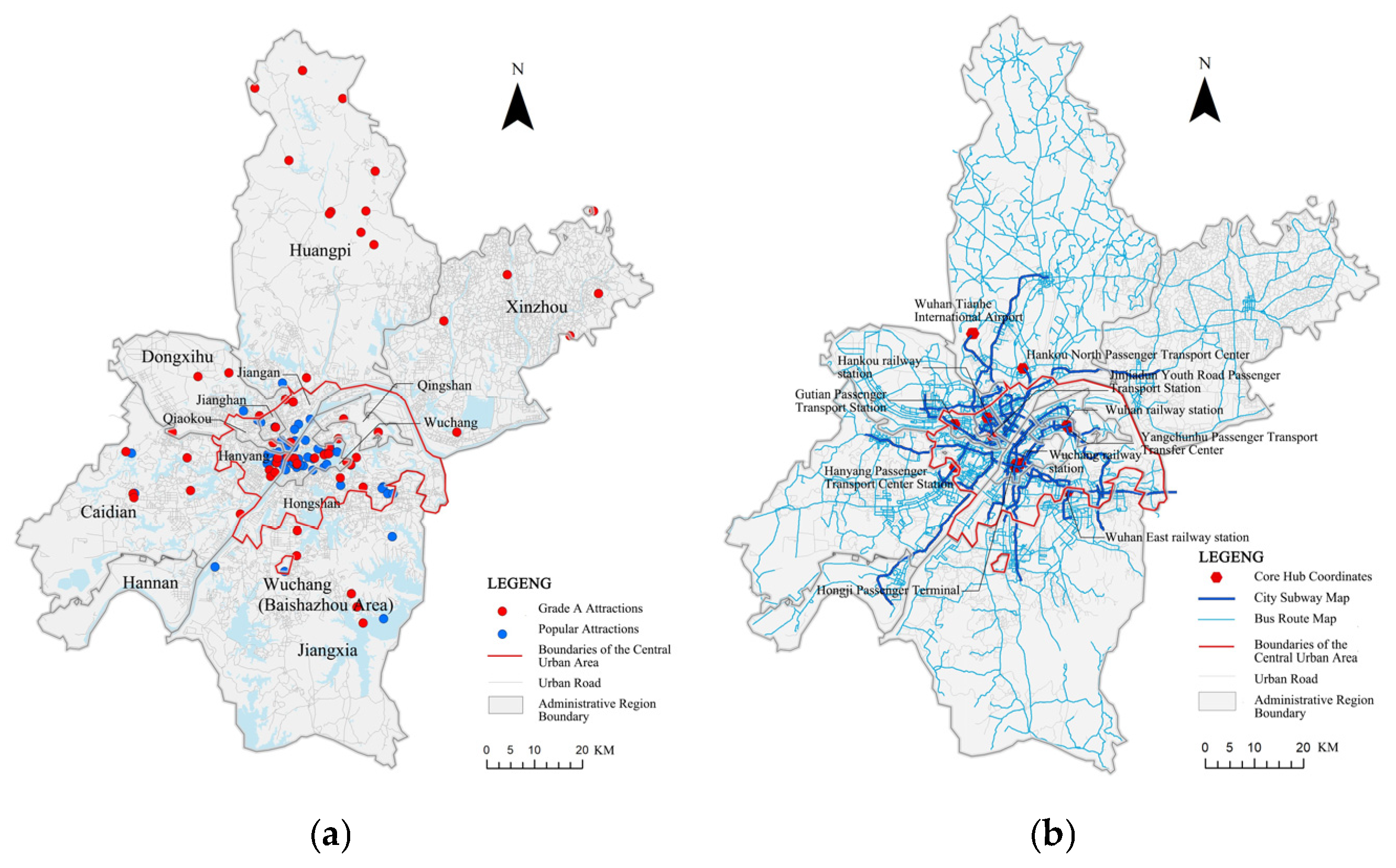
The city exhibits a distinct polycentric spatial structure, shaped by its division by the Yangtze and Han Rivers. This geographical context underpins the distribution of its tourist attractions, which follow a pattern of “central agglomeration with concentric outer rings.” As of the study period, Wuhan officially lists 57 A-rated tourist attractions. In addition, a substantial number of popular yet unrated sites—hereafter termed “popular attractions”—attract considerable visitor flows despite lacking formal administrative classification. The spatial distributions of both A-rated and popular attractions are mapped in Figure 2.
Wuhan’s public transportation system forms a multi-modal, multi-tiered network (Figure 2). Its backbone consists of 12 rail transit lines, integrated with an extensive network of 592 bus routes. This system is anchored by major inter-city transportation hubs—including Wuhan Station, Hankou Station, Wuchang Station, and Tianhe International Airport—which serve as primary gateways for external tourists. The interplay between this integrated transport framework and the city’s clustered spatial structure creates a critical context for analyzing accessibility disparities across attractions of different grades and locations, making Wuhan a salient case for investigating the coupling between urban tourism spatial patterns and public transport service.

2.2. Data Sources and Processing

2.2.1. Attraction Data

The study incorporates two categories of attractions: officially designated Grade A attractions and popular, unrated sites. Data for 57 Grade A attractions were obtained from the official portals of the Hubei Provincial and Wuhan Municipal culture and tourism authorities [44]. Data for popular attractions were collected from the Dianping platform in January 2025, using a threshold of over 1000 user reviews to identify sites with significant public attention [45]. Using Python 3.8, relevant Points of Interest (POIs) within Wuhan’s administrative boundaries were extracted. After manual verification, deduplication, and spatial localization, 45 valid popular attractions were identified. All attractions were geocoded to WGS-84 coordinates using the AutoNavi Maps API and imported into ArcGIS (ArcMap10.8) for spatial coding and database construction. Attractions were classified into four functional types—cultural, natural, urban leisure, and miscellaneous—by synthesizing their official names, Dianping tags, and primary functions, with reference to the national standard Classification, Survey and Evaluation of Tourism Resources (GB/T 18972-2017) and relevant literature [46,47].

2.2.2. Public Transportation and Road Network Data

The public transportation network data include rail transit lines and stations from Wuhan Metro Group [48], bus routes from specialized transit websites [49], and a base road network from OpenStreetMap (accessed on 15 January 2025). These datasets were converted, topologically corrected, and integrated within ArcGIS to construct a unified network dataset containing roads, subway lines, bus routes, and transfer nodes. Five major intercity transportation hubs (Wuhan Station, Hankou Station, Wuchang Station, Wuhan East Station, and Tianhe International Airport) were designated as origins, with all attractions as destinations, forming a multi-origin, multi-destination (OD) structure. For network analysis, simplified speed attributes were assigned to subway, bus, and shared bicycle modes. Real-time dynamic factors such as waiting time, crowding, and transfer penalties were not explicitly modeled.

2.2.3. Online Review Data

Online reviews were sourced from Dianping for both Grade A and popular attractions, covering the period from January 2020 to January 2025. The raw data underwent cleaning to remove advertisements, invalid symbols, extremely short or meaningless text, and records with mismatched dates or attractions. To ensure analytical feasibility and sample representativeness, a final set of 48 attractions—stratified by spatial distribution and attraction grade—was selected for perceived accessibility analysis. This sampling strategy ensured that each selected attraction possessed a sufficient volume of valid review texts for robust text mining and sentiment analysis.
We acknowledge that the volume and activity of online reviews are spatially uneven, with centrally located attractions typically receiving more user-generated content than peripheral sites. To mitigate this imbalance, the perceived-accessibility subsample was selected using a stratified strategy by attraction grade and broad spatial location, aiming to retain peripheral attractions with sufficient textual volume rather than only the most central sites. Nevertheless, the review-based results should be interpreted as reflecting the perceptions of active platform users and may under-represent low-visibility attractions with sparse reviews. Future work could strengthen external validity by incorporating multi-platform review sources and cross-checking whether the perceived-accessibility patterns are consistent across platforms.

3. Research Methodology

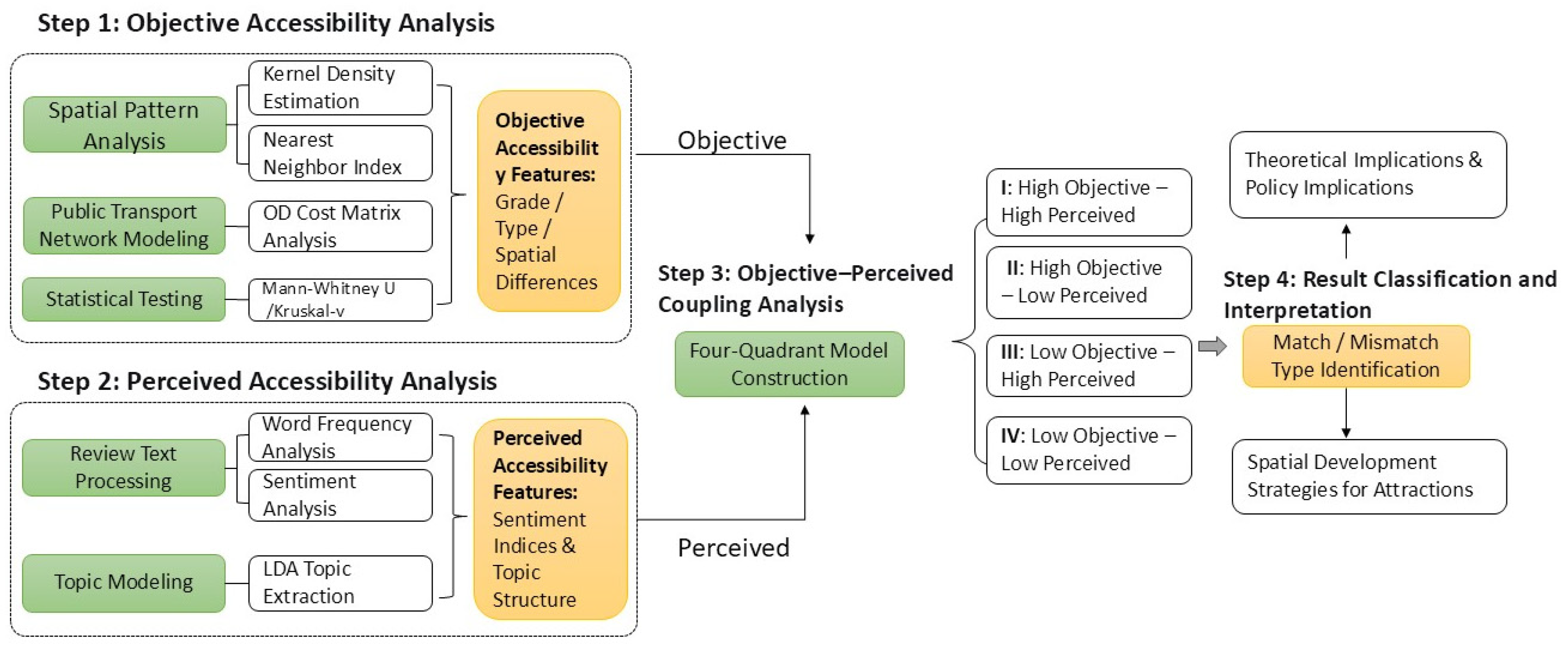
Focusing on the spatial structure of Wuhan’s tourist attractions and variations in public transportation accessibility, this study constructs an integrated research framework: “Spatial Pattern Analysis—Objective Accessibility Measurement—Perceived Evaluation Analysis—Objective-Perceived Coupling.” GIS spatial analysis and OD cost matrix modeling characterize attraction distribution patterns and objective accessibility. Combined with sentiment analysis and topic modeling of review texts, this approach reveals differences in visitor perception dimensions. Finally, it comprehensively analyzes the matching relationship between the two and proposes spatial development strategies for attractions. The research framework is illustrated in Figure 3.

3.1. Spatial Pattern Analysis

Based on GIS techniques, kernel density estimation (KDE) was employed to analyze the spatial clustering intensity of tourist attractions. The KDE is calculated as follows:
f ( x ) = 1 n h 2 i = 1 n K d ( x , x i ) h
where f ( x ) represents the estimated density value at location x , n denotes the number of sample points, h indicates the bandwidth, K is the kernel function, and d ( x , x i ) represents the distance between location x and the sample point x i .
Additionally, the average nearest neighbor (ANN) index was used to measure the degree of spatial clustering, defined as:
R = r   ×   obs r   ×   exp ,   r exp = 1 2 λ
where R is the average nearest neighbor ratio; r _ o b s denotes the observed mean nearest-neighbor distance among attraction points; r _ e x p denotes the expected mean nearest-neighbor distance under a spatially random (Poisson) distribution; and λ   is the point density (i.e., λ   =   n / A , where n is the number of attractions and A is the study area). A value of R   <   1 indicates clustering, R     1 indicates randomness, and R   >   1 indicates dispersion. This index is used to quantify whether attractions are clustered or dispersed at the metropolitan scale.

3.2. Objective Public Transportation Accessibility Model and Statistical Testing

Objective public transportation accessibility was calculated using an origin–destination (OD) cost matrix model implemented in ArcGIS Network Analyst. Major transportation hubs in Wuhan were set as origins, while tourist attractions served as destinations. The model integrated subway, bus, and shared bicycle networks.
Each transportation mode was assigned a corresponding average travel speed (subway: 35 km/h, bus: 18 km/h, shared bicycle: 12 km/h), and route planning was optimized based on minimum travel time. To simplify the modeling process, dynamic factors such as transfer penalties [50], waiting times, and walking transfer durations were excluded. This approach reflects public transportation travel costs under ideal conditions, thereby providing an objective estimate of structural accessibility differences.
The selected hubs represent major intercity transport gateways and key nodes within Wuhan’s urban transport network. Due to their centrality within the metro and bus systems, these hubs possess strong spatial radiating capacity, effectively connecting the primary urban districts and core tourism areas. Therefore, the objective accessibility results reflect a gateway-entry travel scenario while still capturing accessibility patterns across Wuhan’s major urbanized areas.
The shortest public transportation travel time is expressed as:
T s j = min k R s j t k
where T _ s j   denotes the shortest public transportation travel time from transportation hubs to destination j , R _ s j represents the set of all feasible public transportation paths, and t _ k is the travel time of path segment k .
In this paper, the accessibility metric specifically refers to the shortest travel time calculated based on rail transit and conventional bus networks, i.e., “public transportation accessibility.” For brevity, it is hereafter referred to as objective accessibility.
To examine significant differences in objective accessibility among attractions of varying grades and types, the Mann–Whitney U test compares travel time distributions between Grade A attractions and popular attractions. The Kruskal–Wallis H test assesses overall differences among attractions of different functional types, with pairwise Mann–Whitney U tests identifying specific groups showing significant disparities.
Given the empirical characteristics of the accessibility indicators, we adopted non-parametric group comparison tests. Specifically, both objective travel-time–based accessibility measures and the review-derived perceived accessibility indices exhibit evident skewness and contain outliers, and normality and homoscedasticity assumptions required by parametric t-tests/ANOVA are therefore unlikely to hold. In addition, comparisons involve two independent groups (e.g., A-rated vs. popular unrated; or binary grade categories), as well as multiple independent groups when stratifying by attraction type. Accordingly, the Mann–Whitney U test was used for two-group comparisons, and the Kruskal–Wallis H test was used for multi-group comparisons, as they rely on rank-based distributions and are suitable for non-normally distributed continuous/ordinal variables.
Objective accessibility was derived from OD-based travel time T (minutes) by reverse standardization, i.e., O = z ( T ) , so that larger O values represent better accessibility (shorter travel times).
It should be noted that the objective accessibility index reflects structural network-based accessibility under idealized conditions and does not explicitly incorporate waiting time, transfer penalties, or service frequency. This simplification may lead to optimistic travel-time estimates for trips requiring multiple transfers or relying on low-frequency bus services, because waiting time and transfer disutility are not represented. The bias is likely to be larger for peripheral attractions where headways are longer, and transfer options are limited, and during peak or holiday periods when crowding and operational delays increase. We therefore interpret the OD-based indicator as structural network-based accessibility under idealized service conditions, suitable for comparing spatial-pattern differences across attraction groups, rather than as a real-time measure of experienced travel cost. Sensitivity analysis under alternative friction assumptions. To address concerns that the OD-based travel time represents a frictionless lower bound, we conduct a sensitivity test using multiple friction-adjusted impedance specifications (low/base/high and a piecewise variant; Appendix C, Table A4). For each scenario, we recompute objective accessibility by using the scenario-specific travel time (re-standardized within the 48 attractions) and then re-run the key group comparisons and the objective–perceived quadrant classification. The results indicate that quadrant membership is fully stable across all friction scenarios (0/48 attractions switch quadrants; Appendix C, Table A5), suggesting that the coupling patterns are not artifacts of the lower-bound specification.

3.3. Sentiment Analysis of Reviews and LDA Topic Modeling

To strengthen construct validity, we operationalize perceived accessibility using a transport-specific proxy derived from online reviews. Rather than relying on overall sentiment across the full review content, transport-related comments were identified via a keyword-based extraction strategy focusing on access and arrival expressions (e.g., waiting/headway, transfers, last-mile walking distance, parking, queueing/crowding, and route guidance). A comment-level filtering strategy was adopted: a review was retained if it contained at least one transport-related keyword. The full keyword list and extraction rules are reported in Appendix B (Table A2) to ensure reproducibility.
For each attraction i , the transport-specific perceived accessibility proxy was computed as the mean star rating of the extracted transport-related comments:
P t r a n s p o r t , i = 1 N t r a n s p o r t , i j = 1 N t r a n s p o r t , i r i j
where r i j denotes the star rating of the j -th transport-related review for attraction i , and N t r a n s p o r t , i is the number of extracted transport-related comments. In addition, a complaint rate was calculated as
C R t r a n s p o r t , i = 1 N t r a n s p o r t , i j = 1 N t r a n s p o r t , i 1 r i j 3
capturing the share of transport-related comments with ratings 3 . The per-attraction sample size N t r a n s p o r t , i is reported in Appendix B (Table A3). Because uneven N t r a n s p o r t , i may bias comparisons, we further apply a minimum- N rule, N t r a n s p o r t , i 20 (retaining 29/48 attractions), and repeat key comparisons and the coupling (quadrant) classification as a robustness check (see Appendix B).
To validate the construct, a manual coding procedure was conducted on 60 randomly sampled transport-extracted comments. Among them, 56 (93.3%) directly referred to access and arrival conditions, indicating high consistency between the extracted subset and the intended concept of transport-related perceived accessibility (Appendix B).
In addition to constructing the transport-specific perception index, Latent Dirichlet Allocation (LDA) topic modeling was applied to the full review corpus to explore broader thematic structures of visitor evaluations. The topic modeling results provide complementary insights into experiential dimensions (e.g., interaction participation, landscape appreciation, cultural experience) that may contextualize transport-related perceptions. However, the quadrant coupling analysis in this study is based specifically on the transport-related perception index rather than overall experiential sentiment.
The LDA model was implemented using the standard collapsed Gibbs sampling procedure. The number of topics was determined through a combined evaluation of perplexity trends and semantic interpretability across different topic numbers (k = 3–6). The four-topic solution was selected as it provided a balance between statistical fit and thematic clarity. In practice, the 3-topic solution tended to merge leisure/landscape and cultural/emotional narratives into a broad experiential topic, reducing interpretability for planning-oriented reading. By contrast, the 5-topic solution often produced an additional small topic with substantial keyword overlap with Topic 1 (access/organization) or Topic 3 (leisure), making thematic labeling less stable. The 4-topic model provided a parsimonious structure with clearer semantic separation and consistent high-probability keywords across repeated runs, which supports its use as a descriptive lens for the corpus-level perception structure.
Hyperparameters were set to commonly used default values (α = 0.1, β = 0.01), and the model was iterated 1000 times to ensure convergence. To assess topic stability, the model was re-estimated multiple times with different random seeds, and the resulting top keywords exhibited high consistency across runs.
Topic naming was conducted based on the highest-probability keywords within each topic and representative review excerpts. The naming process was intended to provide interpretive labels rather than deterministic classifications.
To avoid conceptual ambiguity, the term “perceived accessibility” in the subsequent sections of this paper refers specifically to the transport-specific perceived accessibility indicator constructed from transport-related review content.

3.4. Objective-Perceived Accessibility Coupling Model

Perceived accessibility was measured using the transport-specific perception index ( P t r a n s p o r t ), derived from transport-related review content as described in Section 3.3. This indicator captures visitors’ evaluations of arrival convenience and transport-related conditions rather than overall experiential satisfaction.
Both objective and transport-specific perceived accessibility indicators were standardized using Z-scores. The mean value (0 after standardization) was used as the threshold to divide attractions into high and low groups along each dimension.
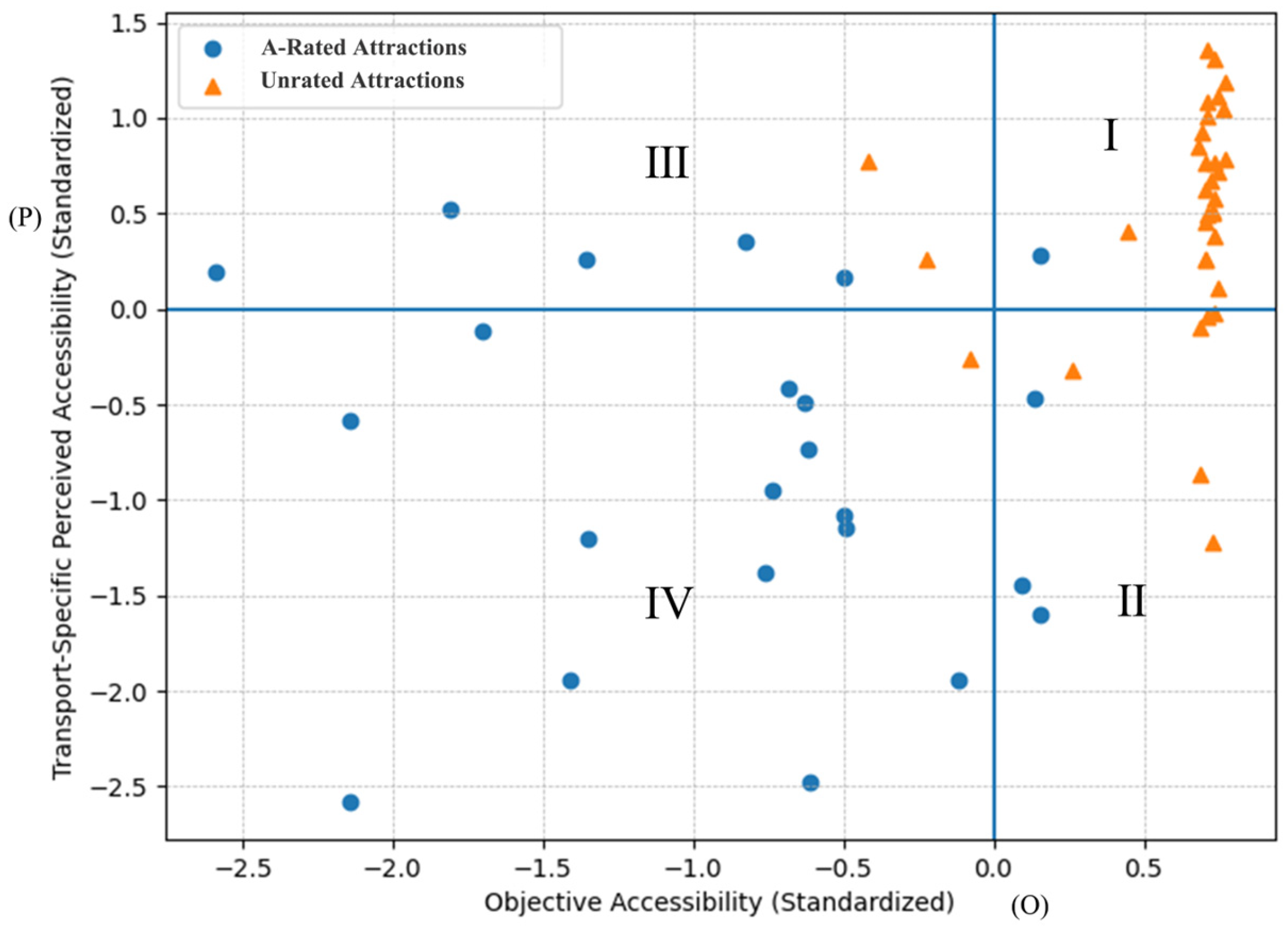
Based on the intersection of the two standardized axes, four quadrants were identified: Type I (High Objective–High Perceived): structurally accessible and positively perceived in transport-related aspects. Type II (High Objective–Low Perceived): structurally accessible but perceived as inconvenient. Type III (Low Objective–High Perceived): structurally less accessible but positively perceived in transport-related aspects. Type IV (Low Objective–Low Perceived): structurally constrained and negatively perceived.
This framework allows for the identification of alignment and mismatch patterns between structural transport provision and visitors’ transport-related perceptions.
To assess the robustness of the quadrant classification, an alternative threshold based on median values was tested in addition to the standardized mean-based (zero) cut-off. Under the median criterion, 8 out of 48 attractions (16.7%) shifted quadrant categories. The overall structural pattern remained consistent, with Type I and Type IV remaining the dominant groups, and no substantial alteration in the general coupling structure. The observed differences primarily involved boundary cases located near the threshold, suggesting that the main conclusions are not highly sensitive to reasonable variations in cut-off definition.
In addition, we test robustness to alternative objective impedance specifications (friction-adjusted travel times) and find that quadrant membership remains unchanged across all scenarios (Appendix C).

4. Results

4.1. Spatial Structure of Attractions and Objective Accessibility Differences

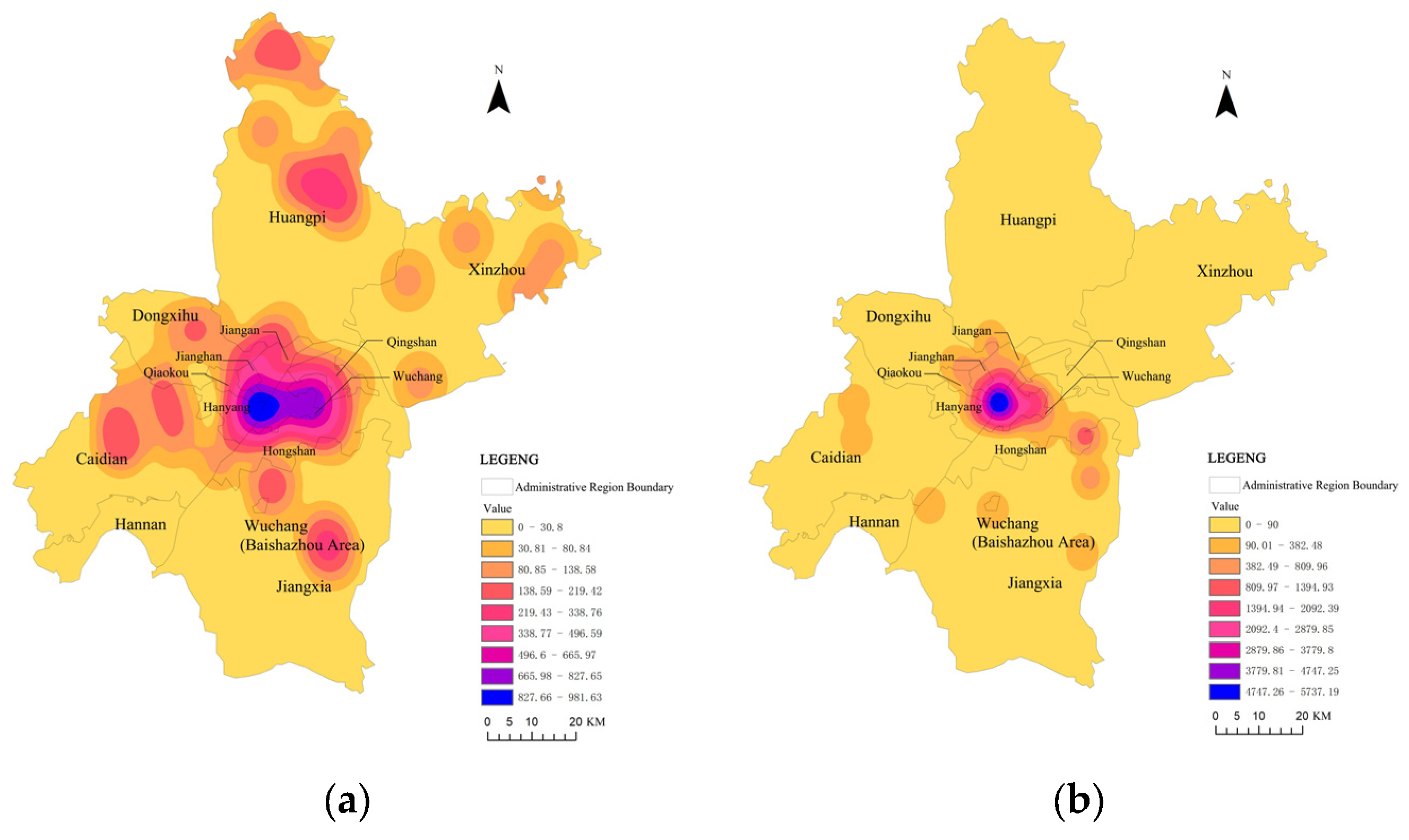
Kernel density analysis reveals (Figure 4) that popular unrated attractions in Wuhan are highly concentrated in the central urban area, forming multiple high-density clusters along rail transit corridors and core commercial districts. In contrast, Grade A attractions exhibit a zoned distribution pattern in distant suburban areas such as Huangpi, Jiangxia, and Xinzhou, demonstrating higher overall spatial dispersion. ANN results indicate (Table 1) that the R-values for popular attractions are significantly lower than those for Grade A attractions, suggesting stronger clustering among the former and greater reliance on urban living zones and rail transit corridors.
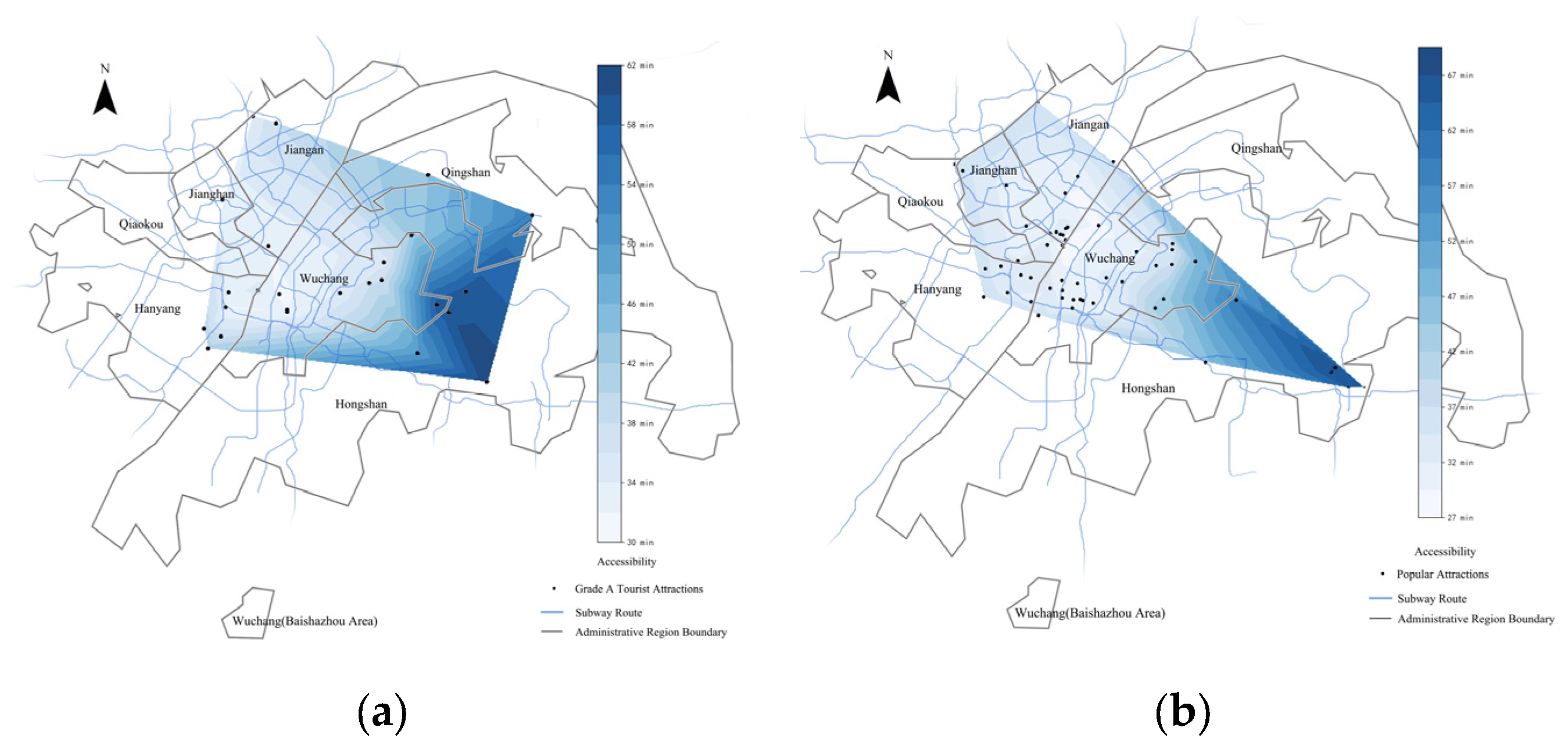
Regarding objective public transport accessibility, origin-destination travel times from multiple integrated transport hubs reveal that popular attractions generally lie within shorter time zones, forming a continuous “high-accessibility core zone” around the main urban area. Average travel times for Grade A attractions are notably longer, with large low-accessibility patches emerging in distant suburban regions. Interpolation results at the central urban scale further reveal (Figure 5) that popular attractions form nearly “areal” high-accessibility cores in areas with good rail coverage, while Grade A attractions predominantly exhibit a “point-axis” structure overlapping along rivers and rail corridors. Some Grade A attractions located at rail peripheries or in areas with insufficient bus coverage show distinct high-value outliers.
Mann–Whitney U test results (Table 2) indicate that the difference in public transit travel time distributions between Grade A attractions and popular attractions within the central urban area is statistically significant at the 0.01 level. Popular attractions exhibit lower average and median travel times than Grade A attractions. Taken together with the observed spatial distributions, this difference is consistent with a structural alignment between transit-rich central corridors and the locations of popular unrated attractions, which are embedded in everyday urban leisure and commercial areas. By contrast, many A-rated attractions are located in more peripheral suburban districts; under the structural OD model used here, these sites tend to fall into longer travel-time zones, reflecting a spatial separation between attraction grade distribution and network-based travel-time accessibility in the gateway-entry scenario.
By functional type, the Kruskal–Wallis H test (Table 3) indicates a statistically significant overall difference in OD-based public transport travel times among attraction categories (H = 11.00, p = 0.012). Natural attractions show the longest mean travel time (86.64 min) and the largest dispersion (SD = 67.49), suggesting a pronounced right-skewed/“long-tail” distribution in network travel times. Cultural and urban leisure attractions have intermediate mean values (61.55 and 64.89 min) but also relatively large standard deviations (61.30 and 54.79), indicating substantial within-category heterogeneity—i.e., some sites fall within centrally accessible travel-time ranges, while others are located in more peripheral travel-time zones under the gateway-origin OD scenario. In contrast, comprehensive attractions exhibit the shortest mean travel time (38.72 min) and a comparatively low dispersion (SD = 10.80), implying a more concentrated distribution of travel times within this category. Overall, the results suggest that accessibility, as measured by OD-based travel time in this modeling setting, varies not only across functional types but also within several categories, with dispersion patterns differing markedly between “comprehensive” and “natural/cultural/urban leisure” groups.

4.2. Perceived Accessibility Topic Structure and Hierarchical Type Differences

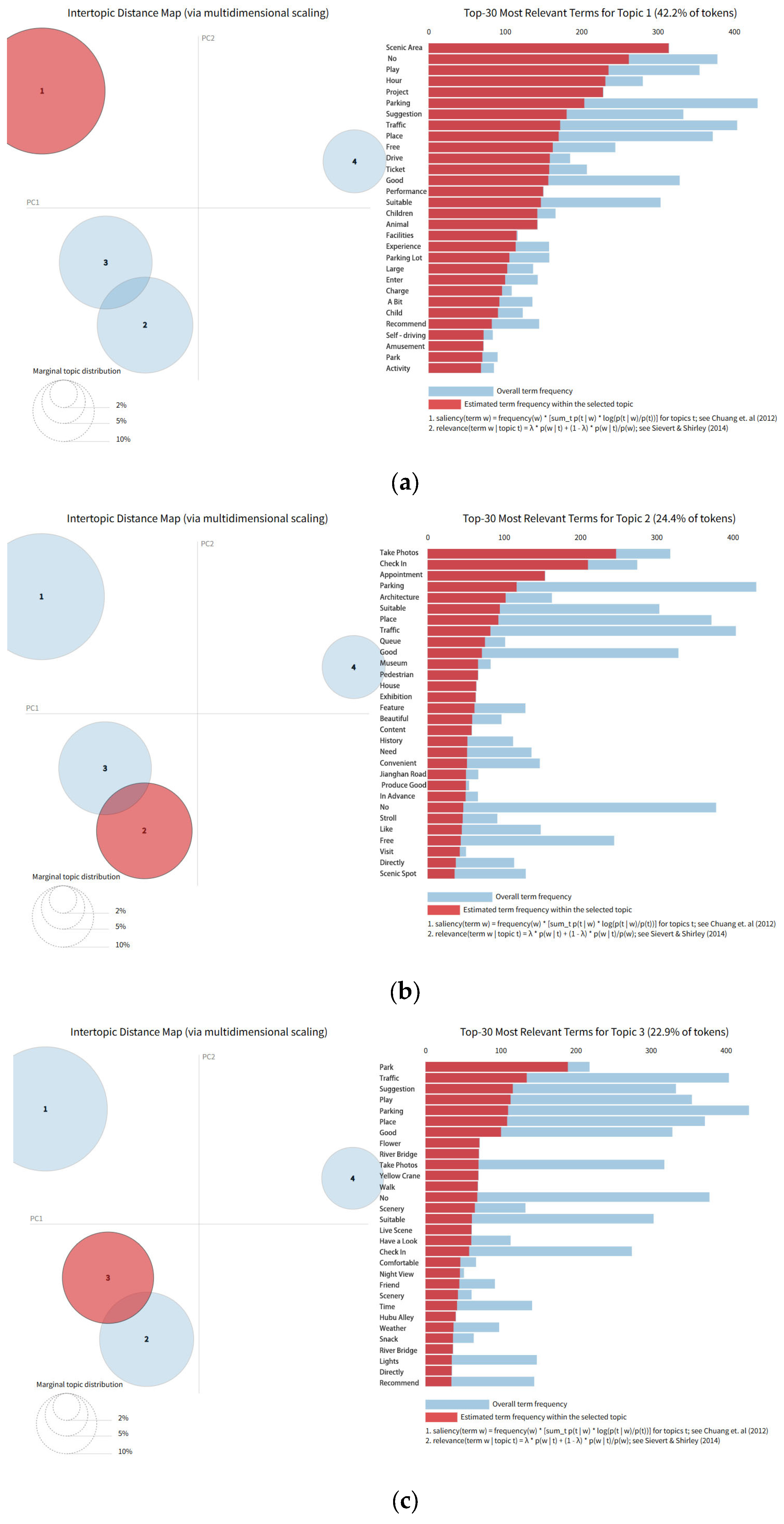
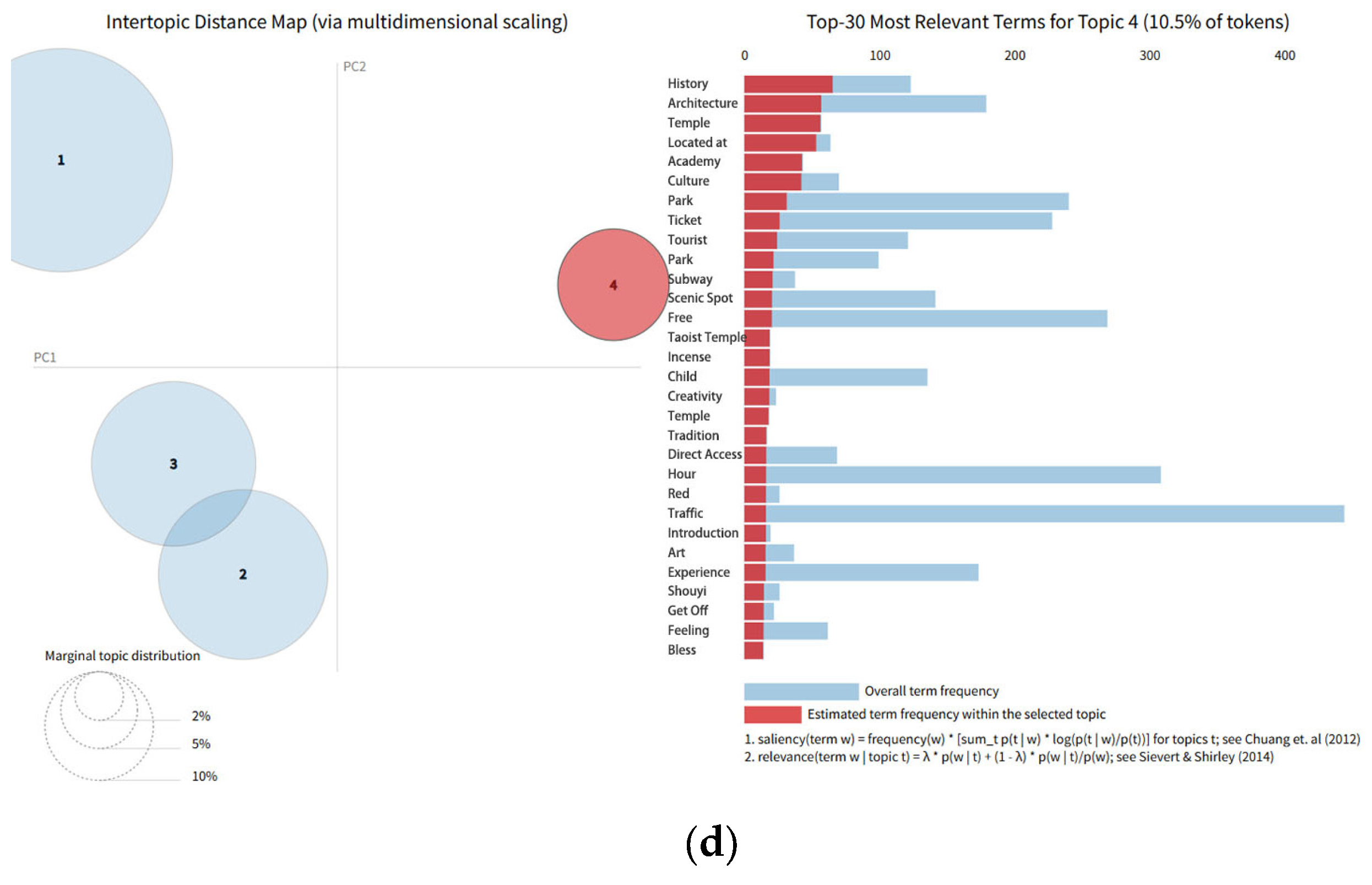
The topic distance map generated by pyLDAvis reveals that the four topics are relatively distinct in the two-dimensional space, with only Topic 2 and Topic 3 showing some overlap. Overall, they exhibit good separability, indicating that the model can reliably capture different dimensions of concern in visitors’ accessibility-related comments. The marginal proportions of the four topics across the entire corpus are 42.2%, 24.4%, 22.9%, and 10.5%, respectively. The topic weight structure is relatively concentrated yet maintains a degree of diversity (Figure 6).
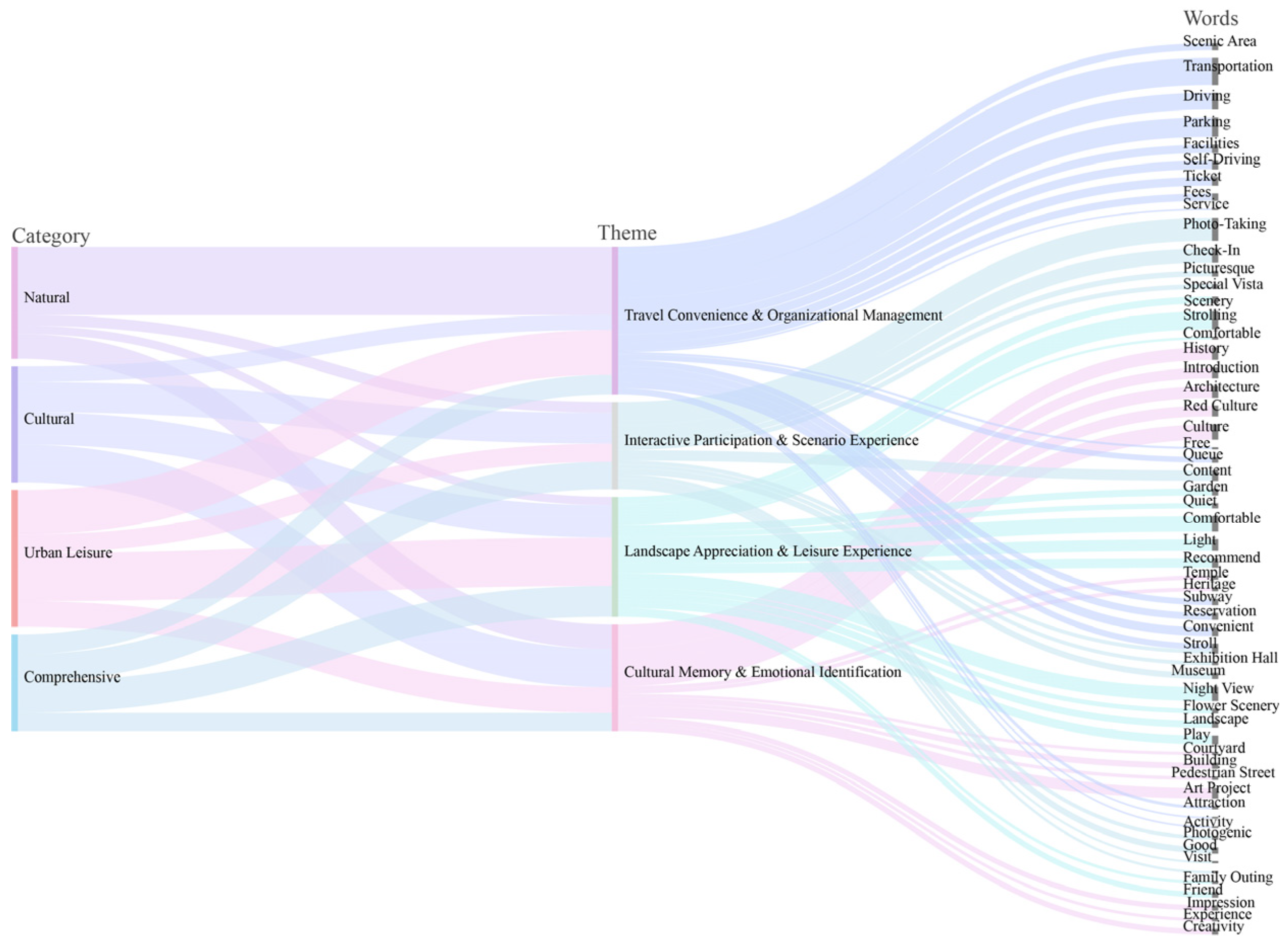
Based on the LDA results, visitor reviews exhibit four dominant thematic clusters (Table A1). Topic 1 (“Travel Convenience and Organizational Management”) accounts for the largest share of topic probability and includes transport connectivity and on-site organization keywords. Topic 2 (“Interactive Participation and Scenario Experience”) corresponds to expressions related to engagement and activity participation. Topic 3 (“Landscape Appreciation and Leisure Experience”) reflects environmental comfort and recreational ambiance. Topic 4 (“Cultural Memory and Emotional Affinity”) captures vocabulary associated with cultural meaning and emotional attachment. These topics represent probabilistic patterns of word co-occurrence within the review corpus rather than discrete experiential mechanisms.
To clarify the link to transport accessibility, it should be noted that transport perception in user-generated reviews is often expressed in an embedded manner rather than as a standalone attribute. Access-related terms (e.g., transfer, walking distance, guidance, queueing, and parking) frequently co-occur with broader experiential descriptions, because visitors tend to narrate the trip, the last-mile approach, and on-site movement together with what they did and felt at the destination. In this sense, Topic 1 summarizes the most explicit transport-and-organization discourse, whereas Topics 2–4 describe dominant experiential contexts within which access-related evaluations are commonly articulated (e.g., activity participation accompanied by references to wayfinding and internal circulation; leisure/landscape narratives accompanied by last-mile walking comfort; cultural/emotional narratives accompanied by tolerance of time/effort).
The LDA results suggest that transport-related expressions coexist with experiential and cultural dimensions in visitor discourse. While transport convenience appears prominently in review content, environmental, participatory, and cultural vocabulary also occur with substantial probability, indicating a multi-dimensional structure of perception within the textual corpus.
On the functional type dimension, based on the hierarchical classification, we further grouped and analyzed the four topic probabilities derived from the LDA model across natural, cultural, urban leisure, and comprehensive/other attractions (Table 4 and Figure 7). The results suggest a four-topic perception structure, but the emphasis varies systematically by attraction type. Topic 1, “Travel Convenience and Organizational Management” (42.2%), captures the most explicit access discourse (e.g., transfers, waiting, queueing, guidance, parking, and entrance management) and tends to be more salient for natural and urban leisure sites, where last-mile access and on-site circulation are frequently discussed. Topic 2, “Interactive Participation and Immersive Experience” (24.4%), is not a transport topic per se; rather, it represents activity-oriented narratives in which access-related expressions often appear as practical constraints (e.g., internal wayfinding, circulation between activity zones, crowding/queueing, and time coordination). This topic is relatively more prominent for comprehensive/other attractions, consistent with diversified visit purposes and organizational needs. Topic 3, “Landscape Appreciation and Leisure Atmosphere” (22.9%), is comparatively more pronounced for cultural attractions, indicating that transport-related perceptions are often articulated together with walking comfort and environmental ambience. and Topic 4, “Cultural Memory and Emotional Resonance” (10.5%), shows higher prominence in natural and urban leisure categories, suggesting that time/effort tolerance and affective appraisal may co-occur with transport-related judgments in these contexts. In contrast, comprehensive/other attractions display a more balanced thematic distribution, implying more diversified narratives. Overall, rather than being isolated dimensions, these topics represent contextual frames in which visitors articulate transport-related perceptions, linking “efficiency of arrival” with the last-mile and on-site access experience.
(1)
Natural attractions show relatively higher average probabilities for Topic 1 and Topic 4 compared to other categories. This pattern corresponds to the co-occurrence of transport-related and environmental or cultural vocabulary within reviews of these sites.
(2)
Cultural attractions exhibit comparatively higher probabilities for Topic 3, indicating a stronger presence of landscape- and leisure-related expressions in visitor comments.
(3)
Urban leisure attractions display relatively higher probabilities for Topic 4 and Topic 1, reflecting the joint appearance of accessibility-related and identity-related vocabulary within the corpus.
(4)
Comprehensive/other attractions demonstrate a more balanced distribution of topic probabilities, with moderate emphasis on Topic 2, suggesting diversified experiential expressions in reviews.
Overall, differences in thematic probability distributions across attraction types indicate that functional categories are associated with distinct patterns of transport-related and experiential language use. These patterns provide contextual insight into how accessibility-related discourse is embedded within broader visitor experience narratives, without implying causal mechanisms or behavioral intentions.

4.3. Coupling Types and Typical Scenarios of Objective–Perceived Accessibility

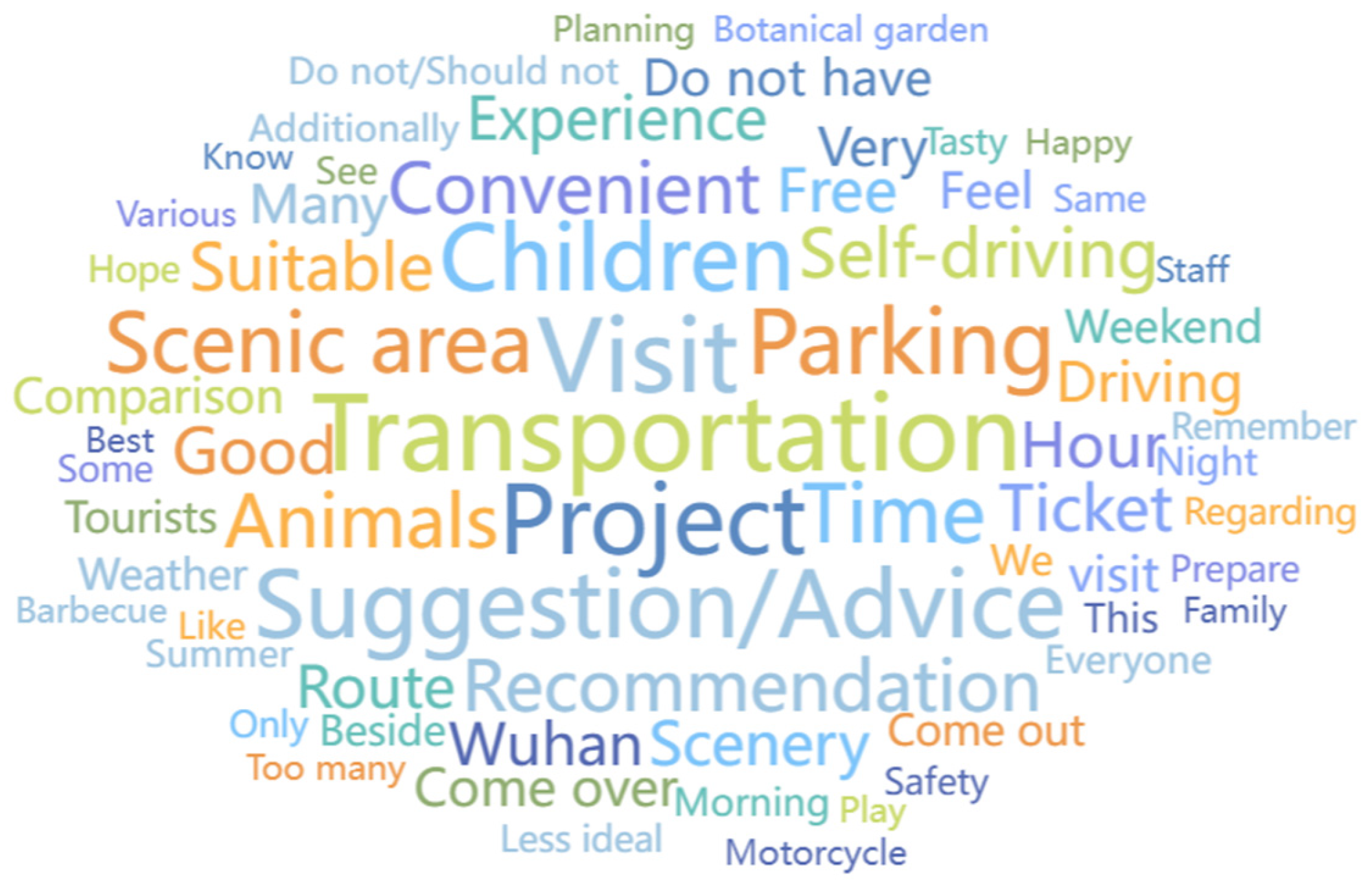
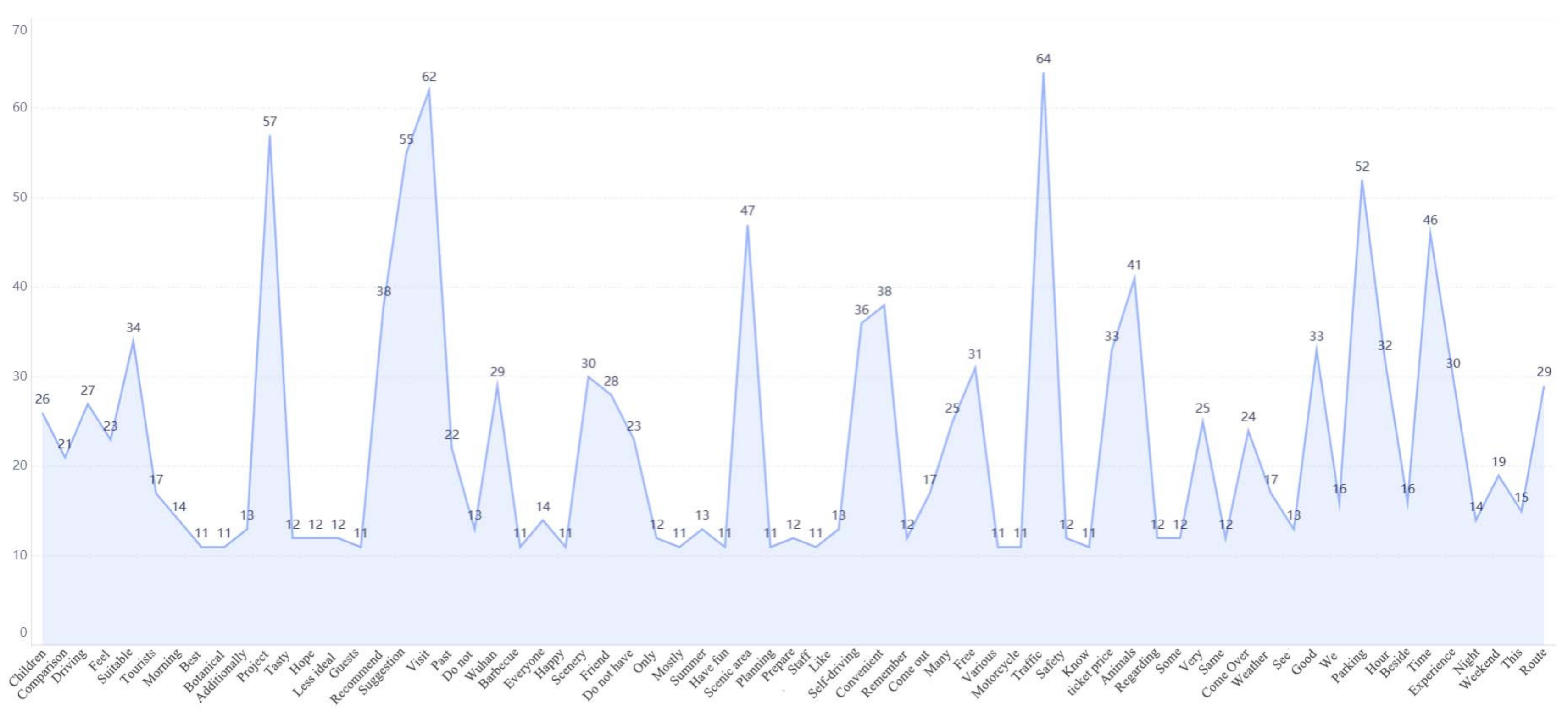
A word frequency analysis was first conducted on the overall reviews of Wuhan’s attractions, and word clouds were generated to visualize the general evaluation of these sites by visitors. The word clouds intuitively display the high-frequency terms in the reviews (Figure 8 and Figure 9). It can be observed that terms such as “transportation,” “parking,” “self-driving,” “route,” and “convenient” appear frequently, indicating that visitors’ perception of attraction accessibility primarily focuses on travel modes and transportation connectivity and service conditions. Among these, terms related to self-driving and parking are particularly prominent, reflecting a high reliance on motorized travel conditions during actual trips, especially in family or parent–child travel scenarios, where transportation convenience significantly impacts the overall experience. Simultaneously, frequent mentions of “time,” “hours,” and “weekend” suggest that visitors have a strong perception of travel time costs. When transportation connections are efficient, attractions are more likely to be described as “suitable” or “recommended”.
Based on the objective and perceived accessibility indices, a quadrant analysis was conducted to identify coupling types among the sampled attractions (Figure 10). This reveals four distinct categories: Type I (High–High), Type II (High–Low), Type III (Low–High), and Type IV (Low–Low) (Table 5). Overall, about two-thirds of attractions perform well in at least one dimension, yet nearly one-fifth remain in the “double-disadvantage” quadrant (Type IV). The quadrant membership is robust to alternative friction-adjusted objective impedance scenarios: no attraction changes quadrant across the tested specifications (0/48 switches; Appendix C). For interpretation, both axes in Figure 10 are Z-standardized indices; the zero lines represent the sample mean after standardization. The upper-right quadrant indicates above-average objective accessibility and above-average transport-specific perceived accessibility, whereas the lower-left quadrant indicates a double disadvantage on both dimensions.
(1)
Type I (High Objective & High Transport-Specific Perceived Accessibility).
Type I attractions are typically located in areas with dense metro/bus coverage, such as central districts and waterfront corridors. Under the gateway-origin OD scenario, they show shorter modeled travel times and thus higher objective accessibility. Transport-specific reviews frequently mention low walking distance to stations/stops, straightforward wayfinding, and relatively smooth transfers (e.g., “close to the metro,” “easy to find,” “few transfers”), indicating an alignment between network-based accessibility and visitors’ reported access convenience. This type represents a relatively consistent coupling pattern in which both the modeled travel-time indicator and transport-related perceptions point in the same direction.
(2)
Type II (High Objective & Low Transport-Specific Perceived Accessibility).
Type II attractions are often located in the central urban area and exhibit high objective accessibility (short OD travel times), yet receive lower transport-specific perceived ratings. In transport-related comments, negative perceptions are more often associated with end-to-end access frictions that are not fully captured by the simplified OD metric, such as crowding and queuing at entrances, weak last-mile continuity (e.g., long or uncomfortable walks from stops), complex internal circulation, unclear signage/wayfinding, and transfer/waiting uncertainty during peak periods. In other words, although these sites are “close” in modeled travel time, visitors may still report inconvenience due to on-the-ground access conditions and operational factors along the final segment of the trip. This mismatch pattern highlights that high network proximity does not necessarily translate into a smooth perceived access process.
(3)
Type III (Low Objective & High Transport-Specific Perceived Accessibility).
Type III attractions are commonly located in suburban or peripheral areas with longer modeled travel times and, in some cases, multiple transfers, resulting in lower objective accessibility. Nevertheless, transport-specific perceptions are relatively positive. Reviews frequently refer to access arrangements that reduce perceived friction despite longer distances, such as clear route guidance, direct shuttle/bus services at certain times, convenient parking, or a relatively manageable last-mile connection once arriving at a nearby node. Such comments suggest that visitors’ perceived access convenience can remain favorable when the access process is well-organized and information is clear, even if the modeled travel time is longer. This type can be interpreted as “managed accessibility,” where service organization and last-mile conditions partially offset time-based disadvantages.
(4)
Type IV (Low Objective & Low Transport-Specific Perceived Accessibility).
Type IV attractions perform poorly on both dimensions: longer OD travel times under the gateway-origin scenario and lower transport-specific perceived accessibility. These sites are generally located on the urban fringe or in remote suburban districts. Transport-related reviews more frequently report difficulties such as limited route options, multiple transfers, longer waiting time, inconvenient last-mile walking, insufficient signage/route guidance, and constraints on parking or pick-up/drop-off. The convergence of longer modeled travel times and negative transport-related perceptions suggests a double-disadvantage coupling pattern, where both network-based accessibility and the reported access experience are relatively weak.


5. Discussion

5.1. Theoretical Implications: Integrating Structural Accessibility and Experiential Dimensions

This study demonstrates that public transport accessibility to urban attractions exhibits differentiated patterns within multi-scalar spatial structures and hierarchical or typological attributes. The identified “central agglomeration–peripheral concentric” pattern at the metropolitan scale, together with the “high-accessibility cores–low-accessibility patches” pattern at the central-city scale, indicates structural variation between attraction grade, spatial location, and network-based accessibility. In particular, A-rated attractions are more frequently distributed in peripheral districts, whereas popular unrated attractions are concentrated in transit-rich central urban areas. These patterns highlight the importance of considering administrative grade, functional type, and spatial distribution jointly when analyzing tourism–transport relationships.
Furthermore, the observed divergence between objective and transport-specific perceived accessibility suggests that travel-time metrics alone provide only a partial representation of visitor evaluation. This study conceptualizes experiential (transport-related) accessibility as visitors’ evaluation of the end-to-end access process, extending objective, time-based measures [51]. Prior research shows that calculated accessibility may diverge from perceived accessibility because perceptions are shaped by service quality and trip experience (e.g., transfers, waiting, information, comfort, and reliability) as well as expectations and situational constraints [52,53]. In tourism settings, access is often assessed as an integrated “access experience” linking the trip, the last mile, and on-site organization; accordingly, transport perceptions can be embedded within broader experiential narratives [52]. Accordingly, our objective–perceived coupling typology helps diagnose alignment and mismatch: attractions can be objectively close but perceived as inconvenient when access frictions (e.g., queueing, wayfinding, and entrance management) are salient, while remote attractions may still be perceived as accessible when travel arrangements are straightforward and visit value offsets time/effort [52,53]. Review-based analysis indicates that transport-related expressions coexist with experiential and cultural dimensions within visitor discourse. This supports a broader conceptualization of accessibility that incorporates both structural network conditions and experiential perception, contributing to ongoing discussions in tourism geography and accessibility research.
To translate these findings into planning practice, the objective–perceived coupling typology can be used as a simple diagnostic for intervention prioritization. Where objective accessibility is low (Types III/IV), improvements can focus on service provision and network integration, such as increasing weekend/holiday frequency, improving feeder connections to rail stations, and reducing transfer burden through better timetable coordination. Where perceived accessibility is low despite relatively good objective conditions (Type II), measures can emphasize the end-to-end access experience, including clearer wayfinding and information, last-mile walkability, and crowd/queue management at entrances and nearby stops. For peripheral A-rated attractions, targeted seasonal or event-based direct services and hub-based transfer organization may be practical options, while central popular sites may benefit more from pedestrian access upgrades and stop-area management.

5.2. Policy Implications: Typology-Based Strategies for Sustainable Urban Tourism

Based on the identified accessibility-coupling types, several planning considerations may be derived to support more balanced and sustainable urban tourism development. These suggestions are exploratory reflections grounded in observed structural patterns.
(1)
Type III (Low Objective–High Perceived)—Remote natural or cultural sites: Attractions in this category exhibit relatively longer structural travel times but maintain positive transport-related perception. Planning efforts may explore improving physical connectivity through measures such as seasonal shuttle services, enhanced feeder bus coordination with rail nodes, or integrated multimodal access strategies. Such improvements could potentially strengthen accessibility while maintaining positive visitor perception.
(2)
Type II (High Objective–Low Perceived)—Centrally located commercial or neighborhood attractions: Although these attractions benefit from favorable structural accessibility, perceived transport-related experience is comparatively weaker. Rather than focusing solely on expanding transport supply, attention may be directed toward pedestrian environment quality, last-mile connectivity, and crowd management to enhance the overall transport-related experience.
(3)
Type I (High–High) and selected Type II attractions—Integrated urban leisure nodes: These sites function as overlapping spaces of daily urban life and tourism activity. Coordinated transport and urban management strategies may help maintain functional balance between commuting, leisure, and visitor flows, thereby supporting long-term urban sustainability.
(4)
Type IV (Low–Low)—Structurally constrained attractions: Attractions in this category exhibit both relatively longer structural travel times and lower transport-related perception. Future planning could involve comprehensive assessments of development potential and spatial positioning, exploring differentiated strategies such as targeted accessibility improvement, functional adjustment, or strategic consolidation, depending on local conditions.
The LDA topics can be used as a diagnostic lens for intervention design. Topic 1 points to priorities for transit connection and access organization (e.g., transfer clarity, route guidance, parking/queueing, and entrance management). Topic 2 relates to time coordination and internal circulation between activity zones. Topic 3 highlights last-mile walkability and pedestrian comfort along the approach. Topic 4 suggests that information provision and cultural interpretation may influence visitors’ tolerance of time/effort, implying that “soft” measures (signage, integrated information, and guidance) can complement infrastructure investment.

6. Conclusions

This study, taking Wuhan as a case, developed a dual-perspective framework integrating objective public transport accessibility (based on OD cost matrices) and perceived accessibility (derived from sentiment and topic analysis of online reviews). A quadrant model coupling both dimensions was proposed and applied, yielding the following conclusions: (1) Attractions exhibit differentiated multi-scalar spatial distributions: popular unrated sites are concentrated in central, transit-rich areas, whereas A-rated attractions are more frequently located in suburban districts, producing varying degrees of alignment between spatial hierarchy and accessibility corridors. (2) Objective accessibility demonstrates structural differentiation across attraction types. Popular attractions show shorter average structural travel times than A-rated attractions, and accessibility varies across functional categories. (3) Transport-specific perceived accessibility, derived from transport-related expressions in reviews, varies systematically across attraction grades and functional types, indicating heterogeneous visitor-reported access experiences under different spatial and service contexts. In parallel, the LDA topic model provides contextual themes in how visitors narrate access-related experiences; these themes are used to interpret typical scenarios rather than to redefine the transport-specific perception metric. (4) Quadrant analysis identifies four attraction categories—High–High, High–Low, Low–High, and Low–Low—each associated with distinct structural and perceptual characteristics. The typology serves as a heuristic framework for examining alignment patterns between objective and perceived accessibility.
This study has limitations. The objective accessibility measure does not incorporate dynamic factors such as service frequency or congestion. Moreover, OD origins are simplified as external gateways, which may not represent within-city tourist departure locations such as hotel or homestay clusters, potentially biasing absolute accessibility estimates for some sites. Perceived accessibility relies on single-platform review data and keyword-based extraction. Future research will extend the framework by testing alternative origin sets (e.g., accommodation hotspots and central activity areas) to explicitly examine origin-driven scenario dependence, and by incorporating multi-platform review sources and more refined aspect-based sentiment approaches. In addition, subsequent work could examine underlying mechanisms using multilevel or spatial-econometric models.
In summary, this research proposes an integrated analytical framework linking structural public transport accessibility and transport-related perception within urban tourism systems. The findings provide empirical insights into spatial variation patterns in large, polycentric cities such as Wuhan and may inform further research on sustainable tourism–transport coordination.
Generalizability. Although Wuhan is used as a case study, the proposed objective–perceived coupling framework is transferable to other cities because it relies on commonly available transit network data and online review texts. For multi-city or nationwide implementations, the workflow can be replicated with consistent attraction classification and standardized procedures, while allowing limited city-specific calibration of network parameters and data sources.

Author Contributions

Conceptualization, methodology, investigation, L.M.; conceptualization, methodology, investigation, and writing—original draft, H.N.; investigation, writing—review and editing, L.Z. and H.N.; investigation, L.M., H.N., L.Z., R.D. and S.Y.; formal analysis, R.D. and S.Y. All authors have read and agreed to the published version of the manuscript.

Funding

This research was co-funded by the Internal Science Research Fund of Wuhan Institute of Technology, grant number K2023033, Philosophy and Social Sciences Research Project (Youth Project) of the Department of Education of Hubei Province, grant number 23Q174, and Science and Technology Plan Project of the Department of Housing and Urban-Rural Development of Hubei Province, grant number 2023088.

Institutional Review Board Statement

Not applicable.

Informed Consent Statement

Not applicable.

Data Availability Statement

The original contributions presented in the study are included in the article, further inquiries can be directed to the corresponding author.

Conflicts of Interest

The authors declare no conflicts of interest.

Appendix A

Table A1. Topic Structure and Keyword Characteristics of Tourists’ Perceived Accessibility in Wuhan.
Theme IDTheme NameCore Keywords (Top)Perceived Dimension PositioningSummary of Perceived Connotation
Theme 1Travel Convenience and Organizational ManagementTransportation, Admission Tickets, Parking, Queueing, Attractions, Facilities, Location, Services, Insufficient, PerformancesArrival Efficiency + Service OrganizationFocus on public transit connections, parking convenience, queue management, and attraction layout—these are the most critical factors influencing visitor accessibility ratings.
Theme 2Interactive Engagement and Immersive ExperiencesPhoto spots, check-ins, exhibitions, content, buildings, museums, pedestrian streets, unique features, and visual appealBehavioral Engagement ExperiencesReflects visitors’ dwell time and activity flow within spaces, emphasizing check-in appeal and display value, while prioritizing richness and enjoyment of experiences
Theme 3Scenic Appreciation and Leisure ExperiencesParks, strolls, scenery, tranquility, comfort, lighting, night views, friends, recommendationsEmotional Experience and Spatial ComfortEmphasis on scenic environments and experiential moods, reflecting emotional perceptions of accessibility related to closeness to nature, relaxation, and leisure
Theme 4Cultural Memory and Emotional IdentityHistory, architecture, temples, culture, incense offerings, heritage, revolutionary history, introductionCultural AccessibilityEmphasizes the historical depth and cultural expression of attractions, reflecting visitors’ evaluations of cultural information access channels and perception thresholds

Appendix B

Table A2. Full transport keyword list and extraction rule.
CategoryKeyword
Waiting/headwayWaiting
Waiting/headwayWaiting for the bus
Waiting/headwayBus schedule
Waiting/headwayDeparture time
Waiting/headwayLast bus
Waiting/headwayFrequency
Transfers/connectionTransfer
Transfers/connectionTransfer (between vehicles/transport modes)
Transfers/connectionChange (buses/trains)
Transfers/connectionChange (between vehicles)
Transfers/connectionConnecting/Feeder/Shuttle
Walking/last-mileWalk/Walking
Walking/last-mileWalk/On foot
Walking/last-mileWalking distance
Walking/last-mileGo the long way
WayfindingNavigation (GPS)
WayfindingLocation
WayfindingCan’t find it
WayfindingRoad sign
WayfindingSign
WayfindingEntrance
WayfindingGet lost
Transit modesBus
Transit modesSubway
Transit modesStation
Transit modesRoute
Transit modesBRT
Taxi/ride-hailingTake a taxi
Taxi/ride-hailingRide-hailing (service)
Taxi/ride-hailingDidi
Taxi/ride-hailingFare
Parking/drivingParking
Parking/drivingCar park
Parking/drivingParking space
Parking/drivingParking fee
Parking/drivingConvenient parking
Parking/drivingHard to park
Congestion/queueingQueue
Congestion/queueingLong queue
Congestion/queueingTraffic jam
Congestion/queueingCrowded
Generic transportTransportation
Comment-level filtering is applied. A review is retained as transport-related if it contains at least one keyword from the list. Keywords cover waiting/headway, transfers, last-mile walking/distance, wayfinding, transit modes, taxi/ride-hailing, parking/driving, congestion/queueing, and generic transport terms.
Table A3. Per-attraction sample size of extracted transport comments (Ntransport).
AttractionNtransport
Zhongshan Park26
Gude Temple35
Site of the Former Heping Packaging Factory21
Xian’anfang35
Baotong Zen Temple33
Bagong House7
Guiyuan Zen Temple36
Hubu Alley14
Wenjin Academy19
Xiangcao Yidianyuan16
Tanhualin Historical and Cultural Block21
Mulan Rose Garden19
Liangzi Lake Scenic Area14
Chu River and Han Street23
Wuchang River Beach18
East Lake Bird World28
Wuhan Two-River Cruise16
Wuhan Museum33
Wuhan Garden Expo Park43
Fengwa Ancient Stockade10
Jiuzhen Mountain21
Jinlong Shui Stockade22
Dayu Bay22
Yaojiashan18
Mulan Qingliangzhai18
Mulan Lake Tourist Resort14
Mulan Shengtian12
Mulan Flower Town13
Huahai Leyuan16
Huangpi Jinli Tujia Folk Culture Valley24
Wuhan Science and Technology Museum25
Wuhan Ziwei Metropolitan Pastoral21
Wuhan Art Museum (Hankou Branch)20
Wuhan Art Museum (Qintai Branch)31
Wuhan Yangtze River Bridge14
Hanyang River Beach15
Hanyangzao Art District16
Liangzi Lake Shiguang Ranch21
Longwan Peninsula23
Jianghan Customs Museum32
Jianghan Road Pedestrian Street36
Shahu Park30
Jiefang Park34
Changchun Temple28
Shouyi Park12
Yecungu (Wild Valley)21
Lihuangpi Road Pedestrian Street20
Guishan38
N t r a n s p o r t is the number of extracted transport-related comments for each attraction. Across 48 attractions, N t r a n s p o r t ranges from 7 to 43 (mean 22.5, median 21.0). A minimum-N rule ( N t r a n s p o r t ≥ 20) retains 29/48 attractions for robustness checks.

Appendix C. Sensitivity Analysis for Objective Accessibility Under Alternative Friction Assumptions

To address concerns that the OD-based objective travel time may represent a frictionless lower bound, we conduct a sensitivity analysis using alternative “friction-adjusted” impedance specifications. Specifically, we compare the baseline OD travel time (access_min) with four alternative time measures that incorporate increasing generalized frictions (access_star_low, access_star_base, access_star_high) and a rule-based variant (access_star_piecewise). For each scenario, objective accessibility is recomputed as O = z ( T ) using the scenario-specific travel time T (re-standardized within the 48 attractions), while the perceived accessibility axis remains P _ z . Quadrant membership is then reclassified using the same cut-offs (0 for both axes). The coupling types remain fully stable across all scenarios (Table A5), indicating that quadrant membership is not an artifact of the frictionless lower-bound OD specification.
Table A4. Alternative objective impedance scenarios used for sensitivity testing.
ScenarioObjective Travel-Time Input TTTInterpretationAdded Friction vs. Baseline (minutes) *
S0 (Baseline)access_minLower-bound OD travel time from the network model (no additional generalized frictions).0 (by definition)
S1 (Low friction)access_star_lowOD time augmented with a low-level generalized friction to approximate unmodeled components (e.g., waiting/boarding and other access frictions).Range: 7.83–34.93; Median: 8.37; Mean: 14.04
S2 (Base friction)access_star_baseOD time augmented with a medium-level generalized friction.Range: 15.67–69.85; Median: 16.74; Mean: 28.09
S3 (High friction)access_star_highOD time augmented with a conservative (high) generalized friction.Range: 24.92–119.74; Median: 26.79; Mean: 46.65
S4 (Piecewise rule)access_star_piecewiseOD time augmented using a rule-based (piecewise) friction scheme to reflect heterogeneous frictions across trips.
* Added friction is computed as   T a c c e s s _ m i n for each attraction and summarized across 48 attractions. For each scenario, objective accessibility is recomputed as   O = z ( T ) using the scenario-specific T (i.e., re-standardized within-scenario).
Table A5. Stability of quadrant membership under alternative objective impedance scenarios.
Scenario Compared to BaselineAttractions Switching Quadrants (Count)Switching RateQuadrant Counts (Type I/Type II/Type III/Type IV)
S1 (Low friction) vs. S000.0%24/5/5/14
S2 (Base friction) vs. S000.0%24/5/5/14
S3 (High friction) vs. S000.0%24/5/5/14
S4 (Piecewise rule) vs. S000.0%24/5/5/14
Quadrants are defined using the same cut-offs across all scenarios: perceived accessibility uses (0 as the cut-off), while objective accessibility is recomputed per scenario using (0 as the cut-off). Type I: High Obj–High Per; Type II: High Obj–Low Per; Type III: Low Obj–High Per; Type IV: Low Obj–Low Per.

Appendix D

Robustness to alternative cut-offs (mean vs. median). To report the median-threshold robustness test more rigorously, we cross-tabulate quadrant assignments under mean-based versus median-based cut-offs (Appendix D, Table A6). Overall agreement is high: 40 out of 48 attractions retain the same quadrant membership (83.3% agreement), with substantial agreement beyond chance (Cohen’s kappa = 0.748; Appendix D, Table A7). The 8 switching cases are concentrated around the cut-off boundaries: most changes occur for attractions whose objective accessibility values lie very close to the median objective threshold, while two changes are driven by perceived accessibility values close to the median perceived threshold. This pattern indicates that quadrant switching largely reflects boundary sensitivity rather than a structural reorganization of the coupling typology.
Table A6. Cross-tabulation of quadrant assignments under alternative cut-offs (mean vs. median).
Baseline (Mean Cut-Offs)\Median Cut-OffsType I (High Obj–High per)Type II (High Obj–Low per)Type III (Low Obj–High per)Type IV (Low Obj–Low per)Row Total
Type I (High Obj–High Per)2013024
Type II (High Obj–Low Per)03025
Type III (Low Obj–High Per)00325
Type IV (Low Obj–Low Per)0001414
Column total20461848
Quadrants are defined using standardized objective accessibility (O) and transport-specific perceived accessibility ( P t r a n s p o r t ). The baseline uses mean-based cut-offs (i.e., 0 on both standardized axes), while the robustness check uses median-based cut-offs computed from the same standardized indices.
Table A7. Agreement statistics and switching summary (mean vs. median cut-offs).
MetricValue
Number of attractions48
Attractions switching quadrants8
Switching rate16.7%
Percent agreement83.3%
Cohen’s kappa0.748
Percent agreement is the share of attractions with identical quadrant assignments across the two cut-off rules. Cohen’s kappa measures agreement beyond chance.
Table A8. Attractions switching quadrants under mean- vs. median-based cut-offs (N = 8).
AttractionBaseline Quadrant (Mean Cut-Offs)Median Quadrant (Median Cut-Offs) O z P z
Liangzi Lake Scenic AreaType III (Low Obj–High Per)Type IV (Low Obj–Low Per)−0.5040.168
Yaojiashan Scenic Area, HuangpiType III (Low Obj–High Per)Type IV (Low Obj–Low Per)−2.6150.199
Gude TempleType I (High Obj–High Per)Type II (High Obj–Low Per)0.7520.112
Wuhan Art Museum (Hankou Branch)Type I (High Obj–High Per)Type III (Low Obj–High Per)0.7110.630
East Lake Bird WorldType I (High Obj–High Per)Type III (Low Obj–High Per)0.6890.862
Hanyang Art DistrictType II (High Obj–Low Per)Type IV (Low Obj–Low Per)0.696−0.098
Wuhan Garden Expo ParkType II (High Obj–Low Per)Type IV (Low Obj–Low Per)0.697−0.876
Guishan Scenic AreaType I (High Obj–High Per)Type III (Low Obj–High Per)0.6990.937
O z and P z are the standardized objective and perceived accessibility indices used for quadrant classification. The baseline uses mean-based cut-offs (0 on both standardized axes), while the robustness check uses median-based cut-offs (computed from the same standardized indices).

References

  1. UK Government. Tourism Recovery Plan; UK Government: London, UK, 2021. Available online: https://www.gov.uk/government/publications/tourism-recovery-plan (accessed on 28 July 2025).
  2. Austrade. Supporting Australian Tourism and Travel Packages; Austrade: Sydney, Australia, 2022. Available online: https://www.austrade.gov.au/en/how-we-can-help-you/grants/supporting-australian-tourism-and-travel-package (accessed on 28 July 2025).
  3. Ministry of Culture and Tourism of China. Domestic Tourism Enhancement Plan (2023–2025); Ministry of Culture and Tourism of China: Beijing, China, 2023. Available online: https://www.gov.cn/zhengce/zhengceku/202311/content_6914996.htm (accessed on 28 July 2025).
  4. Wuhan Municipal Bureau of Culture and Tourism. Measures to Stimulate Tourism Consumption and Promote Tourism Industry Recovery in Wuhan; Wuhan Municipal Bureau of Culture and Tourism: Wuhan, China, 2022. Available online: https://www.wuhan.gov.cn/gwfbpt/sbm/swhhlyj_79506/202311/t20231128_2308502.shtml (accessed on 28 July 2025).
  5. Xie, S.; Zhang, Q.; Gong, J.; Han, L.; Wang, X. Construction and Application of Comprehensive Evaluation Model of the Urban Scenic Spots Accessibility:Taking Downtown Wuhan as a Case. Econ. Geogr. 2019, 39, 232–239. [Google Scholar]
  6. Liu, M.; Hao, W. Spatial distribution and its influencing factors of national A-level tourist attractions in Shanxi Province. Acta Geogr. Sin. 2020, 75, 878–888. [Google Scholar]
  7. Fan, Y.; Zhao, M.; Ma, L.; Zhao, L. Accessibility of urban green spaces based on road networks: A case study of Nanjing. J. For. Environ. Sci. 2016, 32, 1–9. [Google Scholar]
  8. Han, C.; Liu, X.; Shen, X.; Zhang, L.; Feng, N. Evaluating spatial deprivation of public transportation resources in rapidly urbanizing areas. Discret. Dyn. Nat. Soc. 2019, 2019, 1–11. [Google Scholar] [CrossRef]
  9. Chen, S.; Zhang, J.; Luan, W.; Luo, X. Spatial pattern, accessibility, and equity of urban cultural resources: A case study of Shanghai. Buildings 2025, 15, 2268. [Google Scholar] [CrossRef]
  10. Yang, K.; Xie, Y.; Guo, H. Optimization of spatial distribution of sports parks based on accessibility analysis. PLoS ONE 2023, 18, e0291235. [Google Scholar] [CrossRef]
  11. Hao, F.; Wang, S.; Feng, Z.; Yu, T.; Ma, L. Spatial pattern and its industrial distribution of commercial space in Changchun based on POI data. Geogr. Res. 2018, 37, 366–378. [Google Scholar]
  12. Tang, J.; Ma, M. Spatial pattern and influencing factors of industrial tourism demonstration sites in China. Resour. Sci. 2020, 42, 1188–1198. [Google Scholar] [CrossRef]
  13. Zeng, X.; Cui, H.; Liu, Z. Spatial and Temporal Evolution Characteristics and Influencing Factors of Restaurants in Guangzhou. Econ. Geogr. 2019, 39, 143–151. [Google Scholar]
  14. Wang, H.; Yuan, J.; Meng, X. Spatial distribution characteristics of A-level tourist attractions in Northeast China. Sci. Geogr. Sin. 2017, 37, 895–903. [Google Scholar]
  15. Xu, D.; Huang, Z.; Sun, H. The Spatial Characteristics and Its Influencing Factors of Leisure Tourism Resources in Nanjing. J. Nanjing Norm. Univ. (Nat. Sci.) 2017, 40, 127–133. [Google Scholar]
  16. Liu, D.; Hu, J.; Chen, J. The spatial Structure and Disparities of Leisure Tourism Destinations in Wuhan. Econ. Geogr. 2014, 34, 176–181. [Google Scholar]
  17. Li, W.; Cui, T.; Ma, X.; Zhang, X. A Study on the Spatial Patterns and Causes of the Attractiveness of Scenic Spots in Hangzhou. Tour. Sci. 2023, 37, 19–39. [Google Scholar]
  18. Wang, Y.; Tian, J.; Jiang, L.; Gong, C.; Fan, M. Multilayer structure and mechanism of tourism attraction networks in the Yangtze River Economic Belt. Acta Geogr. Sin. 2025, 80, 1103–1120. [Google Scholar]
  19. Li, L.; Hou, G.; Xia, S.; Huang, Z. Spatial distribution characteristics and influencing factors of leisure tourism resources in Chengdu. J. Nat. Resour. 2020, 35, 683–697. [Google Scholar] [CrossRef]
  20. Sun, F.; Xu, M.; Li, Z.; Zhang, W.; Yang, Y. Spatial distribution and accessibility of tourism and leisure industries in Qingdao, China. Sustainability 2024, 16, 6961. [Google Scholar] [CrossRef]
  21. Wang, Y.; Liu, W. Transportation accessibility and coupling efficiency of tourism resource supply and demand: A case study of the Yangtze River Delta. Commer. Res. 2022, 11, 155–158. [Google Scholar]
  22. Li, J.; Guo, X.; Lu, R.; Zhang, Y. Analysing urban tourism accessibility using real-time travel data: A case study in Nanjing, China. Sustainability 2022, 14, 12122. [Google Scholar] [CrossRef]
  23. Zheng, Q.; Kuang, Y.; Huang, N. Coordinated development between urban tourism economy and transport in the Pearl River Delta, China. Sustainability 2016, 8, 1338. [Google Scholar] [CrossRef]
  24. Pan, J.; Li, J. Spatial Distribution Characteristics and Accessibility of A-grade Tourist Attractions in China. J. Nat. Resour. 2014, 29, 55–66. [Google Scholar]
  25. Li, S.; Huang, H. The Impact of Rail Transit on the Accessibility of Public Transport in Tourist Attractions: Taking Xi’an as an Example. Mod. Urban Res. 2023, 4, 74–81. [Google Scholar]
  26. Ye, T. Evaluation of public transport accessibility of commercial centers based on OD travel. In Proceedings of the 2024 China Urban Planning Annual Conference, Hefei, China, 6–9 September 2024; pp. 514–526. [Google Scholar]
  27. Aranburu, I.; Plaza, B.; Esteban, M. Sustainable cultural tourism in urban destinations: Does space matter? Sustainability 2016, 8, 699. [Google Scholar] [CrossRef]
  28. Chen, S.; Xi, J.; Liu, M.; Li, T. Tourism utilization potential of complex transportation networks: A case study of Guizhou expressways. Complexity 2020, 2020, 1–22. [Google Scholar] [CrossRef]
  29. Deng, F.; Fang, Y.; Xu, L.; Li, Z. Coupling coordination between tourism, transportation, and low-carbon city systems: A case study of Chongqing. Int. J. Environ. Res. Public Health 2020, 17, 792. [Google Scholar] [CrossRef]
  30. Weng, G.; Li, H.; Li, Y. Spatial distribution and influencing factors of tourist attractions in the Chengdu–Chongqing economic circle. Environ. Dev. Sustain. 2023, 25, 8677–8698. [Google Scholar] [CrossRef]
  31. Sugimoto, K.; Ota, K.; Suzuki, S. Visitor mobility and spatial structure in local urban tourism destinations. Sustainability 2019, 11, 919. [Google Scholar] [CrossRef]
  32. Flores-Ruiz, D.; Elizondo-Salto, A.; Barroso-González, M.D.L.O. Using social media in tourist sentiment analysis: A case study of Andalusia during the COVID-19 pandemic. Sustainability 2021, 13, 3836. [Google Scholar] [CrossRef]
  33. Kurniawan, S.; Pramayoga, A.S.; Ashari, Y.F. Sentiment analysis in coastal tourism: A systematic literature review. Eng. Technol. Appl. Sci. Res. 2025, 15, 30226–30233. [Google Scholar] [CrossRef]
  34. Nawawi, I.; Ilmawan, K.F.; Maarif, M.R.; Syafrudin, M. Exploring tourist experience through online reviews using aspect-based sentiment analysis. Information 2024, 15, 499. [Google Scholar] [CrossRef]
  35. Liu, S.; Liu, J.; Chen, Y. Research on Tourism Perception of Ancient Villages in Ningbo from Crowdsourced Big Data. Urban Dev. Stud. 2024, 31, 1–6. [Google Scholar]
  36. Huang, L.; Li, Y.; Song, Y.; Li, Y.; Xu, Y.; Zhang, L. Perception of Plateau Lake Landscapes Based on Web Big Data: A Case Study of Dianchi Lake in Kunming City. West. For. Sci. 2025, 54, 110–118. [Google Scholar]
  37. Wang, J.; Zhang, C.; Li, Y.; Jia, T.; Huang, Z. Investigating Dual-Directional Tourist Perceptions and Differential Mechanisms Under the Morphological Differentiation of Red Tourism Destinations: A Deep Learning Analysis of Online Texts. Tour. Sci. 2025. [Google Scholar]
  38. He, Q. A Grounded Theory Approach to Influence Factors of Tourist Satisfaction in Scenic Area of Cultural Heritage—Taking Tourist Comments on Beijing 5A Scenic Area from the Website of www.dianping.com. Econ. Geogr. 2014, 34, 168–173. [Google Scholar]
  39. Yuan, J.; Yu, R.; Liu, C.; Jiang, Y. Spatial structure of national A-level tourist attractions in the Wuhan metropolitan area. Econ. Geogr. 2010, 30, 324–328. [Google Scholar]
  40. Zhang, Q.; Xie, S.; Wang, X.; Jiang, L.; Gu, H.; Liu, D. Tourism attraction accessibility evaluation based on spatial syntax: A case study of Wuhan. Econ. Geogr. 2015, 35, 200–208. [Google Scholar]
  41. Deng, G. Accessibility of Tourist Attractions Based on Multi-Modal Transport: A Case Study of Wuhan Metropolitan Area. Ph.D. Thesis, Wuhan University, Wuhan, China, 2020. [Google Scholar]
  42. Zhu, L.; Hu, J.; Zhou, B.; Li, Y.; Lv, L.; Jia, G. Regional Tourism Attractions Accessibility of Spatial Distribution Pattern and Measure—A Case Study of Southern Anhui International Cultural Tourism Destination. Econ. Geogr. 2018, 38, 190–198. [Google Scholar]
  43. Ma, X.; Yu, M. Spatial evolution of transportation advantage and tourism industrial agglomeration at the county level: A case study of Greater Xiangxi. Areal Res. Dev. 2023, 42, 135–141. [Google Scholar]
  44. Wuhan Municipal Bureau of Culture and Tourism. A-Level Tourist Attractions in Wuhan. Available online: https://wlj.wuhan.gov.cn/bsfw_27/wlml/lyjq/ (accessed on 23 July 2025).
  45. Dianping. Dianping Platform. Available online: https://www.dianping.com (accessed on 28 July 2025).
  46. GB/T 18972-2017; Classification, Survey and Evaluation of Tourism Resources. China Standards Press: Beijing, China, 2017.
  47. Huang, Z.; Zhu, Y.; Yuan, L.; Hu, X.; Cao, F. Concept, classification, and evaluation of leisure tourism resources: A case study of Changzhou, China. Geogr. Res. 2011, 30, 1543–1553. [Google Scholar]
  48. Wuhan Metro Group. Wuhan Metro Official Website. Available online: https://www.wuhanrt.com (accessed on 28 July 2025).
  49. 8684 Bus Network. Bus Route Information. Available online: https://www.8684.com.cn (accessed on 28 July 2025).
  50. Han, X.; Gao, L.; Jian, W. Subjective accessibility of feeder bus services considering perceived travel time. J. Transp. Eng. 2025, 25, 104–118. [Google Scholar]
  51. Geurs, K.T.; van Wee, B. Accessibility evaluation of land-use and transport strategies: Review and research directions. J. Transp. Geogr. 2004, 12, 127–140. [Google Scholar] [CrossRef]
  52. Pot, F.J.; van Wee, B.; Tillema, T. Perceived accessibility: What it is and why it differs from calculated accessibility measures based on spatial data. J. Transp. Geogr. 2021, 94, 103090. [Google Scholar] [CrossRef]
  53. Lättman, K.; Olsson, L.E.; Friman, M. Development and test of the Perceived Accessibility Scale (PAC) in public transport. J. Transp. Geogr. 2016, 54, 257–263. [Google Scholar] [CrossRef]
Figure 1. Geographical Location of Wuhan. The inset maps locate Wuhan within Hubei Province and China. The background raster in the Wuhan panel shows DEM-based elevation (m) to provide topographic context for the municipality (higher values indicate higher terrain). Administrative district boundaries are overlaid for reference; the north arrow and scale bar are shown.
Land 15 00426 g001
Figure 2. Urban context of attractions and public transport in Wuhan. (a) Administrative divisions and the spatial distribution of attractions included in this study. Red points indicate A-rated attractions, and blue points indicate popular, unrated attractions. The red outline denotes the central urban area boundary; grey lines represent the main urban road network; administrative boundaries are shown for reference. (b) Public transport network layers and major inter-city gateways are used as origin hubs in the OD travel-time analysis. The city subway network and bus route network are overlaid (see legend), and red symbols mark core transport hubs (e.g., railway stations, airports, and passenger transport centers). The red outline denotes the central urban area boundary; grey lines represent urban roads; administrative boundaries are shown for reference. North arrow and scale bar are provided.
Land 15 00426 g002
Figure 3. Research framework of this study.
Land 15 00426 g003
Figure 4. (a) Spatial Distribution and Kernel Density of A-rated Attractions in Wuhan; (b) Spatial Distribution and Kernel Density of Popular Attractions in Wuhan.
Land 15 00426 g004
Figure 5. (a) Interpolation Map of Accessibility for A-rated Attractions in the Central Urban Area; (b) Interpolation Map of Accessibility for Popular Attractions in the Central Urban Area.
Land 15 00426 g005
Figure 6. (a) Topic 1 and Its Representative Keywords; (b) Topic 2 and Its Representative Keywords; (c) Topic 3 and Its Representative Keywords; (d) Topic 4 and Its Representative Keywords. Numbers 1–4 denote Topic 1–Topic 4.
Land 15 00426 g006aLand 15 00426 g006b
Figure 7. Sankey Diagram of Attraction Types and Topics.
Land 15 00426 g007
Figure 8. Topics Word Cloud of Wuhan Attraction Reviews.
Land 15 00426 g008
Figure 9. Keyword Frequency Line Chart for Wuhan Attractions.
Land 15 00426 g009
Figure 10. Quadrant Distribution of Objective-Perceived Accessibility Coupling for Major Wuhan Attractions. Quadrant distribution of objective–perceived accessibility coupling (Z-standardized). The x-axis denotes reverse-standardized OD travel-time accessibility (higher values = shorter travel time), and the y-axis denotes transport-specific perceived accessibility derived from transport-related review content. Zero lines indicate sample means after standardization. Marker style distinguishes A-rated and popular unrated attractions. Quadrant membership is robust to alternative friction-adjusted objective impedance specifications (Appendix C).
Land 15 00426 g010
Table 1. Comparison Table of Spatial Distribution Proximity Indices for A-Class and Popular Tourist Attractions in Wuhan.
Attraction TypeNearest Neighbor Index (R)Z-Test ValueDistribution Type
Grade A Attractions0.810−2.788Significant Clustering
Popular Attractions0.664−5.186Significant clustering
Table 2. Summary of Mann–Whitney U Test Results for Public Transportation Accessibility to Different Grade Attractions in Wuhan.
IndicatorGrade A and Above AttractionsPopular Attractions
Average (minutes)37.7433.29
Median (minutes)36.0032.00
Standard Deviation7.219.82
Minimum (minutes)26.0015.00
Maximum (minutes)57.0064.00
Mann–Whitney U value979.000
p-value0.008
Data is based on the shortest travel time calculated using the OD cost matrix (unit: minutes). According to the Mann–Whitney U test, the difference in accessibility time between the two types of attractions is statistically significant (p < 0.01).
Table 3. Statistical Characteristics of Public Transportation Accessibility for Different Attraction Types in Wuhan.
Attraction TypeSample SizeAverage (Minutes)Median (Minutes)Standard DeviationMinimumMaximum
Cultural3261.5533.6761.3028.33263.29
Other1038.7235.7110.8028.3464.74
Natural4286.6460.6067.4928.91299.26
Urban Leisure1864.8936.4954.7931.32236.24
Kruskal–Wallis H test
H = 11.00, p = 0.012
Data based on optimal travel time calculations using the OD cost matrix model (unit: minutes). H and p values derived from the Kruskal–Wallis H test to assess overall differences among different attraction types.
Table 4. Average Probability of Perceived Accessibility Topics for Different Attraction Types in Wuhan.
Attraction TypeTheme 1: Travel Convenience and Organizational ManagementTheme 2: Interactive Engagement and Scenario ExperienceTheme 3: Scenic Appreciation and Leisure ExperienceTheme 4: Cultural Memory and Emotional Identification
Natural Attractions0.5740.0610.0500.315
Cultural0.2800.1610.4540.265
Urban Leisure0.3460.0620.2420.351
Other *0.0780.3570.2870.278
Values represent the average probability of each attraction type across different topics, rounded to three decimal places. * Includes a small number of functionally composite or difficult-to-categorize attractions.
Table 5. Coupling Type Statistics for Objective-Perceived Accessibility of Wuhan Attractions.
Coupling TypeType DescriptionPercentage (%)
I Objective and Perceived Accessibility Both HighHigh Objective Accessibility & High Perceived Accessibility43.8
Type II (High Objective–Low Perceived)High objective accessibility, relatively low perceived accessibility16.7
Type III (Low Objective–High Perceived)Low objective accessibility, high perceived accessibility20.8
IV_Poor in both objective and perceived accessibilityLow objective accessibility, low perceived accessibility18.8
Objective accessibility (O) in the coupling analysis is computed from OD-based travel time T (minutes) using reverse standardization O = z ( T ) , so that larger values represent better accessibility. Descriptive statistics in Table 2 and Table 3 report travel time directly (minutes).
Disclaimer/Publisher’s Note: The statements, opinions and data contained in all publications are solely those of the individual author(s) and contributor(s) and not of MDPI and/or the editor(s). MDPI and/or the editor(s) disclaim responsibility for any injury to people or property resulting from any ideas, methods, instructions or products referred to in the content.