1. Introduction
Water is a fundamental resource for maintaining ecosystem balance and socioeconomic development [
1,
2]. However, with the growth of the global population and rapid economic development, water scarcity and pollution have become increasingly prominent. Health and sustainability of water ecosystems are facing unprecedented challenges [
3,
4]. As a key element in ensuring the sustainable development of human society [
5,
6], the research scope of water ecological security has been broadened from the traditional supply and distribution of water resources to encompass the multidimensional dimensions of ecosystem structural integrity, stability, and biodiversity conservation, thus attracting heightened international academic attention [
7,
8,
9]. Currently, arid and desert regions cover over 40% of the globe. The extreme scarcity of water resources in these areas, coupled with the high vulnerability of their ecosystems, adds complexity to the water ecological security crisis. Particularly in arid zones, river networks often exhibit discontinuity and strong human intervention, making water governance challenges under multi-basin interactions especially prominent [
10,
11,
12].
In recent years, scholars domestically and internationally have conducted extensive research on water ecological security and proposed a variety of assessment models and methods [
10,
11,
12,
13]. However, limitations persist when addressing complex basin systems in arid zones. For instance, the Pressure-State-Response (PSR) model, introduced in 1979, evolved into a framework for environmental research [
14,
15]. The Drive-Pressure-Status-Influence-Respond (DPSIR) model further refined causal chain analysis of environmental issues based on structured thinking pathways [
16,
17,
18,
19]. While both excel at causal chain analysis, they struggle to account for the coupling mechanisms between human activities and ecosystems across spatial dimensions [
18]. The “Ecology-production-Life Spaces” perspective focuses on the coordinated spatial development of ecology, production, and life, exploring the dialectical relationship among ecology, production, and life in human-nature material exchange [
20]. It reveals the spatial coupling mechanisms between human activities and ecosystems but lacks a systematic examination of the causal logic underlying the dynamic evolution of ecological problems [
21]. More critically, most existing studies are confined to independent systems defined by watershed units or administrative boundaries, with insufficient attention to composite systems involving cross-basin and multi-river interactions. This limits the ability to characterize the dynamic changes in watershed water ecological security under multi-basin interactions [
9,
18,
21]. Additionally, the Analytic Hierarchy Process (AHP) is a classical subjective empowerment method to assist decision-makers in weighing the importance of indicators and was widely applied in early water ecological safety assessments [
22,
23,
24], but it is susceptible to human judgment bias. In contrast, the Entropy Value Method determines weights based on inherent data patterns, making them more suitable for evaluating complex multi-indicator systems. Nevertheless, their integrated application in multi-basin systems requires further refinement. These limitations hinder existing methods from accurately deciphering the intricate spatial relationships and causal feedbacks within multi-basin water ecological security in arid regions. Therefore, the “Ecology-production-life Space” framework is coupled with the DPSIR model for complementary integration. The “Ecology-production-life Space” defines the spatial boundaries of human production, life activities, and watershed ecological environments from a horizontal dimension, clarifying the impacts and constraints of different spaces on watershed water ecosystems [
25,
26]. The DPSIR model, operating along a vertical dimension, systematically maps the causal chains driving the dynamic evolution of basin water ecosystems triggered by spatial utilization. The combined application of these two models simultaneously accounts for spatial heterogeneity and clarifies the logic of dynamic evolution, providing a theoretical framework for the complex evolution of water ecological security in arid regions’ multi-basin systems and enabling precise identification of core issues at each stage [
20,
26].
As one of the most fragile ecosystems in the world, water scarcity and ecosystem vulnerability are superimposed in the arid desert region, significantly exacerbating the complexity of water ecological security [
27]. In such a region, the river network, as the lifeblood of the ecology, forms a highly coupled ecosystem with the surrounding environment. However, under the dual stresses of climate change and human activities, the increased spatial and temporal heterogeneity of water resources and irrational exploitation have put the stability of water ecosystems under greater pressure. This triggers chain reactions, including water quality degradation, ecological function decline, and sharp reductions in biodiversity [
28,
29,
30]. The Kashgar Prefecture of the Xinjiang Uygur Autonomous Region, China, exemplifies an arid desert region [
31]. The Yarkant River Basin and the Kashigaer River Basin within this region serve as vital water sources sustaining oasis ecosystems and regional economic development [
32]. However, the area experiences arid conditions with scarce rainfall [
33], and water resources are scarce and unevenly distributed in both space and time. Rising demands for agricultural irrigation and industrial water use, coupled with population growth and economic development, have created multiple crises: water supply-demand imbalances, reduced river flows, impaired ecological base flows in some sections, severe water pollution, expanding soil salinization, significant vegetation degradation, and reduced biodiversity. These factors have heightened the vulnerability of the regional water ecosystem [
34,
35,
36]. This represents the core contradiction prevalent in arid and desert regions globally: water scarcity, human activity pressures, and insufficient ecological resilience. Therefore, assessing water ecological security in the Yarkant River Basin and the Kashigaer River Basin of the Kashgar Prefecture not only plays a crucial role in local ecological barrier construction but also provides a reference case for basin ecological governance and resilience enhancement in similar arid and desert regions worldwide.
This study focuses on the interconnected Yarkant River Basin and the Kashigaer River Basin within the arid desert region. Using the Kashgar Prefecture as a case study, it constructs an “Ecology-production-life Space” water ecological security evaluation system based on the DPSIR model. Objective entropy values quantify spatial heterogeneity and identify differentiated pressure sources across multiple basins, revealing spatiotemporal patterns and driving mechanisms of water ecological security evolution. Regression analysis prediction models forecast future trends. Through a comprehensive research chain, this study establishes an integrated assessment framework combining spatial pattern analysis with causal chain analysis. It validates an evaluation model suitable for discontinuous multi-basin networks in an arid desert region. The purpose of this study is to analyze the spatial and temporal evolution of water environmental security, to identify the main problems, to provide a scientific basis for the improvement of cross-basin synergistic management strategy, and to provide a reference for the study of multi-basin water ecological security in similar areas.
2. Materials and Methods
2.1. Overview of the Study Area
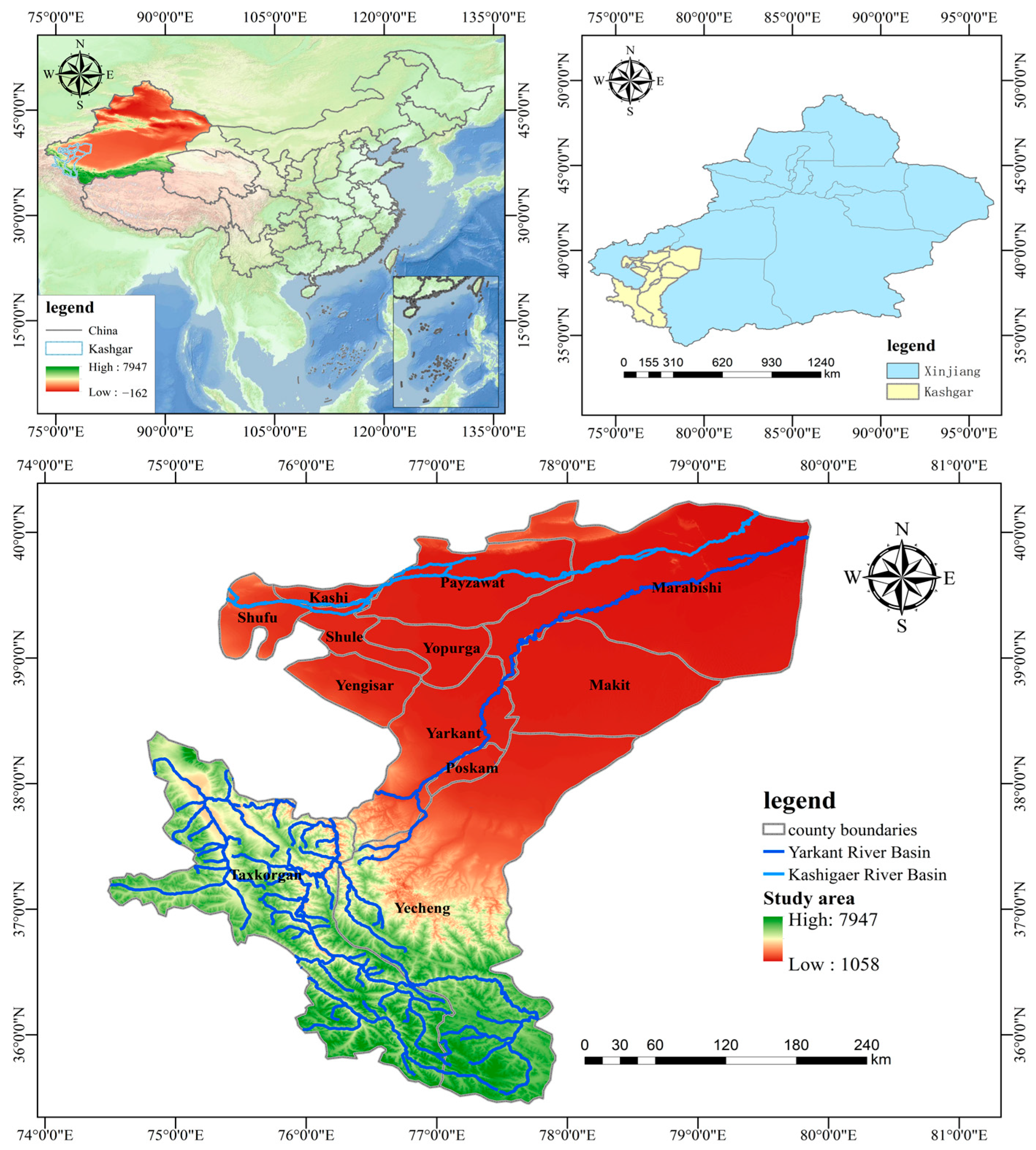
Kashgar Prefecture is located in the southwestern part of Xinjiang, China (73°20′~79°57′ E, 35°20′~40°18′ N), in the middle of the Eurasian continent. As shown of
Figure 1. It is bordered by the Taklamakan Desert in the east and surrounded by mountains on three sides, with the terrain high in the southwest and low in the northeast. Its climate is classified as a temperate continental arid climate, characterised by scarce precipitation, high evaporation, large daily temperature differences, and abundant light. Its topography is mainly mountainous, and the plains are concentrated in the alluvial fan of the Kashigaer River Basin and the Yarkant River Basin, with a total area of 162,000 km
2, and the region is the hub of the ancient Silk Road and the opening gateway to the west. The Yarkant River Basin is located at 37°49′~39°55′ N, 77°10′~78°50′ E, originating in the northern foothills of the Karakorum Mountains, with a total length of 1179 km, with a watershed area of 10.81 × 10
4 km
2, annual runoff is about 75.71 × 10
8 m
3, with alpine ice melt and mountain precipitation recharge being the primary sources, summer is flood season. The basin is ecologically diverse, and water resources are mostly used for agricultural irrigation. Kashigaer River Basin is located at 73°02′~78°02′ E, 38°08′~40°39′ N. It is situated in the southern foothills of the Tianshan Mountains, with a length of 1200 km, and a basin area of about 6.79 × 10
4 km
2. The annual runoff is about 45.90 × 10
8 m
3, and it is influenced by mountain precipitation, ice, and snowmelt. The distribution of runoff is uneven throughout the year; the basin is ecologically fragile, with desert and oasis ecology dominating, and the water resources are mainly for agricultural purposes and sustaining human life.
2.2. Data Sources
The original basic data used in this study are mainly from “Kashgar Prefecture Water Resources Bulletin (2013–2020)”, “Kashgar Prefecture Statistical Yearbook (2013–2020)”, “Kashgar Prefecture Statistical Bulletin on National Economic and Social Development (2013–2020)”, and “Xinjiang Statistical Yearbook (2013–2020)”.
2.3. Data Processing Tools
All data processing, computation, analysis, and mapping in this study were performed using Microsoft Excel 2016, SPSS 26.0, and ArcGIS 10.8. Data underwent completeness and consistency validation prior to computation to ensure the reliability of the analytical foundation.
2.4. Constructing the Water Ecological Security Evaluation Index System
The analysis of water ecological security in the Yarkant River Basin and the Kashigaer River Basin in the Kashgar Prefecture was conducted based on previous research and the uniqueness of the interaction between multiple rivers in an arid desert region. A two-dimensional basin water ecological security evaluation indicator system was constructed. This system integrates the “Ecology-production-life Space” perspective with the DPSIR model, using the “Ecology-production-life Space” as the horizontal dimension and DPSIR as the vertical dimension. The hierarchical relationship between “Space layer–Criterion layer–Indicator layer” hierarchical structure, the DPSIR model’s five dimensions, Drive, Pressure, Status, Influence, and Respond, correspond to specific indicators related to ecological conservation, production development, and living needs within the ecology, production, and life spatial layers. The ecology space corresponds to indicators such as ecological conservation investment, stressors, and baseline conditions; the production space aligns with indicators like production scale, stressors, and carriers; the life space connects to indicators including living development, stressors, and services.
This study adheres to principles of scientific rigor, regional specificity, operational feasibility, and systematic approach. By integrating existing research with the arid desert and multi-basin characteristics of the Kashgar Prefecture, 35 evaluation indicators were selected [
18,
20,
26], and the stability of the indicator system was evaluated. During the indicator selection phase, indicators with no substantive relevance to water ecological security in arid desert river basins were eliminated through verification, avoiding issues with highly variable indicators of questionable ecological relevance. This ensured a balance between ecological relevance and variability. The evaluation indicator system is shown in
Table 1. These indicators encompass the three core aspects of ecological conservation, production, water use, and living needs, and can effectively reflect the complexity of aquatic ecosystems under the interaction of human activities and natural conditions.
2.5. Determination of Weights
Different evaluation indicators have been shown to demonstrate varying degrees of importance in water ecological safety evaluation. In order to improve the accuracy and credibility of the final evaluation results, it is necessary to reflect the relative importance of each indicator in the indicator weights. Given the multitude of indicators and the need for careful consideration in watershed water ecological security assessments, subjective weighting is susceptible to expert bias and human judgment errors. Entropy Value Method, however, determines weights based on inherent data patterns. For instance, Neural Network Methods are used for complex pattern recognition and prediction [
37], and Principal Component Analysis facilitates data dimensionality reduction and structural discovery [
38]. The entropy method, quantifying indicator variability through information entropy, effectively identifies the discrete characteristics of each indicator within the data sequence, minimizing human influence to ensure objective and reliable evaluation results. It is particularly suitable for comprehensive evaluations of complex systems with multiple indicators [
39,
40], precisely capturing the spatiotemporal heterogeneity of indicators, aligning with this study’s requirement for identifying differentiated pressure sources across multiple watersheds.
2.5.1. Data Standardization Processing
To eliminate differences in units and magnitude, in this study, the standardization method of polar deviation was used for the unification of the measures [
41], with standardization performed using SPSS 26.0.
Positivization indicator (larger values are better):
Reversalization indicator (smaller values are better):
In Equations (1) and (2): is the ith sample value of the jth indicator after normalization by forwarding and reverse polarization; is the original data (i = 1, 2, 3, ……, m) (j = 1, 2, 3, ……, n) the ith sample value of the jth indicator in the original data; is the maximum value of the jth indicator in the original data; is the minimum value of the jth indicator in the original data.
2.5.2. Entropy Value Method for Calculating Weights
To meet research needs for both single-basin independent analysis and multi-basin integrated analysis, two complementary entropy calculation methods, single-river and multi-river approaches, are employed to ensure applicability across different scenarios:
- (1)
Single-river Entropy Method Calculation: Suitable for independent weight calculations in the Yarkant River Basin and the Kashigaer River Basin, accurately reflecting the relative importance of each indicator within a single basin. This method meets the requirements for spatiotemporal evolution analysis of water ecological security within individual basins.
- (2)
Multi-river Entropy Method Calculation: Suitable for comprehensive weight calculation across the entire Kashgar Prefecture, integrating indicator data characteristics from both basins while eliminating regional biases inherent in single-basin data. This approach meets the demands of multi-basin comprehensive evaluation and cross-basin collaborative governance.
Information entropy for each indicator is calculated using the information entropy formula. Lower entropy indicates greater variability and higher information content. Indicator weights are then derived from entropy redundancy calculations to achieve objective weight allocation. Weight normalization verification is performed, ensuring that weight variations for the same indicator across different basins align with regional characteristics. (Detailed calculation formulas are provided in
Appendix A).
2.6. Calculation and Classification of Water Ecological Security Index
2.6.1. Calculation of the Composite Index of Water Ecological Security
The water ecological security composite index is calculated using a weighted summation method. The weights of each indicator obtained through the entropy method are standardized and multiplied by their corresponding weights to derive the indicator indices. The composite index is then obtained by summing all indicator indices. Microsoft Excel 2016 is applied to perform calculations for both single-river and multi-river regions. (Detailed calculation formulas are provided in
Appendix A).
2.6.2. Water Ecological Security Classification
The classification of water ecological safety is based on the structure, function, and environment of water ecosystems and other characteristics in selecting the appropriate evaluation indicators and building an evaluation system. The corresponding calculation method is applied to obtain a comprehensive water ecological safety index. The index is then divided into different safety levels according to the set standards. This approach provides a more intuitive reflection of the status of water ecological security. It can help to identify the main problems and challenges faced by water ecosystems and provide a scientific basis for the development of targeted ecological protection and restoration strategies.
Therefore, as shown in
Table 2, this study references previous watershed water ecological security evaluation classification methods while integrating regional characteristics of the arid desert region in the Kashgar Prefecture [
26,
27], regionally adjusting the thresholds. Actual data fitting ensured the classification thresholds aligned with the actual water ecological security status of the study area’s watershed, avoiding regional applicability bias in classification [
42,
43]. Specifically, five levels are defined: excellent, good, fair, poor, and bad.
2.7. Regression Analysis Predictions
Regression analysis forecasting is a statistical forecasting method that uses known data on the independent variables to estimate and predict future values or trends of the dependent variable. This is achieved by building a mathematical regression model between the dependent variable and one or more independent variables, and testing and evaluating the model to determine its reliability and validity [
26].
a. The estimation of the regression coefficients is usually done by the least squares method.
The goal of the least squares method is to find the coefficients that minimize the sum of squares of the residuals between the observations and the model predictions. The formula for estimating the coefficients of the regression is given below:
b. After obtaining the coefficients
, the model was used to make predictions:
In Equations (3)–(5): n is the sample size; is the value of the jth independent variable for the ith observation; is the sample mean of the jth independent variable; is the sample mean of the dependent variable ; is the dependent variable (the target variable for water ecological security assessment); is multiple independent variables; is the intercept term; and is the coefficients of the respective variables.
3. Results and Analysis
3.1. Results of the Weighting of Evaluation Indicators
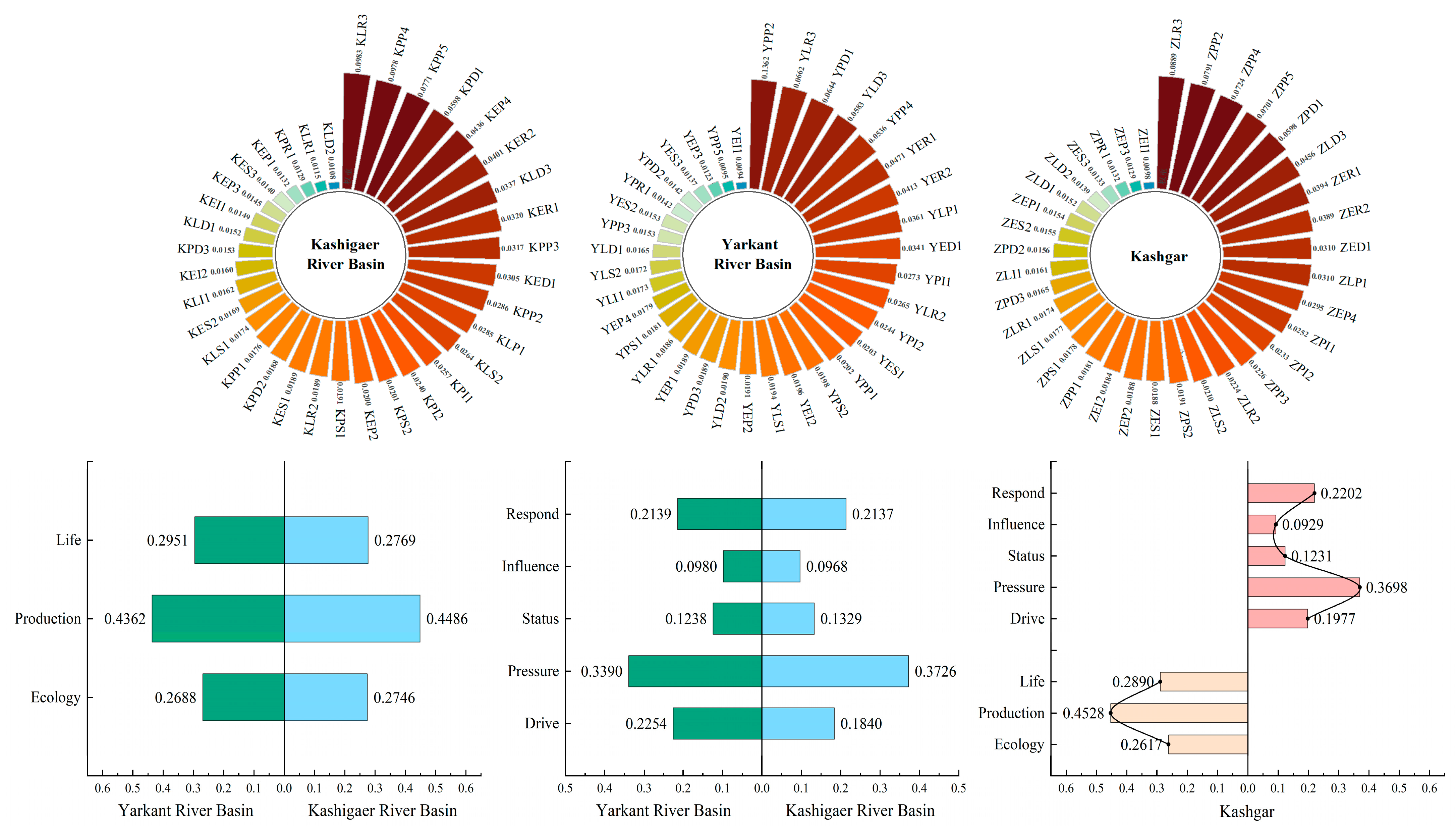
In this paper, the objective entropy value method was applied to calculate the weights of 35 water ecological security indicators in the Yarkant River Basin, Kashigaer River Basin, and Kashgar Prefecture from 2012 to 2019. As shown of
Figure 2, the results showed that the main influence factors in Yarkant River Basin were industrial water use (YPP2) 0.1362, wastewater treatment and reuse (YLR3) 0.0662, livestock (YPD1) 0.0644, with a total weight of 26.67%; the secondary influencing factors were forest land (YEI1) 0.0094, pesticide use (YPP5) 0.0095, and groundwater source supply (YEP3) 0.0123, with a total weight of 3.12%. The main factors in the Kashigaer River Basin are sewage treatment reuse (KLR3) 0.0983, agricultural diesel use (KPP4) 0.0978, and pesticide use (KPP5) 0.0771, with a total weight of 27.33%; and the secondary influencing factors are gross domestic product (KLD2) 0.0108, land for watersheds and water conservancy facilities (KLR1) 0.0115, and highly efficient water-saving area (KPR1) 0.0129, with a total weight of 3.51%. The main factors in Kashgar Prefecture are sewage treatment and reuse (ZLR3) 0.0889, industrial water use (ZPP2) 0.0791, agricultural diesel use (ZPP4) 0.0724, with a total weight of 24.04%; the secondary factors are forest land (ZEI1) 0.0098, supply of groundwater sources (ZEP3) 0.0129, area of highly efficient water conservation (ZPR1) 0.0132, with a total weight of 3.59%. In summary, sewage reuse, industrial water use, and agricultural diesel use are the main factors affecting water ecological security in the three regions, while indicators such as forested land and groundwater source supply exhibit comparatively minimal impact.
The weights of the Yarkant River Basin, Kashigaer River Basin, and Kashgar Prefecture were calculated from the perspective of “Ecology-production-life Space”. The production space of Yarkant River Basin, Kashigaer River Basin, and Kashgar Prefecture accounted for the most, which is the main spatial layer of influence on water ecological security, with the weights of 0.4362, 0.4486, and 0.4528, respectively. In addition, the ecology space of the three accounted for the least, which is the secondary spatial layer of influence, with the weights of 0.2688, 0.2746, and 0.2617, respectively.
From the DPSIR model analysis, the weights of the Yarkant River Basin, Kashigaer River Basin, and Kashgar Prefecture were calculated. The pressure layer of Yarkant River Basin, Kashigaer River Basin, and Kashgar Prefecture accounted for the most, which was the main influence criterion layer, and their weights were 0.3390, 0.3726, and 0.3698, respectively; while the influence layer of all three accounted for the least, which was the secondary influence criterion layer, and their weights were 0.0980, 0.0968, and 0.0929, respectively.
The influencing factors for water ecological security in the study area exhibit regional commonalities. Ecological indicators such as forested land and high-efficiency water-saving areas have negligible impacts, while production-related indicators like wastewater treatment and reuse, industrial water use, and pollution control indicators are core factors. This indicates that, within the context of an arid desert region, the intensity of industrial water demand and its treatment efficiency are the primary determinants of regional water ecological stability. Within the Ecology-production-life Space framework, the production space holds dominant weight, with the pressure layer serving as the core governing layer in the DPSIR model. This weighting pattern directly reflects that the production space in the study area is the primary pressure source for water ecological security, while the contribution and influence of the ecology space are diminished. This highlights the local development pattern characterized by product dominance and ecology lag.
3.2. Results and Analysis of the Ecology-Production-Life Space
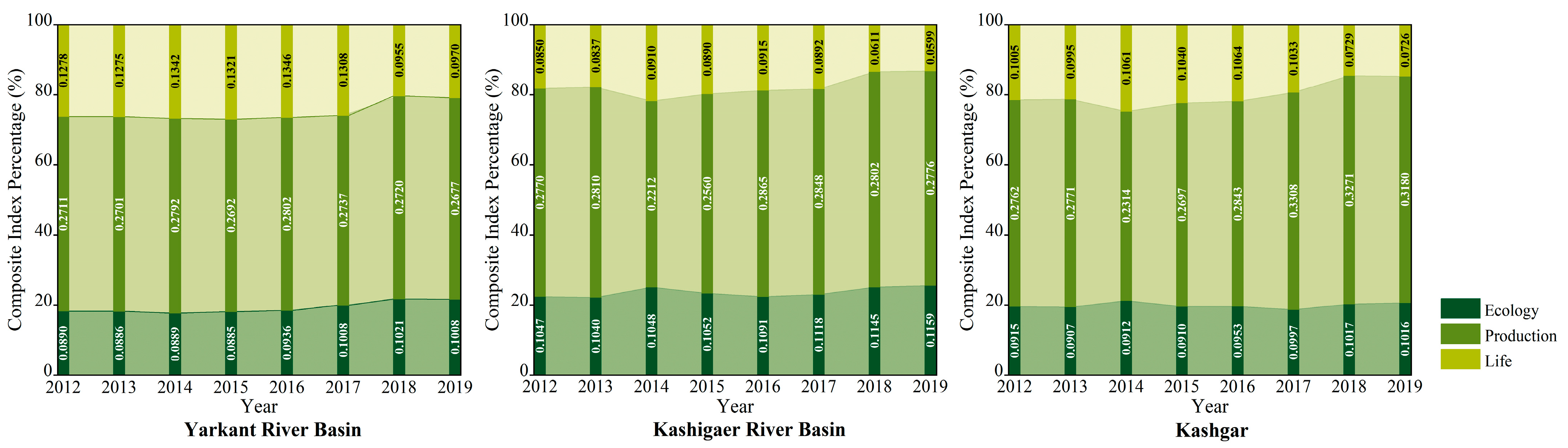
In regional sustainable development, the coordinated development of ecology, production, and life space is crucial. As shown in
Figure 3, in the Yarkant River Basin, the ecological composite index showed a gentle upward trend from 2012 to 2019, gradually increasing from 0.0890 to 0.1008. Specifically, there was negligible change and only small fluctuations during 2012–2015; it increased annually to the highest value of 0.1021 from 2015–2018, and then slightly decreased in 2019; the production composite index showed an overall gentle trend during this period, decreasing from 0.2711 in 2012 with small fluctuations to 0.2677 in 2019; the living index showed an overall flat trend during this period, decreasing from 0.2711 in 2012 with small fluctuations to 0.2677 in 2019; the living composite index was relatively stable from 2012–2016, but decreased significantly from 2016–2019, from 0.1308 in 2017 to 0.0970 in 2019. In the Kashigaer River Basin, the ecological composite index showed a steady upward trend from 2012 to 2019. first decreasing to 0.1047 in 2013, and then increasing continuously to 0.1160 in 2019. The production composite index showed fluctuations, decreasing sharply in 2014 to the lowest of 0.2212, followed by an increase to its peak of 0.2866 in 2016, and then decreasing continuously to 0.2776 in 2019. The living composite index showed an overall downward trend, decreasing from 2012 (0.0850) to 2019 (0.0599). During this period, it had risen to a calendar year high of 0.0915 in 2016 before continuing to decline.
The ecological indices of the Yarkant River Basin and the Kashigaer River Basin both show a fluctuating upward trend. The former rises and then experiences a slight decrease due to the effectiveness of ecological measures and system vulnerability. The latter declines and then rises due to heightened pressure and the implementation of response measures. The production index continues to fluctuate due to the adjustment of industrial structure and factors of production; the living index decreases significantly in the subsequent period due to urbanization and population pressure.
The analysis of the water ecological security in the Kashgar Prefecture shows that the ecological composite index fluctuates between 0.0915 and 0.1017 in 2012–2019, decreasing and then increasing, and reaching its peak in 2018; the production index fluctuates with its recorded lowest in 2014, and then slightly decreases after reaching the peak in 2017; the living index continues to decrease, from 0.1005 to 0.0726. The ecological index of the Kashgar Prefecture exhibited a decline, followed by an increase, originating from ecological pressures and protection measures such as anthropogenic and natural factors; the production index fluctuated and then experienced a slight decline, which may be related to the scale of agriculture and industrial structure; and the living index continued to decline, which was due to the population and economic growth.
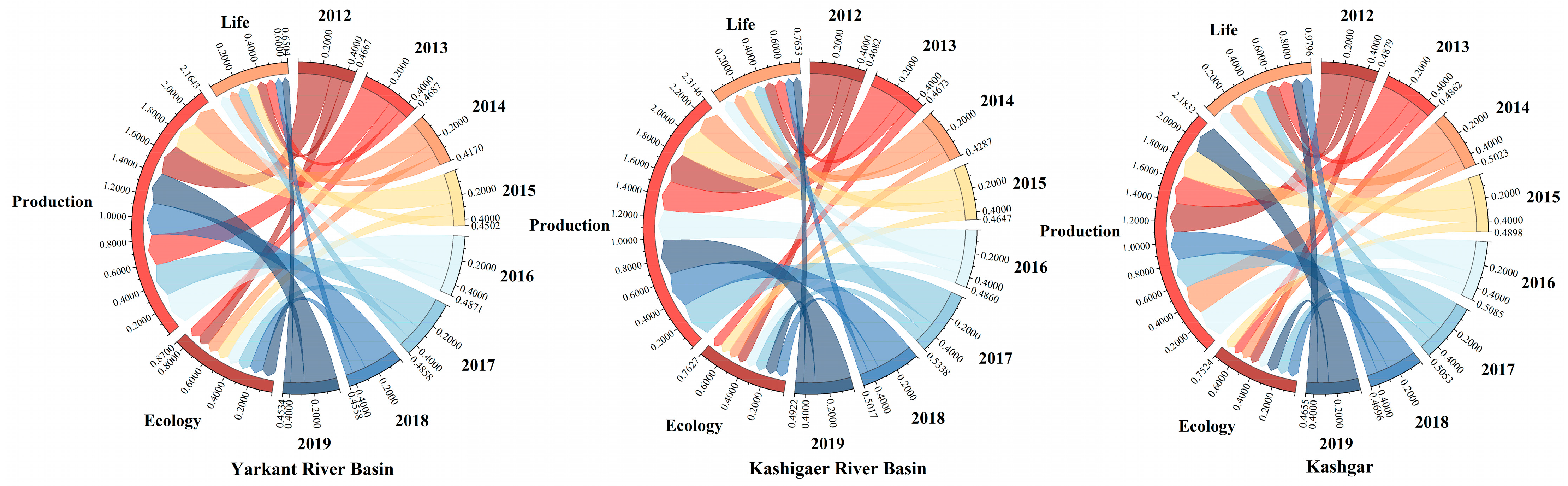
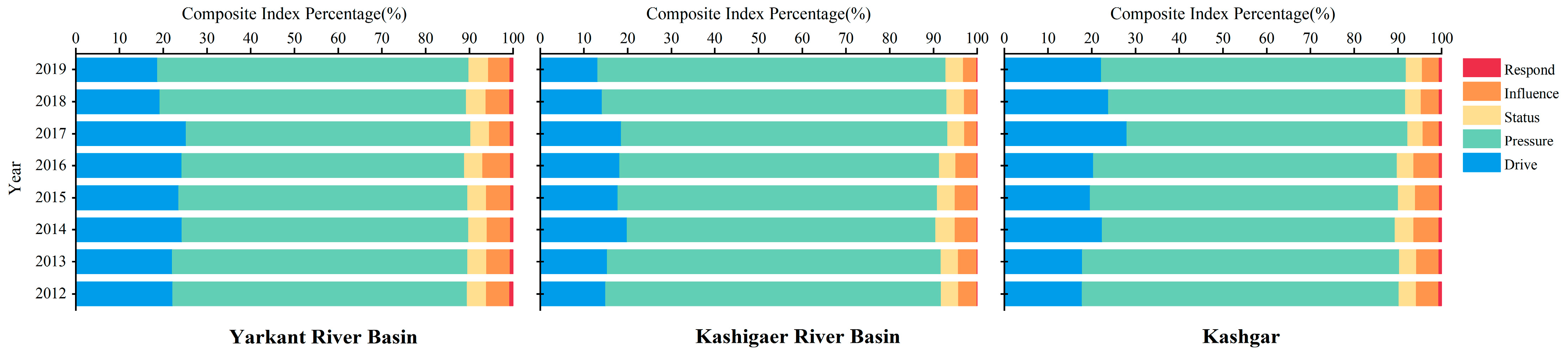
As shown in
Figure 4, in the evolution of the Ecology-production-life Space in the Yarkant River Basin and the Kashigaer River Basin, the production index was stable and accounted for a high percentage, the ecological index fluctuated and increased, and the living index remained stable and subsequently declined in the period 2012–2019. The production activities affect the ecology, and the structure and measures need to be optimized. The life space is affected by the population and other factors, resulting in the destruction of the ecology, and ecological improvements have a limited impact on the quality of life. The production and the living interact with each other, but the positive feedback is insufficient. The evolution of the Ecology-production-life Space in the Kashgar Prefecture shows that the proportion of production is high, and the proportion of ecology and life is relatively low. The ecological index fluctuates slightly to a decrease and then continues to increase, the production index initially increases and then decreases slightly, and the living index fluctuates and then decreases continuously. Therefore, the Ecology-production-life Space in the study area interacts with each other, thereby showing that production dominates, ecology and life lag, and the development is unbalanced. This imbalance needs to be harmonized and balanced to promote sustainable development.
The evolution of the Ecology-production-life Space in the Kashgar Prefecture exhibits pronounced structural imbalances: the production index consistently dominates and remains stable; the ecological index fluctuates upward but with limited growth; the living index shows an overall downward trend. The achievements in ecological improvement have failed to effectively support the development of life space, and the interaction between production and life lacks positive feedback. This reflects the continuous pressure exerted by local production activities on ecology and life spaces, as well as the insufficient release of the effects of ecological protection measures. Therefore, the coordinated development of the Ecology-production-life Spaces has become a key breakthrough for enhancing regional water ecological security.
3.3. Results and Analysis of the DPSIR Model
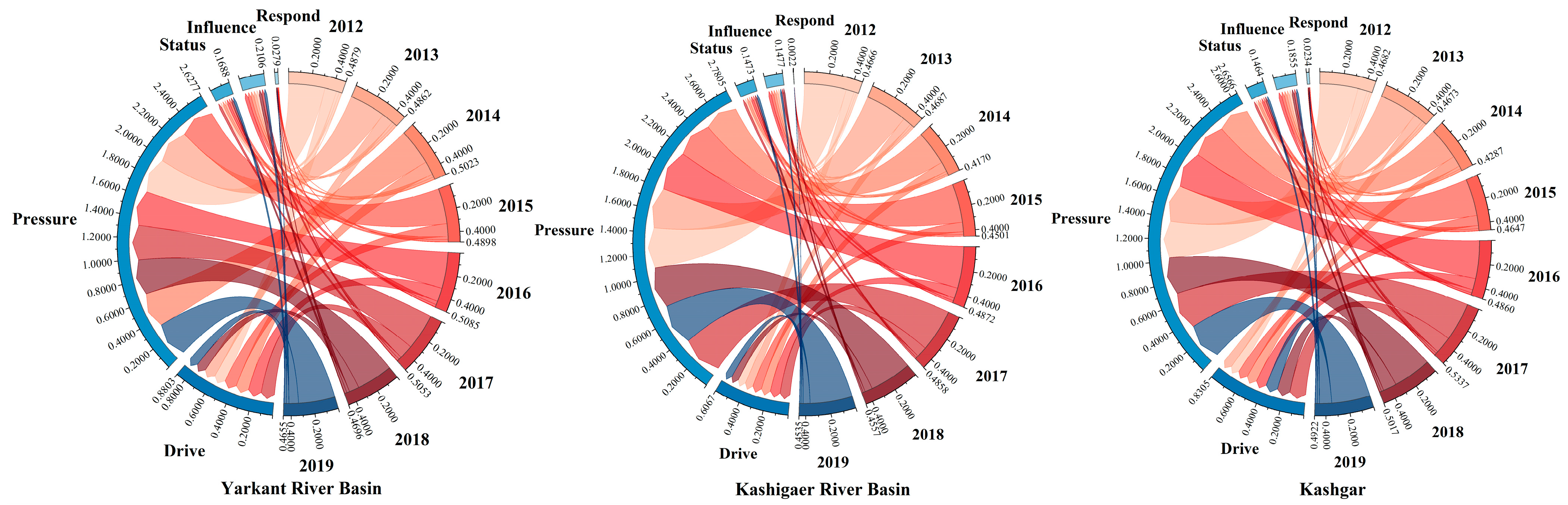
The evaluation of water ecological security through the DPSIR model systematically facilitates the five dimensions of drive, pressure, status, and influence, thereby enabling a comprehensive reflection of the dynamic changes of the water ecosystem. As shown in
Figure 5, regarding the analysis of water ecological security in the Yarkant River Basin using the DPSIR model, it was found that the drive index showed a fluctuating upward trend from 2012 to 2017, followed by a downward trend from 2017 to 2019. The pressure layer, as the main influence layer, fluctuates between 0.3234 and 0.3315 with a relatively smooth composite index. The state index as a whole fluctuates between 0.0207 and 0.0215 with minimal fluctuations. The influence layer, as the criterion layer with the smallest proportion, its influence index continued to rise from 0.0259 to 0.0322 during 2012–2016, followed by a decline to 0.0228 in 2019. The response index fluctuated between 0.0030 and 0.0040, dropping from 0.0040 in 2012 to a calendar year low of 0.0030 in 2015 before rising to 0.0036 in 2019. The DPSIR model was used to analyze the water ecological security of the Kashigaer River Basin, and it was found that the drive index showed a trend of sustained growth followed by a significant decrease, from 0.0698 to 0.0900 during 2012–2017, and then a rapid decrease to 0.0595 in 2019. The pressure composite index, which is the main influence layer, decreased sharply to a calendar year low value of 0.2946 in 2014, followed by an increase to 0.3629 during 2014–2017, after which it fluctuated around 0.3629. The state index, as a whole, fluctuates between 0.0182 and 0.0187, exhibiting minimal variation. The influence index fluctuated between 0.0132 and 0.0236 before 2016, when it continued to rise to a peak of 0.0236, followed by a rapid decline to 0.0138 in 2017, and continued to fluctuate in the vicinity. The response index fluctuated between 0.0002 and 0.0004, with an overall upward trend.
Overall, the drive indices of the two basins showed fluctuations, with the Yarkant River Basin being driven by socio-economic factors, and the Kashigaer River Basin by population growth and strategic adjustments. The pressure indexes were stable due to management stabilization in the former basin, and fluctuated significantly due to the influences of ecological management and water demand in the latter basin. The status indexes were slightly fluctuating due to ecological self-regulation in the former basin, and decreasing due to the long-term negative influences in the latter basin. The influence indexes are all related to environmental protection measures, but the former is increasing and then decreasing, while the latter is increasing and then decreasing. The response measures are not strong enough, but the former index fluctuates and increases with limited effect, while the latter improves its strength but still needs to be strengthened. The comparison shows that the commonality of water ecological security problems in the two basins stems from the intertwined influences of human activities and natural factors, while the differences are reflected in the sources of drives, pressure fluctuation mechanisms, and ecological response effects.
Using the DPSIR model to analyze the water ecological security in the Kashgar Prefecture, it was found that the drive index showed an upward trend, followed by a subsequent decline. The drive index increased from 0.0833 to a peak of 0.1495 in 2012–2017 and then returned to a lower level. The pressure index, as the main influence layer, exhibited a downward trend from 0.3391 to a minimum of 0.2872 in 2012–2014, then rebounded to 0.3429, following slight fluctuations. The state index fluctuates slightly between 0.0180 and 0.0186. The influence index first rises to a peak of 0.0284 and then plummets to 0.0197. The response index first falls and then rises between 0.0025 and 0.0033, but with an overall downward trend. In conclusion, the drive index increased and then decreased may be related to economy, population growth and strategy adjustment; the pressure index fluctuated by conservation measures and water demand; the status index slightly decreased due to challenges to ecological stability; the influence index increased and then decreased with ecosystem changes and conservation measures; and the response index decreased due to insufficient response measures.
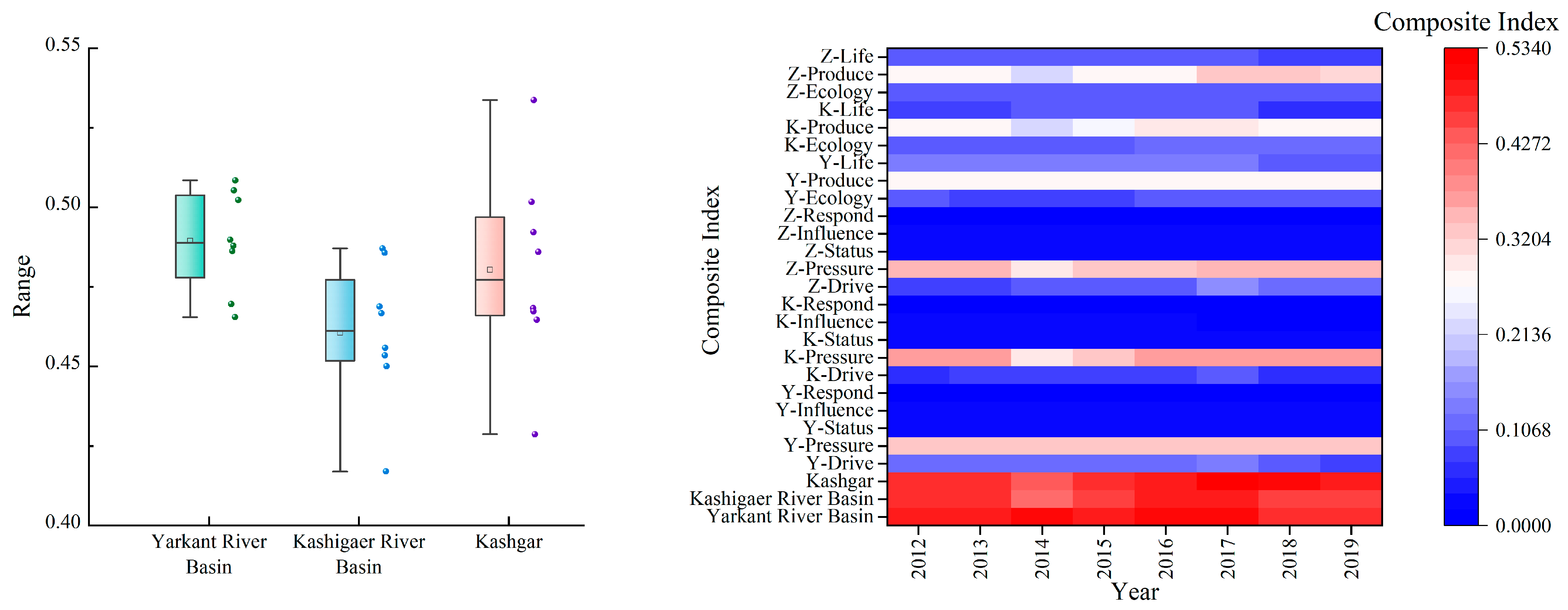
As shown in
Figure 6, the results of the Yarkant River Basin and the Kashigaer River Basin are similar in the DPSIR model, with the drive index increasing and then decreasing, resulting in the pressure index decreasing and then increasing due to natural and anthropogenic factors, but persisting. The long-term pressure leads to the deterioration of ecological status beyond its capacity to self-regulate. The change in the status index affects numerous aspects, with a large number of negative impacts leading to a decrease in the influence index. These influences have prompted the implementation of the response measures, yet with inadequate strength and limited effect. A correlation has been observed between drive and response index, characterized by a lagging response in the early stage and a weakening drive index, but an increasing response in the later stage. The drive and the response indexes are correlated, with the response lagging in the early stage and the drive weakening, but the response increasing in the later stage. The DPSIR model in the Kashgar Prefecture also showed that after the drive leads to a change in the pressure and thus in the ecological state, the decrease in state exacerbated the negative influences, and the response strength urgently needed to be strengthened. Therefore, the factors of the DPSIR model are intertwined to affect the ecology and development of the watershed.
The spatio-temporal evolution of the Kashgar Prefecture’s DPSIR model exhibits common characteristics of high pressure and low response. Differences between the two river basins and the Kashgar Prefecture lie only in the sources of drive and the magnitude of pressure fluctuations. Although the drive index slowed in the later period, long-term dual pressures from human activities and nature have exceeded the ecosystem’s self-regulation capacity. The persistently low response index reflects the limited effectiveness of existing governance measures, which have become a key factor in the increased vulnerability of the local water ecosystem and a constraint on improving basin resilience.
3.4. Results and Analysis of the Composite Index of Water Ecological Security
This study investigates the changes in the composite index of water ecological security in the Yarkant River Basin, the Kashigaer River Basin, and the Kashgar Prefecture from 2012 to 2019. As shown in
Figure 7, the extensive index of the Yarkant River Basin as a whole shows an M-shaped change, and its dynamics encompass three stages. In the early stage of 2012–2014, the index rose steadily from 0.4879 to 0.5023. Subsequently, in the middle fluctuation stage of 2015–2016, it showed a significant oscillation, initially declining to 0.4898 in 2015 and subsequently rebounding to its historical peak of 0.5085. In the final stage of 2017–2019, it showed a significant oscillation, oscillating between 0.4898 and the historical peak of 0.5085. The index continued to decline in the late sustained downward phase of 2017–2019, reaching its lowest value of 0.4655 in 2019. The Kashigaer River Basin composite index was relatively stable in 2012–2013, dropped sharply to a low peak of 0.4170 in 2013–2014, and after a sustained rise to an all-time high of 0.4871 in 2014–2016, declined annually to 0.4535 in 2019; the Kashgar Prefecture composite index continued to decline, reaching to a low of 0.4287 in 2012–2014, and then increased rapidly, peaking at 0.5337 in 2014–2017, followed by a continuous decline to 0.4922 in 2017–2019, which is a N-shapeed trend.
The fluctuation of the composite index of water ecological security in the Yarkant River Basin, the Kashigaer River Basin, and the Kashgar Prefecture is mainly influenced by human activities and natural factors. In the Yarkant River Basin, the composite index shows an initial rise following ecological protection, subsequently falling due to insufficient responses to the pressures of production and life. In the Kashigaer River Basin, the composite index experiences a sharp decline due to high-intensity human activities and climate change, and then rises after ecological restoration, falling again due to the limitations of regulation. In the Kashgar Prefecture, the composite index falls first due to social development and climate, and then falls due to the influence of the protection policy, followed by another rise and fall due to the new pressures of economic development and diminishing response effects. Overall, the three regions comply with water quality standards; however, they are afflicted with excessive pollutants, water stress, declining biodiversity, and ecological damage. This requires continuous monitoring and adjustment of conservation strategies.
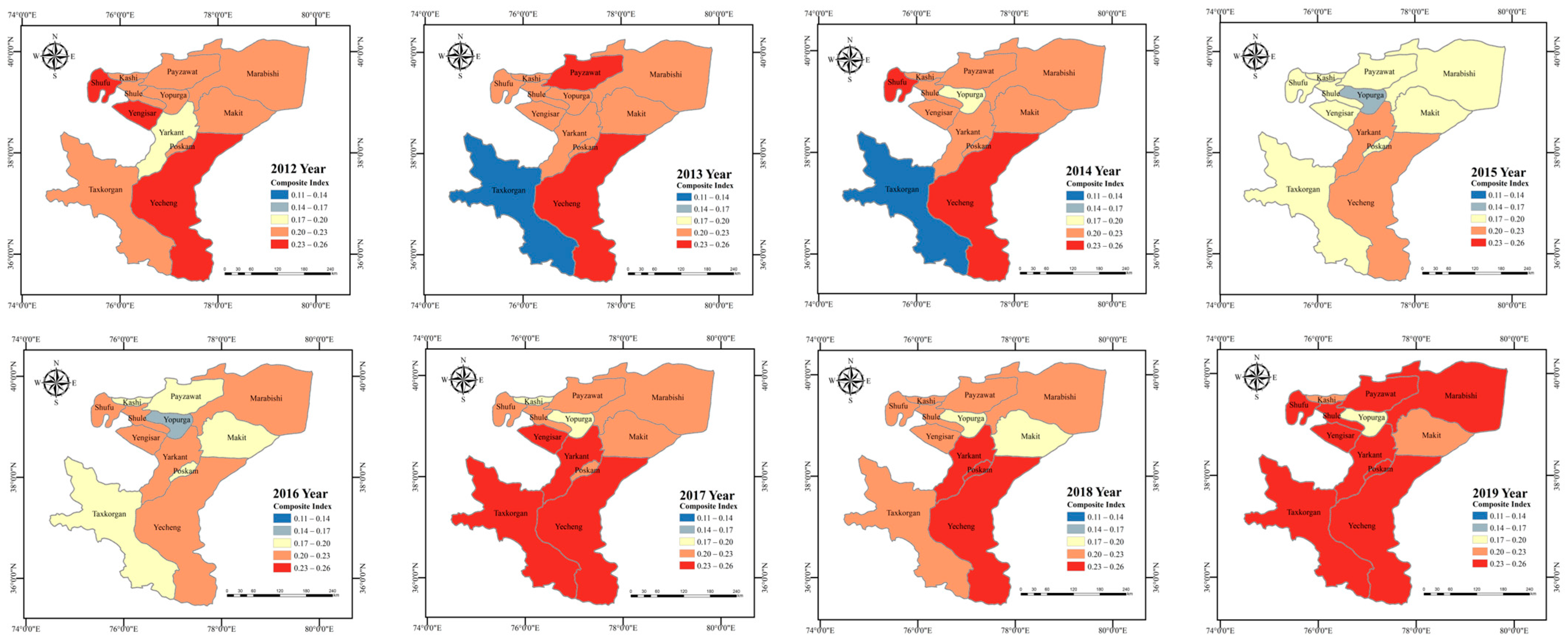
The spatial and temporal changes in the composite index of water ecological security in the counties and cities of the Yarkant River Basin and the Kashigaer River Basin in the Kashgar Prefecture are complex. Shown in
Figure 8, in the Yarkant River Basin, Yecheng County has a relatively high water ecological security composite index in different years; Poskam County and Yarkant County have different fluctuations in the index due to the influence of industrial activities, agro-industrial pollution, ecological regulation, and other factors; and Taxkorgan County is affected by the influence of production and life as well as the natural conditions, with a large fluctuation amplitude. In the Kashigaer River Basin, Shufu County, Yengisar County, and other counties and cities have demonstrated significant variations in the composite index due to urban production and living activities, production and living styles, pollution, and other factors. Payzawat County has been particularly affected by the changes in production, living, and ecological conditions and restoration projects, resulting in notable fluctuations. From the perspective of the Kashgar Prefecture, the composite index of counties and cities within this region is subject to the combined effect of human activities and natural factors. The extensive index of water ecological safety fluctuates and is at a fair level.
The comprehensive water ecological security index in the Kashgar Prefecture exhibits distinct fluctuation patterns, all driven by the synergistic effects of human activities and natural factors. While ecological conservation and restoration measures can temporarily boost the security index, they remain insufficient to counteract the sustained pressure from industrial development. Furthermore, while the region maintains an overall fair level, county-level indices exhibit pronounced spatial heterogeneity. Areas with robust ecological foundations show relatively stable indices, whereas ecologically fragile regions suffer from extremely low natural replenishment. Regions with intensive industrial and agricultural activities experience significant fluctuations due to high water demand pressures. This indicates that water ecological security governance in the study area requires both holistic regulation and differentiated county-level strategies.
3.5. Forecasts of Water Ecological Security
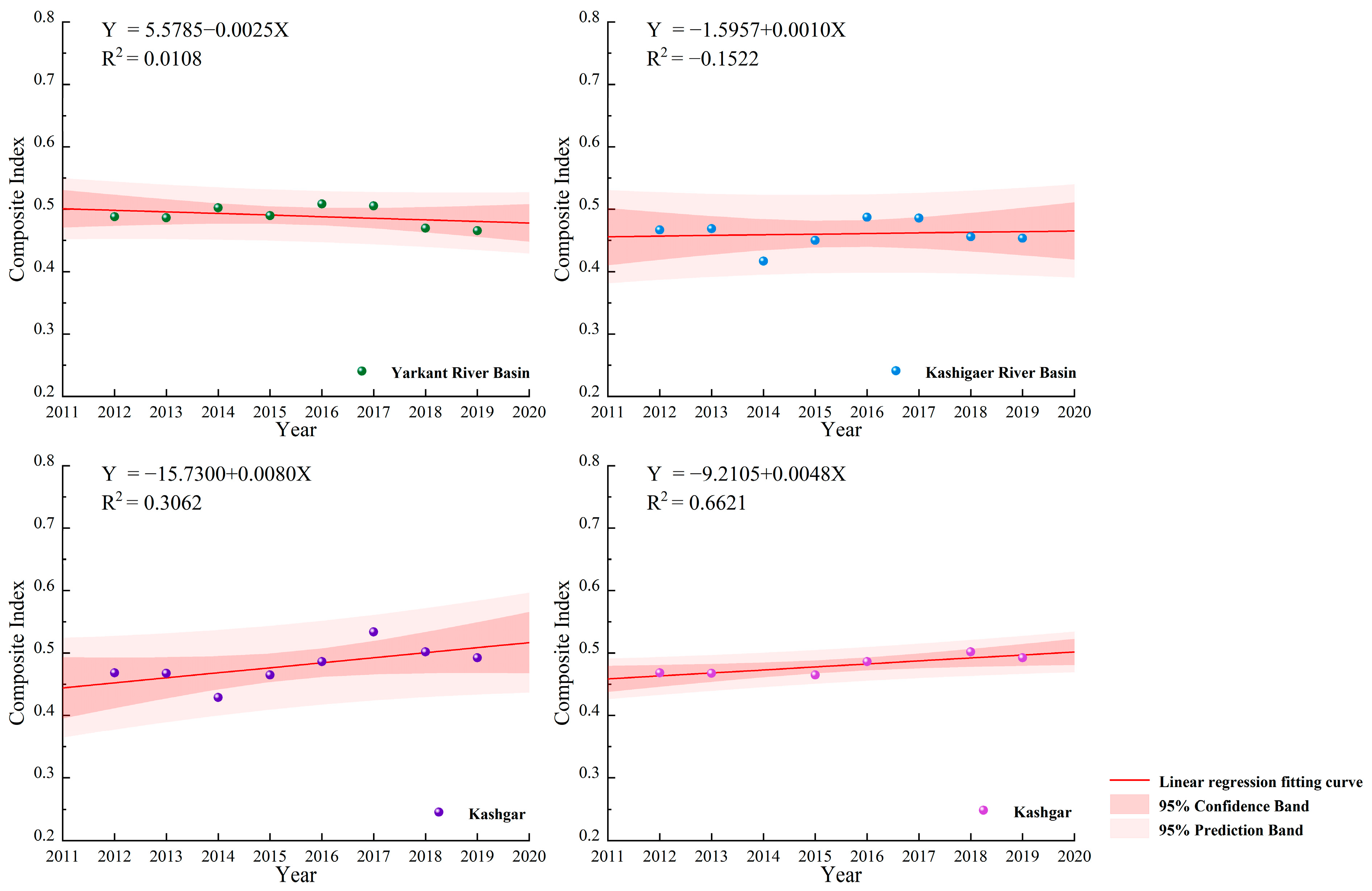
In the field of water ecological security research, predictive analysis facilitates the identification of changes in the composite index of water ecological security over time, as well as the projection of future trends, thereby enabling the adjustment of relevant protection measures. As shown of
Figure 9, the regression prediction of water ecological security in the Yarkant River Basin, Kashigaer River Basin and Kashgar Prefecture indicates that changes in the Yarkant River Basin are influenced by the interaction of multiple factors in 2011–2019, with a weak decreasing trend of the composite index and a low model fit The Kashigaer River Basin shows a slight increase in the composite index in 2011–2019, but the model fit is also low. The Kashgar Prefecture shows a slow increasing trend in the composite index from 2011–2019. In 2014 and 2017, the index fluctuated abnormally due to the influence of industrial restructuring and extreme climate factors. Following deletion and optimization, the degree of fit was greatly improved, indicating that the model has a better degree of fit, better reflecting the trend of the composite index of water ecological securityin the Kashgar Prefecture. It shows an upward trend, yet the rate of increase has decelerated, suggesting that the water ecological security situation of the Kashgar Prefecture has improved, though at a gradual pace. This further indicates that, although the water ecological security situation in Kashgar Prefecture has improved, the process is slow and may remain in a fair state in the next few years, potentially being affected more.
The trend of the water ecological security index in the basin of the Kashgar Prefecture was studied based on the multiple linear regression model. Shown in
Table 3, in the Yarkant River Basin, the regression equation showed a weak decreasing trend, indicating that the explanatory power of the model was significantly weakened by the multifactorial nonlinear effects of climate change, human activities, and other factors (R
2 = 0.0108). This emphasized the ecological vulnerability and complexity of regulation. In the Kashigaer River Basin, it showed an upward trend, but the model fitting accuracy was not high. The presence of uncontrolled variables, such as fluctuations in agricultural and livestock water use, limits the predictive efficacy of the model (R
2 = −0.1522). Consequently, there is uncertainty about the ecological recovery of the region. In the Kashgar Prefecture, the initial fitting curve showed a slow increase in the composite index (R
2 = 0.3062). Through the optimization of the model, the fit was significantly improved (R
2 = 0.6621), indicating that the ecological security has the potential to improve, but at a slower rate, and it is limited by the production-driven development model and delayed environmental response. In contrast, the regional prediction in Kashgar Prefecture shows that policy intervention and industrial adjustment have positive effects on ecological security. Nevertheless, the environmental self-repair capacity is limited, so it is still necessary to continue human regulation and strengthen cross-basin synergistic governance and adaptive management.
Regression predictions indicate that the overall water ecological security of the Kashgar Prefecture watersheds shows marginal potential for improvement, yet faces a prolonged period of slow growth. The Yarkant River Basin watershed exhibits a slight decline, while the restoration of the Kashigaer River Basin watershed remains uncertain. Although the Kashgar Prefecture demonstrates a gradual upward trend, it is constrained by dual factors: production-driven development and ecological lag. The nonlinear interactions of multiple factors and interference from uncontrolled variables weaken the model’s fit, reflecting the complexity of regulating water ecological security in an arid desert region. Regional predictions for the Kashgar Prefecture demonstrate that the positive effects of policy interventions and industrial restructuring confirm sustained human regulation and cross-basin collaborative governance as key drivers for enhancing regional water ecological security.
4. Discussion
This study examines the Kashgar Prefecture of the Xinjiang Uygur Autonomous Region, China, a typical arid desert region, by integrating the “Ecology-production-life Space” perspective with the DPSIR model to construct a water ecological security evaluation system. It investigates the spatiotemporal evolution characteristics and driving mechanisms of water ecological security in the Yarkant River Basin, Kashigaer River Basin, and the entire Kashgar Prefecture. The results clarify the core characteristics of water ecological security in this region and analyze the interactive influences among multiple local river basins. By integrating and analyzing multiple assessment models, this study provides a framework reference combining spatial perspectives and causal logic for evaluating and managing water ecological security in composite river basins with discontinuous river networks in an arid desert region.
In analyzing the weights of indicators, this study used the entropy value method to calculate the weights of each item. It was found that the weights of the production space in the Yarkant River Basin, the Kashigaer River Basin, and the Kashgar Prefecture dominated and became a key factor affecting water ecosystem security. The results of the study have a certain degree of consensus with the conclusions of studies focusing on water ecological security in arid desert regions. These results indicate that the high dependence of production activities on water resources is an important factor leading to the aggravation of the pressure on water ecosystems [
21,
29]. Indicators related to production activities, such as industrial water use, had more weight in the Yarkant River Basin and Kashgar Prefecture, reaching 0.1362 and 0.0791, respectively, confirming production as the core stressor for watershed water ecological security. The high weighting of wastewater reuse contrasts with studies in other humid or semi-humid regions, where most research focuses on traditional water resource utilization indicators [
26]. However, in the Kashgar Prefecture, where water resources are extremely scarce, wastewater reuse has become a critical measure to alleviate the supply-demand imbalance and maintain system resilience, highlighting regional specificity. Additionally, the ecology space weights for all three indicators are relatively low, differing from some studies emphasizing the importance of ecology space [
26,
44], which is attributed to the different degrees of dependence of ecosystems on water resources across different regions. For example, this study demonstrates that the proportion of ecological indicators, such as forest area and groundwater supply, is negligible and secondary. Furthermore, the ecosystems in arid desert regions are highly fragile, with limited self-regulation ability. Human activities will therefore restrict the implementation of ecological protection measures, which will lead to a reduction in the weighting of ecology space. The differences in the allocation of specific weights between the present study and other studies may be because different regions rely on water resources to a different extent. In terms of specific weight allocation, the differences between this study and others may stem from the different ecological environments, economic and social conditions, and research methods employed in different study areas [
45,
46].
Based on weighted structural characteristics, further analysis reveals the deep coupling relationship between the DPSIR model and the Ecology-production-life Space. The drive and pressures identified by the DPSIR model are the core causes of imbalance in the Ecology-production-life Space dimensions. Conversely, the imbalanced state of the Ecology-production-life Space exacerbates the negative evolution of each DPSIR factor, creating a vicious cycle [
47]. Within the DPSIR model’s drive layer, population growth and the expansion of agricultural, pastoral, and industrial production scale translate into high-intensity water consumption pressures, driving disorderly expansion in the production space. Core pressures in the pressure layer, such as excessive industrial and agricultural water consumption and agricultural pollution, continually squeeze water resource allocation in the ecology space. This leads to a low weighting of the ecology space and slow improvement in its ecological composite index. Simultaneously, the limited water resource security in the life space causes the increased demand for domestic water due to population growth to result in a continuous decline in the living composite index [
21,
29]; Meanwhile, the slight decline in ecological baseline indicators at the status layer and ecological service function indicators at the influence layer of the DPSIR model has conversely constrained the sustainable development of production space and the improvement of life space, further exacerbating the imbalance among the three spaces [
48]; Furthermore, the generally low response indices in the DPSIR model indicate that local countermeasures, such as ecological restoration, pollution control, and water-saving renovations have failed to effectively alleviate production pressures or break the imbalance among the three spatial domains. Consequently, the local watershed water ecosystem remains trapped in a cycle of increasing pressures, worsening spatial imbalances, and inadequate response effectiveness. This finding aligns with global research in arid regions: socio-economic systems in areas of extreme water scarcity often exhibit high-consumption, low-efficiency dependence on water resources. This leads to production water displacing ecological water use, exacerbating developmental imbalances among the three spheres [
21,
29,
48]. The high weighting of wastewater reuse in this study reflects a regional characteristic of the Kashgar Prefecture. Unlike most studies focusing on traditional water resource utilization indicators, wastewater resource recovery has become a critical measure to alleviate the supply-demand contradiction in the Kashgar Prefecture due to its extreme water scarcity [
26].
The three-dimensional space in the Kashgar Prefecture exhibits an imbalance characterized by production-dominated development and lagging ecology and life space development. This phenomenon is associated with the region’s accelerated urbanization, population expansion-induced pressure on living resources, and the high water consumption of local agriculture and animal husbandry activities alongside slow industrial restructuring [
21,
29]. It results from the combined effects of policy interventions, climate variability, and socioeconomic dynamics. The fluctuating upward trend in the ecological composite index correlates with local policies such as afforestation and ecological water replenishment. Conversely, the slight declines in ecological indices observed in the Yarkant River Basin in 2019 and the Kashigaer River Basin in 2013 are linked to extreme climatic conditions, specifically below-average precipitation and a rebound in production pressures during those years. Fluctuations in the production composite index are linked to local agricultural restructuring and industrial expansion. The high weighting of industrial water use in the Yarkant River Basin and the slight decline in the production index reflect low industrial water efficiency, thereby constraining the sustainability of production space. The sharp drop in the Kashigaer River Basin’s composite index in 2014 resulted from the combined effects of drought conditions, intensive agricultural irrigation water use, and increased agricultural production pollution. The rapid recovery of the composite index in the Kashgar Prefecture from 2014 to 2017 benefited from policies such as inter-basin water transfers and the promotion of wastewater treatment and reuse. The decline after 2017 resulted from the combined effects of renewed production pressure due to economic development and diminishing returns on ecological response [
26,
44]. From the DPSIR model analysis, the pressure layer in the Kashgar region primarily influences the criteria layer, confirming human activities as the main driver of ecological degradation [
19,
49,
50]. A core contradiction persists: while pressures continue to increase, response indices remain at low levels. This is primarily due to the unique industrial path dependence and policy lag effects characteristic of the arid desert region. The local industrial structure, dominated by cotton cultivation and primary processing, exhibits rigid dependence on water resources. Response measures such as wastewater reuse and inter-basin water transfers face constraints from lengthy capital investment cycles and weak infrastructure, resulting in delayed ecological benefits. Furthermore, issues including insufficient local ecological protection funding, relatively lagging management levels, fragmented response measures, and the absence of systematic inter-basin collaborative governance mechanisms [
18,
51], response measures struggle to effectively alleviate production pressures, perpetuating a vicious cycle. The extremely low weighting of ecological indicators correlates with the weak self-regulation capacity of arid desert ecosystems and intense human disturbance, reflecting the current inadequacy of targeted ecological protection measures. This provides crucial insights for regional water ecological security management. Future efforts should enhance the precision and intensity of ecological conservation, optimize water resource allocation mechanisms, and improve the adaptability of ecological restoration technologies to gradually elevate the role of ecology space within basin water ecological security systems [
49].
Based on the comprehensive water ecological security index, it was found that the overall indices for the two major river basins and the Kashgar Prefecture were generally fair but exhibited significant fluctuations. This manifested as water quality meeting standards while certain pollutants approached critical thresholds, a pronounced imbalance between water supply and demand, and a declining trend in biodiversity. The fluctuations in the region’s composite index result from the combined effects of human activities and natural factors, reflecting a typical characteristic of composite river basins in arid desert regions [
52,
53]. The local climate is arid, and the spatial and temporal distribution of water resources is uneven [
31,
33]. Furthermore, the over-exploitation and irrational use of water resources by human beings put a great deal of pressure on fragile ecosystems. This results in a fluctuation of the composite index and a low overall level. At the county scale, spatial heterogeneity becomes more apparent: areas with better ecological foundations exhibit relatively stable indices, while regions with dense industrial and agricultural activities show significant fluctuations. Therefore, differentiated governance strategies are necessary. Furthermore, comparing this study’s findings with typical arid regions globally, such as Central Asia and the Middle East, reveals both common patterns and regional specificities in water ecological security. The commonality lies in the shared “production-dominated, ecology lagging” characteristic, where water ecological security faces dual pressures from human activities and natural factors, with insufficient response measures being a widespread issue [
54,
55]; regional particularities manifest in Central Asia and the Middle East, where oil and gas resource development has made industrial pollution and resource extraction the primary pressures [
56,
57]. As an arid region primarily reliant on agriculture, the Kashgar Prefecture faces core pressures from agricultural and pastoral water use alongside agricultural nonpoint source pollution. Moreover, its trans-basin governance is primarily constrained by administrative boundaries and management mechanisms, rather than transboundary water resource allocation issues common in Central Asian and Middle Eastern basins [
58,
59]. This provides insights for differentiated governance approaches across distinct arid basin contexts [
54,
58,
59].
By using a multiple linear regression model to predict the trend of the water ecological safety index in relevant basins in Kashgar Prefecture [
25], the Yarkant River Basin and the Kashigaer River Basin exhibited extremely low model fit (R
2 values of 0.0108 and −0.1522, respectively). After removing outliers, the R
2 for the Kashgar Prefecture improved to 0.6621. Compared to the rapid policy-driven improvements observed in other studies [
11,
26], the predictions in this research exhibit a slow upward trend constrained by both production-dominated factors and ecological self-repair capabilities. The overall results reveal the nonlinearity and uncertainty of system evolution, necessitating a shift toward resilience-oriented management at the source and cross-basin coordination. Implementing red-line constraints for water-based production limits and rigid water resource restrictions for the Ecology-production-life Spaces, while applying differentiated governance based on basin-specific characteristics and county-level spatial heterogeneity. The region’s primary pressure stems from agricultural non-point source pollution, with wastewater reuse as the key mitigation pathway, highlighting the unique governance challenges of resource-constrained water-scarce areas. Furthermore, this study has certain limitations: the research timeframe is relatively short, the analysis is confined to the county level, statistical definitions for some county-level indicators vary, and predictive capabilities for extreme scenarios are limited. Future work should establish a long-term, high-resolution basin water-ecological monitoring database, incorporate nonlinear models such as machine learning, and deepen research on micro-scale driving mechanisms and water-ecological scenario simulations [
60,
61] to provide more detailed theoretical support for multi-basin water ecological security governance in arid and desert regions.
5. Conclusions
This study focuses on the Yarkant River and Kashigaer River Basin in the Kashgar Prefecture, constructing an evaluation system for water ecological security based on the “Ecology-production-life Space” and the DPSIR model. Through analysis, it is revealed that the production activities are the main stressor, and the study area as a whole shows an imbalance of the production-led, ecology, and life space lagging. The drive and pressure factors interact with each other, resulting in the deterioration of the ecological status. The interaction between drive, pressure, and other factors has also led to the deterioration of the ecological status. The insufficiency of ecological response measures has further aggravated the vulnerability of the system and led to the obvious fluctuation of the composite index of water ecological security in Kashgar Prefecture, which has been at a fair level for a long time. The trend of the index varies among counties and cities, with significant fluctuations in the safety index in industrial-intensive areas due to high water use intensity, and relative stability in areas with good ecological conditions. The prediction of the future water ecological safety in the Kashgar Prefecture shows a slow upward trend, though improvement rates remain constrained by path dependency.
Although this study has achieved phased results, certain limitations remain: limited short-term coverage, reliance on official datasets without field verification, challenges in fitting the strong nonlinear characteristics of the system using multiple linear regression models with limited predictive capacity for extreme scenarios, and failure to delve into the micro-level of townships or river segments.
Therefore, future research should be deepened by establishing long-term multi-source monitoring databases, integrating the DPSIR framework into nonlinear models like machine learning, incorporating climate change scenarios, and expanding the research perspective to micro-scale studies. This will provide a scientific basis and practical references for water ecological security assessments and cross-basin collaborative governance in similar arid desert regions.