Article

Identification of Priority Conservation Areas in Ecological Networks of Coal Mining Subsidence Areas with High Groundwater Levels Using Cascading Failure Models


1
School of Architecture and Design, China University of Mining and Technology, Xuzhou 221116, China
2
Jiangsu Provincial Mining Area Territorial Space Ecological Restoration Engineering Technology Innovation Center, Xuzhou 221116, China
*
Author to whom correspondence should be addressed.
Land 2026, 15(3), 391; https://doi.org/10.3390/land15030391
Submission received: 26 January 2026 / Revised: 22 February 2026 / Accepted: 26 February 2026 / Published: 28 February 2026

Abstract

Mineral resource extraction and urban expansion in resource-based cities have progressively degraded regional ecosystems, leading to increasingly fragmented ecological patterns. Ecological network resilience plays a critical role in maintaining regional ecological stability. In this study, we integrated landscape ecology and systems science to develop a network model and assess the resilience of ecological networks in the coal mining subsidence area with high groundwater levels. This study employed morphological spatial pattern analysis (MSPA) and circuit theory to construct the ecological network. A cascading failure model was further applied to simulate network dynamics under three attack strategies. Based on a comparative analysis of these strategies, we introduce the concept of “dangerous nodes” to identify priority conservation areas. The research results show that 101 ecological source areas and 255 ecological corridors were identified in the study area. Topologically, its ecological network is characterized by a small number of core nodes and a large number of secondary nodes. When the adjustable parameter is α < 1.2 , targeting low-degree nodes may inflict more severe damage on the network. When α > 1.2 , attacks against nodes with a high-degree or high betweenness centrality may have significant cascading failure implications. Our results show that the network’s critical threshold T c depends on the number of dangerous nodes in the attack set. The distribution of these nodes differs substantially between low-degree attacks and those targeting high-degree or high betweenness centrality nodes. These findings advance ecological network optimization and provide practical guidance for ecosystem conservation and restoration in resource-based cities.

1. Introduction

The UN Decade on Ecosystem Restoration represents a major global effort to advance sustainable development and strengthen human–nature coexistence through ecosystem protection and restoration [1]. Against this global backdrop, mining areas have attracted widespread attention as particularly vulnerable ecological zones [2]. Long-term, high-intensity resource extraction has substantially altered land use and land cover, resulting in landscape fragmentation, spatial instability, and severe degradation of ecosystem functions in these areas [3]. Meanwhile, the combined pressures of resource-based industrial development, population growth, and urbanization have further intensified land use, thereby compromising habitat functions and regional ecosystem sustainability [4]. Different types of mining areas exhibit different patterns of human interference and ecosystem damage. China, as the world’s largest coal producer, faces particularly severe environmental challenges stemming from coal mining activities. The eastern region is a typical coal-mining area with high groundwater levels. The exploitation of resources has led to extensive surface subsidence and water accumulation. In coal mining subsidence areas with high groundwater levels, rapid landscape change and declining ecosystem functionality pose significant management challenges. Addressing these issues requires stronger policy support and science-based restoration strategies. Several ecological restoration initiatives have been implemented in these areas in recent years [5], with the aim of rehabilitating degraded ecosystems, enhancing biodiversity, and promoting regional sustainability. Key challenges in such restoration efforts include the absence of an integrated governance framework and insufficient consideration of scale-dependent ecological effects [6]. Thus, it is imperative to develop systematic spatial optimization methods for constructing resilient ecological networks in coal mining subsidence areas with high groundwater levels and evaluating their resilience under different disturbance scenarios. This approach enables the identification of priority conservation areas and provides a robust scientific foundation for ecological restoration and long-term environmental management.
Ecological networks, composed of core habitat patches and ecological corridors, form complex systems that enhance landscape connectivity and maintain ecosystem stability [7]. As a crucial strategy for ecological protection and restoration, the construction of ecological networks serves as an effective means of reconciling land-use demands with ecosystem conservation [8]. Currently, research on the construction of ecological networks follows the typical paradigm of “identification of ecological source areas—construction of resistance surfaces—identification of ecological corridors”. The morphological spatial pattern analysis (MSPA) method enables precise characterization of landscape types and structural patterns, facilitating the scientific delineation of ecological source areas [9]. Compared with other methods, MSPA places greater emphasis on the spatial relationships between habitat patches and their surrounding landscape context. The primary methods for identifying ecological corridors include circuit theory [10], the gravity model [3], and the minimum cumulative resistance (MCR) model [11]. Circuit theory has been used to simulate current density distribution within ecological corridors, showing that ecological flows follow a random-walk pattern similar to electrical currents [12]. This approach allows for a relatively accurate characterization of flow dynamics in ecological processes [13] and can be applied to construct least-cost paths between ecological source areas in the study region [14]. This provides a scientific basis for optimizing the spatial configuration and allocation of multiple ecological source areas [15].
Ecological networks, as a key application of complex network theory in natural ecosystems [16], offer a solid theoretical foundation for analyzing structural characteristics and optimizing functional performance. From this theoretical perspective, ecological source areas can be abstracted as nodes, and ecological corridors can be viewed as connecting edges within the network structure [17]. Although numerous studies have examined the structural characteristics of regional ecological networks [18,19], quantitative analyses of their resilience remain relatively scarce. Ecological network resilience refers to an ecosystem’s ability to maintain its structural and functional integrity through negative feedback mechanisms when exposed to external disturbances [20]. Preserving the resilience of ecological networks is crucial for ensuring ecosystem stability and biodiversity, thereby protecting regional ecological security and promoting long-term sustainable development [21]. However, ecological networks are constrained by ecological thresholds, and when disturbances exceed these limits, ecosystem functions may degrade, potentially leading to systemic collapse [20]. It is, therefore, essential to conduct a rigorous analysis of the resilience characteristics of ecological networks in response to external perturbations.
Cascading failure models have been widely used in complex network research to study the dynamic evolution of network resilience and are now fundamental tools for assessing network robustness [22]. These models highlight that the failure of individual nodes can propagate through the network topology, triggering cascading effects on the functionality of interconnected nodes and potentially leading to systemic failure [23]. Cascading failure models have also been extensively applied in fields such as power systems, trade networks, and transportation networks [24,25,26,27] to analyze network resilience evolution in response to external disturbances. However, its application within ecological network research remains relatively limited [28]. Most existing studies have focused on simulating the failure of a limited number of critical nodes [29] without exploring how different attack strategies influence network robustness. Furthermore, the cascading failure model enhances our understanding of ecological network dynamics under various attack scenarios and external disturbances. It also offers a novel analytical perspective for identifying priority conservation areas and optimizing ecological network configurations.
As a result of intensive human activities such as mining, urban expansion, and land reclamation, ecological networks are frequently disrupted in resource-based cities. The cascading failure model allows for more precise simulation of ecological network responses and evolutionary trends under various disturbance scenarios, providing scientific support for ecological restoration and management [20]. Huaibei City, located in eastern China, is a typical coal mining subsidence area, characterized by extensive ground subsidence, significant sinking depth, and a high proportion of waterlogged zones due to elevated groundwater levels [30]. Faced with the dual pressures of prolonged mining activities and rapid urban expansion, balancing urban development with ecological conservation has become an urgent challenge. This study develops a novel analytical framework for ecological network assessment based on a “progressive updating” approach. The framework aims to identify key vulnerable areas in need of urgent protection by constructing ecological networks and assessing their resilience in representative coal mining subsidence areas with high groundwater levels. It provides decision-making support and methodological guidance for ecological conservation and restoration in other coal mining subsidence areas with similar hydrogeological conditions. The objectives of this study are twofold: (1) to identify and construct ecological networks in coal mining subsidence areas with high groundwater levels, and (2) to apply the cascading failure model to evaluate network resilience under different attack strategies, identify critical “dangerous nodes,” and determine corresponding priority conservation areas.

2. Materials and Methods

2.1. Study Area

The study area is located in northern Huaibei City, Anhui Province, China, within a temperate semi-humid monsoon climate zone. It covers an area of 1136.53 km2 and encompasses the Xiaosuixinhe Basin and the Tuohe Basin (Figure 1). This region is a typical coal mining subsidence area with high groundwater levels. The terrain is primarily flat, with relatively higher elevations in the eastern and northern parts, characterized by hilly landforms. The mining areas are oriented generally along a northeast–southwest axis. Prolonged mining activities have led to the formation of extensive subsidence wetlands, causing severe ecological issues, such as disruption of ecosystem structure and biodiversity decline. Consequently, coal mining subsidence poses a serious threat to the stability of the regional ecosystem.

2.2. Data Sources and Processing

The data used in this study include land use data and ecological resistance data. The study extracted data through human–computer interactive interpretation following the preprocessing of Landsat remote sensing imagery from 2022. According to the accuracy assessment, classification accuracy exceeds 85% across all categories, satisfying the requirements for subsequent analysis. The study area has been classified into six land use types based on the land use classification system of the Chinese Academy of Sciences: cultivated land, forest land, grassland, water, construction land, and unused land. Other data types and sources are referenced in Table 1. To ensure computational efficiency and consistency in spatial analysis, all raster datasets were standardized to a uniform spatial resolution of 30 m using a resampling method [31].

2.3. Methods

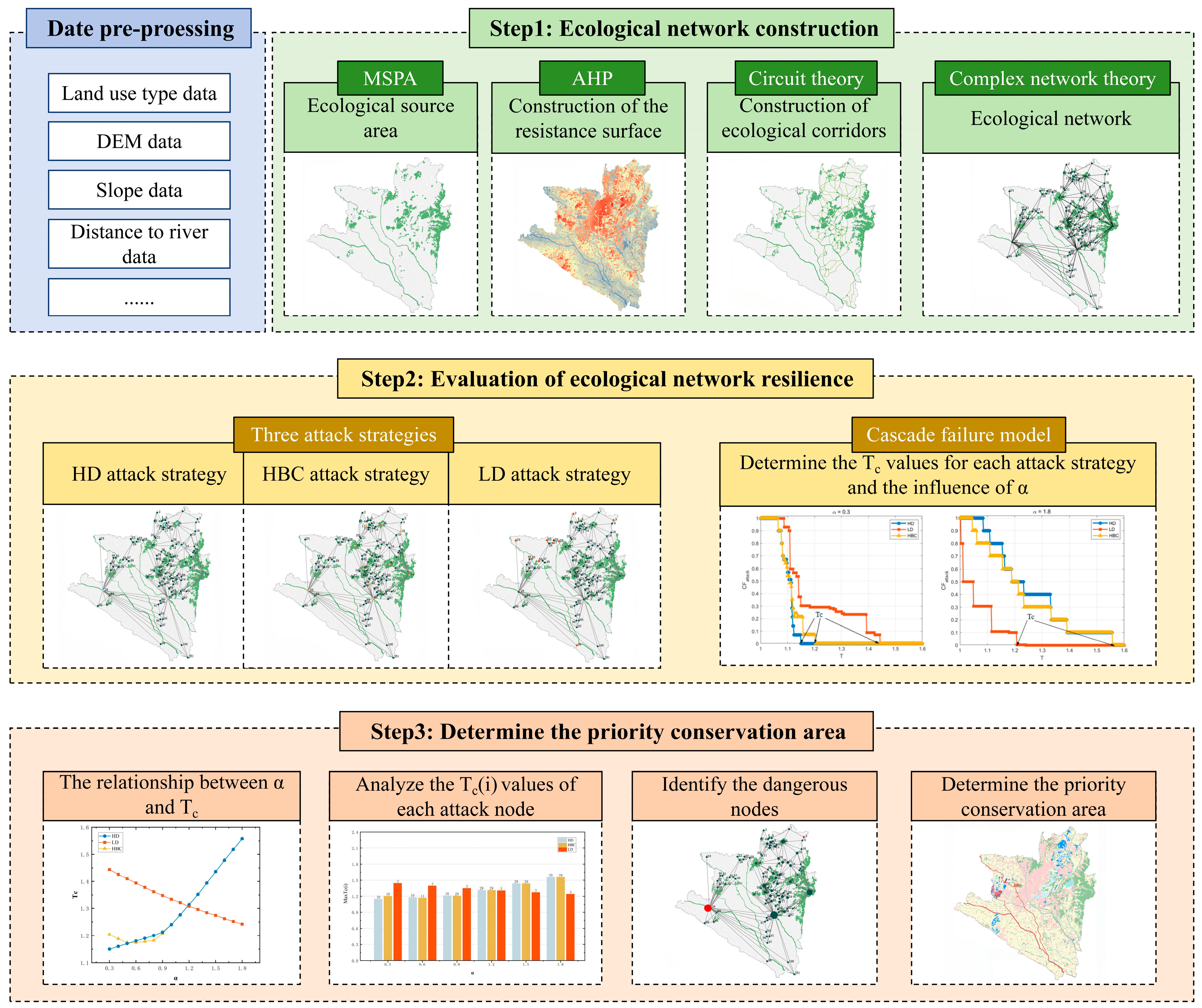
This study follows the research framework illustrated in Figure 2. First, the MSPA method is employed to identify ecological source areas. Subsequently, a resistance surface is constructed by integrating ecological environment characteristics with human disturbance factors. Based on this, circuit theory is applied to identify ecological corridors. Additionally, the cascading failure model is used to simulate the dynamic response of ecological networks under various attack strategies, thereby assessing their resilience. Finally, dangerous nodes and priority conservation areas are identified, and corresponding protection strategies are proposed.

2.3.1. Ecological Network Construction

Ecological source areas are crucial patches that sustain ecological processes and maintain the integrity of ecosystems [32]. According to the MSPA method, which is based on the principles of mathematical morphology, landscape types are classified into seven classes, and core areas serve as the essential landscape elements in the ecological network [33]. Maintaining regional ecosystems’ stability and conserving biodiversity depend on these core areas [34]. Due to the unique characteristics of coal mining subsidence areas, the study selected forest land, rivers, artificial lakes, reservoirs, grasslands, and coal mining subsidence water areas (defined as areas where subsidence depth exceeds 1500 mm) as foreground data [35]. Core areas larger than 0.1 km2 were identified using the Guidos Toolbox 2.8 and designated as ecological source areas [36].
Ecological corridors serve as spatially organized connections between ecological source areas [20], contributing to landscape connectivity and ecosystem function [37]. Ecological resistance surfaces are constructed, and ecological corridors are identified based on circuit theory using the Linkage Mapper module in Circuitscape 4.0. The ecological resistance surface is a fundamental component in ecological network construction [38], enabling the quantification of impediments to regional ecological flows and species migration [39]. A synthesis of relevant literature [40,41] and the specific characteristics of the study area were used to select nine resistance factors based on their impact on ecological environment conditions and human disturbance intensity—DEM, slope, land use type, distance to river, vegetation coverage, distance to built-up area, distance to main road, distance to mining subsidence areas, and subsidence depth (Table 2). To determine the weights of these factors, we used the expert scoring method integrated with the analytic hierarchy process (AHP), with assigned resistance value ranges based on research [35] and policy documents [42].

2.3.2. Cascading Failure Model

In regional ecosystems, ecological source areas are linked by ecological corridors, collectively preserving the integrity and stability of the ecosystem. However, due to various disturbances, the degradation of key source areas may trigger cascading failures, leading to a significant decline in regional ecological connectivity. To capture this dynamic, the present study adopts the cascading failure model proposed by Wang and Rong [43]. According to the model, a node’s initial load is solely determined by its degree. The resilience of the ecological network can be further analyzed under various disturbance scenarios using the adjustable parameter α and tolerance parameter T .
(1)
Suppose that the initial load of each node in the network follows a power-law function of its degree. Specifically, for any node j , the initial load is defined as follows:
L j = β k j α
Here, k j denotes the degree of node j , while α and β are adjustable parameters that govern the initial load magnitude and its dependence on the node degree.
(2)
Upon the failure of node i , its load is redistributed to the neighboring nodes in the set Γ i . The load distribution is probability-weighted in order to reflect the importance of the degree in the transmission of load:
Π j = β k j α n Γ i β k n α
(3)
Specifically, nodes of higher degree are assigned a greater probability weight in the allocation of additional load, reflecting their enhanced capacity to absorb incoming load. Consequently, the incremental load received by the neighboring node j can be formally expressed as follows:
Δ L j i = L i k j α n Γ i k n α
(4)
The capacity of each node is assumed to be proportional to its initial load:
C j = T L j
Among them, T 1 . In the event that a node j suffers a total load greater than its capacity (i.e., L j + Δ L j i > C j ), the node will fail and transfer its load to its neighbors, which may lead to a chain reaction.
In order to determine the cascading range under different attack strategies, we define a computational cost C F i , which represents the number of failed nodes caused by the removal of node i . By averaging the failure scale of all nodes in the attack set A and normalizing it, we have the following:
C F a t t a c k = i A C F i N A N 1
Among them, N represents the total number of network nodes, and N A represents the number of attack nodes.
In cascading failure simulations of ecological networks, the tolerance parameter T defines the ability of nodes to withstand external disturbances or increased loads. The degradation or failure of one node does not cause cascading effects when T is large, so the network as a whole maintains stable connectivity. As a result, when T is small, a failure of a key node can quickly result in excessive load accumulation between neighboring nodes, resulting in widespread cascading collapse and compromising the structural integrity and functional capability of the mining ecosystem. As T decreases, a phase shift occurs from a “stable state” to a “collapsed state”, characterized by a critical threshold T c . Specifically, when T > T c , nodes have sufficient capacity to absorb additional loads, thereby preventing global cascading failures. In contrast, when T < T c , insufficient tolerance leads to a significant increase in the scale of cascading failure, resulting in a partial or complete breakdown of the ecological network. Therefore, T c represents the critical threshold needed to maintain network stability. In response to external perturbations, a lower T c indicates greater ecosystem robustness.

3. Results

3.1. Ecological Network Analysis

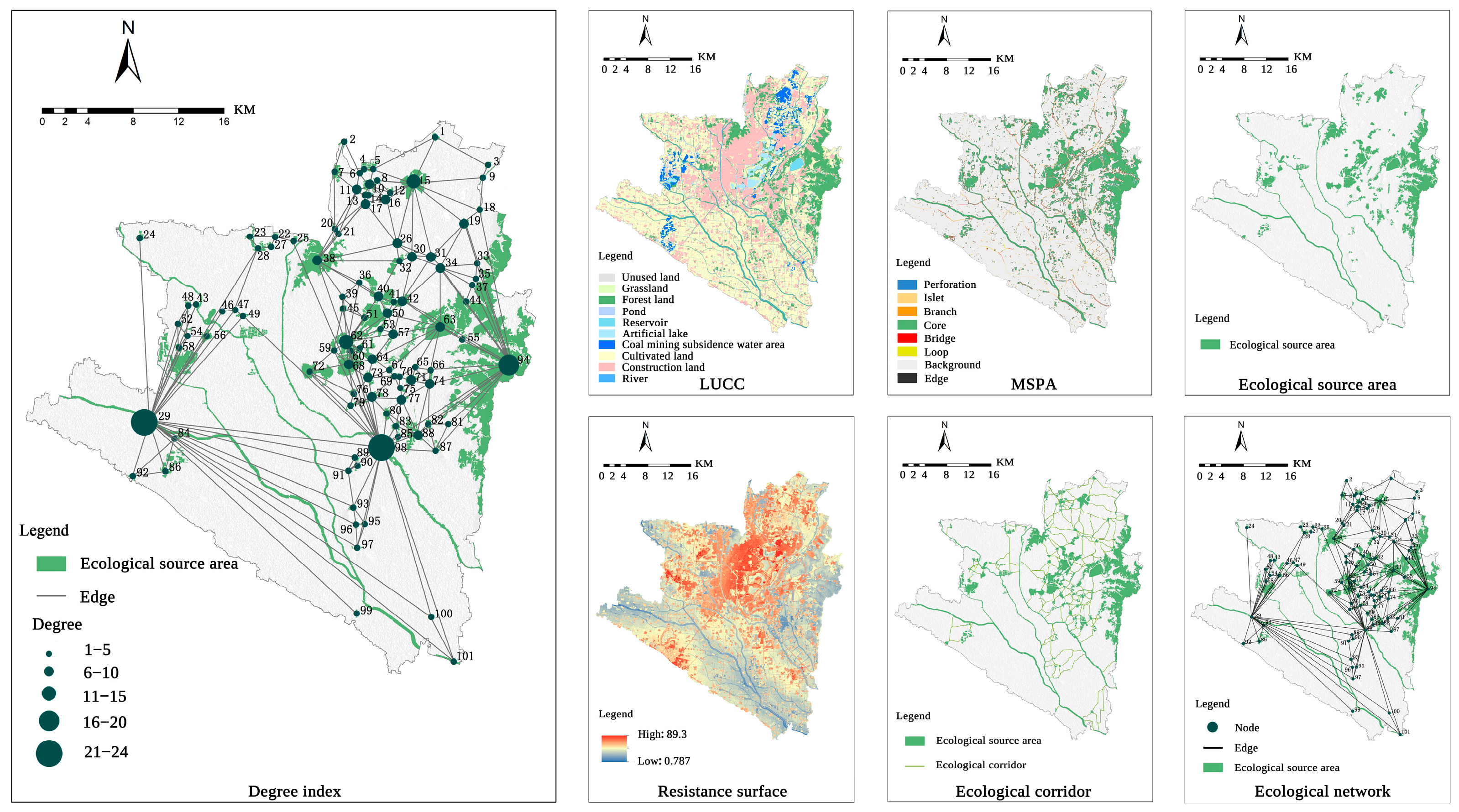
Based on the MSPA results, this study constructed an ecological network consisting of 101 ecological source areas and 255 ecological corridors using circuit theory (Figure 3). The network was then abstracted using complex network theory, where ecological source areas were represented as nodes and ecological corridors were represented as edges (numbers represent the source area codes), resulting in an undirected, unweighted graph. To examine the structural characteristics of the network, degree index and betweenness centrality were calculated for each node using MATLAB R2022a programming. Betweenness centrality quantifies the extent to which a node lies on the shortest paths connecting other node pairs. According to the results, the maximum value is 0.59, and the average value is 0.02, indicating that only a few nodes play a crucial intermediary role in overall connectivity. The degree index refers to the number of connections a node has. The average degree is 5.05, with a maximum of 24. Spatially, the number of highly connected nodes in the ecological network is relatively small, primarily concentrated in the central and eastern parts of the study area. The network structure is characterized by a limited number of core nodes and a relatively large number of secondary nodes.

3.2. Resilience Analysis of Ecological Networks Under Different Attack Strategies

Analyzing cascading failure models, the method used to assess the importance of different nodes directly influences the formulation of attack strategies. This paper proposes three typical attack strategies to compare the resilience of ecological networks in coal mining subsidence areas with high groundwater levels:
(1)
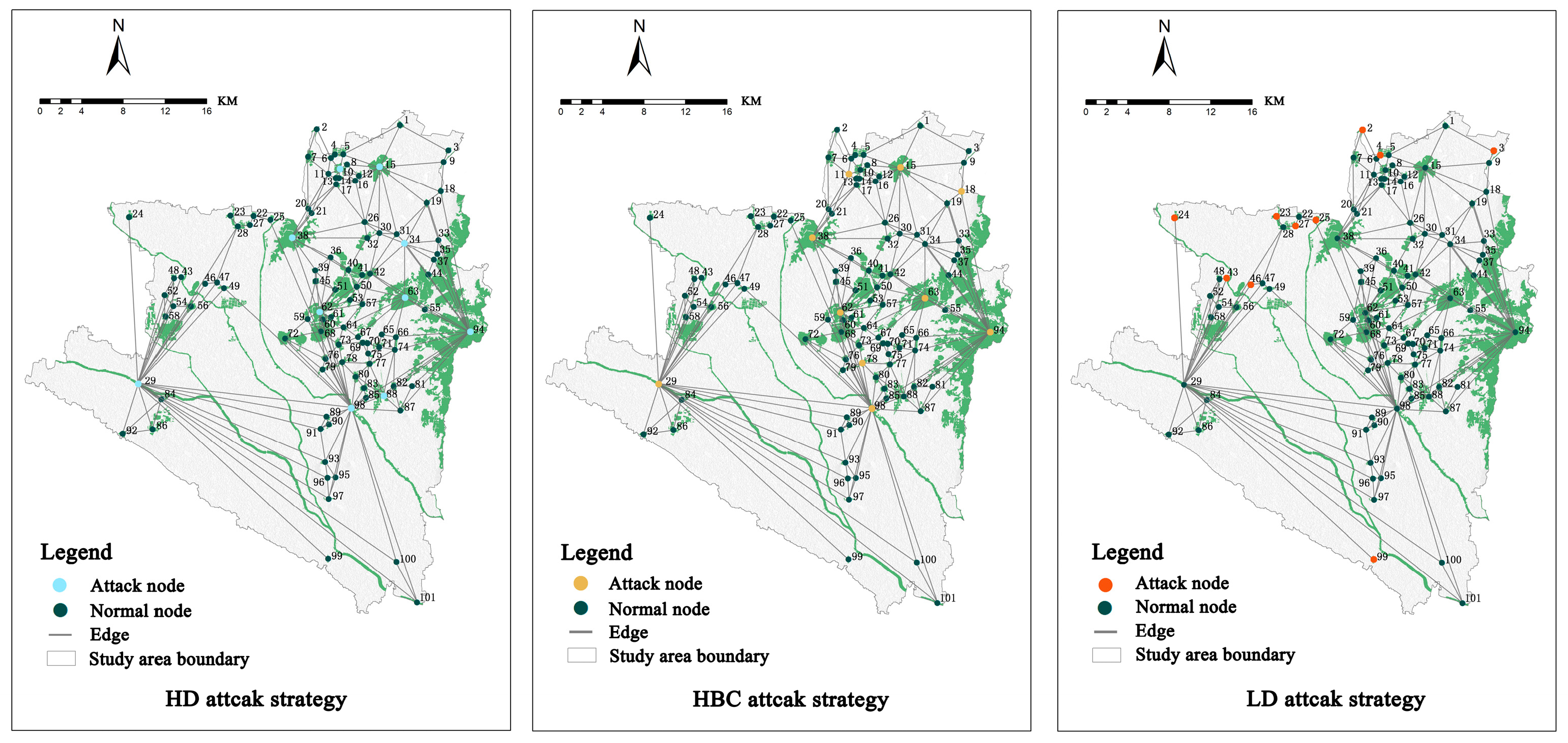
High-Degree Node Attack (HD): This strategy prioritizes the removal of nodes with the highest degree values, sequentially eliminating them in descending order of degrees. The results indicate that high-degree nodes are primarily located in forest land and river areas, where they play an essential role in maintaining connectivity within the ecological network. A number of these key nodes are located in the central zones of coal mining subsidence areas, with land uses including coal mining subsidence water area, artificial lake, and partial grasslands. As a result of coal mining subsidence, ecological patches maintained structural connectivity to some extent despite disturbance.
(2)
Low-Degree Node Attack (LD): In contrast to the high-degree node attack strategy, this approach sequentially removes nodes in ascending order of their degree values. Low-degree nodes are primarily concentrated in the peripheral regions of the ecological network, consisting mostly of small, scattered forest patches, mainly located in the northern part of the study area. The remaining nodes are isolated coal mining subsidence water areas, which have a limited impact on overall network connectivity.
(3)
High Betweenness Centrality Node Attack (HBC): In addition to the degree index, betweenness centrality is another key metric reflecting the importance of nodes within a network. High betweenness nodes typically occupy critical pathways or bridging positions, serving as connectors between distinct substructures. This strategy involves sequentially removing nodes in descending order of their betweenness centrality values. The results indicate that high betweenness nodes are primarily concentrated in forest land and along rivers. Some nodes are located within coal mining subsidence areas, with land use types classified as coal mining subsidence water areas and artificial lakes. This suggests that these regions still contain critical connectivity nodes within the ecological network.
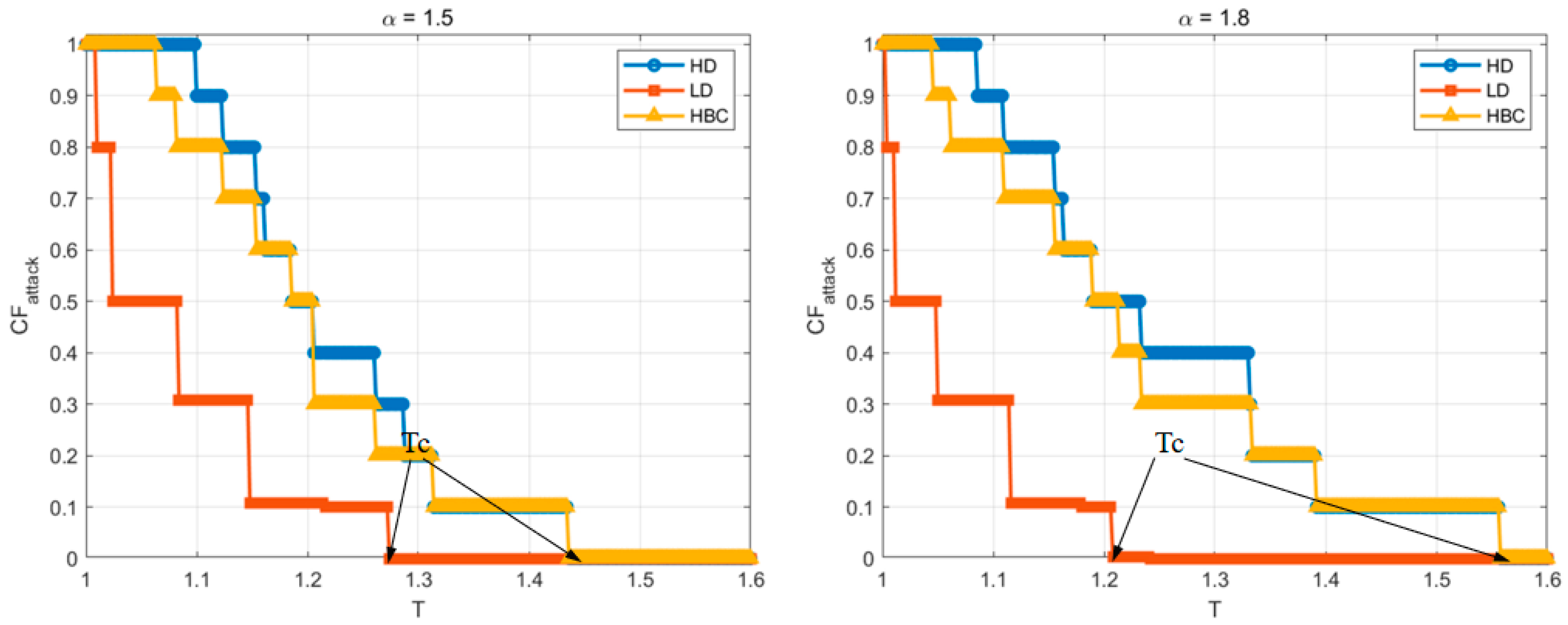
For each attack strategy, the top 10 highest-ranking nodes are selected as the targets for simulation analysis (as shown in Figure 4). Considering the role of the adjustable parameter α in regulating node initial load, MATLAB simulations were performed to assess the impact of different attack strategies on ecological network resilience for α values ranging from 0.3 to 1.8.
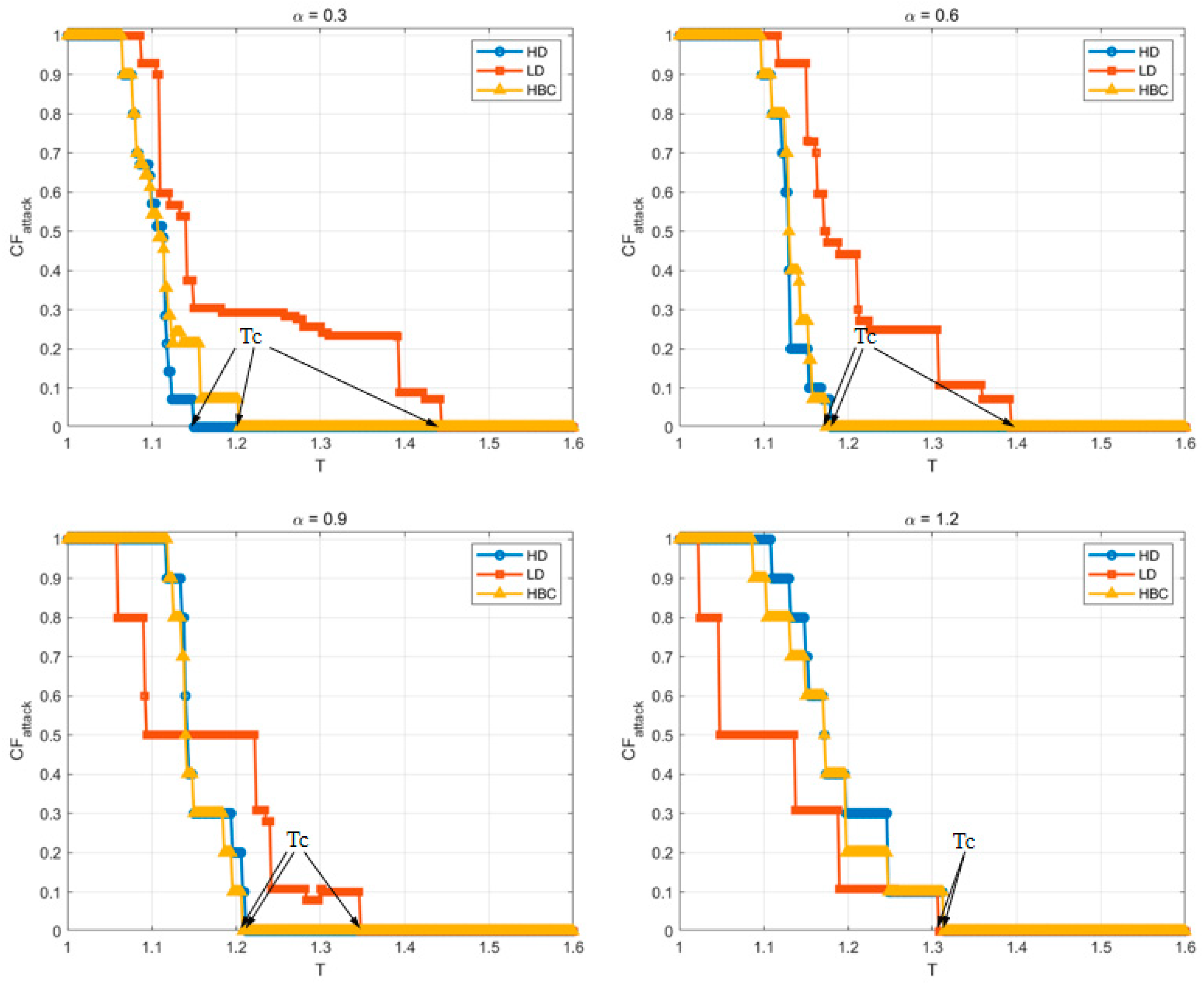
As previously mentioned, T c represents the critical threshold required to maintain the stability of the ecological network. According to Figure 5, when α < 1.2 , the lowest T c value occurs between HD and HBC attack strategies, while the highest T c value consistently corresponds to LD attack strategies. As a result, targeting low-degree nodes may initially lead to more severe network disruptions. Furthermore, as α increases, the T c value of LD gradually decreases, indicating that the consequences of attacking low-degree nodes will progressively diminish.
As shown in Figure 6, when α > 1.2 , the minimum T c value is observed in the LD scenario, indicating that the ecological network exhibits the highest resilience under attacks targeting low-degree nodes. The maximum T c values occur under the HD and HBC strategies, indicating that attacks on high-degree nodes or nodes with high betweenness centrality are more likely to cause severe cascading failures. Moreover, as α increases, the T c values under both HD and HBC strategies progressively rise, demonstrating that the detrimental effects of such attacks on network stability intensify with higher α values.
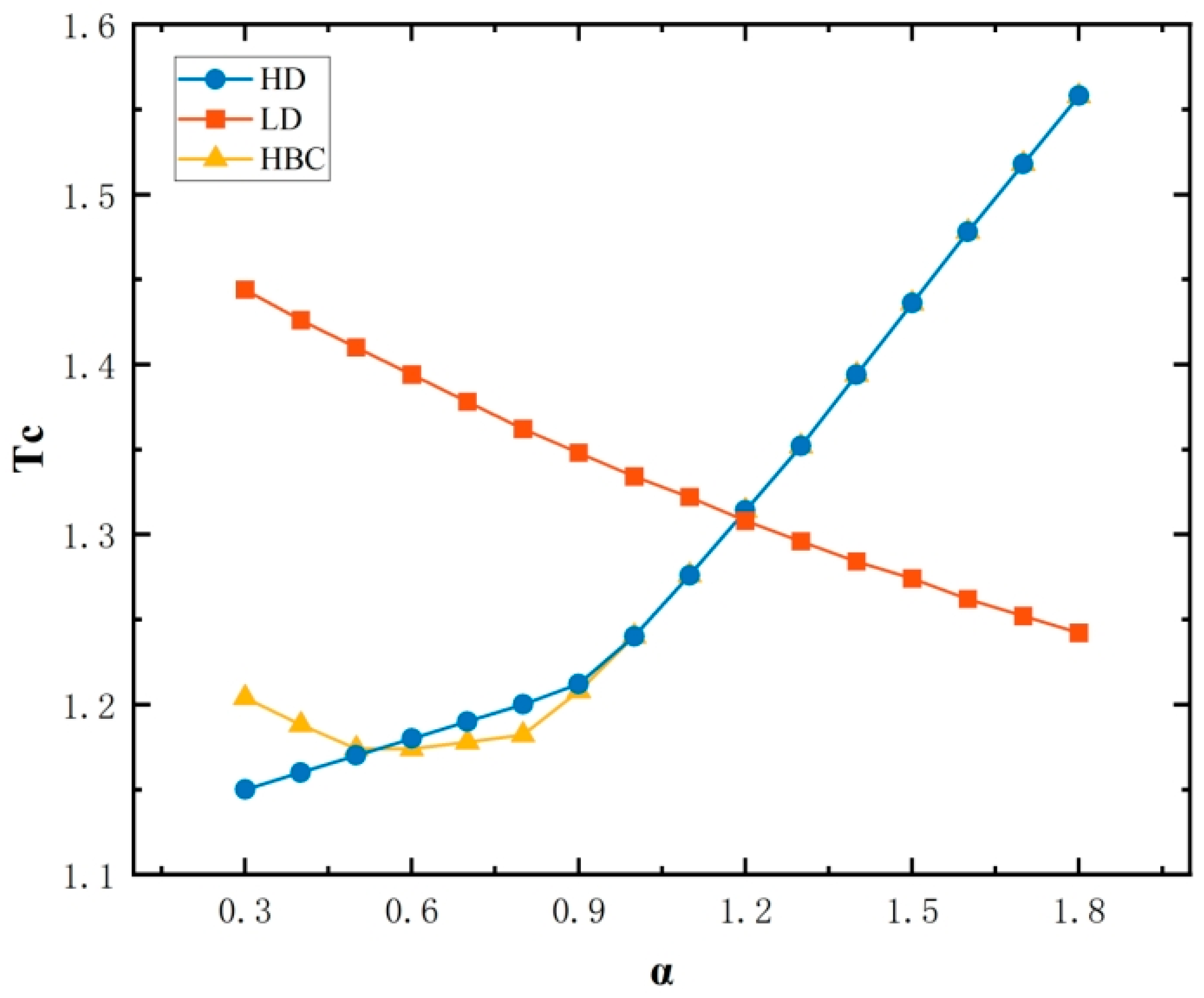
Further investigation was conducted on the relationship between the critical threshold T c and the adjustable parameter α under the three attack strategies. As shown in Figure 7, when α 1 , the T c values for the HD and HBC attack strategies are identical. At α = 1.2 , both HD /HBC and LD T c values are closely aligned, indicating that different attack strategies have little effect on the resilience of the ecological network.

4. Discussion

4.1. The Impact of Coal Mining Subsidence on Ecological Networks

Subsidence caused by mining activities exerts differential impacts on various node types within ecological networks. Relevant studies have shown that mining activities globally primarily impact ecological networks by reducing ecological functions and decreasing network connectivity [44]. In ecological networks, nodes with high-degree centrality and high betweenness centrality are typically positioned at key locations, serving the critical function of linking distinct ecological subnetworks. Research shows that these nodes include an artificial lake formed through the restoration of coal mining subsidence areas, along with the surrounding subsidence water areas, highlighting their continued role as essential bridges within the ecological network. However, the subsidence process not only compromises the ecological functions of these critical nodes but also potentially disrupts the connectivity and stability of the entire ecological network. In light of their central role in maintaining network integrity, degradation or loss of these nodes could significantly disrupt the flow of materials and energy across ecosystems. In contrast, low-degree nodes tend to consist of smaller, more isolated patches of coal mining subsidence areas, suggesting a more fragmented and dispersed impact of mining. The disruption of these peripheral nodes may have a limited effect on the overall network, but it can still impair local ecological functions, hinder species migration, and reduce ecosystem service reliability. The presence of scattered coal mining subsidence areas reflects the gradual encroachment of mining activities into marginal zones, a phenomenon that could progressively weaken network resilience over time. In general, the heterogeneous impacts of mining-induced subsidence are evident across different node types in mining-affected areas, highlighting the inherent vulnerability of ecological networks.

4.2. The Cascading Failure Process of Ecological Networks and “Dangerous Nodes”

In this study, ecological source areas are connected through corridors within the ecological network of the coal mining subsidence area with high groundwater levels. The overall connectivity and robustness of the network rely heavily on the presence of a few key source patches. When a source area fails due to human disturbance or environmental stress, its ecological functions are transferred to adjacent alternative source areas. A cascading effect may occur within the network if the load on a source patch exceeds its carrying capacity. Our findings are consistent with those of Xiang et al. [20]. We further incorporated the HBC strategy to examine failure behaviors across nodes with distinct topological properties. When α 1 , the T c values under HD and HBC attacks converge, indicating similar roles of these nodes in cascading propagation. This confirms the applicability of complex network theory to mining-area ecological networks and elucidates how attack strategies shape the identification of dangerous nodes.
To depict this process, we introduce the relationship between node load and capacity [43]. When a node i fails, its load will be distributed to its neighboring node j . The additional load that node j acquires from node i can be expressed as follows:
Δ L j i = L i k j α n Γ i k n α
To suppress the cascading effect at the first level, the neighboring node j must not exceed its capacity:
L j + Δ L j i C j
From this, it can be further deduced that
1 + L i β n Γ i k n α T
Therefore, whether the first layer fails or not depends on the critical threshold T c , which is independent of the specific neighboring nodes being impacted and only depends on T c ( i ) of node i .
T c i 1 + L i β n Γ i k n α = 1 + k i α n Γ i k n α
Therefore, the T c under various attack strategies is determined by the “most dangerous” node max i A T c ( i ) in the attack set. When α 1 , the load k i α of node i increases more rapidly. T c values for HD and HBC attacks are consistent because nodes with a high-degree exponent are considered “dangerous nodes”. These highly connected nodes often exhibit elevated betweenness centrality, rendering them susceptible to both HD and HBC attacks. Consequently, these two attack strategies may target the same “dangerous nodes,” resulting in their convergence. When α < 1 , the growth rate of k i α decelerates, resulting in a compression of the load disparity between high-degree and low-degree nodes. The risk associated with high-degree nodes is no longer excessively amplified, while the relative importance of low-degree nodes increases. Consequently, the HD strategy prioritizes nodes with high-degree indices, while the HBC strategy selects path hub nodes that may not always have high-degree indices. The divergence in their target sets leads to potential variations in max i A T c ( i ) . Additionally, the denominator n Γ i k n α in T c ( i ) is influenced by neighboring degrees. When α < 1 , neighbors with low degrees contribute to a reduction in local capacity, increasing the likelihood of localized failures. Consequently, the “dangerous nodes” under HD and HBC diverge, leading to inconsistent T c values.
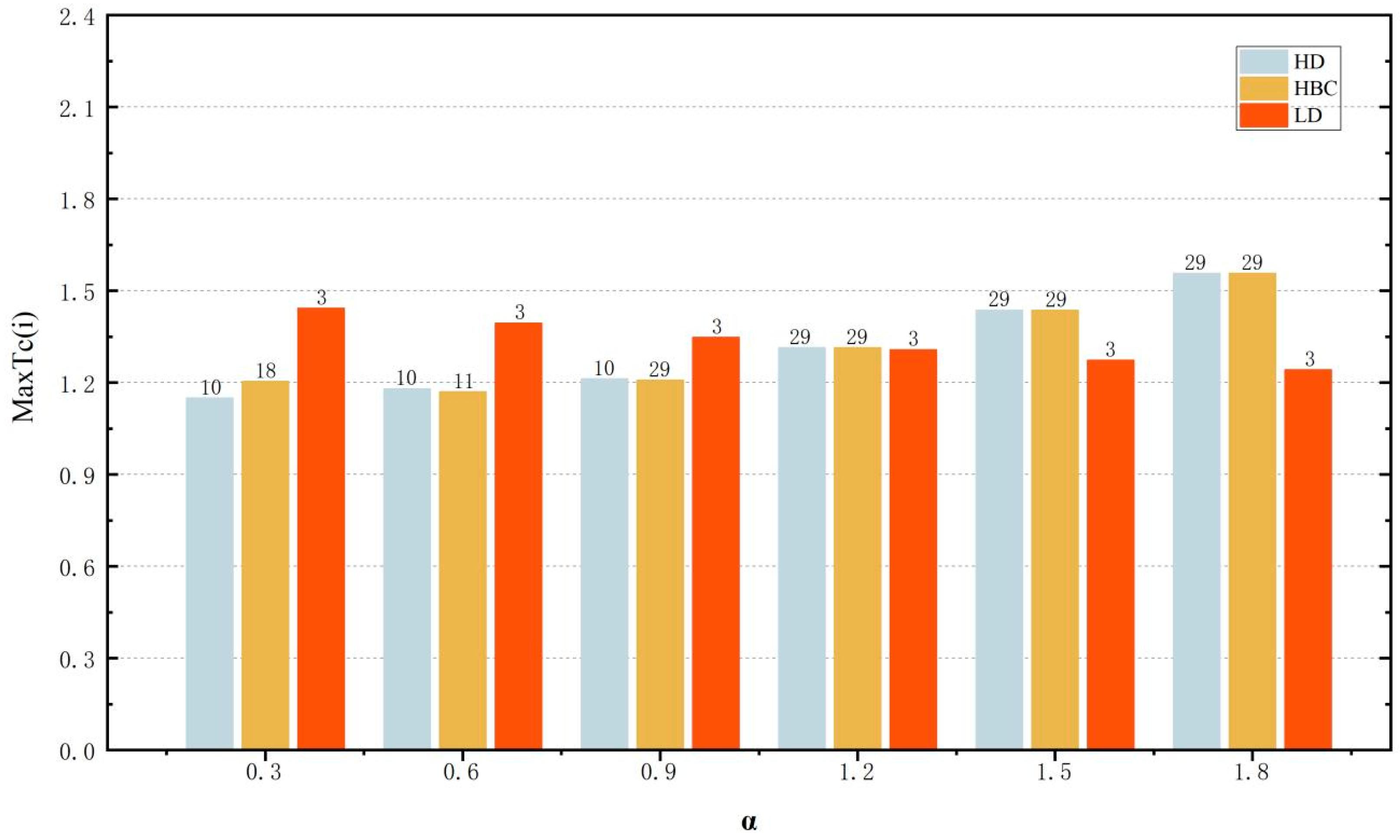
To validate this claim, we examined whether max i A T c ( i ) aligns with the T c values under three distinct attack strategies. Figure 8 shows the computed values of max i A T c ( i ) across various scenarios. A comparison with numerical results confirms that max i A T c ( i ) matches T c observed under each attack strategy, allowing the identification of corresponding “dangerous nodes.” The numbers in the histogram represent specific node identifiers. In the ecological network of coal mining subsidence areas with high groundwater levels, nodes correspond to ecological source areas, and edges represent ecological corridors. By spatially mapping these most dangerous nodes, we can precisely identify the most vulnerable yet critically important ecological source areas [28]. If such sources fail, neighboring corridors and adjacent sources will experience excessive ecological stress, leading to a sharp decline in the network’s overall connectivity. Consequently, the ecological source areas represented by these most dangerous nodes should be designated as priority conservation areas.

4.3. Implications for the Protection of Ecological Sources

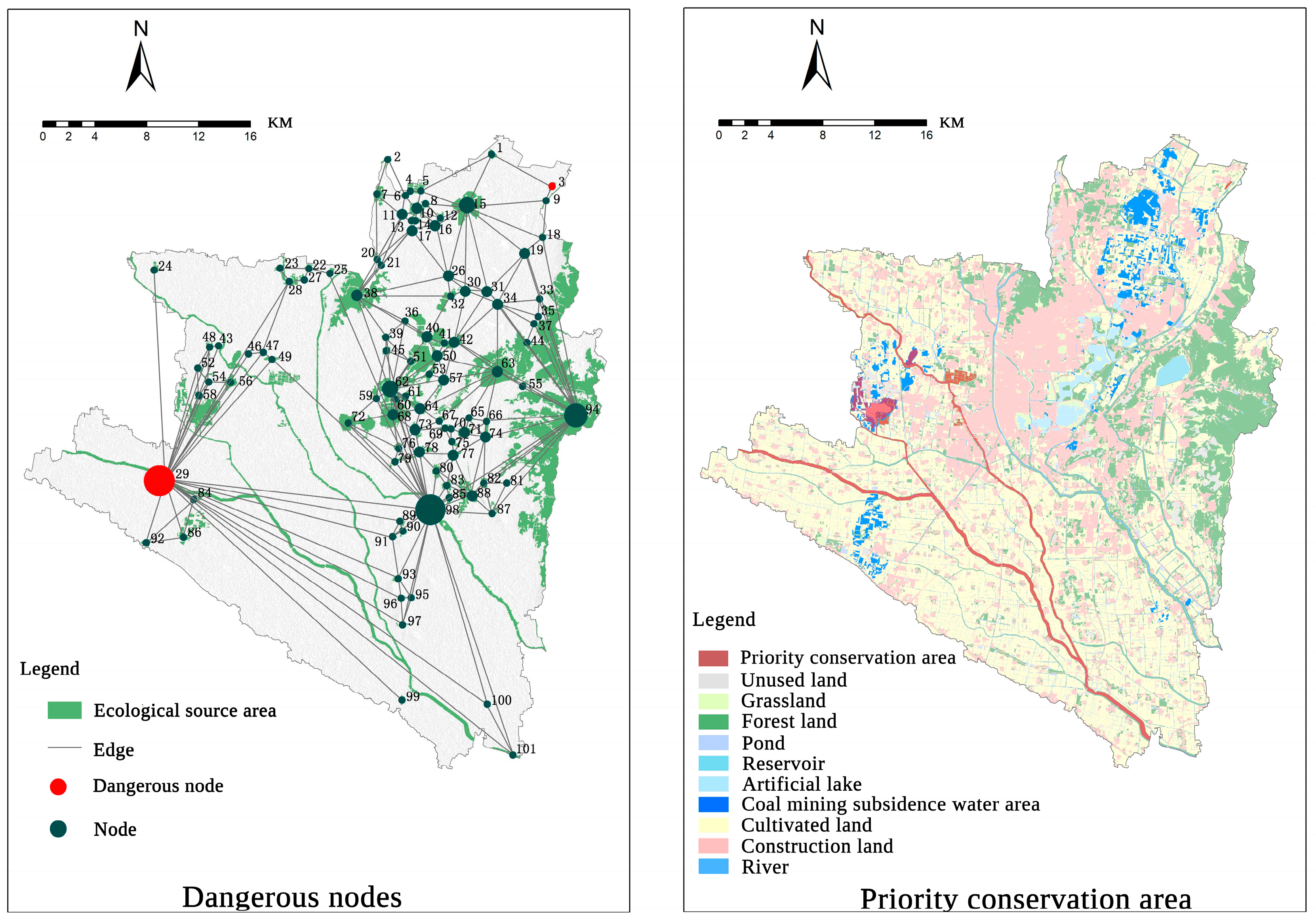
Based on the cascading failure model analysis, this study introduces the concept of “dangerous nodes” to identify ecological source areas that are the most critical, designating them as priority conservation areas. As shown in Figure 7 and Figure 8, there are significant differences in the distribution of “dangerous nodes” between the low-degree node attack scenario and those involving high-degree or high betweenness centrality nodes. When α < 1.2 , the network becomes increasingly dependent on low-degree nodes, making it crucial to focus on dangerous nodes within this group, especially node 3. In contrast, when α > 1.2 , the system becomes more sensitive to high-load nodes, highlighting the need to prioritize dangerous nodes among high-degree or high betweenness centrality nodes, particularly node 29. Consequently, the ecological source areas associated with node 3 under low α conditions and node 29 under high α conditions should be prioritized as priority conservation areas (Figure 9). Stabilizing critical nodes is crucial for preventing network collapse while safeguarding species movement and maintaining ecological flows. The main goal is to reduce the T c ( i ) values of these critical areas. Node 3 corresponds to a forest land within the area, surrounded primarily by construction land, cultivated land, and scattered forest land. There are only two corridors that connect it to source areas 1 and 9. Since surrounding urban development restricts material flow and species migration, this node is highly isolated, making it a dangerous node in the ecological network. Such isolation reduces species dispersal among habitat patches, increases the risk of local extinction, and ultimately undermines the long-term persistence of biodiversity. Given its low-degree index, reducing T c ( i ) by solely decreasing the numerator k i α is only partially effective. In order to improve its network position, it is necessary to increase the degree index of neighboring source areas or to establish new connections through nearby source areas. For example, connecting adjacent low-level source patches can enlarge forest and grassland areas, enhance vegetation cover, and improve biodiversity support and ecosystem service provision. In areas with weak or fragmented ecological networks, ecological restoration and vegetation recovery projects should be implemented to create small-scale ecological source areas, forming new connection points. In urbanized areas, integrating pocket parks and street green spaces into development planning can enhance local microclimates and provide supplementary habitats for diverse species. Controlling land-use intensity in adjacent areas further reduces connectivity loss driven by human disturbance.
The Node 29 ecological patch comprises the Wangyinhe River, the Xinbianhe River, and Fengxihu Lake. The two river corridors serve as high-flow ecological channels, facilitating hydrological processes and supporting the migration of species. Fengxihu Lake, a wetland formed by coal mining subsidence, functions as a core node for material and energy exchange. The integration of these components enables Node 29 to connect 23% of the source areas within the ecological network, making it a critical and irreplaceable part of the network. Functionally, these highly connected composite nodes play a critical role in sustaining regional species migration networks and maintaining wetland habitat integrity. They also serve as key structural components supporting long-term biodiversity persistence. The marginal benefit of adding new areas in practical planning is limited because of the large number of adjacent source areas. Thus, reducing the degree index of the existing connected source areas becomes particularly important. The priority should be given to selectively disconnecting the corridors linking protected source areas to neighboring low-degree areas. This approach aims to preserve the integrity of major ecological corridors, optimize network topology, and enhance system stability. River habitat management and the establishment of ecological buffer zones are essential components of regional conservation strategies. Strengthening wetland restoration and improving habitat quality can provide multi-level habitats for different functional groups and enhance regional biodiversity.

4.4. Limitations of the Study and Directions for Future Research

This study employs the cascading failure model to investigate the failure mechanisms of ecological networks under three distinct attack strategies. An analysis of the relationship between the HD and HBC strategies leads to the concept of “dangerous nodes,” a novel quantitative approach for preserving ecological resources and optimizing spatial patterns in coal mining subsidence areas with high groundwater levels. The load assigned to each node in the model is determined solely by its degree value, which reflects the relative importance of the source areas. Future improvements could incorporate the degree values of neighboring nodes to better capture structural heterogeneity. Furthermore, there remains potential for refining the model’s parameterization. Currently, load and capacity parameters are derived from topological indicators. To assess real-world performance, long-term field monitoring of ecological sources and on-site sampling surveys may enhance model validation.

5. Conclusions

This study uses a cascading failure model to simulate the dynamic responses of ecological networks under various attack strategies. We propose a comprehensive, step-by-step framework for ecological network updating, integrating “ecological source area identification, resistance surface construction, ecological corridor establishment, ecological network resilience assessment, and priority conservation area determination.” This framework offers novel insights for optimizing ecological networks and protecting critical regions. The main conclusions are as follows:
(1)
This study identifies 101 ecological source areas and establishes 255 ecological corridors. The ecological network exhibits a topological structure with few core nodes and many secondary nodes, reflecting the fragmented landscape typical of coal mining subsidence areas with high groundwater levels.
(2)
T c , serving as the network’s critical threshold, is determined by the critical nodes within the attack set.
(3)
When α < 1.2 , the network becomes increasingly reliant on low-degree nodes, the failure of which is more likely to trigger cascading failures; therefore, the structural vulnerability of these nodes requires special attention. In contrast, when α > 1.2 , the system becomes especially sensitive to high-load nodes and failures of nodes with a high centrality of betweenness significantly compromise network connectivity. Priority should be assigned to the protection of “dangerous nodes” under resource-constrained conditions. As a result, low-degree nodes correspond to forest land (node 3), while high-degree or high betweenness centrality nodes correspond to wetlands formed by coal mining subsidence and their surrounding rivers (node 29). Prioritizing the protection of these key nodes will enhance the resilience of the ecological network.

Author Contributions

Conceptualization, P.L. and S.Z.; methodology, Z.Z.; software, Z.Z.; validation, Z.Z. and Q.H.; formal analysis, S.Z.; resources, Z.Z. and Q.H.; writing—original draft preparation, Z.Z. and S.Z.; visualization, Z.Z.; project administration, P.L. All authors have read and agreed to the published version of the manuscript.

Funding

This research was funded by the National Natural Science Foundation of China, Grant/Award Number: 52208091, 52378082.

Data Availability Statement

The data presented in this study are available on request from the authors. The data are not publicly available due to privacy restrictions.

Acknowledgments

We would like to thank the reviewers for their constructive comments on this paper.

Conflicts of Interest

The authors declare no conflicts of interest.

References

  1. Fischer, J.; Riechers, M.; Loos, J.; Martin-Lopez, B.; Temperton, V.M. Making the UN Decade on Ecosystem Restoration a Social-Ecological Endeavour. Trends Ecol. Evol. 2021, 36, 20–28. [Google Scholar] [CrossRef]
  2. Chen, W.; Xiao, W.; He, T.; Ruan, L.; Zhao, Y.; Hu, Z. Quantify the extensive crop damage and grain losses caused by underground coal mining subsidence in eastern China. J. Clean. Prod. 2024, 469, 143204. [Google Scholar] [CrossRef]
  3. Wang, S.; Zhao, Y.; Ren, H.; Zhu, S. Stepwise Construction and Integration of Ecological Network in Resource-Based Regions: A Case Study on Liaoning Province, China. Remote Sens. 2024, 16, 3228. [Google Scholar] [CrossRef]
  4. Li, G.; Fang, C.; Li, Y.; Wang, Z.; Sun, S.; He, S.; Qi, W.; Bao, C.; Ma, H.; Fan, Y.; et al. Global impacts of future urban expansion on terrestrial vertebrate diversity. Nat. Commun. 2022, 13, 1628. [Google Scholar] [CrossRef]
  5. Liu, H.; Zhu, X.; Cheng, H.; Su, L.; Dai, L.; Zheng, L.; Fang, S.; Jiang, C.; Zhang, Q.; Sun, Q.; et al. Key technology of human environment and ecological reconstruction in high submersible level coal mining subsidence area: A case study from Lüjin Lake, Huaibei. J. China Coal Soc. 2021, 46, 4021–4032. [Google Scholar] [CrossRef]
  6. Zhang, K.; Liu, S.; Bai, L.; Cao, Y.; Yan, Z. Effects of Underground Mining on Soil–Vegetation System: A Case Study of Different Subsidence Areas. Ecosyst. Health Sustain. 2023, 9, 0122. [Google Scholar] [CrossRef]
  7. Hüse, B.; Szabó, S.; Deák, B.; Tóthmérész, B. Mapping an ecological network of green habitat patches and their role in maintaining urban biodiversity in and around Debrecen city (Eastern Hungary). Land Use Policy 2016, 57, 574–581. [Google Scholar] [CrossRef]
  8. Zhang, F.; Liu, X.; Jia, Y. Construction and evolution of river basin ecological network based on circuit theory and MSPA: A case study of Dawen River Basin. Ecol. Model. 2025, 510, 111364. [Google Scholar] [CrossRef]
  9. Vogt, P.; Riitters, K.H.; Iwanowski, M.; Estreguil, C.; Kozak, J.; Soille, P. Mapping landscape corridors. Ecol. Indic. 2007, 7, 481–488. [Google Scholar] [CrossRef]
  10. Li, T.; Li, M.; Liang, J.; Li, D.; Huang, X.; Liu, Q. Optimizing ecological networks for rare and endangered Plants: An integration of complex network analysis and circuit theory. J. Environ. Manag. 2025, 393, 127206. [Google Scholar] [CrossRef]
  11. Wei, S.; Yu, T.; Ji, P.; Xiao, Y.; Li, X.; Zhang, N.; Liu, Z. Analysis on Ecological Network Pattern Changes in the Pearl River Delta Forest Urban Agglomeration from 2000 to 2020. Remote Sens. 2024, 16, 3800. [Google Scholar] [CrossRef]
  12. Kim, J.; Song, Y. Integrating ecosystem services and ecological connectivity to prioritize spatial conservation on Jeju Island, South Korea. Landsc. Urban Plan. 2023, 239, 104865. [Google Scholar] [CrossRef]
  13. Peng, J.; Yang, Y.; Liu, Y.; Hu, Y.n.; Du, Y.; Meersmans, J.; Qiu, S. Linking ecosystem services and circuit theory to identify ecological security patterns. Sci. Total Environ. 2018, 644, 781–790. [Google Scholar] [CrossRef] [PubMed]
  14. Zhang, L.; Chai, B.; Zhang, Y.; He, W.; Tan, X. A comparative study on ecological networks based on Gravity model and circuit theory: A case study of Jinning City. Acta Ecol. Sin. 2025, 45, 1684–1696. [Google Scholar] [CrossRef]
  15. McRae, B.H.; Beier, P. Circuit theory predicts gene flow in plant and animal populations. Proc. Natl. Acad. Sci. USA 2007, 104, 19885–19890. [Google Scholar] [CrossRef]
  16. Hale, K.R.S.; Valdovinos, F.S.; Martinez, N.D. Mutualism increases diversity, stability, and function of multiplex networks that integrate pollinators into food webs. Nat. Commun. 2020, 11, 2182. [Google Scholar] [CrossRef]
  17. Sun, H.; Yin, H.; Kong, F.; Shen, Z.; Su, J. Integrating the functions and structures to assess ecological network sustainability under climate change scenarios. Landsc. Ecol. 2024, 39, 20. [Google Scholar] [CrossRef]
  18. Zhang, H.; Lin, S.; Yu, Q.; Gao, G.; Xu, C.; Huang, H. A Novel Forest EcoSpatial Network for Carbon Stocking Using Complex Network Theory in the Yellow River Basin. Remote Sens. 2023, 15, 2612. [Google Scholar] [CrossRef]
  19. Lu, Z.; Li, W.; Zhou, S. Constructing a resilient ecological network by considering source stability in the largest Chinese urban agglomeration. J. Environ. Manag. 2023, 328, 116989. [Google Scholar] [CrossRef]
  20. Xiang, Q.; Yu, H.; Huang, H.; Li, F.; Ju, L.; Hu, W.; Yu, P.; Deng, Z.; Chen, Y. Assessing the resilience of complex ecological spatial networks using a cascading failure model. J. Clean. Prod. 2024, 434, 140014. [Google Scholar] [CrossRef]
  21. Andersona, M.G.; Clarka, M.; Oliveroa, A.P.; Barnettb, A.R.; Hallc, K.R.; Cornettd, M.W.; Ahleringe, M.; Schindelf, M.; Unnaschg, B.; Schlossh, C.; et al. A resilient and connected network of sites to sustain biodiversity under a changing climate. Proc. Natl. Acad. Sci. USA 2023, 120, e2204434119. [Google Scholar] [CrossRef]
  22. Fu, X.; Tian, M.; Liu, X.; Wu, S.; Peng, R. Cascading failure resilience of dual-layer supply chain networks under enterprise competition with incomplete information. Reliab. Eng. Syst. Saf. 2026, 266, 111735. [Google Scholar] [CrossRef]
  23. Zhao, B.; Wang, M.; Zhang, Q.; Lin, W.; Zhou, D. Research on the Robustness of Command and Control Networks under Cascading Failures. Electronics 2024, 13, 3992. [Google Scholar] [CrossRef]
  24. Gharebaghi, S.; Chaudhuri, N.R.; He, T.; La Porta, T. An approach for fast cascading failure simulation in dynamic models of power systems. Appl. Energy 2023, 332, 120534. [Google Scholar] [CrossRef]
  25. Tian, W.; Huang, X.; Shao, L.; Wang, Z.; Li, Y. Assessment and evolution analysis of the global wood pulp trade network resilience based on underload cascading failure. J. Clean. Prod. 2025, 518, 145742. [Google Scholar] [CrossRef]
  26. Shen, Y.; Yang, H.; Ren, G.; Ran, B. Model cascading overload failure and dynamic vulnerability analysis of facility network of metro station. Reliab. Eng. Syst. Saf. 2024, 242, 109711. [Google Scholar] [CrossRef]
  27. Lu, Q.-C.; Li, J.; Xu, P.-C.; Zhang, L.; Cui, X. Modeling cascading failures of urban rail transit network based on passenger spatiotemporal heterogeneity. Reliab. Eng. Syst. Saf. 2024, 242, 109726. [Google Scholar] [CrossRef]
  28. Dang, H.; Bai, J.; Lü, Y.; Li, J. The cascade failure model under ecological network is effective for quantifying the resilience of urban regions. Sustain. Cities Soc. 2024, 114, 105749. [Google Scholar] [CrossRef]
  29. Jiang, H.; Peng, J.; Liu, M.; Dong, J.; Ma, C. Integrating patch stability and network connectivity to optimize ecological security pattern. Landsc. Ecol. 2024, 39, 54. [Google Scholar] [CrossRef]
  30. Li, Z.; Chang, J.; Li, C.; Gu, S. Ecological Restoration and Protection of National Land Space in Coal Resource-Based Cities from the Perspective of Ecological Security Pattern: A Case Study in Huaibei City, China. Land 2023, 12, 442. [Google Scholar] [CrossRef]
  31. Luo, J.; Fu, H. Construct the future wetland ecological security pattern with multi-scenario simulation. Ecol. Indic. 2023, 153, 110473. [Google Scholar] [CrossRef]
  32. Dang, H.; Lü, Y.; Guo, J.; Wu, X. Identifying priority conservation areas in regional ecological networks using attack scenario simulation. Glob. Ecol. Conserv. 2023, 46, e02602. [Google Scholar] [CrossRef]
  33. Zhao, J.; Yu, Q.; Xu, C.; Ma, J.; Liu, W.; Sun, W.; Miao, Y.; Nawaz, T. Integrated approach for ecological restoration and ecological spatial network optimization with multiple ecosystem functions in mining areas. Ecol. Indic. 2023, 156, 111141. [Google Scholar] [CrossRef]
  34. Wang, X.; Wan, R.; Pan, P. Construction and adjustment of ecologicals ecurity pattern based on MSPA-MCR Model in Taihu Lake Basin. Acta Cologica Sin. 2022, 42, 1968–1980. [Google Scholar] [CrossRef]
  35. Zhou, S.; Zhang, Z.; Luo, P.; Hou, Q.; Sun, X. Constructing Ecological Security Patterns in Coal Mining Subsidence Areas with High Groundwater Levels Based on Scenario Simulation. Land 2025, 14, 1539. [Google Scholar] [CrossRef]
  36. Luo, X.; Le, F.; Zhang, Y.; Zhang, H.; Zhai, J.; Luo, Y. Multi-scenario analysis and optimization strategy of ecological security pattern in the Weihe river basin. J. Environ. Manag. 2024, 366, 121813. [Google Scholar] [CrossRef]
  37. Sun, X.; Lian, A.; Wang, Z.; Cai, Y.; Dong, R. Structural, functional, and resilience dynamics of ecological networks in the Guangdong-Hong Kong-Macao Greater Bay Area: Impacts of climate and urbanization. J. Environ. Manag. 2025, 393, 126990. [Google Scholar] [CrossRef]
  38. Peterman, W.E.; Winiarski, K.J.; Moore, C.E.; Carvalho, C.d.S.; Gilbert, A.L.; Spear, S.F. A comparison of popular approaches to optimize landscape resistance surfaces. Landsc. Ecol. 2019, 34, 2197–2208. [Google Scholar] [CrossRef]
  39. Zhang, Y.; Yin, X.; Li, Y.; Wei, J.; Wang, H.; Yu, P.; Chen, Y. Evaluating ecological redline policies: Integrating multi-scenario land use simulation with ecological network analysis. Ecol. Model. 2025, 510, 111357. [Google Scholar] [CrossRef]
  40. Chen, W.; Liu, H.; Wang, J. Construction and optimization of regional ecological security patterns based on MSPA-MCR-GA Model: A case study of Dongting Lake Basin in China. Ecol. Indic. 2024, 165, 112169. [Google Scholar] [CrossRef]
  41. Guo, Z.; Zhu, C.; Fan, X.; Li, M.; Xu, N.; Yuan, Y.; Guan, Y.; Lyu, C.; Bai, Z. Analysis of ecological network evolution in an ecological restoration area with the MSPA-MCR model: A case study from Ningwu County, China. Ecol. Indic. 2025, 170, 113067. [Google Scholar] [CrossRef]
  42. AHDARC. Work Plan for Accelerating the Resolution of Outstanding Issues in Comprehensive Governance of Coal Mining Subsidence Areas. Available online: https://www.lieshan.gov.cn/zwgk/public/192/64530506.html (accessed on 10 June 2025).
  43. Wang, J.-W.; Rong, L.-L. Cascade-based attack vulnerability on the US power grid. Saf. Sci. 2009, 47, 1332–1336. [Google Scholar] [CrossRef]
  44. Zhang, W.; Jiang, Z.; Dai, H.; Lin, G.; Liu, K.; Yan, R.; Zhu, Y. Modelling Multi-Scenario Ecological Network Patterns and Dynamic Spatial Conservation Priorities in Mining Areas. Land 2024, 13, 1065. [Google Scholar] [CrossRef]
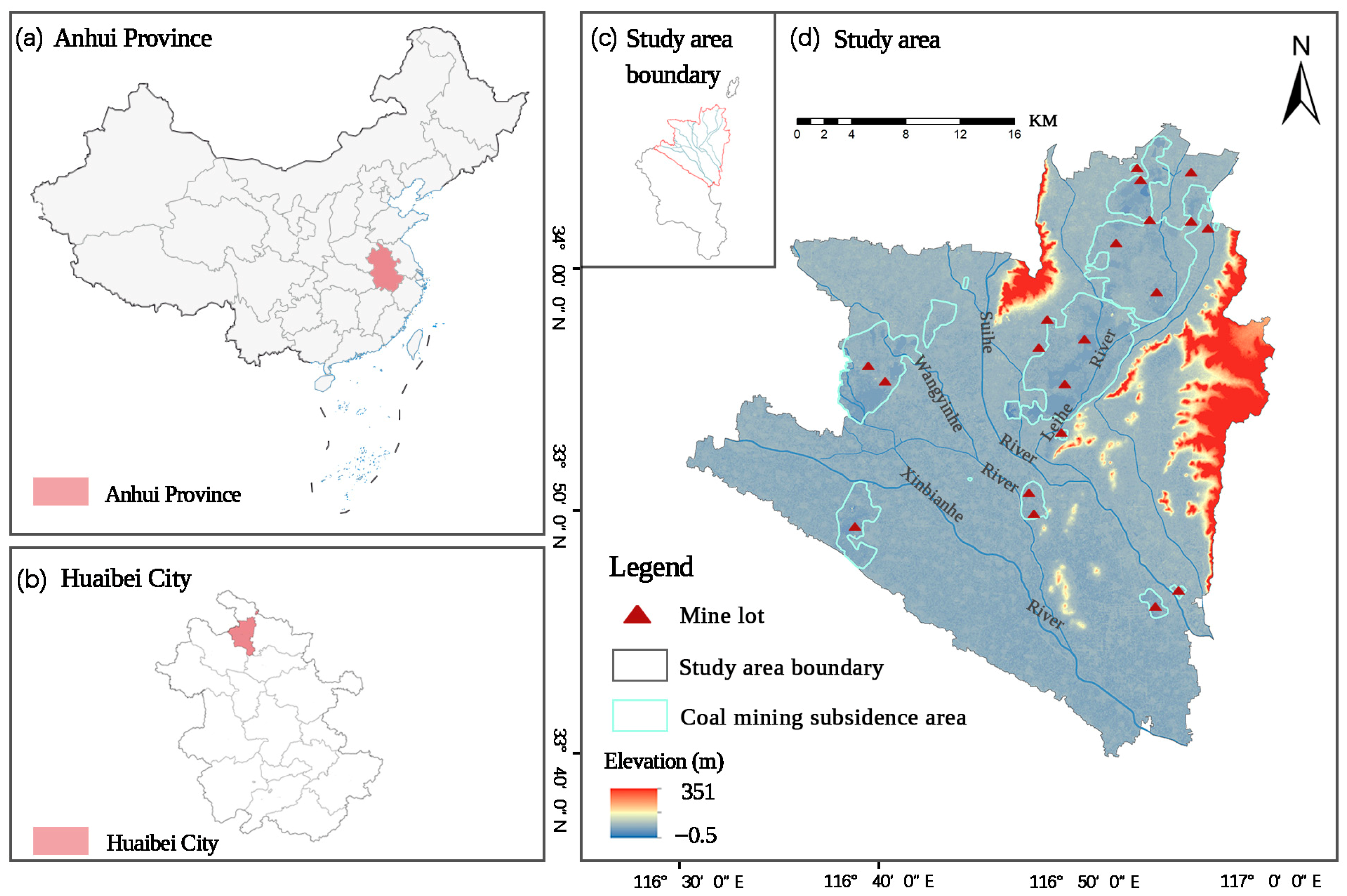
Figure 1. Research location.
Land 15 00391 g001
Figure 2. Research framework.
Land 15 00391 g002
Figure 3. Ecological network.
Land 15 00391 g003
Figure 4. Attack Strategy.
Land 15 00391 g004
Figure 5. Comparison of three attack strategies on networks under the condition of α < 1.2 .
Land 15 00391 g005
Figure 6. Comparison of three attack strategies on networks under the condition of α > 1.2 .
Land 15 00391 g006
Figure 7. Relation between the critical threshold T c and the parameter α under three attacks.
Land 15 00391 g007
Figure 8. max i A T c ( i ) values under each strategy.
Land 15 00391 g008
Figure 9. Priority conservation areas.
Land 15 00391 g009
Table 1. Data types and sources.
DataYearDate SourcesRelated Uses
Land use type2022Geospatial Data Cloud (http://www.gscloud.cn)LUCC and resistance factor
DEM2022Alaska Satellite Facility (https://search.asf.alaska.edu)Resistance factor
Slope2022Alaska Satellite Facility (https://search.asf.alaska.edu)Resistance factor
Distance to river2022OpenStreetMap (https://www.openstreetmap.org)Resistance factor
Vegetation coverage2022Geospatial Data Cloud (http://www.gscloud.cn)Resistance factor
Distance to built-up area2022Geospatial Data Cloud (http://www.gscloud.cn)Resistance factor
Distance to main road2022Resources and Environmental Science Data Center, Institute of Geographic Sciences and Natural Resources Research, Chinese Academy of Sciences (http://www.resdc.cn)Resistance factor
Subsidence depth2022Huaibei Bureau of Natural Resources and PlanningResistance factor
Distance to coal mining subsidence area2022Huaibei Bureau of Natural Resources and PlanningResistance factor
Table 2. Resistance values and weights of resistance factors.
Resistance FactorsResistance ValuesUnitWeights
1255075100
DEM−0.5–16
21–42
42–8316–21
83–135
135–200>200m0.056
Slope0–33–77–1313–22>22°0.054
Land use typeWater, forest landGrasslandCultivated landUnused landConstruction land/0.304
Distance to river0–10001000–15001500–30003000–5000>5000m0.104
Vegetation coverage0.8–10.6–0.80.4–0.60.2–0.40–0.2/0.099
Distance to built-up area>40003000–40002000–30001000–20000–1000m0.033
Distance to main road>40003000–40002000–30001000–20000–1000m0.033
Subsidence depth0–200
>1500
200–500 500–1500mm0.213
Distance to coal mining subsidence area>75755160–75753077–51601231–30770–1231m0.104
Disclaimer/Publisher’s Note: The statements, opinions and data contained in all publications are solely those of the individual author(s) and contributor(s) and not of MDPI and/or the editor(s). MDPI and/or the editor(s) disclaim responsibility for any injury to people or property resulting from any ideas, methods, instructions or products referred to in the content.