Review

Feeding the Future: Food Security, Fertilizer Dependence, and Climate Change in Brazil


by
Thiago Assis Rodrigues Nogueira
1,*,
Rodrigo Silva Alves
1,
Nilton Eugénio Mário
1,
Angel Camurça da Silva
1,
Franco Monici Fabrino
1,
Paulo Paschoalotto Marques
1,
Aline Renée Coscione
2,
Arun Dilipkumar Jani
3 and
Gian Franco Capra
4
1
Department of Soil Science, School of Agricultural and Veterinary Sciences, São Paulo State University, Via de Acesso Prof. Paulo Donato Castellane s/n, Jaboticabal 14884-900, SP, Brazil
2
Center of Soils Fertilizer Research, Institute Agronomic Campinas, São Paulo State, Av. Barão de Itapura, 1481-Botafogo, Campinas 13075-630, SP, Brazil
3
Department of Biology, Agriculture, and Chemistry, California State University, Monterey Bay, Seaside, CA 93955, USA
4
Department of Architecture, Design, and Urban Planning, University of Sassari, Bionaturalistic Campus, Via Piandanna No. 4, 07100 Sassari, Italy
*
Author to whom correspondence should be addressed.
Land 2026, 15(3), 382; https://doi.org/10.3390/land15030382
Submission received: 26 January 2026 / Revised: 20 February 2026 / Accepted: 25 February 2026 / Published: 27 February 2026
(This article belongs to the Section Land, Soil and Water)

Abstract

The world’s population faces serious challenges related to food security, particularly in the agribusiness sector, as it grapples with dependence on mineral fertilizers in key producing regions, susceptible to tariff policy fluctuations and wars, amid climate change and population growth, despite increased food production enabled by new technologies and management practices. This narrative review synthesizes evidence on the main challenges to food security in Brazil, with emphasis on how agricultural production, land use, and mineral fertilizer dependence interact under global climate change. We employed comprehensive literature review methods and analyzed data from national and international agencies to compile relevant information on the influence of this scenario on agricultural production, providing an overview of the topic to understand trends and future projections of these challenges. The results revealed significant vulnerabilities in the sector, especially concerning reliance on imported mineral fertilizers to meet its full demand. In 2024, Brazil imported approximately 90% of the mineral fertilizers used in its agricultural sector, which heightens exposure to geopolitical and market shocks. Moreover, climate change also negatively impacts agriculture, raising production costs and prices of staple foods, thereby exacerbating food insecurity. Therefore, improving fertilizer use efficiency and adopting alternative fertilization sources, combined with conservation practices, represent key strategies to mitigate food insecurity. Among these strategies, reducing import dependence through improved fertilizer use efficiency emerges as the most immediately actionable priority, as it could reduce current demand by 20–30% within 5 years. This should be complemented by medium-term investments in alternative fertilizer sources and long-term climate adaptation measures. These actions can also support the promotion of sustainable development goals aligned with the United Nations’ 2030 Agenda. Aligning fertilizer strategies with climate-smart and low-carbon agriculture policies could simultaneously reduce greenhouse gas emissions and enhance the resilience of food systems.

1. Introduction

The world population reached 8.2 billion in 2024, according to the “World Population Prospects 2025” report published by the United Nations (UN) Population Division. The document provides a comprehensive overview of global demographic patterns and prospects [1]. It is estimated that the world population will reach its peak around the end of this century, hitting about 10.3 billion people in 2080 [1,2,3]. Considering this, authors such as Pantano et al. [4] and Gumber [5] argue that increasing food production is necessary to minimize food security issues. However, the FAO reminds us that the world already produces enough food for about 10 billion people [6]. This contrast between aggregate sufficiency and persistent hunger underscores that food insecurity is less a problem of global production than of unequal access, distribution, and vulnerability to shocks. In Brazil, this gap is also shaped by logistical and economic constraints that limit the conversion of national output into domestic food access. Export-oriented production systems, infrastructure bottlenecks, and disparities in purchasing power reduce the availability of food for vulnerable populations despite high aggregate production.
Brazil’s agricultural system is strongly export-oriented, with soybeans, coffee, and sugar being among its leading commodities in international trade. This outward orientation increases foreign exchange revenues but also intensifies dependence on external inputs, particularly mineral fertilizers, of which Brazil imports more than 90% of its domestic demand [7]. As a result, disruptions in global fertilizer markets directly affect production costs, yields, and export. Given Brazil’s substantial share in global commodities, any contraction in its agricultural output may transmit shocks to international food markets, thereby affecting global food security.
In Brazil, Law No. 11,346/2006, Article 3, defines food and nutrition security as the right of everyone to regular and permanent access to quality food in sufficient quantities, without compromising other essential needs. This includes healthy eating practices that respect cultural diversity and are environmentally, economically, and socially sustainable [8,9]. At the global level, food security is commonly structured around four interdependent pillars, i.e., availability, access, utilization, and stability, which are all relevant for interpreting the Brazilian case [10]. Nevertheless, around 8.7 million Brazilians were still experiencing severe food and nutritional insecurity in 2023, representing 4.1% of the Brazilian population [11]. This figure is particularly alarming given that Brazil is the world’s third-largest food producer. The situation is projected to worsen significantly due to the convergence of three critical factors: (i) mineral fertilizer import dependency, which exposes the country to geopolitical volatility (exemplified) by the 2022 Ukraine-Russia war impact on global fertilizer markets [12,13,14]); (ii) accelerating climate change, with El Niño /La Niña cycles becoming more frequent and intense [15,16]; and (iii) the cascading effect of reduced agricultural production on food prices, disproportionately affecting vulnerable populations who spend 40–60% of their income on food [17]. This convergence creates a ‘perfect’ storm scenario that demands immediate scientific attention and policy intervention. Conversely, according to future projections, agricultural production in Brazil is expected to continue increasing in the coming decades [18].
Brazil’s grain production is expected to reach 354.8 million tons in the 2025/26 harvest. This result represents a 0.8% increase compared with the previous period, equivalent to a rise of 2.9 million tons [13]. However, adverse climatic conditions in Brazil, mainly influenced by phenomena such as “El Niño 23–24” [15], followed by “La Niña 24–25” [16], and the projected “La Niña 25–26” [19], generate uncertainty and negatively impact the country’s main agricultural regions. In this context, climate instability may cause significant crop yield losses, thereby reducing supplies of several agricultural commodities [13,20,21,22,23]. Brazil is not merely one of the leading players in the international agribusiness market, it is a critical node in global food security. Brazil accounts for approximately 39% of global soybean production, 38% of global coffee production, and 22% of global sugar production [24,25]. Therefore, Brazil is not merely a major exporter but a structural pillar of global commodity supply. Disruptions in its production capacity rapidly propagate through international trade networks, influencing prices, trade balances, and food access in importing regions. Disruptions to Brazilian agricultural output have immediate ripple effects: for example, the 2023 drought in the Cerrado reduced coffee production by 30%, contributing to a 25% increase in global coffee prices within six months. Such price volatility directly impacts food security not only in Brazil but in importing nations, particularly in Africa and Asia, where food represents 50–70% of household expenditure [24,25]. Therefore, understanding and addressing Brazil’s agricultural vulnerabilities is not a regional concern but a global imperative [26,27,28].
The 193 member countries of the United Nations, including Brazil, have committed to working toward fulfilling several established international agreements, such as the Hague Convention on Food [29], the Paris Agreement, and the Glasgow Climate Pact [30,31], among other commitments aligned with the 17 Sustainable Development Goals (SDGs) of the UN 2030 Agenda. Notably, these include SDG 2 “Zero Hunger and Sustainable Agriculture,” SDG 12 “Responsible Consumption and Production,” SDG 13 “Climate Action,” and SDG 15 “Life on Land” [32].
Despite the growing body of literature on Brazilian food security, existing studies primarily focus on fertilizer dependency and climate change impacts separately. There is still a lack of systematic analyses that integrate these dimensions and assess their synergistic effects on agricultural production and food security. Moreover, regional heterogeneity within Brazil, particularly differences between the Cerrado, a major export-oriented grain frontier, and the Amazon region, characterized by distinct land use dynamics and environmental constraints, remains insufficiently explored.
Based on these gaps, this review aims to explore the transmission pathway of Brazil’s food security vulnerability through three interconnected dimensions: (i) the supply side (agricultural output and land use dynamics), (ii) the input side (dependence on mineral fertilizers), and (iii) the risk side (climate variability and extreme events). By integrating these three dimensions, this study seeks to provide a more operational and comprehensive understanding of how structural dependencies and climatic risks interact to shape Brazil’s food security trajectory and its implications for global food systems.

2. Materials and Methods

2.1. Literature Search Strategy

The search was conducted between March and December 2025 using leading scientific databases, including Scopus, Web of Science Core Collection, ScienceDirect, and SciELO, as well as targeted searches in Google Scholar.
The search strategy was based on combinations of controlled vocabulary terms and free-text terms associated with food security, fertilizer production and use, climate change, and Brazilian agribusiness (e.g., “food security”, “fertilizer use”, “organic fertilizers”, “climate change”, “Brazilian agriculture”, etc.). Boolean operators and field restrictions were used to narrow the search and minimize redundancy. Examples of typical search strings include: (“food security” OR “food insecurity”) AND (“fertilizer” OR “mineral fertilizer*” OR “NPK”) AND (“climate change” OR “global warming”), adapted to the syntax of each database. For databases that permit it, filters were applied to limit results to peer-reviewed journal articles, books or book chapters, and official reports. No restrictions on publication year were initially placed to allow both foundational and current research to be captured.

2.2. Eligibility Criteria and Study Selection

Prior to conducting the search, inclusion/exclusion criteria were established to assure that only relevant and methodologically sound sources would be retained. Studies and documents were included if they: (i) dealt with at least one of the thematic axes identified as: food security or food insecurity, fertilizer production or use (mineral, organomineral, or organic), climate change impacts on agriculture, or policies and governance related to these themes; (ii) contained empirical data, quantitative or qualitative analyses, modeling, or systematic/scoping reviews; and (iii) were either set in Brazil or provided global or regional assessments that had explicit implications for Brazil. Official statistics and technical documents from national and international agencies (e.g., FAO, FAOSTAT, IBGE, CONAB, IPCC, OECD–FAO, SEEG, ANDA, Brazilian ministries, and specialized councils) were considered as the primary reference data sources for production levels, fertilizer flows, greenhouse gas emissions, and socio-economic indicators. When multiple sources provided conflicting data (e.g., production estimates from CONAB vs. FAOSTAT), priority was given to official Brazilian government sources (CONAB, IBGE) for domestic data, while international sources (FAO, OECD) were used for global comparisons. Any significant discrepancies between sources were noted in the text.
Exclusion criteria consisted of: (i) publications that lacked full-text availability; (ii) opinion articles, news articles, or non-technical commentary that did not contain sufficient methodological detail to support evaluation; (iii) localized case studies that were highly particularized and whose results could not be meaningfully generalized or aggregated to support the national-scale discussion; (iv) studies focusing on single crops or single regions without national-scale implications; (v) publications that did not address at least two of the four core dimensions (food security, fertilizer use, climate change, policy); and (vi) studies published before 2010, except for seminal works establishing theoretical frameworks. Duplicate references retrieved through different databases were evaluated based on completeness and currency, with preference being given to the most current and complete versions (e.g., journal articles were preferred over conference abstracts that reported similar results). Study selection occurred in two phases: first, titles and abstracts were screened to exclude obviously irrelevant entries; second, the full texts of all remaining entries were evaluated for borderline cases and for all entries that had been designated as potentially eligible.

2.3. Data Extraction and Thematic Organization

For each entry that met the selection criteria, the following information was systematically extracted into structured spreadsheets: bibliographic data (authors, year, journal or institution), geographic scope, methodologic approach, key variables analyzed, and major findings related to one or more of the four core dimensions (food security, fertilizer dependence and use, climate drivers and impacts, and policy/governance instruments). For official statistics and institutional reports, additional fields documented the time range covered by the data, the spatial extent of the data (e.g., national, regional, or global with Brazilian disaggregation), and the type of indicator documented (e.g., production volume, trade flows, fertilizer application rates, emissions inventories, or socio-economic metrics).
The extracted data were then grouped into three major axes corresponding to the organization of the review: (i) how agricultural production influences food security; (ii) the impact of fertilizers on food security; and (iii) the effect of climate change on food production. A thematic coding scheme was then applied to each axis to organize evidence into subtopics (e.g., grain and horticultural production trends, family farming and subsistence crops, fertilizer import dependency and price volatility, alternative fertilizers [e.g., manure, sewage sludge, biofertilizers], and climate-related stressors [e.g., droughts, extreme weather events, emissions trends]). Using this thematic organization, it was possible to compare evidence across different themes and identify areas of agreement among different studies, gaps in knowledge, and emerging trends.

2.4. Quantitative Data Handling and Graphical Synthesis

Data on agricultural production, fertilizer use, and greenhouse gas emissions were mainly retrieved from official databases, including FAOSTAT, CONAB, ANDA, CEPEA, SEEG, and others cited in the article. When necessary, raw data were imported into spreadsheet formats and standardized for comparison purposes by: (i) converting measurement units; (ii) aligning time periods; and (iii) standardizing country and product codes. Data cleaning involved checking for internal consistency (e.g., whether totals matched sums of sub-categories) and, where discrepancies existed between sources, prioritizing the most recently revised official data or the agency providing the greatest degree of methodological detail.
Graphical displays were developed using these standardized datasets to illustrate important trends in Brazilian food insecurity, fertilizer imports and use, global fertilizer use rankings, and agricultural greenhouse gas emissions. Statistical summaries were calculated to show the size and direction of changes over time; however, no inference was made beyond what was indicated by the data’s own stated resolutions and uncertainties. As the principal goal was to develop a comprehensive descriptive summary of the literature that incorporated multiple official datasets, no statistical inference testing was undertaken.

2.5. Bibliometric and Co-Occurrence Analysis

To understand the growth and internal organization of the scientific literature examining food security in relation to agriculture and climate change, a bibliometric analysis was conducted using a subset of the records retrieved from Scopus. The time span of the search was limited to the time before February 2025 and combined the terms “food security”, “agriculture”, “climate change”, and related descriptors, limiting the search to articles, reviews, and book chapters in the agricultural, environmental, and social sciences. After exporting the bibliographic records (including titles, abstracts, authors’ keywords, and index terms) in a compatible format, term co-occurrence networks were created to display the dominant concepts and their connections.
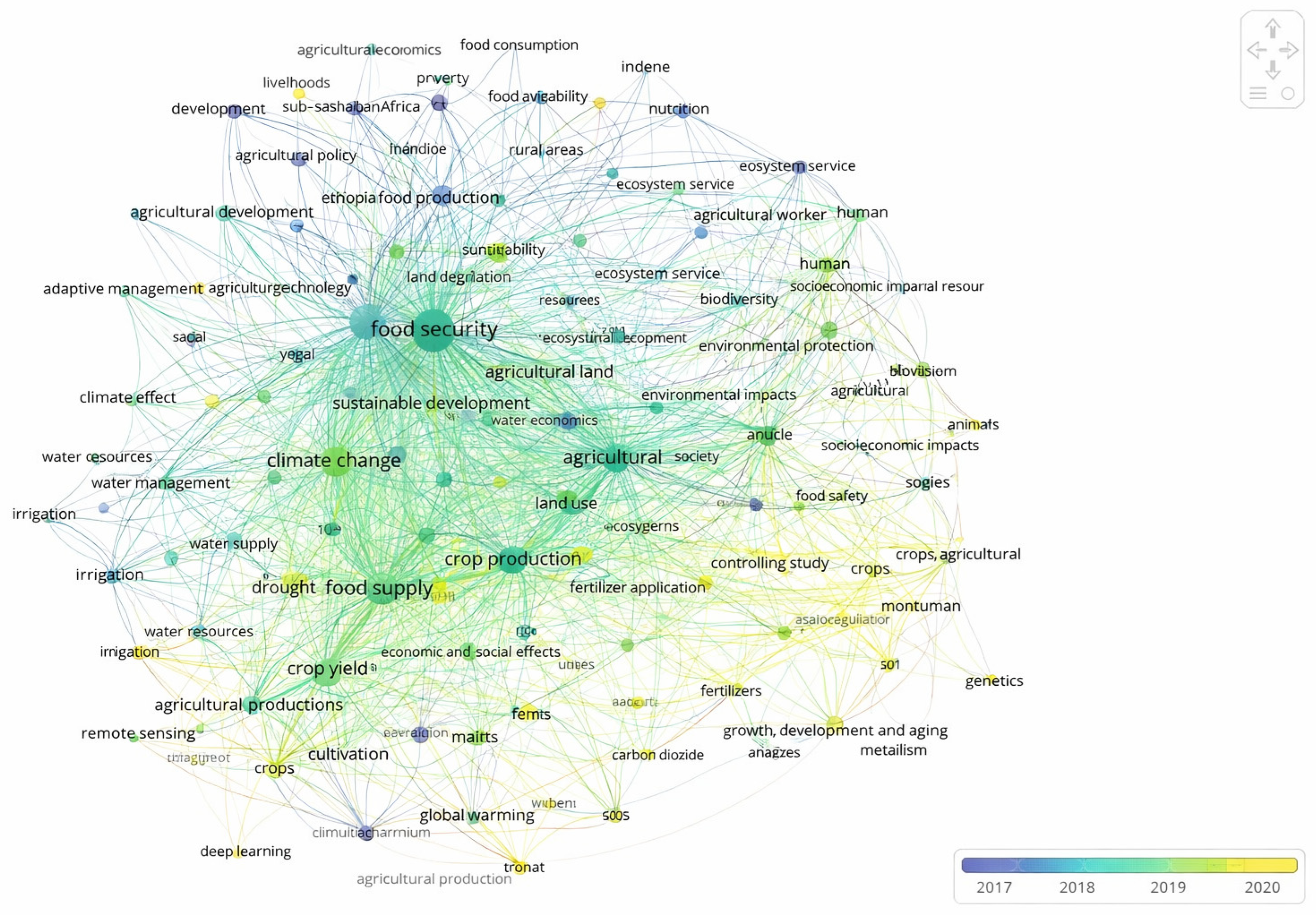
The co-occurrence map depicted (vide supra) resulted from applying a frequency threshold for term inclusion and grouping closely related terms together to avoid excessive noise (e.g., combining plural and singular forms, or removing obvious spelling variants). Clustering algorithms were subsequently applied to group the terms into thematic categories, identifying large clusters centered on food security, food supply, agriculture, climate change, and sustainable development. The resulting visualization supported the complementary, semi-quantitative evaluation of the centrality of certain topics and situated the qualitative synthesis within the broader research environment. To perform this quantitative evaluation, the bibliographic data were analyzed using VOSviewer software version 1.6.20 (Leiden University, Leiden, The Netherlands). In particular, the resulting network was visualized with nodes sized by frequency and edges weighted by co-occurrence strength, identifying the largest research clusters within the field. This approach focused on keyword co-occurrences and thematic organizations within the field. The resulting network visualization indicates the dominant and emerging research themes associated with food security, and provides supporting evidence for the qualitative synthesis presented in this study.

2.6. Limitations and Scope

This review employed an integrative, narrative approach based on systemically acquired evidence but did not strive to retrieve or perform a quantitative synthesis of all the studies on the subject (e.g., registered in PROSPERO or the use of PRISMA flowcharts). The decision to do so is due to the fact that the topic under study is inherently multidisciplinary, encompassing aspects of agronomy, soil science, environmental sciences, economics, and public policy, and frequently involves the use of diverse data and methods that cannot be readily synthesized into a single quantitative framework. However, transparent selection criteria, detailed descriptions of the search procedures, and structured data extraction procedures were employed to minimize potential selection bias and increase the replicability of the study.
The focus on Brazil as the case study limits the relevance of certain global or regional studies that may have contributed to the discussion of Brazilian food security or of the structural factors (e.g., fertilizer market dynamics and climate governance frameworks) that impact Brazilian agriculture and food security. Although the literature and databases searched are considerable, there exist knowledge gaps, particularly concerning the performance of alternative fertilizers at scales of longer duration than several years, the differences in food accessibility at the subnational level, and the cumulative effects of various climate stressors on specific crop systems. These limitations are discussed in the final section of the paper and should be taken into account when extending the conclusions to other spatial and thematic domains.

3. Literature Review

3.1. Influence of Agricultural Production on Food Security

Brazilian agribusiness is globally recognized for its importance in the production and supply of agricultural products, particularly soybeans, corn, coffee, and sugar [27]. It is also vital to the national economy, as it contributes significantly to Gross Domestic Product (GDP). This sector is projected to account for 29.4% of Brazil’s GDP in 2025, thanks to its diversified production, including agricultural and livestock products, with grains playing a particularly prominent role [33]. This relevance stems from aggressive growth in food production between 2011 and 2020. During this period, Contini and Aragão [34], analyzing data from the International Grains Council (IGC) on the production of major grains (i.e., rice, barley, corn, soybeans, and wheat), found that Brazil’s production grew by 5.3% per year, more than twice the global production growth rate.
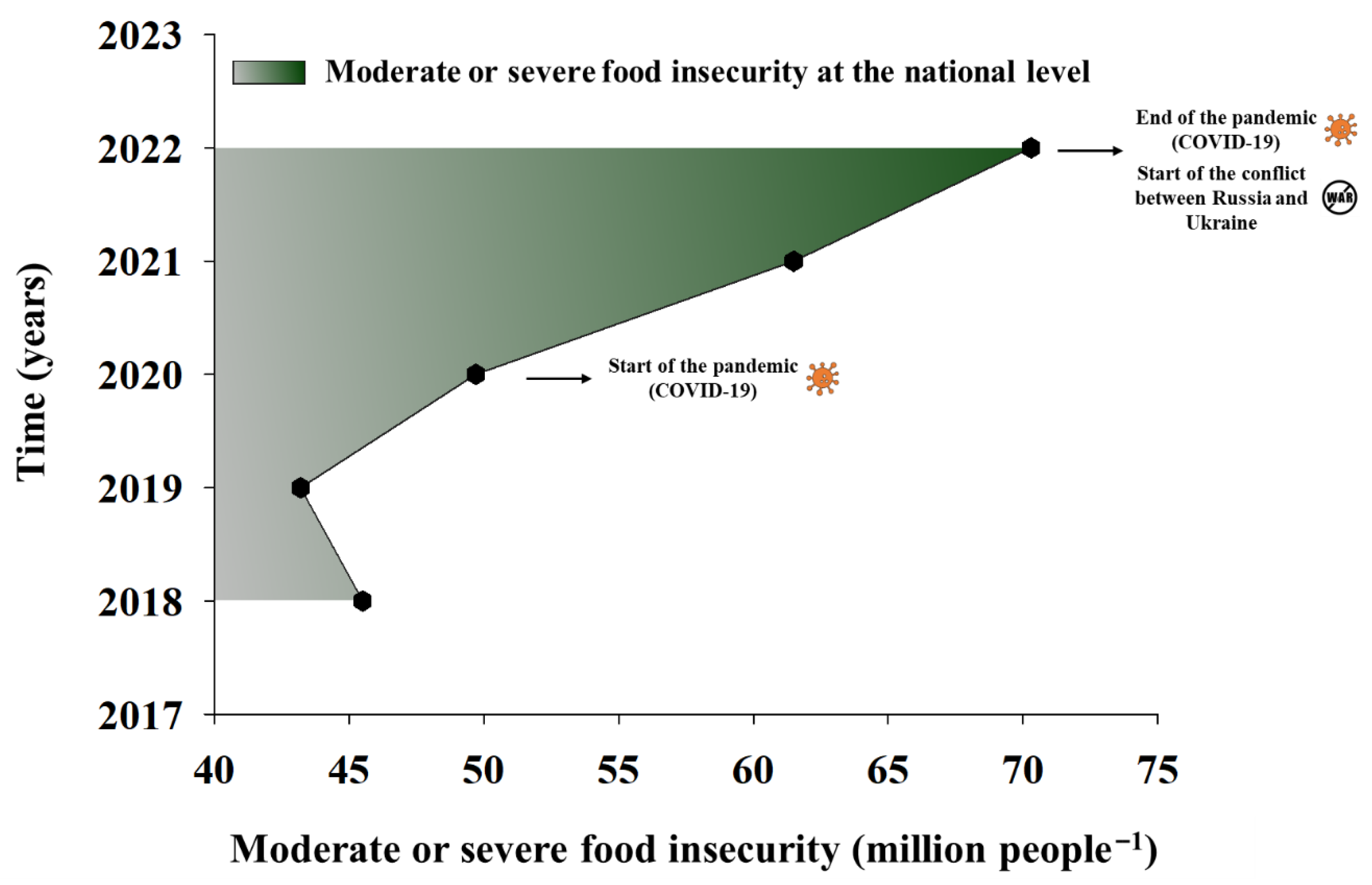
In 2020, Brazilian agricultural production was sufficient to feed 625 million people according to the United States Department of Agriculture (USDA), 628.2 million according to the United Nations Food and Agriculture Organization (FAO), and 636.9 million according to the IGC [34], that is, enough to feed nearly three times the country’s population. On the other hand, food security in Brazil, unlike production data, has been declining sharply over the years. In 2019, around 43 million Brazilians experienced moderate or severe food insecurity. By 2022, the country had reached a peak of more than 70 million people (Figure 1), coinciding with the end of the COVID-19 pandemic and the escalation of conflicts in Eastern Europe [35].
Between 2023 and 2025, food insecurity in Brazil remained high despite temporary declines in coffee and fruit prices. This situation reflected abundant supply and weakened external demand, as well as the 50% tariffs imposed by the United States on 35.9% of Brazilian exports, which reduced coffee exports by 17.5% in August 2025, causing the U.S. to lose its leading position to Germany [36,37]. The downturn did not make products cheaper domestically, since uncertainty drove up international coffee prices by nearly 30%, affecting national production and industry despite a temporary 2.17% drop in consumer prices. This episode illustrates how trade disruptions and price volatility can interact with domestic inequalities, suggesting that food insecurity in Brazil is more strongly influenced by price stability and income distribution than by aggregate food availability alone.
The increase in grain production (along with the growth in the production of vegetables, legumes, and fruits during at least one of the periods 1995–1996, 2002–2003, and 2008–2009) has a positive correlation with the probability of achieving food security, indicating that productivity gains are linked to greater household food security, although to a limited extent, due to the strong influence of individual variables such as education level and income [36]. Due to the contrast between thriving agricultural production and the alarming state of food insecurity, Brazil has faced criticism regarding the environmental, social, and governance impacts of its agricultural production. This has raised socio-environmental and economic concerns, prompting researchers to develop more sustainable agricultural systems that are more effective at combating hunger and ensuring food security [38,39]. In other words, gains in production mainly strengthen the ‘availability’ pillar, whereas access and stability remain constrained by income, social protection, and governance factors.
The relevance of this issue under commercial pressures has fostered a growing interest in understanding it in greater depth. Thus, several studies have been conducted. The schematic representation of term co-occurrence (Figure 2) visualizes the most relevant topics in scientific publications on food security, illustrating the frequency of terms such as “food security”, “food supply”, and “agriculture”, as well as their connections.
The clustering of terms around ‘food security’, ‘climate change’, and ‘sustainable development’ reinforces the choice of analytical axes adopted in this review, particularly the focus on fertilizer dependence and climate-related risks within Brazilian agriculture.
The strong interconnection of these terms with “climate change” and “sustainable development” demonstrates that recent literature extensively addresses climate challenges and the pursuit of sustainable solutions for food production, aligning with the discussion presented in this study.
Beyond environmental challenges, Brazil also faces structural limitations stemming from its reliance on imported mineral fertilizers. Despite its significant contribution to global food production and exports, the domestic fertilizer market is weak, stemming from the country’s inability to meet domestic demand. As a result, Brazil must import most of the fertilizers it uses, which may become one of the greatest challenges for the national economy in the future [40].

3.2. Fertilizers and Their Effects on Food Security

Nutrient management is essential in agricultural production areas, as it can help prevent productivity limitations and improve soil quality [41]. The nutrients nitrogen (N), phosphorus (P), and potassium (K) are the most required for plant growth and development and are periodically analyzed to monitor soil fertility [42]. Naturally, because they are the nutrients plants demand most, NPK-based fertilizers are the most imported and traded in Brazil [7,43].
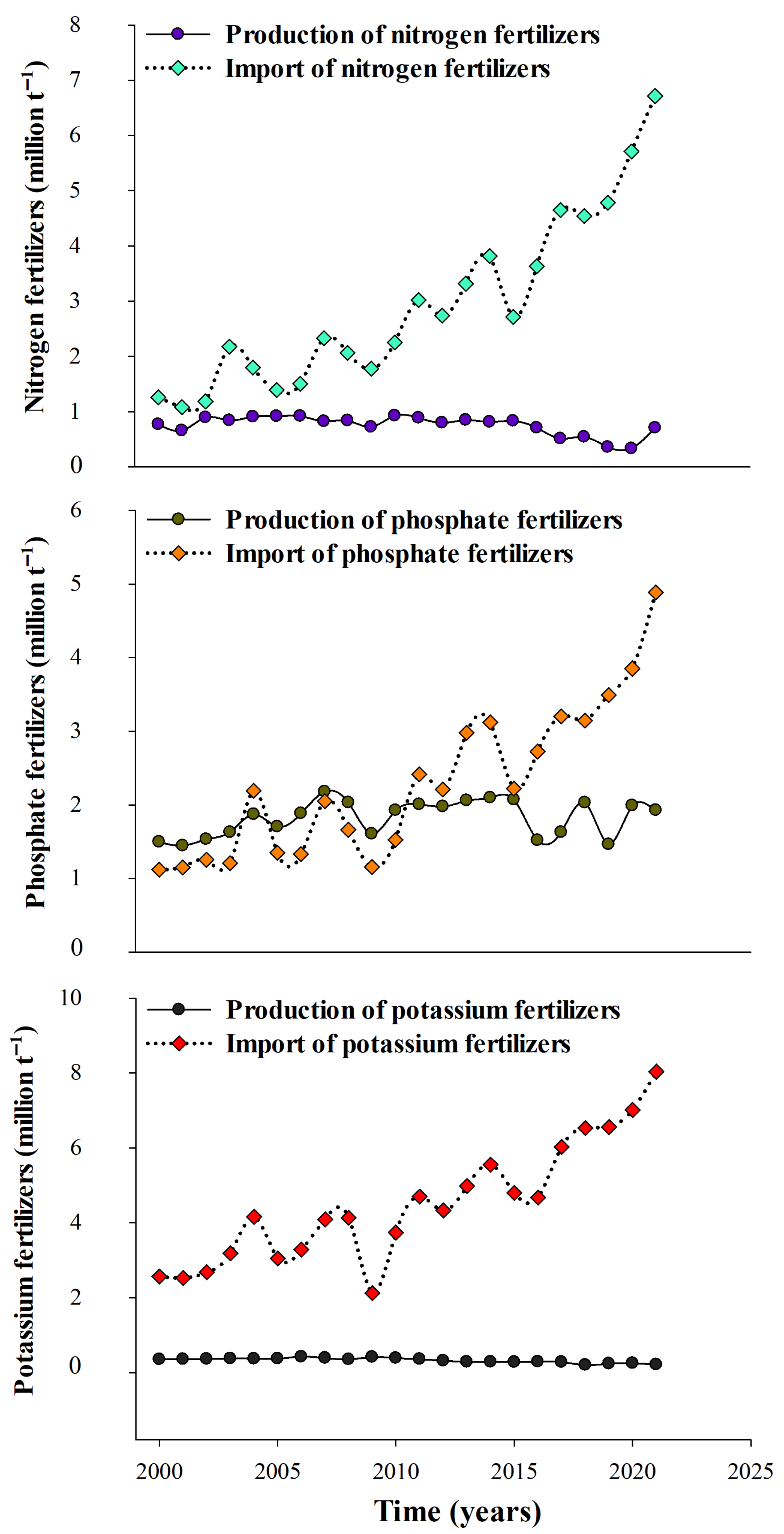
When analyzing the trade balance, starting with nitrogen fertilizers (Figure 3), the volumes imported by Brazil exceeded 6.7 million tons in 2021 [24], mainly originating from Russia (23%), China (16%), Algeria (12%), Qatar (8%), Nigeria (6%), and the United Arab Emirates (5%) [44,45]. However, the supply of this input from Russia dropped sharply in 2022 [46] due to the escalation of the conflict in the country. As for phosphate fertilizers (Figure 3), this category accounts for the largest domestic production in the Brazilian market, with approximately 2.0 million tons in 2021, although imports reached a new record of about 5.0 million tons in the same year [24]. The main source countries for these inputs were Morocco (25%), Russia (14%), the United States (13%), Saudi Arabia (12%), Egypt (11%), and Israel (9%) [44,45].
Potassium fertilizers account for the largest share of Brazil’s fertilizer imports by volume (Figure 3); in 2021 alone, the country imported 8.0 million tons [24]. Canada is the main supplier of potassium chloride to Brazil, exporting approximately 4.5 million tons in 2022, an increase of 9.1% compared with 2021. The input was also imported from Europe: about 1.2 and 1.1 million tons were imported from Germany and Israel, respectively, in 2022, representing increases of 6.3% and 14.1% compared with the previous year [46,47,48,49]. However, in the same year, Russia supplied 3.1 million tons of potassium fertilizer to Brazil, a 13.7% decline from the previous year. The neighboring country, Belarus, exported 1.0 million tons of the product in 2022, a 55.3% decrease from the previous year, representing less than half its earlier volume [43,46].
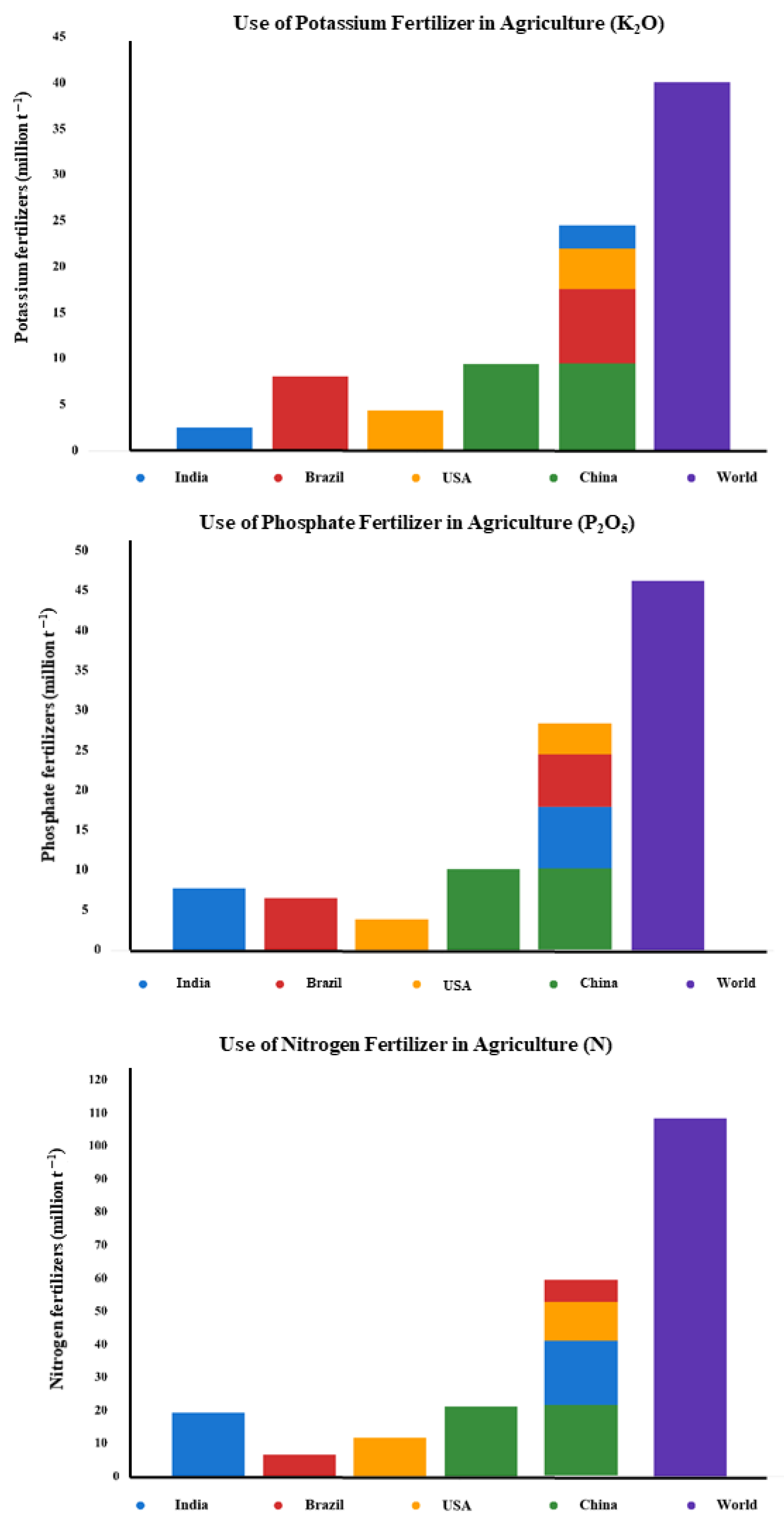
It is evident that Brazil remains highly dependent on imported mineral fertilizers to meet domestic demand [49]. Conversely, estimates indicate that domestic consumption of mineral fertilizers has been rising, along with import volumes [40,50]. According to historical records, the country has been reaching new import highs for fertilizers year after year. In 2021 alone, the combined imports of nitrogen, phosphate, and potassium fertilizers (Figure 3) exceeded 19 million tons [24], with projections suggesting further increases in the coming years. Brazil is thereby consolidating its position as the world’s fourth-largest consumer of mineral fertilizers (Figure 4), ranking just behind China, India, and the United States [51], countries that occupy these positions due to their demographic and socioeconomic conditions.
In addition to import statistics, it is important to consider the structural risk that this dependency poses to food security. Recent events, such as the conflict between Russia and Ukraine, sanctions on Belarus, and the global rise in natural gas prices, have revealed the vulnerability of Brazilian agriculture to fluctuations in international input markets. In response to this situation, the National Fertilizer Plan 2022–2050 (PNF) was established, setting strategic guidelines to reactivate industrial plants, attract investments, promote technological innovation, diversify supply sources, and develop national alternatives such as organomineral fertilizers and bio-inputs. The PNF is explicitly aligned with Brazil’s Low-Carbon Agriculture (ABC+) Plan, which seeks to reduce agricultural emissions while sustaining productivity and food security through practices such as integrated crop–livestock–forestry systems and enhanced nutrient management [14]. These measures seek not only to reduce external dependence but also to strengthen the resilience of the national production system, ensuring a sustainable supply of nutrients for crops and, consequently, price stability and the mitigation of food insecurity [52,53]. At the international level, initiatives such as the Fertilize 4 Life (F4L) collaboration between Brazil, the United States, and international partners further highlight the strategic importance of improving fertilizer-use efficiency for global food security and climate mitigation [54].
This situation highlights the magnitude of the challenges facing Brazil’s fertilizer market, not only because it must meet domestic demand but also because it plays an indirect role in ensuring food security. The use of imported mineral fertilizers is essential for maintaining internal agricultural production [45]. In 2024, the total volume of fertilizers delivered to the domestic market reached 45.61 million tons, of which 91% were imported [7]. Given the importance of Brazilian agribusiness, this high level of vulnerability makes the country dependent on other nations to sustain its status as an agricultural powerhouse and as a global leader in the production and export of several essential agricultural commodities [55]. More critically, this situation exposes the population to rising staple food prices, which may worsen food insecurity [24].
This dependence on imports, combined with geopolitical factors, underscores Brazil’s fragility and the need to rethink agricultural production in a more autonomous and sustainable way. To mitigate this problem, the government should invest in subsistence crops essential for social inclusion [56]. Moreover, encouraging the production of fruits and vegetables (“hortifruti”) promotes dietary diversification and improved nutrition, an essential aspect of food security, as highlighted in Table 1.
It is essential that such investment promotes the development of research that enhances food diversity and the sustainability of production systems—topics that, under commercial and environmental pressures, have attracted growing interest in studies such as those by Flexor et al. [58].
Considering the mineral fertilizer crisis [43], measures have been implemented to mitigate its impacts (Table 2), including the promotion of organic fertilizers, bio-inputs [45], and conservation practices as alternatives to meet future demands [62,63]. Among the alternative sources, noteworthy examples include cattle manure [64,65], poultry litter [65,66,67], and swine manure [66,68,69], as well as raw sewage sludge [70,71,72,73,74] and organic fertilizers based on composted sewage sludge [70,75], castor cake [76,77], vinasse [78], and biofertilizers [45], among many other alternative fertilization sources. These materials can improve soil fertility, enhance plant nutrition, and ensure the proper final disposal of organic waste [79].

3.3. Effect of Climate Change on Food Production

Historically driven by variations in Earth’s orbital movements and solar radiation, climate change is now estimated to be 90% caused by human activities, directly affecting food production [80]. According to the Intergovernmental Panel on Climate Change [81], these changes directly influence food production, as evidenced by several studies (Table 3). Food systems (including agriculture, land use change, storage, transport, processing, retail, and consumption) are estimated to contribute roughly one third of global anthropogenic GHG emissions. This percentage includes activities such as agriculture and land use, storage, transportation, packaging, processing, retail, and consumption. Therefore, climate change is both a cause and a consequence of an environmentally unsustainable world [82].
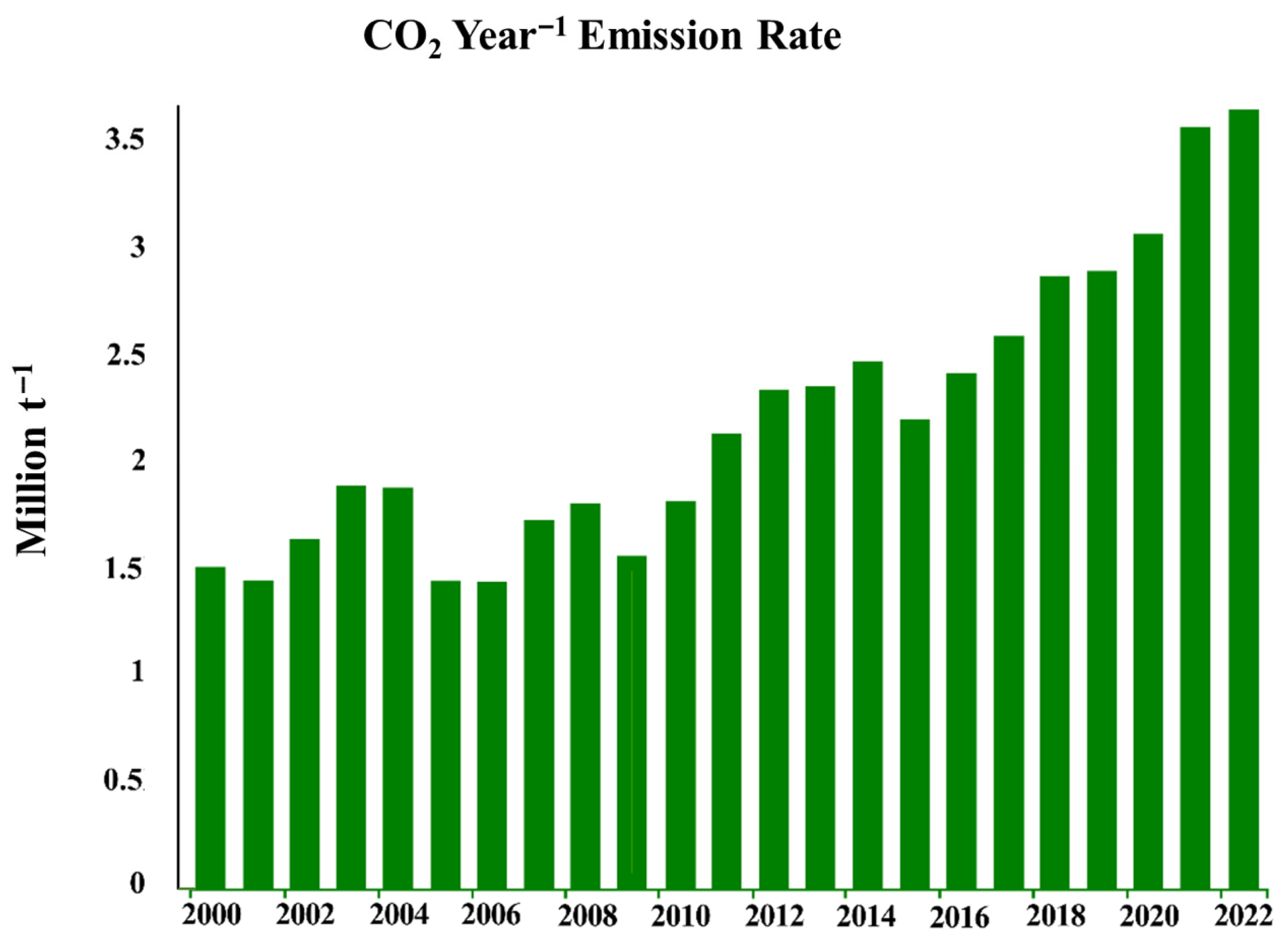
The results shown in Figure 5 reveal a significant increase in global CO2 emissions from the agricultural sector, reaching the highest levels in 2022. According to FAO [6], in 2022 the agricultural system accounted for an increase of approximately 10% compared to the year 2000, totaling 16.2 GtCO2e. This growing emission of greenhouse gases, combined with other human activities, has contributed to the rise in global temperatures, with the last six years (2017–2022) being the hottest on record [83].
Many research studies have shown that an increase in temperature has a negative impact on agriculture, causing droughts, irregular rainfalls and poor soil and water quality [80,84,89] and ultimately reducing food production. Studies have shown that in Brazil, climatic shocks tend to occur in semi-arid regions and amongst smallholder farmers and that they can exacerbate existing food insecurity inequalities [84].
Although, Figure 5 provides only data regarding CO2 emissions from agriculture, it shows how agriculture and livestock are playing a significant role in climate change scenarios and therefore are having a large impact on agricultural production, which is being discussed in the scientific literature.
Agricultural production is increasing due to the growing world population, which is requiring larger amounts of food production [88]. Additionally, just like how the climate change is harming agriculture; population growth is contributing to rising global temperatures [89,91]. Both of these factors, whether through the expansion of cultivation area or through the intensification of productivity [91], are resulting in negative environmental impacts: deforestation is occurring because of the need to expand production into previously unutilized areas and the transformation of those ecosystems, while the intensive use of technology, machinery, fertilizers and pesticides results in soil degradation and water pollution creating a perpetual cycle of destruction [6].
Additionally, the increase in ocean temperatures [80] is another factor that is hindering food production. As glaciers melt, there is a rise in the level of the oceans, resulting in saltwater entering low-lying areas and contaminating freshwater sources [80,85]; additionally, ocean acidification is increasing and negatively impacting marine fauna [86].
Climate change has resulted in numerous impacts on agriculture and livestock production, including extended droughts, intense rains and extreme temperature fluctuations, etc. [84]. By 2050, food production needs to meet the total production of the last 500 years; given the projected global population of 9 billion people [92]. Therefore, recommendations for adaptation strategies exist and include no-till farming systems, reforestation, erosion control, increasing soil organic matter, pasture management and genetic improvement for heat and drought tolerance [93].
Research has shown that when strategies to mitigate the impacts of climate change are implemented, there are positive social, political and economic impacts that result in improved food security. If major changes are not made, agricultural productivity could decrease by 3–12 percent by mid-century and could reach 11–25 percent at the end of the century if mitigation efforts are unsuccessful [94].
Achieving food security in a climate change situation requires integrated and sustainable strategies. One strategy to achieve this is by using innovative technologies and regenerative agricultural practices that increase productivity while decreasing environmental impacts. Examples of practices such as crop rotation, biochar application, agroforestry, and silvopastoral systems and soil health management, contribute to carbon sequestration and ecosystem resilience [59,60,95,96,97]. Precision agriculture technologies can optimize input use and reduce losses, making the agricultural sector more productive and sustainable. Therefore, integrating technology and innovation in the field, can not only reduce CO2 emissions but improve the sustainability and stability of food production and therefore improve global food security [98]. In this context, the application of precision agriculture technologies is supported by digital tools that enable real-time data acquisition and decision-making across different stages of the production system [99,100]. The use of GPS-based guidance, Internet of Things (IoT) sensors, unmanned aerial vehicles (UAVs), and advanced data analytics allows the spatial and temporal monitoring of crop conditions and input use, improving management accuracy [101,102]. These technologies contribute to the optimization of fertilizers, water, and pesticides by aligning their application with crop demand, reducing waste and environmental impacts [103]. Furthermore, the integration of digital platforms with supply chain and logistics management enhances the efficiency and sustainability of agri-food systems, reinforcing their role in promoting stable food production and global food security [99,100].
Climate change is disproportionately impacting populations that are socially and economically vulnerable, as these populations are more susceptible to extreme weather events (such as droughts and floods), and have less adaptive capacity in regard to food scarcity and price volatility [86]. These impacts are directly compromising the four pillars of food security: availability, access, utilization and stability, and thus require a broadened understanding of what constitutes food security [103]. Additionally, the increasing concentration of CO2 in the atmosphere can lead to reductions in the concentration of key micronutrients (such as iron and zinc) and protein in staple crops such as rice and wheat, and therefore increase the risk of hidden hunger amongst vulnerable populations [81].
Considering the above scenario, it is essential to develop integrated public policies that align the actions of the agriculture, environment and social justice sectors, and focus on sustainable and resilient solutions, such as climate smart agriculture [87].
Strategies such as the National Fertilizer Plan, promoting bio-inputs, and supporting sustainable family farming, are examples of how to support the resilience of the agri-food system and contribute to achieving the United Nations’ Sustainable Development Goals, specifically Goal 2: “Zero Hunger and Sustainable Agriculture” [90].

4. Conclusions

Beginning with an assessment of the importance of the appropriate use of fertilizers in managing the broad issues associated with climate and environmental changes, it is clear that the misuse of fertilizers may result in the creation of substantial amounts of greenhouse gases (GHGs). Three areas are particularly relevant to developing policy to address this issue: (i) reducing reliance on imported fertilizers through domestic production of fertilizers, recycling organic residue, and increasing the efficiency of use of fertilizers; (ii) supporting the expansion of low-carbon and climate-smart agriculture practices that promote enhanced soil health, increase carbon sequestration, and increase crop yields; and (iii) strengthening social safety nets and/or economic support programs to protect vulnerable households from the effects of higher prices and reduced agricultural productivity due to climate-related events. There is still much uncertainty regarding the relative impacts of various factors on the growing levels of food insecurity and the type(s) of actions necessary to reduce the numbers of individuals who experience food insecurity. The proper use of mineral fertilizers is a critical component of minimizing food insecurity, since the costs of the fertilizers used directly affect the prices of staple foods. Therefore, reducing dependence on mineral fertilizers increases the accessibility to food and represents one of the primary strategies to achieve international objectives related to eliminating hunger and advancing sustainable development. Future research should prioritize the identification of logistical and regulatory bottlenecks that limit the large-scale adoption of alternative fertilizers and bioinputs in Brazil, particularly regarding supply chain structure, regional accessibility, and cost variability. In addition, integrated assessments combining agronomic efficiency, economic feasibility, and greenhouse gas emissions are needed to support decision-making at farm and policy levels. Another critical gap concerns regional disparities in food access, which require spatially explicit analyses linking production, distribution infrastructure, and socioeconomic vulnerability. Addressing these aspects will enable more effective strategies to reduce fertilizer dependency while improving food system resilience under climate change.

Author Contributions

Conceptualization: T.A.R.N., R.S.A., N.E.M. and A.C.d.S.; Data curation: T.A.R.N., R.S.A., N.E.M., A.C.d.S. and F.M.F.; Formal analysis: T.A.R.N., R.S.A., F.M.F. and A.R.C.; Funding acquisition: T.A.R.N.; Investigation: T.A.R.N., R.S.A., N.E.M., A.C.d.S., F.M.F., P.P.M., A.R.C., A.D.J. and G.F.C.; Methodology: T.A.R.N., R.S.A., N.E.M., A.C.d.S., F.M.F., P.P.M., A.R.C., A.D.J. and G.F.C.; Resources: T.A.R.N.; Software: R.S.A., N.E.M., A.C.d.S., F.M.F. and P.P.M.; Supervision: T.A.R.N., A.R.C., A.D.J. and G.F.C. Validation: T.A.R.N., R.S.A., A.R.C., A.D.J. and G.F.C.; Visualization: T.A.R.N., R.S.A., F.M.F., P.P.M. and A.R.C.; Writing—original draft: T.A.R.N., R.S.A., N.E.M., A.C.d.S. and F.M.F.; Writing—review and editing: T.A.R.N., R.S.A., F.M.F., P.P.M., A.R.C., A.D.J. and G.F.C. All authors have read and agreed to the published version of the manuscript.

Funding

This work was supported by the Coordination for the Improvement of Higher Education Personnel (CAPES).

Data Availability Statement

The authors reviewed and edited the content as necessary and assume full responsibility for the publication’s content.

Acknowledgments

The authors acknowledge the National Council for Scientific and Technological Development (CNPq) for the research productivity grant (Proc. 305113/2024-0) awarded to the first author and the scholarship granted to the fifth author (Proc. 305113/2024-0). They also thank the São Paulo Research Foudation (FAPESP) for the doctoral fellowship (Proc. 2024/20071-4) awarded to the second author, and the Coordination for the Improvement of Higher Education Personnel (CAPES) for the scholarships awarded to the third and fourth authors. The authors further express their gratitude to the Graduate Programs in Agronomy (Soil Science and Plant Production) at the School of Agricultural and Veterinary Sciences, São Paulo State University (UNESP), Jaboticabal campus, SP, for their support and assistance.

Conflicts of Interest

The authors declare no conflicts of interest.

References

  1. Organização das Nações Unidas (ONU). Department of Economic and Social Affairs, Population Division. World Population Prospects 2024: Historical Plot; United Nations: New York, NY, USA, 2024; Available online: https://population.un.org/wpp/assets/Files/UN_2024_WorldPop-Historical-Plot.xlsx (accessed on 7 September 2025).
  2. Hunter, M.C.; Smith, R.G.; Schipanski, M.E.; Atwood, L.W.; Mortensen, D.A. Agriculture in 2050: Recalibrating Targets for Sustainable Intensification. Bioscience 2017, 67, 386–391. [Google Scholar] [CrossRef]
  3. Sharma, V.; Javed, B.; Byrne, H.; Curtin, J.; Tian, F. Zeolites as Carriers of Nano-Fertilizers: From Structures and Principles to Prospects and Challenges. Appl. Nano 2022, 3, 163–186. [Google Scholar] [CrossRef]
  4. Pantano, G.; Grosseli, G.M.; Mozeto, A.A.; Fadini, P.S. Sustainability in Phosphorus Use: A Question of Water and Food Security. Quim. Nova 2016, 39, 732–740. [Google Scholar] [CrossRef]
  5. Gumber, K. Naked Eye Sensors for On-Site Pesticide Detection: A Review. J. Plant Prot. Res. 2023, 63, 173–184. [Google Scholar] [CrossRef]
  6. Food and Agriculture Organization of the United Nations (FAO). Caminhos Para Emissões Mais Baixas—Uma Avaliação Global das Emissões de Gases de Efeito Estufa e opções de Mitigação dos Sistemas Agroalimentares Pecuários; FAO: Roma, Italy, 2023. [Google Scholar]
  7. Associação Nacional de Difusão de Adubos (ANDA). Relatório Sobre o Mercado de Fertilizantes–Janeiro a Dezembro/2024; ANDA: São Paulo, Brazil, 2024. [Google Scholar]
  8. Brasil. Lei no 11.346, de 15 de Setembro de 2006. Cria o Sistema Nacional de Segurança Alimentar e Nutricional–SISAN Com Vistas em Assegurar o Direito Humano à Alimentação Adequada e dá Outras Providências. Presidência da República, Casa Civil, Subchefia para Assuntos Jurídicos. 2020. Available online: https://www.planalto.gov.br/ccivil_03/_ato2004-2006/2006/lei/l11346.htm (accessed on 19 June 2024).
  9. Câmara Interministerial de Segurança Alimentar e Nutricional (Caisan). Plano Nacional de Segurança Alimentar e Nutricional-PLANSAN 2016–2019; Caisan: Brasília, Brazil, 2017. [Google Scholar]
  10. Rahman, T.U.; Faraz, A.; Nawaz, T.; Saud, S.; Fahad, S.; Harrison, M.T. Towards Sustainable Solutions: Climate Change and Food Security in a Globalized World. Food Energy Secur. 2025, 14, e70126. [Google Scholar] [CrossRef]
  11. Instituto Brasileiro de Geografia e Estatístic (IBGE). Segurança Alimentar nos Domicílios Brasileiros Volta a Crescer em 2023. 2023. Available online: https://agenciadenoticias.ibge.gov.br/agencia-noticias/2012-agencia-de-noticias/noticias/39838-seguranca-alimentar-nos-domicilios-brasileiros-volta-a-crescer-em-2023 (accessed on 21 June 2024).
  12. Kubo, S.E.A.C.; Costa, T.H.M.; Gubert, M.B. Intakes of Energy, Macronutrients and Micronutrients of a Population in Severe Food Insecurity Risk in Brazil. Public Health Nutr. 2020, 23, 649–659. [Google Scholar] [CrossRef]
  13. Companhia Nacional de Abastecimento (CONAB). Acompanhamento da Safra Brasileira de Grãos, v.13–Safra 2025/26, n.02-Segundo Levantamento; CONAB: Brasília, Brazil, 2025. [Google Scholar]
  14. Basso, M.F.; Neves, M.F.; Grossi-de-Sa, M.F. Agriculture Evolution, Sustainability and Trends, Focusing on Brazilian Agribusiness: A Review. Front. Sustain. Food Syst. 2024, 7, 1296337. [Google Scholar] [CrossRef]
  15. Ministério da Ciência, Tecnologia e Inovação (Brasil). El Niño 23-24 é um dos Cinco Mais Fortes já Registrados, diz Organização Meteorológica Mundial. 2024. Available online: https://www.gov.br/mcti/pt-br/acompanhe-o-mcti/noticias/2024/03/el-nino-23-24-e-um-dos-cinco-mais-fortes-ja-registrados-diz-organizacao-meteorologica-mundial#:~:text=O%20fen%C3%B4meno%20El%20Ni%C3%B1o%20de,m%C3%A9dia%20de%201991%20a%202020 (accessed on 10 May 2024).
  16. Instituto Nacional de Meteorologia (INMET); Ministério da Agricultura e Pecuária. Verão 2024–2025 foi o Sexto Mais Quente no Brasil Desde 1961. 2025. Available online: https://portal.inmet.gov.br/noticias/ver%C3%A3o-2024-2025-foi-o-sexto-mais-quente-no-brasil-desde-1961 (accessed on 16 September 2025).
  17. IBGE. POF 2017-2018: Households with Up to R$1.9 K Allocate 61.2% of Their Expenses to Food, Housing; IBGE: Rio de Janeiro, Brazil, 2020. [Google Scholar]
  18. Companhia Nacional de Abastecimento (Brasil). Safra de Grãos 2024/25 é Estimada em 3452 Milhões de Toneladas Com Recorde na Produção de Milho e Soja. 2025. Available online: https://www.gov.br/conab/pt-br/assuntos/noticias/safra-de-graos-2024-25-e-estimada-em-345-2-milhoes-de-toneladas-com-recorde-na-producao-de-milho-e-soja (accessed on 16 September 2025).
  19. National Weather Service Climate Prediction Center (NOAA). El Niño/Southern Oscillation (ENSO) Diagnostic Discussion. 2025. Available online: https://www.cpc.ncep.noaa.gov/products/analysis_monitoring/enso_advisory/ensodisc.shtml (accessed on 16 September 2025).
  20. Zilli, M.; Scarabello, M.; Soterroni, A.C.; Valin, H.; Mosnier, A.; Leclère, D.; Havlík, P.; Kraxner, F.; Lopes, M.A.; Ramos, F.M. The Impact of Climate Change on Brazil’s Agriculture. Sci. Total Environ. 2020, 740, 139384. [Google Scholar] [CrossRef]
  21. Hofmann, G.S.; Cardoso, M.F.; Alves, R.J.V.; Weber, E.J.; Barbosa, A.A.; Toledo, P.M.; Pontual, F.B.; Salles, L.O.; Hasenack, H.; Cordeiro, J.L.P.; et al. The Brazilian Cerrado is Becoming Hotter and Drier. Glob. Change Biol. 2021, 27, 4060–4073. [Google Scholar] [CrossRef]
  22. Maciel, E.A.; Oliveira-Filho, A.T.; Sobral-Souza, T.S.; Marimon, B.S.; Cupertino-Eisenlohr, M.A.; José-Silva, L.; Eisenlohr, P.V. Climate Change Forecasts Suggest That the Conservation Area Network in the Cerrado-Amazon Transition Zone Needs to Be Expanded. Acta Oecologica 2021, 112, 103764. [Google Scholar] [CrossRef]
  23. Marengo, J.A.; Jimenez, J.C.; Espinoza, J.-C.; Cunha, A.P.; Aragão, L.E.O. Increased Climate Pressure on the Agricultural Frontier in the Eastern Amazonia–Cerrado Transition Zone. Sci. Rep. 2022, 12, 457. [Google Scholar] [CrossRef]
  24. Food and Agriculture Organization of the United Nations Statistical Database (FAOSTAT). Compare Data. 2022. Available online: https://www.fao.org/faostat/en/#compare (accessed on 9 May 2024).
  25. United States Department of Agriculture (USDA). World Agricultural Production. 2026. Available online: https://apps.fas.usda.gov/psdonline/circulars/production.pdf (accessed on 10 May 2024).
  26. Szymczak, L.S.; Carvalho, P.C.F.; Lurette, A.; Moraes, A.; Nunes, P.A.A.; Martins, A.P.; Moulin, C.-H. System Diversification and Grazing Management as Resilience-Enhancing Agricultural Practices: The Case of Crop-Livestock Integration. Agric. Syst. 2020, 184, 102904. [Google Scholar] [CrossRef]
  27. Ali, T.; Zhou, B.; Cleary, D.; Xie, W. The Impact of Climate Change on China and Brazil’s Soybean Trade. Land 2022, 11, 2286. [Google Scholar] [CrossRef]
  28. Instituto de Pesquisa Econômica Aplicada (IPEA). Estudo Aponta Dinâmica dos Preços de Commodities Agrícolas e as Perspectivas para os Próximos Meses. 2023. Available online: https://www.ipea.gov.br/portal/categorias/45-todas-as-noticias/noticias/13711-estudo-aponta-dinamica-dos-precos-de-commodities-agricolas-e-as-perspectivas-para-os-proximos-meses (accessed on 10 May 2024).
  29. Brasil. Decreto no 9.176, de 19 de outubro de 2017. Promulga a Convenção sobre a Cobrança Internacional de Alimentos para Crianças e Outros Membros da Família e o Protocolo sobre a Lei Aplicável às Obrigações de Prestar Alimentos, firmados pela República Federativa do Brasil, em Haia, em 23 de novembro de 2007. Presidência da República, Secretaria-Geral, Subchefia para Assuntos Jurídicos. Available online: https://www.planalto.gov.br/ccivil_03/_ato2015-2018/2017/decreto/D9176.htm (accessed on 19 June 2024).
  30. OECD; FAO. OECD-FAO Agricultural Outlook 2019–2028; OECD Publishing: Paris, France; Food and Agriculture Organization of the United Nations: Rome, Italy, 2019; Available online: https://www.oecd-ilibrary.org/agriculture-and-food/oecd-fao-agricultural-outlook-2019-2028_agr_outlook-2019-en. (accessed on 4 May 2024).
  31. Pimentel, M.L.; Oliveira, A.B.; Schiebelbein, B.E.; Carvalho, M.L.; Tenelli, S.; Cherubin, M.R.; Carvalho, J.L.N.; Briedis, C.; Panosso, A.R.; Oliveira Bordonal, R. Quantity, Quality and Physical Protection of Soil Carbon Associated with Sugarcane Straw Removal in Southern Brazil. Soil Tillage Res. 2024, 237, 105976. [Google Scholar] [CrossRef]
  32. Organização das Nações Unidas (ONU). The Sustainable Development Goals Report 2025; Department of Economic and Social Affairs, Statistics Division: New York, NY, USA, 2025; Available online: https://unstats.un.org/sdgs/report/2025/ (accessed on 28 November 2025).
  33. Centro de Estudos Avançados em Economia Aplicada (CEPEA). PIB do Agronegócio Brasileiro; Cepea: São Paulo, Brazil, 2025; Available online: https://www.cepea.org.br/br/pib-do-agronegocio-brasileiro.aspx (accessed on 7 September 2025).
  34. Contini, E.; Aragão, A. O Agro Brasileiro Alimenta 800 Milhões de Pessoas; Empresa Brasileira de Pesquisa Agropecuária (Embrapa): Brasília, Brazil, 2025. [Google Scholar]
  35. Food and Agriculture Organization of the United Nations Statistical Database (FAOSTAT). Selected Indicators—Brazil. 2022. Available online: https://www.fao.org/faostat/en/#country/21 (accessed on 17 June 2024).
  36. G1: Economia & Agronegócios. Após Tarifaço, Exportação de Café do Brasil cai 17.5% em Agosto. 2025. Available online: https://g1.globo.com/economia/agronegocios/noticia/2025/09/09/apos-tarifaco-exportacao-de-cafe-do-brasil-cai-175percent-em-agosto.ghtml (accessed on 14 September 2025).
  37. Portal News. Tarifas dos EUA já Travam Investimentos no Alto Tietê, Mas Diversidade Reduz Impacto Imediato, Avalia Fempi. 2025. Available online: https://portalnews.com.br/cidades/2025/08/tarifas-dos-eua-ja-travam-investimentos-no-alto-tiete-mas-diversidade-reduz-impacto-imediato-avalia-fempi (accessed on 14 September 2025).
  38. Santos, J.A.; Moura-Leite, R.; Pereira, M.W.G.; Pagán, M. Social and Environmental Disclosure of the Largest Companies in Brazil’s Agribusiness Sector. Soc. Responsib. J. 2021, 17, 1009–1027. [Google Scholar] [CrossRef]
  39. Sarkar, A.; Wang, H.; Rahman, A.; Memon, W.H.; Qian, L. A Bibliometric Analysis of Sustainable Agriculture: Based on the Web of Science (WOS) Platform. Environ. Sci. Pollut. Res. 2022, 29, 38928–38949. [Google Scholar] [CrossRef] [PubMed]
  40. Instituto de Estudos para o Desenvolvimento Industrial (IEDI). Indústria e Disputas Geopolíticas. Carta IEDI, 2022 ed. 1154. Available online: https://iedi.org.br/cartas/carta_iedi_n_1154.html (accessed on 9 May 2024).
  41. Kamboj, D.; Choudhary, R.; Diwakar, A.K.; Maurya, S. Integrated Nutrient Management for Improving the Soil Sustainability and Crop Productivity: A Review. J. Adv. Biol. Biotechnol. 2024, 27, 1053–1062. [Google Scholar] [CrossRef]
  42. Recena, R.; Fernández-Cabanás, V.M.; Delgado, A. Soil Fertility Assessment by Vis-NIR Spectroscopy: Predicting Soil Functioning Rather than Availability Indices. Geoderma 2019, 337, 368–374. [Google Scholar] [CrossRef]
  43. Seixas, M. A crise dos fertilizantes e o aumento da insegurança alimentar global impactos do conflito Rússia-Ucrânia no mercado de commodities agrícolas. In Série Diálogos Estratégicos–Mercados Internacionais; NT 43; Embrapa: Brasília, Brazil, 2022. [Google Scholar]
  44. Globalfert. Volume de Importação de Fertilizantes no Brasil em 2018; Boletins; Globalfert: São Paulo, Brazil, 2019; Available online: https://www.globalfert.com.br/boletins/volume-de-importacao-de-fertilizantes-no-brasil-em-2018/ (accessed on 19 June 2024).
  45. Brasil. Instrução normativa no 61, de 8 de julho de 2020. Estabelece as Regras Sobre Definições, Exigências, Especificações, Garantias, Tolerâncias, Registro, Embalagem e Rotulagem dos Fertilizantes Orgânicos e dos Biofertilizantes, Destinados à Agricultura; Diário Oficial da União: Brasília, Brazil, 2020.
  46. Osaki, M. Fertilizer Sector in BR Faces Challenges due to Its Dependence on the International Market; CEPEA—Centro de Estudos Avançados em Economia Aplicada: São Paulo, Brazil, 2021. [Google Scholar]
  47. Fitch Solutions. Americas Fertilizer Outlook: Soaring Costs Inject Uncertainty. 2022. Available online: https://app.fitchconnect.com/search/research/article/BMI_0EC2D143-7C4F-4788-934E43AAE2F37572 (accessed on 9 June 2024).
  48. Raboresearch e Food & Agribusiness. The Importance of Being Earnest. 2022. Available online: https://research.rabobank.com/far/en/sectors/agri-commodity-markets/USDAWASDE-monthly.html (accessed on 9 June 2024).
  49. Raboresearch e Food & Agribusiness. The Russia-Ukraine War’s Impact on Food & Agri-What Oceania’s Food & Agri Chain Has to Plan For. 2022. Available online: https://research.rabobank.com/far/en/sectors/regional-food-agri/the-russia-ukraine-war-impact-on-food-agri.html (accessed on 9 June 2024).
  50. Secretaria Especial de Assuntos Estratégicos (Brasil). Plano Nacional de Fertilizantes 2050 (PNF 2050); Secretaria Especial de Assuntos Estratégicos (Brasil): Brasília, Brazil, 2021. [Google Scholar]
  51. Associação Nacional de Difusão de Adubos (ANDA). PRINCIPAIS INDICADORES DO SETOR DE FERTILIZANTES. 2024. Available online: https://anda.org.br/recursos/#pesquisa-setorial (accessed on 11 May 2024).
  52. Brasil. Decreto No 10.991, de 11 de Março de 2022. Institui o Plano Nacional de Fertilizantes 2022–2050 e o Conselho Nacional de Fertilizantes e Nutrição de Plantas. Diário Oficial da União. 2022. Available online: https://in.gov.br/web/dou/-/decreto-n-10.991-de-11-de-marco-de-2022-385453056 (accessed on 5 June 2024).
  53. Caligaris, B.; Rangel, L.; Polidoro, J.; Farias, P. A Importância Do Plano Nacional de Fertilizantes Para o Futuro Do Agronegócio e Do Brasil. Carta Agrícola 2022, 31, 3–8. [Google Scholar]
  54. Conlon, M.; Castro, C. The Fertilize 4 Life Initiative—Combating Food Insecurity and Climate Change; USDA Foreign Agricultural Service: Brasília, Brazil, 2023. [Google Scholar]
  55. Rangel, L. Agronegócio, Segurança Alimentar e Soberania Agrícola; Ministério da Agricultura, Pecuária e Abastecimento: Brasília, Brazil, 2020. [Google Scholar]
  56. Fernandes, J.; Lopes, G.; Rosa, R. Desenvolvimento Sustentável a Agropecuária de Pernambuco [Livro Eletrônico]; Instituto Agronômico de Pernambuco–IPA: Recife, Brazil, 2022. [Google Scholar]
  57. Flexor, G.; Kato, K.Y.; Leite, S.P. Agri-Food Globalization and Food Security in Brazil: Recent Trends and Contradictions. J. Peasant Stud. 2024, 51, 1022–1045. [Google Scholar] [CrossRef]
  58. Gomes, L.C.; Bianchi, F.J.J.A.; Cardoso, I.M.; Fernandes, R.B.A.; Filho, E.I.F.; Schulte, R.P.O. Agroforestry Systems Can Mitigate the Impacts of Climate Change on Coffee Production: A Spatially Explicit Assessment in Brazil. Agric. Ecosyst. Environ. 2020, 294, 106858. [Google Scholar] [CrossRef]
  59. Straliotto, R.; Teixeira, P.; Polidoro, J.; Benites, V. Crescente importância de fertilizantes, condicionadores e novas fontes de nutrientes para solos tropicais. In Megatendências da Ciência do Solo 2030; Embrapa: Brasília, Brazil, 2022. [Google Scholar]
  60. Torres, W.G.A.; Colen, F.; Pandey, S.D.; Frazão, L.A.; Sampaio, R.A.; Fernandes, L.A. Phosphorus Availability in Soil Amended with Biochar from Rice Rusk and Cattle Manure and Cultivated with Common Bean. Ciência Agrotecnologia 2020, 44, e014620. [Google Scholar] [CrossRef]
  61. Silva, V.B.; Silva, A.P.; Dias, B.O.; Araujo, J.L.; Santos, D.; Franco, R.P. Decomposição e Liberação de N, P e K de Esterco Bovino e de Cama de Frango Isolados Ou Misturados. Rev. Bras. Cienc. Solo 2014, 38, 1537–1546. [Google Scholar] [CrossRef]
  62. Berton, R. Recomendações de Adubação e Calagem Para o Estado de São Paulo; Instituto Agronômico: São Paulo, Brazil, 2022. [Google Scholar]
  63. Guimarães, G.; Lana, R.P.; Rei, R.S.; Veloso, C.M.; Sousa, M.R.M.; Rodrigues, R.C.; Campos, S.A. Produção de Cana-de-Açúcar Adubada Com Cama de Frango. Rev. Bras. Saúde Produção Anim. 2016, 17, 617–625. [Google Scholar] [CrossRef][Green Version]
  64. Oelke, C.A.; Weber, N.C.; Bock, D.F.; Fraga, B.N.; Rossi, P. Composição Mineral E Microbiológica De Dejetos Suínos Sob Decomposição Anaeróbica Influenciada Pela Presença De Casca De Arroz. In Agricultura em Foco: Tópicos Em Manejo, Fertilidade do Solo e Impactos Ambientais; Editora Científica Digital: São Paulo, Brazil, 2020; Volume 1, pp. 101–112. [Google Scholar] [CrossRef]
  65. Paniagua, C.E.S.; Santos, V.O. Potencialidade Do Uso de Dejetos Suínos Como Biofertilizante, Biogás e Energia Elétrica: Da Redução de Custos Na Produção Ao Manejo Ecologicamente Mais Sustentável / Potential of Using Swine Manure as Biofertilizer, Biogas and Electricity: From Reduced Production Costs to More Ecologically Sustainable Management. Braz. J. Dev. 2021, 7, 90227–90243. [Google Scholar] [CrossRef]
  66. Berton, R.S.; Nogueira, T.A.R. Uso Agrícola de Lodo de Esgoto: Avaliação Após a Resolução No 375 do Conama; FEPAF: São Paulo, Brazil, 2010. [Google Scholar]
  67. Bonini, C.S.B.; Alves, M.C.; Montanari, R. Lodo de Esgoto e Adubação Mineral Na Recuperação de Atributos Químicos de Solo Degradado. Rev. Bras. Eng. Agrícola Ambient. 2015, 19, 388–393. [Google Scholar] [CrossRef]
  68. Carvalho, C.; Ribeirinho, V.; Andrade, C.; Grutzmacher, P.; Pires, A. Composição Química de Matéria Orgânica de Lodos de Esgoto. Rev. Bras. Ciências Agrárias 2015, 10, 413–419. [Google Scholar] [CrossRef]
  69. Siqueira, D.P.; Carvalho, G.C.M.W.; Barroso, D.G.; Marciano, C.R. Lodo de esgoto tratado na composição de substrato para produção de mudas de Lafoensia Glyptocarpa. Floresta 2018, 48, 277. [Google Scholar] [CrossRef]
  70. Pedroza, M.; Lôbo, R.; Vieira, G.; Sousa, J.; Silva, F. Lodo de Esgoto Doméstico: Características Físicas, Químicas e Biológicas. Multidebates 2019, 3, 206–218. [Google Scholar]
  71. Rodrigues Prates, A.; Renée Coscione, A.; Teixeira Filho, M.C.M.; Miranda, B.G.; Arf, O.; Abreu-Junior, C.H.; Oliveira, F.C.; Moreira, A.; Galindo, F.G.; Sartori, M.M.P.; et al. Composted Sewage Sludge Enhances Soybean Production and Agronomic Performance in Naturally Infertile Soils (Cerrado Region, Brazil). Agronomy 2020, 10, 1677. [Google Scholar] [CrossRef]
  72. Ferreira, W.; Botelho, S.; Vilar, R. Composição Química dos Subprodutos da Agroindústria do Dendê; EMBRAPA-CPATU: Belém, Brazil, 1998. [Google Scholar]
  73. Teixeira, L.; Oliveira, R.; Furlan Júnior, J.; Campos, P.F.; Germano, V. Compostagem: Lixo Orgânico Urbano e Resíduos Da Agroindústria Do Açai; Embrapa Amazônia Oriental: Belém, Brazil, 2006. [Google Scholar]
  74. Carpanez, T.G.; Moreira, V.R.; Assis, I.R.; Amaral, M.C.S. Sugarcane Vinasse as Organo-Mineral Fertilizers Feedstock: Opportunities and Environmental Risks. Sci. Total Environ. 2022, 832, 154998. [Google Scholar] [CrossRef] [PubMed]
  75. Nogueira, T.A.R.; Coscione, A.R.; Carnier, R.; Alves, D.; Merces, J.; Silva, L.; Alves, L.; Pimentel, M.; Nascimento, C.; Abreu Junior, C.H. Uso de Resíduos Orgânicos Como Fertilizantes No Brasil: Estratégias Para Garantir a Segurança Alimentar, 12th ed.; Sociedade Brasileira de Ciência do Solo: Viçosa, Brazil, 2023; Volume XII. [Google Scholar]
  76. Coutinho, P.; Magalhães, A.; Santos, A. Mudanças Climáticas e Os Impactos Na Produção de Alimentos. An. Encontro Nac. Pós-Grad. 2021, 5, 231–235. [Google Scholar]
  77. Intergovernmental Panel on Climate Change (IPCC). Chapter 5: Food Security. 2019. Available online: https://www.ipcc.ch/srccl/chapter/chapter-5/ (accessed on 4 June 2024).
  78. Bentes, E.; Amin, L. MM Influência Das Mudanças Climáticas Na Produção de Alimentos. In Proceedings of the Encontro Da Associação Nacional de Pesquisa e Pós-Graduação Em Ambiente e Sociedade 4, Brasília, Brazil, 4–6 June 2008. [Google Scholar]
  79. Sistema de Estimativa de Emissão de Gases do Efeito Estufa (SEEG). Emissões Totais. 2013. Available online: https://plataforma.seeg.eco.br/?_gl=1183yhu1_gaMjA4MDc3Mzk2MS4xNzE5MDg2MTgx_ga_XZWSWEJDWQMTcyMDQ2NjQzMy45LjAuMTcyMDQ2NjQzMy4wLjAuMA (accessed on 3 July 2024).
  80. Dias, R.; Matos, F. Impactos Das Mudanças Climáticas Nos Recursos Hídricos: Desafios E Implicações Para A Humanidade. Rev. Soc. Científica 2023, 6, 1571–1603. [Google Scholar] [CrossRef]
  81. Wheeler, T.; von Braun, J. Climate Change Impacts on Global Food Security. Science 2013, 341, 508–513. [Google Scholar] [CrossRef]
  82. Alves, F.A.F.; Bezerra, I.R.S.; Lima, T.F.; de Souza, S.M.; Nunes, A.C.; Brandão, E.J. Impactos De Mudanças Climáticas Para A Fisiologia E Morgologia Vegetal E À Sociedade. Rev. Ambient. 2024, 16, 24–36. [Google Scholar] [CrossRef]
  83. Cunha, G. Agrotóxicos: Aplicabilidade, Impactos e Alternativas para Redução na Utilização. 2023. Available online: http://www.monografias.ufop.br/handle/35400000/5908 (accessed on 5 July 2024).
  84. Daltrozo, L.; Santos, P.; Andrade, E.; Godoy, S. Segurança Alimentar e Mudanças Climáticas: Interações e Impactos. J. Environ. Sustain. Health 2022, 1, 1–13. [Google Scholar]
  85. Santos, C. Alteração na Dinâmica de Carbono em Rotação Milho-Feijão no Semiárido Sergipano Devido às Mudanças Climáticas. 2023. Available online: https://ri.ufs.br/jspui/handle/riufs/19303 (accessed on 5 June 2024).
  86. Correa, I. Mudanças Climáticas: Impacto, Mitigação e Adaptação; CECO/PGGM/IGEO/UFRGS; Iran Carlos Stalliviere Corrêa: Rio Grande do Sul, Brazil, 2024. [Google Scholar]
  87. Intergovernmental Panel on Climate Change (IPCC). Special Report on Climate Change and Land: An IPCC Special Report on Climate Change, Desertification, Land Degradation, Sustainable Land Management, Food Security, and Greenhouse Gas Fluxes in Terrestrial Ecosystems; IPCC: Geneva, Switzerland, 2023; Available online: https://www.ipcc.ch/srccl/ (accessed on 8 July 2024).
  88. Hatfield, J.L.; Antle, J.; Garrett, K.A.; Izaurralde, R.C.; Mader, T.; Marshall, E.; Nearing, M.; Philip Robertson, G.; Ziska, L. Indicators of Climate Change in Agricultural Systems. Clim. Change 2020, 163, 1719–1732. [Google Scholar] [CrossRef]
  89. Oliveira, A.; Gonçalves, L. Produção de Ruminantes Em Sistemas Integrados.; FEPE: Brüssel, Belgien, 2021. [Google Scholar]
  90. Wing, I.S.; De Cian, E.; Mistry, M.N. Global Vulnerability of Crop Yields to Climate Change. J. Environ. Econ. Manag. 2021, 109, 102462. [Google Scholar] [CrossRef]
  91. Getahun, S.; Kefale, H.; Gelaye, Y. Application of Precision Agriculture Technologies for Sustainable Crop Production and Environmental Sustainability: A Systematic Review. Sci. World J. 2024, 2024, 2126734. [Google Scholar] [CrossRef]
  92. Mishra, A.; Sinha, D.; Grover, D.; Mishra, S.; Tyagi, R.; Sheoran, H.; Sharma, S. Rumo a Recursos Naturais Sustentáveis: Monitoramento e Gestão Da Biodiversidade Ecossistêmica. In Agricultura Regenerativa Como Solução Climática Inteligente Para Melhorar a Saúde do solo e a Produtividade das Culturas, Catalisando, Assim, a Subsistência e a Sustentabilidade dos Agricultores; Springer: Berlin/Heidelberg, Germany, 2022; pp. 295–309. [Google Scholar]
  93. Yang, X.; Xiong, J.; Du, T.; Ju, X.; Gan, Y.; Li, S.; Xia, L.; Shen, Y.; Pacenka, S.; Steenhuis, T.S.; et al. Diversifying Crop Rotation Increases Food Production, Reduces Net Greenhouse Gas Emissions and Improves Soil Health. Nat. Commun. 2024, 15, 198. [Google Scholar] [CrossRef]
  94. Lehmann, J.; Cowie, A.; Masiello, C.A.; Kammann, C.; Woolf, D.; Amonette, J.E.; Cayuela, M.L.; Camps-Arbestain, M.; Whitman, T. Biochar in Climate Change Mitigation. Nat. Geosci. 2021, 14, 883–892. [Google Scholar] [CrossRef]
  95. Quandt, A.; Neufeldt, H.; Gorman, K. Climate Change Adaptation through Agroforestry: Opportunities and Gaps. Curr. Opin. Environ. Sustain. 2023, 60, 101244. [Google Scholar] [CrossRef]
  96. Tyagi, A.; Haritash, A.K. Climate-Smart Agriculture, Enhanced Agroproduction, and Carbon Sequestration Potential of Agroecosystems in India: A Meta-Analysis. J. Environ. Stud. Sci. 2025, 15, 167–185. [Google Scholar] [CrossRef]
  97. Sarfraz, S.; Ali, F.; Hameed, A.; Ahmad, Z.; Riaz, K. Sustainable Agriculture Through Technological Innovations. In Sustainable Agriculture in the Era of the OMICs Revolution; Springer International Publishing: Cham, Switzerland, 2023; pp. 223–239. [Google Scholar] [CrossRef]
  98. Mishra, S. Emerging Technologies—Principles and Applications in Precision Agriculture. In Data Science in Agriculture and Natural Resource Management; Springer: Berlin/Heidelberg, Germany, 2022; pp. 31–53. [Google Scholar] [CrossRef]
  99. Majumder, D.; Akhter, J.; Mandal, A.; Roy, R.; Mondal, D.; Bhatt, R.; Hossain, A. Precision Input Management for Minimizing and Recycling of Agricultural Waste. In Input Use Efficiency for Food and Environmental Security; Springer Nature: Singapore, 2021; pp. 567–603. [Google Scholar] [CrossRef]
  100. Araújo, S.O.; Peres, R.S.; Barata, J.; Lidon, F.; Ramalho, J.C. Characterising the Agriculture 4.0 Landscape—Emerging Trends, Challenges and Opportunities. Agronomy 2021, 11, 667. [Google Scholar] [CrossRef]
  101. Bahn, R.A.; Yehya, A.A.K.; Zurayk, R. Digitalization for Sustainable Agri-Food Systems: Potential, Status, and Risks for the MENA Region. Sustainability 2021, 13, 3223. [Google Scholar] [CrossRef]
  102. Allipour-Birgani, R.; Moradi-Lakeh, M.; Zamani, F.; Mohammadi-Nasrabadi, F.; Doustmohammadian, A. Climate Change, Food Security, and Public Health Nutrition. In Handbook of Public Health Nutrition; Springer Nature: Cham, Switzerland, 2025; pp. 1–14. [Google Scholar] [CrossRef]
  103. Myers, S.S.; Smith, M.R.; Guth, S.; Golden, C.D.; Vaitla, B.; Mueller, N.D.; Dangour, A.D.; Huybers, P. Climate Change and Global Food Systems: Potential Impacts on Food Security and Undernutrition. Annu. Rev. Public Health 2017, 38, 259–277. [Google Scholar] [CrossRef] [PubMed]
Figure 1. Number of Brazilians experiencing moderate or severe food insecurity between 2017 and 2022 [35].
Land 15 00382 g001
Figure 2. Visualization map of term co-occurrence extracted from scientific publications related to food security from the Scopus database.
Land 15 00382 g002
Figure 3. Brazilian production and import of nitrogen-, phosphorus-, and potassium-based (NPK) mineral fertilizers from 2000 to 2021 [24].
Land 15 00382 g003
Figure 4. Major consumers of mineral fertilizers based on nitrogen, phosphorus, and potassium (NPK) in 2021 [24].
Land 15 00382 g004
Figure 5. Global anthropogenic CO2 emissions from the agricultural sector between 2000 and 2022 [83].
Land 15 00382 g005
Table 1. Selected aspects of Brazilian agricultural production and their relationships with different dimensions of food security.
Observed Agricultural FactorImpact on Food SecurityReference
Expansion of grain productionIncreased food supply; potential to feed 600 million people[24,34]
Growth in vegetable and fruit productionDietary diversification and improved nutrition[38,57]
Family farming and subsistence cropsSocial inclusion and reduction in local hunger[58,59]
Sustainable systems and crop diversityReduction in environmental losses, inclusion, and productive stability[58,60]
Production with socio-environmental responsibilityResponse to commercial and environmental pressures on Brazil[39,61]
Table 2. Fertilizers and their implications for global food security.
Type of Fertilizer or ActionObserved EffectReference
Imported NPK fertilizersSupport production but increase dependence and external vulnerability[46,51]
International supply crisisHigher prices and risk to food availability[43,52]
National Fertilizer Plan (PNF)Reduction in external dependence; promotion of domestic production[52,53]
Use of organic fertilizersImprovement of soil health and reduction in environmental impact[70,79]
Bio-inputs and global alternativesProductive security and lower ecological impact[62,63]
Table 3. Impacts of climate change on food production and food security.
Climatic Event or TrendImpact on Agricultural ProductionReference
Periods of drought and excessive heatReduced productivity and crop losses[83,84]
Increase in ocean temperatureLoss of agricultural areas and water contamination[80,85]
Greenhouse gas emissionsFeedback cycle and worsening of global warming[86,87]
Population growthPressure on natural resources and increased food demand[88,89]
Extreme eventsReduced production stability and increased food insecurity[90]
Disclaimer/Publisher’s Note: The statements, opinions and data contained in all publications are solely those of the individual author(s) and contributor(s) and not of MDPI and/or the editor(s). MDPI and/or the editor(s) disclaim responsibility for any injury to people or property resulting from any ideas, methods, instructions or products referred to in the content.