

Article

Does Land Consolidation Reduce Farmland Abandonment? Plot-Level Evidence from Hilly China

1
College of Management, Sichuan Agricultural University, Chengdu 611130, China
2
National Key Laboratory of Food Security and Tianfu Granary, Sichuan Agricultural University, Chengdu 611130, China
*
Authors to whom correspondence should be addressed.
Land 2026, 15(3), 374; https://doi.org/10.3390/land15030374
Submission received: 26 January 2026 / Revised: 21 February 2026 / Accepted: 24 February 2026 / Published: 26 February 2026
(This article belongs to the Special Issue Land Use Policy and Food Security: 3rd Edition)

Abstract

Land consolidation (LC) is a major land policy in China, yet “consolidated but still abandoned” farmland remains observed in some hilly areas, implying that engineering upgrading alone may be insufficient to sustain cultivation. This study argues that LC affects abandonment not only by improving plot conditions but also by reshaping the feasibility and organization of mechanized operations through socialized agricultural machinery services. Using a 2024 micro-survey of 1167 households and 5014 plots in hilly Sichuan, we develop and test a framework linking “LC–machinery service scale–abandonment behavior”. Machinery service scale is measured by service depth, service breadth, and service quality. Empirical results show that LC significantly lowers plot abandonment. LC increases all three service dimensions, but abandonment reduction is mainly transmitted through deeper and broader service provision, rather than service quality. Moreover, LC is more effective for flat and remote plots and among ordinary smallholders, highlighting strong context dependence. These findings contribute micro-level evidence that integrating LC with service system development is crucial for translating land engineering improvements into sustained land use in hilly rural China.

1. Introduction

Farmland abandonment has been increasing worldwide, and the problem is particularly pronounced in hilly and mountainous regions characterized by rugged terrain, poor soil conditions, and unstable returns to agricultural production [1]. Abandonment not only directly reduces the effective utilization of arable land, but also undermines the resilience of agricultural systems through reduced input use, underutilization of infrastructure, and soil fertility decline, thereby threatening food security and rural industrial development [2]. According to large-scale national survey evidence, the number of households abandoning farmland increased by nearly fifteenfold between 1990 and 2020, with the share of abandoning households rising from 1.3% to 21%. Over the same period, the proportion of abandoned area increased from 0.52% to 10.36%, representing an almost nineteen-fold rise [3]. These patterns suggest that farmland abandonment in China is no longer a sporadic or place-specific issue but has become a broad and structural land-use challenge. Under tightening constraints on cultivated land resources and the ongoing national strategy of “storing grain in land and technology”, curbing further abandonment and promoting the recultivation of idle farmland have become pressing tasks within the agendas of farmland protection and rural revitalization [4,5,6,7].
Hilly and mountainous areas are among the regions most exposed to abandonment risk. Fragmented parcels, steep terrain, and relatively poor production conditions constrain both mechanization and scale operation, thereby raising cultivation costs and weakening incentives to maintain farming [8]. Sichuan Province—a typical hilly region in Southwest China with extensive hills and mountains and high interregional labor mobility—illustrates this challenge. Evidence indicates that by 2021, about 21.40% of farm households in Sichuan’s hilly areas had experienced farmland abandonment, and 11.20% had completely abandoned cultivation, implying a persistent shift in local land-use practices. The implied loss of grain production capacity is substantial: estimates show that abandonment-related capacity losses nationwide reached approximately 49.23 million tons in 2020 (7.36% of total grain output), which could otherwise feed about 123 million people [9]. Identifying effective policy instruments and mechanisms to curb abandonment in hilly regions is therefore crucial for strengthening food-security foundations.
Land consolidation (LC) has been promoted nationwide as an engineering-oriented policy to improve land quality, upgrade irrigation and drainage, enhance field-road networks, and optimize plot configuration [10]. However, a paradox is observed in some hilly areas—land may be consolidated but still left uncultivated—suggesting that engineering improvement alone does not guarantee sustained cultivation. A key reason is that LC mainly enhances physical accessibility and operational feasibility, whereas farmers’ land-use decisions are shaped by broader constraints, including labor availability, managerial capacity, expected returns, and the availability of production services. In the context of labor outmigration and population aging, whether socialized agricultural machinery services are accessible, affordable, and reliable may be pivotal for converting LC outcomes into stable land use [11,12,13].
The literature has offered relatively rich explanations for the drivers of abandonment, focusing on labor migration, land fragmentation, slope and terrain constraints, land transfer, and tenure stability [14]. A growing body of work also examines how LC affects abandonment through engineering improvements, factor market development, and adjustments in cropping patterns. For example, studies adopting a governance-strategy perspective report that farmland consolidation significantly reduces the likelihood of farmers’ abandonment behavior, partly through indirect channels associated with factor markets and cropping structure. Meanwhile, research on agricultural socialized services generally argues that service provision can reduce operational barriers and production costs, thereby curbing abandonment under certain conditions, and emphasizes the need to develop lightweight, slope-adapted machinery and service systems in mountainous areas [15,16,17]. Nevertheless, three gaps remain. First, studies on LC and abandonment often emphasize scale-related pathways (e.g., plot scale and operational scale), but pay insufficient attention to machinery service provision as a key production factor. Second, machinery services are frequently treated as a single, undifferentiated concept, with limited multi-dimensional measurement, which makes it difficult to disentangle heterogeneous effects such as whether services are provided, to what extent they are used, and how well they perform. Third, in the context of hilly regions, micro-level evidence remains limited regarding the coupling between LC and machinery service systems and the associated heterogeneous effects across terrain, accessibility, and types of farming entities.
To address these gaps, this study focuses on the core question of how LC influences farmers’ farmland abandonment behavior. We introduce the perspective of agricultural machinery service scale and decompose it into three dimensions: service depth (the extent to which farmers use services across key production stages such as tillage, planting, and harvesting), service breadth (the coverage of services at the village level), and service quality (farmers’ evaluation of operational quality). We then construct an analytical framework linking “LC–machinery service scale–abandonment behavior” and empirically test it using plot-level data from Sichuan’s hilly areas. Specifically, we ask: Does LC significantly reduce farmland abandonment? What mediating role does machinery service scale play, and do different dimensions exert distinct effects? Does the LC effect exhibit heterogeneity across terrain conditions, plot distance, and types of farming entities? Compared with the existing literature, this study contributes by integrating engineering-based LC and service provision within a unified framework, and by revealing differentiated mechanisms through the three dimensions of service depth, breadth, and quality. In doing so, it provides micro-level evidence to support coordinated governance in hilly areas aimed at ensuring “effective consolidation, accessible services, and sustained cultivation by farmers”.

2. Theoretical Analysis

Farmland abandonment is commonly interpreted as a land-use outcome arising from farmers’ decision-making under multiple constraints. The drivers are diverse and strongly context-specific, ranging from economic forces—such as rising labor costs and declining relative profitability of farming—to biophysical conditions including slope, plot dispersion, soil quality, and the availability of basic infrastructure. Institutional arrangements, market environments, and public-service provision further shape both the incentives and the feasibility of continued cultivation. In hilly and mountainous settings, fragmented parcels and limited machine suitability tend to interact with labor shortages, which can intensify spatial differences in abandonment risk and generate non-linear patterns across locations [18]. A large body of research suggests that LC can relax some of these constraints by improving production conditions through engineering measures (e.g., land leveling, irrigation and drainage facilities, and field-road construction). Such upgrades may lower cultivation costs while enhancing accessibility and operational feasibility. Moreover, by adjusting boundaries and reconfiguring plots, LC may reduce fragmentation, facilitate land transfer, and support scaled farming, thereby contributing to lower abandonment [19]. At the same time, some studies suggest that if LC is not aligned with industrial choices, factor market development, or the availability of production services, its impacts may vary across space and may even result in “consolidated land remaining abandoned”. This divergence implies that the effect of LC on abandonment is unlikely to follow a single linear pathway; rather, LC may influence farmers’ expected returns and cultivation decisions by altering the accessibility and use of key production factors [20,21].
From the perspective of production-oriented services, socialized agricultural machinery services can relax labor constraints through mechanization and reduce operational barriers and uncertainty via specialization and division of labor [22]. In hilly areas, machinery services affect not only whether critical operations can be completed within narrow farming windows, but also whether smallholders can sustain continuous cultivation. However, machinery service provision is subject to scale thresholds. The more dispersed the plots, the poorer the road conditions, and the larger the operating radius, the higher the transaction and coordination costs of service organization and cross-plot scheduling, making service accessibility and coverage more difficult to ensure [23]. Therefore, if LC improves roads, integrates plots, and enhances machine suitability—thereby lowering entry, organization, and operating costs for service providers—it may expand the scale of machinery services and further suppress abandonment [24,25].
Based on this logic, we argue that LC affects farmland abandonment through at least two nested pathways. The first is a direct effect: LC improves cultivation conditions and land quality, reduces marginal cultivation costs, and enhances expected returns, thereby lowering the probability of abandonment [26,27]. The second is an indirect effect: by improving machine suitability and infrastructure, LC reduces the organizational and operational costs of machinery service provision, which promotes the expansion of machinery service scale; such expansion, in turn, lowers production barriers and stabilizes the supply of critical operations, encouraging farmers to maintain cultivation [28,29,30].
Importantly, machinery service scale is not a single concept. It comprises at least three dimensions: service depth, service breadth, and service quality. Service depth reflects the extent to which farmers outsource multiple production stages; service breadth captures the coverage and accessibility of service networks; and service quality shapes farmers’ trust in services and their expectations regarding returns and risks. Accordingly, we propose the following hypotheses:
H1. 
LC significantly reduces farmers’ farmland abandonment behavior.
H2a. 
LC reduces farmland abandonment by increasing the depth of agricultural machinery services.
H2b. 
LC reduces farmland abandonment by increasing the breadth of agricultural machinery services.
H2c. 
LC reduces farmland abandonment by improving the quality of agricultural machinery services.
H3. 
The abandonment-reducing effect of LC is heterogeneous, being stronger for flatter terrain, more remote plots, and ordinary smallholders.

3. Materials and Methods

3.1. Data Source

This study focuses on the hilly areas of Sichuan Province, China. Sichuan features complex terrain with extensive hills and mountains, where cultivated land is typically highly fragmented and slope conditions vary substantially (Figure 1). It is both a representative region experiencing significant agricultural labor outmigration and a key area where LC and high-standard farmland programs have been continuously promoted. In this context, the hilly areas of Sichuan provide an appropriate setting to test whether LC can be translated into sustained cultivation through complementary service provision.
The data come from a household survey conducted in Sichuan Province in 2024. A multi-stage sampling strategy was adopted. First, sample counties were selected based on county-level per capita GDP groups. Second, within each sampled county, townships and villages were chosen according to unified criteria. The final survey covered 3 districts/counties, 9 townships, and 54 administrative villages. Within each village, households were selected using systematic sampling with equal intervals, with 20–24 households surveyed per village. The questionnaire collected detailed information on household demographics and labor structure, agricultural production and management, plot conditions and input–output characteristics, participation in LC-related projects, use of socialized agricultural machinery services, as well as village infrastructure and development conditions. After data cleaning, the final plot-level dataset includes 1167 households and 5014 plots. To enhance transparency regarding representativeness, it should be noted that the survey adopts a stratified multi-stage design (county-township-village-household). The final sample spans 54 villages across different development contexts and landform conditions within the hilly areas of Sichuan. Given the nested structure of the data (plots nested within households and households nested within villages), subsequent econometric specifications explicitly account for intra-village/household correlation in inference.

3.2. Variable Selection

(1) Dependent variable: farmland abandonment behavior. The dependent variable is measured at the plot level based on the survey question “Was this plot abandoned?”. A plot is coded as 1 if it was not cultivated for at least one complete agricultural year and the non-use was not due to crop rotation or policy-induced fallow arrangements; otherwise, it is coded as 0. Measurement of “abandonment for one year”: The abandonment indicator is based on respondents’ self-reported plot use status in the most recent complete agricultural year prior to the survey (the 12-month reference period). Enumerators asked follow-up questions to distinguish true abandonment from (i) normal fallow within crop rotation, (ii) temporary non-use due to short-term shocks (e.g., illness, weather, input shortages) with an intention to resume cultivation, and (iii) policy-induced fallow/eco-compensation arrangements. a plot is coded as abandoned only when no agricultural activity occurred for the entire reference year.
(2) Key explanatory variable: LC. The core explanatory variable is a binary indicator capturing whether a plot participated in LC-related engineering projects. It equals 1 if the plot was included in such projects and 0 otherwise.
(3) Mediating variables: scale of agricultural machinery services. We characterize machinery service scale from three dimensions. Service depth is measured by the number of key production stages (e.g., tillage, planting, harvesting) for which the household used socialized machinery services. Service breadth is measured at the village level as the share of households using socialized machinery services, capturing the coverage of local service networks. Service quality is measured by the household’s overall evaluation of the service provider’s operational quality on a 1–5 Likert scale, where 1 indicates “very poor” and 5 indicates “very good”.
(4) Control variables. To mitigate omitted-variable bias as much as possible, we control for a rich set of covariates, including: household head characteristics (age, gender, education, health status, village cadre status, training experience); household characteristics (share of elderly members, household size); plot characteristics (plot area, distance to home, status as basic farmland, soil fertility, terrain slope); management and policy-related variables (land transfer, agricultural insurance, share of agricultural income); and village-level variables (distance to the county seat, road hardening rate, and village irrigation facilities). Definitions of the main variables and descriptive statistics are reported in Table 1.

3.3. Model Specification

Given that the dependent variable is binary, the baseline analysis employs a Probit model to examine the effect of LC on farmland abandonment at the plot level:
Y i = α 0 + α 1 L C i + α 2 C o n t r o l s i + ε i
In Equation (1), Y i , denotes the abandonment status of plot; L C i is an indicator of whether the plot is covered by LC; C o n t r o l s i represents a vector of control variables, including covariates at the household-head, household, plot, farming/management, and village levels; α 0 is the constant term; α 1 and α 2 are the coefficients to be estimated; and ε i is the robust standard error.
Because observations are hierarchically clustered, we report heteroskedasticity-robust standard errors clustered at the village level in baseline regressions to account for within-village correlation driven by shared infrastructure, service-market conditions, and LC implementation context. As a robustness check, we also re-estimate specifications with standard errors clustered at the household level, and the main conclusions remain unchanged.
To test the underlying mechanism, we examine whether and how LC affects abandonment through three dimensions of agricultural machinery services—service depth, service breadth, and service quality. The mediation relationship is modeled as follows:
M i = β 0 + β 1 L C i + β 2 C o n i + δ i
In Formula (2), M i denotes the mediator, measured alternatively as service depth, service breadth, or service quality; β 0 is the constant term; δ i denotes the random disturbance term; and β 1 , β 2 represent the regression coefficients.
Because LC and farmland abandonment may be jointly determined—e.g., reverse causality may arise if plots with higher abandonment risks are more likely to be targeted by LC—baseline estimates may suffer from endogeneity bias. To address this concern, we apply an instrumental variable (IV) strategy to re-estimate Equations (1) and (2). Specifically, following related studies, we construct an IV based on village-level aggregated information: the LC status of other households’ plots within the same village (excluding the focal household). This IV is motivated by two considerations. First, LC projects are typically implemented at the village level, implying that implementation intensity and progress tend to be correlated across households within a village, thereby satisfying the relevance condition. Second, a household’s abandonment decision is primarily driven by the LC status of its own plots and is unlikely to be directly affected by whether other households’ plots are consolidated, which supports the exclusion restriction in theory.

4. Results

4.1. Analysis of Regression Results

Table 2 reports the baseline Probit estimates of the effect of LC on farmland abandonment. Regardless of whether we sequentially add controls for household-head characteristics, household characteristics, plot attributes, management and policy variables, and village-level factors, the coefficient on LC remains significantly negative, indicating a robust abandonment-reducing effect of LC. With respect to the control variables, the coefficient on the household head’s age is positive and significant in some specifications, suggesting that population aging may increase abandonment risk under conditions of constrained labor supply. The designation of a plot as basic farmland both exhibit significantly negative associations with abandonment, implying that enhanced capacity and institutional constraints help stabilize cultivation. In contrast, both distance from the plot to the homestead and terrain slope have positive and significant coefficients, indicating that poor accessibility and higher cultivation difficulty substantially raise the likelihood of abandonment. The land transfer variable enters with a negative coefficient, suggesting that reallocating land through transfer markets can improve the efficiency of operational arrangements and thereby reduce abandonment. Overall, the baseline results support Hypothesis H1.

4.2. Robustness Tests

To further assess the robustness of the baseline findings, we conduct a series of robustness checks from three perspectives: the measurement of the key explanatory variable, sample selection, and the measurement of the dependent variable (Table 3). First, we adjust the measurement of the key explanatory variable. In practice, LC encompasses multiple engineering types and project modalities. To mitigate potential measurement error stemming from a single indicator, we replace the LC variable with a more policy-identifiable proxy—high-standard farmland construction (as a major form of LC)—and re-estimate the model while keeping the specification and control variables unchanged. The sign and statistical significance of the key coefficient remain consistent, indicating that the baseline conclusion does not hinge on a specific definition of LC. Second, we refine the sample to reduce interference from behavioral heterogeneity. Households engaged in off-farm employment differ systematically in labor allocation, cultivation willingness, and time constraints, and their abandonment decisions may be more strongly driven by off-farm opportunity costs. We therefore exclude households with off-farm employment and re-run the regressions using only those primarily engaged in agricultural production. The estimated effect of LC on abandonment remains unchanged in both direction and significance, suggesting that the baseline results are not driven by structural differences associated with part-time or off-farm households. Third, we alter the measurement of the dependent variable. Because the binary indicator of “abandoned or not” may not fully capture variation in the intensity of abandonment, we replace it with the proportion of abandoned area in total household cultivated land and re-estimate the model. The results continue to show that LC significantly reduces the degree of abandonment. Taken together, these checks demonstrate that the estimated effect of LC on farmland abandonment is stable across alternative definitions and sample settings, providing strong support for the robustness of the baseline results.

4.3. Endogeneity Discussion

To further mitigate potential biases arising from unobserved confounders and reverse causality, we additionally employ an instrumental variable two-stage least squares (2SLS) approach to re-estimate the effect of LC (Table 4). Following established practices in the literature and exploiting exogenous variation at the village level, we construct the instrument as the intensity of LC implementation on other households’ plots within the same village. On the one hand, this village-level measure is highly correlated with whether the focal household’s plots are covered by LC, because village-wide project rollout and spatial planning directly shape the probability that a given household receives LC. On the other hand, after controlling for region fixed effects and a comprehensive set of household, plot, and village characteristics, the instrument is expected to affect the focal household’s abandonment decision primarily through its impact on the household’s LC exposure, thereby providing a plausible source of exogenous variation. Table 4 reports the 2SLS results. The first-stage regression shows that the instrument is positively and significantly associated with LC, and the weak-instrument diagnostic statistic is well above conventional thresholds, indicating strong relevance and no weak-instrument concern. The second-stage estimates further indicate that the effect of LC on farmland abandonment remains statistically significant at the 1% level: even after accounting for potential endogeneity, LC continues to significantly reduce the likelihood of abandonment. Overall, the IV results are consistent with the findings from multiple robustness checks reported earlier, thereby strengthening the credibility and robustness of the baseline conclusion that LC effectively curbs farmers’ farmland abandonment behavior.

4.4. Mediation Effects

The baseline estimates above indicate that LC significantly reduces farmers’ farmland abandonment. A further question is whether LC also affects abandonment indirectly by improving the scale and capacity of socialized agricultural machinery services. To address this issue, we decompose machinery service scale into three dimensions—service depth, service breadth, and service quality—and sequentially specify mediation models following the pathway “Land Consolidation → machinery service scale → abandonment” to identify the underlying mechanism (Table 5).
(1)
Land Consolidation—Service Depth—Farmland Abandonment
From the perspective of service depth, LC is more likely to influence farmers’ abandonment decisions by enabling machinery services to become more comprehensive and more deeply embedded across production stages [31]. The underlying logic is that engineering measures associated with LC—such as plot leveling, the improvement of field roads and canals, and the enhancement of in-field operating surfaces—raise plot accessibility and operability while reducing hidden costs related to machine entry, turning, and relocation between plots. These improvements allow service providers to extend their offerings from a single operation to multiple stages along the “tillage–planting–management–harvesting” chain, and even to supply bundled or trusteeship-style services [32]. For farmers, greater service depth makes it easier to substitute external services for household labor shortages and aging-related constraints, thereby lowering organizational complexity and time constraints in farming. As marginal cultivation costs decline and cultivation feasibility increases, the economic incentives to abandon land weaken [33]. This channel is particularly salient in hilly areas or in plots with relatively poor conditions, where farmers often do not abandon land due to a lack of willingness but rather because of binding constraints—insufficient labor, limited skills, and weak organization. Enhanced service depth directly targets these constraints and therefore constitutes a key pathway through which LC can curb abandonment.
(2)
Land Consolidation—Service Breadth—Farmland Abandonment
From the perspective of service breadth, LC is more likely to operate by expanding the coverage and accessibility of machinery services—namely, enabling more households and more plots to obtain services when needed [34,35]. LC is commonly accompanied by more regular plot boundaries, improved field-road connectivity, and shorter operating radii, which substantially reduce transaction and organizational costs for service providers entering villages and conducting cross-plot operations. As a result, service provision can expand from a limited set of plots or households to a broader local network. Under such conditions, even households with weaker managerial capacity or more marginal plots can avoid “passive abandonment” caused by missed farming windows or insufficient timely operations, as long as key services are available during critical periods [36]. Moreover, broader service coverage usually implies a more active local market with more providers and more transparent information, reducing farmers’ search costs; service prices may also become more affordable due to competition and scale economies. For smallholders, whether services are available, reachable, and affordable often matters more than marginal improvements in service sophistication. Hence, expanded service breadth can more directly reduce abandonment probabilities by shifting farmers from “giving up cultivation” to “continuing cultivation” or “cultivating via service outsourcing” [37,38].
(3)
Land Consolidation—Service Quality—Farmland Abandonment

From the perspective of service quality, machinery service quality essentially depends on the match among providers’ technical capacity, operating conditions, and organizational management. LC improves precisely the operating-condition constraint through engineering upgrading. Specifically, plot reconfiguration and land leveling reduce topographic barriers to machinery operations; improvements in field roads and canal systems decrease non-productive time and costs associated with entering fields, relocating, turning, waiting, and maneuvering; clearer boundaries and greater plot contiguity enhance operational continuity and the feasibility of standardization. On this basis, service providers are better able to deliver key operations—such as tillage, seeding/transplanting, crop protection, and harvesting—in line with agronomic standards more consistently, thereby improving the stability and predictability of returns per unit of input [39].
For farmers, service quality is manifested in both observable performance and subjective appraisal. On the one hand, higher-quality machinery services tend to improve the timeliness and standardization of field operations, which may translate into better yields, fewer harvest losses, and lower effective production costs. On the other hand, farmers form perceptions of reliability based on their service experience—such as whether operations are completed on time, whether performance is stable across seasons, and whether providers respond effectively when problems arise. Farmer satisfaction can therefore be interpreted as an integrated assessment of service quality. When satisfaction is higher, farmers are more likely to continue purchasing services and to outsource additional production stages, which helps build stable expectations about the feasibility of cultivation and encourages greater dependence on socialized service provision. Under conditions of labor outmigration, population aging, or limited farming skills, such dependence can substitute for missing household labor and organizational capacity, enabling “delegated cultivation” rather than exit from farming, thereby reducing the likelihood of abandonment [40]. Service quality may also matter through farmers’ perceptions of production risk. Abandonment is not only driven by low expected returns; it can also be a rational response to uncertainty, including weather shocks, price fluctuations, missed farming windows, or operational mistakes. When LC improves field conditions and supports more reliable mechanized operations, production processes become easier to manage and outcomes more predictable. This can strengthen farmers’ confidence in continued cultivation and their willingness to invest, weakening risk-avoidance motives that would otherwise push land into abandonment [41,42]. Overall, LC can contribute to abandonment reduction by improving the operating environment for mechanization, enhancing the reliability of service delivery, and reinforcing farmers’ continued use of socialized machinery services through higher satisfaction and trust.
Table 5. Mediation Effect Test.
Plot SizeOperating ScaleContiguous Plot SizeFarmers’ Abandonment Behavior
LC0.611 ***0.130 ***0.232 ***−0.670 ***−0.618 ***−0.712 ***
(0.082)(0.012)(0.043)(0.183)(0.183)(0.182)
Plot Size −0.087 ***
(0.029)
Operating Scale −0.624 ***
(0.112)
Contiguous Plot Size −0.046
(0.031)
Control variablesControlControlControlControlControlControl
Regional VariablesControlControlControlControlControlControl
F111.029 ***517.211 ***22.421 ***
Chi2 307.264 ***327.886 ***291.419 ***
N501450145014501450145014
Note: *** refers to p < 0.01.

4.5. Heterogeneity Analysis

China’s agricultural production remains dominated by small-scale and fragmented operations, and many households manage several plots at the same time. In practice, these plots differ in terrain, accessibility, and the type of operator involved, which means that the incentives and constraints underlying land-use decisions may vary substantially across plots. To assess whether the effect of LC on abandonment depends on local conditions, we conduct subgroup analyses along three dimensions: (i) plot terrain (steep vs. flat), (ii) operator type (new-type agricultural business entities vs. ordinary households), and (iii) distance of plot (distant vs. nearby plots, based on relative distance to the homestead). We re-estimate the baseline specification for each subgroup, and the results are reported in Table 6. The estimates point to clear heterogeneity in LC’s abandonment-mitigation effect. The reduction in abandonment is larger for flat plots than for steep plots; stronger for ordinary households than for new-type operating entities; and more pronounced for distant plots than for nearby plots. These patterns are consistent with several plausible mechanisms [43]. First, improvements brought by LC—such as plot regularization, better road access, and upgraded irrigation and drainage—tend to be more readily converted into feasible and cost-effective mechanized operations on flatter land. As a result, marginal cultivation costs may fall more substantially, which is more likely to shift abandonment incentives. On steep plots, however, slope constraints and fragmented topography can continue to limit machine suitability and organized operations even after consolidation, reducing the scope for LC to translate into sustained cultivation. Second, ordinary households generally face tighter constraints in capital, labor, and technology. Their abandonment decisions are therefore more likely to reflect “cannot farm” constraints rather than strategic withdrawal. By easing operational barriers and improving basic cultivation conditions, LC may generate relatively larger marginal gains for these households. In contrast, new-type agricultural entities typically have stronger factor-allocation capacity and may rely more on business strategies and market expectations; hence, their abandonment decisions are less sensitive to incremental engineering improvements. Third, distant plots often involve higher supervision and travel costs and thus carry higher baseline abandonment risk, making them representative “marginal plots”. When LC improves access through field-road connectivity and supporting engineering, it can produce a stronger corrective effect on such high-risk plots. For nearby plots, by comparison, baseline cultivation convenience is already higher and abandonment risk is lower, leaving less room for improvement and implying diminishing marginal policy returns [44]. Taken together, these results indicate that LC does not exert a uniform effect; rather, its governance effectiveness is shaped jointly by terrain constraints, operator characteristics, and spatial accessibility. This, in turn, suggests that LC programs in hilly areas should be more differentiated and targeted, with investment priorities and complementary measures tailored to plot conditions and farmer types.

5. Discussion

Farmland abandonment has become a non-negligible challenge for rural revitalization and food-security governance in China’s hilly regions. Its underlying drivers include long-term structural forces such as rural labor out-migration and declining comparative returns to farming, compounded by production constraints such as plot fragmentation, poor accessibility, and an insufficient supply of agricultural socialized services. LC is widely regarded as a key policy instrument to improve cultivation conditions and enhance land-use efficiency; however, whether it can be translated into farmers’ behavioral responses—i.e., “continuing cultivation rather than abandoning land”—critically depends on whether the benefits of LC can be effectively realized through a well-functioning system of productive services.
Against this backdrop, this study adopts the lens of mechanization-service scale to identify, at the plot level, the impact of land consolidation (LC) on farmers’ farmland abandonment, and to further unpack the underlying mechanisms and the contexts in which the policy is most effective. The results show that LC significantly reduces farmers’ propensity to abandon farmland, consistent with conventional theoretical expectations that improved physical conditions lower cultivation barriers. More importantly, our findings indicate that the effect of LC is not driven solely by improvements in plot characteristics; rather, it is substantially reinforced by LC-induced expansion of socialized mechanization services, which reshapes production feasibility and income expectations under labor constraints. Specifically, by regularizing plots, upgrading field roads and irrigation/drainage infrastructure, and optimizing operational boundaries, LC reduces the costs of machine entry and cross-plot operations. This creates more stable operating conditions and a more predictable market capacity for service providers, thereby promoting greater service depth, broader service coverage, and stronger service concentration [45]. Among these dimensions, service depth and service breadth more directly mitigate “passive abandonment” caused by shortages of labor, skills, and organizational capacity: when services cover critical farming seasons and key production stages and form a continuous operational chain, farmers’ marginal cultivation costs decline markedly, the sustainability of cultivation improves, and abandonment becomes a less necessary option as a “rational exit”. Meanwhile, increased service concentration reflects the scaled entry and coordinated dispatch of service providers within villages or local clusters; by lowering transaction costs, reducing search frictions, and improving the stability and timeliness of operations, it further strengthens farmers’ expectations of production certainty, thereby supporting continued cultivation even under heightened risk and labor scarcity [46]. Moreover, the heterogeneity evidence indicates a clear context dependence of LC’s governance effect on abandonment. Where mechanization is more readily implementable—due to more favorable plot conditions—and among smallholders facing stronger factor constraints, LC is more likely to generate larger marginal effects through the expansion of service provision. By contrast, among operators with stronger resource endowments or those already equipped with their own machinery, the marginal impact of LC tends to be limited. These findings imply that policy design should move beyond a single-track logic of “engineering investment → plot improvement” and instead treat “LC projects → mechanization service provision → farmers’ behavioral response” as an integrated chain. On the one hand, LC project planning should explicitly account for service accessibility and operational radius to avoid structural mismatches in which “land is improved but services cannot keep up”. On the other hand, policy should strengthen the supply system and organizational mechanisms of socialized mechanization services—using service depth, breadth, and concentration as key levers—by fostering regional mechanization service centers, promoting cross-village operational coordination and farming-season dispatch platforms, and improving service outsourcing arrangements and risk-sharing instruments. Such measures can help convert LC benefits into farmers’ capacity for sustained cultivation with lower transaction costs and greater certainty. Overall, by adopting a mechanization service scale perspective, this study provides more explanatory empirical evidence on the internal mechanisms through which LC curbs farmland abandonment, and offers more actionable policy implications for achieving the coordinated pathway of “effective LC, matched service provision, and farmers willing and able to cultivate”.
This study contributes to the literature in three respects. First, it provides micro-level, plot-based evidence on the effect of land consolidation on farmland abandonment in hilly regions, helping to clarify the “consolidated but still abandoned” puzzle by moving beyond purely engineering-oriented explanations. Second, by conceptualizing mechanization service scale in multiple dimensions and testing mediation channels, it disentangles how different aspects of service development translate LC investments into behavioral responses. Third, the heterogeneity analysis across terrain, plot accessibility, and operator types highlights that LC effectiveness is strongly context-dependent, offering a basis for more targeted LC design and the coupling of engineering projects with service system development. Several limitations should be noted. The data are drawn from a cross-sectional survey in hilly Sichuan, which may constrain causal interpretation and the external validity to other regions with different farming systems or service-market maturity. In addition, service quality is measured by farmers’ subjective evaluation, which may contain perception bias; future work could incorporate objective indicators (e.g., operation timeliness records, yield/loss measures, or service transaction data) and panel or quasi-experimental designs to further identify dynamic effects and long-term sustainability of LC outcomes. Moreover, although the IV strategy helps alleviate endogeneity, strict causal interpretation still depends on the exclusion restriction, which cannot be tested directly; therefore, our findings should be interpreted as evidence consistent with a causal mechanism rather than definitive proof. Finally, because some service indicators are perception-based, measurement error and reporting bias may attenuate or distort estimated relationships; this reinforces the need for future studies to combine subjective assessments with administrative or transaction-based service records and to track households over time.

6. Conclusions

Based on a 2024 micro-survey of 1167 farm households and 5014 plots across 54 villages in the hilly areas of Sichuan Province, this study conducts a plot-level assessment of the effects of LC on farmers’ farmland abandonment and the underlying mechanisms, with particular attention paid to the transmission channels from the perspective of mechanization service scale. The main findings are as follows.
(1)
Farmland abandonment in the sample area remains both prevalent and structurally patterned, occurring more frequently under constrained terrain conditions, poor plot accessibility, and strong labor constraints among ordinary smallholders. The baseline Probit estimates indicate that LC significantly reduces the likelihood of plot abandonment. This suggests that engineering investments—such as plot reshaping and improvements in field roads and irrigation and drainage facilities—effectively lower marginal cultivation costs, increase the feasibility of farming operations, and strengthen farmers’ willingness to continue cultivation, thereby generating a governance effect that curbs abandonment.
(2)
Robustness checks and endogeneity treatments further enhance the credibility of the results. For robustness, we re-estimated the models by (i) altering the measurement of the key explanatory variable, (ii) refining the household sample, and (iii) modifying the measurement of the dependent variable. Across these specifications, the estimated inhibitory effect of LC on abandonment remains consistent in sign and statistically significant. To further mitigate potential endogeneity arising from unobserved factors and reverse causality, we additionally employed an instrumental variable two-stage least squares (2SLS) approach. First-stage results show that the instrument is strongly correlated with LC and does not suffer from weak-instrument concerns, while the second-stage estimates remain consistent with the baseline results. Together, these exercises indicate that the governance effect of LC in reducing abandonment is highly robust.
(3)
Mechanism tests show that mechanization service scale is a key channel through which LC reduces abandonment, although the strength of transmission differs across dimensions. LC significantly increases both service depth and service breadth. Greater service depth is reflected in a shift from single-task services toward multi-stage outsourcing across key production links (e.g., tillage, sowing, management, and harvest), accompanied by stronger service entrustment, which helps alleviate the “cannot do or cannot manage” constraint caused by labor shortages and tight farming-season schedules. Greater service breadth is reflected in a wider coverage of services, enabling more households and more plots to access timely services at critical farming seasons, thereby reducing search costs and transaction frictions and mitigating abandonment driven by service unavailability. By contrast, the mediating role of service quality may be more context-dependent in the short run, relying on the maturity and organizational capacity of local service systems. Nevertheless, the overall pattern underscores a tight linkage among “engineering-based LC, service organization, and behavioral response”. These results imply that the policy effect of LC is not determined solely by engineering improvements; rather, it crucially depends on whether LC can activate and agglomerate socialized mechanization service supply so that the benefits of LC can be converted into farmers’ capacity for continued cultivation at lower cost and with greater certainty.
(4)
Heterogeneity analyses reveal that the governance effect of LC is strongly context-dependent. Compared with steep plots, LC exhibits a stronger inhibitory effect on abandonment for relatively flat plots. Compared with new-type agricultural business entities, the marginal effect of LC is larger for ordinary farm households. Moreover, the “corrective effect” of LC is more pronounced for distant plots. A plausible explanation is that flat plots more readily translate LC-induced improvements into feasible mechanization and organized services; ordinary smallholders rely more on services as a substitute for household labor; and distant plots typically face higher baseline abandonment risk, leaving greater room for improvement when LC enhances accessibility and operational conditions.
Building on these findings, and from a coupled perspective of “LC, mechanization services, and abandonment behavior”, we propose the following policy implications to improve the effectiveness and sustainability of LC in governing farmland abandonment.
(1)
Optimize the spatial allocation and engineering standards of LC to enable precision governance for high-risk plots. Given the clear context dependence of LC’s abandonment-reducing effect, policy should shift from uniform expansion toward zoned and graded targeting, prioritizing plot types and local units with higher abandonment risk and greater marginal improvement potential—especially distant plots characterized by poor accessibility, long cultivation radii, and weak infrastructure. Engineering design should be explicitly oriented toward improving mechanization operability by tailoring the combination of plot reshaping, road connectivity, irrigation and drainage systems, and land leveling to the realities of hilly production environments. Planning, acceptance, and performance appraisal should incorporate quantifiable indicators such as mechanization-operability compliance, key-season accessibility, and operation-transfer efficiency, so as to avoid construction that is formally completed but does not substantively improve cultivation conditions. At the same time, greater emphasis should be placed on network synergies and spillover effects by integrating road, water, and plot-layout connectivity so that non-project plots nearby can also benefit from improved accessibility and expected returns, thereby generating a broader governance effect.
(2)
Our results suggest that the governance effect of LC depends critically on the expansion of mechanization services—particularly greater service depth and broader service coverage. Therefore, the development of socialized mechanization services should be embedded throughout the full LC project cycle, with indicators such as service availability, coverage during peak farming seasons, and the capacity to provide multi-stage, chained operations treated as core performance components of LC. In LC project areas, policymakers may pilot an integrated “LC + services” package by (i) investing in basic supporting infrastructure; (ii) using public procurement, operation subsidies, and order-based contracting to encourage providers to extend services from single tasks to multi-stage service chains; and (iii) aggregating dispersed demand at the village or cluster level to reduce providers’ coordination costs and farmers’ search costs. Such institutional arrangements are essential for translating LC-induced operational improvements into sustained behavioral outcome.
(3)
Improve differentiated support policies with a focus on ordinary smallholders, enhancing affordability and sustained willingness to use services. The heterogeneity results show that the marginal effect of LC is larger for ordinary households, suggesting that policy should concentrate on alleviating smallholders’ structural constraints in labor, capital, and production organization. We recommend establishing service-entrustment support and risk-sharing mechanisms for smallholders in LC project areas—for example, providing targeted subsidies for key mechanized operations or time-sensitive service vouchers to lower outsourcing costs and strengthen stable reliance on services. Village collectives, cooperatives, or regional platforms can be encouraged to organize services through collective ordering, collective bargaining, and collective supervision, thereby improving bargaining power and reducing transaction frictions. In addition, training and demonstration programs should enhance farmers’ ability to recognize and evaluate service quality, reinforcing a positive loop of satisfaction, trust, and continued use.
(4)
Strengthen the evaluation and maintenance mechanism linking engineering quality, service quality, and governance performance to prevent attenuation of effects. LC has a long-term character and strong public-good attributes; without maintenance and supervision, deterioration in engineering quality will weaken mechanization suitability and service supply, potentially triggering a rebound in abandonment. We suggest establishing a post-evaluation system at the township or cluster level that incorporates outcome indicators—such as changes in abandonment, mechanization service coverage, and the uptake of entrustment services—into performance assessments. Maintenance responsibilities and funding channels for infrastructure should be clearly defined to form a sustainable maintenance mechanism. Meanwhile, a feedback and accountability system for service quality should be developed through operational standards, complaint-handling procedures, and third-party evaluations to improve service reliability and reduce the risk that services are available but quality is unstable, which could otherwise undermine farmers’ expectations. Integrating engineering investments, service provision, and behavioral outcomes into a single governance loop is essential for transforming LC from project construction into sustained cultivation capacity, thereby strengthening the foundation of cultivated land use and food security in hilly regions.

Author Contributions

Conceptualization, Z.M., H.T. and R.R.; methodology, Z.M.; formal analysis, Z.M.; investigation, D.X.; writing—original draft preparation, Z.M. and D.X.; writing—review and editing, Z.M. and D.X.; supervision, D.X. and R.R.; funding acquisition, D.X. All authors have read and agreed to the published version of the manuscript.

Funding

This study was supported by the National Social Science Fund of China (Social Organizations General Program) (25SGC196), the Sichuan Provincial Natural Science Foundation (General Program) (2026NSFSC0222), the National Social Science Fund of China (General Program) (25BGL187), and the Sichuan Rural Development Research Center (CR2324).

Institutional Review Board Statement

Not applicable.

Informed Consent Statement

Not applicable.

Data Availability Statement

The original contributions presented in the study are included in the article. Further inquiries can be directed to the corresponding authors.

Conflicts of Interest

The authors declare no conflicts of interest.

References

  1. Li, Y.; Li, R.; Guo, S.; Xu, D. Why do aging households in agriculture prefer land abandonment to transfer? Evidence from hill plots in Sichuan, China. Land Degrad. Dev. 2024, 35, 4985–4996. [Google Scholar] [CrossRef]
  2. Lian, Z.; Li, Y.; Liu, S.; Xu, D. Returning to Revive: The Role of Returning Migrant Laborers in Cropland Abandonment in the Hilly and Mountainous Areas of Sichuan Province, China. Land Degrad. Dev. 2026, 1–13. [Google Scholar] [CrossRef]
  3. Zhang, M.; Li, G.; He, T.; Zhai, G.; Guo, A.; Chen, H.; Wu, C. Reveal the severe spatial and temporal patterns of abandoned cropland in China over the past 30 years. Sci. Total Environ. 2023, 857, 159591. [Google Scholar] [CrossRef] [PubMed]
  4. Deng, X.; Lian, P.; Zeng, M.; Xu, D.; Qi, Y. Does farmland abandonment harm agricultural productivity in hilly and mountainous areas? evidence from China. J. Land Use Sci. 2021, 16, 433–449. [Google Scholar] [CrossRef]
  5. Liu, G.; Ma, Z.; Guo, S.; Deng, X.; Song, J.; Xu, D. How does farmers’ differentiation affect farmland abandonment from the perspective of land attachment and generational differences? Evidence from Sichuan Province, China. Environ. Dev. 2023, 48, 100924. [Google Scholar] [CrossRef]
  6. Xu, D.; Deng, X.; Guo, S.; Liu, S. Labor migration and farmland abandonment in rural China: Empirical results and policy implications. J. Environ. Manag. 2019, 232, 738–750. [Google Scholar] [CrossRef]
  7. Xu, D.; Deng, X.; Huang, K.; Liu, Y.; Yong, Z.; Liu, S. Relationships between labor migration and cropland abandonment in rural China from the perspective of village types. Land Use Policy 2019, 88, 104164. [Google Scholar] [CrossRef]
  8. Xu, D.; Chen, M.; Li, R. How high-standard farmland construction can affect farmers’ grain cultivation behavior: Evidence from rural China. Habitat Int. 2025, 160, 103384. [Google Scholar] [CrossRef]
  9. Jiang, G.; Ma, W.; Li, Y.; Zhou, D.; Zhou, T. Mapping Abandoned Cultivated Land in China: Implications for Grain Yield Improvement. Appl. Sci. 2025, 15, 165. [Google Scholar] [CrossRef]
  10. Lisec, A.; Primožič, T.; Ferlan, M.; Šumrada, R.; Drobne, S. Land owners’ perception of land consolidation and their satisfaction with the results—Slovenian experiences. Land Use Policy 2014, 38, 550–563. [Google Scholar] [CrossRef]
  11. Yang, R.; Li, P.; Zhu, Z.; Wang, Y.; Zhong, Y. Fragmented landscapes or fragmented futures? Multi-scale mechanistic insights into cultivated land fragmentation in mountainous areas. Habitat Int. 2026, 167, 103662. [Google Scholar] [CrossRef]
  12. Ying, L.; Dong, Z.; Wang, J.; Mei, Y.; Shen, Z.; Zhang, Y. Rural economic benefits of land consolidation in mountainous and hilly areas of southeast China: Implications for rural development. J. Rural Stud. 2020, 74, 142–159. [Google Scholar] [CrossRef]
  13. Liu, Y.; Dai, L.; Long, H. Theories and practices of comprehensive land consolidation in promoting multifunctional land use. Habitat Int. 2023, 142, 102964. [Google Scholar] [CrossRef]
  14. Xu, D.; Guo, S.; Xie, F.; Liu, S.; Cao, S. The impact of rural laborer migration and household structure on household land use arrangements in mountainous areas of Sichuan Province, China. Habitat Int. 2017, 70, 72–80. [Google Scholar] [CrossRef]
  15. Deng, X.; Xu, D.; Zeng, M.; Qi, Y. Landslides and Cropland Abandonment in China’s Mountainous Areas: Spatial Distribution, Empirical Analysis and Policy Implications. Sustainability 2018, 10, 3909. [Google Scholar] [CrossRef]
  16. de Castro, P.I.B.; Lautenbach, S.; Vicens, R. Predisposing factors of sugarcane abandonment in Rio de Janeiro: Exploring policy implications. Land Use Policy 2026, 160, 107845. [Google Scholar] [CrossRef]
  17. Mejlumyan, D.; Maru, T.; Kusadokoro, M.; Urutyan, V.; Yeghiazaryan, G.; Kawabata, Y. Understanding farmers’ intentions to abandon farmland in mountainous regions of Armenia. J. Environ. Manag. 2025, 391, 126573. [Google Scholar] [CrossRef]
  18. Wen, Y.; Feng, L.; Liu, W. Labor transfer, market development, and the outsourcing of forestry production by farmers: A case study in Fujian, China. Front. Sustain. Food Syst. 2023, 7, 1282444. [Google Scholar] [CrossRef]
  19. Shen, L.; Wang, F. Can Market-Oriented Allocation of Land Factors Promote the Adoption of Cropland Quality Protection Behaviors by Farmers: Evidence from Rural China. Land 2024, 13, 665. [Google Scholar] [CrossRef]
  20. Nizamettin, E.; Gökalp, C. Abandonment of Agricultural Lands, Reasons and Sustainability: Evidence from Turkey. Cuad. Desarro. Rural 2024, 21. [Google Scholar] [CrossRef]
  21. Chen, Z.B.; Chen, Y.L.; Li, C.J. Characteristics and driving factors of abandoned cultivated land in the hilly regions of southern China: A case study in Longnan, Jiangxi Province. J. Mt. Sci. 2023, 20, 1483–1498. [Google Scholar] [CrossRef]
  22. Tian, Y.; Gao, Y.; Pu, C. Do agricultural productive services alleviate farmland abandonment? Evidence from China rural household panel survey data. Front. Environ. Sci. 2023, 11, 1072005. [Google Scholar] [CrossRef]
  23. Xue, P.; Han, X.; Wang, Y.; Wang, X. Can Agricultural Machinery Harvesting Services Reduce Cropland Abandonment? Evidence from Rural China. Agriculture 2022, 12, 901. [Google Scholar] [CrossRef]
  24. Li, R.; Zhou, W.; Guo, S.; Song, J.; Xu, D. The impact of high-standard farmland construction on farmland abandonment by farm households: Evidence from rural China. Appl. Econ. 2025, 1–17. [Google Scholar] [CrossRef]
  25. Yu, X.; Yin, X.; Liu, Y.; Li, D. Do Agricultural Machinery Services Facilitate Land Transfer? Evidence from Rice Farmers in Sichuan Province, China. Land 2021, 10, 466. [Google Scholar] [CrossRef]
  26. Zhou, Y.; Li, P.; Zhang, Q.; Cheng, G. Socio-economic impacts, challenges, and strategies for whole-region comprehensive land consolidation in China. Land Use Policy 2025, 150, 107461. [Google Scholar] [CrossRef]
  27. Peng, J.; Huang, A.; Chen, J.; Chen, L. Farmland’s Comprehensive Improvement and Agricultural Total Factor Productivity Increase: Empirical Evidence from China’s National Construction of High-Standard Farmland. Land 2025, 14, 2218. [Google Scholar] [CrossRef]
  28. Ren, T.; Yang, X.; Zhang, W.; Tang, W.; Li, Y.; Tian, Y.; Ren, J.; Yan, J.; Guo, X.; An, Z.; et al. Smallholder farmers can achieve more sustainable wheat production through Consolidating Land for Uniform Practice. Front. Plant Sci. 2025, 16, 1517683. [Google Scholar] [CrossRef]
  29. Zhang, W. The impact of agricultural machinery services on farmland transfer: A analytical perspective based on the profitability of grain production. Front. Sustain. Food Syst. 2024, 8, 1431005. [Google Scholar] [CrossRef]
  30. Zou, Y. Evaluating the potential of agri-environmental measures (AEM) in mitigating biodiversity loss due to land consolidation in China: Understanding the function of linear habitats. Basic Appl. Ecol. 2024, 74, 83–89. [Google Scholar] [CrossRef]
  31. Niu, W.; Luo, L.; Shi, Y.; Chai, C.; Wang, H.; Tian, Q.; Jin, Y.; Kong, X.; Yu, Q.; Ren, L.; et al. Impacts of “One Household One Plot” and “One Village Group One Plot” fragmentation consolidation models on cultivated land use transition from perspective of human-land system. Habitat Int. 2025, 156, 103252. [Google Scholar] [CrossRef]
  32. Shen, S.; Cui, M.; Zheng, F. How does land fragmentation affect farmers’ decision-making for agricultural socialized services? J. Rural Stud. 2025, 119, 103803. [Google Scholar] [CrossRef]
  33. Belton, B.; Win, M.T.; Zhang, X.; Filipski, M. The rapid rise of agricultural mechanization in Myanmar. Food Policy 2021, 101, 102095. [Google Scholar] [CrossRef]
  34. Zhang, Z.; Zhao, W.; Gu, X. Changes resulting from a land consolidation project (LCP) and its resource–environment effects: A case study in Tianmen City of Hubei Province, China. Land Use Policy 2014, 40, 74–82. [Google Scholar] [CrossRef]
  35. Liao, L.; Long, H.; Gao, X.; Ma, E. Effects of land use transitions and rural aging on agricultural production in China’s farming area: A perspective from changing labor employing quantity in the planting industry. Land Use Policy 2019, 88, 104152. [Google Scholar] [CrossRef]
  36. Wang, X.; Zheng, L.; Zhang, S.; Xi, C.; Zhang, Y. Regional Differentiation of Agricultural Land–Service Scale Coupling and Grain Yield in the Beijing–Tianjin–Hebei Region. Land Degrad. Dev. 2025, 1–15. [Google Scholar] [CrossRef]
  37. Sun, Y.; Miao, Y.; Xie, Z.; Jiang, X. Address the challenge of cultivated land abandonment by cultivated land adoption: An evolutionary game perspective. Land Use Policy 2025, 149, 107412. [Google Scholar] [CrossRef]
  38. Gao, P.; Yang, C.; Liu, Y.; Xin, G.; Chen, R. Evaluating the effect of comprehensive land consolidation on spatial reconstruction of rural production, living, and ecological spaces. Ecol. Indic. 2024, 168, 112785. [Google Scholar] [CrossRef]
  39. Van Loon, J.; Woltering, L.; Krupnik, T.J.; Baudron, F.; Boa, M.; Govaerts, B. Scaling agricultural mechanization services in smallholder farming systems: Case studies from sub-Saharan Africa, South Asia, and Latin America. Agric. Syst. 2020, 180, 102792. [Google Scholar] [CrossRef]
  40. Nguyen, H.Q.; Warr, P. Land consolidation as technical change: Economic impacts in rural Vietnam. World Dev. 2020, 127, 104750. [Google Scholar] [CrossRef]
  41. Chen, M.; Lu, H.; Xu, D. “Absorbing in” or “Crowding out”: The impact of high-standard farmland construction on farmers’ land withdrawal. Land Use Policy 2025, 157, 107661. [Google Scholar] [CrossRef]
  42. Zhang, C.; Zhang, J.; Fu, Z.; Tian, M. A Study on the Impact of Population Aging on the Agricultural Socialized Services. Agriculture 2025, 15, 577. [Google Scholar] [CrossRef]
  43. Wang, Y.; Li, X.; Xin, L.; Tan, M. Farmland marginalization and its drivers in mountainous areas of China. Sci. Total Environ. 2020, 719, 135132. [Google Scholar] [CrossRef]
  44. Long, M.; Zhao, Y.; Zhou, C.; Li, X.; Su, L.; Zou, Y. Analysis of factors influencing terrace abandonment based on unmanned aerial photography and farmer surveys: A case study in Jianhe, Guizhou. Land Degrad. Dev. 2024, 35, 757–771. [Google Scholar] [CrossRef]
  45. Zhang, Y.; Zhang, X.; Zhou, W.; Li, J.; Weng, Z.; Gao, X. The Impact of and Mechanism behind High-Standard Farmland Construction in Farmland Abandonment: A Moderated Mediating Analysis. Land 2024, 13, 846. [Google Scholar] [CrossRef]
  46. Hong, B.; Wang, J.; Xiao, J.; Yuan, Q.; Ren, P. Spatiotemporal Patterns and Determinants of Cropland Abandonment in Mountainous Regions of China: A Case Study of Sichuan Province. Land 2025, 14, 647. [Google Scholar] [CrossRef]
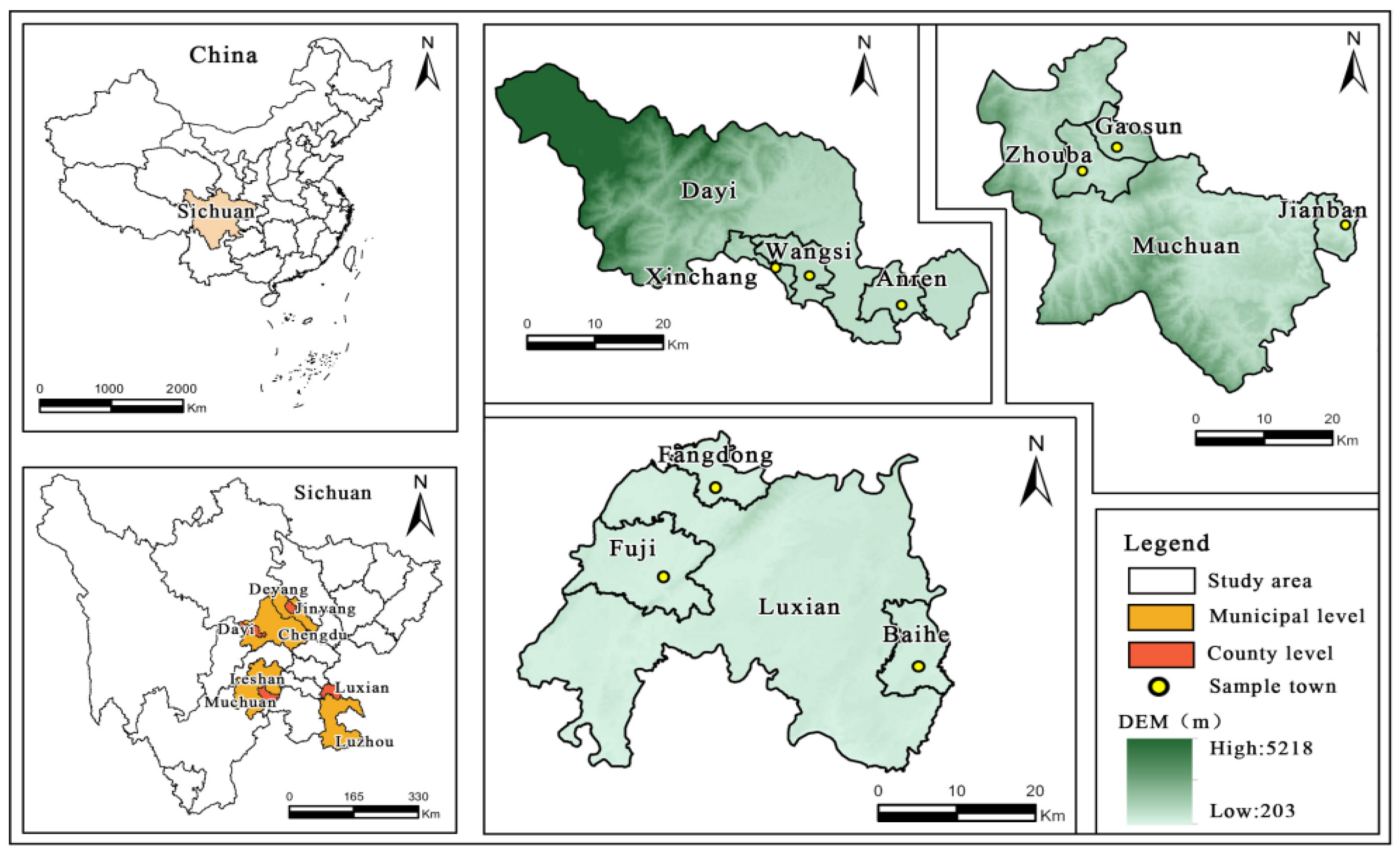
Figure 1. Map of study area.
Land 15 00374 g001
Table 1. Descriptive statistical analysis of variables.
VariableDefinition and MeasureMeanSD a
Abandonment BehaviorWhether the plot is abandoned: Yes = 1, No = 00.1050.306
Land ConsolidationWhether the plot underwent Land Consolidation: Yes = 1, No = 00.0640.244
Household Head’s AgeAge (years)60.059.852
Household Head’s GenderGender: Male = 1, Female = 00.9020.297
Years of EducationYears of education (years)6.5523.381
Share of elderly membersThe proportion of elderly household members in the total household population.0.2290.279
Village OfficialWhether a household member is a village official: Yes = 1, No = 00.1660.372
Household SizeNumber of household members living together (persons)4.2341.729
Distance from HomeDistance from the plot to home (in meters)5.5501.384
Basic FarmlandWhether the plot is designated as basic farmland: Yes = 1, No = 00.9190.273
Plot TerrainPlot characteristics (Plain = 1, Hill = 2, Mountain = 3)1.8450.721
Land Transfer BehaviorWhether the plot participates in land transfer: Yes = 1, No = 00.6770.468
Share of agricultural incomeAgricultural household income divided by total household income (%)0.2440.300
Agricultural InsuranceWhether the household purchases agricultural insurance: Yes = 1, No = 00.0900.286
Distance from Village to CountyDistance from the village committee to the county center (kilometers)3.2210.647
Road Hardening RateRoad hardening rate in the village (%)2.5112.103
Village irrigation facilitiesWhether the village has irrigation infrastructure: Yes = 1, No = 00.8580.349
Service depthThe number of production stages for which the household uses agricultural machinery services.0.9551.197
Service breadthThe coverage rate of agricultural machinery service use among households in the village (%)0.5230.319
Service qualityThe household’s overall assessment of the service provider’s operational quality (1 = very poor, 5 = very good).4.0020.801
Note: a SD = Standard deviation.
Table 2. Regression Results.
Dependent Variable: Farmers’ Abandonment Behavior
(1)(2)(3)(4)(5)(6)
LC−0.792 ***−0.744 ***−0.735 ***−0.716 ***−0.681 ***−0.718 ***
(0.158)(0.159)(0.163)(0.174)(0.177)(0.181)
Household Head’s Age 0.006 **0.009 ***0.013 ***0.012 ***0.012 ***
(0.003)(0.003)(0.003)(0.003)(0.003)
Household Head’s Gender 0.0180.020−0.0060.0290.007
(0.082)(0.082)(0.084)(0.086)(0.086)
Years of Education −0.020 ***−0.018 **−0.007−0.009−0.007
(0.008)(0.008)(0.008)(0.008)(0.008)
Share of elderly members −0.245 **−0.318 ***−0.275 **−0.243 **
(0.107)(0.112)(0.111)(0.111)
Household Size 0.069 ***0.077 ***0.073 ***0.075 ***
(0.014)(0.015)(0.015)(0.015)
Distance from Home 0.078 ***0.077 ***0.078 ***
(0.021)(0.021)(0.021)
Basic Farmland −0.227 ***−0.201 **−0.217 **
(0.085)(0.085)(0.085)
Plot Terrain 0.437 ***0.371 ***0.319 ***
(0.036)(0.037)(0.045)
Land Transfer Behavior −0.331 ***−0.324 ***
(0.052)(0.054)
Share of agricultural income −0.185 *−0.192 *
(0.101)(0.102)
Agricultural Insurance 0.229 **0.238 ***
(0.091)(0.090)
Distance from Village to County 0.016
(0.052)
Road Hardening Rate −0.032 **
(0.013)
Village irrigation facilities −0.219 ***
(0.070)
Constant−1.225 ***−1.471 ***−1.926 ***−3.335 ***−2.942 ***−2.665 ***
(0.024)(0.200)(0.217)(0.272)(0.273)(0.305)
Regional VariablesControlControlControlControlControlControl
Chi224.979 ***46.402 ***68.413 ***242.087 ***279.674 ***290.488 ***
N501450145014501450145014
Note: Robust standard errors in parentheses; *, ** and *** refer to p < 0.1, p < 0.05, and p < 0.01. Same for all tables below.
Table 3. Robustness Tests.
Farmers’ Abandonment Behavior
Replacement of the Core Explanatory VariableFiltering Plot SamplesReplacement of the Explained Variable
LC −0.635 ***−0.055 ***
(0.191)(0.014)
High-standard farmland construction−0.758 ***
(0.178)
Control variablesControlControlControl
Regional VariablesControlControlControl
F 19.437 ***
Chi2288.784 ***252.602 ***
N501434655014
Note: The control variables are the same as those shown in Table 2, and the estimates are omitted. Same for all tables below. *** refers to p < 0.01.
Table 4. Results of endogeneity test.
VariablesFirst StageSecond Stage
LCFAB
LC −0.6273 ***
(0.753)
IV0.8588 ***
(0.064)
Control variablesControlControl
Regional VariablesControlControl
Kleibergen-Paap rk LM statistic357.85 ***
N50145014
Note: *** refers to p < 0.01.
Table 6. Heterogeneous Effects of LC on Farmers’ Abandonment Behavior.
VariablesFarmers’ Abandonment Behavior
Type of TerrainType of FarmerDistance of Plot
SteepFlatNew Agricultural Business EntitiesOrdinary FarmersDistantNear
LC−0.348−0.648 ***−0.115 **−0.765 ***−1.109 ***−0.443 ***
(0.231)(0.076)(0.050)(0.102)(0.192)(0.076)
Control variablesControlControlControlControlControlControl
Regional VariablesControlControlControlControlControlControl
Component difference p-value0.0100.0000.000
N9754039933408118393175
Note: ** and *** refer to p < 0.05, and p < 0.01.
Disclaimer/Publisher’s Note: The statements, opinions and data contained in all publications are solely those of the individual author(s) and contributor(s) and not of MDPI and/or the editor(s). MDPI and/or the editor(s) disclaim responsibility for any injury to people or property resulting from any ideas, methods, instructions or products referred to in the content.


