1. Introduction
Food insecurity has increasingly been recognised as a territorially mediated expression of how contemporary food systems interact with structural inequalities, economic pressures, and the spatial organisation of urban life [
1,
2,
3]. Rather than being a mere outcome of individual circumstances, food insecurity reflects deeper processes of socio-economic marginalisation, uneven development, and differentiated exposure to vulnerability across places. Recent scholarship has shown how transformations in food environments—driven by economic restructuring, climate change, and persistent socio-spatial disparities—are reshaping the conditions under which households access affordable and nutritious food [
4,
5,
6]. In response, international organisations such as the FAO, HLPE, and WHO have called for analytical approaches capable of capturing the systemic, relational, and place-based nature of food access [
7,
8,
9]. These perspectives challenge narrow, consumption-focused understandings of food insecurity and call for frameworks that can trace how vulnerabilities are produced, reproduced, and governed within specific territorial contexts.
Within this debate, the Drivers–Pressures–State–Impacts–Responses (DPSIR) framework offers a valuable heuristic for unpacking the layered and interconnected dynamics that shape food insecurity. Although originally developed for environmental assessment, DPSIR has increasingly been applied to complex socio-ecological systems because of its capacity to link structural drivers, immediate pressures, observable conditions, societal impacts, and policy responses within an integrated analytical structure [
10,
11]. In the field of food studies, this approach resonates with calls to bridge quantitative indicators—such as affordability and nutritional metrics—with qualitative dimensions related to agency, rights, and structural justice [
12,
13]. Beyond its analytical value, DPSIR also provides a policy-relevant lens, helping to identify leverage points for intervention across different scales of governance.
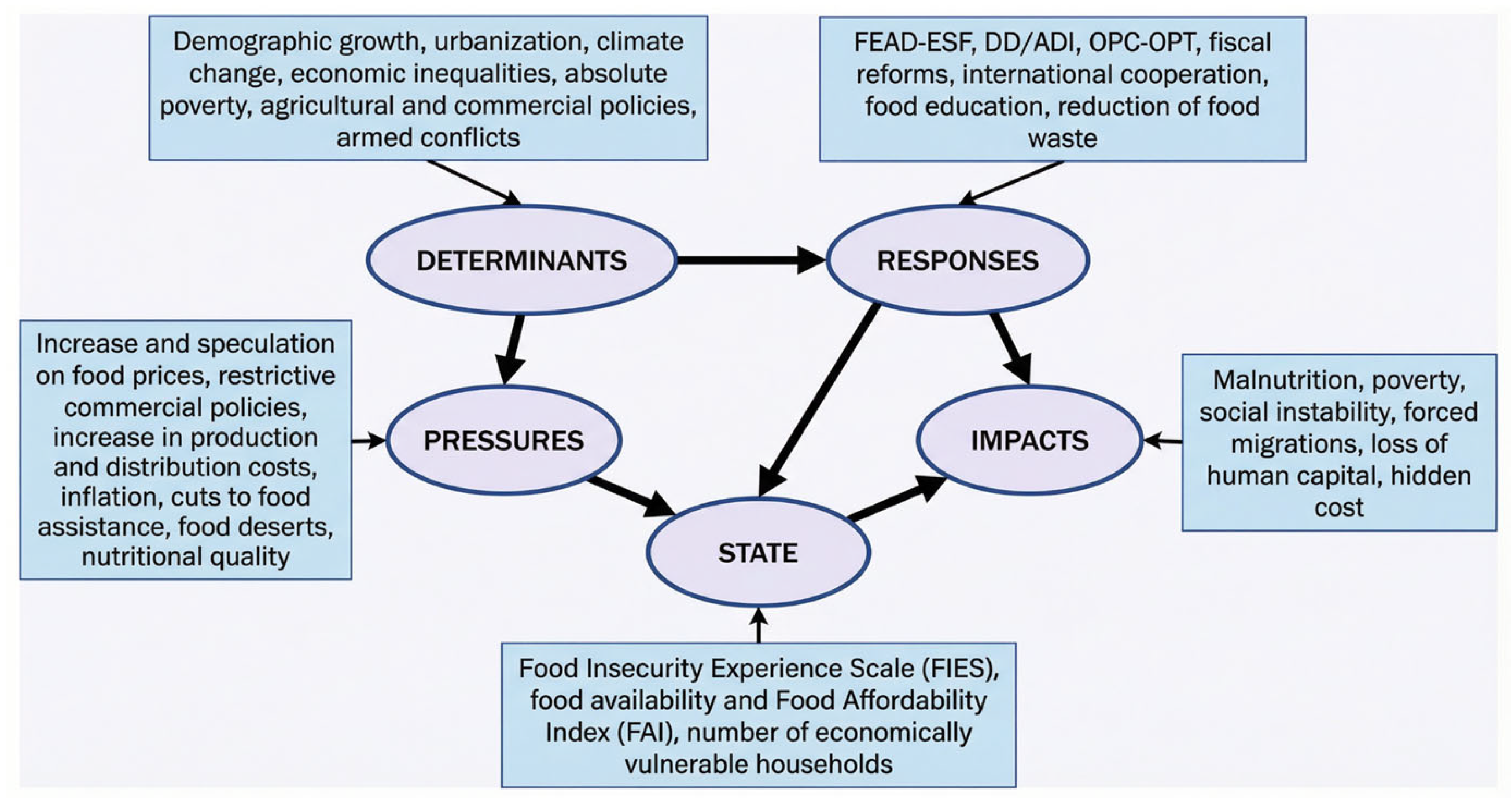
Figure 1 illustrates the DPSIR framework as applied in this study. Structural drivers include absolute poverty, socio-economic inequalities, and climate change, understood as forces that generate differentiated vulnerabilities across urban and peri-urban territories.
Pressures refer to concrete constraints on food access, such as rising food prices, sustained inflation, and spatial disruptions in food provision, captured through the combined presence of food deserts and food blackouts. The state dimension captures the observable conditions of food insecurity through indicators such as the Food Insecurity Experience Scale (FIES) and the Food Affordability Index (FAI).
The Food Insecurity Experience Scale (FIES) is an experiential metric developed by the FAO in 2013–2014 as part of the Voices of the Hungry initiative. It measures food insecurity based on people’s direct experiences—such as reduced dietary variety, skipping meals, or forgoing nutritious foods—and enables the identification of different severity levels (mild, moderate, and severe). Since 2014, it has been adopted as an internationally comparable tool and forms part of the indicators for Goal 2, “Zero Hunger”, of the 2030 Agenda.
The Food Affordability Index (FAI) measures the ratio between the cost of a healthy and sustainable diet and the average household food expenditure. Its construction is based on consumer price data collected by ISMEA and household expenditure data from ISTAT. The interpretation is straightforward: values below 1 indicate good affordability; a value of 1 reflects a balance between the cost of the recommended diet and actual household expenditure; and values above 1 signal increasing economic constraints in adopting the recommended diet. For a detailed methodological discussion, see [
14,
15]. In addition, the state dimension encompasses measures of physical accessibility and the number of individuals receiving food assistance.
Impacts encompass health and social consequences, including malnutrition, obesity, and the hidden costs that place increasing strain on public systems. Finally, responses include European instruments such as FEAD and ESF+, national measures such as the Inclusion Allowance (Assegno di Inclusione), and locally embedded infrastructures of solidarity. These are coordinated through the networks of Organizzazioni Partner Capofila (OpC) and Organizzazioni Partner Territoriali (OpT), which together form a territorially articulated welfare system aimed at mitigating food-related inequalities.
Taken together, these elements provide a systemic and territorially sensitive framework for analysing food insecurity in the Metropolitan Region of Rome. The empirical analysis draws on national and local datasets, summarised in
Table 1, to examine each component of the DPSIR model and to show how food insecurity is shaped, intensified, and spatially reproduced within the metropolitan food landscape.
The application of the DPSIR framework is particularly relevant in the case of Rome. The city represents an extremely heterogeneous urban system, characterised by deep socio-spatial inequalities that directly influence the availability, economic and physical accessibility, and quality of food available to residents. Italian urban scholarship has long documented how Rome is structured along a pronounced centre–periphery gradient, in which highly infrastructured areas coexist with peripheral territories marked by weaker commercial provision, limited public services, and reduced socio-economic opportunities [
16,
17,
18]. Within this context, food insecurity cannot be understood as a purely economic or individual condition. Rather, it emerges from the interaction between structural factors (poverty, unemployment, and inequality), environmental conditions (territorial endowment and physical access to food outlets), and institutional capacities (the reach and effectiveness of territorial welfare systems).
This interpretation is consistent with recent assessments by the European Environment Agency [
19] and aligns with the principles of the EU Farm to Fork Strategy, both of which emphasise the need for integrated, multi-level, and place-based policy responses. Building on this perspective, the present study moves beyond descriptive accounts of food insecurity in Rome and proposes an explicitly territorial reading of the phenomenon. By applying the DPSIR framework, it shows how municipal geographies shape food-related risks and highlights why institutional responses must be adapted to the differentiated vulnerabilities of urban contexts.
2. Materials and Methods
This study adopts a territorial and systemic analytical approach based on the Drivers–Pressures–State–Impacts–Responses (DPSIR) framework to examine food insecurity as a spatially embedded and structurally produced phenomenon. Rather than focusing on individual or household-level determinants, the analysis is designed to capture how food insecurity emerges from the interaction between socio-economic conditions, the spatial organisation of food environments and institutional arrangements within the urban food system.
The empirical analysis draws on national and local secondary datasets, integrating economic, social, spatial and administrative indicators. Data sources include official statistics on poverty and income conditions; indicators of economic accessibility to a healthy diet; measures of physical access to food retail; experiential data on food insecurity collected through the Food Insecurity Experience Scale (FIES); and administrative records on beneficiaries of food assistance programmes. These datasets are analysed at multiple territorial scales—metropolitan, municipal and sub-municipal—in order to identify spatial disparities, centre–periphery gradients and patterns of territorial vulnerability within the Metropolitan Region of Rome.
The DPSIR framework is employed as a heuristic and interpretative device to organise heterogeneous data and to structure the analysis across interconnected dimensions of food insecurity. In this application, drivers capture structural socio-economic conditions; pressures reflect economic, spatial and institutional constraints on food access; state indicators describe empirically observable conditions of food insecurity; impacts refer to health and social consequences; and responses include policy instruments and territorially embedded welfare infrastructures. This structure enables a systemic reading of food insecurity that links spatial patterns, institutional arrangements and socio-economic inequalities within a coherent analytical framework.
While DPSIR is often used to articulate causal narratives, in this study it is not applied as a tool for testing causal relationships in the econometric or micro-analytical sense. The analysis does not aim to infer household- or individual-level causality, nor to establish linear cause–effect mechanisms between income, access and dietary outcomes. Instead, DPSIR is used to identify territorially structured patterns, cumulative dynamics and feedback processes through which food insecurity is produced and reproduced within the metropolitan food system. This approach supports a policy-oriented and place-based interpretation of food insecurity, explicitly acknowledging the complexity and circularity that characterise urban food vulnerabilities.
3. Results
3.1. Driver: Absolute Poverty as a Determinant of Food Insecurity
Absolute poverty represents one of the most significant structural drivers of food insecurity. It does not merely describe the lack of economic resources required to meet essential needs; rather, it reflects a broader condition of capability deprivation, as articulated in Amartya Sen’s foundational work [
20,
21]. From this perspective, poverty should not be understood solely as insufficient income, but as a constraint on people’s substantive freedom to access diets that are adequate, culturally appropriate and sustainable within their everyday living environments.
A large body of national and international research has demonstrated that poverty is a powerful predictor of food insecurity. It affects both the quantity and quality of foods consumed, restricts the capacity for choice, and leads to nutritional compromises that reverberate through households’ health, well-being and long-term human capital [
4,
7,
22]. Importantly, these effects are not uniform, but are mediated by the characteristics of local food environments and by the institutional and infrastructural resources available to households.
In Rome, absolute poverty follows particularly pronounced territorial patterns. Its incidence is significantly higher in the eastern arc of the city (Municipalities IV, V, VI, VII and VIII), where incomes are lower, unemployment is more widespread and a larger share of household budgets is devoted to food expenditure. The proportion of school meal fee exemptions—used here as a proxy for economic vulnerability—is up to twice as high in these municipalities compared with central districts. This evidence confirms that poverty is spatially distributed along a marked centre–periphery gradient, consistent with urban analyses documenting the growing socio-economic polarisation of the capital [
16,
18].
In central districts, where income levels, services and territorial infrastructures are stronger, food-related risks tend to remain more contained. In peripheral municipalities, by contrast, poverty has become a structural and persistent condition affecting an expanding share of residents. Here, economic deprivation intersects with weaker commercial provision, limited mobility and fragmented welfare services, producing contexts in which the capacity to secure adequate food is systematically constrained.
Poverty shapes dietary practices through multiple, mutually reinforcing pathways. It limits the ability to purchase fresh and nutritious foods; encourages reliance on cheaper, energy-dense and ultra-processed products; increases exposure to compensatory or restrictive eating behaviours; and reduces the capacity to reach more distant or higher-quality food outlets. In Rome’s peripheral municipalities, these mechanisms are intensified by the simultaneous presence of economic fragility and infrastructural weakness. Households not only face constrained purchasing power but also encounter physical barriers to food access, as reflected in the extensive areas of food deserts and food blackouts identified in neighbourhoods such as Tor Bella Monaca, Torre Angela, San Basilio and Corviale.
In the Roman context, absolute poverty therefore operates not merely as a socio-economic indicator, but as a territorially embedded driver of food insecurity. The sharp disparities between central and peripheral municipalities illustrate how the capacity to access food is deeply conditioned by urban geography, reinforcing broader evidence on unequal food systems in large metropolitan areas.
3.2. Pressures: Economic, Social and Spatial Constraints on Food Access
Pressures encompass the economic, social, environmental and infrastructural factors that constrain households’ ability to access a healthy diet. In Italy, food inflation increased by 20 percent over the period 2018–2023, while the cost of the recommended diet rose by 24 percent. Over the same period, average wages and disposable household incomes did not keep pace with food price dynamics, resulting in a real reduction in food purchasing power, particularly among low- and middle-income households.
This divergence has made it increasingly difficult for many households to maintain balanced and healthy diets. These affordability constraints are captured by the Food Affordability Index (FAI), which relates the cost of a healthy diet to actual household food expenditure. International research consistently shows that rising prices and declining purchasing power disproportionately affect urban areas characterised by pronounced socio-spatial inequalities [
23,
24].
In Rome, economic pressures are unevenly distributed across municipalities. In central districts, where average incomes are higher and food retail provision more diverse, households tend to display greater resilience to price increases. In peripheral municipalities—particularly VI, VII and VIII—the impact of food inflation is far more severe due to lower incomes, limited capacity for dietary substitution and a less competitive retail environment. Here, reduced economic affordability interacts with pre-existing territorial disadvantages, amplifying vulnerability to food insecurity.
A substantial body of literature on food deserts has demonstrated that limited availability of fresh and high-quality food within neighbourhoods significantly shapes household food choices, dietary quality and health outcomes, especially in socio-economically disadvantaged urban contexts. Seminal studies have shown how spatial barriers to food access interact with income constraints, mobility limitations and local retail structures, producing uneven food environments that systematically disadvantage low-income populations [
23,
24,
25].
Building on this research, more recent contributions have argued for moving beyond a purely spatial understanding of food deserts towards a systemic perspective capable of capturing cumulative and intersecting vulnerabilities. In this direction, the concept of
food blackouts has been introduced to describe situations in which economic, infrastructural, logistical and social constraints overlap, preventing local food systems from ensuring stable, adequate and continuous access to food [
10]. Unlike food deserts, which primarily denote gaps in retail provision, food blackouts emphasise the dynamic and processual nature of food access failures embedded in specific territorial contexts.
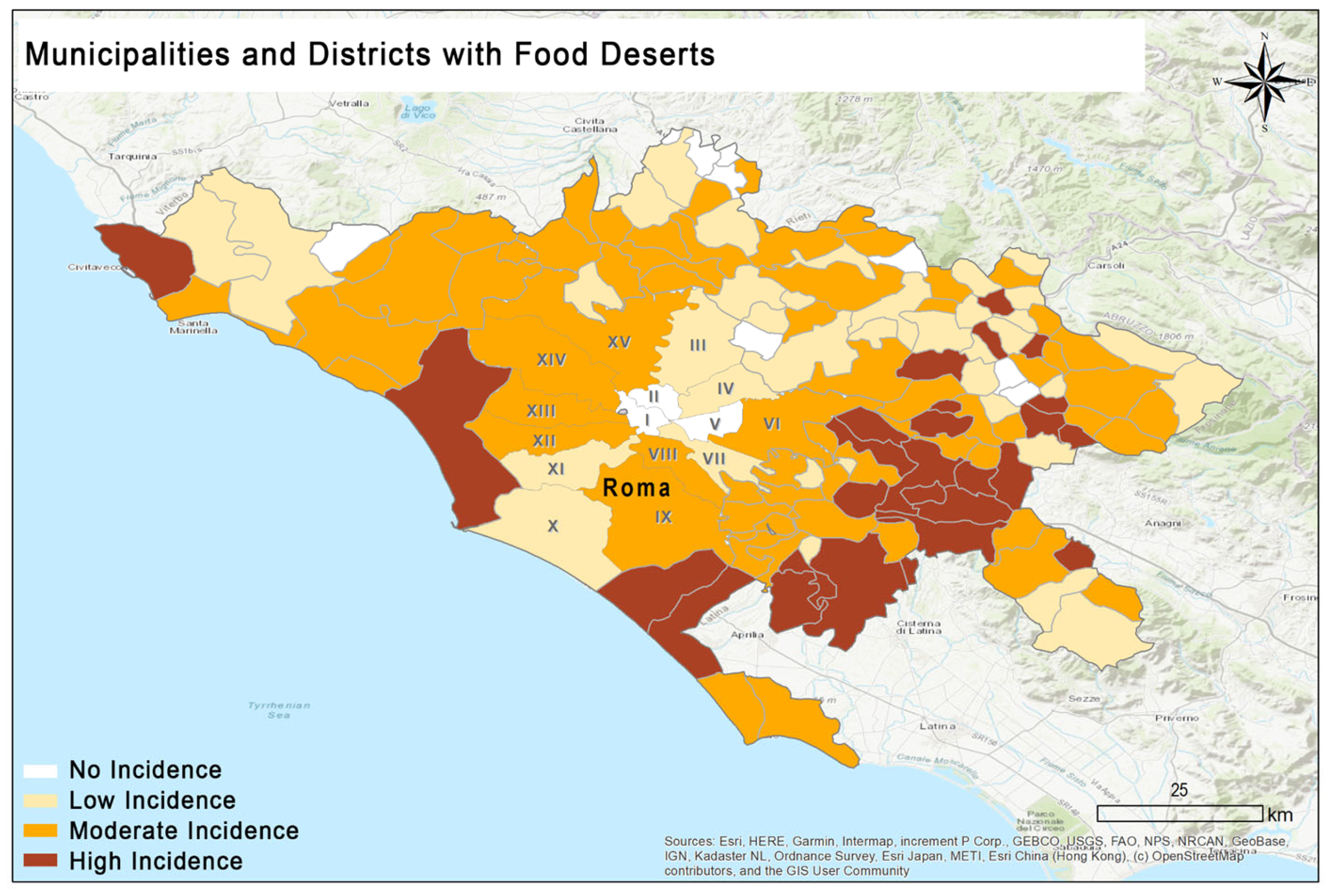
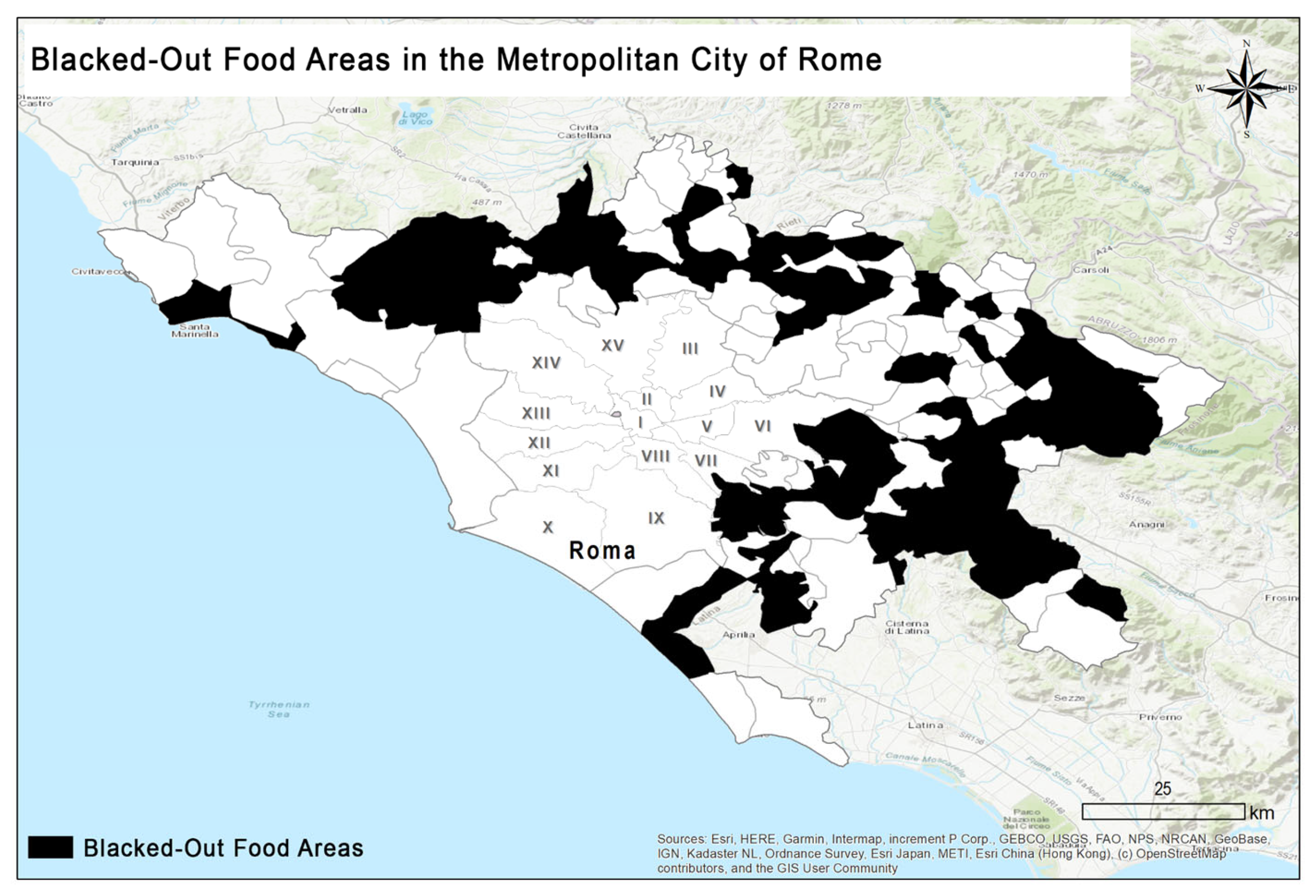
In Rome, food deserts are particularly concentrated in the eastern arc of the city (Municipalities IV, V, VI and VII; see
Figure 2), where extensive areas lack food retail outlets within a one-kilometre radius. In several neighbourhoods—including Tor Bella Monaca, Torre Angela, San Basilio, Borghesiana and Corviale—spatial deprivation intersects with low household incomes, limited mobility, weak commercial infrastructures and fragmented welfare provision. These areas therefore represent emblematic cases of food blackouts (see
Figure 3), in which disruptions in food access are not episodic but structural, reflecting deeper territorial inequalities within the metropolitan food system.
Food access pressures in Rome are further shaped by cultural and institutional factors. Limited nutritional knowledge, preferences for cheaper but less nutritious foods, discontinuity in food education policies and fragmented urban governance frameworks all contribute to shaping dietary practices and reinforcing existing vulnerabilities. These pressures do not operate in isolation but interact with economic and spatial constraints, particularly in disadvantaged neighbourhoods.
Overall, pressures on Rome’s food system are most intense in peripheral areas, where inflation, reduced economic affordability, limited physical accessibility and weak institutional capacity converge. The cumulative interaction of these pressures contributes to the reproduction of a profoundly unequal urban food system, in line with patterns observed in other large metropolitan regions [
19,
24].
3.3. State: Measuring Food Insecurity Through FIES, Food Assistance and Accessibility
Within the DPSIR framework, the
state dimension captures the empirically observable conditions through which structural drivers and contextual pressures materialise within specific territories. In recent years, the introduction of harmonised measurement tools—most notably the Food Insecurity Experience Scale (FIES) developed by FAO—has significantly strengthened the capacity to conduct comparable analyses of food insecurity across national and local contexts [
7]. When combined with economic indicators such as the Food Affordability Index (FAI) and administrative data on food assistance beneficiaries, these measures provide a multidimensional picture of food-related vulnerability.
In Rome, the experimental application of FIES between 2021 and 2024 indicates that 5.6 percent of residents experienced moderate or severe food insecurity in the initial phase of observation, declining to 4.3 percent in 2024. While this trend suggests a partial improvement at the metropolitan scale, the aggregate figure conceals substantial territorial disparities. In Municipalities VI, VII and VIII, the prevalence of food insecurity remains significantly higher than the city average, confirming the persistence of spatially concentrated vulnerability.
Administrative data on food assistance further reinforce this uneven geography. In the Municipality of Rome, 5.5 percent of residents receive food support, with peaks exceeding 7 percent in several eastern and south-eastern municipalities. In the wider Metropolitan City excluding Rome (CMRC), the proportion of food assistance beneficiaries remains high at 4.2 percent, indicating that food insecurity is not confined to the urban core but also affects peri-urban territories characterised by weaker service provision.
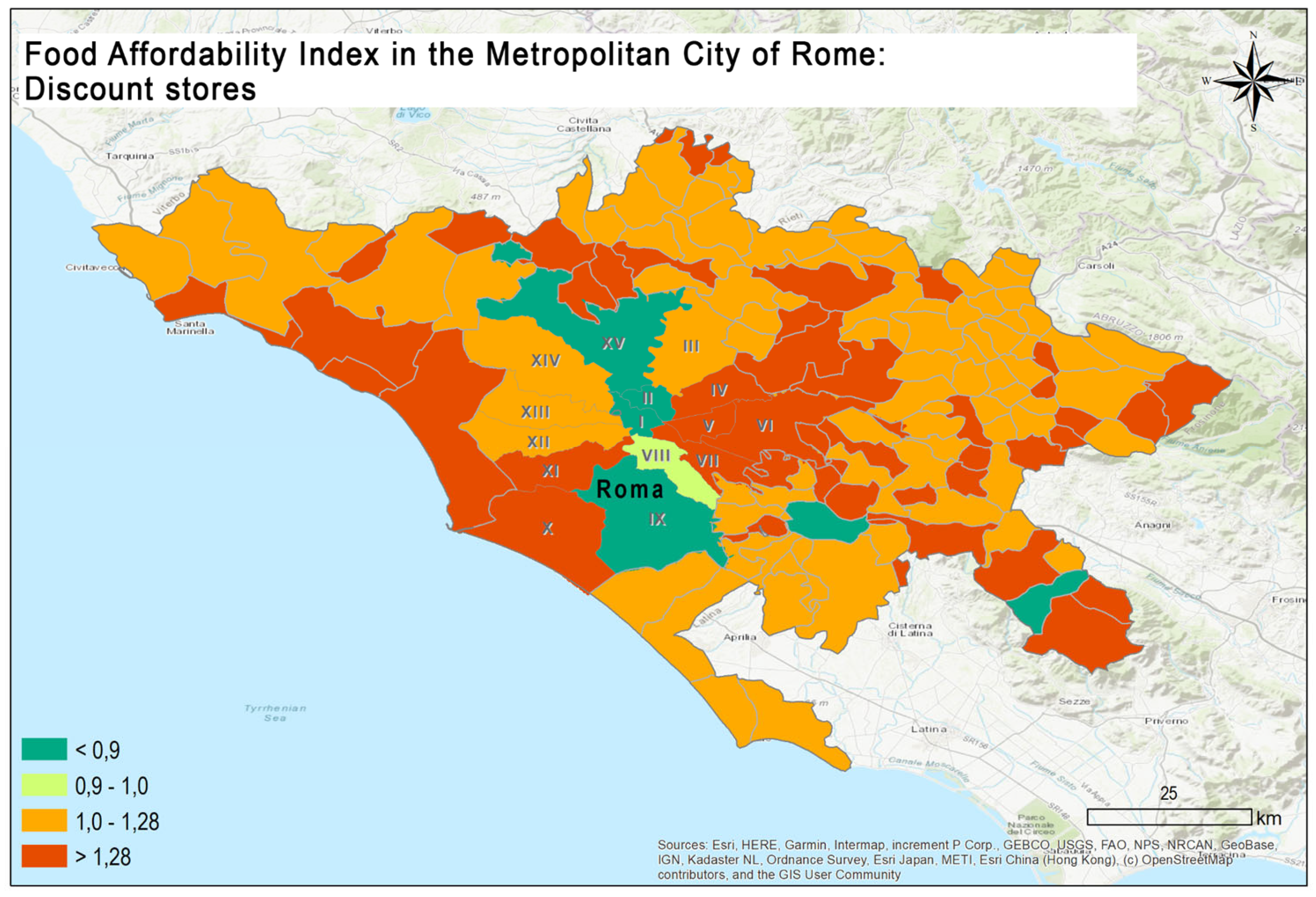
Economic accessibility indicators point in the same direction. The Food Affordability Index (FAI) measures households’ capacity to sustain the cost of a healthy diet by relating the estimated cost of a nutritionally adequate food basket to actual household food expenditure. In this study, FAI values are calculated across different food retail channels, including discount retailers, supermarkets and local markets, in order to capture how economic accessibility varies according to both prices and commercial formats.
Across channels, results consistently show higher FAI values in peripheral municipalities, indicating greater difficulty in sustaining the cost of a healthy diet.
Figure 4 focuses specifically on the discount retail channel, which is often assumed to represent the most economically accessible option for low-income households. The spatial distribution of FAI values calculated for this channel reveals that, even when relying on low-cost retail formats, significant territorial disparities persist. In several peripheral municipalities, FAI values remain well above sustainability thresholds, signalling that economic vulnerability is not fully mitigated by the presence of cheaper retail options.
Spatial accessibility further compounds these conditions. The eastern arc of Rome contains extensive areas classified as food deserts, where physical access to food retail is limited. Neighbourhoods such as Tor Bella Monaca, Torre Angela, Borghesiana and San Basilio combine economic fragility with reduced physical access to food outlets, reinforcing patterns of structural disadvantage already identified through economic and experiential indicators. In these contexts, the predominance of low-cost retail channels may alleviate short-term affordability constraints, but often does so at the expense of dietary diversity and quality.
Taken together, the state indicators depict a highly unequal geography of food insecurity in the capital. Central and semi-central municipalities display lower levels of vulnerability, while peripheral municipalities display higher FIES prevalence, elevated FAI values across retail channels, greater reliance on food assistance and pronounced infrastructural fragility. This configuration provides the empirical basis for interpreting food insecurity in Rome as a structurally and spatially produced condition, rather than a transient or evenly distributed phenomenon.
3.4. Impacts: The Hidden Costs of Malnutrition and the Burden of Obesity
The impacts of food insecurity extend far beyond the issue of food availability, affecting health, social well-being, productivity and the long-term sustainability of public health systems. Different forms of malnutrition—including undernourishment, overweight and obesity—represent some of the most immediate and visible manifestations of fragile urban food systems [
7,
25]. International organisations such as the World Health Organization have repeatedly highlighted the growing prevalence of diet-related chronic diseases in urban contexts, where socio-spatial inequalities expose specific population groups to heightened health risks [
26].
In Rome, health impacts display a pronounced territorial polarisation. Data from Local Health Authorities (ASL Roma 1 and 2) indicate that 32.6 percent of the adult population is overweight and 10.4 percent is affected by obesity, while childhood obesity reaches 9.8 percent. The prevalence of diabetes (4.8 percent) signals additional vulnerabilities, with marked differences between central and peripheral areas of the metropolitan region.
These health outcomes are significantly less prevalent in central and semi-central municipalities, but become structural in Municipalities VI, VII and VIII. This pattern reflects the combined effects of constrained economic resources, limited food accessibility and weaker infrastructural provision. It is consistent with a broad body of urban health literature showing that social and territorial determinants play a decisive role in shaping health outcomes, beyond individual behaviours or preferences [
27,
28].
In the Roman metropolitan context, the geography of health impacts closely overlaps with the geography of food vulnerability. Neighbourhoods such as Tor Bella Monaca, Torre Angela, San Basilio, Borghesiana, Corviale and several peripheral areas of the CMRC simultaneously exhibit higher rates of obesity and diabetes, elevated Food Affordability Index values, limited commercial provision and strong dependence on the OpC–OpT food assistance network. This spatial convergence suggests that health risks are not randomly distributed, but follow territorial logics shaped by the organisation and performance of local food systems.
The notion of hidden costs provides a useful lens for interpreting these dynamics. Beyond direct health outcomes, food insecurity and malnutrition generate indirect and often underestimated costs, including increased hospital admissions, avoidable healthcare expenditure linked to preventable diseases, reduced productivity, pressure on public budgets and declining quality of life. These costs tend to accumulate over time and disproportionately affect already vulnerable territories.
In Rome, health and social costs associated with food insecurity are strongly concentrated in peripheral municipalities, where economic vulnerability, limited food accessibility and adverse health outcomes reinforce one another. Evidence from public health surveillance systems and epidemiological studies points to a growing demand for the treatment of diet-related conditions—particularly diabetes and cardiovascular diseases—especially in socio-economically disadvantaged urban areas [
6,
29,
30].
As highlighted in recent research on food poverty and urban food systems in Italy, these patterns do not reflect isolated health issues, but the cumulative effects of structurally unequal food environments. In such contexts, constrained food choices translate into long-term health penalties and increasing pressure on healthcare systems, generating self-reinforcing dynamics of vulnerability [
10,
15]. Importantly, these processes are not unidirectional: deteriorating health conditions may, in turn, exacerbate economic and social vulnerability by increasing household expenditures, limiting life opportunities and reducing participation in the labour market.
Overall, the impacts of food insecurity in the capital are profoundly territorialised. Central and semi-central municipalities tend to display more favourable health conditions and lower levels of vulnerability, benefiting from higher incomes, better-performing food environments and stronger service provision. Peripheral municipalities, by contrast, indicate higher health risks, increased healthcare costs and more severe forms of food insecurity. This uneven geography of impacts confirms that food insecurity in Rome is not merely a social condition, but a territorially produced outcome of unequal urban development. Addressing it therefore requires differentiated, place-based and justice-oriented policy responses capable of tackling both the immediate health consequences and the structural drivers that sustain vulnerability over time.
3.5. Responses: Policies and Instruments to Address Food Insecurity
Institutional and societal responses to food insecurity have undergone significant transformations in recent years. At the European level, the transition from the Fund for European Aid to the Most Deprived (FEAD) to the European Social Fund Plus (ESF+) has strengthened the capacity of welfare systems to integrate food distribution with broader social inclusion and activation measures. International organisations such as the FAO, WHO, HLPE and European Environment Agency (EEA) have repeatedly emphasised the need for multi-level, coordinated and long-term responses capable of addressing the structural determinants of food insecurity rather than its symptoms alone.
In Rome, the networks of Organizzazioni Partner Capofila (OpC) and Organizzazioni Partner Territoriali (OpT) constitute a central pillar of the local response to food insecurity. With approximately 190 OpC and more than 10,000 OpT operating across the Metropolitan City, these networks ensure widespread distribution of food parcels, ready-to-eat meals, donated products, FEAD goods and proximity-based services. They represent a crucial territorial infrastructure through which food access is partially secured for economically vulnerable households.
However, the territorial distribution and operational capacity of these networks are highly uneven. In central municipalities, food assistance structures tend to be more consolidated and more closely integrated with local welfare services. In peripheral municipalities—particularly VI, VII and VIII—high and persistent levels of socio-economic vulnerability generate continuous demand for food assistance that frequently exceeds organisational capacity. This imbalance places increasing strain on local providers and highlights the limits of assistance-based responses in contexts of structural deprivation.
In 2023, 5.5 percent of residents in the Municipality of Rome benefited from FEAD-supported food assistance. This share exceeds 7 percent in several peripheral municipalities, confirming the presence of systemic and spatially concentrated vulnerabilities. In the wider Metropolitan City excluding Rome (CMRC), the proportion stands at 4.2 percent, indicating that food fragility also characterises peri-urban territories with weaker service provision. Taken together, these data suggest that food assistance has evolved from an emergency response into a stable component of territorial welfare, consistent with broader analyses of contemporary urban food systems [
31,
32].
While essential, the consolidation of food assistance as a permanent welfare instrument raises critical questions. In the absence of complementary structural interventions, assistance risks compensating for persistent gaps in income support, housing, mobility and food infrastructure, rather than contributing to their resolution. In this sense, food assistance functions as a necessary but insufficient response within a broader system of vulnerability.
These limitations are closely linked to Rome’s fragmented food governance. Responsibilities for food-related issues are distributed across the municipality, districts, region, Local Health Authorities (ASL), third-sector organisations and private actors, without any permanent coordination mechanism. This fragmentation constrains the capacity of policies to address food insecurity in a systematic way and to align social, health, urban and food-related interventions across scales.
Unlike cities such as Milan, London, Amsterdam or Barcelona, Rome does not currently have a formalised city-wide Food Policy or a permanent coordinating body for the urban food system. This absence represents a major institutional gap, particularly in light of the pronounced territorial inequalities identified through the DPSIR analysis.
The DPSIR framework highlights that municipalities within Rome do not face homogeneous conditions of vulnerability and therefore require differentiated responses. In central and semi-central areas, policy priorities may focus on prevention, food education, dietary quality and health promotion. In peripheral municipalities, by contrast, structural interventions are required, including the strengthening of the OpC–OpT network; the development of solidarity-based food hubs; targeted support for high-quality and accessible retail outlets; commercial and planning policies in food desert and food blackout areas; investments in mobility; and the reinforcement of territorial social services.
This differentiated approach aligns with place-based policy principles widely discussed in the territorial development literature and is essential for reducing centre–periphery disparities and improving food equity in the capital [
14,
18]. The evidence presented in this study clearly indicates that Rome requires an integrated metropolitan Food Policy capable of coordinating institutional actors, civic networks, universities and the private sector. Such a policy should aim to reduce territorial inequalities; align social, health, educational and urban policies; support commercial systems in fragile neighbourhoods; systematically monitor key indicators such as FIES, FAI and food assistance uptake; and promote context-sensitive interventions across municipalities.
Rome possesses many of the conditions necessary to become a national laboratory for innovation in urban Food Policy, including a dense territorial welfare infrastructure, an active research ecosystem and growing institutional awareness of food sustainability challenges. Realising this potential, however, requires a qualitative shift in governance towards stable, multi-level and justice-oriented coordination capable of addressing food insecurity as a structurally and territorially produced phenomenon.
4. Discussion
This study interprets food insecurity as a territorially embedded and structurally produced phenomenon, shaped by the interaction between socio-economic inequalities, the spatial organisation of food environments and institutional responses within an urban food system. By applying the DPSIR framework to the Metropolitan Region of Rome, the analysis offers an integrated interpretation of how food-related vulnerabilities are generated, spatially differentiated and reproduced across urban contexts.
Rather than reinforcing individualised explanations of food insecurity, the findings highlight the role of place-specific and cumulative processes linking poverty, food affordability, spatial access, health outcomes and welfare arrangements. In this respect, the study contributes to a growing body of literature that foregrounds the structural, spatial and governance-related dimensions of food insecurity, and it underscores the value of territorial analytical frameworks for informing place-based and justice-oriented policy responses.
4.1. Interpreting Territorial Patterns Without Micro-Level Causality
The territorial approach adopted in this study inevitably raises questions concerning causality. The use of aggregated indicators and spatial alignments does not allow for testing household- or individual-level causal relationships between income, food access and dietary outcomes. This limitation is inherent to the scale and nature of the data employed and is explicitly acknowledged in the methodological design.
However, the aim of the analysis is not to replace micro-level quantitative research—which remains essential for identifying behavioural, nutritional and income-related differences across households—but to complement it by illuminating how food insecurity emerges as a structurally and spatially mediated condition. The results demonstrate that food insecurity in Rome is not randomly distributed, but follows clear and persistent territorial gradients that mirror long-standing centre–periphery inequalities in income levels, service provision, infrastructure endowment and institutional capacity.
From this perspective, the DPSIR framework should be interpreted not as a deterministic causal model but as an analytical and interpretative lens for identifying cumulative and recursive processes operating at the territorial level. The observed spatial convergence of poverty, reduced economic and physical accessibility to food, reliance on food assistance and adverse health outcomes does not, in itself, establish linear cause–effect relationships. Rather, it reveals the presence of urban contexts in which multiple dimensions of vulnerability overlap, interact and reinforce one another over time, shaping differentiated food-related risks across the metropolitan landscape.
4.2. Cumulative Processes, Feedback Loops and Territorial Vulnerability
One of the key contributions of this study lies in showing that food insecurity in Rome unfolds as a cumulative and territorially differentiated process, rather than as the outcome of isolated or episodic factors. The spatial alignment between high levels of absolute poverty, elevated Food Affordability Index values, the presence of food deserts and food blackouts, and a higher prevalence of obesity and diet-related diseases points to the existence of feedback loops, rather than unidirectional causal chains.
Crucially, the observed association between economic poverty and poor dietary outcomes does not rule out the possibility of reverse or bidirectional causality. Poor diets and deteriorating health conditions may, in turn, exacerbate economic vulnerability by increasing healthcare expenditures, reducing productivity and limiting participation in the labour market. The DPSIR framework allows these reciprocal dynamics to be conceptualised within a broader system in which drivers, pressures, states and impacts interact across time and space, reinforcing one another.
What the analysis demonstrates, therefore, is not that poverty mechanically causes poor diets at the household level, but that specific urban contexts combine economic fragility, infrastructural gaps and institutional constraints in ways that systematically restrict residents’ capacity to access healthy and sustainable food. In this sense, food insecurity emerges as a territorially produced condition, shaped by the spatial organisation of the urban food system and by unequal distributions of resources, services and opportunities across the metropolitan area.
4.3. The Added Value—And Limits—Of a Territorial DPSIR Approach
By adopting a territorial DPSIR perspective, this study contributes to ongoing debates on the limitations of individualised and consumption-centred approaches to food insecurity. While household-level data are indispensable for measuring dietary intake, nutritional outcomes and income-related constraints, they often fall short in capturing the role of place, infrastructure and governance arrangements in shaping food-related risks. A territorial framework makes it possible to account for how food insecurity is embedded in broader urban systems and institutional configurations.
The Rome case clearly demonstrates that territorial configurations matter. Peripheral municipalities characterised by weak commercial provision, limited mobility, fragmented welfare services and high socio-economic vulnerability face structurally different food access conditions compared with central and semi-central areas. Importantly, these disparities tend to persist even during periods of macroeconomic improvement, suggesting that food insecurity cannot be fully addressed without confronting the spatial and institutional dimensions of urban inequality.
At the same time, it is important to recognise the limits of the DPSIR framework as applied in this study. While effective in organising and interpreting structural drivers, pressures, observable conditions and policy responses, DPSIR does not fully capture the diversity of grassroots and community-led food practices that operate outside institutional food assistance systems. In several urban contexts, including Rome, initiatives such as urban gardens, community farms, informal food-sharing networks and mutual aid practices contribute to food access, social inclusion and local resilience, particularly among populations experiencing food insecurity.
These practices often mobilise local knowledge, social capital and collective agency, and they may represent significant components of place-based food policies that build on existing territorial assets rather than focusing exclusively on deficits. Although a systematic analysis of such initiatives lies beyond the empirical scope of this study, acknowledging their role underscores the need for complementary analytical perspectives and highlights promising directions for future research and policy experimentation aimed at strengthening local food systems.
4.4. Implications for Research and Policy
The findings of this study have both analytical and policy implications. From a research perspective, they point to the need for stronger integration between territorial analyses and household-level quantitative studies. While spatial approaches are essential for identifying place-based patterns of vulnerability, future research combining spatial accessibility measures with micro-level dietary, income and health data would be crucial to further test the mechanisms suggested by the territorial configurations identified here. Such integrative approaches would also help to better capture the interaction between institutional responses, market dynamics and community-led food practices within urban food systems.
From a policy perspective, the results reinforce the case for place-based and justice-oriented interventions. The pronounced centre–periphery gradient observed in Rome indicates that uniform, one-size-fits-all policy instruments are unlikely to be effective. Instead, differentiated strategies are required—strategies capable of responding to the specific configurations of vulnerability present in different urban contexts, while simultaneously recognising both structural deficits and locally embedded resources.
In the absence of an integrated city-wide Food Policy, food assistance networks such as the OpC–OpT system have become a structural component of welfare provision, particularly in peripheral municipalities. While indispensable in ensuring short-term access to food, these responses remain largely reactive and are insufficient, on their own, to address the structural drivers of food insecurity. Without complementary interventions targeting poverty, food accessibility, commercial infrastructures and territorial inequalities, food assistance risks functioning as a compensatory mechanism rather than as part of a transformative policy framework.
A coordinated metropolitan Food Policy therefore emerges as a necessary step to address food insecurity in a more systematic and preventive manner. Such a policy would be essential to align social, health, urban and food-related interventions across governance levels; to strengthen food infrastructures in disadvantaged areas; and to create enabling conditions for both institutional and community-based responses. By embedding food security within a broader territorial justice agenda, an integrated Food Policy could contribute to reducing long-standing spatial inequalities and improving the resilience of Rome’s urban food system.
5. Conclusions
The DPSIR framework enables food insecurity to be interpreted as a complex and systemic phenomenon, in which structural drivers, economic and spatial pressures, observable conditions, health outcomes, and institutional responses are deeply intertwined. When applied to the Metropolitan City of Rome, the framework highlights how these dimensions assume distinct territorial configurations, reflecting an urban food system shaped by long-standing socio-spatial inequalities rather than by isolated or incidental dynamics.
In Rome, the structural drivers of food insecurity—absolute poverty, economic inequalities, and territorial vulnerabilities—interact with a set of mutually reinforcing pressures. These include economic pressures such as food inflation and the rising cost of a healthy diet; physical constraints linked to the uneven spatial distribution of food outlets, food deserts, and food blackouts; and institutional shortcomings, most notably the absence of a coordinated city-wide Food Policy. These pressures are particularly acute in peripheral districts, where households face fewer economic buffers and more limited opportunities to compensate for reduced food access.
Within this configuration, economic poverty does not operate as a simple or linear cause of food insecurity. Rather, it functions as a central structural driver within a cumulative and territorially mediated process, in which reduced economic affordability, limited physical accessibility, and constrained dietary options reinforce one another over time. This process is not unidirectional, but is characterised by feedback loops through which deteriorating diets and health conditions may further intensify vulnerability. In Rome, these dynamics are especially visible in peripheral municipalities, where reliance on the Organizzazioni Partner Capofila (OpC) and Organizzazioni Partner Territoriali (OpT) network has become a stable—rather than exceptional—strategy for securing access to food.
The analysis of the state dimension reveals a clear polarisation across the metropolitan area. Central and semi-central municipalities display more favourable socio-economic conditions, a denser and more diversified commercial landscape, and a lower prevalence of food insecurity. By contrast, Municipalities VI, VII, and VIII—located in the eastern and south-eastern quadrants—concentrate higher levels of absolute poverty, higher rates of school meal fee exemptions, and critical values of the Food Affordability Index (FAI), confirming the presence of entrenched territorial vulnerabilities.
Health outcomes follow the same spatial gradient. The territorial overlap between food insecurity indicators and the prevalence of overweight, obesity, and diabetes suggests that some areas of Rome constitute genuine obesogenic environments, in which economic deprivation, weak food infrastructures, and limited institutional support combine to produce adverse public health outcomes. These findings reinforce the understanding that health inequalities are closely connected to the condition of local food systems and to the broader spatial organisation of the city.
Institutional and social responses, while essential, remain fragmented. The OpC–OpT network provides a crucial safety net and represents a significant territorial asset; however, its capacity is increasingly strained in peripheral districts, where demand for food assistance is high and continuous. In the absence of an integrated governance framework, food assistance risks becoming a permanent substitute for structural interventions rather than a component of a broader strategy aimed at reducing vulnerability.
Overall, the analysis points to the need for a more cohesive and strategic approach to food governance in Rome—one capable of addressing the root conditions that shape food insecurity, including poverty, economic accessibility, commercial infrastructure, and territorial inequality. The DPSIR framework makes clear that food insecurity in Rome is a deeply territorialised phenomenon, and that effective responses must therefore be place-based, differentiated, and justice-oriented.
An integrated metropolitan Food Policy thus emerges as a necessary step in this direction. Such a policy should strengthen coordination across the Municipality, Districts, Region, Local Health Authorities (ASL), and the OpC–OpT network; support targeted investments in food infrastructures in disadvantaged areas; improve both economic and physical access to food; promote prevention- and health-oriented interventions; and ensure systematic monitoring of key indicators such as the Food Insecurity Experience Scale (FIES), the Food Affordability Index (FAI), and diet-related health outcomes.
Rome possesses many of the conditions required to become a national laboratory for innovation in urban food policy, including a dense territorial welfare network, an active research community, and growing institutional awareness of food-related sustainability challenges. Realising this potential, however, requires a qualitative shift in governance—one grounded in a long-term vision, cross-sectoral coordination, and a firm commitment to territorial justice.