Gradient Characteristics and Nonlinear Driving Mechanisms of “Production–Living–Ecological” Space Evolution in Mountainous Villages: A Case from Taiji Town, Chongqing


Abstract
1. Introduction
2. Research Design
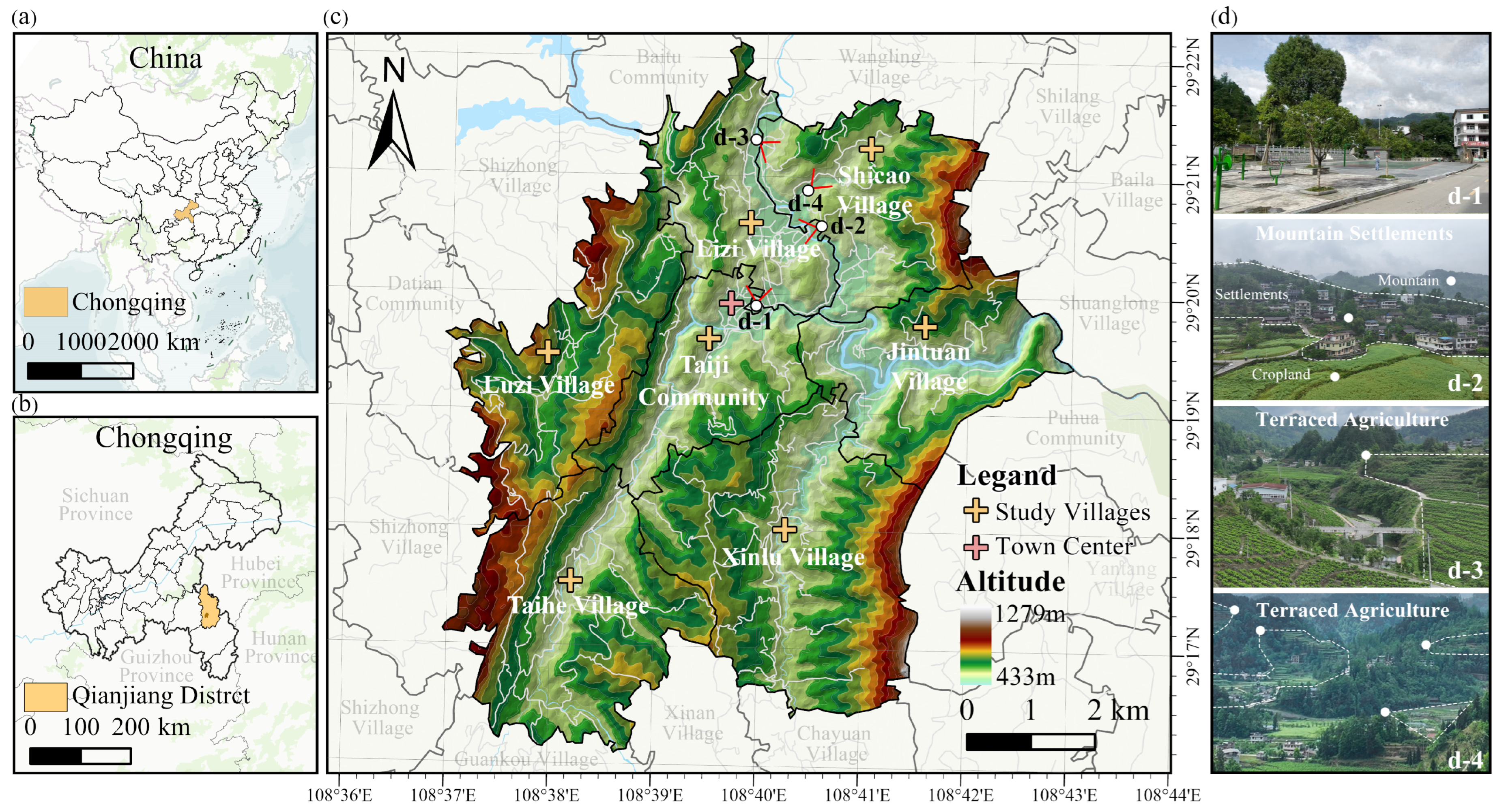
2.1. Study Area
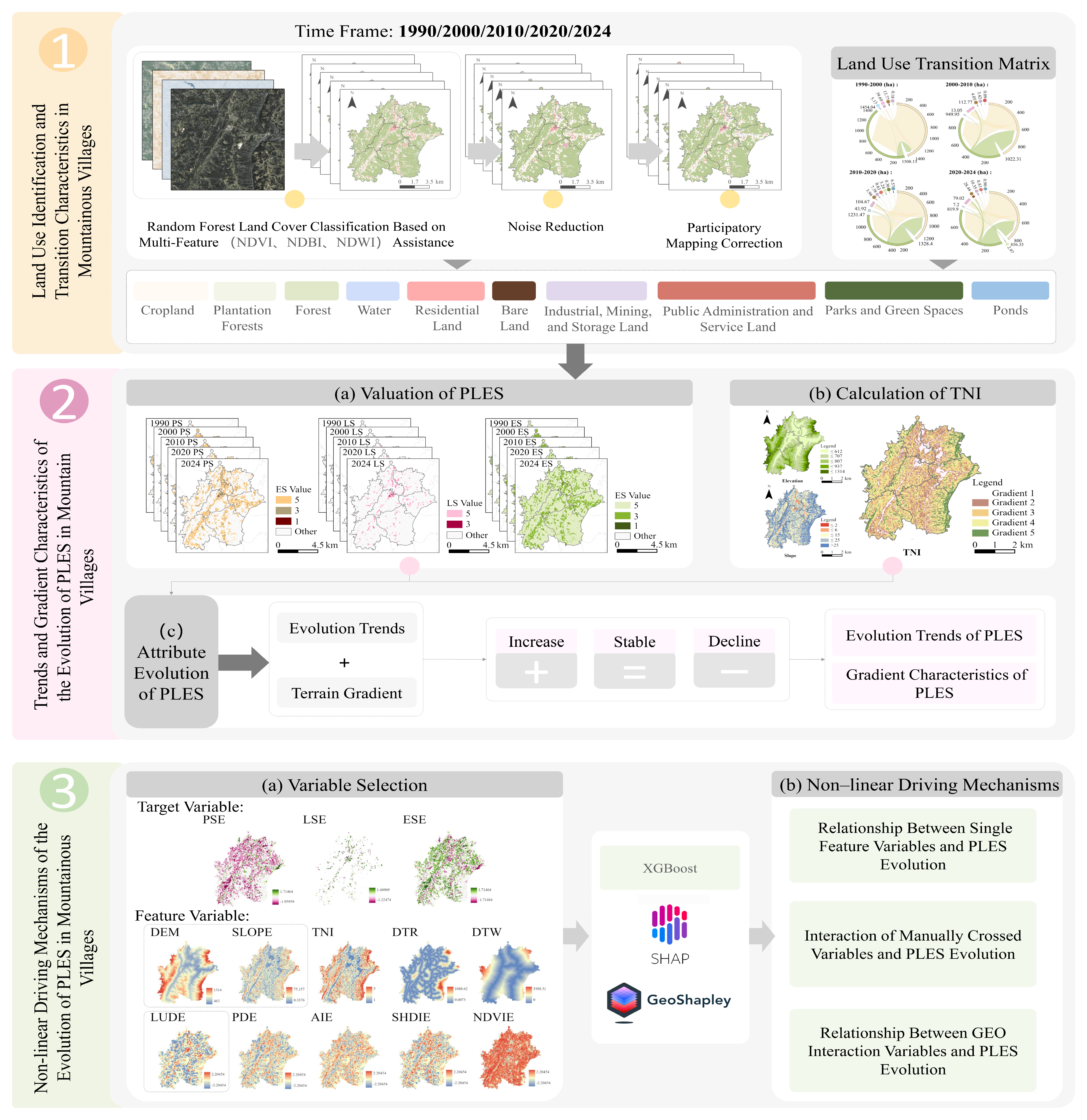
2.2. Research Framework
- (1)
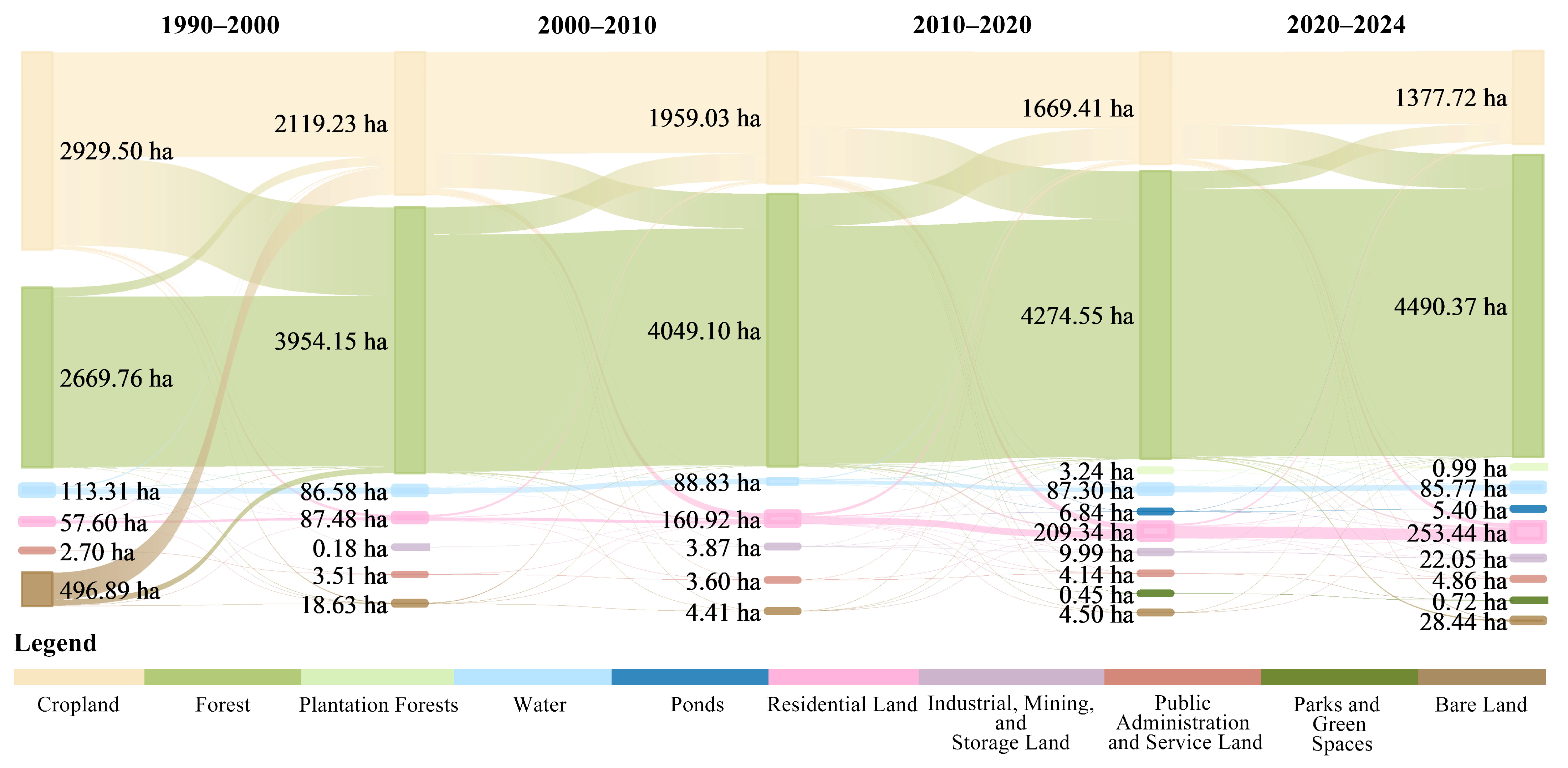
- Land Use Identification and Transition Characteristics in Mountainous Villages: By utilizing multi-temporal remote sensing imagery, effective methods for accurately identifying land cover data in the town scale are explored to analyze the characteristics of land use transition in the mountain village.
- (2)
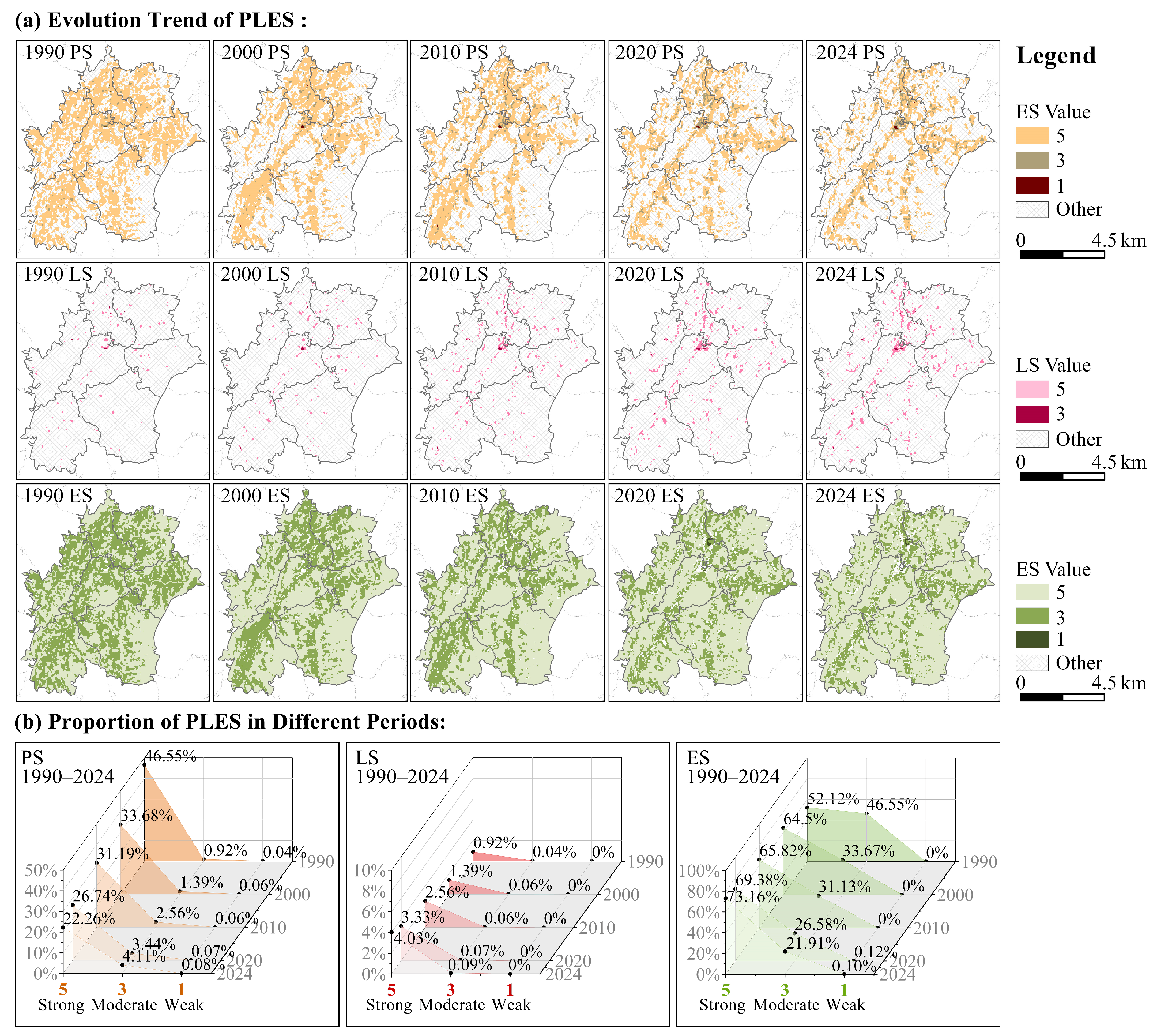
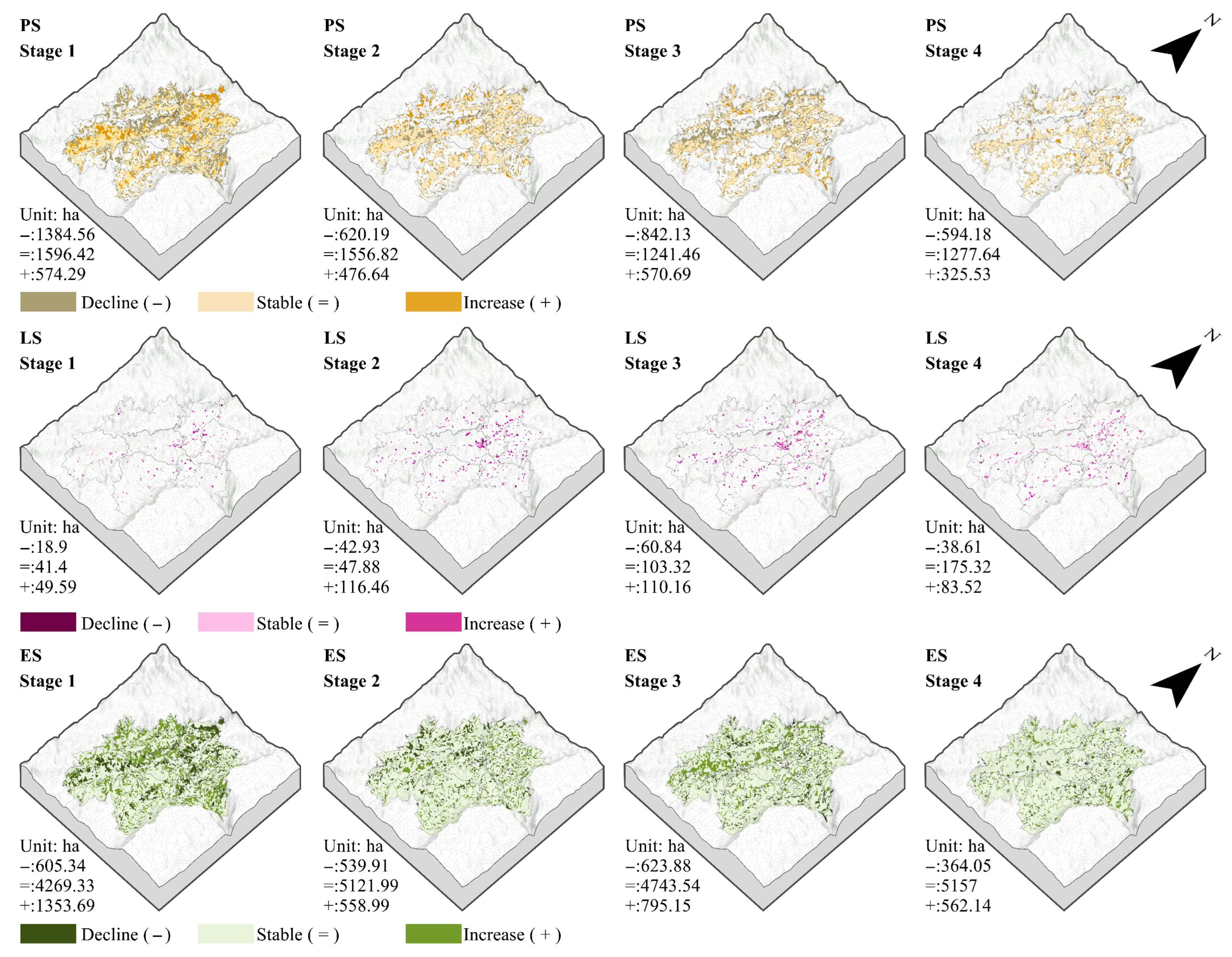
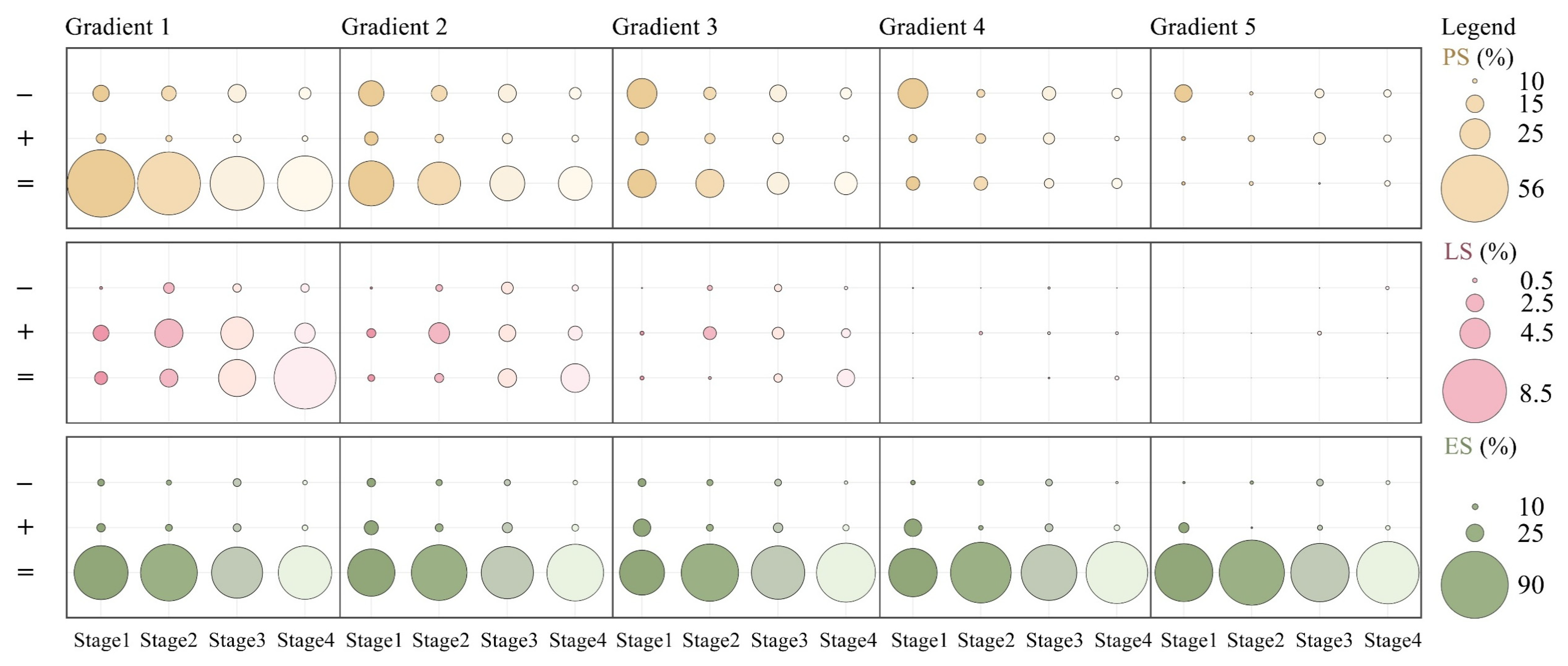
- Trends and Gradient Characteristics of the Evolution of PLES in Mountain Villages: Production, living, and ecological weights are assigned to different land types, and an “Elevation-Slope” terrain niche index is established. The spatial gradient distribution of the integrated PLES in Taiji Town is explored during the periods 1990–2000, 2000–2010, 2010–2020, and 2020–2024 (hereinafter referred to as Stage 1, Stage 2, Stage 3, and Stage 4). From the three perspectives of “increase–stable–decline”, the gradient evolution characteristics of the PLES under different time periods and gradients are revealed.
- (3)
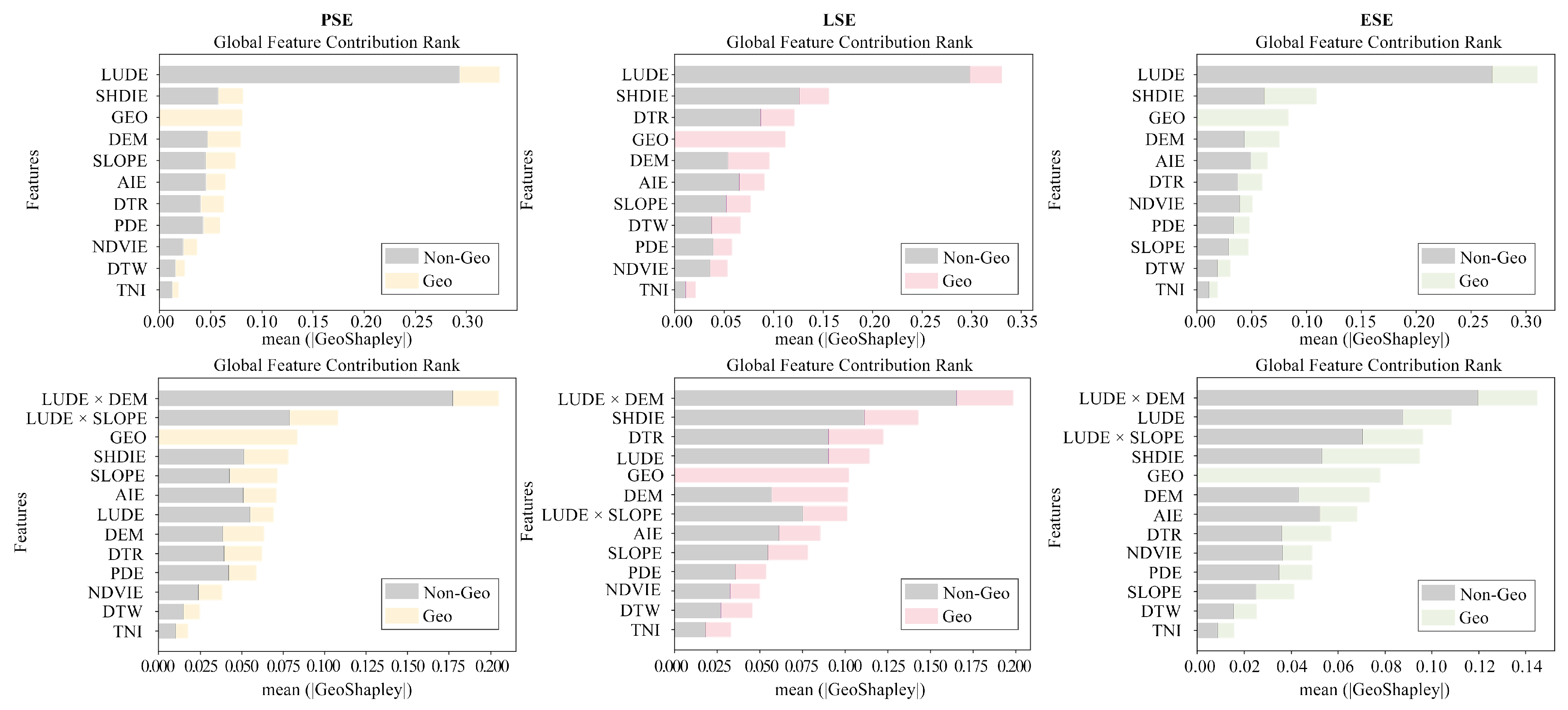
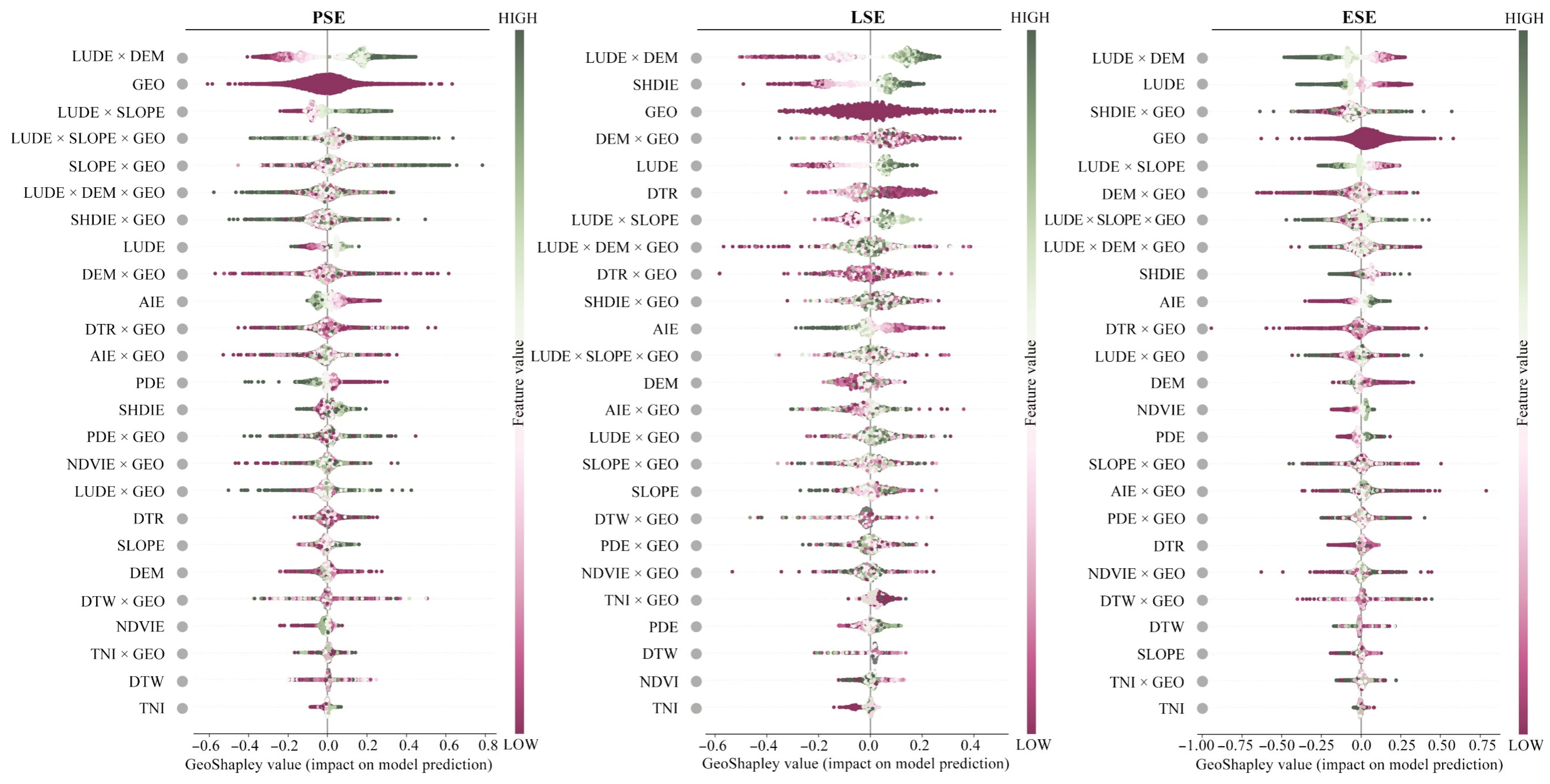
- Nonlinear Driving Mechanisms of the Evolution of PLES in Mountain Villages: By combining multi-dimensional variables, the complex nonlinear relationships in the evolution of PLES are analyzed. The driving mechanisms of the integration of these spaces are explored, ultimately providing scientific decision-making basis for the sustainable development of mountain villages.
2.3. Data Source
3. Methods
3.1. Methods for Exploring Land Use Identification and Transition Characteristics in Mountainous Villages
3.1.1. Land Cover Classification Based on Multi-Feature Assisted Random Forest
3.1.2. Participatory Mapping Correction
3.1.3. Land Use Transition Matrix
3.2. Methods for Evolution Trends and Gradient Characteristics of PLES Attributes
3.2.1. “Elevation-Slope” Terrain Niche Index
3.2.2. Multi-Temporal Observation of PLES Attribute Evolution
3.3. Methods for Nonlinear Driving Mechanisms of PLES Evolution
3.3.1. XGBoost Model
- (1)
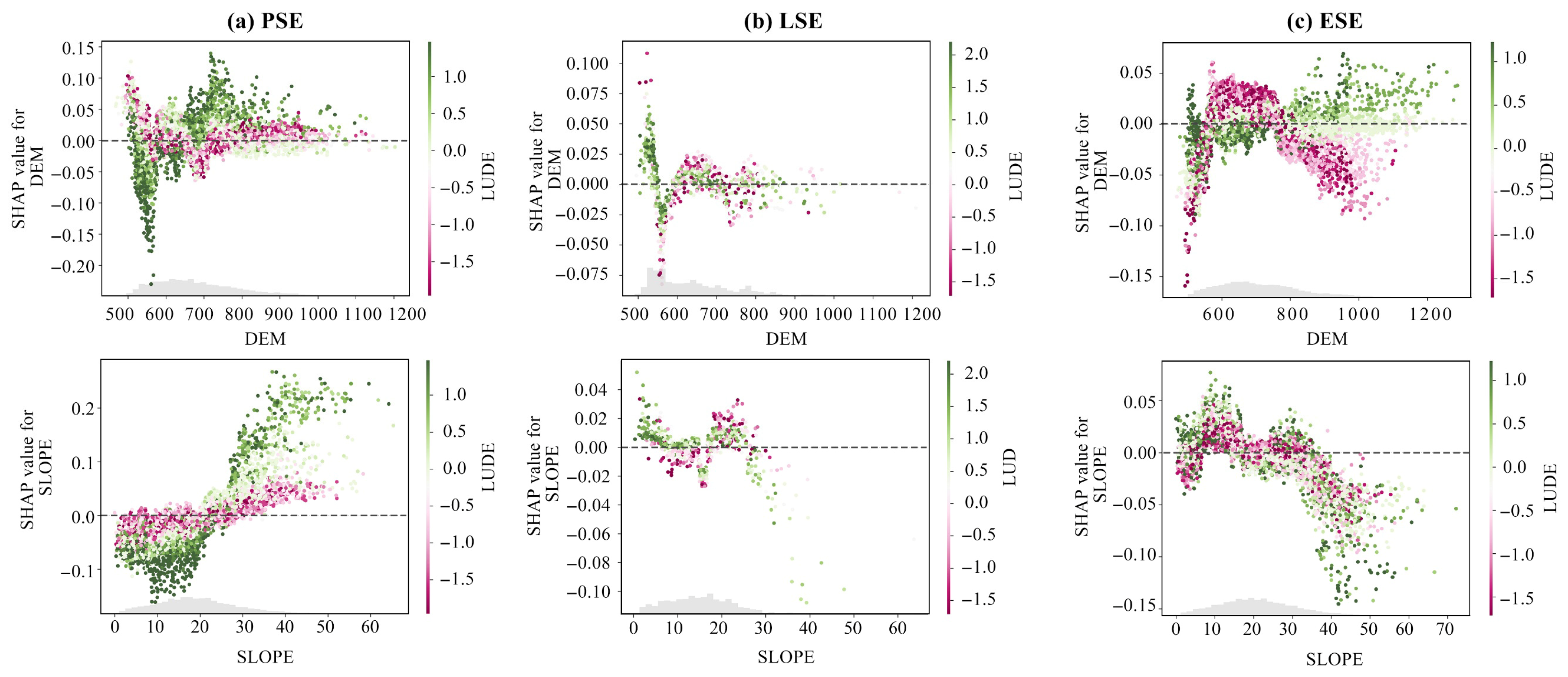
- Terrain gradient indicators: Under natural conditions, terrain gradient-related factors such as elevation (DEM), slope, and TNI influence the distribution of PLES.
- (2)
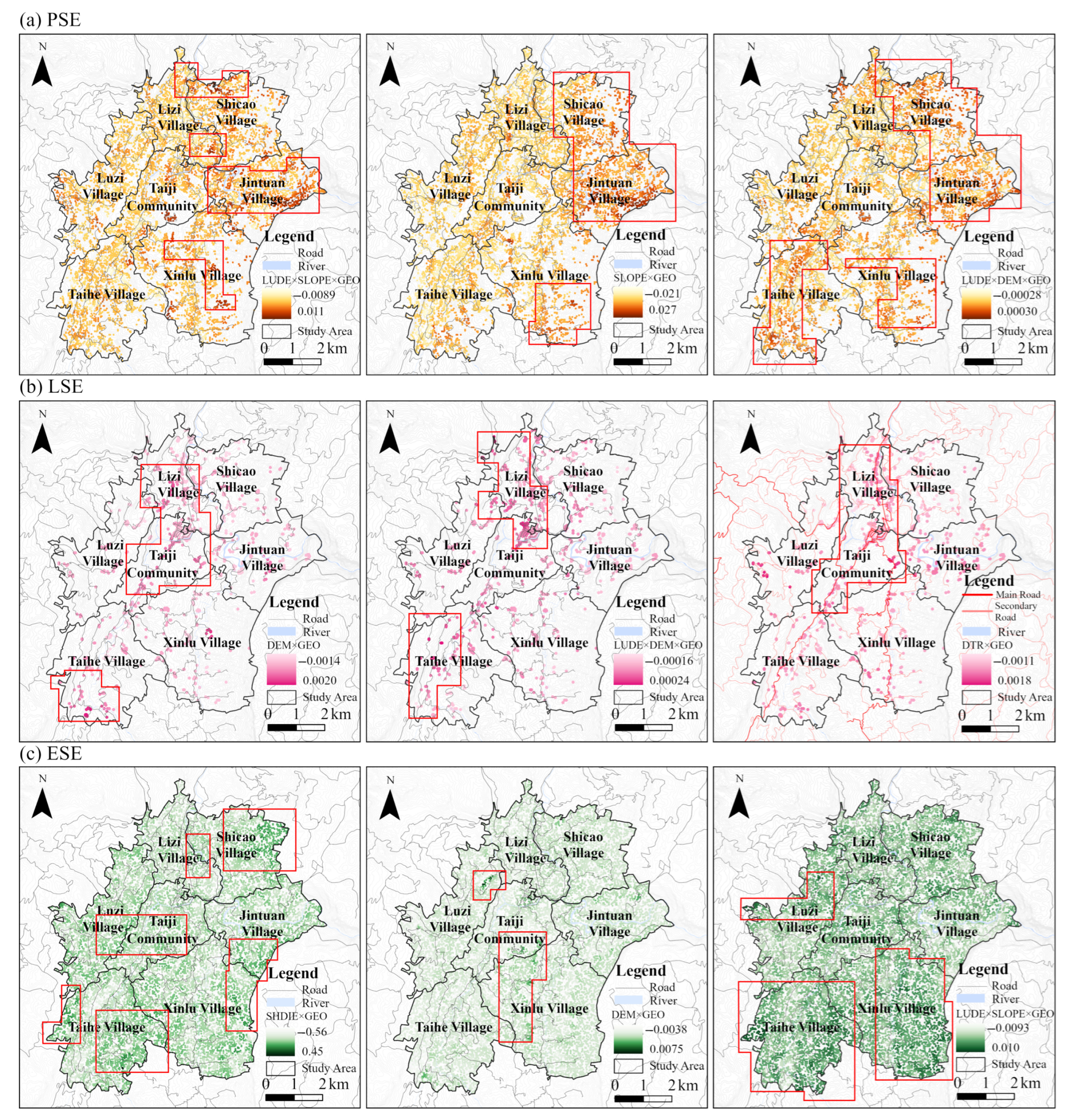
- Geographical location indicators: The distance to main roads and Water (DTR, DTW) is a key determinant of regional population concentration and industrial distribution.
- (3)
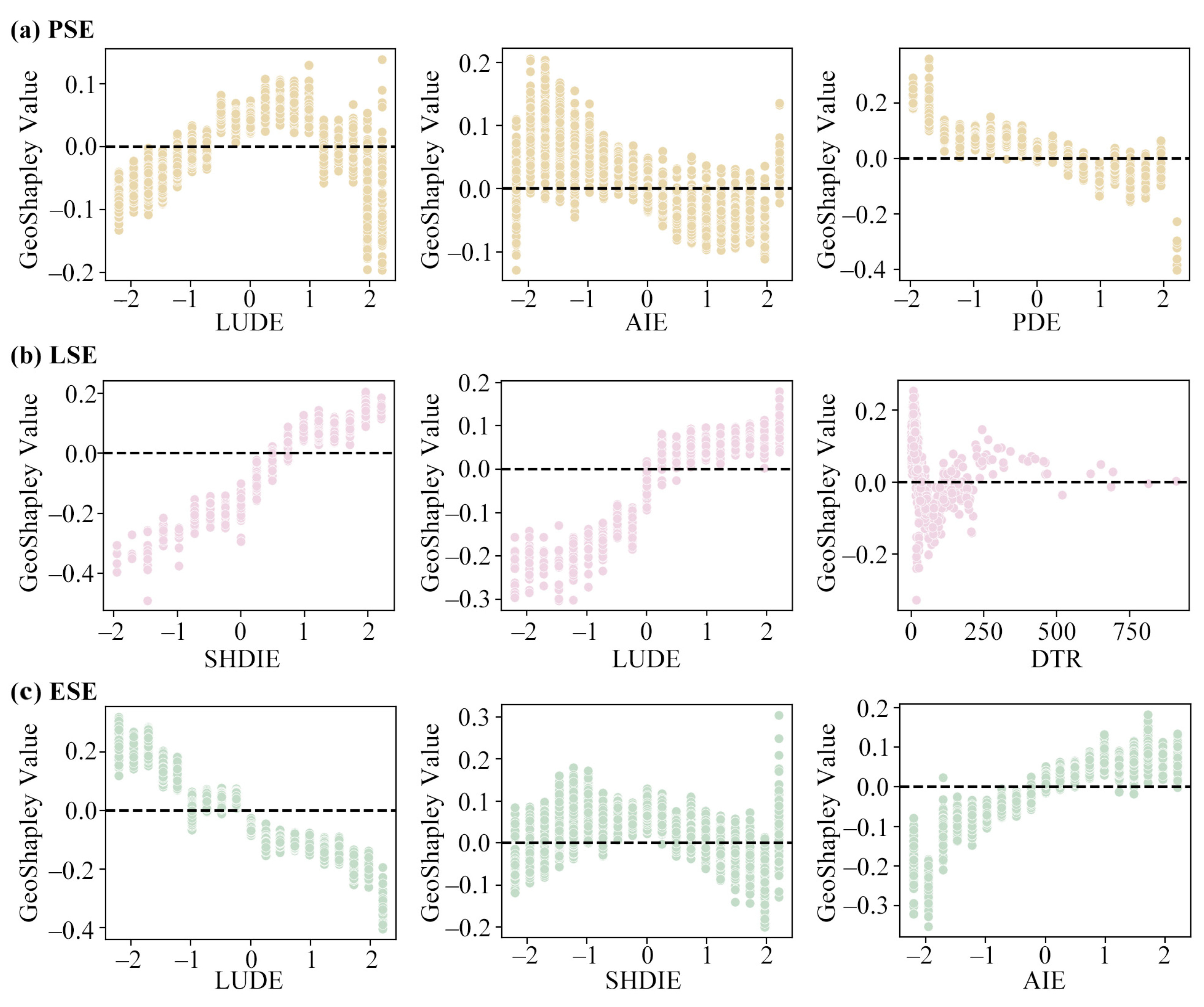
- Social development indicator: In economics, changes in development levels and population size often alter land use degree (LUD), thereby affecting land use efficiency [48]. Therefore, land use degree and human activity intensity are used to represent socio-economic factors [49]. However, based on previous studies on LUD classification and calculation methods [50], the land use level at the pixel level cannot be accurately or truly reflected in mountainous villages, where forest and cultivated land account for the majority of the area. Therefore, based on previous research, this study develops a method for calculating LUD at the pixel level in mountainous villages using a moving window approach (Supplementary Materials S1). This method accurately reflects the land use degree evolution (LUDE) at the pixel level. The choice of window size is based on standards from relevant studies [51]. Using 30 m land use data, three different window sizes—90 m (3 × 3), 150 m (5 × 5), and 210 m (7 × 7)—are compared. It is ultimately concluded that the 150 m window size best reflects the LUD of Taiji Town.
- (4)
- Ecological landscape indicators: Ecological landscapes, which provide various ecosystem services and cultural benefits, influence the structure and function of ecosystems [52]. Based on previous research on land use under gradient effects [53], Normalized Difference Vegetation Index Evolution (NDVIE) along with three landscape pattern indicators—Patch Density Evolution (PDE), Aggregation Index Evolution (AIE), and Shannon’s Diversity Index Evolution (SHDIE)—were selected to represent the landscape ecological factors of PLES.
3.3.2. SHAP and GeoShapley Combined Explanation
4. Results
4.1. Land Use Identification Results and Transition Characteristics in Mountainous Villages
4.2. Trends and Gradient Characteristics of the Evolution of PLES in Mountain Villages
4.2.1. Trends of the Evolution of PLES in Mountainous Villages
4.2.2. Gradient Characteristics of the Evolution of PLES in Mountainous Villages
4.3. Nonlinear Driving Mechanisms of the Evolution of PLES in Mountainous Villages
4.3.1. Relationship Between Single Feature Variables and PLES Evolution
4.3.2. Interaction of Manually Crossed Variables and PLES Evolution
4.3.3. Relationship Between GEO Interaction Variables and PLES Evolution
5. Discussion
5.1. Comparison with Other Related Studies
5.2. Ecological Gains, Residential Expansion, and Diversified Production Are the Development Trends of the PLES in Mountainous Villages
5.3. The Upward Shift in the PS Boundary Caused by Topographic Constraints Constitutes a Bottleneck in the Spatial Evolution of Mountainous Villages
5.4. The Interaction Between LUDE and Elevation/Slope Is a Core Driving Factor in the Evolution of PLES in Mountainous Villages
5.5. Limitations
6. Conclusions
Supplementary Materials
Author Contributions
Funding
Institutional Review Board Statement
Data Availability Statement
Acknowledgments
Conflicts of Interest
Abbreviations
| PLES | “Production–Living–Ecological” Spaces |
| PS | Production Space |
| PSE | Production Space Evolution |
| LS | Living Space |
| LSE | Living Space Evolution |
| ES | Ecological Space |
| ESE | Ecological Space Evolution |
| PLS | Production–Living Space |
| PES | Production–Ecological Space |
| LES | Living–Ecological Space |
| DEM | Digital Elevation Model |
| TNI | Terrain Niche Index |
| DTR | Distance to Main Roads |
| DTW | Distance to Water |
| LUD | Land Use Degree |
| LUDE | Land Use Degree Evolution |
| PD | Patch Density |
| PDE | Patch Density Evolution |
| AI | Aggregation Index |
| AIE | Aggregation Index Evolution |
| SHDI | Shannon’s Diversity Index |
| SHDIE | Shannon’s Diversity Index Evolution |
| NDVI | Normalized Difference Vegetation Index |
| NDVIE | Normalized Difference Vegetation Index Evolution |
References
- Guo, P.F.; Zhang, F.F.; Wang, H.Y. The response of ecosystem service value to land use change in the middle and lower Yellow River: A case study of the Henan section. Ecol. Indic. 2022, 140, 109019. [Google Scholar] [CrossRef] [Scilit]
- Zhang, L.; Hu, B.; Zhang, Z.; Liang, G. Research on the spatiotemporal evolution and mechanism of ecosystem service value in the mountain-river-sea transition zone based on “production-living-ecological space”—Taking the Karst-Beibu Gulf in Southwest Guangxi, China as an example. Ecol. Indic. 2023, 148, 109889. [Google Scholar] [CrossRef] [Scilit]
- Lennon, B. What next for sustainable development? Our Common Future at Thirty. Eurasian Geogr. Econ. 2020, 61, 338–340. [Google Scholar] [CrossRef] [Scilit]
- Zhang, Y.L.; Li, X.; Sun, S.S. Evaluation and Optimization of Rural Space Suitability Based on “the Production, Living and Ecological Space Coordination”: Take Beishakou Township, the Xiongan New Area as an Example. Urban Dev. Stud. 2019, 26, 116–124. Available online: https://kns.cnki.net/kcms2/article/abstract?v=cP5JN5wNT8Detrmh0IrEgLS2Fdmv8nHvGntc8Ip8luhnhhk-JLAL36NY1dmi1gptIwHhwffF8EiHQ5x4cPLx__uBg4HMUVeEcIFySyYzvfbtaku5gqvpjLg-O32yYcDwFvYzzrXDRFqlwESvpDnX4iGQ6uf3EniAxmQQ98bqVJnKn8xoYy7oAAINxab4WLjA&uniplatform=NZKPT&language=CHS (accessed on 16 December 2025). (In Chinese)
- Yang, Y.; Bao, W.; Liu, Y. Coupling coordination analysis of rural production-living-ecological space in the Beijing-Tianjin-Hebei region. Ecol. Indic. 2020, 117, 106512. [Google Scholar] [CrossRef] [Scilit]
- Wang, S.; Tian, J.; Namaiti, A.; LU, J.; Song, Y. Spatial pattern optimization of rural production-living-ecological function based on coupling coordination degree in shallow mountainous areas of Quyang County, Hebei Province, China. Front. Ecol. Evol. 2023, 11, 1169007. [Google Scholar] [CrossRef] [Scilit]
- Xu, Z.; Ke, F.; Yu, J. Spatio-temporal evolution and influencing factors of rural production-living-ecological function: A case study of mountainous counties in Zhejiang Province, China. Front. Environ. Sci. 2025, 13, 1495778. [Google Scholar] [CrossRef] [Scilit]
- Wubuli, J.; Xue, D.; Song, Y.; Ma, B. Method for identifying rural PLES and its applications. Ecol. Indic. 2024, 166, 112273. [Google Scholar] [CrossRef] [Scilit]
- Liang, J.; Chen, J.; Tong, D.; Li, X. Planning control over rural land transformation in Hong Kong: A remote sensing analysis of spatio-temporal land use change patterns. Land Use Policy 2022, 119, 106159. [Google Scholar] [CrossRef] [Scilit]
- Zhang, Q.-H.; Wang, J.-B. Multi-functional coupling-based rural ecological pattern construction and network prioritization evaluation: A case study of Jiangning District, Nanjing. Ecol. Indic. 2024, 166, 112277. [Google Scholar] [CrossRef] [Scilit]
- Zhao, T.; Cheng, Y.; Fan, Y.; Fan, X. Functional Tradeoffs and Feature Recognition of Rural Production–Living–Ecological Spaces. Land 2022, 11, 1103. [Google Scholar] [CrossRef] [Scilit]
- Liao, G.; He, P.; Gao, X.; Lin, Z.; Huang, C.; Zhou, W.; Deng, O.; Xu, C.; Deng, L. Land use optimization of rural production–living–ecological space at different scales based on the BP–ANN and CLUE–S models. Ecol. Indic. 2022, 137, 108710. [Google Scholar] [CrossRef] [Scilit]
- Zhang, W.; Yuan, Q.; Cai, H. Unravelling regional development through the production-living-ecological perspective: Assessing heterogeneity and expert insights. Urban Clim. 2024, 55, 101937. [Google Scholar] [CrossRef] [Scilit]
- Aruhan; Liu, D. Study on the influencing factors of the evolution of space pattern based on principal component analysis in Duolun County. Sci. Rep. 2024, 14, 20567. [Google Scholar] [CrossRef] [Scilit] [PubMed]
- Liang, Y.; Chai, D.; Zhou, X.; Ning, Y. Potential conflict diagnosis, simulation optimization and coordination of production-living-ecological space in gully areas of the Loess Plateau, China. Environ. Dev. 2024, 52, 101099. [Google Scholar] [CrossRef] [Scilit]
- Zhang, Z.; Li, J. Spatial suitability and multi-scenarios for land use: Simulation and policy insights from the production-living-ecological perspective. Land Use Policy 2022, 119, 106219. [Google Scholar] [CrossRef] [Scilit]
- Hearn, K.P.; Fagerholm, N. The characterisation and future sustainability of a rural landscape: Using integrated approaches for temporal heritage landscape analysis in Northwest Spain. Landsc. Ecol. 2025, 40, 76. [Google Scholar] [CrossRef] [Scilit]
- Schwartz, C.; Shaaban, M.; Bellingrath-Kimura, S.D.; Piorr, A. Participatory Mapping of Demand for Ecosystem Services in Agricultural Landscapes. Agriculture 2021, 11, 1193. [Google Scholar] [CrossRef] [Scilit]
- Tang, Y.; Zhu, L.; Wang, X. Quantitative Analysis of the Evolution of Production–Living–Ecological Space in Traditional Villages: A Comparative Study of Rural Areas in Tibet. Land 2024, 13, 1889. [Google Scholar] [CrossRef] [Scilit]
- Quan, W.; Yangbing, L.; Yaxiang, L.; Xianpei, H. Analysis of spatial pattern of land use based on terrain gradient in karst trough valley area. ACTA Ecol. Sin. 2019, 39, 7866–7880. [Google Scholar] [CrossRef] [Scilit]
- Jalan, J.; Ravallion, M. Geographic Poverty Traps? A Micro Model of Consumption Growth in Rural China. J. Appl. Econ. 2002, 17, 329–346. [Google Scholar] [CrossRef] [Scilit]
- Wang, Y.; Chen, Y. Using VPI to Measure Poverty-Stricken Villages in China. Soc. Indic. Res. 2017, 133, 833–857. [Google Scholar] [CrossRef] [Scilit]
- Zhou, J.; Liu, X.; Ji, J.; Hou, Q. Land transfer and planning in suburban villages of mountain valley area based on scenario analysis. Sci. Rep. 2025, 15, 8201. [Google Scholar] [CrossRef] [Scilit] [PubMed]
- Long, K.; Wang, N.; Lin, Z. Assessing scenic beauty of hilly and mountain villages: An approach based on landscape indicators. Ecol. Indic. 2023, 154, 110538. [Google Scholar] [CrossRef] [Scilit]
- Li, Z.; Miao, X.; Wang, M.; Jiang, S.; Wang, Y. The Classification and Regulation of Mountain Villages in the Context of Rural Revitalization—The Example of Zhaotong, Yunnan Province. Sustainability 2022, 14, 11381. [Google Scholar] [CrossRef] [Scilit]
- Li, T.; Li, C.; Zhang, R.; Cong, Z.; Mao, Y. Spatial Heterogeneity and Influence Factors of Traditional Villages in the Wuling Mountain Area, Hunan Province, China Based on Multiscale Geographically Weighted Regression. Buildings 2023, 13, 294. [Google Scholar] [CrossRef] [Scilit]
- Ma, L.; Liu, S.; Tao, T.; Gong, M.; Bai, J. Spatial reconstruction of rural settlements based on livability and population flow. Habitat Int. 2022, 126, 102614. [Google Scholar] [CrossRef] [Scilit]
- Liao, C.; Yue, Y.; Wang, K.; Fensholt, R.; Tong, X.; Brandt, M. Ecological restoration enhances ecosystem health in the karst regions of southwest China. Ecol. Indic. 2018, 90, 416–425. [Google Scholar] [CrossRef] [Scilit]
- Li, M.; Hasemi, Y.; Nozoe, Y. Study on disaster risks and countermeasures influenced by the impact of the modernization process in historical mountain villages: A case study of Hanazawa historical village, Japan. Int. J. Disaster Risk Reduct. 2019, 41, 101290. [Google Scholar] [CrossRef] [Scilit]
- Chen, Y.; Chen, W.; Gong, J.; Yuan, H. Uncommonly known change characteristics of land use pattern in Guangdong Province–Hong Kong–Macao, China: Space time pattern, terrain gradient effects and policy implication. Land Use Policy 2023, 125, 106461. [Google Scholar] [CrossRef] [Scilit]
- Wang, Y.; Sun, J.; Liu, C.; Liu, L. Exploring the nexus between perceived ecosystem services and well-being of rural residents in a mountainous area, China. Appl. Geogr. 2024, 164, 103215. [Google Scholar] [CrossRef] [Scilit]
- Xu, D.; Deng, X.; Huang, K.; Liu, Y.; Yong, Z.; Liu, S. Relationships between labor migration and cropland abandonment in rural China from the perspective of village types. Land Use Policy 2019, 88, 104164. [Google Scholar] [CrossRef] [Scilit]
- Sandeep, T.; Arrawatia, M.L.; Anil, K.G. Managing Rural Development in the Mountain State of Sikkim, India: Experiences, Innovative Approaches, and Key Issues. Mt. Res. Dev. 2012, 32, 242–252. [Google Scholar]
- Qin, Y.; Wang, L.; Yu, M.; Meng, X.; Fan, Y.; Huang, Z.; Luo, E.; Pijanowski, B. The spatio-temporal evolution and transformation mode of human settlement quality from the perspective of “production-living-ecological” spaces—A case study of Jilin Province. Habitat Int. 2024, 145, 103021. [Google Scholar] [CrossRef] [Scilit]
- Jilai, L.; Yansui, L.; Yurui, L. Classification evaluation and spatial-temporal analysis of “production-living-ecological” spaces in China. Acta Geogr. Sin. 2017, 72, 1290–1304. [Google Scholar] [CrossRef]
- Liang, C.; Zhou, Y. Evaluating the impacts of whole-region comprehensive land consolidation on the optimization of rural production-living-ecological spaces in China. Habitat Int. 2025, 162, 103438. [Google Scholar] [CrossRef] [Scilit]
- Duan, Y.; Wang, H.; Huang, A.; Xu, Y.; Lu, L.; Ji, Z. Identification and spatial-temporal evolution of rural “production-living-ecological” space from the perspective of villagers’ behavior—A case study of Ertai Town, Zhangjiakou City. Land Use Policy 2021, 106, 105457. [Google Scholar] [CrossRef] [Scilit]
- Song, X.; Chen, F.; Sun, Y.; Ma, J.; Yang, Y.; Shi, G. Effects of land utilization transformation on ecosystem services in urban agglomeration on the northern slope of the Tianshan Mountains, China. Ecol. Indic. 2024, 162, 112046. [Google Scholar] [CrossRef] [Scilit]
- Chen, W.; Duan, B.; Bian, J.; Zeng, J. Decoding the formation mechanisms of rural settlements expansion patterns in transitional China. Land Use Policy 2025, 154, 107561. [Google Scholar] [CrossRef] [Scilit]
- Kexin, D.; Fuping, Z.; Qi, F.; Yongfen, W.; Jiawei, Y. Topographic gradient effect and ecological zoning of ecosystem services in Heihe River Basin. J. Desert Res. 2023, 43, 139–149. [Google Scholar]
- Xue, L.; Zhu, B.; Wu, Y.; Wei, G.; Liao, S.; Yang, C.; Wang, J.; Zhang, H.; Ren, L.; Han, Q. Dynamic projection of ecological risk in the Manas River basin based on terrain gradients. Sci. Total Environ. 2019, 653, 283–293. [Google Scholar] [CrossRef] [Scilit] [PubMed]
- Zhang, C.; Tan, G. Quantifying architectural color Quality: A Machine learning integrated framework driven by quantitative color metrics. Ecol. Indic. 2023, 157, 111237. [Google Scholar] [CrossRef] [Scilit]
- Wang, M.; Li, Y.; Yuan, H.; Zhou, S.; Wang, Y.; Adnan, R.M.; Li, J. An XGBoost-SHAP approach to quantifying morphological impact on urban flooding susceptibility. Ecol. Indic. 2023, 156, 111137. [Google Scholar] [CrossRef] [Scilit]
- Liu, Q.; Qiao, J.; Li, M.; Huang, M. Spatiotemporal heterogeneity of ecosystem service interactions and their drivers at different spatial scales in the Yellow River Basin. Sci. Total Environ. 2024, 908, 168486. [Google Scholar] [CrossRef] [Scilit]
- Li, K.; Zhao, J.; Li, Y.; Lin, Y. Identifying trade-offs and synergies among land use functions using an XGBoost-SHAP model: A case study of Kunming, China. Ecol. Indic. 2025, 172, 113330. [Google Scholar] [CrossRef] [Scilit]
- Lyu, Y.; Wang, M.; Zou, Y.; Wu, C. Mapping trade-offs among urban fringe land use functions to accurately support spatial planning. Sci. Total Environ. 2022, 802, 149915. [Google Scholar] [CrossRef] [Scilit]
- Li, S.; Zhu, C.; Lin, Y.; Dong, B.; Chen, B.; Si, B.; Li, Y.; Deng, X.; Gan, M.; Zhang, J.; et al. Conflicts between agricultural and ecological functions and their driving mechanisms in agroforestry ecotone areas from the perspective of land use functions. J. Clean. Prod. 2021, 317, 128453. [Google Scholar] [CrossRef] [Scilit]
- Xiao, R.; Liu, Y.; Huang, X.; Shi, R.; Yu, W.; Zhang, T. Exploring the driving forces of farmland loss under rapidurbanization using binary logistic regression and spatial regression: A case study of Shanghai and Hangzhou Bay. Ecol. Indic. 2018, 95, 455–467. [Google Scholar] [CrossRef] [Scilit]
- Wang, G.; Peng, W. Quantifying the spatial differentiation mechanism of land use degree. Heliyon 2022, 8, e11389. [Google Scholar] [CrossRef] [Scilit] [PubMed]
- Zhuang, D.; Liu, J. Study on the Model of Regional Differentiation of Land Use Degree in China. J. Nat. Resour. 1997, 12, 105–111. [Google Scholar]
- Li, D.K.; Ding, S.Y.; Liang, G.F.; Zhao, Q.H.; Tang, Q.; Kong, L.H. Landscape heterogeneity of mountainous and hilly area in the western Henan Province based on moving window method. ACTA Ecol. Sin. 2014, 34, 3414–3424. [Google Scholar] [CrossRef] [Scilit]
- Urrutia, A.L.; González-Gónzalez, C.; Van Cauwelaert, E.M.; Rosell, J.A.; Barrio, L.G.; Benítez, M. Landscape heterogeneity of peasant-managed agricultural matrices. Agric. Ecosyst. Environ. 2020, 292, 106797. [Google Scholar] [CrossRef] [Scilit]
- Zhai, J.; Pu, L.; Qie, L.; He, G.; Wang, X.; Zhang, R.; Yuan, Y.; Zhong, R.; Lu, Y.; Xie, J.; et al. Changes of land use and landscape pattern along sea–land gradient in developed coastal region: A case study of Jiangsu Province, China. Ecol. Indic. 2025, 176, 113635. [Google Scholar] [CrossRef] [Scilit]
- Li, Z. GeoShapley: A Game Theory Approach to Measuring Spatial Effects in Machine Learning Models. Ann. Am. Assoc. Geogr. 2024, 114, 1365–1385. [Google Scholar] [CrossRef] [Scilit]
- Chen, S.; Qiu, Y.; Xu, Y.; Huang, J.; Ding, Z. Modeling and optimization of heat island networks based on machine learning and the perspective of spatial heterogeneity in metropolitan areas. Urban Clim. 2025, 63, 102592. [Google Scholar] [CrossRef] [Scilit]
- Zhang, P.; Yi, Y.Y.; Xu, J.T. Spatial and Temporal Characteristics of Forest and Grassland Land Use Changes after the Implementation of Grain for Green Program in China. Acta Sci. Nat. Univ. Pekin. 2024, 60, 1107–1122. [Google Scholar] [CrossRef]
- Chen, S.; Wang, X.; Lin, Q. Spatial pattern characteristics and influencing factors of mountainous rural settlements in metropolitan fringe area: A case study of Pingnan County, Fujian Province. Heliyon 2024, 10, e26606. [Google Scholar] [CrossRef] [Scilit]
- Yang, L.; Ou, C.; Wang, Z.; Du, Z.; Yao, X.; Du, Z. Unveiling patterns and drivers of long-term rural settlement changes from the urban-rural gradient perspective: A case study of the Beijing-Tianjin-Hebei region in China. Habitat Int. 2025, 156, 103300. [Google Scholar] [CrossRef] [Scilit]
- Briner, S.; Huber, R.; Bebi, P.; Elkin, C.; Schmatz, D.R.; Grêt-Regamey, A. Trade-Offs Between Ecosystem Services in a Mountain Region. Ecol. Soc. 2013, 18, 35. [Google Scholar] [CrossRef] [Scilit]
- Shi, Z.; Ma, L.; Zhang, W.; Gong, M. Differentiation and correlation of spatial pattern and multifunction in rural settlements considering topographic gradients: Evidence from Loess Hilly Region, China. J. Environ. Manag. 2022, 315, 115127. [Google Scholar] [CrossRef] [Scilit]
- Huo, X.; Xu, X.; Tang, Y.; Zhang, Z. An analysis of the spatial evolution and influencing factors of rural settlements along the Shandong section of the Grand Canal of China. River Res. Appl. 2023, 39, 1283–1299. [Google Scholar] [CrossRef] [Scilit]



| Data Source | Data Type | Years | Satellite | Time |
|---|---|---|---|---|
| Google Earth Engine | Remote Sensing Data | 1990, 2000, 2010 | Landsat 5 | From 1 June to 30 September |
| 2020, 2024 | Sentinel 2 | |||
| DEM | - | - | - | |
| NDVI | 1990, 2000, 2010 | Landsat 5 | From 1 June to 30 September | |
| 2020, 2024 | Landsat 8 |
| Year | Overall Accuracy | Kappa Coefficient |
| 1990 | 0.935 | 0.917 |
| 2000 | 0.897 | 0.854 |
| 2010 | 0.929 | 0.908 |
| 2020 | 0.950 | 0.936 |
| 2024 | 0.949 | 0.934 |
| Types | Land Use Types | Description | Production Attribute | Living Attribute | Ecological Attribute |
|---|---|---|---|---|---|
| PS | Industrial, Mining, and Storage Land | Includes industrial land, mining land, storage land, etc. | 5 | 0 | 0 |
| ES | Forest | Includes tree forests, bamboo forests, shrub forests, other types of forests, etc. | 0 | 0 | 5 |
| Water | Includes river water surfaces, pond water surfaces, ditches, wetlands, etc. | 0 | 0 | 5 | |
| Bare Land | Includes idle land, agricultural land for facilities, field ridges, sandy land, bare land, bare rocky ground, etc. | 0 | 0 | 5 | |
| PES | Cropland | Includes paddy fields, irrigated fields, dry fields, etc. | 5 | 0 | 3 |
| Plantation Forests | Includes forests planted on non-forested land or logged areas through artificial methods. | 5 | 0 | 3 | |
| Ponds | Includes facilities for water collection and irrigation on flat land, a combination of ditches and ponds. | 3 | 0 | 1 | |
| PLS | Public Administration and Service Land | Includes educational land, healthcare land, social welfare land, cultural facility land, sports land, public utility land, etc. | 1 | 3 | 0 |
| Residential Land | Includes rural residential land, etc. | 3 | 5 | 0 | |
| ELS | Parks and Green Spaces | Includes parks, community gardens, squares, and green spaces used for recreation, beautification, and protection within village areas. | 0 | 3 | 1 |
| Starting Value | Ending Value | Assigned Value | Meaning |
|---|---|---|---|
| 0 | 1, 3, 5 | 3 | Increase (+) |
| 1 | 3, 5 | ||
| 3 | 5 | ||
| 1, 3, 5 | Same Value | 2 | Stable (=) |
| 5 | 0/1/3 | 1 | Decline (−) |
| 3 | 0, 1 | ||
| 1 | 0 | ||
| 0 | 0 | 0 | None |
| Type | Dimensions | Variable Name | Resolution | Unit | Quantitative Method/Source |
|---|---|---|---|---|---|
| Target Variables | PLES Evolution | Production Space Evolution (PSE) | 30 m × 30 m | - | The overall trend of the five years was calculated based on the Mann–Kendall trend test for various types of PLES land use. |
| Living Space Evolution (LSE) | - | ||||
| Ecological Space Evolution (ESE) | - | ||||
| Feature Variables | Terrain Gradient | Elevation (DEM) | 30 m × 30 m | m | DEM data was processed using the ArcGIS Pro raster statistics tool. |
| Slope | ° | Processed and generated using the ArcGIS Pro slope tool. | |||
| Terrain Niche Index (TNI) | - | Calculate the TNI based on ‘elevation-slope’. | |||
| Geographical location | Distance to Main Roads (DTR) 1 | m | Euclidean distance was calculated based on self-collected data. | ||
| Distance to Water (DTW) | m | ||||
| Social Development | Land Use Degree Evolution (LUDE) | - | The overall LUD trend of the five years (1990, 2000, 2010, 2020, and 2024) was calculated using land use data identified in the previous phase, and the Mann–Kendall trend test was applied to assess the overall trend. | ||
| Ecological landscape | Patch Density Evolution (PDE) | - | The moving window method in Fragstats 4.3 was used to process the PLES land use data for the years 1990, 2000, 2010, 2020, and 2024, and the Mann–Kendall trend test was applied to calculate the overall trend across these five years. | ||
| Aggregation Index Evolution (AIE) | - | ||||
| Shannon’s diversity Index evolution (SHDIE) | - | ||||
| Normalized Difference Vegetation Index Evolution (NDVIE) | % | NDVI for the years 1990, 2000, 2010, 2020, and 2024 was calculated using Landsat 5/8 satellite data bands, and the overall trend across these years was assessed using the Mann–Kendall trend test. |
| Type | Training Set | Validation Set | Test Set |
|---|---|---|---|
| PES | R2: 0.519 | R2: 0.461 | R2: 0.455 |
| RMSE: 0.433 | RMSE: 0.460 | RMSE: 0.454 | |
| MAE: 0.326 | MAE: 0.345 | MAE: 0.342 | |
| LES | R2: 0.533 | R2: 0.490 | R2: 0.496 |
| RMSE: 0.473 | RMSE: 0.490 | RMSE: 0.494 | |
| MAE: 0.383 | MAE: 0.391 | MAE: 0.401 | |
| ESE | R2: 0.492 | R2: 0.441 | R2: 0.443 |
| RMSE: 0.391 | RMSE: 0.412 | RMSE: 0.413 | |
| MAE: 0.291 | MAE: 0.305 | MAE: 0.306 |
| Land Class | 1990 (ha) | 2000 (ha) | 2010 (ha) | 2020 (ha) | 2024 (ha) |
|---|---|---|---|---|---|
| Cropland | 2929.5 | 2119.23 | 1959.03 | 1669.41 | 1377.72 |
| Forest | 2669.76 | 3954.15 | 4049.1 | 4274.55 | 4490.37 |
| Plantation Forests | 0 | 0 | 0 | 3.24 | 0.99 |
| Water | 113.31 | 86.58 | 88.83 | 87.3 | 85.77 |
| Ponds | 0 | 0 | 0 | 6.84 | 5.4 |
| Residential Land | 57.6 | 87.48 | 160.92 | 209.34 | 253.44 |
| Industrial, Mining, and Storage Land | 0 | 0.18 | 3.87 | 9.99 | 22.05 |
| Public Administration and Service Land | 2.7 | 3.51 | 3.6 | 4.14 | 4.86 |
| Parks and Green Spaces | 0 | 0 | 0 | 0.45 | 0.72 |
| Bare Land | 496.89 | 18.63 | 4.41 | 4.5 | 28.44 |
| Year | 1990 | 2000 | 2010 | 2020 | 2024 |
|---|---|---|---|---|---|
| Total Population (persons) | 12,806 | 12,723 | 12,808 | 12,828 | 12,674 |
Disclaimer/Publisher’s Note: The statements, opinions and data contained in all publications are solely those of the individual author(s) and contributor(s) and not of MDPI and/or the editor(s). MDPI and/or the editor(s) disclaim responsibility for any injury to people or property resulting from any ideas, methods, instructions or products referred to in the content. |
© 2026 by the authors. Licensee MDPI, Basel, Switzerland. This article is an open access article distributed under the terms and conditions of the Creative Commons Attribution (CC BY) license.
Share and Cite
Meng, F.; Wang, Z.; Tan, G.; Yang, L. Gradient Characteristics and Nonlinear Driving Mechanisms of “Production–Living–Ecological” Space Evolution in Mountainous Villages: A Case from Taiji Town, Chongqing. Land 2026, 15, 90. https://doi.org/10.3390/land15010090
Meng F, Wang Z, Tan G, Yang L. Gradient Characteristics and Nonlinear Driving Mechanisms of “Production–Living–Ecological” Space Evolution in Mountainous Villages: A Case from Taiji Town, Chongqing. Land. 2026; 15(1):90. https://doi.org/10.3390/land15010090
Chicago/Turabian StyleMeng, Fanwei, Zhongde Wang, Guanzheng Tan, and Ling Yang. 2026. "Gradient Characteristics and Nonlinear Driving Mechanisms of “Production–Living–Ecological” Space Evolution in Mountainous Villages: A Case from Taiji Town, Chongqing" Land 15, no. 1: 90. https://doi.org/10.3390/land15010090
APA StyleMeng, F., Wang, Z., Tan, G., & Yang, L. (2026). Gradient Characteristics and Nonlinear Driving Mechanisms of “Production–Living–Ecological” Space Evolution in Mountainous Villages: A Case from Taiji Town, Chongqing. Land, 15(1), 90. https://doi.org/10.3390/land15010090