Spatial Identification and Evolutionary Analysis of Production–Living–Ecological Space—Taking Lincang City as an Example


Abstract
1. Introduction
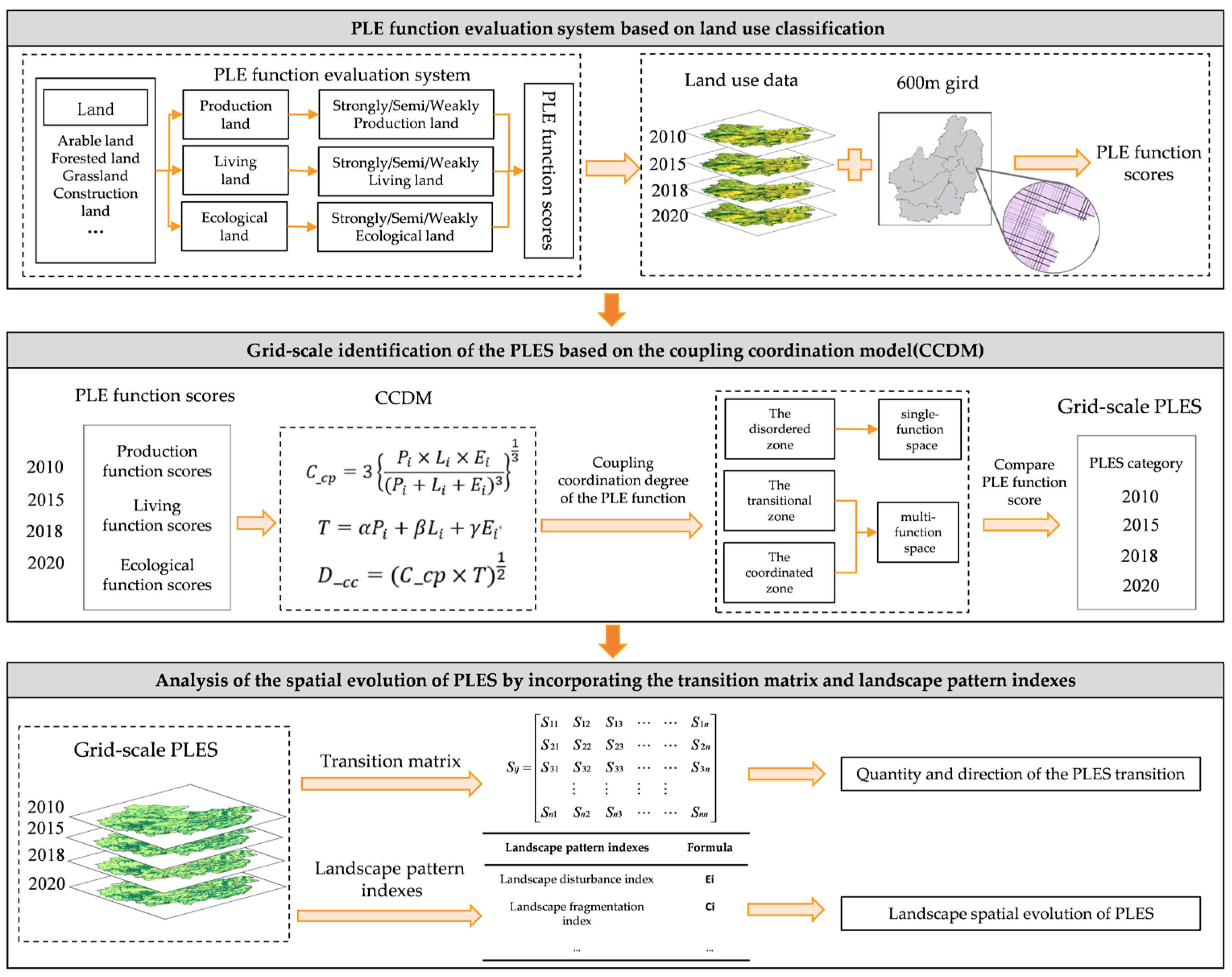
- A refined identification framework for production–living–ecological spaces (PLES) is developed by integrating the functional scoring model with the coupling coordination degree model. Unlike previous studies that rely solely on land use classification or single-function assessment, the proposed approach simultaneously quantifies the intensity of production, living, and ecological functions and evaluates their interrelationships. This dual-dimensional assessment—combining function strength and coordination degree—enables more systematic and fine-grained scale recognition of PLES at a 600 m, thereby alleviating some limitations associated with conventional coarse-grained classifications.
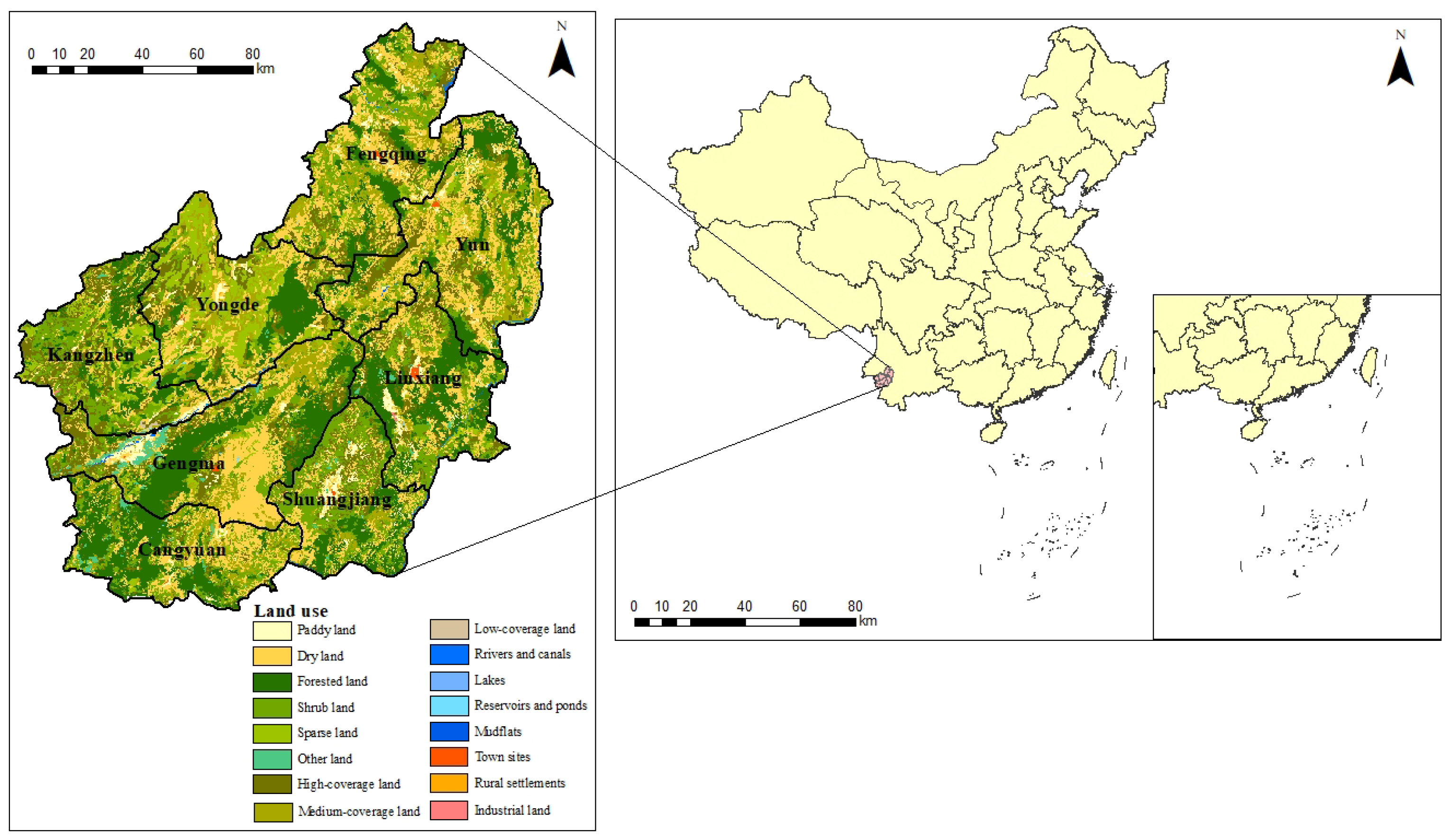
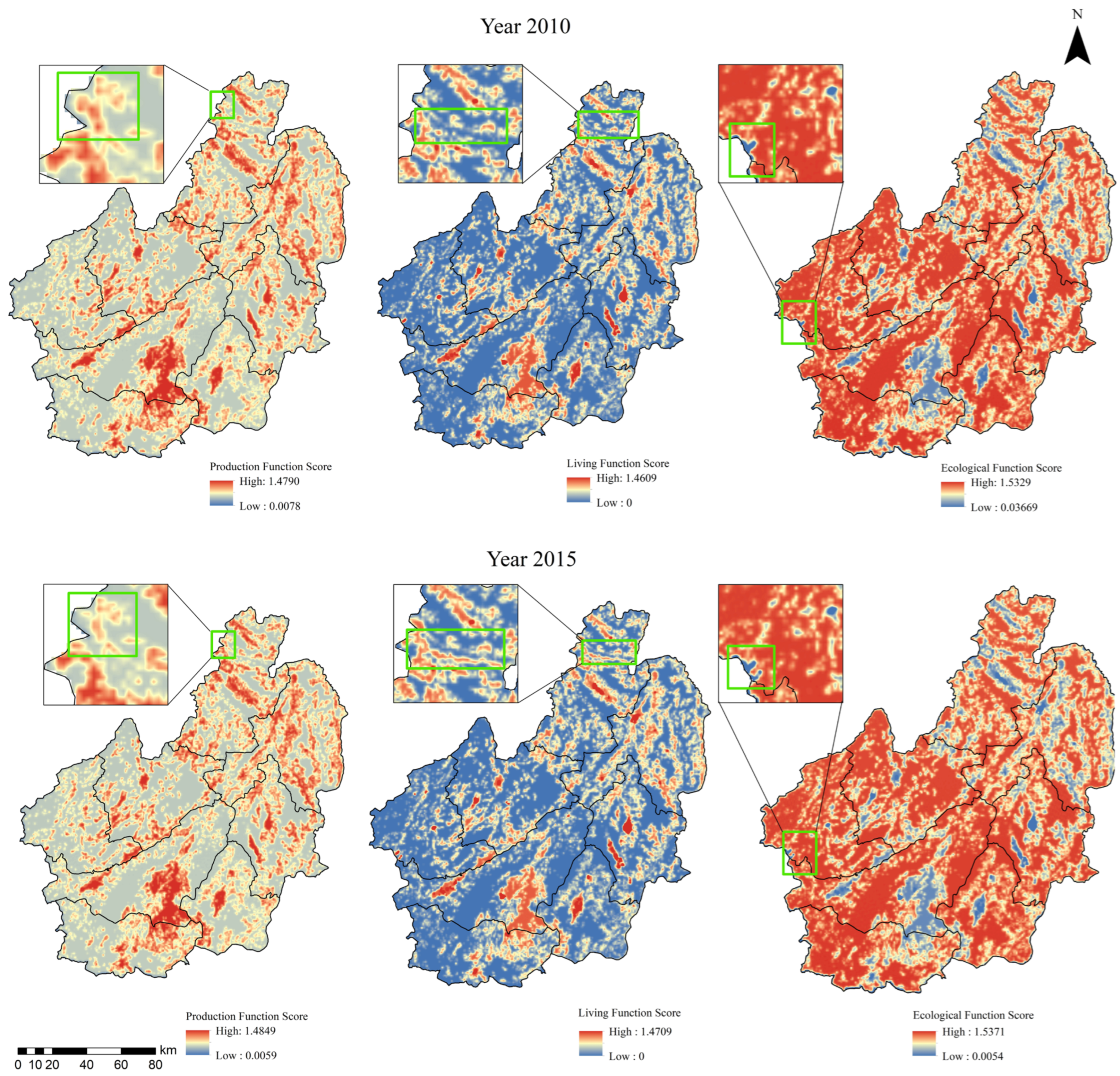
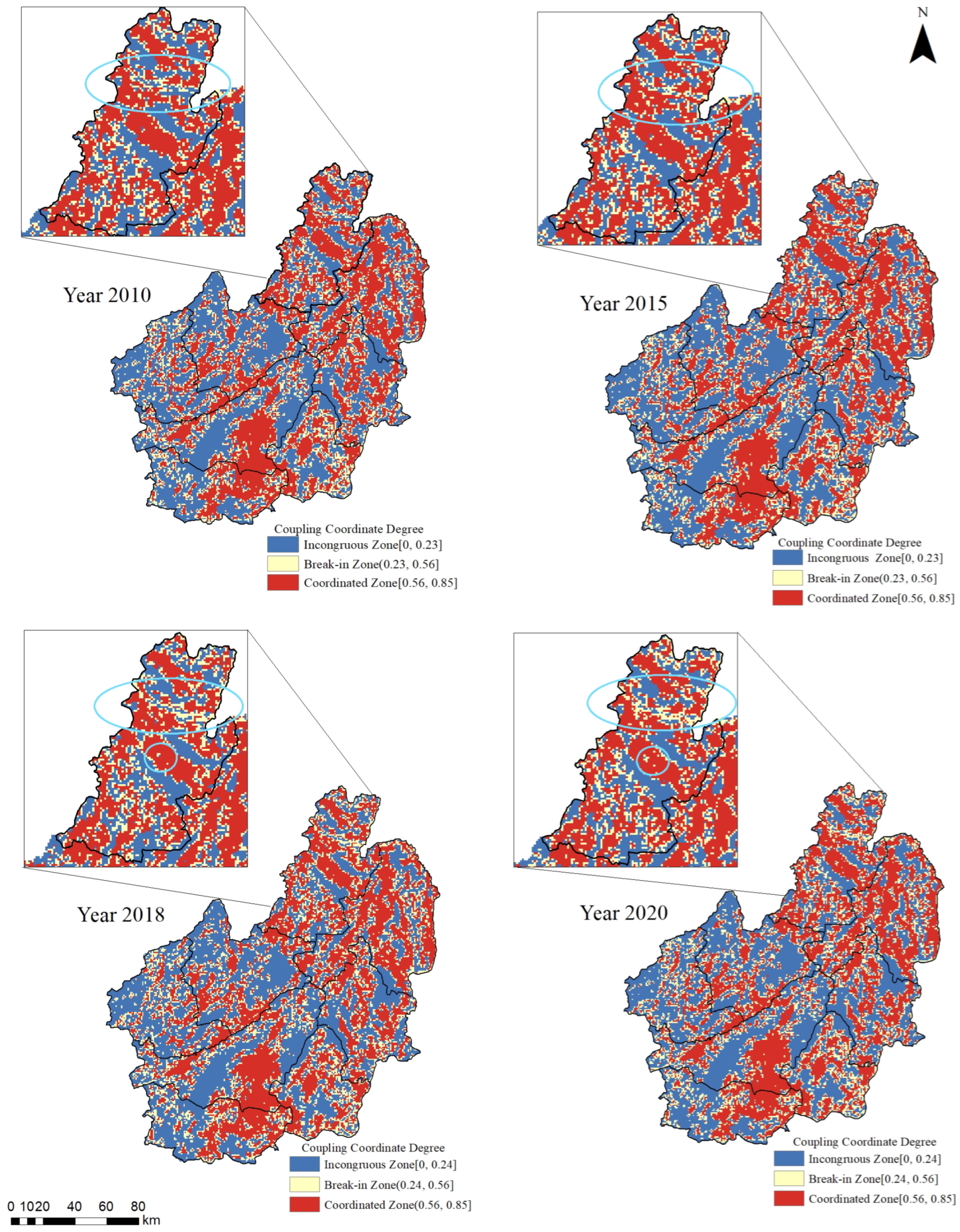
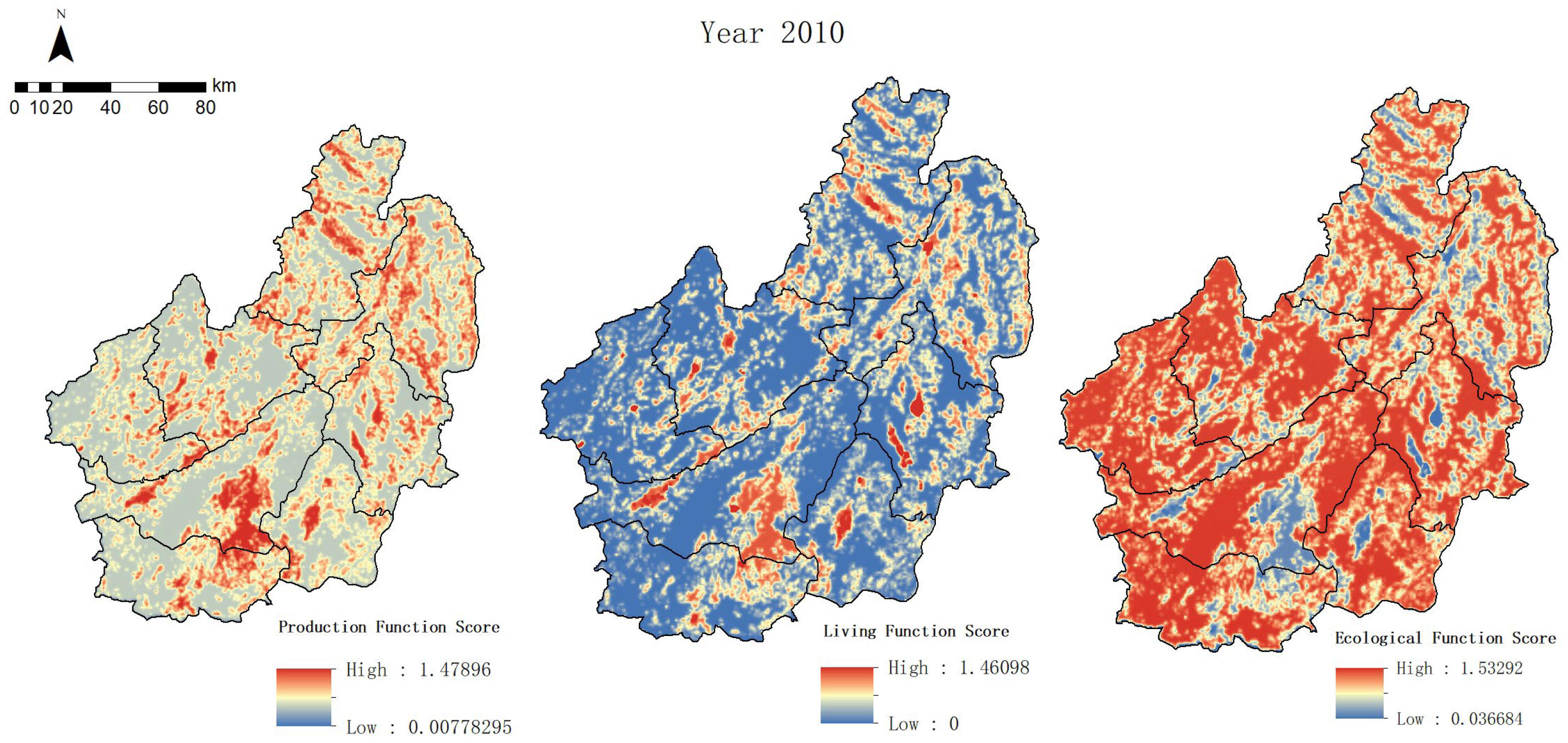
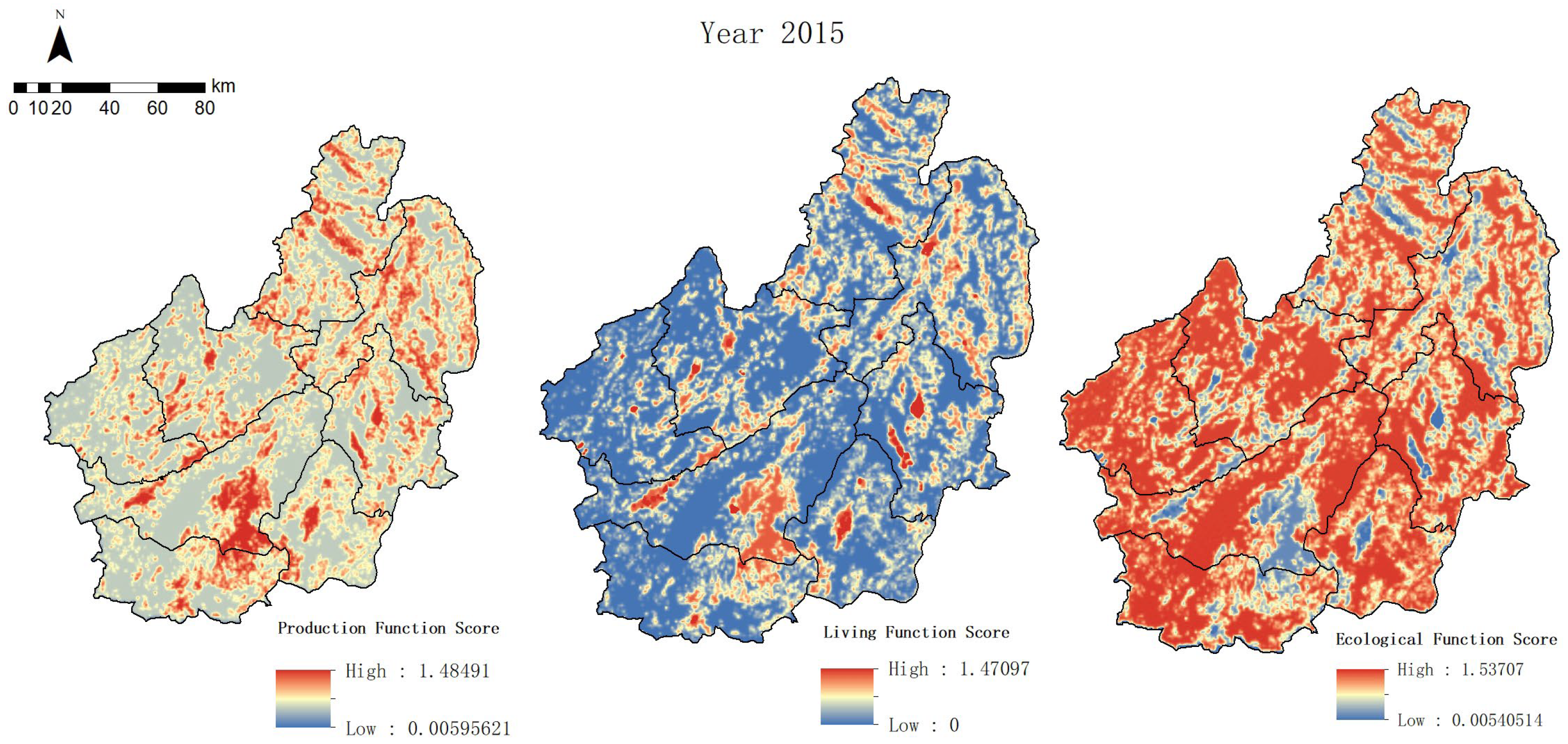
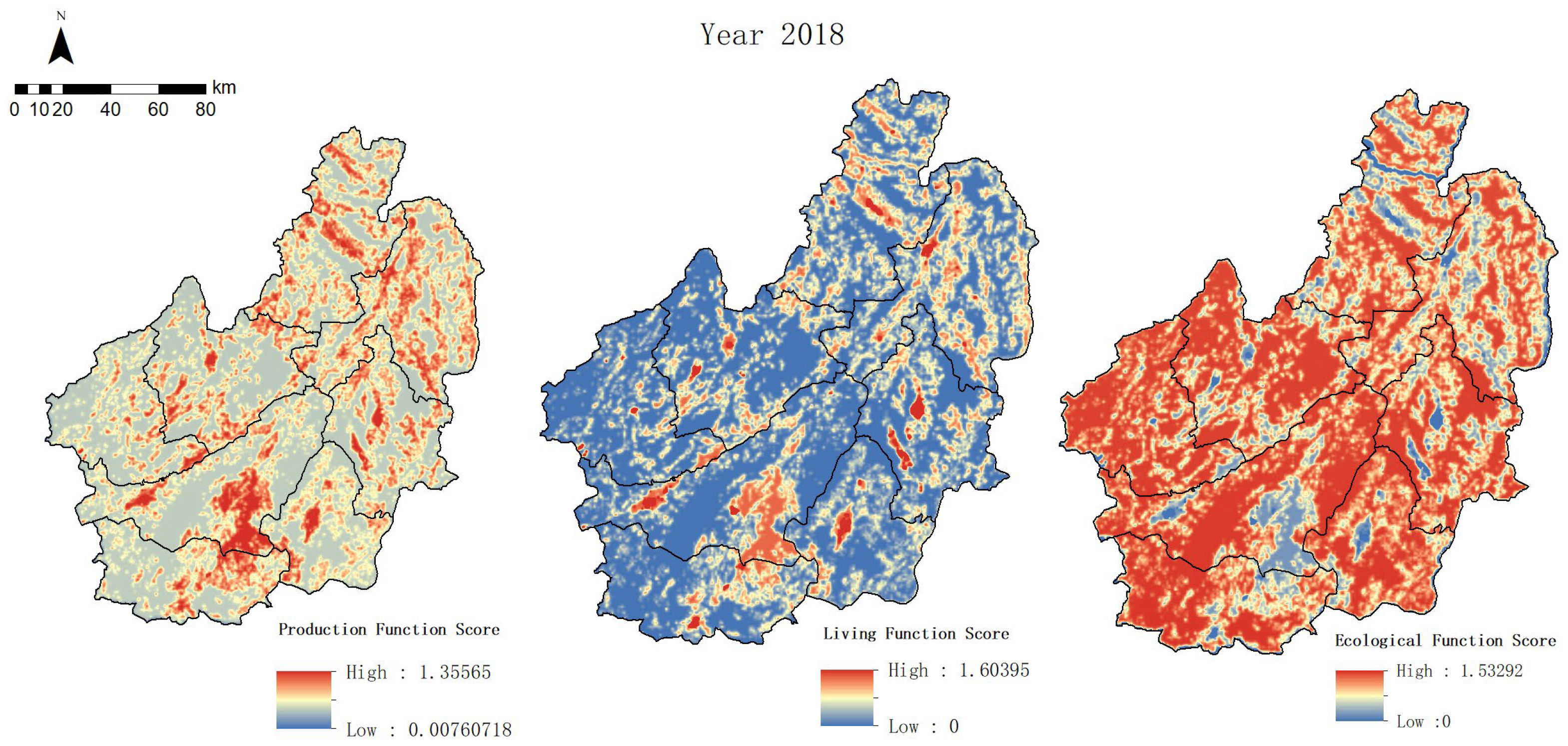
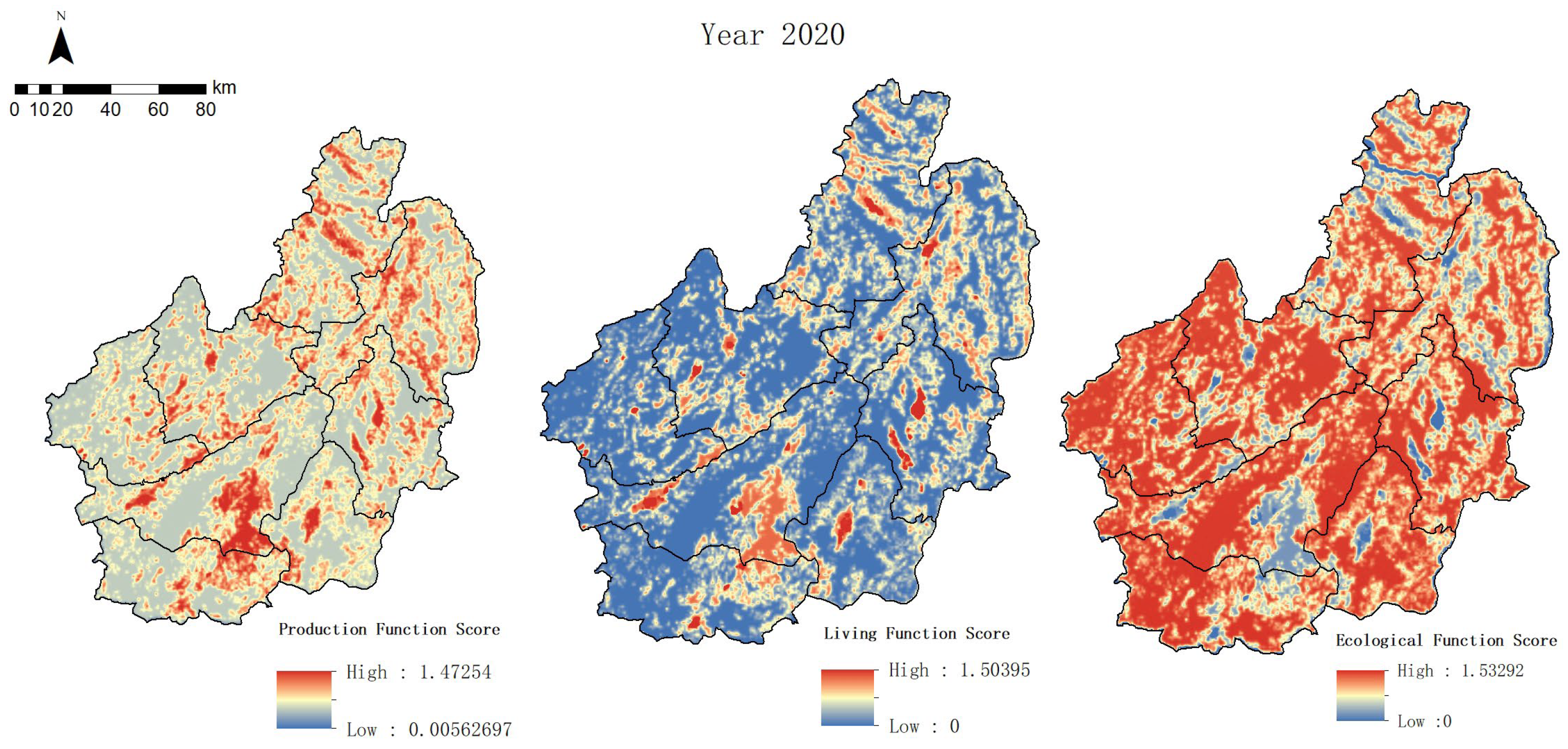
- Using Lincang City as a case study, the study completes a four-stage (2010, 2015, 2018, 2020) evaluation of production, living, and ecological functions, the calculation of coupling coordination degrees, and the grid-scale identification of PLES. This dataset establishes a temporal–spatial sequence that provides an empirical foundation for analyzing the dynamic evolution of multifunctional land use in mountainous regions.
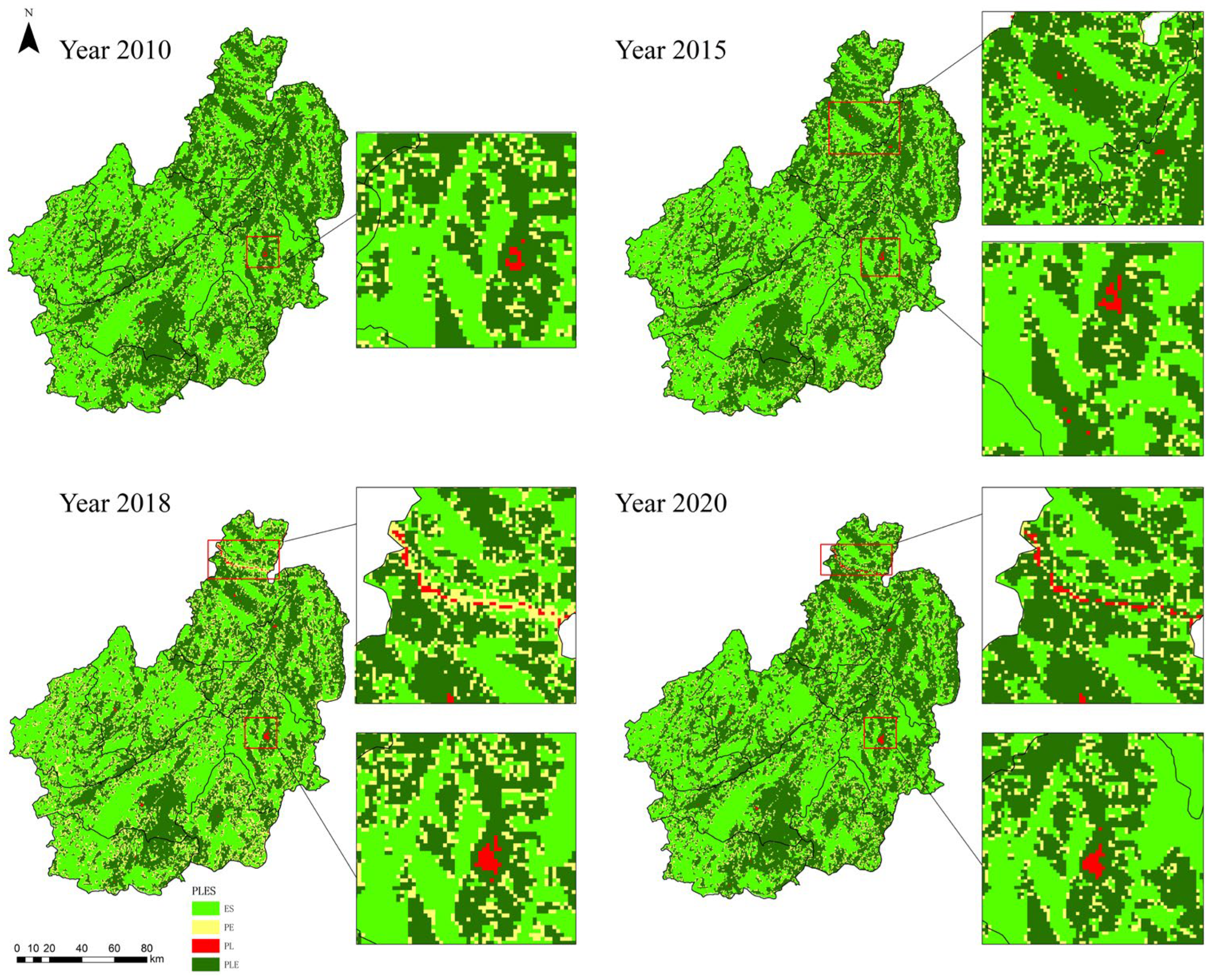
- By integrating landscape pattern indices, the study reveals the spatial configuration and ecological dynamics of PLES in Lincang City. The results demonstrate that ecological space has steadily decreased, production–living space has expanded in a dispersed pattern, and production–ecological space serves as a transitional “contested zone” between development and conservation. These findings not only enrich the understanding of PLES evolution in mountainous cities but also provide practical guidance for balancing economic growth, livelihood improvement, and ecological protection.
2. Materials and Methods
2.1. Study Area and Data Sources
2.2. Methods
2.2.1. Land-Use-Based PLE Function Evaluation System
2.2.2. Coupling-Coordination-Based Grid-Level PLES Identification Framework
2.2.3. Analysis of the Spatial Evolution of PLES by Incorporating the Transition Matrix and Landscape Pattern Indexes
3. Results
3.1. Evaluation and Analysis of the Functions of the PLES
3.2. Grid-Scale Delineation of the PLES Based on the Analysis of the Coupled Coordination of the PLE Functions
3.3. Results and Analyses of the Spatial Evolution of the PLES
3.3.1. Analysis of the Evolutionary Pattern of PLES Types Based on Transition Matrix
3.3.2. Analysis of Changes in Landscape Patterns in PLES Based on the Landscape Pattern Index
4. Discussion
4.1. Comparison with Existing Studies and Contribution of This Research
4.2. Mechanistic Interpretation of the Spatial Patterns and Policy Implications
- Production–ecological (PE) space has been identified as a dynamic “contested zone,” requiring adaptive and differentiated governance. Management strategies should be delineated according to the coupling coordination degree (D_cc). Areas with lower D_cc values should be prioritized for ecological restoration and strict protection to prevent further degradation, whereas zones with higher D_cc values may be designated for sustainable agroforestry or eco-tourism development, serving as transitional buffers between intensive production areas and core ecological reserves.
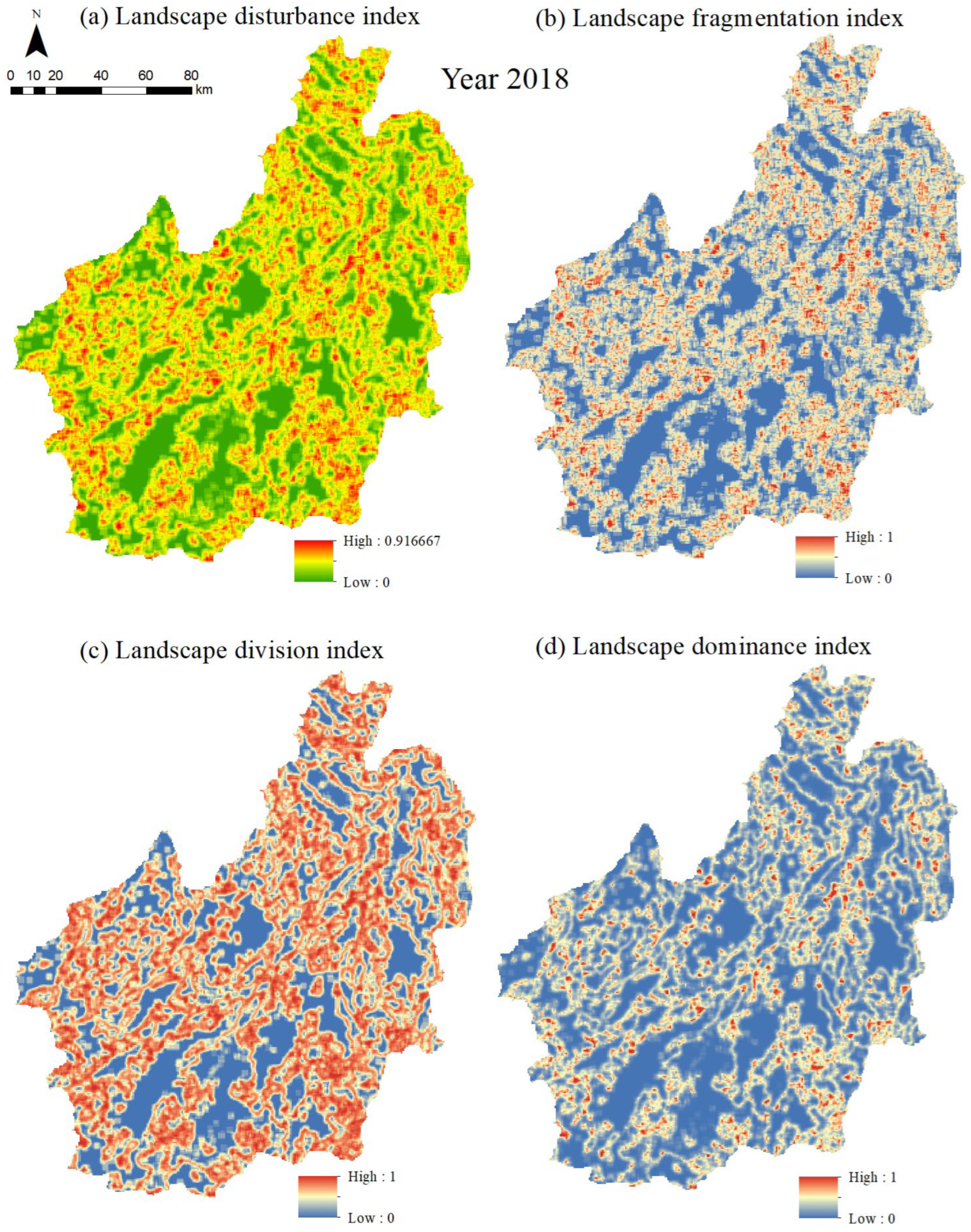
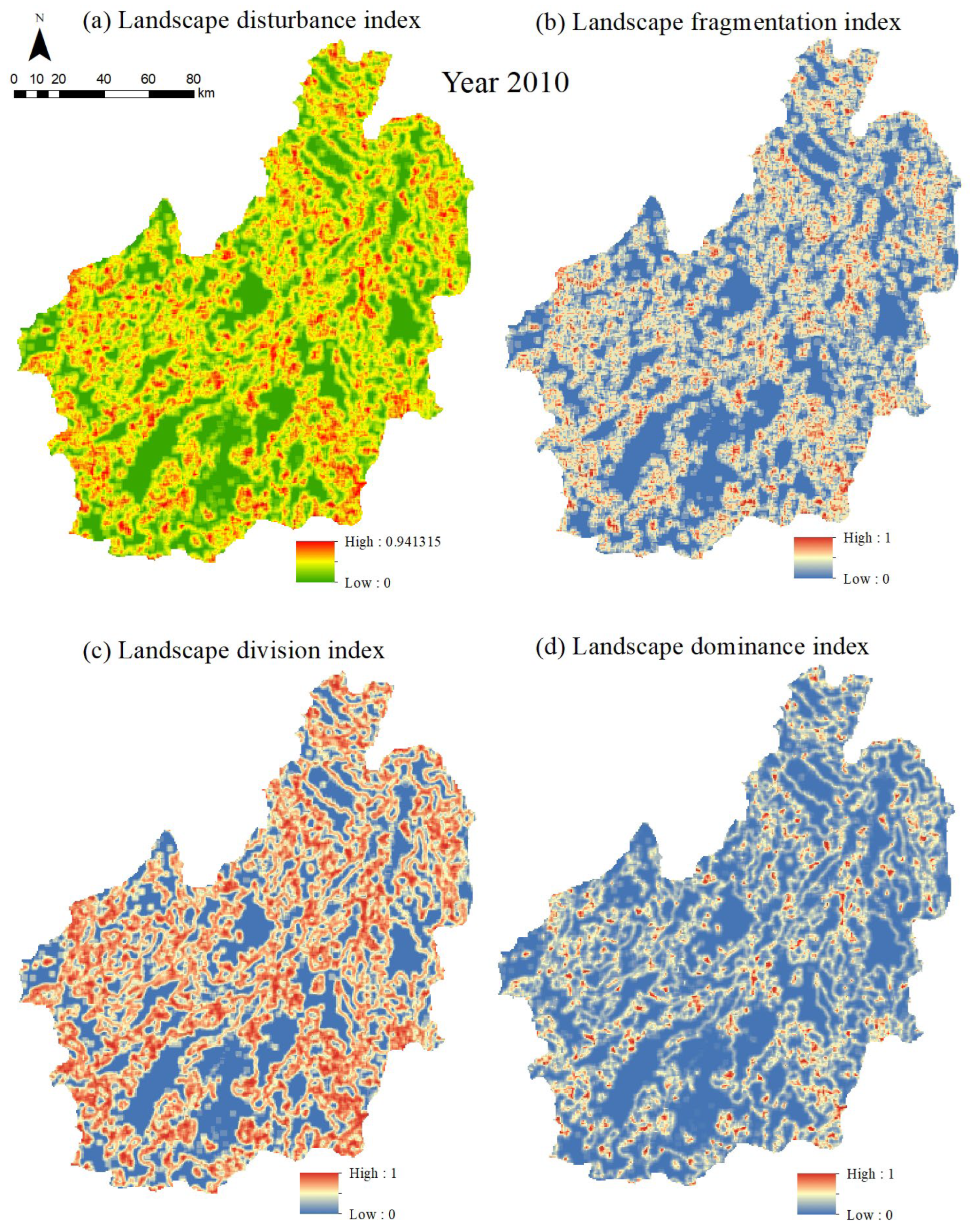
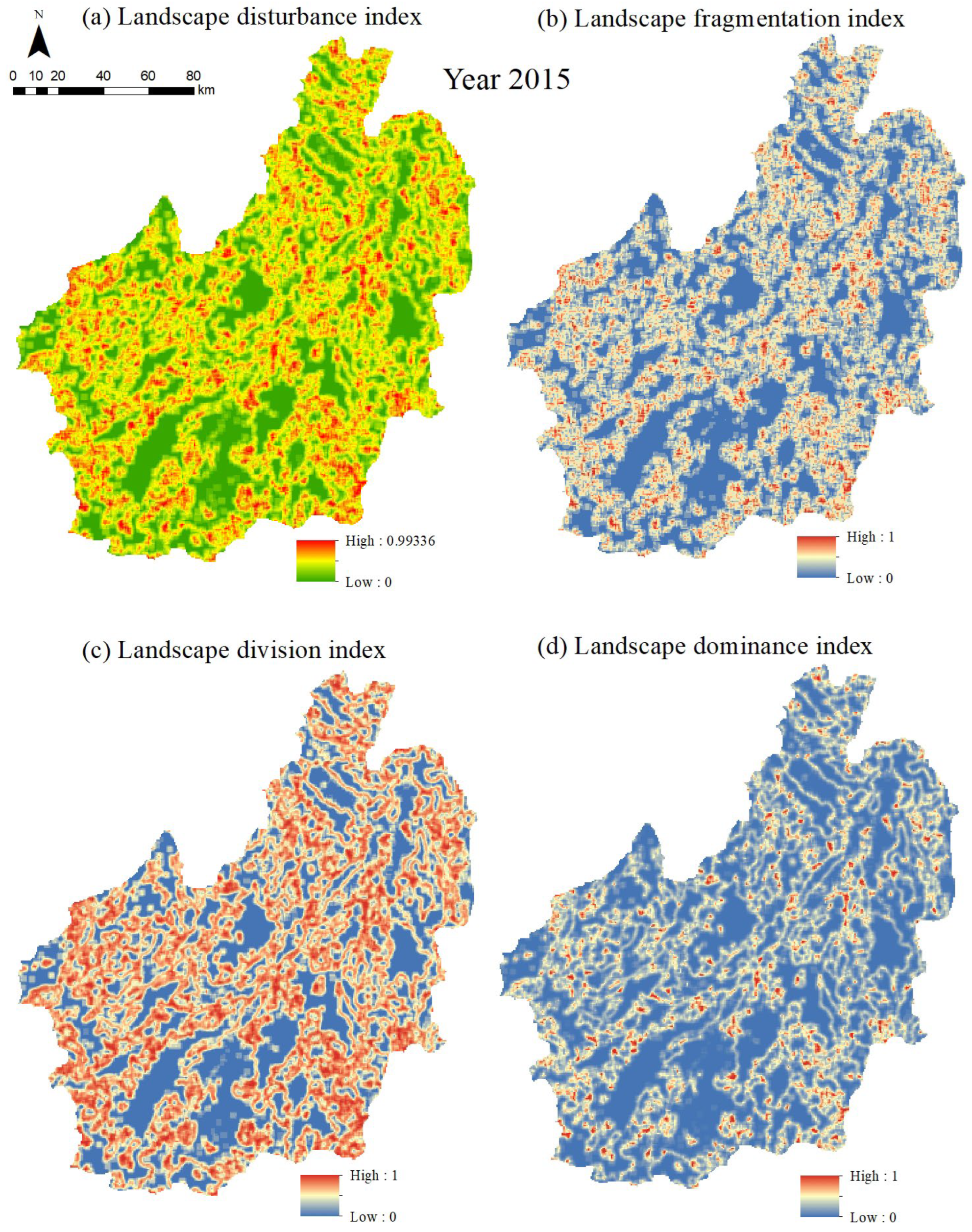
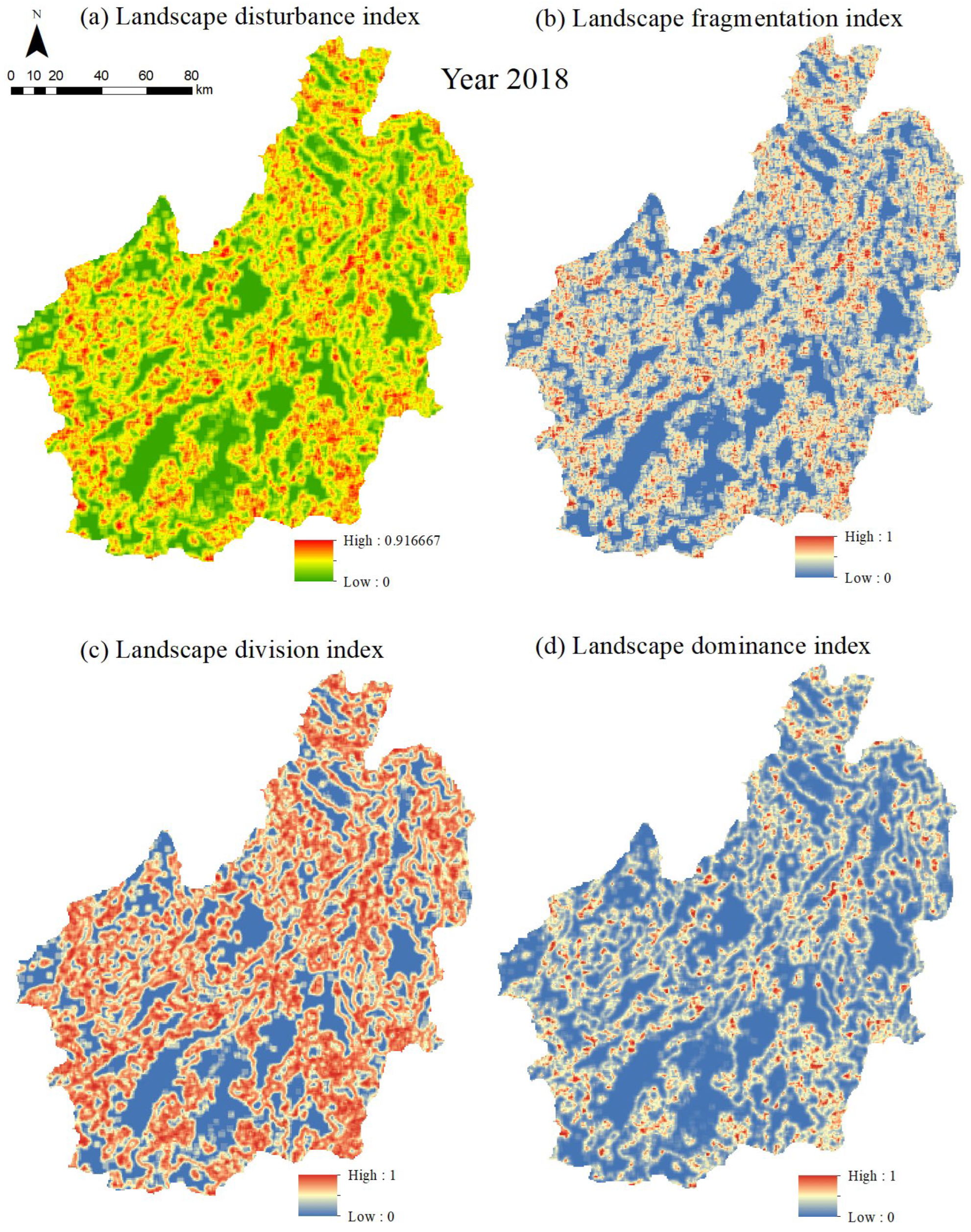
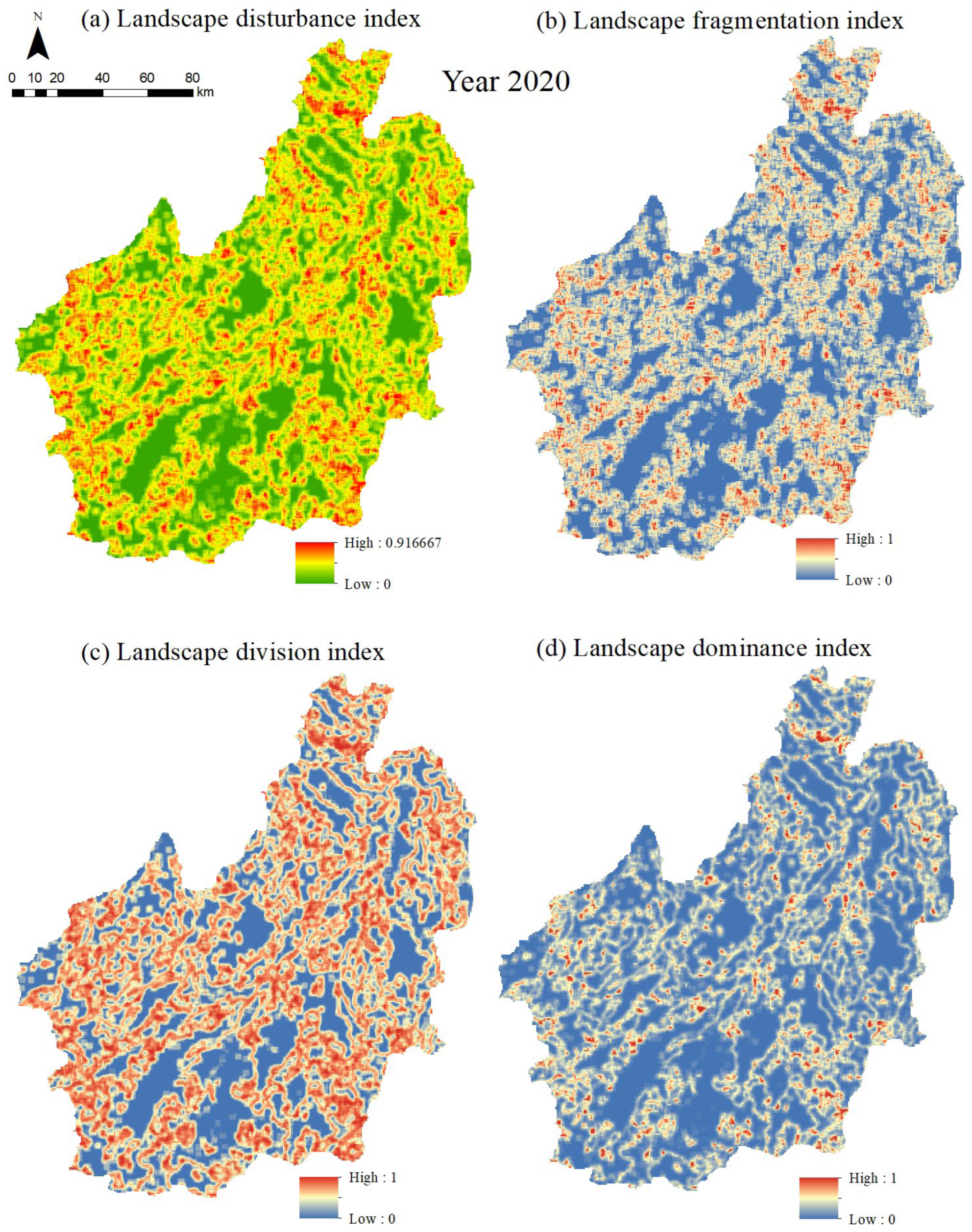
- The infiltrative expansion of production–living (PL) space has significantly intensified ecological disturbances, indicating an urgent need to enhance landscape connectivity conservation. In the northeastern and northwestern regions—where high fragmentation and division indices coincide with the expansion of PL space—urban growth boundaries should be clearly defined to limit further encroachment. Meanwhile, the restoration of ecological corridors linking large forest patches in the central-western regions is essential to mitigate the ecological impacts of landscape subdivision and fragmentation.
- The spatial divergence in coupling coordination levels underscores the necessity for region-specific optimization strategies. The well-coordinated northern and southern areas, where multifunctional integration is relatively strong, are suitable for promoting high-value green industries and compact settlement development. In contrast, the central regions with low coordination levels, characterized by ecologically fragile but functionally critical ES, should be subject to stringent protection measures aligned with the national Ecological Redline policy.
4.3. Limitations and Future Research Directions
5. Conclusions
Author Contributions
Funding
Data Availability Statement
Conflicts of Interest
Abbreviations
| ES | Ecological space |
| PL (space) | Production living space |
| PE (space) | Production–ecological space |
| PLE (space) | Production–living–ecological space |
| C_cp | Coupling degree |
| D_cc | Coupling coordination degree |
| C | Landscape fragmentation index |
| F | Landscape division index |
| D | Landscape dominance index |
| E | Landscape disturbance index |
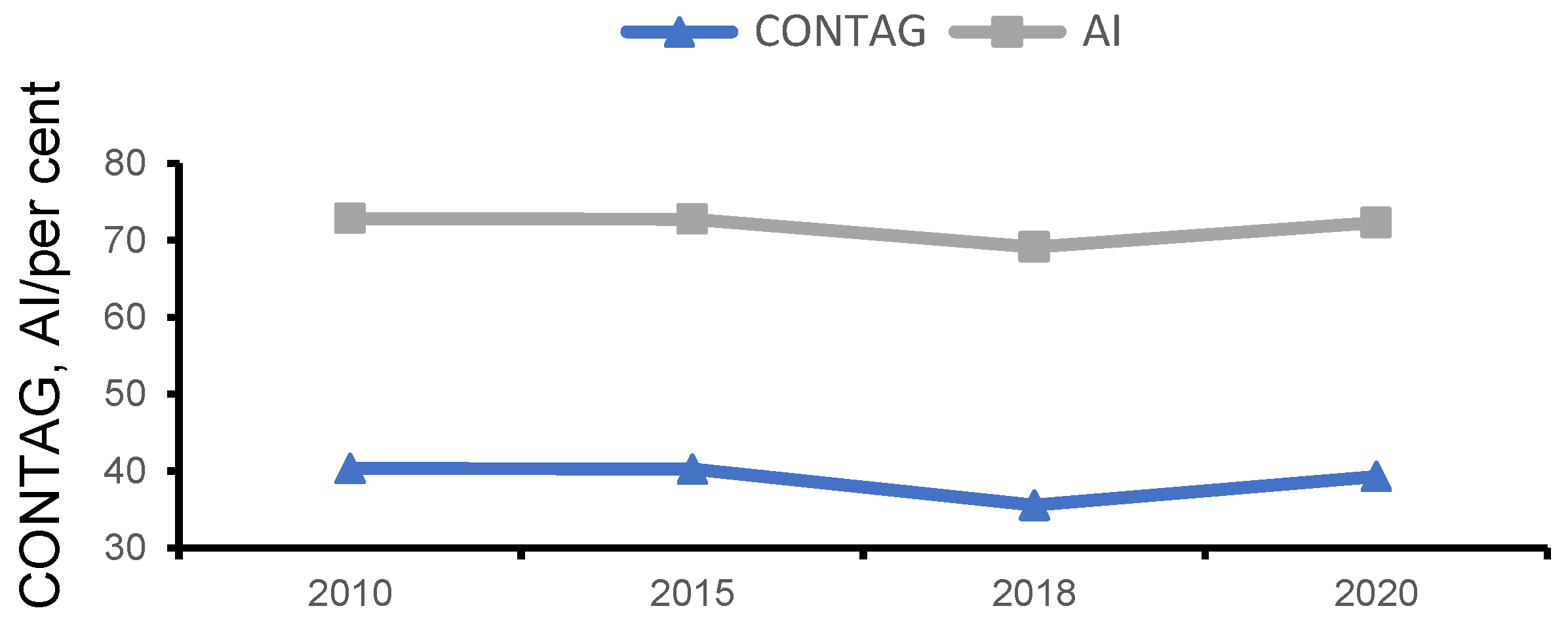
| AI | Aggregation Index |
| CONTAG | Contagion index |
| SHDI | Shannon’s diversity index |
| SHEI | Shannon’s evenness index |
Appendix A


Appendix B

| 2010 | 2015 | 2018 | 2020 | |
|---|---|---|---|---|
| Incongruous zone | 42.56% | 42.40% | 41.99% | 42.03% |
| Break-in zone | 20.25% | 20.34% | 20.59% | 20.65% |
| Coordinated zone | 37.19% | 37.26% | 37.42% | 37.32% |
Appendix C


Appendix D


References
- Jiang, M.; Liu, Y. Discussion on the concept definition and spatial boundary classification of “Production-Living-Ecological” space. Urban Dev. Stud. 2020, 27, 43–48. [Google Scholar]
- Huang, A.; Xu, Y.; Lu, L.; Liu, C.; Zhang, Y.; Hao, J.; Wang, H. Research progress of the identification and optimization of production-living-ecological spaces. Prog. Geogr. 2020, 39, 503–518. [Google Scholar] [CrossRef] [Scilit]
- Duan, Y.; Huang, A.; Lu, L.; Ji, Z.; Xu, Y. Analysis on concept and theories of “Production-Living-Ecological” spaces. J. China Agric. Univ. 2023, 28, 170–182. [Google Scholar]
- Verburg, P.H.; Crossman, N.; Ellis, E.C.; Heinimann, A.; Hostert, P.; Mertz, O.; Nagendra, H.; Sikor, T.; Erb, K.-H.; Zhen, L. Land system science and sustainable development of the Earth system: A global land project perspective. Anthropocene 2015, 12, 29–41. [Google Scholar] [CrossRef] [Scilit]
- Wiggering, H.; Müller, K.; Werner, A.; Helming, K. The concept of multifunctionality in sustainable land development. In Sustainable Development of Multifunctional Landscapes; Helming, K., Wiggering, H., Eds.; Springer: Berlin/Heidelberg, Germany, 2003; pp. 3–18. [Google Scholar]
- Wu, Y.; Yang, Y.; Yang, L.; Zhang, C.; Yu, Z. Land spatial development and suitability for city construction based on ecological-living-industrial space—Take Ningbo City as an example. Resour. Sci. 2016, 38, 2072–2081. [Google Scholar]
- Zou, L.; Liu, Y.; Wang, Y. Research progress and prospect of land-use conflicts in China. Prog. Geogr. 2020, 39, 298–309. [Google Scholar] [CrossRef] [Scilit]
- Lu, D.; Yao, S.; Li, G.; Liu, H.; Gao, X. Comprehensive analysis of the urbanization process based on China’s conditions. Econ. Geogr. 2007, 27, 883–887. [Google Scholar]
- Wang, S.; Huang, L.; Xu, X.; Li, J. Spatio-temporal variation characteristics of ecological space and its ecological carrying status in mega-urban agglomerations. Acta Geogr. Sin. 2022, 77, 164–181. [Google Scholar]
- Lian, H.; Zhang, Y.; Xiong, X.; Han, W. Functional Assessment of Rural Counties Under the Production–Living–Ecological Framework: Evidence from Guangdong, China. Land 2025, 14, 995. [Google Scholar] [CrossRef] [Scilit]
- Zhang, L.; Ji, X.; Su, Y.; Lu, Z. Spatial–Temporal Evolution and Coupling and Coordination of “Production–Life–Ecological” in Energy-Rich Area: A Perspective on Structure and Function. Land 2025, 14, 520. [Google Scholar] [CrossRef] [Scilit]
- Jia, J.; Jiang, E.; Tian, S.; Qu, B.; Li, J.; Hao, L.; Liu, C.; Jing, Y. Land-Use Transformation and Its Eco-Environmental Effects of Production–Living–Ecological Space Based on the County Level in the Yellow River Basin. Land 2025, 14, 427. [Google Scholar] [CrossRef] [Scilit]
- Wang, D.; Jiang, D.; Fu, J.; Lin, G.; Zhang, J. Comprehensive assessment of production-living-ecological space based on the coupling coordination degree model. Sustainability 2020, 12, 2009. [Google Scholar] [CrossRef] [Scilit]
- Yi, Z.; Zhang, M.; Qin, B. Optimization of spatial layout based on ESV-FLUS model from the perspective of “Production-Living-Ecological”: A case study of Wuhan City. Ecol. Model. 2023, 481, 110373. [Google Scholar]
- Duan, Y.; Wang, H.; Huang, A.; Xu, Y.; Lu, L.; Ji, Z. Identification and spatial-temporal evolution of rural “production-living-ecological” space from the perspective of villagers’ behaviour—A case study of Ertai Town, Zhangjiakou City. Land Use Policy 2021, 106, 105457. [Google Scholar] [CrossRef] [Scilit]
- Liu, J.; Cong, Z.; Wang, Z. Ecological effects of production-living-ecological space transformation at multi-scales: A case study on the Shandong Section of the Yellow River Basin. China Environ. Sci. 2023, 43, 2519–2530. [Google Scholar] [CrossRef] [Scilit]
- Zhang, G.; Liu, E.; Dong, Y. Evolution Characteristics and Tourism Effect of Production-Living-Ecological Space in China. Geogr. Geo-Inf. Sci. 2023, 39, 130–136. [Google Scholar]
- Li, J.; Sun, W.; Li, M.; Meng, L. Coupling coordination degree of production, living and ecological spaces and its influencing factors in the Yellow River Basin. J. Clean. Prod. 2021, 298, 126803. [Google Scholar] [CrossRef] [Scilit]
- Yang, Y.; Bao, W.; Liu, Y. Coupling coordination analysis of rural production-living-ecological space in the Beijing-Tianjin-Hebei region. Ecol. Indic. 2020, 117, 106591. [Google Scholar] [CrossRef] [Scilit]
- Ji, Z.; Liu, C.; Xu, Y.; Huang, A.; Lu, L.; Duan, Y. Identification and optimal regulation of the production-living-ecological space based on quantitative land use functions. Agric. Eng. 2020, 36, 222–231. [Google Scholar]
- Golden, C.; Lin, H.; Chi, X. A literature review on optimization of spatial development pattern based on ecological-production-living space. Prog. Geogr. 2017, 36, 378–391. [Google Scholar]
- Liu, J.; Liu, Y.; Li, Y. Classification evaluation and spatial-temporal analysis of “production-living-ecological” spaces in China. Acta Geogr. Sin. 2017, 72, 1290–1304. [Google Scholar]
- Cui, J.; Gu, J.; Sun, J.; Luo, J. The Spatial Pattern and Evolution Characteristics of the Production Living and Ecological Space in Hubei Provence. China Land Sci. 2018, 32, 67–73. [Google Scholar]
- Liu, C.; Xu, Y.; Liu, Y.; Sun, P.; Huang, A.; Zhou, J. Research on Land Use Functions Classification and Evaluation System Based on System Theory. Acta Sci. Nat. Univ. Pekin. 2018, 54, 181–188. [Google Scholar] [CrossRef]
- Li, G.; Fang, C. Quantitative function identification and analysis of urban ecological-production-living spaces. Acta Geogr. Sin. 2016, 71, 49–65. [Google Scholar]
- Ji, Z.; Liu, C.; Xu, Y.; Sun, M.; Wei, H.; Sun, D.; Li, Y.; Zhang, P.; Sun, Q. Quantitative identification and the evolution characteristics of production-living-ecological space in the mountainous area: From the perspective of multifunctional land. J. Geogr. Sci. 2023, 33, 779–800. [Google Scholar] [CrossRef] [Scilit]
- Sui, H.; Song, G.; Zhang, H. Identification of production-living-ecological space at Keshan County level in main grain producing areas in northern Songnen Plain, China. Agric. Eng. 2020, 36, 264–271. [Google Scholar]
- Chen, H.; Yang, Q.; Su, K.; Zhang, H.; Lu, D.; Xiang, H.; Zhou, L. Identification and optimization of production-living-ecological space in an ecological foundation area in the upper reaches of the Yangtze River: A case study of Jiangjin District of Chongqing, China. Land 2021, 10, 863. [Google Scholar] [CrossRef] [Scilit]
- Xu, L.; Dong, J.; Li, L.; Zhang, J. Characteristics and Optimization of Geographical Space in Urban Agglomeration in the Middle Reaches of the Yangtze River Based on the Function Zoning. Econ. Geogr. 2017, 37, 76–83. [Google Scholar] [CrossRef]
- Bu, Z.; Fu, J.; Jiang, D.; Lin, G. Production–living–ecological spatial function identification and pattern analysis based on multi-source geographic data and machine learning. Land 2023, 12, 2029. [Google Scholar] [CrossRef] [Scilit]
- Zhao, B.; Tan, X.; Luo, L.; Deng, M.; Yang, X. Identifying the production–living–ecological functional structure of Haikou City by integrating empirical knowledge with multi-source data. ISPRS Int. J. Geo-Inf. 2023, 12, 276. [Google Scholar] [CrossRef] [Scilit]
- Lin, Y.; Zhao, J.; Zhang, M.; Chen, G. ldentification of Territory Space Pattern and Spatio-temporal Evolution Analysis of Urban Agglomeration in Central Yunnan. J. Agric. Mach. 2019, 50, 176–191. [Google Scholar]
- Wei, X.; Zhao, Y.; Li, X.; Xue, C.; Xia, S. Characteristics and Optimization of Geographical Space in Urban Agglomeration in the Upper Reaches of the Yangtze River Based on the Function of “Production-Living-Ecological”. Resour. Environ. Yangtze Basin 2019, 28, 1070–1079. [Google Scholar]
- Zhang, H.; Xu, E.; Zhu, H. An ecological-living-industrial land classification system and its spatial distribution in China. Resour. Sci. 2015, 37, 1332–1338. [Google Scholar]
- Chen, J.; Shi, P. Discussion on functional land use classification system. J. Beijing Normal Univ. (Nat. Sci.) 2005, 41, 536–540. [Google Scholar]
- Kong, D.; Chen, H.; Wu, K. The evolution of “Production-Living-Ecological” space, eco-environmental effects and its influencing factors in China. J. Nat. Resour. 2021, 36, 1116–1135. [Google Scholar] [CrossRef] [Scilit]
- Han, M.; Kong, X.; Li, Y.; Wei, F.; Kong, F.; Huang, S. Eco-environmental effects and its spatial heterogeneity of ‘ecological-production-living’ land use transformation in the Yellow River Delta. Geo Sci. 2021, 41, 1009–1018. [Google Scholar] [CrossRef]
- Zou, Y.; Zhang, S.; Xie, Y.; Du, Y. Spatial distribution and evolution characters of production-living-ecological spaces in Xuzhou city. Sci. Surv. Mapp. 2020, 45, 154–162. [Google Scholar] [CrossRef]
- Ni, W.; Xia, Y.; Zhao, N. Functional Evolution and Coupling Coordination Measurement of Production-Living-Ecological Space in Rural Areas: Taking Heilongjiang Province as an Example. China Land Sci. 2022, 36, 111–119. [Google Scholar]
- Liu, D.; Ma, X.; Gong, J.; Li, H. Functional identification and spatiotemporal pattern analysis of production-living-ecological space in watershed scale: A case study of Bailongjiang Watershed in Gansu. Chin. J. Ecol. Sin. 2018, 37, 1490–1497. [Google Scholar] [CrossRef]
- Zou, L.; Liu, Y.; Wang, J.; Yang, Y. An analysis of land use conflict potentials based on ecological-production-living function in the southeast coastal area of China. Ecol. Indic. 2021, 122, 107297. [Google Scholar] [CrossRef] [Scilit]
- Ji, Z.; Xu, Y.; Huang, A.; Lu, L.; Duan, Y. Spatial Pattern and Evolution Characteristics of the Production-Living-Ecological Space in the Mountainous Area of Northern Hebei Province: A Case Study of Zhangjiakou City. Acta Sci. Nat. Univ. Pekin. (Nat. Sci.) 2022, 58, 123–134. [Google Scholar] [CrossRef]
- Yang, L.; Liu, F. Study on temporal and spatial evolution of production-living-ecological space in central Yunnan urban agglomeration based on LUCC. Shanghai Land Resour. 2023, 44, 28–35. [Google Scholar]
- Zhang, L.; Hu, B.; Zhang, Z.; Liang, G. Research on the spatiotemporal evolution and mechanism of ecosystem service value in the mountain-river-sea transition zone based on “production-living-ecological space”—Taking the Karst-Beibu Gulf in Southwest Guangxi, China as an example. Ecol. Indic. 2023, 148, 109889. [Google Scholar] [CrossRef] [Scilit]
- Zhou, Z.S.; Zhang, L.B. A preliminary study on the historical formative mechanism of multi-ethnic symbiotic relations in Yunnan. J. Yunnan Norm. Univ. (Philos. Soc. Sci.) 2015, 47, 122–127. [Google Scholar]
- Wang, Y.X. Research on Ecological Effect of Countryside Urbanization and the Control Measures in Ecological Fragile Area of Southwest Region by Taking Zhaotong in Yunnan as a Case. Environ. Sci. Surv. 2009, 28, 35–38. [Google Scholar]
- Zhao, K.; Rao, Y.; Wang, L.L.; Liu, Y. Evaluation of ecological fragility in southwest of China—A case study of Yunnan and Guizhou. J. Geol. Hazards Environ. Preserv. 2004, 15, 38–42. [Google Scholar]
- Zhang, H.; Deng, W.; Zhang, S.; Wang, Z. Multiscale geospatial transitions and sustainable strategies for mountainous urban agglomerations: From the perspective of social–ecological systems. Cities 2026, 169, 106560. [Google Scholar] [CrossRef] [Scilit]
- Dang, L.; Xu, Y.; Gao, Y. Assessment Method of Functional Land Use Classification and Spatial System--A Case Study of Yangou Watershed. Res. Soil Water Conserv. 2014, 21, 193–197. [Google Scholar] [CrossRef]
- Jin, X.; Lu, Y.; Lin, J.; Qi, X.; Hu, J.; Li, X. Research on the evolution of spatiotemporal patterns of production-living-ecological space in an urban agglomeration in the Fujian Delta region, China. Acta Ecol. Sin. 2018, 38, 4286–4295. [Google Scholar]
- Zhong, S.; Yang, Q. Identifying and analysing the functions of “PLE spaces” in hilly areas—Taking Renshou County as an example. J Sichuan For. Sci. Technol. 2024, 45, 126–132. [Google Scholar] [CrossRef]
- Wang, A.; Liao, X.; Tong, Z.; Du, W.; Zhang, J.; Liu, X.; Liu, M. Spatial-temporal dynamic evaluation of the ecosystem service value from the perspective of “production-living-ecological” spaces: A case study in Dongliao River Basin, China. J. Clean. Prod. 2022, 333, 130218. [Google Scholar] [CrossRef] [Scilit]
- Liao, G.; He, P.; Gao, X.; Deng, L.; Zhang, H.; Feng, N.; Zhou, W.; Deng, O. The Production–Living–Ecological Land Classification System and Its Characteristics in the Hilly Area of Sichuan Province, Southwest China Based on Identification of the Main Functions. Sustainability 2019, 11, 1600. [Google Scholar] [CrossRef] [Scilit]
- Ma, S.; Huang, H.; Cai, Y.; Nian, P. Theoretical framework of comprehensive zoning of territorial space based on optimization of production-living-ecological functions. Nat. Resour. Econ. China 2014, 27, 31–34. [Google Scholar]
- Liao, L.; Dai, W.; Chen, J.; Huang, W.; Jiang, F.; Hu, Q. Spatial conflict between ecological-production-living spaces on Pingtan Island during rapid urbanization. Resour. Sci. 2017, 39, 1823–1833. [Google Scholar]
- Ma, L.; Jin, F.; Song, Z.; Liu, Y. Spatial coupling analysis of regional economic development and environmental pollution in China. J. Geogr. Sci. 2013, 23, 111–124. [Google Scholar] [CrossRef] [Scilit]
- Ma, F.; Guo, Y.; Yuen, K.F.; Woo, S.; Shi, W. Association between new urbanisation and sustainable transportation: A symmetrical coupling perspective. Symmetry 2019, 11, 192. [Google Scholar] [CrossRef] [Scilit]
- Li, W.; Chen, J.; Zhang, Z. Forest quality-based assessment of the Returning Farmland to Forest Programme at the community level in SW China. For. Ecol. Manag. 2020, 461, 117938. [Google Scholar] [CrossRef] [Scilit]
- Lu, H.; Zhou, L.; Chen, Y.; An, Y.; Hou, C. Degree of coupling and coordination of eco-economic system and the influencing factors: A case study in Yanchi County, Ningxia Hui Autonomous Region, China. J. Arid Land 2017, 9, 446–457. [Google Scholar] [CrossRef] [Scilit]
- Wang, C.; Tang, N. Spatio-temporal characteristics and evolution of rural production living ecological space function coupling coordination in Chongqing Municipality. Geogr. Res. 2018, 37, 1100–1114. [Google Scholar]
- Yuan, J.; Bian, Z.; Yan, Q.; Pan, Y. Spatio-temporal distributions of the land use efficiency coupling coordination degree in mining cities of Western China. Sustainability 2019, 11, 5288. [Google Scholar] [CrossRef] [Scilit]
- Wu, J.G. Landscape Ecology: Pattern, Process, Scale and Hierarchy; Higher Education Press: Beijing, China, 2007. [Google Scholar]
- Uuemaa, E.; Antrop, M.; Roosaare, J.; Marja, R.; Mander, Ü. Landscape metrics and indices: An overview of their use in landscape research. Living Rev. Landsc. Res. 2009, 3, 1–28. [Google Scholar] [CrossRef] [Scilit]
- Riitters, K.H.; O’Neill, R.V.; Hunsaker, C.T.; Wickham, J.D.; Yankee, D.H.; Timmins, S.P.; Jones, K.B.; Jackson, B.L. A factor analysis of landscape pattern and structure metrics. Landsc. Ecol. 1995, 10, 23–39. [Google Scholar] [CrossRef] [Scilit]
- Cushman, S.A.; McGarigal, K.; Neel, M.C. Parsimony in landscape metrics: Strength, universality, and consistency. Ecol. Indic. 2008, 8, 691–703. [Google Scholar] [CrossRef] [Scilit]
- Yao, L.; Li, X.; Li, Q. & Wang, J. Temporal and spatial changes in coupling and coordinating degree of new urbanisation and ecological-environmental stress in China. Sustainability 2019, 11, 1171. [Google Scholar] [CrossRef] [Scilit]
- Fu, Y.; Zhang, Y. Research on Temporal and Spatial Evolution of Land Use and Landscape Pattern in Anshan City Based on GEE. Front. Environ. Sci. 2022, 10, 988346. [Google Scholar] [CrossRef] [Scilit]
- Li, D.; Ding, S.; Liang, G.; Zhao, Q.; Tang, Q.; Kong, L. Landscape Heterogeneity of Mountainous and Hilly Area in the Western Henan Province Based on Moving Window Method. Acta Ecol. Sin. 2014, 34, 3414–3424. [Google Scholar] [CrossRef] [Scilit]
- Han, Z.; Shi, J.; Wu, J.; Wu, J.; Wang, Z. Recognition Method of “The Production, Living and Ecological Space’ based on POl Data and Quad-tree ldea. J. Geo-Inf. Sci. 2022, 24, 1107–1119. [Google Scholar]
- Wan, J.; Fei, T. “Production-Living-Ecological Spaces” Recognition Methods based on Street View lmages. J. Geo-Inf. Sci. 2023, 25, 838–851. [Google Scholar]


| Year | 2010 | 2015 | 2018 | 2020 |
|---|---|---|---|---|
| Overall classification accuracy | 82.00% | 85.00% | 81.00% | 84.00% |
| Kappa factor | 77.87% | 81.25% | 79.72% | 81.25% |
| Primary Category | Secondary Category and Function Scores | Tertiary Category |
|---|---|---|
| Production land | Strongly production land (5) | Industrial land |
| Semi-production land (3) | Paddy land, dry land, town land, rural settlements | |
| Weak production land (1) | Forests, grasslands, rivers and canals, lakes, reservoirs and ponds, mudflats | |
| Living land | Strong living land (5) | Town land, rural settlements |
| Semi-living land (3) | Industrial land | |
| Weak living land (1) | Paddy land, dry land | |
| Ecological land | Strong ecological land (5) | Forests, grasslands, rivers and canals, lakes, mudflats |
| Semi-ecological land (3) | Paddy land, dry land | |
| Weak ecological land (1) | Reservoirs and ponds |
| Coordination Zone (Based on D_cc Value) | Dominant Function Score | PLES Type | Classification |
|---|---|---|---|
| Coordinated Zone (High D_cc) | - | Production–Living–Ecological Space (PLE) | Multi-function |
| Break-in Zone (Medium D_cc) | P ≥ E AND L ≥ E | Production–Living Space (PL) | Multi-function |
| P > L AND E > L | Production–Ecological Space (PE) | Multi-function | |
| Incongruous Zone (Low D_cc) | P > E OR L > E | Production–Living Space (PL) | Multi-function |
| All other cases (i.e., E is dominant) | Ecological Space (ES) | Single-function |
| Landscape Pattern Index | Formulas |
|---|---|
| Landscape disturbance index Ei | a = 0.5, b = 0.3, c = 0.2 |
| Landscape fragmentation index Ci | Ni is the number of land use type patches, and Ai is the area of patches of land use type i |
| Landscape division index Fi | Si is the landscape type distance index, Pi is the landscape type relative cover |
| Landscape dominance index Di | Li is the relative density of landscape types, Pi is the relative cover of landscape types, d = 0.6,e = 0.4 |
| Aggregation Index AI | gii indicates the number of similar neighboring patches for the corresponding landscape type |
| Contagion index CONTAG | Pi indicates the percentage of area occupied by type i patches, gik indicates the number of type i and k patches adjacent to each other, and m is the total number of patch types |
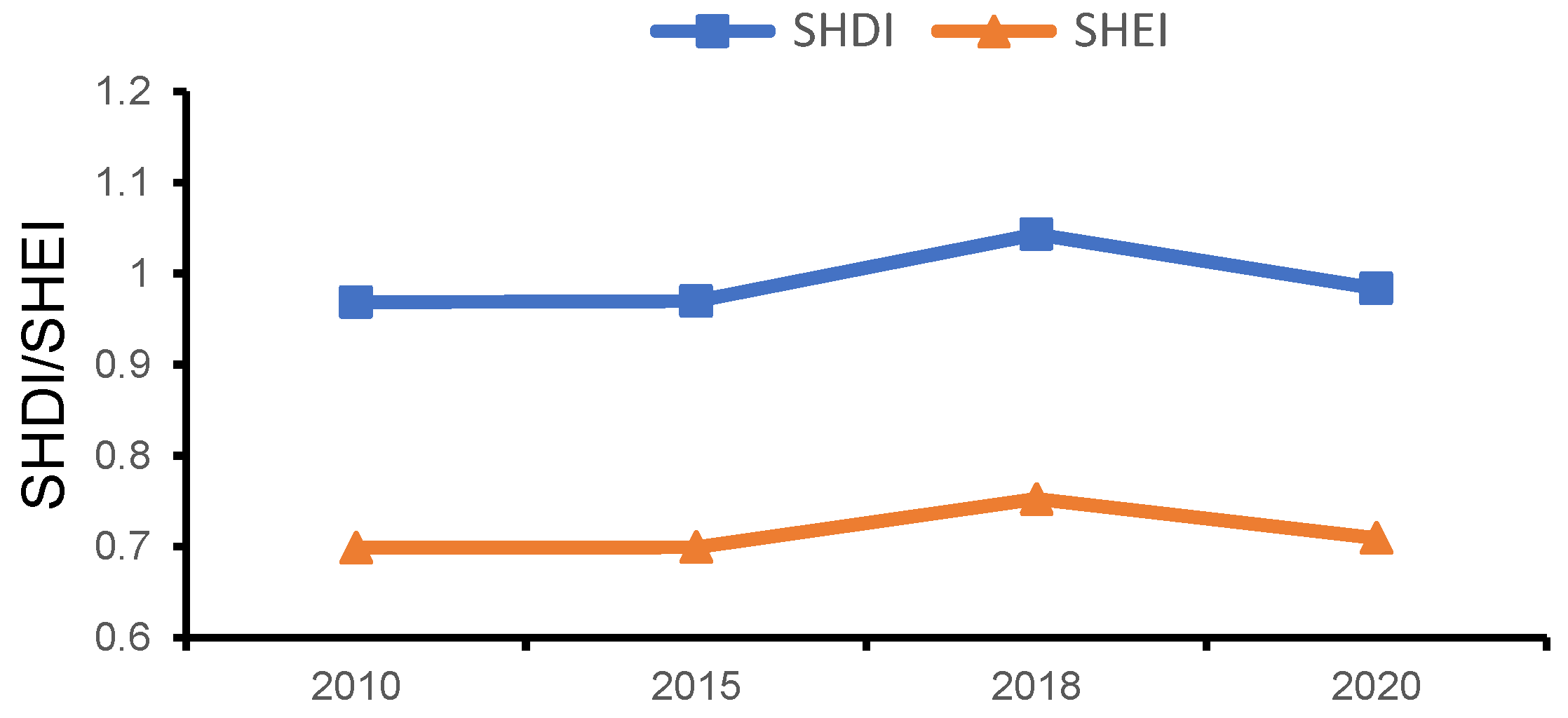
| Shannon’s diversity index SHDI | Pj denotes the percentage of area occupied by type j patches, and m is the total number of patch types |
| Shannon’s evenness index SHEI | Pj denotes the percentage of area occupied by type j patches, and m is the total number of patch types |
| 2010 | 2015 | 2018 | 2020 | |||||
|---|---|---|---|---|---|---|---|---|
| Area | Ratios | Area | Ratios | Area | Ratios | Area | Ratios | |
| ES | 12,711.1 | 45.01% | 12,662.64 | 44.84% | 12,545.01 | 44.43% | 12,558.1 | 44.48% |
| PL | 13.68 | 0.05% | 22.18 | 0.08% | 56.6 | 0.20% | 61 | 0.22% |
| PE | 3119.26 | 11.05% | 3113.73 | 11.03% | 4804.88 | 17.02% | 3195.06 | 11.32% |
| PLE | 12,394.22 | 43.89% | 12,439.71 | 44.05% | 10,828.53 | 38.35% | 12,420.86 | 43.99% |
| 2015 | |||||
|---|---|---|---|---|---|
| 2010 | ES | PE | PL | PLE | Total transfers out |
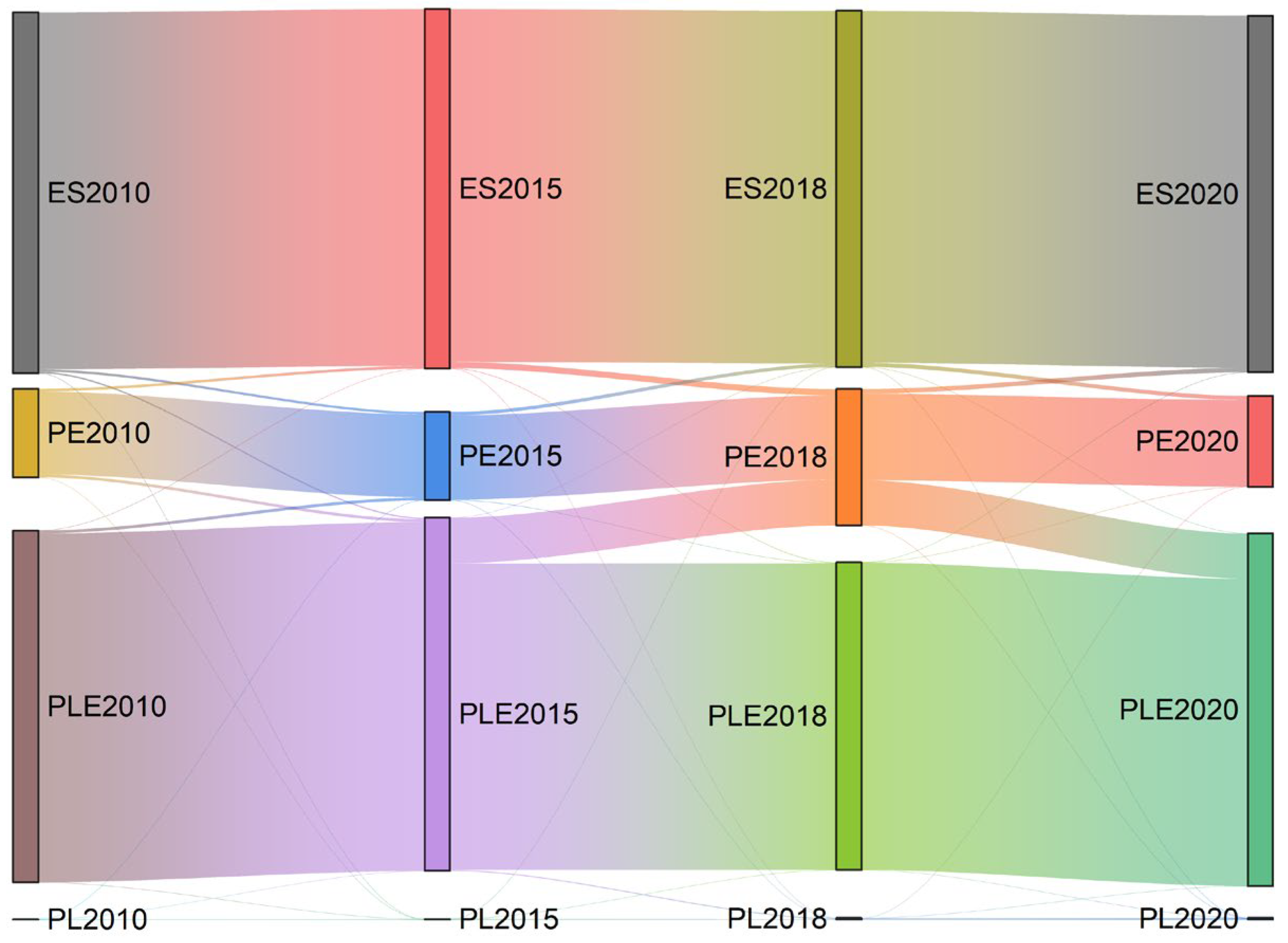
| ES | 12,566.77 | 86.64 | 3.92 | 53.77 | 144.33 |
| PE | 95.51 | 2920.1 | 0.62 | 103.02 | 199.16 |
| PL | 0 | 0.36 | 12.96 | 0.36 | 0.72 |
| PLE | 0.36 | 106.63 | 4.68 | 12,282.56 | 111.67 |
| Total transfers in | 95.87 | 193.63 | 9.22 | 157.15 | 455.87 |
| 2018 | |||||
|---|---|---|---|---|---|
| 2015 | ES | PE | PL | PLE | Total transfers out |
| ES | 12,419.91 | 218.79 | 0.08 | 21.83 | 240.7 |
| PE | 122.41 | 2969.34 | 4.33 | 17.56 | 144.3 |
| PL | 0.3 | 0 | 17.91 | 0.36 | 0.66 |
| PLE | 1.44 | 1615.47 | 34.9 | 10,787.81 | 1651.81 |
| Total transfers in | 124.15 | 1834.26 | 39.3 | 39.76 | 2037.47 |
| 2020 | |||||
|---|---|---|---|---|---|
| 2018 | ES | PE | PL | PLE | Total transfers out |
| ES | 12,393.08 | 143.94 | 0.07 | 7.92 | 151.93 |
| PE | 162.16 | 3048.96 | 2.16 | 1591.6 | 1755.92 |
| PL | 0 | 1.08 | 53.36 | 2.16 | 3.24 |
| PLE | 2.87 | 1.08 | 5.4 | 10,819.18 | 9.35 |
| Total transfers in | 165.03 | 146.1 | 7.63 | 1601.68 | 1920.43 |
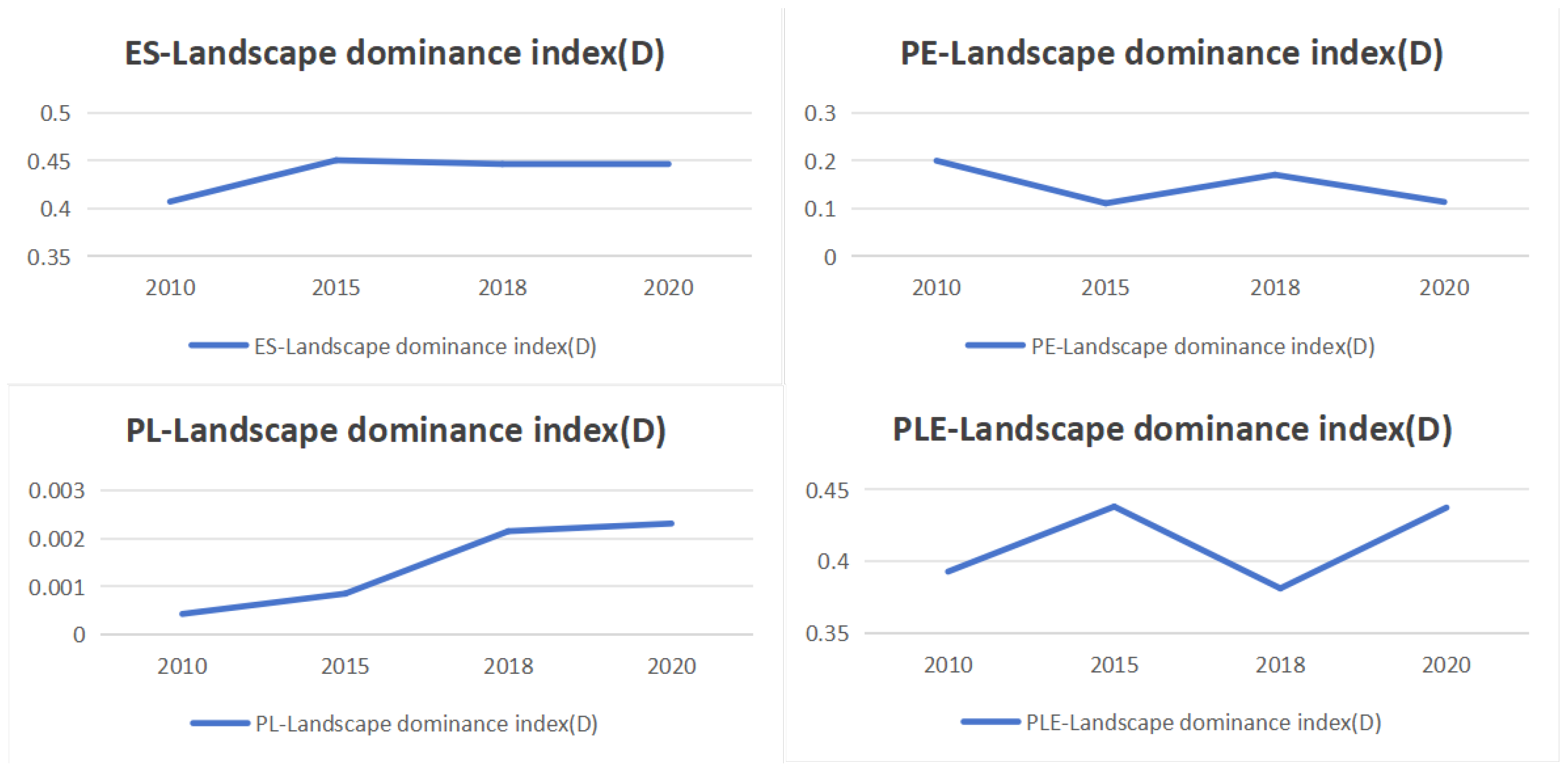
| Year | PLE Type | C | F | D | E |
|---|---|---|---|---|---|
| 2010 | ES | 2.84 | 2.08 | 0.41 | 2.13 |
| PE | 2.84 | 4.23 | 0.2 | 2.73 | |
| PL | 2.85 | 1987.67 | 0 | 597.73 | |
| PLE | 2.78 | 2.11 | 0.39 | 2.1 | |
| 2015 | ES | 2.84 | 1.88 | 0.45 | 2.07 |
| PE | 2.84 | 7.64 | 0.11 | 3.74 | |
| PL | 4.46 | 1602.13 | 0 | 482.87 | |
| PLE | 2.78 | 1.89 | 0.44 | 2.05 | |
| 2018 | ES | 2.84 | 1.9 | 0.45 | 2.08 |
| PE | 2.82 | 4.94 | 0.17 | 2.93 | |
| PL | 3.23 | 448.53 | 0 | 136.18 | |
| PLE | 2.78 | 2.17 | 0.38 | 2.12 | |
| 2020 | ES | 2.84 | 1.89 | 0.45 | 2.08 |
| PE | 2.84 | 7.45 | 0.11 | 3.68 | |
| PL | 3.21 | 414.94 | 0 | 126.09 | |
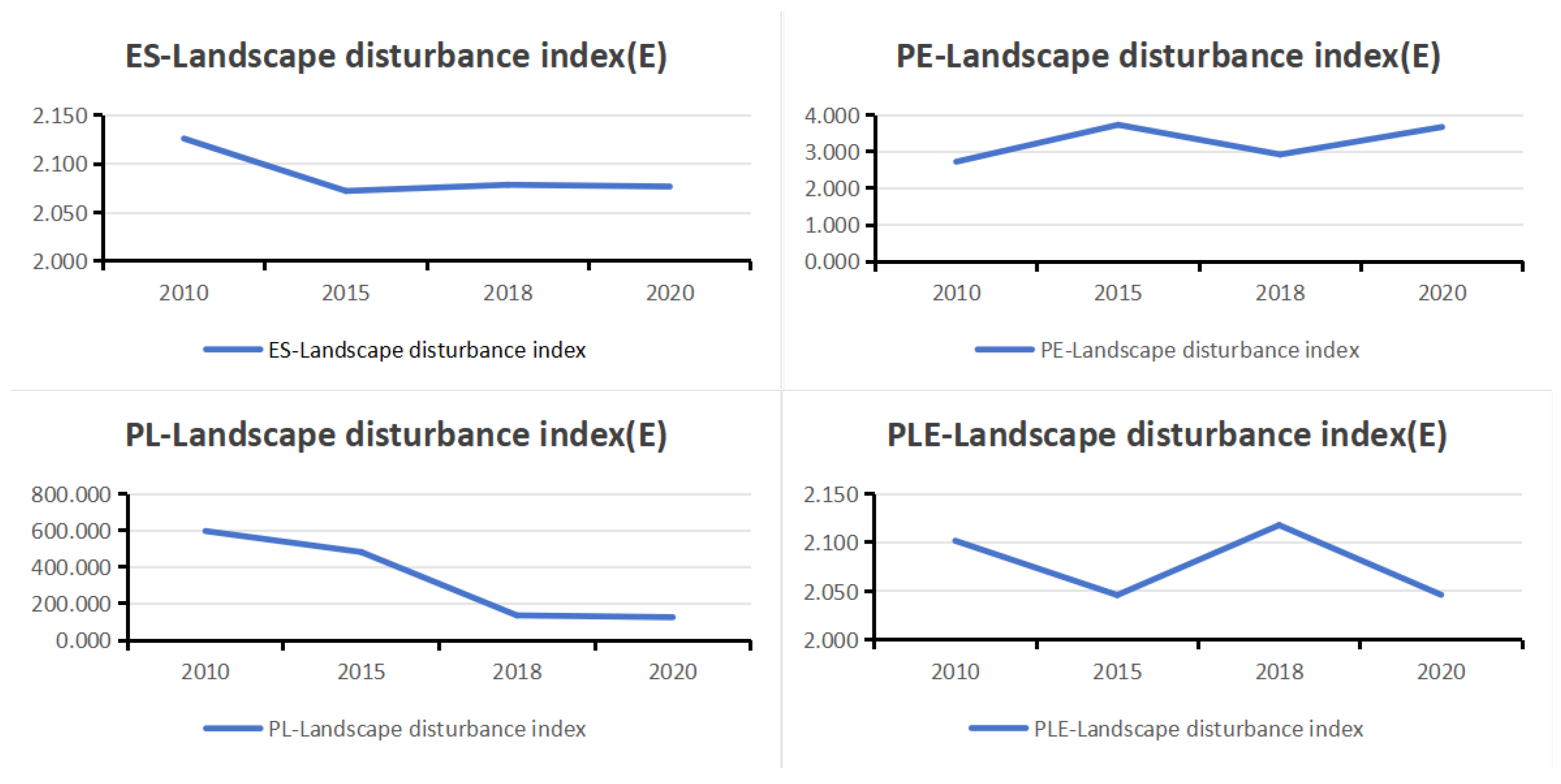
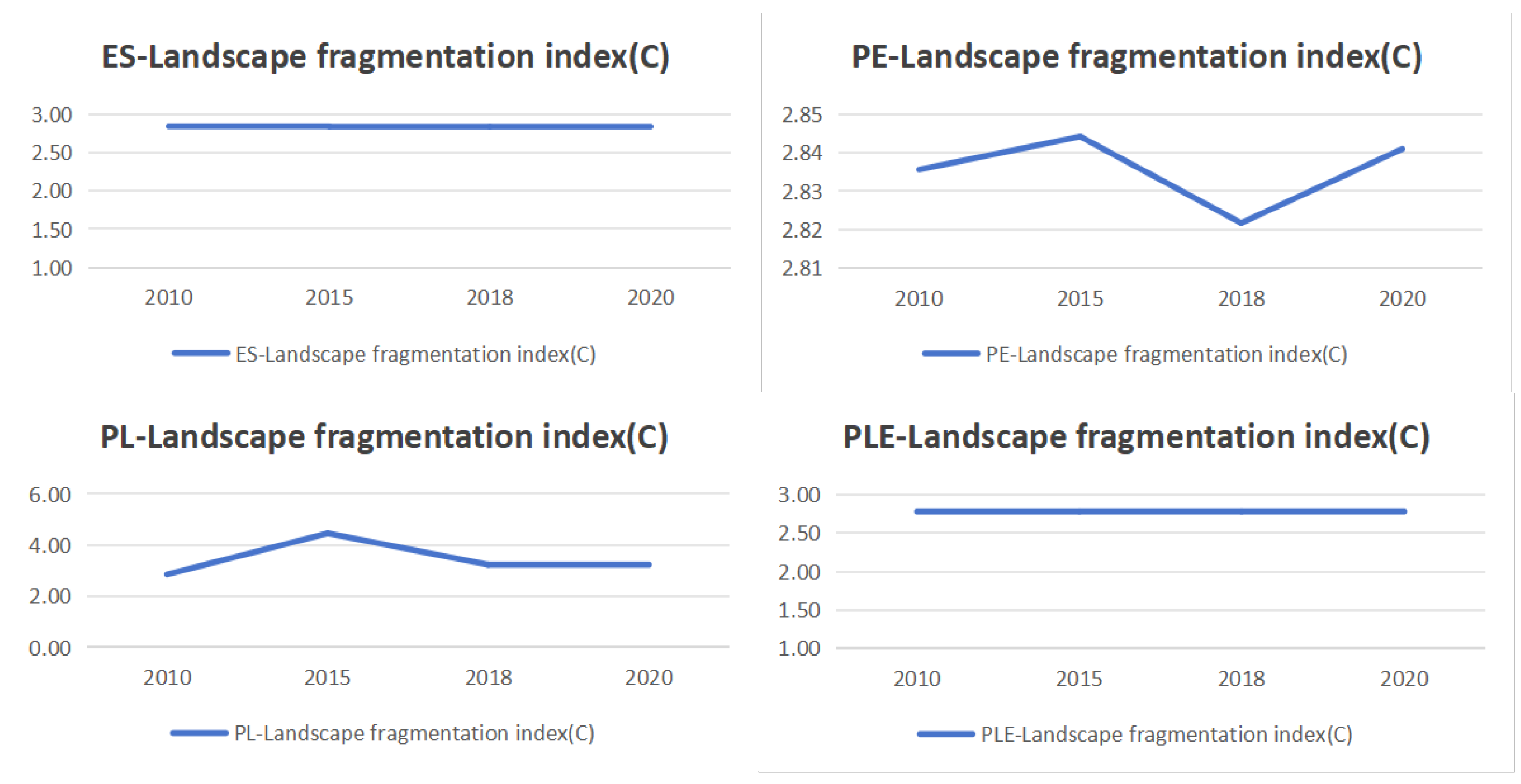
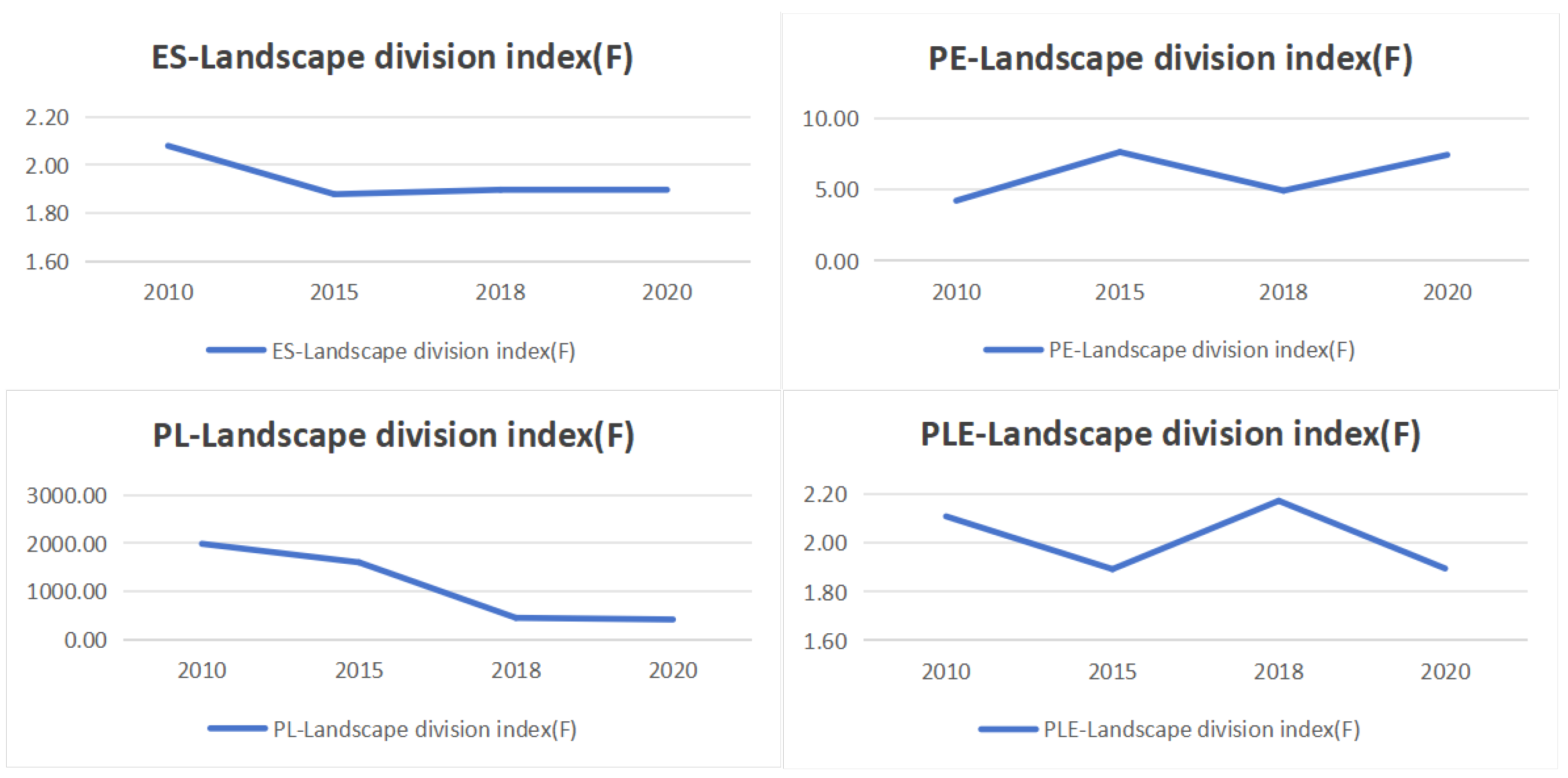
| PLE | 2.78 | 1.9 | 0.44 | 2.05 |
Disclaimer/Publisher’s Note: The statements, opinions and data contained in all publications are solely those of the individual author(s) and contributor(s) and not of MDPI and/or the editor(s). MDPI and/or the editor(s) disclaim responsibility for any injury to people or property resulting from any ideas, methods, instructions or products referred to in the content. |
© 2026 by the authors. Licensee MDPI, Basel, Switzerland. This article is an open access article distributed under the terms and conditions of the Creative Commons Attribution (CC BY) license.
Share and Cite
Deng, T.; Hou, D.; Li, C. Spatial Identification and Evolutionary Analysis of Production–Living–Ecological Space—Taking Lincang City as an Example. Land 2026, 15, 179. https://doi.org/10.3390/land15010179
Deng T, Hou D, Li C. Spatial Identification and Evolutionary Analysis of Production–Living–Ecological Space—Taking Lincang City as an Example. Land. 2026; 15(1):179. https://doi.org/10.3390/land15010179
Chicago/Turabian StyleDeng, Tingyue, Dongyang Hou, and Cansong Li. 2026. "Spatial Identification and Evolutionary Analysis of Production–Living–Ecological Space—Taking Lincang City as an Example" Land 15, no. 1: 179. https://doi.org/10.3390/land15010179
APA StyleDeng, T., Hou, D., & Li, C. (2026). Spatial Identification and Evolutionary Analysis of Production–Living–Ecological Space—Taking Lincang City as an Example. Land, 15(1), 179. https://doi.org/10.3390/land15010179