1. Introduction
Agriculture occupies a central position in Morocco’s socio-economic and political landscape, contributing significantly to national Gross Domestic Product (GDP), rural employment, and food security [
1]. Among agricultural sectors, cereal cultivation, particularly durum wheat, soft wheat, and barley, represents a cornerstone of both dietary patterns and rural livelihoods [
2]. Indeed, cereal products remain the primary source of caloric intake for Moroccan households, shaping thus the dynamics of land use, trade, and agricultural policy [
2]. Despite their importance, cereal yields in Morocco are highly vulnerable to climate variability, especially fluctuations in rainfall, which remains the dominant determinant of crop performance in semi-arid and Mediterranean environments where cereal production has long been characterized by interannual instability, with sharp yield reductions during drought years threatening both local livelihoods and national food security [
3]. Recent spatial econometric analysis further confirms the strong influence of rainfall variability on cereal production across Moroccan regions [
4].
To address structural constraints and enhance agricultural resilience, the Moroccan government launched the Green Morocco Plan (GMP) in 2008 [
5]. This ambitious strategy sought to modernize the agricultural sector through a dual approach: promoting high-value, export-oriented crops, and improving productivity and sustainability in staple food crops, including cereals. Key interventions under the GMP included the expansion of irrigation infrastructure, the introduction of improved seed varieties, the adoption of conservation and soil fertility practices, the establishment of value-chain linkages through aggregation projects, and a strategic land use allocation to different crop types [
6]. By integrating technical innovations with institutional reforms, the GMP represented a paradigm shift in Moroccan agricultural policy, aiming not only to increase yields but also to foster rural development and environmental sustainability. More recent institutional evaluations, such as those reported by ADA (2024) [
7], offer updated insights into the implementation progress and performance of GMP policy measures.
Beyond irrigation expansion and technical modernization, the Green Morocco Plan also introduced institutional and value-chain reforms aimed at improving farmers’ economic stability. These included the aggregation model designed to strengthen producer organizations and improve value-chain coordination, input-support programs such as subsidies for certified seeds and fertilizers, and measures intended to enhance market functioning and price stability. Together, these mechanisms contributed to reducing farmers’ exposure to climatic and market volatility [
8,
9]. Such components form an important dimension of the policy framework, as they can affect production decisions, investment behavior, and yield outcomes even in years marked by rainfall deficits or climatic instability. This is consistent with recent findings showing that crop yields in Morocco are shaped jointly by climatic, agronomic, and technological factors [
10].
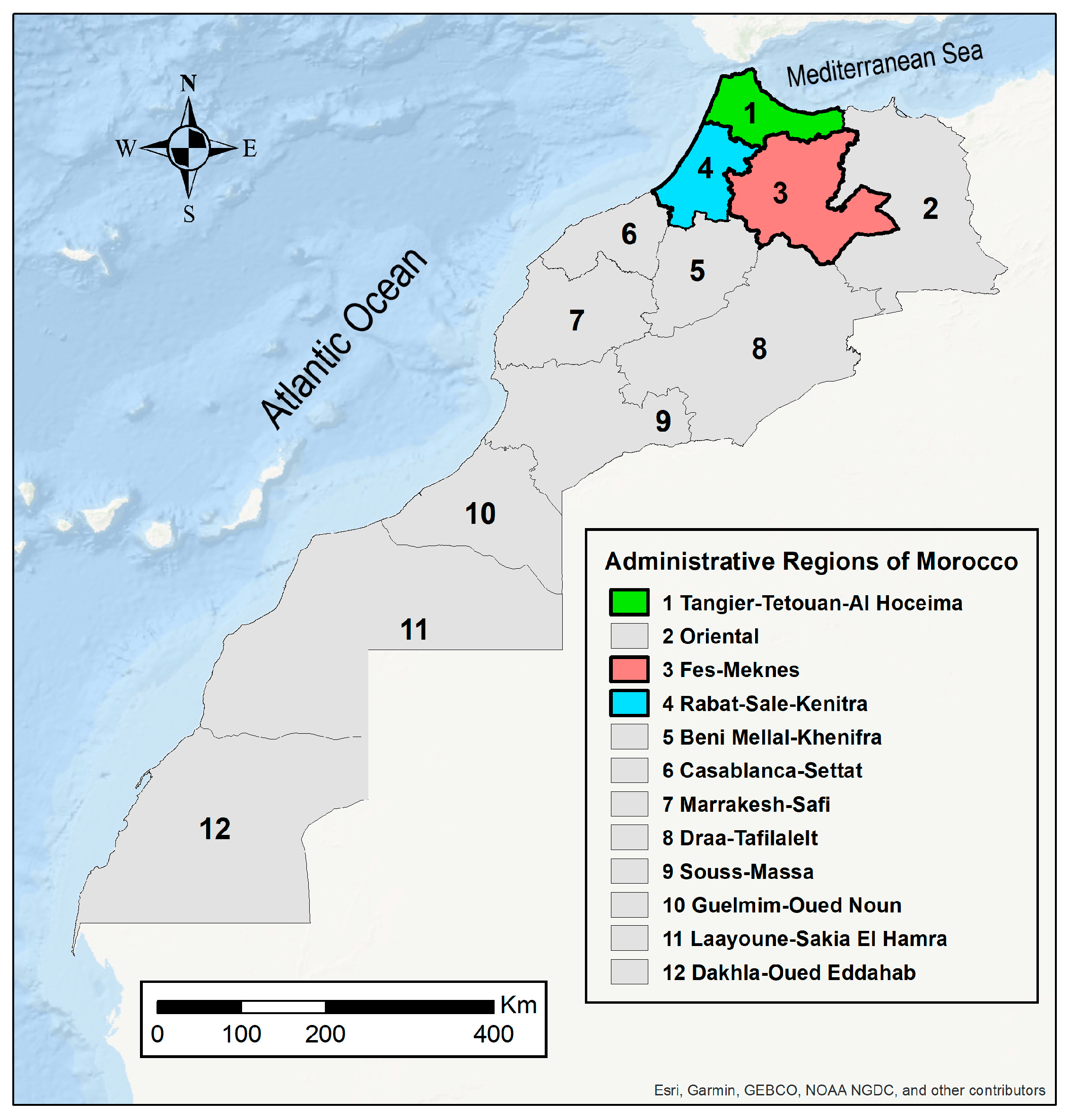
At the same time, northern Morocco, home to some of the country’s most productive cereal-growing regions, including Tangier–Tetouan–Al Hoceima (TTH), Fes–Meknes (FM), and Rabat–Sale–Kenitra (RSK), has experienced significant climate fluctuations during the past recent decades [
11]. The interplay between rainfall variability, rising temperatures, and evolving land-use practices has generated complex patterns of cereal production that cannot be explained solely by technological and policy interventions. For instance, mid-season rainfall deficits have been shown to exert a disproportionately large influence on crop yields, while excessive rainfall in early growth stages may hinder productivity through soil saturation or pest proliferation [
12]. Recent geospatial and survey-based evidence documents widespread warming, declining precipitation, cropland contraction, and increasing land degradation between 2001 and 2023, further amplifying environmental pressures on cereal systems [
13]. Understanding how these climate dynamics intersect with agricultural strategies such as the GMP is therefore critical for evaluating the effectiveness of policy interventions and for anticipating future challenges under projected climate change.
Previous research has examined Moroccan cereal production from the perspective of climate sensitivity [
10,
14], agronomic innovation [
15,
16], or rural development [
17,
18]; however, only few studies have systematically integrated these dimensions across both temporal and regional scales. Most analyses either aggregate national-level data, overlooking the strong spatial heterogeneity in climate and land use [
19], or focus narrowly on biophysical drivers without accounting for policy impacts [
20]. Moreover, while the GMP has been widely recognized for its contributions to agricultural modernization, its tangible effects on cereal production remain contested, particularly in relation to climate interannual variation. Did the plan succeed in improving cereal production and reducing its dependance from rainfall variation? Overall, what was the impact of the GMP on cereal production in Morocco? Addressing these questions requires a comprehensive and disaggregated assessment.
This study aims to answer these questions by examining the evolution of cereal production in northern Morocco between 1994 and 2020, encompassing both the pre-GMP period (P1: 1994–2008) and the post-GMP period (P2: 2009–2020). The study focuses on three representative administrative regions: TTH, FM, and RSK, which are the largest cereal producers in Morocco with 84% of the total annual national production [
21], and captures the spatial contrasts in agro-climatic conditions, hydrological resources and therefore provides an overall assessment of the effects of GMP on cereal production. The study employs a mixed-method approach combining (i) statistical tests to detect structural breaks in production trends, (ii) inter- and intra-regional comparisons of cultivated areas and cereal outputs, and (iii) correlation analyses linking seasonal rainfall patterns with production outcomes. This design enables a nuanced evaluation of both policy-driven and climate-driven influences on cereal production dynamics.
The objectives of the paper are threefold. First, it seeks to confirm the temporal shifts in cereal production between P1 and P2, thereby assessing the degree to which the GMP coincided with measurable productivity gains. Second, it compares regional production trajectories to highlight spatial disparities in policy effectiveness and climate sensitivity. Third, it analyzes the relationship between rainfall and cereal production, identifying critical seasonal windows in which rainfall exerts the strongest influence on crop performance. Together, these objectives provide an integrated framework for assessing the impact of the GMP on cereal production and evaluating the interplay between agricultural policy and environmental interannual variation in shaping Morocco’s cereal sector.
Ultimately, this research contributes to broader debates on agricultural adaptation in semi-arid regions by offering empirical insights into how large-scale policy programs interact with climate drivers of productivity. The findings have implications not only for Moroccan agricultural planning in the post-GMP era but potentially also for other Mediterranean and North African countries grappling with similar challenges of water scarcity, climate variability, and food security. By situating cereal production at the nexus of policy and climate, the study underscores the importance of designing adaptive agricultural strategies that are both region-specific and climate-sensitive, ensuring resilience in the face of growing uncertainty.
3. Results and Discussion
3.1. Comparison of the Three Types of Cereal Production in TTH
The Tangier–Tetouan–Al Hoceima (TTH) region, contributes 18.2% of national cereal production [
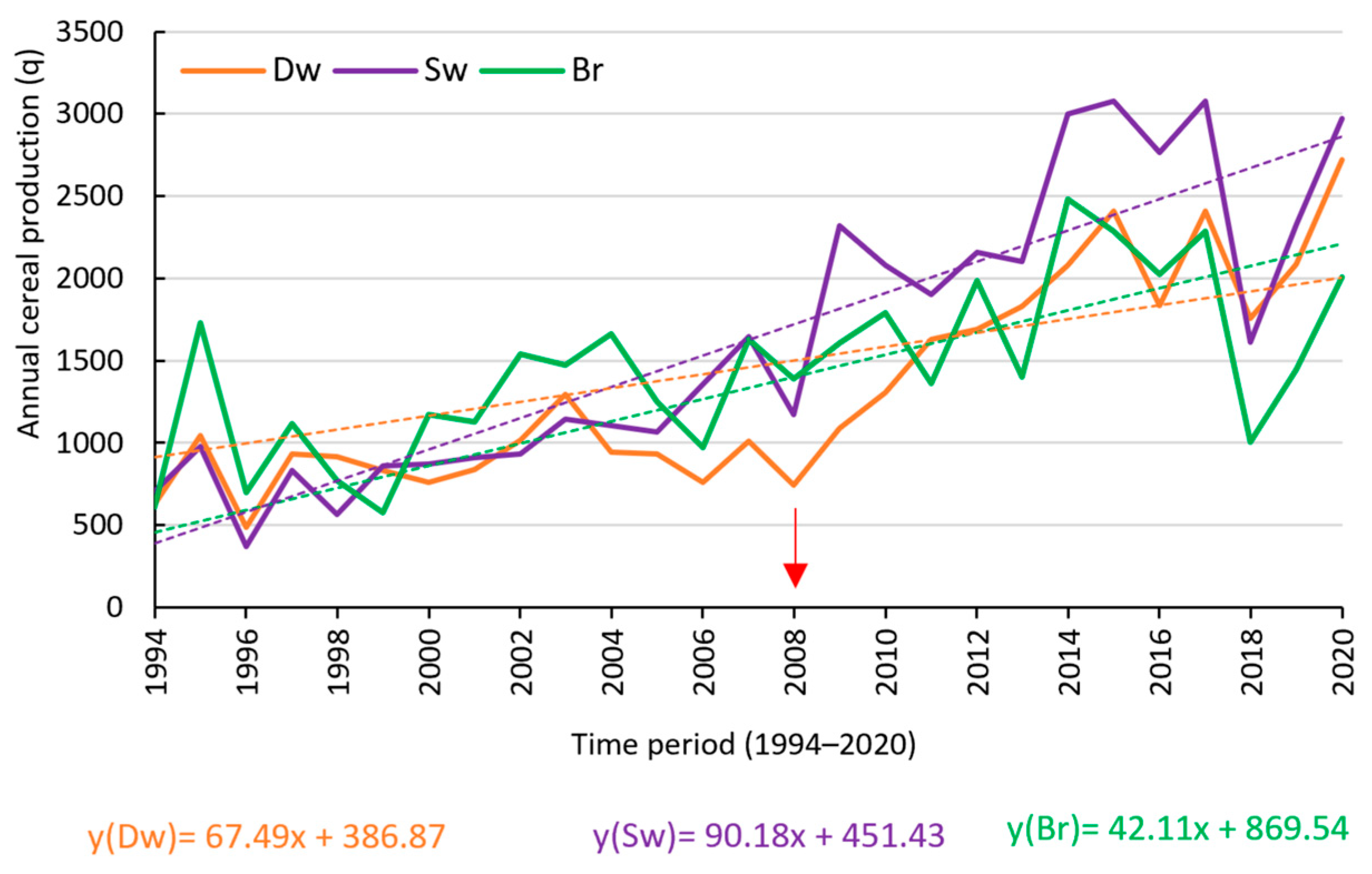
37]. Annual cereal production in the TTH region from 1994 to 2020 (
Figure 2) shows consistent upward trends for all three cereals: durum wheat (Dw), soft wheat (Sw), and barley (Br), though at varying rates. On average, Dw increased by 67.5 quintals/year, Br by 42.1 quintals/year, and Sw, the most widely cultivated cereal [
26], by 90.2 quintals·year
−1.
To objectively detect structural changes, we applied the non-parametric Pettitt test, including its multivariate extension. Significant individual breakpoints were detected in the late 2000s: 2008 for durum wheat (
p = 0.00018), 2007 for soft wheat (
p = 0.00012), and 2007 for barley (
p = 0.0188). The multivariate analysis confirmed 2008 as a common breakpoint (K ≈ 460,
p < 0.001), indicating a statistically significant and synchronized shift across all cereals (
Figure 2).
The Kolmogorov–Smirnov (K-S) test further confirmed that pre- and post-2008 production distributions differ significantly. Together, these results provide strong evidence of a structural transition in cereal production coinciding with the launch of the Green Morocco Plan (GMP), a nationwide agricultural modernization initiative [
9].
The Pettitt and Kolmogorov–Smirnov (K-S) tests are used here as non-parametric diagnostic tools to detect timing and distributional shifts in the production time series, rather than to establish strict causal attribution. Their purpose is to assess whether statistically significant breaks coincide with the launch of the GMP, without implying that these tests alone can isolate causality.
The GMP introduced reforms in irrigation, soil fertility, seed quality, and pesticide use, along with reconversion of cultivated lands [
38]. In the TTH region, two flagship projects exemplify these efforts: the Asjen perimeter project, supplied by the Oued El Makhazine Dam, and the hydro-agricultural development of the Mhajrat Ajras perimeter downstream of the Oued Martil Dam [
39,
40].
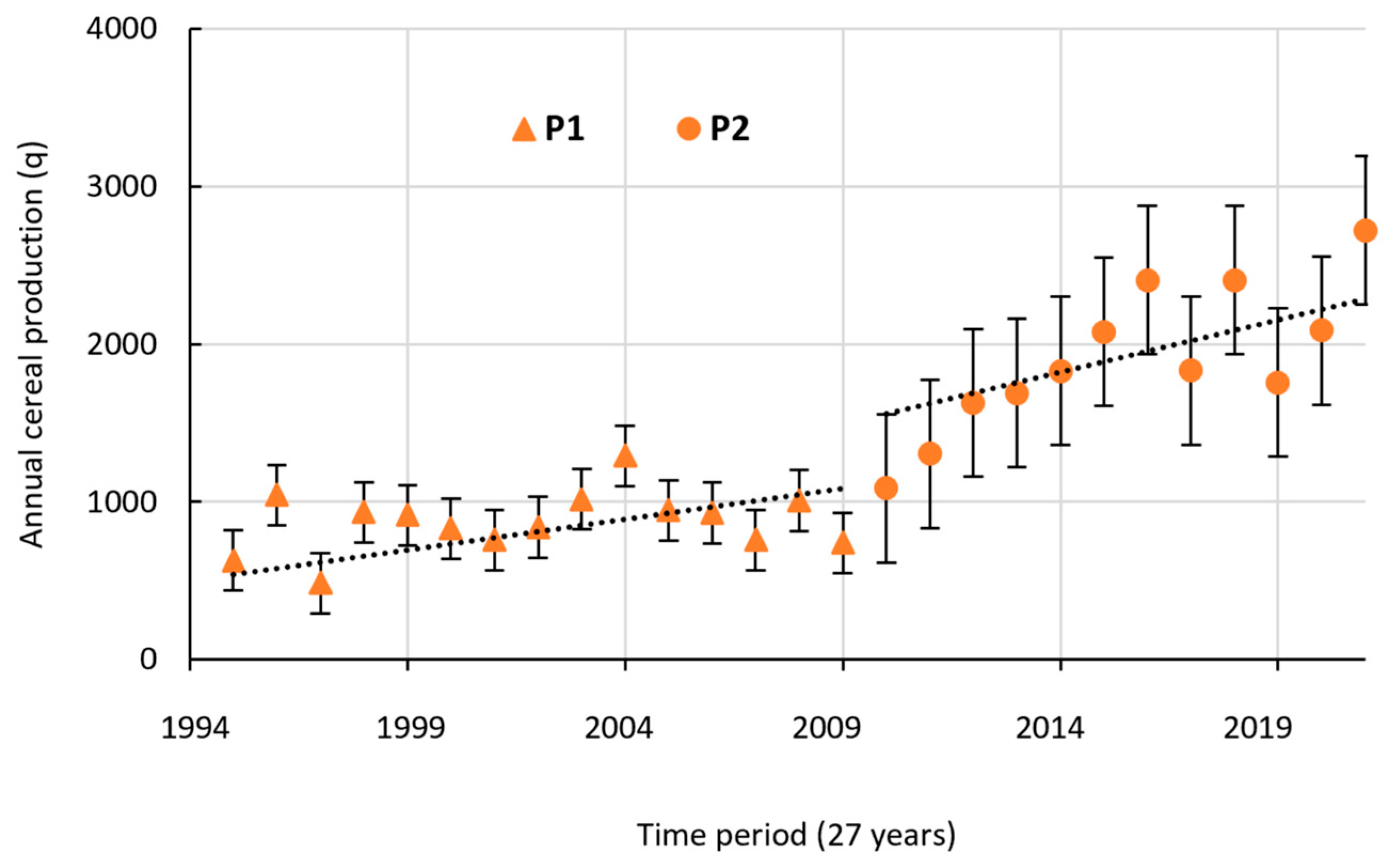
Based on the K-S segmentation, the time series were divided into two distinct sub-periods: P1 (1994–2008) and P2 (2009–2020). The mean annual cereal production increased substantially between the two periods, 117.3% for durum wheat, 153% for soft wheat, and 53.1% for barley (
Table 1), all statistically significant at the 95% confidence level. These large increases, particularly for durum and soft wheat, reflect both their importance in national consumption and their prioritization under the GMP [
41,
42].
As an example, slope analysis for durum wheat (
Figure 3) highlights this acceleration between P1 and P2. For the entire region, durum wheat rose from 38.9 quintals/year in P1 to 66.2 quintals/year in P2; soft wheat from 37.9 to 80.3 quintals/year; and barley from 54.5 to 64.6 quintals/year. This shift in production demonstrates that post-GMP productivity gains were not only sustained but also amplified, confirming the long-term effectiveness of the reforms.
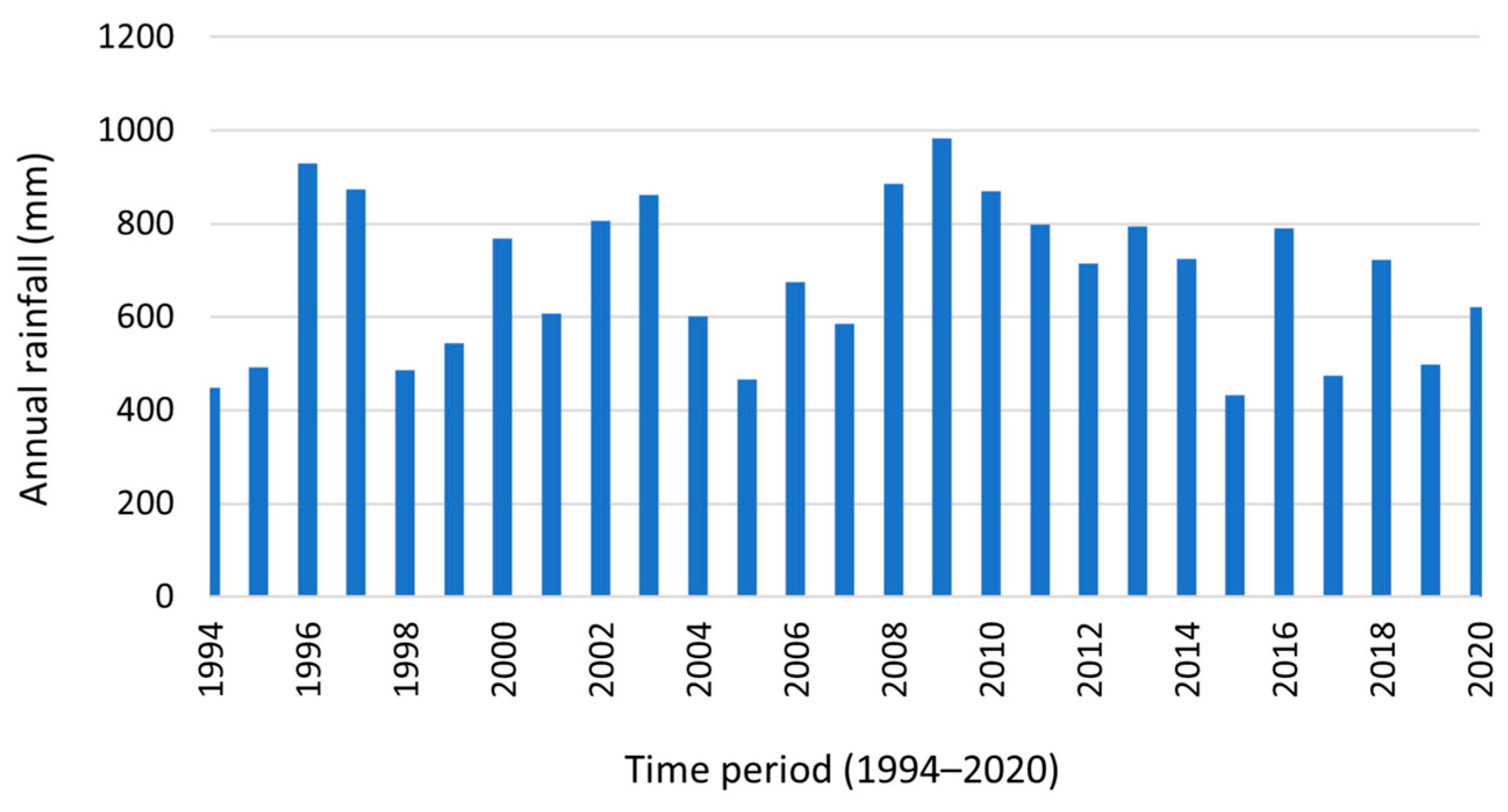
Importantly, these increases occurred without significant change in rainfall (K-S = 0.25,
p = 0.73) (
Figure 4), implying that policy-driven resource augmentation outweighed rainfall variability as the dominant driver. To isolate the relative contributions of irrigation and land expansion, we consider that other GMP interventions, such as improved seed selection, pesticide application, and soil fertilization, were applied uniformly across cereal types and regions [
43]. To quantify the relative contributions of area expansion and irrigation to production gains, we compared annual mean production, cultivated area, and yield between P1 (1994–2008) and P2 (2009–2020). For each cereal, we first computed the absolute changes in production and area, then derived yields for both periods. To isolate the effect of land expansion, we calculated a counterfactual yield for P2 assuming no change in cultivated area. The comparison between (i) the yield-driven production increase under constant areas and (ii) the actual production increase allowed us to decompose the total gain into the portion attributable to area expansion. The remaining share of the production increase was attributed to irrigation and other GMP-related improvements applied uniformly across cereals and regions.
Under this framework, the decomposition of production gains indicates that, for durum wheat, 45.6% of the increase was due to expanded surface area (468.7 quintals·year−1) and 54.4% (558.3 quintals·year−1) to irrigation and other GMP-related factors. For soft wheat, 34.7% (513.4 quintals) of the gain was attributed to area expansion and 65.3% (967.4 quintals·year−1) to irrigation. On the other hand, Barley production rose by 53.1% despite only 1.3% increase in cultivated areas, further confirming irrigation as the main driver. These values represent mean annual production gains during P2 compared to P1, rather than total production volumes.
Overall, the 2008 breakpoint marks a genuine transformation in production patterns, aligning with the GMP rollout. The TTH region illustrates how targeted policy interventions, through infrastructure investment and improved management, can offset climate constraints and enhance productivity. However, these results also raise questions regarding the sustainability of such water-intensive strategies under future climate stress.
3.2. Comparison of the Three Types of Cereal Production in Fes–Meknes (FM)
The Fes–Meknes (FM) region, contributes 37.1% of national cereal output and plays a central role in Morocco’s agricultural economy [
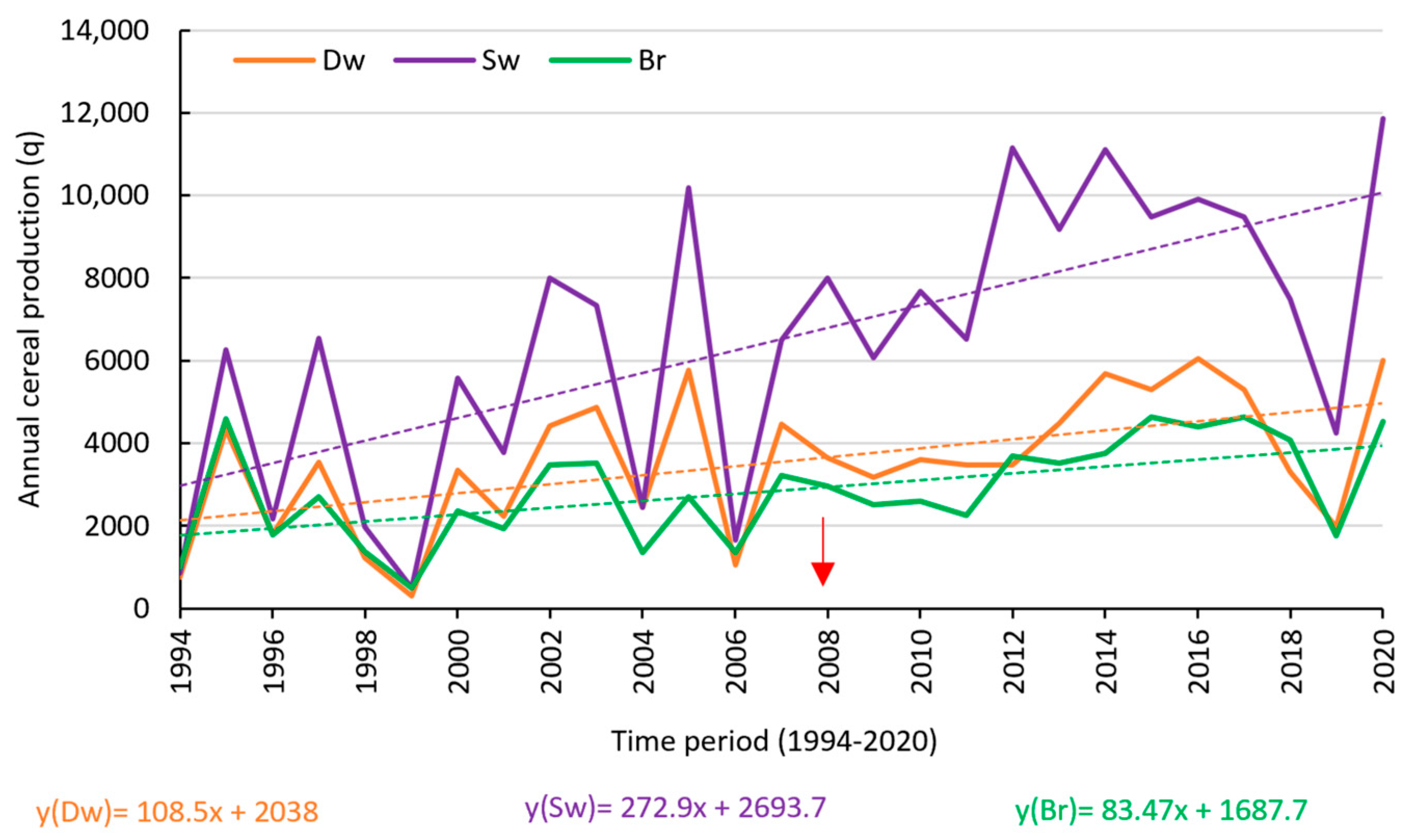
37]. Over 1994–2020, all three cereal types displayed upward trends (
Figure 5), with annual mean linear gains of 272.9 quintals/year for soft wheat, 108.5 for durum wheat, and 83.5 for barley. Despite a drought-induced drop in 2018–2019, production rebounded rapidly. According to the Ministry of Agriculture, cereal output in 2019 reached only 32 million quintals or 57% below the long-term average due to deficient and poorly distributed rainfall [
44].
The Pettitt test identified individual breakpoints for each cereal. Durum wheat exhibited an early shift in 2001, corresponding to the severe 1999 drought, but with low standalone significance. Combining
p-values via Fisher’s method [
45], yielded a joint
p-value of 2.38 × 10
−6, revealing a strongly significant collective change with a weighted-average breakpoint around 2008. This systemic shift corresponds closely with the onset of GMP reforms.
Comparing the two sub-periods, P1 (1994–2008) and P2 (2009–2020), shows marked production increases across all cereals. Soft wheat rose by 81.3% (+3892 quintals, p = 1.2 × 10⁻⁷), barley by 52% (+1205.7 quintals, p = 0.001), and durum wheat by 46.5% (+1371.8 quintals, p = 1.3 × 10⁻⁹). K-S tests confirmed all differences as statistically significant at the 95% confidence level.
The 2019 drought did not significantly alter mean P2 production or prevent a strong recovery in 2020, underscoring the stabilizing role of GMP measures, especially in irrigation and water management. Though rainfall accounts for over 80% of the total production [
46], supplemental irrigation, supported by the Sebou River basin and the Idriss I and Allal al Fassi Dams, proved critical during dry years.
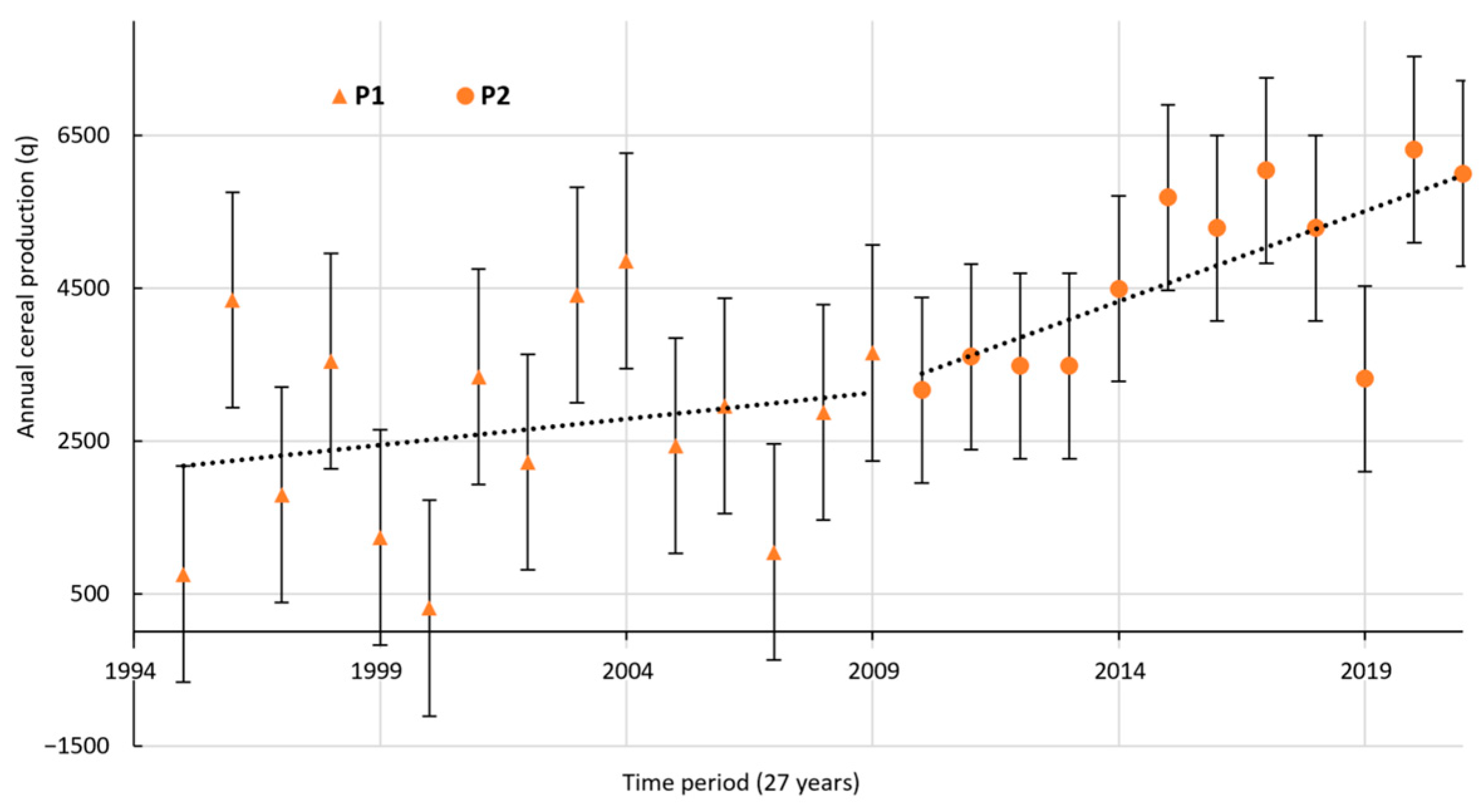
Similarly to the TTH region, the FM region shows a clear acceleration in cereal production from P1 to P2, reflecting the positive impact of post-2008 GMP strategies. The scatter plot of Durum wheat production across the two periods (
Figure 6) illustrates this shift clearly, as the slope more than doubled from 102.5 to 236.7 quintals/year. Soft wheat also experienced a marked increase in its annual growth rate (from 190.7 to 280.4 quintals/year), while barley exhibited a more moderate but still meaningful rise (from 95.8 to 123.9 quintals/year). Together, these upward shifts in slope demonstrate that the GMP interventions implemented after 2008 contributed to strengthening production dynamics across all cereals in the FM region, with Durum and soft wheat showing the strongest acceleration.
Decomposition of production changes shows that increases in durum wheat and barley are entirely attributable to irrigation, since cultivated areas declined between P1 and P2 (
Table 2), whereas for soft wheat, surface expansion explained 67.7% of the gain, with irrigation contributing 32.4%. This reflects the region’s well-established irrigation base prior to the GMP. Soft wheat remains the dominant cereal with 52% of the cereal production [
47], consistent with its high demand and FM’s role as Morocco’s primary cereal-producing region.
3.3. Comparison of the Three Types of Cereal Production in Rabat–Sale–Kenitra (RSK)
The Rabat–Sale–Kenitra (RSK) region, contributes about 28.9% of Morocco’s cereal output [
37], and exhibits distinct structural shifts linked to the GMP. Individual Pettitt tests detected changes in 2008 for soft wheat (
p = 0.037), 2010 for durum wheat (
p = 0.062), and 2011 for barley (
p ≈ 0.057). The combined Pettitt–Fisher test produced a strongly significant joint result (
p ≈ 0.0025), indicating a collective structural change around 2009 across all cereals. These empirical results reveal a staggered, crop-by-crop response to GMP-related interventions, with soft wheat showing the earliest breakpoint, followed by durum wheat and barley, consistent with the gradual rollout of irrigation and land-use intensification under the GMP over the region [
5,
48].
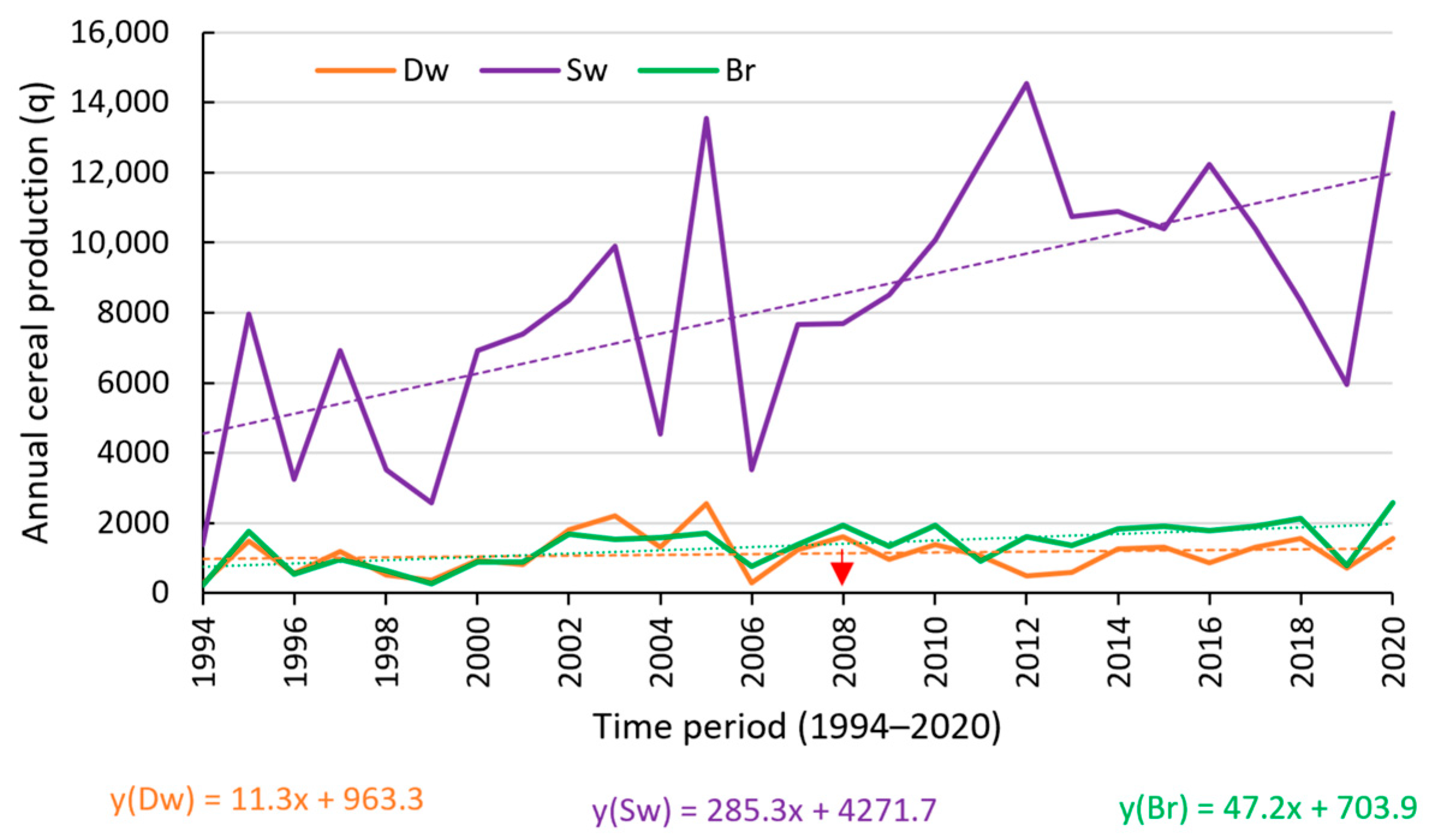
Soft wheat showed the steepest annual increase (285.3 quintals/year), followed by barley (47.2 quintals/year) and durum wheat (11.3 quintals/year), consistent with their respective cultivation priorities (
Figure 7). Splitting the data into sub-periods (P1 and P2) and testing differences using K-S confirmed significant mean increases for all cereals (
Table 3). Soft wheat production rises by 4008.6 quintals, barley by 553.6 quintals, and durum wheat by 444.4 quintals, all significant at the 95% confidence level. The RSK region also hosted pilot projects promoting crop diversification, reducing cereal areas in favor of more drought-resilient cash-crops such as olive trees [
49]. Accordingly, cultivated areas decreased during P2 by 19.2 ha for soft wheat and 20.4 ha for barley, while for durum wheat it remained stable. Despite these reductions, production rose markedly, underscoring the success of GMP-driven efficiency improvements.
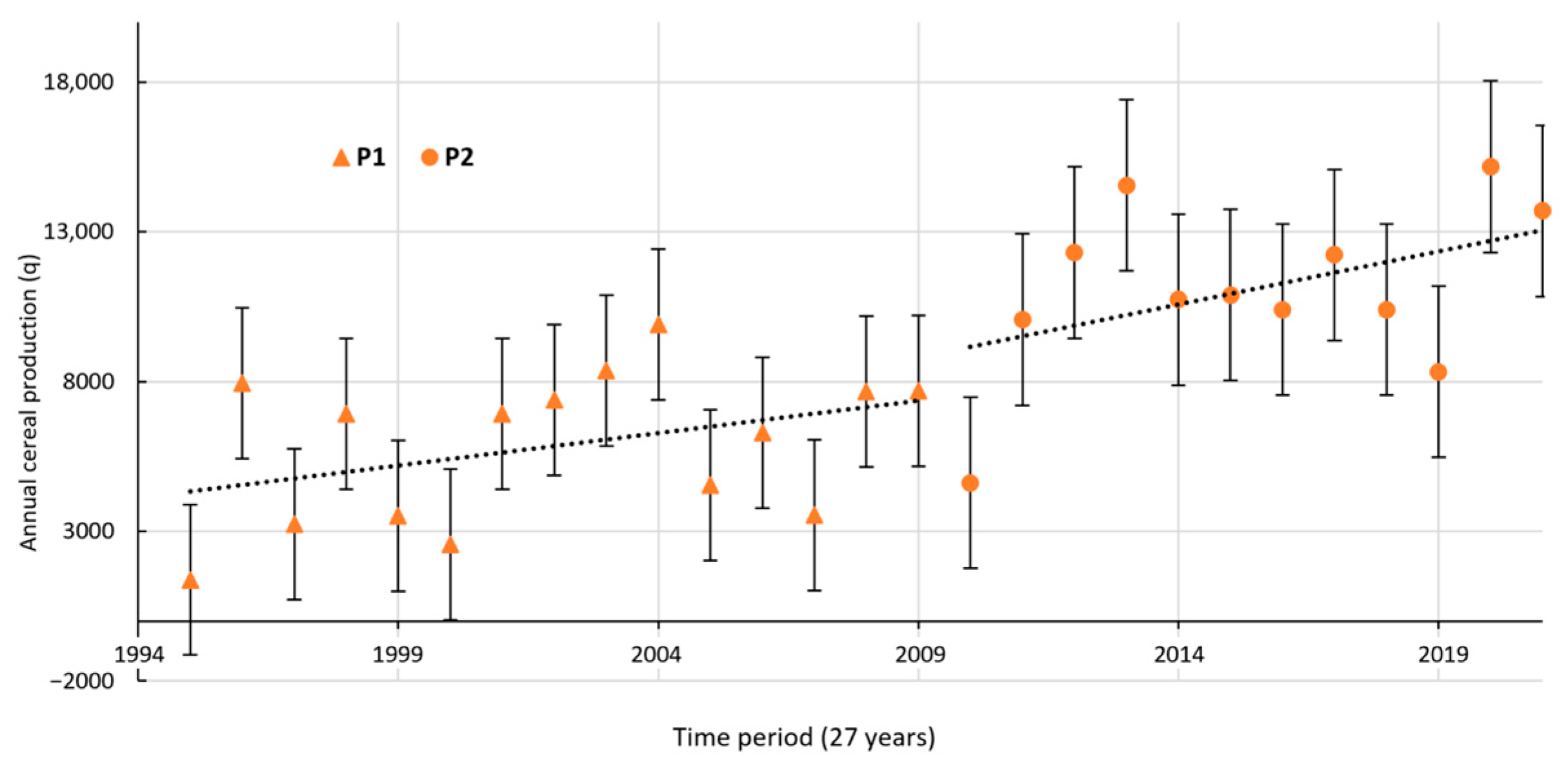
In line with the trends observed in the TTH and FM regions, the RSK region also exhibits a noticeable acceleration in cereal production from P1 to P2, consistent with the positive influence of post-2008 GMP strategies. The growth rate of Durum wheat increased from 62.8 to 78.8 quintals/year, showing a moderate but clear improvement. Soft wheat displays the strongest response, with its slope rising sharply from 216.4 to 354.1 quintals/year (
Figure 8). Barley shows a smaller increase (from 71.7 to 84.6 quintals/year) but still follows the same upward trend. Overall, the enhanced slopes across all three cereals suggest that GMP interventions effectively strengthened production trajectories in the RSK region, with soft wheat showing the most pronounced acceleration.
Rainfall analysis revealed no significant change between P1 and P2, implying that production increases resulted primarily from irrigation and resource augmentation under the GMP. Production gains reached 63.2% for soft wheat, 38.8% for durum wheat, and 49.5% for barley. These improvements occurred despite notable reductions in cultivated areas for soft wheat and barley while for durum wheat it remained nearly constant (
Table 3). These results confirm that GMP-enhanced irrigation efficiency and management practices drove productivity gains.
Collectively, the RSK results reinforce those from TTH and FM, highlighting the GMP’s role in transforming Morocco’s cereal production landscape through irrigation modernization, targeted investment, and adaptive management in response to climatic constraints
3.4. Synthesis of Regional and Crop-Specific Trends
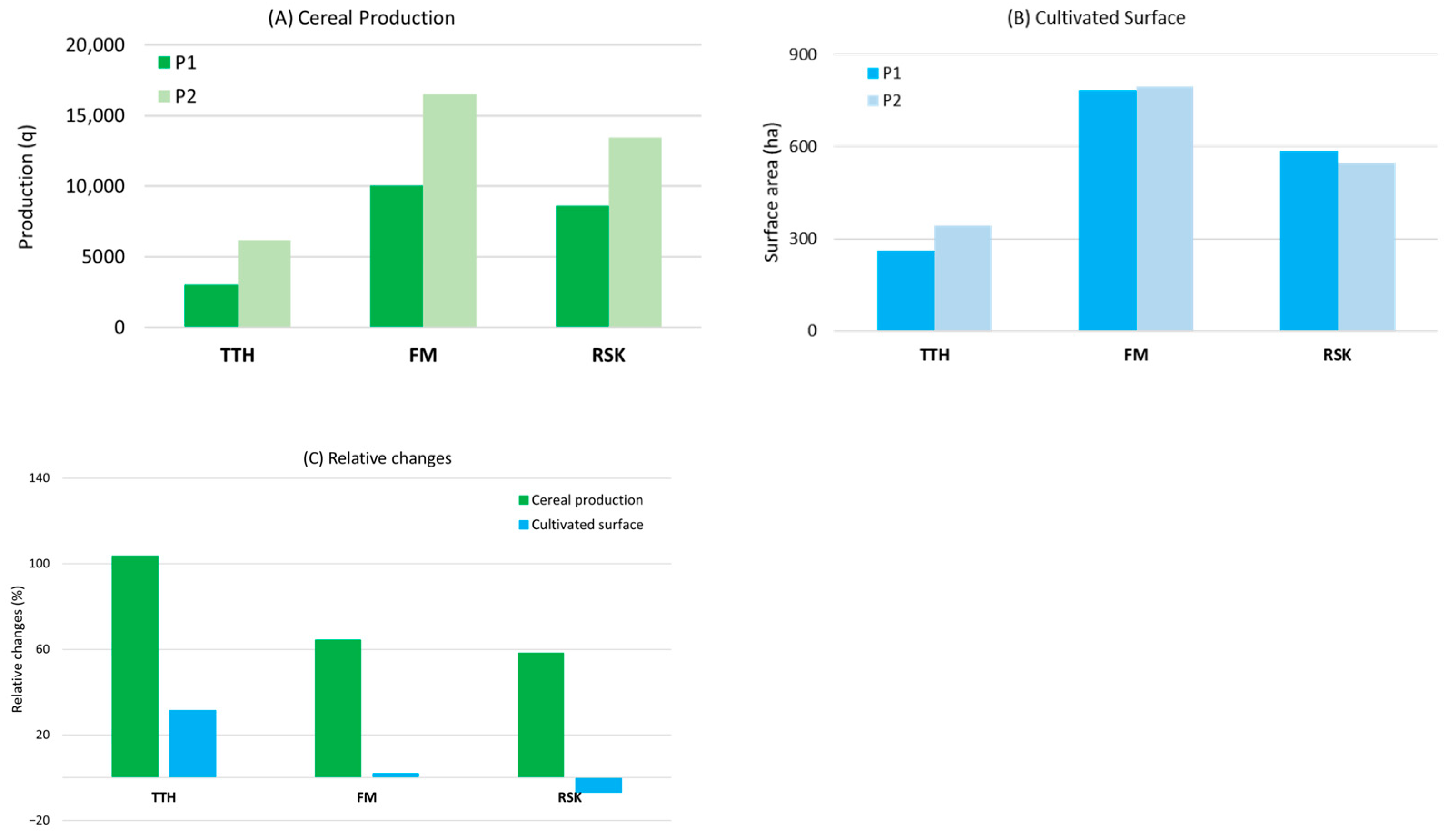
The synthesis of cereal production and cultivated area trends across Fes–Meknes (FM), Rabat–Sale–Kenitra (RSK), and Tangier–Tetouan–Al Hoceima (TTH) from 1994 to 2020 highlights the transformative effects of the Green Morocco Plan (GMP) initiated in 2008. To capture this policy-driven transition, the study period was divided into a pre-GMP phase (P1: 1994–2008) and a post-GMP phase (P2: 2009–2020).
A substantial rise in total annual mean production for all three types of cereal is observed during P2, with increases of +64% in FM, +56% in RSK, and +104% in TTH, while cultivated areas have undergone a moderate expansion, except for RSK. The total annual mean area for all cereals has expanded by (+1.94%) for FM and (+31.47%) for TTH, whereas RSK experienced a modest decline (−6.75%) (
Figure 9).
On the regional scale, FM continued to lead national cereal production, followed by RSK and then TTH (
Figure 9). The most pronounced relative increase occurred in TTH, reflecting the outcome of targeted investments and better management of water and land resources in this northern region.
When examined by cereal type, soft wheat has the largest production gains, increasing by 81.35% in FM and 68.33% in RSK, confirming its dominance in these highly productive plains. Durum wheat shows substantial increase as well, particularly in TTH (+117.32%) and FM (+46.54%), indicating its rising contribution to regional cereal output. Barley production also increased by 51.96% in FM and 53.06% in TTH, suggesting improved management practices.
These outcomes reveal emerging regional specializations, reflecting the differential success of GMP interventions across agro-ecological contexts.
Overall, the inter-regional synthesis demonstrates that GMP implementation, through enhanced seed quality, land use reconversion, irrigation modernization, and optimized fertilizer use, has increased yields, narrowed productivity disparities among regions, and strengthened the resilience of Morocco’s cereal production to climate variation.
3.5. Relationship Between Rainfall and Cereal Production
To evaluate the dependence of cereal production on rainfall prior to the GMP, we analyzed correlations between annual cereal production and sub-seasonal rainfall totals using the Spearman rank test. The period from 1994 to 2008 (P1) was divided into three rainfall sub-seasons: S1 (October–December), S2 (January–May), and S3 (October–May), where S3 represents the sum of S1 and S2 and is therefore not statistically independent. This structure allows the identification of the specific rainfall window exerting the strongest influence on production rather than attributing the relationship to total rainfall alone.
Table 4 summarizes the correlation coefficients (r) and
p-values between rainfall and production for durum wheat, soft wheat, and barley across the three regions. Across all cases, mid-season rainfall (S2) shows the most robust and statistically significant correlations, whereas early-season rainfall (S1) exerts weaker and often non-significant influence. Because S3 aggregates both S1 and S2, its correlations are only marginally higher than those of S2, confirming that late winter to spring precipitation dominates production variability.
Across all three regions, the analysis reveals a consistent and statistically significant relationship between mid-season (S2) rainfall and cereal production, particularly for durum wheat and barley, whereas soft wheat shows weaker correlation. This weaker dependence likely reflects the fact that soft wheat, being the most widely cultivated and economically prioritized cereal, was subject to more intensive management, including supplemental irrigation, prior to the GMP, and therefore was less directly constrained by rainfall alone [
27,
50,
51]. In Tangier–Tetouan–Al Hoceima (TTH), durum wheat and barley are highly responsive to rainfall variability (r ≈ 0.6–0.7,
p < 0.05), confirming the key role of water supply during elongation and grain-filling stages. In Fes–Meknes (FM), mid-season rainfall again emerges as the dominant control (r ≈ 0.5–0.6,
p < 0.05), with early-season rainfall showing negligible influence. In Rabat–Sale–Kenitra (RSK), the relationship is even stronger (r up to 0.7 for barley), reflecting this region’s greater rainfall sensitivity and higher climate stability of the Gharb plains.
The weak correlations with S1 rainfall, combined with the lack of additional explanatory power from S3, confirm that total rainfall is less informative than its timing. Cereal output depends primarily on adequate water supply during the vegetative and reproductive phases (January–May) rather than early-season moisture conditions. This temporal dependence explains why, following the launch of the Green Morocco Plan, the introduction of irrigation, improved seed varieties, and optimized inputs effectively reduced production variability and strengthened resilience to intra-seasonal rainfall fluctuations.
From a practical perspective, this analysis also helps identify the optimal timing for irrigation supplementation, specifically during the mid-season (S2), to mitigate the adverse effects of rainfall deficits during the grain-filling period. These findings thus provide a baseline for assessing how GMP interventions reshaped water–yield relationships and improved resilience to rainfall variability after 2008.
To address the potential influence of rainfall during the post-GMP period, we conducted additional analyses using Spearman rank correlations between seasonal rainfall (S1–S3) and cereal production for 2009–2020 (P2). Results show predominantly weak and statistically non-significant relationships across the three study regions (
Table 5). In both TTH and RSK, correlations for durum wheat, soft wheat, and barley are uniformly negative and non-significant (
p > 0.05), indicating no detectable dependence of cereal production on rainfall during this period. In FM, correlation coefficients are moderately negative (r ≈ −0.5 to −0.6), but associated
p-values (0.03–0.05) remain at or slightly above the significance threshold, suggesting only marginal associations insufficient to imply a strong climatic control. Compared to the pre-GMP period, when rainfall and production were significantly correlated, these results demonstrate that cereal production in P2 became largely decoupled from rainfall. This decoupling aligns with the increasing influence of the Green Morocco Plan, particularly through expanded irrigation, improved agronomic practices, and broader technological modernization.
4. Concluding Remarks
This study provides a comprehensive assessment of the impact of the Green Morocco Plan (GMP) on cereal production in Morocco over the period 1994–2020, integrating regional and temporal perspectives and examining its interactions with seasonal rainfall variation. By focusing on the three major cereal types: durum wheat, soft wheat, and barley, across the Tangier–Tetouan–Al Hoceima (TTH), Fes–Meknes (FM), and Rabat–Sale–Kenitra (RSK) regions, the analysis demonstrates that the GMP has markedly enhanced cereal productivity, though with heterogeneous outcomes across both regions and cereal types.
The results reveal that the implementation of the GMP coincided with a distinct shift in production patterns beginning around 2008. In this study, because many other factors were not observable, we focus on the two main drivers: rainfall and cultivated surface area changes, which together explain most observed production dynamics. Soft and durum wheat exhibited the most significant increases in production, reflecting the combined influence of improved seed quality, soil fertility management, land use, irrigation expansion, and other technological advances introduced under the plan. Barley showed moderate but steady growth, consistent with its lower economic prioritization. Notably, these production gains often occurred under stable or even declining rainfall and moderate overall increase in cultivated area, highlighting the pivotal role of GMP-driven structural and technical interventions in reinforcing the resilience of Morocco’s cereal systems.
Correlation analyses underscore the critical importance of mid-season rainfall (January–May) for cereal production, particularly for durum wheat and barley. Soft wheat, in contrast, appears less sensitive to mid-season rainfall, suggesting that this crop may have already benefited from partial irrigation during pre-GMP period. These correlations confirm that water availability during key growth phases remains the dominant climatic constraint, and that the adoption of supplemental irrigation, with improved efficiency, is central to sustaining cereal production under increasing rainfall variability.
Regional comparisons further reveal substantial spatial disparities in the response to GMP measures. The FM region, Morocco’s primary cereal hub, registered strong productivity gains in soft and durum wheat despite occasional droughts. The RSK region benefited from enhanced irrigation infrastructure and better land use practices, while the TTH region, traditionally less productive, experienced notable expansion in cultivated areas for soft and durum wheat, reflecting deliberate policy targeting to balance national cereal output. These spatial contrasts affirm that policy effectiveness is closely linked to regional agro-climatic context, infrastructure endowment, and local resource management capacity, emphasizing the importance of region-specific implementation within national strategies.
Overall, the GMP has had a clear and positive impact on cereal production, contributing to higher yields, enhanced resilience to rainfall variation, and more equitable regional distribution of agricultural gains. Yet, the timing and distribution of rainfall remain more influential than total precipitation amounts, suggesting that climate variability continues to pose challenges to production stability. Future agricultural strategies should therefore prioritize integrated management approaches that combine water resource optimization, advanced agronomic practices, and targeted investments in vulnerable regions and crops. Such approaches will be essential to ensuring long-term sustainability, food security, and climate resilience for Morocco’s cereal sector in the face of ongoing environmental change.
In conclusion, this study not only validates the effectiveness of the GMP in transforming Morocco’s cereal production landscape but also provides strategic insights to guide the next generation of agricultural reforms, both within Morocco and across other Mediterranean and semi-arid regions confronting similar challenges.




 ,
,