Abstract
The Yellow River Basin (YRB), a typical river system facing the challenge of balancing ecological conservation and economic development, offers valuable insights for global sustainable watershed governance through its forestry green transformation. Based on panel data from nine provinces in the basin from 2005 to 2022, this study constructs an efficiency evaluation indicator system for forestry green development. This system incorporates four inputs (labor, land, capital, and energy), two desirable outputs (economic and ecological benefits), and three undesirable outputs (wastewater, waste gas, and solid waste). By systematically integrating the undesirable outputs-based super-SBM model and the global Malmquist–Luenberger (GML) index, this study provides an assessment from both static and dynamic perspectives. The findings are as follows. (1) Forestry green development efficiency showed fluctuations over the study period, with the basin-wide average remaining below the production frontier. Spatially, it exhibits a pattern of “downstream > upstream > midstream”. (2) The average GML index is 0.984 during the study period, representing an average annual decline in forestry green total factor productivity of 1.6%. The growth dynamics transitioned from a stage dominated solely by technological progress to a dual-driver model involving both technological progress and technical efficiency. (3) The drivers of forestry green total factor productivity growth in the basin show profound regional heterogeneity. The downstream region demonstrates a synergistic dual-driver model of technical efficiency and technological progress, the midstream region is trapped in “dual stagnation” of both technical efficiency and technological progress, and the upstream region differentiates into four distinct pathways: technology-driven yet foundationally weak, efficiency-improving yet technology-lagged, endowment-advantaged yet transformation-constrained, and condition-constrained with efficiency limitations. The assessment framework and empirical findings established in this study can provide empirical evidence and policy insights for basins worldwide to resolve the ecological-development dilemma and promote forestry green transformation.
1. Introduction
The Yellow River Basin (YRB) serves not only as a critical ecological barrier and economic core zone in China, but its practices in ecological restoration and green development also hold significant implications for global sustainable development. The basin encompasses an area of approximately 795,000 km2, spanning nine provinces and stretching over 5464 km. It supports a population of 200 million people and contains 15% of China’s cultivated land [1,2]. However, the YRB now faces severe environmental challenges, including soil erosion, desertification, and water pollution, after decades of resource-intensive development [3]. This situation parallels challenges in other major river basins worldwide, such as the Ganges in South Asia, which is strained by industrial and agricultural pollution and water scarcity [4], and the Colorado River in North America, where excessive water withdrawals have caused estuary wetland shrinkage [5]. These challenges not only constrain high-quality development within China but also represent common issues in river basin ecological governance on a global scale. Consequently, advancing ecological conservation and high-quality transformation in the YRB is not only vital for China’s domestic interests but also provides an important reference and case study for other river basins worldwide facing similar sustainable development challenges.
In addressing these transboundary river basin governance challenges, forestry is regarded as a key solution due to its integrated ecological, economic, and social functions. In response, the Chinese government has, since the late 1990s, launched a series of major ecological projects, such as the “Grain for Green Project” and the “Natural Forest Protection Project” [6,7]. These policies have been the primary drivers behind the notable increase in forest coverage in the YRB, from 13.1% in 1999 to 19.7% in 2022 [8,9]. However, despite this achievement, structural issues such as the uneven spatial distribution and generally low quality of forest resources remain prominent, which not only constrain the full realization of their ecological functions but also hamper the further unlocking of their economic potential. Indeed, the forestry sector holds significant economic value [10]. In 2022, the forestry sector in the YRB yielded a total output value of CNY 1.12 trillion. Furthermore, its diversified development of forest resources, including edible fungi and medicinal plant cultivation as well as ecotourism, employed 12 million rural workers and increased their per capita income by CNY 3450, underscoring its role as a vital pillar of rural revitalization [11]. Therefore, enhancing the efficiency of forestry green development is fundamental to consolidating ecological achievements such as water conservation and windbreak and sand-fixation, directly linked to the sustainability of socioeconomic development in the YRB, and serves as a vital pathway to realizing China’s “dual carbon” goals (namely, achieving carbon peak by 2030 and carbon neutrality by 2060).
The efficiency of green development in forestry has become a key metric for assessing sustainable development performance, with related research methodologies and applications steadily maturing. Methodologically, the field has evolved from the early adoption of traditional Data Envelopment Analysis (DEA)-Malmquist indices to the widespread use of Super-SBM models and GML indices, which more accurately account for undesirable outputs in both static and dynamic assessments [12,13,14]. Furthermore, economic modeling approaches such as two-stage DEA, threshold regression model, and spatial econometric models have been successfully introduced to uncover complex impact mechanisms, significantly enriching the understanding of drivers behind forestry green development efficiency [15,16,17]. In terms of research scale, studies have been conducted at various levels, for example, systematic analyses across 30 Chinese provinces [18], in-depth investigations of 277 cities [19], as well as cross-national comparisons of forestry sectors in European countries [20]. These works have accumulated a substantial body of empirical evidence. Nevertheless, despite these advancements, significant limitations persist in existing research paradigms when the focus shifts to river basins as critical natural-economic coupled systems.
The limitations are primarily manifested in three aspects. First, regarding research scale, existing studies predominantly concentrate on either the national macro level or provincial and municipal micro units, lacking systematic meso-scale analyses that treat river basins as integral natural-geographic and economic regions. This gap results in a deficiency of a targeted scientific basis for formulating strategies related to green development in river basin forestry. Second, the evaluation framework remains incomplete. Although existing indicator systems have expanded from purely economic outputs to include positive ecological indicators such as forest stock volume and carbon sinks [21,22], they generally overlook the critical input of energy consumption during production processes and fail to incorporate waste emissions from forestry development as undesirable outputs within the accounting system. The absence of these key variables leads to evaluation results that cannot authentically reflect the green essence of forestry development. Third, there is insufficient integration of methodologies. Although advanced methods such as Super-SBM and GML have demonstrated their superiority in other fields and scales, research that systematically integrates these two approaches and applies them to dynamically assess the green efficiency of forestry in specific river basins remains unexplored. These limitations hinder a deeper understanding of the synergistic eco-economic role of forestry in watershed management and make it difficult to capture both static efficiency levels and long-term dynamic evolution patterns simultaneously.
Accordingly, this study aims to systematically assess the forestry green development efficiency of the nine provinces in the YRB from 2005 to 2022. We achieve this by innovatively adopting a basin-scale analytical perspective and systematically integrating an evaluation indicator system that incorporates undesirable outputs with the Super-SBM model and the GML index. Our goal is not only to clarify the spatiotemporal dynamics of forestry green efficiency within the YRB but also to provide a transferable methodological framework for similar assessments in other major river basins worldwide.
2. Methods and Materials
2.1. Overview of the Study Area and Methodological Framework
2.1.1. Research Area
In this study, the Yellow River Basin, as defined by the Yellow River Protection Law of the People’s Republic of China issued by the Ministry of Ecology and Environment of China [23], comprises nine provinces. Specifically, the upper reaches of the basin include Qinghai, Sichuan, Gansu, Ningxia, and Inner Mongolia; the middle reaches consist of Shaanxi and Shanxi; and the lower reaches encompass Henan and Shandong. To enhance ecological conservation, the Chinese government implemented the Natural Forest Protection Program in the basin starting in 2000, which has profoundly influenced the forestry development model by restricting commercial logging and strengthening forest management. Against this backdrop, the total forest resources in the YRB have achieved steady growth. According to data from China Forest Resources Report (2014–2018) [24], the basin’s forest area is approximately 16.29 million hectares, with a forest coverage rate of 19.74%. Protective forests constitute the highest proportion, about 63.83%, reflecting the predominantly ecological orientation of forestry development in the basin. The study area is illustrated in Figure 1. The map was generated using ArcGIS 10.8 based on longitude and latitude coordinates, with the World Geodetic System 1984 (WGS84) coordinate system applied throughout.
Figure 1.
Regional division map of the Yellow River Basin.
2.1.2. Marginal Contributions
To address the limitations identified in Section 1 and to effectively capture the eco-economic dynamics of forestry within this complex basin system, this study develops an integrated assessment framework based on three key marginal contributions.
First, regarding the research perspective, we pioneer a meso-scale, basin-oriented assessment. Moving beyond evaluations confined to administrative boundaries, this approach treats the YRB as a coherent natural-economic complex. This provides a more relevant scientific basis for integrated river basin management.
Second, regarding the evaluation framework, we construct a more comprehensive indicator system. In addition to conventional inputs (labor, land, capital), we incorporate energy consumption as a critical input. Simultaneously, emissions generated during forestry production (including wastewater, waste gas, and solid waste) are explicitly treated as undesirable outputs. This design enables a more authentic reflection of the environmental costs and the “green” essence of forestry development.
Third, regarding the methodology, we systematically integrate two advanced models. We employ the undesirable outputs-based super-SBM model for static efficiency measurement and the GML index for dynamic productivity analysis. This integration allows for the simultaneous examination of both the static efficiency levels and the long-term dynamic evolution of forestry green efficiency within the basin, advancing the understanding of forestry’s synergistic role in basin-scale systems. The technical specifications of these methods are detailed in Section 2.2, the selection of the indicator system is described in Section 2.3, and the data sources, along with descriptive statistical analyses of the relevant indicators, are presented in Section 2.4.
2.2. Methodology
2.2.1. Undesirable Outputs-Based Super-SBM Model
DEA is a widely used method for evaluating the relative efficiency of decision-making units (DMUs). However, traditional radial DEA models cannot adequately handle input and output slacks and face challenges in directly incorporating undesirable outputs, which may lead to biases in efficiency assessment. To overcome these limitations, Tone proposed a non-radial, non-oriented Slacks-Based Measure (SBM) model that directly incorporates slack variables into the objective function, thereby enabling a more precise efficiency measurement [25].
Given that this study needs to account for environmental pollutants as undesirable outputs in the evaluation, we adopt the SBM model that incorporates undesirable outputs as proposed by Tone [26]. In this framework, each province is treated as a single DMU. Suppose there are n DMUs, each utilizing m types of inputs x to produce s1 types of desirable outputs yg and s2 types of undesirable outputs yb. The input matrix is defined as X, the desirable output matrix as Yg, and the undesirable output matrix as Yb.
Here, , . Based on the definitions above, the SBM model with undesirable outputs along with its constraints is presented in Equation (4).
Subject to
where . Here, ρ∗ denotes the efficiency score of the target DMU, while , , and represent the slack variables corresponding to input excess, desirable output shortfall, and undesirable output excess, respectively. A DMU is considered fully efficient if ρ∗ = 1 and all slack variables are zero. However, the conventional SBM model cannot further discriminate among multiple efficient DMUs that all have ρ∗ = 1.
To enable differentiation among these efficient DMUs—all lying on the production frontier with efficiency scores of unity—we employ the super-efficiency version of the SBM model. The core principle of the super-efficiency SBM model is to exclude the target DMU itself from the reference set when constructing the reference frontier. This is precisely achieved by the constraint in the summation terms of the model. This exclusion allows efficient DMUs to be projected and evaluated relative to a frontier composed only of the other DMUs, potentially resulting in efficiency values greater than one. Consequently, this approach enables a complete ranking and full discrimination of highly efficient units.
2.2.2. Global Malmquist–Luenberger (GML) Index
To examine the intertemporal dynamics of forestry green development efficiency and to circumvent the potential infeasibility problem in computing mixed-period directional distance functions inherent in the conventional Malmquist–Luenberger (ML) index [27], this study adopts the global Malmquist–Luenberger (GML) index proposed by Oh [28]. This index constructs a global production possibility set encompassing all observed periods, thereby ensuring the solvability of the directional distance functions and satisfying the circularity (transitivity) of the index, while retaining its capability to effectively handle undesirable outputs. The GML index from period t to t + 1 can be decomposed into efficiency change (EC) and technological progress change (TC), as shown in Equation (9).
where denotes the directional distance function based on the global production possibility set, and represent the vectors of inputs, desirable outputs, and undesirable outputs, respectively. It holds that , and the closer its value is to zero, the nearer the DMU is to the global production frontier, indicating superior resource utilization and environmental performance in forestry production under given technology. If the GML index exceeds 1, it signifies an upward trend in forestry green total factor productivity from period t to t + 1, reflecting positive progress in the green transformation and quality enhancement of forestry development; otherwise, it indicates a decline. The computational formulas for the efficiency change (EC) index and technological change (TC) index are provided in Equations (10) and (11).
EC measures the extent to which forestry production units catch up to the existing technological frontier, reflecting efficiency gains achieved through optimizing resource allocation, improving management practices, and enhancing economies of scale under given technological conditions. If EC > 1, it indicates that the province has made improvements in forestry management practices and the organization of production factors, leading to more effective utilization of existing technologies and resources, thereby bringing actual output closer to its potential maximum. Conversely, if EC < 1, it signifies a regression in the intensification and refinement of forestry operations, implying a loss in managerial efficiency. TC captures the outward shift in the production possibility frontier itself. A TC value greater than 1 indicates an expansion of the production frontier, which, in the context of this study, may reflect an enhancement in the underlying technical capabilities of the forestry sector. Such an expansion could be associated with broader advancements, such as innovations in knowledge, improvements in production processes, or the adoption of improved technologies. Conversely, a TC value less than 1 suggests a contraction of the frontier, potentially indicating technological regression or the presence of barriers hindering the effective application of existing best practices.
It should be noted that different averaging methods were employed in this study according to the nature of the data. For static forestry green development efficiency values, the arithmetic mean was used to reflect the central tendency of their absolute levels. For the dynamic GML index and its decomposed components (EC and TC), the geometric mean was applied to accurately capture their cumulative effects as rates of change and to maintain the multiplicative relationship among the decomposition terms.
2.3. Indicator System
Within the context of green development in the forestry sector of the Yellow River Basin, the evaluation of forestry green development efficiency primarily encompasses three dimensions: factor inputs, economic-ecological benefits, and environmental impact. Both the static and dynamic efficiency measurements in this study are conducted using this evaluation indicator system to provide a comprehensive analysis of the Basin’s performance in forestry green development, as detailed in Table 1. The selection of indicators is specified as follows:
Table 1.
Evaluation indicator system for forestry green development efficiency in the YRB.
- (1)
- Input Indicators: The input framework comprises four categories—capital, labor, land, and energy. Following established research practices [29,30,31,32], this study measures these inputs using the completed investment in forestry fixed assets, the number of forestry system employees at year-end, and the area of forest land, respectively. Regarding energy input, given that the energy consumption of forestry activities (e.g., timber harvesting, forest product processing, and nursery greenhouse operations) is distributed across various categories in national economic statistics and cannot be directly extracted from publicly available data [33,34]. At the same time, the core objective of forestry green development lies in assessing the comprehensive resource and environmental costs of its production process. Since energy consumption serves as a primary source of carbon emissions and other pollutants, it represents a key proxy variable for evaluating environmental pressures from the forestry system [35]. Therefore, the total regional forestry energy consumption is adopted as the measurement indicator for energy input. Drawing on previous studies [36,37], this indicator is estimated by allocating the province’s total energy consumption based on the proportion of the output value from forestry-related downstream processing and manufacturing activities (e.g., wood processing, furniture manufacturing, and forest chemical production) to the total industrial output value.
- (2)
- Output Indicators: To capture the economic and ecological benefits of forestry development, desirable outputs include both economic output and ecological benefits, which are measured by the gross forestry output value and forest volume, respectively. Among these, the gross forestry output value is defined in accordance with the Chinese national statistical standard Classification of Forestry and Related Products (LY/T 2987-2018) [38]. It encompasses the total economic value generated by all forestry-related activities, including timber production, non-timber forest products, and ecotourism and recreation services. The forest volume is measured according to the technical regulation Inventory for Forest Management Planning and Design (GB/T 26424-2010) [39]. It refers to the total stock of living wood in forest stands meeting specific criteria, such as a canopy density ≥ 0.2, and includes primary (natural) forests, secondary forests, and plantations.
To comprehensively reflect the level of regional forestry green development and account for the environmental costs of forestry production, undesirable outputs comprise wastewater discharge, waste gas emissions, and solid waste discharge generated by forestry activities. It should be clarified that these pollutants originate primarily from the downstream processing and manufacturing stages of the forestry industrial chain (e.g., wood processing, panel manufacturing, and forest-based chemical production). They represent the aggregated environmental load resulting from residues and pollutants generated during timber harvesting, transportation, and subsequent industrial processing. The inclusion of these undesirable outputs aims to capture the potential pressures exerted by forestry production activities on regional water, air, and soil environments.
2.4. Data Source and Descriptive Statistics
This study selects the period from 2005 to 2022 as the research timeframe based on the following key considerations. First, forestry production, particularly the cultivation of ecological forests, exhibits significant long-term characteristics and time-lag effects, whereby capital and labor inputs require a sufficiently long duration to translate into ecological and economic outputs. A panel dataset spanning 18 years can more accurately capture this dynamic process. Second, the choice of 2005 as the starting point is grounded in important policy and practical rationales. This year marks the eve of China’s 11th Five-Year Plan (2006–2010), a period during which the concept of green development was elevated to an unprecedented strategic level, and a series of stringent environmental regulations and large-scale investments in ecological projects were fully implemented. Therefore, beginning the analysis in 2005 allows for an effective assessment of the impact of this critical policy transition period on forestry green development efficiency. All model computations were performed using MaxDEA Ultra8.0.
Data were primarily sourced from the China Forestry Statistical Yearbook, China Forestry and Grassland Statistical Yearbook, China Environmental Statistical Yearbook, China Energy Statistical Yearbook, and China Statistical Yearbook, as well as provincial statistical yearbooks. These publications are subject to rigorous compilation and review procedures by Chinese statistical authorities, ensuring their reliability as the primary data source for policy and academic research.
We conducted a comprehensive consistency verification of the data. By integrating and harmonizing data from the aforementioned sources, a panel dataset spanning 9 provinces over 18 years was constructed. To ensure the dataset’s integrity and suitability for frontier efficiency analysis, the following verification steps were performed. (1) Cross-validation: All variables were cross-checked against multiple yearbooks and provincial publications to ensure consistency. (2) Logical checks: All variables underwent logical consistency checks, such as verifying that input and output indicators were non-negative. (3) Completeness checks: The final integrated dataset was confirmed to have only one missing value—for the labor input indicator in the year 2013. This single missing value was filled using linear interpolation. All other indicators contained no missing values throughout the study period. Table 2 presents the descriptive statistical analysis of the indicators used in this study. The standard deviations for indicators such as forestry energy consumption and wastewater discharge are relatively large, preliminarily suggesting that there may be spatial heterogeneity in resource inputs and environmental pressures across different provinces. This provides a data context for the subsequent analysis of regional disparities in efficiency evaluation.
Table 2.
Descriptive statistical analysis of the indicators.
3. Results
3.1. Static Efficiency Results and Analysis
Based on the non-oriented super-efficiency SBM model incorporating undesirable outputs, this study measured the static efficiency of forestry green development in the nine provinces of the YRB from 2005 to 2022. As presented in Table 3, the overall basin efficiency showed fluctuations over the study period.
Table 3.
Green development efficiency of forestry in the nine provinces of the YRB during 2005–2022.
Viewed from the phased perspective of China’s policy planning, the evolution of forestry green development efficiency in the YRB exhibits a clear trajectory closely aligned with the country’s macro-level strategies. During the 11th Five-Year Plan (2006–2010) and 12th Five-Year Plan (2011–2015) periods, the average efficiency value in the basin declined from 0.805 to 0.749. This trend may be attributed to the fact that China’s socioeconomic development at the time still prioritized speed and scale [40,41]. It should be noted that although environmental protection efforts were significantly strengthened at the national level after 2006 with the introduction of a series of policy documents, the fundamental transformation of the extensive expansion model in forestry in some regions remained unrealized. This was largely due to lags in policy implementation at the local level and the inertia of the pre-existing development model, resulting in continued insufficient consideration of resource and environmental carrying capacity. By the end of the 12th Five-Year Plan period in 2015, the efficiency value had declined to 0.706, and it reached the lowest point of the entire study period in 2016 (0.674), indicating that the structural contradiction between economic growth and ecological protection was most acute during this phase. Starting with the 13th Five-Year Plan (2016–2020), this downward trend was reversed. The average efficiency of the basin gradually recovered from 0.674 in 2017 to 0.838 by 2020. This phase of recovery growth coincided with a period during which China elevated ecological civilization construction to an unprecedented strategic level and comprehensively strengthened ecological and environmental protection. In this period, China implemented an environmental governance model centered on the improvement of ecological and environmental quality, and deepened the implementation of action plans for air, water, and soil pollution prevention and control [42]. Ecological civilization construction was also explicitly identified as a priority in the 13th Five-Year Plan for development [43]. These overarching national strategies provided a critical impetus for green transformation across key sectors, including forestry. Against this macro-strategic and policy backdrop, the efficiency improvement in the forestry sector can likely be attributed to the deepened implementation of the ecological civilization strategy and the preliminary exploration of market-based mechanisms such as forestry carbon sinks and ecological compensation [44,45], which effectively guided resource allocation toward greener and more efficient pathways. At the beginning of the 14th Five-Year Plan period (2021–2022), the efficiency value experienced a temporary decline in 2021 before rebounding to 0.865 in 2022, representing the second-highest level within the study period. This fluctuation may reflect normal adjustments during the transition between old and new growth drivers, combined with short-term shocks such as COVID-19. Nevertheless, the strong rebound in 2022 indicates that the long-term positive trajectory of green development remains intact, and the momentum for high-quality forestry development continues to build.
From a basin-region perspective, forestry green development efficiency in the YRB exhibits a distinct pattern of spatial heterogeneity, characterized by the following order: downstream region (1.101) > upstream region (0.700) > midstream region (0.655). The downstream region demonstrated the most robust and efficient performance. Within this region, Shandong, with a mean efficiency of 1.181 throughout the study period, consistently operated on the production frontier, underscoring its advantages derived from substantial investments in forestry technology and intensive management as a major economic province. Henan, with an overall mean efficiency of 1.021, showed lower efficiency scores from 2005 to 2010. However, beginning in 2011, its efficiency improved and subsequently remained on or near the production frontier, reflecting its positive trend of channeling economic development gains back into ecological construction.
The upstream region exhibited a mean efficiency of 0.7, with substantial internal disparities. Among these provinces, Inner Mongolia and Sichuan recorded the highest mean efficiency scores in the entire basin—1.222 and 1.220, respectively—an outcome attributable to their superior forest resource endowments and sustained management investments. However, the notably low efficiency scores of Ningxia (0.115) and Gansu (0.423) dragged down the overall performance of the upstream region. This pattern underscores that natural constraints, such as drought and water scarcity [46,47], constitute the fundamental challenge to forestry green development in this area, where extensive management practices most acutely exacerbate the conflict with the fragile ecological environment.
The midstream region exhibited a mean forestry green development efficiency of 0.655. Shanxi displayed highly volatile fluctuations in its forestry green development efficiency during the study period. While it reached the production frontier in 2005, 2018–2020, and 2022, its efficiency fell below 0.3 in multiple years, including 2006–2017 and 2021. This volatility is closely linked to the historical ecological fragility and contemporary developmental pressures of Shanxi Province. Historically, the ecological foundation was exceedingly fragile, with a forest coverage of only 2.4% in 1949. In contemporary terms, as a crucial coal resource base in China, long-term and intensive coal mining activities have profoundly altered regional land use patterns and vegetation dynamics [48], thereby heightening the sensitivity and instability of the ecosystem. Although the province has relied heavily on fiscal investment in large-scale afforestation over the past decade, increasing forest coverage to 18.03% by 2010, this catch-up growth model—dependent on massive project inputs—may have masked underlying weaknesses in green factor allocation, resource management efficiency, and long-term maintenance mechanisms. As a result, the stability of its green development has been compromised, leading to low resilience against disruptions and causing efficiency values to fluctuate sharply with investment cycles and regulatory intensity. In Shaanxi, efficiency dropped sharply from 1.036 in 2015 to 0.602 in 2016. This cliff-like decline coincided with a widely reported incident in which an energy enterprise illegally occupied and extensively cleared forest land in the province. The incident caused severe damage to local forest resources. Although the forestry authorities subsequently introduced the “Measures for Reporting, Supervising and Investigating Administrative Cases of Forest Resource Destruction” to strengthen regulation [49], it reflects a development-biased mindset and regulatory failure in environmental oversight in some regions under economic growth pressures.
The two provinces illustrate the continued fragility of green development in the forestry sector of the midstream region. Shanxi’s volatility reveals the long-term challenges and complexity of achieving green transformation in regions with profound historical ecological deficits and weak natural endowment. The case of Shaanxi demonstrates that forestry development in this region is highly vulnerable to high-intensity, abrupt anthropogenic disturbances. These issues collectively reflect the unresolved fundamental contradiction between ecological protection and economic development in the rapidly industrializing midstream region, highlighting the urgent need to establish a robust internal stabilization mechanism for sustainable forestry development.
3.2. Dynamic Productivity Results and Analysis
3.2.1. Aggregate Trend and Decomposition Analysis
To dynamically track the evolution and identify the spatiotemporal heterogeneity of forestry green development efficiency in the YRB, this study employs the GML index. This index satisfies the circularity property and effectively overcomes the potential infeasibility problem of the conventional ML index, thereby more accurately characterizing productivity changes over time and across decision-making units [28]. Using this approach, we calculated the GML index for the nine provinces in the YRB from 2005 to 2022, which is the growth rate of forestry green total factor productivity. The specific results are presented in Table 4.
Table 4.
Changes in green total factor productivity in the YRB during 2005–2022.
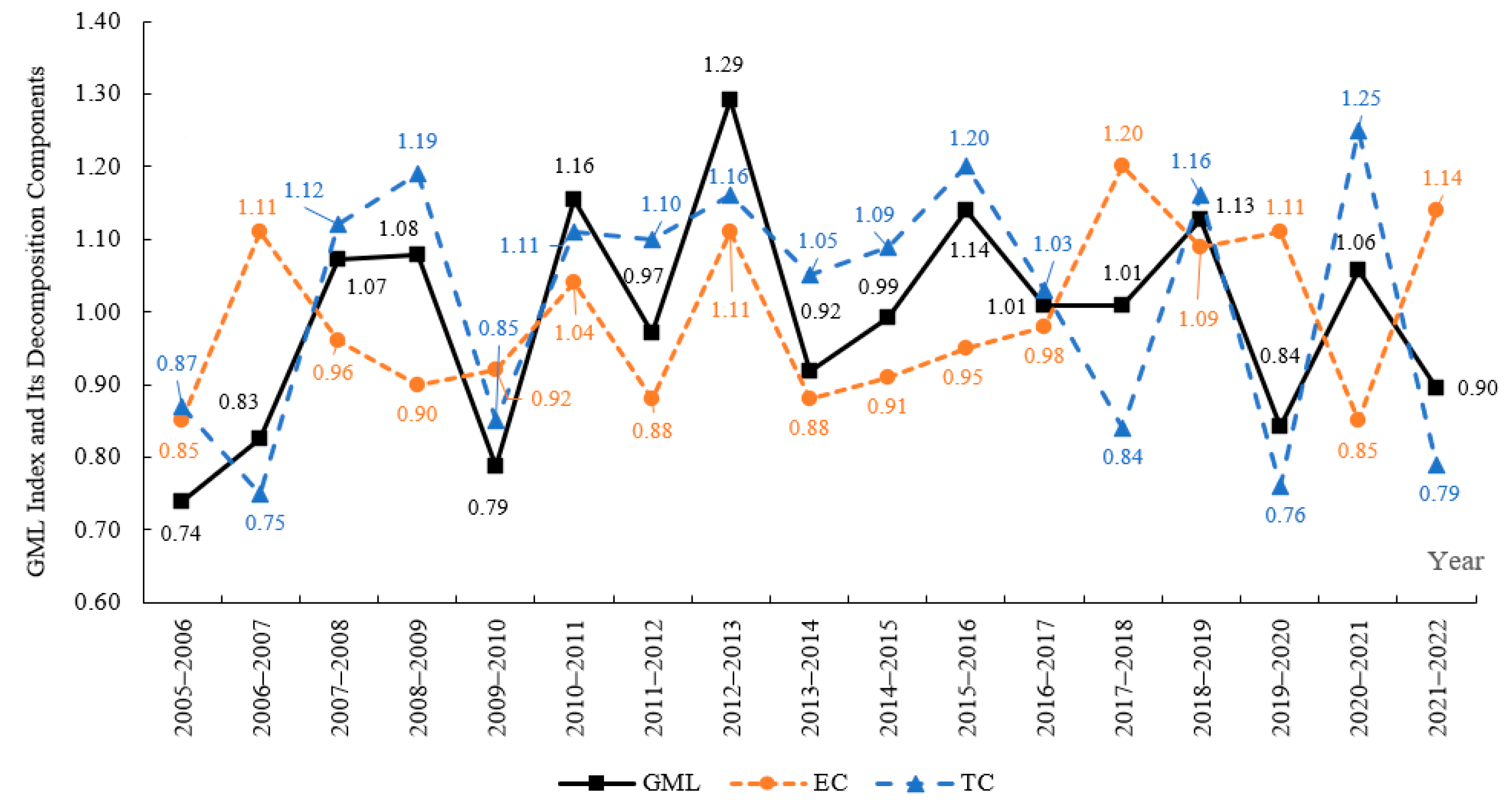
During the study period, the average value of the GML index, which measures the growth rate of green total factor productivity, was 0.984. This indicates insufficient growth momentum in forestry green total factor productivity across the YRB, corresponding to an average annual decline of 1.6%. Between 2005 and 2015, the GML index averaged 0.983 and exhibited pronounced fluctuations, with values oscillating widely between 0.738 and 1.292. This pattern reflects extensive and unstable growth during this phase, which likely relied heavily on large-scale investments and intermittent technology introductions. The lack of sustained efficiency improvements and a robust technological innovation system made it difficult to maintain growth momentum. The period from 2015 to 2020 witnessed the most robust growth momentum and the most significant quality improvement. If we exclude the short-term impact of COVID-19 in 2019–2020 (when the GML index dropped to 0.843), the average GML index for 2015–2019 reached 1.071. This suggests that after ecological civilization construction was elevated to a national strategy, the forestry development approach in the YRB began to shift from pursuing investment scale to focusing on investment quality and sustainability. The growth momentum started to transition from external policy stimulus to a healthier, internally driven growth model jointly powered by technical efficiency and technological progress. During the 2021–2022 period, the GML index rebounded rapidly to 1.057 following the COVID-19 pandemic, but subsequently declined again. This volatility suggests that although internal drivers for green recovery in the forestry sector are emerging, new growth forces have not yet fully replaced old ones as the dominant factor. Persistent external uncertainties further highlight the long-term and complex nature of the forestry sector’s green transition.
Spatially, the GML index exhibited significant regional disparities. The downstream region performed exceptionally well, emerging as a growth pole for green development across the entire basin. With an average GML index of 1.106, the region maintained an annual progress of 10.6% in both core technological capability and production efficiency throughout the study period, demonstrating continuous accumulation of green growth momentum. As the core engines of this growth, Shandong (GML = 1.100) and Henan (GML = 1.113) achieved average annual GTFP growth rates of 10.0% and 11.3%, respectively. Their success can be attributed to technological innovation dividends derived from their developed scientific and economic foundations, together with first-mover institutional advantages as pilot zones for cutting-edge technology policies [50,51], which collectively drove sustained productivity growth. In sharp contrast, the midstream region recorded a much lower average GML index of 0.902. Both Shanxi (0.858) and Shaanxi (0.948) were mired in negative growth throughout the study period. On the one hand, as a crucial coal base in China [48], Shanxi Province’s resource-dependent development path has led various production sectors within the province to rely heavily on fiscal transfers derived from coal revenues. This type of funding, characterized by its strong external dependency, may weaken the intrinsic incentive for the forestry sector to enhance its management efficiency and technological intensity in order to secure developmental resources. Consequently, in practice, this tends to foster an extensive development model oriented toward the rapid expansion of afforestation areas, while relatively neglecting the improvement of forest quality and long-term management effectiveness [52]. On the other hand, although Shaanxi has channeled substantial fixed-asset investments into ecological projects, these inputs have exhibited a notable time-lag effect in generating benefits [53], revealing a systemic imbalance that emphasizes investment over management. This implies that for the midstream region, unless ecological capital investment is coupled with institutional innovation and improved technical efficiency, it will be difficult to translate these investments into substantive and sustainable productivity growth. The upstream region exhibited a complex dualistic structure, with an average GML index of 0.973, indicating insufficient growth momentum. This dynamic analysis, based on the GML index and the static efficiency assessment in Section 3.1, provides complementary perspectives. Despite its high static efficiency (1.222), attributable to superior initial resource endowment and economies of scale, Inner Mongolia experienced an average annual decline of 2.3% in green total factor productivity. This suggests that the region’s reliance on a traditional resource-input model, coupled with slow technological progress or insufficient improvement in management efficiency, undermined the sustainability of its growth momentum. In contrast, Ningxia exhibited a low efficiency of only 0.115 in forestry green development, indicating its weak foundational conditions. However, it achieved an average annual GTFP growth rate of 4.9%, likely driven by deepened collective forest tenure reforms and targeted forest quality improvement programs [46]. This progress has established Ningxia as the fastest-growing catch-up province within the upstream region. Sichuan successfully maintained both a high level of static efficiency and positive dynamic growth. In contrast, Qinghai and Gansu performed poorly in both static and dynamic analyses, highlighting that harsh natural conditions, such as high-altitude climate and arid environments, pose a fundamental challenge to their forestry green transformation.
3.2.2. Decomposition Results and Analysis
To further uncover the internal drivers behind the dynamic changes in green total factor productivity of the forestry in the YRB, this study decomposes the GML index into EC and TC. As shown in Figure 2, the primary driver of green total factor productivity growth shifted during the study period from a phase dominated solely by TC to one characterized by alternating drivers of efficiency and technological progress. This shift in the driving mechanism profoundly shaped both the fluctuation patterns and growth trajectory of green total factor productivity.
Figure 2.
Evolution of the GML index and its decomposition from 2005 to 2022.
Regarding the evolution of EC, 2017 marked a turning point toward improvement. During the 12 years from 2005 to 2016, the average EC index was only 0.95, indicating a declining trend in technical efficiency where the gap between decision-making units and the production frontier widened systematically. This reflects systematic inefficiencies and resource misallocation in forestry during this stage, affecting factor allocation, scale management, and organizational operations. Detailed analysis indicates that periods with EC greater than 1 consistently corresponded to the launch or completion years of China’s Five-Year Plans. This pattern demonstrates that early efficiency gains exhibited a marked “pulse” characteristic, tightly synchronized with policy cycles, suggesting that improvement drivers were primarily externally administered rather than internalized as sustainable momentum for the sector’s progress. However, this trend reversed during the 2017–2022 period, as the average EC climbed to 1.07, marking the beginning of a new phase characterized by systematic improvement in technical efficiency. This shift reflects a strategic reorientation in China’s forestry development. The policy landmark was the 13th Five-Year Plan for Forestry Development (2016–2020) issued in 2016 [54], which for the first time explicitly positioned “enhancing quality and efficiency in forestry development” as its core. It emphasized the restoration of degraded forests, precision forest tending, and the transformation of low-efficiency stands, thereby moving away from the previous singular pursuit of forest scale expansion. Although EC experienced a temporary decline in 2020–2021 due to COVID-19-related disruptions to field operations and labor organization, it quickly rebounded to a high of 1.14 the following year, demonstrating strong resilience. This clearly indicates that policy interventions focused on quality and efficiency enhancement have become a stable force driving the improvement of technical efficiency in the green development of forestry in the YRB.
In contrast, TC served as the more central force driving the growth of green total factor productivity in the forestry sector of the YRB during the study period. The average value of the TC index was 1.005, representing a modest annual growth rate of 0.5% in technological advancement itself. Over time, TC exhibited a distinct pattern of fluctuating growth. Between 2005 and 2009, the TC index fluctuated widely within a range of 0.75 to 1.19, with a mean of 0.941. This pattern indicates that green technologies in forestry were still immature during this phase, characterized by experimental introduction and adaptive innovation, leading to high uncertainty in technological outcomes. From 2010 to 2016, the TC index consistently exceeded 1, averaging 1.104, which marked a transition into a stable trajectory of forestry technological innovation. This sustained outward shift in the frontier is consistent with the broader context of increased R&D investments and policy emphasis on the diffusion of green technologies during this period. In the 2017–2022 period, the TC index exhibited fluctuations at a higher level, peaking at 1.25 in 2020–2021. This pattern indicates that, building upon prior technological accumulation, the forestry technology frontier entered a phase of critical breakthroughs. Concurrently, its development became more susceptible to periodic disruptions from the external environment, such as macroeconomic downturns and pandemic impacts. Consequently, its growth model shifted from steady climbing to one characterized by breakthroughs alongside fluctuations. Despite this volatility, TC demonstrated resilience by rebounding rapidly after each shock, underscoring its role as a core driver. In summary, technological progress served as the fundamental force driving the green development of forestry in the YRB throughout the study period.
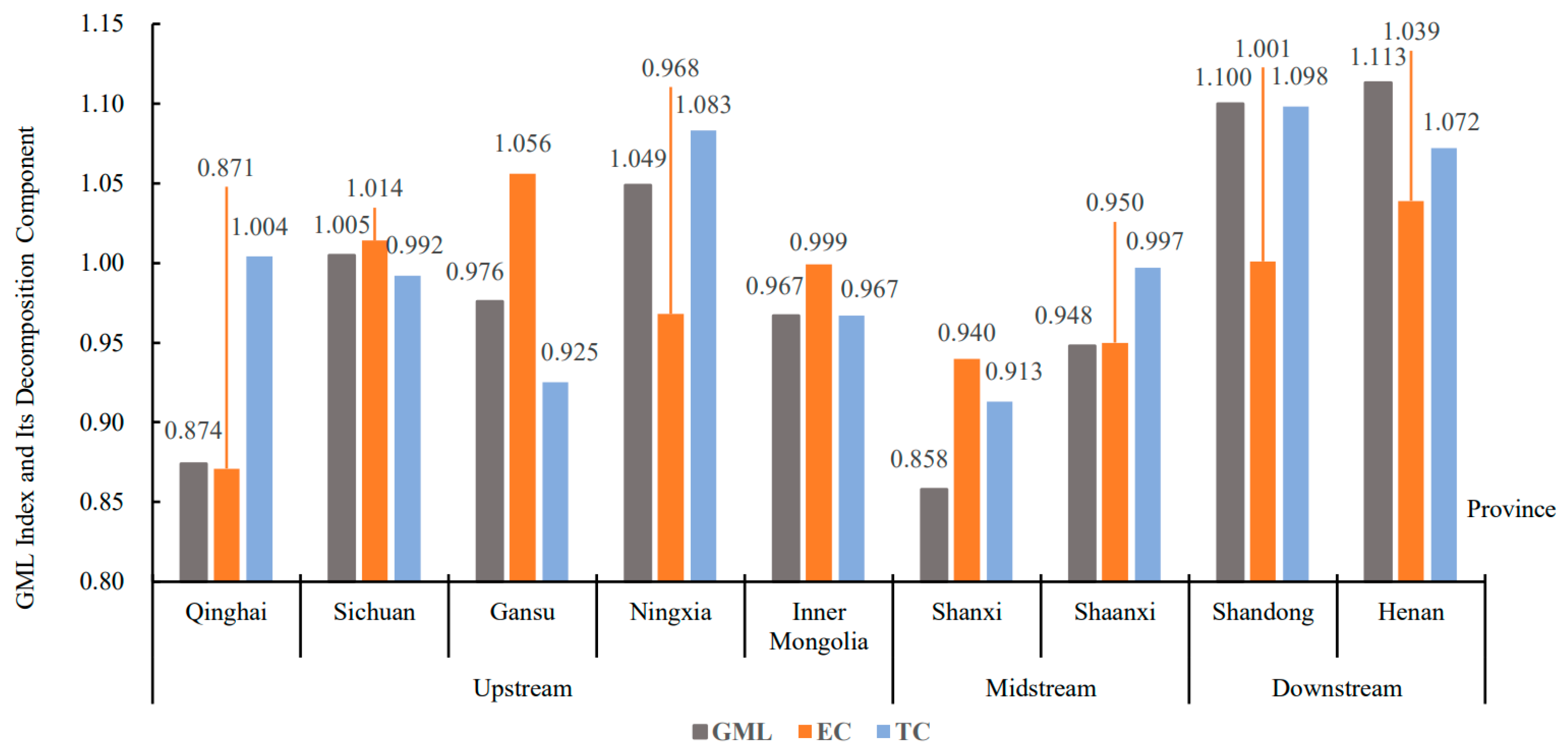
Figure 3 reveals the spatial heterogeneity in the driving mechanisms of the GML index at regional and provincial levels, as reflected in the distinct performances of its decomposition components, EC and TC, across regions. Overall, the growth of forestry green total factor productivity in the YRB demonstrates a typical pattern characterized by downstream-driven growth, midstream stagnation, and upstream divergence. The downstream region exhibited a strong dual-driver growth pattern, with a mean GML index of 1.106 corresponding to an average annual GTFP growth rate of 10.6%. This outstanding performance stemmed from the synergistic progress of technological progress (TC = 1.085) and technical efficiency (EC = 1.020). Specifically, Shandong and Henan achieved TC values of 1.098 and 1.072 alongside EC values of 1.001 and 1.039, respectively. As noted in Section 3.2.1, the downstream provinces possess a more developed industrial base and policy pilot advantages. Therefore, the higher TC values can be interpreted as reflecting active investment in the innovation and diffusion of green technologies in this region, while the stable EC performance is consistent with more effective resource management.
Figure 3.
Regional disparities in the GML index and its decomposition components from 2005 to 2022.
The midstream region faces severe challenges and has fallen into developmental stagnation, with a mean GML index of 0.902 corresponding to an average annual GTFP decline of 9.8%. The underlying cause lies in the simultaneous decline of both technical efficiency (EC = 0.945) and technological progress (TC = 0.954). In Shanxi, the severe technological regression (TC = 0.913) reflects a critically low level of innovation vitality in forestry technology, which has been constrained by the heavy reliance on a resource-based economic model. While Shaanxi experienced a milder technological decline (TC = 0.997), its steadily deteriorating technical efficiency (EC = 0.950) substantially offset the returns on ecological governance investments. This reveals underlying issues such as low management effectiveness and diseconomies of scale. The midstream region has become the bottleneck for the forestry green transition in the YRB, and urgently needs to break the dual stagnation in both technology and efficiency.
The upstream region exhibited significant divergence in its internal driving mechanisms, with weak growth momentum in its green total factor productivity, as reflected by an average GML index of 0.973. Four distinct development pathways can be identified within this region.
The first type is characterized as technology-driven yet foundationally weak, represented by Ningxia (GML = 1.049). Its forestry green total factor productivity growth was entirely driven by marked technological progress (TC = 1.083), benefiting from the province’s active engagement in forestry technology innovation as a pilot region for integrated grassland and forest reform [55]. However, the lack of synchronous improvement in technical efficiency (EC = 0.968), together with its very low static efficiency score (0.115) from the static analysis, jointly demonstrates that although Ningxia has achieved remarkable progress in advancing the technological frontier, its weak forestry foundation, history of extensive management practices, and insufficient capacity to localize and absorb new technologies have hindered the full transformation of technological gains into comprehensive efficiency improvements.
The second type is the efficiency-improving yet technology-lagged, typically represented by Gansu (GML = 0.976). The combination of its low static efficiency level (0.423) and the improvement in technical efficiency (EC = 1.056) suggests that, despite harsh natural constraints, the province has achieved certain results through optimized management and resource allocation. However, insufficient investment in science and technology and weak innovation capacity have led to stagnant technological progress (TC = 0.925). Consequently, the gains in technical efficiency were far from sufficient to offset the losses caused by stagnant technological progress, ultimately resulting in an overall decline in its green total factor productivity.
The third type is categorized as endowment-advantaged yet transformation-constrained, represented by Inner Mongolia. Despite a high static efficiency (1.222) due to its superior forest resource endowment, Inner Mongolia experienced negative green total factor productivity growth (GML = 0.967), with both its TC and EC indices fluctuating marginally around 1.0. This suggests that its development model may rely excessively on initial resource inputs while lacking effective drivers for continuous green technology innovation and management model upgrading, ultimately hindering the crucial transition from resource advantage to sustainable development.
The fourth type is identified as condition-constrained with efficiency limitations, represented by Qinghai. Restricted by an alpine-arid climate, the province’s forestry sector maintains a weak foundational efficiency, as shown by its low static efficiency (0.518). Dynamically, its negligible technological progress (TC = 1.004) was entirely offset by a severe decline in technical efficiency (EC = 0.871), ultimately leading to an overall decline in its green total factor productivity (GML = 0.874). This underscores the severe challenges Qinghai faces in both EC and TC, yet the primary cause of its growth stagnation lies in critically low technical efficiency, which constitutes the core bottleneck to its green transition.
4. Discussion
The green transformation of forestry in the YRB bears significance not only for regional ecological security but also serves as a test of integrated river basin governance for China and beyond. The findings of this study reveal strong spatiotemporal heterogeneity in the forestry green development of the YRB. Its driving forces are undergoing a complex transition from reliance on single-factor inputs toward the synergistic interaction of technological innovation and improved technical efficiency. This finding provides significant insights into the evolutionary patterns and driving mechanisms of river basin eco-economic systems, and carries implications for both theory and practice. This section will first explain how our assessment framework deepens the understanding of forestry green development efficiency, then analyze the dynamic shifts in the patterns driving green total factor productivity growth, and finally examine the limitations of this study.
4.1. Re-Evaluating Forestry Green Development Efficiency from a Cost Perspective
This study contends that how the green concept is defined directly determines the conclusions drawn from forestry efficiency assessments. Conventional studies have predominantly focused on economic outputs and positive ecological benefits [56,57], while largely neglecting the environmental costs generated by forestry production activities themselves. By incorporating energy consumption and waste emissions from the forestry system as undesirable outputs, this study operationalizes a stricter interpretation of the green concept, thereby evaluating the capacity to achieve forestry outputs while minimizing environmental costs.
Within this framework, the low efficiency observed in the midstream region can be reinterpreted. This stems from the region’s path dependence on energy-intensive and high-emission operational models in its forestry sector. For instance, timber processing and forest-based chemical production in such contexts are typically characterized by relatively outdated technologies and carbon-intensive energy structures, which are associated with higher levels of carbon emissions and pollutant discharges. Meanwhile, extensive silvicultural practices adopted for short-term economic benefits may further exacerbate soil and water pollution while degrading ecological service functions. By quantifying these long-overlooked environmental costs of forestry itself, this study reveals a structural contradiction in the midstream region’s forestry development; its growth model is environmentally unsustainable. This finding challenges the traditional assessment paradigm that focuses solely on positive outputs [58], emphasizing that a comprehensive evaluation of forestry green development must incorporate environmental costs; otherwise, it systematically overestimates the efficiency of energy-intensive and high-emission forestry models.
Furthermore, the analysis of the upstream region deepens the understanding of diverse pathways for forestry green development. The case of Inner Mongolia demonstrates that even with vast forest resources, growth momentum (GML = 0.967) cannot be sustained when coupled with extensive management practices. In contrast, Ningxia’s progress in green total factor productivity growth (GML = 1.049) shows that even under disadvantaged resource endowments, focused institutional innovation and targeted technological inputs, including water-saving irrigation and ecological tending, can achieve substantial improvements in green productivity. These findings collectively reveal that the core of forestry green transformation lies not simply in “planting more trees,” but in achieving a systemic transformation encompassing resource utilization patterns, production technology systems, and management models. Our study provides empirical evidence for this based on an efficiency assessment framework that incorporates environmental costs.
4.2. Evolution and Spatial Heterogeneity of the GML Index
The decomposition of the GML index in this study captures a theoretically significant dynamic; the primary driving force behind forestry growth in the YRB is transitioning from a single-track reliance on technological progress, through a phase of alternating drivers between EC and TC, and ultimately evolving toward a model of synergistic interaction. This finding reveals the nuanced dynamic transition process underlying forestry development. The early stage (2005–2017), characterized by TC dominance and weak EC performance, aligns with the typical technological catch-up pattern observed in developing countries. This period in China coincided with the active piloting and integration of external digital forestry technologies, such as remote sensing, GIS, and GPS, into national forest resource management systems [59]. The widespread adoption of such technologies is consistent with the observed outward shift in the production frontier (TC > 1). However, internal capabilities in factor allocation and organizational management often failed to improve correspondingly to fully leverage these new tools, resulting in a significant gap between potential and actual performance, i.e., “X-inefficiency” [60]. In contrast, a systematic improvement in EC has been observed since 2017 (averaging 1.08), suggesting a potential shift in the growth paradigm. The timing of this transition aligns closely with China’s macro-level strategic reorientation in forestry from “scale expansion” to “quality enhancement” [54]. Thus, the efficiency dynamics provide empirical support from a productivity perspective for the view that concerted national policy interventions can help address systemic managerial inefficiencies and resource misallocation.
Simultaneously, this transition in driving mechanisms exhibits regional heterogeneity across space. The synergistic dual-driver model observed in the downstream region aligns with the theory of an innovation ecosystem, where a developed economic foundation, active technology markets, and effective environmental regulations interact to form a virtuous cycle that mutually reinforces efficiency and progress [61]. In contrast, the dual stagnation seen in the midstream region reveals a potential locked-in state within its regional innovation system under strong path dependency. Here, merely introducing technology or making minor managerial adjustments appears insufficient to break the impasse, necessitating profound institutional change to reset the development trajectory. The divergence within the upstream region further demonstrates that the effectiveness of technology diffusion is strongly moderated by initial resource endowments and institutional environments. These heterogeneous imply that “one-size-fits-all” policies are likely to fail, and regional green transition strategies must be contextualized, considering local innovation system maturity and path dependencies.
4.3. Robustness Test
To ensure the reliability of the study’s conclusions and test the sensitivity of the core results to potential outliers in the data, a robustness analysis was conducted. The Super-SBM model and GML index method employed in this paper utilize a nonparametric frontier construction mechanism, which can be sensitive to extreme data points during efficiency and productivity measurement. Slight shifts in the production frontier may affect the relative efficiency evaluation of all decision-making units and their intertemporal comparisons. As noted in Section 3.1, an illegal deforestation event occurred in Shaanxi Province in 2016. This event represents a real, sporadic environmental shock during the study period. Consequently, in the benchmark study, we included this data to objectively assess the short-term impact of such sudden environmental pressure on regional forestry efficiency. The efficiency values presented are thus observational results that incorporate this real shock. However, this event is atypical, constituting a localized, exogenous shock rather than a manifestation of systematic technological regression or long-term management failure.
To examine whether the paper’s core findings regarding the long-term trends and regional patterns of forestry green development in the YRB might be unduly disturbed by the inclusion of such a sporadic shock, the following procedure was implemented. First, the observed values of the output indicators in Shaanxi Province for 2016 that were directly affected by this event (Gross Forestry Output Value and Forest Volume) were treated as outliers caused by an exogenous shock. These values were replaced with the arithmetic mean of the corresponding indicators from the adjacent years (2015 and 2017). The input indicators, which reflect resource allocation under normal conditions, were retained. Subsequently, based on this smoothed dataset, the Super-SBM and GML models were recalculated. The results were then compared with the benchmark results to assess the robustness of the core findings.
As shown in Table 5, the changes in the key indicators all fall within an acceptable range of ±5%, and the research findings remain consistent with the prior analysis. Specifically, the fluctuating trend of forestry green development efficiency in the Yellow River Basin during the study period persists. Spatially, the fundamental pattern of Downstream (1.058) > Upstream (0.703) > Midstream (0.686) is maintained. The GML index (GML = 0.978), which measures the growth rate of green total factor productivity, continues to indicate insufficient growth momentum for forestry green total factor productivity in the YRB.
Table 5.
Robustness test.
4.4. Limitations
While the assessment framework developed in this study provides a new perspective for understanding forestry green development efficiency in the YRB, it is subject to two main limitations that also indicate directions for future research. First, regarding the spatial dimension, this study treats provinces as independent decision-making units and does not address spatial interactions between regions. This approach may not fully capture positive ecological spillover effects, such as the crucial water conservation and purification services provided by upstream forests that significantly enhance water security for downstream regions. Consequently, the current model might systematically undervalue the true efficiency and contribution of upstream provinces, as these vital cross-border ecosystem benefits are not internalized in their provincial outputs. Similarly, the framework does not fully account for the spatial diffusion of green technologies and management experience from more advanced to less developed regions within the basin. Second, in terms of environmental pressure accounting, the current measurement of undesirable outputs relies primarily on “three-waste” data from statistical yearbooks and does not yet encompass forestry-specific environmental impacts. For instance, carbon emissions from forest fires and non-point source pollution from pesticides used in pest control have not been incorporated into the accounting system, which limits the comprehensive reflection of the actual environmental pressures associated with forestry in the evaluation framework. Third, the indicator system developed in this study is tailored to the specific context of China’s YRB, where ecological restoration is prioritized. For other basins at different developmental stages or facing distinct primary pressures, such as large-scale deforestation, the efficiency measurement indicator system should be adapted accordingly to accurately capture the core drivers of local environmental pressures and their economic implications
4.5. Implications
Based on the above findings and to provide insights for other river basins facing similar challenges in balancing ecological health and development needs, this study proposes the following policy directions:
- (1)
- Implement targeted zoning-based governance: Management strategies should align closely with regional efficiency characteristics: the midstream “stagnation zone” requires industrial transformation driven by stringent environmental standards, coupled with the introduction of green technologies and modern management models; the upstream “divergent zone” needs tailored policy packages, including enhancing technology absorption capacity in Ningxia, increasing green technology investment in Gansu, stimulating endogenous innovation in Inner Mongolia, and providing Qinghai with targeted ecological compensation and adaptive technologies to strengthen its foundational capacity for green development.
- (2)
- Promote a catch-up strategy that emphasizes both technical efficiency improvement and technological advancement: The entire basin should recognize the positive signal from the systematic improvement in technical efficiency and elevate “efficiency enhancement” to the same strategic level as “technological innovation.” While continuing to incentivize innovation in forestry green technology, the midstream and upstream regions should widely adopt proven practices, including precision forest tending, degraded forest restoration, and close-to-nature management, which directly enhance both scale and management efficiency. This “two-pronged” strategy offers valuable insights for forestry sectors in other developing countries undergoing a similar transition from extensive expansion to intensive management.
- (3)
- Establish an incentive and compensation system based on environmental cost accounting: This study identifies the neglect of environmental costs as a key cause of delayed transformation. Therefore, the Yellow River Basin should take the lead in developing an environmental cost accounting system that covers the entire forestry production process. This system should serve as a mandatory basis for trans-provincial ecological compensation, government green performance assessments, and the design of green financial products. Through such market-based mechanisms, environmental externalities can be internalized, thereby guiding capital and production factors away from high-environmental-cost activities and toward genuinely green models. This institutional innovation would not only support high-quality development in the Yellow River Basin but could also provide an informative “Chinese case” for other regions globally seeking to address environmental issues through market mechanisms.
5. Conclusions
This study systematically evaluated the efficiency of forestry green development in the Yellow River Basin from 2005 to 2022 using a comprehensive assessment framework. The main conclusions, supported by the empirical analysis, are as follows.
Firstly, during the study period, the efficiency of forestry green development in the Yellow River Basin showed fluctuations throughout the study period. The basin-wide average remained persistently below the production frontier, indicating substantial room for improvement in green development performance. Spatially, a distinct pattern emerged; the downstream region recorded the highest average (1.085), followed by the upstream (0.700) and then the midstream region (0.655).
Secondly, the forestry sector in the Yellow River Basin exhibited an overall insufficient growth momentum in green total factor productivity, with an average annual decline of 1.6%, though its growth performance improved over time. The primary driver shifted from technological progress (TC) alone to a dual-driver model combining efficiency catch-up (EC) and technological progress (TC) after 2017. Spatially, green total factor productivity growth demonstrated a typical pattern of “downstream-driven growth, midstream stagnation, and upstream divergence.”
Thirdly, the driving mechanisms behind green total factor productivity growth (the GML index) in the basin exhibit notable regional heterogeneity. The downstream region has established a dual-driver model characterized by the synergistic advancement of technological progress (TC = 1.085) and technical efficiency (EC = 1.020). In contrast, the midstream region is trapped in a state of dual stagnation in both technical efficiency (EC = 0.945) and technological progress (TC = 0.954). The upstream region shows internal divergence manifesting in four distinct pathways: the technology-driven yet foundationally weak pathway represented by Ningxia (GML = 1.049), the efficiency-improving yet technology-lagged pathway seen in Gansu, the endowment-advantaged yet transformation-constrained pathway observed in Inner Mongolia, and the condition-constrained with efficiency limitations pathway exemplified by Qinghai.
In summary, this study provides an integrated analytical framework for assessing forestry green development efficiency at the river basin scale, though related explorations can be further deepened. Future research could advance in the following aspects. Firstly, quantified policy variables, such as afforestation investment and ecological compensation, can be introduced as core explanatory variables. By applying spatial econometric or threshold effect models, empirical research can be conducted to examine the specific impacts of these policies on forestry green development efficiency and their spatial spillover effects, thereby more accurately revealing the micro-mechanisms and regional interactions driven by policy interventions. Secondly, collecting more granular data and applying rigorous policy evaluation methods would help precisely quantify the net effects of major ecological projects on forestry green total factor productivity. Thirdly, expanding the boundaries of environmental pressure accounting by integrating multi-source remote sensing and ground observation data would enable the incorporation of broader ecological indicators, including forest fires, pest outbreaks, and biodiversity loss. This approach would help establish a more comprehensive accounting system for forestry green development that better reflects ecological integrity.
Author Contributions
Formal analysis, Y.L., L.N. and D.X.; methodology, Y.L. and L.N.; resources, W.C. and Y.W.; software, Y.L. and D.X.; validation, Y.L.; writing—original draft, L.N., Y.L. and W.C.; writing—review and editing, L.N., Y.L. and W.C. All authors have read and agreed to the published version of the manuscript.
Funding
This research was funded by the Fundamental Research Funds for the Central Universities [Grant No. 2023SKY01].
Data Availability Statement
The original data presented in the study are openly available in the China National Forestry and Grassland Administration at [http://202.99.63.178/c/www/tjnj.jhtml#:~:text=%E7%BB%9F%E8%AE%A1%E5%B9%B4%E9%89%B4.%202024] (accessed on 19 October 2024).
Acknowledgments
We would like to thank the anonymous reviewers for their valuable comments and suggestions for improving this paper.
Conflicts of Interest
The authors declare no conflicts of interest.
References
- Xiao, C.; Song, L. Climate Services for the Development Plan of the Yellow River Basin in China. In Proceedings of the EGU General Assembly 2020, Online, 4–8 May 2020; p. 6231. [Google Scholar]
- Wang, S.; Song, S.; Zhang, H.; Yu, L.; Jiao, C.; Li, C.; Wu, X.; Zhao, W.; Best, J.; Roberts, P.; et al. Anthropogenic Impacts on the Yellow River Basin. Nat. Rev. Earth Environ. 2025, 6, 656–671. [Google Scholar] [CrossRef]
- Ma, D.; Lin, Z.; Wang, Q.; Yu, Y.; Huang, Q.; Yan, Y. Evolution of Vegetation Coverage in the Jinan Section of the Basin of the Yellow River (China), 2008–2022: Spatial Dynamics and Drivers. Forests 2024, 15, 2219. [Google Scholar] [CrossRef]
- Krause, S. Taking the Pulse of Mother Ganga—The Evolution of Water Pollution along the Ganges River. In Proceedings of the IASH 2022 Scientific Assembly, Copernicus Meetings, Online, 29 May–3 June 2022. [Google Scholar]
- Glenn, E.P. Wetlands of the Colorado River Delta Maintained by Agricultural Drainage Water. HortScience 1996, 31, 690. [Google Scholar] [CrossRef]
- Cao, S.; Xu, C.; Chen, L.; Wang, X. Attitudes of Farmers in China’s Northern Shaanxi Province towards the Land-Use Changes Required under the Grain for Green Project, and Implications for the Project’s Success. Land Use Policy 2009, 26, 1182–1194. [Google Scholar] [CrossRef]
- Wang, Y.; Niu, X.; Wang, B.; Song, Q. Dynamic Change of Forest Ecological Benefit of the Natural Forest Protection Project in the Upper Reaches of Yangtze River. Forests 2023, 14, 1599. [Google Scholar] [CrossRef]
- Brandt, M. Human Management Has a Crucial Role in China’s Land Carbon Balance. Nat. Geosci. 2024, 17, 1077–1078. [Google Scholar] [CrossRef]
- State Forestry Administration. 2021 China Forestry and Grassland Development Report; State Forestry Administration: Beijing, China, 2023. [Google Scholar]
- Sheppard, J.P.; Chamberlain, J.; Agúndez, D.; Bhattacharya, P.; Chirwa, P.W.; Gontcharov, A.; Sagona, W.C.J.; Shen, H.; Tadesse, W.; Mutke, S. Sustainable Forest Management beyond the Timber-Oriented Status Quo: Transitioning to Co-Production of Timber and Non-Wood Forest Products—A Global Perspective. Curr. For. Rep. 2020, 6, 26–40. [Google Scholar] [CrossRef]
- Tan, J.; Wang, R. Can Forest Resource Endowment Drive Green Economic Growth in the Context of the Low-Carbon Economy in China? Forests 2023, 14, 1380. [Google Scholar] [CrossRef]
- Lin, Y.; Chen, W.; Liu, J. Research on the Temporal and Spatial Distribution and Influencing Factors of Forestry Output Efficiency in China. Sustainability 2021, 13, 4687. [Google Scholar] [CrossRef]
- Chen, S.; Yao, S. Evaluation of Forestry Ecological Efficiency: A Spatiotemporal Empirical Study Based on China’s Provinces. Forests 2021, 12, 142. [Google Scholar] [CrossRef]
- Tan, J.; Su, X.; Wang, R. Exploring the Measurement of Regional Forestry Eco-Efficiency and Influencing Factors in China Based on the Super-Efficient DEA-Tobit Two Stage Model. Forests 2023, 14, 300. [Google Scholar] [CrossRef]
- Shang, H.; Yang, C. Towards Carbon Neutrality: The Innovation Efficiency of China’s Forestry Green Technology and Its Spatial Spillover Effects. Land 2022, 11, 1081. [Google Scholar] [CrossRef]
- Shah, W.U.H.; Hao, G.; Yan, H.; Shen, J.; Yasmeen, R. Forestry Resource Efficiency, Total Factor Productivity Change, and Regional Technological Heterogeneity in China. Forests 2024, 15, 152. [Google Scholar] [CrossRef]
- Yan, Y.; Zhou, Z.; Chen, L.; Wei, Y. Impact and Spatial Effect of Government Environmental Policy on Forestry Eco-Efficiency—Examining China’s National Ecological Civilization Pilot Zone Policy. Forests 2024, 15, 1312. [Google Scholar] [CrossRef]
- Chen, C.; Ye, F.; Xiao, H.; Xie, W.; Liu, B.; Wang, L. The Digital Economy, Spatial Spillovers and Forestry Green Total Factor Productivity. J. Clean. Prod. 2023, 405, 136890. [Google Scholar] [CrossRef]
- Chen, H.; Ma, Z.; Xiao, H.; Li, J.; Chen, W. The Impact of Digital Economy Empowerment on Green Total Factor Productivity in Forestry. Forests 2023, 14, 1729. [Google Scholar] [CrossRef]
- Amirteimoori, A.; Allahviranloo, T.; Zadmirzaei, M. Exploring Technical Efficiency in the European Forest Sector: A Two-Stage Chance-Constrained Data Envelopment Analysis. For. Policy Econ. 2025, 170, 103370. [Google Scholar] [CrossRef]
- Wang, H.; Deng, Z.; Wang, Y. The Impact Mechanism of Digital Finance on the Green Total Factor Productivity of Forestry. For. Econ. Issues 2023, 6, 561–569. [Google Scholar]
- Qi, L.; Gu, X. Evaluation of the Efficiency of State Forestry Investment in China from the Perspective of Carbon Sequestration: A Case Study in 20 Provinces. Acta Ecol. Sin. 2023, 43, 977–988. [Google Scholar] [CrossRef]
- Ministry of Ecology and Environment of the People’s Republic of China. The Yellow River Protection Law of the People’s Republic of China; Ministry of Ecology and Environment of the People’s Republic of China: Beijing, China, 2022.
- National Forestry and Grassland Administration. China Forest Resources Report (2014–2018); China Forestry Publishing House: Beijing, China, 2019.
- Tone, K. A Slacks-Based Measure of Super-Efficiency in Data Envelopment Analysis. Eur. J. Oper. Res. 2002, 143, 32–41. [Google Scholar] [CrossRef]
- Tone, K.; Tsutsui, M. Applying an Efficiency Measure of Desirable and Undesirable Outputs in DEA to U.S. Electric Utilities. J. CENT Cathedra Bus. Econ. Res. J. 2011, 4, 236–249. [Google Scholar] [CrossRef]
- Chung, Y.H.; Färe, R.; Grosskopf, S. Productivity and Undesirable Outputs: A Directional Distance Function Approach. J. Environ. Manag. 1997, 51, 229–240. [Google Scholar] [CrossRef]
- Oh, D. A Global Malmquist-Luenberger Productivity Index. J. Prod. Anal. 2010, 34, 183–197. [Google Scholar] [CrossRef]
- Huang, H.; Liao, W. Evaluation of Forestry Economic Transformation Level and Its Driving Factors in Collective Forest Regions in Southern China. J. Porestry Grassl. Policy 2022, 3, 38–47. [Google Scholar]
- Yin, H.; Cao, Y. An Empirical Study on the Measurement of Forestry Total Factor Productivity Based on DEA Malmquist Model. Sci. Program. 2022, 2022, 6931780. [Google Scholar] [CrossRef]
- Korhonen, J.; Panwar, R.; Henderson, J.; Fernholz, K.; Leggett, Z.; Meyer, E.; Bhuta, A.A.R. Gaps in Diversity Representation and Data Insufficiencies in the U.S. Forest Sector Workforce Analysis. Trees For. People 2024, 15, 100486. [Google Scholar] [CrossRef]
- Chen, N.; Qin, F.; Zhai, Y.; Cao, H.; Zhang, R.; Cao, F. Evaluation of Coordinated Development of Forestry Management Efficiency and Forest Ecological Security: A Spatiotemporal Empirical Study Based on China’s Provinces. J. Clean. Prod. 2020, 260, 121042. [Google Scholar] [CrossRef]
- Berg, S.; Lindholm, E.-L. Energy Use and Environmental Impacts of Forest Operations in Sweden. J. Clean. Prod. 2005, 13, 33–42. [Google Scholar] [CrossRef]
- Nepal, R.; Sharma, B.; al Irsyad, M.I. Scarce Data and Energy Research: Estimating Regional Energy Consumption in Complex Economies. Econ. Anal. Policy 2020, 65, 139–152. [Google Scholar] [CrossRef]
- Buonocore, E.; Häyhä, T.; Paletto, A.; Franzese, P.P. Assessing Environmental Costs and Impacts of Forestry Activities: A Multi-Method Approach to Environmental Accounting. Ecol. Modell. 2014, 271, 10–20. [Google Scholar] [CrossRef]
- Zheng, J.; Feng, G.; Ren, Z.; Qi, N.; Coffman, D.; Zhou, Y.; Wang, S. China’s Energy Consumption and Economic Activity at the Regional Level. Energy 2022, 259, 124948. [Google Scholar] [CrossRef]
- Zhang, J.; Hu, X.; Gu, D. How can new quality productive forces empower the value realization efficiency of forest ecological products? Empirical analysis based on dynamic QCA Method. J. Nat. Resour. 2025, 40, 1681–1697. [Google Scholar] [CrossRef]
- LY/T 2987-2018; Classification of Forestry Related Products. The National Forestry and Grassland Administration: Beijing, China, 2018.
- GB/T 26424-2010; Technical Regulations for Inventory for Forest Management Planning and Design. China Standard Press: Beijing, China, 2011.
- Fan, C.C. China’s Eleventh Five-Year Plan (2006-2010): From “Getting Rich First” to “Common Prosperity”. Eurasian Geogr. Econ. 2006, 6, 708–723. [Google Scholar] [CrossRef]
- Wong, J. China’s 12th Five-Year Plan: A Potential Game Changer for Economic Restructuring and Socio-Economic Development. J. Asian Public Policy 2012, 2, 214–230. [Google Scholar] [CrossRef]
- Xie, Z. China’s Historical Evolution of Environmental Protection along with the Forty Years’ Reform and Opening-Up. Environ. Sci. Ecotechnol. 2020, 1, 100001. [Google Scholar] [CrossRef]
- Zhen, L.; Ishwaran, N.; Luo, Q.; Wei, Y.; Zhang, Q. Role and Significance of Restoration Technologies for Vulnerable Ecosystems in Building an Ecological Civilization in China. Environ. Dev. 2020, 34, 100494. [Google Scholar] [CrossRef]
- Liu, H.; He, T. Sustainable Management of Land Resources: The Case of China’s Forestry Carbon Sink Mechanism. Land 2023, 12, 1188. [Google Scholar] [CrossRef]
- Zhou, Z.; Sun, X.; Zhang, X.; Wang, Y. Inter-Regional Ecological Compensation in the Yellow River Basin Based on the Value of Ecosystem Services. J. Environ. Manag. 2022, 322, 116073. [Google Scholar] [CrossRef] [PubMed]
- Wu, G.; Tian, J.; Feng, X.; Ren, Y.; Bao, W.; He, C.; Yu, T.; Wu, J. Spatiotemporal Variation and Driving Factors of Ecological Vulnerability in Arid and Semi-Arid Regions: A Case Study of Ningxia, China. Catena 2025, 259, 109378. [Google Scholar] [CrossRef]
- Dai, D.; Alamanos, A.; Cai, W.; Sun, Q.; Ren, L. Assessing Water Sustainability in Northwest China: Analysis of Water Quantity, Water Quality, Socio-Economic Development and Policy Impacts. Sustainability 2023, 15, 11017. [Google Scholar] [CrossRef]
- Cheng, C.; Wang, Y. Spatiotemporal Changes and the Drivers of Ecological Environmental Quality Based on the Remote Sensing Ecological Index: A Case Study of Shanxi Province, China. Land 2025, 14, 952. [Google Scholar] [CrossRef]
- Forestry administration of Shaanxi Province. Forestry Administration of Shaanxi Province Measures for Reporting, Supervising and Investigating Administrative Cases of Forest Resource Destruction; Forestry Administration of Shaanxi Province: Xi’an, China, 2017. [Google Scholar]
- Lai, A.; Li, Z.; Hu, X.; Wang, Q. Does Digital Economy Improve City-Level Eco-Efficiency in China? Econ. Anal. Policy 2024, 81, 1198–1213. [Google Scholar] [CrossRef]
- Zhang, K.; Kou, Z.-X.; Zhu, P.-H.; Qian, X.-Y.; Yang, Y.-Z. How Does AI Affect Urban Carbon Emissions? Quasi-Experimental Evidence from China’s AI Innovation and Development Pilot Zones. Econ. Anal. Policy 2025, 85, 426–447. [Google Scholar] [CrossRef]
- Hanying, G. Investigation and Analysis of Open Forest Land in Shanxi Province. Shanxi For. Sci. Technol. 2016, 45, 8–12. [Google Scholar]
- Ding, Z.; He, Y.; Liu, S.; Zhang, X.; Hu, W.; Yao, S. Assessing the Ecological Effects of Fiscal Investments in Sloping Land Conversion Program for Revegetation: A Case Study of Shaanxi Province, China. Forests 2024, 15, 2. [Google Scholar] [CrossRef]
- National Forestry and Grassland Administration. The 13th Five-Year Plan for Forestry Development (2016–2020); National Forestry and Grassland Administration: Beijing, China, 2016.
- Li, J.; Yang, X.; Jin, Y.; Yang, Z.; Huang, W.; Zhao, L.; Gao, T.; Yu, H.; Ma, H.; Qin, Z.; et al. Monitoring and Analysis of Grassland Desertification Dynamics Using Landsat Images in Ningxia, China. Remote Sens. Environ. 2013, 138, 19–26. [Google Scholar] [CrossRef]
- Liu, Y.; Zhang, Y.; Xu, Y.; Guan, Z. Evaluation of the Coordinated Development of China’s Forest Resources-Economy-Environment System. Chin. J. Popul. Resour. Environ. 2023, 21, 249–256. [Google Scholar] [CrossRef]
- Yi, X.; Sian, C.; Yang, Y.; Wang, Z.; Luo, R. Economic Development Strategy Evaluation of Forestry Tourism Based on the Concept of Ecological Sustainability. J. Knowl. Econ. 2025, 16, 18155–18176. [Google Scholar] [CrossRef]
- Huang, Y.; He, X.; He, S.; Dai, Y. Efficiency Evaluation of a Forestry Green Economy under a Multi-Dimensional Output Benefit in China—Based on Evidential Reasoning and the Cross Efficiency Model. Sustainability 2022, 14, 13881. [Google Scholar] [CrossRef]
- Tang, L.; Shao, G.; Dai, L. Roles of Digital Technology in China’s Sustainable Forestry Development. Int. J. Sustain. Dev. World Ecol. 2009, 16, 94–101. [Google Scholar] [CrossRef]
- Leibenstein, H. Allocative Efficiency vs. “X-Efficiency”. Am. Econ. Rev. 1966, 56, 392–415. [Google Scholar]
- de Gomes, L.A.V.; Facin, A.L.F.; Salerno, M.S.; Ikenami, R.K. Unpacking the Innovation Ecosystem Construct: Evolution, Gaps and Trends. Technol. Forecast. Soc. Change 2018, 136, 30–48. [Google Scholar] [CrossRef]
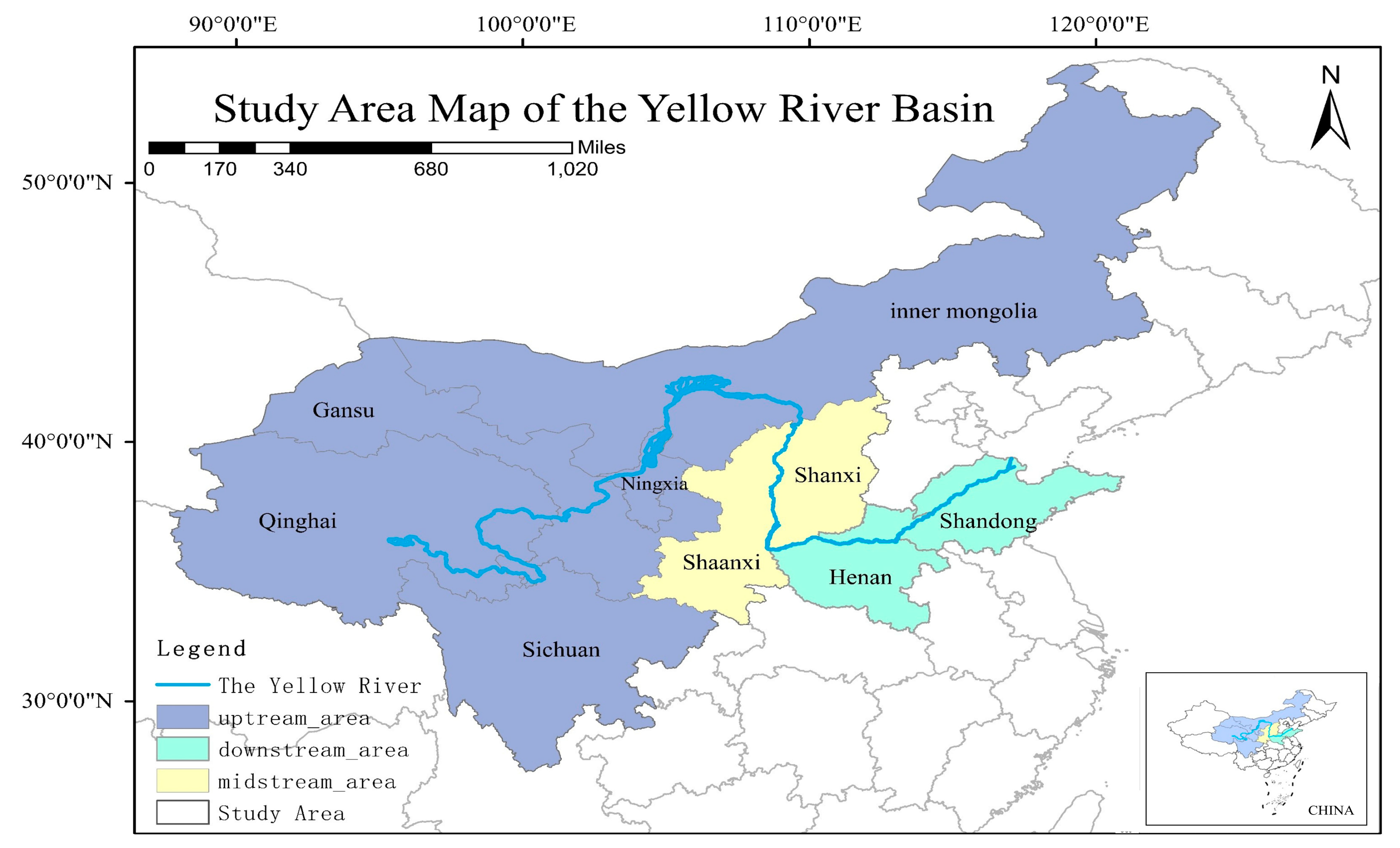
Disclaimer/Publisher’s Note: The statements, opinions and data contained in all publications are solely those of the individual author(s) and contributor(s) and not of MDPI and/or the editor(s). MDPI and/or the editor(s) disclaim responsibility for any injury to people or property resulting from any ideas, methods, instructions or products referred to in the content. |
© 2026 by the authors. Licensee MDPI, Basel, Switzerland. This article is an open access article distributed under the terms and conditions of the Creative Commons Attribution (CC BY) license.