Article

Vegetation Dynamics and Climate Variability in Conflict Zones: A Case Study of Sortony Internally Displaced Camp, Darfur, Sudan


1
Institute of Geomatics and Civil Engineering, Faculty of Forestry, University of Sopron, Bajcsy-Zs 4, 9400 Sopron, Hungary
2
Department of Forest and Environment, Faculty of Forest Sciences and Technology, University of Gezira, Wad Madani 21222, Sudan
3
Faculty of Environmental Studies and Resources Development, Chuka University, Chuka P.O. Box 109-60400, Kenya
4
Centre for Climate Resilience, University of Augsburg, Universitätsstraße 12, 86159 Augsburg, Germany
5
Department of Geomatic Engineering and Geospatial Information Systems, Jomo Kenyatta University of Agriculture and Technology, Nairobi P.O. Box 62000-00200, Kenya
6
Department of Earth Science, Mbeya University of Science and Technology, Mbeya P.O. Box 131, Tanzania
*
Author to whom correspondence should be addressed.
Land 2025, 14(8), 1680; https://doi.org/10.3390/land14081680
Submission received: 25 July 2025 / Revised: 7 August 2025 / Accepted: 18 August 2025 / Published: 20 August 2025

Abstract

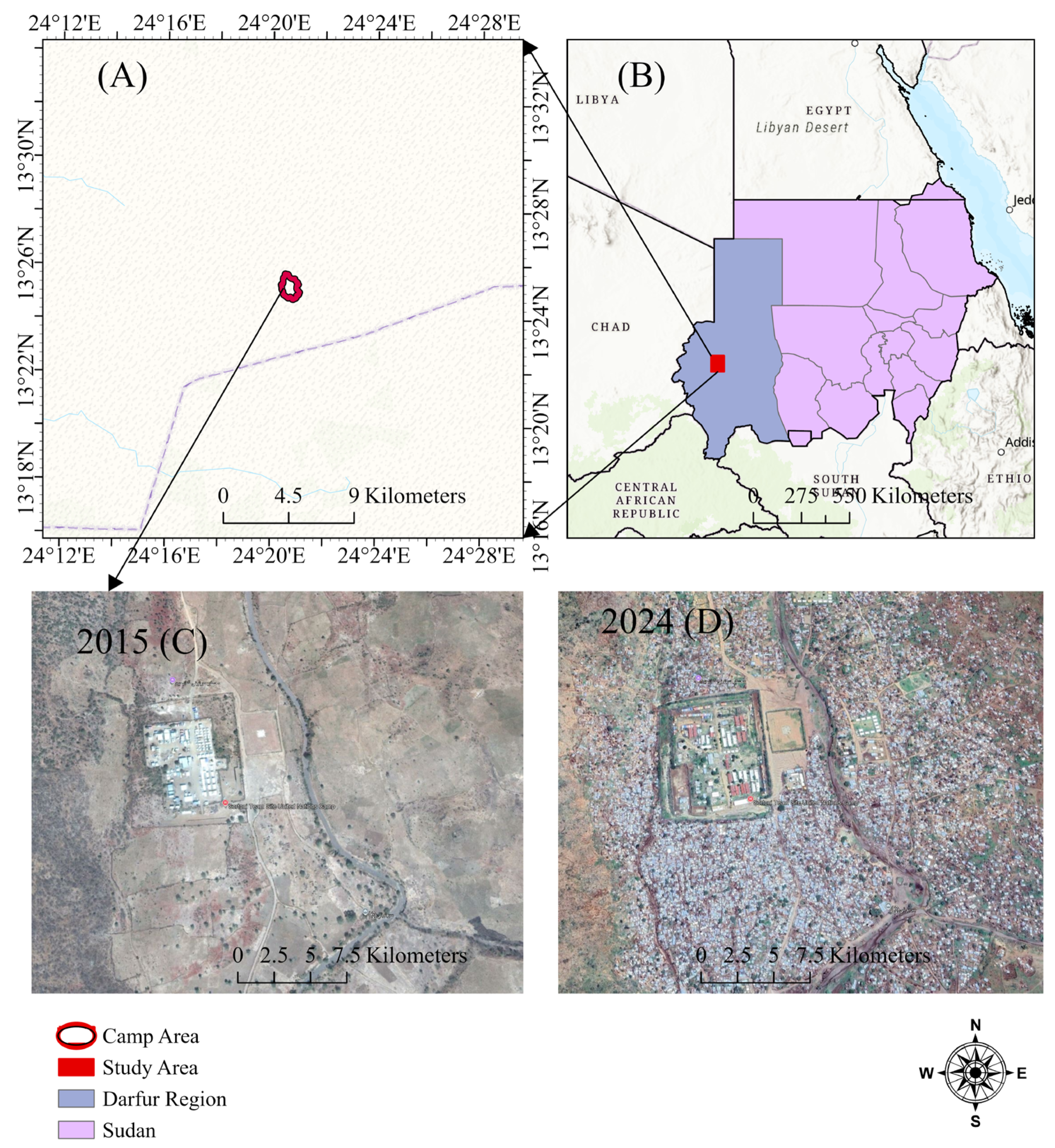
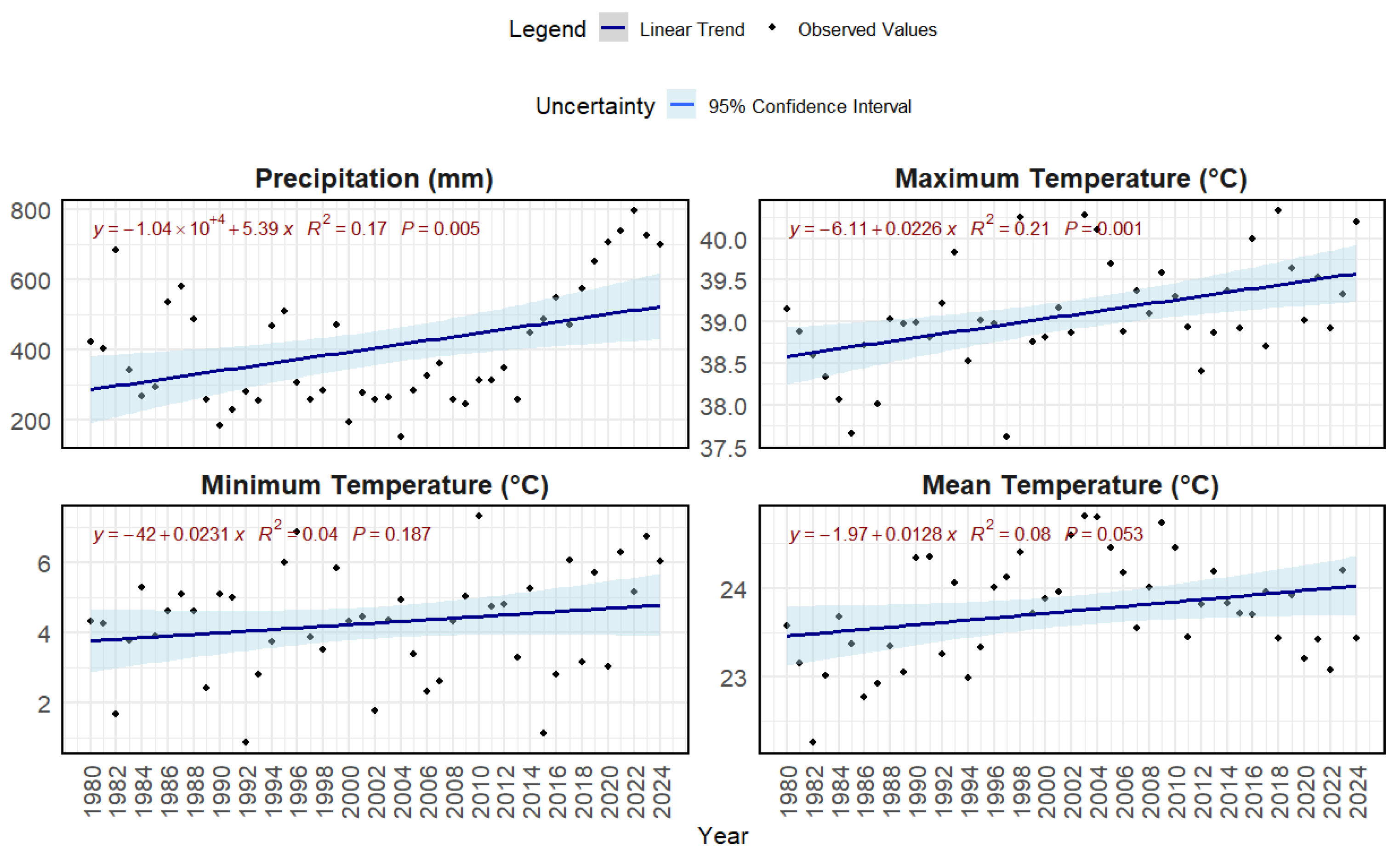
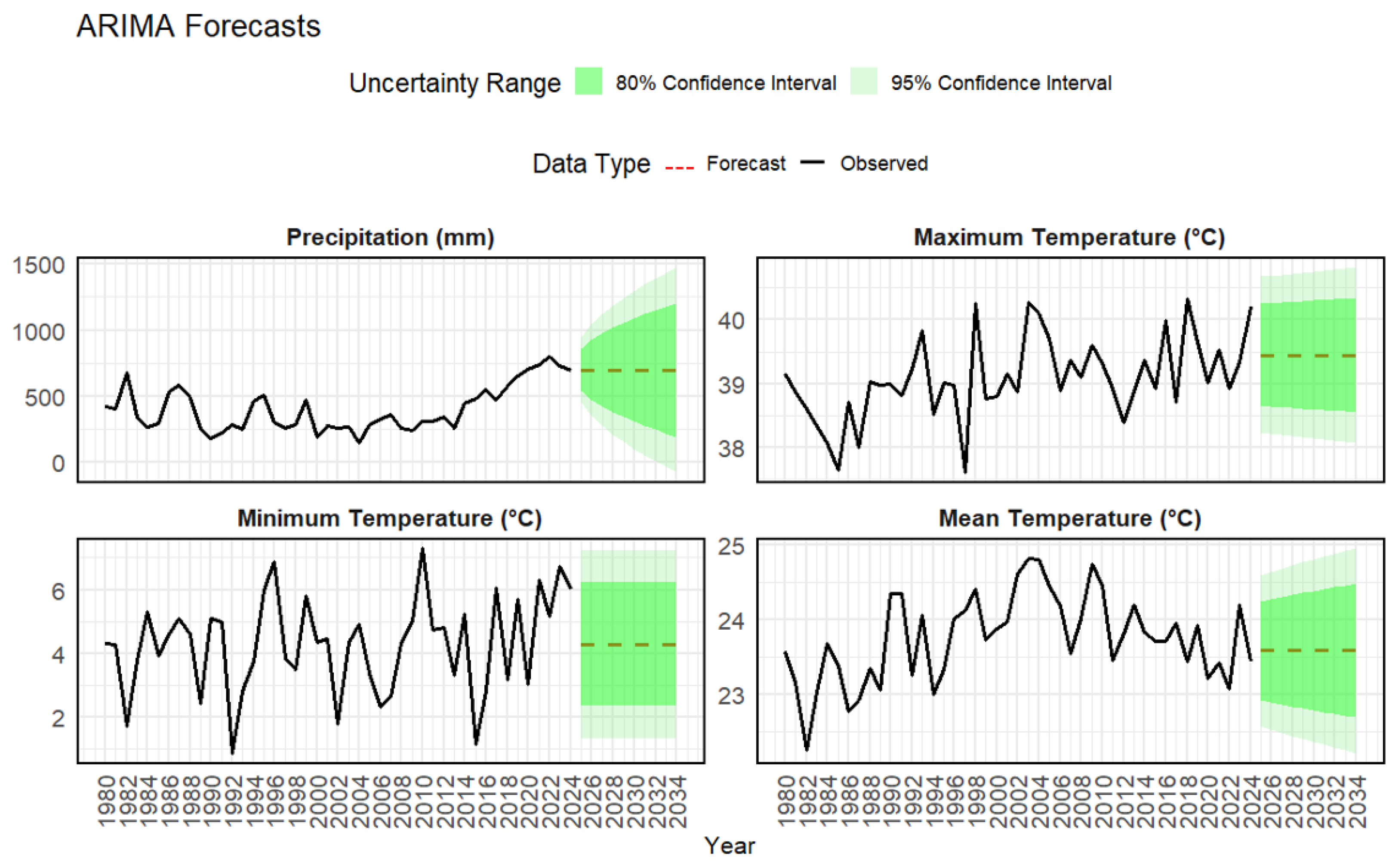
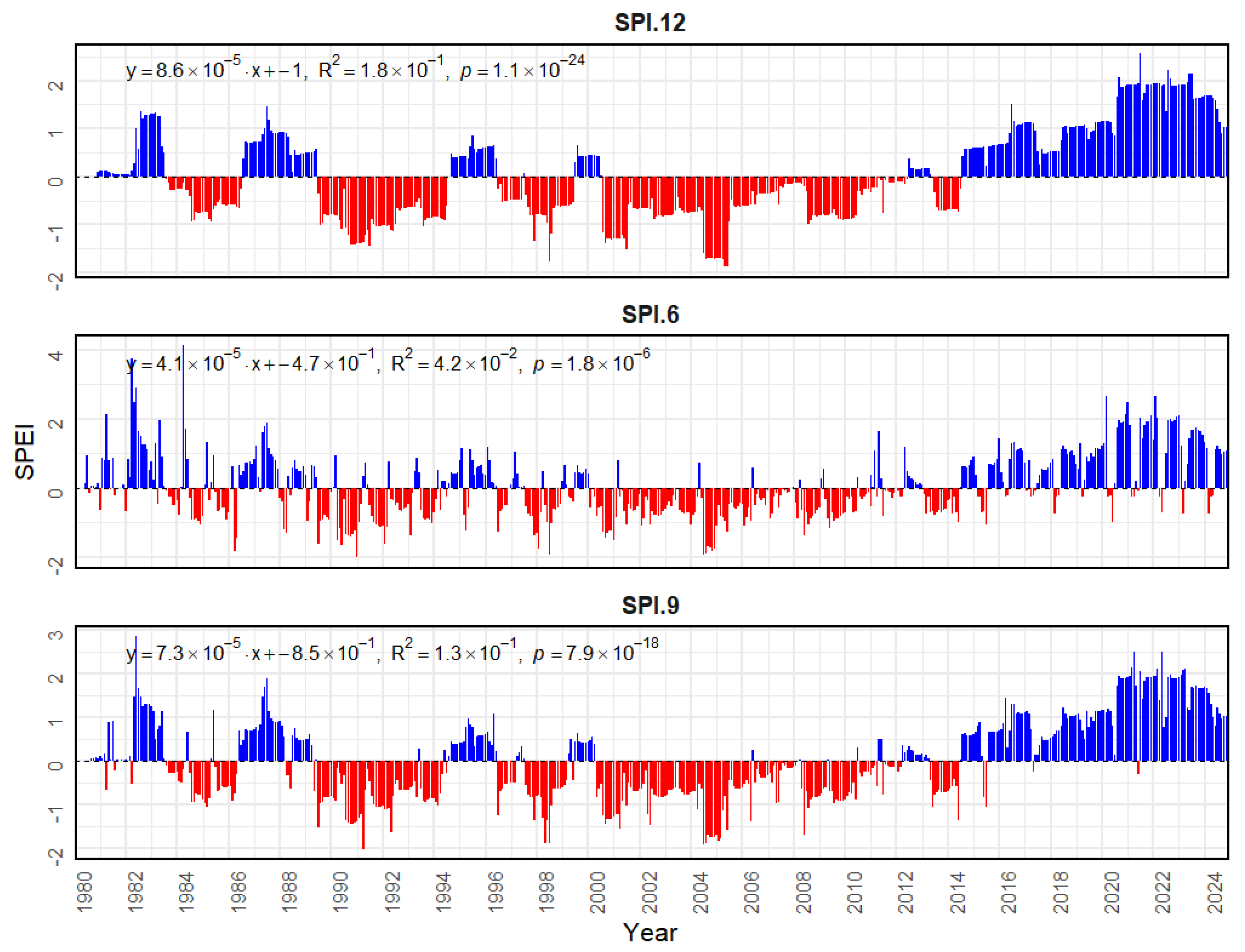
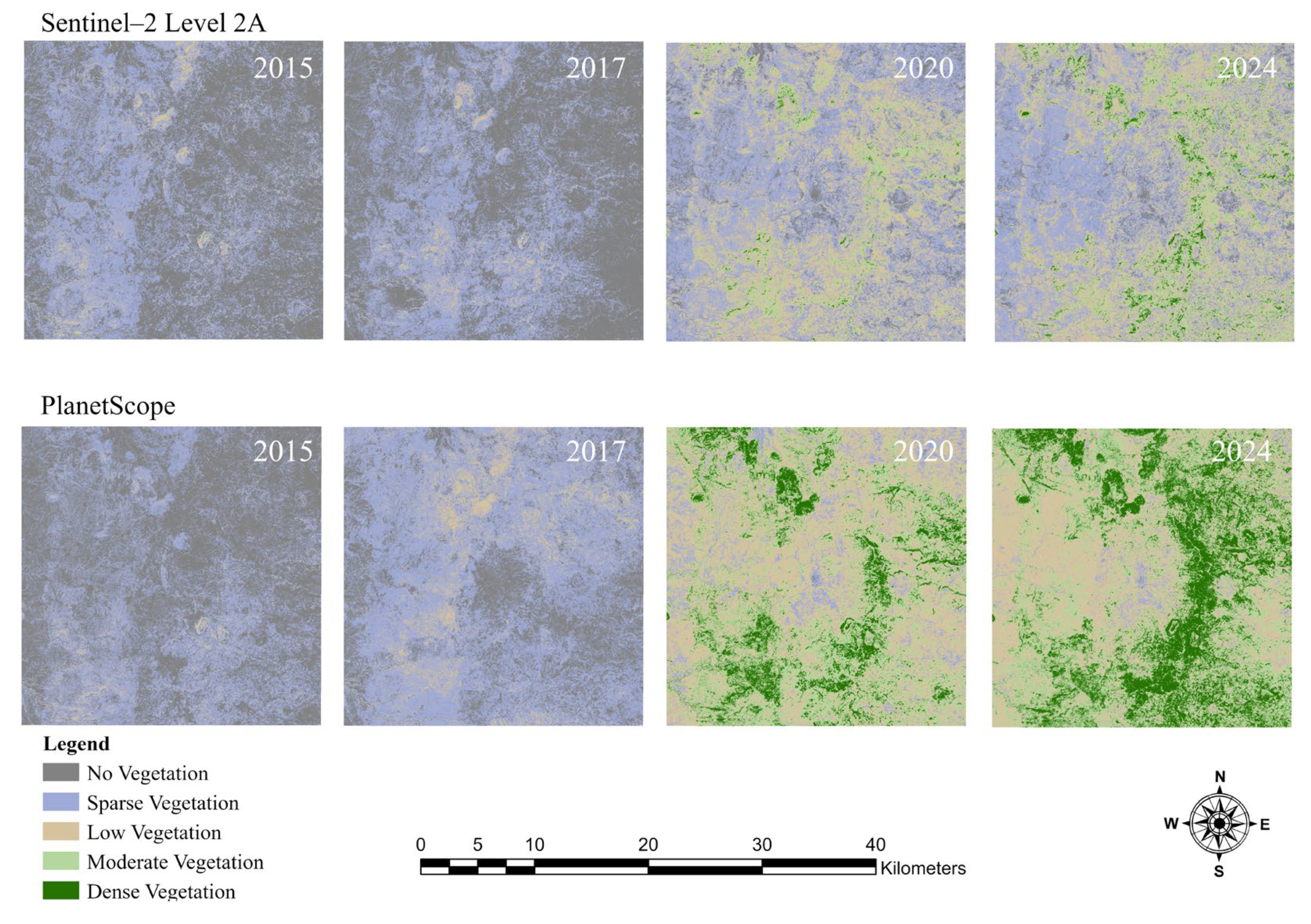
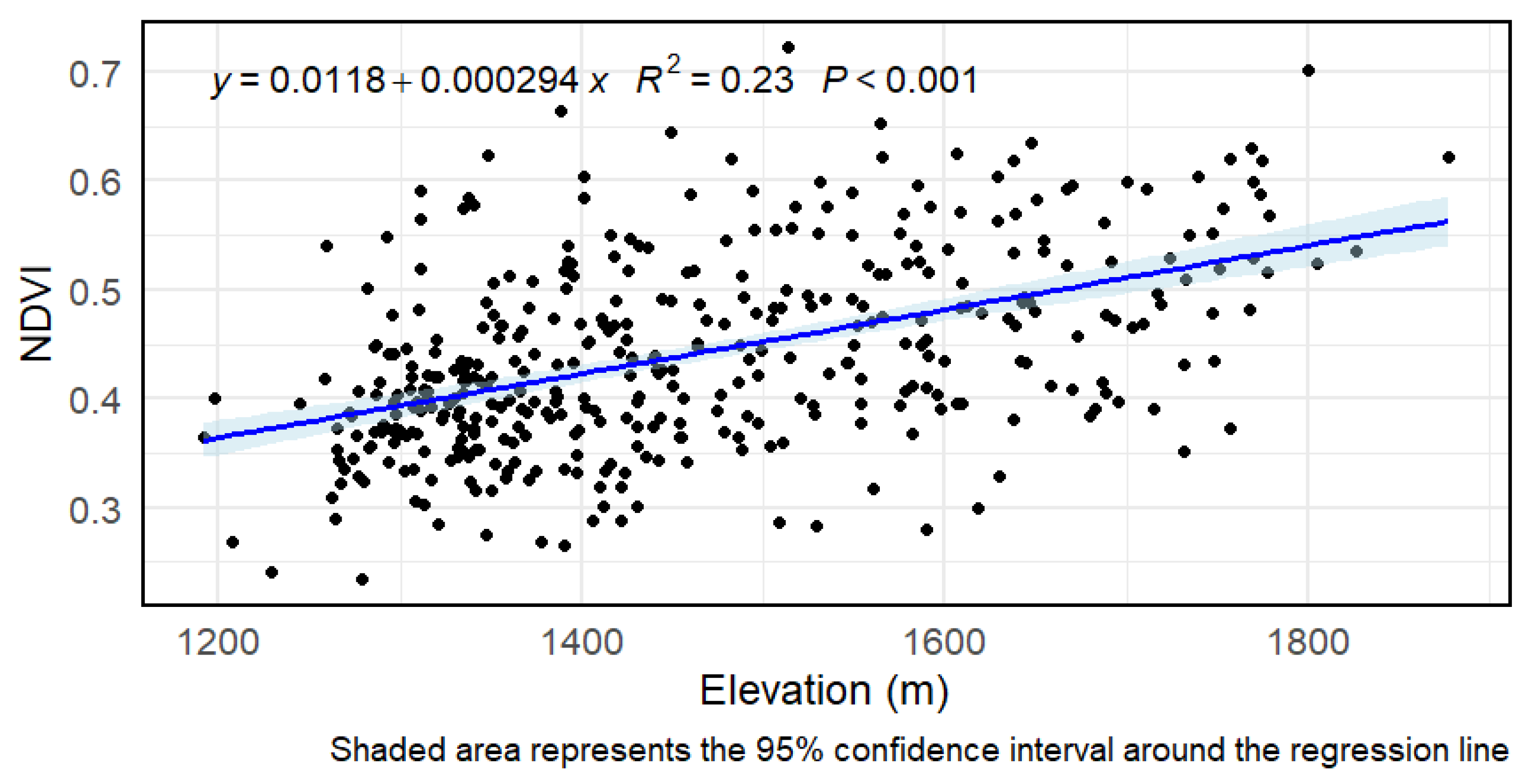
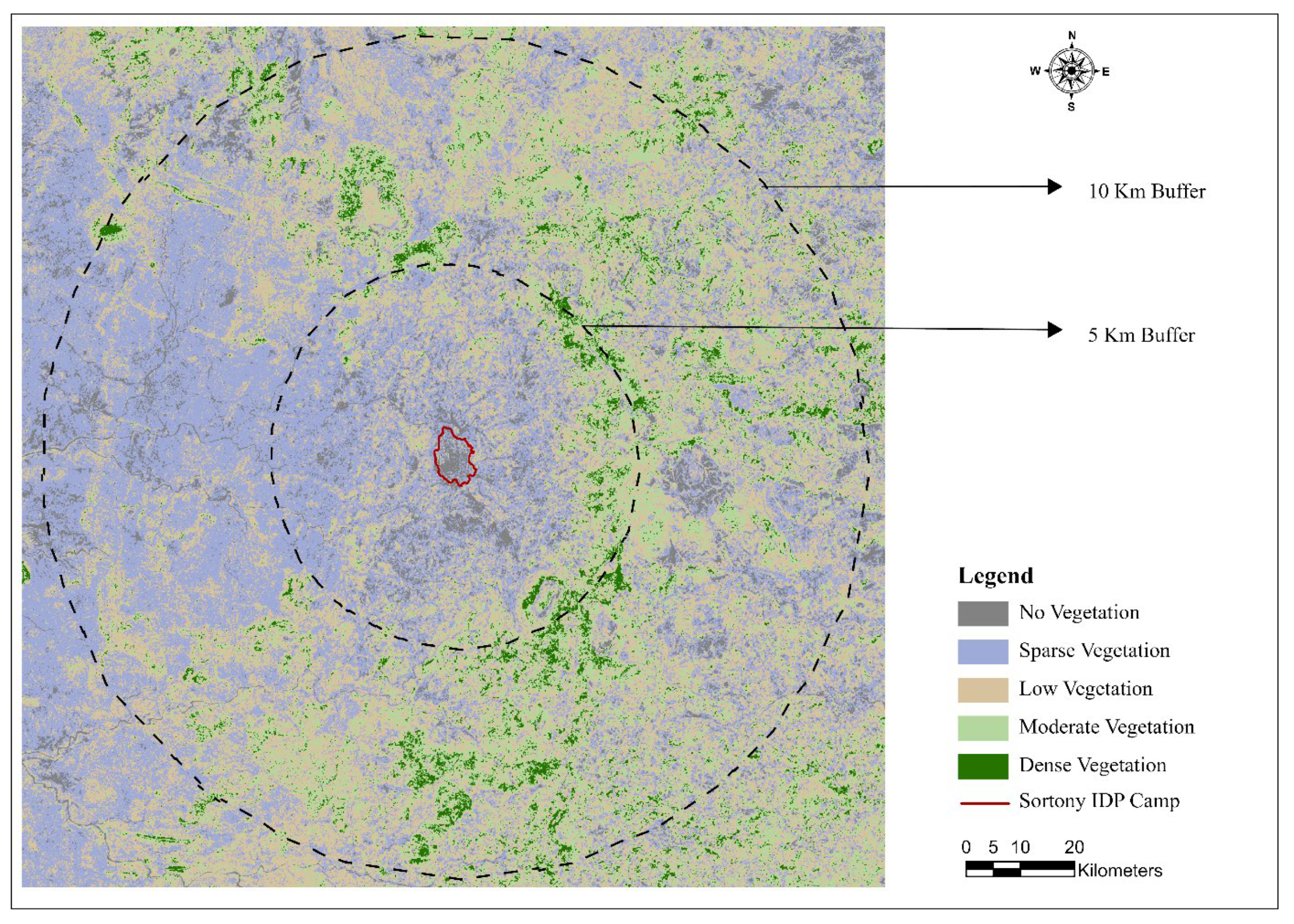
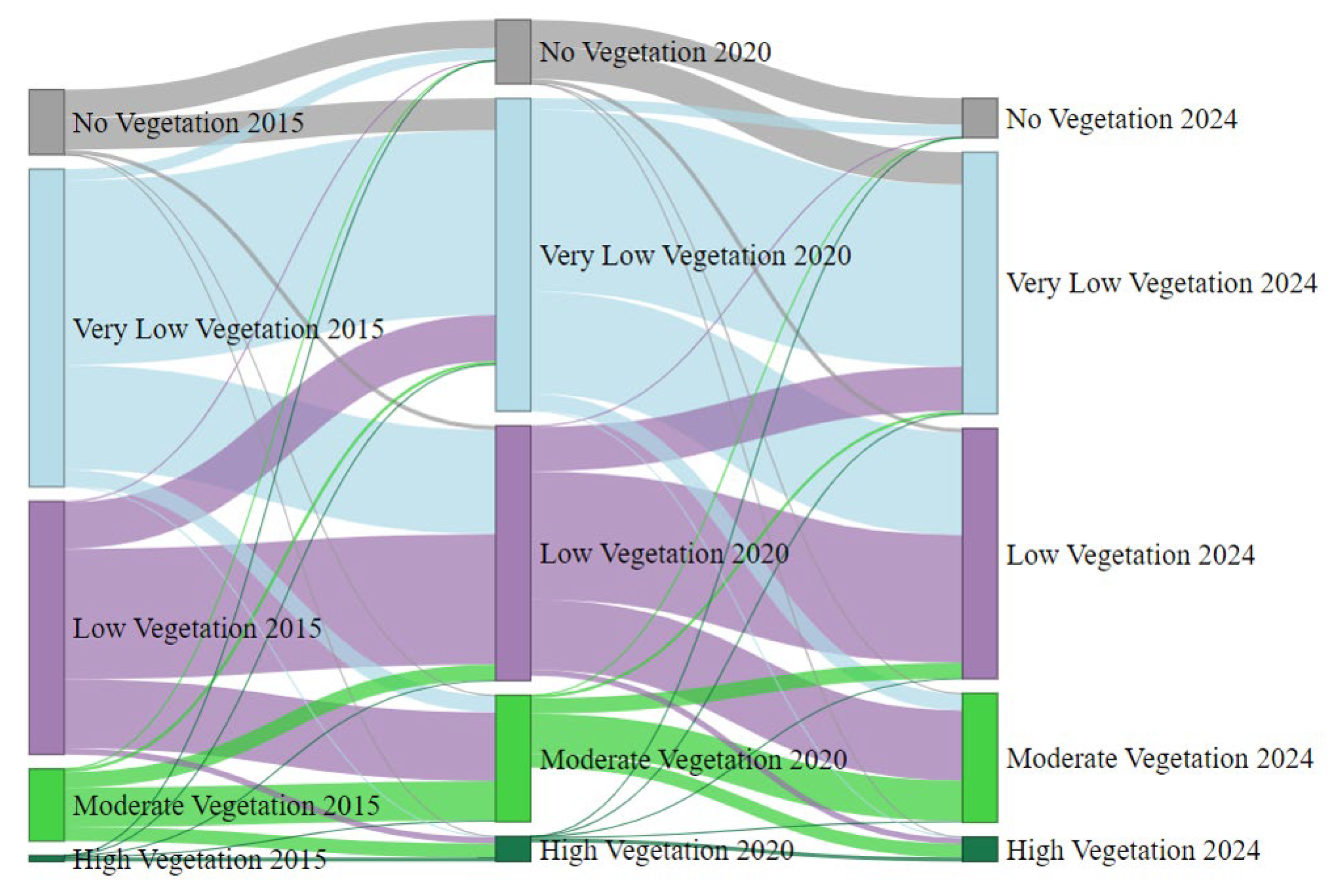
Understanding vegetation dynamics and climate variability in the vicinity of Internally Displaced Person (IDP) camps is critical due to the high dependency of displaced populations on local natural resources. This study investigates vegetation cover changes and long-term climate variability around the Sortony IDP camp in Darfur, Sudan, using satellite and climate data spanning 1980 to 2024. High-resolution imagery from PlanetScope and Sentinel–2 Level 2A was used to assess vegetation cover changes from 2015 to 2024, while precipitation, temperature, and drought trends were analyzed over 44 years (1980–2024). Vegetation changes were quantified using the Normalized Difference Vegetation Index (NDVI), and drought conditions were assessed through the Standardized Precipitation Evapotranspiration Index (SPEI) at 6-, 9-, and 12-month timescales. Future precipitation predictions were modeled using the Autoregressive Integrated Moving Average (ARIMA) model. The results revealed a substantial increase in vegetative cover: the dense vegetation class increased by 3.50%, moderate vegetation by 17.33%, and low vegetation by 30.22%. In contrast, sparse and non-vegetated areas declined by 4.55% and 46.51%, respectively. The SPEI analysis indicated a marked reduction in drought frequency and severity after 2015, following a period of prolonged drought from 2000 to 2014. Forecasts suggest continued increases in rainfall through 2034, which may further support vegetation regrowth. These findings underscore the complex interplay between climatic factors and human activity in conflict-affected landscapes. The observed vegetation recovery highlights the region’s potential for ecological resilience, reinforcing the urgent need for sustainable land-use planning and climate-adaptive management strategies in humanitarian and post-conflict settings such as Darfur.
Keywords: climate change; IDP; Darfur; vegetation recovery; drought; NDVI climate change; IDP; Darfur; vegetation recovery; drought; NDVI