




Development Path of Carbon Emission Assessment System for University Campus: Experiences and Inspirations from STARS Rating System

Abstract
1. Introduction
2. The Development Process and Key Issues of China’s University Campus Sustainability Evaluation System
2.1. Development Process
2.1.1. Early Exploratory Phase (Prior to 2000): Evaluation of Institutional Scale
2.1.2. Intermediate Development Phase (2001–2010): Evaluation of Resource Conservation
2.1.3. Late Deepening Phase (2011–2020): Evaluation of Energy Conservation and Emission Reduction
2.1.4. Contemporary Innovation Phase (2021–Present): Evaluation of Energy Regeneration and Low-Carbon
2.2. Comparative Analysis of the US STARS 2.2 and China’s University Campus Sustainability Evaluation System
2.3. Key Issues
2.3.1. Fixed Evaluation Metrics Fail to Align with University Campuses’ Disciplinary Profiles, Developmental Stages, and Geographical Contexts
2.3.2. Static Evaluation Outcomes Overlook the Principles of Sustainable Development in University Campuses
2.3.3. The Established Scope of Evaluation Fails to Comprehensively Cover All Environmental Elements Within the University Campus
3. The STARS System for North American University Campuses
3.1. Focus on the Development of the STARS Sustainable Low-Carbon Rating System for North American University Campuses
3.2. The Advanced Experience of the STARS Evaluation System
3.2.1. Evaluation Indicator Updates and Adaptation: Aligned with the Core Mission of Higher Education Institutions
3.2.2. Dynamic Evaluation Mechanism Updates: Establishing a Continuous Improvement Management Loop
3.2.3. Comprehensive Assessment Scope: Achieving Campus-Wide Carbon Footprint Accounting
4. Empirical Analysis of Case Studies from Chinese and American University Campuses
4.1. Case Selection: Exploratory Comparative Study
4.1.1. The Rationale for Selecting These Two Universities for Comparative Analysis
- Both universities boast a long history of education and a profound cultural heritage. Tianjin University traces its origins to Beiyang University, established in 1895 as China’s first modern university. Its developmental trajectory has largely paralleled the history of modern higher education in China [71]. This signifies that Tianjin University—particularly its Weijin Road campus—bears a weighty historical legacy. Its low-carbon transition involves not only technological renewal but also the protective renovation of historic buildings and energy upgrades, presenting a challenge highly representative among China’s many century-old institutions [72]. Princeton University, founded in 1746, stands as one of America’s oldest institutions of higher learning. Its campus presents a composite of colonial-era architecture and modern facilities [73]. This enduring history similarly imposes complex demands: preserving the campus’s status as a national historic landmark while simultaneously modernising its energy systems and enhancing energy efficiency.
- The geographical environments of the two universities are comparable, controlling for natural condition variables. Both institutions are situated in the Northern Hemisphere at similar latitudes (Princeton University at 40.3° N, Tianjin University at 39.1° N), thus sharing a continental climate characterised by distinct four seasons. This similarity implies that both institutions exhibit highly comparable heating degree days (HDD) and cooling degree days (CDD). These metrics constitute key determinants of campus building heating and cooling energy consumption, thereby influencing the overall carbon emissions of university campuses [74].
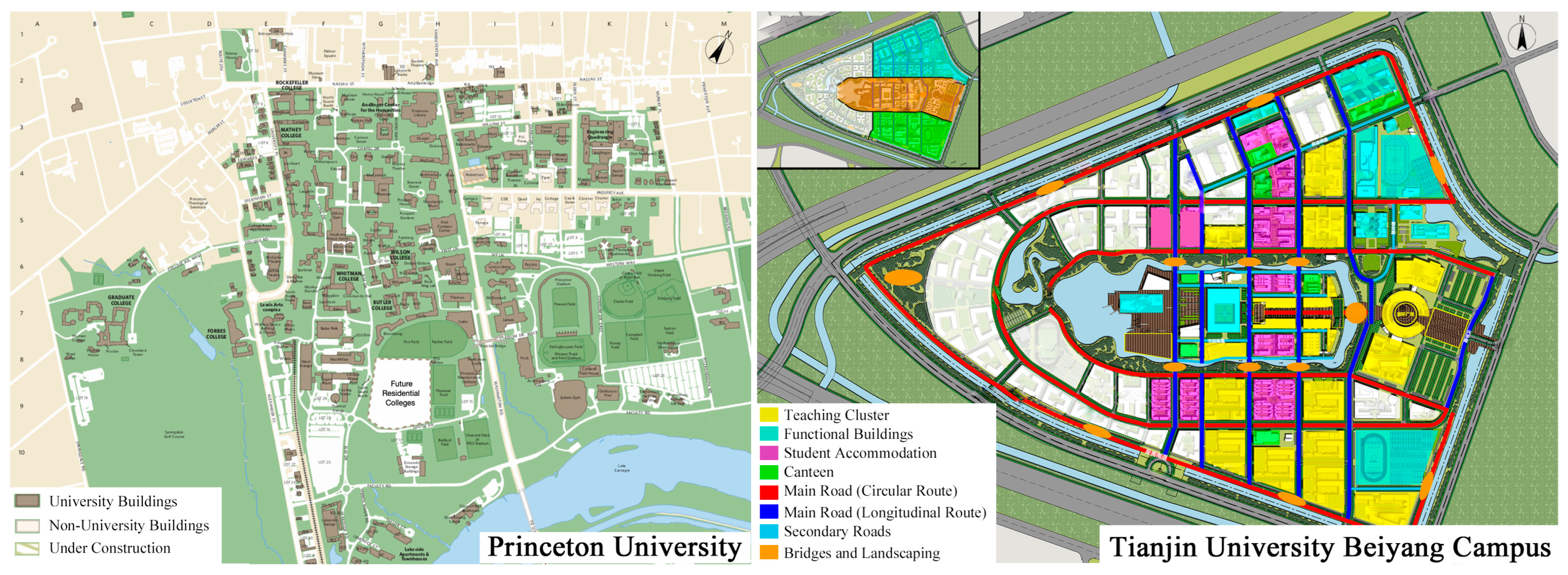
- The two universities share comparable physical campus scales and functional complexities, controlling for baseline load variables. They exhibit high alignment in the physical dimensions underpinning campus energy and environmental demands. As shown in Table 3, both institutions possess similar land areas (approximately 2.5 million square metres) and building floor areas (approximately 900,000 square metres). This ensures that when fulfilling similar spatial functions (teaching, research, accommodation), both institutions face baseline energy demands and environmental management pressures of comparable magnitude. Although differences exist in total student and staff numbers, subsequent analyses will normalise these through the introduction of per capita intensity metrics and area intensity metrics [75].
- The two universities share a similar disciplinary structure, controlling for institutional type. Both are comprehensive research universities with fully developed doctoral programmes. This status implies that they possess highly complex organisational structures, deeply integrating talent cultivation, cutting-edge scientific research, and large-scale community operations [76]. Compared to single-discipline specialised institutions, comprehensive universities exhibit greater complexity in energy sources, infrastructure, and transport logistics, rendering their carbon emission profiles more representative.
- Both universities share an ambitious carbon neutrality vision, ensuring comparability in strategic momentum. Princeton University pledges to achieve carbon neutrality by 2046, while Tianjin University commits to peaking carbon emissions by 2030 and reaching carbon neutrality by 2060. This common ground is crucial, indicating that both institutions have elevated the low-carbon transition from fragmented, reactive environmental measures to a long-term, university-wide strategic planning priority. This transforms the present study from a simple comparison of ‘advanced’ versus ‘lagging’ institutions into a profound analysis of the distinct technological pathways, governance models, and transition speeds adopted by two leading universities operating within different cultural contexts and institutional frameworks as they pursue similar ambitious goals. The insights and lessons derived from this examination are thus more cutting-edge and instructive.
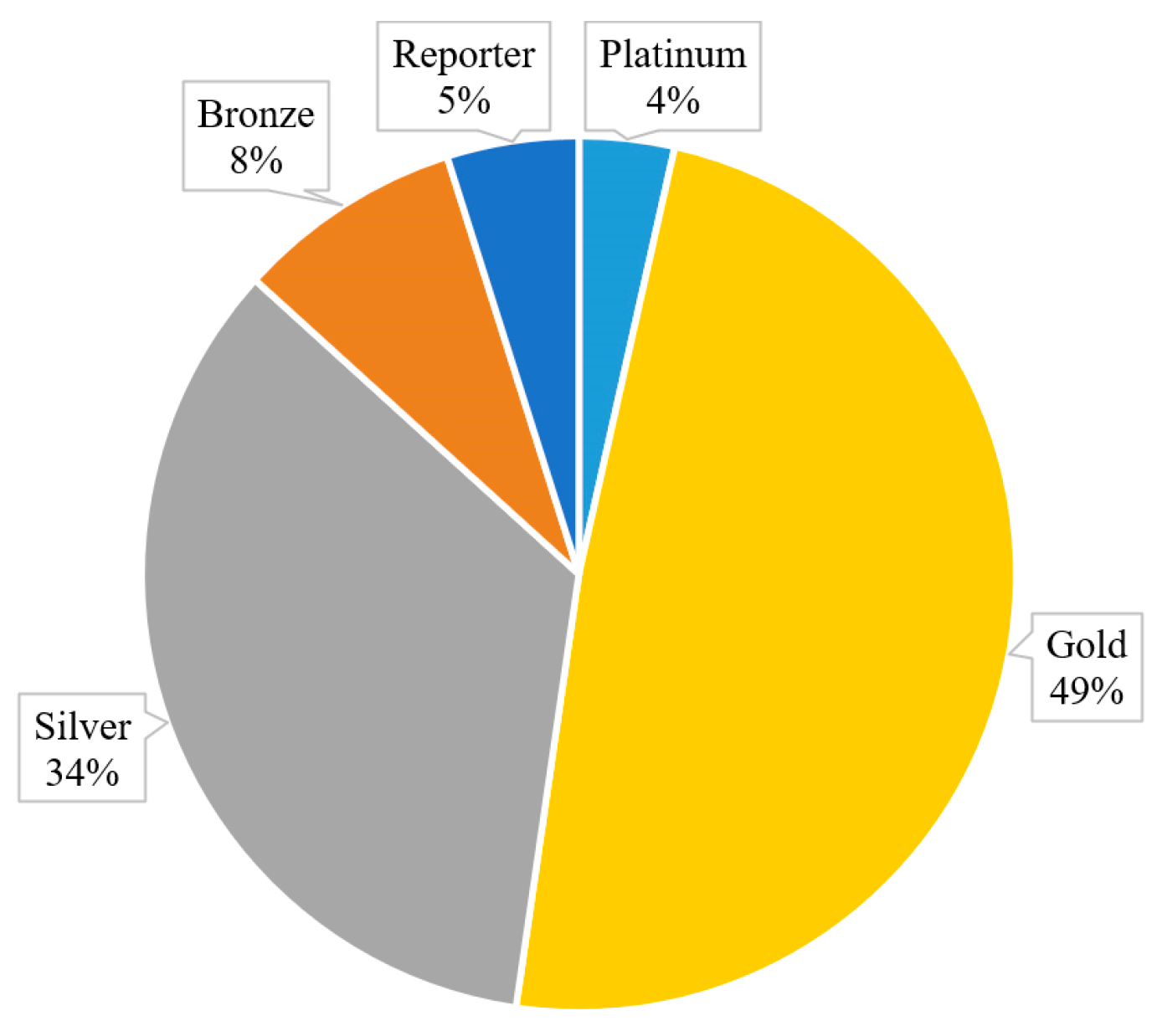
- Both universities adhered to the internationally recognised STARS assessment framework, ensuring consistency in data and methodology. Both institutions voluntarily and comprehensively participated in the STARS 2.2 rating process and publicly disclosed their reports. This constitutes the methodological foundation upon which this study is built. The STARS system provides a standardised, transparent accounting and evaluation methodology, ensuring complete consistency between the two institutions in defining carbon emission boundaries, data collection criteria, and benchmarking indicator scores. This fundamentally avoids issues of incomparability arising from differing evaluation standards or data sources, enabling score variations to authentically and directly reflect the actual disparities in sustainable development performance between the two universities.
4.1.2. Acknowledging Limits and Scope of Generalization
4.2. Data Sources and Harmonization for Cross-System Comparability
4.2.1. Unified Operational Boundary Definition
4.2.2. Standardized Metric Normalization
4.2.3. Common Data Reporting Protocols
4.2.4. Third-Party Verification and Transparency
4.3. Methodology
4.4. Results
4.5. Analysis
4.5.1. Energy Dimension: Dual Gaps in System Efficiency and Structural Transformation
4.5.2. Academic Engagement and Participation: Soft Power and Endogenous Momentum for Campus Low-Carbon Transformation
4.5.3. Management and Planning: Soft Power and Endogenous Momentum for Campus Low-Carbon Transformation
4.5.4. Campus Form and Transport: The Impact of Spatial Planning on Carbon Emissions
4.6. Comparative Analysis with Recent Chinese Low-Carbon Standards
4.6.1. Analytical Framework
4.6.2. Key Synthesis for Chinese Practice
4.7. Adaptability Analysis: The Suitability of STARS 2.2 for Chinese Universities
4.7.1. Suitability of the Core Logic: Strengths and Necessary Refocusing
4.7.2. From Direct Application to Logic Hybridization
4.8. Consideration of STARS Evolution: Implications from Version 2.2 to 3.0
5. Implications for Establishing Sustainable Low-Carbon Evaluation Systems in Chinese University Campuses
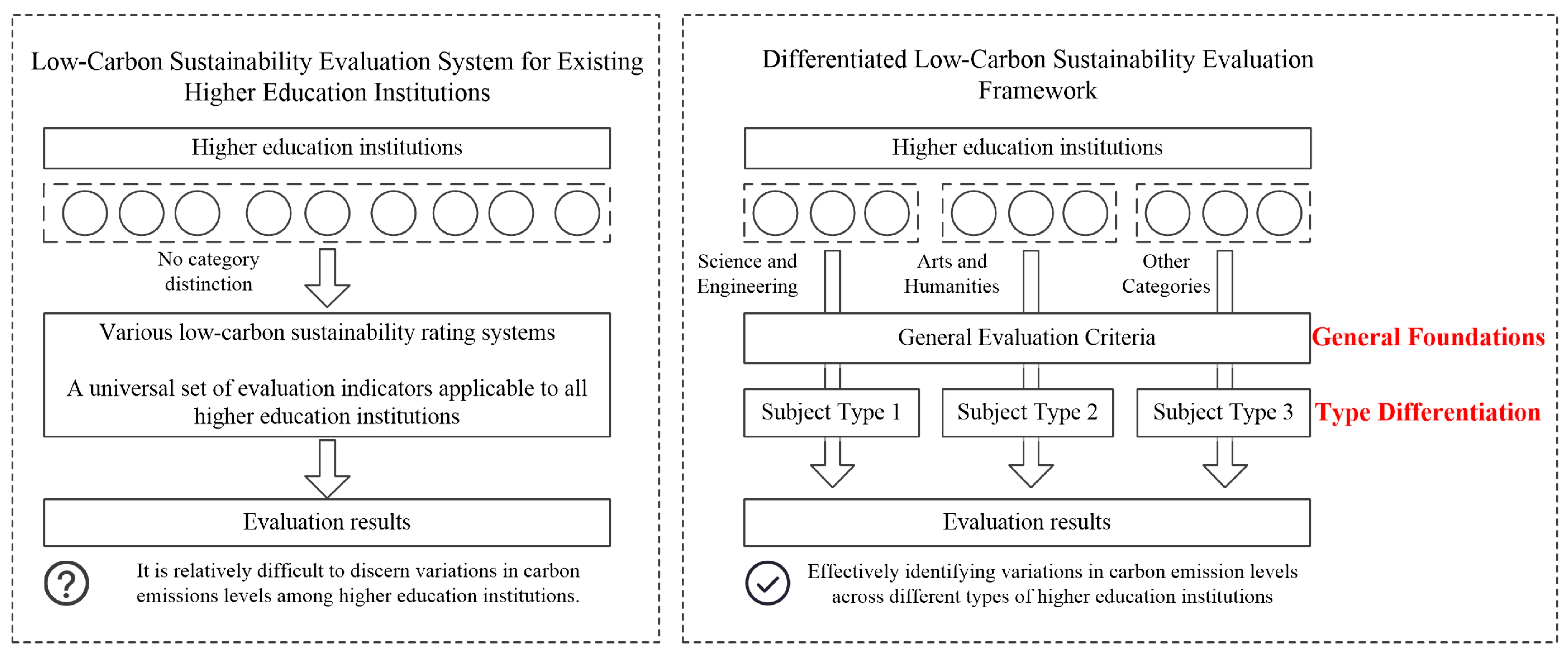
5.1. Establishing a Differentiated Indicator System Comprising ‘Common Foundations Plus Subject-Specific Types’
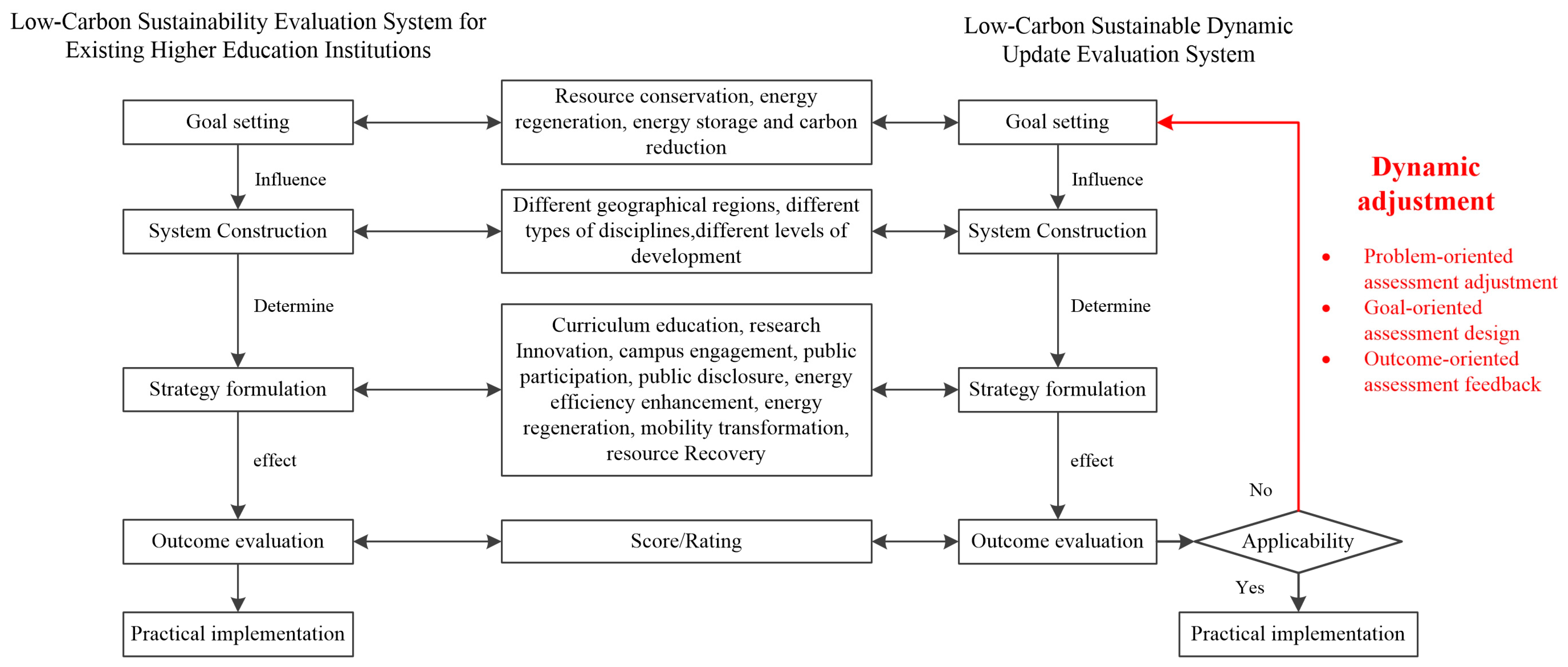
5.2. Establish a Mechanism for Periodic Version Updates to the Evaluation Standard Itself
5.3. Develop a Comprehensive and Transparent Carbon Accounting and Management Framework
6. Conclusions
Author Contributions
Funding
Data Availability Statement
Acknowledgments
Conflicts of Interest
Abbreviations
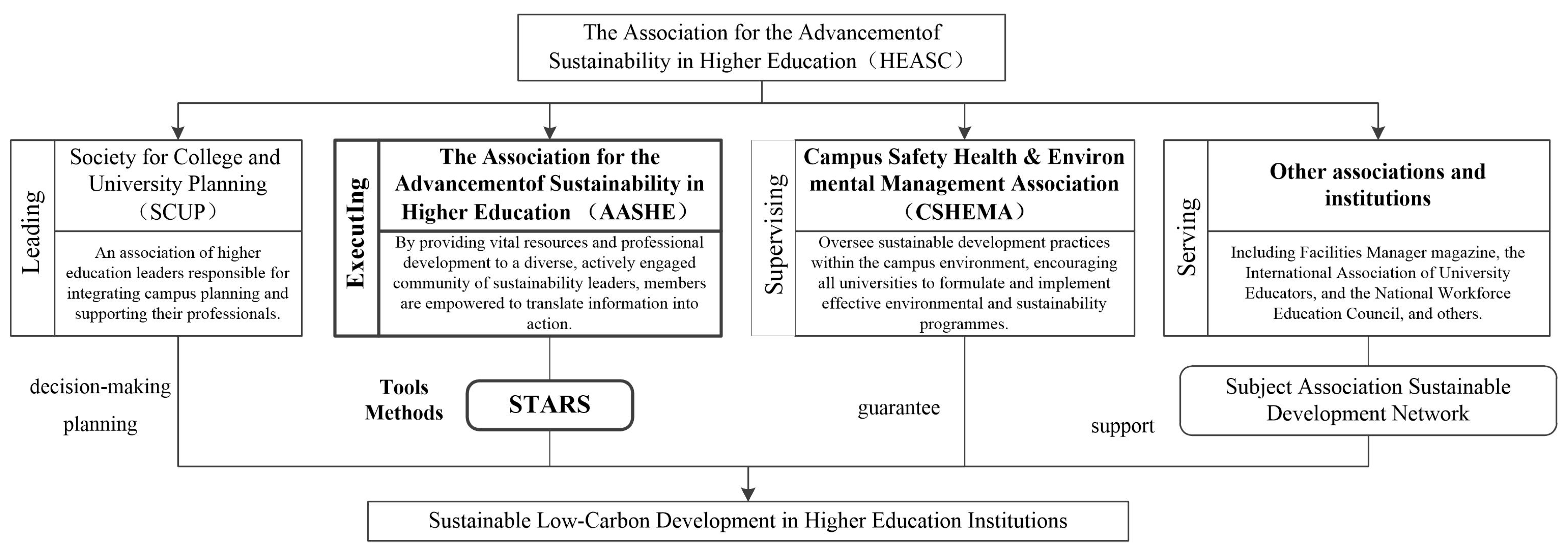
| AASHE | The Association for the Advancement of Sustainability in Higher Education (U.S.) |
| STARS | The Sustainability Tracking, Assessment & Rating System |
| PU | Princeton University |
| TJU | Tianjin University |
Appendix A

| Primary Indicator | Category | Sub-Indicator | Princeton University | Tianjin University Beiyang Campus |
|---|---|---|---|---|
| Academics (AC) | Curriculum | Academic Courses | 5.82/14.00 | 6.77/14.00 |
| Learning Outcomes | 2.29/8.00 | 3.14/8.00 | ||
| Undergraduate Program | 3.00/3.00 | 3.00/3.00 | ||
| Graduate Program | 3.00/3.00 | 3.00/3.00 | ||
| Immersive Experience | 2.00/2.00 | 2.00/2.00 | ||
| Sustainability Literacy Assessment | 0.00/4.00 | 1.00/4.00 | ||
| Incentives for Developing Courses | 2.00/2.00 | 2.00/2.00 | ||
| Campus as a Living Laboratory | 4.00/4.00 | 4.00/4.00 | ||
| Research | Research and Scholarship | 10.6/12.00 | 9.64/12.00 | |
| Support for Sustainability Research | 4.00/4.00 | 2.00/4.00 | ||
| Open Access to Research | 2.00/2.00 | 2.00/2.00 | ||
| Total for this section | 38.71/58.00 | 38.55/58.00 | ||
| Engagement (EN) | Campus Engagement | Student Educators Program | 3.50/4.00 | 2.08/4.00 |
| Student Orientation | 2.00/2.00 | 2.00/2.00 | ||
| Student Life | 2.00/2.00 | 2.00/2.00 | ||
| Outreach Materials and Publications | 2.00/2.00 | 2.00/2.00 | ||
| Outreach Campaign | 4.00/4.00 | 4.00/4.00 | ||
| Assessing Sustainability Culture | 0.50/1.00 | 0.50/1.00 | ||
| Employee Educators Program | 2.23/3.00 | 2.03/3.00 | ||
| Employee Orientation | 0.10/1.00 | 1.00/1.00 | ||
| Staff Professional Development and Training | 0.00/2.00 | 0.50/2.00 | ||
| Public Engagement | Community Partnerships | 3.00/3.00 | 3.00/3.00 | |
| Inter-Campus Collaboration | 3.00/3.00 | 2.00/3.00 | ||
| Continuing Education | 2.01/5.00 | 3.50/5.00 | ||
| Community Service | 2.19/5.00 | 3.06/5.00 | ||
| Participation in Public Policy | 2.00/2.00 | 2.00/2.00 | ||
| Trademark Licensing | 2.00/2.00 | 0.00/2.00 | ||
| Total for this section | 30.53/41.00 | 29.67/41.00 | ||
| Operations (OP) | Air & Climate | Emissions Inventory and Disclosure | 1.79/3.00 | 2.38/3.00 |
| Greenhouse Gas Emissions | 4.13/8.00 | 1.42/8.00 | ||
| Buildings | Building Design and Construction | 1.25/3.00 | 1.50/3.00 | |
| Building Design and Construction | 2.00/5.00 | 2.50/5.00 | ||
| Energy | Building Energy Efficiency | 3.86/6.00 | 0.00/6.00 | |
| Clean and Renewable Energy | 0.00/4.00 | 0.01/4.00 | ||
| Food & Dining | Food and Beverage Purchasing | 1.40/6.00 | 1.20/6.00 | |
| Sustainable Dining | 2.00/2.00 | 1.10/2.00 | ||
| Grounds | Landscape Management | 1.00/2.00 | 1.00/2.00 | |
| Biodiversity | 2.00/2.00 | 1.00/2.00 | ||
| Purchasing | Sustainable Procurement | 2.25/3.00 | 1.00/3.00 | |
| Electronics Purchasing | 0.81/1.00 | 0.50/1.00 | ||
| Cleaning and Janitorial Purchasing | 0.56/1.00 | 0.35/1.00 | ||
| Office Paper Purchasing | 0.78/1.00 | 0.40/1.00 | ||
| Transportation | Campus Fleet | 0.21/1.00 | 0.35/1.00 | |
| Commute Modal Split | 2.95/5.00 | 0.77/5.00 | ||
| Support for Sustainable Transportation | 1.00 /1.00 | 1.00/1.00 | ||
| Waste | Waste Minimization and Diversion | 5.56/8.00 | 4.25/8.00 | |
| Construction and Demolition Waste Diversion | 1.00/1.00 | 1.00/1.00 | ||
| Hazardous Waste Management | 1.00/1.00 | 1.00/1.00 | ||
| Water | Water Use | 5.00/5.00 | 1.20/5.00 | |
| Rainwater Management | 2.00/2.00 | 0.50/2.00 | ||
| Total for this section | 42.55/71.00 | 24.43/71.00 | ||
| Planning & Administration (PA) | Coordination & Planning | Sustainability Coordination | 1.00/1.00 | 1.00/1.00 |
| Sustainability Planning | 4.00/4.00 | 3.00/4.00 | ||
| Inclusive and Participatory Governance | 1.50/3.00 | 1.50/3.00 | ||
| Reporting Assurance | 0.00/1.00 | 1.00/1.00 | ||
| Diversity & Affordability | Diversity and Equity Coordination | 1.33/2.00 | 1.33/2.00 | |
| Assessing Diversity and Equity | 0.75/1.00 | 0.63/1.00 | ||
| Support for Underrepresented Groups | 2.92/3.00 | 1.25/3.00 | ||
| Affordability and Access | 2.77/4.00 | 4.00/4.00 | ||
| Investment & Finance | Committee on Investor Responsibility | 2.00/2.00 | 1.00/2.00 | |
| Sustainable Investment | 2.01/5.00 | 3.00/5.00 | ||
| Investment Disclosure | 0.00/1.00 | 0.00/1.00 | ||
| Wellbeing & Work | Employee Compensation | 0.00/3.00 | 1.50/3.00 | |
| Assessing Employee Satisfaction | 0.60/1.00 | 0.67/1.00 | ||
| Wellness Program | 0.75/1.00 | 0.75/1.00 | ||
| Workplace Health and Safety | 0.00/2.00 | 1.75/2.00 | ||
| Total for this section | 19.63/34.00 | 22.38/34.00 | ||
| Innovation & Leadership (IN) | 8 items | 0.5 points/item | 4.00/4.00 | 4.00/4.00 |
| Calculation process | — | — | ||
References
- Liu, J. Public Finance and American Urban Planning Education: History and Training Modes. Urban Plan. Int. 2023, 38, 44–52. [Google Scholar] [CrossRef]
- Cao, R.; Feng, L.; Zhang, L. Accounting and Analysis of Carbon Emissions in Universities: A Case Study of Beijing A University. Environ. Sci. 2024, 45, 1907–1916. [Google Scholar] [CrossRef]
- The Central People’s Government of the People’s Republic of China. Xi Jinping Delivered an Important Speech at the General Debate of the Seventy-Fifth Session of the United Nations General Assembly. 22 September 2020. Available online: https://www.gov.cn/xinwen/2020-09/22/content_5546168.htm (accessed on 25 May 2025).
- Liu, H.; Wang, X.; Yang, J.; Zhou, X.; Liu, Y. The ecological footprint evaluation of low carbon campuses based on life cycle assessment: A case study of Tianjin, China. J. Clean. Prod. 2017, 144, 266–278. [Google Scholar] [CrossRef]
- Long, X.; Wang, J. Visualization Analysis of Low-Carbon Campus Research Based on CiteSpace. J. Nat. Sci. Hunan Norm. Univ. 2024, 47, 106–114. [Google Scholar]
- Guan, Z.; Zhang, W.; Wang, C.; Xue, B.; Li, X.; Xu, X. LCA Analysis of Campus Photovoltaic Power Generation System and lts Application Potential in Low Carbon Campus: Case Study of Shandong Jianzhu University. Build. Sci. 2024, 40, 47–55+64. [Google Scholar] [CrossRef]
- Yang, Y.; Gao, F. Research Review on the Low-carbon Path of Built Environment in University Campus. South Archit. 2024, 2, 53–63. [Google Scholar]
- Xiao, Y.; Lv, H.; Lv, D. Analysis of carbon emission characteristics and carbon reduction potential of campus building operation based on stirpat model. Environ. Eng. 2023, 41, 117–123. [Google Scholar] [CrossRef]
- Guerrieri, M.; La Gennusa, M.; Peri, G.; Rizzo, G.; Scaccianoce, G. University campuses as small-scale models of cities: Quantitative assessment of a low carbon transition path. Renew. Sustain. Energy Rev. 2019, 113, 109263. [Google Scholar] [CrossRef]
- Rowe, D.; Gentile, S.; Clevey, L. The U.S. Partnership for Education for Sustainable Development: Progress and Challenges Ahead. Appl. Environ. Educ. Commun. Int. J. 2015, 14, 112–120. [Google Scholar] [CrossRef]
- Anthony Jnr, B. Green campus paradigms for sustainability attainment in higher education institutions—A comparative study. J. Sci. Technol. Policy Manag. 2021, 12, 117–148. [Google Scholar] [CrossRef]
- Berchin, I.I.; de Aguiar Dutra, A.R.; Guerra, J.B.S.O.d.A. How do higher education institutions promote sustainable development? A literature review. Sustain. Dev. 2021, 29, 1204–1222. [Google Scholar] [CrossRef]
- Sugiarto, A.; Lee, C.W.; Huruta, A.D. A Systematic Review of the Sustainable Campus Concept. Behav. Sci. 2022, 12, 130. [Google Scholar] [CrossRef] [PubMed]
- Li, X.; Tan, H.; Rackes, A. Carbon footprint analysis of student behavior for a sustainable university campus in China. J. Clean. Prod. 2015, 106, 97–108. [Google Scholar] [CrossRef]
- Ocloo, D.M.; Mizunoya, T. Carbon Storage and Land Use Dynamics in Ghanaian University Campuses: A Scenario-Based Assessment Using the InVEST Model. Land 2025, 14, 1987. [Google Scholar] [CrossRef]
- Lauren, E.D.; Arash, Z.; Joseph, T.K., Jr. A critical review of the effectiveness of the Sustainability Tracking, Assessment & Rating System (STARS) framework on campus sustainability. In Proceedings of the Building Simulation 2021: 17th Conference of IBPSA, Bruges, Belgium, 1–3 September 2021; pp. 629–635. [Google Scholar]
- Naji, S.; Gwilliam, J. A review of exploring collaboration and learning about climate change adaptation in BREEAM Communities. Tech. Rom. J. Appl. Sci. Technol. 2020, 2, 21–32. [Google Scholar] [CrossRef]
- Wu, P.; Song, Y.; Hu, X.; Wang, X. A Preliminary Investigation of the Transition from Green Building to Green Community: Insights from LEED ND. Sustainability 2018, 10, 1802. [Google Scholar] [CrossRef]
- Franchini, C.; Biasini, B.; Rosi, A.; Scazzina, F. Best practices for making the university campus a supportive environment for healthy and sustainable diets. Curr. Opin. Environ. Sci. Health 2023, 32, 100436. [Google Scholar] [CrossRef]
- Ma, B.; Bashir, M.F.; Peng, X.; Strielkowski, W.; Kirikkaleli, D. Analyzing research trends of universities’ carbon footprint: An integrated review. Gondwana Res. 2023, 121, 259–275. [Google Scholar] [CrossRef]
- Rugani, B.; Osset, P.; Blanc, O.; Benetto, E. Environmental Footprint Neutrality Using Methods and Tools for Natural Capital Accounting in Life Cycle Assessment. Land 2023, 12, 1171. [Google Scholar] [CrossRef]
- Wang, G.; Luo, T.; Luo, H.; Liu, R.; Liu, Y.; Liu, Z. A comprehensive review of building lifecycle carbon emissions and reduction approaches. City Built Environ. 2024, 2, 12. [Google Scholar] [CrossRef]
- Dawodu, A.; Dai, H.; Zou, T.; Zhou, H.; Lian, W.; Oladejo, J.; Osebor, F. Campus sustainability research: Indicators and dimensions to consider for the design and assessment of a sustainable campus. Heliyon 2022, 8, e11864. [Google Scholar] [CrossRef]
- Fenner, A.E.; Kibert, C.J.; Woo, J.; Morque, S.; Razkenari, M.; Hakim, H.; Lu, X. The carbon footprint of buildings: A review of methodologies and applications. Renew. Sustain. Energy Rev. 2018, 94, 1142–1152. [Google Scholar] [CrossRef]
- Liu, F.; Tait, S.; Schellart, A.; Mayfield, M.; Boxall, J. Reducing carbon emissions by integrating urban water systems and renewable energy sources at a community scale. Renew. Sustain. Energy Rev. 2020, 123, 109767. [Google Scholar] [CrossRef]
- da Silva, L.A.; Dutra, A.R.d.A.; Soares, T.C.; Birch, R.S.; Guerra, J.B.S.O.d.A. Trends in research: Carbon footprint reduction in universities as a way to achieve a green campus. Int. J. Sustain. High. Educ. 2022, 24, 584–601. [Google Scholar] [CrossRef]
- Wu, Y.; Yang, Y.; Xu, W.; Chen, Q. The Influence of Innovation Resources in Higher Education Institutions on the Development of Sci-Tech Parks’ Enterprises in the Urban Innovative Districts at the Stage of Urbanization Transformation. Land 2020, 9, 396. [Google Scholar] [CrossRef]
- Zhang, Y.-X.; Zhang, Y.-S. Spatial–Temporal Characteristics and Influencing Factors of Carbon Emission Performance: A Comparative Analysis Between Provincial and Prefectural Levels from Global and Local Perspectives. Land 2025, 14, 1146. [Google Scholar] [CrossRef]
- Chen, G.; Gong, J. Pre-Assessment Research of Regional Spatial Planning from the Perspective of Spatial Evolution. Land 2025, 14, 574. [Google Scholar] [CrossRef]
- Yu, D.; Cao, Y.; Tian, S.; Cai, J.; Fang, X. How Do Digitalization and Scale Influence Agricultural Carbon Emission Reduction: Evidence from Jiangsu, China. Land 2025, 14, 2080. [Google Scholar] [CrossRef]
- Islam, M.S.; Liu, G.; Xu, D.; Chen, Y.; Li, H.; Chen, C. University-Campus-Based Zero-Carbon Action Plans for Accelerating the Zero-Carbon City Transition. Sustainability 2023, 15, 3504. [Google Scholar] [CrossRef]
- GB/T 50378-2006; Green Building Evaluation Standard. Ministry of Construction of the People’s Republic of China: Beijing, China, 2006.
- DB12/T331-2007; Water-Saving Ecological Campus Standard. Tianjin Municipal Education Commission: Tianjin, China, 2007.
- GB/T 29117-2012; Guidelines for the Evaluation of Resource-Conserving Schools. State Administration for Market Regulation of the People’s Republic of China: Beijing, China, 2012.
- DB32/T 2946-2016; Specification for the Evaluation of Water-Conserving Schools. Jiangsu Provincial Administration for Market Regulation: Nanjing, China, 2016.
- DB11/T 1404-2017; Technical Guidelines for the Evaluation of Low-Carbon Campuses in Higher Education Institutions. Beijing Municipal Bureau of Quality and Technical Supervision: Beijing, China, 2017.
- GB/T 51356-2019; Green Campus Evaluation Standard. Ministry of Housing and Urban Rural Development of the People’s Republic of China: Beijing, China, 2019.
- DB2102/T0037-2021; Green Campus Evaluation Protocol. Dalian Housing and Urban Rural Development Bureau: Dalian, China, 2021.
- DB4403/T 144-2021; Green School Evaluation Specification. Shenzhen Municipal Bureau of Ecology and Environment: Shenzhen, China, 2021.
- T/CABEE 053-2023; Guidance on Carbon Emissions Accounting for Higher Education Institutions. China Association for Building Energy Efficiency: Beijing, China, 2023.
- Lv, Z. New Challenges in University Campus Development: Seminar on Renovation Planning for Legacy Campuses Held in Harbin. Archit. J. 1993, 11, 16. [Google Scholar]
- Zhou, F. The trend of campus construction of colleges and universities in Chinese Large cities. Mod. Urban Res. 1998, 6, 31–34+61. [Google Scholar]
- Zhang, B.; Wu, J. Reflections on University Campus Development. Mod. Univ. Educ. 1992, 2, 53–56. [Google Scholar]
- Zhang, J.; Liu, J. Thoughts on problems in new campusplan. City Plan. Rev. 2005, 3, 80–83. [Google Scholar]
- Torres-Antonini, M.; Dunkel, N.W. Green residence halls are here: Current trends in sustainable campus housing. J. Coll. Univ. Stud. Hous. 2009, 36, 10–23. [Google Scholar]
- The Central People’s Government of the People’s Republic of China. The Central Committee of the Communist Party of China on Formulating the 11th Five-Year Plan. 19 October 2005. Available online: https://www.gov.cn/ztzl/2005-10/19/content_79386.htm (accessed on 25 May 2025).
- Yuan, B.; Wang, D. Analysis of China’s Green Building Evaluation Standard. In Proceedings of the Third International Conference on Intelligent, Green Buildings and Building Energy Efficiency, Beijing, China, 26 March 2007; p. 8. [Google Scholar]
- The Central People’s Government of the People’s Republic of China. Notice of the State Council on Issuing the Comprehensive Work Plan for Energy Conservation and Emission Reduction during the Twelfth Five-Year Plan Period. 7 September 2011. Available online: https://www.gov.cn/zhengce/zhengceku/2011-09/07/content_1384.htm (accessed on 25 May 2025).
- Lv, B.; Kan, J. Research of Campus Sustainability Assessment Indicators System and Implications to China. Urban Plan. Int. 2012, 27, 44–52. [Google Scholar]
- CSUS/GBC04-2013; Evaluation Standard for Green Campus. Green Building and Energy Conservation Professional Committee of China Urban Science Research Association: Beijing, China, 2013.
- Wu, Z.; Wang, Z.; Gan, L. Research on the Development of Green Campus Evaluation Standards. Constr. Sci. Technol. 2012, 6, 52–55. [Google Scholar] [CrossRef]
- Song, Y.; Tan, H.; Zhuang, Z. Energy Audit on Campus Energy Management Mechanism. Build. Energy Effic. 2012, 40, 50–54. [Google Scholar]
- Zhang, X.; Zhong, S. Research of Traffic Planning in Campus Based on the Concept of Green Transportation: A Case Study of Tianjin University. Shanghai Urban Plan. Rev. 2018, 2, 129–134. [Google Scholar]
- Yang, Z.; Du, C. Influence of Campus Landscape on Local Thermal Environment. Chin. Landsc. Archit. 2017, 33, 88–91. [Google Scholar]
- Jia, L. Research on Waste Recycling Management in University Campuses. Master’s Thesis, Tianjin University, Tianjin, China, 2010. [Google Scholar]
- Ministry of Housing and Urban-Rural Development. Announcement by the Ministry of Housing and Urban-Rural Development on the Issuance of the National Standard ‘Green Campus Evaluation Standard’. 13 March 2019. Available online: https://www.mohurd.gov.cn/gongkai/zc/wjk/art/2019/art_17339_241758.html (accessed on 25 May 2025).
- Yang, Y.; Gao, H.; Gao, F.; Du, Y.; Maleki, P. Carbon Resilience of University Campuses in Response to Carbon Risks: Connotative Characteristics, Influencing Factors, and Optimization Strategies. Sustainability 2024, 16, 11165. [Google Scholar] [CrossRef]
- The Central People’s Government of the People’s Republic of China. Ministry of Education Notice on Issuing the Action Plan for Carbon Neutrality Science and Technology Innovation in Higher Education Institutions. 12 July 2021. Available online: http://www.moe.gov.cn/srcsite/A16/moe_784/202107/t20210728_547451.html (accessed on 25 May 2025).
- The Central People’s Government of the People’s Republic of China. Ministry of Education Notice on Issuing the Implementation Plan for Establishing a National Education System for Green and Low-Carbon Development. 26 October 2022. Available online: http://www.moe.gov.cn/srcsite/A03/moe_1892/moe_630/202211/t20221108_979321.html (accessed on 25 May 2025).
- Ding, Y.; Wang, Q.; Wang, Z.; Han, S.; Zhu, N. An occupancy-based model for building electricity consumption prediction: A case study of three campus buildings in Tianjin. Energy Build. 2019, 202, 109412. [Google Scholar] [CrossRef]
- Olivieri, L.; Caamaño-Martín, E.; Sassenou, L.-N.; Olivieri, F. Contribution of photovoltaic distributed generation to the transition towards an emission-free supply to university campus: Technical, economic feasibility and carbon emission reduction at the Universidad Politécnica de Madrid. Renew. Energy 2020, 162, 1703–1714. [Google Scholar] [CrossRef]
- Zen, I.S.; Subramaniam, D.; Sulaiman, H.; Saleh, A.L.; Omar, W.; Salim, M.R. Institutionalize waste minimization governance towards campus sustainability: A case study of Green Office initiatives in Universiti Teknologi Malaysia. J. Clean. Prod. 2016, 135, 1407–1422. [Google Scholar] [CrossRef]
- Lu, L.; Qin, W. Analysis of cross-network effect of spatial correlation of energy consumption on synergistic carbon emission reduction in Chinese cities. J. Clean. Prod. 2025, 523, 146432. [Google Scholar] [CrossRef]
- Du, Y.; Arkesteijn, M.H.; den Heijer, A.C.; Song, K. Sustainable Assessment Tools for Higher Education Institutions: Guidelines for Developing a Tool for China. Sustainability 2020, 12, 6501. [Google Scholar] [CrossRef]
- Song, K.; Liu, J.; Chen, G.; Zhong, S. Reference and Integration: Framework Construction of Assessment Standard for Green Retrofitting of Higher Education Institutions Campus. J. Hum. Settl. West China 2023, 38, 81–88. [Google Scholar] [CrossRef]
- Zhang, Z. A Study on the Impact of the Built Environment in University Campuses on Walking Activity and Its Measurement. Ph.D. Dissertation, Tianjin University, Tianjin, China, 2022. [Google Scholar] [CrossRef]
- Deng, Q. Research on the Relevance of Intensive Colleges and Universities Campus Space Form and Space Quality. Ph.D. Thesis, South China University of Technology, Guangzhou, China, 2015. [Google Scholar]
- Aghamolaei, R.; Fallahpour, M. Strategies towards reducing carbon emission in university campuses: A comprehensive review of both global and local scales. J. Build. Eng. 2023, 76, 107183. [Google Scholar] [CrossRef]
- AASHE. The Sustainability Tracking, Assessment & Rating System. 16 August 2009. Available online: https://stars.aashe.org/about-stars/ (accessed on 25 May 2025).
- AASHE. STARS Participants & Reports. 2 July 2025. Available online: https://reports.aashe.org/institutions/all-registrants/ (accessed on 24 October 2025).
- Chen, X. The Evolution of Chinese University Campus Form. Ph.D. Thesis, Tongji University, Shanghai, China, 2008. [Google Scholar]
- Ge, S. A Study of Campus Planning in Chinese Universities, 1949–1978. Master’s Thesis, Tianjin University, Tianjin, China, 2022. [Google Scholar]
- Dean, J. Democracy and Other Neoliberal Fantasies Communicative Capitalism and Left Politics; Duke University Press: Durham, NC, USA, 2009. [Google Scholar]
- Pan, W.; Li, K.; Teng, Y. Rethinking system boundaries of the life cycle carbon emissions of buildings. Renew. Sustain. Energy Rev. 2018, 90, 379–390. [Google Scholar] [CrossRef]
- Patiño, W.R.; Vlček, O.; Bauerová, P.; Belda, M.; Bureš, M.; Eben, K.; Fuka, V.; Geletič, J.; Jareš, R.; Karel, J.; et al. On the suitability of dispersion models of varying degree of complexity for air quality assessment and urban planning. Build. Environ. 2024, 264, 111892. [Google Scholar] [CrossRef]
- Findler, F.; Schönherr, N.; Lozano, R.; Reider, D.; Martinuzzi, A. The impacts of higher education institutions on sustainable development: A review and conceptualization. Int. J. Sustain. High. Educ. 2019, 20, 23–38. [Google Scholar] [CrossRef]



| Level of Development | Evaluation Type | Focus of Evaluation Content | Representative Evaluation Criteria |
|---|---|---|---|
| Exploratory Phase (Prior to 2000) | Evaluation of Educational Scale | University Campus Size, Enrolment Numbers, Teaching Staff | None |
| Development Phase (2000 to 2010) | Evaluation of Resource Conservation | Energy conservation, land conservation, Water conservation, material conservation, environmental protection | Green Building Evaluation Standard GB/T 50378-2006 [32]; Water-saving Ecological Campus Standard DB12/T 331-2007 (Tianjin) [33]. |
| Deepening Phase (2011 to 2020) | Evaluation of Energy Conservation and Emission Reduction | Building energy efficiency measures, transportation Modes, landscape ecology, waste management | Guidelines for the Evaluation of Resource-Conserving Schools GB/T 29117-2012 [34], Specification for the Evaluation of Water-Conserving Schools DB32/T 2946-2016 (Jiangsu) [35], Technical Guidelines for the Evaluation of Low-Carbon Campuses in Higher Education Institutions DB11/T 1404-2017 (Beijing) [36], Green Campus Evaluation Standard GB/T 51356-2019 [37]. |
| Innovation Phase (2021 to present) | Evaluation of Energy Regeneration and Low-Carbon | Energy efficiency, renewable energy, resource recycling | Green Campus Evaluation Protocol DB2102/T0037-2021 (Dalian) [38] Green School Evaluation Specification DB4403/T 144-2021 (Shenzhen) [39] Guidance on Carbon Emissions Accounting for Higher Education Institutions T/CABEE 053-2023 [40]. |
| Feature | Chinese Standards (e.g., GB/T 51356-2019) | STARS 2.2 | What This Means for “Development Path” |
|---|---|---|---|
| Core Carbon Focus | Often implicit within “Energy Conservation.” Lacks a dedicated, weighted module for GHG emissions. | Explicit “Air & Climate” category (11 points). Mandates public GHG inventory and disclosure. | STARS forces a baseline and transparency, the essential first step on any development path. You cannot manage what you do not measure. |
| Driver of Change | Focuses on physical infrastructure (building efficiency, renewable tech). | Balances infrastructure with academic, human, and governance driver. | The goal of STARS is long-term change. This establishes a lasting ability beyond one-time renovations. |
| Integration | Carbon is often siloed within operational energy metrics. | Carbon is a cross-cutting theme. Research (AC) can lower lab emissions; Planning (PA) aligns budgets with goals; Engagement (EN) changes behavior. | STARS creates a self-reinforcing ecosystem. It ensures the carbon reduction path is woven into the university’s core mission, not just its facilities department. |
| Mechanism for Progression | Static standard. Certification is often a one-time event. | Version updates (e.g., 2.2 to 3.0) and a 3-year recertification cycle. | STARS is a dynamic system. It creates a mandated cycle of “evaluate-plan-improve-re-evaluate,” which is the very definition of a development path. |
| Year | System Changes | System Content | Changes Compared to Previous Version | Key Focus Areas | ||
|---|---|---|---|---|---|---|
| Primary Indicators | Number of Indicators | Total Score | ||||
| 2007 | STARS 0.4 | 1-Governance and Finance (GF) | 11 | 12 | First released version | ① Energy intensity trends ② Renewable electricity consumption ③ Renewable energy consumption ④ Greenhouse gas emissions |
| 2-Social Responsibility and Community Engagement (SC) | 27 | 31 | ||||
| 3-Education and Research (ER) | 18 | 18 | ||||
| 4-Operations (OP) | 26 | 48 | ||||
| 2008 | STARS 0.5 | 1-Education and Research (ER) | 26 | 66 | The primary indicators have been consolidated into three broad categories, with the total score adjusted from 109 points to 177 points. The weighting allocated to the education and research category has increased, while the revised three principal categories maintain a broadly equitable distribution of points. | ① Academic programmes and teaching hours with a focus on and relevance to sustainable development ② Greenhouse gas emissions |
| 2-Operations (OP) | 28 | 61 | ||||
| 3-Administration and Finance (AF) | 34 | 50 | ||||
| 2010 | STARS 1.0 | 1-Education and Research (ER) | 19 | 100 | The total score for each category of primary indicators remains consistent, with the overall total adjusted from 177 points to 300 points. New secondary indicators have been introduced. | ① Academic programmes with a focus on and relevance to sustainable development ② Sustainable learning outcomes ③ Greenhouse gas emissions |
| 2-Operations (OP) | 23 | 100 | ||||
| 3-Planning, Administration and Engagement (PAE) | 25 | 100 | ||||
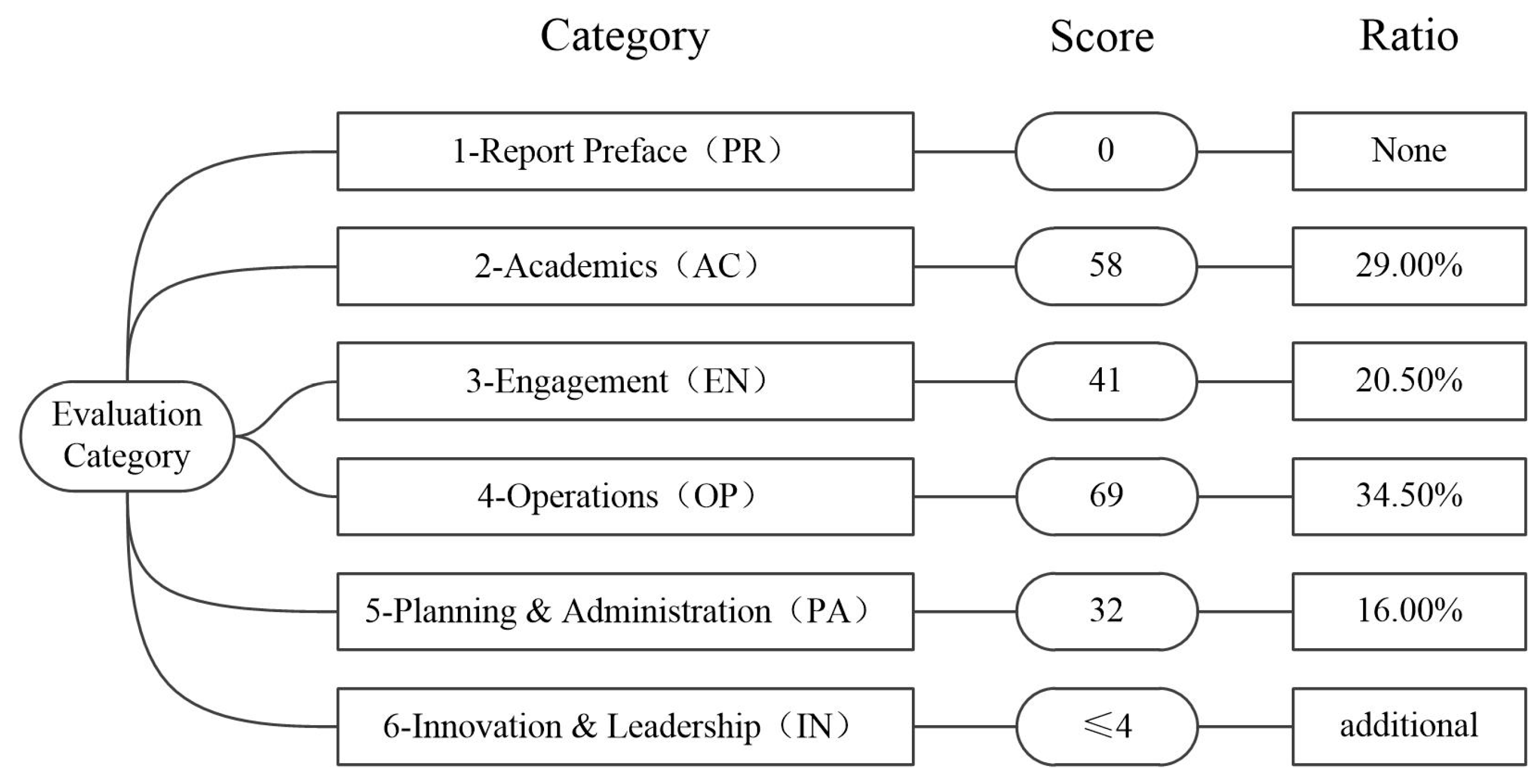
| 2013 | STARS 2.0 | 1-Academic (AC) | 11 | 58 | The primary indicators have been reorganised into four major categories, with the total score adjusted from 300 points to 200 points. The weighting of each category has shifted from equal distribution to prioritising the operational phase. | ① Proportion of academic courses on sustainable development ② Academic research ③ Greenhouse gas emissions |
| 2-Engagement (EN) | 16 | 42 | ||||
| 3-Operations (OP) | 28 | 72 | ||||
| 4-Planning and Administration (PA) | 15 | 32 | ||||
| 2024 | STARS 3.0 | 1-Academic (AC) | 8 | 68 | The total score has been adjusted from 200 points to 250 points, with a simplified academic research checklist placing greater emphasis on energy and climate. The weighting for energy consumption, resource utilisation, and waste generation during the operational phase has been increased, while the innovation category has seen its allocation of points raised for the first time. | ① Proportion of academic courses on sustainable development ② Academic research ③ Energy utilisation ④ Greenhouse gas emissions |
| 2-Engagement (EN) | 9 | 50 | ||||
| 3-Operations (OP) | 15 | 86 | ||||
| 4-Planning and Administration (PA) | 13 | 46 | ||||
| Project | Princeton University | Tianjin University Beiyang Campus |
|---|---|---|
| Geographical coordinates | 40.3431° North 74.6551° West | 39.1098° North 117.1709° East |
| Climate | Temperate continental climate | Warm temperate semi-humid continental monsoon climate |
| Average temperature range | Winter: −3 °C to 7 °C Summer: 19 °C to 30 °C | Winter: −4 °C to 3 °C Summer: 22 °C to 32 °C |
| Site area | 600 acres (approximately 2.43 million square metres) | 3750 mu (approximately 2.5 million square metres) |
| Floor area | 9,628,405 square feet (approximately 895,000 square metres) | 888,814.65 square metres |
| Total number of staff and students | 15,598 | 22,304 |
| Subject Type | Comprehensive University | Comprehensive University |
| Sustainable Development Goals | Strive to achieve carbon neutrality by 2046 | Peak carbon emissions by 2030, carbon neutrality by 2060 |
| Primary Indicator | Category | Princeton University | Tianjin University Beiyang Campus |
|---|---|---|---|
| Academics (AC) | Curriculum | 22.11/40.00 | 24.91/40.00 |
| Research | 16.60/18.00 | 13.64/18.00 | |
| Total for this section | 38.71/58.00 | 38.55/58.00 | |
| Engagement (EN) | Campus Engagement | 16.33/21.00 | 16.11/21.00 |
| Public Engagement | 14.20/20.00 | 13.56/20.00 | |
| Total for this section | 30.53/41.00 | 29.67/41.00 | |
| Operations (OP) | Air & Climate | 5.92/11.00 | 3.80/11.00 |
| Buildings | 3.25/8.00 | 4.00/8.00 | |
| Energy | 3.86/10.00 | 0.01/10.00 | |
| Food & Dining | 3.40/8.00 | 2.30/8.00 | |
| Grounds | 3.00/4.00 | 2.00/4.00 | |
| Purchasing | 4.40/6.00 | 2.25/6.00 | |
| Transportation | 4.16/7.00 | 2.12/7.00 | |
| Waste | 7.56/10.00 | 6.25/10.00 | |
| Water | 7.00/7.00 | 1.70/7.00 | |
| Total for this section | 42.55/71.00 | 24.43/71.00 | |
| Planning & Administration (PA) | Coordination & Planning | 6.50/9.00 | 6.50/9.00 |
| Diversity & Affordability | 7.77/10.00 | 7.21/10.00 | |
| Investment & Finance | 4.01/8.00 | 4.00/8.00 | |
| Wellbeing & Work | 1.35/7.00 | 4.67/7.00 | |
| Total for this section | 19.63/34.00 | 22.38/34.00 | |
| Innovation & Leadership (IN) | 8 | 4.00/4.00 | 4.00/4.00 |
| Calculation process | — | ||
| Dimension | T/CABEE 053-2023 (Chinese Standard) | STARS 2.2 | Implications of STARS 2.2 for Chinese Standards & Practice |
|---|---|---|---|
| 1. Objective & Scope | Focused & Quantitative: Primary objective is standardized carbon accounting. Scope is explicitly defined in two tiers: “Basic” (Scope 1 & 2 + water) and “Full Scope” (expanded Scope 3 including waste, travel, commuting). | Comprehensive & Qualitative: Objective is holistic sustainability assessment. Scope encompasses the entire institution’s operations (OP), academics (AC), engagement (EN), and planning & administration (PA). | To link the mandatory carbon inventory with voluntary but systematic actions in curriculum, research, community engagement, and governance. This transforms carbon management from a compliance task into a core strategic pillar of the university’s mission. |
| 2. Methodological Approach | Prescriptive & Calculation-Driven: Provides detailed, standardized emission factors and formulas. Employs the IPCC emission factor method. Highly specific on data sources. | Flexible & Credit-Based: Uses a scoring system across diverse credits. Methodology is often descriptive, requiring evidence of policies, programs, and outcomes. Encourages innovation. | The potential value of developing complementary “guidelines for sustainability performance” that track implementation. The robust carbon data from T/CABEE can serve as the core quantitative metric within a broader set of qualitative indicators for leadership, education, and social equity. |
| 3. Reporting & Output | Standardized Carbon Inventory: Output is a carbon emissions report in metric tons of CO2. Emphasizes data audit via a proposed online platform. | Public Sustainability Rating: Output is a public score/rating (Reporter, Bronze, Silver, Gold, Platinum) and a detailed public report. | An implication for China is to explore how the T/CABEE accounting results could be integrated into a public-facing performance rating or label for “Green Campuses,” moving beyond internal reporting. |
| 4. Stakeholder Engagement | Operations-Focused: Implementation led by campus operations and logistics management. Data collection is centralized. | Cross-Institutional Engagement: Requires collaboration across academic departments, student affairs, facilities, purchasing, and senior administration. | It is necessary to establish formal, cross-functional sustainability committees or offices that connect facilities data (per T/CABEE) with academic programs, student activities, and procurement policies. |
| 5. Incentives & Recognition | Regulatory & Benchmarking Alignment: Likely driven by national “Dual Carbon” policy goals, providing a standardized tool for universities to contribute to national targets. | Voluntary Leadership & Peer Recognition: Driven by desire for sustainability leadership, strategic planning, and international peer recognition. | While the T/CABEE standard ensures baseline compliance, additional voluntary “leadership tiers” or awards could be developed to recognize universities that go beyond accounting to demonstrate exceptional integration of carbon neutrality into teaching, research, and community impact. |
Disclaimer/Publisher’s Note: The statements, opinions and data contained in all publications are solely those of the individual author(s) and contributor(s) and not of MDPI and/or the editor(s). MDPI and/or the editor(s) disclaim responsibility for any injury to people or property resulting from any ideas, methods, instructions or products referred to in the content. |
© 2025 by the authors. Licensee MDPI, Basel, Switzerland. This article is an open access article distributed under the terms and conditions of the Creative Commons Attribution (CC BY) license (https://creativecommons.org/licenses/by/4.0/).
Share and Cite
Yang, Y.; Gao, F. Development Path of Carbon Emission Assessment System for University Campus: Experiences and Inspirations from STARS Rating System. Land 2025, 14, 2436. https://doi.org/10.3390/land14122436
Yang Y, Gao F. Development Path of Carbon Emission Assessment System for University Campus: Experiences and Inspirations from STARS Rating System. Land. 2025; 14(12):2436. https://doi.org/10.3390/land14122436
Chicago/Turabian StyleYang, Yang, and Feng Gao. 2025. "Development Path of Carbon Emission Assessment System for University Campus: Experiences and Inspirations from STARS Rating System" Land 14, no. 12: 2436. https://doi.org/10.3390/land14122436
APA StyleYang, Y., & Gao, F. (2025). Development Path of Carbon Emission Assessment System for University Campus: Experiences and Inspirations from STARS Rating System. Land, 14(12), 2436. https://doi.org/10.3390/land14122436