Assessing the Quality of Public Spaces in Traditional Villages in Chongqing, Southwest China



Abstract
1. Introduction
2. Literature Review
2.1. Defining Rural Public Space
2.2. Indicators of the Quality of Rural Public Space
- (a)
- proposed evaluation indicators of public space or rural built environment;
- (b)
- discussed design principles for rural or village public spaces.
3. Materials and Methods
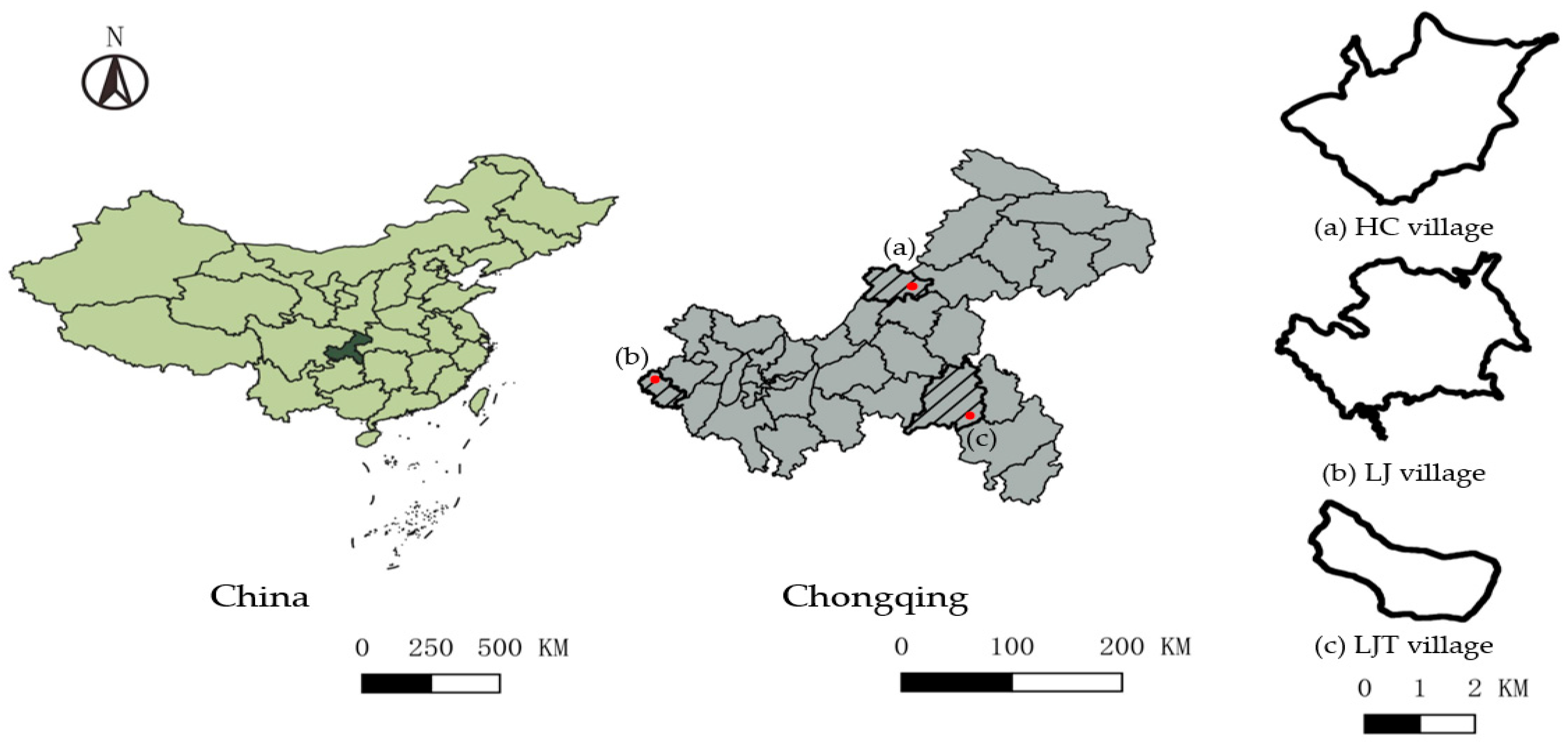
3.1. Study Areas
3.2. Research Methods
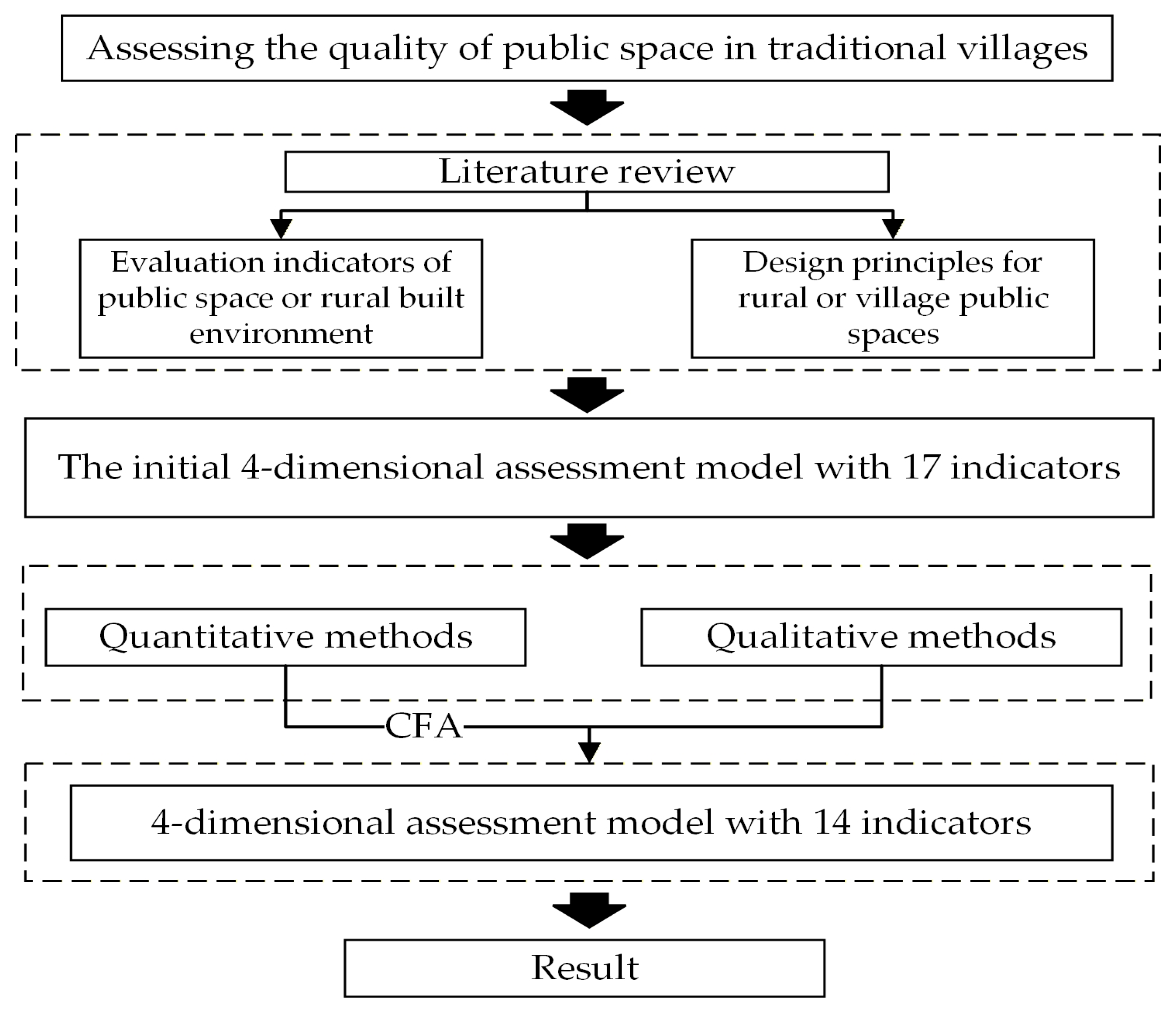
3.2.1. Construction of the Indicator System
3.2.2. Questionnaire Design
- Demographic information, including age, gender, education, income;
- Quality assessment items, corresponding to the four dimensions—environmental, social, cultural, and economic;
- This design ensured that the measurement instrument was directly aligned with the theoretically grounded indicator system and could be used to test the proposed four-dimensional structure through confirmatory factor analysis.
3.2.3. Interview Procedure
- Reasons for using or not using certain spaces;
- Perceived changes due to tourism or reconstruction;
- Expectations for future improvements.
3.2.4. Data Collection Steps
- Participant recruitment: Coordination with village leaders to ensure random distribution of questionnaires across gender, age groups, and residential clusters.
- Questionnaire distribution: Paper-based questionnaires were administered face-to-face. Researchers provided assistance for participants with reading difficulties.
- Observation: Systematic observation of the usage of public space was conducted at different times of the day.
- Interview: Semi-structured interviews were conducted after questionnaire completion to further contextualize responses.
3.2.5. Confirmatory Factor Analysis
- Assessment of measurement model: Standardized factor loadings, composite reliability, and average variance extracted (AVE) were examined.
- Evaluation of model fit: Multiple indices were used, including χ2/df, RMSEA, CFI, and TLI.
- Comparison with alternative model: An 1-dimensional model was tested against the 4-dimensional structure to validate dimensionality.
- Modification indices: These were examined to ensure a theoretically justified and statistically sound model without overfitting.
4. Results
4.1. The State of Public Spaces
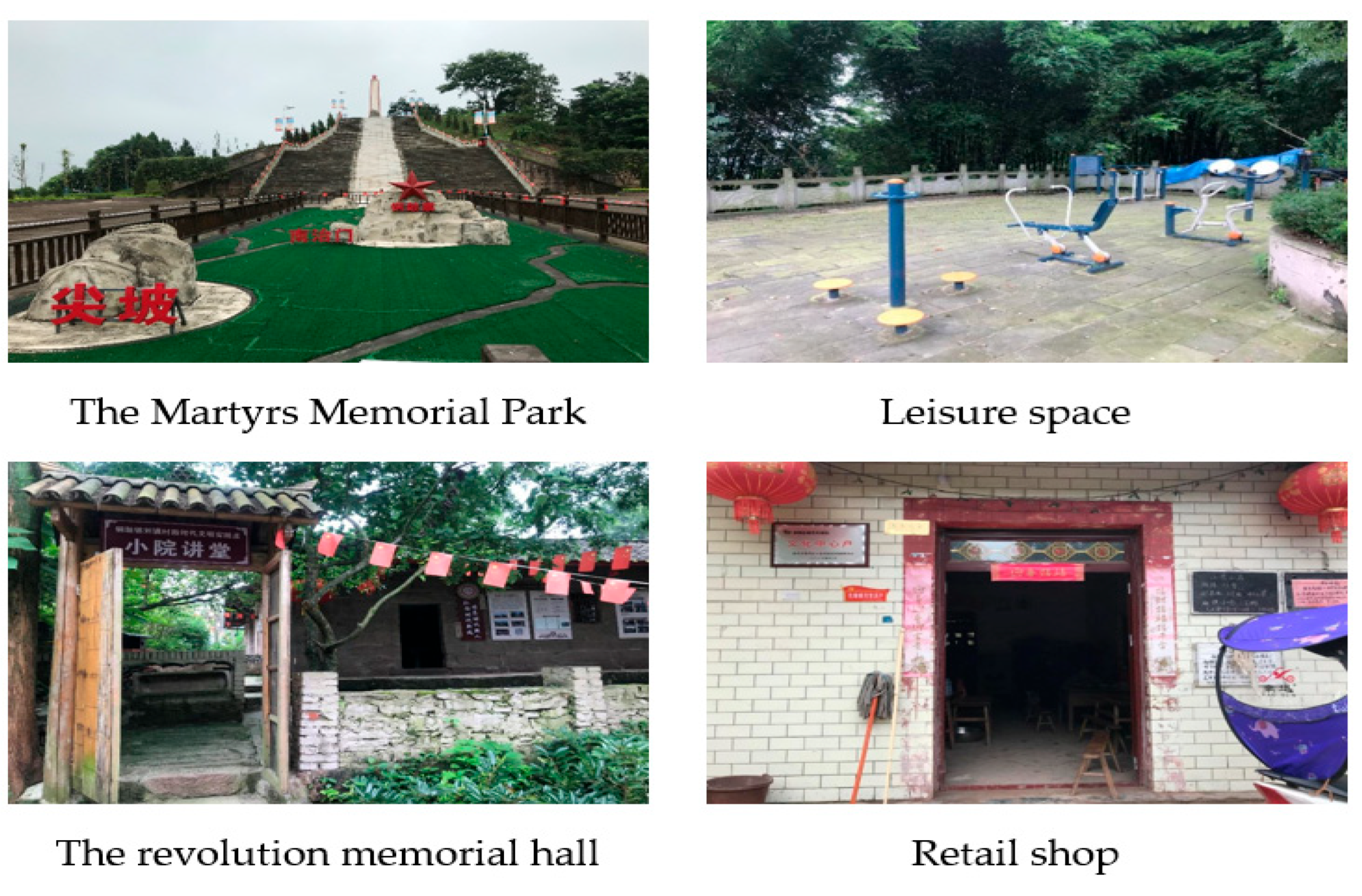
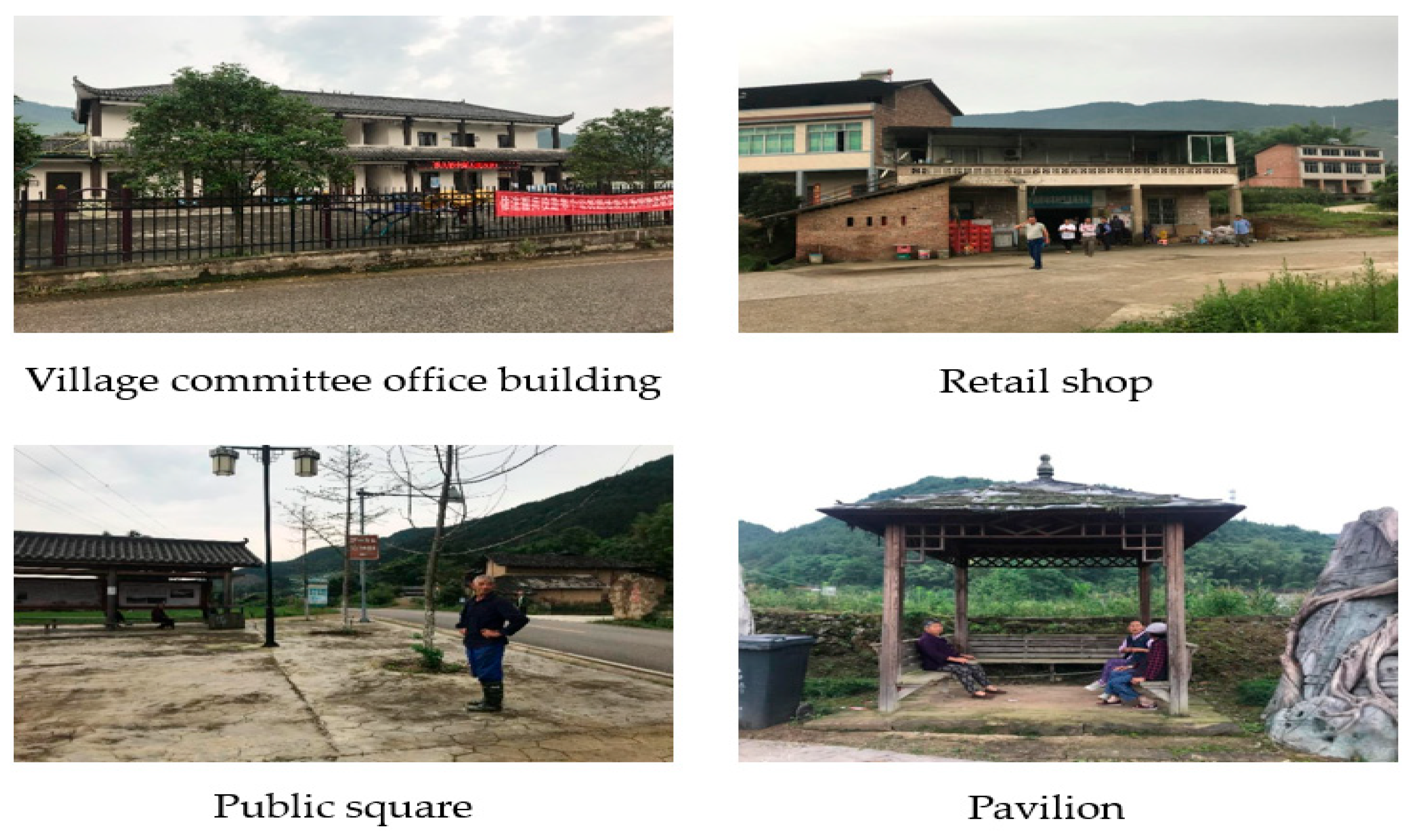
4.1.1. An Overview of LJT Village
4.1.2. An Overview of LJ Village
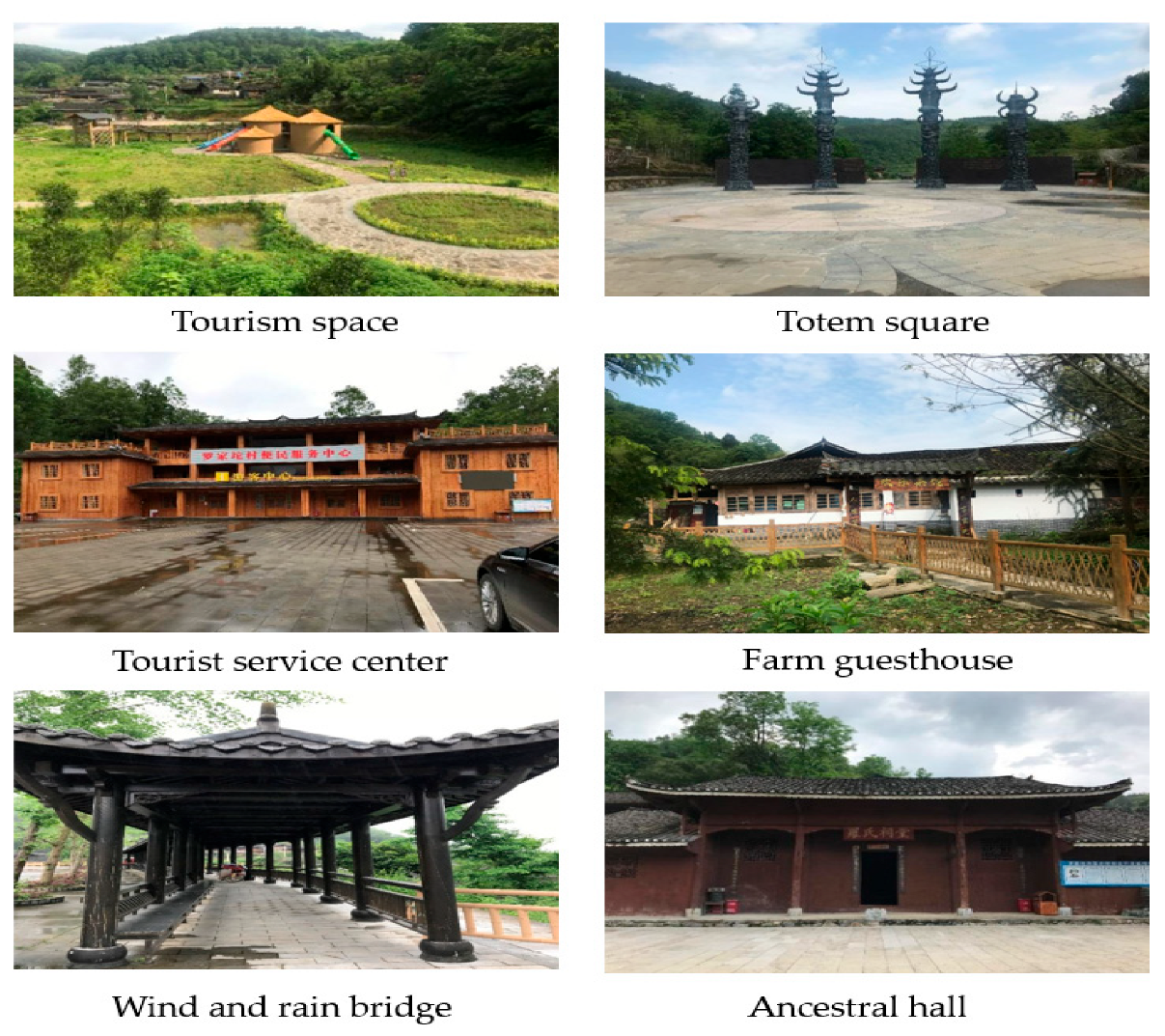
4.1.3. An Overview of HC Village
4.2. Villagers’ Responses on the Quality of Public Space
4.2.1. Demographic Differences
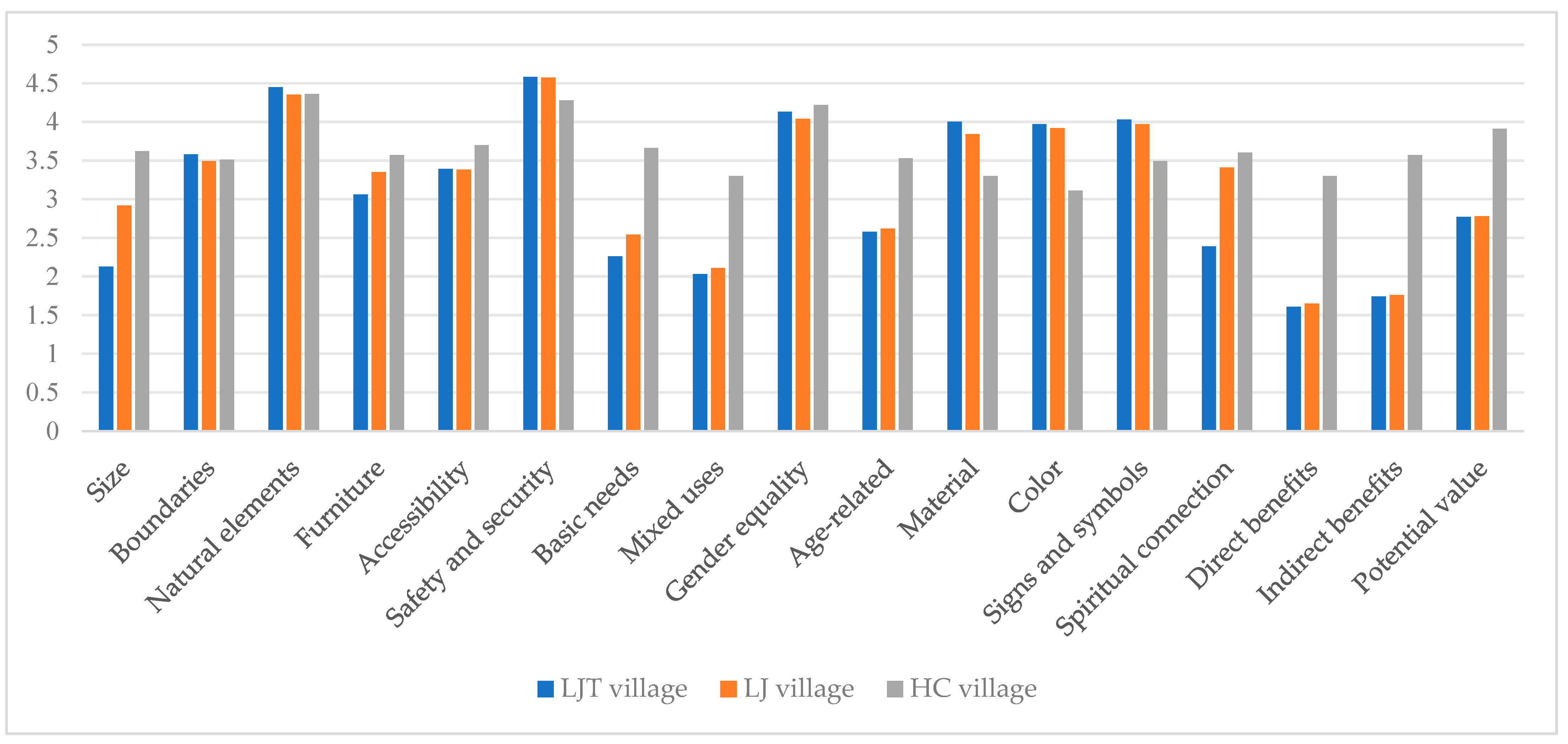
4.2.2. Variations in Quality Assessments Across Villages
4.3. Villagers’ Narratives on the Quality of Public Space
4.3.1. LJT Village
4.3.2. LJ Village
4.3.3. HC Village
4.4. Validation of the Assessment Model
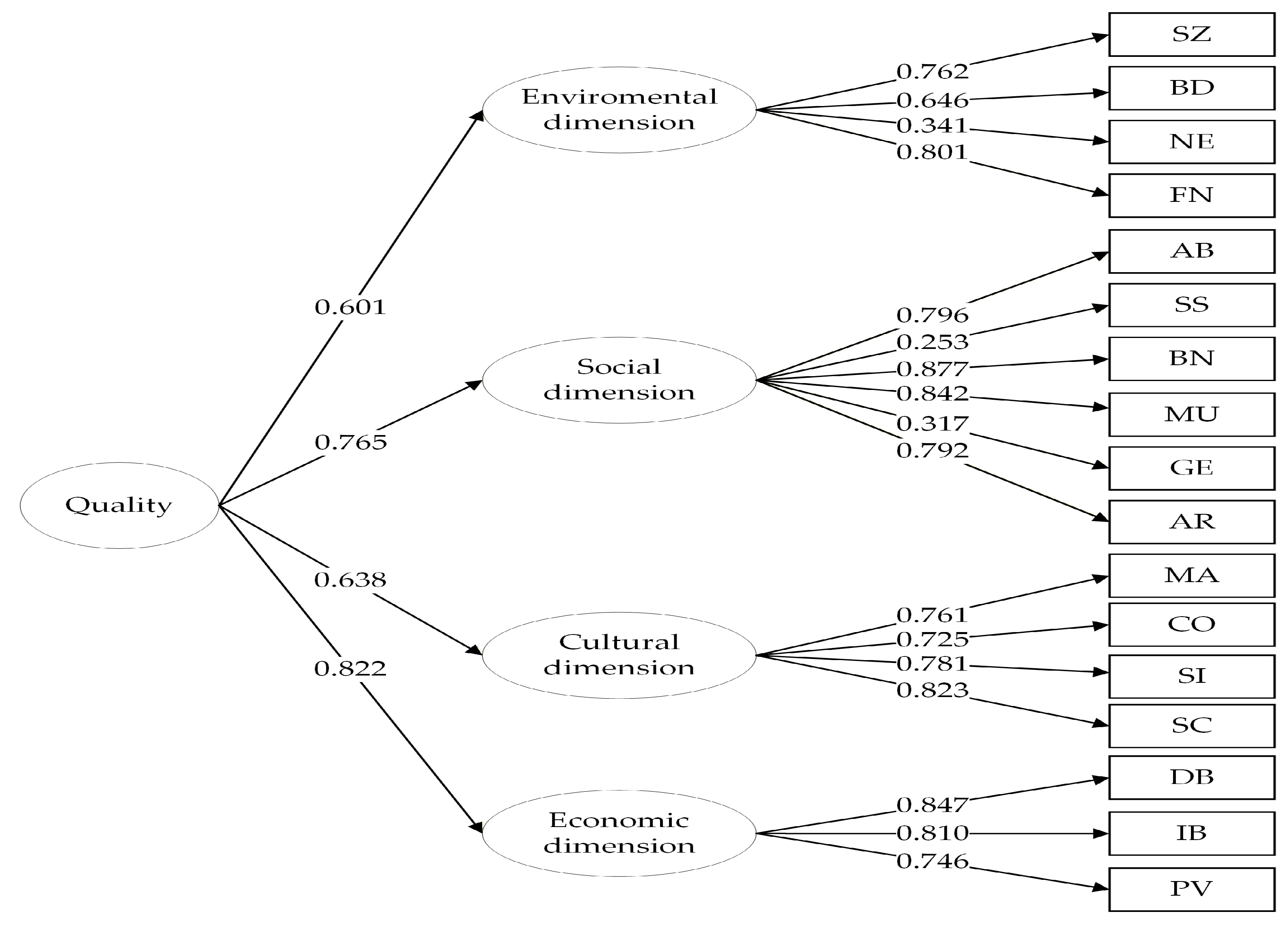
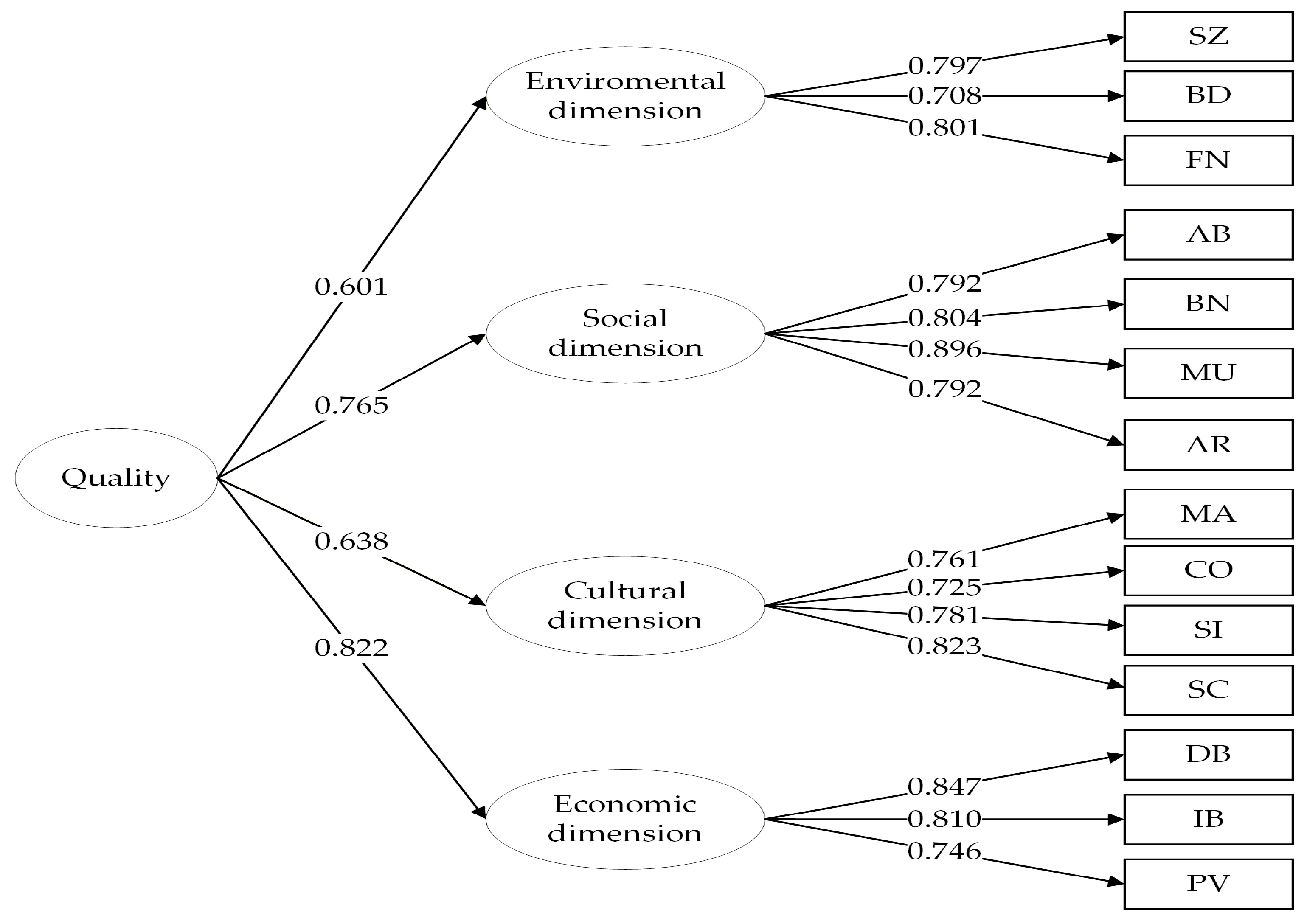
4.4.1. Factor Loadings
4.4.2. Partial Correlations
5. Discussion
5.1. Livelihood Security as a Foundational Determinant of Perceived Spatial Quality
5.2. Continuity with Daily Routines and Social Practices
5.3. Environmental and Cultural Quality in Relation to Everyday Use
6. Conclusions
6.1. Summary of Main Findings
6.2. Theoretical and Practical Contributions
6.3. Implications
Author Contributions
Funding
Data Availability Statement
Conflicts of Interest
| 1 | Revolutionary culture originates from the long revolutionary course of the Chinese people, specifically encompassing the cultural forms that emerged during the periods of the Agrarian Revolutionary War, the War of Resistance Against Japanese Aggression, and the War of Liberation. In this research, revolution culture is related to the War of Liberation from June 1946 to June 1950. |
References
- Cao, Y.; Zhang, Y. Appraisal and selection of “Chinese traditional village” and study on the village distribution. Arch. J. 2013, 12, 44–49. [Google Scholar]
- Hu, Y.; Chen, S.; Cao, W.; Cao, C. The concept and cultural connotation of traditional villages. Urban Dev. Stud. 2014, 21, 10–13. [Google Scholar]
- Wang, D.; Wang, Y.; Li, G. The research of the rural public space evolution and characteristics under the function and form perspectives. Urban Plan. Int. 2013, 28, 57–63. [Google Scholar]
- Wen, Q.; Mou, P.; Xu, H. Analysis of Public Space in Youyang Traditional Villages from the Pattern Language Perspective. New Archit. 2022, 5, 20–24. [Google Scholar] [CrossRef]
- Lu, J.; Jiang, M.; Su, Y.; Jiang, Z. An Implicit System of Public Space in Contemporary Villages: A Case Study in Hunan. Archit. J. 2016, 8, 59–65. [Google Scholar]
- Zhao, X.; Ju, S.; Wang, W.; Su, H.; Wang, L. Intergenerational and gender differences in satisfaction of farmers with rural public space: Insights from traditional village in Northwest China. Appl. Geogr. 2022, 146, 102770. [Google Scholar] [CrossRef]
- Alameddine, Z.A. The Role of Public Space in Post-War Reconstruction: The Case of the Redevelopment of Beirut City Centre, Lebanon. Annexe Thesis Digitisation Project 2017 Block 15. 2004. Available online: https://era.ed.ac.uk/handle/1842/26624?show=full (accessed on 31 January 2018).
- Zhang, N. Twilight of the Land: An Analysis of Micro-Rights in China’s Rural Experience; China Renmin University Press: Beijing, China, 2013. [Google Scholar]
- Lynch, K. The Image of the City; MIT Press: Cambridge, MA, USA, 1960. [Google Scholar]
- Gehl, J. Life Between Buildings; The Danish Architectural Press: Copenhagen, Denmark, 2006. [Google Scholar]
- Gnanasambandam, S. Study of the perceived functions and the quality of physical boundaries of public spaces. Archnet-IJAR Int. J. Archit. Res. 2020, 14, 233–250. [Google Scholar]
- Gómez, F.; Valcuende, M.; Matzarakis, A.; Cárcel, J. Design of natural elements in open spaces of cities with a Mediterranean climate, conditions for comfort and urban ecology. Environ. Sci. Pollut. Res. 2018, 25, 26643–26652. [Google Scholar] [CrossRef] [PubMed]
- Carr, S. Public Space; Cambridge University Press: Cambridge, UK, 1992. [Google Scholar]
- Zhang, Z. Study on Rural Whole-Village Crime and Governance. Master’s Thesis, Nanchang University, Nanchang, China, 2017. [Google Scholar]
- Zheng, J.; He, J.; Tang, H. The vitality of public space and the effects of environmental factors in Chinese suburban rural communities based on tourists and residents. Int. J. Environ. Res. Public Health 2022, 20, 263. [Google Scholar] [CrossRef]
- Wen, L.; Sima, L. Analysis of outdoor activity space-use preferences in rural communities: An example from Puxiu and Yuanyi village in Shanghai. Land 2022, 11, 1273. [Google Scholar] [CrossRef]
- Sun, L. Women, public Space, and mutual aid in rural China: A case study in H village. Asian Women 2012, 28, 75–102. [Google Scholar] [CrossRef]
- Sun, Y.; Buranaut, I. Age-friendly Rural Communities: A Multi-Case Study on Public Space Innovations for Active Aging. J. Community Dev. Res. (Humanit. Soc. Sci.) 2025, 18, 11–30. [Google Scholar] [CrossRef]
- Li, X. Refined Design Research on Public Space of Visitor Center. Master’s Thesis, Nanjing University, Nanjing, China, 2019. [Google Scholar]
- Yin, Y. Research on the Optimizing Strategy of the Public Space of Traditional Town in Sichuan & Chongqing. Master’s Thesis, Chongqing University, Chongqing, China, 2016. [Google Scholar]
- Xu, S. Research on the Color Landscape of Urban Public Space. Master’s Thesis, Southwest University, Chongqing, China, 2008. [Google Scholar]
- Yang, Y. Application of Emotion Design in Public Space. Packag. Eng. 2017, 38, 1–6. [Google Scholar]
- Bai, N.; Nourian, P.; Pereira Roders, A.; Bunschoten, R.; Huang, W.; Wang, L. Investigating rural public spaces with cultural significance using morphological, cognitive and behavioural data. Environ. Plan. B Urban Anal. City Sci. 2023, 50, 94–116. [Google Scholar] [CrossRef]
- Wang, H.; Xie, B.; Zeng, Y.; Liu, A.; Liu, B.; Qin, L. Intergenerational Transmission of Collective Memory in Public Spaces: A Case Study of Menghe, a Historic and Cultural Town. Sustainability 2025, 17, 8596. [Google Scholar] [CrossRef]
- Birer, E.; Adem, P.Ç. Role of public space design on the perception of historical environment: A pilot study in Amasya. Front. Archit. Res. 2022, 11, 13–30. [Google Scholar] [CrossRef]
- Káposzta, J.; Nagy, H. The major relationships in the economic growth of the rural space. Eur. Countrys. 2022, 14, 67–86. [Google Scholar] [CrossRef]
- Kataya, A. The impact of rural tourism on the development of regional communities. J. East. Eur. Res. Bus. Econ. 2021, 2021, 652463. [Google Scholar] [CrossRef]
- Chen, P.; Kong, X. Tourism-led commodification of place and rural transformation development: A case study of Xixinan village, Huangshan, China. Land 2021, 10, 694. [Google Scholar] [CrossRef]
- Yanan, L.; Ismail, M.A.; Aminuddin, A. How has rural tourism influenced the sustainable development of traditional villages? A systematic literature review. Heliyon 2024, 10, e25627. [Google Scholar] [CrossRef]
- Chen, X. The core of China’s rural revitalization: Exerting the functions of rural area. China Agric. Econ. Rev. 2020, 12, 1–13. [Google Scholar] [CrossRef]
- Dai, M.L.; Fan, D.X.; Wang, R.; Ou, Y.H.; Ma, X.L. Does rural tourism revitalize the countryside? An exploration of the spatial reconstruction through the lens of cultural connotations of rurality. J. Destin. Mark. Manag. 2023, 29, 100801. [Google Scholar] [CrossRef]
- Shach-Pinsly, D.; Shadar, H. The public open space quality in a rural village and an urban neighborhood: A re-examination after decades. Sustainability 2024, 16, 7938. [Google Scholar] [CrossRef]
- Zou, D. Human-centered urban public spaces. Urban Plan. Forum 2006, 5, 9–12. [Google Scholar]
- Zhao, C.; Yang, B. Design of Staying Space & Emergence of Public Life—The study on Jan Gehl’s Theory of Public Space Design (Part 2). Chin. Landsc. Archit. 2012, 28, 44–47. [Google Scholar]
- Aljabri, H. The Planning and Urban Design of Liveable Public Open Spaces in Oman: Case Study of Muscat. Ph.D. Thesis, Heriot-Watt University, Edinburgh, UK, 2014. [Google Scholar]
- Song, X. Research on the Design Strategy of Public Art Interveningin Rural Public Space Facilities. Packag. Eng. 2025, 46, 372–376. [Google Scholar]
- Van Oostrum, M. Appropriating public space: Transformations of public life and loose parts in urban villages. J. Urban Int. Res. Placemaking Urban Sustain. 2022, 15, 84–105. [Google Scholar] [CrossRef]
- Zhang, C.; Liu, Z. The Public Dilemma of Rural Public Space and Its Reconstruction. J. Huazhong Agric. Univ. (Soc. Sci. Ed.) 2019, 2, 1–7+163. [Google Scholar] [CrossRef]
- Li, J.; Dang, A.; Song, Y. Defining the ideal public space: A perspective from the publicness. J. Urban Manag. 2022, 11, 479–487. [Google Scholar] [CrossRef]
- Ntakana, K.; Mbanga, S.; Botha, B. The Significance of Safety and Security in Urban Public Space Design for Sustainability. J. Public Adm. 2022, 57, 262–271. [Google Scholar]
- Cui, X.; Ma, L.; Tao, T.; Zhang, W. Do the supply of and demand for rural public service facilities match? Assessment based on the perspective of rural residents. Sustain. Cities Soc. 2022, 82, 103905. [Google Scholar] [CrossRef]
- Zhang, B.; Qian, J.; Cai, W. Discussion on mixed use of rural residential land research framework. J. Nat. Resour. 2020, 35, 2929–2941. [Google Scholar] [CrossRef]
- Wu, H.; Ye, J. Hollow Lives: Women Left Behind in Rural China. J. Agrar. Change 2016, 16, 50–69. [Google Scholar] [CrossRef]
- Cheung, S.; Lei, D.; Chan, F.Y.; Tieben, H. Public space usage and well-being: Participatory action research with vulnerable groups in hyper-dense environments. Urban Plan. 2022, 7, 75–89. [Google Scholar] [CrossRef]
- Peters, K. Being together in urban parks: Connecting public space, leisure, and diversity. Leis. Sci. 2010, 32, 418–433. [Google Scholar] [CrossRef]
- Wu, X. Study on the Pavement Design of Urban Public Space. Master’s Thesis, Chongqing University, Chongqing, China, 2012. [Google Scholar]
- Marusek, S.; Wagner, A. Public art and the mural: Interpreting public memory through prominence, place, and color. Law Cult. Humanit. 2024, 17438721241300651. [Google Scholar] [CrossRef]
- Soszyński, D.; Sowińska-Świerkosz, B.; Kamiński, J.; Trzaskowska, E.; Gawryluk, A. Rural public places: Specificity and importance for the local community (case study of four villages). Eur. Plan. Stud. 2022, 30, 311–335. [Google Scholar] [CrossRef]
- Michel, H.; Huang, M. Public Waterfront Space Design Practice of the East Bund of the Huangpu River in Shanghai. Archit. J. 2019, 8, 11–15. [Google Scholar]
- Cai, X.; He, J.; Liu, M.; Morrision, A.M.; Wu, Y. Building rural public cultural spaces for enhanced well-being: Evidence from China. Local Environ. 2024, 29, 540–564. [Google Scholar] [CrossRef]
- Sun, Q. The Reconstruction Strategy of Rural Public Space in Zhaoqing under the Background of Rural Revitalization. Acad. J. Humanit. Social. Sci. 2023, 6, 142–147. [Google Scholar]
- Bi, G.; Yang, Q. The spatial production of rural settlements as rural homestays in the context of rural revitalization: Evidence from a rural tourism experiment in a Chinese village. Land Use Policy 2023, 128, 106600. [Google Scholar] [CrossRef]
- Yang, W.; Fan, B.; Tan, J.; Lin, J.; Shao, T. The spatial perception and spatial feature of rural cultural landscape in the context of rural tourism. Sustainability 2022, 14, 4370. [Google Scholar] [CrossRef]
- Thompson, B. Exploratory and Confirmatory Factor Analysis: Understanding Concepts and Applications; American Psychological Association: Washington, DC, USA, 2004. [Google Scholar]
- Lu, Q.; Ding, Z.; Li, M.; Gu, J. Beyond the horizon: Unveiling the impact of 3D urban landscapes on residents’ perceptions through machine learning. Ecol. Indic. 2025, 177, 113736. [Google Scholar] [CrossRef]
- Inalhan, G.; Yang, E.; Weber, C. Place attachment theory. In A Handbook of Theories on Designing Alignment Between People and the Office Environment; Routledge: London, UK, 2021; pp. 181–194. [Google Scholar]



| Dimensions | Indicators (Abbrevations) | Operational Meaning | Source |
|---|---|---|---|
| Environmental | Size (SZ) | Perceived adequacy of spatial scale for daily activities | [9,10,33] |
| Boundaries (BD) | Suitable sense of enclosure | [9,10,34] | |
| Natural elements (NE) | Presence of vegetation | [12,35] | |
| Furniture (FN) | Availability and comfort of seating and shading devices | [36,37] | |
| Social | Accessibility (AB) | Convenience of reaching the public space | [38,39] |
| Safety and security (SS) | Physical and perceived safety | [32,40] | |
| Basic needs (BN) | Essential amenities and facilities that support everyday use | [10,41] | |
| Mixed uses (MU) | Range of activities and functions accommodated | [7,42] | |
| Gender equality (GE) | Inclusiveness and equal usage across genders | [17,43] | |
| Age-related (AR) | Suitability for vulnerable age groups | [44,45] | |
| Cultural | Material (MA) | Consistency with vernacular materials and craftsmanship | [20,46] |
| Color (CO) | Appropriateness of color palette to local aesthetic traditions | [22,47] | |
| Signs and symbols (SI) | Presence of culturally meaningful symbols | [48,49] | |
| Spiritual connection (SC) | Ability to evoke rituals, memory, cultural identity | [25,50] | |
| Economic | Direct benefits (DB) | Ability to generate income directly, such as sales and services | [51,52] |
| Indirect benefits (IB) | Contribution to attracting economic resources from cities | [31,53] | |
| Potential value (PV) | Future development potential; multifunctional expansion | [31,51] |
| Gender | Age | Education | Income | ||||||||
|---|---|---|---|---|---|---|---|---|---|---|---|
| Male | Female | <50 | 50–69 | ≥70 | Primary School | Middle School | High School | <3000 | 3000–10,000 | >10,000 | |
| SZ | 3.08 | 2.99 | 2.67 | 3.08 | 3.08 | 2.98 | 3.17 | 2.85 | 2.83 | 3.26 | 2.68 |
| BD | 3.48 | 3.55 | 1.93 | 3.55 | 4.08 | 3.83 | 3.60 | 2.46 | 3.85 | 3.65 | 2.42 |
| NE | 4.33 | 4.42 | 4.20 | 4.38 | 4.45 | 4.44 | 4.40 | 4.15 | 4.48 | 4.37 | 4.21 |
| FN | 3.38 | 3.36 | 2.27 | 3.12 | 4.40 | 3.75 | 3.19 | 2.65 | 3.75 | 3.37 | 2.58 |
| AB | 3.58 | 3.48 | 3.20 | 3.44 | 3.78 | 3.53 | 3.57 | 3.40 | 3.57 | 3.50 | 3.47 |
| SS | 4.60 | 4.58 | 4.60 | 4.61 | 4.55 | 4.58 | 4.62 | 4.55 | 4.63 | 4.55 | 4.63 |
| BN | 2.98 | 2.94 | 1.60 | 2.85 | 3.65 | 3.19 | 2.95 | 2.30 | 3.13 | 3.13 | 2.05 |
| MU | 2.65 | 2.58 | 1.47 | 2.44 | 3.33 | 2.81 | 2.45 | 2.35 | 2.78 | 2.61 | 2.26 |
| GE | 4.12 | 4.07 | 4.01 | 4.10 | 4.25 | 4.22 | 4.15 | 4.01 | 4.20 | 4.15 | 4.05 |
| AR | 3.08 | 2.97 | 2.13 | 3.26 | 2.95 | 2.92 | 3.40 | 2.50 | 2.70 | 3.42 | 2.37 |
| MA | 3.62 | 3.67 | 2.40 | 3.70 | 4.03 | 4.02 | 3.69 | 2.45 | 3.95 | 3.77 | 2.58 |
| CO | 3.54 | 3.61 | 2.40 | 3.59 | 4.00 | 4.08 | 3.38 | 2.50 | 4.05 | 3.65 | 2.37 |
| SI | 3.73 | 3.81 | 2.73 | 3.76 | 4.20 | 4.07 | 3.71 | 3.05 | 4.13 | 3.77 | 3.05 |
| SC | 3.29 | 3.19 | 2.00 | 3.20 | 3.75 | 3.36 | 3.24 | 2.85 | 3.30 | 3.35 | 2.68 |
| DB | 2.50 | 2.26 | 1.80 | 2.35 | 2.60 | 2.05 | 2.71 | 2.55 | 1.78 | 2.82 | 2.21 |
| IB | 2.67 | 2.45 | 1.87 | 2.64 | 2.65 | 2.24 | 3.05 | 2.40 | 1.80 | 3.03 | 2.52 |
| PV | 2.78 | 2.78 | 1.56 | 2.83 | 2.36 | 2.87 | 3.05 | 1.63 | 2.73 | 3.10 | 1.75 |
| Variables | Gender | Age | Educational Level | Income |
|---|---|---|---|---|
| Quality | −0.170 | 0.579 * | −0.474 * | −0.393 * |
| Environmental dimension | 0.070 | 0.662 * | −0.472 * | −0.429 * |
| Social dimension | −0.061 | 0.345 * | - | −0.033 |
| Cultural dimension | 0.018 | 0.623 * | −0.581 * | −0.509 * |
| Economic dimension | 0.077 | 0.329 * | −0.300 * | - |
| Interview Excerpt | Category | Theme | Dimension |
|---|---|---|---|
| “This square used to be our family’s land. Now it’s been built for tourists, but no tourists come.” | Tourism–land conflict | Livelihood disruption from redevelopment | Economic |
| “Since the public space project occupied our farmland, we now have to farm in a neighboring village” | Loss of traditional livelihood space | Misalignment between space and daily needs | Economic |
| Although the newly constructed and renovated public spaces are attractive, we typically have to farm in a neighboring village and therefore have little time and energy to visit them | Low functional relevance | Disconnection between design and actual practices | Environmental/social |
| “We wanted to make some money by doing cleaning and maintenance in the village’s public spaces, but the village cadres outsourced all the work to a company.” | Employment expectations | Demand for livelihood-supporting village jobs | Economic |
| “There’s no public transport, so tourists simply can’t get here.” | Access issues | Accessibility constraints limiting tourism | Social/Economic |
| Interview Excerpt | Category | Theme | Dimension |
|---|---|---|---|
| “Those memorial-style public spaces are really for tourists” | Heritage–daily gap | Limited everyday relevance of commemorative spaces | Cultural |
| “The exercise equipment is broken and no one fixes it, so people don’t want to go anymore.” | Management issues | Low functionality due to lack of maintenance | Social |
| “After the land was returned to forest, we couldn’t grow vegetables anymore, so we had to buy them, and our costs went up.” | Livelihood loss | Impact of land-to-forest policy on livelihoods | Economic |
| “There are tourists coming all the time, but since the village has no natural gas and electricity is too expensive, we can’t run a farmhouse restaurant. So we’re not able to benefit from tourism at all.” | Lack of utilities | Missing basic infrastructure for tourism business | Environmental/Economic |
| “When there are too many tourists, the road gets jammed, so it needs to be widened.” | Infrastructure pressure | Need for traffic and parking improvements | Environmental/Social |
| Interview Excerpt | Category | Theme | Dimension |
|---|---|---|---|
| “Since we have stable income from renting out our land, people in the village are more willing to use the public spaces.” | Livelihood stability | Income security enabling public-space engagement | Economic |
| “We’ve used this place for so many years that it naturally became a public space.” | Everyday practice | Public spaces emerging through collective practice | Social |
| “It’s cool and shady under the wind-and-rain bridge, and there are benches, so we naturally come here to meet friends.” | Environmental comfort | Comfort enabling public space attachment | Environmental |
| “Now that we don’t have to do farm work every day, we’ll stop by the village committee office to see if there’s any news.” | Service accessibility | Integrated space for multiple everyday tasks | Social |
| “We don’t really use that square—it’s too hot and there’s nowhere to sit.” | Environmental comfort issues | Insufficient environmental amenities | Environmental |
| Measures of Fit | Acceptable Fit | Assessment Models | ||
|---|---|---|---|---|
| Four-Dimension, 17-Indicator | Four-Dimension, 14-Indicator | One-Dimension, 14-Indicator | ||
| - | 378.472 | 149.265 | 837.211 | |
| - | 113 | 86 | 77 | |
| <3 | 5.758 | 1.736 | 10.872 | |
| RMSEA | <0.10 | 0.117 | 0.078 | 0.286 |
| CFI | >0.90 | 0.663 | 0.954 | 0.396 |
| TLI | >0.90 | 0.612 | 0.944 | 0.286 |
| Variables | Environmental Dimension | Social Dimension | Cultural Dimension | Economic Dimension |
|---|---|---|---|---|
| Environmental dimension | - | 0.252 * | 0.404 * | 0.233 * |
| Social dimension | - | 0.281 * | 0.507 * | |
| Cultural dimension | - | 0.316 * | ||
| Economic dimension | - |
Disclaimer/Publisher’s Note: The statements, opinions and data contained in all publications are solely those of the individual author(s) and contributor(s) and not of MDPI and/or the editor(s). MDPI and/or the editor(s) disclaim responsibility for any injury to people or property resulting from any ideas, methods, instructions or products referred to in the content. |
© 2025 by the authors. Licensee MDPI, Basel, Switzerland. This article is an open access article distributed under the terms and conditions of the Creative Commons Attribution (CC BY) license (https://creativecommons.org/licenses/by/4.0/).
Share and Cite
Wang, W.; Chen, Y.; Gao, Y.; Dong, L.; Zeng, J.; Zhou, L. Assessing the Quality of Public Spaces in Traditional Villages in Chongqing, Southwest China. Land 2025, 14, 2433. https://doi.org/10.3390/land14122433
Wang W, Chen Y, Gao Y, Dong L, Zeng J, Zhou L. Assessing the Quality of Public Spaces in Traditional Villages in Chongqing, Southwest China. Land. 2025; 14(12):2433. https://doi.org/10.3390/land14122433
Chicago/Turabian StyleWang, Wei, Yiping Chen, Yun Gao, Lili Dong, Jieying Zeng, and Lingfei Zhou. 2025. "Assessing the Quality of Public Spaces in Traditional Villages in Chongqing, Southwest China" Land 14, no. 12: 2433. https://doi.org/10.3390/land14122433
APA StyleWang, W., Chen, Y., Gao, Y., Dong, L., Zeng, J., & Zhou, L. (2025). Assessing the Quality of Public Spaces in Traditional Villages in Chongqing, Southwest China. Land, 14(12), 2433. https://doi.org/10.3390/land14122433