A Study on the Spatial Narrative of Historical Urban Landscape Based on Water–Land Symbiosis: The Case of Suzhou Ancient City in China



Abstract
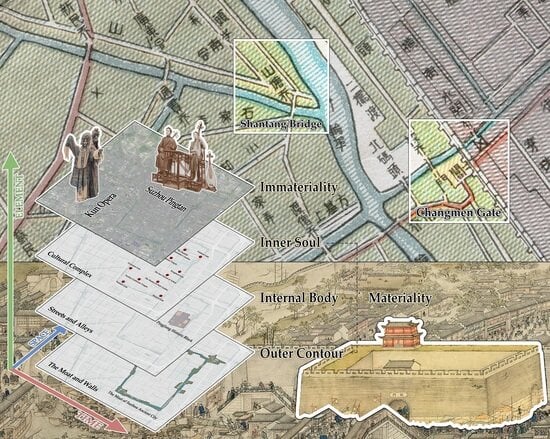
1. Introduction
1.1. Current State of Suzhou Ancient City’s Urban Layout
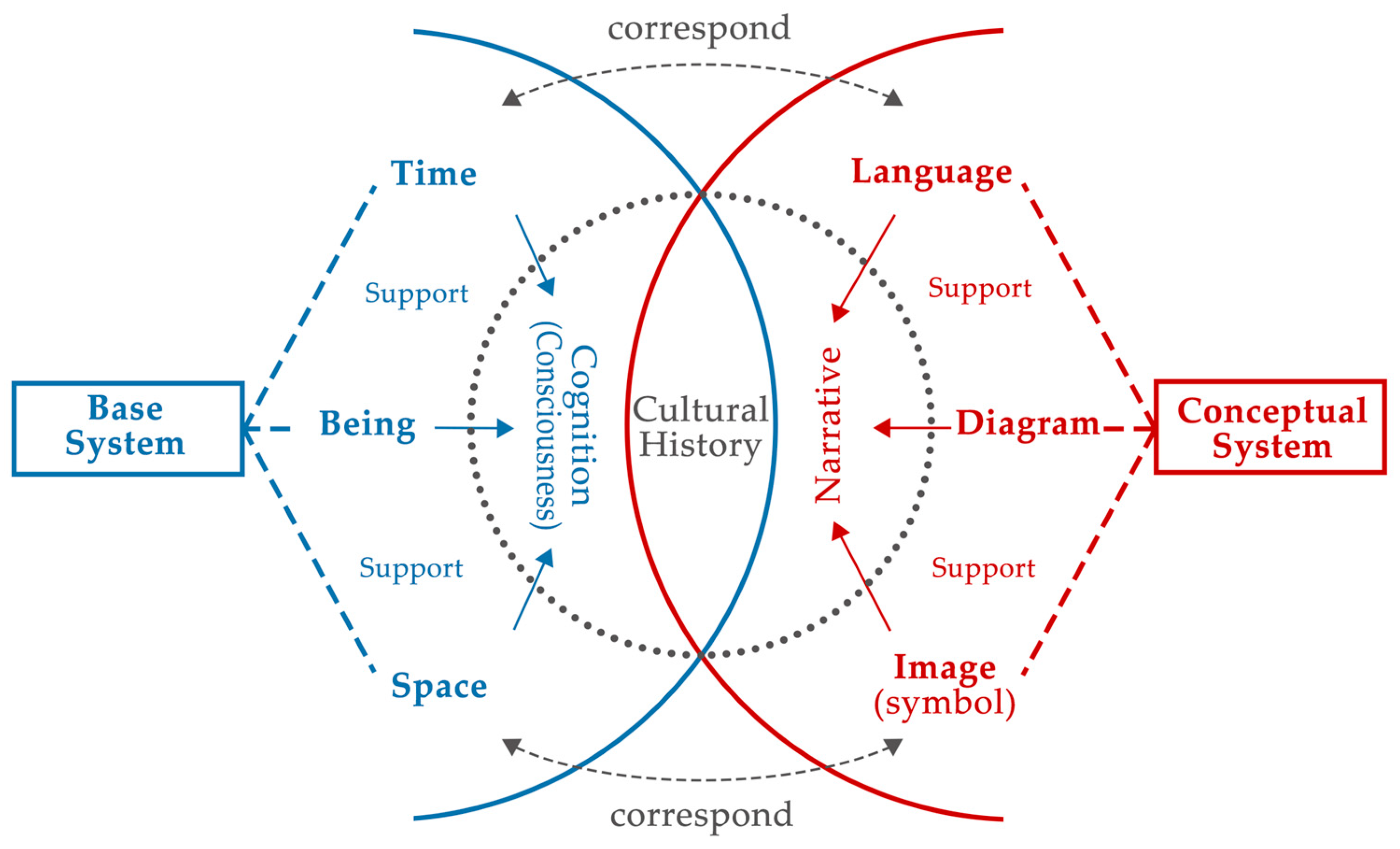
1.2. Theoretical Framework
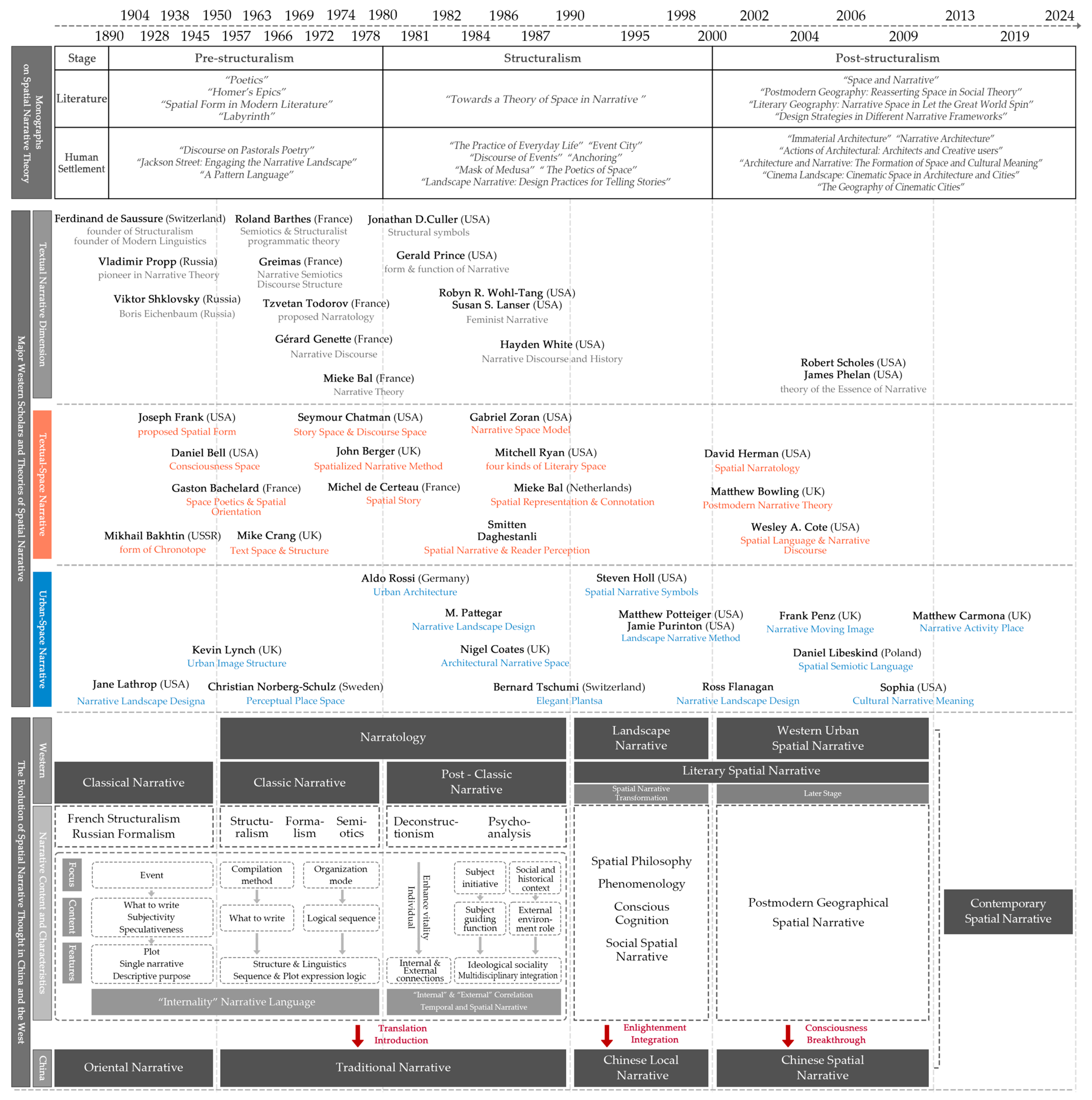
1.2.1. The Developmental Trajectory of Spatial Narrative Theory (Figure 1)

1.2.2. The Application of Spatial Narrative Theory in Heritage Conservation
- 1.
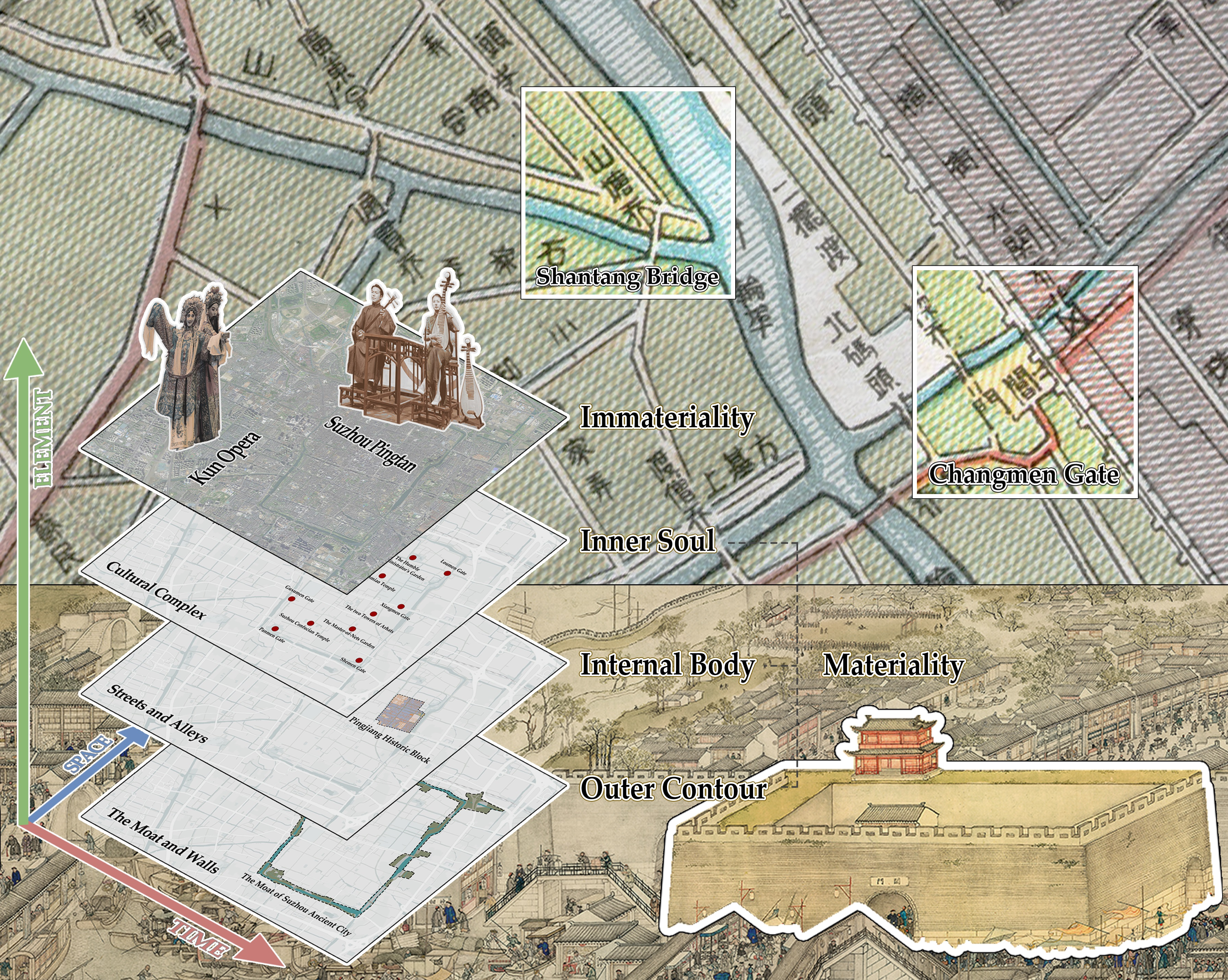
- Identify and classify the components of historical spatial narratives within historic cities, focusing on both tangible and intangible elements embedded in the urban spatial context, so as to more intuitively reveal the cities historical evolution and spatial characteristics.
- 2.
- Construct spatial narrative structures by organizing and integrating narrative elements through appropriate narrative techniques, thereby enabling multidimensional evaluations of traditional urban districts and reconstructing the cultural memory of canal cities through spatial sequence narratives.
2. Materials and Methods
2.1. Methods
2.1.1. Define the Research Scope and Content and Extract Key Elements
2.1.2. Construct a Linear Narrative Structure Based on the Canal Narrative as Its Logical Framework
- Temporal Dimension: Through spatial sequencing, this study investigates how spatial narratives re-enact historical memory across temporal layers. It further examines how dynamic spatial elements—such as variations in light and shadow or seasonal transitions—can be integrated into historical spaces to reinforce temporal continuity and enhance the experiential perception of historical memory.
- Social Dimension: Grounded in Henri Lefebvre’s theory of spatial production, this study adopts sociological and anthropological perspectives to construct an interactive model of historical spatial narratives. The model integrates spatial sequencing with community engagement, taking social structure, social interaction, and social memory as its core components. Accordingly, it seeks to reinforce the social value and vitality of canal-based historic cities.
- Cultural Dimension: Drawing on theories and perspectives from cultural studies and semiotics, this approach examines the intangible elements embedded within spaces. Through symbols and their associated meanings, it reveals how physical spaces embody and transmit cultural memory, thereby shaping collective identity. This process not only forges cultural continuity but also conveys cultural essence and highlights the distinctiveness of place.
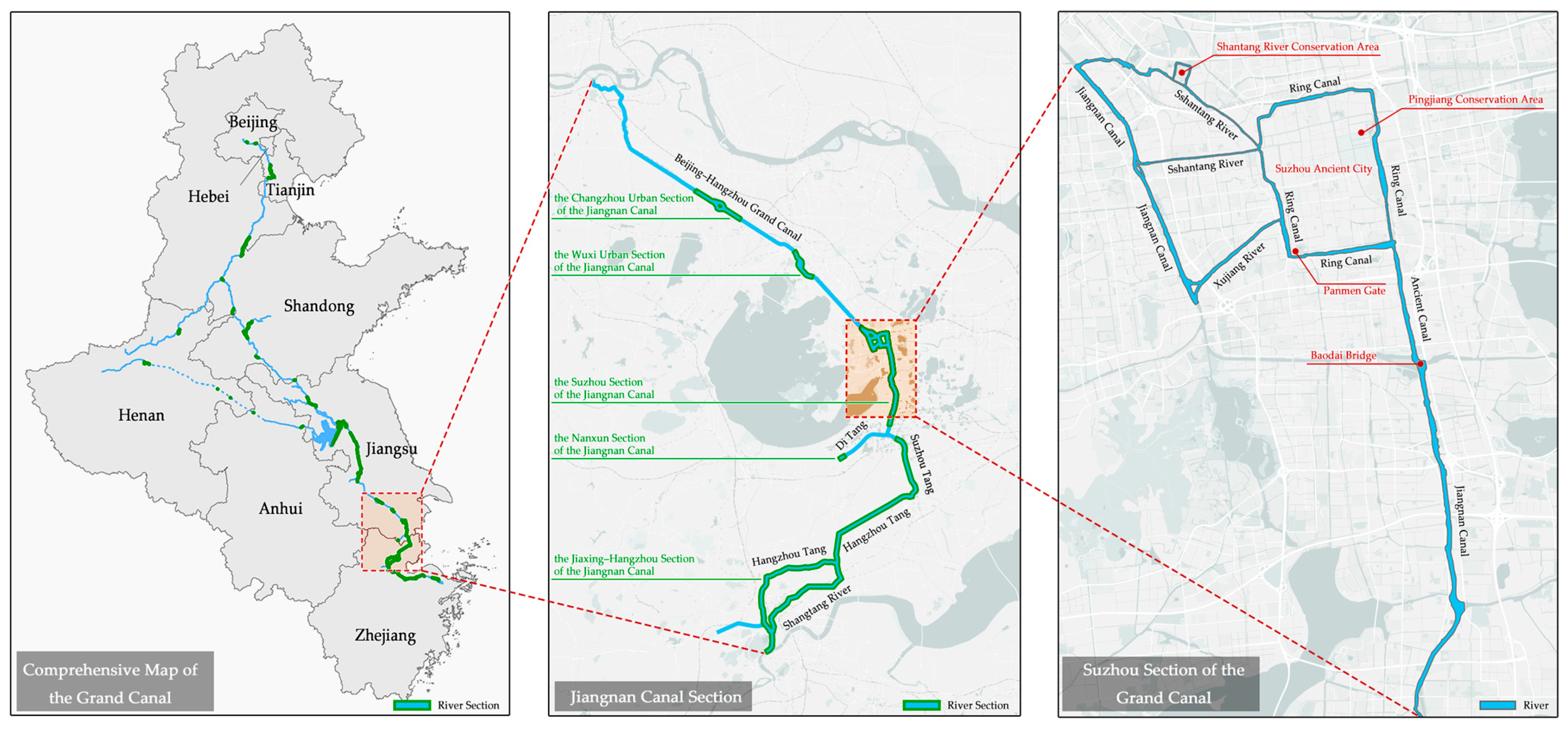
2.2. Research Area
3. Results
3.1. Narrative Analysis of the Urban Spatial Fabric Along the Suzhou Canal Section
3.1.1. The Historical Connection Between Suzhou and the Grand Canal
3.1.2. Characteristics of the Suzhou Section of the Grand Canal
- Dating back more than two millennia, the Suzhou section of the Grand Canal—originally excavated as the Han Canal under King Fuchai of Wu—has long served as a vital waterway in southern China, forming the foundation of Suzhou’s hydraulic and urban development.
- Benefiting from its gentle topography and abundant water resources, the Suzhou section has maintained continuous north–south navigation and cargo transport for over two thousand years. It remains a key artery for regional circulation and goods distribution.
- Suzhou was both born from and prospered along the canal [37]. The waterway course shaped the morphology of urban and rural street networks as well as the city’s overall form, giving rise to a distinctive canal-based spatial structure and a rich array of landscape heritage.
3.1.3. Narrative Analysis of Suzhou’s Urban Spaces
3.2. Segmented Narratives of Suzhou Canal’s Water and Land Spaces
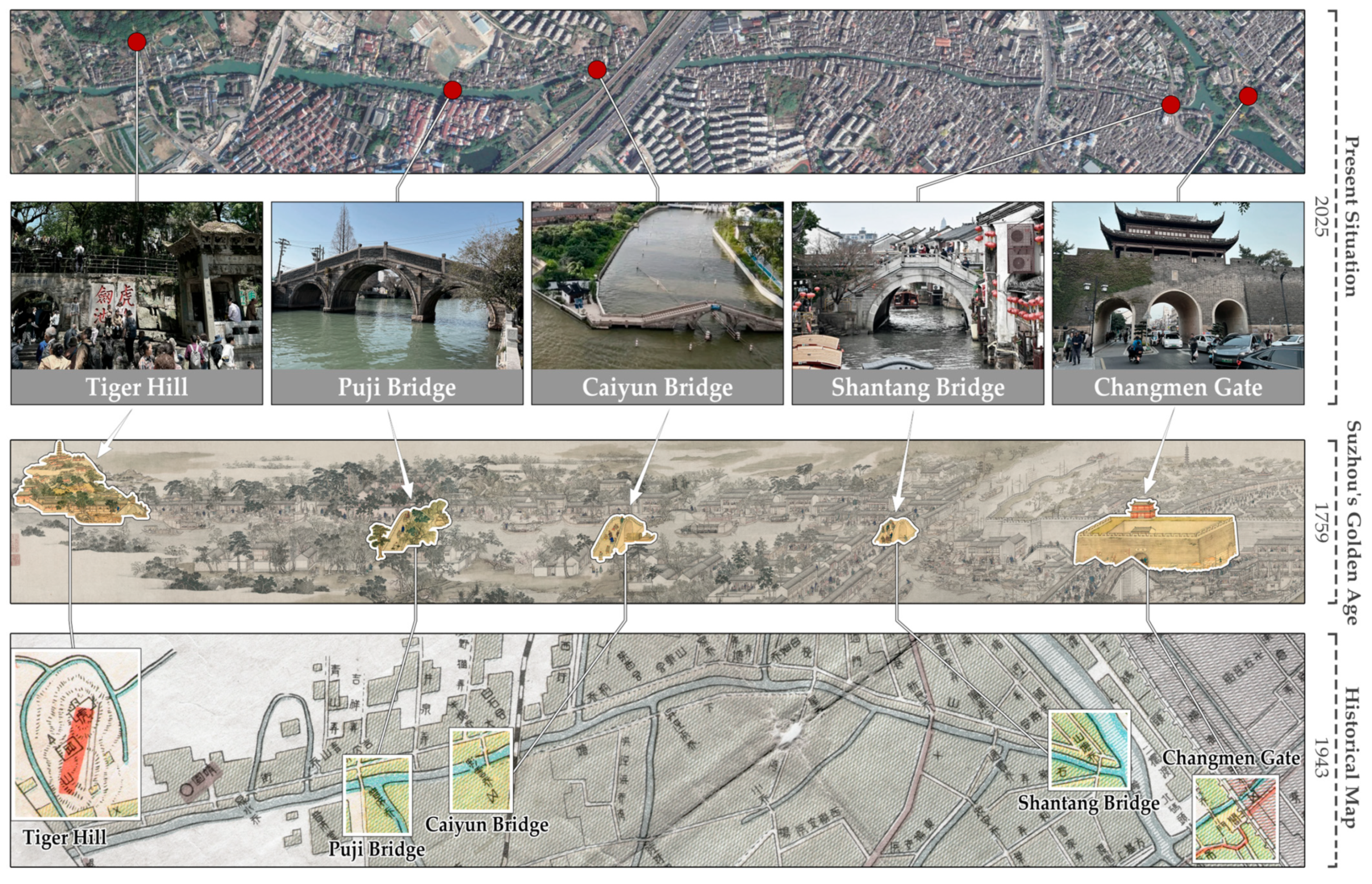
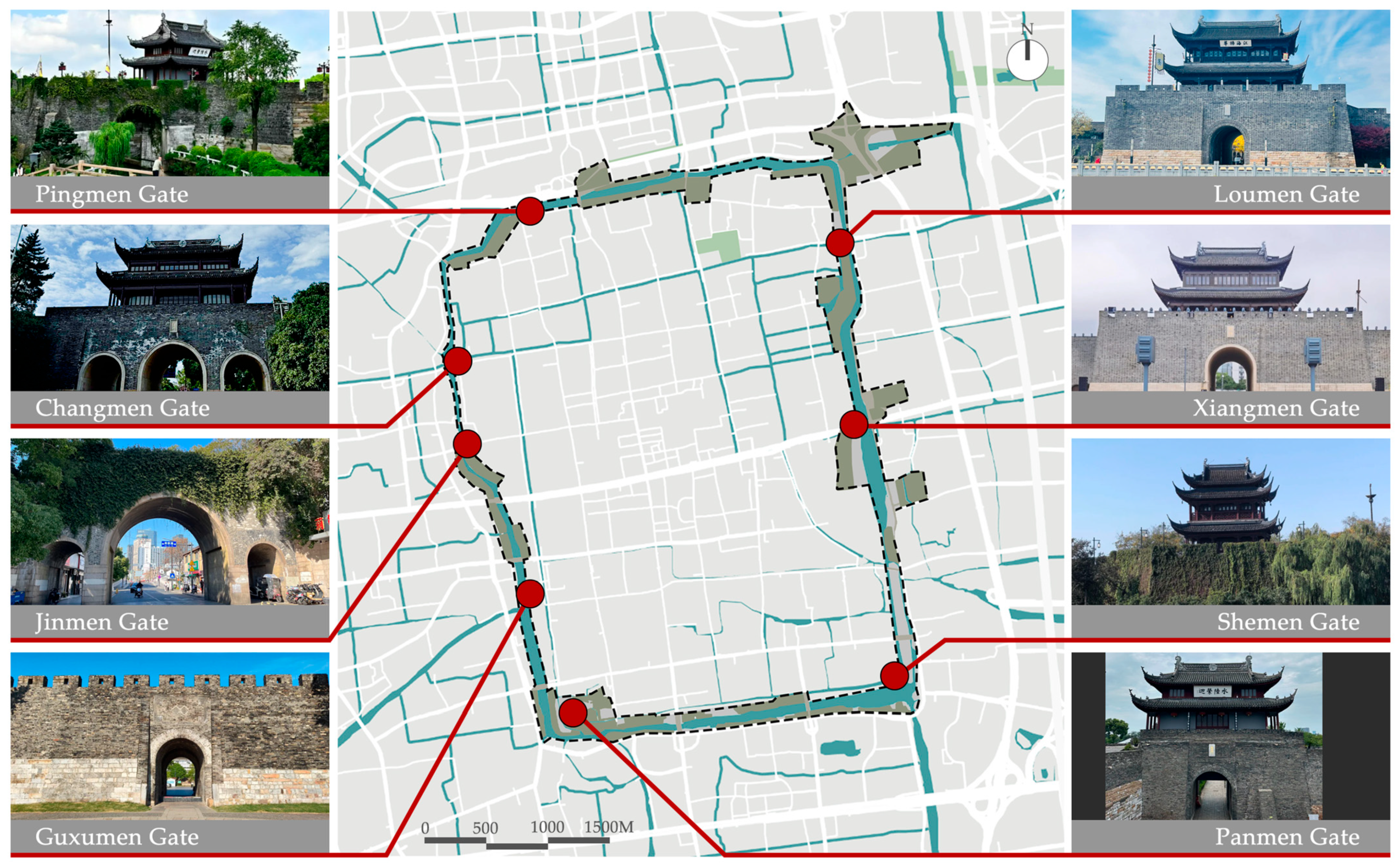
3.2.1. Moat (Waterway, City Walls, and City Gates)
- 1.
- Historical Spatial Narratives: From City Walls to Parks
- 2.
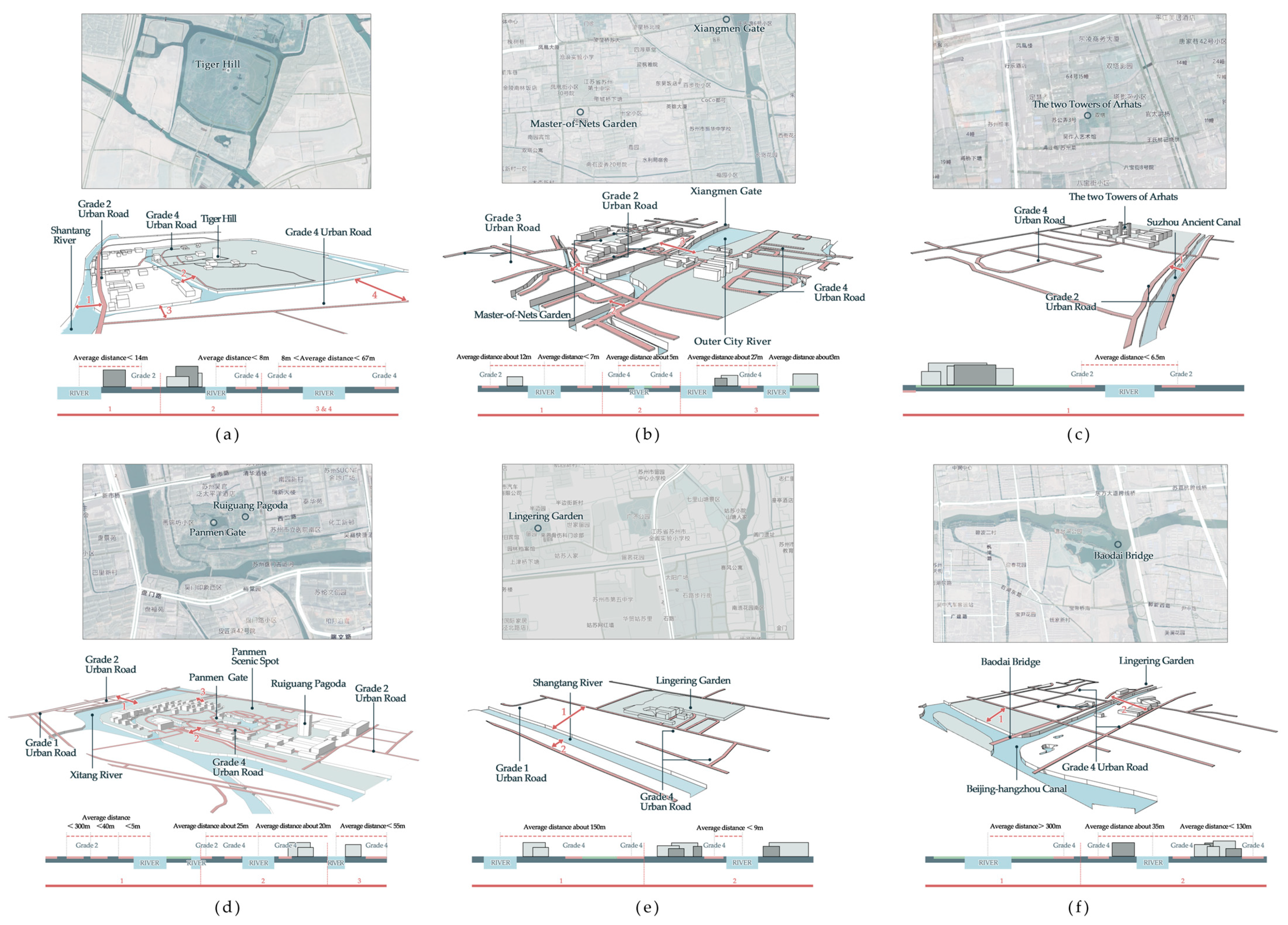
- Spatial Cognitive Narratives: From Boundaries to Interfaces
- 3.
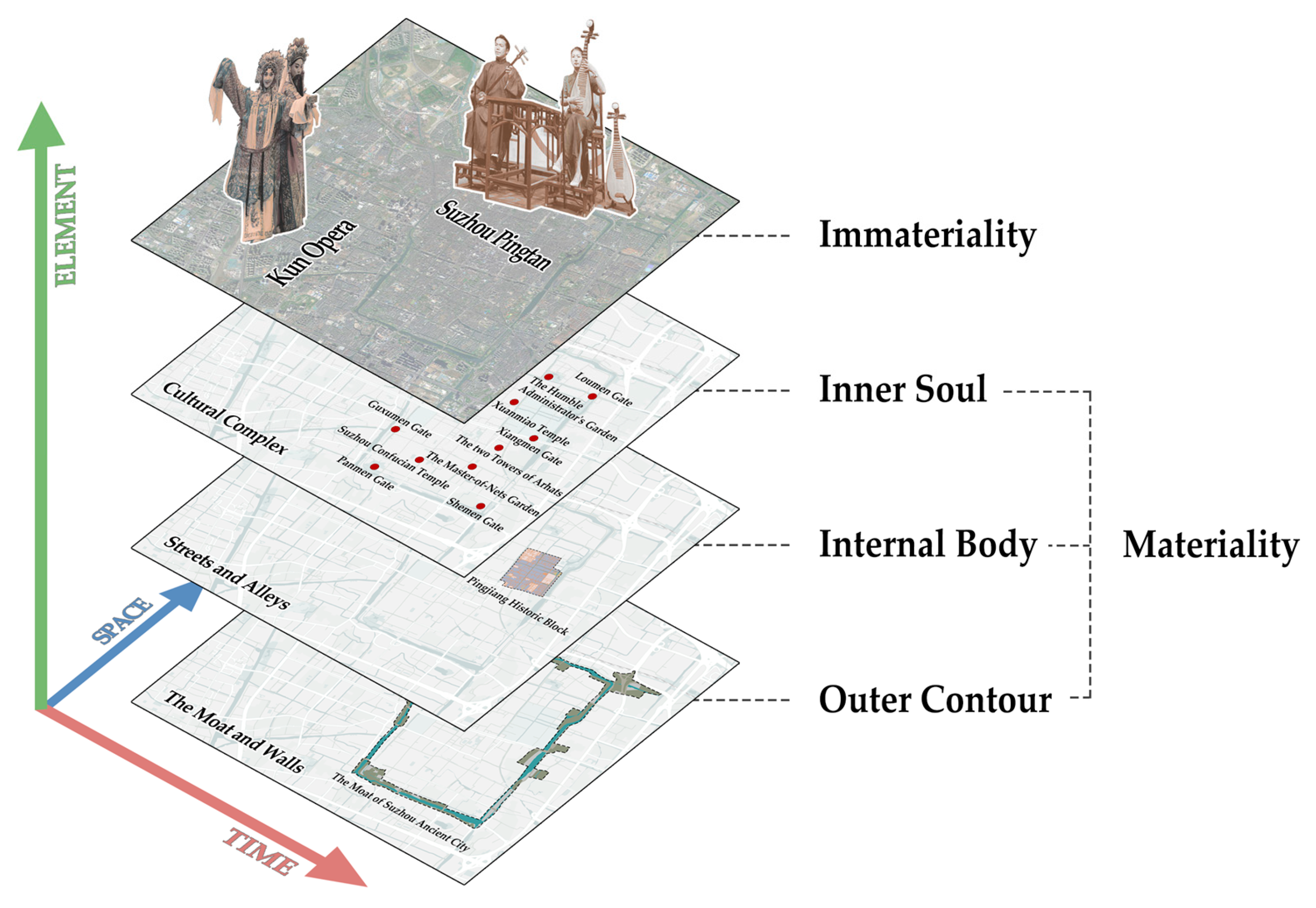
- Existence Narrative: As a Vehicle for Carrying Intangible Cultural Heritage
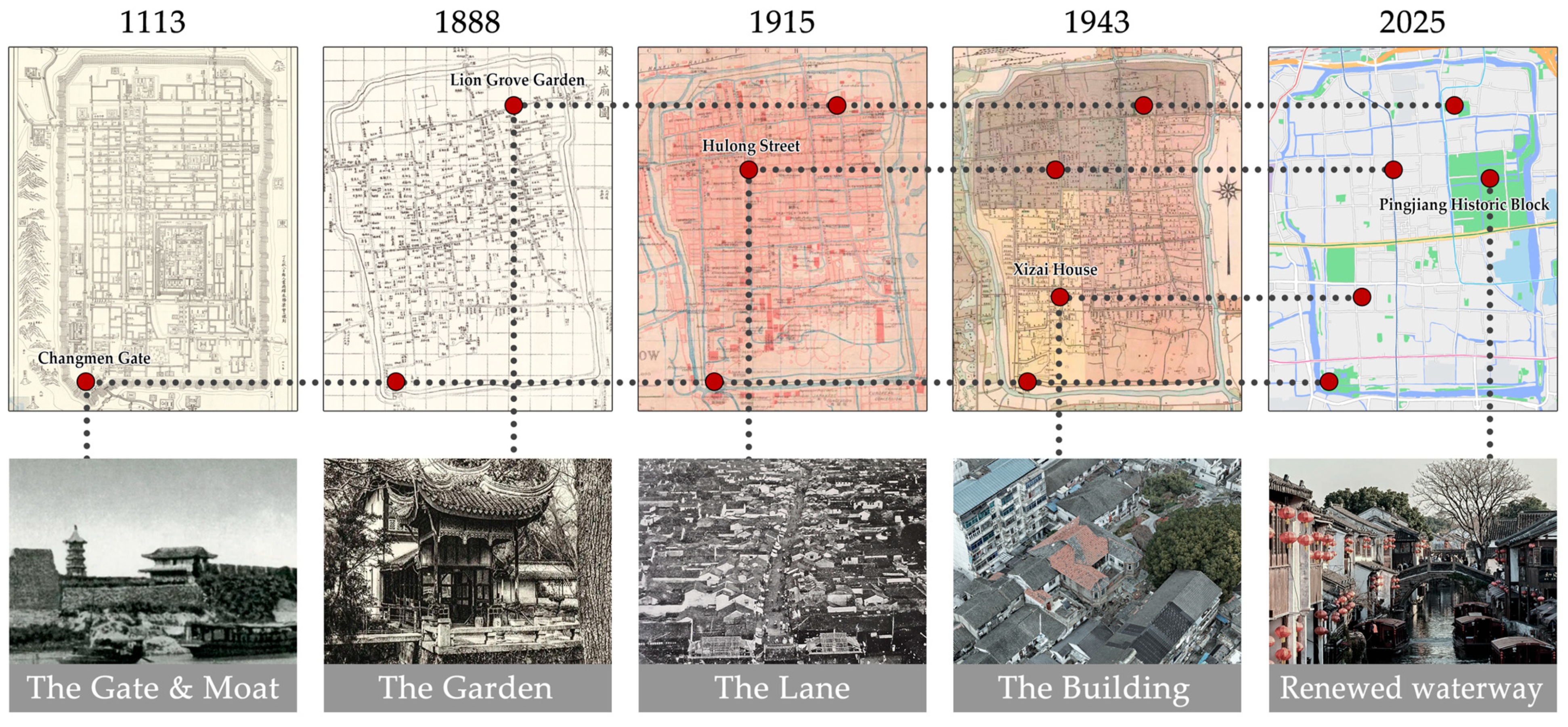
3.2.2. Historical District Featuring a Dual Land–Water Chessboard Layout
- 1.
- Historical Narrative: The Unchanging Urban Fabric of a Millennium
- 2.
- Spatial Cognitive Narratives: Paths and Nodes
- 3.
- Existence Narrative: A Moving Panorama of Everyday Life
3.2.3. Canal-Related Cultural Complex
- 1.
- Historical Narratives: The Order of Power and the Integrity of Literati
- 2.
- Cognitive Narratives: Advanced Decoding of Cultural Symbols
- 3.
- Existence Narrative: Distinctive Culture and Urban Context
3.3. Summary of Narrative Characteristics in Historic Urban Spaces
4. Discussion
- Challenging the Dogma of Authenticity: Within the World Heritage system, the principle of authenticity is often constrained by debates centered on material fabric and original form. Our three-dimensional framework advances a more holistic and operational understanding of authenticity, encompassing historical-layered authenticity, experiential–cognitive authenticity, and existential–practical authenticity. Under this expanded perspective, a restored wharf attains dynamic and multidimensional authenticity—rather than relying solely on material originality—when it preserves its historical hydrological context (historical dimension), facilitates comprehension of its former operational functions (cognitive dimension), and supports contemporary communal or celebratory uses (existential dimension).
- From Protected Objects to Relational Networks: Traditional conservation practices have typically emphasized discrete elements, such as individual buildings or designated historic districts. However, a spatial narrative framework urges a shift toward understanding the city as a network of interdependent narrative relationships. Accordingly, the focus of preservation transitions from safeguarding isolated components to maintaining and reconstructing critical relational pathways that sustain urban meaning. For example, preserving the visual and processional connection between Guanqian Street and Xuanmiao Temple reinforces their cognitive narrative function, while restoring the service-oriented and social interactions between the canal and adjacent teahouses revitalizes their existential narrative role.
- From Expert Empowerment to Collaborative Storytelling: Spatial cognitive narratives underscore multi-subject participation, thereby challenging the traditional expert-centered paradigm in heritage practice. Accordingly, future preservation should evolve into a co-creative narrative process. Through oral history, participatory design, and community-based cultural activities, the memories of long-term residents, the experiences of immigrants, and the creativity of younger generations can be collectively incorporated into the unfolding narrative of urban space. As a result, heritage becomes an inclusive and continuously evolving assemblage of stories, rather than a closed historical text defined solely by institutional authority.
5. Conclusions
5.1. Conclusions
5.2. Research Limitations
5.3. Recommendations and Future Works
Author Contributions
Funding
Data Availability Statement
Conflicts of Interest
References
- Diao, J.; Lu, S. A narrative-led approach for the revitalization of places of memory: A case study of Haiyan moat waterfront (Zhejiang, China). Urban Des. Int. 2024, 5, 1–21. [Google Scholar] [CrossRef]
- Borie, A.; Tonnelat, S. Urban poetic narratives along the Seine: Everyday practices and collective memory. City Community 2012, 11, 265–284. [Google Scholar]
- Finnegan, R. Tales of the City: A Study of Narrative and Urban Life; Cambridge University Press: Cambridge, UK, 1998. [Google Scholar]
- Genette, G. Narrative Discourse: An Essay in Method; Lewin, J.E., Translator; Cornell University Press: New York, NY, USA, 1980. [Google Scholar]
- Halbwachs, M. On Collective Memory; Coser, L.A., Ed. and Translator; University of Chicago Press: Chicago, IL, USA, 1992. [Google Scholar]
- Hayden, D. The Power of Place: Urban Landscapes as Public History; MIT Press: Cambridge, MA, USA, 1995. [Google Scholar]
- White, H. The Content of the Form: Narrative Discourse and Historical Representation; Johns Hopkins University Press: Baltimore, MD, USA, 1987. [Google Scholar]
- Ryan, M.-L.; Foote, K.; Azaryahu, M. Narrating Space/Spatializing Narrative: Where Narrative Theory and Geography Meet; The Ohio State University Press: Columbus, OH, USA, 2016. [Google Scholar]
- Calvino, M.; Cutini, V. Space syntax and urban heritage: The case of Siena’s historic core. J. Space Syntax 2015, 6, 91–108. [Google Scholar]
- Kang, N.; Zhang, J. Revitalizing Beijing hutongs: Spatial narrative and everyday life. J. Urban Des. 2021, 26, 1025–1046. [Google Scholar]
- Psarra, S. Architecture and Narrative: The Construction of Space and Cultural Meaning; Routledge: London, UK, 2009. [Google Scholar]
- Tang, Y. Research on Urban Marathon Path from the Perspective of Spatial Narrative Theory. Ph.D. Thesis, South China University of Technology, Guangzhou, China, 2022. [Google Scholar]
- Long, D.Y. Spatial Narratology: A New Field in Narratology Studies. J. Tianjin Norm. Univ. (Soc. Sci. Ed.) 2008, 6, 54–60. [Google Scholar]
- Cui, H.Y. Domestic Research and Reflection on Spatial Narrative. Jiangxi Soc. Sci. 2009, 1, 42–47. [Google Scholar]
- Wang, A. On the Development of Spatial Narratology. Soc. Sci. 2008, 1, 142–145. [Google Scholar]
- Li, J. Research on Contemporary Chinese Fiction in the “Spatial Turn”. Master’s Thesis, Soochow University, Suzhou, China, 2013. [Google Scholar]
- Bian, Y.Y. A Narrative Study of Urban Historical Landscapes. Master’s Thesis, Huazhong University of Science and Technology, Wuhan, China, 2011. [Google Scholar]
- Zhang, N.; Zhang, P.; Wang, Y.Z.; Ma, X. Quantitative Research on the Narrative Environmental System of Historic Urban Districts. South Archit. 2013, 2, 28–31. [Google Scholar]
- Zhao, H.H.; Tang, Y.Q. Evolution of Contemporary “Spatial Narrative” Theories: Cognitive Shifts and Practices of Space in Narratology. Guangxi Soc. Sci. 2021, 3, 74–81. [Google Scholar]
- Lynch, K. The Image of the City; MIT Press: Cambridge, MA, USA, 1960. [Google Scholar]
- Norberg-Schulz, C. Genius Loci: Towards a Phenomenology of Architecture; Rizzoli: New York, NY, USA, 1980. [Google Scholar]
- King, R. The Story of the City: Urban Tales and the Built Environment; Routledge: London, UK, 2016. [Google Scholar]
- Lu, S. The Theoretical Lineage of Spatial Narrative Design and Its Contemporary Value. Cult. Stud. 2020, 4, 158–181. [Google Scholar]
- Lu, S. Place-narratives: A New Mode for the Construction of the Connotation and Characteristics of Urban Culture. J. Shanghai Jiaotong Univ. (Philos. Soc. Sci.) 2012, 20, 68–76. [Google Scholar] [CrossRef]
- UNESCO. The World Heritage List. The Grand Canal. Available online: https://whc.unesco.org/en/list/1443 (accessed on 7 October 2025).
- Cheng, Y.; Bai, H.; Liu, H.; Wang, Z.; Chen, C.; Mo, S. Application of 3D Laser Scanning Technology in Digital Archiving and Protection Management of Historic Buildings. Manag. Sci. Eng. 2022, 11, 417–426. [Google Scholar]
- He, S.Y.; Zheng, H.; Tang, Z. Construction of Urban Historical and Cultural Heritage Management Information System Based on GIS. J. Guangdong Univ. Technol. 2018, 35, 38–44. [Google Scholar]
- Li, H.; Pang, S.; Geng, M. Advances in the Practice of Urban Historical Heritage Protection and Management Based on GIS Technology. Chin. Agric. Sci. Bull. 2021, 37, 145–150. [Google Scholar]
- Deng, F.; Song, J.; Wu, X.; Zeng, Z.; Yin, H. Reflections on the Nature of the Grand Canal Heritage Protection Plan and the Classification of Protection Objects: A Compendium Assessment Based on the Existing Heritage Protection Plan of the Grand Canal (Jiangsu Section). Urban. Archit. 2025, 22, 32–36. [Google Scholar]
- Jiang, J.; Zhou, T.; Han, Y.; Ikebe, K. Urban Heritage Conservation and Modern Urban Development from the Perspective of the Historic Urban Landscape Approach: A Case Study of Suzhou. Land 2022, 11, 1251. [Google Scholar] [CrossRef]
- Zhang, G.; Fu, B.; Zhao, X.; Tao, S. An Exploration on Linear Cultural Heritage Protection and Inheritance Path of The Grand Canal. City Plan. Rev. 2022, 46 (Suppl. S2), 27–35. [Google Scholar]
- Bai, L. A Landscape Plan on Protective City Memory—The Case of Landscape Planning in Suzhou Canal Area. New Archit. 2007, 4, 71–75. [Google Scholar]
- Peng, N.; Chen, Y.; Wang, L.; Zhang, C.; Zhu, Y. Cultural transmission ability of urban heritage along the Jiangsu section of the Beijing-Hangzhou Grand Canal. Npj Herit. Sci. 2025, 13, 401. [Google Scholar] [CrossRef]
- Cheng, W.; Li, F.; Guan, H.; Liang, L.; Xin, Q.; Yi, W. Spatio-temporal evolution of water engineering facilities and social influences on the Grand Canal during the Ming and Qing dynasties. Herit. Sci. 2024, 12, 262. [Google Scholar] [CrossRef]
- Cai, R.; Nasu, S. Adopting the “historic layering” concept from the Historic Urban Landscape approach as a methodological framework for urban heritage conservation. Int. J. Herit. Stud. 2025, 31, 573–591. [Google Scholar] [CrossRef]
- Li, Y.; Zheng, N. Integral Protection of Cultural Heritage of the Grand Canal of China: A Perspective of Cultural Spaces. Front. Soc. Sci. Technol. 2020, 2, 60–69. [Google Scholar]
- Zhang, S.; Yu, W.; Cui, J. Research on Optimization of Tourism Spatial Structure of Linear Cultural Heritage: A Case Study of the Beijing–Hangzhou Grand Canal. Heritage 2025, 8, 408. [Google Scholar] [CrossRef]
- Azaryahu, M.; Foote, K.E. Historical space as narrative medium: On the configuration of spatial narratives of time at historical sites. GeoJournal 2008, 73, 179–194. [Google Scholar] [CrossRef]
- Sun, J.; Tian, Q. Research on the Activation and Protection of Architectural Historical Heritage Based on Spatial Narrative Construction. New Archit. 2020, 5, 83–88. [Google Scholar]
- Huang, Y.; Yang, S. Spatio-temporal evolution and distribution of cultural heritage sites along the Suzhou canal of China. Herit. Sci. 2023, 11, 188. [Google Scholar] [CrossRef]
- Li, Y.; Cao, L.; Gao, W. Perceptual dimensions of heritage canal landscapes and their impact on conservation value cognition. Ecol. Indic. 2025, 176, 113626. [Google Scholar] [CrossRef]
- Gary, S.; An, Z. Cultural route heritage as mobility narrative: The world heritage inscription of China’s Grand Canal. Int. J. Herit. Stud. 2024, 30, 997–1009. [Google Scholar]
- Rui, G.; Li, R.; Xing, Y. Research on the Co-creation Action Strategy for the Protection and Renewal of Historical Districts Based on Memory Locations: A Case Study of the Micro-Renovation of Wuyue in Pantang, Guangzhou. New Archit. 2023, 1, 88–93. [Google Scholar]
- Bi, L.; Zhong, Y. Research on the Pan-Social Value of the Protection and Development of Historical and Cultural Blocks: A Case Study of Chengdu City. City Plan. Rev. 2012, 36, 44–52+59. [Google Scholar]
- Wu, L.; Wang, X. Method of Protection and Renewal on Historical Street District. J. Archit. Civ. Eng. 2007, 24, 84–88. [Google Scholar]
- Yao, D.; Dai, D. From “Spatial Transformation” to “Value Re-orientation”: A Study on the Shift in Conservation Strategies for Historic Districts. Herit. Conserv. 2011, 5, 36–39. [Google Scholar]
- Cao, X.Q. Dream of the Red Chamber; People’s Literature Publishing House: Beijing, China, 1982. [Google Scholar]
- Li, Z.; Chen, L. Reviving Suzhou’s Pingjiang Road: Space, memory and tourism narratives. Tour. Geogr. 2019, 21, 457–476. [Google Scholar]
- UNESCO. Recommendation on the Historic Urban Landscape (HUL); UNESCO: Paris, France, 2011. [Google Scholar]
- Li, J.; Jing, F.; Shao, Y. UNESCO’s Global Practice of Historic Urban Landscapes (HUL): A Ten-Year Review and Implications for Urban Heritage Conservation in China. City Plan. Rev. 2022, 46, 90–98. [Google Scholar]
- Bandarin, F. Urban Conservation and Sustainable Development. Hist. Environ. Policy Pract. 2020, 11, 444–453. [Google Scholar] [CrossRef]
- Ken, T. The Historic Urban Landscape Paradigm and Cities as Cultural Landscapes Challenging orthodoxy in Urban Conservation. Landsc. Res. 2016, 41, 471–480. [Google Scholar] [CrossRef]
- Dong, W.; Zhang, C.; Han, W.; Wang, J. Localized Canal Development Model Based on Titled Landscapes on the Grand Canal, Hangzhou Section, China. Land 2024, 13, 1178. [Google Scholar] [CrossRef]
- Dai, J.; Liu, F. Research on the Construction of Linear Cultural Heritage Value Evaluation Model: A Case Study of the Grand Canal of China. China Anc. City 2023, 37, 90–96. [Google Scholar]
- Shan, Q. Living Heritage”: Innovative Perspectives on the Conservation of the Grand Canal. China Anc. City 2009, 4–6. [Google Scholar]
- Huo, Y.; Li, Y. Public Imagery Perception of Urban Canal Cultural Landscape: A Case Study of Yangzhou. Landsc. Archit. 2023, 30, 89–96. [Google Scholar]
- Elshater, A. The Predicament of Post-Displacement Amidst Historical Sites: A Design-Based Correlation Between People and Place. Herit. Soc. 2021, 12, 85–115. [Google Scholar] [CrossRef]
- Djukic, A.; Jović, E.; Stefanović, J.; Mandić, L.; Trifunović, V. Between Memory and Everyday Life: Urban Design and the Role of Citizens in the Management of the Memorial Park “October in Kragujevac”. Land 2025, 14, 2273. [Google Scholar] [CrossRef]
- Liu, P.; Markus, N. Research on the Conservation of Land Texture in Historical Chinese Cities: Connotation, Evolution and Strategies. Urban Plan. Forum 2020, 5, 92–99. [Google Scholar]
- Liang, W.; Ahmad, Y.; Mohidin, H. The development of the concept of architectural heritage conservation and its inspiration. Built Herit. 2023, 7, 21. [Google Scholar] [CrossRef]
- Guzman, P.; Pereira, R. Impacts of Common Urban Development Factors on Cultural Conservation in World Heritage Cities: An Indicators-Based Analysis. Sustainability 2018, 10, 853. [Google Scholar] [CrossRef]





| Hierarchy of Spatial Narrative Elements | Specific Content | |
|---|---|---|
| Material | Element Extraction (Element Extraction) | Identify linear historical elements within amphibious systems (waterways, streets, bridges, docks, etc.) and their spatial relationships |
| Structural | Network Analysis (Structural Analysis) | Analyze the planar organization of land–water networks (e.g., parallel, interwoven, node coupling) and functional division (transportation, trade, daily life) |
| Time | Historical Stratification (Structural Analysis) | Trace the evolution of water and land systems across different eras (e.g., the canal system of the Tang and Song dynasties, the expansion of market towns during the Ming and Qing dynasties, and the industrial transformation in modern times) |
| Cultural | Meaning Encoding (Meaning Interpretation) | Interpreting cultural metaphors embedded in aquatic and terrestrial spaces (such as the social memory of “water alley neighborhoods” and the economic narrative of “boat traffic”) |
| Strategy | Narrative Applications (Meaning Interpretation) | Revitalize historical context through linear heritage conservation, trail design, and digital storytelling |
Disclaimer/Publisher’s Note: The statements, opinions and data contained in all publications are solely those of the individual author(s) and contributor(s) and not of MDPI and/or the editor(s). MDPI and/or the editor(s) disclaim responsibility for any injury to people or property resulting from any ideas, methods, instructions or products referred to in the content. |
© 2025 by the authors. Licensee MDPI, Basel, Switzerland. This article is an open access article distributed under the terms and conditions of the Creative Commons Attribution (CC BY) license (https://creativecommons.org/licenses/by/4.0/).
Share and Cite
Shan, C.; Yang, R.; Feng, J. A Study on the Spatial Narrative of Historical Urban Landscape Based on Water–Land Symbiosis: The Case of Suzhou Ancient City in China. Land 2025, 14, 2413. https://doi.org/10.3390/land14122413
Shan C, Yang R, Feng J. A Study on the Spatial Narrative of Historical Urban Landscape Based on Water–Land Symbiosis: The Case of Suzhou Ancient City in China. Land. 2025; 14(12):2413. https://doi.org/10.3390/land14122413
Chicago/Turabian StyleShan, Chao, Rui Yang, and Jingru Feng. 2025. "A Study on the Spatial Narrative of Historical Urban Landscape Based on Water–Land Symbiosis: The Case of Suzhou Ancient City in China" Land 14, no. 12: 2413. https://doi.org/10.3390/land14122413
APA StyleShan, C., Yang, R., & Feng, J. (2025). A Study on the Spatial Narrative of Historical Urban Landscape Based on Water–Land Symbiosis: The Case of Suzhou Ancient City in China. Land, 14(12), 2413. https://doi.org/10.3390/land14122413