

Climate Change Indicators and Impacts on Mastic Tree Cultivation in Chios, Greece


 and
and 
Abstract
1. Introduction
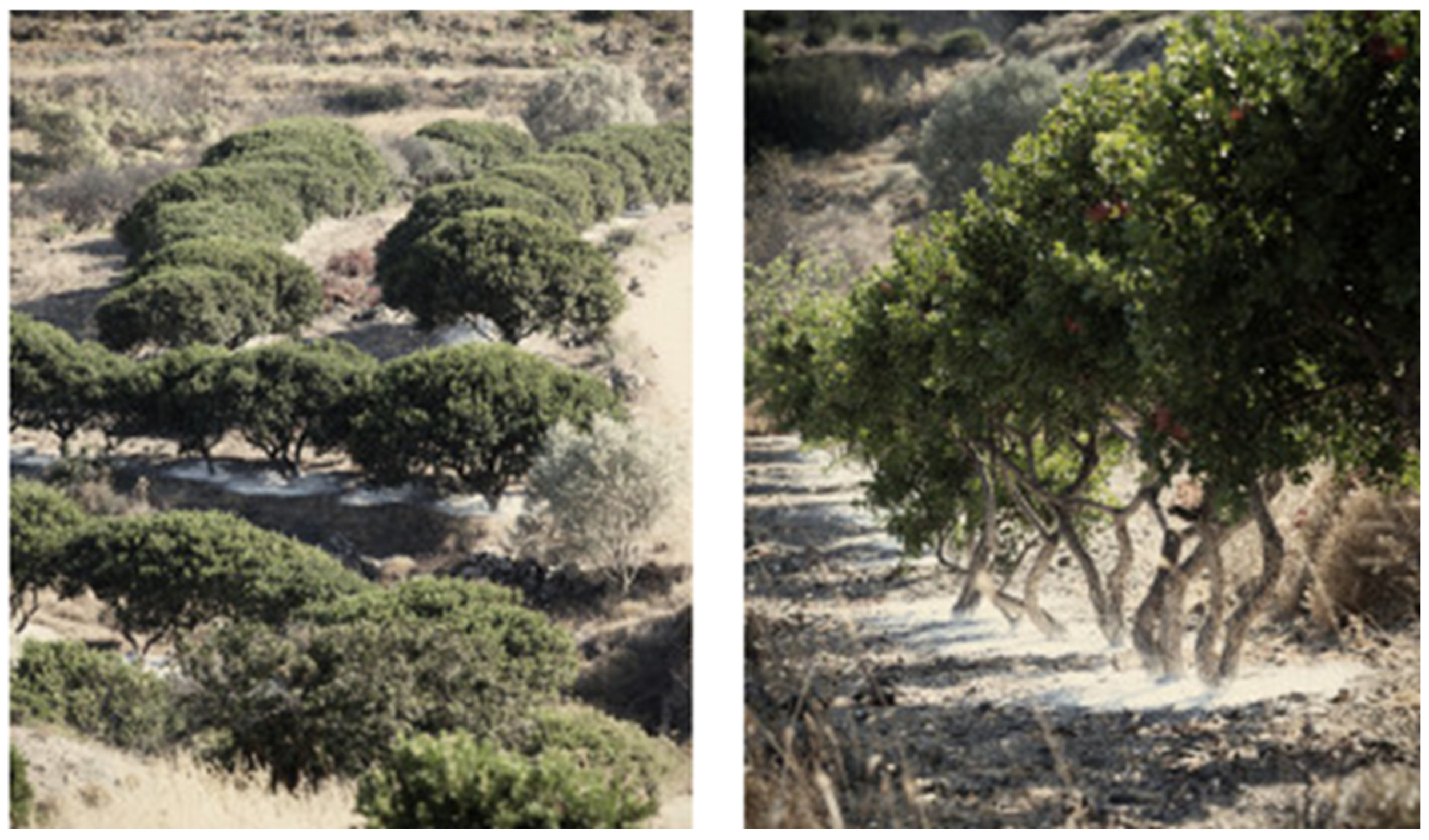
1.1. The Mastic Tree
1.2. Uniqueness
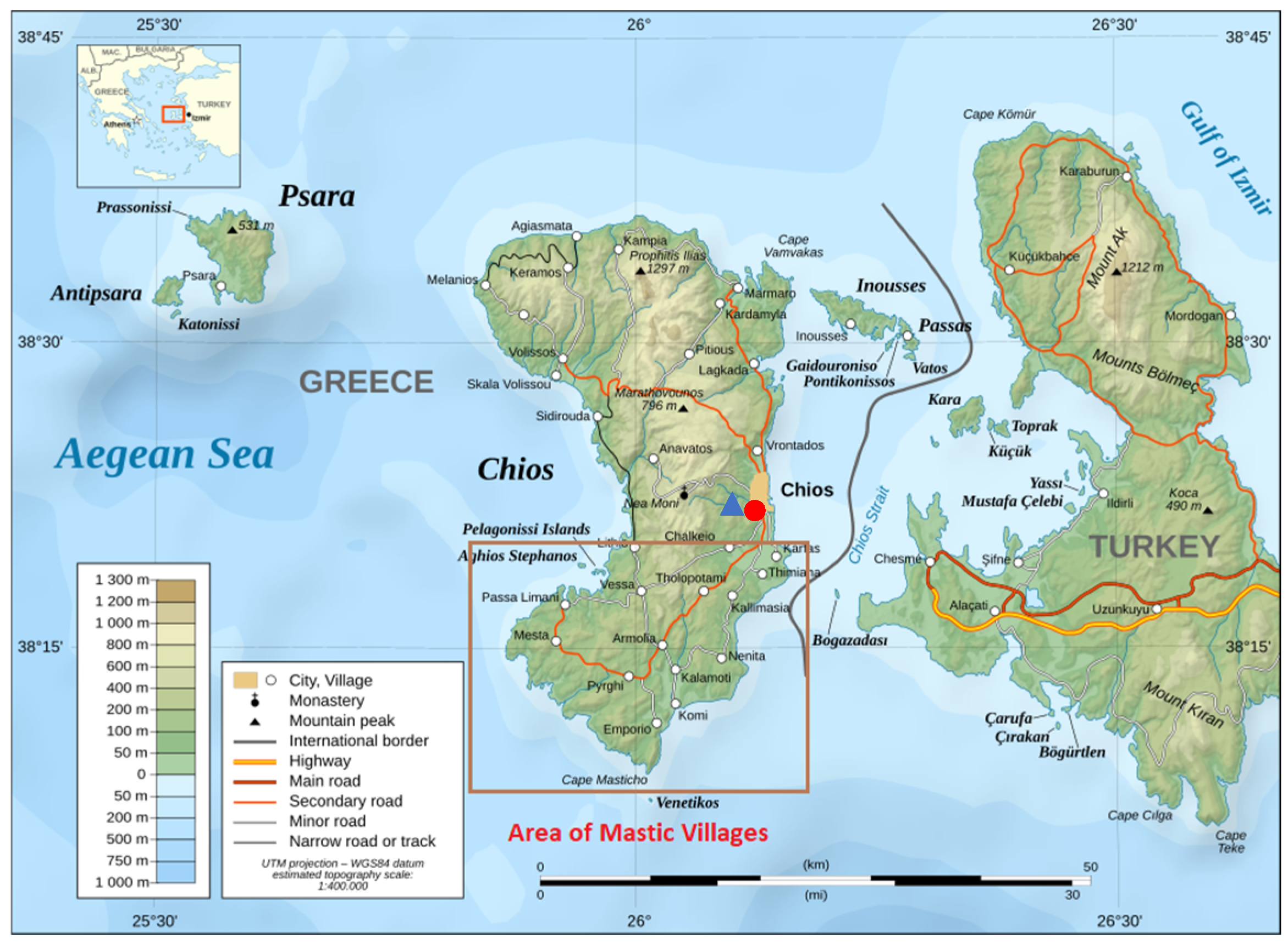
- Unique Microclimate: Chios features an elongated shape with tall, forested mountains in the north that retain moisture and weaken northern winds. The southern hilly region enjoys a distinct climate characterized by mild winters and very dry summers. Rain often falls across the island but rarely in the Mastichochoria. The hot, dry summers in this area are crucial for mastic resin to dry properly; if the resin becomes wet before it “matures,” it is ruined [10,11,15].
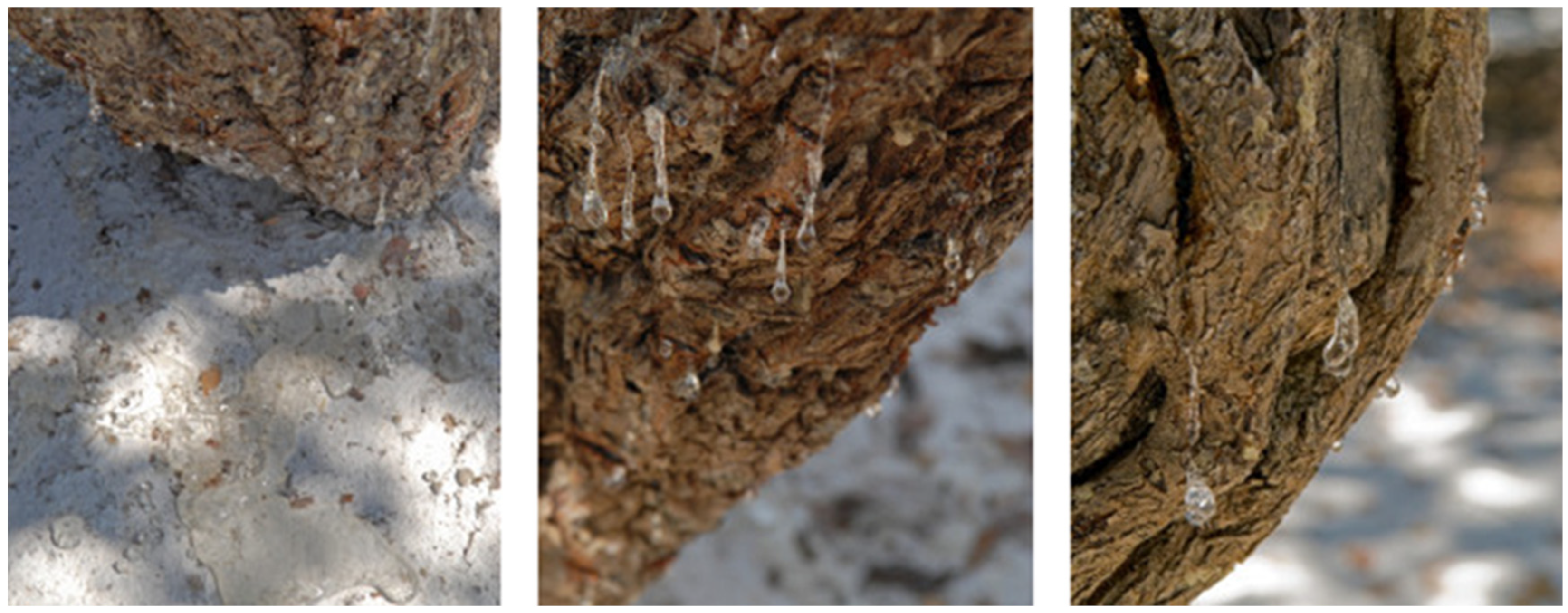
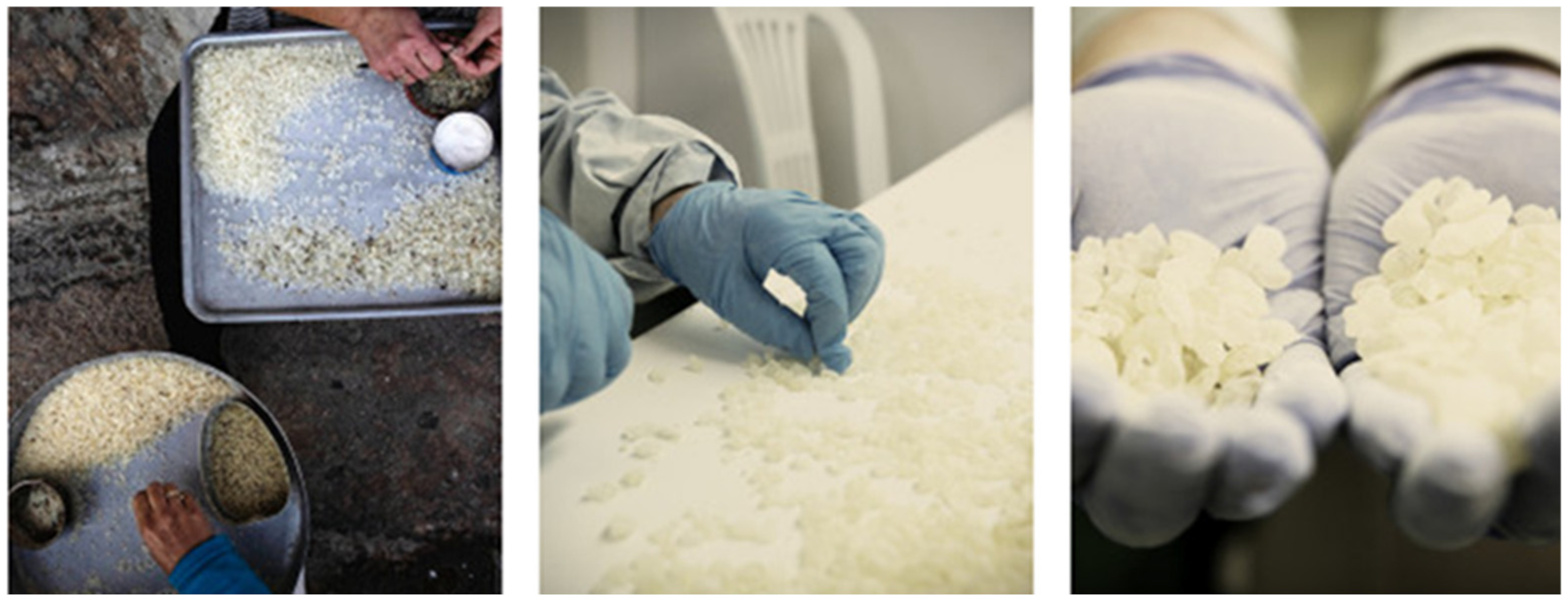
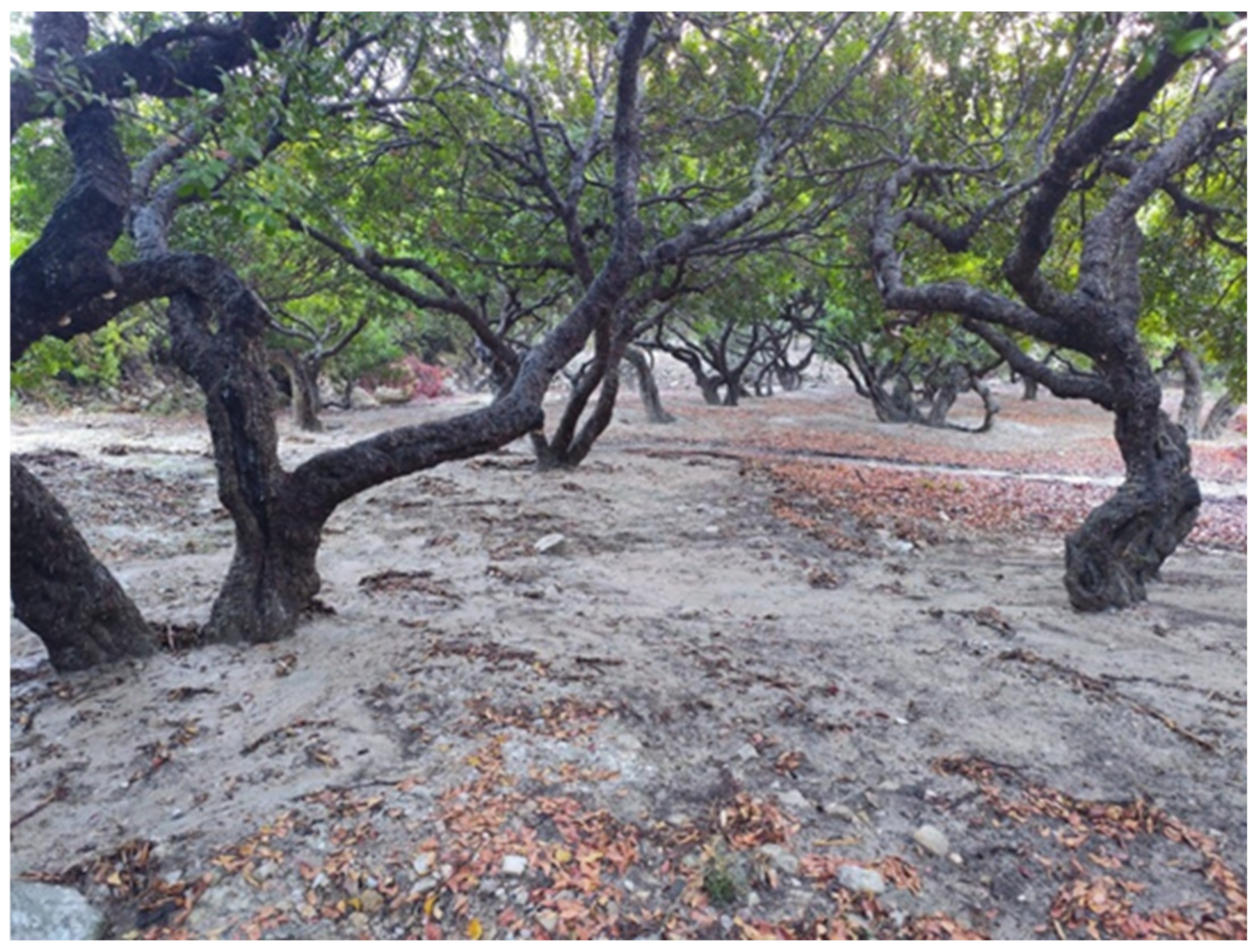
- Selective Breeding: Since ancient times, Chian farmers have identified trees with superior resin yields (Figure 3) and propagated them to establish new plantations, preserving the characteristics of the parent trees. Over centuries, this process of selective breeding has resulted in the highly productive mastic variety now botanically recognized as Pistacia lentiscus var. chia [4,11,15].
- Sound Management: From antiquity, the people of Chios have organized mastic cultivation, standardized the product, and effectively promoted it in the market.

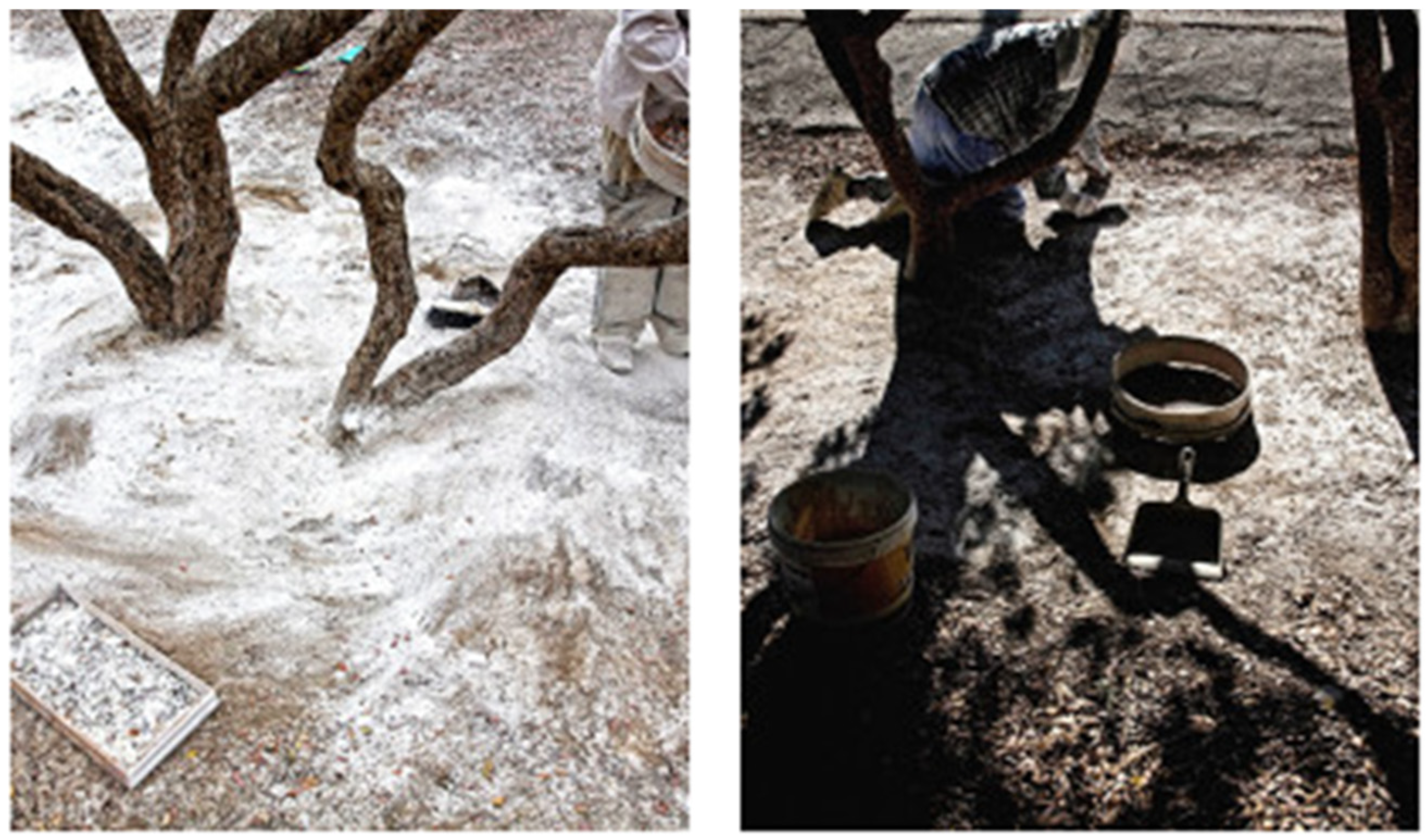
1.3. Care of the Mastic Tree
1.4. Mastic Gum Cultivation in Chios and Its Climatic Sensitivities
2. Materials and Methods
2.1. Climate Extremes Indices
2.2. Optimal Climatic Conditions for Mastic Gum Production
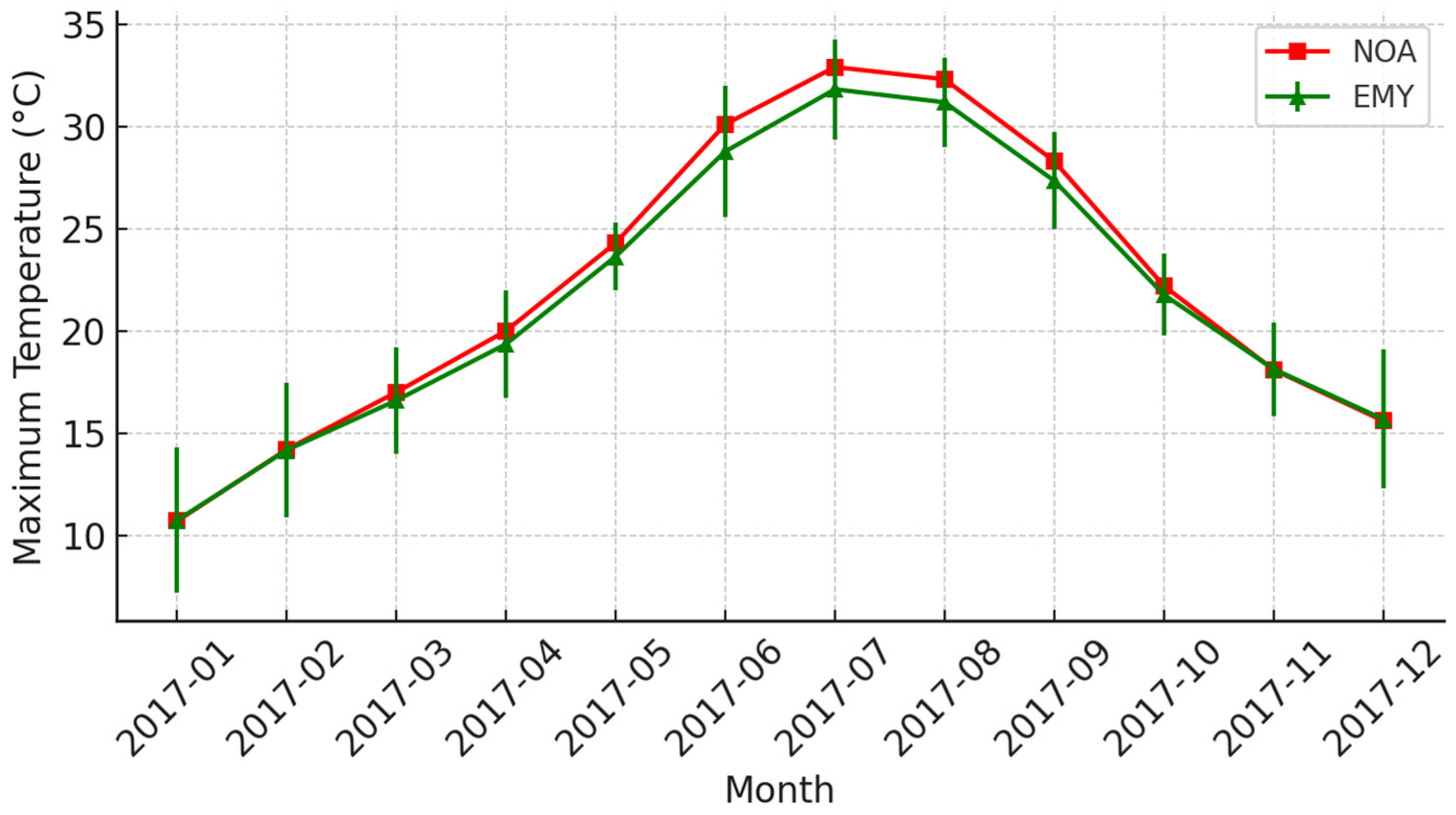
- Temperature: Maximum daily temperatures of 30–36 °C during July–August promotes proper resin flow and solidification.
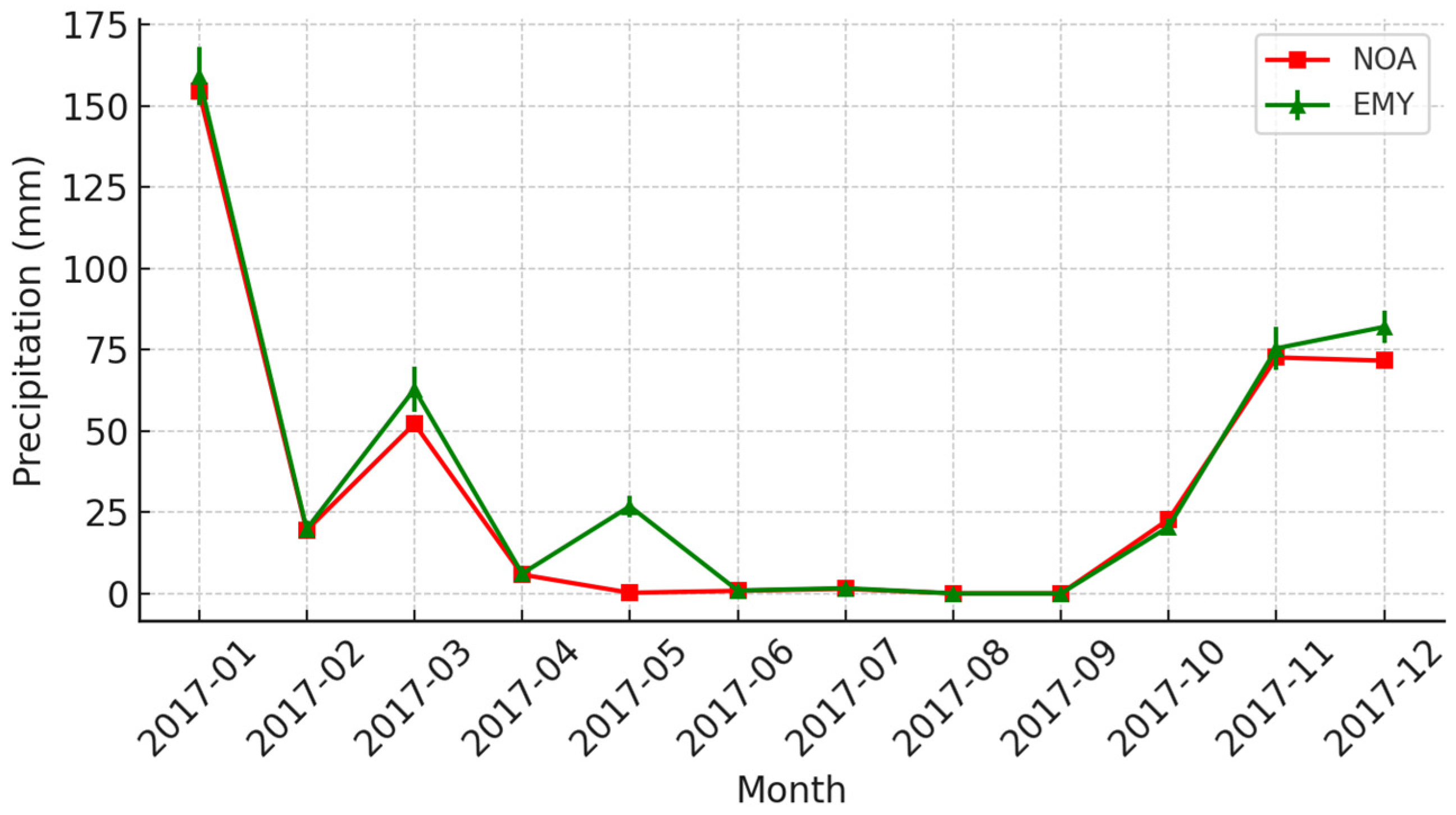
- Rainfall: Minimal summer rainfall (<10 mm/month) is crucial to prevent resin wash-off and microbial contamination.
- Humidity: Low relative humidity facilitates the drying and hardening of the resin.
- Diurnal temperature range: Significant night–day temperature differences support plant stress recovery and enhance resin production.
- Wind conditions: Calm winds during resin exudation minimize physical damage to the resin drops and reduce contamination from soil.
2.3. Meteorological Data and Station in Chios
3. Results
3.1. Comparison of HNMS (EMY) and NOA Measurements (2017)
3.2. Climate Indices Results
3.3. Climate Indices Relevant to Mastic Production in Chios (Period 1960–2022)
3.3.1. Temperature
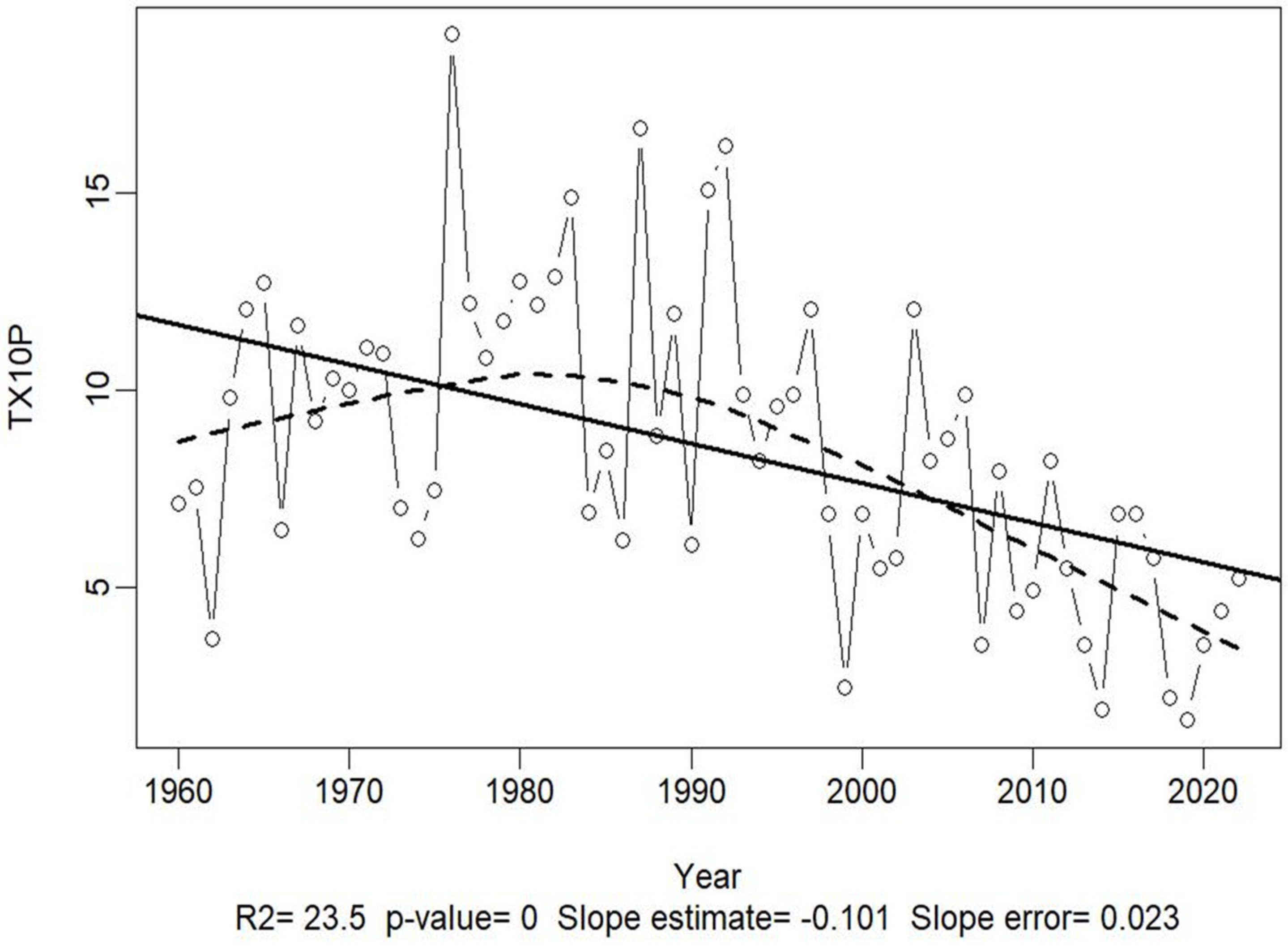
- TX10P—Cool Day Frequency

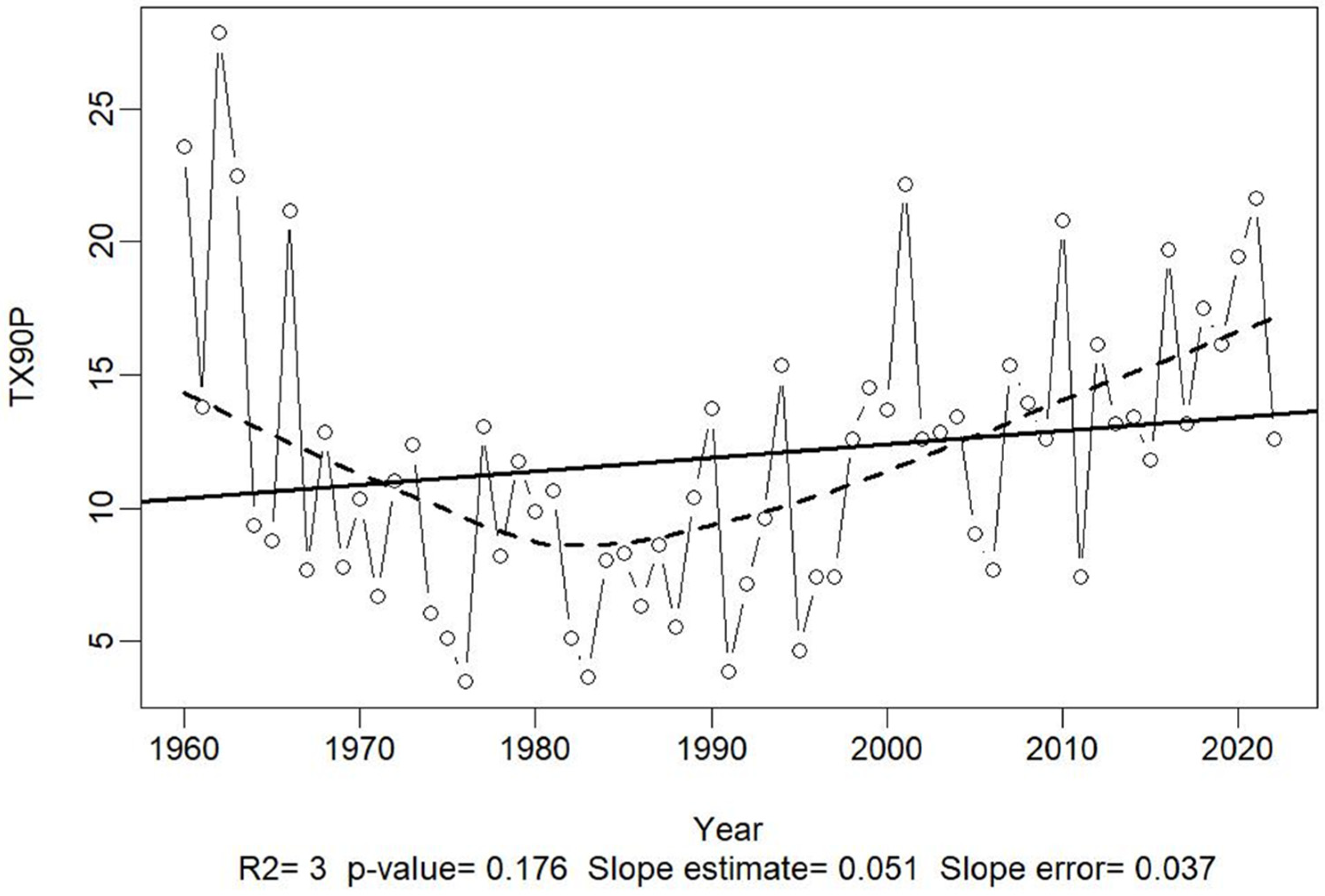
- TX90P—Hot Day Frequency

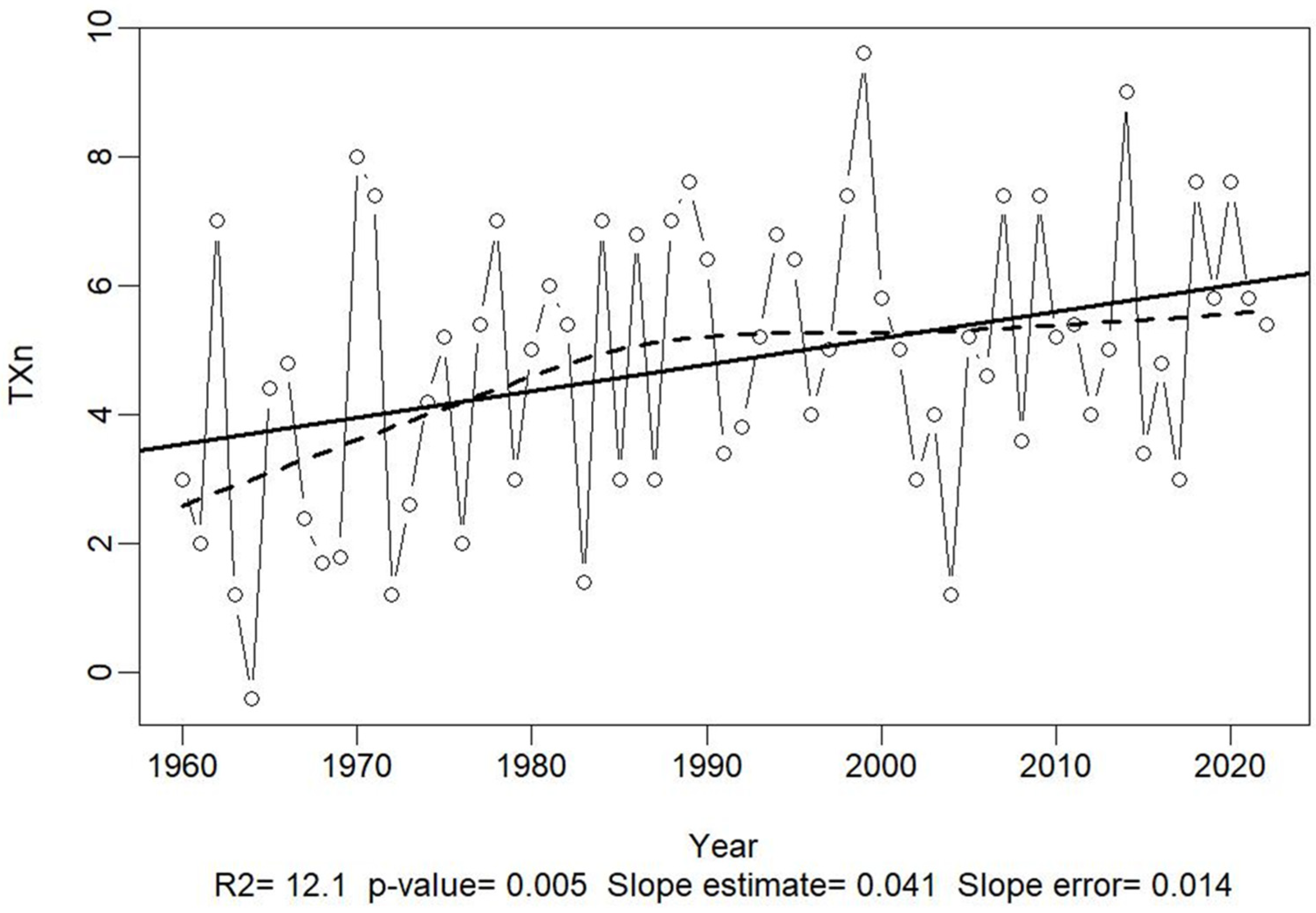
- TXn—Minimum of Daily Max Temperatures

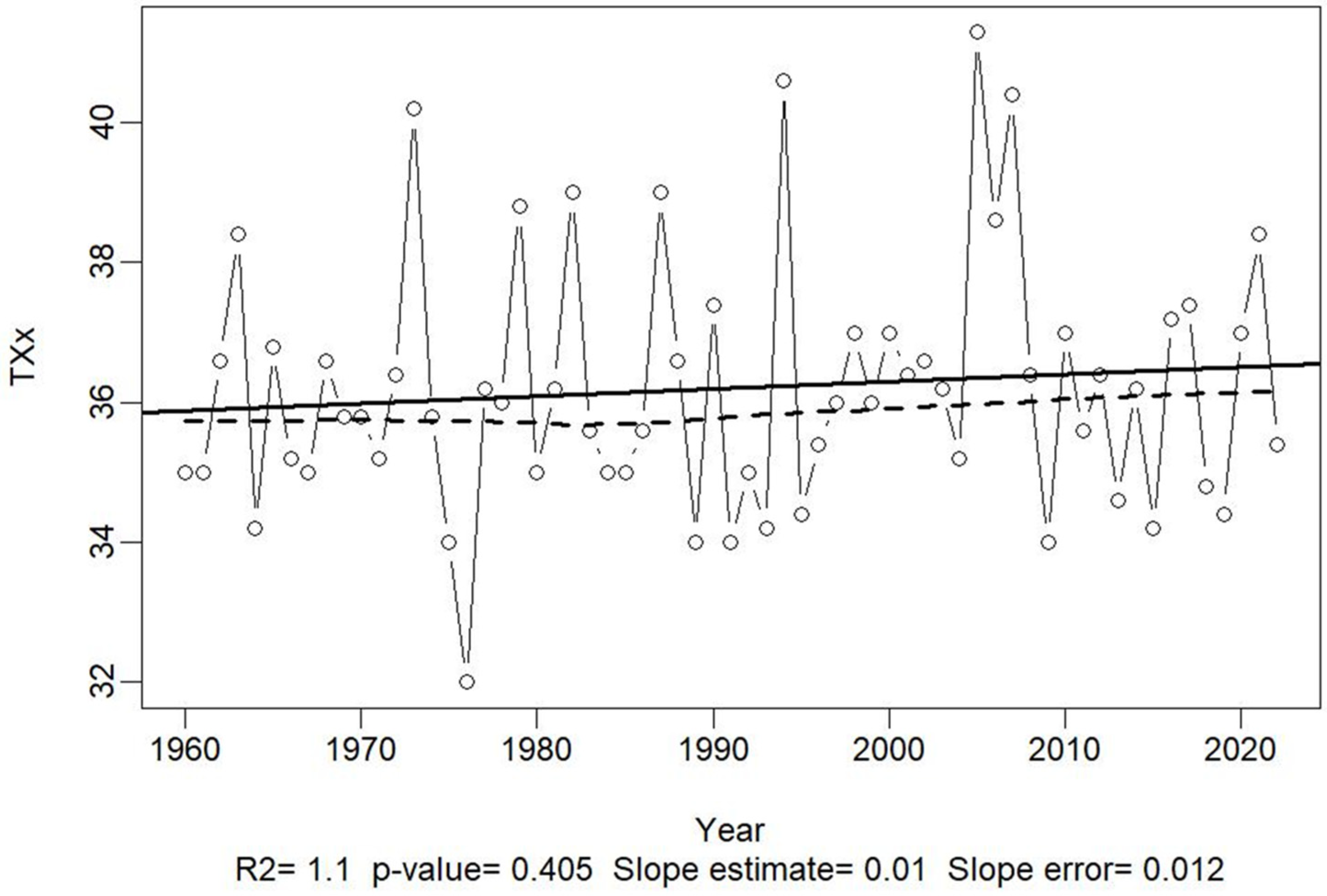
- TXx—Annual Maximum of Daily Max Temperatures

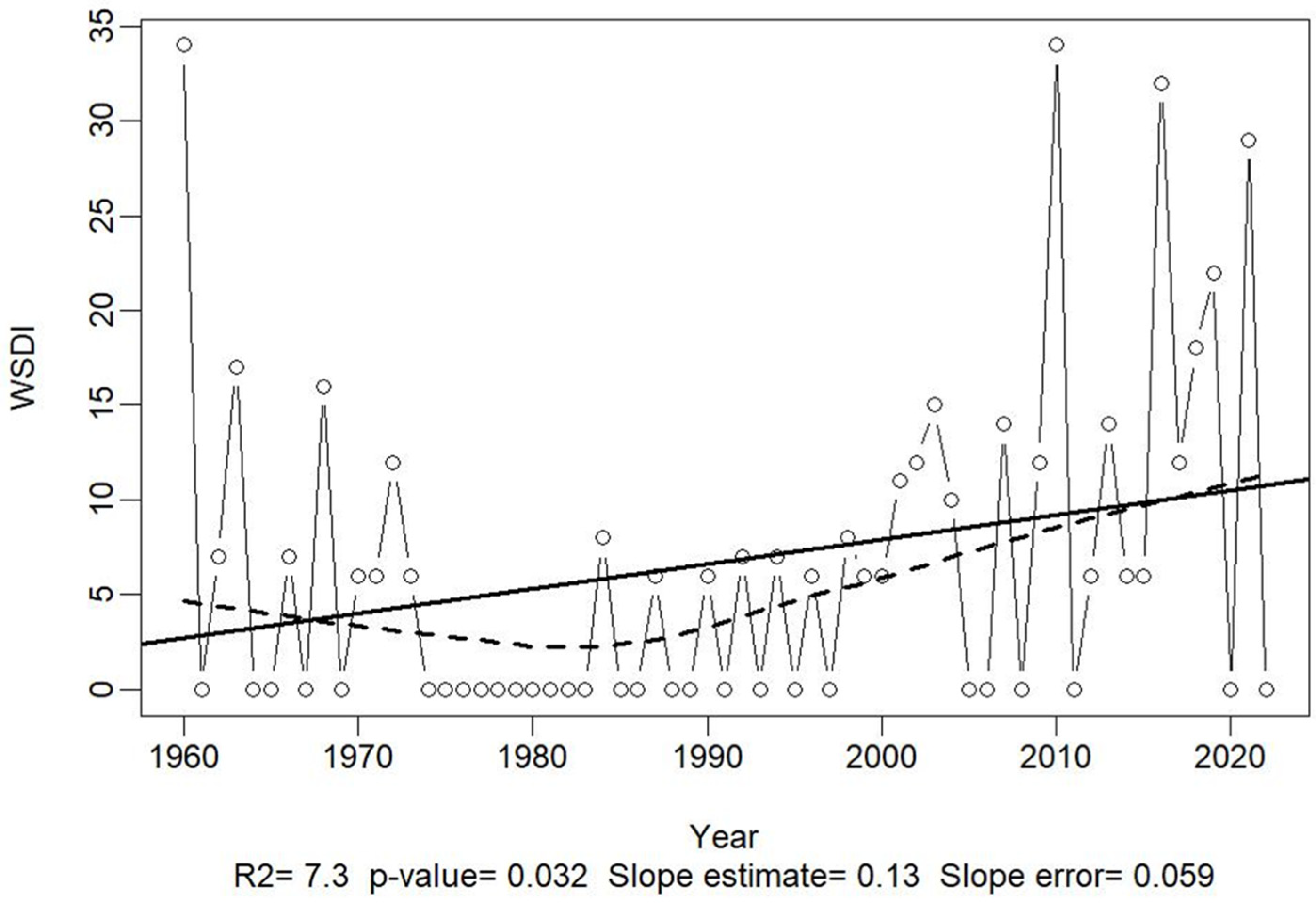
- WSDI—Warm Spell Duration Index

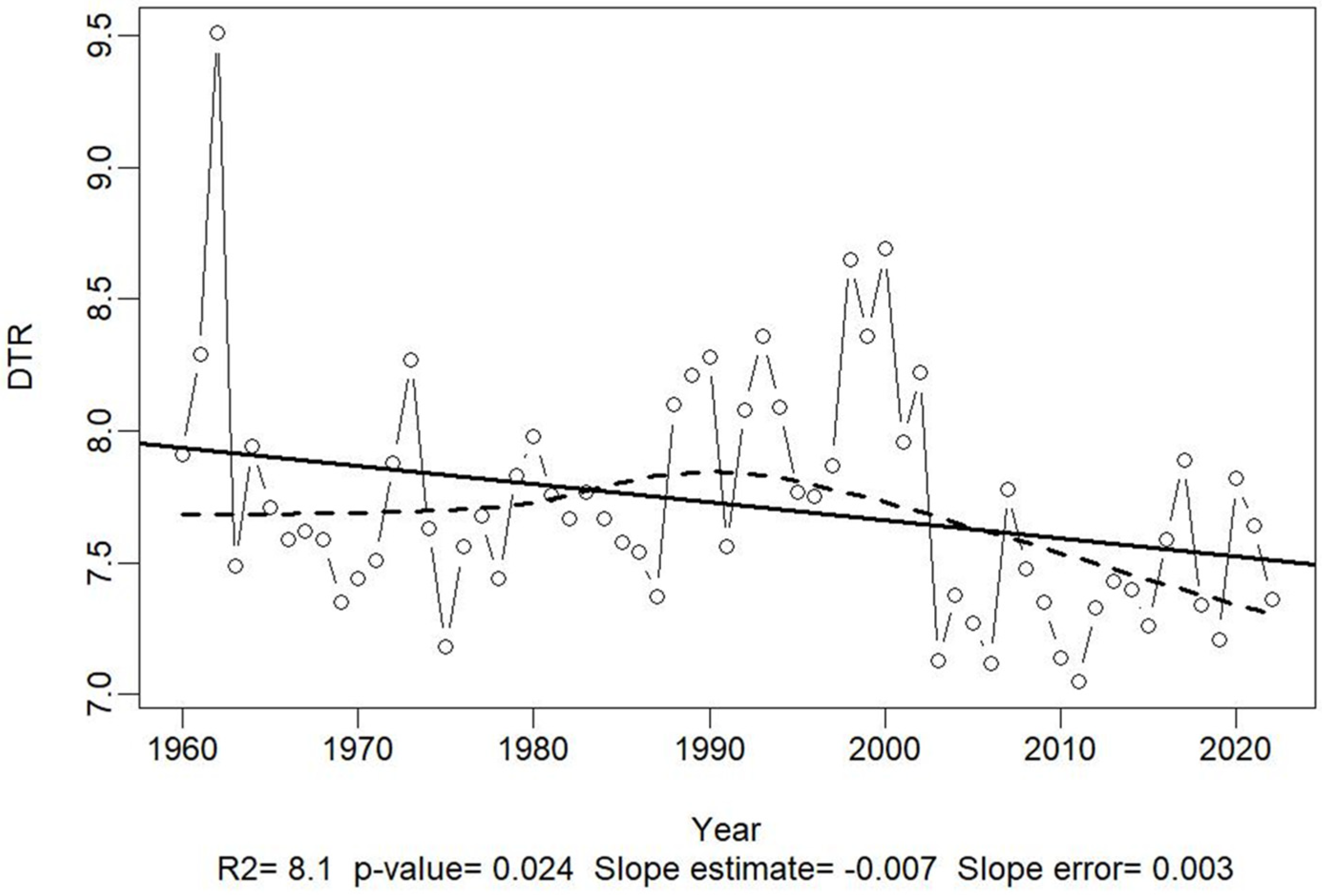
- DTR—Diurnal Temperature Range

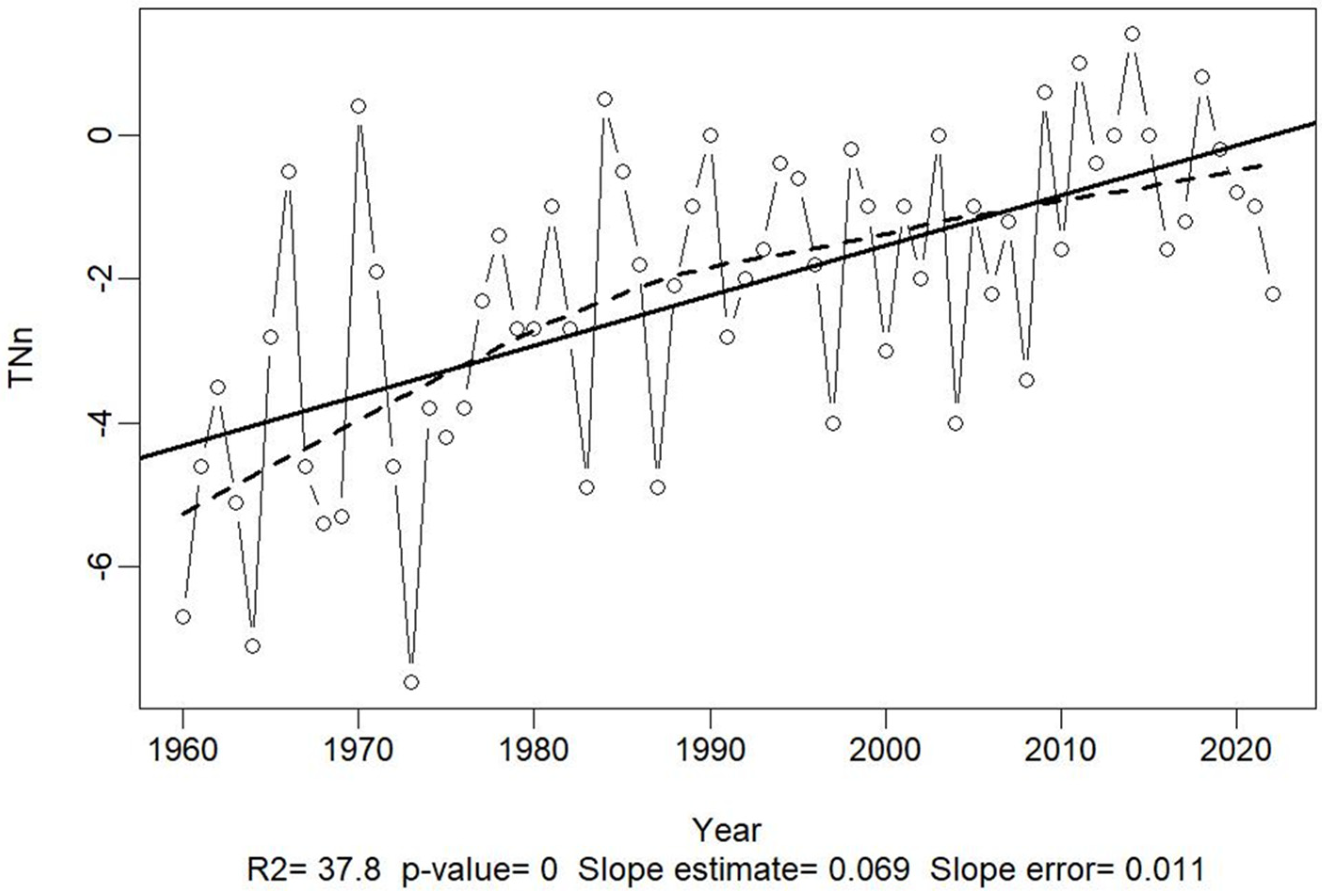
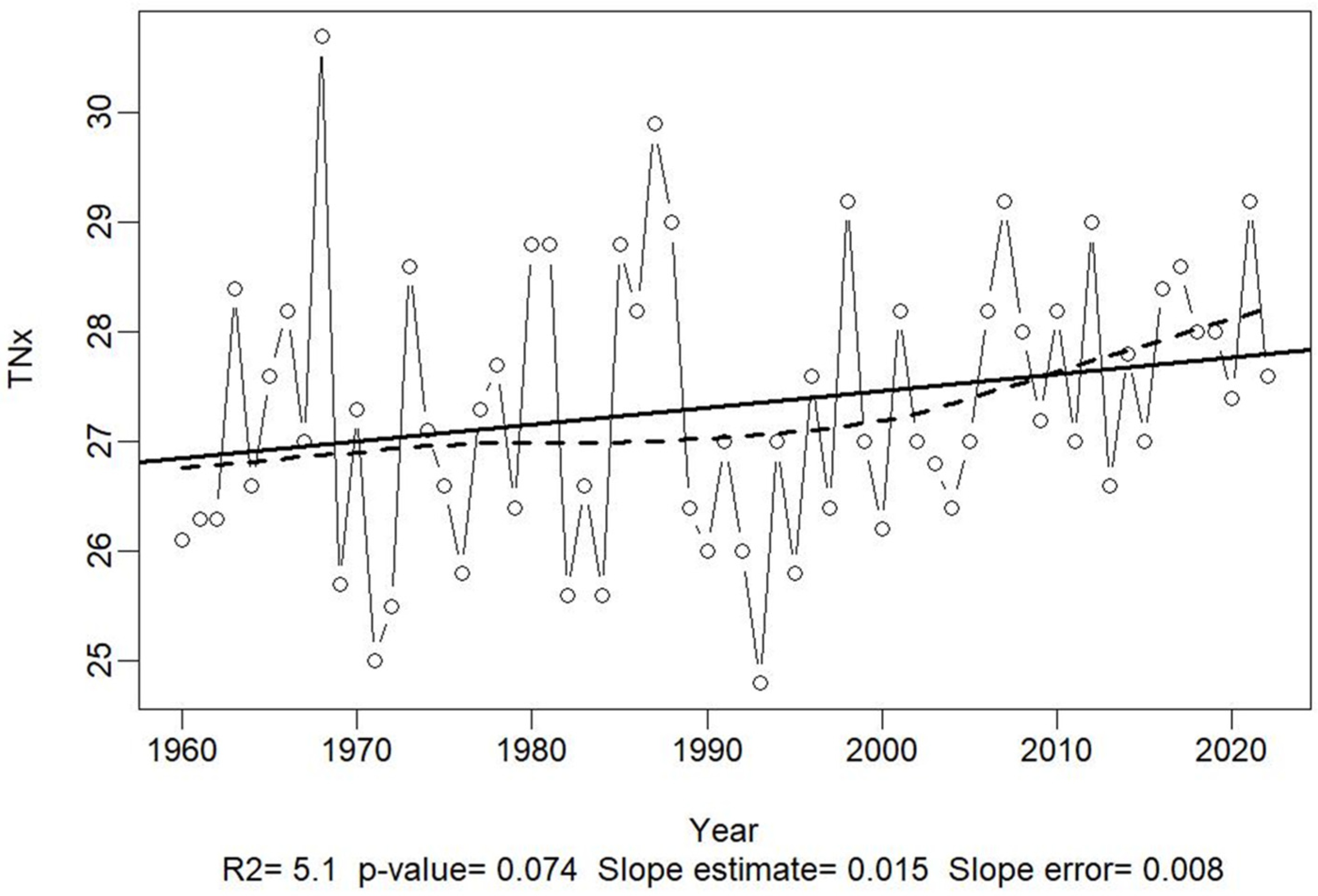
- TNn and TNx—Lowest Tmin and Highest Tmin during the period


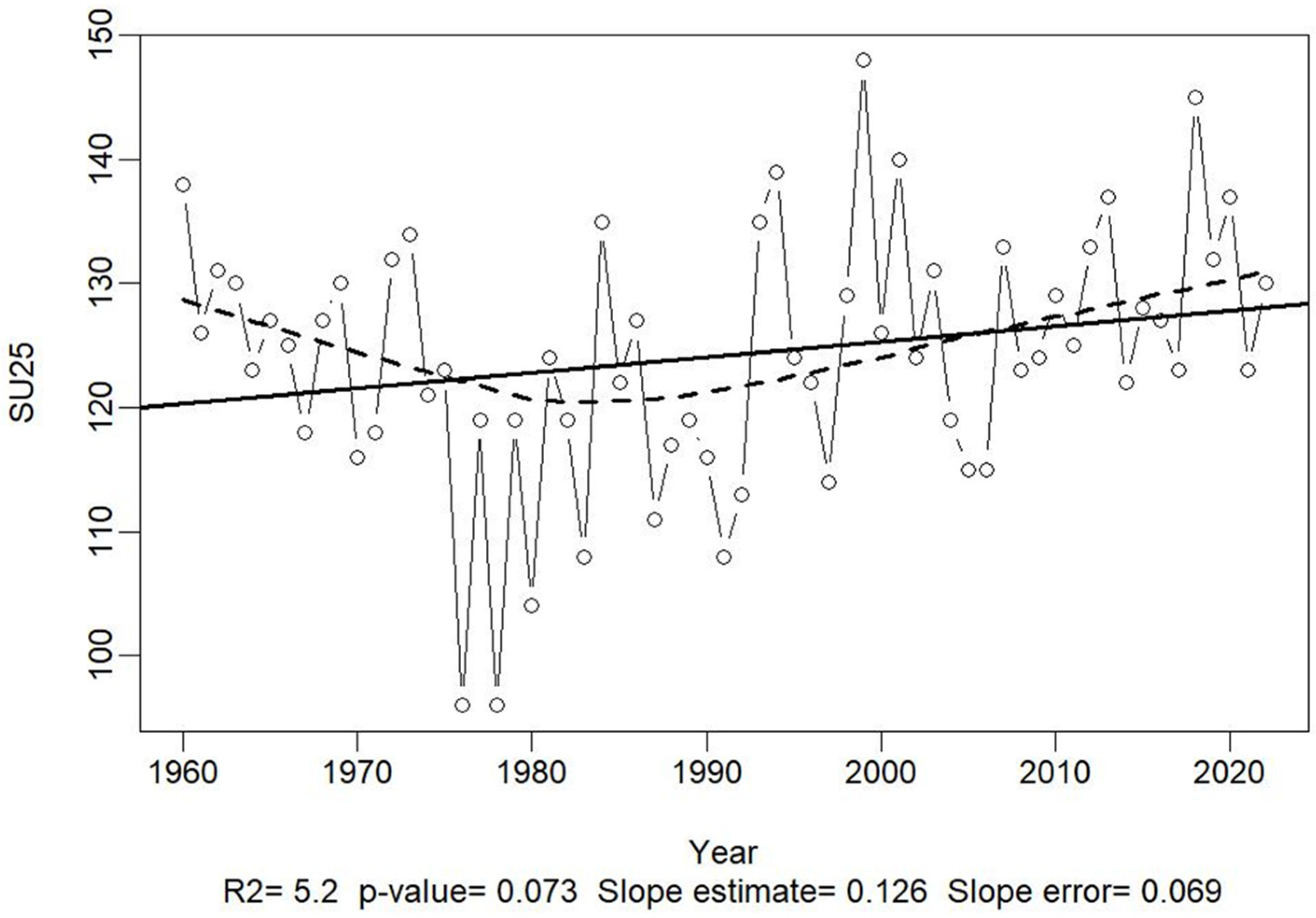
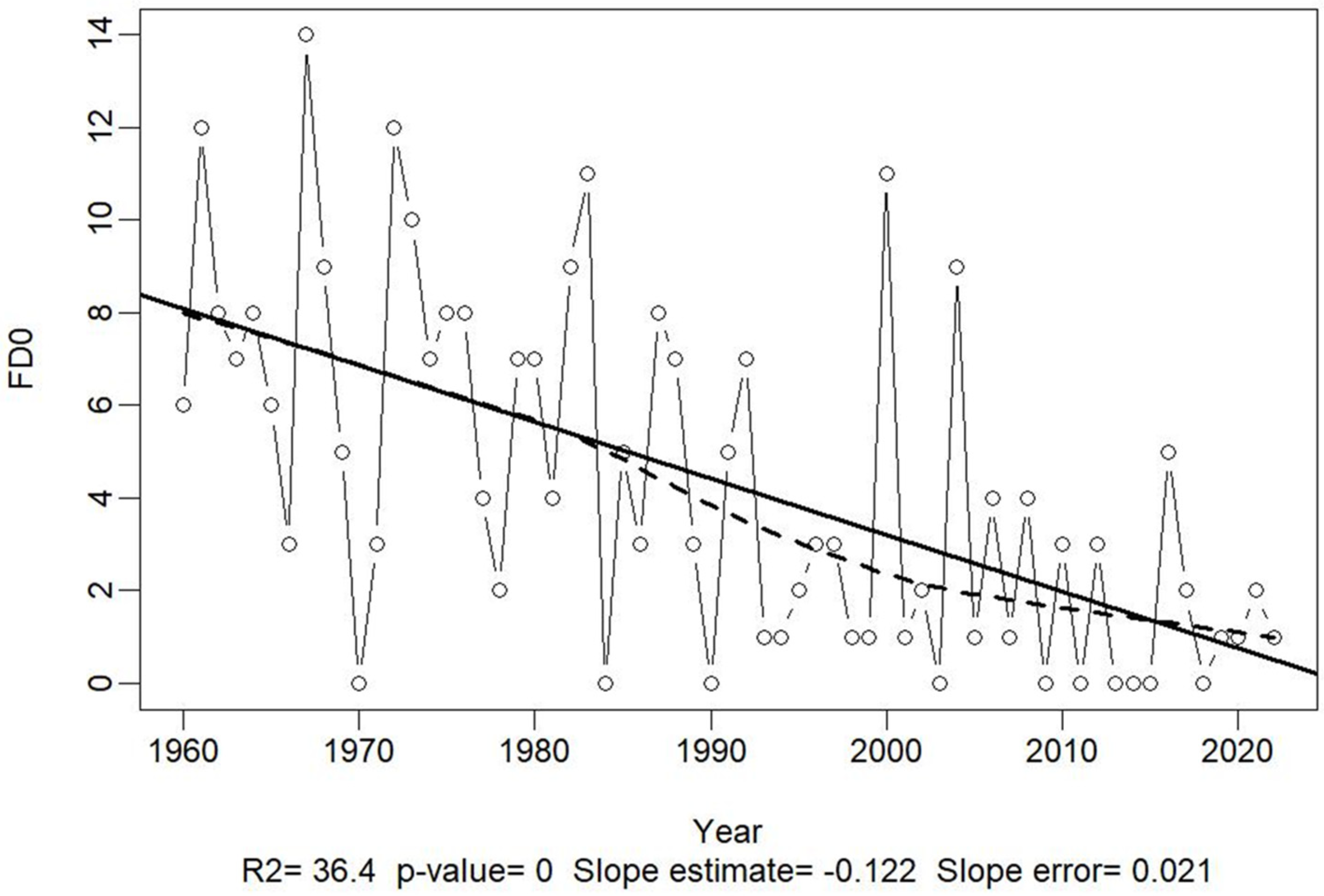
- SU25—Days with Tmax ≥ 25 °C and FD0- Days with Tmin < 0 °C


3.3.2. Precipitation
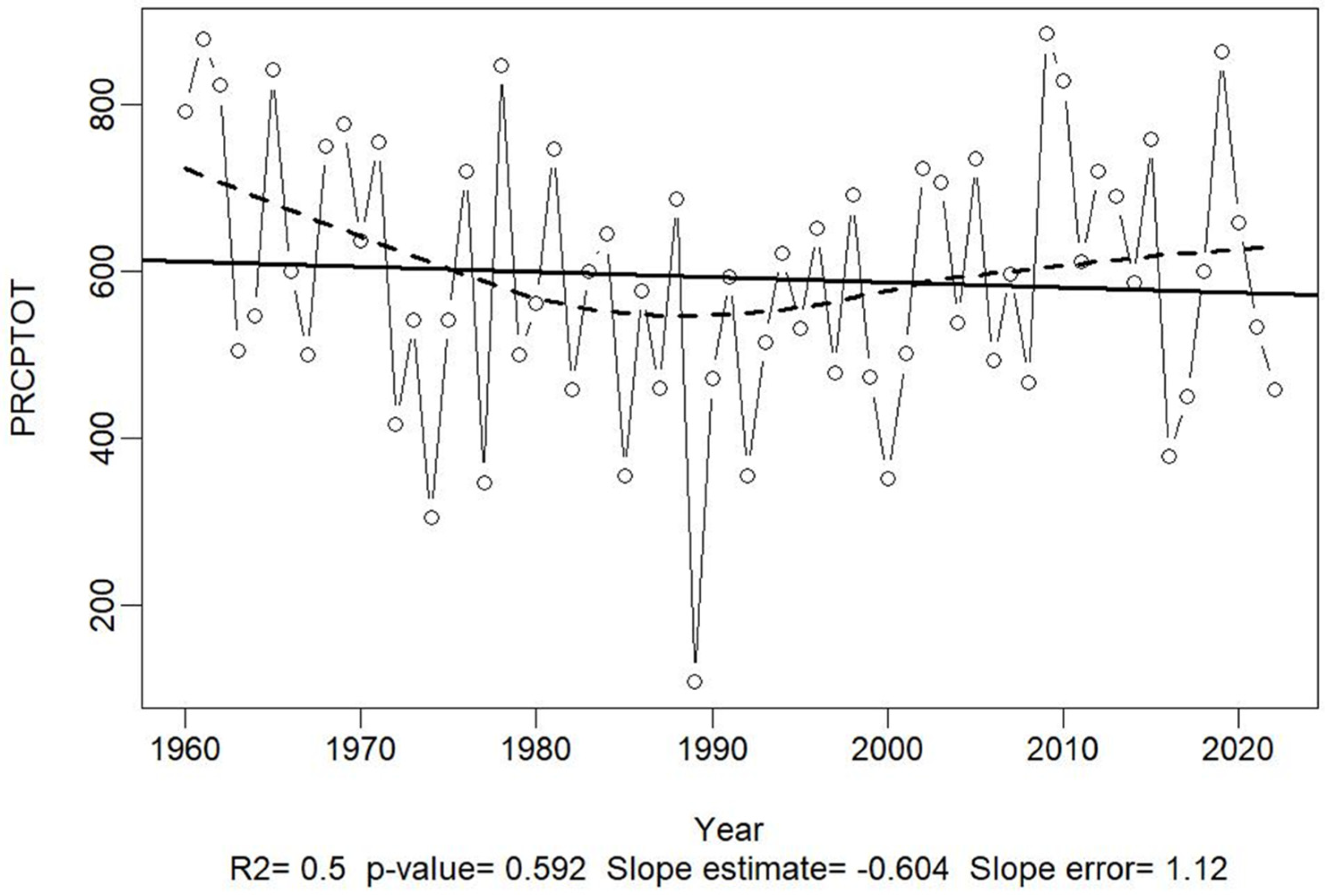
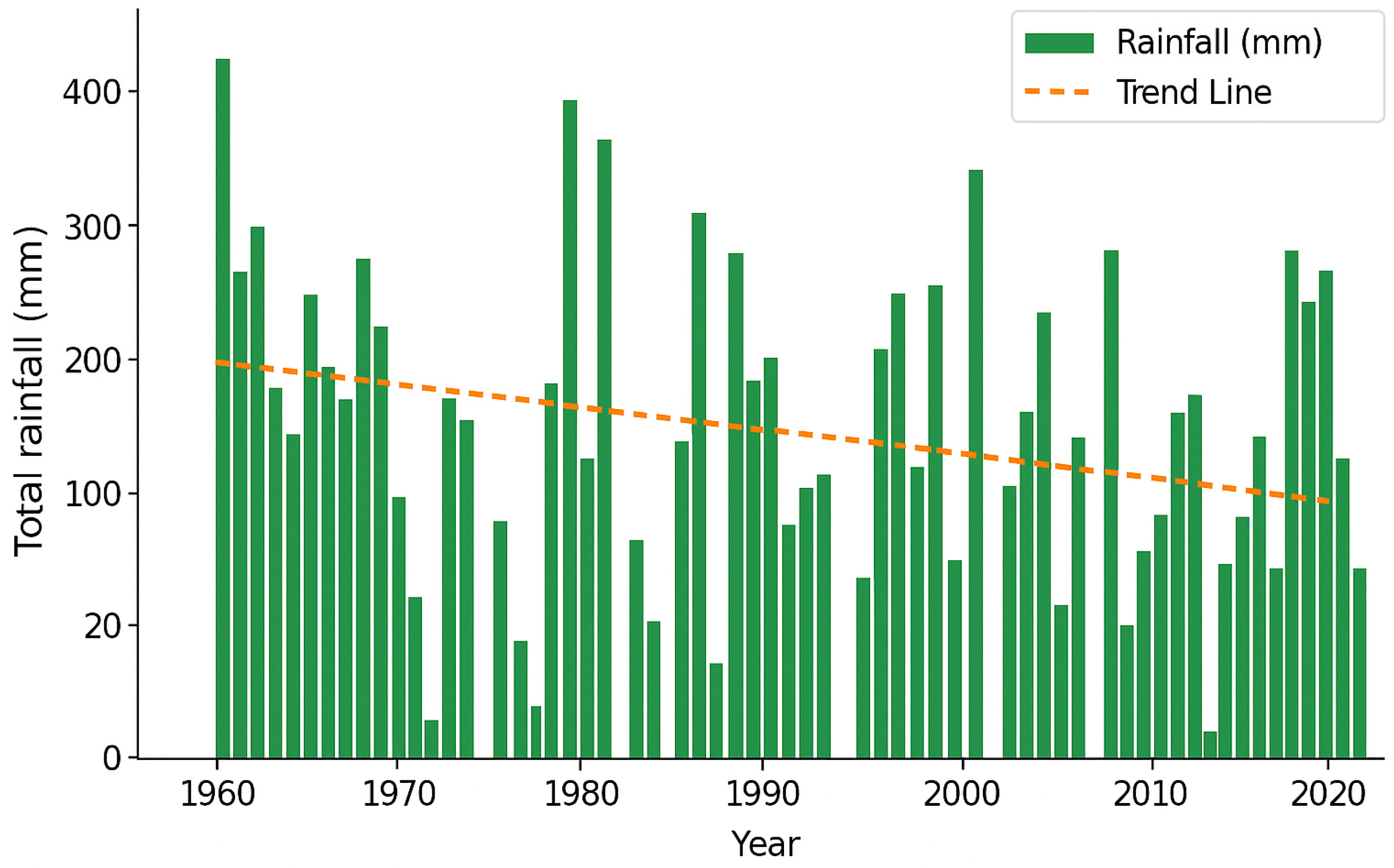
- Annual Total Precipitation (PRCPTOT)

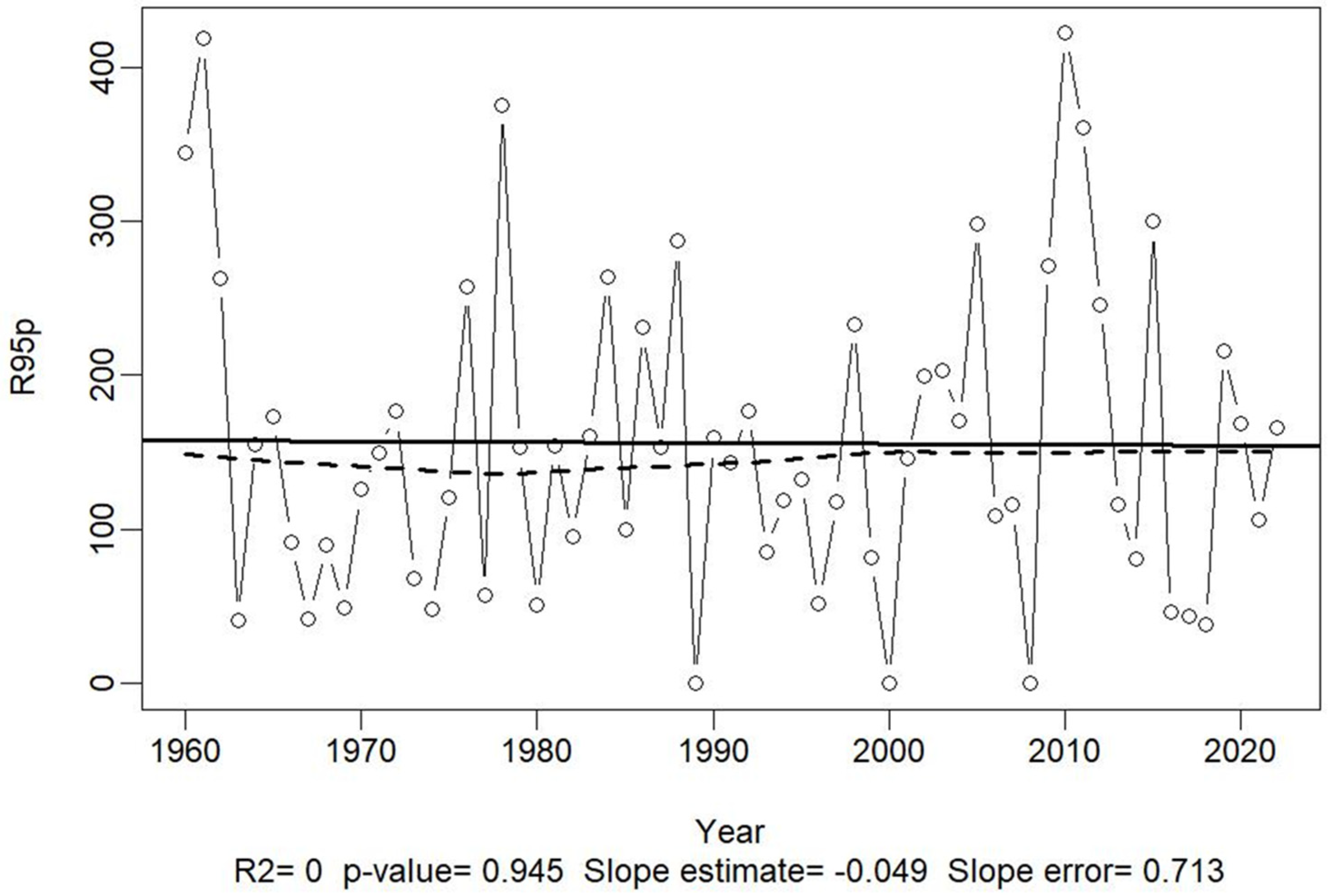
- R95p Very Wet Days

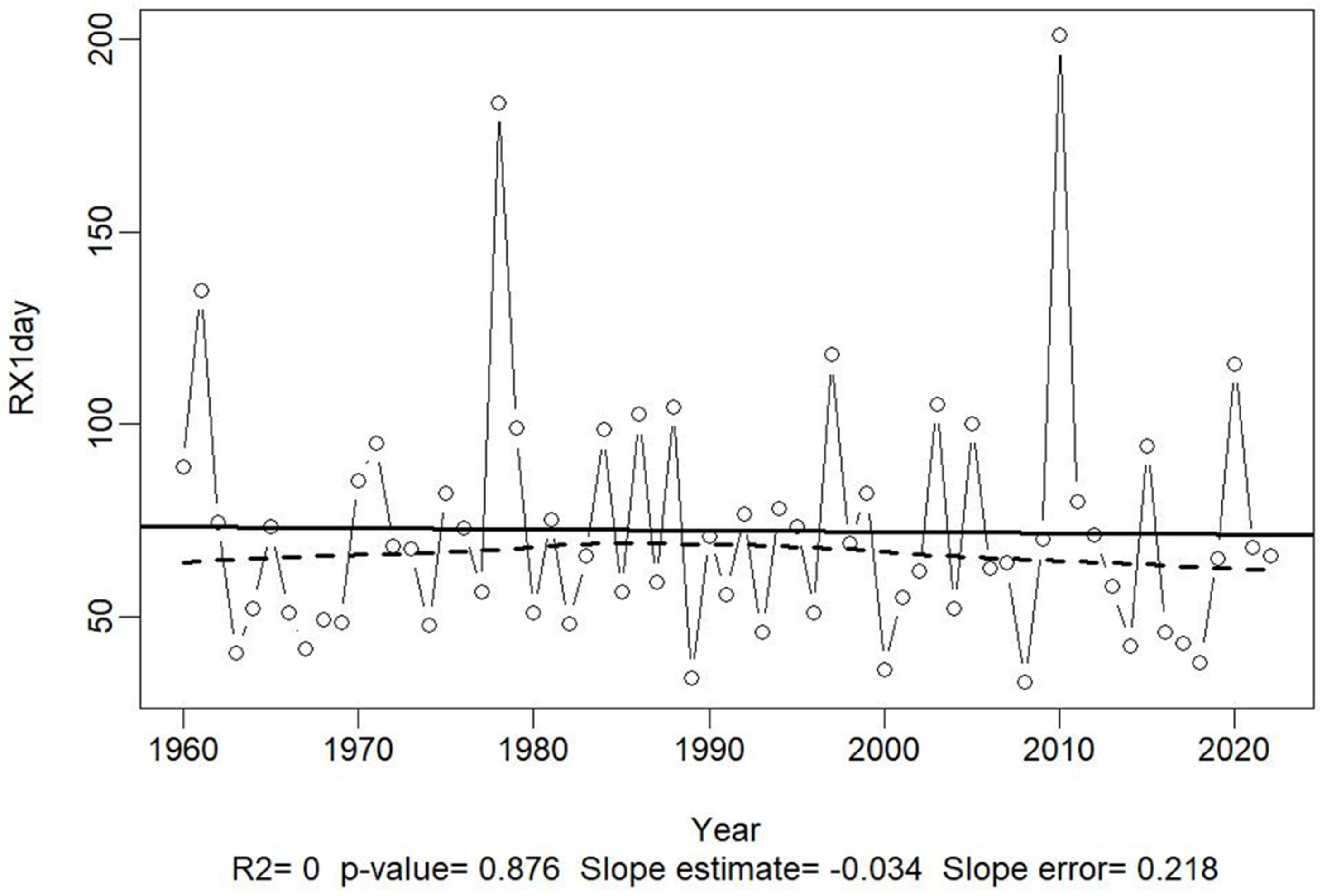
- RX1day Maximum 1-Day Precipitation

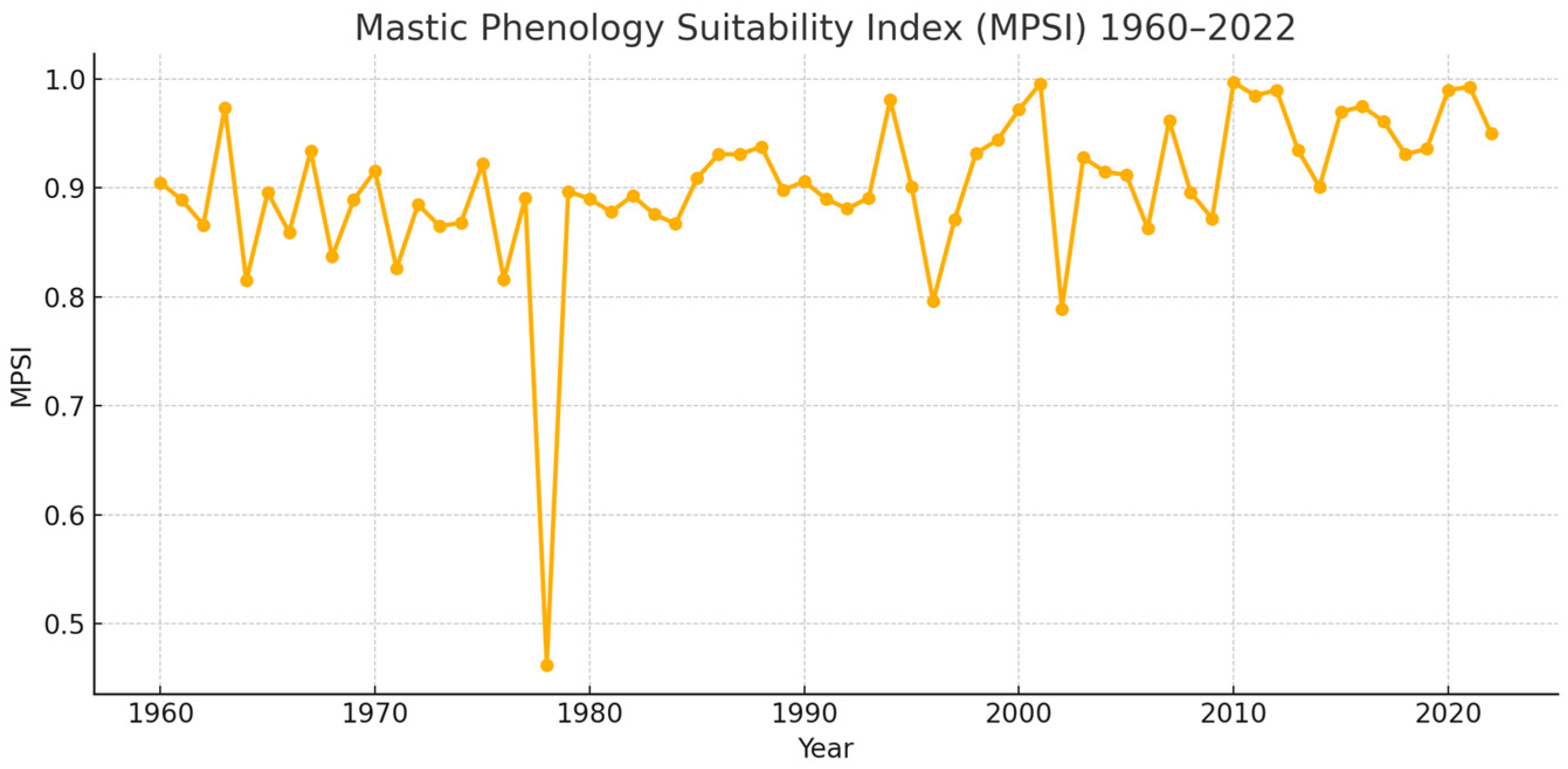
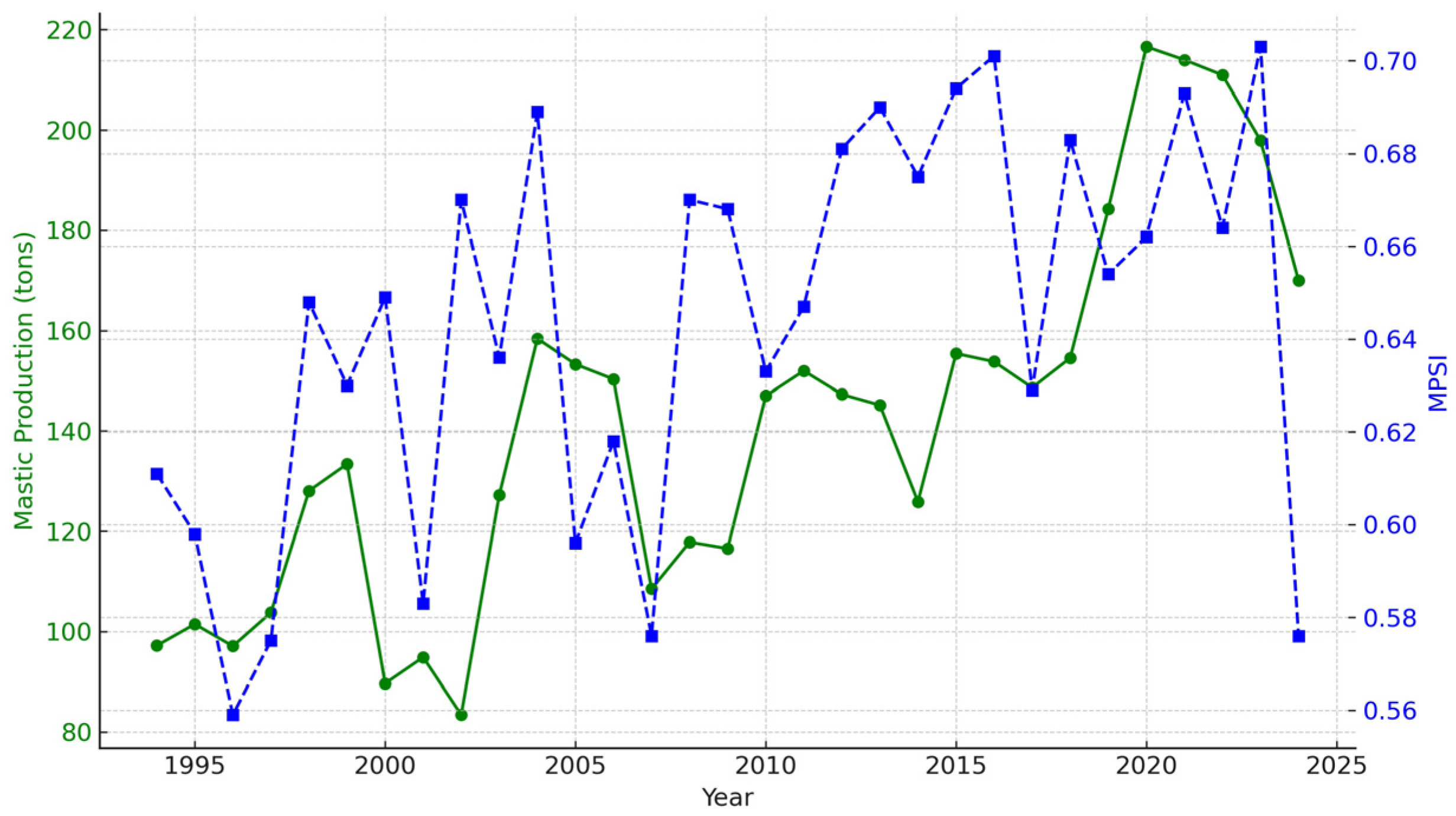
3.3.3. Development and Analysis of the Mastic Phenology Suitability Index (MPSI): 1960–2024
- α = 0.6, β = 0.4 are non-dimensional weighting empirical coefficients emphasizing thermal over moisture conditions.
- GDDJAS: Sum of Growing Degree Days (TG—15 °C) for July–September
- where GDDJAS is the sum of Growing Degree Days for the July–September period, TG,i is the daily mean air temperature on day i, Tbase is the base temperature (15 °C), and n is the total number of days in the July–September period.
- RJAS: Total rainfall in mm for July–September
- maxGDDJAS (in days) and maxRJAS (in mm) are the maximum values in the 1960–2024 dataset [40]

Selected Years and Notes on Mastic Production Conditions
- Penalty year accounts for negative stress events such as extreme daily temperatures, sudden rainfall events (e.g., September storms), or erratic climatic variability.
- α, β, and γ are weighting factors, calibrated to ensure that their sum approximates 1 (e.g., α = 0.5, β = 0.4, γ = 0.1).
4. Correlation of Climate Indices with Mastic Tree Growth and Gum Production
4.1. November–December Rainfall
4.2. Extreme Rainfall and Climate Impact on Mastiha Cultivation—Chios, September 2024
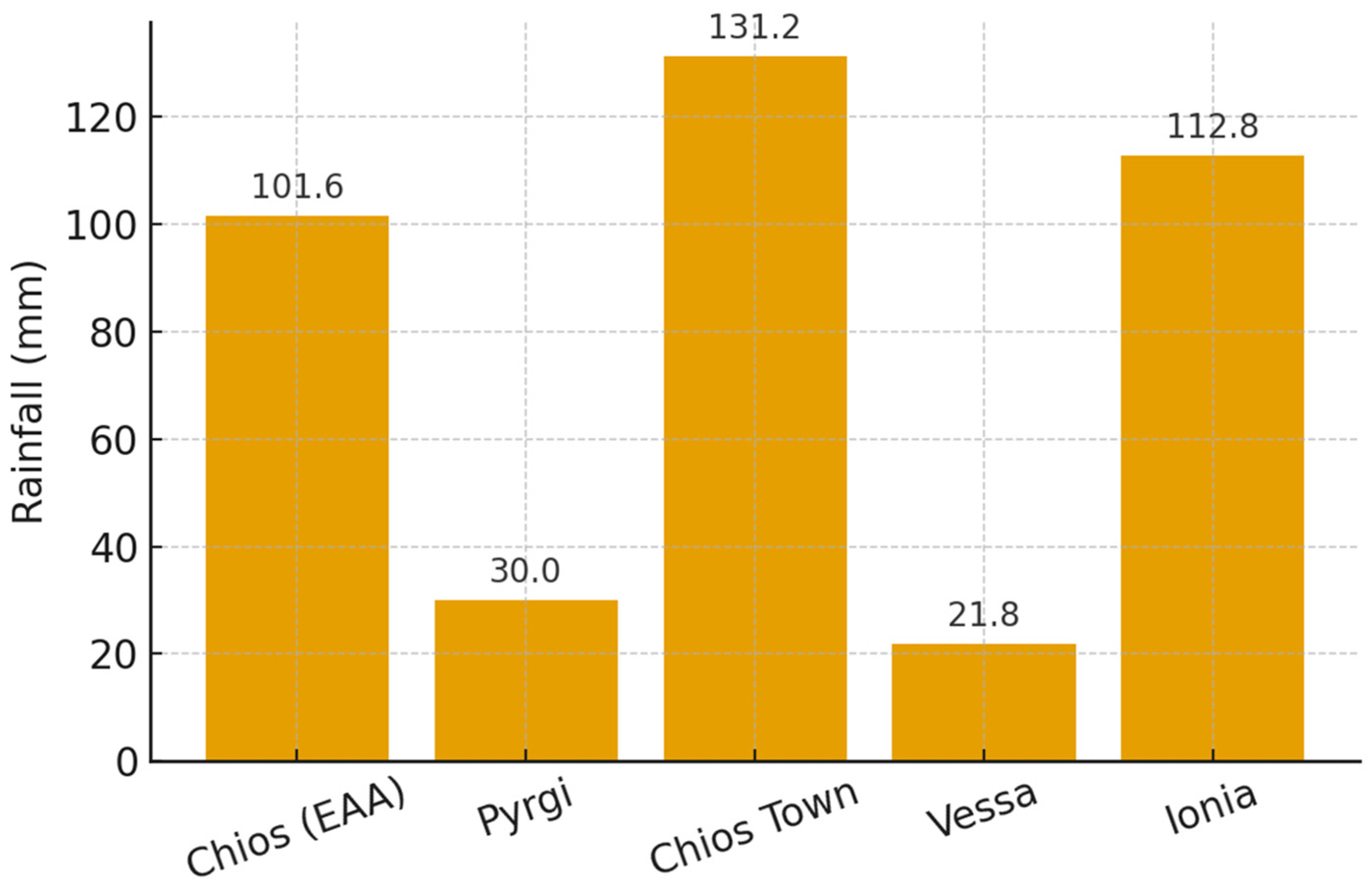
4.2.1. Rainfall Geographical Distribution Across Southern Chios September 2024
4.2.2. Impact on Mastic Production
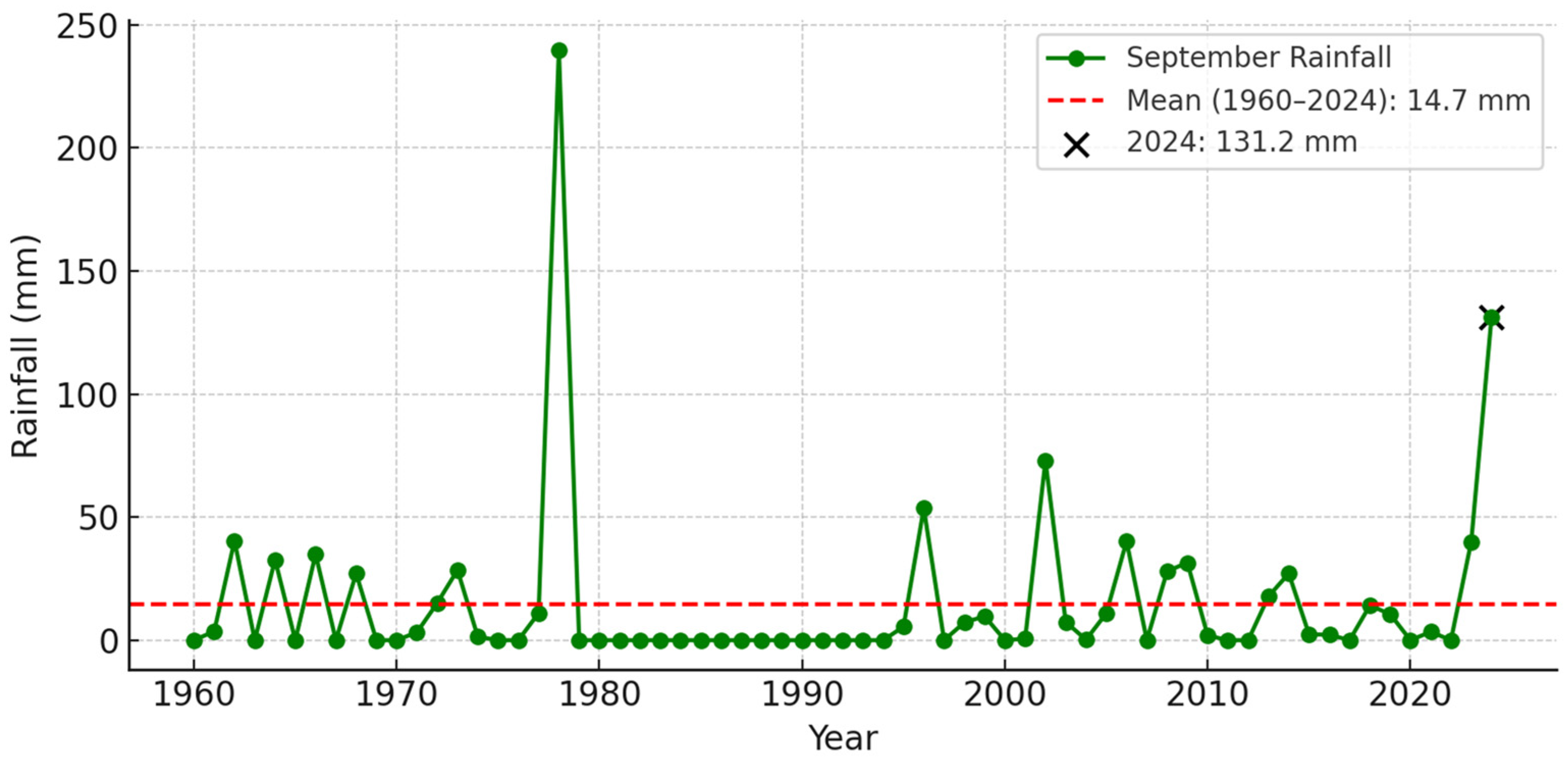
4.3. Historical Context—September Rainfall (1960–2024)
5. Discussion
6. Conclusions
Author Contributions
Funding
Data Availability Statement
Acknowledgments
Conflicts of Interest
Appendix A

| Index | Description |
|---|---|
| CDD | Consecutive Dry Days—Number of consecutive dry days with RR < 1 mm |
| CSDI | Cold Spell Duration Index—Days within a cold spell ≥ 6 days with Tmin < 10th percentile |
| CWD | Consecutive Wet Days—Number of consecutive wet days with RR ≥ 1 mm |
| DTR | Diurnal Temperature Range—Daily temperature range: Tmax—Tmin |
| FD | Frost Days—Days with Tmin < 0 °C |
| GSL | Growing Season Length—Length of the growing season with Tmean > 5 °C |
| ID0 | Ice Days—Days with Tmax < 0 °C |
| PRCPTOT | Total Precipitation—Total precipitation for RR ≥ 1 mm |
| PRCPQC | Precipitation Quality Control—Indicator for precipitation data quality control |
| R10mm | Heavy Precipitation Days—Days with RR ≥ 10 mm |
| R95p | Very Wet Days—Days with RR > 95th percentile |
| R99p | Extremely Wet Days—Days with RR > 99th percentile |
| RX1DAY | Max 1-day Precipitation—Maximum daily precipitation |
| RX5DAY | Max 5-day Precipitation—Maximum precipitation over 5 consecutive days |
| SDII | Simple Daily Intensity Index—Precipitation intensity: PRCPTOT/number of days with RR ≥ 1 mm |
| SU25 | Summer Days—Days with Tmax ≥ 25 °C |
| pempQC | Precipitation Empirical Quality Control—Empirical quality control for precipitation data |
| tepstdQC | Temperature Standardized QC—Standardized quality control for temperature data |
| Tmax mean | Mean Maximum Temperature—Average of daily maximum temperatures |
| TN10p | Cool Nights—Days with Tmin < 10th percentile |
| TN90p | Warm Nights—Days with Tmin > 90th percentile |
| TNn | Minimum of Tmin—Lowest Tmin during the period |
| TNx | Maximum of Tmin—Highest Tmin during the period |
| TR20 | Tropical Nights—Days with Tmin > 20 °C |
| TX10p | Cool Days—Days with Tmax < 10th percentile |
| TX90p | Warm Days—Days with Tmax > 90th percentile |
| TXn | Minimum of Tmax—Lowest Tmax during the period |
| TXx | Maximum of Tmax—Highest Tmax during the period |
| WSDI | Warm Spell Duration Index—Days within warm spells ≥ 6 days with Tmax > 90th percentile |
References
- IPCC. Climate Change 2021: The Physical Science Basis. Contribution of Working Group I to the Sixth Assessment Report; Intergovernmental Panel on Climate Change: Geneva, Switzerland, 2021; Available online: https://www.ipcc.ch/report/ar6/wg1/ (accessed on 23 January 2024).
- Lionello, P.; Malanotte-Rizzoli, P.; Boscolo, R. The Climate of the Mediterranean Region: From the Past to the Future; Elsevier: Amsterdam, The Netherlands, 2012. [Google Scholar]
- Zittis, G.; Hadjinicolaou, P.; Almazroui, M.; Bucchignani, E.; Driouech, F.; El Rhaz, K.; Kurnaz, L.; Nikulin, G.; Ntoumos, A.; Ozturk, T.; et al. Business-as-Usual Will Lead to Super and Ultra-Extreme Heatwaves in the Middle East and North Africa. npj Clim. Atmos. Sci. 2021, 4, 20. [Google Scholar] [CrossRef]
- Luedeling, E.; Mojahid, H.; Fadón, E.; Rodrigo, J.; Ruiz, D.; Egea, J.A.; Ben Mimoun, M.; Kodad, O.; El Yaacoubi, A.; Ghrab, M.; et al. Climate change impacts on winter chill in Mediterranean fruit and nut trees. Reg. Environ. Chang. 2022, 23, 7. [Google Scholar] [CrossRef]
- Hubert Octave Pernot. Wikipedia. 2024. Available online: https://en.wikipedia.org/wiki/Hubert_Pernot (accessed on 10 October 2025).
- Pernot, H. En Pays Turc. L’île de Chio; Maisonneuve: Paris, France, 1903. [Google Scholar]
- Fragkiadakis, A.; Ntakoudakis, A.; Zervas, G. The economic and cultural value of traditional crops: Case study of mastic from Chios. J. Rural Stud. 2020, 76, 45–55. [Google Scholar] [CrossRef]
- Poulaki, P.; Rachiotis, T. Intangible Cultural Heritage and Tourism Development—Case Study: Mastiha cultivation know-how in Chios island. South Asian J. Tour. Hosp. 2024, 22, 18–35. [Google Scholar]
- Paraschos, S.; Mitakou, S.; Skaltsounis. Chios gum mastic: A review of its biological activities. Curr. Med. Chem. 2012, 19, 2292–2302. [Google Scholar] [CrossRef]
- European Commission. PDO Database: Chios Mastic Gum. Available online: https://ec.europa.eu/info/food-farming-fisheries/food-safety-and-quality/certification/quality-labels/geographical-indications-register/ (accessed on 4 December 2025).
- Chios Gum Mastic Growers Association. Annual Report 2024; Chios Gum Mastic Growers Association: Chios, Greece, 2024; Available online: https://www.gummastic.gr (accessed on 10 October 2025).
- Álvarez, C.; Acosta-Motos, J.R.; Sánchez-Blanco, M.J. Physiological response to drought and salinity in Pistacia lentiscus seedlings under greenhouse conditions. Front. Plant Sci. 2023, 14, 1237332. [Google Scholar] [CrossRef]
- Vasques, A.R.; Pinto, G.; Dias, M.C.; Correia, C.M.; Moutinho-Pereira, J.M.; Vallejo, V.R.; Santos, C.; Keizer, J.J. Physiological response to drought in seedlings of Pistacia lentiscus. New For. 2015, 46, 149–162. [Google Scholar] [CrossRef]
- Ayub, M.A.; Iram, I.; Waseem, R.; Ayub, I.; Hussain, A.; Abid, M.A.; Iqbal, S.Z. Optimizing essential oil yield from Pistacia lentiscus: Adaptation under climatic stress. Sci. Rep. 2024, 14, 74972. [Google Scholar] [CrossRef]
- Browicz, K. Plant Systematics and Evolution, Pistacia lentiscus cv. Chia (Anacardiaceae) on Chios island. Plant Syst. Evol. 1987, 155, 189–195. [Google Scholar] [CrossRef]
- Chen, X.-L.; Guo, W.-Z.; Xue, X.-Z.; Wang, L.-C.; Qiao, X.-J. Loss of winter chill and its impact on pistachio phenology in Mediterranean climate. Sci. Hortic. 2014, 172, 168–175. [Google Scholar] [CrossRef]
- Kandhway, A.; Scarpare, F.; Liu, M.; Nelson, R.; Adam, J.C.; Anderson, R.G.; Conklin, M.H.; Safeeq, M. Water use dynamics of Mediterranean pistachio and almond under warming. Agric. Water Manag. 2025, 307, 109219. [Google Scholar] [CrossRef]
- Kamou, N. Species of the Genera Neopestalotiopsis and Alternaria as Dominant Pathogen Species Attacking Mastic Trees (Pistacia lentiscus var. chia). Microbiol. Res. 2023, 14, 104–115. [Google Scholar] [CrossRef]
- Xoplaki, E.; González-Rouco, J.F.; Luterbacher, J.; Wanner, H. Mediterranean summer air temperature variability and trends. Clim. Dyn. 2003, 20, 723–739. [Google Scholar] [CrossRef]
- Cristiano, G.; Camposeo, S.; Fracchiolla, M.; Vivaldi, G.A.; De Lucia, B.D.L.; Cazzato, E. Salinity differentially affects growth and ecophysiology of two Pistacia lentiscus accessions. Forests 2016, 7, 156. [Google Scholar] [CrossRef]
- Martin-Recio, C.; Luedeling, E. Heat- and cold-stressed individuals of Pistacia lentiscus modify their metabolic profile. Plants 2021, 10, 2108. [Google Scholar] [CrossRef]
- Andreu Hay, E.; Corcuera, L.J. Differential drought resistance strategies of Mediterranean shrub species. J. Ecol. 2019, 107, 1200–1214. [Google Scholar] [CrossRef]
- Xoplaki, E.; Luterbacher, J.; Wanner, H. Climate responses around the Mediterranean: Variability and extremes. Glob. Planet Chang. 2006, 54, 260–271. [Google Scholar]
- Türkeş, M.; Sümer, U.M. Spatial and temporal patterns of trends and variability in diurnal temperature ranges of Turkey. Theor. Appl. Climatol. 2004, 77, 195–227. [Google Scholar] [CrossRef]
- Türkeş, M.; Luterbacher, J. Heat wave changes in the eastern Mediterranean since 1960. Geophys. Res. Let. 2010, 37, L04802. [Google Scholar] [CrossRef]
- Álvarez, C.; Amharref, M.; Bernoussi, A.-S. Drought effects on Pistacia lentiscus using UV-NIR spectroscopy. J. Ecol. Eng. 2022, 23, 155–162. [Google Scholar] [CrossRef]
- Tsiotas, G.; Mamara, A.; Argiriou, A.; Tsoukala, A. Testing mean air temperature trends in southern Greece: A Bayesian approach. Int. J. Climatol. 2022, 42, 4989–5015. [Google Scholar] [CrossRef]
- European Parliament. Disasters in Chios and Need for Full Compensation for Mastic Producers and All Those Affected. Available online: https://www.europarl.europa.eu/doceo/document/E-10-2024-001760_EN.html/ (accessed on 15 July 2025).
- Dimosio.gr. Damage from Athina Weather System in Mastic Gum. Available online: https://dimosio.gr/katastrofes-prokalese-i-kakokeria-atena-sti-masticha-tis-chiou/ (accessed on 10 July 2025). (In Greek).
- Politischios.gr. The Economic Damage from the Severe Weather System “Athena” Is Likely to Exceed 4.5 Million Euros, Estimates Chios Mastic Gum Growers Association. Available online: https://www.politischios.gr/oikonomia/kata-425-tonous-meiomeni-i-fetini-paragogi-mastihas (accessed on 1 June 2025). (In Greek).
- Proto Thema. Significant Damage from the Severe Weather on Chios–Damage to the Mastic Crops, the Airport Flooded. Available online: https://www.protothema.gr/greece/article/1539210/simadikes-katastrofes-apo-tin-kakokairia-sti-hio-zimies-sto-mastihi-plimmurise-i-aithousa-tou-aerodromiou/ (accessed on 10 May 2025). (In Greek).
- CMGGA. Press Release: Assessment of September Damage. Chios Gum Mastic Growers Association. Available online: https://www.gummastic.gr/el/component/k2/itemlist/category/32?Itemid=374 (accessed on 1 July 2025).
- Magiatis, P.; Melliou, E.; Skaltsounis, A.L.; Chinou, I.; Mitaku, S. Chemical composition and antimicrobial activity of the essential oils of Pistacia lentiscus var. chia. Planta Med. 1999, 65, 749–752. [Google Scholar] [CrossRef] [PubMed]
- Koutsoudaki, C.; Krsek, M.; Rodger, A. Chemical composition and antibacterial activity of the essential oil and the gum of Pistacia lentiscus var. chia. J. Agric. Food Chem. 2005, 53, 7681–7685. [Google Scholar] [CrossRef] [PubMed]
- Marone, P.; Bono, L.; Leone, E.; Bona, S.; Carretto, E.; Perversi, L. Bactericidal activity of Pistacia lentiscus mastic gum against Helicobacter pylori. J. Chemother. 2001, 13, 611–614. [Google Scholar] [CrossRef]
- Loutrari, H.; Magkouta, S.; Pyriochou, A.; Koika, V.; Kolisis, F.N.; Papapetropoulos, A.; Roussos, C. Mastic oil from Pistacia lentiscus var chia inhibits growth and survival of human K562 leukemia cells and attenuates angiogenesis. Nutr. Cancer 2006, 55, 86–93. [Google Scholar] [CrossRef]
- Mamara, A.; Anadranistakis, M.; Argiriou, A.A.; Szentimrey, T.; Kovacs, T.; Bezes, A.; Bihari, Z. High resolution air temperature climatology for Greece for the period 1971–2000. Meteorol. Appl. 2017, 24, 191–205. [Google Scholar] [CrossRef]
- Li, Z.; Shi, Y.; Argiriou, A.A.; Ioannidis, P.; Mamara, A.; Yan, Z. A Comparative Analysis of Changes in Temperature and Precipitation Extremes since 1960 between China and Greece. Atmosphere 2022, 13, 1824. [Google Scholar] [CrossRef]
- Intergovernmental Panel on Climate Change (IPCC). Climate Change 2007 Fourth Assessment Report. Synthesis Report; World Meteorological Organization: Geneva, Switzerland, 2007. [Google Scholar]
- Stefi, A.L.; Nikou, T.; Vassilacopoulou, D.; Skaltsounis, A.L.; Halabalaki, M.; Christodoulakis, N.S. Structure and organization of the secretion apparatus of the mastic tree (Pistacia lentiscus L.) and LC–HRMS analysis of leaf extracts. Planta 2021, 253, 70. [Google Scholar] [CrossRef]
- HNMS Services. Available online: https://emy.gr/climatic-data?tab=statistics-tab (accessed on 2 July 2025).
- Weather Forecasts for Greece. Available online: https://www.meteo.gr/meteomaps (accessed on 2 July 2025).
- Faria, T.; Silvério, D.; Breia, E.; Cabral, R.; Abadía, A.; Abadía, J.; Pereira, J.S.; Chaves, M.M. Differences in the response of carbon assimilation to summer stress (water deficits, high light and temperature) in four Mediterranean tree species. Physiol. Plant. 1998, 102, 419–428. [Google Scholar] [CrossRef]
- Moriondo, M.; Giannakopoulos, C.; Bindi, M. Climate change impact assessment: The role of climate extremes in crop yield simulation. Clim. Chang. 2011, 104, 679–701. [Google Scholar] [CrossRef]
- Xoplaki, E.; Luterbacher, J.; Wagner, S.; Zorita, E.; Fleitmann, D.; Preiser-Kapeller, J.; Sargent, A.M.; White, S.; Toreti, A.; Haldon, J.F.; et al. Modelling climate and societal resilience in the Eastern Mediterranean in the last millennium. Hum. Ecol. 2018, 46, 363–379. [Google Scholar] [CrossRef]
- Nagarajan, S.; Jagadish, S.V.K.; Prasad, A.H.; Thomar, A.; Anand, A.; Pal, M.; Agarwal, P. Local climate affects growth, yield and grain quality of aromatic and non-aromatic rice in northwestern India. Agric. Ecosyst. Environ. 2010, 138, 274–281. [Google Scholar] [CrossRef]
- Luterbacher, J.; Newfield, T.P.; Xoplaki, E.; Nowatzki, E.; Luther, N.; Zhang, M.; Khelifi, N. Past pandemics and climate variability across the Mediterranean. Euro-Mediterr. J. Environ. Integr. 2020, 5, 46. [Google Scholar] [CrossRef]


| Climatic Stressor | Critical Period | Observed or Potential Impacts on Mastic Gum Cultivation |
|---|---|---|
| High temperatures (>38–40 °C) | July–September | Delayed or incomplete resin solidification; reduced quality; stress on plant metabolism, fewer working days |
| Heatwaves (>3 consecutive hot days) | July–September | Inhibition of resin hardening; increased evapotranspiration; damage to young bark tissue |
| Intense rainfall (>50 mm/day) | August–September | Resin washed off or contaminated; muddy soil prevents collection; heightened risk of fungal rot |
| Rainfall during incision period | Late July–early August | Delayed resin exudation; increased risk of wound infection |
| High nighttime temperatures (>25 °C) | July–August | Lower diurnal temperature variation reduces physiological recovery; negative effects on resin biosynthesis |
| Low rainfall in winter (<150 mm total) | December–February | Reduced soil moisture recharge; weak vegetative growth during spring |
| Strong winds during harvest | August–September | Physical harm to resin drops; increased contamination from soil particles. |
| Unseasonal temperature fluctuations | Spring and autumn months | Disrupted resin flow timing; early or late resin exudation outside the collection schedule. |
| Variable | Mean Abs. Diff. | Std. Dev. | Min Diff. | Max Diff. | % (Months) Diff ≤ 0.1 | % (Months) Diff ≤ 0.5 | % (Months) Diff ≤ 1.0 |
|---|---|---|---|---|---|---|---|
| Max Temp (°C) | 0.57 | 0.45 | 0.03 | 1.33 | 33.3 | 50.0 | 75.0 |
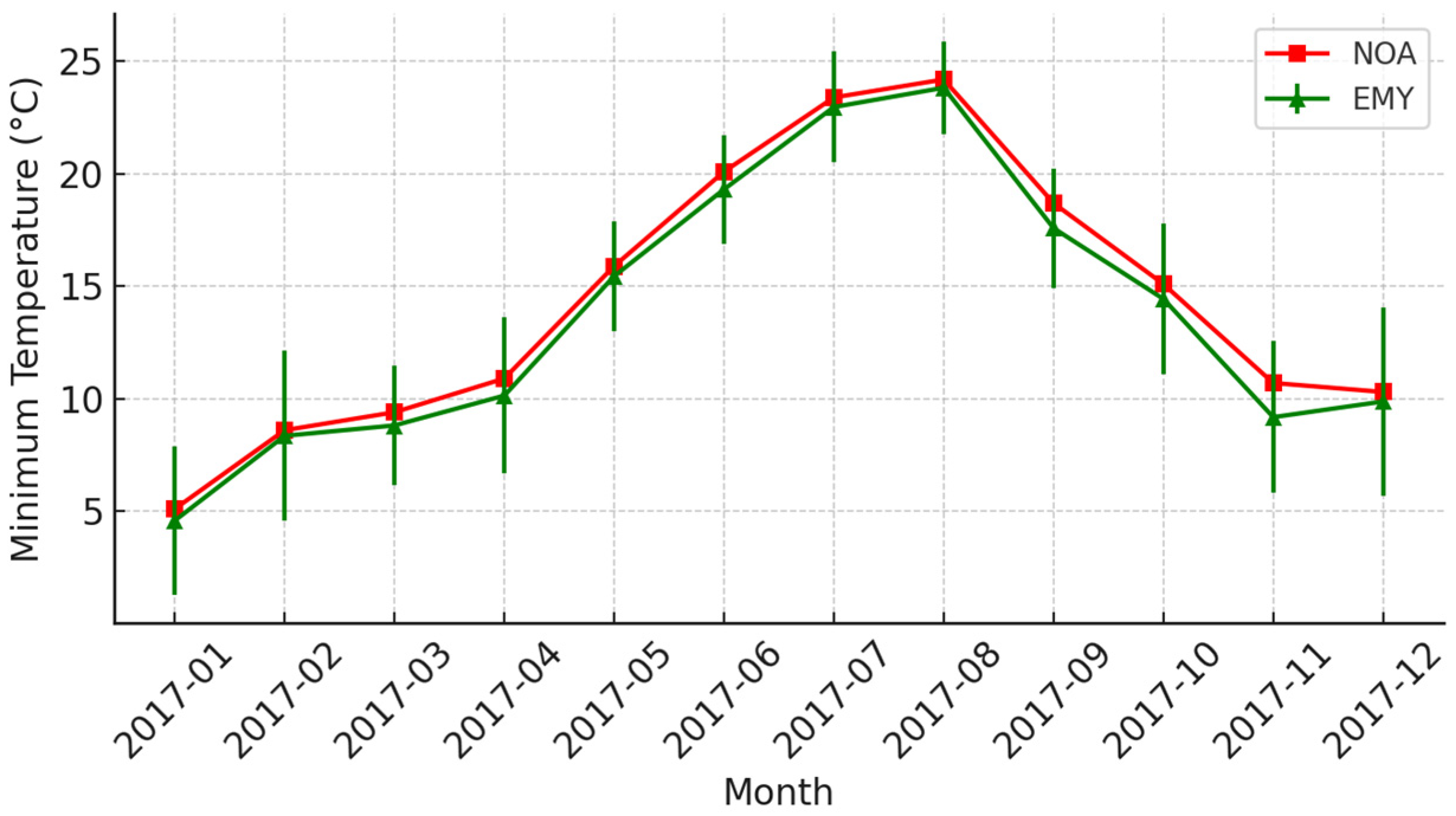
| Min Temp (°C) | 0.66 | 0.34 | 0.25 | 1.52 | 0.0 | 41.7 | 83.3 |
| Precipitation (mm) | 4.86 | 7.52 | 0.00 | 26.60 | 25.0 | 50.0 | 50.0 |
| Index | Description | Trend Direction | Impact on Mastic Cultivation |
|---|---|---|---|
| PRCPTOT | Annual total precipitation | ↓ (slight) | Potential water stress |
| RX1day | Max 1-day precipitation | ↑ | Harvest damage in September 2024 |
| R95p | Very wet days | ↑ | Increased erosion/flood risk |
| TXx and relative indices | Annual maximum daily temperature | ↑ | Resin solidification is hindered |
| WSDI | Warm Spell Duration Index | ↑ | Inhibits mastic formation |
| DTR | Diurnal Temperature Range | ↓ | Signals night-time warming |
| Year | JAS GDD | JAS Rain (mm) | MPSI |
|---|---|---|---|
| 1978 | 801.4 | 239.8 | 0.406 |
| 2002 | 925.5 | 94.6 | 0.473 |
| 1996 | 838.6 | 53.7 | 0.549 |
| 2024 | 1185.1 | 101.6 | 0.576 |
| 1976 | 699.6 | 0.0 | 0.590 |
| 1964 | 864.4 | 32.7 | 0.630 |
| 2009 | 902.1 | 31.5 | 0.661 |
| 1971 | 857.4 | 18.4 | 0.668 |
| 2006 | 959.7 | 40.2 | 0.674 |
| 1968 | 904.0 | 27.1 | 0.677 |
| 2023 | 1157.6 | 40.4 | 0.812 |
| Variables | Pearson r | p-Value | Spearman ρ | p-Value |
|---|---|---|---|---|
| MPSI vs. GDD_JAS | 0.787 | 2.5 × 10⁻⁷ | 0.898 | 1.6 × 10⁻¹¹ |
| MPSI vs. Rainfall_JAS | −0.798 | 1.3 × 10⁻⁷ | −0.611 | 3.3 × 10⁻⁴ |
| MPSI vs. Yield | 0.444 | 0.014 | 0.355 | 0.054 |
| GDD_JAS vs. Rainfall_JAS | −0.256 | 0.173 | −0.338 | 0.068 |
| GDD_JAS vs. Yield | 0.421 | 0.021 | 0.342 | 0.064 |
| Rainfall_JAS vs. Yield | −0.286 | 0.125 | 0.031 | 0.870 |
Disclaimer/Publisher’s Note: The statements, opinions and data contained in all publications are solely those of the individual author(s) and contributor(s) and not of MDPI and/or the editor(s). MDPI and/or the editor(s) disclaim responsibility for any injury to people or property resulting from any ideas, methods, instructions or products referred to in the content. |
© 2025 by the authors. Licensee MDPI, Basel, Switzerland. This article is an open access article distributed under the terms and conditions of the Creative Commons Attribution (CC BY) license (https://creativecommons.org/licenses/by/4.0/).
Share and Cite
Theodosiou, K.; Papageorgiou, K.; Argiriou, A.; Golfinopoulos, S.Κ. Climate Change Indicators and Impacts on Mastic Tree Cultivation in Chios, Greece. Land 2025, 14, 2407. https://doi.org/10.3390/land14122407
Theodosiou K, Papageorgiou K, Argiriou A, Golfinopoulos SΚ. Climate Change Indicators and Impacts on Mastic Tree Cultivation in Chios, Greece. Land. 2025; 14(12):2407. https://doi.org/10.3390/land14122407
Chicago/Turabian StyleTheodosiou, Konstantinos, Konstantinos Papageorgiou, Athanasios Argiriou, and Spyridon Κ. Golfinopoulos. 2025. "Climate Change Indicators and Impacts on Mastic Tree Cultivation in Chios, Greece" Land 14, no. 12: 2407. https://doi.org/10.3390/land14122407
APA StyleTheodosiou, K., Papageorgiou, K., Argiriou, A., & Golfinopoulos, S. Κ. (2025). Climate Change Indicators and Impacts on Mastic Tree Cultivation in Chios, Greece. Land, 14(12), 2407. https://doi.org/10.3390/land14122407