1. Introduction
Against the backdrop of accelerating globalization and urbanization, rural areas have gained growing scholarly attention as critical spatial interfaces between natural and cultural landscapes. The countryside is no longer merely a base for agricultural production; it has become a key spatial carrier responsible for national ecological security, cultural heritage, and the provision of leisure services [
1,
2]. Against this backdrop, rural tourism has become an important avenue for stimulating the intrinsic vitality of rural areas, promoting urban-rural integration, and achieving balanced regional development. However, the revitalization of rural areas is not simply a matter of monetizing their resource endowments; it deeply depends on their effective connection with the outside world, particularly with the vast urban consumer markets. Therefore, ‘accessibility,’ as a core metric for measuring the efficiency of this connection, has become more important than ever [
3,
4]. These destinations typically attract visitors through their pristine natural environments, rich historical and cultural heritage, and distinctive rural tranquility. However, the attractiveness of tourism destinations depends not merely on their inherent resource endowment but is fundamentally shaped by their external accessibility—the ease with which visitors can reach these locations from their points of origin. This accessibility constitutes a crucial determinant of tourism development potential and regional vitality [
5,
6]. Among various geographical factors influencing accessibility, forest land—as a prevalent land cover type providing multiple ecosystem services—warrants systematic investigation into its mechanisms affecting rural tourism accessibility. Beyond constituting essential components of natural landscapes (e.g., forest parks and wooded trails), the spatial distribution, quality characteristics, and interrelationships with transportation networks of forest land at regional scales may exert multifaceted influences not only on physical accessibility but also on perceived accessibility, and even social equity dimensions of rural attractions.
Research on accessibility has a well-established tradition in disciplines including geography, transportation planning, and urban studies, fundamentally concerned with measuring the proximity of locations or public service facilities to target populations [
7,
8]. Recent scholarly advances have progressively incorporated non-transport factors such as ecological conditions and landscape features into accessibility frameworks [
9]. As a key ecological landscape component, forest land influences accessibility through multiple pathways: while dense forest land may create physical barriers that increase transportation infrastructure costs and reduce connectivity, high-quality forest landscapes can simultaneously function as significant tourist attractions. Furthermore, through ecological corridors and greenway systems, forest land can enhance non-motorized mobility within regions [
10]. Additional ecosystem services provided by forest land—including water conservation, climate regulation, and recreational opportunities—collectively contribute to improved environmental quality and visitor experiences, consequently influencing visitation patterns and frequencies.
Current research on forest land and accessibility predominantly concentrates on urban green space evaluation, ecological network construction, and land-use change impacts on ecosystem services. The accessibility and equity assessment of urban parks, for instance, constitutes a prominent research theme in urban planning literature. Nevertheless, the specific mechanisms through which forest land—serving as primary green infrastructure in rural territories—affects rural attraction accessibility remain insufficiently theorized and empirically investigated [
11].
Methodologically, the assessment of rural attraction accessibility shares conceptual foundations with urban public service accessibility assessments—both employing spatial network analysis that integrates distance, travel time, and service distribution to evaluate “ease of reach.” However, rural tourism attractions demonstrate distinctive characteristics: they typically exhibit dispersed spatial distributions and limited scales, depend primarily on regional road networks rather than dense public transit systems, and place greater emphasis on “last-mile” pedestrian and cycling infrastructure. Responding to these particularities, Tomej and Liburd’s sustainable accessibility framework for rural destinations integrates public transportation indicators with spatial network metrics, formulating reproducible algorithms that account for the dispersed nature of rural attractions while emphasizing the critical role of transportation networks [
12]. Empirical investigations further substantiate that transport network density, connectivity, and hierarchy directly determine rural tourism facility accessibility. Zolotarev et al.’s assessment of Russian rural tourism facilities demonstrated that enhanced road network density significantly expands attraction service areas, with particularly pronounced accessibility improvements for non-motorized travelers [
8]. Consequently, despite methodological parallels with urban accessibility studies, indicator selection and weighting must explicitly accommodate the spatial fragmentation of rural attractions, deficiencies in relative transportation infrastructure, and distinctive demands for non-motorized travel options.
The impact of forest land on rural attraction accessibility demonstrates notable spatial heterogeneity, moderated by contextual factors including forest land attributes, attraction types, regional transportation conditions, and socioeconomic development levels. In topographically complex mountainous regions, forest land predominantly acts as a transportation barrier, whereas in plain landscapes, it more frequently serves functions related to ecological corridors and aesthetic enhancement.
Within contemporary dynamics of rapid globalization and urbanization, rural territories with unique natural and cultural assets are increasingly recognized as crucial arenas for tourism and regional development. As fundamental components of rural tourism systems, the development of rural attractions hinges not only on resource advantages but also critically on external accessibility. Serving as a key indicator of regional connectivity and spatial equity, accessibility directly shapes the vitality and sustainable development of rural tourism. Although accessibility research has established mature theoretical and methodological frameworks widely applied in urban contexts, investigations into rural attraction accessibility remain underdeveloped, particularly regarding ecological landscape influences.
This study therefore examines forest land as a critical geographical and ecological factor through three research objectives: (1) to identify and characterize spatial distribution patterns of rural attraction accessibility and forest land; (2) to perform integrated spatial analysis revealing accessibility-forest land relationships; (3) to elucidate the impacts of forest land on rural attraction accessibility. Through addressing these objectives, this research aims to decipher the complexity and spatial heterogeneity of forest land’s accessibility effects, bridge knowledge gaps in rural forest land-accessibility relationships, and respond to methodological specificities required for rural attraction accessibility assessment.
2. Method
2.1. Overview of the Research Area
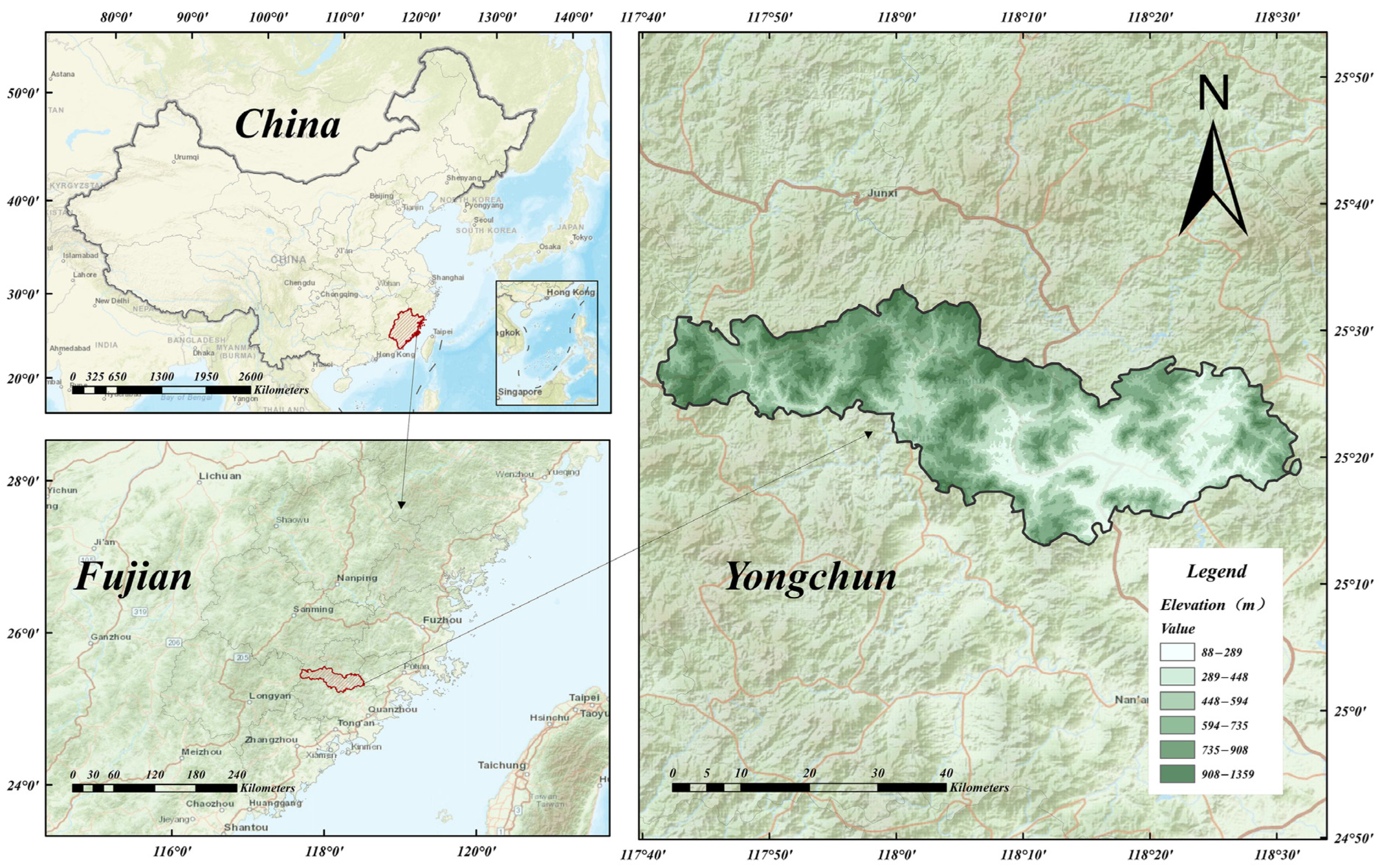
Yongchun County is located in the southeastern part of Fujian Province, China, northwest of Quanzhou City, and is an important part of the Minnan economic zone (
Figure 1). The county covers a total area of approximately 1468 square kilometers, primarily consisting of low and medium mountains and hills, with the terrain generally sloping from northwest high to southeast low. As one of Fujian Province’s key forestry counties, Yongchun County has a forest area of 93,600 hectares, with a forest coverage rate of 58.5%, forming a natural landscape pattern dominated by forest land. This pattern provides an ideal case for studying the interaction between forest land and human activity space [
13].
Yongchun County possesses abundant forest land resources characterized by uneven spatial distribution, demonstrating a distinct spatial distribution pattern strongly correlated with human activity intensity:
Western and Northern High-Coverage Zones: These areas constitute the primary ecological hinterland of Yongchun County, featuring contiguous and clustered forest land distribution that forms significant high-value clustering areas (HH) with remarkable ecological integrity. Their principal functions encompass water conservation and biodiversity preservation.
Central-Eastern Low-Coverage Fragmented Zones: Influenced by urban expansion and transportation infrastructure development, forest land coverage in central-eastern regions is substantially lower than in western areas. Previously contiguous forest tracts have been fragmented by road networks, exhibiting linear or insular distribution patterns. This intricate “road network-forest land” mosaic is particularly evident in the dense road network zones of central-eastern Yongchun, where roads effectively function as ecological boundaries, resulting in significant forest habitat fragmentation.
Notably, Yongchun County is actively promoting ecological restoration and sustainable forestry development through initiatives such as systematic ecological restoration of the Tianhushan mining area and development of understory economic activities. The establishment of the province’s first county-level Forestry Industry Research Institute further aims to advance the forestry sector’s transition toward high-value and sustainable development. These measures continuously influence both the spatial structure and quality of forest land.
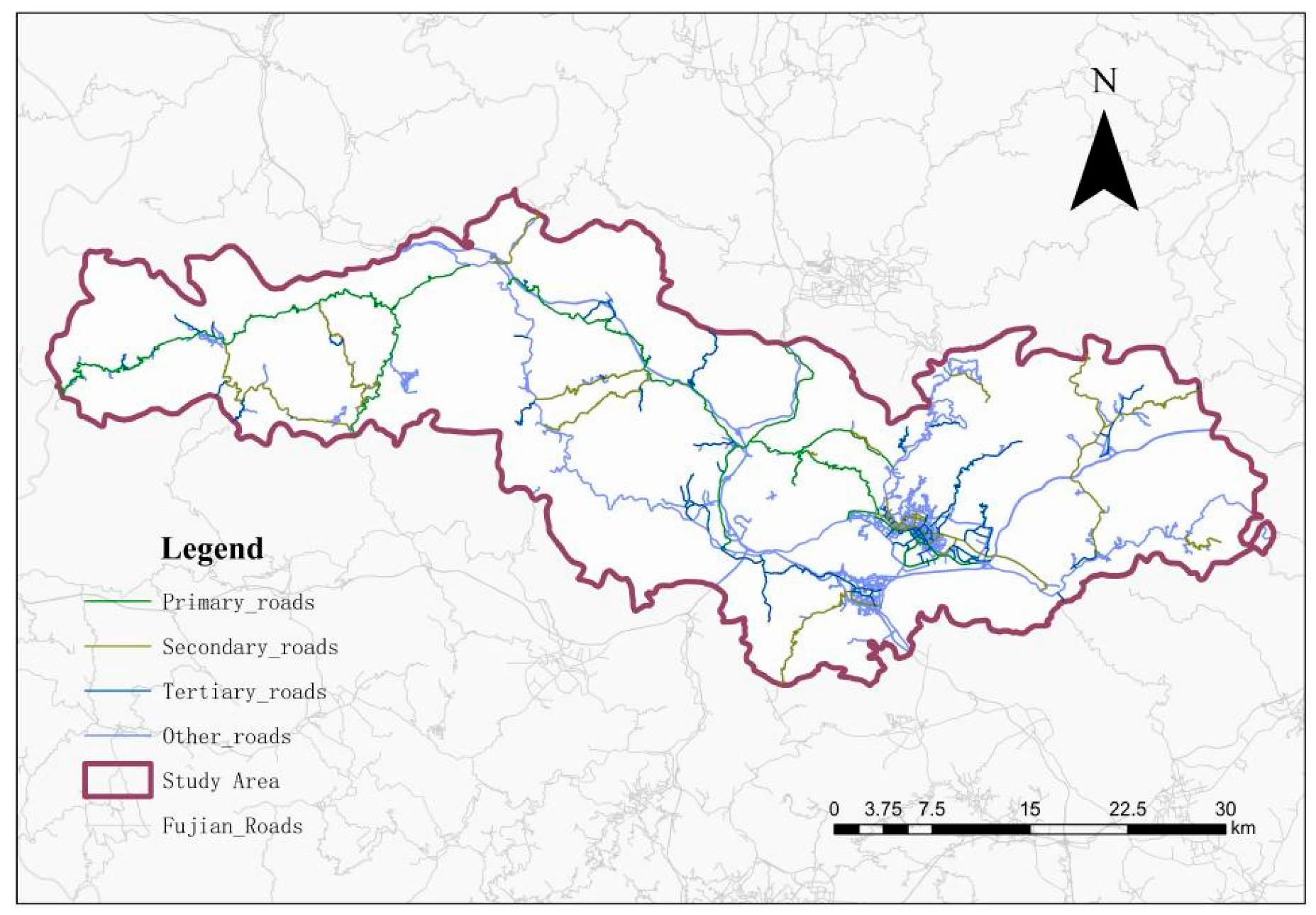
The transportation network in Yongchun County exhibits a characteristic “core-periphery” structure that contrasts markedly with forest land distribution patterns (
Figure 2):
Central-Eastern High-Density Network Core: Supported by National Highway G355 and Provincial Trunk Highway Hengqi Line (G356), the central-eastern region has developed a high-density, well-connected road system. These arterial roads have not only undergone comprehensive asphalt pavement upgrades but also effectively integrate Yongchun’s urban center with northern and northwestern townships (including Dapu and Penghu), while providing efficient connectivity to crucial transportation hubs such as the Yongchun Station of the Xingquan Railway and the Yongchun Dapu Interchange of the Quannan Expressway. This network serves as the primary corridor for regional transportation and economic exchanges.
Western Low-Density Network Periphery: Constrained by topographic limitations, western areas demonstrate lower road density and generally inferior road classifications, contrasting sharply with the high connectivity observed in central-eastern regions. This infrastructure disparity represents a fundamental factor contributing to reduced attraction accessibility in western zones.
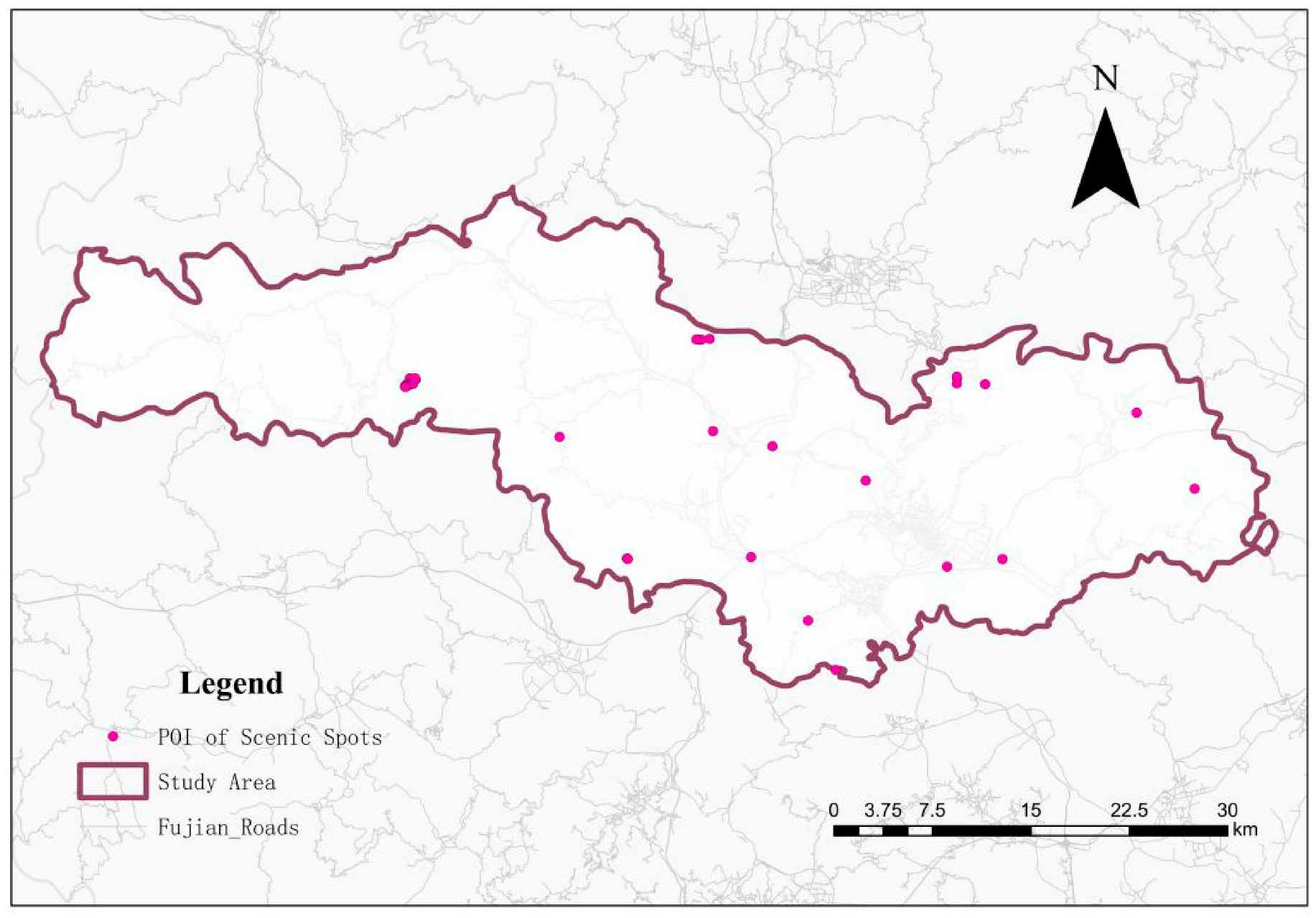
Yongchun’s diverse tourism resources integrate natural landscapes, historical cultural elements, and industrial heritage, exhibiting spatial distribution strongly correlated with road network patterns (
Figure 3):
Central-Eastern Tourism Cluster: Attractions are highly clustered along major transportation corridors. For instance, National Highway G355 effectively connects core tourism resources including Beixi Wenyuan (National 4A-level Scenic Area), Hushan Ancient Town, Kuixing Rock, and Wuli Ancient Street. Dapu Town, leveraging its designation as the “China Incense Capital”, has developed a distinctive incense cultural tourism represented by the Binda Incense Cultural Creative Park. These attractions benefit from superior road connectivity, forming a highly accessible core tourism area.
Western Sparse Attraction Zone: Despite possessing premier natural assets such as the Xueshan Ecological Tourism Area, western attractions remain relatively dispersed and experience limited accessibility due to transportation constraints, with travel durations exceeding 30 min in certain locations.
This spatial differentiation pattern profoundly illustrates the fundamental challenge in Yongchun’s territorial spatial development: the spatial interplay between socioeconomic development (manifested through transportation infrastructure and tourism) and ecological conservation (represented by forest land resources). Consequently, these characteristics establish Yongchun County as an exemplary case for investigating rural attraction accessibility under forest land influences and formulating corresponding spatial optimization strategies.
2.2. Data Source
2.2.1. Land Cover Data
The land cover data utilized in this study was obtained from the China Land Cover Dataset (CLCD) [
14]. This dataset was produced through standardized processing and classification of Landsat satellite image series, achieving a spatial resolution of 30 m with complete national coverage. The CLCD employs advanced remote sensing image processing techniques and multi-temporal data fusion methodologies. The original imagery undergoes atmospheric correction, geometric rectification, and spectral feature extraction before pixels are classified into various land use categories including forest, grassland, cropland, built-up land, and water bodies. A nationwide comprehensive quality assessment has been conducted, ensuring reliable representation of spatial distribution characteristics across different land use types.
2.2.2. Tourist Attraction Data
The compilation of Point of Interest (POI) data for tourist attractions in Yongchun County, Quanzhou City, Fujian Province, was conducted through a multi-source data integration approach. The primary dataset was obtained from the Yongchun County Public Geographic Information Platform, an official geospatial repository that systematically consolidates scenic spot information across the county, providing authoritative foundational data for this study. To augment data timeliness and coverage, this study supplemented batch data retrieval through API interfaces of mainstream internet mapping services (including Amap), using Yongchun’s administrative boundaries as the search area and keywords such as “scenic spots” and “tourist attractions”. Furthermore, we incorporated outcomes from official toponymic information collection initiatives in Yongchun County, such as the “Rural Naming Initiative”, where validated rural scenic spot information incorporated into the database provided valuable supplementation to the dataset.
2.3. Data Processing
2.3.1. CLCD Dataset Extraction and Cropping
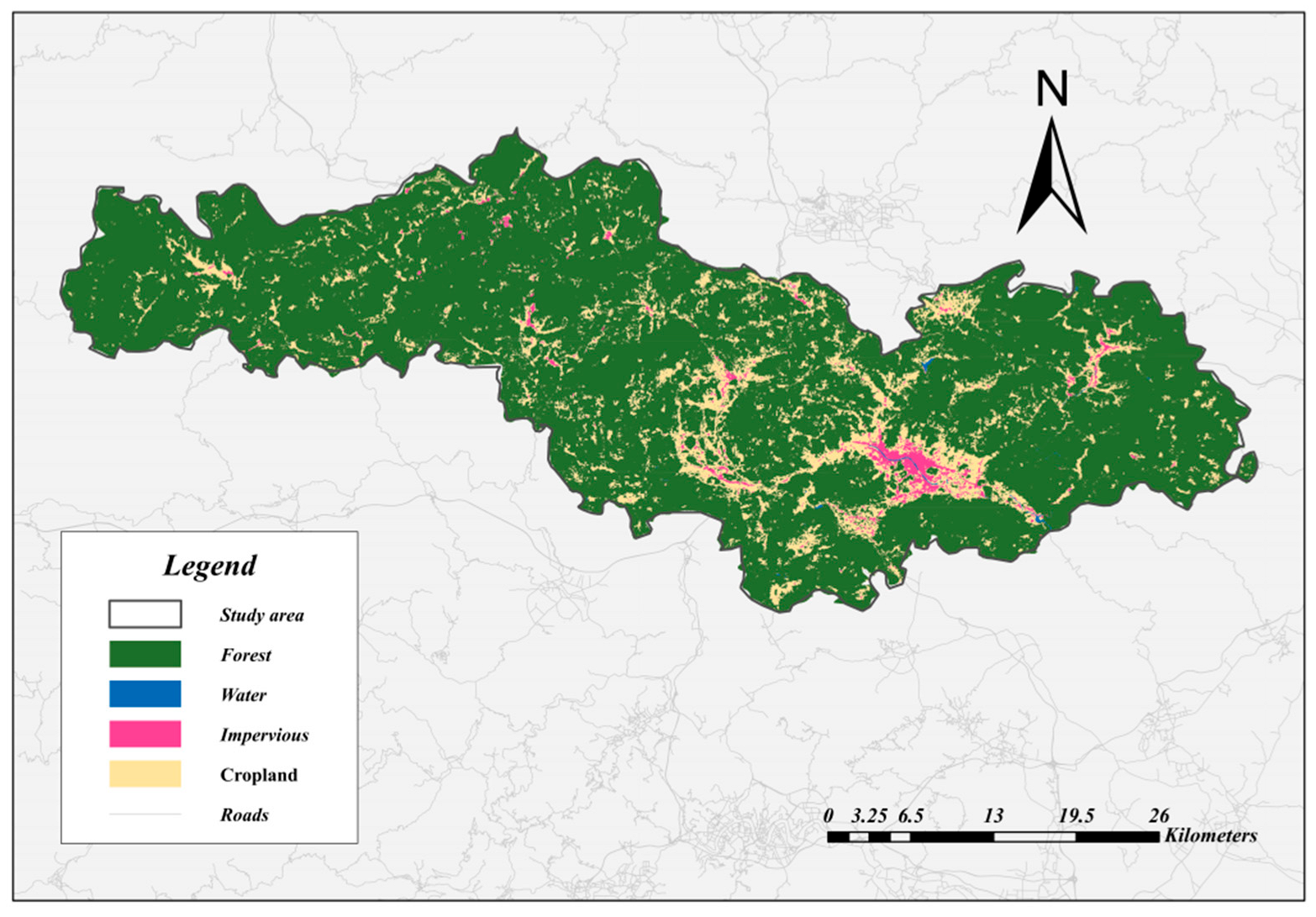
In this study, the national coverage layer of the CLCD was first spatially subsetted using the administrative boundary vector data of Yongchun County to extract pixels falling within the county’s territory. The resulting sub-layer maintains the original 30-m spatial resolution, thereby preserving informational detail. Subsequently, attribute filtering was performed on the clipped pixels to extract major land cover types including forest land, built-up land, cropland, grassland, and water bodies, with corresponding area statistics and spatial distribution visualizations conducted for each category (see
Figure 4). Subsequent overlay analysis integrated forest land with road networks and tourist attraction locations to assess the potential impacts of different land cover patterns on attraction accessibility. The entire data processing procedure followed a strict GIS workflow, including projection unification, raster-to-vector conversion, spatial overlay, and buffer analysis, ensuring the accuracy and consistency of input data for subsequent accessibility modeling. By utilizing the high-resolution, systematic land cover information from the CLCD, this research comprehensively captures the heterogeneity of land use in Yongchun County at spatial scales, providing solid data support for investigating the mechanisms through which landscape elements such as forest land and built-up land influence the accessibility of rural tourist attractions.
2.3.2. POI (Point of Interest) Cleaning and Classification
Following the acquisition of raw data, we implemented a systematic data cleaning and processing protocol: initially, duplicate records were identified and removed through deduplication procedures, while standardization was applied to key fields such as names and addresses. Subsequently, multi-source data cross-validation complemented by manual verification was employed to rectify incomplete or inaccurate attribute information, with all coordinates unified into the CGCS2000 coordinate system. Building upon this foundation, attractions were categorized according to relevant classification systems, with their core attributes further refined. Ultimately, the processed attraction POI data were integrated with spatial datasets including road networks and forest land distribution into GISPRO 2023 software environment, establishing an integrated spatial database that provides a reliable data foundation for subsequent spatial analysis.
2.4. Research Steps
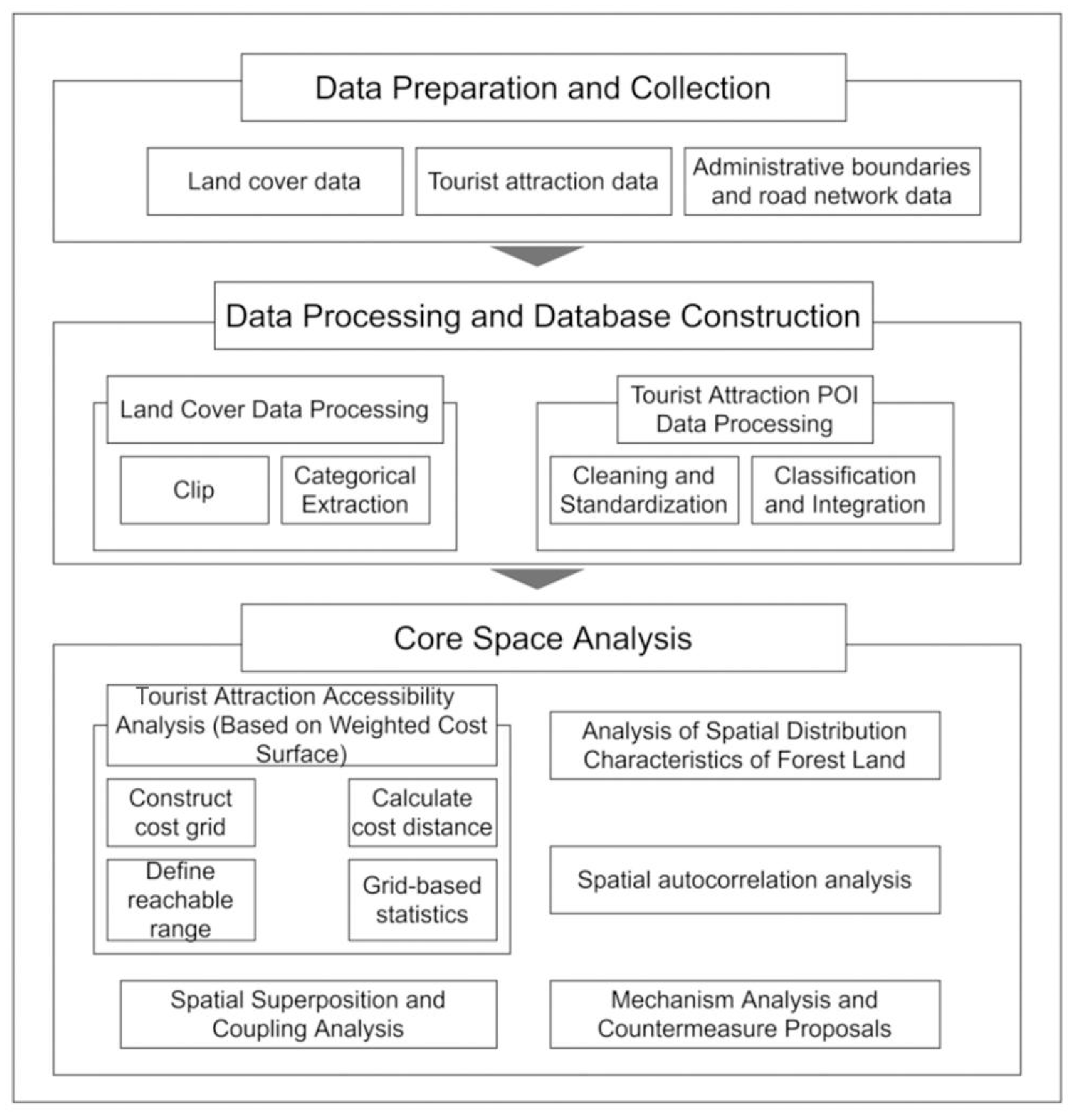
This study implemented a systematic spatial analysis workflow to investigate the impact of forest land on the accessibility of rural tourist attractions in Yongchun County.
First, during the data preparation stage, multi-source data were consolidated: land cover information was obtained from the China Land Cover Dataset (CLCD) with a spatial resolution of 30 m, while attraction POI data were collected via complementary approaches including the Yongchun County Public Geographic Information Platform, Amap API, and official toponymic collection initiatives. Auxiliary datasets such as Yongchun County’s administrative boundaries and road network data were also compiled.
In the subsequent data processing and database construction phase, the raw data underwent standardization procedures. The CLCD data were clipped using administrative boundaries to extract principal land cover categories including forest land. The attraction POI data were processed through deduplication, coordinate system unification, and attribute standardization. Finally, all processed data were integrated into GISPRO software environment to establish a unified spatial database, laying a solid foundation for subsequent analysis.
The core of the analytical framework involved conducting three parallel spatial analyses. First, attraction accessibility analysis: a weighted cost raster methodology was employed, comprehensively incorporating three major factors—road classification, transportation mode share, and land cover type (specifically assigning a 1.5× travel impedance to forest land)—to generate an integrated travel time cost raster. Based on this output, the minimum cumulative travel time to each attraction were computed and 5-, 10-, 15-, and 30-min isochrones were delineated [
15,
16]. The measurement framework of Multistop-Based Accessibility in GIS networks does not just calculate the shortest path to a single destination; instead, it accumulates or weights the total count of all potential destinations that can be reached from the same origin within a given time or cost threshold. The advantage of this method lies in its comprehensive consideration of network impedances and the cumulative effect of multiple destinations, allowing it to more accurately reflect residents’ actual travel opportunities. It has become a classic model for accessibility analysis in both urban and rural areas [
17]. Finally, the study area was partitioned into a 0.25-km
2 hexagonal grid for zonal statistical analysis and visualization of accessibility values. Second, analysis of forest land spatial distribution characteristics: employing the identical hexagonal grid, we conducted zonal statistics on forest land area to reveal its spatial pattern. Third, spatial autocorrelation analysis: the Global Moran’s I index was calculated for both attraction accessibility and forest land area to determine overall spatial clustering patterns, with LISA analysis generating local cluster maps to identify specific distributions of high–high and low–low agglomeration areas.
Finally, in the results synthesis stage, the distributions of attraction accessibility, forest land, and their LISA cluster maps were overlaid and systematically compared to quantitatively reveal the spatial complementarities and trade-offs among the “road network-forest land-attractions” relationship. Based on these findings, the mechanisms through which forest land influences accessibility were examined, and tailored planning strategies were proposed for regions with different characteristics from a sustainable development perspective.
2.5. Statistical Analysis Methods
2.5.1. Accessibility Analysis Based on Weighted Cost Raster Distance
This study conducted raster-based accessibility analysis on the GISPRO platform, employing time cost as the core metric. First, based on the attribute information of Yongchun County’s road network, roads were classified into four categories: expressways, national/provincial trunk roads, county/township roads, and rural paths. Each category was assigned a corresponding travel speed coefficient, subsequently converted into a temporal resistance value per meter. Accounting for the primary travel modes of local residents and tourists—electric bicycles (approximately 60%) and motor vehicles (approximately 40%)—respective average speeds were set and the road resistances were appropriately weighted to form a comprehensive road time resistance raster.
Subsequently, leveraging the land use classification extracted from the CLCD, additional resistance coefficients were assigned to different cover types: forest land was assigned a 1.5× baseline resistance due to dense vegetation and sparse roads, while built-up land and cropland maintained the baseline resistance values. Water bodies and undeveloped barren land were designated as impassable with infinite resistance values. Following the generation of independent raster layers for road class, transportation mode, and land cover resistance, these were weighted and superimposed according to preset weights (road class 0.5, transportation mode 0.3, land cover 0.15) to produce a comprehensive unit time cost raster.
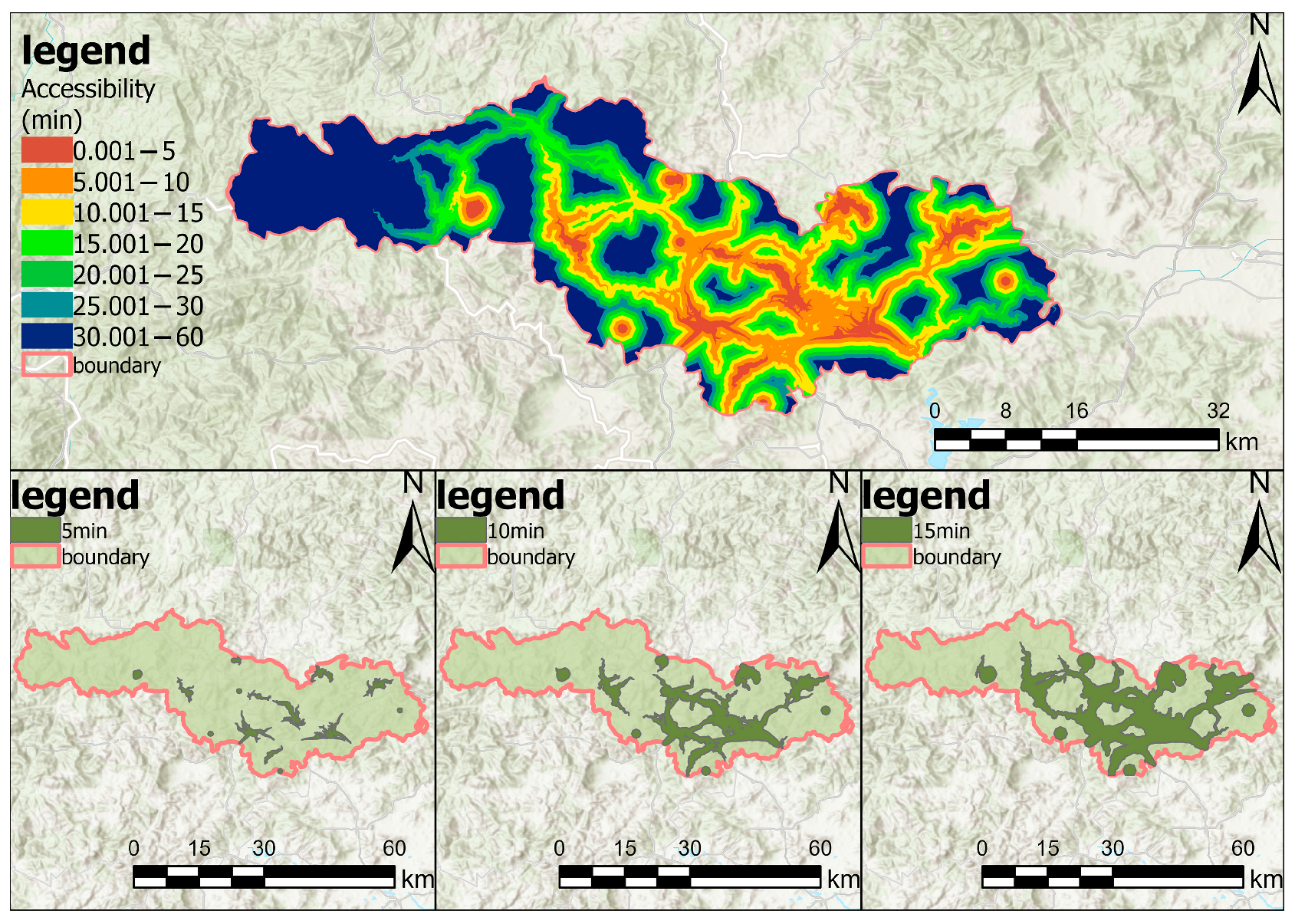
Next, utilizing the Cost-Distance tool in GISPRO, with each tourist attraction or service center as a target point, the minimum cumulative time cost (in minutes) from all raster cells to the nearest target point was calculated through reverse accumulation. This process spatially simulated the shortest travel time for travelers under different resistance environments. Based on the cumulative time cost, raster cells were classified into four accessibility isochrones: 5-min, 10-min, 15-min, and 30-min. The results were overlaid as color-filled layers, forming an intuitive visualization of the spatial distribution characteristics of attraction accessibility and the 5 min, 10 min, and 15 min accessible ranges (
Figure 5).
Through the methodological procedures described above, the study achieved a refined quantification of tourist attraction accessibility under different land cover patterns in Yongchun County, providing a reliable technical support for subsequent evaluation of the spatial coupling relationships among forest land, roads, and tourism service facilities.
For further quantitative analysis, the study area was partitioned into multiple 0.25 km
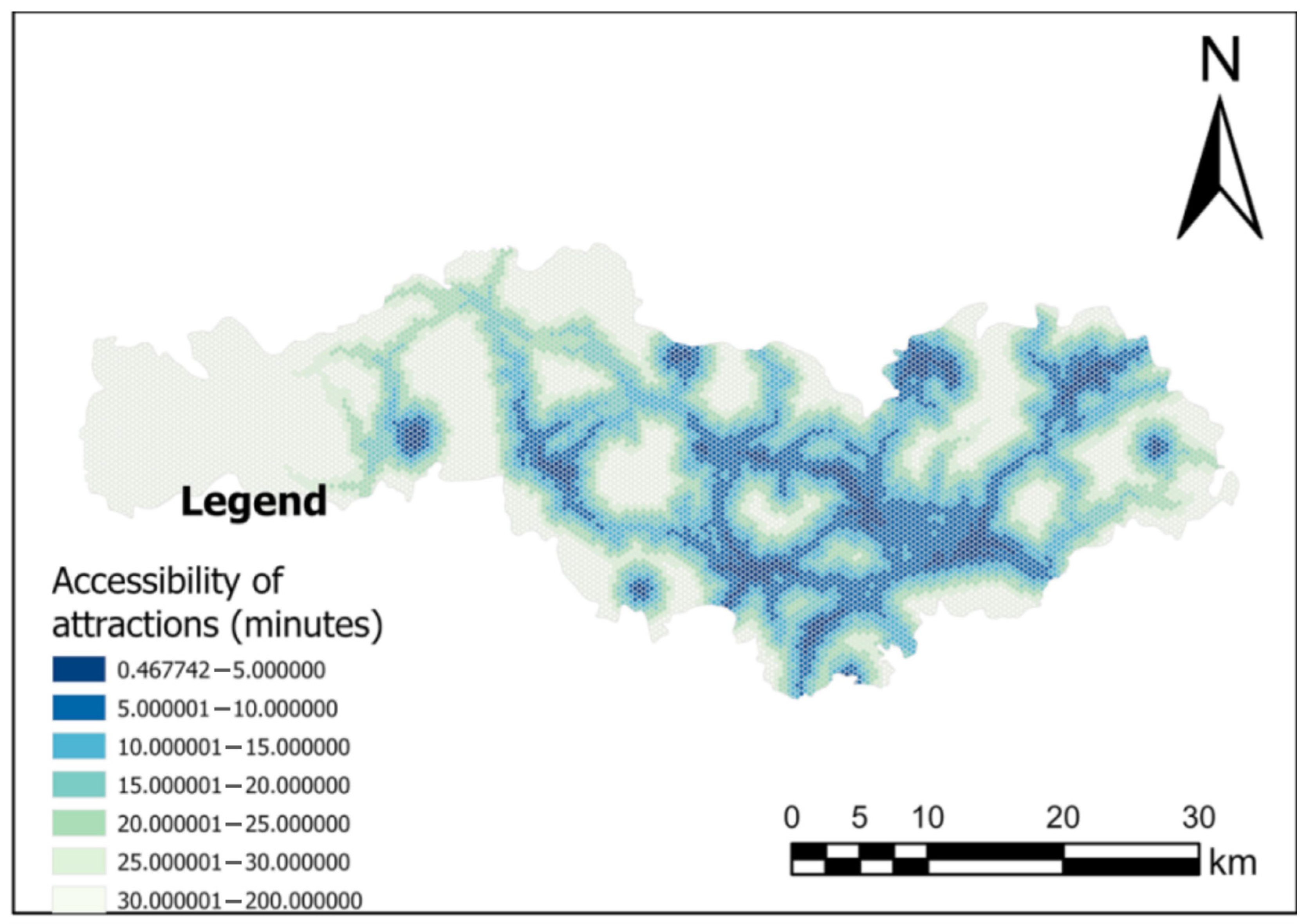
2 hexagonal grids using the create fishnet and Thiessen polygon construction tools in GISPRO. Zonal statistics were performed on attraction accessibility values extracted from the raster map using these hexagonal grids, followed by spatial visualization (
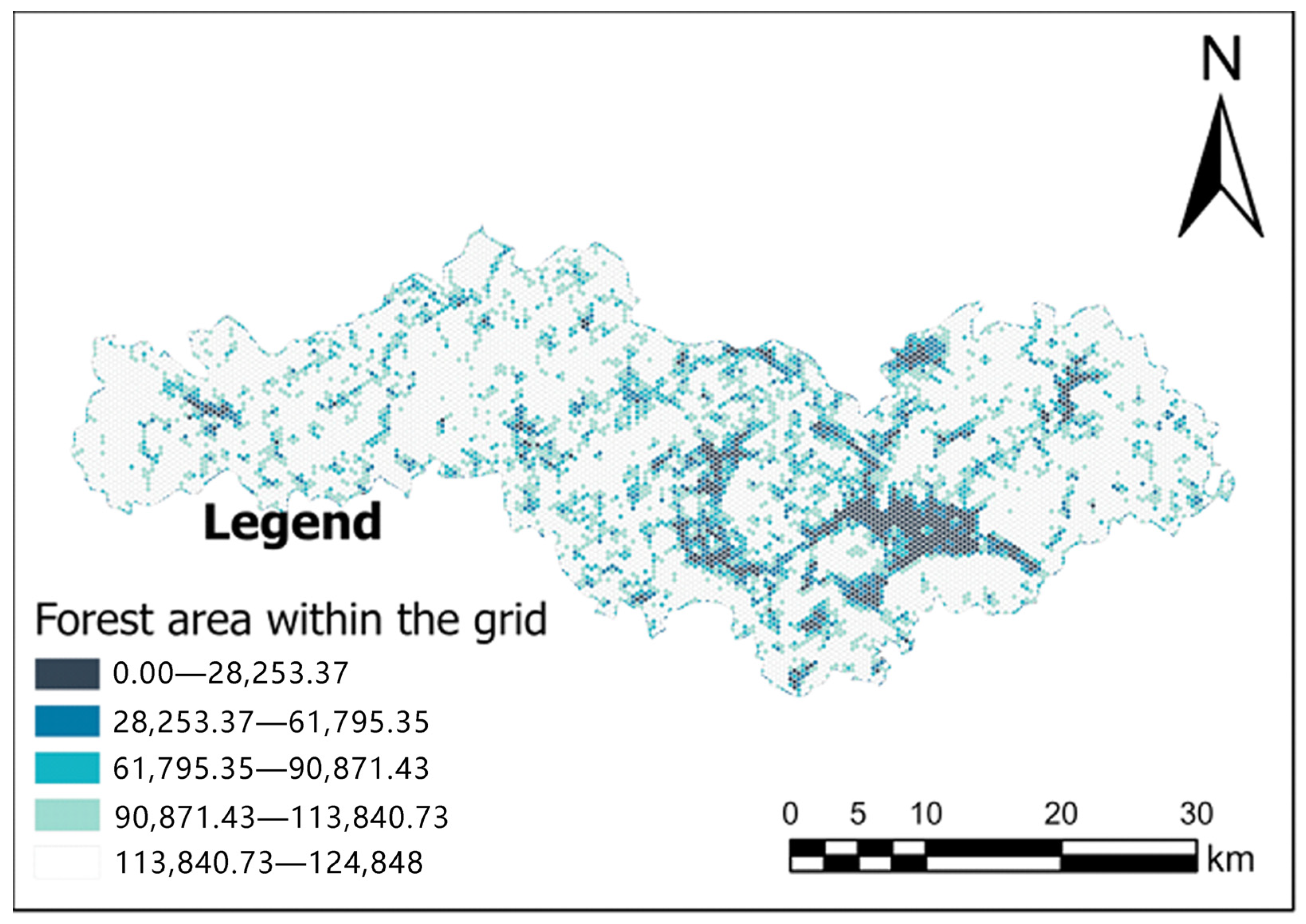
Figure 6). To maintain analytical consistency across spatial scales, forest land was similarly subjected to zonal statistics using the identical hexagonal grids, with accessibility values extracted from the raster map, and spatially visualized (
Figure 7).
2.5.2. Spatial Autocorrelation
To systematically investigate the spatial patterns and intrinsic relationships between attraction accessibility and forest land distribution in Yongchun County, this study employed spatial autocorrelation analysis. First, based on the processed road network data, GIS network analysis methods were applied to calculate the shortest travel time from each raster cell or administrative village unit to the nearest attraction, thereby constructing a county-wide attraction accessibility surface. For forest land distribution, forest land patches were extracted from land use data, with the proportion of forest land area calculated for each analysis unit.
On this basis, both global and local spatial autocorrelation analyses were conducted for the two variables: attraction accessibility values and forest land area proportion. Global spatial autocorrelation was measured using the Global Moran’s I index, aiming to determine whether significant clustering, dispersion, or random patterns characterize the county-wide distribution of both attraction accessibility and forest land. A significantly positive Moran’s I index indicates positive spatial autocorrelation, suggesting high or low values tend to cluster spatially; conversely, a significantly negative value indicates pronounced spatial heterogeneity (
Table 1).
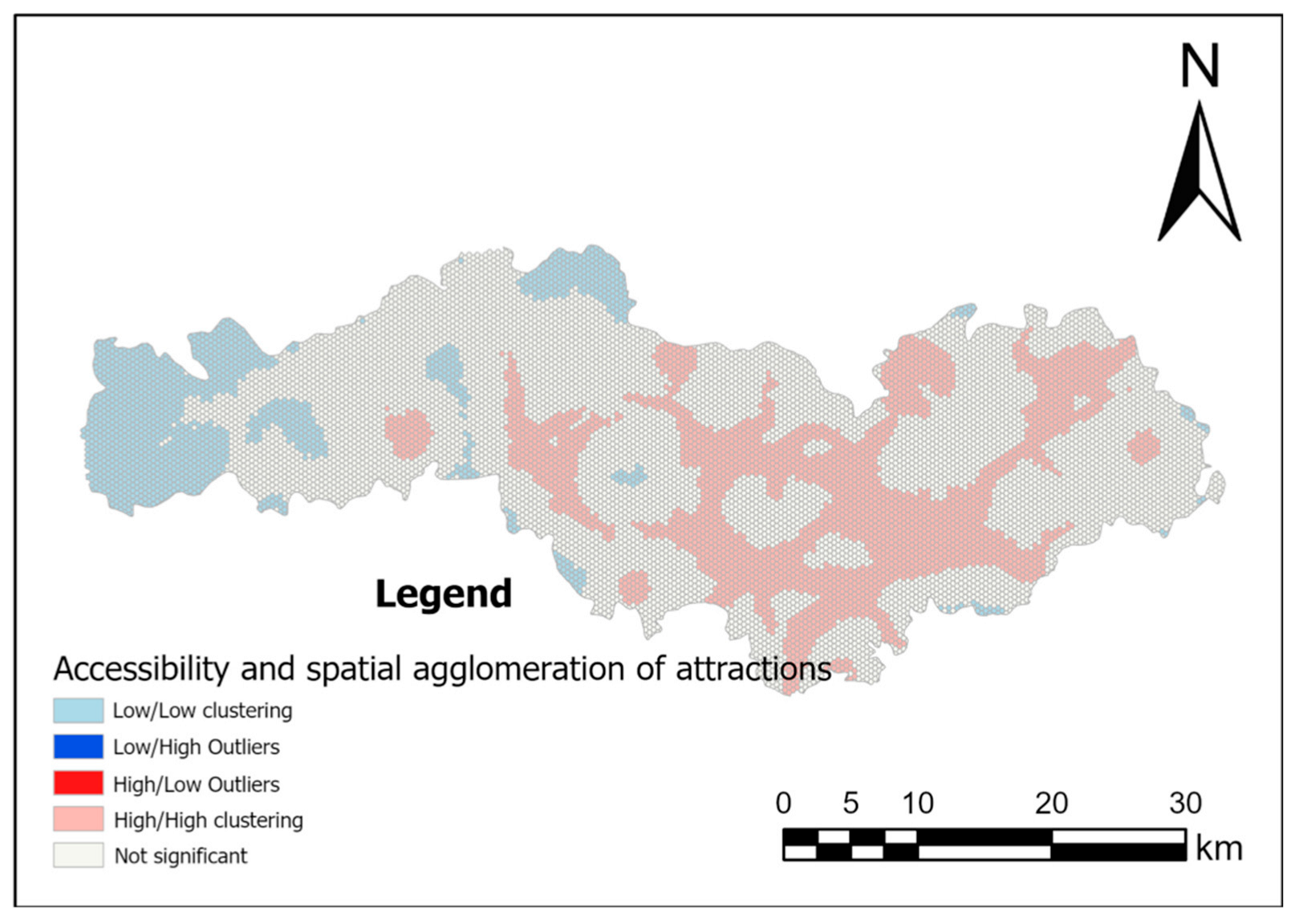
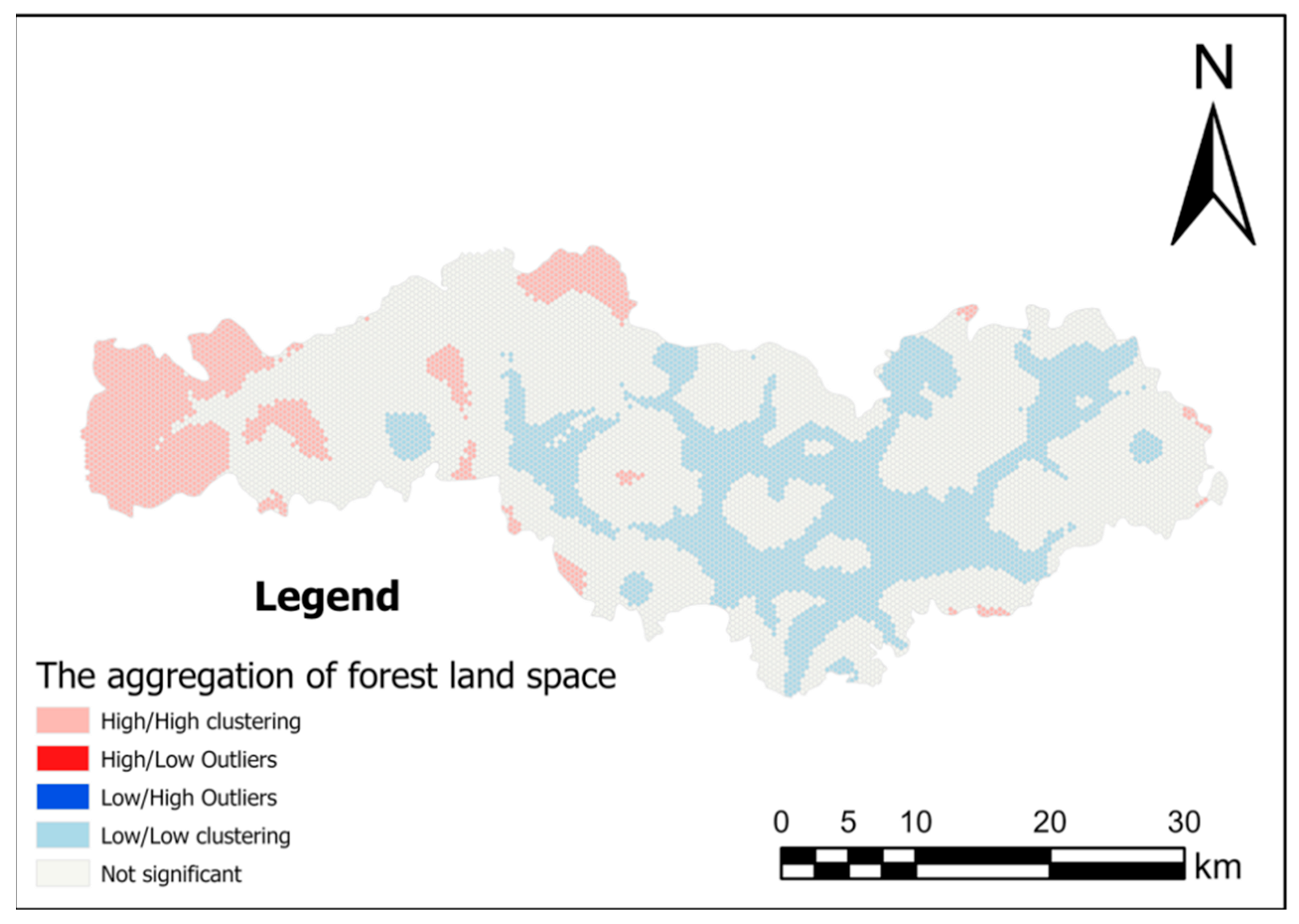
To reveal the specific locations and types of these spatial correlation patterns, local spatial autocorrelation analysis was further conducted. This analysis was achieved by calculating Local Indicators of Spatial Association (LISA) and with corresponding cluster maps generated to visualize local spatial heterogeneity (
Figure 8 and
Figure 9). The LISA analysis can identify statistically significant spatial cluster types, including High–high clusters (where high-accessibility units are spatially adjacent to other high-accessibility units, or high forest land coverage units are surrounded by other high forest land coverage units), Low–low clusters, and High–Low or Low–high outliers.
By superimposing and comparing the LISA cluster maps of attraction accessibility with those of forest land area, complementary or overlapping relationships in their spatial distributions were visually identified. This enabled a quantitative revelation of the spatial trade-off pattern within Yongchun County: development-oriented areas characterized by high attraction accessibility and low forest land coverage versus ecological-oriented areas characterized by high forest land coverage and low attraction accessibility. This analysis provides a scientific quantitative basis for understanding the spatial interactions between human tourism activities and the natural ecological foundation.
3. Result Analysis
3.1. Spatial Distribution Characteristics of Tourist Site Accessibility
Based on the spatial distribution characteristics of attraction accessibility (
Figure 6 and
Figure 7), it can be observed that Yongchun County’s attraction accessibility generally exhibits a network-like distribution pattern that transitions from high to low levels, showing a high degree of correspondence with the county’s primary road network. The accessibility of attractions in the central and eastern parts of the study area is notably higher than in the western region.
In terms of the 5-min accessibility range, the area within 5 min of attractions in Yongchun County is relatively limited, primarily concentrated in the immediate vicinity of the attractions themselves and extending along transportation corridors in a ribbon-like pattern. Within the 10-min accessibility range, the coverage area expands significantly compared to the 5-min range, particularly in the central region where the 10-min service areas of various attractions interconnect through the road network, forming a relatively continuous network structure that substantially enhances connectivity between attractions. When extended to a 15-min reachable range, the coverage area expands further compared to the 10-min range, but still maintains the characteristic pattern of distribution along the road network. It is particularly noteworthy that most areas in western Yongchun County still require over 30 min to reach attractions.
Based on existing analysis, Yongchun County’s attraction accessibility demonstrates a “center-periphery” structure supported by the road network framework. Areas with dense road networks in the central and eastern regions form highly efficient connectivity zones, while the western area, constrained by insufficient transportation infrastructure coverage, functions as an accessibility depression. From a temporal gradient perspective, the limited 5-min accessibility range reflects either the current low density of attraction entrances or deficiencies in “last-mile” connectivity. The 10-min range establishes preliminary network coverage, indicating the significant role of arterial roads in connecting attractions. Although the 15-min range shows further expansion, its fundamental structure remains unaltered, reflecting the diminishing marginal effects of road network extension on service area expansion. Most notably, accessibility times to attractions in most western regions still exceed 30 min, indicating both limited transportation infrastructure and sparse spatial distribution of attractions in these areas.
3.2. Forest Land Spatial Distribution Characteristics
Based on the distribution characteristics of forest land within the study area (
Figure 8), it can be observed that Yongchun County is generally characterized by extensive forest land cover, indicating favorable natural baseline conditions. The forest land coverage in the central region is significantly lower than in surrounding areas, while regions with smaller forest land areas show spatial correspondence with areas of intensive construction and development in the county. In terms of overall spatial structure, it is also noted that areas with smaller forest land coverage in Yongchun County exhibit a network-like distribution pattern, consistent with the county’s road network configuration.
Due to the dense road network in the central-eastern region and its high overlap with forest land, the continuous forest land in this area is significantly fragmented by roads into smaller patches. These forest land patches primarily distribute along roads as linear corridors or island-like patterns, forming an interwoven “road network-forest land” distribution pattern. In this context, roads function as ecological boundaries, fragmenting continuous forest habitats. The closer to urban areas and transportation hubs (where road network density is highest), the more fragmented the forest land becomes; as one moves toward peripheral villages and outer suburbs where road network density decreases, the continuity and integrity of forest land become relatively better.
This phenomenon may be attributed to the fact that road construction, especially in earlier phases, often follows minimal-resistance routes, typically extending along natural corridors such as valleys and rivers. These areas coincidentally represent core zones of forest land distribution. Consequently, road development inevitably intersects and fragments contiguous forest land. Meanwhile, the construction of high-grade roads is designed to connect economic nodes and promote regional development. As the economic core area of Yongchun County, the central-eastern region requires its road network to facilitate passenger and freight flow among urban areas, necessarily crossing surrounding forest land barriers and resulting in forest land fragmentation.
3.3. Spatial Autocorrelation Analysis
The global spatial autocorrelation analysis results for attraction accessibility and forest land area are presented in
Table 1. Both attraction accessibility and forest land area demonstrate global Moran’s I indices exceeding 0.5, indicating statistically significant positive spatial autocorrelation and highly pronounced clustering patterns. The results indicate that the spatial distributions of both attraction accessibility and forest land area are non-random, exhibiting significant spatial dependence. Areas with high attraction accessibility tend to cluster with adjacent regions of similar characteristics, demonstrating spatial aggregation effects. Similarly, regions with extensive forest land coverage tend to form spatial clusters with neighboring areas of comparable features, confirming the presence of spatial concentration patterns.
Based on the local spatial autocorrelation analysis results, the spatial distributions of attraction accessibility and forest land area in Yongchun County demonstrate significant complementary characteristics.
Regarding attraction accessibility (
Figure 9), high–high (HH) clusters are predominantly concentrated in the central-eastern region, indicating dense attraction distribution and well-developed transport infrastructure that form a core area of high accessibility. Conversely, low–low (LL) clusters are primarily situated in the western and northern areas, reflecting sparse attraction distribution or underdeveloped transportation connectivity.
In striking contrast, the clustering pattern of forest land area (
Figure 10) shows the opposite configuration: high–high (HH) clusters are mainly distributed in the western and northern regions, demonstrating abundant forest land resources with contiguous distribution and high ecological coverage. Meanwhile, low–low (LL) clusters are largely concentrated in the central-eastern area, indicating reduced and fragmented forest land distribution.
Comprehensively analyzed, Yongchun County exhibits clear spatial complementarity and trade-off relationships among forest land, road networks, and attractions: The central-eastern region is characterized by high-density road networks and high attraction accessibility, yet simultaneously represents an area of low forest land coverage and fragmentation, reflecting the spatial competition between urban development and ecological conservation in this zone. The western region is predominantly characterized by highly continuous forest land coverage and a sound ecological foundation, but suffers from sparse road networks and low attraction accessibility, constituting a spatial pattern dominated by ecological functions with limited tourism development potential.
The central-eastern part of Yongchun County, characterized by high attraction accessibility and low forest land coverage, reflects a development pattern dominated by built environments and transportation networks. In contrast, the western and northern regions, characterized by high forest land coverage and low attraction accessibility, constitute a spatial configuration where ecological functions predominate and human activity disturbance remains relatively limited. The spatially inverse distribution of these two elements reveals the trade-off relationship between attraction development and ecological conservation within the county’s territory.
4. Discussion
4.1. The Road Network Is the Dominant Factor in Accessibility, and the Center-Periphery Spatial Structure Exhibits Diminishing Marginal Effects with Respect to Time Thresholds
The study on attraction accessibility in Yongchun County reveals that the spatial distribution of attractions is highly correlated with the road network, exhibiting a clear “center-periphery” hierarchical structure. The central and eastern regions, characterized by dense road networks and clustered attractions, form highly efficient connectivity zones. In contrast, the western region, with its sparse road distribution and dispersed attractions, demonstrates widespread travel times exceeding 30 min, forming a significant accessibility depression. This spatial characteristic aligns with findings from multiple accessibility studies based on GIS and network analysis [
18,
19].
Accessibility patterns based on highway networks generally show a distance-decay trend from center to periphery. Core areas possess superior accessibility due to high road density, while accessibility gradually decreases toward peripheral areas [
20]. Similarly, research on road networks in five northwestern provinces of China found that attraction accessibility significantly improves in areas with dense roads and towns, showing a progressive spatial pattern from east to west that corresponds with the high-accessibility zone in central-eastern Yongchun [
21]. Case studies from the Pearl River Delta, Beijing-Tianjin-Hebei region, and Wuhan also demonstrate that attraction accessibility improves incrementally with increasing road network density, forming accessibility hotspots around central cities or transportation hubs that gradually diminish outward [
22,
23]. These studies collectively substantiate the fundamental framework of “road network as skeleton” and the “center-periphery structure” observed in Yongchun County.
The impact of time thresholds on spatial accessibility expansion has been quantitatively examined in multiple studies. Research in the Southern Anhui International Cultural Tourism Demonstration Zone shows that 5-min accessibility remains limited to local corridors, 10-min accessibility significantly expands service areas forming continuous networks, while beyond 15 min the spatial pattern remains largely unchanged with diminishing marginal effects [
24,
25]. These findings highly correspond with accessibility changes observed in Yongchun’s 5-, 10-, and 15-min isochrones: 5-min coverage remains limited to local corridors, 10-min coverage forms relatively continuous network connectivity, and 15-min coverage, despite broader spatial extent, shows no fundamental structural transformation. Similar spatiotemporal relationships have been reported in accessibility analyses of cities like Wuhan and Fuzhou, all exhibiting characteristics of “localized short-time coverage, expanded long-time coverage, and diminishing marginal effects” [
26,
27].
The “last mile” constitutes a critical bottleneck limiting accessibility. Research on rural tourist attraction accessibility indicates that low attraction entrance density and insufficient micro-circulation roads, which result in minimal 5-min accessibility ranges, necessitating improvement through enhanced pedestrian pathways and micro-transit networks [
28]. The limited 5-min accessibility range in Yongchun precisely reflects such “last mile” deficiencies, suggesting that enhancing western accessibility should prioritize road infrastructure refinement and connectivity facilities at attraction entrances.
Improving peripheral area accessibility requires prioritized consideration. Research on road network evolution in Gansu Province demonstrates that new expressways and branch roads significantly reduce inter-attraction travel time and enhance peripheral accessibility, though accelerated construction remains imperative in road-deficient areas [
29]. Case studies from Xinjiang’s Ili River Valley and Peru’s Cusco further indicate that establishing “core-radial” transportation axes and optimizing tourist distribution center layouts can effectively alleviate accessibility depressions [
30,
31]. These experiences provide actionable insights for addressing Yongchun’s current challenges of weak western road infrastructure and sparse attractions: (1) Densifying the county’s branch road network, particularly secondary roads connecting western attractions; (2) Developing micro-circulation roads or shared bike stations at attraction entrances to address “last mile” issues; (3) Planning tourism routes and distribution centers centered on the central-eastern high-accessibility zone, forming transportation radiation belts extending westward.
Yongchun County’s attraction accessibility pattern shows high consistency with empirical studies from multiple domestic regions: road networks constitute the dominant factor influencing accessibility, the center-periphery spatial structure exhibits diminishing marginal effects over time thresholds, and continues to be constrained by “last mile” facilities. To address western accessibility deficiencies, improvement measures including road network optimization, micro-transit connectivity, and core-radial tourism route planning can achieve balanced enhancement of county-wide attraction accessibility.
From the perspective of sustainable tourism, the five-minute accessibility zone for spatial justice is limited to areas around tourist attractions, creating ‘tourism hotspots’ and ‘service blind spots.’ Most residents in the western regions need more than 30 min to reach attractions, representing a typical lack of spatial justice. Restoring vegetation on both sides of roads and constructing green corridors with a width of ≥30 m not only improves pedestrian accessibility but also restores the structural connectivity of forests. Combined with ‘last mile’ services such as public transport and shared bicycles, a multi-level transportation network can be formed, shortening travel time for western residents to reach tourist sites and enhancing spatial equity.
4.2. Balancing the Accessibility of Tourist Attractions with Ecological Impact
Transportation accessibility serves as a critical indicator in tourism spatial planning. Case studies based on ArcGIS 10.8 raster analysis demonstrate that while improved transportation accessibility significantly promotes local tourism development, uneven internal accessibility distribution continues to constrain tourist flows between attractions due to road network limitations [
32,
33]. Research in Wuhan utilizing tourism image big data further reveals that mismatches between accessibility and road networks at certain attractions lead to perceived accessibility deficiencies among tourists [
34]. The “road network-forest land” interlocking pattern identified in this study constitutes the spatial root of this accessibility imbalance: in the central-eastern region with the densest road network, formerly contiguous forest land becomes fragmented into linear or island-shaped patches by roads, forcing inter-attraction travel routes to follow road corridors, consequently increasing travel distance and time costs.
High-grade expressways provide limited improvement to attraction accessibility, as they typically traverse core forest land areas linearly, resulting in inter-attraction travel being confined to expressway corridors and increasing tourists’ perceived distance to natural landscapes. Despite making smaller contributions to overall accessibility, they can provide multiple access points in local areas, enhancing dispersed accessibility to attractions [
35,
36]. Ecological studies similarly confirm that high-grade roads exhibit the most significant barrier effects, necessitating ancillary crossing structures or ecological corridors for compensation [
37,
38].
Global and local spatial autocorrelation analyses provide robust statistical evidence for the macro-scale spatial relationship between accessibility and forest land coverage. The exceptionally elevated global Moran’s I indices for both variables indicate strong spatial clustering. More importantly, the LISA cluster maps reveal a distinct and statistically significant spatial complementarity. The central-eastern region exhibits high–high (HH) clustering for attraction accessibility coupled with low–low (LL) clustering for forest land area. This spatial synergy characterizes a development-intensive zone where high-density road networks facilitate excellent tourist mobility, but simultaneously result in reduced and fragmented forest land coverage. Conversely, the western and northern regions display the opposite pattern: low–low (LL) clustering for attraction accessibility and high–high (HH) clustering for forest land area, identifying an ecological core zone where forest land integrity and connectivity are preserved at the cost of poor accessibility and limited economic benefits from tourism development.
This inverse spatial distribution reveals a fundamental land use trade-off within the county. It manifests the conflict between objectives for developing rural tourism through enhanced connectivity and the imperative to protect forest ecosystems [
39]. The central-eastern region has prioritized socioeconomic development, creating a built environment that supports high accessibility but compromises ecological continuity. In contrast, the western region functions as an ecological preserve, though its relative isolation hinders potential benefits from tourism economy, potentially leading to economic stagnation and raising concerns about regional equity.
4.3. Optimization Strategies from the Perspective of Sustainable Development
The identified trade-off relationship necessitates the implementation of integrated planning strategies that transcend sectoral fragmentation.
For the central-eastern region with high accessibility, planning should prioritize quality enhancement and ecological restoration. This includes: developing greenways and ecological corridors to connect fragmented forest land patches, thereby mitigating the negative impacts of road-induced fragmentation [
40]. Additionally, promoting “green” infrastructure in tourism development will enhance the ecological value of built-up areas.
For the western region, strategies should focus on judicious connectivity and ecotourism. Accessibility improvements should be implemented through ecologically sensitive approaches, such as low-impact transportation solutions or upgrading existing roads, rather than constructing extensive new road networks through pristine forests. The high forest coverage itself can be positioned as a core tourism attraction. Developing ecotourism models that leverage the area’s pristine natural environment while avoiding the need for large-scale infrastructure development could establish a sustainable development pathway aligned with its ecological advantages [
41,
42].
Furthermore, the accessibility analysis in this study is based on road network structure and does not incorporate influencing factors such as real-time traffic conditions, public transportation frequency, or different travel modes. Incorporating these factors could enable more nuanced studies. Additionally, the discussion on forest land impacts primarily focuses on its spatial correlation with roads and accessibility; future research could integrate more detailed ecological indicators such as landscape connectivity indices and habitat quality, and employ scenario simulation methods to assess the potential impacts of proposed road projects or land use changes on both accessibility and forest ecosystem integrity, thereby achieve a deeper understanding of ecological consequences.
5. Conclusions
Based on the analysis and discussion of research findings, this study proposes three main conclusions:
- (1)
Road networks serve as the dominant factor shaping the “center-periphery” spatial pattern of attraction accessibility, with diminishing marginal effects as time thresholds increase. The accessibility of attractions in Yongchun County exhibits high dependence on road networks, demonstrating a distribution pattern that radiates outward from the dense road network core in the central-eastern region toward the western periphery. Along the temporal gradient, the limited 5-min accessibility range reveals last-mile connectivity bottlenecks; the 10-min range forms an initial network structure where arterial roads show significant connectivity effects; while the 15-min range further expands coverage, its fundamental spatial structure remains unchanged, indicating gradually diminishing marginal effects of road network extension on service area expansion. When building a tourism network, it is necessary to consider the spatial complementarity between forest land distribution and the accessibility of scenic spots.
- (2)
Forest land distribution and attraction accessibility demonstrate significant spatial complementarity and trade-offs, reflecting the spatial competition between development and conservation. Global and local spatial autocorrelation analyses reveal a significant negative spatial correlation between attraction accessibility and forest land area: the central-eastern region represents a high-accessibility, low forest land coverage zone, indicating urban development and transportation construction have led to forest land fragmentation; whereas the western and northern regions constitute low-accessibility, high forest land continuity areas with sound ecological foundations but limited tourism development potential. This spatial complementarity reveals a fundamental trade-off between tourism resource development and ecological conservation within the county’s territory. When planning the layout of the regional transportation network, the impact on forest land should be given priority.
- (3)
Achieving regional sustainable development requires differentiated spatial strategies that balance accessibility improvement with ecological integrity conservation. Region-specific planning approaches should be implemented according to regional characteristics: in the central-eastern high-accessibility zone, emphasis should be placed on ecological restoration and quality enhancement through greenway and ecological corridor construction to counteract forest land fragmentation; in the western high forest land continuity area, ecologically sensitive development models should be adopted, prioritizing low-impact transportation and ecotourism to avoid extensive road network construction that would damage pristine forest land, thereby achieving coordinated development between tourism and ecological conservation.
Most existing accessibility assessment models are constructed based on urban contexts, and their assumptions of high density and grid patterns are significantly mismatched with the reality of rural areas, which are characterized by vast spaces, sparse populations, and dispersed attractions. This study directly addresses core challenges in rural areas such as ‘spatial fragmentation’ and the ‘last mile,’ aiming methodologically to develop an accessibility assessment system suitable for rural contexts. This system not only focuses on motor vehicle travel efficiency but also considers the potential functions of non-motorized transport (cycling, walking) and ecological corridors, thereby providing a more precise and equitable understanding of the true potential and spatial constraints of rural scenic area development, offering a scientific basis for overcoming the inherent locational disadvantages of rural regions.
Traditional accessibility research has largely been confined to the fields of transport geography and urban planning, focusing on ‘gray infrastructure’ such as road networks and public transportation. This study takes a novel approach by incorporating ‘woodlands’ as a central ecological element into the analytical framework, systematically examining its dual role as ‘natural infrastructure’: it can act both as a ‘physical barrier’ that may hinder transportation connectivity and as a ‘landscape asset’ that enhances regional attractiveness and walking experiences. This shift in perspective not only responds to the cutting-edge research in geography and ecology on ‘nature-society’ system coupling, but also organically integrates landscape ecology, ecosystem service theory, and spatial planning theory, providing a more complex, multidimensional, and sustainable theoretical lens for understanding and optimizing rural spatial structures.
6. Limitations
The spatial accessibility and forest cover analysis in this study are subject to the following limitations: First, the research is based on a static network topology. Incorporating dynamic factors such as seasonal tourist flows, real-time traffic congestion, or road construction into the model in the future could enable a more refined analysis of actual travel times. Second, the temporal resolution relies on single, fixed time thresholds (5, 10, and 15 min). Adding comparisons across different periods (peak/off-peak hours) or years could provide broader insights into spatiotemporal dynamics. Third, the study area is confined to Yongchun County, and the distribution of sample points is influenced by the local road network and development patterns; thus, the generalizability of the findings needs further validation in other regions or case studies at different scales. These limitations suggest that future research should employ higher-resolution spatiotemporal data, incorporate dynamic traffic and seasonal factors, and conduct comparisons across broader spatial extents to enhance the robustness and general applicability of the conclusions.