Article

Assessing the Status of Sustainable Development Goals in Global Mining Area

1
College of Public Administration, Nanjing Agricultural University, Nanjing 221116, China
2
School of Public Administration, Hohai University, Nanjing 211000, China
3
Engineering Research Center of Ministry of Education for Mine Ecological Restoration, Xuzhou 221008, China
*
Author to whom correspondence should be addressed.
Land 2025, 14(12), 2355; https://doi.org/10.3390/land14122355
Submission received: 15 October 2025 / Revised: 25 November 2025 / Accepted: 28 November 2025 / Published: 30 November 2025

Abstract

Mining is an important industry for the achievement of sustainable development goals (SDGs), but it results in a significant amount of degraded land worldwide, thereby affecting local social and ecological sustainability. Little is known about the extent to which this degraded land adheres to the current SDGs. In this study, based on public geographic information data, the status of SDG 11 (Sustainable Cities and Communities) and SDG 15 (Life on Land) for global mine sites was comprehensively assessed. The results show that (1) the global aggregation index for SDG 11 and 15 in mining areas increased from 23.94 in 2000 to 24.48 in 2020, generally exhibiting a positive trend. (2) For SDG 11, all four indicators indicate improvement, suggesting enhancement of the sustainability of cities and communities surrounding global mined land, as well as urban development, mining activities, and economic growth. In contrast, regarding SDG 15, there were noticeable improvements in the water body area and land reclamation ratio, but the forest coverage ratio and net ecosystem productivity significantly declined, indicating continued stress on ecosystems caused by mining. (3) Less than 1% of mines globally met the green grade in SDG 11, and around 97% were categorized as red grade. For SDG 15, no mines reached the green grade, and at least 99.74% were categorized as red grade mines. (4) Globally, the status has exhibited obvious spatial clustering, and the region with a better status is in the equatorial region. There has been obvious spatial heterogeneity within countries, and mine sites near urban areas have had a better status according to these SDGs. The main influencing factors on the status of mines, according to the SDGs, include the degree of mining disturbance, ecosystem recovery capacity, and urban expansion. Overall, the global status of mines according to the SDGs is far from expectation, indicating a considerable gap from achieving sustainable mining and necessitating efforts to improve human habitats and restore ecosystems in mining areas. Future endeavors should focus on strengthening site specific assessment and long-term monitoring of the global SDGs in mining areas to provide foundational data and scientific evidence for sustainable mining and the realization of SDGs.

1. Introduction

The sustainable development goals (SDGs) are a visionary agenda adopted by the United Nations in 2015 to address the world’s most pressing challenges [1]. This framework comprises 17 goals covering a wide range of issues from eradicating poverty and hunger to promoting education and environmental protection and enhancing economic growth [2]. The significance of the SDGs lies not only in their global and comprehensive nature but also in their emphasis on interconnectedness across various dimensions [3]. What sets this framework apart is its unique integration of social, economic, and environmental aspects, recognizing that improvements in any area require integrated and collaborative action. The SDGs provide a shared vision, motivating governments, businesses, academia, and stakeholders from all sectors to collaborate and strive toward building a fairer, more sustainable, and prosperous future [4]. Among the numerous SDGs, SDG 11 pertains to sustainable cities and communities (make cities and human settlements inclusive, safe, resilient, and sustainable), while the specific content of SDG 15 is life on land (protect, restore, and promote sustainable use of terrestrial ecosystems, sustainably manage forests, combat desertification, halt and reverse land degradation, and halt biodiversity loss) [1]. These two goals are highly consistent with the social and ecological sustainability of mined land.
Mining could reduce poverty and provide job opportunities, thereby contributing to many of the SDGs, such as SDGs 1, 2, 8, and 9 [5,6]. In addition, mining has a significant impact on SDG 11 and 15, as evidenced by the fact that mining activities usually lead to land destruction and the fragmentation of ecosystems, which cause direct damage to local flora and fauna [7,8]. The chemical substances used in mining processes and the consumption of substantial water resources not only cause serious pollution of nearby water bodies but may also pose a threat to the health and livelihood of residents. In addition, the lack of consideration of the convenience of life and humanistic care for the neighboring residents in the construction of supporting facilities around mines has led to problems such as the relocation of residents, violence, and human trafficking [9]. These negative impacts highlight the challenges of the mining industry in achieving the SDGs and the need for integrated solutions [10]. A recent study illustrated the social and ecological hazards associated with mining and discussed the relevance of SDGs to mining and the importance of associated SDG indicators in the sustainable development of mining in three stages: the pre-mining, mining, and post-mining stages [11]. Obviously, the status of SDG 11 and 15 is crucial not only for the sustainability of the mining industry but also for the sustainability of local communities and ecosystems. It is vital to assess the status of the SDGs in mining areas to provide a decision-making basis for mining industry regulation, ecological restoration of mined land, and social transformation and development in mining areas.
Although quantitative assessments of the status of the SDGs in mining areas globally are essential, global mine site specific data are not currently available, and the sustainable development report released by the United Nations also lacks consideration of the mining industry. Previous research on the social and ecological sustainability of mining areas was primarily conducted at a small scale. Researchers have utilized advanced remote sensing techniques and spatial analysis methods to monitor and assess social and environmental changes in mining areas. This includes the soil quality [12,13], water quality [14,15,16,17,18], vegetation cover [19,20,21], spoil [22], land rehabilitation [21,23], ecosystem services [24], landscape pattern [25], social impact [26], and other small-scale environmental indicators. Using these monitoring and assessment efforts, researchers can more accurately assess the impacts of mining activities on local socio-ecosystems, providing a scientific basis for precise ecological restoration and social governance strategies in mining areas. While these monitoring and assessment efforts are relevant to the SDGs, they have not been conducted on the global scale and lack specificity in relation to the SDGs.
The development of global earth observation technology has enabled researchers to understand the overall impact of mining on the Earth’s ecosystem at large scales. For instance, Maryati et al. designed a database for the environmental management of mining operations in Indonesia. This database can be used to address the challenges of managing multi-parameter, multi-temporal data in the monitoring of mine environments [27]. Khalil et al. designed a database for Morocco based on geographic information system and remote sensing to assess the impacts of abandoned mines on the environment [28]. Werner et al. constructed a spatial database at the national level in Australia, which was used to manage various types of mines including mining sites, active mines, inactive mines, mineral occurrences, and rehabilitated sites [29]. In recent years, researchers have been committed to building comprehensive databases covering various types of mines globally, providing valuable data for global mining environmental impact assessments, and the formulation of sustainable development strategies [29,30]. Murguía found that 63% and 61% of available mines and deposits, respectively, are located in intermediate diversity zones, comprising 52% of the global terrestrial land surface [31]. Manus produced a vector map of global mining sector land use, providing a prerequisite for mitigating the adverse impacts of mineral extraction [32]. Luckeneder explored the direct and indirect impacts of global metal mining on surrounding ecosystems and proposed that investigating and monitoring the spatiotemporal evolution of metal mining could serve as an early warning mechanism for predicting potential hazardous developments, thereby providing better information for mining management and decision-making [33]. Macklin’s global assessment results indicate that metal mines affect 479,200 km of river channels and 164,000 km2 of floodplains [34]. These studies have garnered widespread attention, highlighting that mining is an area that must be addressed in the processes of achieving global sustainable development. However, less attention has been paid to the global environmental impacts and sustainable development of mining areas. Maus and Werner pointed out that there is a general lack of publicly available data regarding mine production, waste, pollution, and water and energy consumption, and as a result, the impacts of half of the world’s mining areas are undocumented [35].
Overall, only few studies have focused on the status of SDGs in mining areas. This paper attempts to assess the status of SDGs 11 and 15 in mining areas globally by utilizing publicly available geographic information data from multiple sources. We hypothesized the global mining areas are steadily approaching the sustainable development goals. The research objectives include (1) constructing a suitable indicator system for SDG 11 and 15 in mining areas; (2) quantifying the levels of various indicators of SDG 11 and 15 in mining areas from 2000 to 2020; (3) conducting a mine site specific assessment of the social and ecological sustainability of mining areas globally; and (4) analyzing the factors influencing the social and ecological sustainability of mining areas globally. This paper aims to provide scientific data and a reference for the monitoring of SDGs in mining areas globally.

2. Materials and Methods

2.1. Research Framework

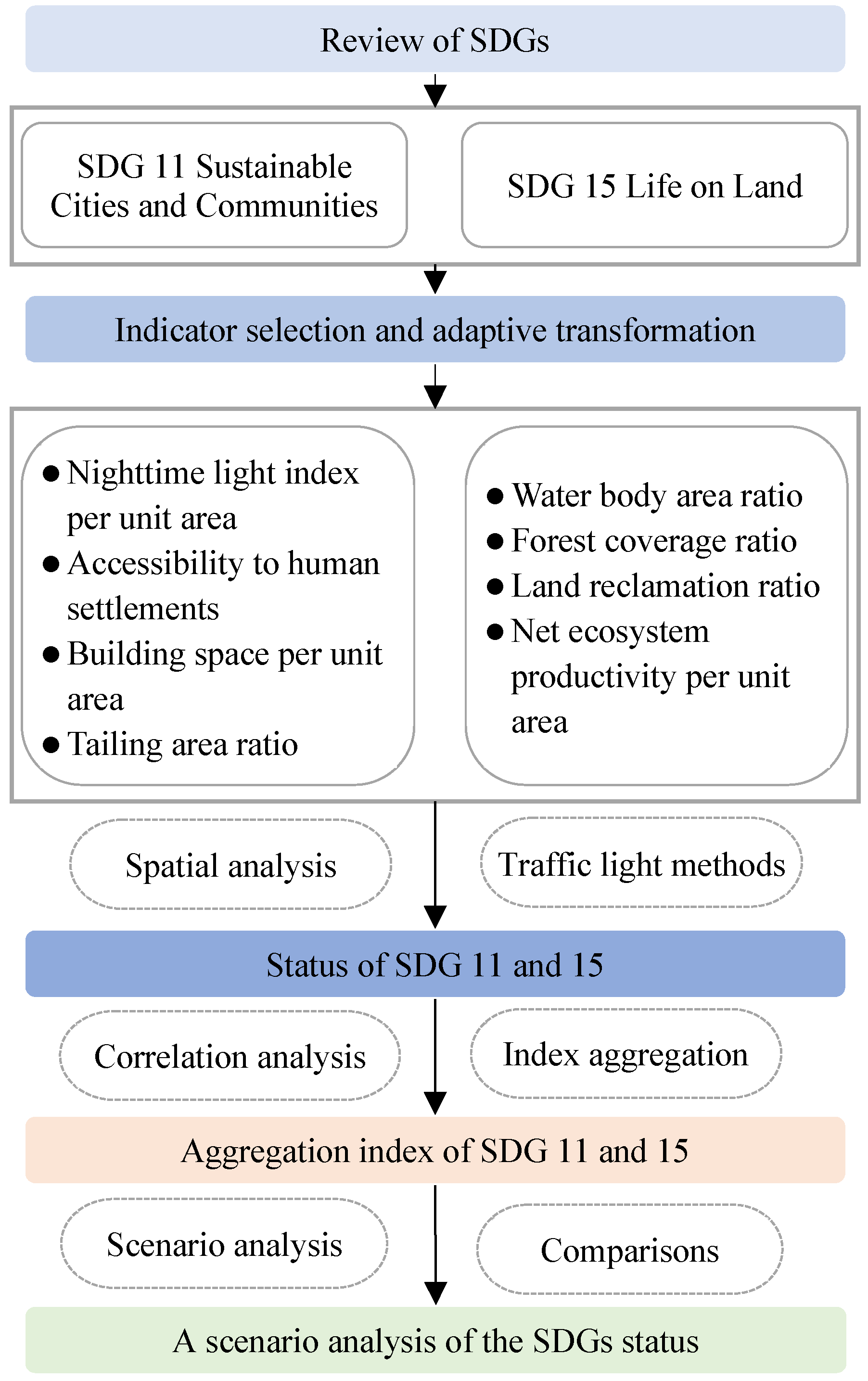
Figure 1 shows the overall technical research workflow, including the construction of an indicator system, the assessment of the status of SDGs 11 and 15, aggregation analysis and comprehensive assessment of SDGs 11 and 15, and the status of the SDGs in mining areas under different scenarios. First, starting with the targets of SDG 11 (Sustainable Cities and Communities) and SDG 15 (Life on Land) in the United Nations’ 2030 Agenda for Sustainable Development, combined with the social and ecological conditions in mining areas globally, eight indicators were determined for the targets of SDGs 11 and 15. Second, various methods such as nighttime light index, Gaussian moving search, and water body index were employed to quantitatively calculate each indicator and evaluate the status of each indicator in 2000, 2010, and 2020, and a Pearson’s correlation coefficient analysis was conducted to examine the correlations among the indicators. Next, an aggregated index for SDGs 11 and 15 was constructed to assess the social and ecological sustainability in mining areas globally. Finally, scenario analysis was conducted at both the mine site specific and national scales.

2.2. Global Mining Areas

We utilized the mined land dataset provided by the Earth and Environmental Science Data Publishing Network (http://pangaea.de), which extensively covers the spatial extent of most mine sites worldwide and consists of over 21,000 vector boundaries of mine sites or mining-related areas. This dataset does not cover all mine sites globally, and the types of mines in the database primarily include coal and metal mines. Maus et al. successfully obtained boundary information for these mining areas through identification and detection using high-resolution satellite imagery from Sentinel-2, Bing Imagery, and the Google Satellite, including key areas such as open-pit mines, tailing dams, waste rock piles, ponds, and mining processing infrastructure. The overall accuracy of the extracted mining areas in this dataset reached 88.4%, providing a reliable basis level for our research [30,32]. For small-scale mine sites (area less than 1 km2), it is difficult to extract the geographic information, such as nighttime light and net ecosystem productivity data, from coarse resolution data with global coverage. We screened out the mine sites with areas greater than or equal to 1 km2, with a total of 11,073 sites.

2.3. Indicators of SDG 11 and 15

There is currently no indicator system for assessing the SDGs in mining areas. In this study, we aimed to develop indicators that consider the specific targets of SDGs and their corresponding real-world indicators, as well as the interrelationships and priority sequences among them [11]. This indicator system was developed based on the following principles: (1) the indicators are consistent with the targets of the SDGs; (2) data are available; and (3) the importance of the sustainability of the mining industry and local communities and ecosystem. The indicators and calculation methods for the status of SDGs 11 and 15 in mining areas are presented in Table 1.

2.3.1. SDG 11.1 Housing Services

The nighttime light index uses two types of satellite data, Defense Meteorological Satellite Program Operational Linescan System (DMSP-OLS) (old, from 1992 to 2013) and National Polar-Orbiting Partnership-Visible Infrared Imaging Radiometer Suite (NPP-VIIRS) (new, from 2013 to present) (The National Geophysical Data Center, United States of America), to monitor the level of housing services in mining areas. The cross-sensor calibration model was applied to generate the nighttime light index of mining area in 2000, 2010, and 2020 [33,34]. Specifically, the nighttime light index refers to the average brightness of nighttime lights per unit area, representing the average illumination level within the mining area.

2.3.2. SDG 11.2 Transportation Systems

For assessing the status of transportation in mine sites, we assessed the accessibility values of the mining area and surrounding human settlements. We employed an improved Gaussian two-step search method and 20 km grids to perform partition statistics, with a search radius of 40 km [38]. The formulas are as follows:
R j = S j k d k i d 0 G d k i , d 0 P k
G d k i j , d 0 = e 1 2 × d k j d 0 2 e 1 2 1 e 1 2 0 ,           i f d k j > d 0 ,   i f d k j d 0 ,
A i = l d i l d 0 G d i l , d 0 R l S 0
where P k is the total quantity of light in the spatial domain of mining site j within region k ( d k i d 0 , d 0 = 40 km), which refers to the 20 km grid unit in this paper; d k i   is the spatial distance from the center of human settlement k to the center of mine site j; and S j is the capacity of mining site j, represented by the area of the mining site. The size of A i   can be understood as the influence of the mining site on the light brightness per unit area in a certain area, and it has a unit of m2. In the modified A i , S 0 represents the area of each grid unit, and it has a value of 400 km2.

2.3.3. SDG 11.3 Sustainable Cities and Settlements

The building space per unit area was used to represent SDG 11.3, namely, sustainable cities and settlements. The Global Human Settlement Layer dataset (Global Human Settlement Layer, European Commission’s Joint Research Center, Brussels, Belgium) was utilized in the calculation of this indicator, which allowed for a more accurate assessment and comparison of the building development level in the mining area.

2.3.4. SDG 11.6 Waste Management

Tailings are the main waste issue in mining areas. Hence, in this study, we employed the tailing land ratio to assess the status of waste management within the mining area. The calculation of the tailing land ratio relied on Google Earth imagery, and machine recognition and visual interpretation methods were utilized to obtain the specific areas of tailing ponds.

2.3.5. SDG 15.1 Freshwater Ecosystems

The freshwater ecosystems in the mine sites were assessed by analyzing the percentage of the water body within the mining area. The water body area index was calculated with the aid of the Global Surface Water Extent Dataset (Global Surface Water Explorer, World Bank, Washington, DC, USA), which extracts and calculates the areas of seasonal and perennial water bodies.

2.3.6. SDG 15.2 Sustainable Management of Forests

Mining usually involves clearing forests; therefore, we employed the forest coverage ratio to assess the status of the forest management. The forest coverage was based on the Global land cover map (European Space Agency, Paris, France), and it indicates the richness of the forest resources and ecological balance by comparing the forest area with the total area of the mining site.

2.3.7. SDG 15.3 Land Degradation Neutrality

Land reclamation in mines has always been a key issue in the construction of green mines. The land reclamation ratio is defined as the ratio of the area of land that has been reclaimed to the area of land that has been damaged. The greater the land reclamation ratio, the lower the level of land degradation. The land reclamation ratio calculations also relied on the global land cover map (European Space Agency).

2.3.8. SDG 15.4 Mountain Ecosystems

The target of SDG 15.4 is to ensure the conservation of mountain ecosystems, including their biodiversity, to enhance their capacity to provide benefits that are essential for sustainability. The net ecosystem productivity, an important parameter for assessing the functions of mountain ecosystems, was employed as an indicator for SDG 15.4. The net ecosystem productivity in the mining area was calculated using data from the 500 m resolution global annual net ecosystem productivity in terrestrial ecosystems products (National Earth System Science Data Center, Beijing, China). We calculated the average net ecosystem productivity within the mining area to quantify the levels of ecosystem productivity and carbon cycling.

2.4. Comprehensive Assessment

2.4.1. Indicator Grading

Before grading the indicators, we removed the data in the bottom and top 2.5% of the data range to eliminate the bias introduced by extreme values. Then, we adopted the traffic light method to classify each indicator into quartiles, and the critical thresholds were mainly derived from the SDGs or other official sources [39]. The basic grading criteria categorize green (top quarter) as indicating basic fulfillment of the indicator (i.e., the SDGs) requirements, yellow (top half) as indicating room for improvement, orange (top three quarters) as indicating challenges, and red (bottom quarter) as indicating a significant gap from meeting the requirements of the SDGs by 2030 (Table 2). Based on the quartile grading standards, in this study, we evaluated and analyzed the trends in the sustainability of mining areas globally.

2.4.2. Aggregation Index

To comprehensively assess the sustainability of the mining area, we introduced the SDG index calculation method for indicator aggregation. This calculation method adopts a standardization to 0–100 points, of which 0 represents the worst performance and 100 represents the best performance. For each indicator, the following formulas were used to adjust the data to a percentage scale and calculate the aggregation index:
x = x m i n x m a x x m i n x × 100
S D G   i n d e x = i = 1 n x i n
where x is the value of the indicator, and min(x) and max(x) are the minimum and maximum values of the indicator, respectively. The adjusted indicator score x is used to compute the SDG index, where n represents the number of indicators, and x i signifies the value of each indicator converted to a percentile. Using the SDG index, a comprehensive understanding of the overall status of SDG 11 and SDG 15 in mining areas can be obtained.

2.4.3. Correlation Analysis

To further explore the interrelationships among the various aspects of the sustainable development of the mining area, in this study, we employed the Pearson’s correlation coefficient to conduct correlation analysis. The Pearson’s correlation coefficient was utilized to measure the linear relationship between each pair of variables, with values ranging from −1 to 1. The general formula for the correlation coefficient r is
r = C o v ( X , Y ) D ( X ) D ( Y )
where C o v ( X , Y ) is the covariance of X and Y , and D ( X ) and D ( Y ) are the variances of X and Y , respectively.

3. Results

3.1. Status of SDG 11 and 15

Among the indicators of SDG 11, the studied mine sites that have achieved basic sustainable development in terms of the nighttime light index per unit area was only 6.15% in 2000 (Table 3). However, by 2020, this proportion had significantly increased to 22.19%, and the number of mine sites in the red grade had also decreased substantially, indicating a notable improvement in this indicator over the past 20 years. This suggests that the nighttime light level gradually increased in the mining area, reflecting the continued enhancement of urban development in these areas. As for the indicator of accessibility to human settlements, the number of mine sites that achieved the green grade slowly increased, but the number of non-compliant mine sites also increased, indicating that mining activities in remote areas continued to intensify. For the indicator of the building space per unit area, all four grades exhibited slight improvement. The performance of the tailing area ratio in 2000 basically met the target of SDG 11.6, and the overall performance remained relatively stable in the subsequent 20 years. Among the four indicators of SDG 11, except for the tailing area ratio, the other three indicators improved somewhat in the process of mining, but they still face challenges. The number of mine sites that have basically achieved SDG 11 increased from 0.17% to 0.51%, while the number of mine sites that have fell behind SDG 11 exceeded 94% due to the low level of accessibility to human settlements.
Among the indicators of SDG 15, the number of mine sites had achieved basic implementation in terms of the water body area ratio in 2020 was nearly double that in 2000, indicating that the water bodies within the mining area increased (Table 4). The number of non-compliant mines in terms of the forest coverage ratio did not improve, and there was a slight decrease in the number of mine sites that reached the target of SDG 15.2, suggesting a decrease in forest coverage over the 20-years. For the indicator of the land reclamation ratio, almost all of the mine sites were non-compliant in terms of the target of SDG 15.3. Although there was a slight increase over the past 20 years, the overall level remained very low, and only 0.48% of the mine sites achieved the green grade by 2020. The overall performance of the net ecosystem productivity per unit area exhibited a decreasing trend, indicating that the mine ecosystems suffered damage. For the aggregate index of SDG 15, no mine sites were in the green grade for all four indicators, and the number of mine sites in the orange grade continued to increase, while the number of mine sites that have fell behind SDG 11 exceeded 99% due to the low level of land reclamation ratio.

3.2. Relationship Between SDG 11 and 15

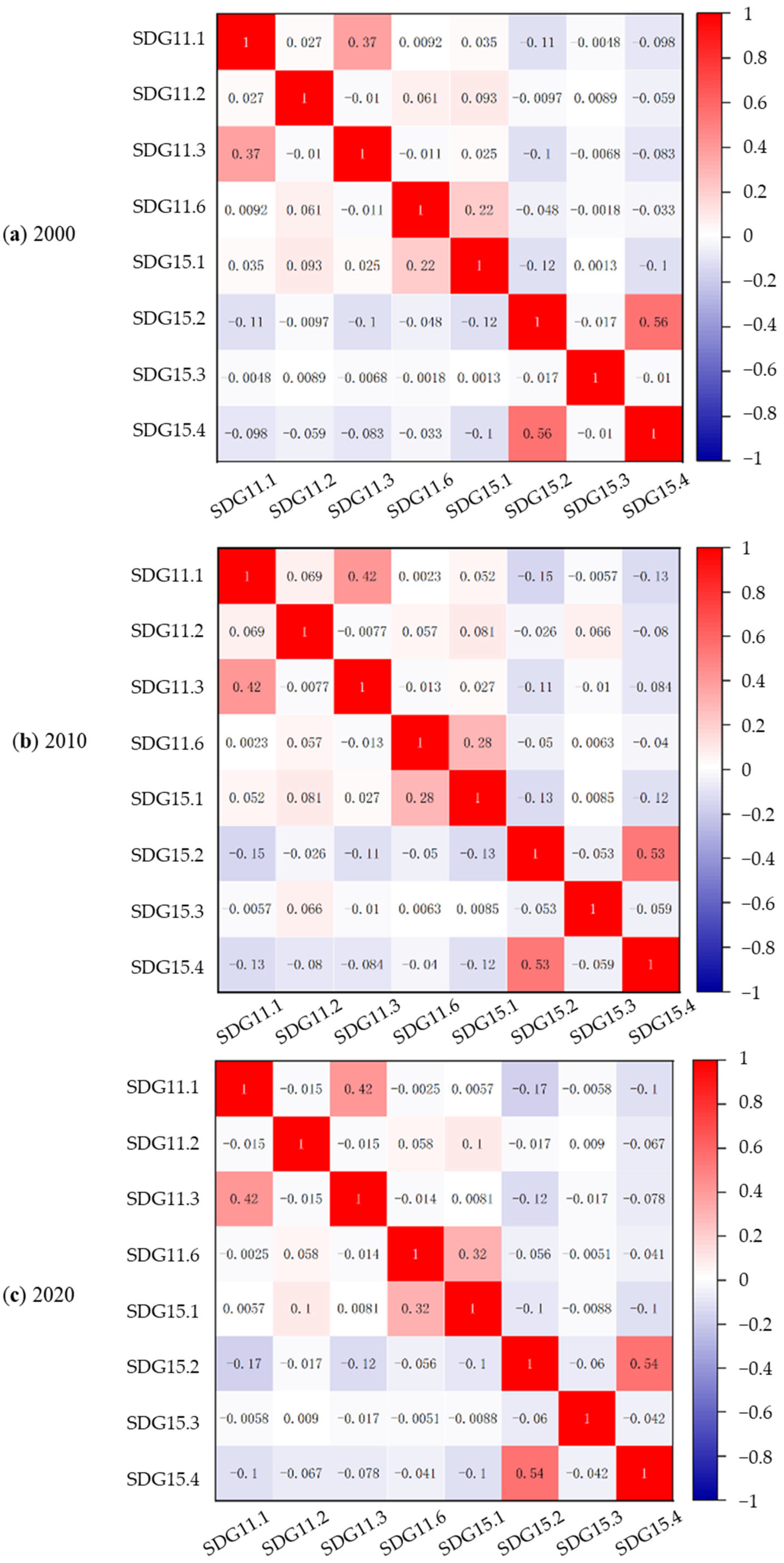
The Pearson’s correlation coefficient was used in this study to calculate the correlations between the various indicators of SDG 11 and SDG 15 (Figure 2). The overall correlation among the assessed indicators of the studied mine sites was relatively weak, indicating a low degree of mutual substitution between the indicators and a better representation of various aspects of the social and ecological sustainability in the mining areas. However, there were strong correlations between certain individual indicators. The positively correlated indicators included SDG 11.1 (housing services) and SDG 11.3 (sustainable cities and settlements), SDG 15.1 (freshwater ecosystems) and SDG 11.6 (urban waste management), and SDG 15.2 (sustainable management of forests) and SDG 15.4 (mountain ecosystems), and the strongest positive correlation was between SDG 15.2 and SDG 15.4, with a correlation coefficient of 0.56. This reflects the strong correlation between the forest coverage in the mining areas and the net ecosystem productivity, indicating that mining activities not only reduced the forest coverage but also decreased the net ecosystem productivity. Conversely, the negative correlations between the indicators all had Pearson’s coefficients of less than 0.3, indicating weak negative correlations, and the strongest negative correlation was between SDG 15.1 and 15.2, with a correlation coefficient of −0.12. There were no significant temporal variations in the correlation coefficients across the 3 years.

3.3. Aggregation Indexes of SDG 11 and 15

3.3.1. Aggregation Index at the Mine Site Scale

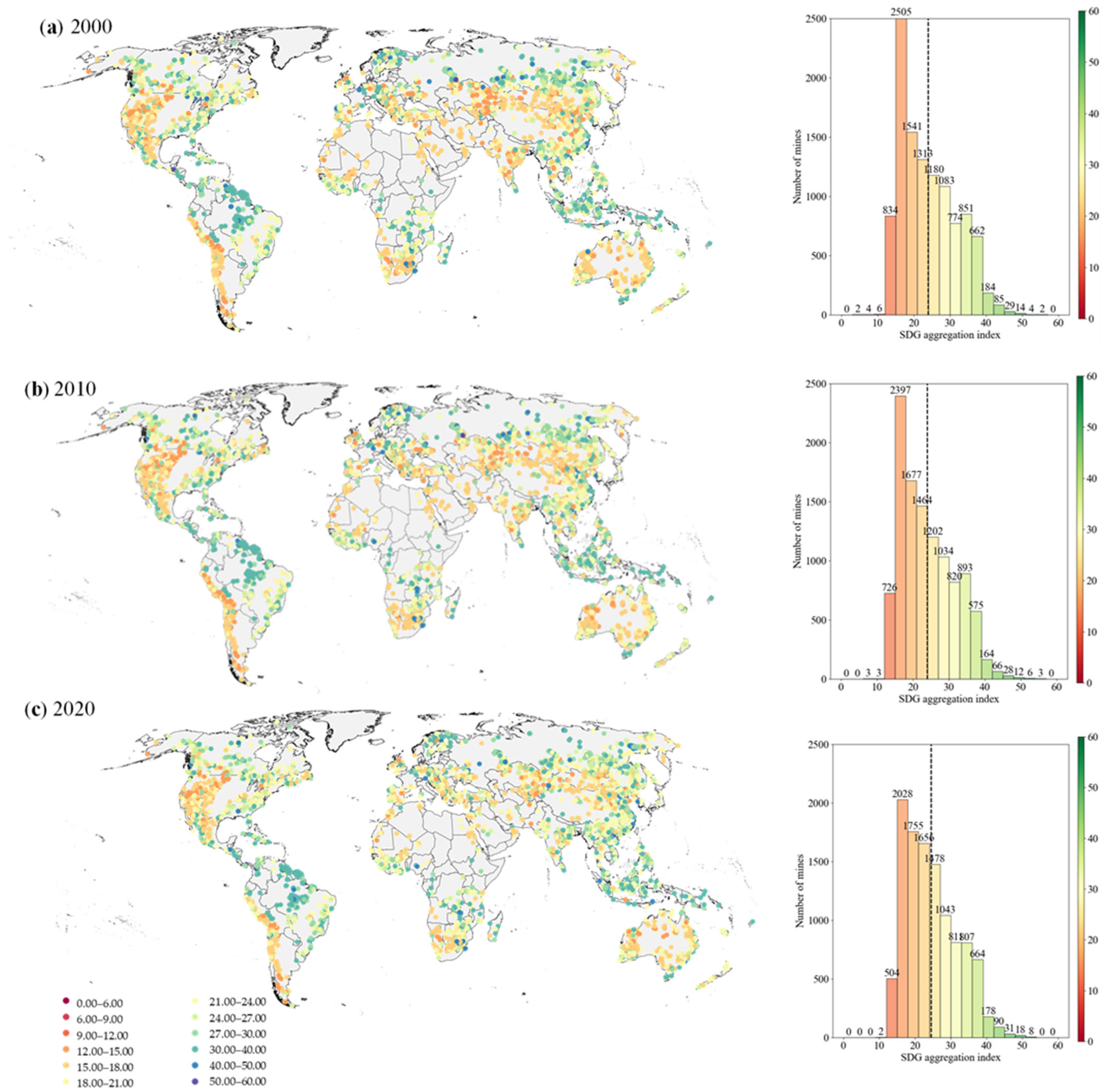
Figure 3 shows the aggregation indices of SDGs 11 and 15. The global SDG scores exhibited significant spatial clustering, with higher scores concentrated in regions near the equator in northeastern South America, northern Oceania, central Africa, and the southeastern parts of Russia, the United States, China, and Australia. The lower scores were located in arid or mountainous areas, including the western United States, central Australia, northern Africa, and central Asia.
The bar chart in Figure 3 shows that the global SDG aggregation index generally exhibited a skewed distribution and is biased toward lower scores. Over the past 20 years, there has been a trend toward higher average SDG aggregation index values, and the average aggregation index increased from 23.94 in 2000 to 24.48 in 2020. Consistent with this trend, the number of low-scoring mine sites continuously decreased, transitioning from initially being predominantly orange-red to gradually becoming yellow-green. This change may reflect the positive progress made by the mining industry in terms of sustainable development. Over time, there has been an overall increase in the average SDG aggregation index value of the mining area, possibly due to the attainment of substantial achievements in various aspects of sustainable development efforts. In addition, the reduction in low-scoring mine sites may indicate the effective implementation and significant effectiveness of sustainable development plans.
The status of the SDGs in the mining areas in the countries and continents exhibited spatial heterogeneity. For instance, in Canada, the SDG aggregation index was concentrated within the range of 21–40. The United States’ SDG aggregation index was concentrated within the range of 9–18, and it included many low-scoring mining sites in the western region and a few high-scoring mine sites in the southeastern region, indicating that there were significant regional disparities in the sustainable development of the mining areas. In South America, the mining areas in Peru and Chile near the western coast faced severe challenges in achieving sustainable development. Brazil, Suriname, and Venezuela had relatively high SDG aggregation index values, concentrated within the range of 24–60. In Brazil, the mining areas in the inland region exhibited better sustainable development than those in the coastal region. The mining areas in the Nordic countries generally exhibited good sustainable development, with values concentrated within the range of 21–50. In Africa, the mining areas were mainly distributed in the southern and western regions, and the sustainable development was poor in South Africa and the surrounding countries. Russia, with its vast territory, has dispersed mining sites with relatively high SDG aggregation index scores, within the range of 24–50 points. The SDG index values in the Middle East region were concentrated within the range of 12–18. Mongolia and Kazakhstan had aggregation index values within the range of 9–15. In China, there were regional differences in the SDG index values in the coastal and northwestern regions, and the national aggregation index values were concentrated within the range of 12–50. The Philippines and surrounding countries exhibited relatively good sustainable development in the mining areas, and the aggregation scores were concentrated within the range of 27–50. Australia also exhibited significant regional differences in the sustainable development of the mining areas. The coastal regions performed better than the inland regions, and the national aggregation index was concentrated within the range of 9–18. From the perspective of the time series data, China exhibited the most significant changes, and the number of mining sites with the green grade increased in the coastal regions. The mining areas in the eastern United States faced challenges, and the number of high-scoring mining areas decreased. In Mongolia and Kazakhstan, a few sites became high-scoring sites.

3.3.2. Aggregation Index at the National Scale

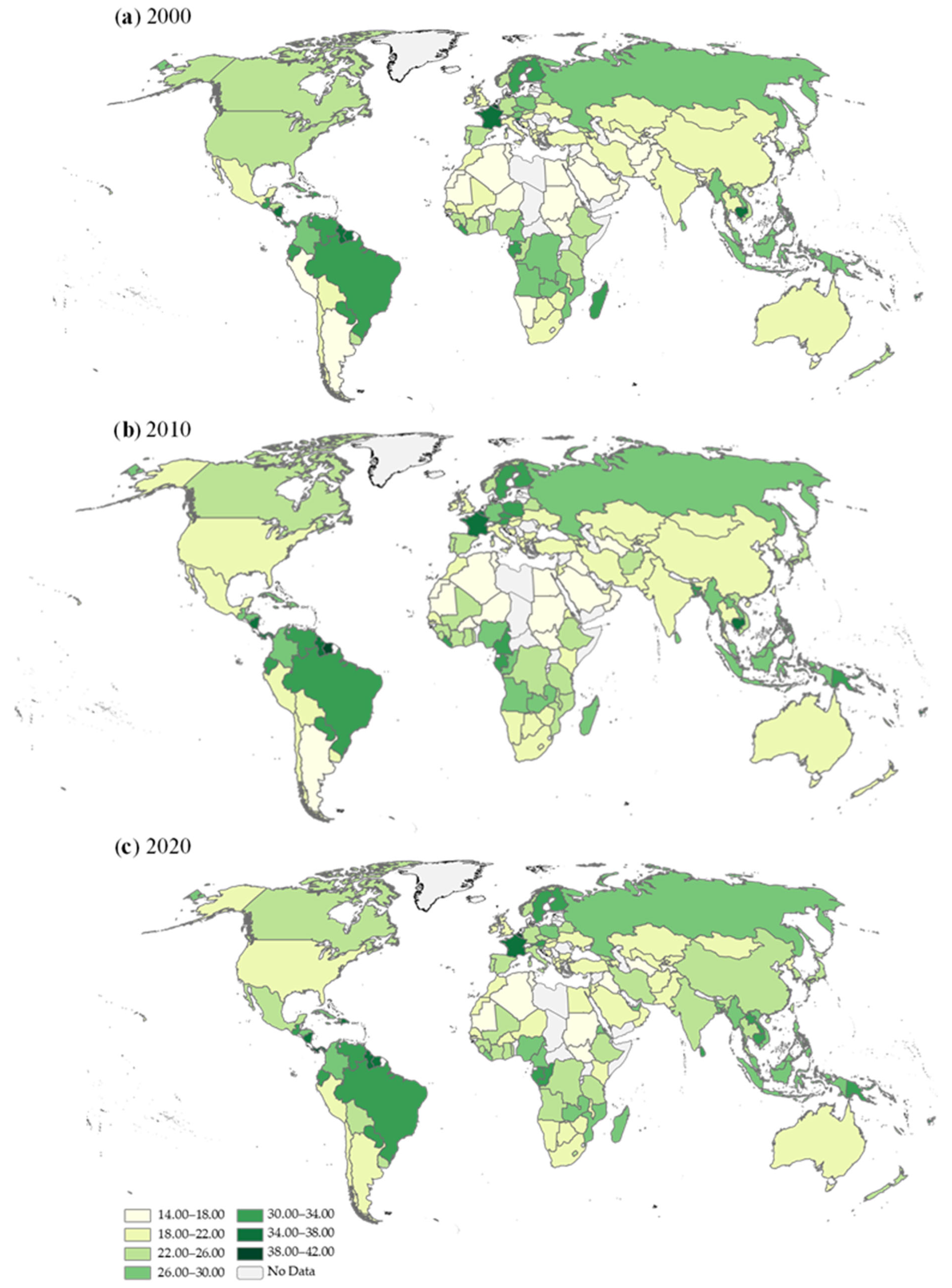
Over the past 20 years (2000–2020), there have been significant national disparities in the SDG aggregation index of mining areas across the globe (Figure 4). During this period, the aggregation index changed notably in some countries, reflecting the progress or challenges faced in achieving sustainable development in different countries. The countries in which the aggregation index decreased included the United States, which transitioned from 22–26 to 18–22, exhibiting a certain negative trend; Afghanistan, fluctuating from 14–18 to 22–26 and then declining to 18–22, indicating some volatility and instability; Madagascar, transitioning from 30–34 to 26–30; and the Congo and Angola, transitioning from 26–30 to 22–26. The countries that experienced significant improvement included Mexico, transitioning from 18–22 to 22–26; Peru and Argentina, transitioning from 14–18 to 18–22; and Bolivia, Iran, India, and China, transitioning from 18–22 to 26–30, demonstrating significant improvements in sustainable development. The countries in which the SDG aggregation index generally remained relatively stable over the 20-year period, i.e., either at relatively high levels or fluctuating at lower levels, included Russia, Canada, Brazil, Australia, South Africa, and Namibia. Among these, the mining areas in Russia, Canada, and Brazil consistently performed well.

3.3.3. Aggregation Index at the Continental Scale

On the continental scale, mining areas in South America and Europe exhibited the most significant improvement in SDG development during the 20 years period. Initially, the mining areas in North America exhibited the most balanced development, but the scores decreased in the United States and increased in Mexico, and the disparities in the development among the countries gradually became evident. The mining areas in Africa exhibited the most uneven development, with countries in the southern region performing significantly better than those in the northern region. The mining areas in Asia and Oceania had a relatively poor foundation in terms of the SDGs, but there was a significant improvement in the SDGs in Asia by 2020. Overall, the status of the SDGs in the mining areas exhibited a stable and positive trend globally.

4. Discussion

4.1. Factors Influencing the Status of the SDGs

Table 5 presents the contributions of the influencing factors to the status of the SDGs in 2020. The Spearman’s correlation analysis revealed the occurrence of several notable relationships. While the mining areas exhibited a slight positive correlation with the SDG aggregation index, this correlation was not statistically significant (r = 0.131, p = 0.001). However, significant positive correlations existed between the SDG aggregation index and the net ecosystem productivity within the mining areas (r = 0.590, p < 0.001), as well as the net ecosystem productivity within the 2 km buffer zone surrounding the mining area (r = 0.556, p < 0.001). Furthermore, the accessibility to human settlements exhibited a positive correlation with the SDG aggregation index, indicating the potential influence of the transportation infrastructure on sustainable development (r = 0.208, p = 0.001). Conversely, there was a negative correlation between the gross domestic product per capita and the SDG aggregation index, suggesting the occurrence of a complex relationship between the economic factors and mining industry (r = −0.200, p = 0.001). There was a weak negative correlation between the slope of the terrain and the SDG aggregation index, but this correlation was not statistically significant (r = −0.022, p = 0.022). Moreover, the population density exhibited a positive correlation with the SDG aggregation index, indicating the potential impact of population dynamics on the sustainability in the mining areas (r = 0.092, p = 0.001).
Multiple linear regression analysis revealed that both the internal net ecosystem productivity and accessibility significantly impacted the dependent variable, explaining 72.69% and 12.18% of the variance, respectively. This suggests that the ecosystem within the mining area and the accessibility to human settlements had substantial effects on the SDG aggregation index. Moreover, the significance levels of the net ecosystem productivity, accessibility to human settlements, slope of the terrain, and population density were all less than 0.05, indicating that they had significant influences on the SDGs in the mining areas. Conversely, the size of the mining area and slope of the terrain explained close to 0% of the variance, suggesting that they had minimal correlations with the status of the SDGs in the mining areas.
In the past 20 years, the SDG 11 had been improved while SDG 15 had been lowered (Table 2 and Table 3), this suggests that the economic condition in mining areas had been improved by the rapid development of mining industry with the delay of ecological restoration. These findings underscore the main influencing factors on the status of mines according to the SDGs not only include the net ecosystem productivity, but also economic condition such as accessibility, population density, and gross domestic product per capita. To improve the status of the SDGs, it is essential to leverage the surrounding ecological end economic resources. Additionally, stronger regulatory measures are needed to ensure that mining activities do not irreversibly harm the environment and society amidst urbanization and economic growth. However, challenges persist in regulating and governing the mining industry, particularly in the context of urbanization and economic development.

4.2. Analysis of Scenarios of the Status of the SDGs

The threshold for each indicator has a significant impact on the results of the status of the SDGs. In this study, we analyzed different scenarios (Table 6). As can be seen from Table 5, the number of mining sites with the green grade was assessed under three sustainable development scenarios: development with the current, strict, and low standard modes. The current mode follows the traffic light method to set thresholds; the strict mode aligns more closely with global sustainable development policies, and SDG-related standards are used to set the thresholds; and the low standard mode uses the average value of each indicator of all of the studied global mine sites as the threshold [3].
Under the current mode scenario, the proportion of green grade mining sites reached 22.19% in 2020 based on the indicator of the nighttime light index per unit area; however, under the strict mode, the proportion of green grade mining sites only accounted for 4.63%. The growth of the green grade mining sites in terms of the accessibility to human settlements is relatively slow. Even if the standard is lowered to the average level, the growth of green grade mining sites over the 20-year period is extremely limited, increasing by only about 1% from 2010 to 2020. However, the proportion of the green grade mining sites in terms of the building space per unit area significantly increased under all three scenarios, especially under the strict mode; that is, the number of green grade mining sites exceeds that under the average level. The proportion of green grade mining sites in terms of the area ratio reached over 97% under all three scenarios. In 2020, according to the water body area ratio, the proportion of green grade mining sites is relatively high under the current mode (18.27%); however, under the strict mode, the proportion of green grade mining sites is significantly lower (7.27%). Due to the large number of mining sites operating in forested areas, the number of green grade mining sites that meet the standard for the forest coverage ratio under the strict mode is higher than that under the current mode, indicating that the indicators are higher under the current mode than under the strict mode. According to the land reclamation ratio and net ecosystem productivity per unit area, the changes in the number of green grade mining are similar to those for the aforementioned indicators.
In summary, the use of different standards has a significant impact on the statuses of indicators such as the nighttime light index per unit area, water body area ratio, forest coverage ratio, and net ecosystem productivity per unit area. This suggests that these indicators are highly sensitive to the standards of SDGs, and once strict standards are adopted, the status of the SDGs in mining areas will deteriorate further globally.

4.3. Implications, Limitations, and Future Work

Given the limited public awareness of the global mining sector and its sustainable development status, the research presented in this paper has significant practical value. It provides robust data support for the sustainable development of mining areas worldwide. The assessment of SDG 11 and SDG 15 not only provides insights into the status of mining areas in terms of urban sustainability and terrestrial ecosystems but also provides scientific evidence to support decision-makers in guiding the global mining industry toward a more sustainable direction. Additionally, our research findings offer valuable guidance for ecological restoration efforts in mining areas globally. By analyzing the trends of different indicators, researchers can more accurately assess the effectiveness and shortcomings of past ecological restoration efforts, thereby providing a basis for formulating strategies for the sustainable development and ecological restoration of mining areas.
For mining areas located closer to urban areas, leveraging the economic benefits of urban expansion can increase investments in infrastructure and living environments while introducing advanced environmental protection technologies to minimize environmental impacts on surrounding areas. For example, the transformation of closed mines into wetland parks, sports facilities or amusement parks serving urban residents has been successfully implemented in China, Germany, South Africa, and other places, which helps to improve the sustainable development status of mines [40]. For remote mining areas, comprehensive environmental impact assessments should be conducted before mining operations begin, strict compliance with environmental regulations should be ensured, and measures should be taken to minimize damage to the environment [41]. In addition, ecological restoration and recovery work should be carried out in a timely manner after mining operations cease. For mining areas located within forested areas, stricter ecological protection measures should be implemented, including comprehensive ecological risk assessments, stringent protection plans, minimization of damage to forest, and assurance that affected ecosystems can recover to their original state as soon as possible [21].
However, this study still has some limitations. First, the coverage of mining areas was limited to spatial areas larger than 1 km2, which may not fully consider the status of SDGs-related indicators in small-scale mining sites. Second, the lack of more time-series data limits the analysis of long-term development trends in mining areas. Additionally, the initial dataset used in this study only included basic geographic location and area information, and information on the mining area characteristics and activities, such as the mining time, types of ore minerals, ecological restoration, and ownership, is lacking, which limits the ability to attain a comprehensive understanding of the issues of sustainable development. This study only considered eight targets of SDGs 11 and 15 due to data availability. The remaining targets are equally important and should receive attention in the future. This study employed a simple aggregation index based on equal weights of several targets of SDGs, which may restrict the application of the results in different regions.
To gain a more comprehensive understanding of the sustainable development status of global mining areas, future work can expand our research in several directions. First, long-term monitoring should be conducted to obtain data for more years [42,43,44], enabling a more comprehensive understanding of the dynamic changes in the status of SDGs in mining areas globally. Second, cloud computing methods can be utilized to process larger and more complex datasets, improving the spatial resolution and comprehensiveness of the data [45]. Finally, consideration should be given to expanding the scope of the research to include more sustainable development goals and targets [11], such as clean water, climate action, and social justice to construct a more comprehensive assessment system. More sophisticated methods such as analytic hierarchy process or principal component analysis can be used to weight the different indicators of SDGs so as to provide more detailed guidance for the sustainable development of the global mining industry [46]. Through these future efforts, a more comprehensive understanding of the impact of mining areas on SDGs can be gained, thus providing more practical recommendations for mining practices and policy-making.

5. Conclusions

In this study, we quantified the status of SDGs 11 and 15 in mining areas globally using multi-source geographic information data. Simultaneously, we analyzed the national differences in the sustainable development status and explored the relationships between sustainable development aggregation indices and influencing factors such as population, economic, and environmental factors.
Globally, the mining areas exhibited a slow increase in sustainable development from 2000 to 2010, but they exhibited a significant improvement trend in the subsequent decade. This trend was clearly reflected by the average value of the SDG aggregation index, which increased from 23.94 in 2000 to 24.48 in 2020, indicating that on the global scale, the sustainable development of mining areas is gradually moving in the positive direction.
For SDG 11, all four indicators exhibited improvement, indicating that the urban and community conditions in mining areas globally improved with increasing urban development, mining development, and economic growth. In contrast, in terms of SDG 15, the sustainable development progressed relatively slowly. While the water body area and land reclamation ratio increased slightly, the forest coverage ratio and net ecosystem productivity significantly decreased, suggesting that the environmental damage caused by the mining industry was not negligible, and the ecological sustainable development in mining areas is facing serious challenges.
The assessment of global mining in terms of SDGs 11 and 15 revealed that during the study period, the number of green grade mining sites was less than 1%, while the number of red grade mining sites exceeded 94%. This indicates that the sustainable development status in mining areas globally is still not optimistic, and there is still a considerable gap in the achievement of sustainable development. Therefore, it is necessary to strengthen improvements in living environments and ecological restoration and to formulate more effective sustainable development strategies.
During the study period, the sustainable development status in mining areas globally exhibited significant spatial clustering, that is, the mining areas with higher SDG aggregation index values were mainly distributed in equatorial regions. Significant spatial heterogeneity also existed within countries, and the mining areas with better sustainable development were often located near economically developed urban areas. The degree of damage caused by mining, the ecosystem restoration capacity, and urban expansion were the main factors that affected sustainable development in mining areas during the study period.

Author Contributions

Conceptualization, F.C.; methodology, S.Z.; software, Y.Z.; validation, Y.S., X.C. and Z.L.; formal analysis, S.Z.; investigation, S.Z.; resources, F.C.; data curation, S.Z. and Z.L.; writing—original draft preparation, S.Z.; writing—review and editing, F.C.; visualization, Z.L.; supervision, F.C.; project administration, Y.Z.; funding acquisition, F.C. All authors have read and agreed to the published version of the manuscript.

Funding

This research was funded by the National Natural Science Foundation of China (52374170).

Data Availability Statement

The data presented in this study are available on request from the corresponding author. The data are not publicly available to protect the privacy of the study’s participants.

Conflicts of Interest

The authors declare no conflicts of interest.

References

  1. Biermann, F.; Kanie, N.; Kim, R.E. Global governance by goal-setting: The novel approach of the UN Sustainable Development Goals. Curr. Opin. Environ. Sustain. 2017, 26–27, 26–31. [Google Scholar] [CrossRef]
  2. Annan-Diab, F.; Molinari, C. Interdisciplinarity: Practical approach to advancing education for sustainability and for the Sustainable Development Goals. Int. J. Manag. Educ. 2017, 15, 73–83. [Google Scholar] [CrossRef]
  3. Allen, C.; Metternicht, G.; Wiedmann, T. Initial progress in implementing the Sustainable Development Goals (SDGs): A review of evidence from countries. Sustain. Sci. 2018, 13, 1453–1467. [Google Scholar] [CrossRef]
  4. Mori Junior, R.; Fien, J.; Horne, R. Implementing the UN SDGs in universities: Challenges, opportunities, and lessons learned. Sustain. J. Rec. 2019, 12, 129–133. [Google Scholar] [CrossRef]
  5. Mesquita, R.F.d.; Klein, B.; Xavier, A.; Matos, F.R.N. Mining and the sustainable development goals: A systematic literature review. In Proceedings of the 8th International Conference on Sustainable Development in the Minerals Industry, Beijing, China, 25–29 June 2017; Li, Z.X., Agioutantis, Z., Zou, D.H., Eds.; Camdemia: Vancouver, BC, Canada, 2017; pp. 29–34. [Google Scholar] [CrossRef][Green Version]
  6. Monteiro, N.B.R.; da Silva, E.A.; Neto, J.M.M. Sustainable development goals in mining. J. Clean. Prod. 2019, 228, 509–520. [Google Scholar] [CrossRef]
  7. Islam, K.; Vilaysouk, X.; Murakami, S. Integrating remote sensing and life cycle assessment to quantify the environmental impacts of copper-silver-gold mining: A case study from Laos. Resour. Conserv. Recycl. 2020, 154, 104630. [Google Scholar] [CrossRef]
  8. Kobayashi, H.; Watando, H.; Kakimoto, M. A global extent site-level analysis of land cover and protected area overlap with mining activities as an indicator of biodiversity pressure. J. Clean. Prod. 2014, 84, 459–468. [Google Scholar] [CrossRef]
  9. Pring, G.; Otto, J.; Naito, K. Trends in international environmental law affecting the minerals industry. J. Energy Nat. Resour. Law 1999, 17, 39–55. [Google Scholar] [CrossRef]
  10. Wood, S.L.; Jones, S.K.; Johnson, J.A.; Brauman, K.A.; Chaplin-Kramer, R.; Fremier, A.; Girvetz, E.; Gordon, L.J.; Kappel, C.V.; Mandle, L. Distilling the role of ecosystem services in the Sustainable Development Goals. Ecosyst. Serv. 2018, 29, 70–82. [Google Scholar] [CrossRef]
  11. Omotehinse, A.O.; De Tomi, G. Mining and the sustainable development goals: Prioritizing SDG targets for proper environmental governance. Ambio 2023, 52, 229–241. [Google Scholar] [CrossRef]
  12. He, T.; Chen, W.; Xiao, W.; Guo, J.; Chen, H.; Deng, X. Identifying coal mining subsidence impacts by soil moisture based on optical trapezoid model in Google Earth Engine. Land Degrad. Dev. 2023, 34, 4990–5003. [Google Scholar] [CrossRef]
  13. Pohrebennyk, V.; Koszelnik, P.; Mitryasova, O.; Dzhumelia, E.; Zdeb, M. Environmental monitoring of soils of post-industrial mining areas. J. Ecol. Eng. 2019, 20, 53–61. [Google Scholar] [CrossRef]
  14. Huang, X.; Sillanpää, M.; Gjessing, E.T.; Peräniemi, S.; Vogt, R.D. Environmental impact of mining activities on the surface water quality in Tibet: Gyama valley. Sci. Total Environ. 2010, 408, 4177–4184. [Google Scholar] [CrossRef] [PubMed]
  15. Jhariya, D.; Khan, R.; Thakur, G. Impact of mining activity on water resource: An overview study. Proc. Recent Pract. Innov. Min. Ind. Raipur India 2016, 201, 19–20. Available online: https://www.researchgate.net/publication/301522857 (accessed on 15 October 2025).
  16. Mhlongo, S.; Mativenga, P.T.; Marnewick, A. Water quality in a mining and water-stressed region. J. Clean. Prod. 2018, 171, 446–456. [Google Scholar] [CrossRef]
  17. Gomes, P.; Valente, T.; Pereira, P. Addressing quality and usability of surface water bodies in semi-arid regions with mining influences. Environ. Process. 2018, 5, 707–725. [Google Scholar] [CrossRef]
  18. Pohrebennyk, V.; Mitryasova, O.; Dzhumelia, E.; Kochanek, A. Evaluation of surface water quality in mining and chemical industry. Int. Multidiscip. Sci. GeoConference SGEM 2017, 17, 425–432. [Google Scholar] [CrossRef]
  19. Biney, E.; Biney, N.; Dadzie, I.; Harris, E.; Quartey, G.A.; Asare, Y.M.; Bessah, E.; Forkuo, E.K. Impact of mining on vegetation cover: A case study of Prestea Huni-Valley municipality. Sci. Afr. 2022, 17, e01387. [Google Scholar] [CrossRef]
  20. Saha, D.C.; Padhy, P.K. Effects of stone crushing industry on Shorea robusta and Madhuca indica foliage in Lalpahari forest. Atmos. Pollut. Res. 2011, 2, 463–476. [Google Scholar] [CrossRef]
  21. Yang, Y.; Tang, J.; Zhang, Y.; Zhang, S.; Zhou, Y.; Hou, H.; Liu, R. Reforestation improves vegetation coverage and biomass, but not spatial structure, on semi-arid mine dumps. Ecol. Eng. 2022, 175, 106508. [Google Scholar] [CrossRef]
  22. Thiruchittampalam, S.; Singh, S.K.; Banerjee, B.P.; Glenn, N.F.; Raval, S. Spoil characterisation using UAV-based optical remote sensing in coal mine dumps. Int. J. Coal Sci. Technol. 2023, 10, 65. [Google Scholar] [CrossRef]
  23. Ghosh, D.; Maiti, S.K. Eco-Restoration of Coal Mine Spoil: Biochar Application and Carbon Sequestration for Achieving UN Sustainable Development Goals 13 and 15. Land 2021, 10, 1112. [Google Scholar] [CrossRef]
  24. Wang, Z.; Lechner, A.M.; Yang, Y.; Baumgartl, T.; Wu, J. Mapping the cumulative impacts of long-term mining disturbance and progressive rehabilitation on ecosystem services. Sci. Total Environ. 2020, 717, 137214. [Google Scholar] [CrossRef] [PubMed]
  25. He, T.; Guo, J.; Xiao, W.; Xu, S.; Chen, H. A novel method for identification of disturbance from surface coal mining using all available Landsat data in the GEE platform. ISPRS J. Photogramm. Remote Sens. 2023, 205, 17–33. [Google Scholar] [CrossRef]
  26. Lechner, A.M.; Owen, J.; Ang, M.L.E.; Edraki, M.; Awang, N.A.C.; Kemp, D. Historical socio-environmental assessment of resource development footprints using remote sensing. Remote Sens. Appl. Soc. Environ. 2019, 15, 100236. [Google Scholar] [CrossRef]
  27. Maryati, S.; Shimada, H.; Sasaoka, T.; Hamanaka, A.; Matsui, K.; Nagawa, H. GIS database template for environmental management of mining in Indonesia. J. Geogr. Inf. Syst. 2012, 4, 62–70. [Google Scholar] [CrossRef]
  28. Khalil, A.; Hanich, L.; Hakkou, R.; Lepage, M. GIS-based environmental database for assessing the mine pollution: A case study of an abandoned mine site in Morocco. J. Geochem. Explor. 2014, 144, 468–477. [Google Scholar] [CrossRef]
  29. Werner, T.T.; Bach, P.M.; Yellishetty, M.; Amirpoorsaeed, F.; Walsh, S.; Miller, A.; Roach, M.; Schnapp, A.; Solly, P.; Tan, Y. A geospatial database for effective mine rehabilitation in Australia. Minerals 2020, 10, 745. [Google Scholar] [CrossRef]
  30. Maus, V.; Giljum, S.; Gutschlhofer, J.; da Silva, D.M.; Probst, M.; Gass, S.L.; Luckeneder, S.; Lieber, M.; McCallum, I. A global-scale data set of mining areas. Sci. Data 2020, 7, 289. [Google Scholar] [CrossRef]
  31. Murguía, D.I.; Bringezu, S.; Schaldach, R. Global direct pressures on biodiversity by large-scale metal mining: Spatial distribution and implications for conservation. J. Environ. Manag. 2016, 180, 409–420. [Google Scholar] [CrossRef]
  32. Maus, V.; Giljum, S.; da Silva, D.M.; Gutschlhofer, J.; da Rosa, R.P.; Luckeneder, S.; Gass, S.L.; Lieber, M.; McCallum, I. An update on global mining land use. Sci. Data 2022, 9, 433. [Google Scholar] [CrossRef] [PubMed]
  33. Luckeneder, S.; Giljum, S.; Schaffartzik, A.; Maus, V.; Tost, M. Surge in global metal mining threatens vulnerable ecosystems. Glob. Environ. Change 2021, 69, 102303. [Google Scholar] [CrossRef]
  34. Macklin, M.G.; Thomas, C.; Mudbhatkal, A.; Brewer, P.; Hudson-Edwards, K.; Lewin, J.; Scussolini, P.; Eilander, D.; Lechner, A.; Owen, J. Impacts of metal mining on river systems: A global assessment. Science 2023, 381, 1345–1350. [Google Scholar] [CrossRef] [PubMed]
  35. Maus, V.; Werner, T.T. Impacts for half of the world’s mining areas are undocumented. Nature 2024, 625, 26–29. [Google Scholar] [CrossRef]
  36. Chander, G.; Hewison, T.J.; Fox, N.; Wu, X.; Xiong, X.; Blackwell, W.J. Overview of Intercalibration of Satellite Instruments. IEEE Trans. Geosci. Remote Sens. 2013, 51, 1056–1080. [Google Scholar] [CrossRef]
  37. Zheng, Q.; Weng, Q.; Wang, K. Developing a new cross-sensor calibration model for DMSP-OLS and Suomi-NPP VIIRS night-light imageries. ISPRS J. Photogramm. Remote Sens. 2019, 153, 36–47. [Google Scholar] [CrossRef]
  38. Li, Y.; Xie, Y.; Sun, S.; Hu, L. Evaluation of park accessibility based on improved gaussian two-step floating catchment area method: A case study of Xi’an city. Buildings 2022, 12, 871. [Google Scholar] [CrossRef]
  39. Lynch, A.; Sachs, J. The United States Sustainable Development Report 2021; SDSN: New York, NY, USA, 2021; Available online: https://www.sustainabledevelopment.report/reports/united-states-sustainable-development-report-2021/ (accessed on 15 October 2025).
  40. Li, C.; Chang, J.; Feng, S.; Zhou, S. From a Coal Mining Area to a Wetland Park: How Is the Social Landscape Performance in Pan’an Lake National Wetland Park? Land 2025, 14, 1305. [Google Scholar] [CrossRef]
  41. Yang, Y.; Erskine, P.D.; Zhang, S.; Wang, Y.; Bian, Z.; Lei, S. Effects of underground mining on vegetation and environmental patterns in a semi-arid watershed with implications for resilience management. Environ. Earth Sci. 2018, 77, 605. [Google Scholar] [CrossRef]
  42. Clements, W.H.; Herbst, D.B.; Hornberger, M.I.; Mebane, C.A.; Short, T.M. Long-term monitoring reveals convergent patterns of recovery from mining contamination across 4 western US watersheds. Freshw. Sci. 2021, 40, 407–426. [Google Scholar] [CrossRef]
  43. Shackelford, N.; Miller, B.P.; Erickson, T.E. Restoration of open-cut mining in semi-arid systems: A synthesis of long-term monitoring data and implications for management. Land Degrad. Dev. 2018, 29, 994–1004. [Google Scholar] [CrossRef]
  44. Yang, Y.; Erskine, P.D.; Lechner, A.M.; Mulligan, D.; Zhang, S.; Wang, Z. Detecting the dynamics of vegetation disturbance and recovery in surface mining area via Landsat imagery and LandTrendr algorithm. J. Clean. Prod. 2018, 178, 353–362. [Google Scholar] [CrossRef]
  45. Wang, L.; Ma, Y.; Yan, J.; Chang, V.; Zomaya, A.Y. pipsCloud: High performance cloud computing for remote sensing big data management and processing. Future Gener. Comput. Syst. 2016, 78, 353–368. [Google Scholar] [CrossRef]
  46. Amirshenava, S.; Osanloo, M. A hybrid semi-quantitative approach for impact assessment of mining activities on sustainable development indexes. J. Clean. Prod. 2019, 218, 823–834. [Google Scholar] [CrossRef]
Figure 1. Framework of this study.
Land 14 02355 g001
Figure 2. Pearson’s correlation coefficients among the indicators of SDGs 11 and 15.
Land 14 02355 g002
Figure 3. Aggregation indexes of SDGs 11 and 15 in 2000, 2010, and 2020.
Land 14 02355 g003
Figure 4. Mean values of the aggregation index for each country in 2000, 2010, and 2020.
Land 14 02355 g004
Table 1. Indicators for the assessed targets of SDG 11 and 15.
SDGs TargetsIndicatorDefinitionMethodData Source
SDG 11.1
Housing services
Nighttime light index per unit areaAverage brightness of nighttime lights within the mining areaNighttime data correction and spatial density analysis [36,37]Nighttime Remote Sensing Data, The National Geophysical Data Center, United States of America
SDG 11.2
Transportation systems
Accessibility to human settlementsAccessibility values between the mining area and surrounding human settlementsZonal statistics and improved Gaussian two-step search method [38]Nighttime Remote Sensing Data, The National Geophysical Data Center, United States of America
SDG 11.3
Sustainable cities and settlements
Building space per unit areaAverage volume of building space per unit area within the mining areaMask processing and spatial density analysisGlobal Human Settlement Layer, European Commission’s Joint Research Center
SDG 11.6
Waste management
Tailing area ratioRatio of tailing area to total mining areaSpatial density analysis based on tailings identificationIntegration of Google Earth image processing algorithms and visual interpretation
SDG 15.1 Freshwater ecosystemsWater body area ratioRatio of the area of seasonal and perennial water bodies to the total mining areaSpatial density analysis based on water body indexGlobal Surface Water Explorer, World Bank
SDG 15.2 Sustainable management of forestsForest coverage ratioRatio of forest area to total mining site areaSpatial density analysis based on land use dataGlobal land cover map, European Space Agency
SDG 15.3
Land degradation neutrality
Land reclamation ratioRatio of reclaimed land area to the area of land damaged by mining activitiesLand use transfer matrix and spatial density analysisGlobal land cover map, European Space Agency
SDG 15.4
Mountain ecosystems
Net ecosystem productivity per unit areaProportion of net primary productivity minus heterotrophic respiration consumptionSpatial statistics500 m resolution products of global annual net ecosystem productivity, China National Earth System Science Data Center
Table 2. Thresholds of the indicators of the assessed targets of SDG 11 and 15.
IndicatorsThresholds
Green—Basic AchievementYellow—Needs ImprovementOrange—Facing ChallengesRed—Far Behind
Nighttime light index per unit area2.440.920.290
Accessibility to human settlements149,306.0053,751.8818,539.740
Building space per unit area132.7029.887.010
Tailing area ratio0.100.190.391
Water body area ratio0.130.0440.0190
Forest coverage ratio0.830.3770.1250
Land reclamation ratio0.600.1670.0340
Net ecosystem productivity per unit area159.8719.33−38.73−173
Table 3. Status of the assessed targets of SDG 11.
IndicatorYearThe Proportion of Studied Global Mine Sites
Green—Basic AchievementYellow—Needs ImprovementOrange—Facing ChallengesRed—Far Behind
Nighttime light index per unit area20006.15%6.15%6.15%81.55%
20109.25%8.46%8.92%73.37%
202022.19%13.78%9.46%54.57%
Accessibility to human settlements20002.85%2.85%2.85%82.86%
20103.60%2.75%2.53%91.11%
20204.40%3.04%2.56%90.00%
Building space per unit area200020.54%20.54%20.54%38.39%
201024.89%22.14%18.48%34.49
202032.82%22.50%15.52%29.17%
Tailing area ratio200098.13%0.620.620.62
201098.26%0.66%0.63%0.48%
202098.35%0.66%0.53%0.46%
Aggregation index of SDG 1120000.17%0.67%1.72%97.44%
20100.47%1.13%1.13%97.27%
20200.51%2.15%2.51%94.83%
Table 4. Status of the assessed targets of SDG 15.
IndicatorYearThe Proportion of Studied Global Mine Sites
Green—Basic AchievementYellow—Needs ImprovementOrange—Facing ChallengesRed—Far Behind
Water body area ratio20009.59%9.59%9.59%71.23%
201011.84%12.85%11.42%63.89%
202018.24%19.32%15.11%47.33%
Forest coverage ratio200015.74%15.74%15.74%52.78%
201014.03%14.88%16.25%54.84%
202011.70%14.95%17.12%56.24%
Land reclamation ratio20000.29%0.29%0.29%99.13%
20100.42%0.53%0.70%98.34%
20200.48%0.74%1.16%97.62%
Net ecosystem productivity per unit area200025%25%25%25%
201024.63%28.02%24.98%22.37%
202022.97%27.48%25.89%23.65%
Aggregation index of SDG 1520000%0%0.13%99.87%
20100%0.02%0.17%99.81%
20200%0.05%0.21%99.74%
Table 5. Contributions of the factors influencing the status of the SDGs in 2020.
FactorsSpearman’s Correlation AnalysisMultiple Linear Regression
rpPercentage of R2p
Mining area0.1310.0010.010.739
Net ecosystem productivity within the mining area0.5900.00072.690.001
Net ecosystem productivity within the 2 km buffer zone surrounding the mining area0.5560.0006.440.283
Accessibility to human settlements0.2080.00112.180.000
Gross domestic product per capita−0.2000.0013.920.212
Slope of terrain −0.0220.0220.420.001
Population density0.0920.0014.340.001
Table 6. Proportion of green grade mine sites under different scenarios.
IndicatorYearThe Proportion of Green Grade Mine Sites to All Studied Global Mine Sites
Current Mode (Traffic Light Approach)Strict Standard Mode (Reference to SDG Standards)Low Standard Mode (Average Level of All Mining Areas)
Nighttime light index per unit area2000 6.15%0%7.91%
20109.25%0%11.84%
202022.19%4.63%27.27%
Accessibility to human settlements20002.85%3.57%9.10%
20103.60%4.33%9.44%
20204.40%5.36%10.25%
Building space per unit area2000 20.54%18.56%9.88%
201024.89%22.51%12.21%
202032.82%29.93%15.94%
Tailing area ratio2000 98.13%97.80%99.21%
201098.26%97.74%99.36%
202098.35%97.81%99.39%
Water body area ratio2000 9.59%4.00%13.63%
201011.84%4.89%17.36%
202018.24%7.27%26.51%
Forest coverage ratio200015.74%26.77%35.00%
201014.03%24.44%32.44%
202011.70%21.86%30.20%
Land reclamation ratio2000 0.29%0.36%0.79%
20100.42%0.54%1.49%
20200.48%0.60%2.14%
Net ecosystem productivity per unit area2000 25%26.70%38.43%
201024.63%26.46%39.95%
202022.97%24.77%37.16%
Disclaimer/Publisher’s Note: The statements, opinions and data contained in all publications are solely those of the individual author(s) and contributor(s) and not of MDPI and/or the editor(s). MDPI and/or the editor(s) disclaim responsibility for any injury to people or property resulting from any ideas, methods, instructions or products referred to in the content.