Article

Anthropogenic Disturbance Factors in the Ouémé Supérieur Classified Forest in Northern Benin

by
Carlo Sodalo
1,2,3,*,
Kouagou Raoul Sambiéni
1,
Olivia Lovanirina Rakotondrasoa
4,
Héritier Khoji Muteya
2,
Charles Mumbere Musavalando
1,2,
Didier Mbarushimana
5,
Nadège Cizungu Cirezi
1,2,
Edouard Gbozo
3,
Cléophace Bayumbasire Citawa
1,2,
Arcadius Yves Justin Akossou
1,3 and
Jan Bogaert
2
1
Ecole Régionale Postuniversitaire d’Aménagement et de Gestion Intégrés des Forêts et Territoires Tropicaux, Kinshasa P.O. Box 15373, Democratic Republic of the Congo
2
Unité Biodiversité et Paysage, Gembloux Agro-Bio Tech, Université de Liège, 4000 Liège, Belgium
3
Unité de Statistiques et d’Informatique Appliquée (USIA), Laboratoire d’Ecologie et de Recherches Forestières (LERF), Université de Parakou, Parakou P.O. Box 123, Benin
4
Ecole Supérieure des Sciences Agronomiques, Université d’Antananarivo, Mention Foresterie et Environnement, Ambohitsaina 101, Antananarivo P.O. Box 175, Madagascar
5
Ecole Doctorale de l’Université du Burundi, Université du Burundi, Bujumbura P.O. Box 1550, Burundi
*
Author to whom correspondence should be addressed.
Land 2025, 14(12), 2350; https://doi.org/10.3390/land14122350 (registering DOI)
Submission received: 5 August 2025 / Revised: 18 September 2025 / Accepted: 19 September 2025 / Published: 29 November 2025
(This article belongs to the Special Issue Forest Ecosystems: Protection and Restoration II)

Abstract

The increasing dependence of rural communities on forest resources contributes significantly to deforestation and ecosystem degradation in West Africa. The Ouémé Supérieur Classified Forest (OSCF), one of Benin’s largest forest reserves, is under growing anthropogenic pressure. This study assessed the spatial distribution and relationships between key degradation drivers (anthropogenic disturbances)—logging, agriculture, charcoal production, fire, and grazing—in the OSCF. Field inventories were conducted in 300 plots of 500 m2 each, organized across 15 transects. Data were analyzed using presence/absence indices, frequency calculations, Friedman tests, simple correspondence analysis, and linear regressions. Results showed that disturbances are unevenly distributed across the forest. Logging and agriculture emerged as the most frequent pressures, with agricultural activities strongly associated with transects near densely populated villages. Regression analysis revealed a relatively strong correlation between distance from edge to the interior of the forest and agricultural area (adjusted R2 = 0.61). Logging and fire-related activities are concentrated at the forest edge, while agriculture expanded toward the interior. Logging is present in all plots sampled. Chi-square tests revealed significant associations between agriculture, charcoal production, and fire. These findings highlight the complex and interlinked nature of the anthropogenic disturbances and underscore the need for locally tailored, participatory forest management strategies.

1. Introduction

The configuration of natural or semi-natural forest ecosystems is undergoing ecological transitions that disrupt their ecosystem functions [1,2,3]. Although deforestation rates declined between 1990 and the early 2000s [4], they remain a major concern, with an estimated 10 million hectares lost per year between 2015 and 2020 [5]. Natural disasters and climate variability have negatively impacted many ecosystems [6,7]. In numerous tropical regions, landscape reduction is driven by unsustainable agricultural systems, uncontrolled timber extraction, and population growth [8]. These drivers vary according to environmental and climatic contexts. However, in most cases, human activities, even aligned with local needs, have negative impacts on the ecological balance of forest ecosystems [9,10].
The dependence of local communities on forest resources often leads to ecosystem disruption and degradation [7,11], especially when coupled with demographic pressure [12,13]. Consequently, local populations increasingly rely on plant resources to fulfill their expanding food and energy requirements [14]. However, this is not universal: extensive research shows that many local and indigenous communities have managed forests sustainably for generations through customary institutions, collective rules, and tenure systems that promote conservation [15,16,17]. The IPBES (2019) Global Assessment also emphasizes that local reliance on natural resources can contribute both to degradation and to conservation, depending on institutional and socioeconomic contexts [18]. Degradation and deforestation are particularly severe in sub-Saharan Africa: a forest cover decline of ~3.5% in Africa between 1990 and 2015 is reported, compared to ~1% globally [19].
In Benin, climatic and anthropogenic pressures on natural resources have intensified in recent decades [20], and most national forest cover has become degraded and fragmented [21]. A national assessment by the FAO reports a sharp decline in Benin’s forest cover—from approximately 4.835 million hectares in 1990 (about 43% of land area) to 3.135 million hectares in 2020 (around 28%) [22], highlighting the urgent need for localized and field-based studies to better inform forest management. Direct and indirect drivers include slash-and-burn agriculture, vegetation fires, overgrazing, extensive livestock, artisanal logging, population growth, charcoal production, agricultural market incentives (e.g., cotton, soybean), land tenure arrangements, and weak enforcement of forestry legislation [21,23,24,25,26]. The Ouémé Supérieur Classified Forest, one of Benin’s largest reserves, is not spared from these pressures. According to local communities, fragmentation is primarily caused by logging, fires, and grazing [27]. These findings highlight the need for strong management of anthropogenic pressures to ensure sustainable forest governance [28].
Recent literature emphasizes the multidimensional nature of forest drivers, often combining household surveys, field inventories, and satellite imagery to capture both the perceived and observable impacts on forest ecosystems [12,29]. However, many studies advocate for participatory, ground-based methodologies to fill gaps left by remote sensing particularly in detecting subtle, sub-canopy disturbances such as stump presence or small-scale land clearing [30]. Even with advances in high-resolution sensors such as Sentinel-1, recent analyses confirm that small-scale canopy openings and localized disturbances remain difficult to capture [31]. Similarly, time-series approaches perform well in identifying large-scale disturbance–regeneration dynamics but lack sensitivity to subtle, localized degradation processes [32].
Against this backdrop, this study aims to assess anthropogenic disturbances within the OSCF using field-based inventories and stakeholder surveys in the need to address methodological gaps in the literature and offers quantifiable evidence to improve forest management. This study not only provides empirical data on the distribution and intensity of disturbances in a key forest reserve but also contributes to policy-relevant insights for enhancing participatory forest management in northern Benin. Building on previous findings in Benin [14,21,28] and elsewhere [11], our hypotheses are: (i) logging and agriculture represent the most severe disturbance factors in field data in terms of frequency of occurrence and spatial distribution; (ii) disturbances decrease with increasing distance from forest edge to the interior; and (iii) disturbances are significantly correlated with each other, indicating that they tend to co-occur rather than operate in isolation, because of the rural areas of West Africa in which agricultural practices, livestock grazing, logging, and charcoal production are rarely carried out in isolation.

2. Materials and Methods

2.1. Study Area

Ouémé Supérieur Classified Forest (OSCF) is located in northern Benin, within the Guineo-Sudanian transition zone, more precisely in the Borgou-Sud phytogeographic district [27]. This transition zone represents a dynamic ecological interface between humid Guinean forests and drier Sudanian savannahs, making it particularly rich in biodiversity and sensitive to environmental disturbances. The Guineo-Sudanian zone is characterized by mosaics of open forests, interspersed with patches of dense dry forests, tree-dominated savannahs, shrublands, and gallery forests that follow the hydrographic network. In contrast, the Sudanian zone is dominated by climax vegetation composed of shrubby savannahs, agricultural mosaics of fields and fallows, and scattered patches of light forests and wooded savannahs [33]. The climate is tropical dry, marked by two distinct seasons (a rainy season and a dry season) of roughly equal duration. Annual precipitation averages around 1200 mm, although spatial and interannual variability is common [34]. The soils are predominantly ferruginous tropical types, often shallow and vulnerable to erosion, which contributes to the fragility of local ecosystems. The region’s ecological heterogeneity not only supports a wide range of flora and fauna but also makes it particularly vulnerable to anthropogenic pressures, such as shifting cultivation, extensive grazing, and fuelwood extraction. These pressures are often exacerbated by climatic stress and land-use changes, making conservation and sustainable management of the Ouémé Supérieur Classified Forest a significant environmental challenge.
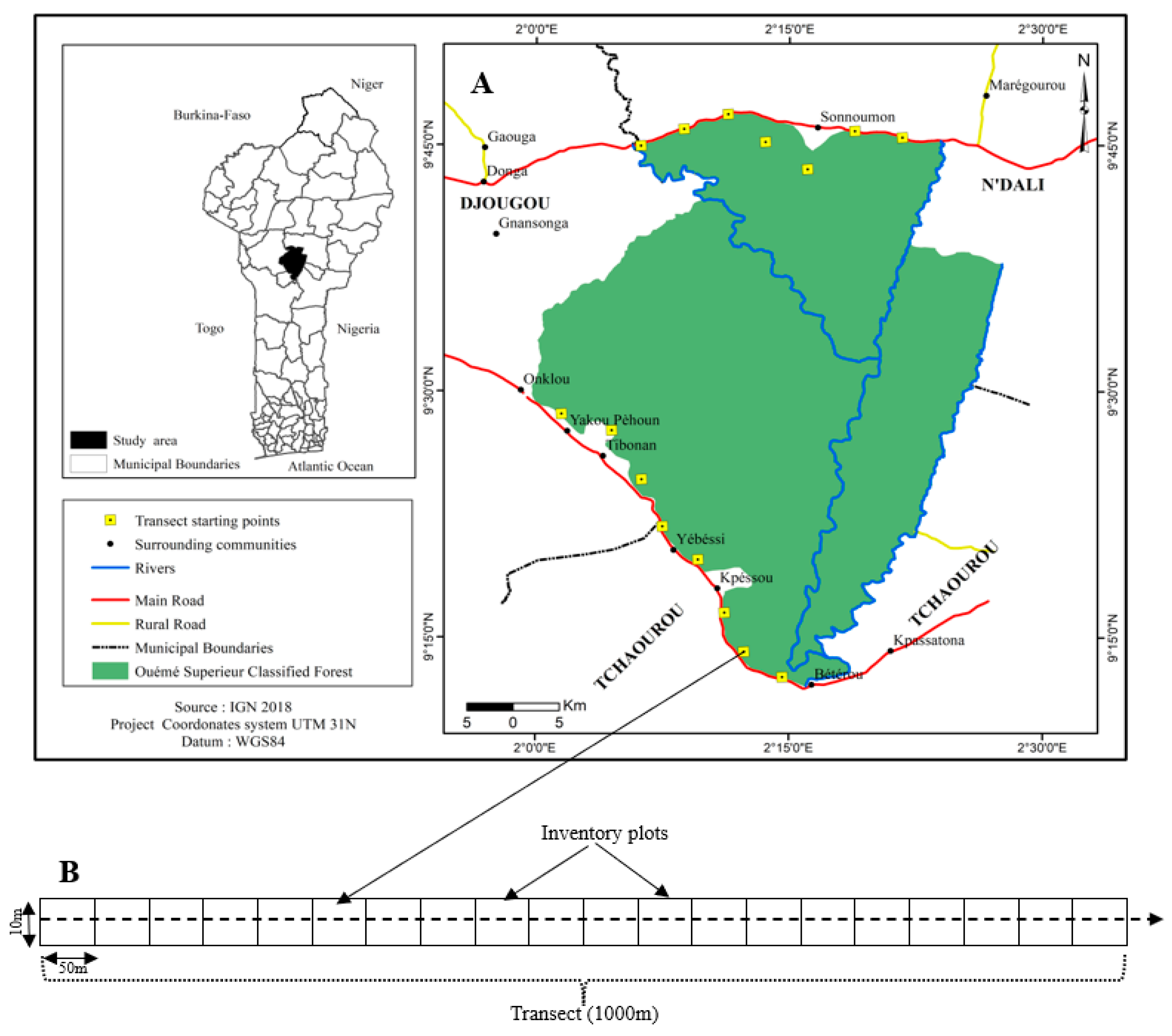
The Ouémé Supérieur Classified Forest (OSCF) was designated by Decree No. 4310 S.E. of 27 July 1952 and initially covered an area of 117,542 hectares. This area was later extended to approximately 193,406 hectares through the incorporation of internal enclaves such as Kpessou, Kika, and the northeastern zone between the Souabi and Alpouro rivers, along the Sonnoumon–Bori Road. The OSCF is located between latitudes 9°11′ and 9°47′ North, and longitudes 1°58′ and 2°28′ East (Figure 1). It spans the departments of Borgou and Donga, with approximately three-quarters of its surface area situated in Borgou. The forest lies within the triangle formed by the Parakou-Djougou, Djougou-N’Dali, and N’Dali-Parakou roads [35].
OSCF is inhabited by a diverse range of socio-cultural groups. The main ethnic communities include the Baatombu, Nago, Wama, and Lokpa (originally from the Atacora and Donga regions), as well as the Peulh (Fulani) and the Dendi [36]. These populations engage in extensive slash-and-burn agriculture, livestock rearing, fishing, hunting, and trade in agricultural and manufactured goods. Major crops cultivated in the area include yam, cotton, maize, soybean, sorghum, cowpea, rice, and cassava. Transhumant pastoralism is primarily practiced by the Peulh community, while small-scale livestock farming is predominant among other ethnic groups. Fishing is mainly carried out in the Ouémé River and its tributaries, and hunting remains a culturally prestigious activity among populations living near the forest’s periphery [36].

2.2. Methodology

A multidisciplinary approach was adopted for this study. The first step consisted of developing a typology of forest disturbance indicators based on a review of the literature and informal interviews conducted with local elected officials and forestry administration officers [11,37]. These indicators served as parameters for assessing forest degradation in the field [38]. The disturbance indicators selected for this study were those most frequently mentioned by local communities during informal interviews and consistently highlighted in the literature on forest degradation in Africa. These indicators were also directly confirmed through field prospecting, ensuring their detectability and relevance [11,12,36].
A total of 35 key informants were selected using a two-stage non-probability sampling procedure. In the first stage, villages were purposively selected based on their proximity to the Ouémé Supérieur Classified Forest (OSCF). In the second stage, respondents were selected based on their roles in local forest governance (e.g., village chiefs, presidents of local forest management units, and forestry officers). Although the sample size may appear limited, it is justified by the specific profile of the target population, individuals with official mandates and decision-making roles, of whom only one or a few exist per village. Therefore, the survey emphasized representativeness and the strategic relevance of the respondents over a larger sample size.
The identification and characterization of forest disturbance factors were conducted using the line transect method, starting from the main national roads surrounding the forest and extending perpendicularly into the forest interior. This method enabled a spatial analysis of disturbance patterns across gradients of accessibility. At intervals of 5 km along the forest edge, transects were established perpendicular to the road, each measuring 1000 m in length and 10 m in width. Each transect was subdivided into 20 rectangular plots measuring 50 m × 10 m (500 m2).
In total, 15 transects were surveyed, yielding data from 300 plots, covering a total sampled area of 15 hectares (0.15 km2), between March and May 2022. The precise locations of transect entry points are presented in Figure 1. The sampling design covered approximately 0.01% of the reserve. This proportion, although seemingly small, was adequate to capture the edge-driven disturbances that typically concentrate within the first few kilometers from forest boundaries and along access roads, as highlighted in earlier tropical forest studies [39,40]. The east and west edges of the reserve were not included due to logistical constraints and difficult accessibility. As a result, some interior disturbances may not have been fully captured, which we acknowledge as a limitation of the study.
Data collected involved the presence or absence of disturbance indicators within each plot. For each indicator, three analytical parameters were assessed:
  • Frequency: proportion of plots affected,
  • Spatial structure: variation in disturbance with increasing penetration distance,
  • Co-occurrence: interaction with other disturbance types [11,41].
Quantitative data were also collected to complement presence/absence records, including the number of trees cut, charcoal kilns per plot, and the area of agricultural and burned fields. These measurements enabled an assessment of the relative intensity of disturbances across the forest.
Variables requiring longitudinal or seasonal panel data, such as latency and temporal persistence, were not considered in this study due to the cross-sectional nature of data collection. Although the survey was cross-sectional, several disturbance indicators—such as tree stumps, charcoal kilns, and fire scars—reflect cumulative or lagged processes. This allows partial assessment of past activities, while acknowledging that seasonal fluctuations and temporal dynamics are not fully captured within a single survey campaign.
To test the first hypothesis, that logging and agriculture are the dominant disturbance factors, the Friedman test was applied to assess differences in the ranked occurrence of disturbances across transects. This was complemented by simple Correspondence Analysis (CA) to visualize and interpret associations between categorical variables. Furthermore, a Principal Component Analysis (PCA) was conducted on the dataset to explore associations between transects, plots, and quantitative disturbance indicators. As grazing was recorded as a qualitative variable, it was treated as a supplementary (illustrative) variable in the PCA. Tree density (trees with diameter > 10 cm) per plot has been used to demonstrate that variations in tree density correlate with disturbance regimes [42], enabling a more nuanced interpretation of how anthropogenic activities impact forest regeneration and biomass.
To examine the second hypothesis, that disturbances decrease with increasing distance from forest edge, we conducted a simple linear regression between distance from the edge and the quantitative indicators of disturbance (agricultural area, surface of burned plots, and number of charcoal kilns). In this context, the regression was not used as a predictive or inferential model, but rather as an exploratory tool to assess the correlation and highlight the general direction of the relationships. The aim was to identify whether these variables showed an increasing or decreasing tendency as distance from the edge increased. Model fit was assessed using both the coefficient of determination (R2) and the adjusted R2 (R2a). The adjusted R2 was preferred in this context due to its reduced bias in small-sample studies [43]. To complement the numerical results, regression plots were produced to provide a visual illustration of these trends, thereby facilitating interpretation of the spatial distribution of disturbances across the forest. For grazing, which is qualitative, this relationship was evaluated by computing the number of plots affected per distance band across the 15 transects.
Finally, to assess the third hypothesis, that disturbances are interrelated, a pairwise Chi-square (χ2) independence test was conducted for all combinations of disturbance types [44]. This allowed identification of significant co-occurrence patterns among disturbances. The objective was exploratory, aiming to identify whether associations exist rather than to quantify their strength. Significance was evaluated using a standard p-value threshold of 0.05. While pairwise Chi-square tests highlight associations among disturbance types, they are limited to two-way relationships and assume independence. Thus, these analyses provide indicative patterns but do not fully capture multivariate interactions.

3. Results

3.1. Anthropogenic Disturbances Disrupting the Ouémé Supérieur Classified Forest

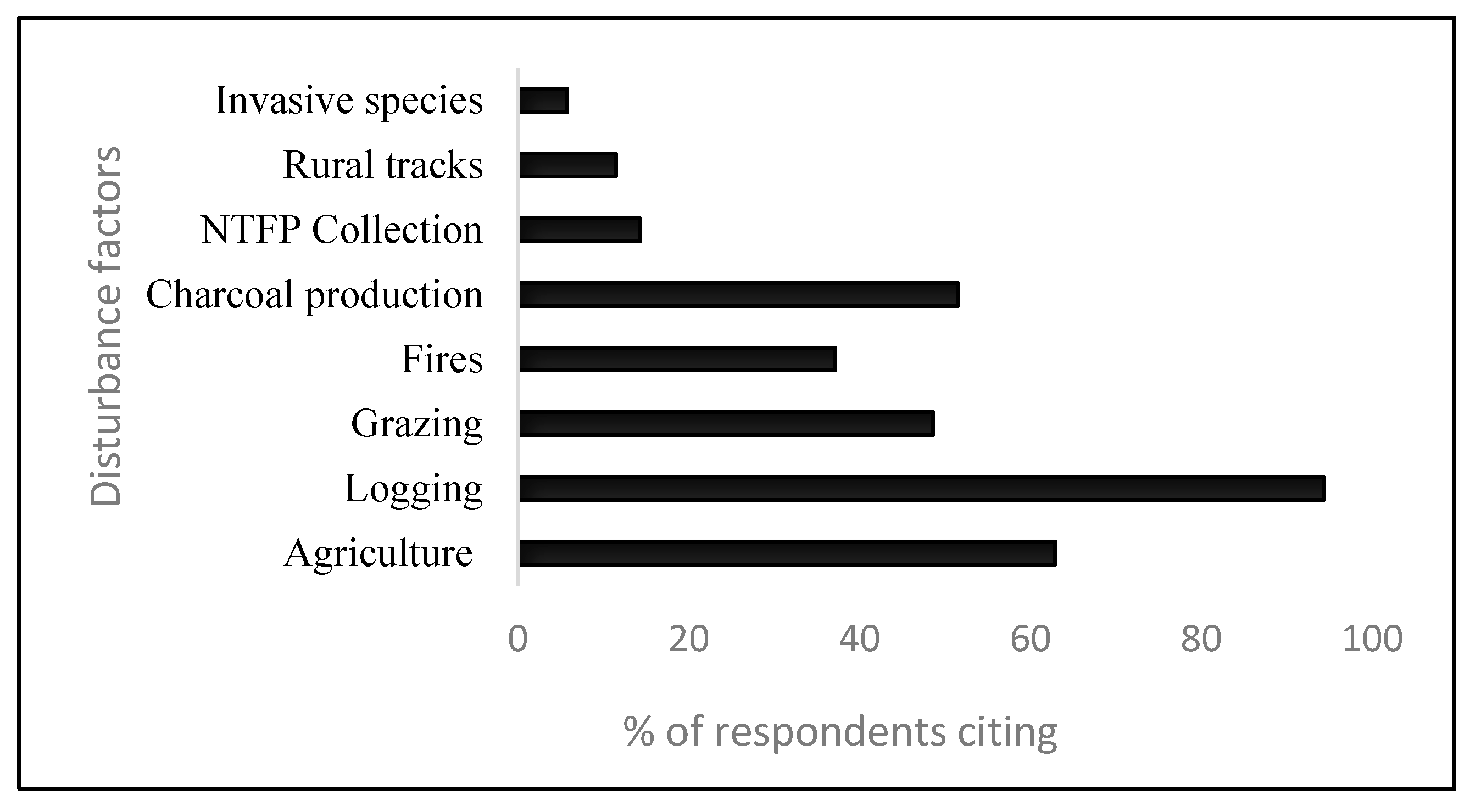
The main anthropogenic disturbances in the Ouémé Supérieur Classified Forest (OSCF) were identified and classified, with their relative importance based on their frequency of citation by respondents (Figure 2). The analysis revealed five predominant disturbance factors:
  • Logging, evidenced by the presence of tree stumps, cut trunks, or trees showing signs of coppicing (regrowth from felled trees);
  • Agricultural expansion, indicated by the presence of active cultivated plots or fallow land within the forest boundaries;
  • Charcoal production, marked by visible charcoal mounds, abandoned kilns, or ash residues;
  • Grazing pressure, revealed by the presence of livestock droppings, particularly cow dung, often concentrated near forest entry points;
  • Vegetation fires, identified by burnt vegetation, charred tree trunks, and blackened soil surfaces.
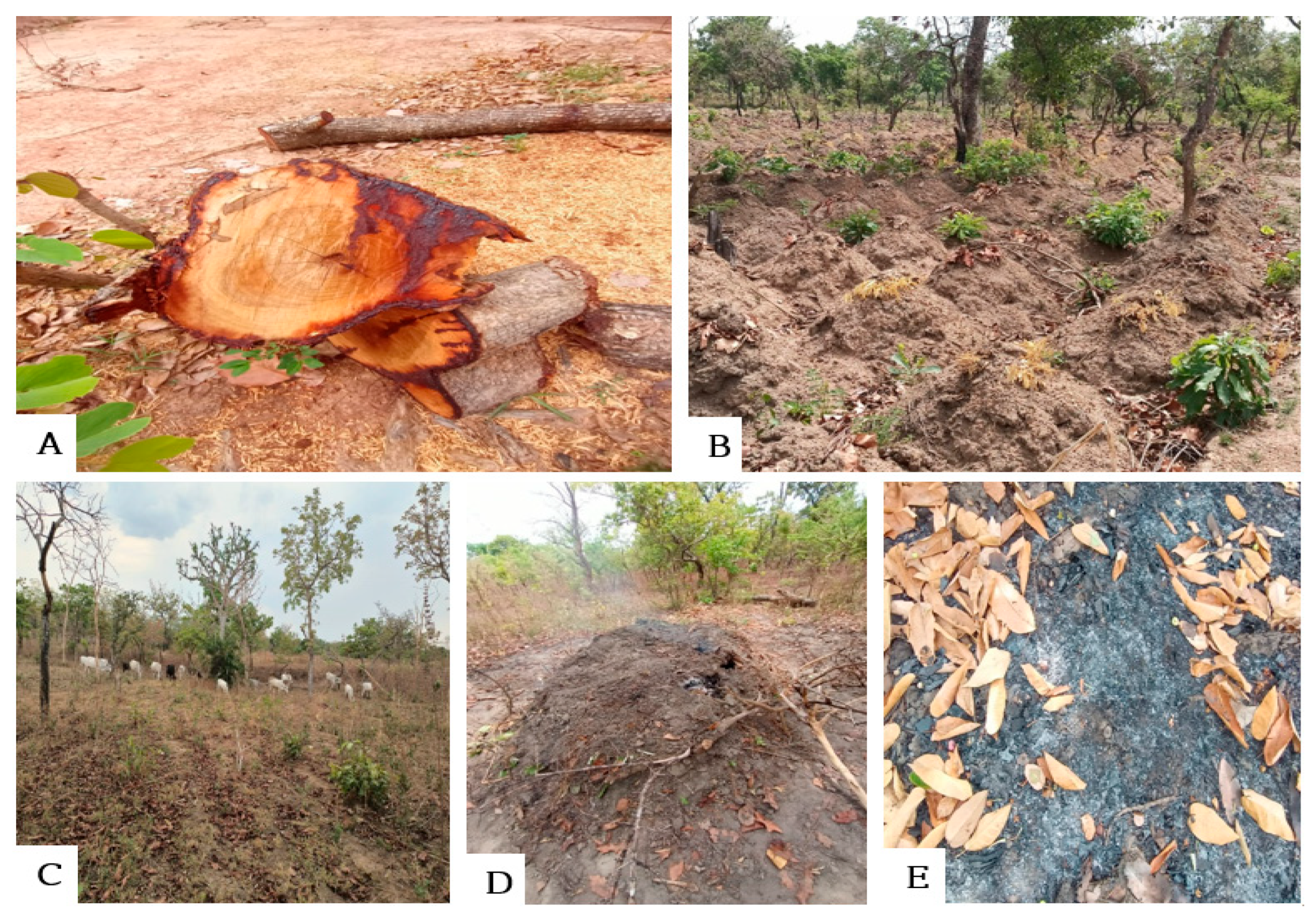
The relative frequency of citation of these factors by respondents was as follows: logging (94%), agriculture (63%), charcoal production (51%), grazing (49%), and vegetation fires (37%). A visual representation of the most frequently observed disturbance factors is provided in Figure 3, illustrating the tangible manifestations of anthropogenic pressures on the forest landscape. Other potential disturbances, such as NTFP collection, infrastructure development, or invasive species, were excluded because they were only marginally reported by respondents and were not observed in measurable form during exploratory surveys.

3.2. Distribution and Structuring of Anthropogenic Disturbancesin the Ouémé Supérieur Classified Forest

The number of plots affected by each anthropogenic disturbance across the 15 transects reveals a heterogeneous spatial distribution of anthropogenic pressures within the 300 sampled plots (Table 1). This uneven distribution was statistically confirmed by a Friedman test (χ2 = 287.96, p < 0.001), indicating that the occurrence of disturbance factors is not uniform throughout the Ouémé Supérieur Classified Forest (OSCF). Some disturbances are thus more spatially dominant and recurrent than others, highlighting localized pressure hotspots.
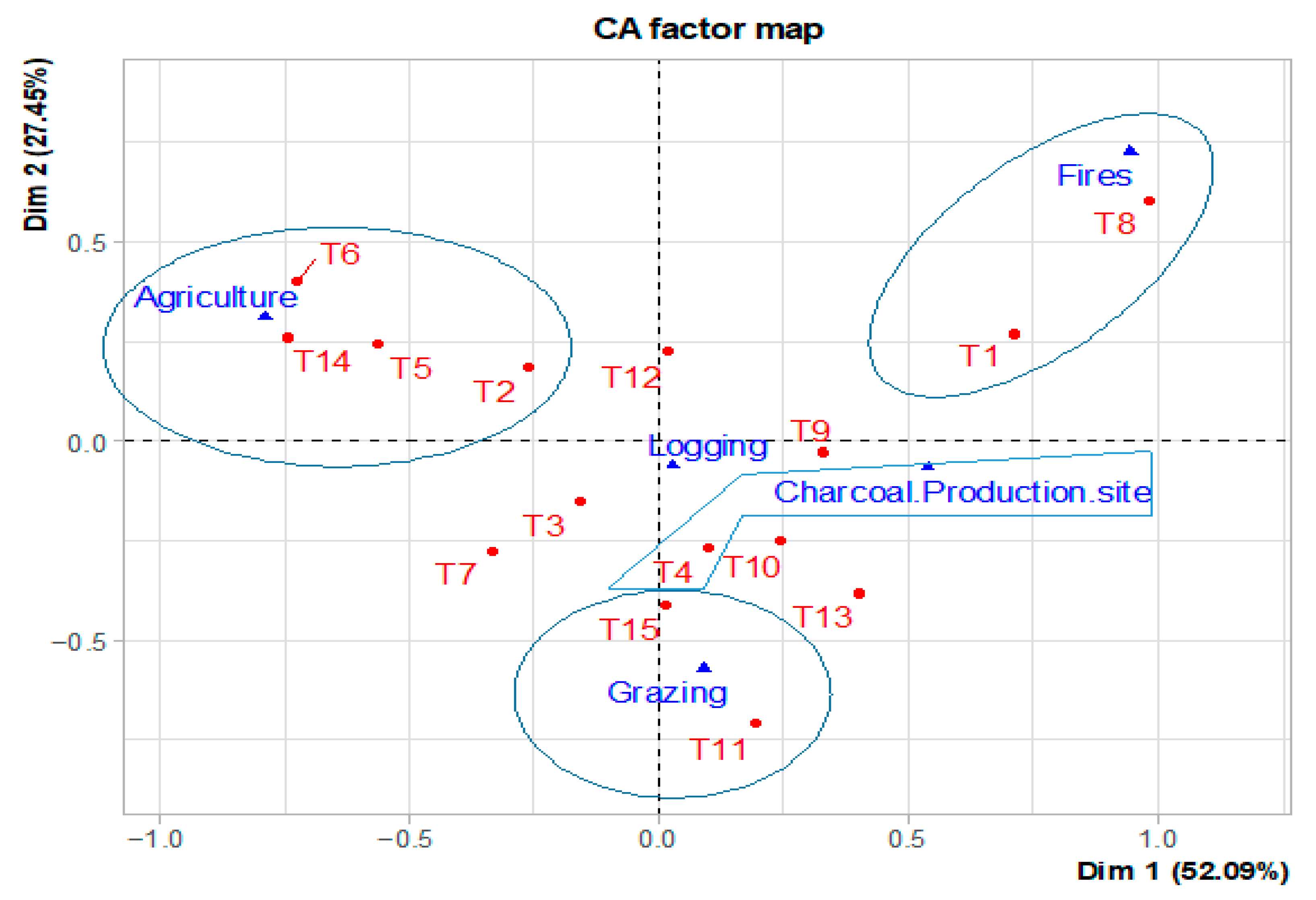
To further explore the relationships between disturbance factors and transects, a simple correspondence analysis (CA) was performed (Figure 4). The first three components of the CA explain 94.41% of the total inertia, suggesting a strong explanatory capacity of the model in reproducing the variability in the original dataset. The analysis revealed distinct associations between certain disturbances and specific forest sections. Logging (tree cuts) showed no marked affinity with any transect, suggesting a relatively uniform distribution of this activity across the forest. In contrast, agriculture was strongly associated with strips T2, T5, T6, and T14; areas adjacent to the densely populated villages of Sonnoumon and Bakou. This reflects the demographic pressure and growing demand for arable land in these communities. Grazing was linked to transects T11 and T15, while charcoal production showed a notable concentration in transect T4. Vegetation fires were mainly associated with transect T1 and T8, likely linked to hunting practices and intentional burns.
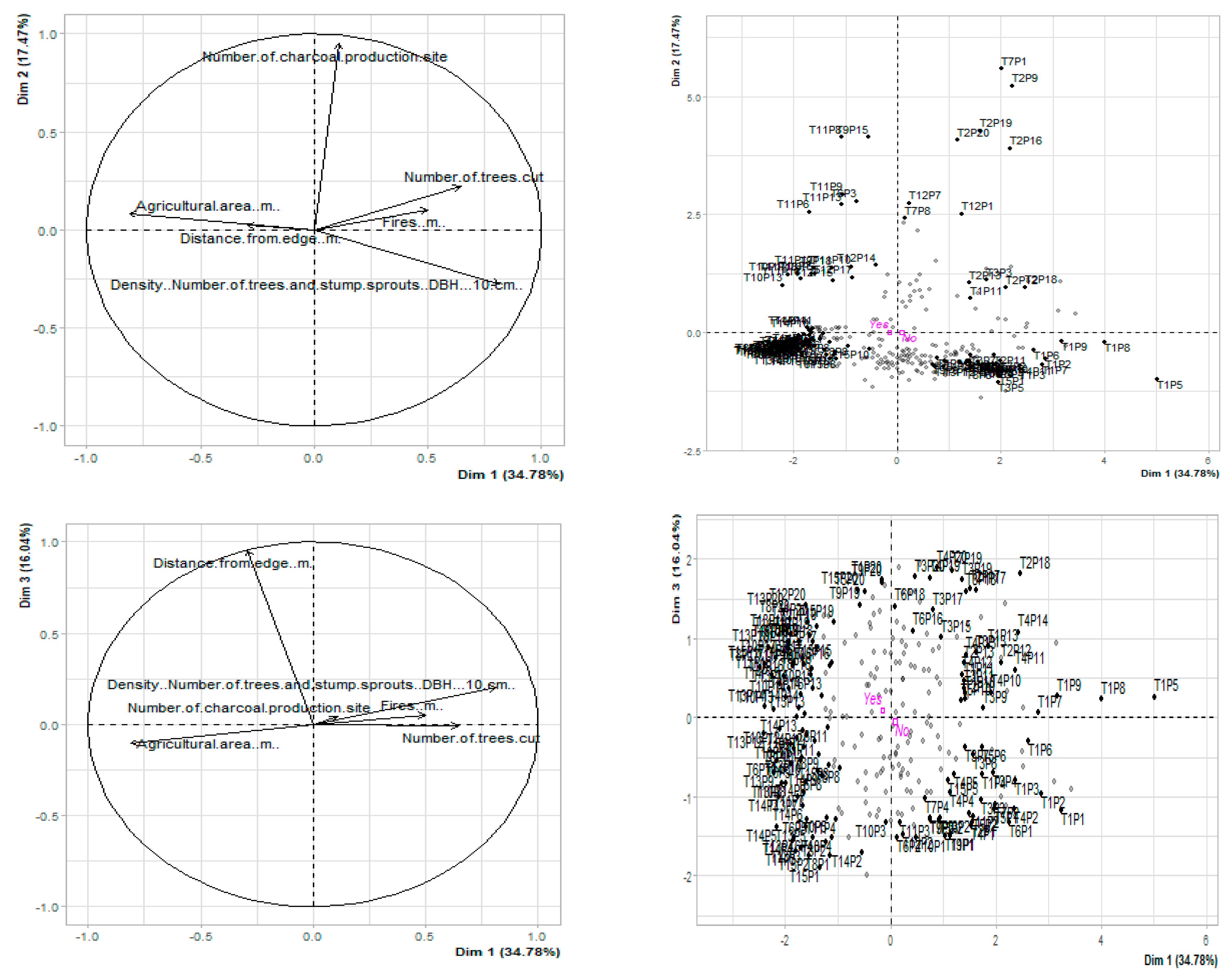
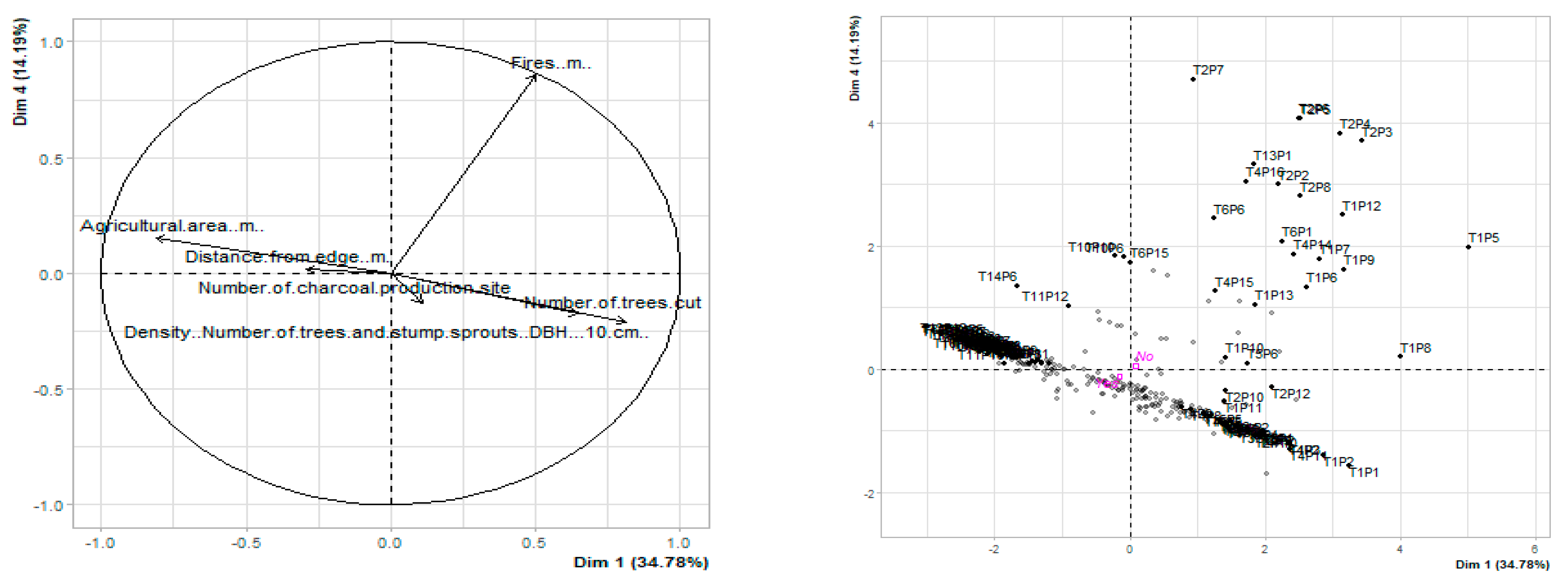
Principal Component Analysis (PCA) was employed to complement the correspondence analysis and further elucidate the relationships among disturbances, transects, and sampled plots (Figure 5). The first four components explained a cumulative 82.47% of the total variance. For clarity, only individuals (plots) with a contribution (cos2) greater than 0.60 were retained for graphical interpretation.
  • Axis 1 showed a strong positive correlation with density of trees with a diameter greater than 10 cm, and a negative correlation with the agricultural area observed per plot. This axis highlighted a contrast between plots characterized by extensive agricultural activity but low tree density (transects T10, T13, T14), and those with low agriculture area but high trees density (transects T1 and T2).
  • Axis 2 was positively correlated with the number of charcoal production sites. This axis distinguished transects with low charcoal activity (e.g., T3, T8) from those with intensive charcoal production (e.g., T11, T12), revealing localized zones of energy-resource extraction.
  • Axis 3 captured the gradient of forest penetration, clearly separating plots near entry points from those deeper into the forest. This component is critical for understanding the spatial behavior of disturbances factors in relation to forest accessibility.
  • Axis 4 was positively associated with the area affected by vegetation fires, distinguishing heavily burned plots from less-impacted ones.
Together, these multivariate analyses provide robust evidence that disturbance types in the OSCF are not only unequally distributed, but also strongly influenced by spatial factors such as accessibility, proximity to human settlements, and land-use patterns.

3.3. Linear Trend in Disturbances According to the Distance from Edge to the Interior of the Forest

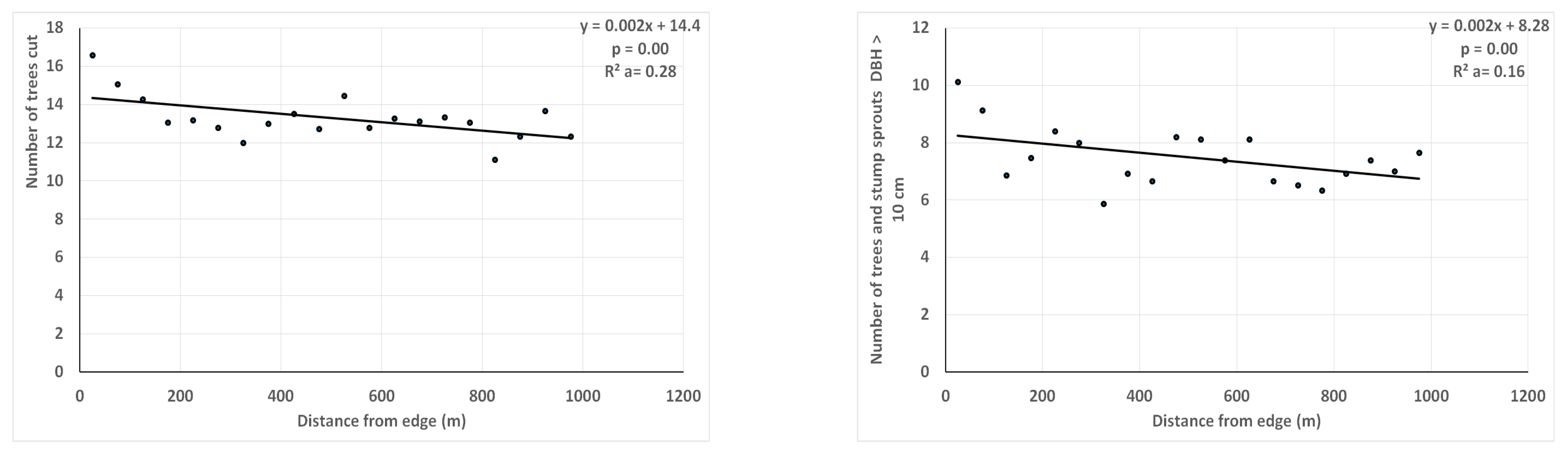
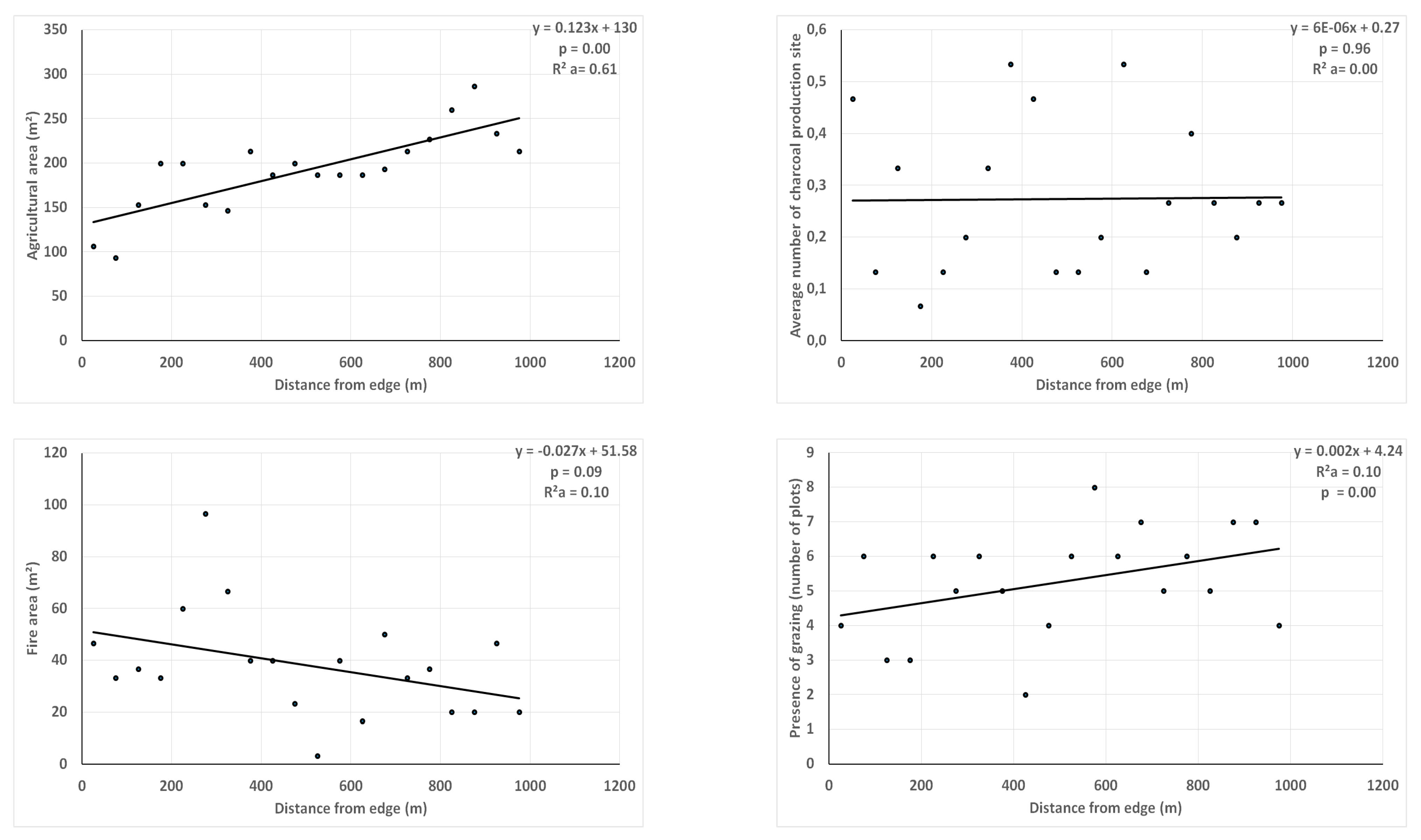
The linear regression analyses revealed contrasting patterns in the spatial distribution of disturbance factors in relation to forest penetration distance. A relatively weak linear relationship was observed between penetration distance and the extent of logging, charcoal production sites, and burned areas (adjusted R2 < 0.30), indicating limited spatial structuring of these disturbances across the forest. In contrast, the relationship was notably stronger for agricultural land (adjusted R2 = 0.61), suggesting that the extent of cultivated areas increases significantly with distance into the forest.
Charcoal kiln distribution appeared relatively uniform across the forest landscape, showing no significant linear trend (Figure 6). Furthermore, the regression coefficients indicated a negative trend for logging and burned areas, meaning these disturbances are more concentrated near the forest edges. Conversely, agricultural land and grazing activities exhibited positive trends, with greater occurrence in plots located further from the forest edge. These results imply that logging and fires are primarily edge-based disturbances, while agriculture and grazing are expanding progressively into the forest interior.

3.4. Association Between Different Disturbances in the Ouémé Supérieur Classified Forest

Table 2 presents the results of the Chi-square independence tests between the different types of disturbance. Since logging was observed in all 300 plots (Table 1), it constitutes a constant variable and was therefore excluded from the chi-square test of independence. As a result, all other disturbances inevitably co-occur with logging, which makes its statistical association with them redundant. The chi-square analysis presented in Table 2 thus only concerns the remaining disturbance types (agriculture, charcoal production, vegetation fires, and grazing). A statistically significant relationship is observed between agriculture and vegetation fires, as well as between charcoal production and vegetation fires. These associations suggest that certain disturbances tend to co-occur or may be mutually reinforcing. For instance, agricultural expansion and charcoal production could promote or result from fire use in forest clearing. Interestingly, apart from its link to logging, grazing does not show a significant association with any of the other disturbance types, suggesting that pastoral activities tend to occur independently of other land-use pressures within the forest.

4. Discussion

4.1. Methodology

Several methodological approaches can be employed to assess the disturbances affecting natural vegetation formations (forests, savannahs, etc.), with the aim of identifying both direct and indirect drivers [12]. These approaches often rely on a combination of participatory surveys, direct field measurements, and geospatial analyses using satellite imagery. Studies that emphasize local communities’ perceptions of anthropogenic pressures through socio-economic surveys [27,28,45,46] underscore the importance of integrating local knowledge and lived experiences into policy-making processes aimed at restoring and sustainably managing forest ecosystems [29]. However, while these perception-based approaches provide valuable insight into socio-environmental dynamics, they may lack the empirical precision required for a comprehensive ecological diagnosis.
Remote sensing analyses, for their part, have proven particularly effective in detecting long-term changes in land cover and forest fragmentation, as illustrated by numerous studies on Benin’s forest and protected areas [13,47]. Such approaches allow for the spatial and temporal monitoring of vegetation decline and complement community-level insights by offering an objective assessment of environmental change. In this study, the adopted methodology goes beyond the scope of perception or satellite data by incorporating detailed field-based inventories. Their contribution is complementary rather than exclusive. The use of systematic transects [11,48] offers a high-resolution, ground-truthed approach that enables the quantification of disturbance indicators often imperceptible through remote sensing (e.g., stump density, grazing traces, charcoal kilns). While transect-based field inventories allowed us to capture fine-scale disturbances often undetectable through remote sensing, we acknowledge that such ground-based methods are most effective when used in complementarity with other approaches. Remote sensing provides essential temporal depth and spatial coverage, while socio-economic surveys help to identify indirect drivers and institutional factors shaping forest use. This method provides both qualitative and quantitative insights into the nature and spatial distribution of disturbance factors, contributing to a more nuanced understanding of the degradation dynamics at play. It thus strengthens the analytical robustness of the study and supports more targeted and evidence-based recommendations for the sustainable management of the Ouémé Supérieur Classified Forest.

4.2. Spatial Distribution of Different Types of Disturbance in the Ouémé Supérieur Classified Forest

The results obtained confirm the first hypothesis, indicating that logging and agriculture are the most dominant disturbances in the Ouémé Supérieur Classified Forest (FC-OS). Logging was observed across all surveyed plots, reflecting the intense and widespread pressure exerted by local populations on forest resources. Trees are felled primarily for construction purposes, domestic energy needs, and charcoal production. However, the actual impact of charcoal production is difficult to quantify, as it often overlaps with logging activities, given that the same trees are cut and subsequently transformed into charcoal [11]. This strong correlation underscores the structural link between wood harvesting and charcoal production.
Despite the fact that northern Benin holds nearly 92% of the country’s forest resources [49], this region faces increasing anthropogenic pressure. Intensive cropping systems (notably cotton and cereals), extensive livestock rearing, illegal logging, and frequent vegetation fires are the key human-driven drivers of degradation. These pressures have led to persistent tensions between the forestry administration and local populations, particularly farmers and herders [28,36]. In this context, cotton production—the country’s top agricultural export [50]—continues to drive expansion into forested lands. A similar expansion trend is observable in soybean cultivation, with national production increasing from 253,954 tonnes in 2020 to 291,279 tonnes in 2021 [51].
One viable strategy to reduce this pressure would be the development and dissemination of technological innovations aimed at improving crop yields, thereby reducing the need for land expansion. In addition, demographic growth emerges as an indirect but significant factor in the degradation of natural ecosystems. In northern Benin, population growth directly influences household demand for agricultural land, energy, and housing materials. The average household size continues to increase, resulting in an expanded agricultural labor force and a corresponding increase in land clearing [14,28]. These socio-demographic dynamics are among the root causes of uncontrolled agricultural encroachment into the OSCF [52,53]. Agricultural disturbances were analyzed as a single category, combining traditional subsistence and commercial crops. While this allowed assessment of overall spatial patterns, it may mask intensity differences: commercial crops such as cotton and soybean generally create larger clearings, whereas traditional crops occupy smaller areas. This distinction helps contextualize variations in agricultural impact across the Ouémé Supérieur Classified Forest.
With respect to grazing, the FC-OS Participatory Management Plan includes designated transhumance corridors. However, these are often ignored, as herders establish camps arbitrarily within the forest [36,54]. The unregulated presence of livestock severely impedes the regeneration of key timber species such as Afzelia africana, Pterocarpus erinaceus, and Khaya senegalensis, all of which are experiencing sharp declines [36].
Contrary to the expectations expressed in the second hypothesis, the various types of disturbances do not uniformly decrease with penetration distance from forest entry points. Only agricultural activities display a statistically significant and positive relationship with penetration distance. Cultivated areas tend to be more common deeper inside the forest. Several reasons explain this atypical spatial pattern. For example, in the 1999 Participatory Management Plan, the villages of Bétérou and Bakou were officially allocated 2000 ha and 12,116 ha, respectively, for cultivation within the OSCF, due to their geographic proximity and limited access to arable land [36]. However, many farmers have extended their fields well beyond these legal limits, even in areas not designated for agriculture. These actors often leave forest edges intact and clear land deep within the forest, likely in an attempt to evade administrative control [54], highlighting the illegal nature of their activities.
Burned areas, mostly attributed to late-season fires, do not show a significant spatial relationship with the distance from edge. These fires are often set by hunters in search of wildlife and by charcoal producers who fail to control combustion processes [11,36]. Such uncontrolled fires are particularly harmful to forest regeneration and biodiversity.
The third hypothesis, which posited the existence of significant associations among the various types of disturbances in the OSFC, is partially confirmed. Out of ten potential pairwise associations, six were statistically significant. Notably, logging is significantly associated with all other disturbance types, suggesting that it is a prerequisite or concurrent activity in nearly every case of forest degradation. This finding indicates that logging constitutes a central driver in the disturbance regime of the forest.
Finally, it is important to recognize the role of climatic factors in amplifying these pressures. The study area lies within a zone increasingly affected by Sahelian climatic conditions, including declining rainfall, rising minimum and maximum temperatures, and strong wind events [21,49]. These stressors reduce the forest’s resilience and regeneration capacity. In light of these challenges, reforestation efforts, as carried out under the Agoua Forest Development Project (PAMF) and in Monts Kouffé and Wari-Maro classified forests, should be extended to the OSCF [55]. Such initiatives would help restore biomass, improve ecological functions, and enhance the forest’s role as a carbon sink [34].
While this study provides a detailed assessment of anthropogenic disturbances in the Ouémé Supérieur Classified Forest, several limitations should be acknowledged. First, the data were collected through a cross-sectional survey conducted between March and May 2022, capturing conditions at a single point in time. As such, seasonal variations in forest use and disturbance patterns, which could influence the intensity and distribution of pressures, were not assessed. Although some disturbance indicators such as stumps, charcoal kilns, and fire scars provide evidence of past activities and thus partly reflect cumulative processes, our cross-sectional approach cannot fully account for the temporal variability of disturbances. Seasonal fluctuations and inter-annual trends may influence their frequency and intensity in ways not captured by a single survey campaign. Nevertheless, the snapshot approach offers a valuable baseline for identifying the current prevalence and spatial distribution of key disturbances, while highlighting the need for complementary longitudinal studies to better assess persistence and recurrence over time. Future research incorporating multi-seasonal inventories and remote sensing could provide a more balanced assessment of disturbance dynamics across the annual cycle. Second, some potentially influential factors, such as socio-economic dynamics or short-term climatic events, were not included, which may lead to omitted-variable bias. Third, the relatively small sample of 35 key informants, although carefully selected for their local knowledge, limits the statistical generalizability of the findings. Despite these constraints, the study provides valuable insights into the spatial patterns and interrelationships of disturbances and highlights priority areas for targeted forest management interventions.

4.3. Implications for Forest Conservation and Management

The findings of this study have several important implications for forest management and policy in Benin. The identification of agriculture and logging as the predominant disturbance factors in the Ouémé Supérieur Classified Forest (OSCF) underscores the persistent anthropogenic pressure threatening its ecological integrity. This aligns with earlier studies that identify these activities as the primary proximate pressures on tropical forests [12]. However, our results also show that disturbances extend well into the forest interior, suggesting that edge effects may not be strictly linear and that frontier agriculture is advancing beyond immediate boundaries, a pattern observed in other forest landscapes under demographic and market pressure [56]. The observed interdependence between agriculture, fire, and charcoal production further supports the idea of disturbance “bundles” rather than isolated processes, echoing findings from West African dry forests [57]. Importantly, the central role of logging as a disturbance associated with all other pressures highlights the need to situate degradation not only within local subsistence practices but also within broader governance and market contexts.
Although the forest is officially managed in collaboration with local populations through participatory management plans, the observed mismatch between designated cultivation zones and actual land use suggests weak compliance and enforcement. This calls for a more rigorous implementation of these participatory plans, with enhanced monitoring and greater accountability at the local level. Furthermore, the spatial and statistical analyses presented in this study provide a robust foundation for targeted interventions that consider both the ecological dynamics of the forest and the socio-economic realities of surrounding communities. By reinforcing the role of communities in surveillance, promoting sustainable livelihood alternatives, and addressing the demographic drivers of land demand, it is possible to reduce pressure on forest resources while strengthening local ownership of conservation initiatives. Ultimately, this study offers valuable insights for improving land use governance and aligning forest management efforts with national environmental and climate objectives.

5. Conclusions

The degradation and deforestation of classified forests in Benin, particularly the Ouémé Supérieur Classified Forest (FC-OS), lead to a significant decline in the ecosystem services essential to both biodiversity conservation and the well-being of local populations. This study underscores three key contributions: first, that field inventories can capture subtle, sub-canopy disturbances often missed by remote sensing; second, that agricultural expansion is not confined to edges but increasingly penetrates forest interiors; and third, that disturbances such as agriculture, fire, charcoal production, and logging frequently co-occur, highlighting their interdependent nature. Considering these findings, it is imperative to strengthen ecological restoration efforts, notably through reforestation programs similar to those previously implemented by the PAMF in the Wari-Maro and Kouffé mountain ranges. Effective enforcement of transhumance corridors is also critical to prevent uncontrolled grazing, which threatens forest regeneration. The ongoing development of the new Participatory Forest Management Plan (2023–2032) represents a timely opportunity to improve governance. Its successful implementation will require stronger collaboration between forest authorities and local communities, better monitoring mechanisms, and strict compliance with land-use agreements. We recommend that future forest management strategies adopt a systemic and inclusive approach that integrates local food security needs and sustainable agricultural practices. Sustainable conservation of the OSCF requires that management goals should be closely integrated with the livelihoods and socioeconomic conditions of surrounding local populations. While these results provide important insights, we also acknowledge the limitations of the study, notably its cross-sectional design and single-season sampling, which may not capture the full temporal dynamics of disturbance. Future research could address these limitations by incorporating multi-seasonal field data, integrating remote sensing for temporal coverage, and more systematically engaging local communities on their management perspectives. Such efforts would both refine the understanding of forest degradation dynamics and inform more context-sensitive policy responses.

Author Contributions

C.S., K.R.S., O.L.R., A.Y.J.A., J.B.: conceptualization, methodology, formal analysis. C.S.: data collection and analysis. C.S. wrote the first draft of the article. C.S., H.K.M., C.M.M., D.M., N.C.C., E.G., C.B.C. were responsible for proofreading the text. J.B.: validation and supervision. All authors have read and agreed to the published version of the manuscript.

Funding

This research was supported by the ERAIFT-AGRINATURA consortium, funded through the Development Cooperation Instrument (DCI) No. 41928 of the European Union. The authors express their gratitude to the European Union and the ERAIFT-AGRINATURA consortium for their financial support.

Data Availability Statement

The original contributions presented in the study are included in the article, and further inquiries can be directed to the corresponding author.

Conflicts of Interest

The authors declare no conflicts of interest.

References

  1. Meyfroidt, P.; Lambin, E.F. The Causes of the Reforestation in Vietnam. Land Use Policy 2007, 25, 182–197. [Google Scholar] [CrossRef]
  2. Lupala, Z.J.; Lusambo, L.P.; Ngaga, Y.M.; Makatta, A.A. The Land Use and Cover Change in Miombo Woodlands under Community Based Forest Management and Its Implication to Climate Change Mitigation: A Case of Southern Highlands of Tanzania. Int. J. For. Res. 2015, 2015, 459102. [Google Scholar] [CrossRef]
  3. Muluneh, A.; van Loon, E.; Bewket, W.; Keesstra, S.; Stroosnijder, L.; Burka, A. Effects of Long-Term Deforestation and Remnant Forests on Rainfall and Temperature in the Central Rift Valley of Ethiopia. For. Ecosyst. 2017, 4, 23. [Google Scholar] [CrossRef]
  4. FAO. Rapport Principal: Evaluation Des Ressources Forestières Mondiales 2010; FAO: Rome, Italy, 2010; ISBN 978-92-5-206654-5. ISSN 1014-2894. [Google Scholar]
  5. FAO. Global Forest Resources Assessment; FAO: Rome, Italy, 2020. [Google Scholar]
  6. Maxwell, S.; Fuller, R.; Brooks, T.; Watson, J. The Ravages of Guns, Nets and Bulldozers. Nature 2016, 536, 143–145. [Google Scholar] [CrossRef] [PubMed]
  7. Traore, L.; Ouedraogo, I.; Ouedraogo, A.; Thiombiano, A. Perceptions, Usages et Vulnérabilité Des Ressources Végétales Ligneuses Dans Le Sud-Ouest Du Burkina Faso. Int. J. Biol. Chem. Sci. 2011, 5, 258–273. [Google Scholar] [CrossRef]
  8. Mbayngone, E.; Thiombiano, A.; Hahn-Hadjali, K.; Guinko, S. Caractéristiques Écologiques de La Végétation Ligneuse Du Sud-Est Du Burkina Faso (Afrique de l’Ouest): Le Cas de La Réserve de Pama. Candollea 2008, 63, 17–33. [Google Scholar]
  9. Bindaoudou, I.A.; Kone, I.Z.; Mansir, M.; Djari, S.; Kouame, K.F. Facteurs Explicatifs de La Déforestation et de La Dégradation Forestière Dans La Préfecture d’ Amou Au Sud—Ouest Du Togo. Int. J. Eng. Sci. Invent. 2022, 11, 19–33. [Google Scholar] [CrossRef]
  10. Musavandalo, C.M.; Essouman, P.F.E.; Ndjadi, S.S.; Balandi, J.B.; Nguba, T.B.; Sodalo, C.; Mweru, J.P.M.; Sambieni, K.R.; Bogaert, J. Anthropogenic Disturbances in Northwestern Virunga Forest Amid Armed Conflict. Land 2025, 14, 723. [Google Scholar] [CrossRef]
  11. Rakotondrasoa, O.L.; Ayral, A.; Stein, J.; Rajoelison, G.L.; Ponette, Q.; Malaisse, F.; Ramamonjisoa, B.S.; Raminosoa, N.; Verheggen, F.J.; Poncelet, M.; et al. Analyse Des Facteurs Anthropiques de Dégradation Des Bois de Tapia (Uapaca Bojeri) d’Arivonimamo. In Les Vers à Soie Malgaches. ENJEUX Écologiques et Socio-Économiques; Verheggen, F., Bogaert, J., Haubruge, É., Eds.; Les Presses Agronomiques de Gembloux: Gembloux, Belgium, 2013; ISBN 978-2-87016-128-9. [Google Scholar]
  12. Geist, H.J.; Lambin, E.F. Proximate Causes and Underlying Driving Forces of Tropical Deforestation. Bioscience 2002, 52, 143–150. [Google Scholar] [CrossRef]
  13. Alohou, C.E.; Ouinsavi, C.; Sokpon, N. Facteurs Déterminants de La Fragmentation Du Bloc Forêt Classée-Forêts Sacrées Au Sud-Bénin. J. Appl. Biosci. 2016, 101, 9618–9633. [Google Scholar] [CrossRef]
  14. Houessou, L.G.; Teka, O.; Toko, I.; Lykke, A.M.; Sinsin, B. Land Use and Land-Cover Change at “W” Biosphere Reserve and Its Surroundings Areas in Benin Republic (West Africa). Environ. Nat. Resour. Res. 2013, 3, 87. [Google Scholar] [CrossRef]
  15. Ostrom, E. Governing the Commons: The Evolution of Institutions for Collective Action; James, E., Douglass, C., Eds.; Political; Cambridge University Press: Cambridge, UK, 1990. [Google Scholar]
  16. Ostrom, E.; Nagendra, H. Insights on Linking Forests, Trees, and People from the Air, on the Ground, and in the Laboratory. Proc. Natl. Acad. Sci. USA 2006, 103, 19224–19231. [Google Scholar] [CrossRef] [PubMed]
  17. Porter-Bolland, L.; Ellis, E.A.; Guariguata, M.R.; Ruiz-Mallén, I.; Negrete-Yankelevitch, S.; Reyes-Garcia, V. Community Managed Forests and Forest Protected Areas: An Assessment of Their Conservation Effectiveness across the Tropics. For. Ecol. Manag. 2012, 268, 6–17. [Google Scholar] [CrossRef]
  18. IPBES. Global Assessment Report of the Intergovernmental Science-Policy Platform on Biodiversity and Ecosystem Services; Brondizio, E.S., Settele, J., Díaz, S., Ngo, H.T., Eds.; Intergovernmental Science-Policy Platform on Biodiversity and Ecosystem Services: Bonn, Germany, 2019; ISBN 9783947851201. [Google Scholar]
  19. FAO. La Situation Des Forêts Du Monde. Les Forêts Au Service Du Developpement Durable; FAO: Rome, Italy, 2018; ISBN 9789251324202. [Google Scholar]
  20. Hountondji, Y.; Sokpon, N.; Nicolas, J.; Ozer, P. Ongoing Desertification Processes in the Sahelian Belt of West Africa: An Evidence from the Rain-Use Efficiency. In Recent Advances in Remote Sensing and Geoinformation Processing for Land Degradation Assessment; CRC Press: Boca Raton, FL, USA, 2012; Volume 27, pp. 238–239. [Google Scholar] [CrossRef]
  21. Imorou, I.T.; Arouna, O.; Zakari, S.; Djaouga, M.; Thomas, O.; Kinmadon, G.; Imorou, I.T.; Arouna, O.; Zakari, S.; Djaouga, M.; et al. Évaluation de La Déforestation et de La Dégradation Des Forêts Dans Les Aires Protégées et Terroirs Villageois Du Bassin Cotonnier Du Bénin. In Proceedings of the Conférence OSFACO Des Images Satellitaires pour la Gestion Durable des Territoires en Afrique, Cotonou, Benin, 13–15 March 2019. [Google Scholar]
  22. FAO. The State of the World’s Forests 2020: Forests, Biodiversity and People. In Food and Agriculture Organization of the United Nations; FAO: Rome, Italy, 2020. [Google Scholar]
  23. Oloukoi, J.; Joseph, V.; Bernadin, F. Modélisation de La Dynamique de l’occupation Des Terres Dans Le Département Des Collines Au Bénin. Télédétection 2006, 6, 305–323. [Google Scholar]
  24. Mama, A.; Sinsin, B.; De Cannière, C.; Bogaert, J. Anthropisation et Dynamique Des Paysages En Zone Soudanienne Au Nord Du Bénin. Tropicultura 2013, 31, 78–88. [Google Scholar]
  25. Avakoudjo, J.; Mama, A.; Toko, I.; Kindomihou, V.; Sinsin, B. Dynamique de l’occupation Du Sol Dans Le Parc National Du W et Sa Périphérie Au Nord-Ouest Du Bénin. Int. J. Biol. Chem. Sci. 2014, 8, 2608. [Google Scholar] [CrossRef]
  26. Amoussou, E.; Totin Vodounon, S.H.; Hougni, A.; Vissin, E.W.; Houndenou, C.; Mahe, G.; Boko, M. Changements Environnementaux et Vulnérabilité Des Écosystèmes Dans Le Bassin-Versant Béninois Du Fleuve Niger. Int. J. Biol. Chem. Sci. 2016, 10, 2183. [Google Scholar] [CrossRef]
  27. Sambieni, K.R.; Toyi, M.S.S.; Mama, A. Perception Paysanne Sur La Fragmentation Du Paysage de La Forêt Classée de l’Ouémé Supérieur Au Nord Du Bénin. VertigO—Rev. Electron. Sci. l’Environ. 2015, 15, 21. [Google Scholar] [CrossRef]
  28. Ahononga, F.C.; Gouwakinnou, G.N.; Biaou, S.S.H.; Biaou, S. Facteurs Socio-Économiques Expliquant La Déforestation et La Dégradation Des Écosystèmes Dans Les Domaines Soudanien et Soudano-Guinéen Du Bénin. Ann. l’Univ. Parakou. Sér. Sci. Nat. Agron. 2020, 10, 43–60. [Google Scholar] [CrossRef]
  29. Agbodan, K.M.L.; Akpavi, S.; Amegnaglo, K.B.; Akodewou, A.; Diwediga, B.; Koda; Donko, K.; Agbodan, K. Connaissances Écologiques Locales Sur Les Indicateurs de Dégradation Des Sols Utilisées Par Les Paysans Dans La Zone Guinéenne Du Togo (Afrique de l’ouest). Sci. La Vie La Terre Agron. 2019, 7, 47–56. [Google Scholar]
  30. Franta, B.; Kourdjouak, Y.; Kaboumba, L.-E.M.; Arcilla, N. Sacred Forest Degradation and Conservation: Resident Views of Nakpadjoak Forest in Togo, West Africa. Conservation 2025, 5, 21. [Google Scholar] [CrossRef]
  31. Dupuis, C.; Fayolle, A.; Bastin, J.F.; Latte, N.; Lejeune, P. Monitoring Selective Logging Intensities in Central Africa with Sentinel-1: A Canopy Disturbance Experiment. Remote Sens. Environ. 2023, 298, 113828. [Google Scholar] [CrossRef]
  32. DeVries, B.; Decuyper, M.; Verbesselt, J.; Zeileis, A.; Herold, M.; Joseph, S. Tracking Disturbance-Regeneration Dynamics in Tropical Forests Using Structural Change Detection in Time Series of Satellite Data. Remote Sens. Environ. 2015, 169, 320–334. [Google Scholar] [CrossRef]
  33. White, F. La Végétation de l’Afrique. In Mémoire Accompagnant La Carte de Végétation de l’Afrique/AETFAT/UNESCO; Traduit de l’anglais Par P. Bamps, Jardin Botanique National de Belgique: Paris, France, 1986; ISBN 9232019558. [Google Scholar]
  34. Djaouga, M.; Karimou, S.; Arouna, O.; Zakari, S.; Matilo, A.O.; Imorou, I.T.; Yabi, I.; Djego, J.; Thomas, O.; Houssou, C. Cartographie de La Biomasse Forestière et Évaluation Du Carbone Séquestré Dans La Forêt Classée de l’Ouémé Supérieur Au Centre—Bénin. Int. J. Biol. Chem. Sci. 2022, 15, 2388–2401. [Google Scholar] [CrossRef]
  35. Bio Sannou, I.; Imorou, A.-B. La Gouvernance Participative Des Forêts Classées de l’Ouémé Supérieur—N’Dali (Bénin) à l’Epreuve des Logiques et Pratiques des Acteurs; Edition Francophones Universitaires d’Afrique: Cocody, Côte d’Ivoire, 2019; pp. 135–164. [Google Scholar]
  36. DGFRN. Plan d’Aménagement Participatif des Forêts Classées de L’OUÉMÉ Supérieur et de N’Dali, 2013–2022. 2014. Available online: https://www.google.com/url?sa=t&source=web&rct=j&opi=89978449&url=http://www.archives.biodiv.be/benin/implementation/lois/politiques-et-plans-d-action/directives-d-amenagement/download/fr-BE/1/Directives%2520d%2527am%25C3%25A9nagement_guide%2520et%2520canevas%2520d%25C3%25A9taill%25C3%25A9-%2520rapport%2520%25C3%25A0%2520d%25C3%25A9poser%2520pdf.pdf&ved=2ahUKEwjYtou52OuPAxVTlJUCHeGIGIwQFnoECBYQAQ&usg=AOvVaw1YUQ0TasHWWoisSchaQcHk (accessed on 18 September 2025).
  37. Kull, C.A.; Ratsirarson, J.; Randriamboavonjy, G. Les Forêts de Tapia Des Hautes Terres Malgaches. Terre Malgache 2005, 24, 22–58. [Google Scholar]
  38. Orsi, F.; Geneletti, D.; Newton, A.C. Towards a Common Set of Criteria and Indicators to Identify Forest Restoration Priorities: An Expert Panel-Based Approach. Ecol. Indic. 2011, 11, 337–347. [Google Scholar] [CrossRef]
  39. Broadbent, E.; Asner, G.P.; Keller, M. Forest Fragmentation and Edge Effects from Deforestation and Selective Logging in the Brazilian Amazon. Biol. Conserv. 2008, 141, 1745–1757. [Google Scholar] [CrossRef]
  40. Harper, K.A.; Macdonald, S.E.; Burton, P.J.; Chen, J.; Brosofske, K.D.; Saunders, S.C.; Euskirchen, E.S.; Roberts, D.; Jaiteh, M.S.; Esseen, P.A. Edge Influence on Forest Structure and Composition in Fragmented Landscapes. Conserv. Biol. 2005, 19, 768–782. [Google Scholar] [CrossRef]
  41. Noon, B.R.; Dale, V.H. Broad-Scale Ecological Science and Its Application. In Applying Landscape Ecology in Biological Conservation; Gutzwiller, K.J., Ed.; Springer: New York, NY, USA, 2002; pp. 34–52. [Google Scholar]
  42. Tamene, L.; Mponela, P.; Sileshi, G.W.; Chen, J.; Tondoh, J.E. Spatial Variation in Tree Density and Estimated Aboveground Carbon Stocks in Southern Africa. Forests 2016, 7, 57. [Google Scholar] [CrossRef]
  43. Akossou, A.Y.J.; Palm, R. Impact of Data Structure on the Estimators R-Square and AdjustedR-Square in Linear Regression. Int. J. Math. Comput. 2013, 20, 84–93. [Google Scholar]
  44. Caustom, D.R. An Introduction to Vegetation Analysis: Principles, Practice and Interpretation; Academic Division of Unwin Hyman Ltd.: London, UK, 1988; ISBN 9780045810253. [Google Scholar]
  45. Santilli, M.; Moutinho, P.; Schwartzman, S.; Nepstad, D.; Curran, L.; Nobre, C. Tropical Deforestation and the Kyoto Protocol. Clim. Chang. 2005, 71, 267–276. [Google Scholar] [CrossRef]
  46. Angelsen, A.; Kaimowitz, D. Rethinking the Causes of Deforestation: Lessons from Economic Models. World Bank Res. Obs. 1999, 14, 73–98. [Google Scholar] [CrossRef]
  47. Houinato, M.; Sinsin, B.; Lejoly, J.; Houinato, M.; Sinsin, B.; Lejoly, J. Impact Des Feux de Brousse Sur La Dynamique Des Communautés Végétales Dans La Forêt de Bassila (Bénin). Acta Bot. Gall. 2001, 148, 237–251. [Google Scholar] [CrossRef]
  48. Biaou, S.S.H.; Natta, A.; Dicko, A.; Kouagou, M. Typologie Des Systèmes Agroforestiers et Leurs Impacts Sur La Satisfaction Des Besoins Des Populations Rurales Au Bénin. Bull. Rech. Agron. Bénin 2016, 12, 43–56. [Google Scholar]
  49. Hountondji, Y.C.; Gaoue, O.G.; Sokpon, N.; Ozer, P. Analyse Écogéographique de La Fragmentation Du Couvert Végétal Au Nord Bénin: Paramètres Dendrométriques et Phytoécologiques Comme Indicateurs in Situ de La Dégradation Des Peuplements Ligneux. Geo. Eco. Trop. 2013, 37, 53–70. [Google Scholar]
  50. INStaD. Monographie de La Filière «Coton» Au Bénin. Document de Travail, N°DSEE2020DT02. Version Révisée de La Monographie de La Filière Du Coton Au Bénin. 2020. Available online: https://instad.bj/images/docs/insae-publications/autres/DT/MonographieFiliereCotonauBenin_20201025_Finale.pdf (accessed on 18 September 2025).
  51. DSA. Les Chiffres Définitifs de La Campagne Agricole 2021–2022; Direction de La Statistique Agricole, Ministère de l’Agriculture, de l’Elevage et de La Pêche: République Du Bénin, 2022. [Google Scholar]
  52. Orékan, V.A. Implémentation Du Modèle Local CLUE-s Aux Transformations Spatiales Dans Le Centre Bénin Aux Moyens de Données Socio-Économiques et de Télédétection. Ph.D. Thesis, Université de Bonn, Bonn, Germany, 2007. [Google Scholar]
  53. Ouedraogo, I.; Tigabu, M.; Savadogo, P.; Compaoré, H.; Odén, P.C.; Ouadba, J.M. Land Cover Change and Its Relation with Population Dynamics in Burkina-Faso, West Africa. Land Degrad. Dev. 2010, 21, 453–462. [Google Scholar] [CrossRef]
  54. Faye, B. Les Effets Du Surpâturage et Des Pratiques Agricoles Dans La Transformation Du Couvert Végétal de La Forêt Classée de Koutal. Rev. Can. Géographie Trop. 2021, 2, 43–51. [Google Scholar]
  55. OSAN. Projet d’Aménagement Des Massifs Forestiers d’Agoua, Des Monts Kouffé et de Wari-Maro. Rapport d’Achèvement de Projet. 2008. Available online: https://www.afdb.org/sites/default/files/documents/projects-and-operations/benin_-_projet_damenagement_des_massifs_forestiers_dagoua_des_monts_kouffe_et_de_wari-maro_-_rapports_devaluation.pdf (accessed on 18 September 2025).
  56. Arouna, O.; Etene, C.G.; Issiako, D. Dynamique de l’occupation Des Terres et État de La Flore et de La Végétation Dans Le Bassin Supérieur de l’Alibori Au Benin. J. Appl. Biosci. 2016, 108, 10543. [Google Scholar] [CrossRef]
  57. Foli, E.G. Reshaping the Terrain: Forest Landscape Restoration Efforts in Ghana. In Global Landscapes Forum Factsheet; Center for International Forestry Research (CIFOR): Bogor, Indonesia, 2018. [Google Scholar]
Figure 1. (A) Location of the Ouémé Supérieur Classified Forest in northern Benin; (B) illustration of the entry points (yellow squares) of the transects used for anthropogenic disturbances identification.
Land 14 02350 g001
Figure 2. Main Anthropogenic Disturbances Observed in the Ouémé Supérieur Classified Forest. These results are based on survey data collected from local 35 local authorities and forest administration officers (Survey Period: March–May 2022).
Land 14 02350 g002
Figure 3. Field photographs taken in 2022 illustrate the predominant anthropogenic disturbance factors observed within the Ouémé Supérieur Classified Forest. (A) Logging: Pterocarpus erinaceus tree felled inside the forest, indicating illegal logging activity. (B) Agriculture: A Cultivated field established deep within the forest, in the village of Sonoumon. (C) Grazing: Free-range grazing observed within the forest near Sonoumon. (D) Charcoal production site showing traditional earth kilns. (E) Vegetation fire caused by local hunters, resulting in scorched ground and partially burned tree trunks.
Land 14 02350 g003
Figure 4. Distribution of anthropogenic disturbances and transects in the first factorial plane of the Correspondence Analysis. This figure shows the associations between disturbances and the 15 transects surveyed in the Ouémé Supérieur Classified Forest, based on presence/absence data collected in 300 plots during the 2022 field campaign. Circles and box illustrate the associations between transects and disturbances.
Land 14 02350 g004
Figure 5. Projection of the 15 observation transects on the first four principal component axes. Each transect consists of 20 plots (500 m2 each), within which quantitative data on disturbance factors in the Ouémé Supérieur Classified Forest were recorded.
Land 14 02350 g005aLand 14 02350 g005b
Figure 6. Linear relationships between forest penetration distance and the occurrence of logging, agriculture, charcoal production, and fire in the Ouémé Supérieur Classified Forest (March–May 2022).
Land 14 02350 g006aLand 14 02350 g006b
Table 1. Relative occurrence of disturbance factors within the surveyed plots of Ouémé Supérieur Classified Forest. Data were collected between March and May 2022 from 300 plots (500 m2 each), distributed across 15 line transects (20 plots per transect), systematically laid out from the forest edge toward the interior.
Anthropogenic DisturbancesRelative Frequency (%)
Logging100.00
Agriculture43.67
Grazing35.00
Charcoal Production19.00
Fires19.33
Table 2. Results of Chi-square independence tests between the disturbance factors in the Ouémé Supérieur Classified Forest. The basic data are taken from inventories carried out in 300 plots of 500 m2 within the Classified Forest (March–May 2022).
Charcoal ProductionFiresGrazing
Agriculture3.05 NS15.41 **0.48 NS
Charcoal production-4.96 *2.42 NS
Fires--3.72 NS
NS = Non Significant; * = p-value < 0.05; ** = p-value < 0.0001.
Disclaimer/Publisher’s Note: The statements, opinions and data contained in all publications are solely those of the individual author(s) and contributor(s) and not of MDPI and/or the editor(s). MDPI and/or the editor(s) disclaim responsibility for any injury to people or property resulting from any ideas, methods, instructions or products referred to in the content.