Article

Spatio-Temporal Variation of Hydrological Connectivity and Natural–Human Coupling Driving Forces Analysis in the Beijing-Tianjin-Hebei Region


1
State Environmental Protection Key Laboratory of Regional Eco-Process and Function Assessment, Chinese Research Academy of Environmental Sciences, Beijing 100012, China
2
State Key Laboratory of Grassland and Agro-Ecosystems, School of Life Sciences, Lanzhou University, Lanzhou 730000, China
3
Ordos Ecological Environment Monitoring and Surveillance Center, E’erduosi 017000, China
*
Author to whom correspondence should be addressed.
Land 2025, 14(12), 2338; https://doi.org/10.3390/land14122338
Submission received: 19 October 2025 / Revised: 19 November 2025 / Accepted: 19 November 2025 / Published: 28 November 2025
(This article belongs to the Section Land Systems and Global Change)

Abstract

Hydrological connectivity is crucial for maintaining the stability and function of regional ecology and is a fundamental link to solving regional water and ecological environmental problems. This study developed an integrated visualization analysis method of hydrological connectivity by synthesizing the structural and functional connectivity indices to analyze the spatio-temporal evolutionary characteristics of hydrological connectivity in the Beijing-Tianjin-Hebei region from 2000 to 2023 and revealed the driving factors by the geographic detector method. The results showed that the river structure intensified, and connectivity increased annually throughout the study term (up to 43% of the maximum increase). Moreover, the post-2010 change rate increased to five times more than the previous. In terms of spatial distribution, the data showed a trend of “high concentration in the southeast and lower values in the northwest,” with a band of high connectivity stretching from east to west in a gradient pattern. Human activities were the primary driver of changes in the river system, such as hydraulic engineering and ecological water supplementation. The results provide a scientific basis and decision-making support for the rational allocation and intensive utilization of regional water resources.

1. Introduction

River networks are essential elements of watershed landscapes. As channels for material, energy, information, and species movement, the flow between rivers and lakes [1,2], river channels, and floodplains within a watershed profoundly affect ecosystem stability, productivity, and biodiversity [3]. A well-connected river network is capable of sustaining biotic exchange, energy and material flow, and maintaining relative stability in changing environments [4]. However, climate change and anthropogenic activities have modified the channel morphology, structure, and material transfer of the river network [5], thus threatening the watershed’s ecological security. In recent decades, the influence of river channel changes on the ecological functions and resilience of watersheds as a whole has become a research focus, and hydrological connectivity is considered an important element to examine the concern [6,7,8].
Hydrological connectivity is defined as the dynamic change in matter, energy, and organism circulation and transfer as a function of water as a medium between or within different elements or components in the hydrological cycle [9]. This process plays a vital role in maintaining the structural and functional stability of aquatic ecosystems [10]. Regarding classification, hydrological connectivity can be classified into two types: structural and functional connectivity [11,12]. Structural connectivity refers to the degree of physical connection in the landscape structure or pattern, which affects water transfer patterns and flow paths [13]. Functional connectivity normally portrays the interaction effects of structural characteristics with geomorphological, ecological, and hydrological processes [14,15]. Understanding hydrological connectivity is crucial for understanding the movement of water in response to multiple pressures on water resources, such as climate change, changes in land use patterns, and human activities [16,17]. Hydrological connectivity plays an indispensable role in water resource management, which directly affects flood management, alleviates drought [18], regulates water quality [19,20], and maintains vital biological habitats by regulating water flow, reducing erosion, and promoting habitat restoration [21]. The decrease in connectivity of the river-lake system caused some problems, including low regulation ability of flood and water shortage, making not only stress on the ecosystem worse, but generating new challenges for sustainable development in human society [3]. Thus, the spatial and temporal features of hydrological connectivity have an important practical meaning for ecological environment protection of region and development of economy and society [12].
Hydrological connectivity is affected by multiple natural and human factors such as topographical features, climate change, river network shape, vegetative covering, water conservancy works, and urban development [22]. Climate factors such as rainfall are direct controllers of water flow, sediment transport, geochemistry flux, and water and soil resource management flux, and are at the forefront of controlling space and time distributions of the runoff and sediment transport patterns [17]. Vegetation cover (grasslands, shrubs, and forests) can limit hydrological connectedness by retarding rainfall impacts, increasing soil infiltration, and promoting soil structure development [23]. Furthermore, land use modifications lead to changes in vegetation coverage and cover change in underlying surfaces, which in turn indirectly influence local/regional hydrological processes, including evaporation, infiltration, and runoff, thus modifying the hydrological balance of watersheds [24]. Nevertheless, human intervention over the past few decades has significantly altered the hydrological connectivity of river basins [25,26]. For example, construction of several water gates and dams has changed hydrological and hydraulic states of rivers, resulting in different structures and functions of river ecosystems [27]. Moreover, extensive land development and infrastructure construction have transformed the characteristics of underlying surfaces within watersheds, resulting in significant changes to runoff generation and confluence, and consequently altering the hydrodynamic conditions of connectivity in river systems [28,29]. Hence, additional investigations into how diverse driving forces impact hydrological connectivity are imperative to ensure the preservation of sustainable watershed ecosystems and optimal water resource management [30].
River network connectivity is not only an important factor in the ecological system of watersheds, but also an important river health evaluation indicator [31]. Selecting the appropriate method is necessary for the effective evaluation of river hydrological connectivity status [32,33]. There are various methods used to quantify hydrological connectivity, such as graph theory, hydrological model, hydraulic model, landscape index, and composite index. Compared with other approaches, the composite index approach is the most suitable for quantifying hydrological connectivity, owing to the high availability of simple data, as well as its simplicity and interpretability [34]. The composite index method considers a range of indicators related to landscape, hydrological, biological, and social characteristic indicators [35] and can be applied to assess hydrological connectivity at the watershed level, which is particularly appropriate for analyzing connectivity of large regional river systems [36]. Although the connectivity indices have been widely adopted in the associated research, it was hard to express the characteristic of spatial distribution of connectivity by giving only a single value [37]. Therefore, studies on the spatial distribution of hydrological connectivity and evolution processes still need to be improved [9]. Considering that administrative boundaries facilitate the implementation of management and can precisely align with regional hydrological governance practices, the study area was selected as the Beijing-Tianjin-Hebei region.
In this study, river system data, vegetation topography data, and land cover data from 2000 to 2023 were adopted to explore the pattern evolution of river systems and hydrological connection conditions in the Beijing-Tianjin-Hebei area, to reveal the river network structural and functional connection conditions in the watershed, and to offer advice on future ecological and environmental protection [38]. The objectives of this study were as follows: (1) developing a comprehensive hydrological connectivity index include structure connectivity and functional connectivity, which was used to quantify hydrological connectivity. Through visualization methods, the dynamic evolution of the spatiotemporal patterns of hydrological connectivity in the Beijing-Tianjin-Hebei region was intuitively presented. (2) According to the structural connectivity index, structural connectivity at the grid scale was discussed, and the dynamic evolution regularities of river network structural characteristics in the Beijing-Tianjin-Hebei region over the past 20 years were analyzed. Meanwhile, the spatio-temporal distribution of watershed functional connectivity and the correlation relationships among watershed functional connectivity, runoff, and sediment were analyzed. (3) A geographical detector model was adopted to identify the multi-factor driving effects on hydrological connectivity. The study results would reveal the evolution patterns of river network structural characteristics and system functional connectivity and clarify the main driving factors of hydrological connectivity and their interaction mechanisms, which are important for integrated water resources management in the Beijing-Tianjin-Hebei region. This study visually represented hydrological connectivity by adopting a grid-based method which overcame the limitation of lacking spatial visualization in research on the hydrological structure and functional connectivity of the Beijing-Tianjin-Hebei region and enhanced the intuitiveness and accuracy of regional connectivity assessments. The geographical detection method was employed to systematically analyze the driving mechanisms behind the evolution of hydrological connectivity, revealing the dynamic feedback effects of hydrological connectivity on different driving factors. The study results would provide important theoretical support and decision-making references for the protection and ecological restoration of river systems in the Beijing-Tianjin-Hebei region [9].

2. Materials and Methods

2.1. The Study Area

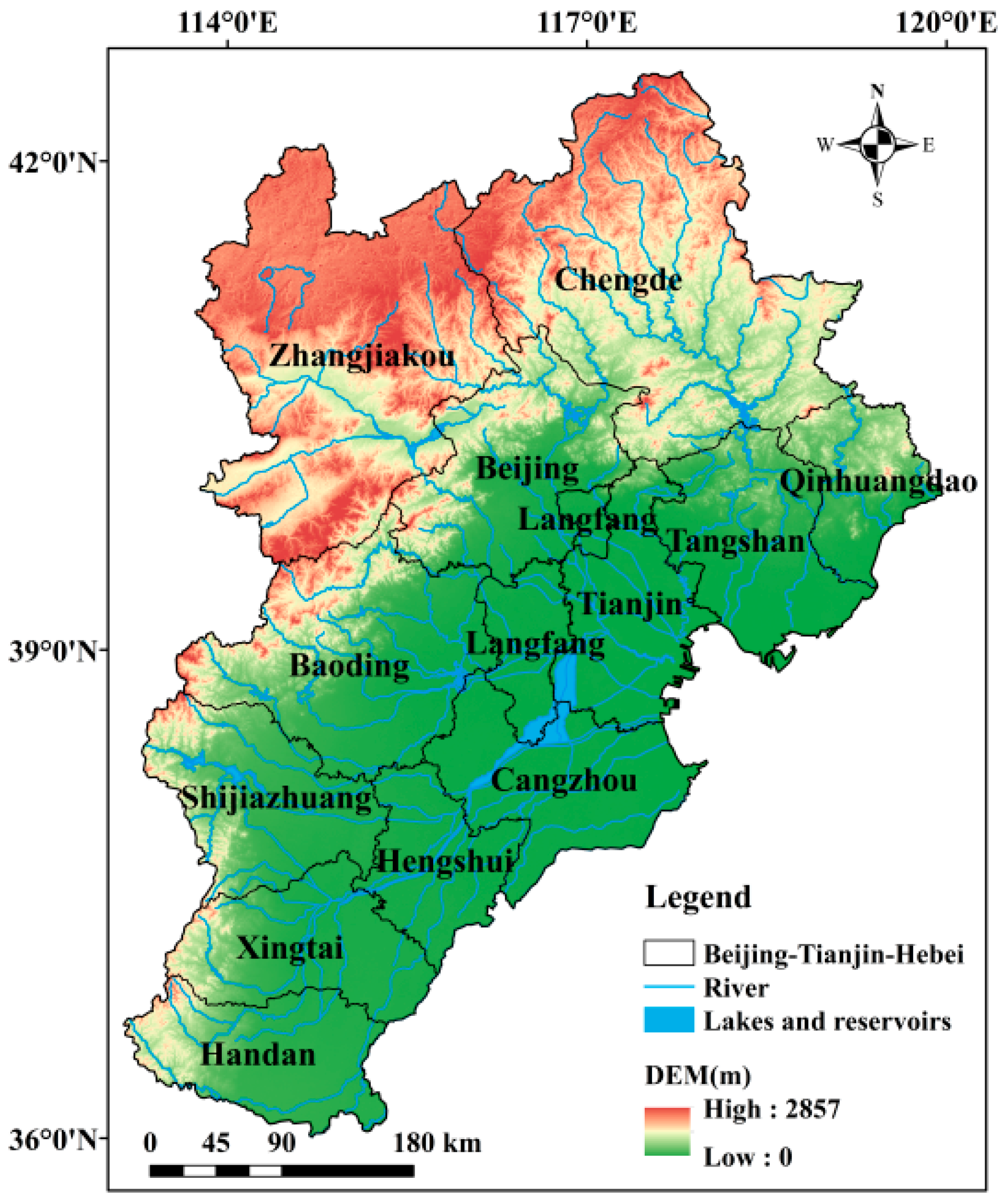
The Beijing-Tianjin-Hebei region (113°04′–119°53′ E, 36°01′–42°37′ N), known as China’s “Capital Economic Circle”, is located in the northern part of the North China Plain and covers 218,000 km2 (Figure 1). The study area is dominated by a warm temperate, semi-humid continental monsoon climate, with a yearly average temperature of 12.5 °C and annual precipitation between 400 and 700 mm. The elevation is generally higher in the northwest and lower in the southeast, with an average altitude ranging from 1200 to 1500 m. The study area is located generally in the Haihe River Basin, mainly including the seven main rivers, Ziya River, Daqing River, Yongding River, Beisan River, Heilonggang and Yundong rivers, and Zhangwei South Cana. Farmland, which occupies approximately 40% of the region, is the primary land use in this region, followed by forest land (27%) and shrubland (16.23%). Plains are the major terrain types here, and there are many mudflats and wetlands dispersed along the Bohai coast. Favorable position and a prosperous transportation system ensure that the region yields many grains, cotton, and fruits. The study area is a major agricultural region in northern China. At present, there are 1193 reservoirs and 11,014 slices and dams in the Beijing-Tianjin-Hebei region [39]. The total annual natural amount of water resources was up to 55.21 billion cubic meters. Although the Beijing-Tianjin-Hebei region has many river systems, the general status of the regional water resources is still severe. The region initially had limited water resources, characterized by low net river flow and a high sedimentary ratio. Total amount of water resources in the study area was 2 × 10 10 m3, which only accounted for 0.7% of the country’s total water resources, but 5% and 8% of China’s cultivated land and national population, respectively. The conflict between supply of water and water requirement was escalating, and the situation of limited resources for the scarcity of water is more dramatic.

2.2. Data Sources and Processing

We employed the precipitation data of 1 km monthly precipitation dataset for China (1901–2024), released by Third Pole Environment Data Center (https://data.tpdc.ac.cn, accessed on 16 May 2025) [40,41,42,43]. The DEM data were obtained from the 30 m-resolution ASTER GDEM V2, offered at Geospatial Data Cloud site, Computer Network Information Center, Chinese Academy of Sciences (http://www.gscloud.cn, accessed on 20 May 2025). NDVI data was downloaded from the Resource and Environment Science and Data Platform (https://www.resdc.cn, accessed on 25 May 2025), and the annual vegetation index data produced from 2000 to 2023 was generated by the maximum synthesis method based on the 16-day 250 m continuous time series MODIS [44]. The land use information was extracted from “the 30 m annual land cover datasets and its dynamics in China from 1985 to 2024” downloaded at Zenodo (https://zenodo.org/, accessed on 24 May 2025) [45]. The river run-off information came from Joint Research Center, Copernicus Emergency Management Service (2019): River discharge and related historical data from the Global Flood Awareness System [46], Horizontal resolution 0.05° × 0.05°. Road networks were extracted from OpenStreetMap (https://www.openstreetmap.org/, accessed on 23 May 2025). Nighttime light data were downloaded from the National Earth System Science Data Center, National Science & Technology Infrastructure of China (http://www.geodata.cn/, accessed on 24 May 2025) [47]. Dam and sluice data were downloaded from China Water Resources Statistical Yearbook. The ecological water replenishment data were downloaded from the Water Resources Bulletins of Beijing, Tianjin and Hebei Province. Runoff and the sediment data of river discharge in hydrological observation stations were obtained from Hydrological Yearbook of People’s Republic of China.
River systems data were acquired in this study using the Google Earth Engine (https://earthengine.google.com/, accessed on 28 May 2025). According to the clear or cloudless images of the area of research, the Landsat TM/OLI images during 2000, 2005, 2010, 2015, 2020, and 2023 were selected. For the images, cloudy images were screened out and de-clouded, and river extraction was performed by an enhanced Swin Transformer V2 model, where the threshold was optimized automatically by the Otsu algorithm [12], then the river data was converted into vector data in ArcGIS 10.8. The accuracy of the river extraction results was verified by combining the high-resolution images of Gaode Map in the Beijing-Tianjin-Hebei region. The results showed that the extraction accuracy of the river is over 95%.
Using ArcGIS 10.8, the study area was divided into 10 km × 10 km grids, resulting in 2358 grid units for each year’s division. Subsequent index calculations and analysis of driving factors were carried out using the grid as the basic unit of analysis. Mathematical statistical methods were applied to analyze the connectivity distribution of the grids within the study area [48].

2.3. Comprehensive Index of Hydrological Connectivity

The establishment of a comprehensive index of hydrological connectivity was at the core of connectivity analysis and assessment. The interaction between structural and functional connectivity was beneficial for identifying dynamic and nonlinear hydrological behaviors [13]. To further reveal the spatio-temporal evolution characteristics and controlling factors of river systems, it was necessary to comprehensively consider the relationship between structural and functional connectivity by integrating static and dynamic processes [12]. Based on this, the study characterized the hydrological connectivity features of the Beijing-Tianjin-Hebei region by integrating structural and functional connectivity. Based on determining their respective weights, the entropy weight method was used to calculate a comprehensive watershed hydrological connectivity index to represent the hydrological connectivity status of the Beijing-Tianjin-Hebei region, and the interannual variation trend from 2000 to 2023 was analyzed.

2.3.1. Connectivity of Water System Structure

In terms of structure connectivity indicator selection, the quantitative characteristics of river systems were represented by river network density ( R d ) and water surface ratio ( W p ), reflecting the spatial distribution density of river systems and the extent of water area coverage. Structural connectivity characteristics were evaluated using classic connectivity indices: river system loop degree ( α ), node connection rate ( β ), and water system connectivity ( γ ) [49]. The calculation formulas for each indicator are shown in Table 1.

2.3.2. Calculation of Functional Connectivity Index IC

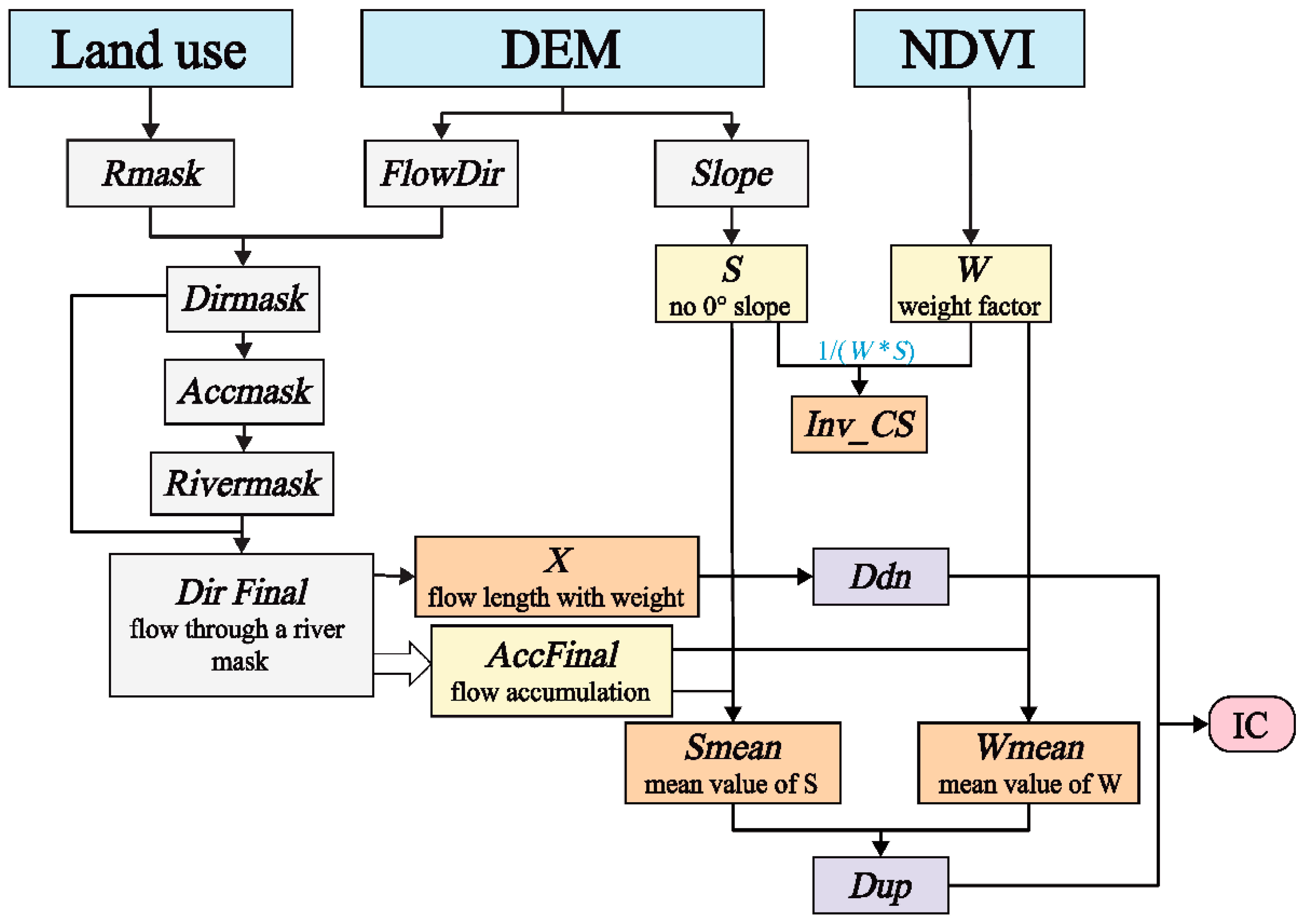
In this paper, functional connectivity (Index of connectivity, IC) for Beijing-Tianjin-Hebei area was measured by the index of connectivity put forward by Borselli et al. [50], which could fully depict the possibility of the transmission of watershed runoff and sediments to channel runoff. We took the vegetation cover and management factor in Revised Universal Soil Loss Equation (RUSLE) as the value of weight W [51]. Using Model Builder of ArcGIS 10.8, a calculation model for IC was generated, with the detailed processing steps shown in Figure 2. The calculation formulas were as follows.
IC =   log 10 ( D up D dn ) =   log 10 ( W ¯ S ¯ A i d i W i S i )
W i   = 1                                                     ( f i     0 ) 0.6508 0.3436 lg f i                   ( 0   <     f i     78.3 % )                     0                                                     ( f i   >   78.3 % )
f i   = NDVI     NDVI soil NDVI max     NDVI soil
In the formulas, A represents the area of the upslope contributing zone (m2), W ¯ is the average weighting factor of the upslope contributing area (dimensionless), S - is the average slope of the upslope contributing area (m), d i is the flow path length of the i unit along the downslope direction (m), W i , S i and f i are the weighting factor, slope and fractional vegetation cover of the i cell, respectively. The range of IC values is [−∞, +∞]. The larger the IC value, the greater the likelihood that runoff sediments would be transported to the river channel [38]. NDVI max was the NDVI value of pixels that are fully covered by vegetation, and NDVI soil was the NDVI value of bare land or areas without vegetation cover. NDVI max and NDVI soil varied by land use type. The NDVI value with a frequency of 95% in forest, grassland, and shrubland was defined as NDVI max and the NDVI value with a frequency of 5% was defined as NDVI soil [52].

2.3.3. Calculation of Comprehensive Hydrological Connectivity Index K

According to the index values and weights, we calculated the comprehensive hydrological connectivity index (K). The calculation formula was as follows:
K   =   W 1 α   +   W 2 β   +   W 3 γ   +   W 4 W p   +   W 5 R d   +   W 6 IC
W j , respectively, represent the comprehensive weights corresponding to each indicator; K represents the comprehensive hydrological connectivity index.
According to the above work, the entropy weight method was adopted to calculate the weights of the connectivity indicators. The entropy weight method was a kind of objective way to determine the weighting of data indicators by calculating the degree of information contained in each data indicator by entropy value, then giving different weighting to each data indicator [53].
W j = 1 E j j = 1 n ( 1 E j )
E j = 1 ln m i = 1 m P ij ln P ij
P ij = X ij i = 1 m X ij
W j represent the comprehensive weight, n represents the number of indicators, m represents the number of evaluated objects, x ij denotes the attribute value of the j indicator for the i evaluated object, E j is the entropy of the j indicator, and P ij represents the standardized value of the indicator.

2.4. Influencing Factors of Hydrological Connectivity and the Geographical Detector Model

The changes in hydrological connectivity were influenced by multiple factors, so selecting appropriate driving factors was of great significance for analyzing the influences on hydrological connectivity variation and uncovering the underlying driving mechanisms.
The comprehensive hydrological connectivity index of the Beijing-Tianjin-Hebei region is the dependent variable Y , and the selected driving factors are the independent variable X . The decisive indicator q for the spatial differentiation of hydrological connectivity changes in the study area was chosen to analyze the driving factors. This study meticulously considered the actual conditions of the Beijing-Tianjin-Hebei region when selecting driving factors. It fully adhered to principles such as the standardization of data, the availability of effective data sources, the representativeness of the data, and the comprehensiveness of the data. Seven driving factors were carefully chosen, encompassing both natural environmental and human aspects. Annual precipitation and annual runoff volume as the core input and output variables of the hydrological process, directly reflect the spatial and temporal heterogeneity of regional water resources. NDVI and land use intensity clearly present the dynamic changes in vegetation coverage and the process of surface cover transformation; they are important bases for analyzing the evolution of the hydrological effects of the underlying surface. Ecological water replenishment, dam and sluice density, and the nighttime light index collectively reflect the proactive regulation and influence of human activities on the structure and function of hydrological connectivity within the basin, profoundly affecting river network connectivity and the efficiency of water resource allocation (Table 2).
The geographical detector (GD) was an analysis model established according to the spatial heterogeneity theory, which was used to identify the spatial heterogeneity and reveal the driving force behind it [54]. By determining the independent variable explanation of the degree of the dependent variable, the relationship between the spatial structures was uncovered. The most prominent feature of this method is that it can effectively exclude the influence of multicollinearity in the analytical effects [55], thereby achieving better analysis performance for finding multi-factor interactions and effectively avoiding the inability of conventional statistical analysis methods to deal with categorical variables [56]. The model is mostly composed of four parts: the factor detector, the risk detector, the ecological detector, and the interaction detector [57]. This explicit physical meaning and clear expression have been widely used in public services [58], land use [59], and ecological environments [60]. We extracted the above natural and human factors according to the divided 2358 grids in Beijing-Tianjin-Hebei region, which are based on the previously divided 2358 grids in Beijing-Tianjin-Hebei region. The explanatory powers and their interactions with the impact factors on connectivity were quantified by the geodetector package in R4.3.2. [61]. The model reveals the intrinsic relationship between spatial patterns and driving factors by calculating the q statistic to quantify the explanatory power of independent variables on the dependent variable. The magnitude of q directly corresponds to the relative importance of the given factor in influencing connectivity dynamics: a higher q signifies a more substantial impact, while a lower q indicates a lesser contribution [54]. The formula was as follows:
q   =   1 h   =   1 L N h σ h 2 N σ 2
N and σ 2 represent the number of observations and the overall variance in the study area, while N h and σ h 2 represent the number of observations and the overall variance in subregion h ( h   =   1 ,   ,   L ).
The interaction detector reveals whether risk factors X 1 and X 2 have an interactive effect on the response variable Y , thereby explaining whether the effects of the two spatial variables were weakened, enhanced, or independent [22].

3. Results

3.1. Character of Hydrological Structural Connectivity

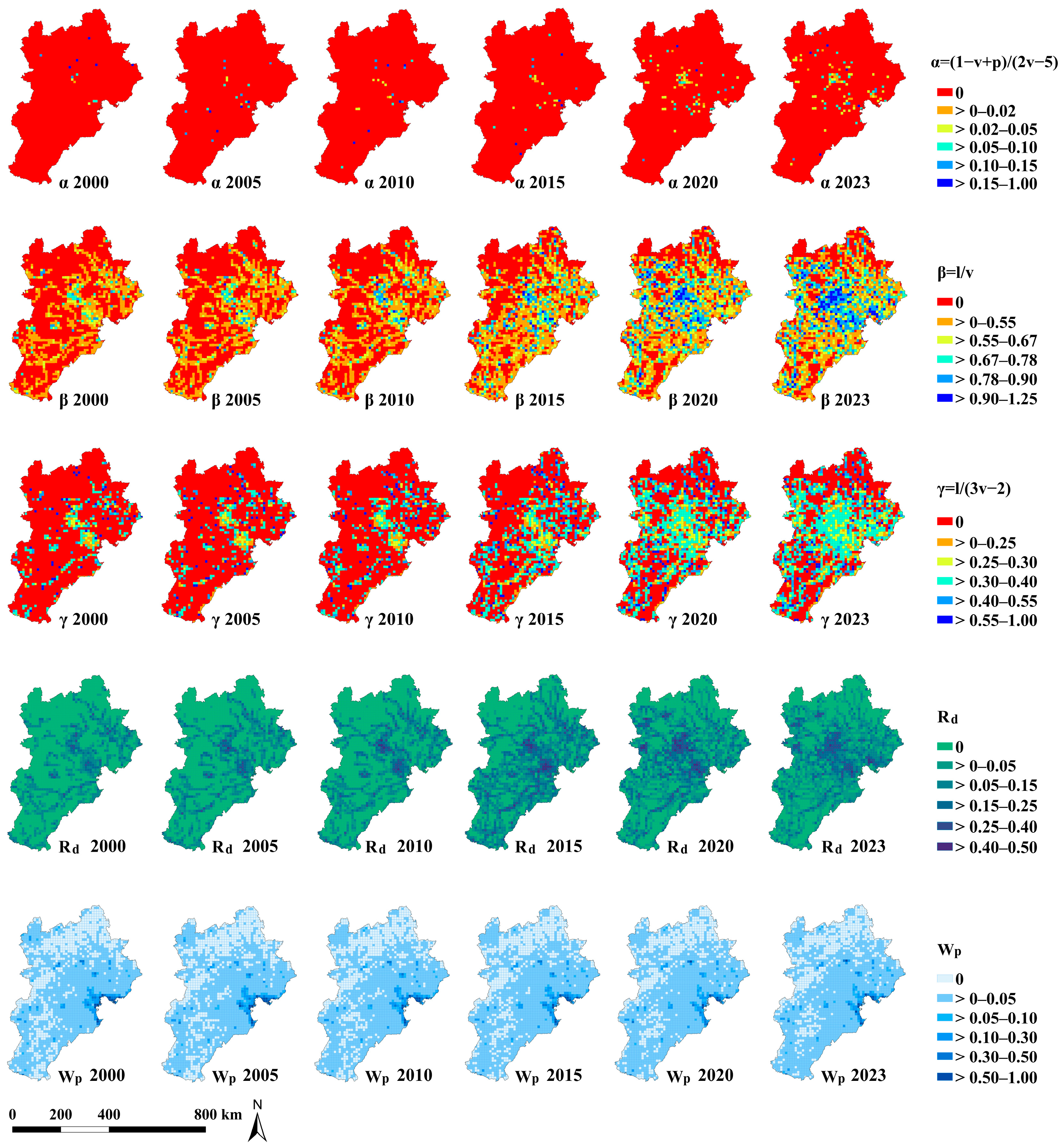
Figure 3 displayed the variability of river system morphology and structural features of Beijing-Tianjin-Hebei area during various periods. The result reflected that from 2000 to 2023, with the increase in river length, river network density in Beijing-Tianjin-Hebei increased, and in the past 20 years, the mean value of river network density in Beijing-Tianjin-Hebei gradually increased from 0.0315 in 2000 to 0.1290 in 2023, which was about 3.1 times growth. The mean percentage of river area increased slightly from 0.0177 in 2000 to 0.0141 in 2023; the mean proportion of water was basically without significant variations. The α, β, and γ values of the river network all exhibited an upward trend from 2000 to 2023, accompanied by notable annual fluctuations. Specifically, the average α value increased from 0.0017 to 0.0023, β from 0.1881 to 0.4764, and γ from 0.0605 to 0.1947, suggesting significant enhancement in the structural connectivity pattern of the river systems in the Beijing-Tianjin-Hebei region. Higher values indicate greater structural connectivity and a more complex river network [12]. But overall, except for the β value, other index values are less than 0.2, and the connectivity of the river systems in the basin is generally at a low level [38].

3.2. Spatio-Temporal Variation in Hydrological Functional Connectivity

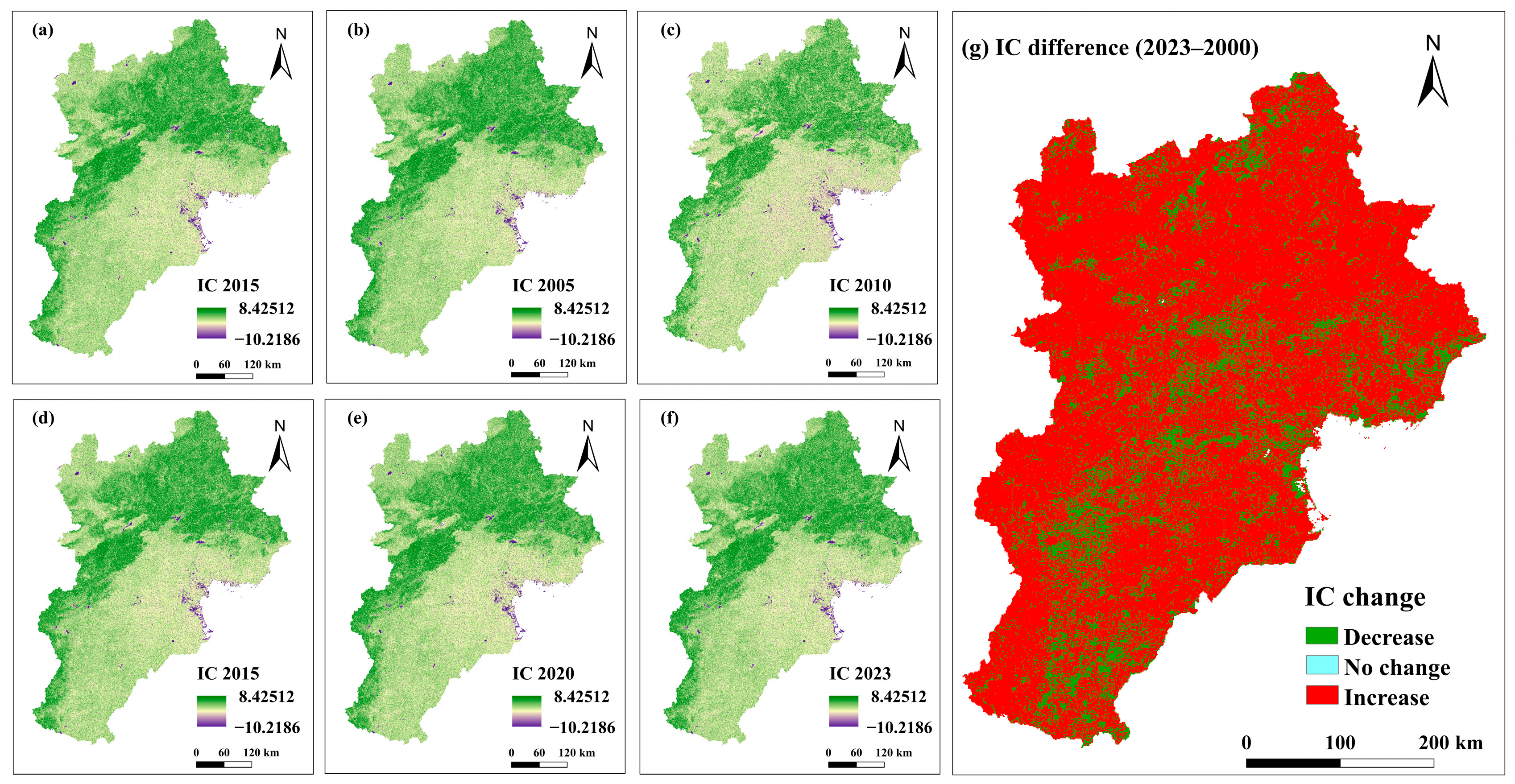
The spatial IC distribution results of the years 2000, 2005, 2010, 2015, 2020, and 2023 are shown in Figure 4a–f. The distribution of IC in the Beijing-Tianjin-Hebei region remained consistent across the years, with higher values observed in the northwest and lower values in the southeast [51]. This pattern indicates significant spatial heterogeneity. Between 2000 and 2023, the minimum IC in the Beijing-Tianjin-Hebei region was −10.22, and the maximum was 8.43, with the annual average first decreasing and then increasing over time. Compared with 2000, 15.5% of the regions had a decrease in IC, 79.2% had an increase, and 5.3% remained unchanged in 2023 (Figure 4g). Overall, the upward trend in the IC index indicates an improvement in functional connectivity within the Beijing-Tianjin-Hebei region over the past few decades.
In different years, the annual values of the IC index in the Beijing-Tianjin-Hebei region display a spatial distribution characterized by “higher upstream, lower downstream”, which, in this study, was reflected as a pattern of higher values in the northwest and lower values in the southeast. According to Formula (1), functional connectivity could be divided into two components: the upslope component ( D up ) and the downslope component ( D dn ). The closer the grid cell was to a valley, the larger area A of its upstream contributing area became. Assuming that the weighting factor W and slope S remain largely unchanged, the upslope component ( D up ) increases accordingly. Meanwhile, the closer a grid cell was to a downstream position, the shorter the path length for runoff or sediment to reach the river channel, and the less resistance it encounters. Therefore, the downslope component ( D dn ) was smaller. The spatial distribution of IC varies across different years, which was higher in downstream areas near the main river channel and in basins with sparse vegetation, corresponding to a stronger water and sediment transport capacity. Conversely, IC values were lower in densely forested upstream areas far from the river channel, indicating a lower likelihood of sediment being transported downstream. From 2000 to 2023, the spatial distribution pattern of IC has remained relatively consistent, generally displaying a trend of higher values in the west and lower values in the east, which demonstrates marked spatial heterogeneity. High IC values were mainly concentrated in the northwestern part of the region in areas densely covered by forests and shrubs, while lower IC values were primarily found in the central and southeastern parts of the region, which were dominated by farmland and construction land.
The mean IC value in the Beijing-Tianjin-Hebei region was strongly and positively correlated with both the annual runoff and annual sediment transport. Specifically, the correlation coefficient between the IC index and annual runoff is 0.59, while that with annual sediment transport stands at 0.61 (Table 3). This suggests that the mean IC value could reflect the ability of water-sediment transportation to a certain extent from the perspective of regional runoff-sediment carrying capacity.

3.3. Spatio-Temporal of the Comprehensive Hydrological Connectivity

According to the entropy weight method, the weights of the river system loop degree α , node connectivity rate β , hydrological connectivity γ , water surface ratio W p , river network density R d , and functional connectivity index IC in the Beijing-Tianjin-Hebei watershed were 0.4820, 0.0753, 0.1264, 0.2125, 0.1004, and 0.0034, respectively. Therefore, the calculation formula for the comprehensive hydrological connectivity index K was used to comprehensively characterize the functional and structural connectivity of the Beijing-Tianjin-Hebei region.
K = 0.4820 α + 0.0753 β + 0.1264 γ + 0.2125 W p + 0.1004 R d + 0.0034 IC
According to Formula (9), the comprehensive hydrological connectivity index K encompasses representative indicators of connectivity from both structural and functional perspectives, characterizing the hydrological connectivity features of the Beijing-Tianjin-Hebei region.
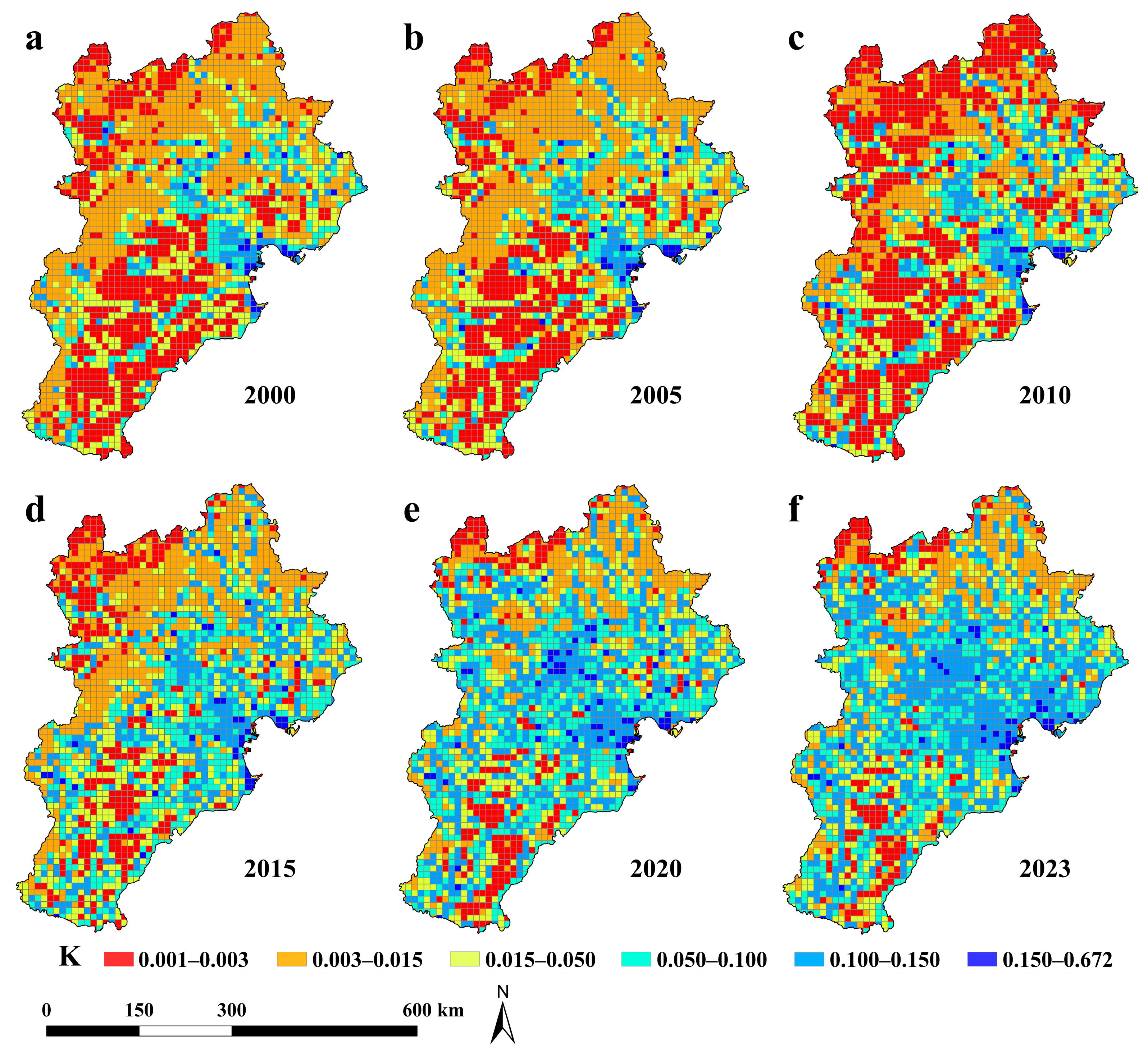
The spatio-temporal distribution of comprehensive hydrological connectivity index in Beijing-Tianjin-Hebei region from 2000 to 2023 was decided through the zonal statistics in ArcGIS 10.8 (Figure 5a–f). The comprehensive hydrological connectivity index in the Beijing-Tianjin-Hebei region fluctuated within the range of 0.001 to 0.672, indicating a low state of hydrological connectivity. This finding aligns with the results obtained by Tian Kai et al. [53] for the Baiyangdian Wetland water system network, which reported a K value of 0.538. These consistent results suggest the objectivity and reliability of our study. The comprehensive hydrological connectivity index has exhibited a steady upward trend over the years. Starting from a value of 0.029 in the year 2000, it reached a maximum of 0.068 by 2023, indicating a gradual increase in hydrological connectivity over time. This evolution reflects the strengthening of water flow pathways and the enhanced interaction between various elements of the hydrological system, highlighting the importance of continued monitoring and analysis in the context of catchment management and environmental sustainability.
In the spatial dimension, values are generally higher in the east coast area and lower in the western inland. This could be due to the eastern coastal area being close to the outlet of the basin on the plains, providing optimal hydrological connectivity, while the west, primarily composed of mountainous and plateau regions like the North China Mountains and Inner Mongolia Plateau, experiences poorer hydrological connectivity. Over time, however, hydrological connectivity has shown a growth trend, gradually expanding from the east towards the central and even western areas.
The rates of hydrological connectivity expansion remained steady at 0.09 and 0.08 during the periods of 2000–2005 and 2005–2010, respectively. However, due to the implementation of prudent water resource planning and substantial ecological water supplementation initiatives starting in 2010, these rates significantly increased to 0.43 and 0.31 during the subsequent periods of 2010–2015 and 2015–2020, respectively.

3.4. Driving Factor Analysis

Driving factors (Table 2) influence spatial distribution, extract key factors, and determine their explanatory power (q value) ranked from high to low. The higher the q value, the greater the impact on the comprehensive hydrological connectivity index K of the Beijing-Tianjin-Hebei region [62].
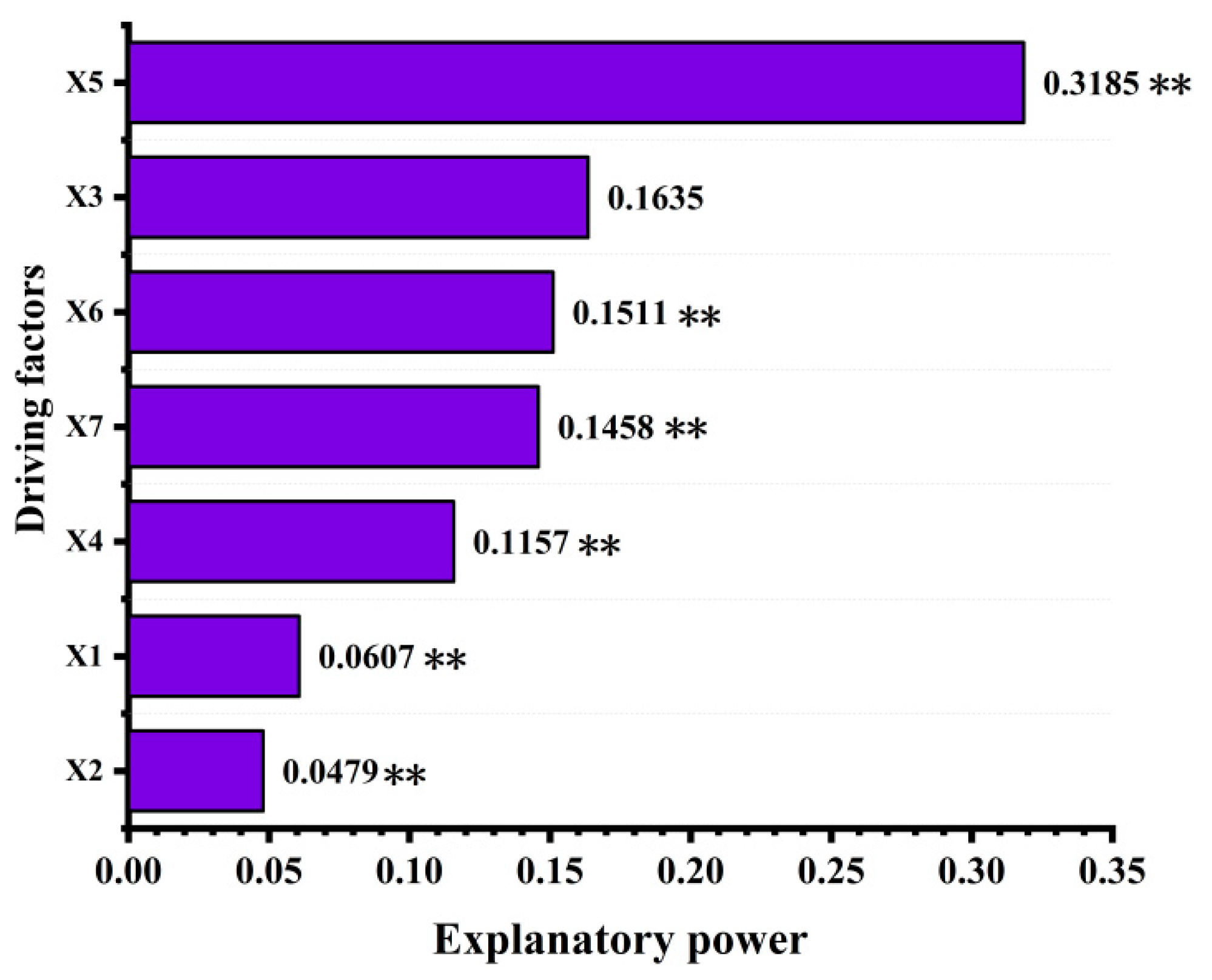
Geographical detection results showed that the density of dams was the main driving factor affecting the spatio-temporal evolution of the comprehensive hydrological connectivity index in the Beijing-Tianjin-Hebei region, with an explanatory power of 0.3185 (Figure 6). This indicates that the construction of water conservancy projects had greatly changed the hydrological characteristics of the Beijing-Tianjin-Hebei region, which was highly consistent with the findings regarding the impact of water conservancy projects on the hydrological ecosystem of the Haihe River Basin during 1951–1960 [63]. In addition, the land use intensity index, ecological water replenishment volume, and nighttime light index also had significant impacts on overall hydrological connectivity, with explanatory powers of 0.1635, 0.1511, and 0.1458, respectively, while natural factors such as annual runoff, annual precipitation, and the NDVI value have relatively weaker explanatory power. This showed that human factors were the main driving forces influencing the connectivity of river systems in Beijing-Tianjin-Hebei region, whereas the impact of natural factors on hydrological connectivity was relatively minor.
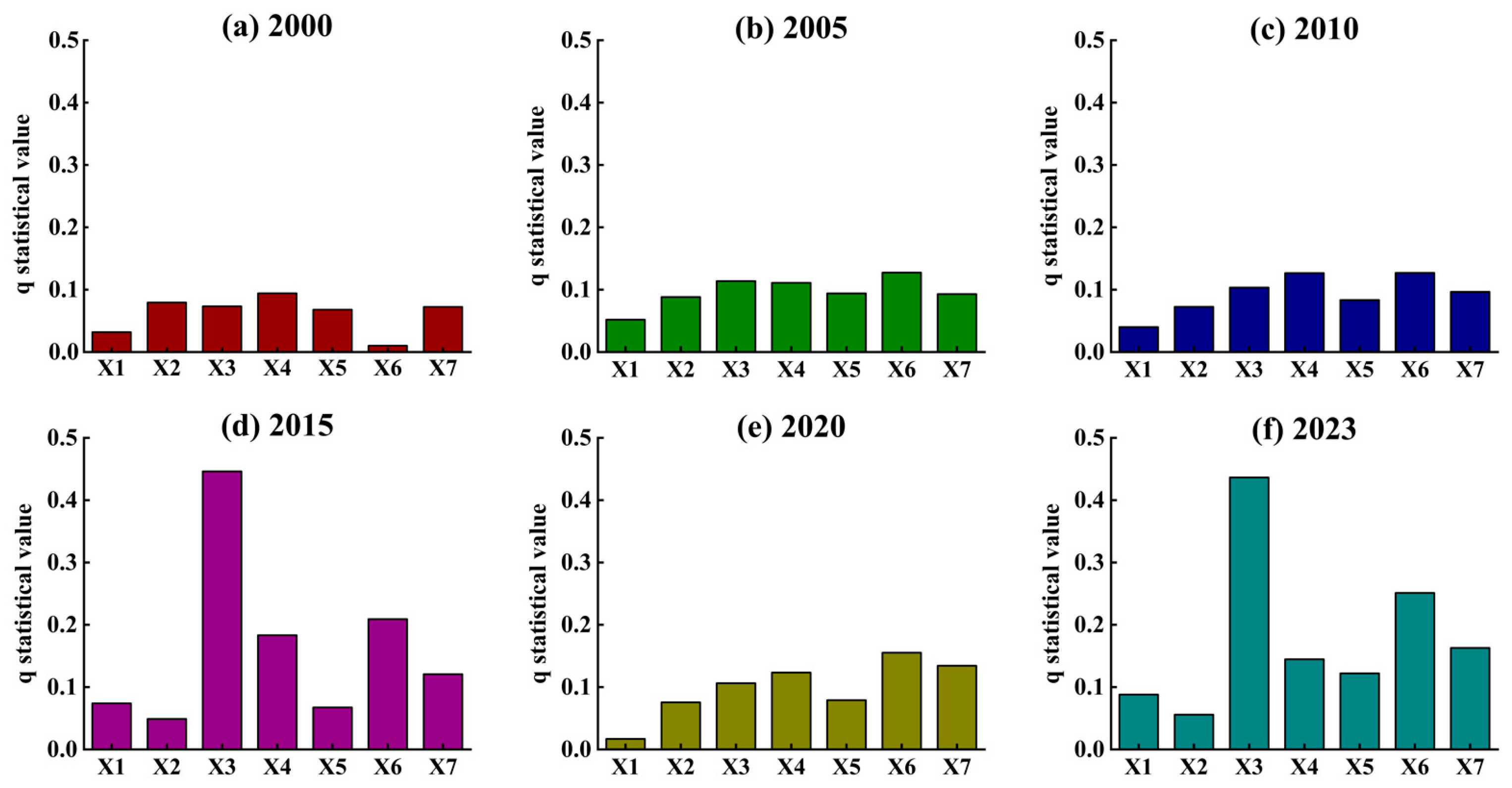
From the factor detection results shown in Figure 7, we could see that the impact of each driving factor on the hydrological connectivity of the water system in the study area varied to different degrees across different years. In 2000, runoff was the dominant driving factor affecting the comprehensive hydrological connectivity index in the Beijing-Tianjin-Hebei region, followed by the NDVI value, indicating that natural factors were the main influences on water system connectivity in the region that year. Generally, an increase in river runoff enhances the longitudinal continuity of water flow, reduces water resistance, and improves the efficiency of material transport. During the process of runoff and sediment transfer, vegetation played a role in intercepting and retaining runoff and sediment and also increased the infiltration of surface runoff into the soil, thereby affecting the hydrological connectivity of the basin [64]. Moreover, vegetation cover could regulate the microclimate, increase precipitation infiltration, recharge groundwater, indirectly support base flow during dry periods, and alleviate seasonal flow interruption. In 2005, 2010, and 2020, ecological water replenishment had the greatest impact on hydrological connectivity, indicating that ecological water supplementation had strong explanatory power for hydrological connectivity in Beijing-Tianjin-Hebei region. Ecological water replenishment increases base flow in river channels and mitigates the risk of flow interruption, thereby significantly influencing hydrological connectivity. In 2015 and 2023, land use intensity index became the main factor affecting the comprehensive hydrological connectivity index. The land use intensity index reflected the degree of land development and utilization in the basin. Expansion of urban, rural, industrial, and mining land typically intensified landscape fragmentation, thereby reducing the connectivity of water bodies as patches. However, scientifically planned construction land could also enhance local hydrological connectivity through artificial water system restoration projects (such as ecological ditches and rain gardens).
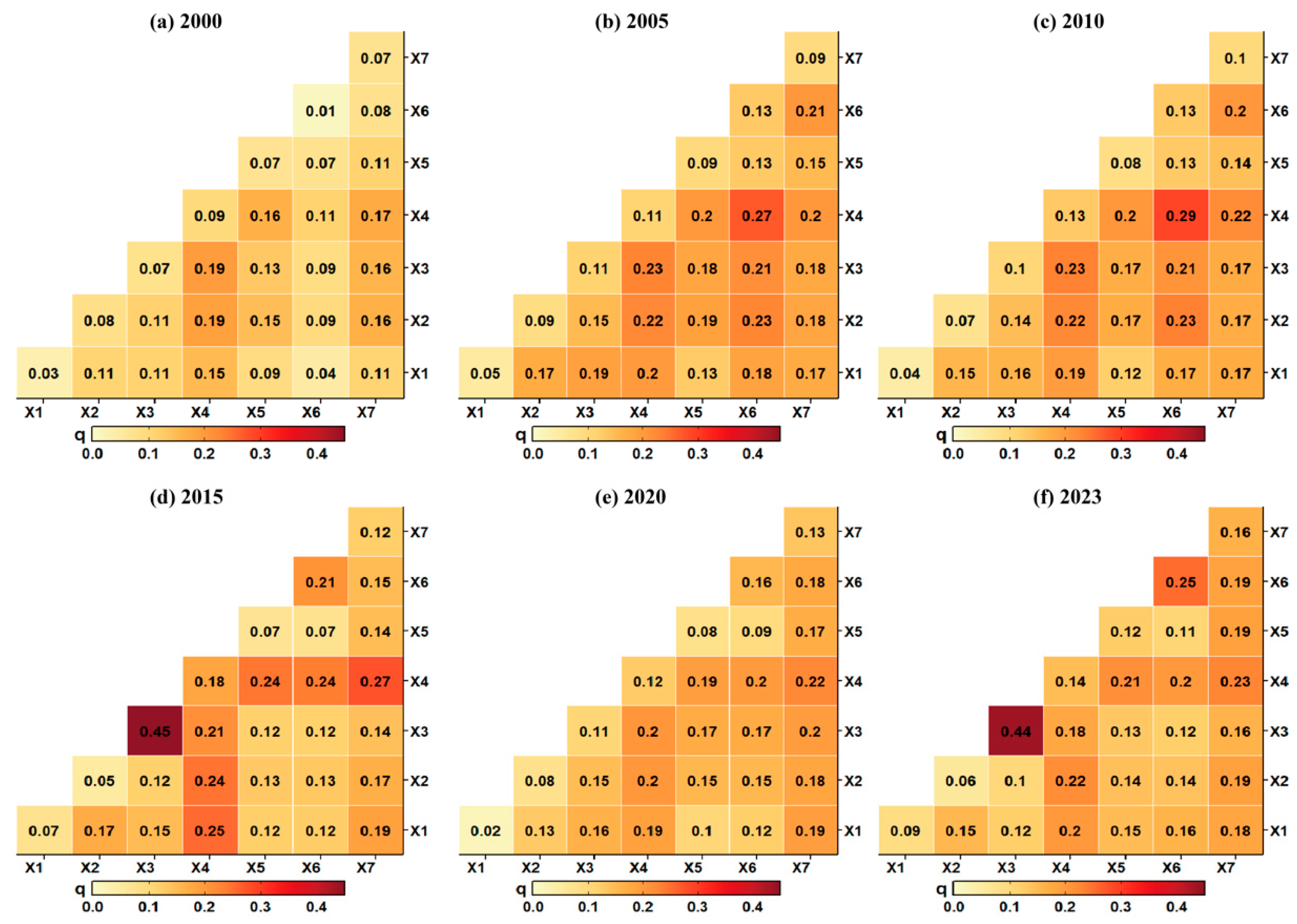
The driving factor interaction detection results of the seven driving factors which contributed to spatial differentiation of hydrological connectivity in the study area indicated that the interactions between driving factors are generally with bi-factor enhancement (Figure 8). The most significant interaction detected was between annual runoff and NDVI as well as the land use intensity index (0.19) in 2000. In 2005 and 2010, the most significant interaction was between annual runoff and the ecological water replenishment index (0.27 and 0.29). From 2015 to 2023, the most significant interaction was between annual runoff and the nighttime light index, with an impact on the spatial differentiation of hydrological connectivity in the study area exceeding 22% (0.27, 0.22, and 0.23). This indicates that hydrological connectivity in the Beijing-Tianjin-Hebei region shifted from being influenced mainly by the interaction of areas with high runoff and the NDVI value as well as land use, to being driven largely by the interaction of high runoff areas and human activities such as ecological water replenishment during the study period. The implementation of scientific water replenishment measures, combined with policy interventions and other forms of human intervention, has significantly improved hydrological connectivity in the study area.
In summary, the hydrological connectivity of the Beijing-Tianjin-Hebei region in 2000 was predominantly regulated by naturally driven runoff dynamics and vegetation cover patterns. Specifically, temporal and spatial variations in precipitation-induced natural runoff, coupled with the distribution and structural characteristics of regional vegetation, jointly shaped the hydrological connectivity status through mechanisms such as runoff generation, water retention, and infiltration regulation. Since 2005, however, the contributions of anthropogenic activities—primarily ecological water replenishment projects and intensive land use transformations—have undergone a dramatic increase. This shift indicates that human-induced disturbances have gradually surpassed natural factors to become the dominant controlling force of hydrological connectivity in the region. Synthesizing the findings over the 24-year study period, it is evident that the maintenance of hydrological connectivity in the Beijing-Tianjin-Hebei region has experienced a fundamental transition: from being largely dependent on inherent natural processes to relying on the synergistic regulation of social systems (e.g., policy guidance, management measures) and ecological systems (e.g., vegetation restoration and water conservation).

4. Discussion

4.1. Spatio-Temporal Patterns of the Comprehensive Hydrological Connectivity

Exploring the characteristics of structural and functional connectivity across multiple spatio-temporal scales is key to understanding related processes under environmental influences. Over the past 24 years, the river systems in the Beijing-Tianjin-Hebei region have exhibited significant interannual variation, with an overall increasing trend in both the number and length of rivers within the region. Structural indicators such as the α, β, γ indices and river network density had all increased significantly, indicating a gradual improvement in hydrological structural connectivity. Throughout the course of the study, the spatial distribution of the IC index manifested significant spatial variability, presenting a distinct pattern of “high concentrations in the northwest and lower levels in the southeast”. The functional connectivity index in the Beijing-Tianjin-Hebei region demonstrates a significant spatial scale effect, which is consistent with the distribution pattern of watershed IC as driven by topographic factors [65], aligning with the findings of Li Xuehan and others regarding hydrological connectivity in the Luan River Basin [51]. From 2000 to 2023, the functional connectivity index initially decreased and then increased; by 2023, 79.2% of the study area showed an increase in the IC index compared to 2000, while 15.5% of the area showed a decrease, with the decreased areas scattered in patches.
River systems are important carriers for maintaining the stability of regional ecological environments. From the perspectives of structure and function, this paper used grid analysis and data statistics methods to quantitatively investigate the characteristics and patterns of changes in water system connectivity [66]. The results show that during the study period, hydrological connectivity in the Beijing-Tianjin-Hebei region exhibited a gradual improvement trend, with the average comprehensive hydrological connectivity index increasing from 0.0285 in 2000 to 0.0675 in 2023. However, the overall hydrological connectivity in the region remains at a relatively low level, and there is significant spatial heterogeneity in watershed hydrological connectivity. The hydrological connectivity in the study area showed a year-on-year growth trend, with the area of increased connectivity spreading gradually from the eastern part to the central and western parts over time. Before 2010, the growth rate of water system connectivity was only 0.08. After 2015, the growth rate significantly accelerated, reaching as high as 0.43 (Figure 7), about five times higher than before 2010. This was closely related to rational water resource planning and large-scale ecological water supplementation measures following the implementation of the Coordinated Development Strategy for the Beijing-Tianjin-Hebei region in 2014.

4.2. Drivers of Hydrological Connectivity

The changes in the river systems of the Beijing-Tianjin-Hebei region are influenced by various potential factors, including topography, climate, vegetation cover, and water conservancy facilities. Among these, human activities are the core driver of the evolution of hydrological connectivity in river network ecosystems [67]. The results of this study show that over the past two decades, hydrological connectivity in the Beijing-Tianjin-Hebei region has gradually improved, and since 2005, human activities, represented by ecological water replenishment, have become the dominant factor. This conclusion was consistent with the findings of Zhang Feng et al. [68]. The ecological restoration of rivers and lakes is an important part of coordinated development in the Beijing-Tianjin-Hebei region [69]. Since 2000, especially after the implementation of the Beijing-Tianjin-Hebei coordinated development strategy in 2014, regional ecological water replenishment policies and measures have been gradually improved. Through integrated management measures, such as interregional water transfers, river and lake ecological restoration, and groundwater recharge, the regional water ecological environment has been significantly improved. In response to issues such as river and lake depletion and degradation of ecological functions, the Ministry of Water Resources has carried out ecological water supplementation for rivers and lakes in the Beijing-Tianjin region. By the end of 2020, the cumulative amount of ecological water replenishment in this region reached 1.14 × 10 10 m3, the total length of rivers with replenished water increased to 1873 km (2.1 times that before supplementation), and the water surface area increased by 734 km2 (1.9 times that before supplementation) [69]. In addition, engineering measures such as reservoirs and sluice dams have not only accelerated the improvement of regional water conservancy infrastructure networks but also changed the structural patterns and functions of watershed systems. The results of the interaction detection of driving factors further confirm that intensive human activity, as the key determinant of hydrological connectivity in the Beijing-Tianjin-Hebei region, has a significant impact on regional hydrological connectivity and plays a dominant role in its spatio-temporal evolution [22].
The impact of each driving factor on the spatial differentiation of hydrological connectivity in the study area is dominated by two-factor enhancement, reflecting the synergistic regulation effect of natural and anthropogenic factors. During the natural factor-dominated period in 2000, the interaction between annual runoff, NDVI, and land use intensity index was the most significant, which reflects the natural coupling relationship between runoff processes, vegetation cover, and land use. From 2005 to 2010, the interaction between annual runoff and ecological water replenishment index became prominent, indicating that ecological water replenishment, as an anthropogenic intervention, began to synergistically affect hydrological connectivity with natural runoff. From 2015 to 2023, the interaction between annual runoff and nighttime light index (an indicator of anthropogenic activity intensity) became dominant, with a contribution rate stably exceeding 22%, confirming that the interaction between anthropogenic activities and natural runoff has become the core mechanism regulating the spatial differentiation of hydrological connectivity.
In summary, structural indicators are organically integrated with the functional connectivity (IC) index, and an integrated “structure-function” comprehensive hydrological connectivity index (K) is constructed using the entropy weight method. This not only ensures the comprehensiveness of the assessment but also enhances the spatial expressiveness and application value of the results through grid-scale spatial visualization techniques. Meanwhile, a research paradigm coupling multi-source data fusion and the geographical detector model is adopted to reveal the phased driving laws of “natural dominance to anthropogenic dominance”, deepening the understanding of hydrological ecosystem evolution mechanisms under urbanization. The findings provide more targeted scientific support for regional water resources management and ecological restoration.

4.3. Limitations of the Study

This study focuses on the spatio-temporal differentiation of water system connectivity in the Beijing-Tianjin-Hebei region and the nature–human coupling driving mechanism. Through the integration of multi-source data and the coupling of multiple methods, it realizes the quantification and driving analysis of regional-scale connectivity. Due to the limitations of research scale, data availability and method boundaries, there are three limitation aspect should be improved in the future research: first, key data (such as ecological water replenishment) are constrained by monitoring and statistical conditions, mostly regional summary values, lacking detailed records, making it difficult to fully quantify the differentiated effects at medium and small scales. Secondly, the intrinsic coupling relationship and dynamic response mechanism of structural and functional connectivity have not been deeply explored yet, and the interaction path between the two remains to be explored. Thirdly, the analysis of the driving mechanism fails to distinguish between direct and indirect influences, making it difficult to comprehensively depict the threshold effect and nonlinear characteristics. The next step of research will supplement refined data, deepen the study by means of structural equation models, multi-factor interaction models, etc., and build a risk assessment system to provide more in-depth theoretical support and practical reference for the precise regulation and sustainable management of regional hydrological ecology.

5. Conclusions

This study aims to quantify the spatio-temporal variations in the overall hydrological connectivity of the Beijing-Tianjin-Hebei region over the past 24 years. By employing the entropy weight method, we developed a comprehensive hydrological connectivity index that integrates both structural and functional aspects and enables spatial visualization. The study also used geographic detectors to analyze the driving factors behind changes in hydrological connectivity. The results indicate that hydrological connectivity in the Beijing-Tianjin-Hebei region has shown an improving trend over time, with spatial heterogeneity in the intensity of connectivity. Furthermore, driving factors analysis shows that before 2005, natural factors such as vegetation cover and river runoff were the primary drivers of hydrological connectivity evolution. After 2005, human activities became the decisive force. Since 2010, the growth rate of regional hydrological connectivity has continued to rise, due to rational water resource planning and ecological water replenishment measures.
The findings of this study provide a valuable theoretical framework for the quantitative study of hydrological connectivity in the Beijing-Tianjin-Hebei region, promoting the standardization and wider application of similar research methods. Meanwhile, the results offer possible guidance for formulating differentiated hydrological and ecological restoration strategies in this region and may serve as a reference for integrated decision-making on sustainable water resource utilization and ecological protection in similar areas of North China.
In recent years, through the implementation of measures such as ecological water replenishment, the Beijing-Tianjin-Hebei region has seen certain improvements in regional hydrological connectivity, though the overall level remains moderate to low. Restoring connectivity in urban river networks is a complex project facing multiple challenges. To continuously enhance regional hydrological connectivity, systematic governance strategies need to be adopted. We should strengthen cross-regional coordinated planning and improve mechanisms for ecological water replenishment to ensure the rational allocation of water resources. Meanwhile, urban planning and development should balance regional growth with ecological protection. By taking multiple measures and adopting comprehensive management approaches, we can fully enhance the quality of hydrological connectivity in urbanized areas of the region.

Author Contributions

Writing—original draft preparation, W.W. and H.Z.; writing—review and editing, W.W. and M.T.; supervision, M.T.; Data curation, H.Z.; Investigation, K.L. All authors have read and agreed to the published version of the manuscript.

Funding

This research was funded by the National key R & D plan (grant numbers: 2024YFF1307700).

Data Availability Statement

The original contributions presented in this study are included in the article. Further inquiries can be directed at the corresponding author.

Conflicts of Interest

The authors declare no conflicts of interest.

Abbreviations

Abbreviation/Symbol/ParameterEnglish Full Name/Chinese NameDefinition Description
GDGeographical DetectorGeographical Detector
ICIndex of ConnectivityIndex of Connectivity
RdRiver network densityRiver network density, calculated as (Rd = L/A) (L is total river length, A is total basin area)
WpWater surface ratioWater surface ratio, calculated as (Wp = (Aw/A) × 100%) (Aw is total water area)
αNetwork circuitryNetwork circuitry, calculated as (α = (l − v + 1)/(2v − 5))
βEdge-nodes ratioEdge-nodes ratio, calculated as (β = l/v) (l is number of nodes, v is number of river edges)
γNetwork connectivityNetwork connectivity, calculated as (γ = l/3(v − 2))
KComprehensive hydrological
connectivity index
Comprehensive hydrological connectivity index, integrated by entropy weight method from structural and functional connectivity indicators
DupUpslope componentUpslope component, parameter for IC calculation
DdnDownslope componentDownslope component, parameter for IC calculation
WWeighting factorWeighting factor, using C value from RUSLE model
CVegetation cover and management factorVegetation cover and management factor
qDecisive indicatorDecisive indicator in GD, used to quantify the explanatory power of driving factors on hydrological connectivity
X1Annual precipitationAnnual precipitation (natural driving factor)
X2NDVI valueNDVI value (natural driving factor)
X3Land use intensity indexLand use intensity index (natural driving factor)
X4Annual runoff volumeAnnual runoff volume (natural driving factor)
X5Dam and sluice densityDam and sluice density (anthropogenic driving factor)
X6Ecological water replenishment indexEcological water replenishment index (anthropogenic driving factor)
X7Nighttime light indexNighttime light index (anthropogenic driving factor)

References

  1. Gao, C.; Huang, C.; Wang, J.; Li, Z. Modelling Dynamic Hydrological Connectivity in the Zoigê Area (China) Based on Multi-Temporal Surface Water Observation. Remote Sens. 2021, 14, 145. [Google Scholar] [CrossRef]
  2. Bracken, L.J.; Croke, J. The Concept of Hydrological Connectivity and Its Contribution to Understanding Runoff-dominated Geomorphic Systems. Hydrol. Process. 2007, 21, 1749–1763. [Google Scholar] [CrossRef]
  3. Fang, S.; Chen, M.; Li, J.; Zhang, L.; Zhang, Y.; Yang, C.; Wang, H. Evaluation and Optimization of Urban Hydrological Connectivity Based on Graph Theory: A Case Study in Chengdu, China. Ecol. Inform. 2024, 82, 102749. [Google Scholar] [CrossRef]
  4. Reid, M.A.; Reid, M.C.; Thoms, M.C. Ecological Significance of Hydrological Connectivity for Wetland Plant Communities on a Dryland Floodplain River, MacIntyre River, Australia. Aquat. Sci. 2016, 78, 139–158. [Google Scholar] [CrossRef]
  5. Chen, X.; Yu, M.; Liu, C.; Wang, R.; Zha, W.; Tian, H. Topological and Dynamic Complexity of the Pearl River Delta and Its Responses to Human Intervention. J. Hydrol. 2022, 608, 127619. [Google Scholar] [CrossRef]
  6. Hoitink, A.J.F.; Wang, Z.B.; Vermeulen, B.; Huismans, Y.; Kästner, K. Tidal Controls on River Delta Morphology. Nat. Geosci. 2017, 10, 637–645. [Google Scholar] [CrossRef]
  7. Tejedor, A.; Longjas, A.; Zaliapin, I.; Foufoula-Georgiou, E. Delta Channel Networks: 2. Metrics of Topologic and Dynamic Complexity for Delta Comparison, Physical Inference, and Vulnerability Assessment. Water Resour. Res. 2015, 51, 4019–4045. [Google Scholar] [CrossRef]
  8. Chen, X.; Liu, H.; Ye, L.; Ren, J.; Deng, Z.; Wu, J. Hydrological Connectivity of Distributary-Confluence Geomorphic Unit: A Case Study of H-Shaped Features Within River Networks. Water Resour. Res. 2025, 61, e2024WR037408. [Google Scholar] [CrossRef]
  9. Xia, Y.; Fang, C.; Lin, H.; Li, H.; Wu, B. Spatio-temporal Evolution of Wetland Eco-Hydrological Connectivity in the Poyang Lake Area Based on Long Time-Series Remote Sensing Images. Remote Sens. 2021, 13, 4812. [Google Scholar] [CrossRef]
  10. Jaeger, K.L.; Olden, J.D.; Pelland, N.A. Climate Change Poised to Threaten Hydrologic Connectivity and Endemic Fishes in Dryland Streams. Proc. Natl. Acad. Sci. USA 2014, 111, 13894–13899. [Google Scholar] [CrossRef]
  11. Wainwright, J.; Turnbull, L.; Ibrahim, T.G.; Lexartza-Artza, I.; Thornton, S.F.; Brazier, R.E. Linking Environmental Régimes, Space and Time: Interpretations of Structural and Functional Connectivity. Geomorphology 2011, 126, 387–404. [Google Scholar] [CrossRef]
  12. Zeng, B.; Li, Y.; Yao, J.; Tan, Z. The Characteristics and Evolution of Structural and Functional Connectivity in a Large Catchment (Poyang Lake) during the Past 30 Years. Remote Sens. 2023, 15, 3335. [Google Scholar] [CrossRef]
  13. Deng, X.; Xu, Y.; Han, L. Impacts of Human Activities on the Structural and Functional Connectivity of a River Network in the Taihu Plain. Land Degrad. Dev. 2018, 29, 2575–2588. [Google Scholar] [CrossRef]
  14. Heckmann, T.; Cavalli, M.; Cerdan, O.; Foerster, S.; Javaux, M.; Lode, E.; Smetanová, A.; Vericat, D.; Brardinoni, F. Indices of Sediment Connectivity: Opportunities, Challenges and Limitations. Earth Sci. Rev. 2018, 187, 77–108. [Google Scholar] [CrossRef]
  15. Najafi, S.; Dragovich, D.; Heckmann, T.; Sadeghi, S.H. Sediment Connectivity Concepts and Approaches. Catena 2021, 196, 104880. [Google Scholar] [CrossRef]
  16. Dwivedi, D.; Poeppl, R.E.; Wohl, E. Hydrological Connectivity: A Review and Emerging Strategies for Integrating Measurement, Modeling, and Management. Front. Water 2025, 7, 1496199. [Google Scholar] [CrossRef]
  17. Astuti, A.J.D.; Annys, S.; Dessie, M.; Nyssen, J.; Dondeyne, S. To What Extent Is Hydrologic Connectivity Taken into Account in Catchment Studies in the Lake Tana Basin, Ethiopia? A Review. Land 2022, 11, 2165. [Google Scholar] [CrossRef]
  18. Maxwell, C.M.; Fernald, A.G.; Cadol, D.; Faist, A.M.; King, J.P. Managing Flood Flow Connectivity to Landscapes to Build Buffering Capacity to Disturbances: An Ecohydrologic Modeling Framework for Drylands. J. Environ. Manag. 2021, 278, 111486. [Google Scholar] [CrossRef]
  19. Harvey, J.; Gomez-Velez, J.; Schmadel, N.; Scott, D.; Boyer, E.; Alexander, R.; Eng, K.; Golden, H.; Kettner, A.; Konrad, C.; et al. How Hydrologic Connectivity Regulates Water Quality in River Corridors. J. Am. Water Resour. Assoc. 2019, 55, 369–381. [Google Scholar] [CrossRef] [PubMed]
  20. Fox, P.M.; Carrero, S.; Anderson, C.; Dewey, C.; Keiluweit, M.; Conrad, M.; Naughton, H.R.; Fendorf, S.; Carroll, R.; Dafflon, B.; et al. Sulfur Biogeochemical Cycling and Redox Dynamics in a Shale-Dominated Mountainous Watershed. J. Geophys. Res. Biogeosci. 2022, 127, e2021JG006769. [Google Scholar] [CrossRef]
  21. Rains, M.C.; Leibowitz, S.G.; Cohen, M.J.; Creed, I.F.; Golden, H.E.; Jawitz, J.W.; Kalla, P.; Lane, C.R.; Lang, M.W.; McLaughlin, D.L. Geographically Isolated Wetlands Are Part of the Hydrological Landscape. Hydrol. Process. 2016, 30, 153–160. [Google Scholar] [CrossRef]
  22. Liu, S.; Wu, L.; Guo, Z.; Zhang, H.; Du, B. Elucidating the Response Mechanisms of Hydrological and Sediment Connectivity to the River Network Structure, Vegetation, and Topographic Features in the Jinghe River Basin. Land Degrad. Dev. 2024, 35, 1699–1715. [Google Scholar] [CrossRef]
  23. Keesstra, S.; Nunes, J.P.; Saco, P.; Parsons, T.; Poeppl, R.; Masselink, R.; Cerdà, A. The Way Forward: Can Connectivity Be Useful to Design Better Measuring and Modelling Schemes for Water and Sediment Dynamics? Sci. Total Environ. 2018, 644, 1557–1572. [Google Scholar] [CrossRef] [PubMed]
  24. Bogale, A. Review, Impact of Land Use/Cover Change on Soil Erosion in the Lake Tana Basin, Upper Blue Nile, Ethiopia. Appl. Water Sci. 2020, 10, 235. [Google Scholar] [CrossRef]
  25. López-Vicente, M.; Nadal-Romero, E.; Cammeraat, E.L.H. Hydrological Connectivity Does Change Over 70 Years of Abandonment and Afforestation in the Spanish Pyrenees. Land Degrad. Dev. 2017, 28, 1298–1310. [Google Scholar] [CrossRef]
  26. Zhang, O.Y.; Xiong, W.; Ding, H.L. Drainage connectivity characteristics and influential factors of Yangtze River Basin. Yangtze River 2010, 41, 78. [Google Scholar] [CrossRef]
  27. Steele, M.K.; Heffernan, J.B. Morphological Characteristics of Urban Water Bodies: Mechanisms of Change and Implications for Ecosystem Function. Ecol. Appl. 2014, 24, 1070–1084. [Google Scholar] [CrossRef]
  28. Kalantari, Z.; Ferreira, C.S.S.; Walsh, R.P.D.; Ferreira, A.J.D.; Destouni, G. Urbanization Development under Climate Change: Hydrological Responses in a Peri-Urban Mediterranean Catchment. Land Degrad. Dev. 2017, 28, 2207–2221. [Google Scholar] [CrossRef]
  29. Lizaga, I.; Quijano, L.; Palazón, L.; Gaspar, L.; Navas, A. Enhancing Connectivity Index to Assess the Effects of Land Use Changes in a Mediterranean Catchment. Land Degrad. Dev. 2018, 29, 663–675. [Google Scholar] [CrossRef]
  30. Wohl, E.; Brierley, G.; Cadol, D.; Coulthard, T.J.; Covino, T.; Fryirs, K.A.; Grant, G.; Hilton, R.G.; Lane, S.N.; Magilligan, F.J.; et al. Connectivity as an Emergent Property of Geomorphic Systems. Earth Surf. Process. Landf. 2019, 44, 4–26. [Google Scholar] [CrossRef]
  31. Zhang, X.Y.; Li, F.W.; Zhao, Y. Impact of Changes in River Network Structure on Hydrological Connectivity of Watersheds. Ecol. Indic. 2023, 146, 109848. [Google Scholar] [CrossRef]
  32. Rivers Moore, N.; Mantel, S.; Ramulifo, P.; Dallas, H. A Disconnectivity Index for Improving Choices in Managing Protected Areas for Rivers. Aquat. Conserv. 2016, 26 (Suppl. S1), 29–38. [Google Scholar] [CrossRef]
  33. Shaw, E.A.; Lange, E.; Shucksmith, J.D.; Lerner, D.N. Importance of Partial Barriers and Temporal Variation in Flow When Modelling Connectivity in Fragmented River Systems. Ecol. Eng. 2016, 91, 515–528. [Google Scholar] [CrossRef]
  34. Xia, J.H.; Chen, Y.M.; Zhou, Z.Y.; Zhang, Q.; Peng, S.L.; Wang, J.P.; Yu, G.T. Review of mechanism and quantifying methods of river system connectivity. Adv. Water Sci. 2017, 28, 780–787. [Google Scholar] [CrossRef]
  35. Jumani, S.; Deitch, M.J.; Valle, D.; Machado, S.; Lecours, V.; Kaplan, D.; Krishnaswamy, J.; Howard, J. A New Index to Quantify Longitudinal River Fragmentation: Conservation and Management Implications. Ecol. Indic. 2022, 136, 108680. [Google Scholar] [CrossRef]
  36. Caldas, B.; Thieme, M.L.; Shahbol, N.; Coelho, M.E.; Grill, G.; Van Damme, P.A.; Aranha, R.; Cañas, C.; Fagundes, C.K.; Franco León, N.; et al. Identifying the Current and Future Status of Freshwater Connectivity Corridors in the Amazon Basin. Conserv. Sci. Pract. 2023, 5, e12853. [Google Scholar] [CrossRef]
  37. Pascual-Hortal, L.; Saura, S. Comparison and Development of New Graph-Based Landscape Connectivity Indices: Towards the Priorization of Habitat Patches and Corridors for Conservation. Landsc. Ecol. 2006, 21, 959–967. [Google Scholar] [CrossRef]
  38. Zeng, B.R.; Li, Y.L.; Tan, Z.Q. Assessment on the evolution of river structure characteristics and hydrological connectivity in Lake Poyang Basin based on index of connectivity (IC) during the past 30 years. J. Lake Sci. 2023, 35, 1796–1807. [Google Scholar] [CrossRef]
  39. Xu, M.; Zhao, K.P.; Wang, D.; Zhao, Y.; Xu, Y.X. Study on the Water Environment Quality Improvement Integrated Scheme of the Beijing-Tianjin-Hebei Region. Environ. Prot. 2018, 46, 35–39. [Google Scholar] [CrossRef]
  40. Peng, S.; Ding, Y.; Wen, Z.; Chen, Y.; Cao, Y.; Ren, J. Spatio-temporal Change and Trend Analysis of Potential Evapotranspiration over the Loess Plateau of China during 2011–2100. Agric. For. Meteorol. 2017, 233, 183–194. [Google Scholar] [CrossRef]
  41. Ding, Y.; Peng, S. Spatio-temporal Trends and Attribution of Drought across China from 1901–2100. Sustainability 2020, 12, 477. [Google Scholar] [CrossRef]
  42. Peng, S.; Ding, Y.; Liu, W.; Li, Z. 1 Km Monthly Temperature and Precipitation Dataset for China from 1901 to 2017. Earth Syst. Sci. Data 2019, 11, 1931–1946. [Google Scholar] [CrossRef]
  43. Peng, S.; Gang, C.; Cao, Y.; Chen, Y. Assessment of Climate Change Trends over the Loess Plateau in China from 1901 to 2100. Int. J. Climatol. 2018, 38, 2250–2264. [Google Scholar] [CrossRef]
  44. Xu, X.L. China Annual NDVI and EVI 1KM Dataset. Resour. Environ. Sci. Data Regist. Publ. Syst. 2018. [Google Scholar] [CrossRef]
  45. Yang, J.; Huang, X. The 30m annual land cover datasets and its dynamics in China from 1985 to 2024. Earth Syst. Sci. Data 2025, 13, 3907–3925. [Google Scholar] [CrossRef]
  46. Grimaldi, S.; Salamon, P.; Disperati, J.; Zsoter, E.; Russo, C.; Ramos, A.; Carton De Wiart, C.; Barnard, C.; Hansford, E.; Gomes, G.; et al. River discharge and related historical data from the Global Flood Awareness System, v4.0. Eur. Comm. Joint Res. Cent. 2022. [Google Scholar] [CrossRef]
  47. Wu, Y.; Shi, K.; Chen, Z.; Liu, S.; Chang, Z. Developing improved time-series DMSP-OLS-like data (1992–2019) in China by integrating DMSP-OLS and SNPP-VIIRS. IEEE Trans. Geosci. Remote Sens. 2021, 60, 1–14. [Google Scholar] [CrossRef]
  48. Liu, Y.L.; Hao, B.; Wang, Q.; Du, J.Z.; Cui, B.S.; Yang, W. Temporal and spatial evolution of hydrological connectivity in River-Lake-Swamps in high efficiency eco-economic zone at the Yellow River Delta from 1970–2015. J. Beijing Norm. Univ. (Nat. Sci.) 2021, 57, 2–11. [Google Scholar] [CrossRef]
  49. Dou, M.; Zhang, Y.D.; Zhang, Y.Z.; Li, G.Q. Assessment of water system interconnection degree of Huaihe River Basin. Chin. Water Resour. 2013, 9, 21–23. [Google Scholar]
  50. Borselli, L.; Cassi, P.; Torri, D. Prolegomena to Sediment and Flow Connectivity in the Landscape: A GIS and Field Numerical Assessment. Catena 2008, 75, 268–277. [Google Scholar] [CrossRef]
  51. Li, X.H.; Wang, Y.Y.; Cui, X.H.; Jia, G.D.; Yu, X.X. Spatio-temporal variation of hydrological connectivity in the Luanhe River Basin and its influencing factors. Res. Soil Water Conserv. 2025, 32, 54. [Google Scholar] [CrossRef]
  52. Zhao, Y.; Luo, Z.Y.; Cao, L.P.; Jiang, J.; Chen, Z.P. Assessment of Ecological Risk in Poyang Lake Basin Based on Changes in Land Use. Acta Agric. Univ. Jiangxiensis 2018, 40, 635–644. [Google Scholar]
  53. Tian, K.; Yin, X.; Bai, J.; Yang, W.; Zhao, Y. Grading Evaluation of the Structural Connectivity of River System Networks Based on Ecological Functions, and a Case Study of the Baiyangdian Wetland, China. Water 2021, 13, 1775. [Google Scholar] [CrossRef]
  54. Wang, J.F.; Zhang, T.L.; Fu, B.J. A Measure of Spatial Stratified Heterogeneity. Ecol. Indic. 2016, 67, 250–256. [Google Scholar] [CrossRef]
  55. Li, K.; Qian, H.; Li, S.; Cao, Z.; Tian, P.; Shi, X.; Chen, J.; Gao, Y. Quantifying the Driving Forces of Water Conservation Using Geodetector with Optimized Parameters: A Case Study of the Yiluo River Basin. Land 2025, 14, 274. [Google Scholar] [CrossRef]
  56. Karimian, H.; Zou, W.; Chen, Y.; Xia, J.; Wang, Z. Landscape Ecological Risk Assessment and Driving Factor Analysis in Dongjiang River Watershed. Chemosphere 2022, 307, 135835. [Google Scholar] [CrossRef]
  57. Ran, P.; Hu, S.; Frazier, A.E.; Qu, S.; Yu, D.; Tong, L. Exploring Changes in Landscape Ecological Risk in the Yangtze River Economic Belt from a Spatio-temporal Perspective. Ecol. Indic. 2022, 137, 108744. [Google Scholar] [CrossRef]
  58. Lan, F.; Wu, Q.; Zhou, T.; Da, H. Spatial Effects of Public Service Facilities Accessibility on Housing Prices: A Case Study of Xi’an, China. Sustainability 2018, 10, 4503. [Google Scholar] [CrossRef]
  59. Peng, J.; Tian, L.; Zhang, Z.; Zhao, Y.; Green, S.M.; Quine, T.A.; Liu, H.; Meersmans, J. Distinguishing the Impacts of Land Use and Climate Change on Ecosystem Services in a Karst Landscape in China. Ecosyst. Serv. 2020, 46, 101199. [Google Scholar] [CrossRef]
  60. An, M.; Song, M.; He, W.; Huang, J.; Fang, X. Evaluate Cities’ Urban Water Resources System Resilience along a River and Identify Its Critical Driving Factors. Environ. Sci. Pollut. Res. 2022, 30, 16355–16371. [Google Scholar] [CrossRef]
  61. Song, Y.; Wang, J.; Ge, Y.; Xu, C. An Optimal Parameters-Based Geographical Detector Model Enhances Geographic Characteristics of Explanatory Variables for Spatial Heterogeneity Analysis: Cases with Different Types of Spatial Data. GISci Remote Sens. 2020, 57, 593–610. [Google Scholar] [CrossRef]
  62. Zhao, Y.F.; Wang, Y.C.; Xu, R.G.; Wang, H.Y.; Pei, B.N.; Wang, L.T.; Wang, Q.; Liu, J.Y.; Yun, C.X.; Ma, D.; et al. Study on Influencing Factors of Urban Atmospheric Dustfall Based on Geodetector and Random Forest Models: A Case Study of the “2+26” Cities. Environ. Chem. 2025, 1–11. [Google Scholar] [CrossRef]
  63. Lu, S.; Wu, B.; Wang, H.; Ouyang, N.; Guo, S. Hydro-Ecological Impact of Water Conservancy Projects in the Haihe River Basin. Acta Oecol. 2012, 44, 67–74. [Google Scholar] [CrossRef]
  64. Zhao, J.C.; Pan, D.L.; Wei, W.; Duan, X.W. Simulation experiment on the influence of vegetation pattern on soil infiltration and water and sediment process. Acta Ecol. Sin. 2021, 41, 1373–1380. [Google Scholar] [CrossRef]
  65. Gao, C.J.; Gao, X.C.; Jia, P. Summary comments on hydrologic connectivity. Chin. J. Appl. Environ. Biol. 2017, 23, 586–594. [Google Scholar]
  66. Zhang, R.; Huang, Y.; Ma, X.L. Research on Spatio-temporal Evolution Characteristics and Planning Strategies of River System Connectivity in Dujiangyan City. Chin. Landsc. Archit. 2024, 40, 68–74. [Google Scholar] [CrossRef]
  67. Cote, D.; Kehler, D.G.; Bourne, C.; Wiersma, Y.F. A New Measure of Longitudinal Connectivity for Stream Networks. Landsc. Ecol. 2009, 24, 101–113. [Google Scholar] [CrossRef]
  68. Zhang, F.; Chen, Y.G.; Liu, P. Spatio-temporal relationships between urban system and water system in the Beijing-Tianjin-Hebei region. Prog. Geogr. 2020, 39, 377–388. [Google Scholar] [CrossRef]
  69. Zhao, Y.; Wang, Q.M.; Wang, H.; He, F.; Li, H.H.; Zhai, J.Q.; Liu, R.; Hu, P.; Wang, J. Water security challenges and response strategies in the Beijing-Tianjin-Hebei region. Chin. Eng. Sci. 2022, 24, 8–18. [Google Scholar] [CrossRef]
Figure 1. Location of the study area.
Land 14 02338 g001
Figure 2. Flowchart for calculating the functional connectivity index IC.
Land 14 02338 g002
Figure 3. Structural connectivity indices α , β , γ , R d . and W p temporal and spatial evolution.
Land 14 02338 g003
Figure 4. (af) Spatial distribution maps of IC index in the Beijing-Tianjin-Hebei Region for different years from 2000 to 2023; (g) IC difference map (2000–2023).
Land 14 02338 g004
Figure 5. (af) Temporal and spatial evolution of comprehensive hydrological connectivity index K from 2000 to 2023.
Land 14 02338 g005
Figure 6. The explanatory power of each influence factor for spatial variation in K was detected by GD (** represent p < 0.01, therefore the results are statistically significant).
Land 14 02338 g006
Figure 7. Statistical values of different factors q of hydrological connectivity from 2000 to 2023.
Land 14 02338 g007
Figure 8. The effects of interactions between different influencing factors from 2000 to 2023.
Land 14 02338 g008
Table 1. Indicators for river network structure connectivity.
TypesIndicatorsCalculation FormulasDefinition
QuantityRiver density
Water surface ratio
R d = L / A
W p = ( A w A )   ×   100 %
L is the total length of the river (km)
A is the total area of the catchment (km2)
A w is the total area of the river (km2)
StructureNetwork circuitry
Edge-nodes ratio
Network connectivity
α = ( l v + 1 ) / ( 2 v 5 )
β = l / v
γ = l / 3 ( v 2 )
l is the number of nodes
v is the number of river edges
Table 2. Driving Factors of Hydrological Connectivity.
TypesDriving FactorFactor SymbolUnits
Natural factorsAnnual precipitationX1mm
NDVI X2/
Land use intensity indexX3/
Annual runoff volumeX4 m 3 · s 1
Anthropogenic factorsDam and sluice densityX5 /
Ecological water replenishment indexX6 10 8   m 3
Nighttime light indexX7 nW · cm 2 · sr 1
Table 3. Statistical table of Pearson correlation coefficients between IC indices and annual runoff and annual sediment transport of hydrological stations in Beijing-Tianjin-Hebei region.
Categories of Dependent VariablesIC
Annual runoff0.59
Annual sediment load0.61
Disclaimer/Publisher’s Note: The statements, opinions and data contained in all publications are solely those of the individual author(s) and contributor(s) and not of MDPI and/or the editor(s). MDPI and/or the editor(s) disclaim responsibility for any injury to people or property resulting from any ideas, methods, instructions or products referred to in the content.