Article

Assessing the Performance of Jacobaea maritima subsp. sicula on Extensive Green Roofs Using Seawater as an Alternative Irrigation Source


by
Nikolaos Ntoulas
1,*,
Christos Spyropoulos
1,
Angeliki T. Paraskevopoulou
1,
Lamprini Podaropoulou
2 and
Konstantinos Bertsouklis
1
1
Laboratory of Floriculture and Landscape Architecture, Department of Crop Science, School of Plant Sciences, Agricultural University of Athens, Iera Odos 75, 11855 Athens, Greece
2
Landco Ltd., Omorfokklisias 36, Maroussi, 15122 Athens, Greece
*
Author to whom correspondence should be addressed.
Land 2025, 14(11), 2214; https://doi.org/10.3390/land14112214
Submission received: 7 October 2025 / Revised: 1 November 2025 / Accepted: 6 November 2025 / Published: 8 November 2025
(This article belongs to the Section Land, Soil and Water)

Abstract

Freshwater scarcity and saline groundwater are major constraints for maintaining green roofs in coastal areas. This study evaluated the response of Jacobaea maritima subsp. sicula, (Sicilian silver ragwort) a drought-tolerant coastal ornamental plant, to tap water and seawater irrigation under Mediterranean summer conditions. Plants were grown in 10 cm-deep green-roof modules and subjected to six irrigation regimes: tap water, seawater, or alternating tap water and seawater, each applied at 4- or 8-day intervals, with irrigation volumes equal to 60% of cumulative reference evapotranspiration (ETo). Growth, relative water content (RWC), chlorophyll index (SPAD), and leachate electrical conductivity were monitored to assess plant performance and salinity responses. Seawater irrigation caused rapid substrate salinization, leaf dehydration, and plant death within one month, while alternating seawater with tap water also failed to sustain survival. In contrast, tap water–irrigated plants maintained high RWC, chlorophyll content, and stable visual quality throughout the experimental period, even with deficit irrigation at 60% ETo every eight days. These findings demonstrate that J. maritima subsp. sicula is well suited for freshwater-irrigated extensive green roofs in semi-arid regions, providing reliable performance under infrequent irrigation and limited water supply. However, seawater or high-salinity irrigation should be avoided. Future research should explore mixed freshwater–seawater irrigation regimes with a higher freshwater proportion, aiming to reduce total freshwater consumption while sustaining plant survival and esthetic performance.

1. Introduction

Urbanization and climate change are imposing increasing pressure on cities, particularly in coastal Mediterranean regions characterized by semi-arid conditions [1]. The continuous expansion of impervious surfaces reduces natural stormwater infiltration, exacerbates urban overheating and intensifies environmental stress on both residents and urban biodiversity [2]. Among nature-based solutions, green roofs are widely recognized as sustainable technologies that mitigate urban heat stress, improve stormwater management, enhance urban biodiversity, and contribute to esthetic quality [3]. However, the broader implementation of green roofs is often constrained by the load-bearing capacity of existing buildings, especially in older urban areas [4]. For this reason, extensive green roofs, characterized by shallow substrates not exceeding 15 cm and low maintenance requirements, are the most adopted systems in Mediterranean cities [5,6].
At the same time, rising air temperatures, irregular rainfall, and freshwater scarcity in semi-arid regions make it increasingly difficult to establish and maintain urban green spaces, particularly extensive green roofs [7,8]. Suitable species must tolerate restricted rooting depth, extreme fluctuations in substrate temperature, and prolonged periods of limited irrigation [9,10]. Consequently, succulents and other xerophytic species are commonly used, restricting plant diversity and limiting both the ornamental and ecological potential of these systems [11,12]. Expanding the palette of suitable plants requires exploring irrigation practices that can sustain less drought-tolerant yet esthetically valuable species, hence improving green roof biodiversity and functionality.
Freshwater scarcity in coastal Mediterranean regions has intensified interest in the use of alternative water sources, including saline or recycled water, for landscape irrigation [13]. While seawater is abundant, its high salinity imposes osmotic and ionic stresses as well as nutrient imbalances that restrict its direct use for most ornamentals [14,15]. In natural urban green spaces, repeated application of seawater irrigation can also lead to excessive salt accumulation in soil, further compromising plant growth and survival [16]. By contrast, green roof substrates, typically composed of coarse-textured, highly porous materials, facilitate rapid drainage and effective leaching of salts [17]. In addition, the engineered drainage layer allows controlled collection of leachates, thereby reducing the risk of groundwater contamination or soil salinization. These features make extensive green roofs particularly suitable experimental systems for testing saline irrigation strategies and for identifying ornamental species that can tolerate seawater, whether applied directly, diluted, or alternated with tap water.
Previous studies have explored seawater irrigation on green roofs, highlighting both its potential and limitations. Paraskevopoulou et al. [18] investigated the halophyte Arthrocnemum macrostachyum (Moric.) K. Koch in extensive green roofs and found that both partial and exclusive seawater irrigation were feasible when applied at high frequencies (every 4 days), highlighting the species’ suitability for green roof systems irrigated with seawater. Ntoulas and Varsamos [19] evaluated two seashore paspalum (Paspalum vaginatum Sw.) varieties (‘Marina’ and ‘Platinum TE’) grown in extensive green roofs and reported that exclusive seawater irrigation severely reduced turf quality. However, they also found that applying seawater at higher irrigation volumes increased the leaching fraction and maintained leachate electrical conductivity closer to that of the applied seawater, consequently reducing salt accumulation in the substrate and partially alleviating salinity stress, which in turn supported turfgrass survival. In a follow-up study, Ntoulas et al. [20] reported that alternating seawater with potable water (1:1) could sustain acceptable growth, but only for limited periods. These findings highlight the importance of irrigation frequency, volume, and leaching management when considering seawater as an alternative resource for green roof irrigation.
Jacobaea maritima (L.) Pelser & Meijden, syn. Cineraria maritima (L.) L. and Senecio cineraria DC., commonly known as Silver ragwort, is a perennial ornamental species, valued for its distinctive silver-gray, tomentose foliage [21] and notable drought tolerance [22,23]. It produces bright yellow, daisy-like flower heads from early to late summer, adding seasonal ornamental interest; however, it is more appreciated for the decorative features of its foliage than for its flowers [24]. The species is native to the Mediterranean region [25] and is widely used in urban plantings [26], improving air quality [27]. Its adaptability to limited irrigation suggests potential suitability for extensive green roof systems [28], yet its response to saline irrigation under shallow substrate conditions remains unknown. In the present study, the plant material corresponded to Jacobaea maritima subsp. sicula (Sicilian silver ragwort), a coastal taxon native to the Central Mediterranean and found on maritime cliffs and rocky coastal slopes [29].
This study assessed the growth and physiological responses of J. maritima subsp. sicula to tap water, seawater, and alternating tap water–seawater irrigation under simulated extensive green roof conditions during the Mediterranean summer. To our knowledge, this is the first study to investigate the performance of J. maritima subsp. sicula under seawater irrigation, addressing the dual challenges of freshwater conservation and plant selection for sustainable and resilient green roofs.

2. Materials and Methods

2.1. Experimental Setup

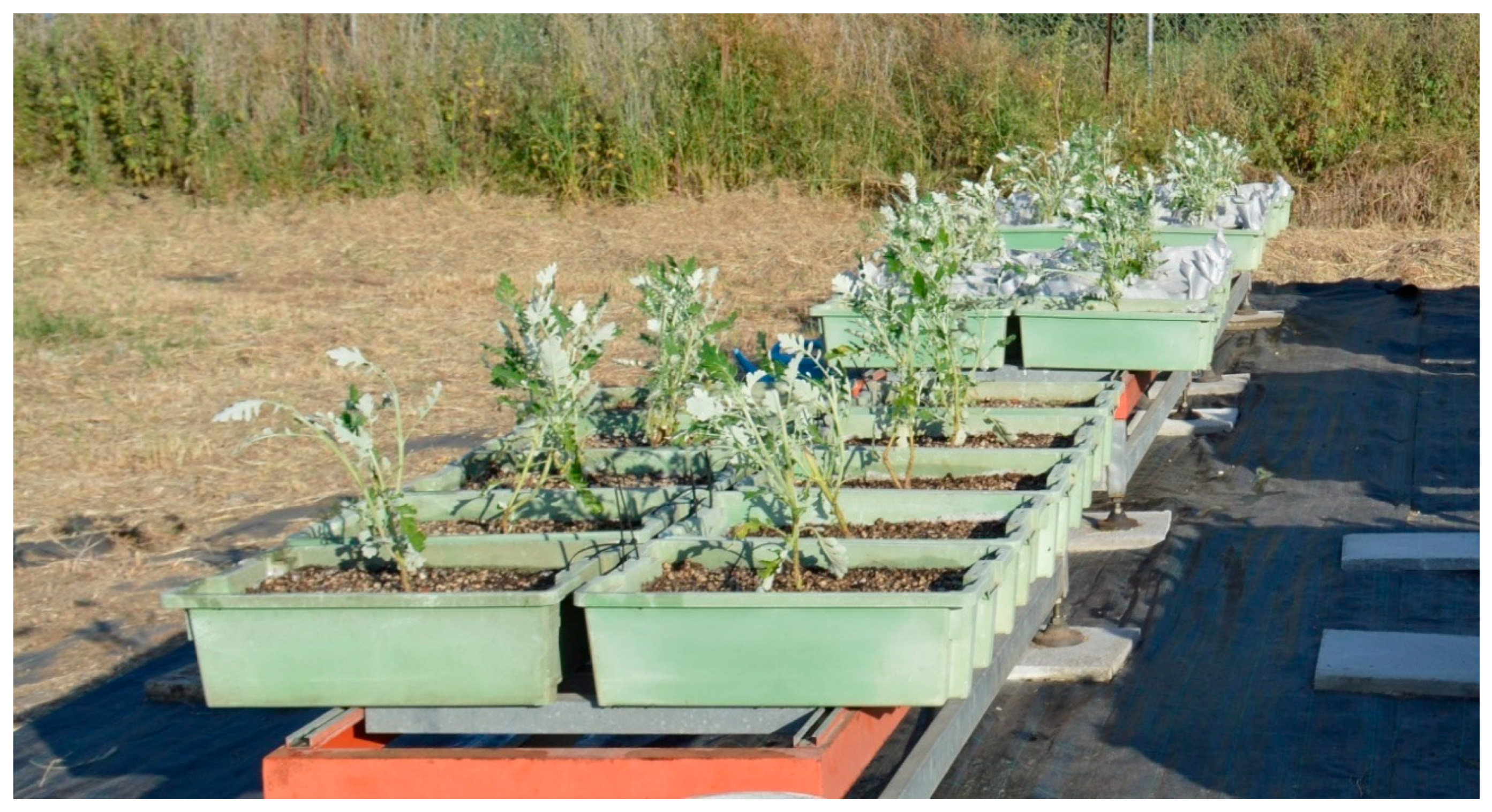
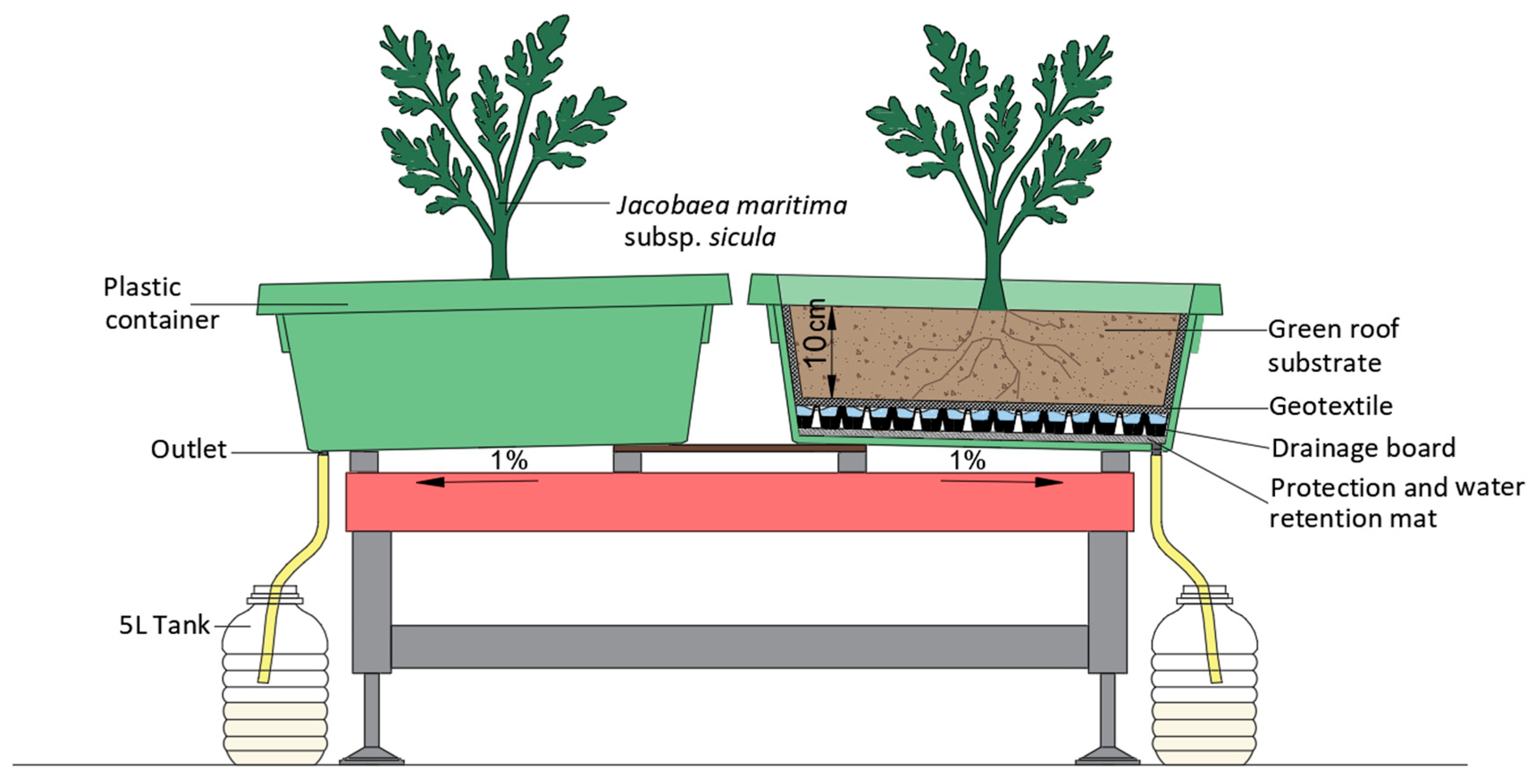
The study was conducted outdoors at the experimental field of the Laboratory of Floriculture and Landscape Architecture, Agricultural University of Athens, Greece (37°59′ N, 23°42′ E). (Figure 1). Thirty rectangular plastic containers (Holiday Land S.A., Piraeus, Greece) with internal top dimension of 49 × 34 cm and a height of 16 cm were placed on metal benches at ~1% slope to facilitate drainage. A 15 mm drainage hole was opened near the lower end of each container and connected via flexible tubing to a sealed 5 L tank positioned beneath to collect leachates (Figure 2).
Each container was filled with a layered extensive green roof system (Figure 2). A protection and water retention mat (VLS-500, DIADEM, Landco Ltd., Athens, Greece) was placed at the bottom of the containers, which was a synthetic sheet made of non-rotting synthetic fibers, having a 4 mm thickness and was able to retain 3.6 L m−2 of water. On top, a 25 mm drainage board (DiaDrain-25H, DIADEM, Landco Ltd.) was placed. The drainage layer, which was made of recycled high-impact polystyrene, was equipped with water retaining troughs, having a water holding capacity of 11.8 L m−2 and openings to enhance sub-surface aeration. The drainage layer was covered with a non-woven geotextile (VLF-150, DIADEM, Landco Ltd.) of reinforced polypropylene, having a thickness of 1.2 mm and a water permeability of 105 mm s−1, to prevent fine substrate particles from clogging the drainage layer. Finally, a 10 cm layer of FLL-compliant lightweight extensive green roof substrate (SEM, Prasini Stegi, Landco Ltd., Athens, Greece) (Table 1) was added, gently leveled, and lightly compacted.
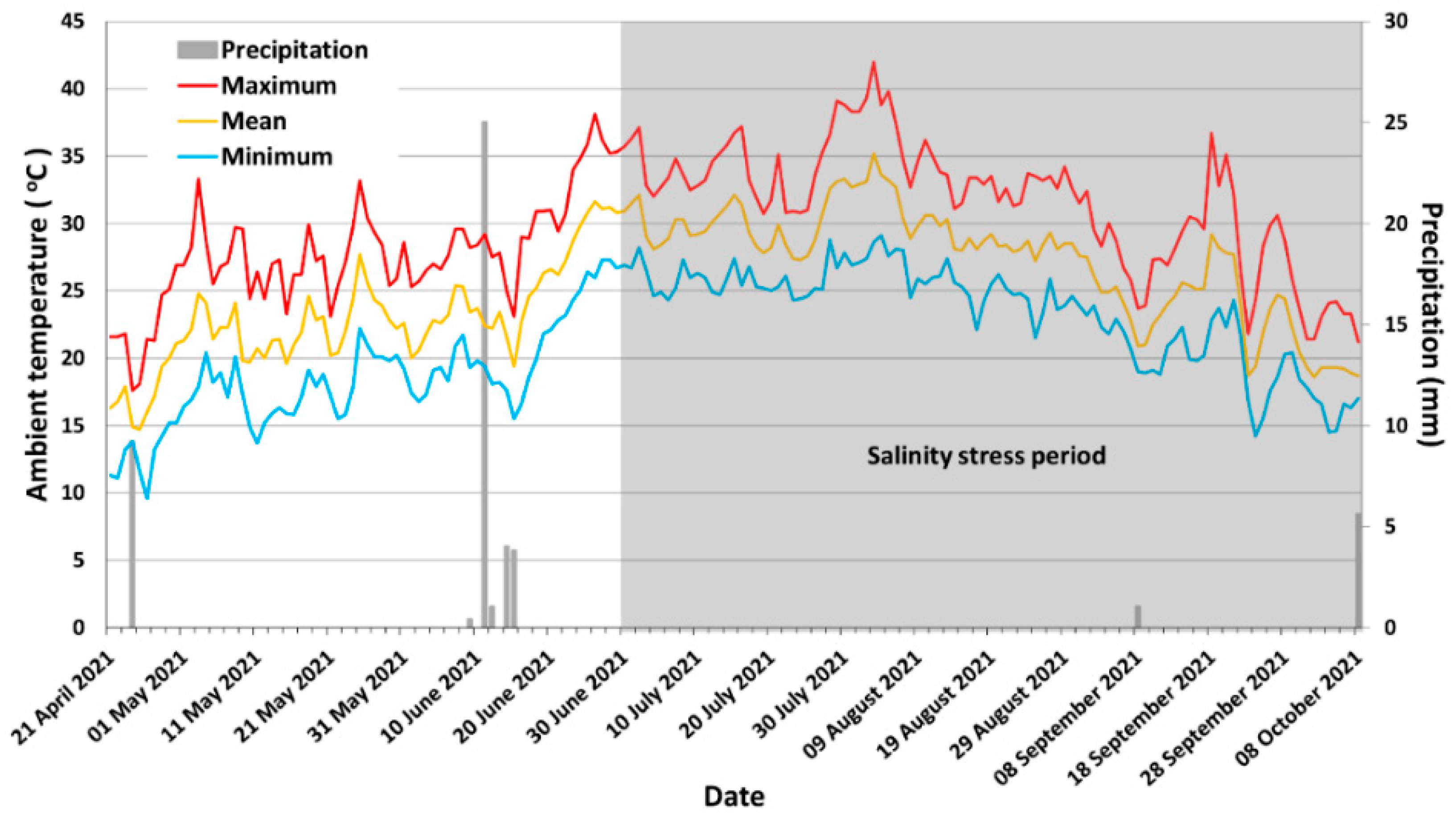
Uniform plants of J. maritima subsp. sicula (identified following Passalacqua et al. [29]) were sourced from a local nursery and transplanted individually in the center of each container on 21 April 2021. Following transplanting, plants were irrigated with tap water every other day to promote establishment. Salinity treatments began 40 days after transplanting and continued for 97 days (30 June–4 October 2021). The experiment ended with the first autumn rainfall on 8 October 2021. During the trial, weather conditions were typical of a Mediterranean summer, suitable for testing seawater irrigation, as no rainfall occurred apart from a negligible shower of 0.2 mm on 9 September 2021 (Figure 3). Daily mean air temperature ranged from 18.6 °C (23 September) to 36.5 °C (3 August), with an average of 27.6 ± 3.8 °C, based on the records of the National Observatory of Athens (Thissio station; 37°58′ N, 23°43′ E).

2.2. Irrigation Regimes

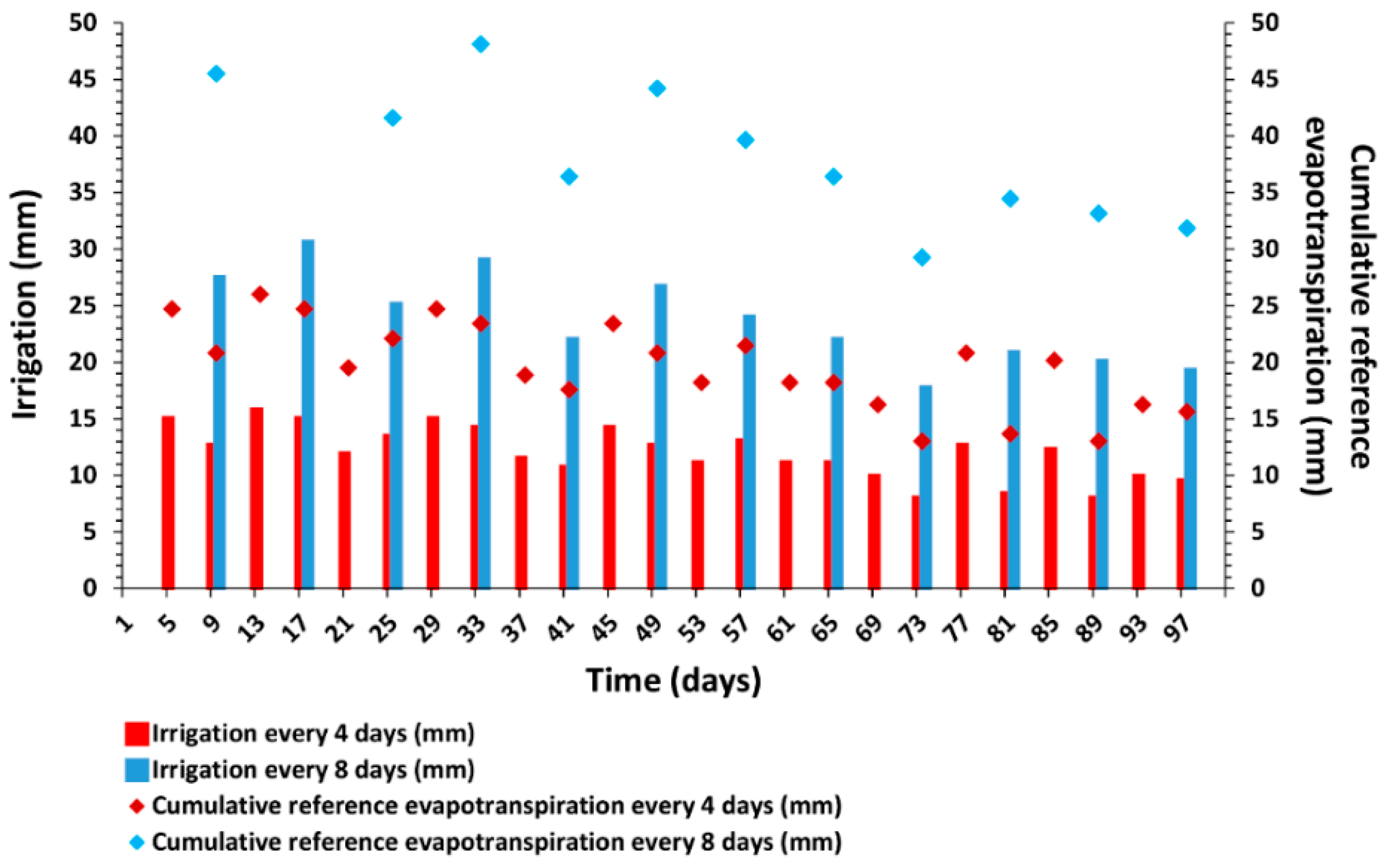
At treatment initiation (30 June 2021), all plants were irrigated with tap water to saturate the substrate and ensure uniform moisture conditions. Thereafter, six irrigation regimes were studied: tap water, seawater, or alternating seawater and tap water, each applied at 4- or 8-day intervals. At each irrigation, the applied volume equaled 60% of the cumulative reference evapotranspiration (ETo) that was calculated since the previous irrigation, with ETo determined from an adjacent Class A pan using a pan coefficient of 0.65, following FAO Irrigation and Drainage Paper 56 [30] (Figure 4). The treatment with 60% ETo was selected to simulate deficit irrigation, a common practice in extensive green roofs with drought-tolerant plants, to reduce water use while maintaining plant performance. Although lower replacement ratios could further maximize water savings, they often fail to secure any leaching. For this reason, a 60% threshold was chosen in the present study to achieve water conservation while ensuring at least minimal leaching. This is critical because leaching is the most important factor in mitigating salinity stress under saline irrigation [31,32,33].
The 4-day interval represented a frequent irrigation strategy aimed at maintaining favorable water status in the simulated green roofs. By contrast, the rationale for including the longer irrigation interval was twofold. First, the larger cumulative irrigation volume applied every 8 days was expected to produce a higher leaching fraction, thereby promoting salt leaching and helping to maintain substrate salinity at lower levels. Second, the 8-day regime provided an opportunity to assess the tolerance of J. maritima subsp. sicula to extended intervals without irrigation, which is highly relevant to green roof applications in semi-arid Mediterranean climates where irrigation frequency is often restricted.
Tap water had an electrical conductivity (EC, 25 °C) of 0.3 dS m−1. Seawater was collected once from Drapetsona, Attica, Greece (37°57′ N, 23°37′ E), stored in a shaded plastic tank, and used throughout the experiment. Its EC at 25 °C was 57.6 dS m−1, with the full chemical composition shown in Table 2. The salinity of the stored seawater was periodically checked and showed no significant variation during the study. Plants were hand-irrigated with a watering can fitted with a rose head to ensure uniform distribution across the substrate surface. To minimize variability from manual watering, the same person applied irrigation at a uniform flow rate across all replicates. No fertilization was applied during the trial.

2.3. Measurements

After each irrigation, leachates collected in the tanks were measured for EC at 25 °C with a handheld conductivity meter (HI98192, Hanna Instruments Inc., Woonsocket, RI, USA), and the tanks were subsequently rinsed thoroughly with tap water to prevent salt accumulation. The leaching fraction (LF) was calculated as the ratio of leachate volume to irrigation volume. Plant size was recorded every 8 days using a growth index (GI) calculated as (height + largest canopy diameter + perpendicular diameter)/3 [34]. This metric integrates vertical and horizontal growth into a single parameter, allowing for a reliable assessment of plant size over time.
Leaf relative water content (RWC) was determined following Turner [35]. Every 8 days, immediately before irrigation (12:00–14:00 h), fully expanded leaves (0.5–1.0 g per plot) were sampled and weighed for fresh weight (FW). Samples were immersed in deionized water for 24 h, blotted, and weighed for turgid weight (TW). They were then oven-dried at 75 °C for 48 h and weighed for dry weight (DW). The RWC (%) was calculated as 100 × (FW − DW)/(TW − DW). This parameter was used to evaluate plant water status and the degree of osmotic stress under the different irrigation regimes.
Leaf greenness (SPAD index) was also assessed every 8 days using a portable chlorophyll meter (SPAD-502, Spectrum Technologies Inc., Aurora, IL, USA). For each plant, six readings from different fully expanded leaves were averaged. This index served as an indirect measure of chlorophyll concentration and photosynthetic capacity, providing further insight into plant physiological performance under saline stress [15].

2.4. Experimental Design and Statistics

Treatments were arranged in a completely randomized design using the randomization function in Microsoft Excel (Microsoft Corp., Redmond, WA, USA), with five replicates per treatment, resulting in 30 experimental plots (i.e., six irrigation treatments × five replications = 30 experimental plots). Each plot consisted of a single plant grown in an individual container, ensuring independence among replicates.
Collected data for leachate electrical conductivity, growth index, relative water content, and SPAD index were subjected to one-way analysis of variance (ANOVA) within each sampling date using Statgraphics Centurion v15.2.11 statistical software (Statpoint Technologies Inc., Warrenton, VA, USA). Treatment means were separated using Fisher’s protected least significant difference (LSD) at a 0.05 probability level (p < 0.05).

3. Results and Discussion

3.1. Leachate Electrical Conductivity

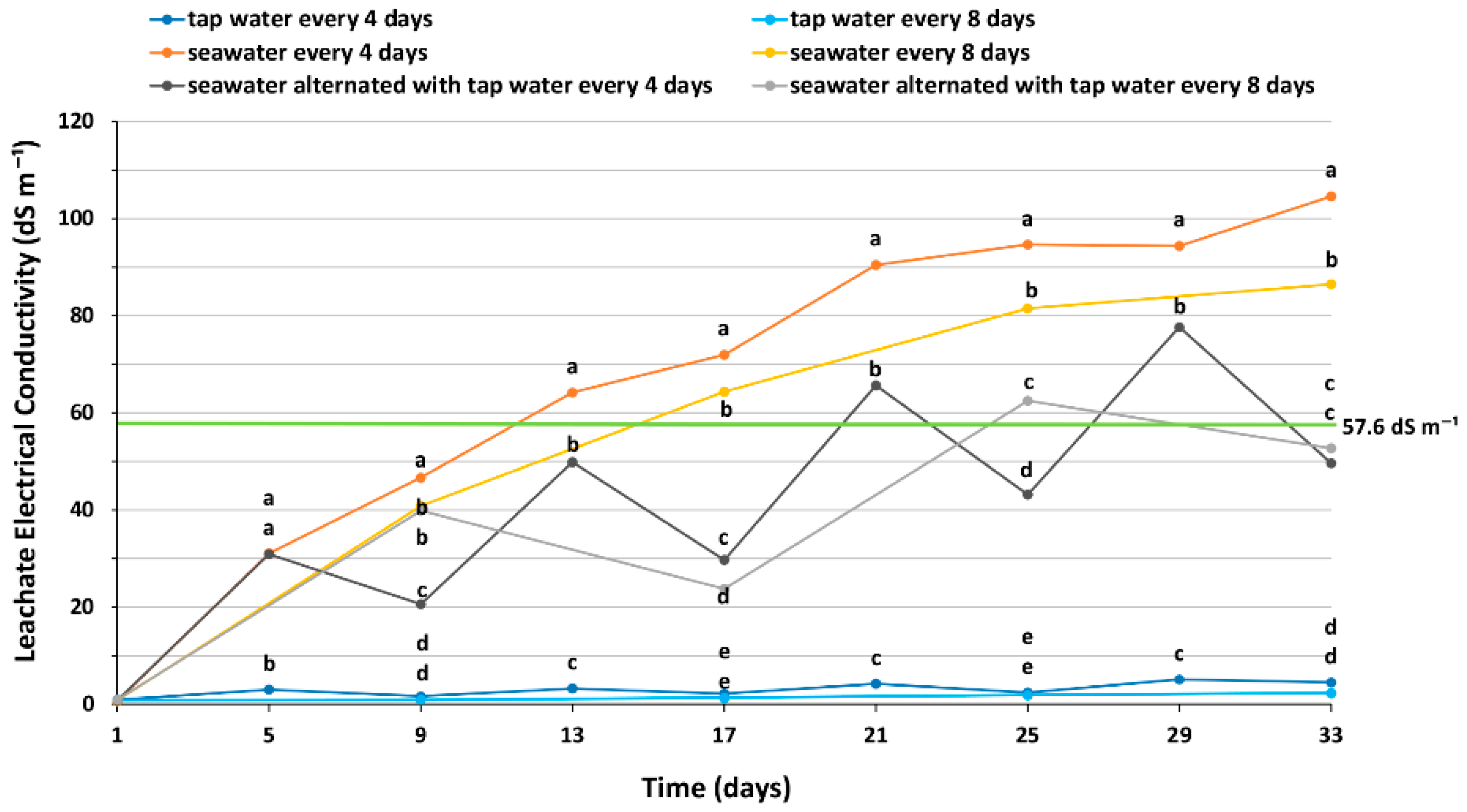
Leachate electrical conductivity (ECL) closely reflected irrigation treatments and provided a direct indicator of salt accumulation in the 10 cm substrate [36]. In treatments irrigated exclusively with seawater, ECL increased rapidly and exceeded the salinity of the applied seawater (57.6 dS m−1) within 12–16 days, whereas this threshold was reached more gradually, within 20–24 days in irrigation treatments alternating seawater with tap water (Figure 5). Continued irrigation exclusively with seawater every 4 days led to further salt accumulation, with ECL values doubling the seawater salinity by the end of the first month. This salinity increase can be attributed mainly to evaporative concentration and limited leaching as a result of deficit irrigation, rather than to restricted drainage, since the substrate used in this study exhibited high water permeability (Table 1). By contrast, seawater applied every 8 days maintained ECL at significantly lower levels, although values still reached 86 dS m−1 after one month. This effect can be attributed to the larger cumulative irrigation volumes every 8 days, which produced higher leaching. In tap water treatments, ECL remained consistently low (<3 dS m−1) throughout the study period. Alternating irrigation with seawater and tap water resulted in fluctuating ECL values near seawater salinity, as periodic tap water applications temporarily reduced the accumulated salts; however, this dilution effect was insufficient to counterbalance the high ionic load of seawater.
Similar findings were reported by Paraskevopoulou et al. [18], who evaluated the halophyte Arthrocnemum macrostachyum in extensive green roofs irrigated with partial or exclusive seawater. They observed that seawater irrigation at 4-day intervals rapidly increased ECL above the salinity of the applied seawater, while alternating seawater with tap water only delayed this increase but did not prevent salt accumulation. When seawater was applied at longer, 8-day intervals, ECL values still increased but tended to remain significantly lower compared to the 4-day regime, as a result of the greater total irrigation volume applied at each event, which enhanced leaching efficiency under the less frequent but deeper irrigations. Ntoulas and Varsamos [19] showed that when seashore paspalum was irrigated exclusively with seawater on shallow green roof systems, low irrigation volumes resulted in small leaching fractions (0.4–0.5) causing ECL to rise above the salinity of the applied seawater. In contrast, only excessive irrigation producing leaching fractions close to 0.9 was able to maintain ECL at levels equivalent to the irrigation source.
In the present study, the average LF values during the first month were as follows: 0.19 for seawater every 4 days, 0.32 for seawater every 8 days, 0.14 for seawater alternated with tap water every 4 days, and 0.30 for seawater alternated with tap water every 8 days. These values confirm that irrigation volumes equivalent to 60% of ETo, either every 4 days or 8 days, were insufficient to provide adequate leaching and prevent salt accumulation. Overall, the findings indicate that seawater use in extensive green roof systems demands substantially higher irrigation volumes or a much greater proportion of tap water in alternating regimes to secure adequate leaching. In practice, leaching requirements under seawater irrigation are extremely high if ECL is to remain comparable to the salinity of the applied seawater. Otherwise, salts accumulate rapidly in the shallow substrate, driving ECL to excessive levels. These results confirm that while green roof substrates facilitate drainage, maintaining effective leaching fractions is critical when irrigating with saline water [16,17].

3.2. Plant Growth Index

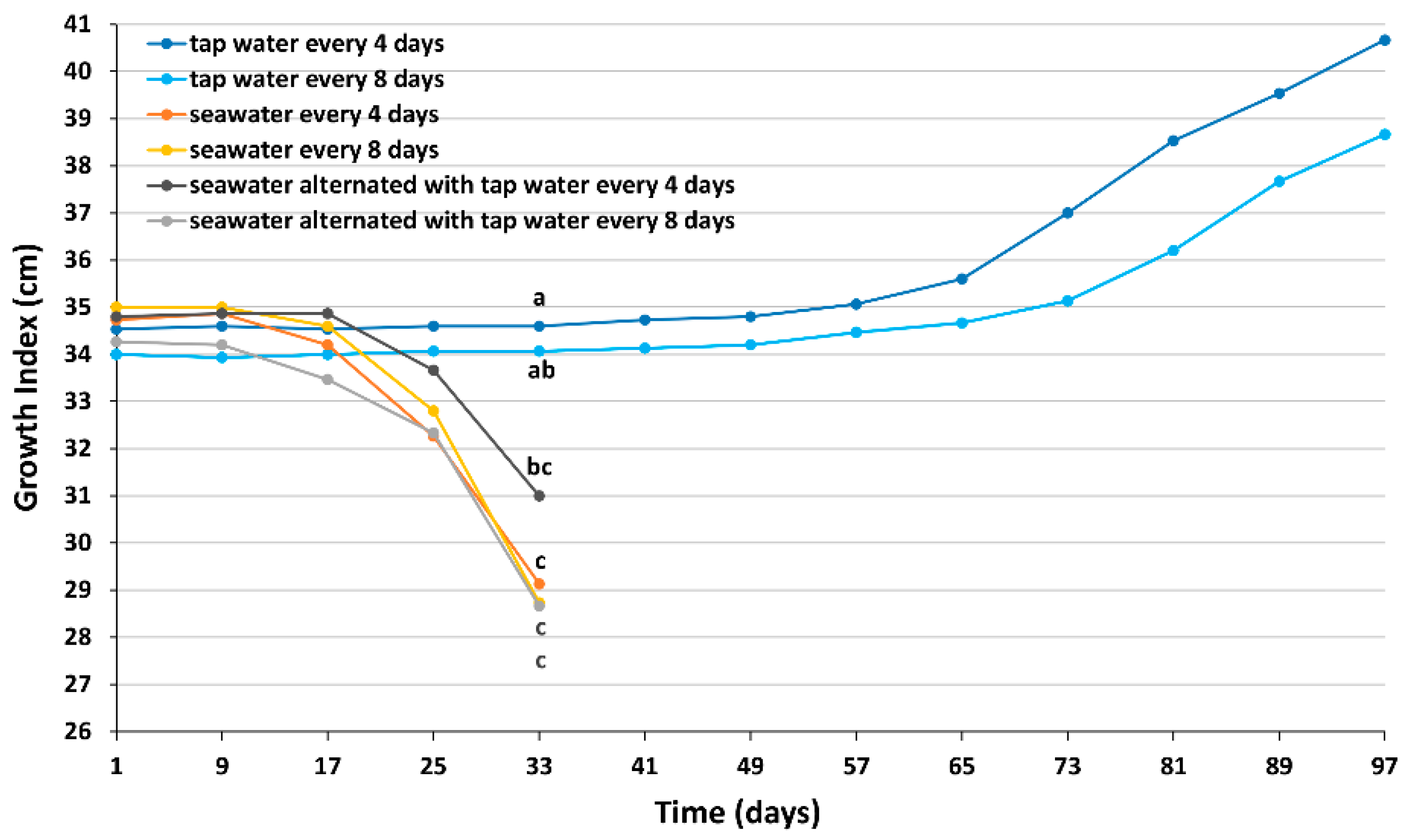
Growth of J. maritima subsp. sicula, expressed as growth index (GI), was vigorous in both tap water treatments (every 4 and 8 days), with no significant differences between irrigation frequencies throughout the 97-day study period (Figure 6). By the end of the study, plants irrigated with tap water every 4 days reached an average GI of 40.7 cm, while those irrigated every 8 days attained 38.7 cm. This demonstrates the species’ tolerance to limited water supply and low irrigation requirements, consistent with its known drought tolerance [22,24], and highlights its potential for use in extensive green roofs requiring minimal water input under semi-arid Mediterranean conditions. Similarly, Guo et al. [28] evaluated 11 Mediterranean species on unirrigated green roofs under extremely hot and dry conditions and reported that J. maritima was among the best surviving species in both 10- and 15 cm substrate depths.
In contrast, plants irrigated with seawater, either exclusively or alternating with tap water, exhibited a sharp decline in growth after 16–24 days (Figure 6). All seawater-irrigated plants died between 33 and 40 days after initiation of the study, indicating that Sicilian silver ragwort exhibits limited tolerance to full-strength seawater irrigation under green-roof conditions. Following plant death, no further physiological measurements were recorded for these treatments, as the last measurement was conducted on day 33.
Although J. maritima is often listed in horticultural sources as a salt-tolerant ornamental suitable for coastal or seaside plantings, its tolerance to saline irrigation has been only limitedly evaluated under experimental conditions. Observations from coastal Florida landscapes have noted that the species tolerates seawater spray [37]. Wang et al. [15], in a comprehensive review of ornamental plant responses to salinity, classified J. maritima among moderately salt-tolerant species and placed its irrigation salinity threshold near 13 dS·m−1 over a 30-day exposure period, values that correspond to roughly a quarter of seawater salinity. The present findings further indicate that, although J. maritima subsp. sicula is regarded as a salt-tolerant coastal ornamental, its performance declines markedly under the combined effects of undiluted seawater salinity, high summer temperatures, and the limited leaching typical of extensive green-roof systems. These results therefore represent an extreme salinity scenario. Future research should include intermediate salinity treatments to identify the transition from tolerance to intolerance and to develop practical irrigation guidelines for brackish or saline water use in green-roof applications.
Alternating seawater with tap water every 4 days delayed the decline slightly (Figure 6). By contrast, the more rapid decline observed under the 8-day alternating treatments can be attributed to the combined stress of extended irrigation intervals and cumulative salt accumulation, as indicated by the ECL data (Figure 5). This phenomenon has been documented in other species as well, where limited water availability and salinity stresses interact synergistically [38]. Mndi et al. [39] reported that when Mesembryanthemum crystallinum was subjected to both salinity and longer irrigation intervals, the combined stresses exacerbated negative physiological effects more than each stress individually.

3.3. Leaf Relative Water Content

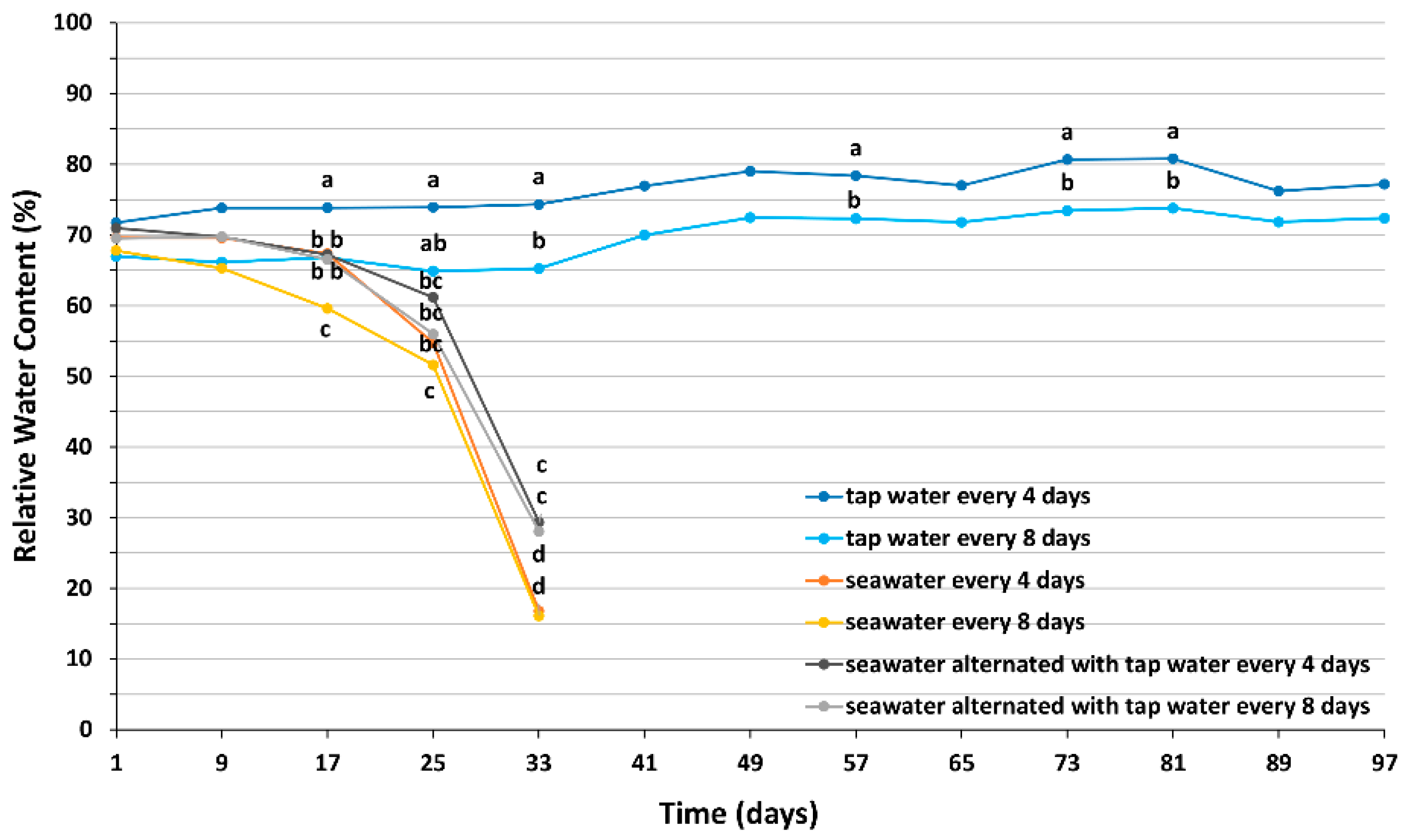
Leaf relative water content (RWC) is a widely accepted indicator of plant water status, reflecting the ability of leaf tissues to maintain hydration under conditions of water deficit or salinity stress [40,41]. Decline in RWC under saline conditions have been widely reported among ornamental species, including chrysanthemum (Chrysanthemum × grandiflorum), polygala (Polygala myrtifolia), and lavender (Lavandula angustifolia), all of which exhibit reductions in leaf water status when subjected to saline irrigation [42,43,44]. In the present study, RWC of J. maritima subsp. sicula varied significantly among irrigation treatments as salinity stress developed during the experimental period (Figure 7).
In the tap water treatments, plants maintained consistently high RWC values (>70%) throughout the 97-day trial (Figure 7). Plants irrigated every 4 days exhibited significantly higher RWC on several sampling dates compared with those irrigated every 8 days; however, both regimes ensured adequate hydration to sustain vigorous growth (Figure 7). This stability in leaf water status demonstrates the species’ capacity to maintain tissue hydration under reduced irrigation frequency.
By contrast, exclusive seawater irrigation caused a rapid and severe decline in RWC (Figure 6). Values dropped sharply from day 17 onward, falling below 55% by day 25 and reaching levels below 20% by day 33, coinciding with visible leaf wilting and plant death. Under the 8-day seawater irrigation, RWC decreased even faster than under the 4-day regime, reflecting the synergistic impact of prolonged irrigation intervals and cumulative salt accumulation.
Plants subjected to alternating seawater and tap water irrigation exhibited a slower decline in RWC, maintaining values above 55% until day 25 (Figure 7). Thereafter, RWC decreased rapidly, yet remained significantly higher than in exclusive seawater treatments by day 33, though still below 30%. The sharp decline in RWC closely mirrored the reduction in the corresponding growth index observed under saline irrigation (Figure 6), indicating that the loss of cellular turgor was a primary cause of growth cessation and mortality in J. maritima subsp. sicula.
These results highlight the species’ inability to maintain water balance under high salinity. Osmotic stress induced by elevated substrate EC, combined with ionic toxicity, likely restricted water uptake and accelerated dehydration, while fluctuations in substrate temperature during the summer period may have further intensified these effects by enhancing evapotranspiration and ion accumulation in seawater-irrigated plants [45,46]. In contrast, A. macrostachyum, as a halophytic species when evaluated under comparable conditions by Paraskevopoulou et al. [18], maintained RWC values above 75% throughout a three-month seawater irrigation period due to efficient osmotic adjustment. Although Saito et al. [47] reported that J. maritima can exclude Na+ ions from its shoots and maintain salt tolerance under 100–200 mM NaCl, these adaptive mechanisms may be insufficient to offset the much greater osmotic potential and ionic toxicity associated with seawater salinity (≈600 mM NaCl). Consequently, the plants experienced rapid dehydration and eventual mortality. This suggests that while J. maritima subsp. sicula may exhibit tolerance at low to moderate salinity levels, its defense mechanisms become overwhelmed under the extreme ionic loads imposed by seawater irrigation.

3.4. SPAD Index

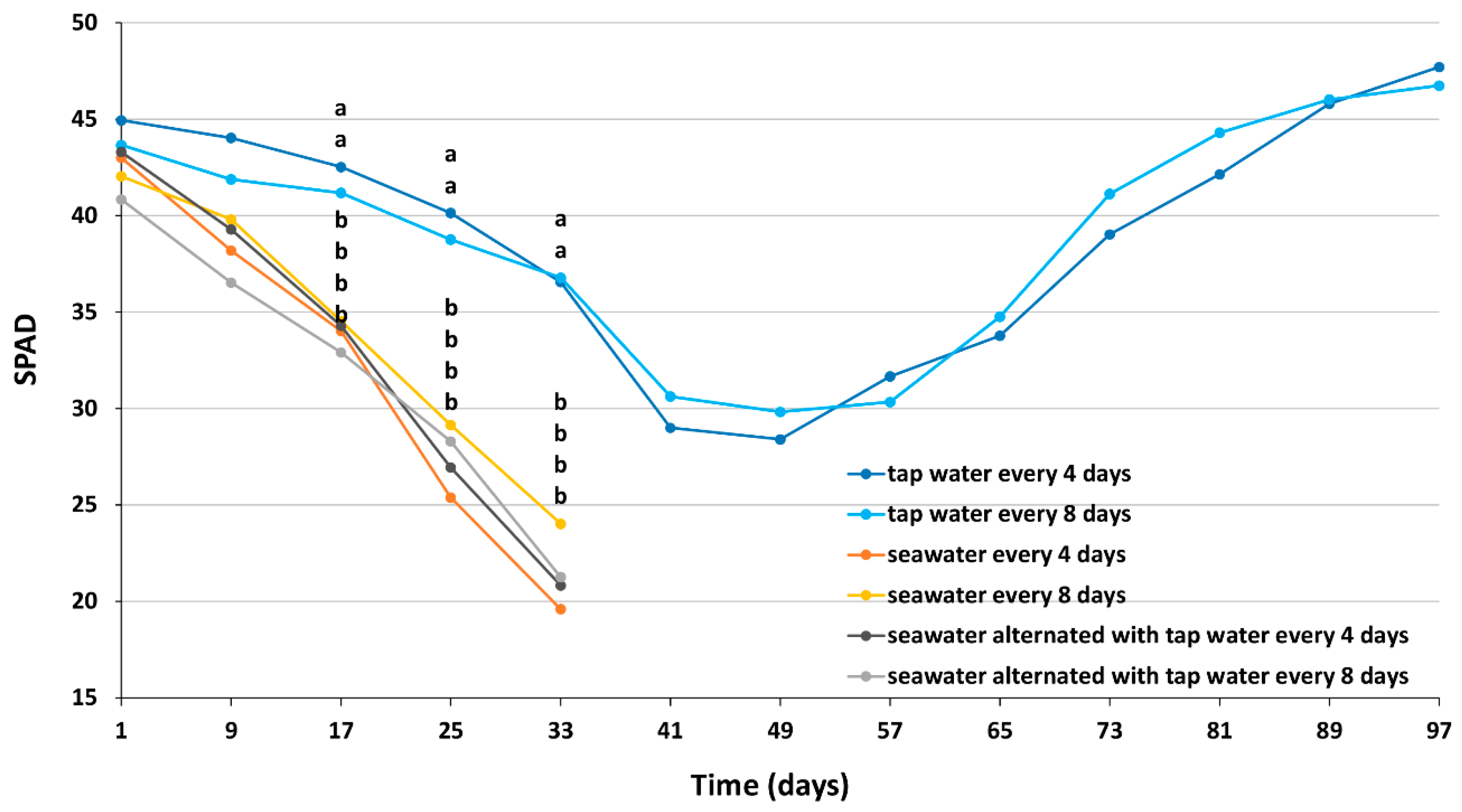
Salinity stress strongly affected the leaf greenness of J. maritima, subsp. sicula as indicated by changes in SPAD values (Figure 8). In the tap water treatments, plants maintained high chlorophyll levels throughout the 97-day experimental period, with no significant differences between the two irrigation intervals. A temporary decline observed in mid-August was likely associated with peak summer temperatures recorded earlier this month (Figure 3). As temperatures decreased, stress symptoms subsided, and chlorophyll levels recovered. Overall, the maintenance of high SPAD readings confirms the species’ ability to preserve photosynthetic efficiency under limited irrigation.
In contrast, plants subjected to seawater irrigation exhibited a sharp and irreversible decline in SPAD values immediately after treatment initiation (Figure 8). Even after the first irrigation event, SPAD readings decreased noticeably, as according to the ECL data (Figure 5) a single seawater application raised the substrate salinity to levels that likely far exceeded the salinity tolerance threshold of J. maritima subsp. sicula. This response suggests that Sicilian silver ragwort has a substantially lower threshold for irrigation water salinity than that of seawater. Continued application of seawater further increased substrate salinity, intensifying osmotic and ionic stress on the plants. Under both exclusive seawater irrigation and alternating seawater with tap water, SPAD values fell below 30 within 25 days, representing a 30–40% reduction, and dropped below 20 by day 33 (approximately 48–54% reduction), coinciding with visible symptoms of chlorosis and necrosis. These findings indicate that periodic tap water applications were insufficient to prevent chlorophyll degradation or to mitigate the cumulative effects of salinity stress. Comparable rapid declines in SPAD values have been observed in other ornamental species when irrigation water salinity exceeded their tolerance limits [15,48,49].

4. Conclusions

The present study provides the first systematic evaluation of Jacobaea maritima subsp. sicula performance under saline irrigation in extensive green roof systems. The results indicate that the subspecies can maintain vigorous growth and high esthetic quality under limited irrigation but exhibits pronounced sensitivity to seawater salinity. Both exclusive or alternating seawater irrigation rapidly increased substrate EC beyond the species’ tolerance threshold, resulting in reduced growth, sharp decline in relative water content and chlorophyll levels, and ultimately plant death within one month.
From a practical standpoint, J. maritima subsp. sicula is well suited for extensive green roofs in semi-arid Mediterranean regions, where it can maintain ornamental quality and physiological performance throughout the summer, even when irrigated every eight days at 60% of ETo replacement. This highlights its potential for low-maintenance, water-efficient green roof systems. However, irrigation with seawater or other high-salinity sources should be avoided.
Future research should focus on identifying halophytic ornamentals capable of maintaining their esthetic and physiological performance under high salinity, as well as developing irrigation strategies that combine seawater and freshwater in mixed ratios (e.g., 1:2, 1:3, or higher). Such approaches could reduce overall freshwater use, mitigate substrate salt accumulation, and help define the salinity thresholds under which ornamental species can be sustainably cultivated in coastal urban green-roof systems.

Author Contributions

Conceptualization, N.N., A.T.P. and K.B.; methodology, N.N., A.T.P. and K.B.; formal analysis, N.N., C.S., A.T.P., L.P. and K.B.; investigation, N.N., C.S., A.T.P., L.P. and K.B.; resources, N.N., A.T.P., L.P. and K.B.; data curation, N.N., A.T.P. and K.B.; writing—original draft preparation, N.N.; writing—review and editing, N.N., C.S., A.T.P., L.P. and K.B.; visualization, N.N., C.S., A.T.P., L.P. and K.B.; supervision N.N., A.T.P. and K.B.; project administration, N.N., A.T.P. and K.B. All authors have read and agreed to the published version of the manuscript.

Funding

This research received no external funding.

Data Availability Statement

The raw data supporting the conclusions of this article will be made available by the authors on request.

Acknowledgments

We would like to thank Landco Ltd., Athens, Greece, for the donation of the green roof materials and substrate.

Conflicts of Interest

Author Lamprini Podaropoulou was employed by the company Landco Ltd. The remaining authors declare that the research was conducted in the absence of any commercial or financial relationships that could be construed as a potential conflict of interest.

Abbreviations

The following abbreviations are used in this manuscript:
ECElectrical Conductivity
ECLLeachate Electrical Conductivity
GIGrowth index
RWCLeaf Relative Water Content
EToReference Evapotranspiration
FWFresh Weight
TWTurgid Weight
DWDry Weight
SPADSoil–Plant Analysis Development
ANOVAOne-way Analysis of Variance
LSDLeast Significant Difference

References

  1. Nastos, P.; Saaroni, H. Living in Mediterranean cities in the context of climate change: A review. Int. J. Climatol. 2024, 44, 3169–3190. [Google Scholar] [CrossRef]
  2. Hobbie, S.E.; Grimm, N.B. Nature-based approaches to managing climate change impacts in cities. Philos. Trans. R. Soc. B 2020, 375, 20190124. [Google Scholar] [CrossRef]
  3. Shafique, M.; Kim, R.; Rafiq, M. Green roof benefits, opportunities and challenges: A review. Renew. Sustain. Energy Rev. 2018, 90, 757–773. [Google Scholar] [CrossRef]
  4. Ntoulas, N.; Nektarios, P.A.; Charalambous, E.; Psaroulis, A. Zoysia matrella cover rate and drought tolerance in adaptive extensive green roof systems. Urban For. Urban Green. 2013, 12, 522–531. [Google Scholar] [CrossRef]
  5. Nektarios, P.A.; Kokkinou, I.; Ntoulas, N. The effects of substrate depth and irrigation regime on seeded Sedum species grown on urban extensive green roof systems under semi-arid Mediterranean climatic conditions. J. Environ. Manag. 2021, 279, 111607. [Google Scholar] [CrossRef]
  6. Varela-Stasinopoulou, D.S.; Nektarios, P.A.; Ntoulas, N.; Trigas, P.; Roukounakis, G.I. Sustainable growth of medicinal and aromatic Mediterranean plants growing as communities in shallow substrate urban green roof systems. Sustainability 2023, 15, 5940. [Google Scholar] [CrossRef]
  7. Okour, Y.; Shaweesh, H. Identifying the barriers to green infrastructure implementation in semi-arid urban areas using the DPSIR framework: A case study of Amman, Jordan. City Environ. Interact. 2024, 24, 100165. [Google Scholar] [CrossRef]
  8. Vanuytrecht, E.; Van Mechelen, C.; Van Meerbeek, K.; Willems, P.; Hermy, M.; Raes, D. Runoff and vegetation stress of green roofs under different climate change scenarios. Landsc. Urban Plan. 2014, 122, 68–77. [Google Scholar] [CrossRef]
  9. Kokkinou, I.; Ntoulas, N.; Nektarios, P.A.; Varela, D. Response of native aromatic and medicinal plant species to water stress on adaptive green roof systems. HortScience 2016, 51, 608–614. [Google Scholar] [CrossRef]
  10. Papafotiou, M.; Martini, A.N.; Tassoula, L.; Stylias, E.G.; Kalantzis, A.; Dariotis, E. Acclimatization of Mediterranean native sages (Salvia spp.) and interspecific hybrids in an urban green roof under regular and reduced irrigation. Sustainability 2022, 14, 4978. [Google Scholar] [CrossRef]
  11. Ndayambaje, P.; MacIvor, J.S.; Cadotte, M.W. Plant diversity on green roofs: A review of the ecological benefits, challenges, and best management practices. Nat.-Based Solut. 2024, 6, 100162. [Google Scholar] [CrossRef]
  12. Todeschini, C.C.; Fett-Neto, A.G. Life at the top: Extensive green roof plant species and their traits for urban use. Plants 2025, 14, 735. [Google Scholar] [CrossRef] [PubMed]
  13. Marcum, K.B. Use of saline and non-potable water in the turfgrass industry: Constraints and developments. Agric. Water Manag. 2006, 80, 132–146. [Google Scholar] [CrossRef]
  14. Garcia-Caparros, P.; Lao, M.T. The effects of salt stress on ornamental plants and integrative cultivation practices. Sci. Hortic. 2018, 240, 430–439. [Google Scholar] [CrossRef]
  15. Wang, Z.; Poudyal, S.; Kopp, K.; Zhang, Y. Response of ornamental plants to salinity: Impact on species-specific growth, visual quality, photosynthetic parameters, and ion uptake. Front. Plant Sci. 2025, 16, 1611767. [Google Scholar] [CrossRef]
  16. Carrow, R.N.; Duncan, R.R.; Huck, M.T. Turfgrass and Landscape Irrigation Water Quality: Assessment and Management, 1st ed.; CRC Press: Boca Raton, FL, USA, 2009. [Google Scholar]
  17. Ntoulas, N.; Papaioannou, G.; Bertsouklis, K.; Nektarios, P.A. Tolerance of tall fescue (Festuca arundinacea Schreb.) growing in extensive green roof systems to saline water irrigation with varying leaching fractions. Land 2024, 13, 167. [Google Scholar] [CrossRef]
  18. Paraskevopoulou, A.T.; Ntoulas, N.; Bourtsoukli, D.; Bertsouklis, K. Effect of seawater irrigation on Arthrocnemum macrostachyum growing in extensive green roof systems under semi-arid Mediterranean climatic conditions. Agronomy 2023, 13, 1198. [Google Scholar] [CrossRef]
  19. Ntoulas, N.; Varsamos, I. Performance of two seashore paspalum (Paspalum vaginatum Sw.) varieties growing in shallow green roof substrate depths and irrigated with seawater. Agronomy 2021, 11, 250. [Google Scholar] [CrossRef]
  20. Ntoulas, N.; Kalampogias, C.; Nektarios, P.A. Alternate irrigation with seawater and potable water affects green coverage of two Paspalum vaginatum varieties grown on shallow green roof systems. Rasen-Turf-Gazon—Eur. J. Turfgrass Sci. 2020, 51, 32–33. [Google Scholar]
  21. Cantor, M.; Grosu, E.F.; Buta, E.; Zaharia, A.; Jucan, D.; Sabo, R.A. Implementation of landscape design solutions with the color and texture of plants. J. Hortic. For. Biotechnol. 2018, 22, 22–28. [Google Scholar]
  22. Pratesi, M.; Cinelli, F.; Santi, G.; Scartazza, A. Mediterranean green buildings: Vegetation cover and runoff water quality assessment in a green roof system. Acta Hortic. 2022, 1345, 235–242. [Google Scholar] [CrossRef]
  23. Patti, M.; Musarella, C.M.; Spampinato, G. A habitat-template approach to green wall design in Mediterranean cities. Buildings 2025, 15, 2557. [Google Scholar] [CrossRef]
  24. Cojocariu, M.; Chelariu, E.L.; Chiruță, C. Growth analysis of Cineraria maritima plants in green façade systems: Northeastern Romania climate study. J. Appl. Life Sci. Environ. 2023, 56, 25–39. [Google Scholar] [CrossRef]
  25. Maggio, A.; Venditti, A.; Senatore, F.; Bruno, M.; Formisano, C. Chemical composition of the essential oil of Jacobaea maritima (L.) Pelser & Meijden and J. maritima subsp. bicolor (Willd.) B. Nord. & Greuter (Asteraceae). Nat. Prod. Res. 2014, 29, 857–863. [Google Scholar] [CrossRef]
  26. Esfandiari, M.; Hakimzadeh Ardakani, M.A.; Sodaiezadeh, H. Investigation of heavy metal contamination in the ornamental plants of green spaces in the city of Yazd. J. Ornam. Plants 2020, 10, 213–222. [Google Scholar]
  27. Hangan, A.M.R.; Cojocaru, A.; Teliban, G.C.; Amișculesei, P.; Stoleru, V. Preliminary study regarding the use of medicinal and decorative plants in the concept of peri-urban gardens with role on environmental protection. Sci. Pap. Ser. B Hortic. 2020, 64, 389–396. [Google Scholar]
  28. Guo, B.; Arndt, S.; Miller, R.; Lu, N.; Farrell, C. Are succulence or trait combinations related to plant survival on hot and dry green roofs? Urban For. Urban Green. 2021, 64, 127248. [Google Scholar] [CrossRef]
  29. Passalacqua, N.G.; Peruzzi, L.; Pellegrino, G. A biosystematic study of the Jacobaea maritima group (Asteraceae, Senecioneae) in the central Mediterranean area. Taxon 2008, 57, 893–906. [Google Scholar] [CrossRef]
  30. Allen, R.G.; Pereira, L.S.; Raes, D.; Smith, M. Crop Evapotranspiration: Guidelines for Computing Crop Water Requirements; FAO Irrigation and Drainage Paper 56; FAO: Rome, Italy, 1998. [Google Scholar]
  31. Carrow, R.N.; Huck, M.T.; Duncan, R.R. Leaching for salinity management on turfgrass sites. USGA Green Sect. Rec. 2000, 38, 15–24. [Google Scholar]
  32. Corwin, D.L.; Rhoades, J.D.; Šimůnek, J. Leaching requirement for soil salinity control: Steady-state versus transient models. Agric. Water Manag. 2007, 90, 165–180. [Google Scholar] [CrossRef]
  33. Manzoor, M.Z.; Sarwar, G.; Aftab, M.; Tahir, M.A.; Zafar, A. Role of leaching fraction to mitigate adverse effects of saline water on soil properties. J. Agric. Res. 2019, 57, 275–280. [Google Scholar]
  34. Nektarios, P.A.; Amountzias, I.; Kokkinou, I.; Ntoulas, N. Green roof substrate type and depth affect the growth of the native species Dianthus fruticosus under reduced irrigation regimens. HortScience 2011, 46, 1208–1216. [Google Scholar] [CrossRef]
  35. Turner, N.C. Techniques and experimental approaches for the measurement of plant water status. Plant Soil. 1981, 58, 339–366. [Google Scholar] [CrossRef]
  36. Kargas, G.; Ntoulas, N.; Tsapatsouli, A. Use of a dielectric sensor for salinity determination on an extensive green roof substrate. Sensors 2023, 23, 5802. [Google Scholar] [CrossRef] [PubMed]
  37. Miyamoto, S. Salt Tolerance of Landscape Plants Common to the Southwest; Texas Water Resources Institute: El Paso, TX, USA, 2008; Available online: https://hdl.handle.net/1969.1/86110 (accessed on 6 October 2025).
  38. Cao, H.; Ding, R.; Kang, S.; Du, T.; Tong, L.; Zhang, Y.; Chen, J.; Shukla, M.K. Drought, salt, and combined stresses in plants: Effects, tolerance mechanisms, and strategies. Adv. Agron. 2023, 178, 107–163. [Google Scholar] [CrossRef]
  39. Mndi, O.; Sogoni, A.; Jimoh, M.O.; Wilmot, C.M.; Rautenbach, F.; Laubscher, C.P. Interactive effects of salinity stress and irrigation intervals on plant growth, nutritional value, and phytochemical content in Mesembryanthemum crystallinum L. Agriculture 2023, 13, 1026. [Google Scholar] [CrossRef]
  40. Jones, H.G. Monitoring plant and soil water status: Established and novel methods revisited and their relevance to studies of drought tolerance. J. Exp. Bot. 2007, 58, 119–130. [Google Scholar] [CrossRef]
  41. Meguekam, T.L.; Moualeu, D.P.; Taffouo, V.D.; Stützel, H. Changes in plant growth, leaf relative water content and physiological traits in response to salt stress in peanut (Arachis hypogaea L.) varieties. Not. Bot. Horti Agrobot. Cluj-Napoca 2021, 49, 12049. [Google Scholar] [CrossRef]
  42. Bandurska, H.; Breś, W.; Tomczyk, A.; Zielezińska, M.; Borowiak, K. How chrysanthemum (Chrysanthemum × grandiflorum) ‘Palisade White’ deals with long-term salt stress. AoB Plants 2022, 14, plac015. [Google Scholar] [CrossRef]
  43. Szekely-Varga, Z.; González-Orenga, S.; Cantor, M.; Jucan, D.; Boscaiu, M.; Vicente, O. Effects of drought and salinity on two commercial varieties of Lavandula angustifolia Mill. Plants 2020, 9, 637. [Google Scholar] [CrossRef]
  44. Farieri, E.; Toscano, S.; Ferrante, A.; Romano, D. Identification of ornamental shrubs tolerant to saline aerosol for coastal urban and peri-urban greening. Urban For. Urban Green. 2016, 18, 9–18. [Google Scholar] [CrossRef]
  45. Atta, K.; Mondal, S.; Gorai, S.; Singh, A.P.; Kumari, A.; Ghosh, T.; Roy, A.; Hembram, S.; Gaikwad, D.J.; Mondal, S.; et al. Impacts of salinity stress on crop plants: Improving salt tolerance through genetic and molecular dissection. Front. Plant Sci. 2023, 14, 1241736. [Google Scholar] [CrossRef]
  46. Chen, H.; Jiang, J.G. Osmotic adjustment and plant adaptation to environmental changes related to drought and salinity. Environ. Rev. 2010, 18, 309–319. [Google Scholar] [CrossRef]
  47. Saito, K.; Kuronuma, T.; Kanaya, T.; Watanabe, H. Assessment of ornamental plants using multiple salt tolerance indicators and classification of their physiological salt tolerance mechanisms. J. Jpn. Soc. Reveget. Technol. 2015, 41, 21–26. [Google Scholar] [CrossRef]
  48. Liu, Q.; Sun, Y.; Niu, G.; Altland, J.; Chen, L.; Jiang, L. Morphological and physiological responses of ten ornamental taxa to saline water irrigation. HortScience 2017, 52, 1816–1822. [Google Scholar] [CrossRef]
  49. Niu, G.; Rodriguez, D.S.; Aguiniga, L. Growth and landscape performance of ten herbaceous species in response to saline water irrigation. J. Environ. Hortic. 2007, 25, 204–210. [Google Scholar] [CrossRef]
Figure 1. Experimental setup of the simulated extensive green roof modules with Jacobaea maritima subsp. sicula plants at the experimental field of the Laboratory of Floriculture and Landscape Architecture, Agricultural University of Athens.
Land 14 02214 g001
Figure 2. Construction detail of the simulated extensive green roof modules used in the study.
Land 14 02214 g002
Figure 3. Daily maximum, mean, and minimum ambient air temperatures (°C) and precipitation (mm) recorded at the Thissio station of the National Observatory of Athens during the experimental period. (21 April–8 October 2025). The shaded area marks the salinity stress treatment period (30 June–8 October 2021).
Land 14 02214 g003
Figure 4. Irrigation volumes (mm) applied every 4 and 8 days (bars) and corresponding cumulative reference evapotranspiration (mm) (symbols) during the salinity stress period (30 June–8 October 2021).
Land 14 02214 g004
Figure 5. Leachate electrical conductivity (dS m−1) as affected by irrigation treatments during the study period (30 June, day 1–4 October, day 97). The electrical conductivity of the applied seawater (57.6 dS m−1) is shown. Values are means of five replicates. Different letters on a given day indicate significant differences between treatments at p < 0.05 using Fisher’s least significant difference (LSD).
Land 14 02214 g005
Figure 6. Growth index (cm) of Jacobaea maritima subsp. sicula as affected by irrigation treatments during the study period (30 June, day 1–4 October, day 97). Values are means of five replicates. Different letters on a given day indicate significant differences between treatments at p < 0.05 using Fisher’s least significant difference (LSD).
Land 14 02214 g006
Figure 7. Leaf relative water content (%) of Jacobaea maritima subsp. sicula as affected by irrigation treatments during the study period (30 June, day 1–4 October, day 97). Values are means of five replicates. Different letters on a given day indicate significant differences between treatments at p < 0.05 using Fisher’s least significant difference (LSD).
Land 14 02214 g007
Figure 8. Leaf greenness (SPAD index) of Jacobaea maritima subsp. sicula as affected by irrigation treatments during the study period (30 June, day 1–4 October, day 97). Values are means of five replicates. Different letters on a given day indicate significant differences between treatments at p < 0.05 using Fisher’s least significant difference (LSD).
Land 14 02214 g008
Table 1. Physical and chemical properties of the substrate used in the study (SEM, Prasini Stegi, Landco Ltd., Athens, Greece).
ParameterValueMechanical Analysis
Particle SizePercent Retained
mm% (w/w)
pH (CaCl2)7.3>12.5 mm0.3
Electrical conductivity (water, 1:10, m:v), dS m−10.1912.5–9.5 mm5.9
Dry bulk density, kg L−10.989.5–6.3 mm8.4
Bulk density at maximum water-holding capacity, kg L−11.366.3–3.2 mm18.7
Total pore volume, %56.73.2–2.0 mm24.7
Maximum water-holding capacity, % (v/v)40.72.0–1.0 mm19.5
Air-filled porosity, % (v/v)16.01.0–0.25 mm12.1
Water permeability, cm·s−1 0.0070.25–0.05 mm4.3
Organic matter content, % (w/w)7.50.05–0.002 mm4.7
Phosphorus, P2O5 (CAL), mg L−1167.4<0.002 mm1.2
Potassium, K2O (CAL), mg L−1663.8
Magnesium, Mg (CaCl2), mg L−1 165.7
Nitrate + Ammonium (CaCl2), mg L−11.5
Table 2. Chemical analysis of seawater used for extensive green roof modules irrigation during salinity stress period (30 June–8 October 2021).
ParameterValue
pH8.2
Electrical conductivity (25 °C), dS m−157.6
Total hardness, mg CaCO3 L−16615
Carbonate (CO32−), mg L−132.4
Bicarbonate (HCO3), mg L−1136
Sulfate (SO42−), mg L−12350
Chloride (Cl), mg L−122,100
Calcium (Ca2+), mg L−1415
Magnesium (Mg2+), mg L−11284
Potassium (Κ+), mg L−1399
Sodium (Na+), mg L−110,900
Iron (Fe), μg L−1304
Disclaimer/Publisher’s Note: The statements, opinions and data contained in all publications are solely those of the individual author(s) and contributor(s) and not of MDPI and/or the editor(s). MDPI and/or the editor(s) disclaim responsibility for any injury to people or property resulting from any ideas, methods, instructions or products referred to in the content.