Article

Growing Community: Factors of Inclusion for Refugee and Immigrant Urban Gardeners

1
Department of Community Sustainability, Michigan State University, East Lansing, MI 48824, USA
2
Department of Anthropology, Michigan State University, East Lansing, MI 48824, USA
3
National Young Farmers Coalition, Washington, DC 20002, USA
*
Author to whom correspondence should be addressed.
Land 2023, 12(1), 68; https://doi.org/10.3390/land12010068
Submission received: 14 October 2022 / Revised: 16 December 2022 / Accepted: 18 December 2022 / Published: 26 December 2022
(This article belongs to the Special Issue Why Urban Agriculture Matters)

Abstract

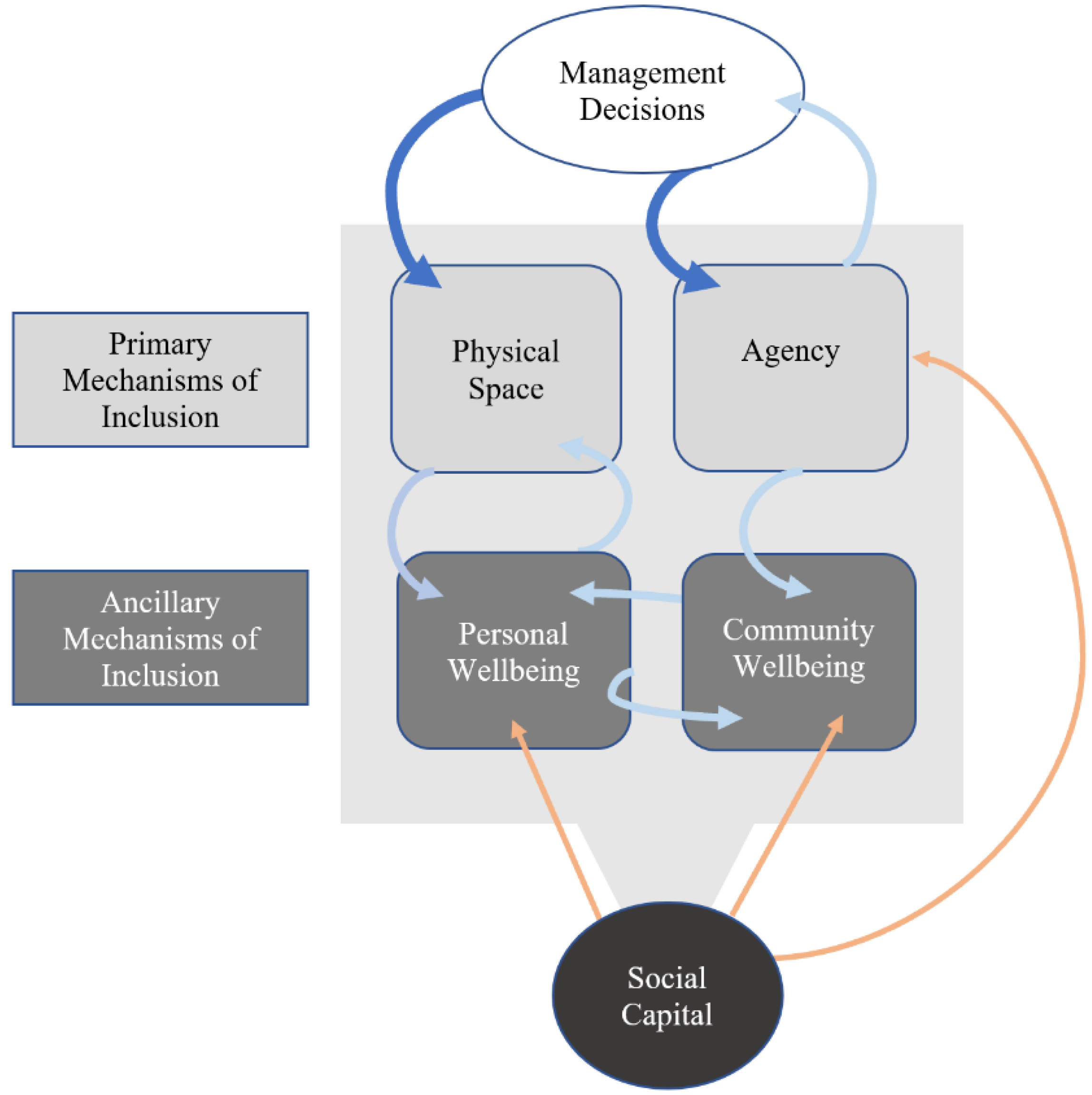
Urban agriculture is an important neighborhood revitalization strategy in the U.S. Rust Belt, where deindustrialization has left blighted and vacant land in the urban core. Immigrants and refugees represent a growing and important stakeholder group in urban agriculture, including in community gardens across the Rust Belt Midwest. Community gardens provide a host of social and economic benefits to urban landscapes, including increased access to culturally appropriate food and medicinal plants for refugee and immigrant growers. Our work in Lansing, Michigan was part of a collaboration with the Greater Lansing Food Bank’s Garden Project (GLFGP) to describe the refugee and immigrant community gardening experience in three urban gardens with high refugee and immigrant enrollment. Our research describes the ways garden management facilitates inclusion for refugee and immigrant gardeners and how particular factors of inclusion in turn contribute to social capital, an important outcome that plays a critical role in refugee and immigrant subjective wellbeing.
Keywords: social capital; community gardens; urban agriculture; Rust Belt Midwest; wellbeing; refugee and immigrant gardeners; garden management; agency; placemaking social capital; community gardens; urban agriculture; Rust Belt Midwest; wellbeing; refugee and immigrant gardeners; garden management; agency; placemaking