Article

Effects of Topographic Factors on Cultivated-Land Ridge Orientation in the Black Soil Region of Songnen Plain


School of Public Administration and Law, Northeast Agricultural University, Harbin 150030, China
*
Author to whom correspondence should be addressed.
Land 2022, 11(9), 1489; https://doi.org/10.3390/land11091489
Submission received: 9 August 2022 / Revised: 27 August 2022 / Accepted: 1 September 2022 / Published: 5 September 2022
(This article belongs to the Special Issue New Insights in Mollisol Quality and Management)

Abstract

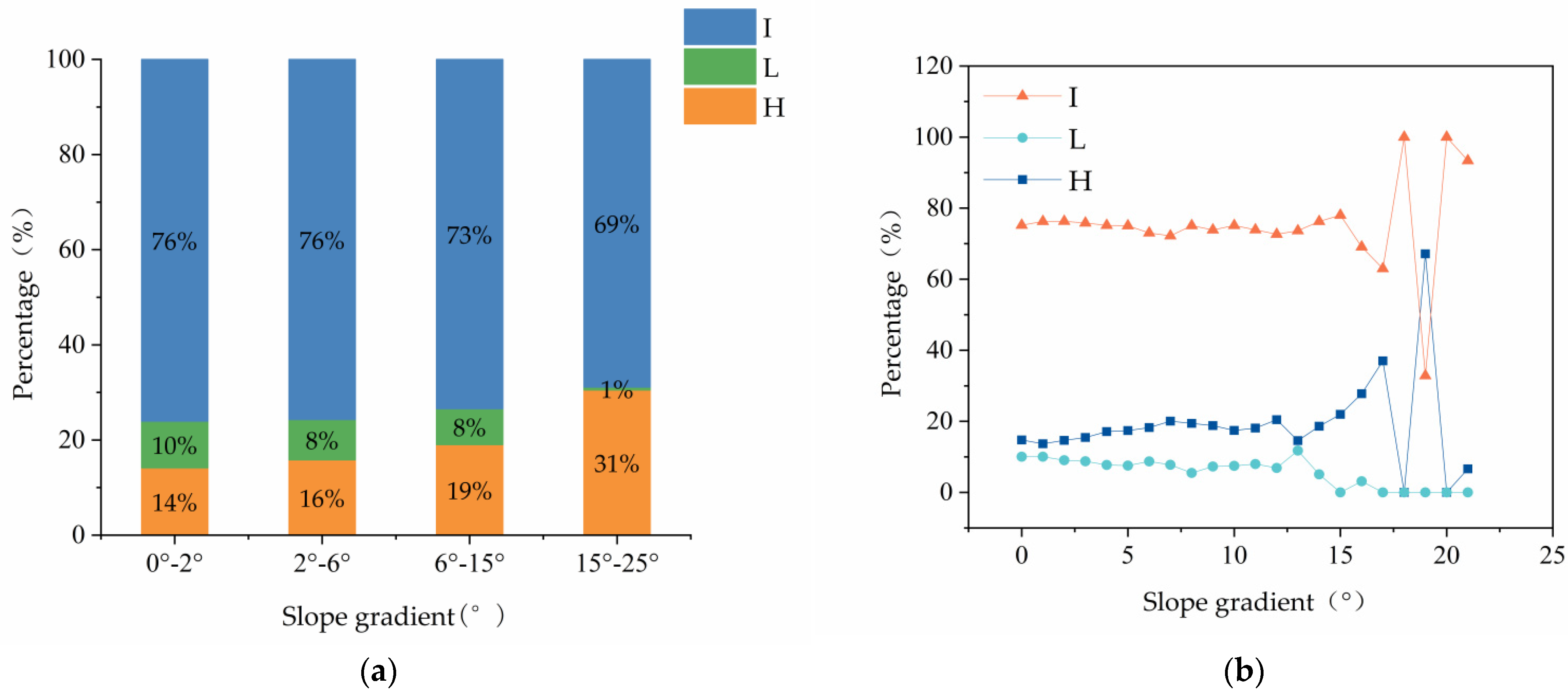
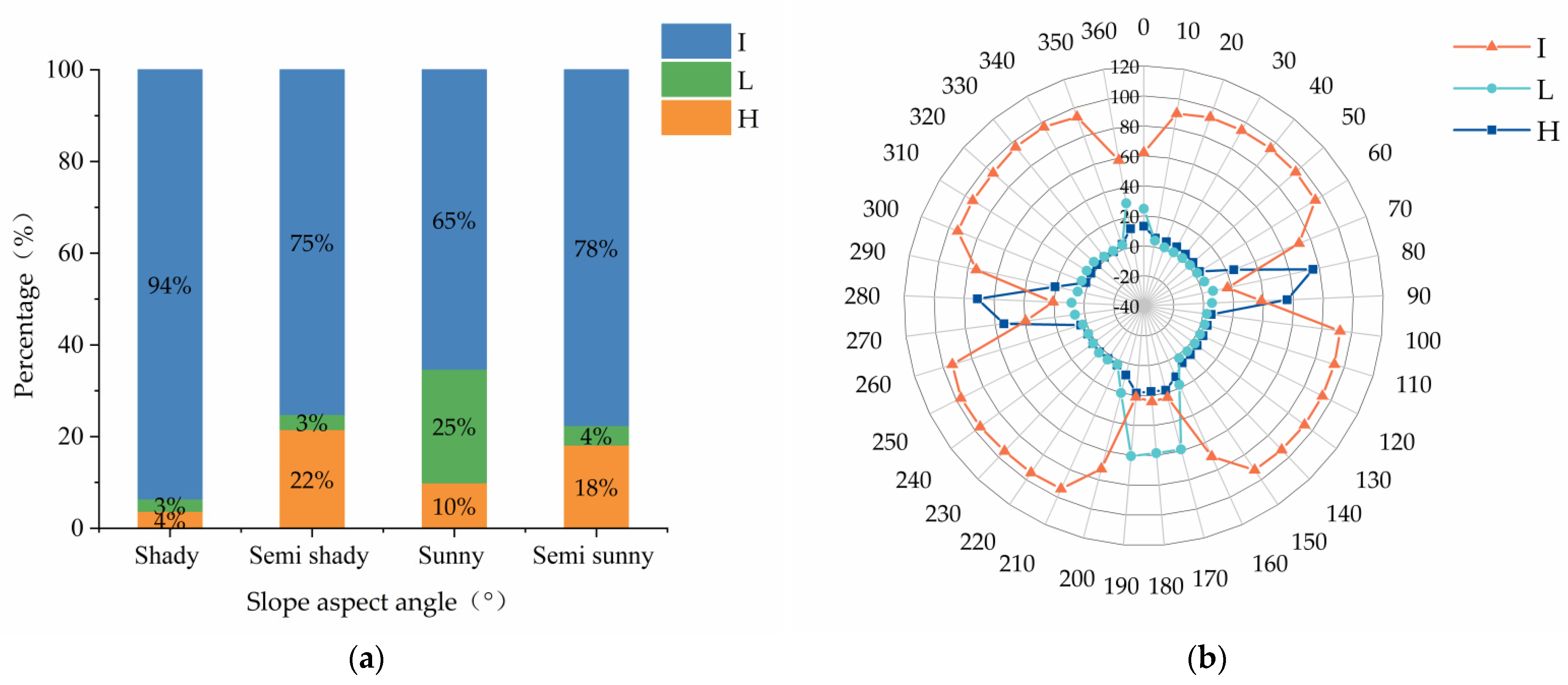
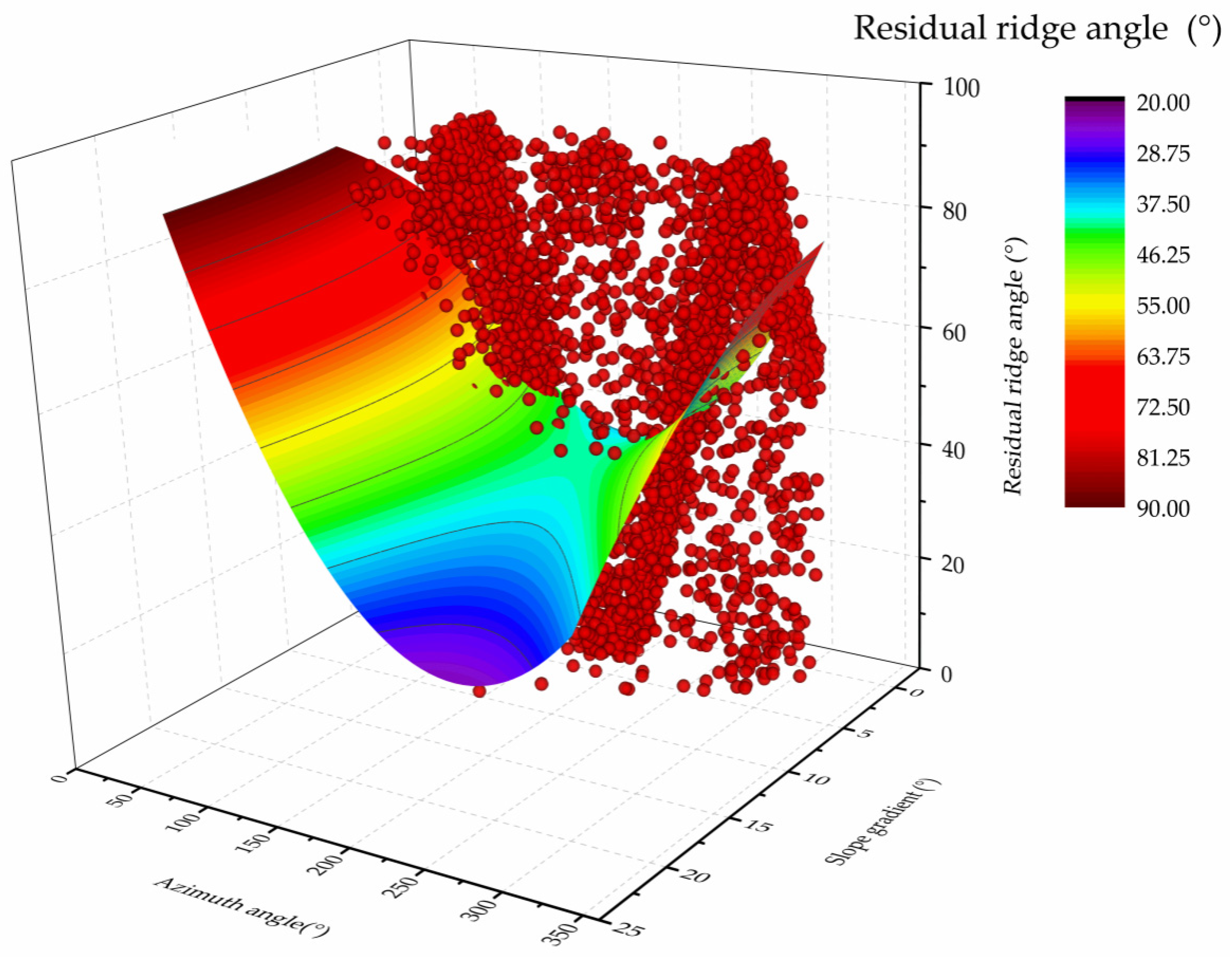
Topographic factors are essential to the spatial distribution of ridge orientation, yet the literature shows limited exploration of the mechanisms underlying the effects of terrain on cultivated-land ridge orientation in a black soil region. To better understand this subject, interpretation, statistical analyses and field verification were carried out in Songnen Plain, a typical Mollisol area. The results revealed that inclined-ridge cultivation was the most common farming method in the study area. When the slope gradient of cultivated land was greater than 13°, the influence of slope on ridge orientation was obvious, and the residual ridge angle increased with the increase in slope. There was a strongly significant negative correlation between the residual ridge angle and the azimuth angle, and the proportion curves of all ridge orientations with respect to different slope aspects were axisymmetric with respect to azimuth angles of 0°–180°. The relationship among indices such as slope gradient, slope aspect and ridge orientation could be modeled using a Poly2D function. This study indicates that topographic factors are the dominant factor in ridge-orientation selection, and provides a scientific basis for block-scale cultivated-land protection and utilization in black soil region; however, the scientific configuration of ridge orientation requires further research.
Keywords: ridge orientation; slope aspect; slope gradient; spatial analysis ridge orientation; slope aspect; slope gradient; spatial analysis