Article

Analysis on Spatial Characteristics of Supply–Demand Relationship of Amenities in Expanding Central Urban Areas—A Case Study of Huai’an, China
1
School of Architecture and Urban Planning, Nanjing University, Nanjing 210093, China
2
School of Urban and Environmental Sciences, Huaiyin Normal University, Huai’an 223300, China
3
School of Urban and Environmental Sciences, Central China Normal University, Wuhan 430079, China
4
School of Civil Engineering, Jiaying University, Meizhou 514015, China
*
Author to whom correspondence should be addressed.
Land 2022, 11(8), 1137; https://doi.org/10.3390/land11081137
Submission received: 16 June 2022 / Revised: 20 July 2022 / Accepted: 22 July 2022 / Published: 24 July 2022
(This article belongs to the Section Land Planning and Landscape Architecture)

Abstract

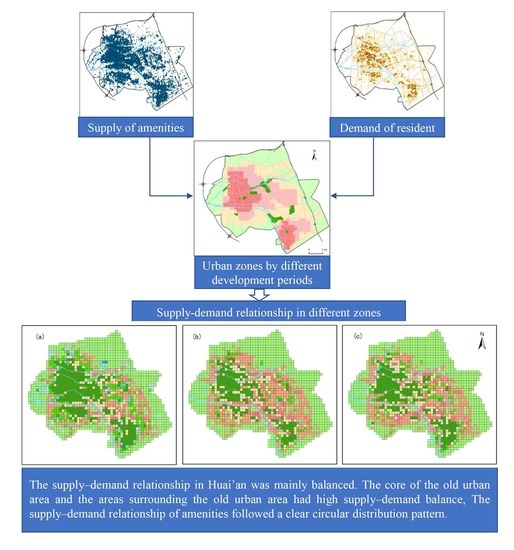
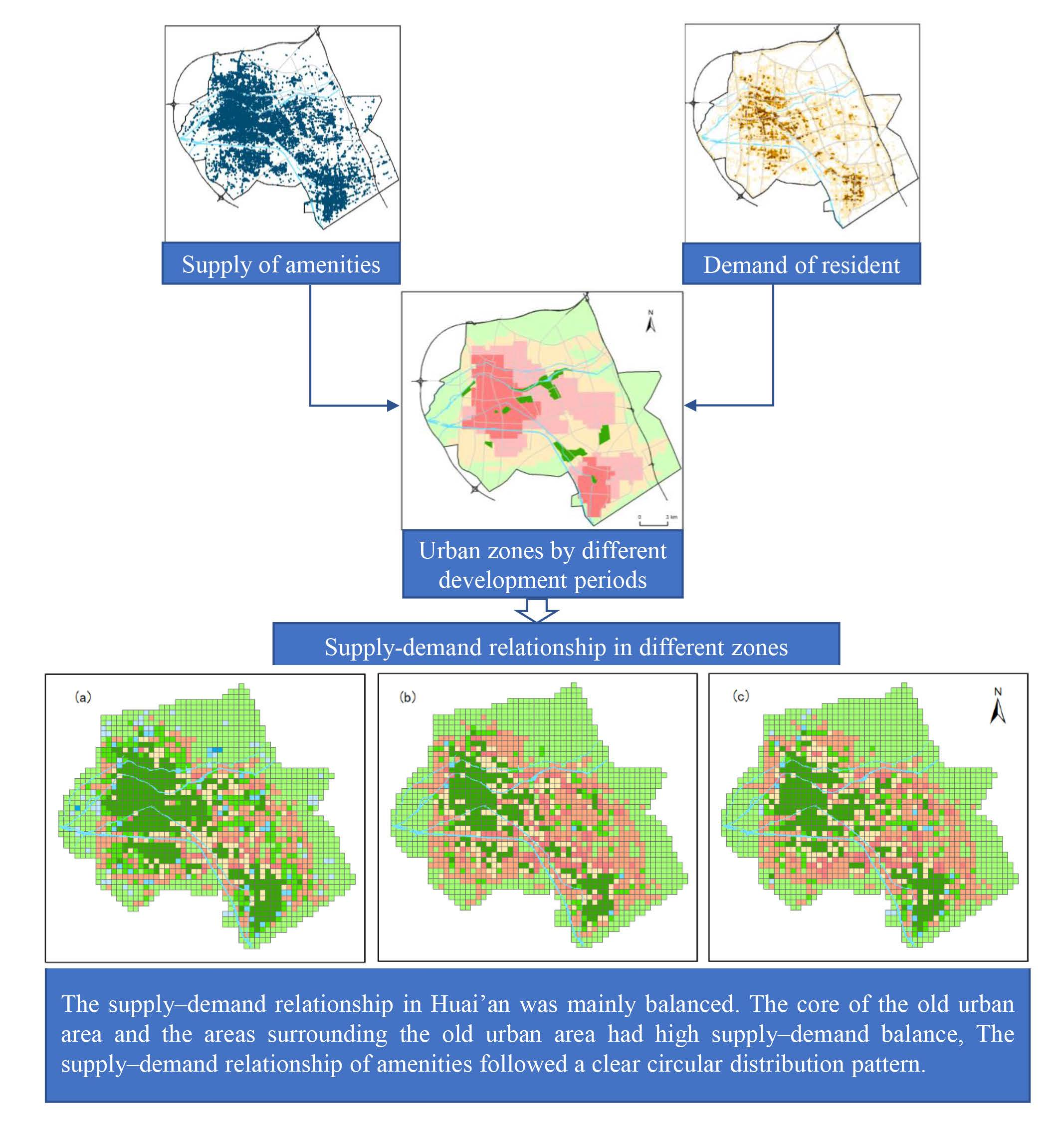
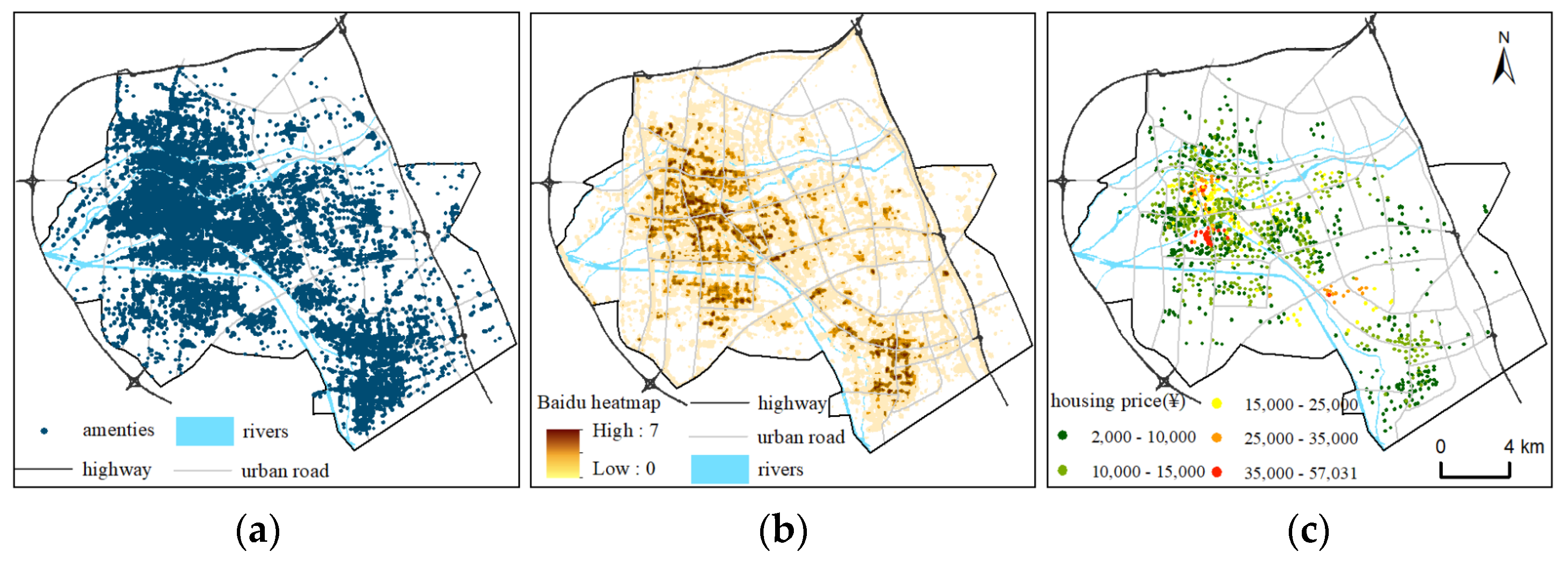
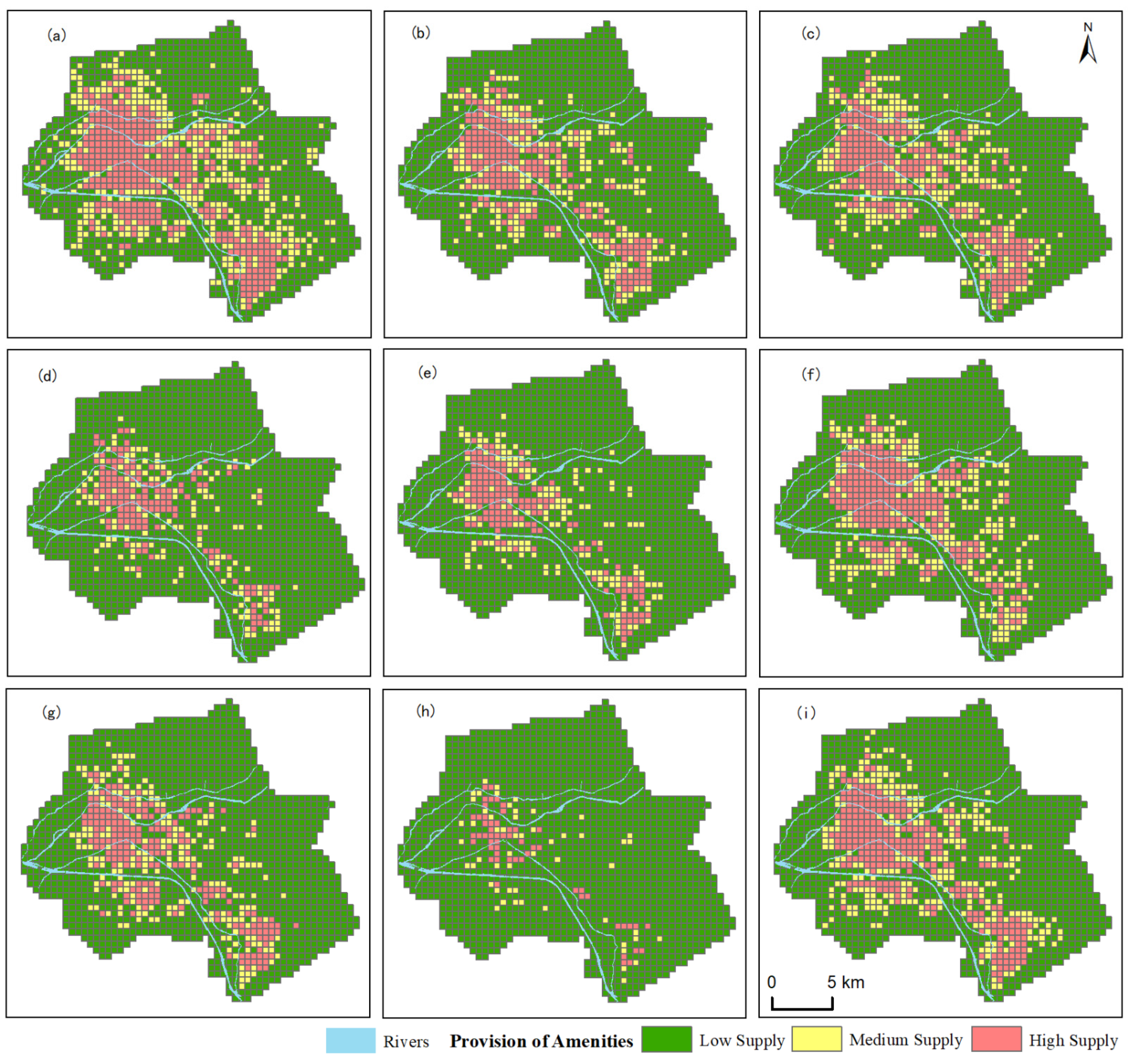
Supply and demand for amenities in expanding urban areas undergo continuous adjustment. In this study, we explored the relationship between supply of and demand for amenities in expanding urban areas to evaluate the rationality and effectiveness of amenity distribution, improve urban governance, and promote urban accessibility and justice, thereby facilitating sustainable urban development. We selected the central urban area of Huai’an City, China as the research area. We used point-of-interest data, Baidu population heatmap data, and residential housing prices to develop supply and demand indices for amenities and analyze the spatial characteristics of the supply of and demand for amenities in expanding urban areas. The results revealed that (1) the supply–demand relationship in the study area was mainly balanced, followed by relationships in which supply was lower than demand, and the relationships of supply exceeding demand is less, accounting for 68.35%, 26.06%, and 5.59%, respectively. (2) The core of the old urban area and the areas surrounding the old urban area had high supply–demand balance, the transitional and new urban areas had less supply than demand, and the developing urban areas had low supply–demand balance; the supply–demand relationship of amenities followed a clear circular distribution pattern. (3) The Chinese government’s continuous renewal of old urban areas has made the quantitative proportion of supply and demand components be positively correlated with the oldness of urban development, which has enlightening effects on the construction of other cities. Finally, we developed suggestions for adjusting the distribution of amenities in the central urban area of Huai’an to facilitate high-quality development in this area.
Keywords: amenities; supply–demand relationship; multi-source data; grid analysis amenities; supply–demand relationship; multi-source data; grid analysis
Graphical Abstract