Article

Behind the Land Use Mix: Measuring the Functional Compatibility in Urban and Sub-Urban Areas of China


1
State Key Laboratory of Subtropical Building Science, School of Architecture, South China University of Technology, Guangzhou 510640, China
2
Centre for Advanced Spatial Analysis, The Bartlett Faculty of the Built Environment, University College London, London WC1E 6BT, UK
*
Author to whom correspondence should be addressed.
Submission received: 14 November 2021 / Revised: 15 December 2021 / Accepted: 18 December 2021 / Published: 21 December 2021

Abstract

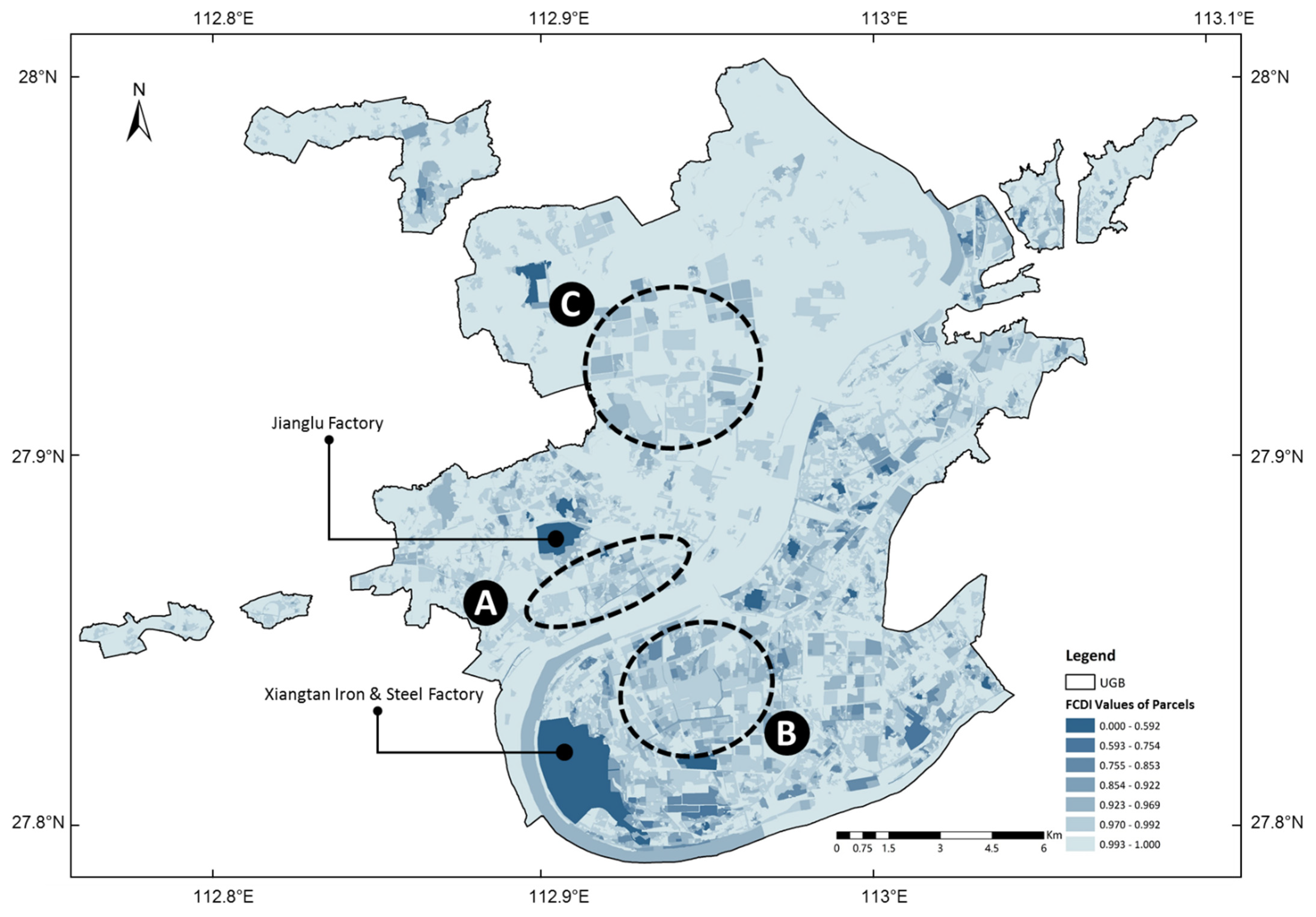
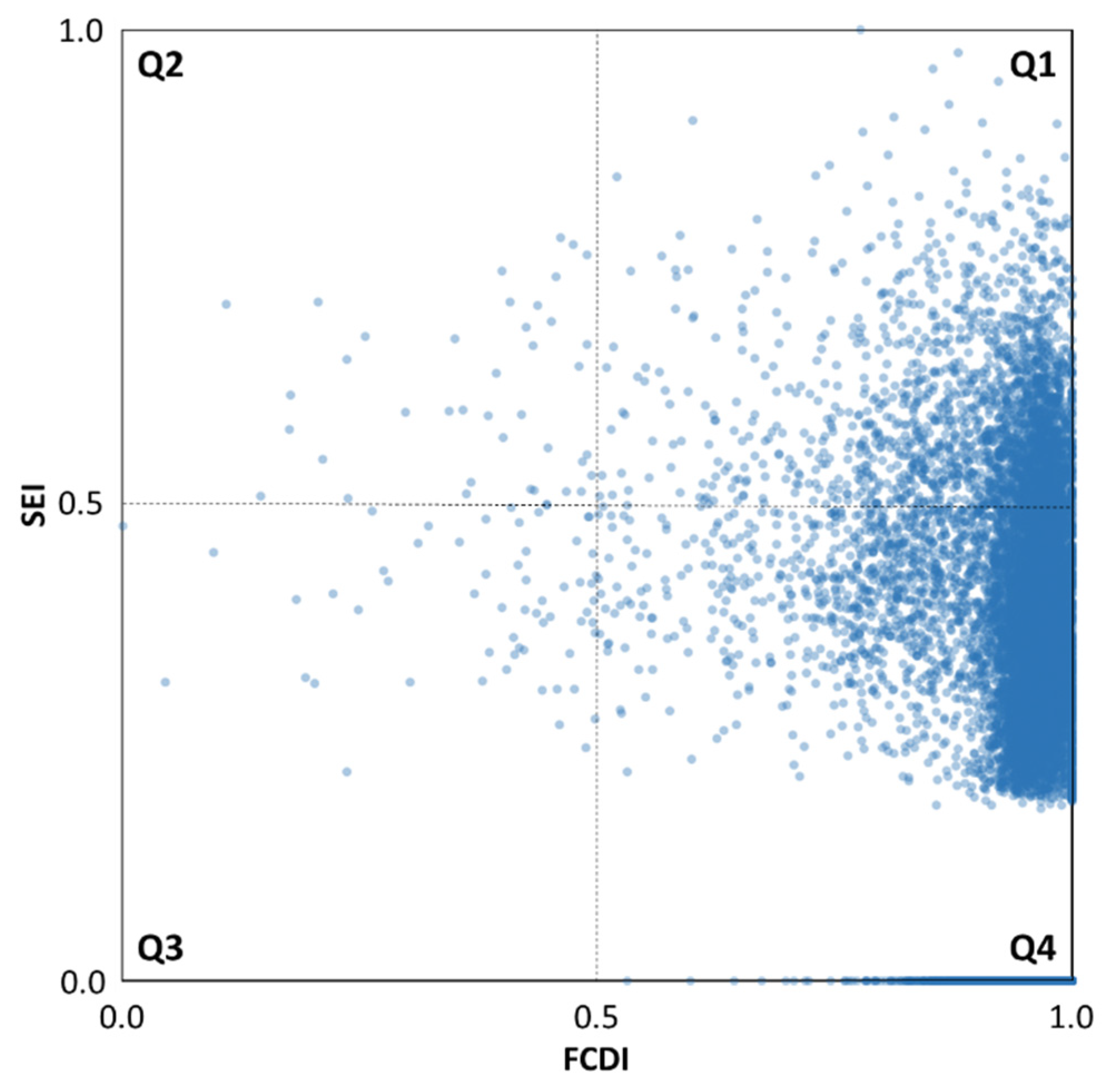
Land use mix (LUM) has long been employed as one of the key methods to improve urban vibrancy and optimize built-up areas. Within the urban studies discipline, LUM is usually defined as a functional compatible but diverse land use pattern. However, its quantitative methodological approaches thereby heavily rely on the diversity of land use and fail to consider functional compatibility as another critical defining characteristic, providing only a partial picture of land use pattern. Thus, reviewing LUM’s concepts and definitions, this paper develops a new index to describe functional compatibility according to the spatial segregation measurements. To evaluate and provide empirical evidence of the proposed index, this paper selects the medium-sized city of Xiangtan as a case study. The findings demonstrate that Xiangtan exhibits a quite compatible land use pattern to a certain extent. In addition, particular clusters with relatively incompatible land use patterns are observed, which are closely linked to a special historical working unit, the ‘Danwei’ compounds, and a special rural planning authority, ‘Township-Village-Enterprise’, in China. Finally, an integrated evaluation is conducted based on the proposed index and Shannon entropy index, which can be regarded as a useful tool in future land use planning while contributing to shaping a sustainable form of urban development.
Keywords: land use mix (LUM); functional compatibility; parcels; China land use mix (LUM); functional compatibility; parcels; China