Article

Meshing Sustainability with Satisfaction: An Investigation of Residents’ Perceptions in Three Different Neighbourhoods in Chengdu, China

by
Qi Zhang
1,2,3,*,
Esther Hiu-Kwan Yung
3 and
Edwin Hon-Wan Chan
3
1
Wuhan Land Use and Urban Spatial Planning Research Center, Wuhan 430000, China
2
College of Architecture and Urban Planning, Tongji University, Shanghai 200092, China
3
Building and Real Estate Department, The Hong Kong Polytechnic University, Hung Hom, Kowloon, Hong Kong 999077, China
*
Author to whom correspondence should be addressed.
Land 2021, 10(11), 1280; https://doi.org/10.3390/land10111280
Submission received: 13 October 2021 / Revised: 19 November 2021 / Accepted: 19 November 2021 / Published: 22 November 2021
(This article belongs to the Topic Architectures, Materials and Urban Design)

Abstract

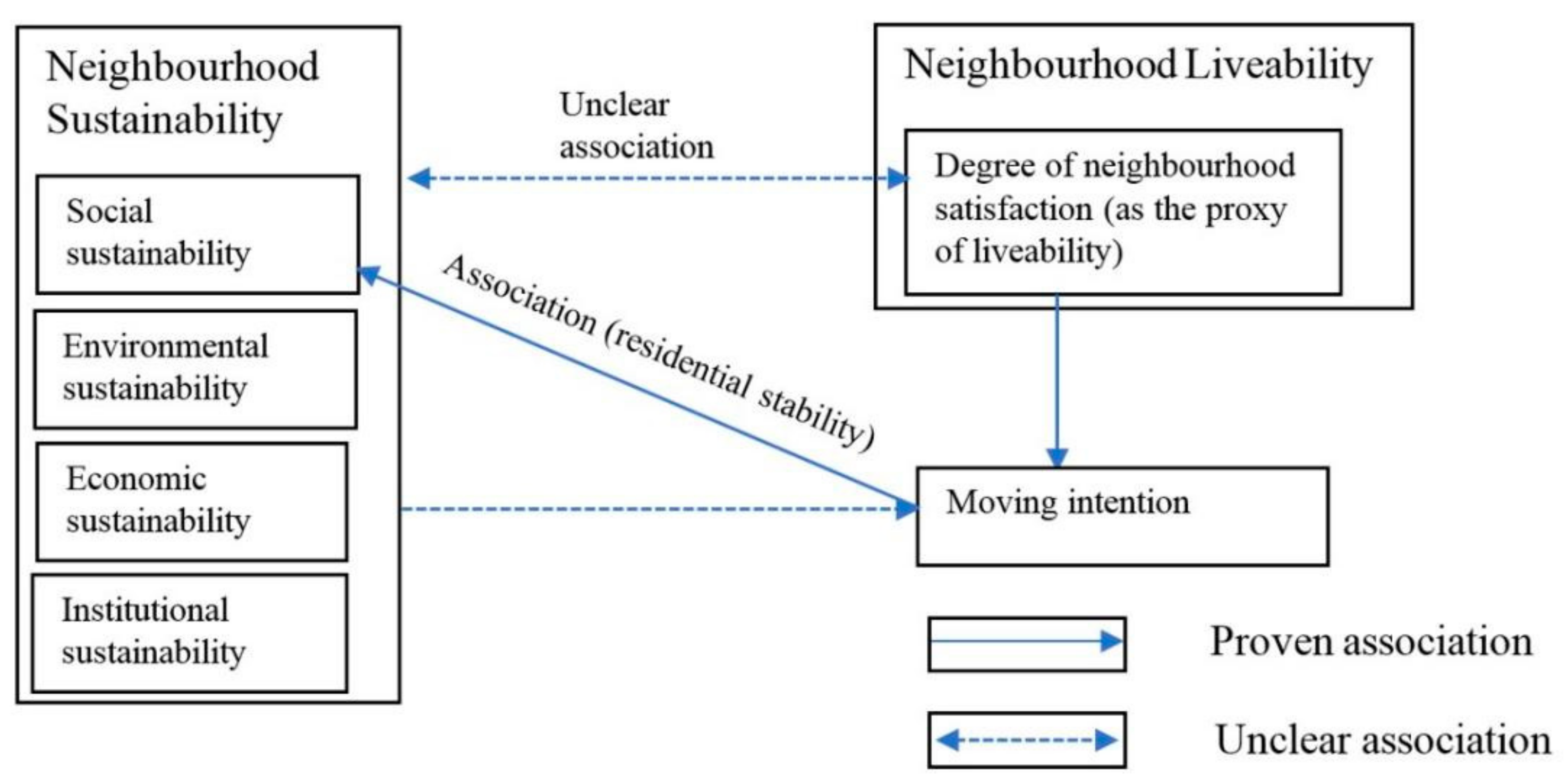
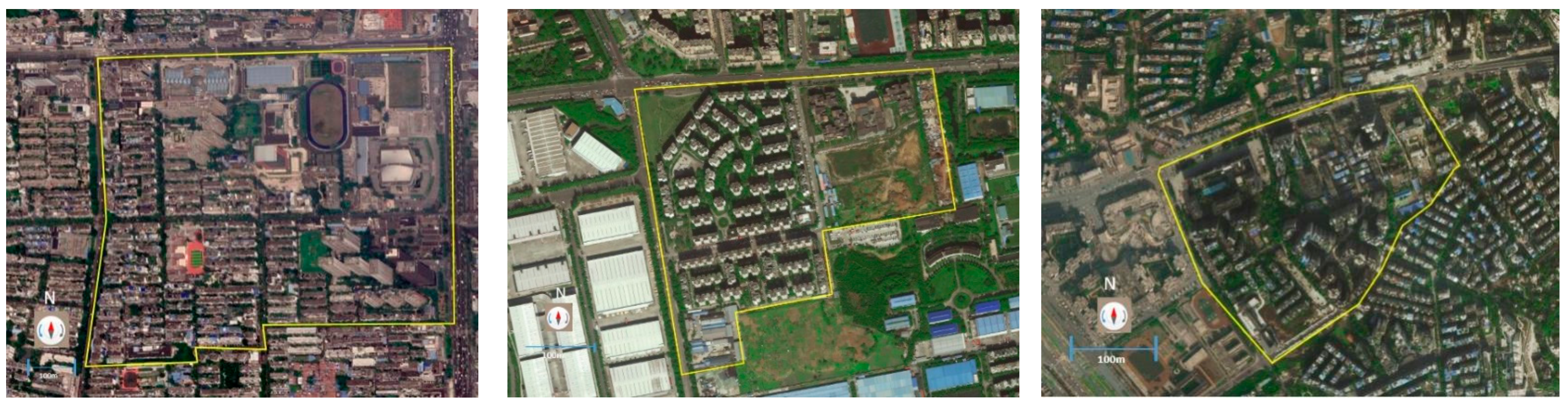
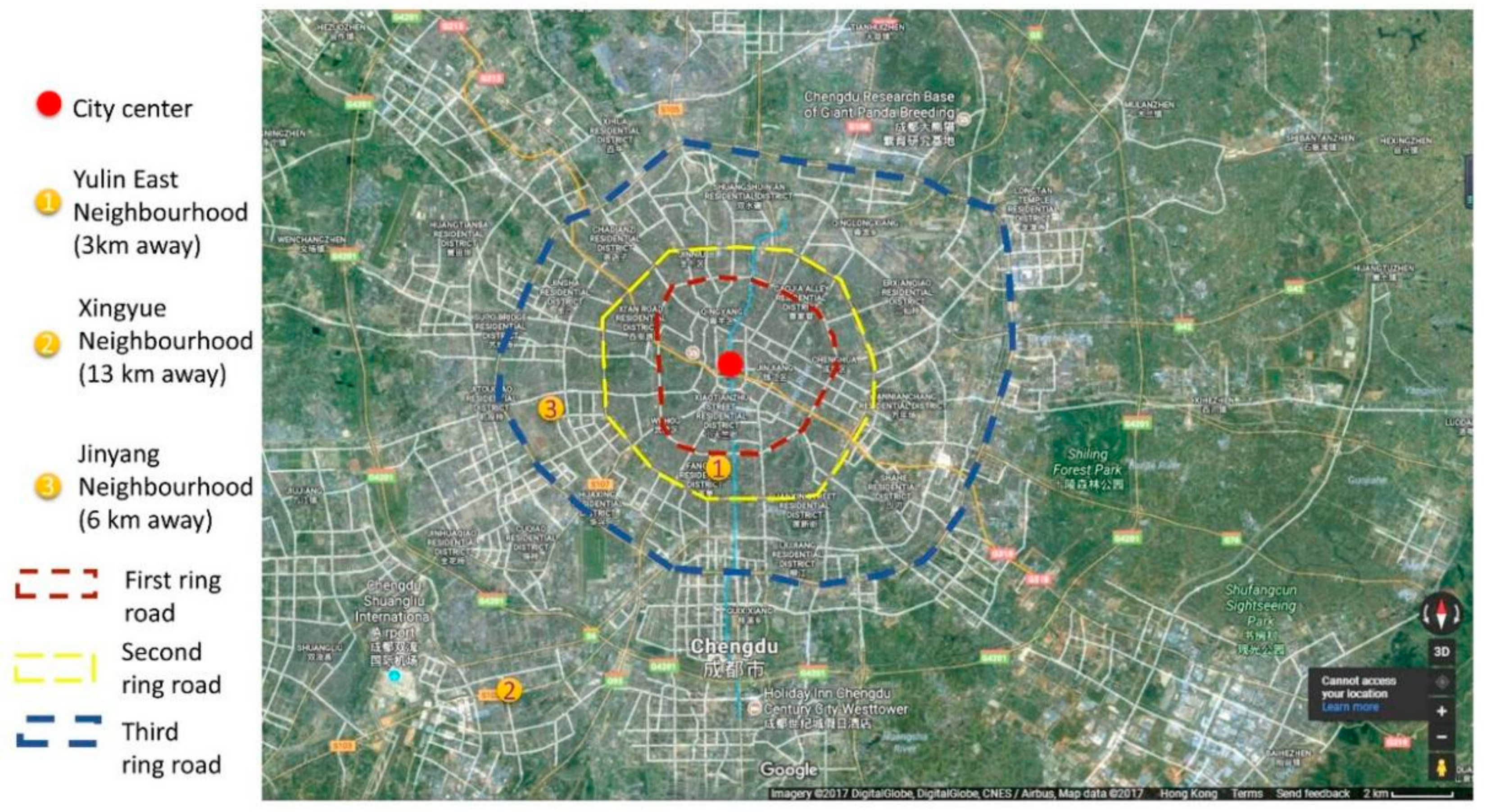
Can sustainability and liveability be simultaneously pursued at the neighbourhood level? Adopting neighbourhood satisfaction as a proxy to indicate liveability at the neighbourhood scale, this paper investigated how the residential subjective perception of sustainability factors interacted with neighbourhood satisfaction in the context of three different neighbourhoods in Chengdu, China. This began with a comprehensive literature review to construct the neighbourhood sustainability framework. Then, a total of 510 cross-sectional questionnaire surveys was conducted in Chengdu. Logistic regression was employed to investigate significant associations. The findings revealed that the ‘sense and habit of energy saving’ is the only sustainability factor that is negatively associated with neighbourhood satisfaction in commodity-housing neighbourhood. Compared with intangible factors, tangible or physical sustainability factors are more likely to contribute to improving neighbourhood satisfaction and suppressing moving intention. The study also evidenced the contextual differences of significant associations among danwei, resettlement, and commodity-housing neighbourhoods coexisting in transitional China. This calls for adaptive and contextual rather than standardized, top-down strategies for developing sustainable neighbourhood planning to simultaneously promote sustainability and liveability in Chengdu, China. Finally, a specific contextual framework was provided as policy implications for developing local and adaptive solutions.
Keywords: neighbourhood; sustainability; framework; China; perception; liveability neighbourhood; sustainability; framework; China; perception; liveability