Article

The Effects of Tip Clearance on the Internal Flow Characteristics of a Mixed-Flow Pump Under Near-Stall Conditions

1
National Research Center of Pumps, Jiangsu University, Zhenjiang 212013, China
2
Institute of Fluid Engineering Equipment Technology, Jiangsu University, Zhenjiang 212009, China
3
Department of Mechanical Engineering & Materials Science, Washington University in St. Louis, St. Louis, MO 63130, USA
*
Authors to whom correspondence should be addressed.
Water 2026, 18(9), 1027; https://doi.org/10.3390/w18091027
Submission received: 28 March 2026 / Revised: 19 April 2026 / Accepted: 23 April 2026 / Published: 26 April 2026

Abstract

Leakage flow interferes with the main flow movement and has a close relationship with the rotational stall phenomenon. To study the rotational stall characteristics of mixed-flow pumps under different tip clearances (rim clearances), numerical simulations of the internal flow field of the mixed-flow pump were carried out based on the SST k-ω turbulence model and hexahedral structured meshes, with the tip clearances set to 0.2 mm, 0.5 mm, and 0.8 mm respectively. The external characteristics, internal flow field under stall conditions, impeller surface pressure, and internal vorticity distribution of the mixed-flow pump were compared among the three different tip clearances. The research results show that when the tip clearance is 0.5 mm, the numerical simulation results are in good agreement with the experimental results, indicating the high reliability of the simulation. Under the three different tip clearances, the near-stall and deep-stall operating points on the external characteristic curves are consistent. When the tip clearance is 0.8 mm, the positive slope characteristic of the flow rate–head curve of the mixed-flow pump is the most obvious. From the small flow rate condition to the large flow rate condition, the influence of the tip clearance on the efficiency of the mixed-flow pump gradually increases. Under deep-stall conditions, with increasing tip clearance, the stall vortex at the flow passage outlet causes more intense disturbances to the inlet of the downstream flow passage and induces the formation of new stall vortices at the downstream passage inlet, thereby increasing internal flow losses. The increase in the tip clearance leads to changes in the morphology of the leakage vortex, a decrease in the impeller surface pressure, intensification of flow disorder, and enhancement of the leakage vortex intensity. Moreover, compared with the rated condition, the leakage vortex of the mixed-flow pump under stall conditions is more affected by the tip clearance.

1. Introduction

A mixed-flow pump is a type of fluid machinery that combines the structural features and performance advantages of centrifugal pumps and axial-flow pumps. It transports fluid through the combined action of centrifugal force and axial thrust generated by the rotation of the impeller. Owing to its merits of large flow rate, a wide high-efficiency operating range, a simple structure, compact size, and excellent cavitation resistance, mixed-flow pumps are widely applied in clean energy, advanced power, national defense security, the South-to-North Water Diversion Project, and other fields [1,2,3,4]. With the development of modern industry toward large-scale, high-speed, and high-efficiency trends, the application scope of fluid machinery has become wider and its working environment increasingly complex [5,6,7]. The operating conditions of mixed-flow pumps have become increasingly complicated. Especially under part-load or off-design conditions, the complex internal flow structure within the impeller and its strong interaction with the guide vanes easily induce flow instabilities, among which rotational stall is the most typical and harmful one [8]. Rotational stall refers to the phenomenon that occurs when the flow rate of hydraulic machinery drops to a certain threshold where the inlet incidence angle of the flow in the impeller increases, resulting in flow separation on the suction surface of the blades. Disturbance and entrainment are formed by the mixing of the separated flow with the main flow, and then one or more low-speed vortices, namely stall cells, are generated. These stall cells rotate circumferentially in the direction opposite to the impeller rotation. Rotational stall not only causes a significant drop in the head and efficiency of the pump, accompanied by intense pressure pulsation and structural vibration, but also may lead to fatigue failure of the blades, which seriously threatens the safe and stable operation of the unit. It has become a key bottleneck restricting the development of mixed-flow pumps toward high performance and wide operating ranges [9].
Tip clearance is an inevitable small gap between the impeller and the stationary pump casing of a mixed-flow pump. Due to the relative motion between the blade tip and the end wall, as well as the pressure difference between the pressure surface and the suction surface, tip leakage flow is generated in the tip clearance region. The mixing of the leakage flow with the main flow near the suction surface forms tip leakage vortices, which are closely related to the occurrence and development of rotational stall [10,11]. As the dominant flow structure in the tip clearance region, the formation, development, and breakup of tip leakage vortices directly disturb the stability of the main flow field inside the impeller, intensify flow separation, induce or promote the occurrence of rotational stall, and thus impair the operational stability of the pump [12]. Meanwhile, the non-uniform flow field caused by rotational stall in turn affects the morphology, structure and trajectory of the leakage vortices, forming a complex flow mechanism of mutual coupling and interaction [13]. Factors such as the size and uniform distribution of the tip clearance, as well as the eccentricity of the impeller, can significantly change the intensity and evolution characteristics of the leakage vortices. These factors further affect the critical stall condition, the number of stall cells and the propagation speed of rotational stall and play an important role in regulating the energy performance and operational stability of mixed-flow pumps [14,15].
Due to the complexity of tip leakage flow, it is difficult for experimental methods to capture the structural morphology and development process of tip leakage vortices. Moreover, numerical calculation techniques have shown significant effectiveness in addressing issues in the pump industry [16,17]. Among these methods, numerical simulation methods based on computational fluid dynamics (CFD), have become the core means to study the complex internal flow characteristics of mixed-flow pumps owing to their advantages of high efficiency, economy and strong repeatability, providing strong technical support for revealing the coupling mechanism between rotational stall and leakage vortices [18]. In recent years, with the continuous improvement of turbulence models, the precision of mesh generation technology and the enhancement of high-performance computing capabilities, numerical simulation can more accurately capture the fine structures of tip clearance leakage vortices, the evolution of rotational stall, and the dynamic coupling relationship between them. This effectively makes up for the shortcomings of experimental research, such as high measurement difficulty, high cost and difficulty in capturing transient flow details [19]. Through numerical calculation, researchers can systematically analyze the interaction laws between leakage vortices and rotational stall under different tip clearance parameters and operating conditions and quantify flow losses. This provides a reliable theoretical basis and technical guidance for the structural optimization, stall suppression, and stable operation design of mixed-flow pumps under broad working conditions [20].
In recent years, scholars have carried out extensive research on the core issues of rotational stall and leakage vortices in mixed-flow pumps and have achieved fruitful results in turbulence model optimization, leakage vortex evolution mechanisms, and inducing factors and suppression methods of rotational stall [21,22]. Li et al. [23] investigated the structure of tip leakage flow under near-stall conditions based on the SST k-ω turbulence model and explored the energy loss mechanism induced by leakage flow and its influence on the downstream flow field. Liu et al. [24] blended the turbulent stress terms of Reynolds-averaged Navier–Stokes (RANS) and large-eddy simulation (LES) at the zonal interface and developed a RANS-LES hybrid model suitable for tip clearance leakage vortices. It was revealed that obvious flow separation exists inside the tip clearance and strong coherent shear flow appears near the suction side of the blade tip. Liu et al. [25] measured the flow field at the upstream and downstream sections of an NACA0024 airfoil using particle image velocimetry (PIV) and analyzed the relationship between leakage vortices and leakage vortex cavitation. Han et al. [26] numerically simulated the tip leakage flow in a mixed-flow pump using the rotation–curvature-corrected SST k-ω turbulence model. A unique passage vortex–leakage vortex pair at the blade leading edge was discovered, and the evolution mechanism of double-peak leakage vortex cavitation was revealed. Ye et al. [27] studied the three-dimensional flow characteristics of tip clearance leakage vortices over an NACA662-415 hydrofoil under cavitating and non-cavitating conditions using tomographic PIV. Ji et al. [28] measured the flow structure at the guide vane inlet of a mixed-flow pump with different tip clearances via PIV. The results showed that the larger the tip clearance, the larger the flow blockage area induced by leakage vortices. Han et al. [29] measured the tip clearance leakage flow in a mixed-flow pump with a high-speed camera, observed and named the double-peak tip leakage vortex structure for the first time, and revealed its spatiotemporal evolution law and dynamic mechanism. Han et al. [30] proposed a refined measurement method based on PIV, which realized the accurate experimental measurement of tip leakage flow in mixed-flow pumps. The leakage vortices are generated by the shear interaction between leakage flow and main flow, and their area and vorticity first increase and then decrease from the blade leading edge to the trailing edge. Liu et al. [31] established a mathematical equation that relates the impeller geometric parameters and operating parameters to the three-dimensional dimensionless distribution of tip leakage vortices, and proposed a theoretical model for predicting the 3D morphology of tip leakage vortices in mixed-flow pumps. Cheng et al. [32] numerically investigated the hydraulic performance and internal flow characteristics of a volute mixed-flow pump under different tip clearances. Based on the analysis of flow field, vortex structure and pressure distribution, the influence of tip clearance variation on the head, efficiency and operation stability of the pump was revealed. Zhang et al. [33] carried out numerical simulations using the delayed detached-eddy simulation (DDES) method to alleviate the adverse effects of tip leakage flow and vortices on the internal flow field. Bi et al. [34] studied the transient flow characteristics of leakage flow and clarified the mechanism of upstream wake on the tip leakage vortex system and mixing loss.
At present, the coupling mechanism between tip clearance leakage vortices and rotational stall has not been fully clarified. In particular, the dynamic interaction mechanism between the two under off-design conditions still needs to be further explored [35]. Moreover, there is a lack of systematic research on the influence of different tip clearance distributions (uniform and non-uniform) on leakage vortices and rotational stall [36]. The accuracy of existing numerical methods in capturing transient flow details such as leakage vortex breakdown and stall cell evolution still needs to be improved, and numerical simulations under multi-physics field coupling are relatively scarce [37,38]. In this paper, a guide vane mixed-flow pump is taken as the research object. Numerical simulation combined with experimental methods is adopted to study the influence of different tip clearances on the rotational stall characteristics of mixed-flow pumps. The relationship between leakage vortices and rotational stall in mixed-flow pumps with different tip clearances is revealed, which can provide a reference for further research.

2. Materials and Methods

2.1. Research Model

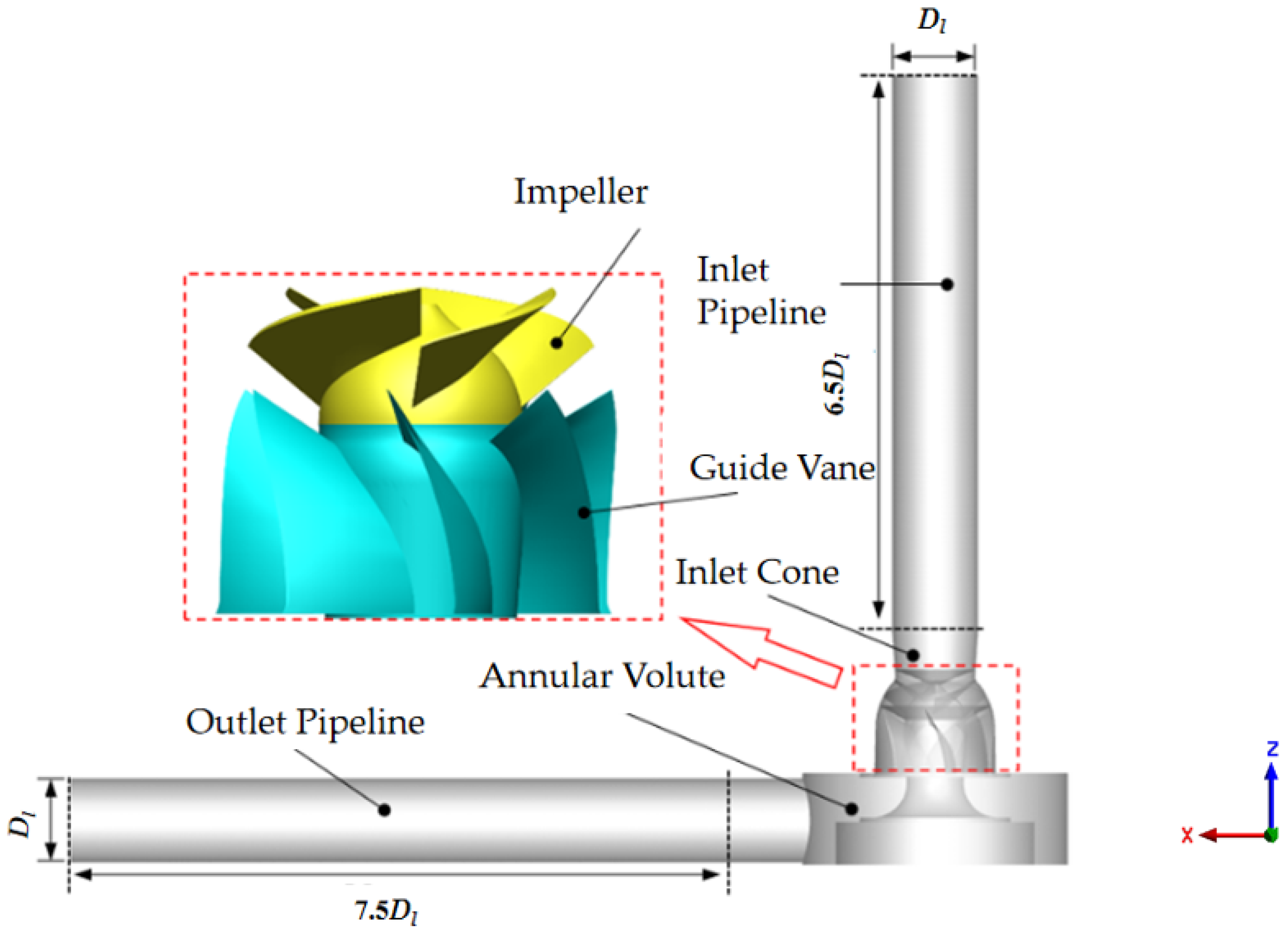
The research object of this paper is a low-specific-speed JHM-500 guide vane-type mixed-flow pump. Due to its large size, to save resources and facilitate experiments, the prototype pump is scaled down at a ratio of 1:3 to obtain the mixed-flow pump model. This scaling ratio is determined based on the principles of resource conservation and experimental convenience proposed in this study. Adopting a 1:3 scale ratio can appropriately reduce the model size, which not only ensures sufficient structural integrity and hydraulic performance similarity between the model and the prototype pump, avoiding structural distortion or inaccurate performance simulation caused by excessive miniaturization, but also effectively reduces manufacturing and testing costs, facilitating the smooth implementation of subsequent experiments. In addition, the scaling process follows the basic performance similarity laws of hydraulic machinery. Key similarity criteria, including geometric similarity, kinematic similarity and dynamic similarity, are comprehensively considered in the pump model scaling. The 1:3 scale ratio is determined on the premise of satisfying geometric similarity, with all structural parameters such as impeller diameter, vane size and flow passage cross-section maintaining a consistent proportional relationship between the model and the prototype, which lays a foundation for the accurate prediction of the prototype pump performance through model tests in the later stage. UG NX 12.0 is used for three-dimensional modeling of the mixed-flow pump model, including six parts, the inlet extension section, inlet cone, impeller, guide vane, annular volute, and outlet extension section, as shown in Figure 1. The computational domain covers the entire device section from the pump inlet section to the outlet section of the annular volute. Its design parameters are as follows: rated flow rate Qdes = 380 m3/h, head H = 6 m, rotational speed n = 1450 r/min, specific speed ns = 480, number of impeller blades Z = 4, and number of guide vanes Zd = 7. In the study, the inlet section, guide vanes, annular volute, and outlet section of the mixed-flow pump model remain unchanged, and only the tip clearance of the impeller is adjusted. The three groups of different tip clearances are δ = 0.2 mm, 0.5 mm, and 0.8 mm respectively.

2.2. Domain Discretization and Mesh Generation

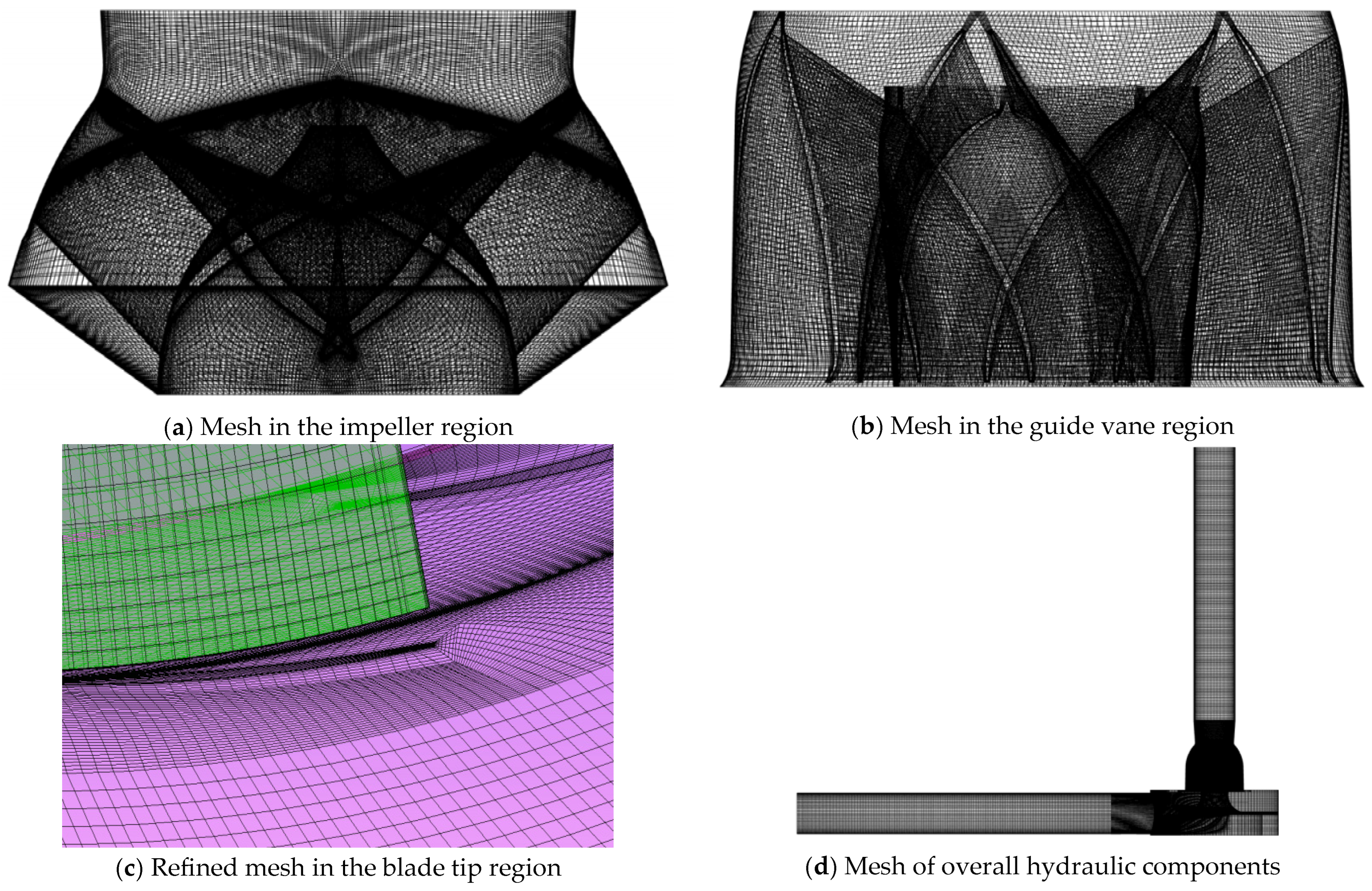
The idea of computational domain discretization is widely adopted in modern computational fluid dynamics (CFD). The computational domain is discretized into a finite number of nodes in space to replace the original continuous space for calculation. In this study, the physical model of the mixed-flow pump includes six parts: the inlet section, impeller section, guide vane section, annular volute section, and outlet section, with a large spatial structure. Therefore, during mesh generation, the inlet section, impeller, guide vane, volute, and outlet section of the mixed-flow pump model were discretized separately. The main research objects in the entire mixed-flow pump are the impeller and guide vane parts. The impeller is semi-open and has a certain clearance with the tip; it is impossible to obtain good mesh quality when unstructured meshing is performed on it. Therefore, ICEM 2021 R1 software was used to generate hexahedral structured meshes for different water domains. The overall mesh of the mixed-flow pump is shown in Figure 2d. For the inlet and outlet sections with simple structures, a simple O-type topology was adopted. For the water domains with complex geometries, mesh generation was performed by cutting and deleting blocks. The conical connecting pipe at the inlet employed a Y-type mesh topology. For mesh generation in the impeller region, a sophisticated J/O-type topology was used, wrapping the impeller blades within multiple blocks, where connections between adjacent blocks were realized using matched mesh technology. In the mesh generation of the guide vane water domain, an H/O-type topology was applied. For the annular volute, a combination of various topologies was adopted for meshing. To ensure that there are sufficient meshes in the blade tip clearance to accurately simulate the development process of the tip leakage flow, mesh refinement was achieved by increasing the number of mesh nodes in the clearance. Meanwhile, the grid spacing near the wall was adjusted to control the Y+ value in the clearance region within 100, falling within the reasonable log-law region. This enables accurate capture of wall shear stress and boundary layer development, thus ensuring engineering reliability in the internal flow simulation of the mixed-flow pump. The final grid quality is above 0.4, and the skewness is controlled above 0.25. The mesh refinement of the blade tip is shown in Figure 2c.

2.3. Control Equations and Boundary Conditions

In the field of fluid machinery, the rotational effect of the impeller enhances the turbulent fluctuations in the circumferential near-wall region, which in turn increases the turbulence intensity and makes flow separation more likely to occur. The SST k-ω turbulence model can well predict secondary flows such as flow separation, tip leakage flow, and backflow in water pumps. Therefore, to better capture the spatial structure of the tip leakage flow in the near-wall region, the SST k-ω turbulence model was adopted in this paper, and the finite volume method was used to discretize and solve the Navier–Stokes (N-S) equations. It combines the advantages of both the standard k-ε and standard k-ω models, thus enabling the equations to have strong applicability both near and far from the wall.
The turbulent kinetic energy k transport equation is defined as
( ρ k ) t + x j ( ρ u j k ) = P k β ρ k ω + x j [ ( μ + σ k μ t ) k x j ]
The transport equation for turbulence frequency ω is defined as
( ρ ω ) t + x j ( ρ u j ω ) = α S 2 β ρ ω 2 + x j [ ( μ + σ ω μ t ) ω x j ] + 2 ( 1 F 1 ) ρ σ ω 2 ω k x j ω x j
where Pk: turbulent kinetic energy production term; F1: blending functions; σk, σω, and β: constants of the SST k-ω model.
ANSYS CFX 2023 R1 was used for the numerical calculation of the mixed-flow pump, and the finite volume method was adopted for the discretization of the control equations. In the preprocessing settings, the impeller was set as the rotating domain, and the other parts were set as stationary domains. The fluid medium was clean water at 25 °C under standard atmospheric pressure. The inlet boundary condition was set as velocity inlet, and the outlet boundary condition was set as average static pressure outlet, with the outlet pressure referenced to the experimental value of 30 kPa. The interfaces between the inlet cone and the impeller and between the impeller and the guide vane were set as dynamic–static interfaces; the interface mode was set to Frozen-Rotor for steady-state calculation. This method is suitable for the steady-state simulation of turbomachinery involving rotating and stationary components. In the calculation, the frozen-rotor approach treats the rotating impeller as a spatially fixed structure, while retaining its rotational effect through relative velocity boundary conditions. And all other interfaces were set as static–static interfaces. The near-wall surface was set as a no-slip wall. Since the loss caused by wall roughness in the mixed-flow pump impeller accounts for a small proportion, the influence of roughness on the flow field was not considered, and the automatic wall function method was adopted. The difference scheme was set to the high-order solution mode, and the convergence residual limit was set to the order of 10−5.

2.4. Grid Independence Verification

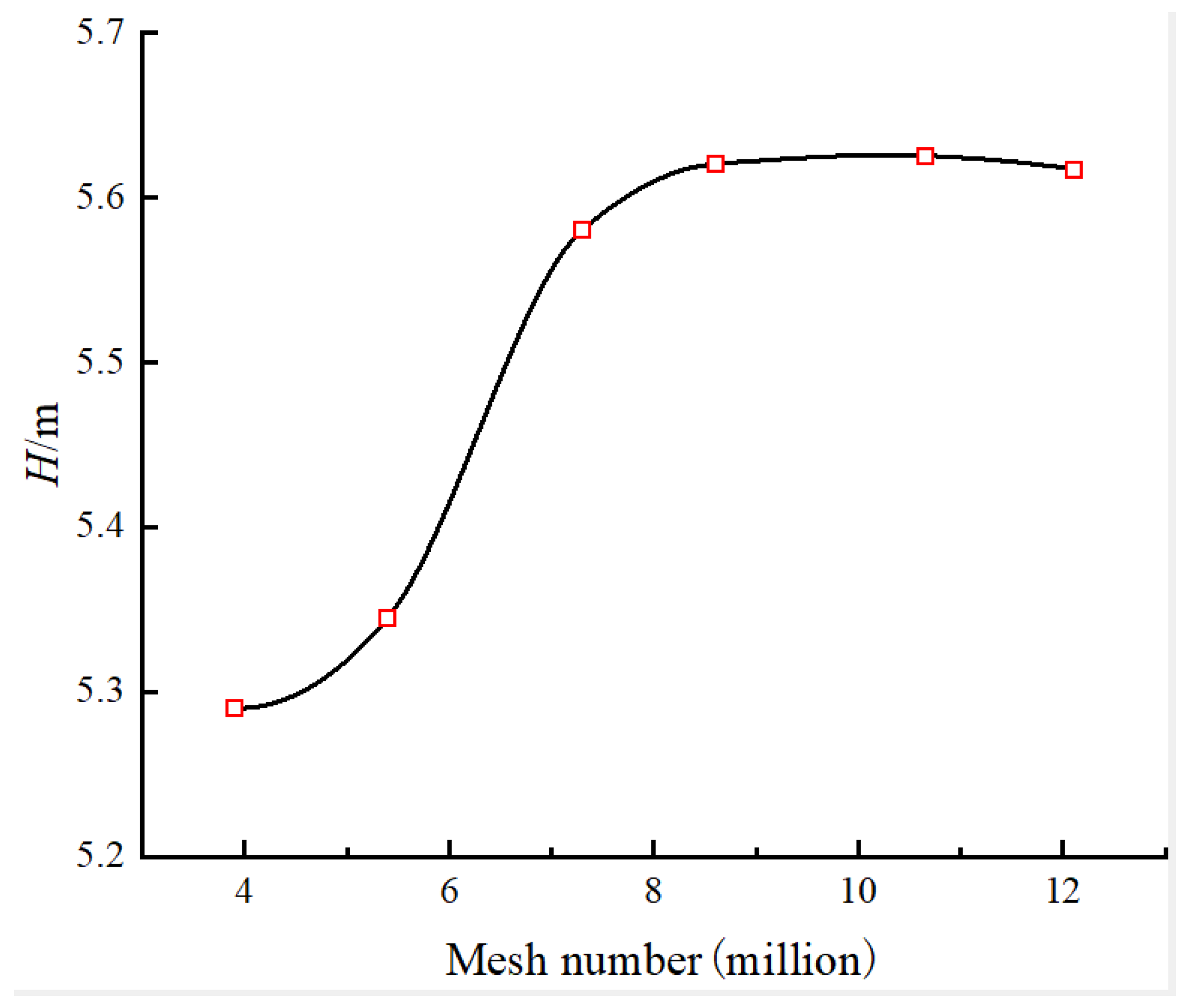
The number of meshes in the computational domain directly affects the accuracy of numerical calculation results and the occupation of computational resources. The more meshes there are, the more accurate the numerical calculation results are, but the more computational resources are also required. Therefore, to balance accuracy and efficiency, grid independence verification needs to be performed before numerical calculation. When designing and drawing the meshes of the mixed-flow pump computational domain, each set of meshes adopted the same topology, and only the number and positions of mesh nodes on the topological lines were adjusted. The mesh quality remained consistent with the change in the number of mesh nodes on the topological lines. Under a rotational speed of 1450 r/min, it was verified that the performance characteristics of the mixed-flow pump under steady flow were independent of the number of nodes. A total of six mesh schemes were obtained, with the total number of meshes being 3.9 million, 5.4 million, 7.3 million, 8.6 million, 10.65 million, and 12.1 million. Under the design condition, numerical calculations were performed on the mixed-flow pump with the six mesh schemes, with the same preprocessing settings and a convergence accuracy of 10−5. Figure 3 shows the variation trend of the calculated head under different numbers of meshes. It can be seen from the figure that the head increases with the increase in the number of meshes. When the global number of meshes reaches 8.6 million, the head almost does not change with the increase in the number of meshes, and the error is less than 5%, which meets the requirements of grid independence. Therefore, the mixed-flow pump with a total number of meshes of 8.6 million was selected as the computational model mesh. The same method was used to determine the mesh schemes for the mixed-flow pumps with impeller clearances of 0.5 mm and 0.8 mm.

3. Experiments

Test Equipment and Test Method

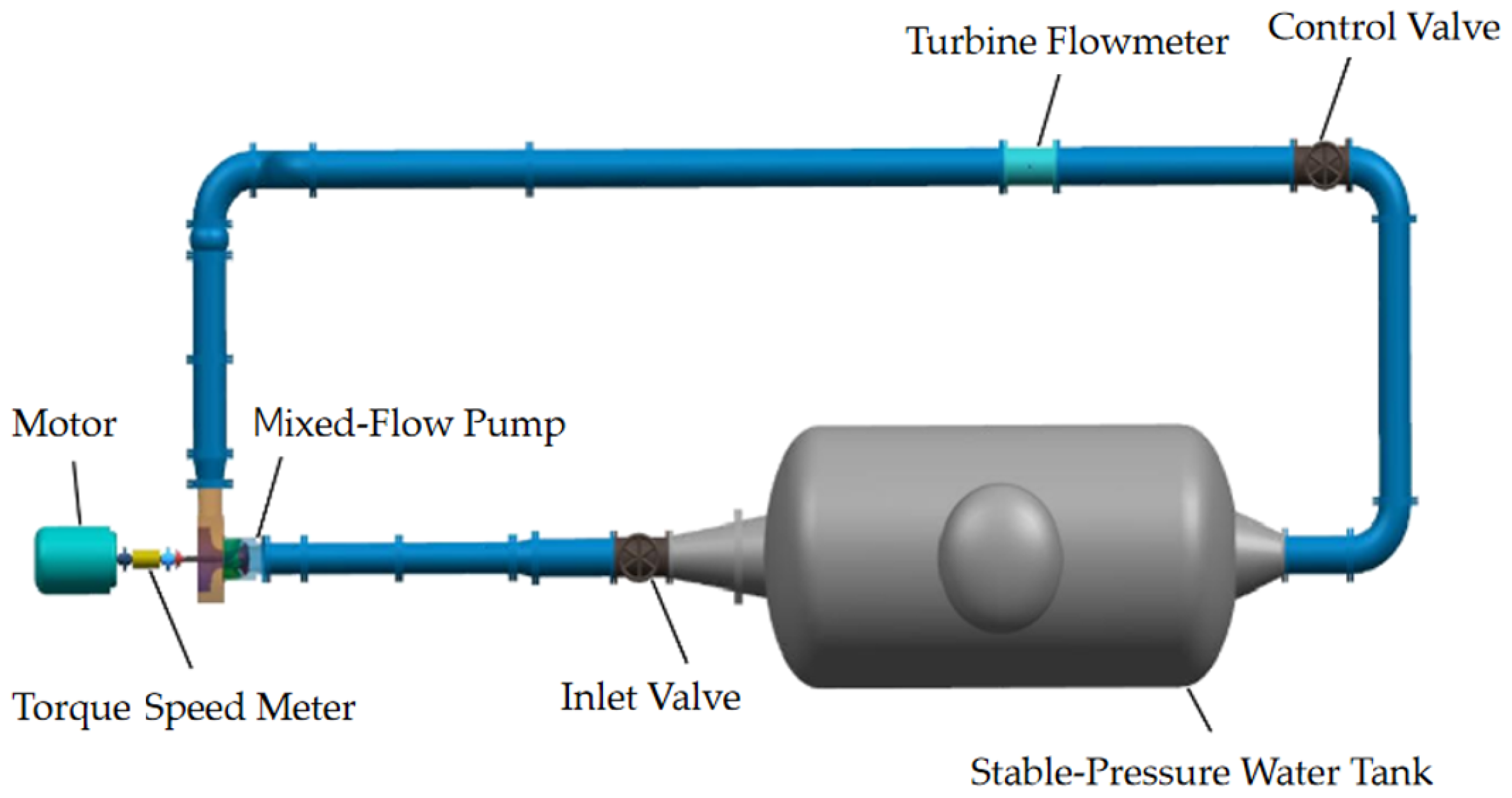
The external characteristic test was carried out on a large closed test bench in the laboratory of the National Engineering Research Center of Pumps and Systems at Jiangsu University. The pipeline diameter is 250 mm, which is made of stainless steel. The entire test device system, as well as the names and installation positions of each instrument, are shown in Figure 4. The test system mainly includes a mixed-flow pump, a motor, a rotational speed measuring instrument, a pressure-stabilizing water tank, a turbine flowmeter, an inlet valve, a control valve, etc. During the test, two pressure transmitters installed at the inlet and outlet of the pump were used to measure the head, which are of the WT-1151 capacitive type. The measuring range of the inlet pressure transmitter is ±100 kPa, and that of the outlet pressure transmitter is 0~600 kPa, both with an accuracy of 0.2. The flow rate was measured using an LWGY-250 turbine flowmeter with an accuracy of 0.5 and a nominal pressure of 1.6 MPa. A torque and rotational speed measuring instrument was used to test the rotational speed, torque, and shaft power, with a relative error of rotational speed of ±0.2%. The entire system meets the Class 1 accuracy requirement.
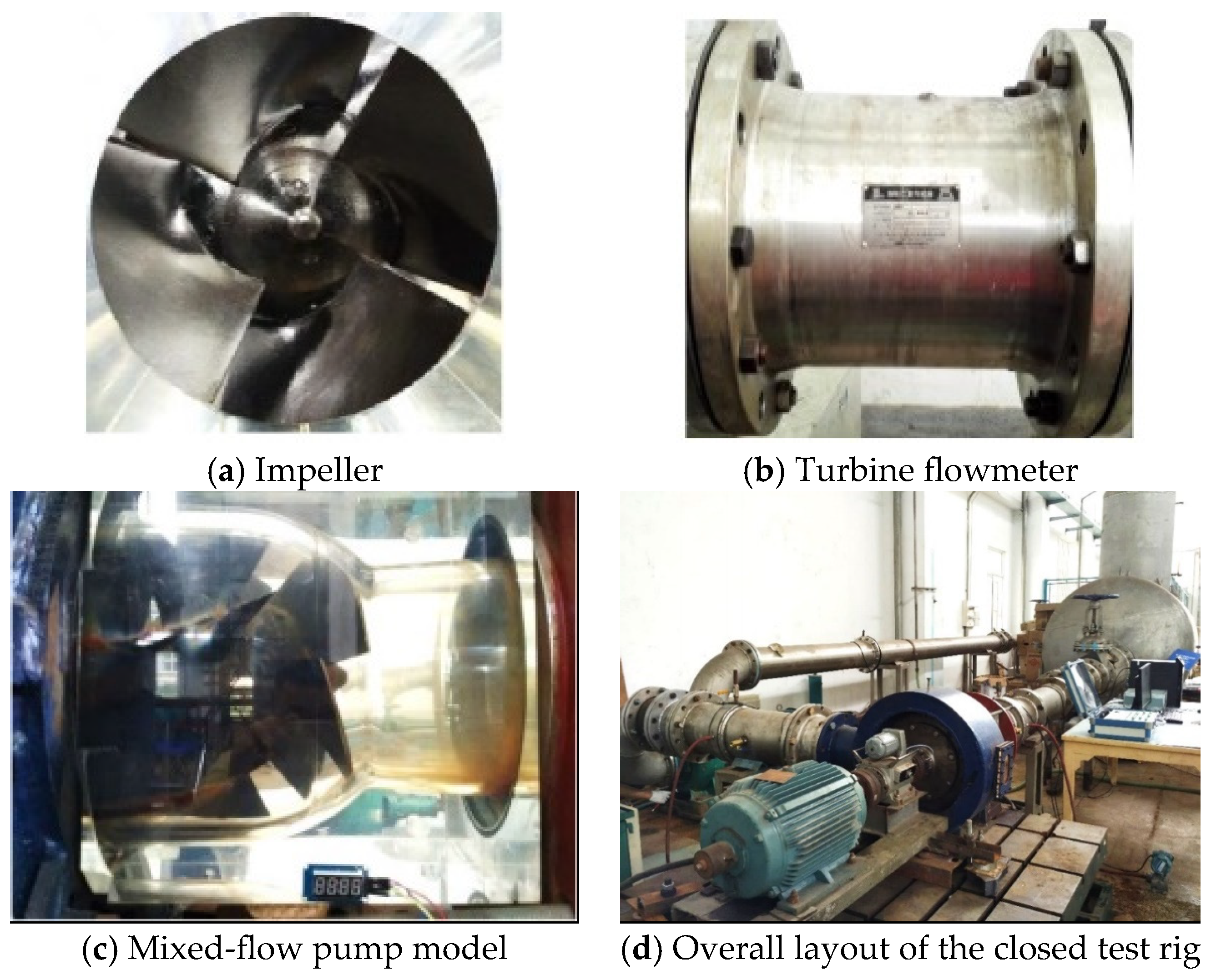
All test devices and instruments were connected in accordance with test standards, and the device is shown in Figure 5. The motor was in a no-load state to perform torque zero calibration at the rated speed. After calibration, it was integrated into the system, and the water valve was opened to inject 25 °C normal temperature water into the mixed-flow pump pipeline system. After the water filling was completed, it was checked whether each instrument device was operating normally. If there was air in the pipeline, it would affect the accuracy and safety of the test, so the exhaust hole would need to be opened to completely discharge the air in the pipeline system. The motor was adjusted to the rated speed and the test was carried out. At the start of the test, the valve was fully opened, and the motor was started after the test device and software were turned on. The flow rate was adjusted by changing the opening degree of the pump outlet valve. When the rotational speed was maintained at 1450 r/min and the flow rate reached the target flow rate, the flow rate and pressure data were collected. After the collection of test data was completed, the motor was stopped, and the next test was carried out after the liquid in the system was stationary. Each operating condition was tested three times to reduce the uncertain error of the test results.

4. Results and Discussion

4.1. Comparison of External Characteristics

4.1.1. Comparison Between Numerical Simulation and Test Results

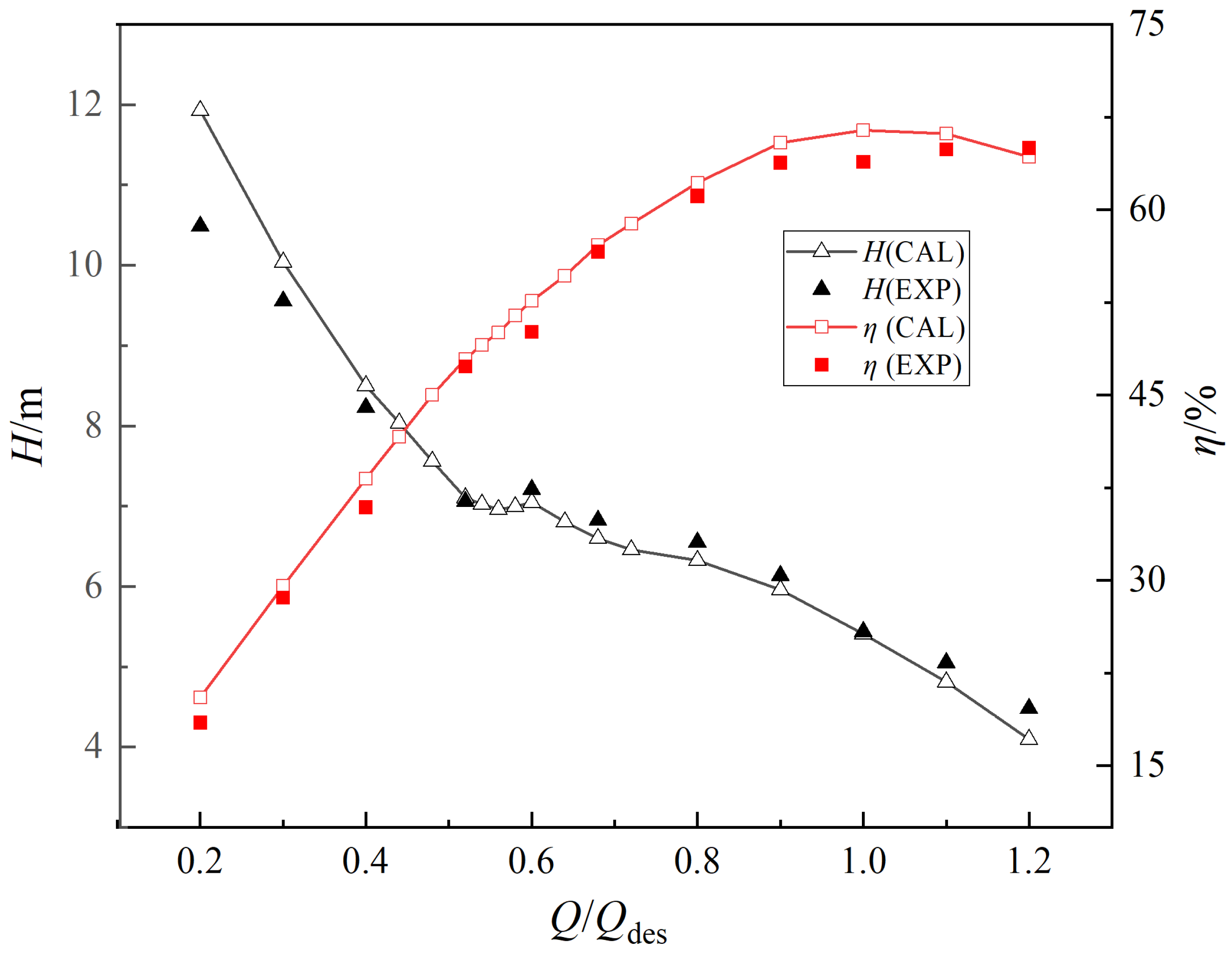
Figure 6 shows the comparison diagram of the mixed-flow pump test and external characteristics under the clearance of 0.5 mm, where Q is the actual flow rate and Qdes is the rated flow rate. For the convenience of analysis, let Φ = Q/Qdes. It can be seen from Figure 6 that in the Φ-H curve, the simulated value of the head is generally slightly higher than the test value. This is because the numerical simulation cannot accurately simulate various energy dissipations under real test conditions. However, under most flow rate conditions, the absolute difference between the two is less than 5% of the test value. The head values obtained by numerical simulation and test measurement are basically consistent, and a relatively large error only occurs near 0.2Qdes. This is because when the flow rate is close to the shut-off point, the actual flow pattern is very complex, with more turbulent dissipation and impact loss at this time, which cannot be fully covered in the numerical simulation. Therefore, it is acceptable that there is a relatively large gap between the simulated value and the test value under the ultra-small flow rate condition. In addition, under the design flow condition, the simulated head is 5.41 m, and the tested head is 5.44 m. The relative error between the simulated head and the tested head is 0.55%, which is within 1%, indicating high prediction accuracy.
In the Φ-η curve, the simulated value of efficiency is almost perfectly consistent with the test value; except for individual operating points, the absolute difference between the two is lower than 3% of the test value. When the actual flow rate exceeds the design flow rate due to the increase in flow velocity and pressure, the disk friction and impact loss on the inner wall of the test pump will increase, so it is reasonable that the simulated value is slightly higher than the test value in the large flow rate condition. Overall, the head and efficiency obtained by numerical simulation are in good agreement with the test results, indicating that the simulation results have certain reliability.

4.1.2. Comparison of External Characteristics of Mixed-Flow Pumps with Different Impeller Clearances

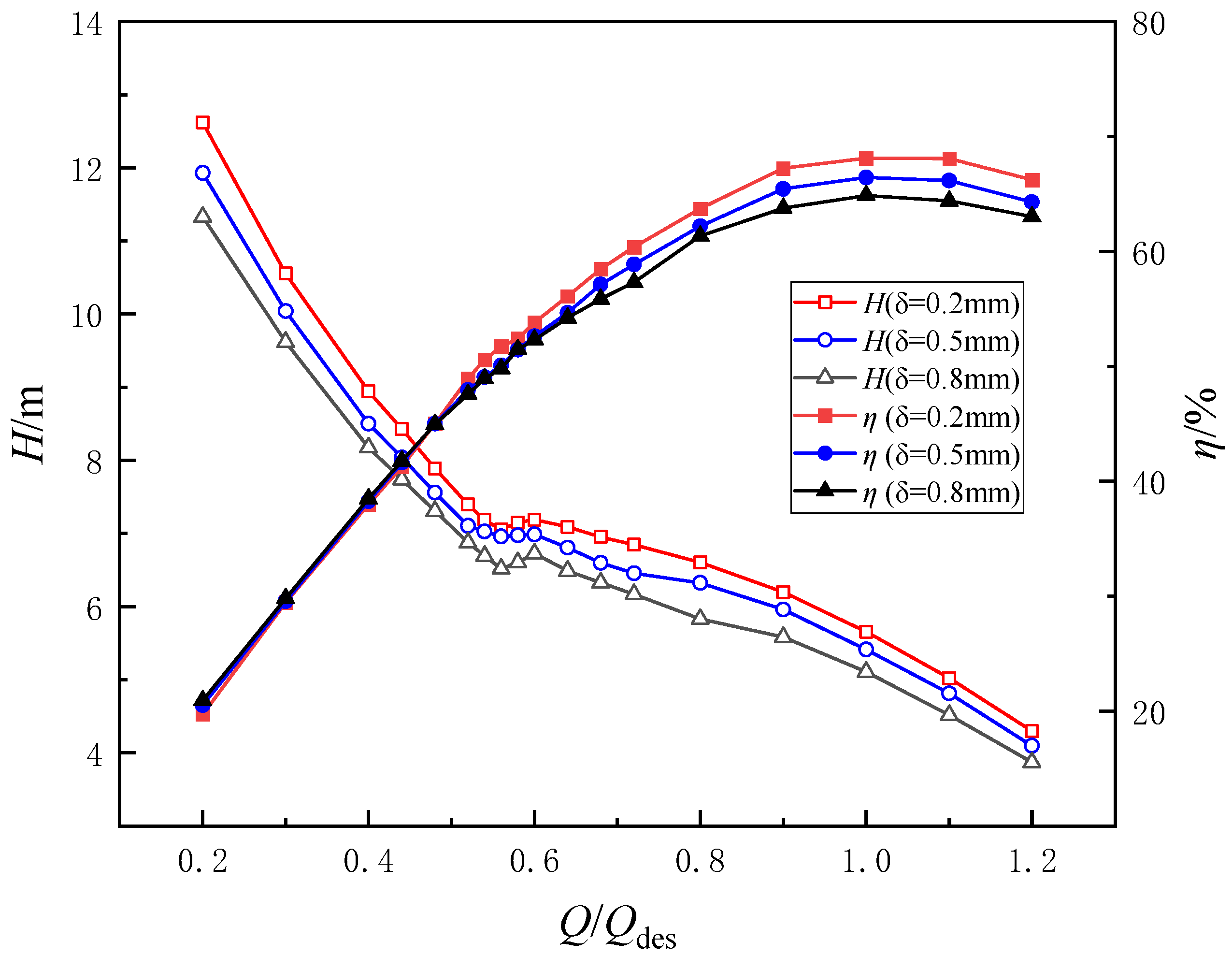
When the flow rate is between 0.4Qdes and 0.8Qdes, the head changes slowly with the flow rate. By simulating more operating points, it is found that the head curve has a positive slope characteristic, which indicates that rotational stall may occur when the mixed-flow pump operates in this flow rate range. Relevant studies have shown that mixed-flow pumps are prone to rotational stall under small flow rate conditions, and the corresponding external characteristics will show unstable characteristics, which are mainly marked by the appearance of positive slope head curves. The degree of sudden drop in head is related to the intensity of rotational stall, and the larger the intensity of rotational stall, the more obvious the sudden drop in head.
As shown in Figure 7, to study the influence of different tip clearances on the rotational stall characteristics of the mixed-flow pump, the external characteristic curves were measured when the tip clearances δ were 0.2, 0.5, and 0.8 mm respectively. It can be seen from the figure that the trends of the external characteristic curves for the three tip clearances are basically consistent, and with the increase in the clearance, the head of the mixed-flow pump decreases in the entire flow rate range. This is because the increase in the clearance leads to increasing tip losses caused by tip leakage. The external performance differences in the mixed-flow pump under different tip clearances can be analyzed in combination with the flow separation mechanism and energy loss terms as follows: As the tip clearance increases, the leakage flow at the impeller tip is significantly enhanced. A large amount of high-pressure fluid leaks directly from the pressure side to the suction side of the blade, which disrupts the development of the boundary layer on the blade surface and aggravates the flow separation and backflow region on the blade suction side. The larger the clearance is, the more obvious the flow separation becomes and the more disturbed the main flow is, leading to a significant increase in vortex loss, turbulent dissipation loss and wall friction loss inside the pump. At the same time, the tip leakage flow interacts with the main flow through extrusion and shearing, forming large-scale local vortex structures, which further increases the local energy dissipation and the rotor–stator interaction loss. As a result, the work efficiency of the impeller decreases, and the head and efficiency curves decline overall.
In addition, the heads of the three clearances all start to decrease from 0.6Qdes, which is the critical stall point, and reach the minimum at 0.56Qdes, which is the deep-stall point. The flow rate range where the positive slope curve appears is basically consistent. When δ = 0.8 mm, the head drop is the largest, and the positive slope unstable characteristic is the most obvious, indicating that the rotational stall phenomenon occurring at this time may be the most serious. The saddle-shaped curve is only the external manifestation of the rotational stall of the mixed-flow pump; to accurately judge the severity of rotational stall, further analysis from the internal flow field is required. In addition, under small flow rate conditions, the influence of tip clearance on pump efficiency is very small while under large flow rate conditions, with the increase in tip clearance, the pump efficiency gradually decreases.

4.2. Analysis of the Internal Flow Field in a Mixed-Flow Pump Under Stall Conditions

4.2.1. Flow Patterns of Mixed-Flow Pump Under Stall Conditions with Different Tip Clearances

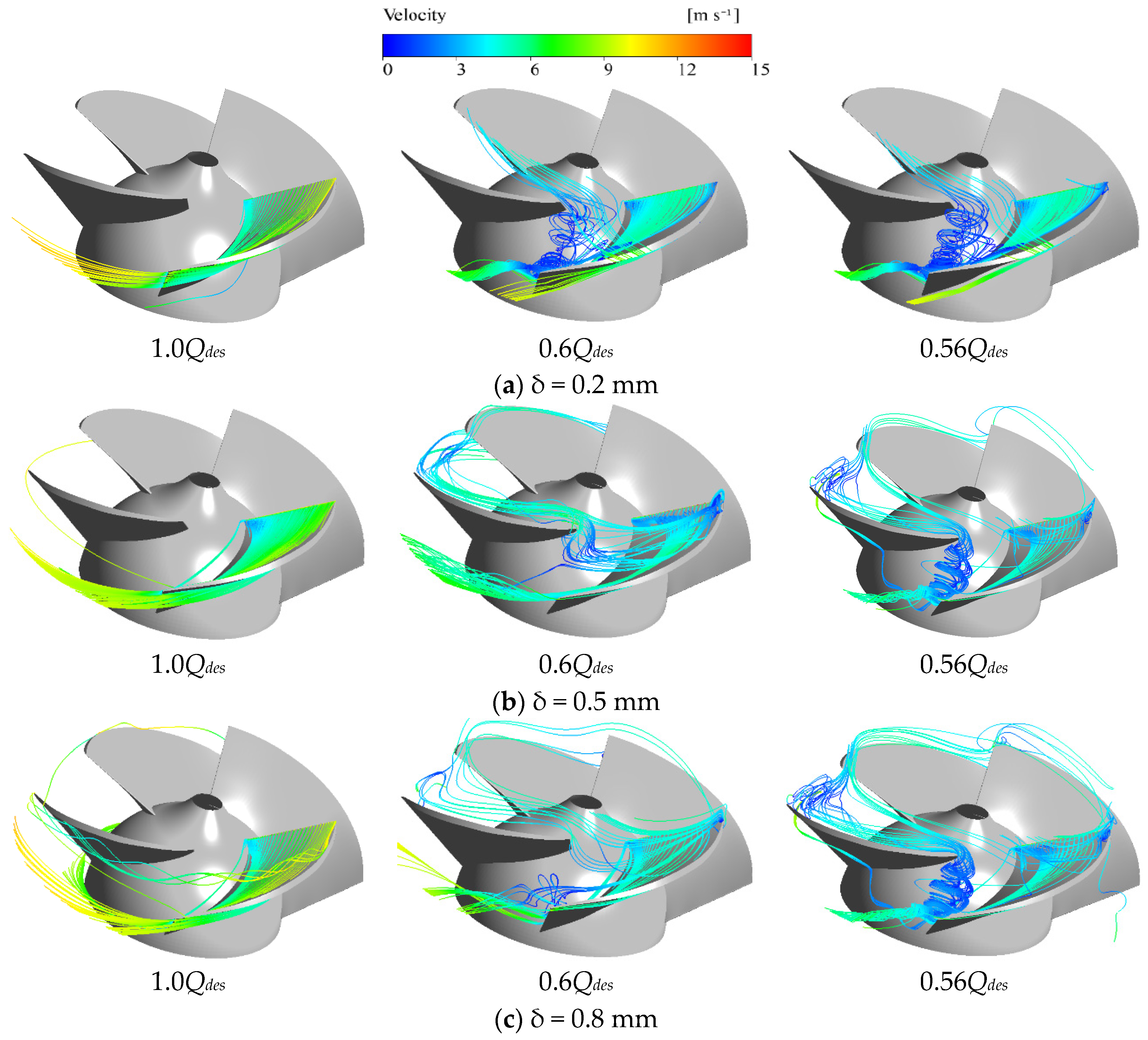
For the mixed-flow pumps with three different tip clearances (δ = 0.2 mm, 0.5 mm, and 0.8 mm), their flow characteristics under stall conditions were studied respectively at the critical stall condition 0.6Qdes and deep-stall condition 0.56Qdes. Figure 8 presents the 3D velocity streamline distribution starting from the leading edge of the impeller. It can be seen from the figure that under the critical stall condition 0.6Qdes, obvious secondary flow occurs at the leading edge tip of the blade. A part of the flow separation generated at the blade tip flows into the current flow channel, while the other part flows into the next-stage flow channel or towards the inlet by passing over the tip of the next blade. Moreover, with the increase in the impeller tip clearance, the intensity of the secondary flow at the blade tip becomes stronger, and the influence range of the flow that passes over the next blade tip and flows into the next-stage flow channel becomes wider.
Under the deep-stall condition 0.56Qdes, an obvious “tornado”-shaped vortex structure, namely the stall vortex, appears near the suction surface at the outlet of the flow channel. The stall vortex at the outlet of the flow channel rotates and rises towards the inlet blade tip, which causes serious disturbance to the incoming flow at the inlet of the next-stage flow channel. By comparing the streamlines of the three different tip clearances, it can be found that when the tip clearance δ = 0.2 mm, the stall vortex at the outlet of the flow channel has a certain impact on the inlet of the next-stage flow channel. However, when the tip clearance increases to 0.5 mm or even 0.8 mm, the disturbance of the stall vortex on the inlet of the next-stage flow channel becomes more intense. Furthermore, new stall vortices are formed at the inlet of the next-stage flow channel, which in turn affects the subsequent flow channels. Therefore, it can be concluded that with the increase in the tip clearance, the flow pattern inside the impeller becomes more complex, the internal flow loss increases, and the energy loss of the pump becomes more serious.

4.2.2. Morphology Analysis of Leakage Flow in a Mixed-Flow Pump Under Stall Conditions

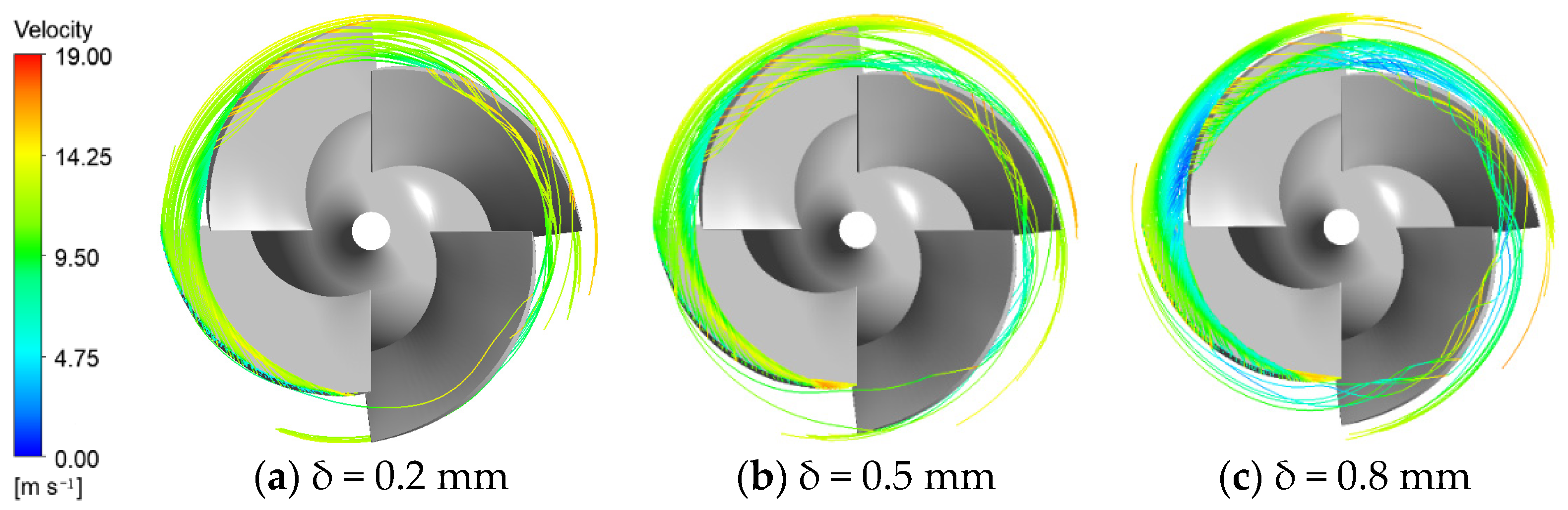
Regarding the tip leakage flow, the shape and trajectory of the leakage flow in the mixed-flow pump under different tip clearances were analyzed. Figure 9 shows the streamline distribution of the leakage flow under three different tip clearances at the 1.0Qdes operating condition. It can be seen from the figure that the leakage flow at the blade tip inlet has a certain separation angle with the blade. The part with a smaller separation angle flows into the flow channel along the direction of the main flow, while the part with a larger separation angle flows back to the blade tip inlet of the next-stage blade. Due to the interaction between these two parts of the leakage flow, the leakage flow flows out in a spiral shape at the flow channel outlet.
Under the three different tip clearances, the flow channel area occupied by the leakage flow shows a trend of first increasing and then decreasing from the impeller inlet to the impeller outlet. Moreover, at the impeller outlet, the leakage flow flows along the pressure surface of the adjacent blade with a relatively long flow trajectory. With the increase in the tip clearance, the flow channel area occupied by the leakage flow becomes larger and larger, and the development distance of the leakage flow from the outlet of the current blade to the next-stage blade becomes farther and farther. Therefore, with the increase in the tip clearance, the leakage flow rate increases, and its impact on the impeller flow channel becomes more and more significant.
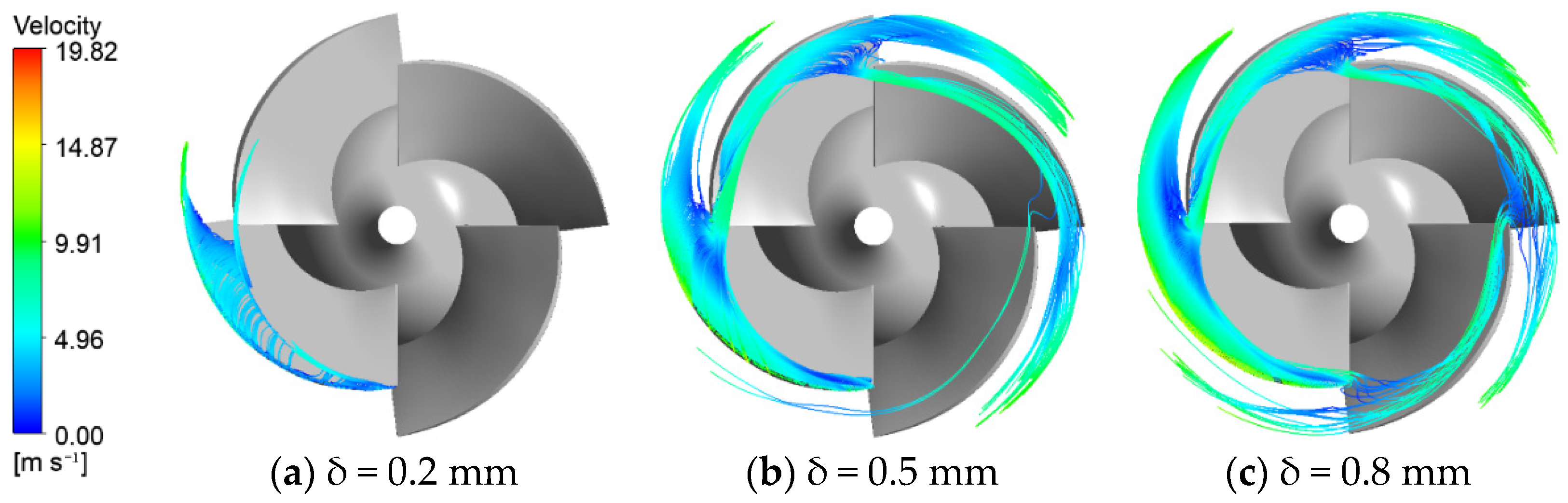
The streamline distribution of the leakage flow under three different tip clearances at the 0.6Qdes operating condition was obtained, as shown in Figure 10. It can be seen from the figure that under the near-stall condition, the shape and trajectory of the leakage flow have changed significantly. Compared with the 1.0Qdes operating condition, the tip leakage flow velocity is lower, and the flow trajectory of the leakage flow at the impeller outlet becomes shorter. The leakage flow at the blade tip inlet develops into a large low-velocity vortex at the position of the suction surface stall vortex, and the leakage flow at the blade tip outlet is deflected toward the inlet direction under its influence, flowing into the next-stage flow channel.
At the outlet of adjacent blades, when δ > 0.2 mm, obvious vortices are formed at the impeller outlet, thereby causing a blockage of the flow channel. Moreover, the larger the clearance, the larger the vortices, and the stronger the blocking effect on the flow channel. In addition, at this time, the leakage flow flows from the tip clearance near the inlet of the adjacent blade and the leading edge of the adjacent blade to the adjacent flow channel, which has a significant impact on the inlet flow field of the adjacent blade. Under the small clearance condition (δ = 0.2 mm), the overall leakage flow is relatively weak. Flow separation and stall blockage only occur in the local circumferential region of the impeller. Accordingly, the leakage flow is concentrated and originates from approximately one quarter of the impeller circumference. As the clearance increases, the intensity of leakage flow is significantly enhanced. Meanwhile, unstable stall disturbances propagate along the entire circumferential passages of the impeller. At this time, the leakage flow is fully developed and uniformly distributed over the entire impeller annulus.

4.3. Vortex Distribution Characteristics of Mixed-Flow Pumps with Different Tip Clearances Under Stall Conditions

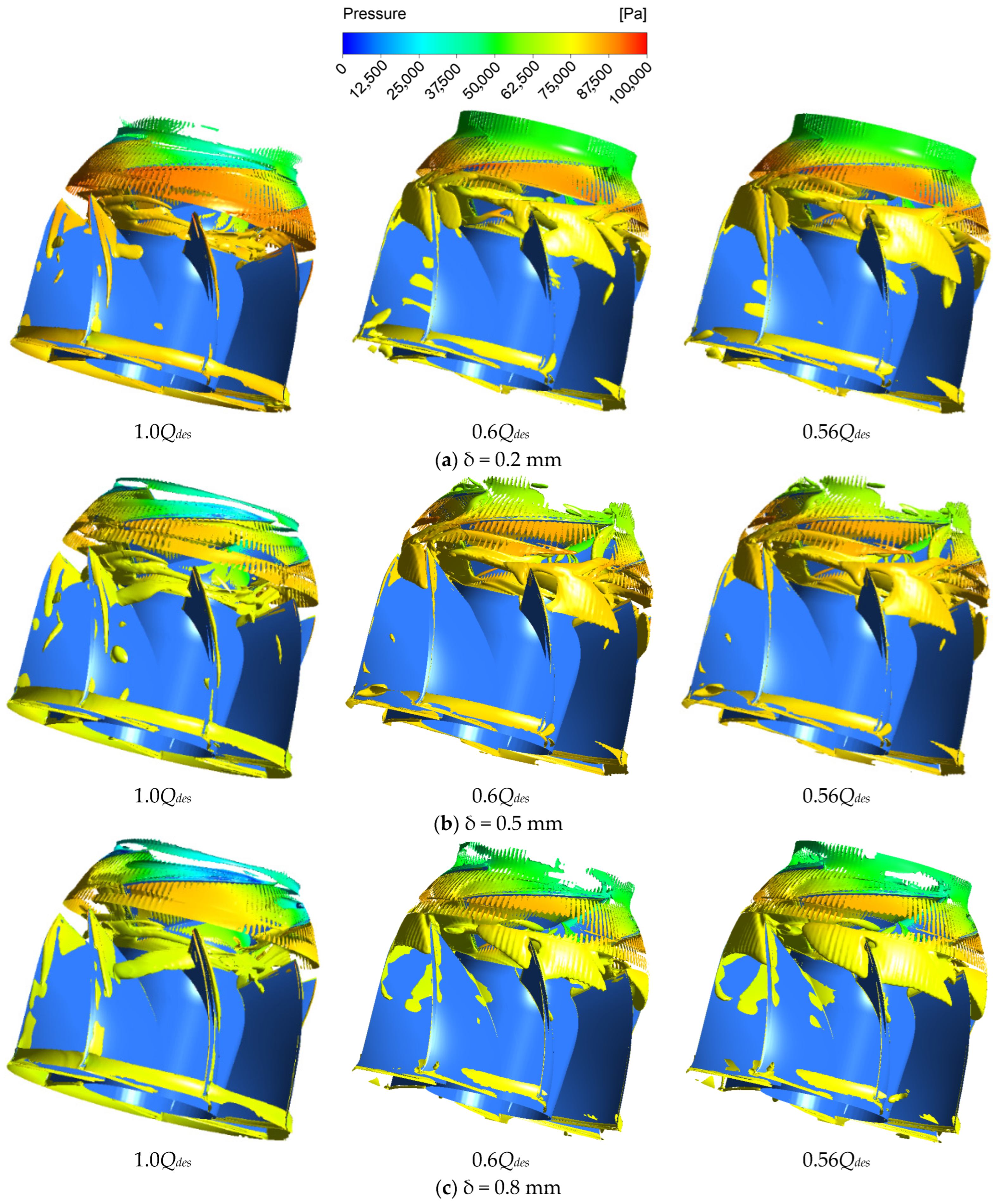
To verify the influence of different impeller clearances on the stall vortex and leakage vortex of the mixed-flow pump under stall conditions, the three-dimensional vorticity field distributions inside the impellers of the mixed-flow pumps with three different clearances were compared, as shown in Figure 11. In this paper, the Q-criterion is adopted to identify vortex structures in the flow field, combined with turbulent kinetic energy to mark the vortex intensity. Considering the velocity gradient characteristics inside the mixed-flow pump, the elimination of wall shear pseudo-vortices, the benchmarking of previous numerical cases of the same pump model, and mesh numerical accuracy, the threshold is determined as Q = 45,000 s−2. This threshold effectively filters out spurious vortices in the blade boundary layer, completely captures typical coherent vortices including passage vortices, tip leakage vortices and trailing edge shedding vortices, and matches well with the turbulent kinetic energy field solved by the SST k-ω model, ensuring consistent comparative analysis of vortex structures under different operating conditions.
By comparing the vorticity distribution diagrams of the guide vane part under the stall conditions of 0.56Qdes and 0.6Qdes, it can be found that under the stall state, the vorticity change under different tip clearances is more obvious. Therefore, it can be concluded that the intensity of the leakage vortex under the stall state is more affected by the tip clearance. Observing the vorticity distribution diagrams under different flow rate conditions with the three different tip clearances, it can be seen that under the critical stall state (0.6Qdes), the intensity of the leakage vortex is significantly enhanced compared with the rated condition (1.0Qdes), and when the deep-stall condition (0.56Qdes) is reached, the intensity of the leakage vortex will continue to increase.
In summary, with the gradual increase in the deviation of the mixed-flow pump from the design flow rate condition, the degree of rotational stall deepens, the structure of the leakage vortex at the impeller outlet undergoes significant changes, and the intensity of the stall vortex and leakage vortex between the impeller and the guide vane continues to increase. With the increase in the tip clearance (rim clearance), the change in the stall vortex is small, while the intensity of the leakage vortex increases, and the blocking effect on the flow channel becomes stronger.

4.4. Flow Characteristics of Mixed-Flow Pump Under Different Flow Rate Conditions

Since the tip leakage flow of the mixed-flow pump will interfere with the normal operation of the mixed-flow pump and have a significant impact on the internal flow of the impeller, at the same time, the flow instability caused by the leakage flow will also change the velocity and pressure distribution of the flow field. During the high-speed rotation of the impeller, a certain pressure difference will inevitably be formed between the pressure surface and the suction surface on both sides of the impeller blade. The influence of the leakage flow on the flow characteristics of the mixed-flow pump was further studied by analyzing the pressure change from the inlet to the outlet of the impeller blade.
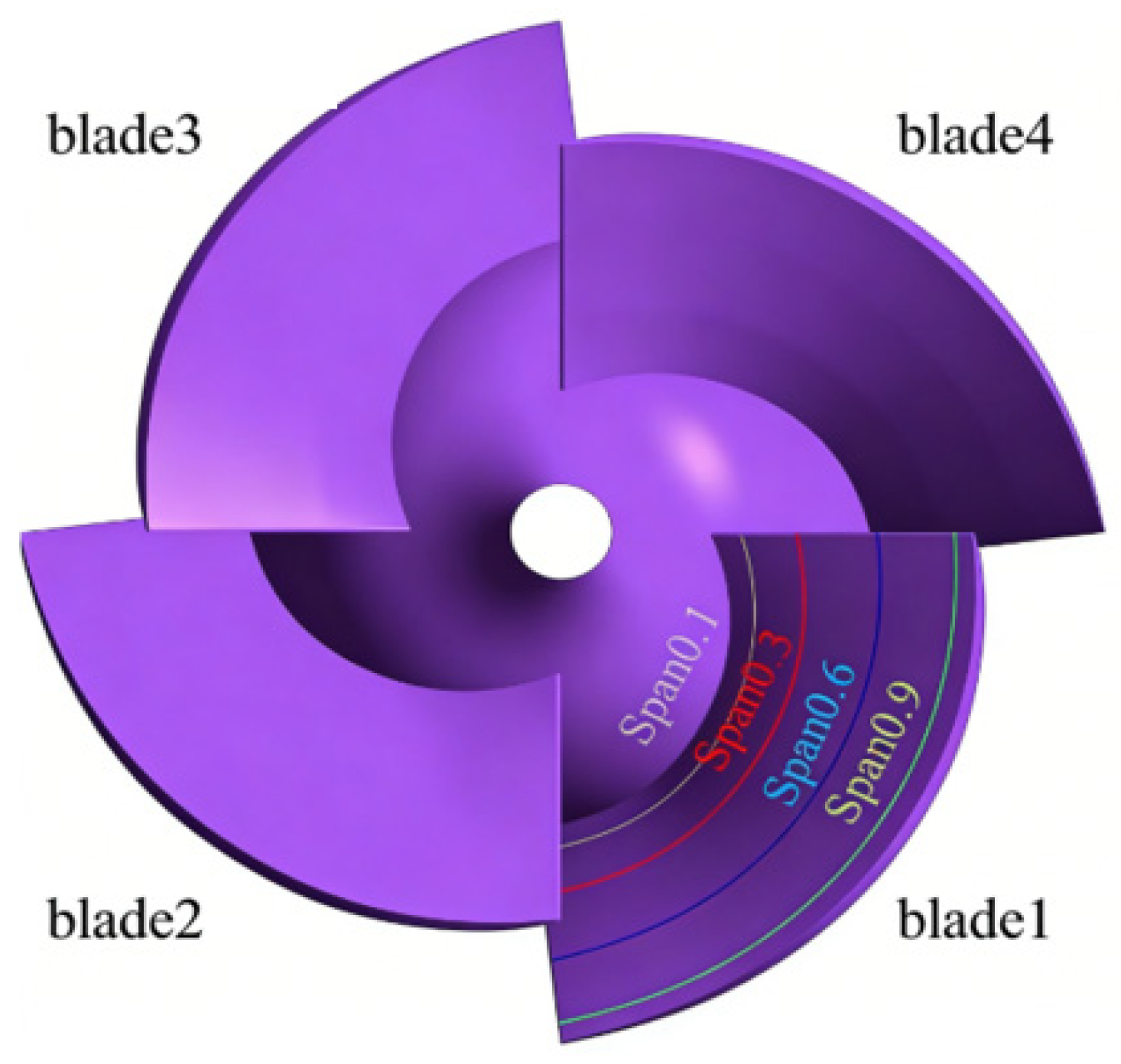
Streamlines at different blade heights of the blade were selected for analysis, as shown in Figure 12. The blade was divided into four streamlines according to different spanwise heights, Span = 0.1, Span = 0.3, Span = 0.6, and Span = 0.9, to analyze the pressure change at different blade height positions of the blade.
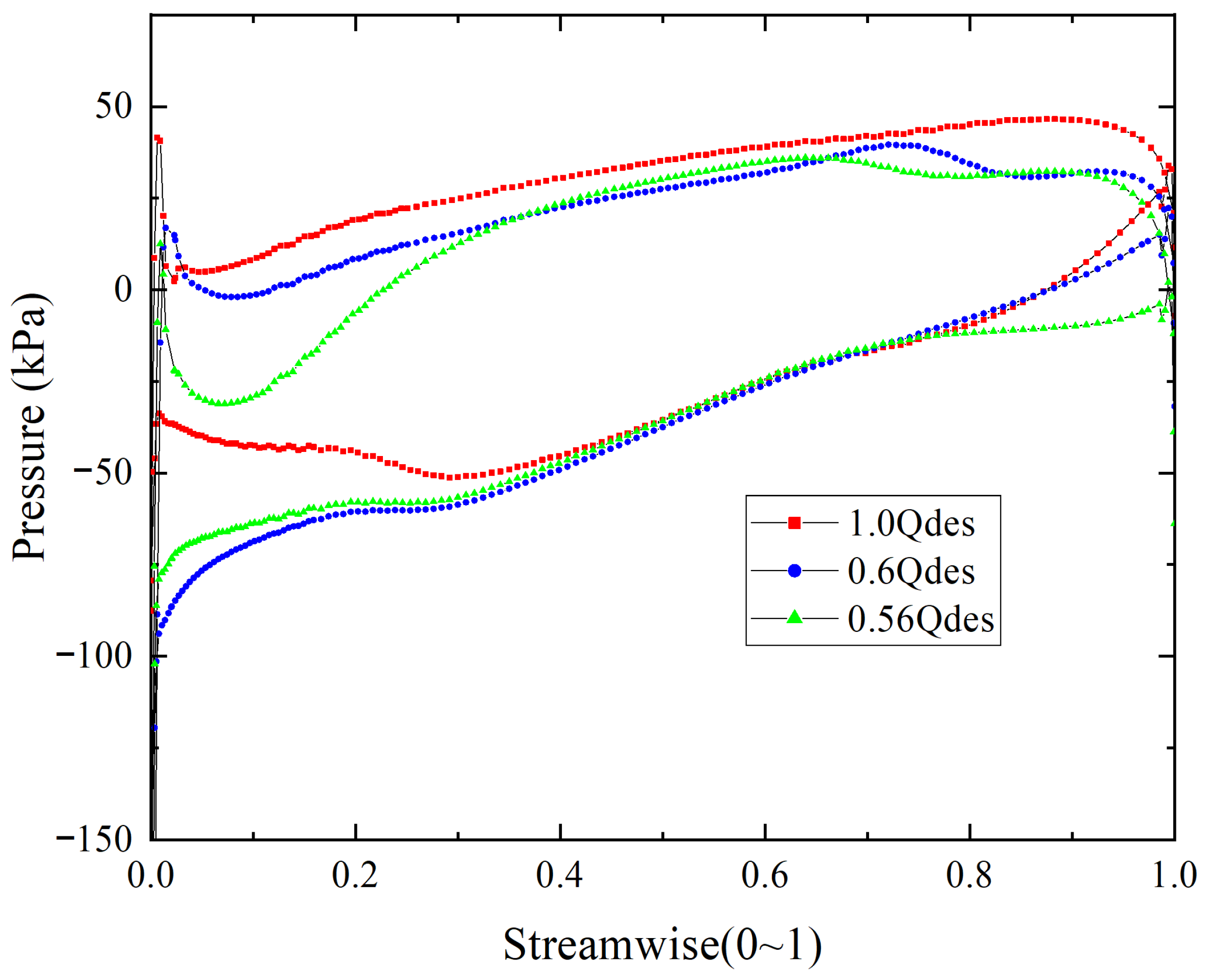
Figure 13 compares the pressure distribution on the Span = 0.6 section under different flow rate conditions. Observing the pressure distribution on the pressure surface section, it can be seen that the impeller works normally under the 1.0Qdes flow rate condition, with relatively uniform pressure distribution on both sides, generally showing a trend of increasing with the increase in the streamwise coefficient. The pressure decreases slightly when reaching the end of the streamwise direction, indicating that the flow patterns at both ends of the blade streamline are more complex.
Under the critical stall condition (0.6Qdes) and deep-stall condition (0.56Qdes), the pressure on the pressure surface shows a trend of first decreasing and then increasing with the increase in the streamwise coefficient in the range of 0 < Streamwise < 0.3. Moreover, the variation amplitude of the 0.56Qdes condition is larger than that of the 0.6Qdes condition, and the pressure is lower. However, in the range of 0.3 < Streamwise < 0.8, the pressure change on the pressure surface fluctuates within a small range compared with the rated condition, which is caused by the vorticity attached to the blade surface.
When Streamwise approaches 1.0, the pressure of the two stall conditions decreases gradually like that of the rated condition, and the pressure drop amplitude of the deep-stall condition is larger. At the blade spanwise range of 0 < Streamwise < 0.4, the pressure on the suction surface of the blade under the 1.0Qdes flow rate condition decreases to a certain extent with the increase in the streamwise coefficient, while it shows an increasing trend under the 0.6Qdes and 0.56Qdes flow rate conditions.
In the range of 0.4 < Streamwise < 0.8, the pressures on the blade suction surface under the three flow rate conditions are highly consistent. When Streamwise approaches 1.0, the pressures on the blade suction surface under the three flow rate conditions gradually increase, and with the deepening of the stall degree, the pressure on the blade suction surface becomes lower.
In summary, with the gradual increase in the deviation of the flow rate condition, the internal flow field of the impeller is more affected by the stall vortex and leakage vortex.

4.5. Flow Characteristics of Mixed-Flow Pumps with Different Tip Clearances

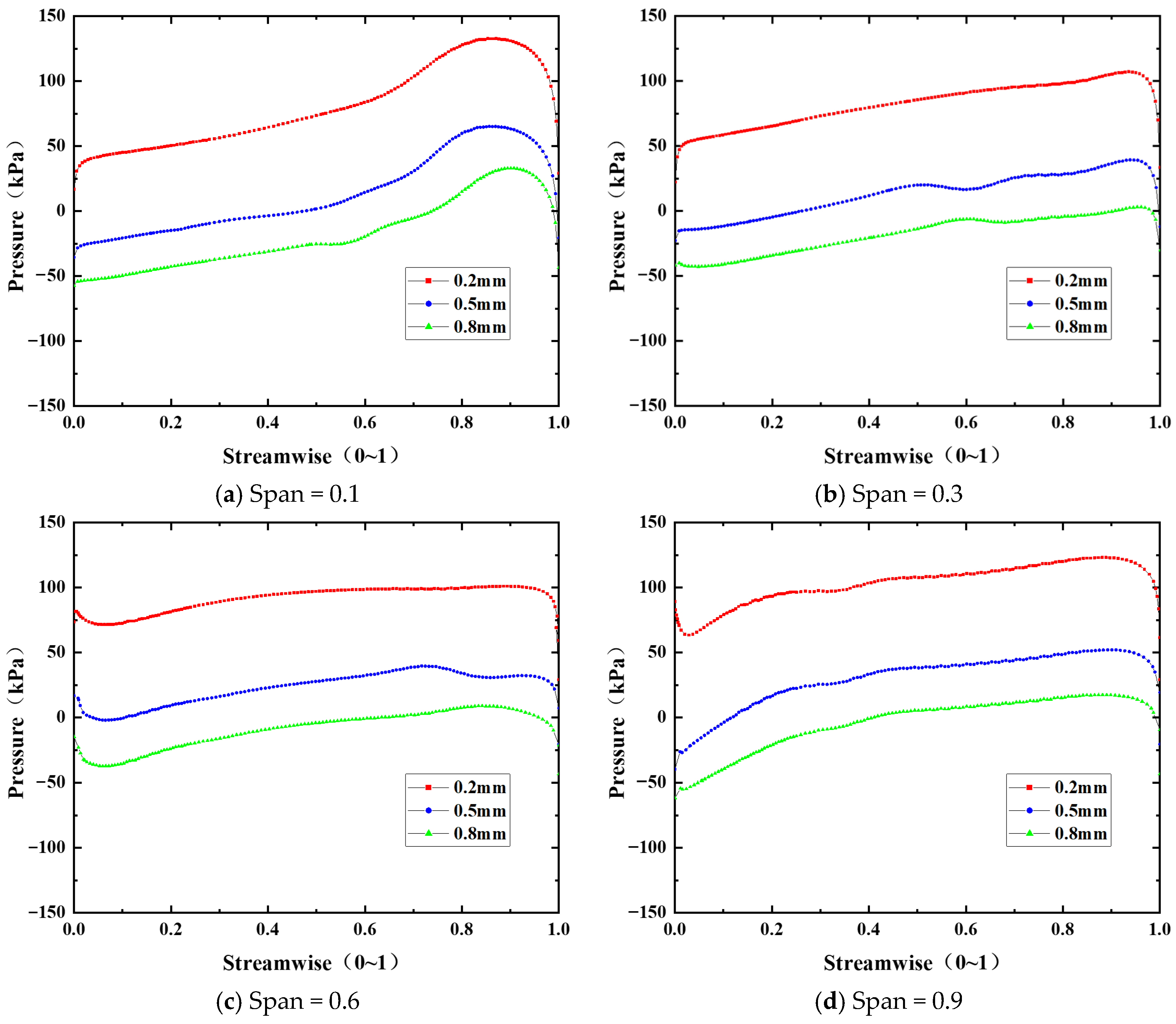
Since the leakage vortex will affect the next-stage blades, it is necessary to compare the pressure distribution on the blade surface under different clearance conditions to explore the influence of impeller clearance on the leakage vortex under stall conditions. Figure 14 shows the pressure distribution on the pressure surface at different section positions of the blade surface under three different clearance conditions at the 0.6Qdes flow rate condition.
It can be seen from the pressure distribution curves on the pressure surface of the four sections (Span = 0.1, 0.3, 0.6, and 0.9) under different tip clearances (0.2 mm, 0.5 mm, and 0.8 mm) that the size of the tip clearance has a significant impact on the pressure distribution of the mixed-flow pump impeller section and the leakage flow characteristics. Under each Span section, the 0.2 mm small clearance condition maintains the highest pressure level and the steepest pressure gradient. The pressure rises steadily along the flow direction, reaches the peak value in the near-outlet section, and gradually decreases when the streamline approaches 1.0. The leakage flow is strongly constrained, only forming a thin-layer jet, with minimum energy loss.
With the increase in the clearance to 0.5 mm, the overall pressure level decreases significantly, the pressure gradient becomes gentle, the peak pressure decreases, the intensity of the leakage flow increases, and the flow disturbance intensifies. When the clearance is further expanded to 0.8 mm, the pressure distribution is the flattest, the peak pressure drops to the lowest, the leakage flow develops into a large-scale backflow and vortex, and the energy loss is the most serious.
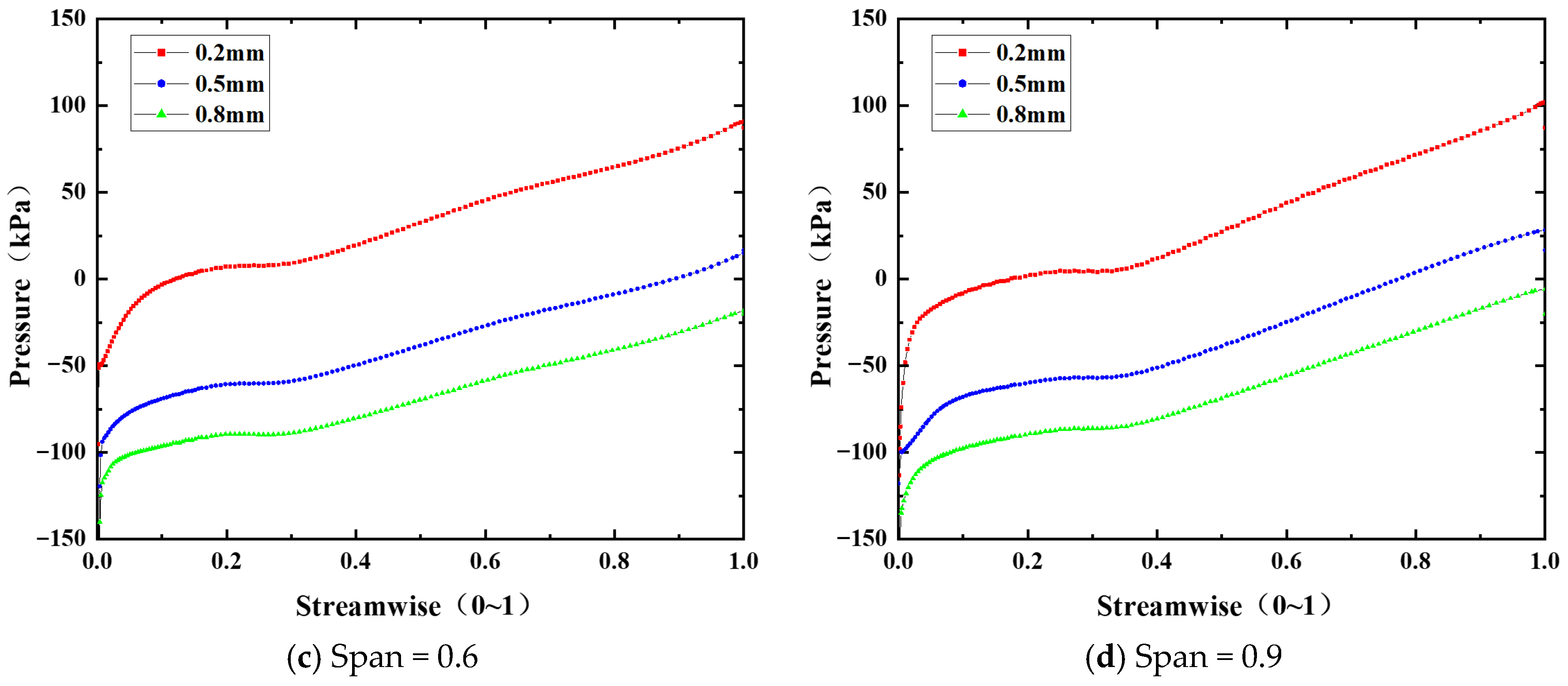
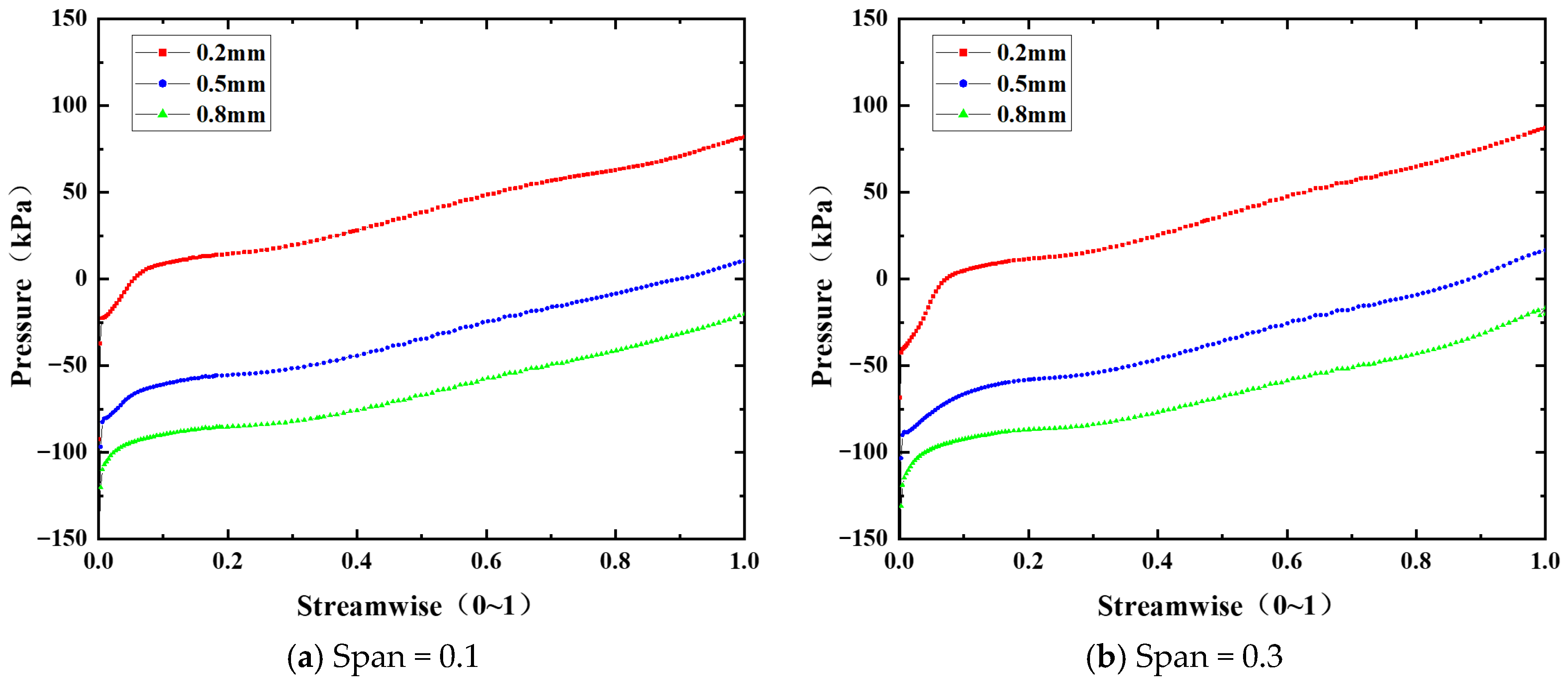
Figure 15 shows the pressure distribution on the suction surface at different section positions of the blade surface under three different clearance conditions. It can be found from the suction surface pressure distribution curves of the four sections (Span = 0.1, 0.3, 0.6, and 0.9) under different tip clearances (0.2 mm, 0.5 mm, and 0.8 mm) that the variation trends of the suction surface pressure under the three clearances are highly consistent, generally showing a trend of increasing pressure along the streamline direction, and the pressure on the suction surface gradually decreases with the increase in the clearance.
Near the leading edge of the impeller, there is a section of non-uniform increase in the pressure on the blade suction surface, and the pressure will increase at a constant speed after the pressure is fully developed along the streamline. At the Span = 0.1 position, it is fully developed within 0 < Streamwise < 0.05. However, as the section position is closer to the rim, the pressure development interval gradually increases. When Span = 0.9, the suction surface pressure shows an uneven increase within 0 < Streamwise < 0.4, which indicates that the closer the leakage flow is to the blade tip region, the greater the influence of the upstream tip leakage flow on the pressure on the impeller surface.


5. Conclusions

By building a mixed-flow pump external characteristic test bench, conducting three-dimensional solid modeling, and combining computational fluid dynamics (CFD) simulation and numerical technology, the influence of tip clearance (rim clearance) on the vorticity, surface pressure distribution, and flow characteristics of the mixed-flow pump impeller under stall conditions was studied. The main conclusions are as follows:
(1)
The external characteristic curves of the mixed-flow pumps with three different tip clearances all have positive slope characteristics, and the operating points where stall occurs are basically consistent. With the increase in the tip clearance, the tip loss caused by tip leakage becomes more and more significant, leading to a gradual decrease in the head of the mixed-flow pump in the entire flow rate range. At the same time, from the small flow rate condition to the large flow rate condition, the influence of the tip clearance on the efficiency of the mixed-flow pump gradually increases.
(2)
When rotational stall occurs in the mixed-flow pump, the stall vortex at the outlet of the flow channel has a certain impact on the inlet of the next-stage flow channel. With the increase in the tip clearance, the stall vortex not only causes more intense disturbance to the inlet of the next-stage flow channel but also forms new stall vortices at the inlet of the next-stage flow channel, which further affects the subsequent flow channels. Therefore, the increase in the tip clearance makes the flow pattern inside the impeller more complex, increases the internal flow loss, and thus leads to more serious energy loss.
(3)
Under the near-stall condition, the leakage flow at the blade tip inlet develops into a large low-velocity vortex at the position of the suction surface stall vortex. The leakage flow at the blade tip outlet is deflected toward the inlet direction under the influence of this vortex and flows into the next-stage flow channel. At the outlet of adjacent blades, with the increase in the tip clearance, obvious vortices are formed at the impeller outlet, resulting in the blockage of the flow channel. Moreover, the larger the clearance, the larger the vortices, the greater the formed backflow, and the stronger the blocking effect on the flow channel.
(4)
When the tip clearance is 0.8 mm, the pressure distribution on the impeller surface is significantly lower than that under other clearance conditions, which is related to the influence of the upstream tip leakage flow on the impeller inlet. For the mixed-flow pump under stall conditions, the increase in the tip clearance leads to a decrease in the impeller surface pressure, intensifies flow disorder, enhances the intensity of the leakage vortex, and reduces the work capacity of the impeller. Reasonable control of the tip clearance can effectively inhibit the development of leakage flow, stabilize the pressure distribution, and reduce flow loss.
Since rotating stall is an intense turbulent flow phenomenon, the widely adopted SST k-ω turbulence model is employed in this study, and its applicability still requires further comparative verification. Accordingly, subsequent research can be carried out on the selection of turbulence models to improve the prediction of spatially and temporally unstable stall characteristics. In addition, this paper mainly focuses on numerical simulation analysis. Future PIV experiments combined with high-speed photography can be conducted to dynamically capture the morphology and trajectory of tip leakage vortices, so as to further reveal the effects of leakage flow on rotating stall under different rim clearance conditions.

Author Contributions

Conceptualization, M.L. and W.L.; methodology, M.L.; validation, M.L. and W.L.; formal analysis, M.L.; investigation, H.L.; resources, M.L.; data curation, W.L.; writing—original draft preparation, M.L.; writing—review and editing, M.L.; visualization, M.L.; supervision, R.K.A.; project administration, W.L.; funding acquisition, W.L. All authors have read and agreed to the published version of the manuscript.

Funding

This work was sponsored by the Key International Cooperative research of the National Natural Science Foundation of China (No. 52120105010).

Data Availability Statement

The original contributions presented in this study are included in the article. Further inquiries can be directed to the corresponding author.

Acknowledgments

The authors sincerely appreciate the administrative coordination and project management assistance provided by supervisors and researchers from various institutions during the implementation of this research, which was supported by the National Natural Science Foundation of China (Grant No. 52120105010). Such valuable support greatly facilitated the smooth progress of this study and made the final completion of this paper possible.

Conflicts of Interest

The authors declare no conflicts of interest.

References

  1. Li, W.; Ji, L.; Agarwal, R.; Shi, W.; Zhou, L. Mixed-Flow Pumps: Modeling, Simulation, and Measurements; ASME-Wiley: New York, NY, USA, 2024; pp. 1–320. [Google Scholar]
  2. Jiao, W.; Wang, Y.; Cheng, L.; Zhao, H. Experimental study on thrust pulsation characteristics of water jet propulsion pump units. Ocean Eng. 2023, 284, 115079. [Google Scholar] [CrossRef]
  3. Liu, X.; Li, C.; Huang, X.; Liu, Q.; Huang, D.; Yang, W.; Chen, C. Localization development of mixed-flow pump impeller chamber. China High-Tech. 2023, 82–84. [Google Scholar] [CrossRef]
  4. Pan, W.; Wei, W.; Dai, Y. Analysis on Overhaul Difficulties and Countermeasures of Large-scale Mixed-flow Pump. Shaanxi Water Resour. 2024, 177–179+183. [Google Scholar] [CrossRef]
  5. Han, Z.; Wang, K.; Dai, L.; Li, K.; Wang, X. Recent Application of Heat Pump Systems for Environmental Control in Livestock Facilities–A Review. Agriculture 2024, 14, 122309. [Google Scholar] [CrossRef]
  6. Lin, L.; Duan, Y.; Aziz, T.; Shami, A.; Asmari, F.A.; El Hadi Mohamed, R.A.; Cui, H. Design of a Peristaltic Pump-Based Feeding Device for Achieving Continuous Production in Food 3D Printing. Innov. Food Sci. Emerg. Technol. 2025, 100, 103941. [Google Scholar] [CrossRef]
  7. Li, D.; Qu, J.; Mo, Y.; Zhu, Q.; Zhu, D. Sizing Optimization of a Stand-Alone Multi-Energy Complementary Water Pumping System for Hose-Drawn Traveler in Typical Regions of China. Agriculture 2026, 16, 90. [Google Scholar] [CrossRef]
  8. Ji, L.; Li, W.; Shi, W.; Tian, F.; Agarwal, R. Effect of blade thickness on rotating stall of mixed-flow pump using entropy generation analysis. Energy 2021, 236, 121381. [Google Scholar] [CrossRef]
  9. Ji, L.; Li, W.; Shi, W.; Li, E. Study on Passive Suppression Method of Rotating Stall in Mixed-Flow Pump: Using Different Impeller Rim Structures. Proc. Inst. Mech. Eng. Part A-J. Power Energy 2023, 237, 1153304. [Google Scholar] [CrossRef]
  10. Li, W.; Ji, L.; Li, E.; Zhou, L.; Agarwal, R. Effect of Tip Clearance on Rotating Stall in a Mixed-Flow Pump. J. Turbomach. 2021, 143, 091013. [Google Scholar] [CrossRef]
  11. Yang, F.; Wu, Y.; Chen, Z.; Spence, S.; Li, B. The Unsteadiness of Tip Leakage Vortex Breakdown and Its Role in Rotating Instability. Phys. Fluids 2023, 35, 107108. [Google Scholar] [CrossRef]
  12. Liu, Y.; Tan, L. Tip clearance on pressure fluctuation intensity and vortex characteristic of a mixed-flow pump as turbine at pump mode. Renew. Energy 2018, 129, 606–615. [Google Scholar] [CrossRef]
  13. Ji, L.; Pu, W.; Li, W.; Shi, W.; Yang, Y.; Agarwal, R.K. Flow instability in mixed-flow/axial-flow pump: A review of relationship between tip leakage flow distortion and rotating stall. Proc. Inst. Mech. Eng. Part A-J. Power Energy 2025, 239, 225–253. [Google Scholar] [CrossRef]
  14. Ji, L.; He, S.; Li, Y.; Shi, W.; Li, W. Investigation of Energy Loss Mechanism of Shroud Region in a Mixed-Flow Pump under Stall Conditions. Proc. Inst. Mech. Eng. Part A-J. Power Energy 2023, 237, 1162165. [Google Scholar] [CrossRef]
  15. Chen, H.; Zhang, L.; Li, M. Effects of Tip Clearance and Impeller Eccentricity on the Aerodynamic Performance of Mixed-Flow Fan. Symmetry 2023, 15, 201. [Google Scholar] [CrossRef]
  16. Rakibuzzaman, M.; Islam, M.D.; Kim, H.-H.; Suh, S.-H.; Zhou, L.; Iqbal, A.P. Numerical Simulation of Solid–Liquid Two-Phase Flow Analysis of Submersible Drainage Pumps. Irrig. Drain. 2025, 74, 2279–2294. [Google Scholar] [CrossRef]
  17. Wang, Z.; Chen, Y.; Rakibuzzaman, M.; Agarwal, R.; Zhou, L. Numerical and Experimental Investigations of a Double-Suction Pump With a Middle Spacer and a Staggered Impeller. Irrig. Drain. 2025, 74, 944–956. [Google Scholar] [CrossRef]
  18. Liu, Y.; Tan, L. Spatial-Temporal Evolution of Tip Leakage Vortex in a Mixed-Flow Pump With Tip Clearance. J. Fluids Eng. 2019, 141, 081302. [Google Scholar] [CrossRef]
  19. Li, W.; Agarwal, R. Numerical Simulation of Incipient Rotating Stall Characteristics in a Mixed-Flow Pump. In Proceedings of the AIAA SciTech Forum; American Institute of Aeronautics and Astronautics, Inc.: Reston, VA, USA, 2022. [Google Scholar]
  20. Yan, S.; Luo, X.; Feng, J.; Xie, H.; Sun, S.; Zhu, G. Dynamic Characteristics of Tip Leakage Vortex in a Mixed-Flow Gas-Liquid Two-Phase Pump. J. Hydroelectr. Eng. 2024, 43, 116–124. [Google Scholar]
  21. Li, W.; Ji, L.; Li, E.; Shi, W.; Agarwal, R.; Zhou, L. Effect of Circumferential Spokes on the Rotating Stall Flow Field of Mixed-Flow Pump. Energy 2024, 290, 130260. [Google Scholar] [CrossRef]
  22. Li, W.; Ji, L.L.; Li, E.D.; Shi, W.D.; Agarwal, R.; Zhou, L. Numerical investigation of energy loss mechanism of mixed-flow pump under stall condition. Renew. Energy 2020, 167, 740–760. [Google Scholar] [CrossRef]
  23. Li, W.; Ji, L.; Shi, W.; Li, E.; Ma, L. Flow Characteristics of Tip Leakage Flow in Mixed-Flow Pump under Stall Condition. J. Eng. Thermophys. 2021, 42, 2858–2868. [Google Scholar]
  24. Liu, Y.; Tan, L.; Han, Y. Investigation on Flow Structure and Unsteady Characteristics of Tip Leakage Vortex in Mixed-Flow Pump Based on Zonal RANS-LES. J. Mech. Eng. 2024, 60, 309–316+329. [Google Scholar]
  25. Liu, Y.; Xu, L.; Zhang, G.; Liu, J.; Peng, X. Experimental Study on Vortex Structures in Tip Clearance Flow. Acta Aerodyn. Sin. 2022, 40, 57–64. [Google Scholar]
  26. Han, Y.; Tan, L. Spatial-temporal evolution of tip leakage cavitation with double-hump in a mixed-flow pump with tip clearance. Phys. Fluids 2023, 35, 045152. [Google Scholar]
  27. Ye, Q.; Wang, Y.; Shao, X. Dynamics of cavitating tip vortex. J. Fluid Mech. 2023, 967, A30. [Google Scholar] [CrossRef]
  28. Ji, L.; Liu, Z.; Li, W. PIV Investigation of Stalled Flow Field near the Blade Rim Region of Mixed-Flow Pump under Different Tip Clearances. Flow Meas. Instrum. 2024, 99, 102668. [Google Scholar] [CrossRef]
  29. Han, Y.; Tan, L. Experimental Investigation on Spatial-temporal Evolution of Tip Leakage Cavitation in a Mixed-Flow Pump with Tip Clearance. Int. J. Multiph. Flow 2023, 164, 104445. [Google Scholar] [CrossRef]
  30. Han, B.; Tan, L.; Han, Y. PIV experimental study on tip clearance leakage flow in mixed-flow pump. J. Tsinghua Univ. (Sci. Technol.) 2025, 65, 1897–1906. [Google Scholar] [CrossRef]
  31. Liu, Y.; Tan, L. Theoretical prediction model of tip leakage vortex in a mixed-flow pump with tip clearance. J. Fluids Eng. 2020, 142, 021203. [Google Scholar] [CrossRef]
  32. Cheng, L.; Yan, H.; Jiang, H.; Pan, W.; Xu, W.; Li, J. Study on Influence of Tip Clearance on Flow Characteristics of Volute Mixed-flow Pump. Jiangsu Water Resour. 2024, 1–7+11. [Google Scholar] [CrossRef]
  33. Zhang, H.X.; Xu, C.; Huang, G.P.; Mao, Z.K.; Yu, X. Tip leakage-flow control in a high-subsonic compressor cascade by distributed pulsed suction. Aerosp. Sci. Technol. 2026, 169, 111456. [Google Scholar] [CrossRef]
  34. Bi, S.; Han, X.; Wu, A.; Zhou, J.; Zhao, M. Effect of upstream wake on flow characteristics of tip leakage at squealer tip with large-scale depth. Aerosp. Sci. Technol. 2026, 175, 111949. [Google Scholar] [CrossRef]
  35. Wang, Y.; Li, J.; Zhang, H. Stall Behaviour in a Mixed-Flow Compressor with Axial Slot Casing Treatment. J. Aerosp. Eng. 2022, 35, 04021165. [Google Scholar] [CrossRef]
  36. Li, W.; Ji, L.; Shi, W.; Ping, Y. Numerical Calculation of Internal Flow Field in Mixed-Flow Pump with Non-uniform Tip Clearance. Trans. Chin. Soc. Agric. Mach. 2024, 55, 146–154. [Google Scholar] [CrossRef]
  37. Li, W.; Ping, Y.; Shi, W.; Ji, L. Research Progress in Rotating Stall in Mixed-Flow Pumps with Guide Vane. J. Drain. Irrig. Mach. Eng. 2024, 42, 737–745. [Google Scholar] [CrossRef]
  38. Zhang, D.; Shen, X.; Dong, Y.; Li, J. Numerical Simulation of Different Blade Tip Clearances on Internal Flow Characteristics in Mixed-Flow Pump. J. Drain. Irrig. Mach. Eng. 2022, 40, 757–763. [Google Scholar] [CrossRef]
Figure 1. Entity diagram of mixed-flow computing domain.
Water 18 01027 g001
Figure 2. Computational domain grid of mixed-flow pump.
Water 18 01027 g002
Figure 3. Grid independence verification.
Water 18 01027 g003
Figure 4. Model diagram of test system.
Water 18 01027 g004
Figure 5. Experimental devices and test rig for the mixed-flow pump.
Water 18 01027 g005
Figure 6. Experimental and numerical simulation performance of pump with 0.5 mm clearance.
Water 18 01027 g006
Figure 7. External characteristic of different clearances.
Water 18 01027 g007
Figure 8. Three-dimensional velocity streamline distribution of impeller with different clearances.
Water 18 01027 g008
Figure 9. Leakage flow streamline distribution under 1.0Qdes condition.
Water 18 01027 g009
Figure 10. Leakage flow streamline distribution under 0.6Qdes condition.
Water 18 01027 g010
Figure 11. Internal dimensional vorticity field distribution of impeller and guide vane in mixed-flow pump with different tip clearances.
Water 18 01027 g011
Figure 12. Schematic diagram of impeller area division.
Water 18 01027 g012
Figure 13. Pressure distribution at the cut-off line of the impeller Span = 0.6 position under different flow conditions.
Water 18 01027 g013
Figure 14. Pressure distribution on the pressure side at the blade 1 section under different tip clearances.
Water 18 01027 g014
Figure 15. Pressure distribution on the suction side at the blade 1 section under different tip clearances.
Water 18 01027 g015aWater 18 01027 g015b
Disclaimer/Publisher’s Note: The statements, opinions and data contained in all publications are solely those of the individual author(s) and contributor(s) and not of MDPI and/or the editor(s). MDPI and/or the editor(s) disclaim responsibility for any injury to people or property resulting from any ideas, methods, instructions or products referred to in the content.