Systematic Review

Black Sea Planktonic Organisms as Bioindicators for Biological Early Warning Systems: A Systematic Review


by
Iuliia Baiandina
,
Aleksandr Grekov
and
Elena Vyshkvarkova
*
A. O. Kovalevsky Institute of Biology of the Southern Seas Russian Academy of Sciences (IBSS), Sevastopol 299011, Russia
*
Author to whom correspondence should be addressed.
Water 2026, 18(8), 899; https://doi.org/10.3390/w18080899
Submission received: 3 March 2026 / Revised: 30 March 2026 / Accepted: 7 April 2026 / Published: 9 April 2026
(This article belongs to the Section Biodiversity and Functionality of Aquatic Ecosystems)

Abstract

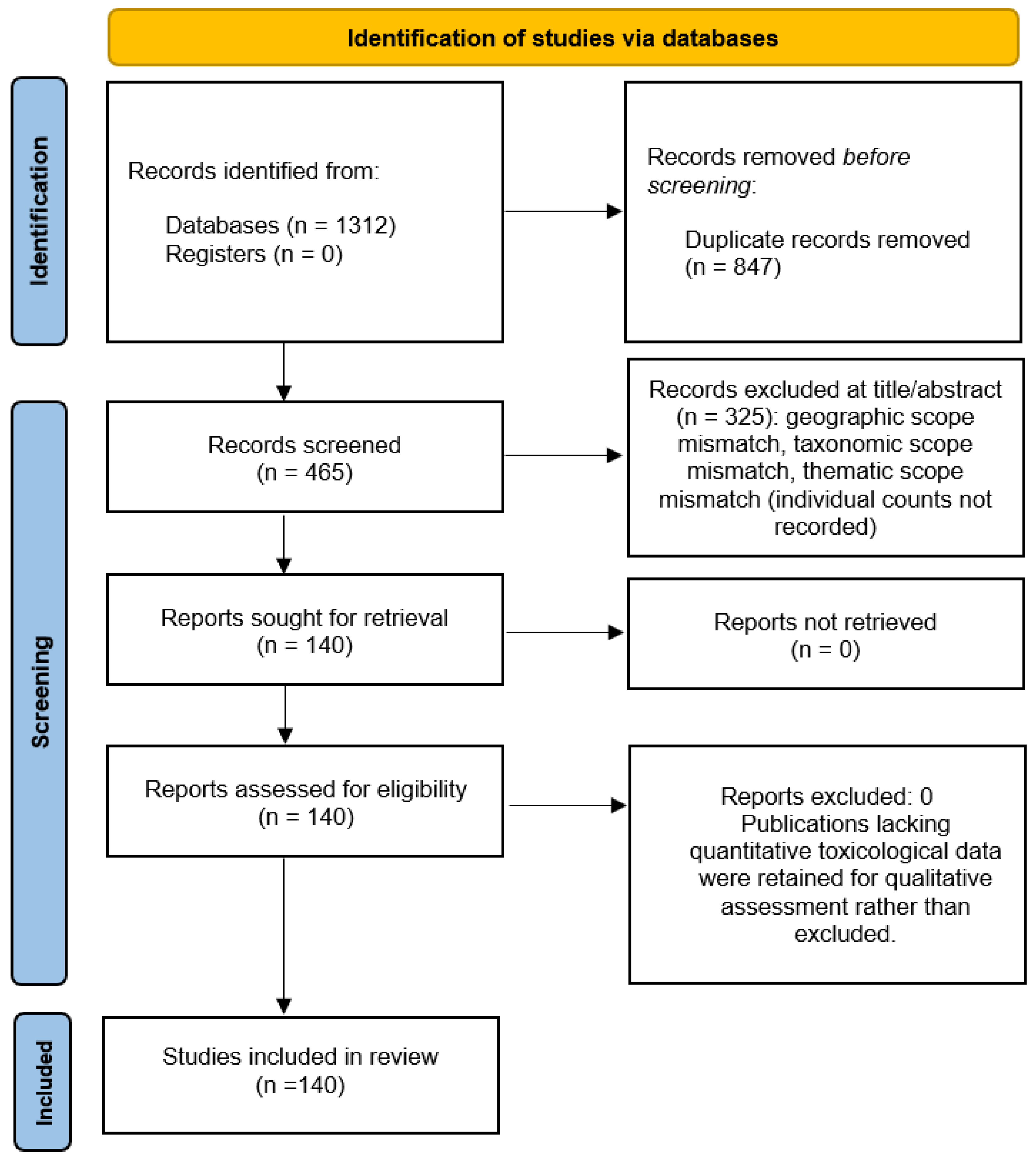
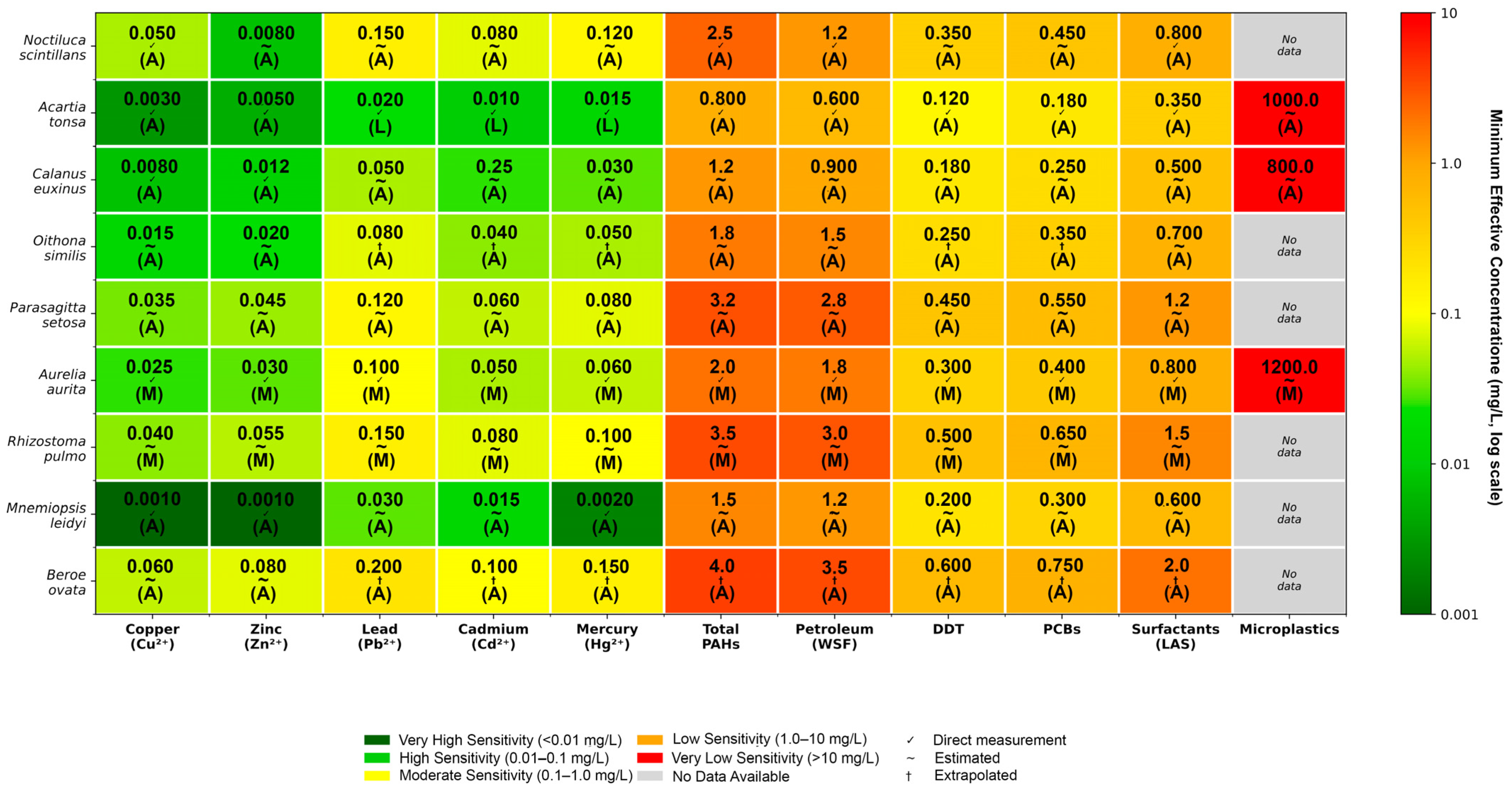
This is the first systematic review evaluating Black Sea plankton as biosensor organisms for Biological Early Warning Systems (BEWS)—real-time monitoring approaches that detect sublethal behavioral or physiological responses to pollutants before irreversible ecosystem damage occurs. The systematic literature review was guided by the PRISMA (Preferred Reporting Items for Systematic Reviews and Meta-Analyses) approach, ensuring methodological transparency and applicability. A total of 140 publications from databases (Web of Science Core Collection, Scopus, PubMed, and Google Scholar databases) were included in the final analysis. We assess nine native planktonic taxa as candidates for automated video-based water quality monitoring, using a multi-criteria framework encompassing biological sensitivity, technical detectability, and practical feasibility. Three species emerge as the most suitable candidates: Aurelia aurita as a universal indicator (sensitive to copper, surfactants, petroleum, and microplastics; its large size enables standard video detection); Acartia tonsa for trace contamination (reproductive toxicity at metal concentrations 4–33× below regulatory standards); and Mnemiopsis leidyi for metal-specific discrimination (bioluminescent responses: 650% Zn, 430% Cu, and 350% Hg at 0.001 mg/L). Analysis of 140 publications reveals critical gaps: 33% of species lack toxicological data, 95% of studies test single toxicants despite natural mixture exposure, and microplastic methodology varies 1000-fold in particle size. Threshold analysis suggests planktonic sublethal stress at “safe” concentrations under current standards, suggesting inadequate protection of marine food webs. A complementary monitoring approach integrating these species with computer vision algorithms offers autonomous early-warning capability for Black Sea environmental management.
Keywords: Biological Early Warning Systems; biomonitoring; Black Sea; plankton; biosensor Biological Early Warning Systems; biomonitoring; Black Sea; plankton; biosensor