Internal Flow, Vibration, and Noise Characteristics of a Magnetic Pump at Different Rotational Speeds

Abstract
1. Introduction
2. Materials and Methods
2.1. Numerical Simulation Method
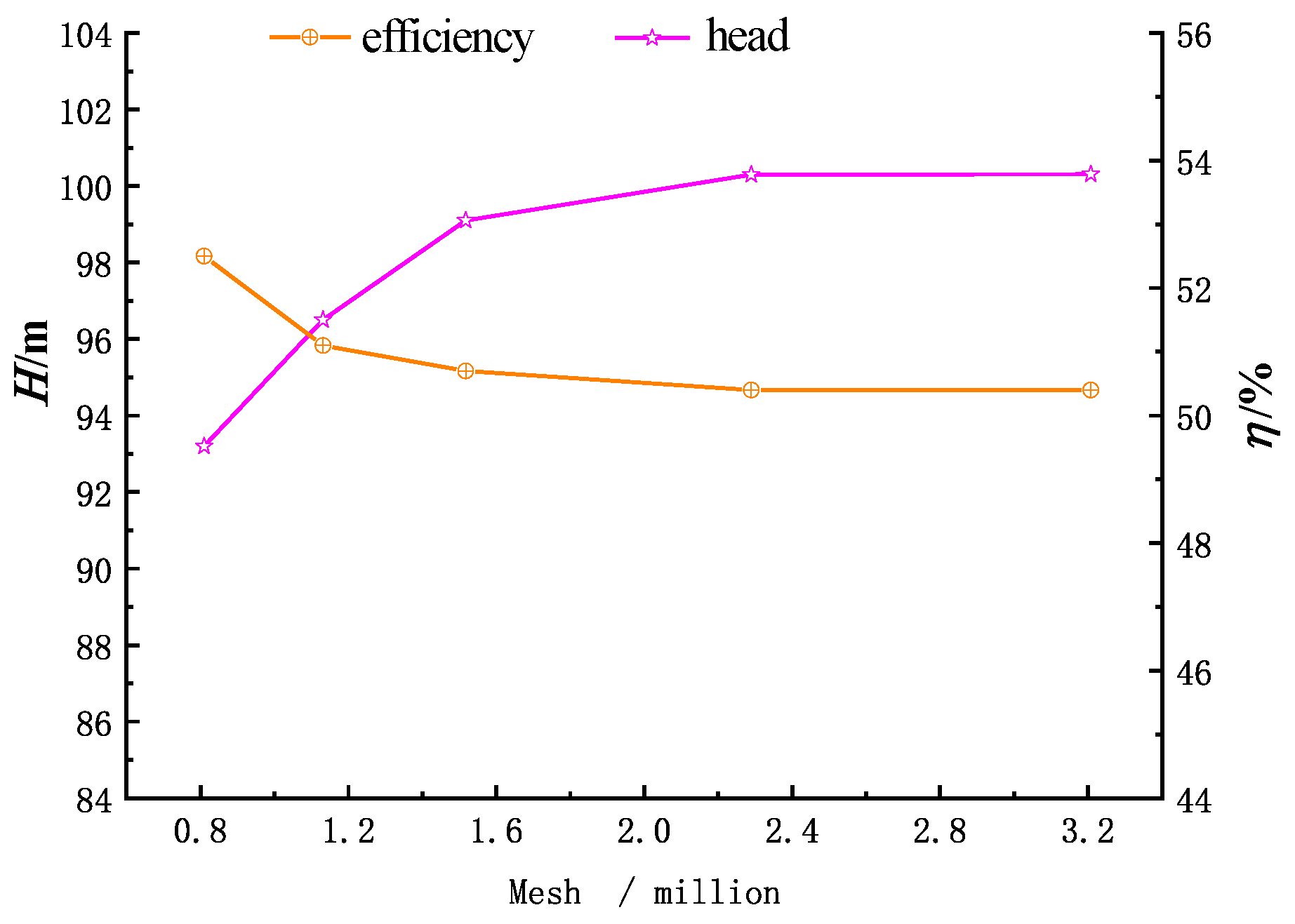
2.1.1. Meshing
2.1.2. Boundary Conditions and Turbulence Model
2.2. Test Apparatus and Test Method
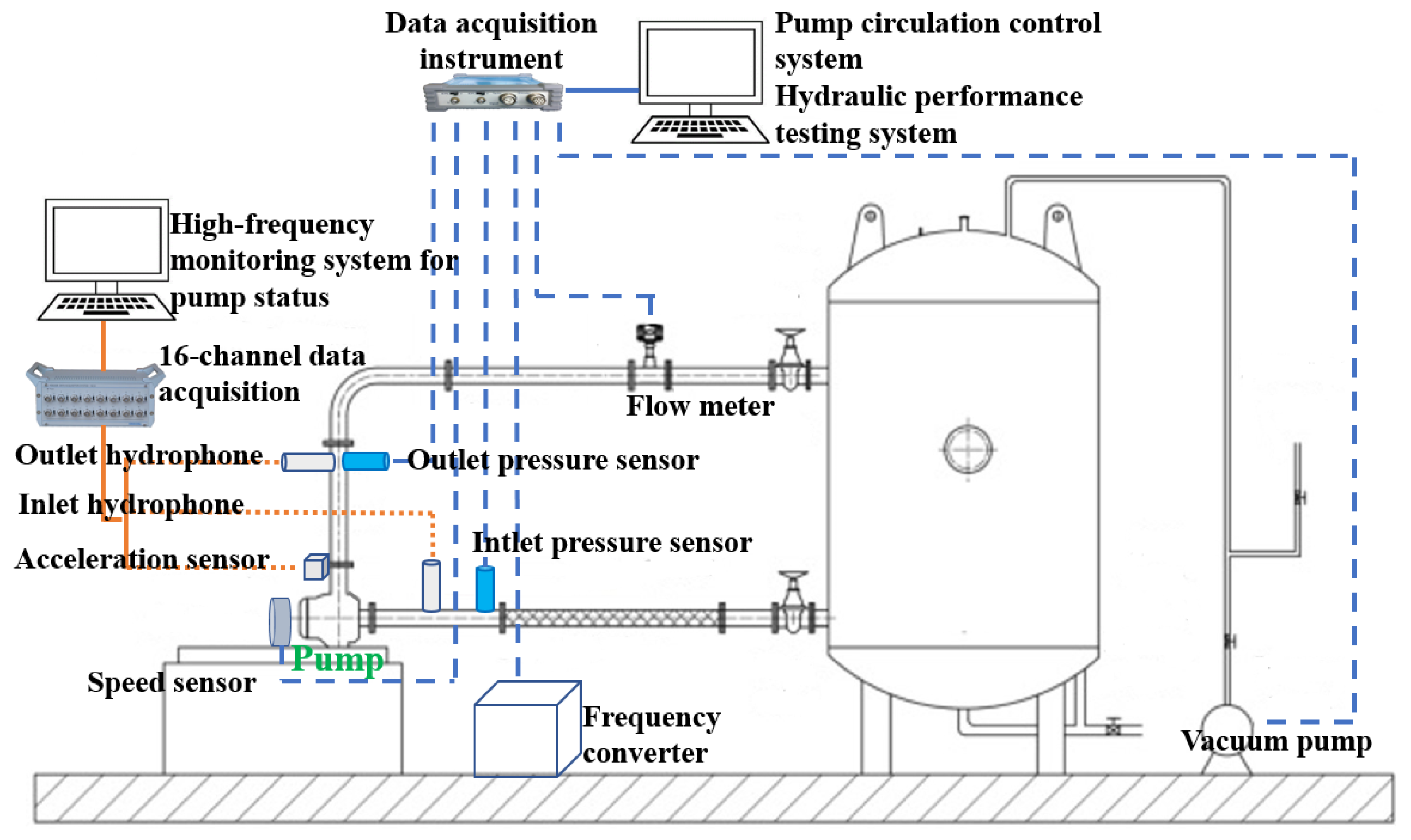
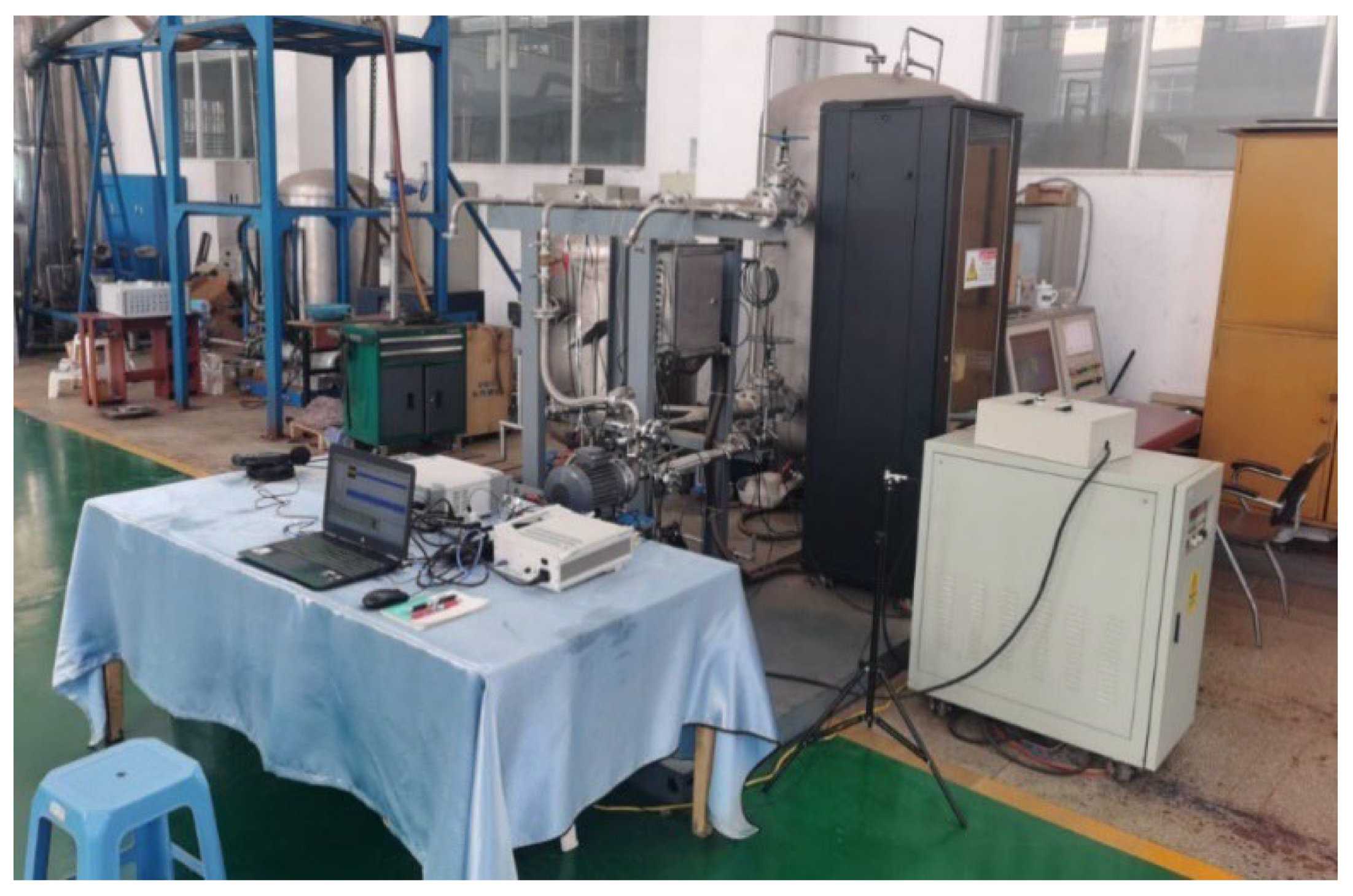
2.2.1. Test Bench
2.2.2. Test Method
2.2.3. Data Processing for High-Speed Magnetic Pump Experiment
3. Results and Discussion
3.1. Experimental Validation
3.2. Internal Flow Analysis
3.3. Internal Flow Noise Characteristics
3.4. Vibration Characteristics
4. Conclusions and Future Work
- (1)
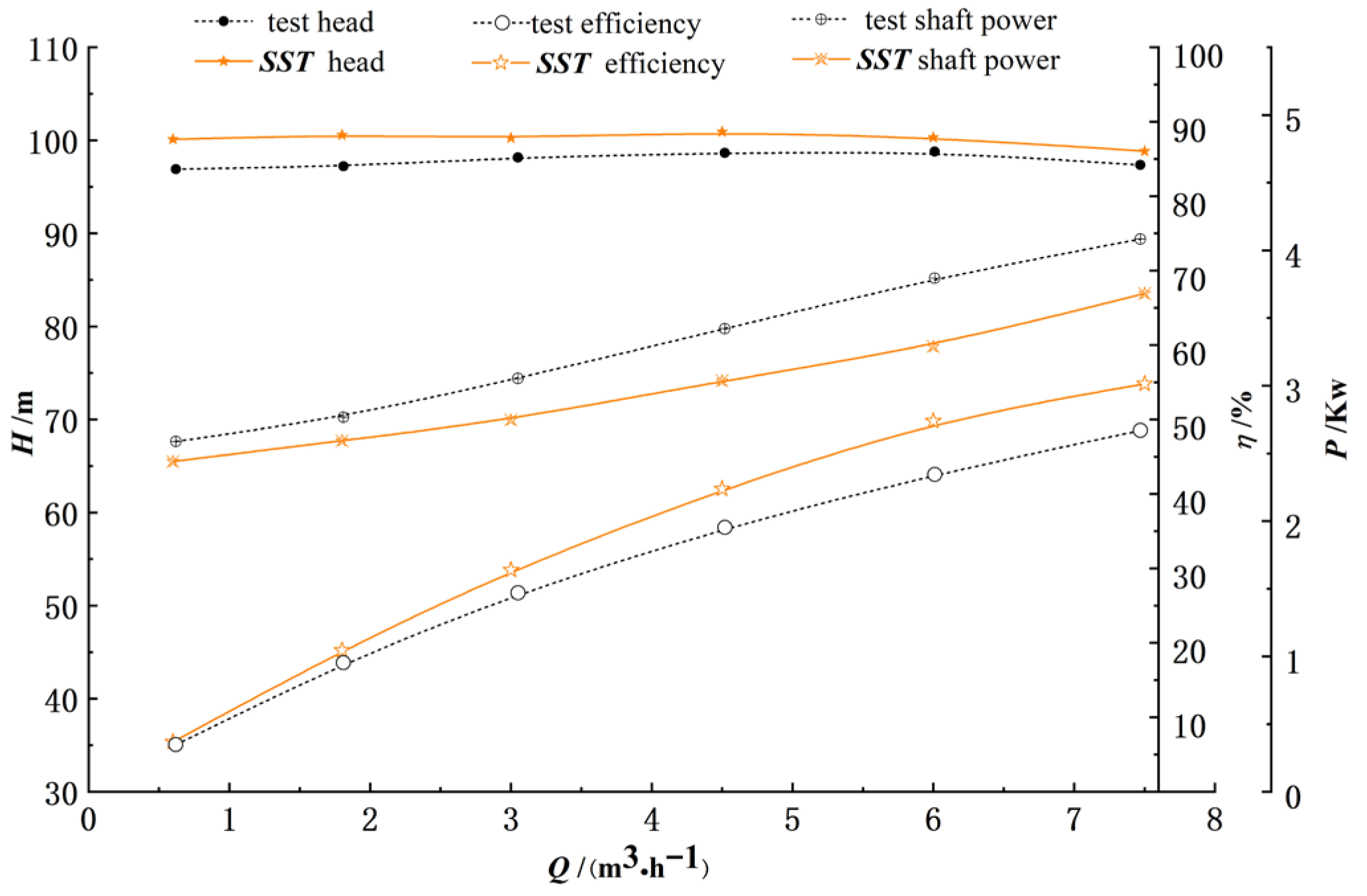
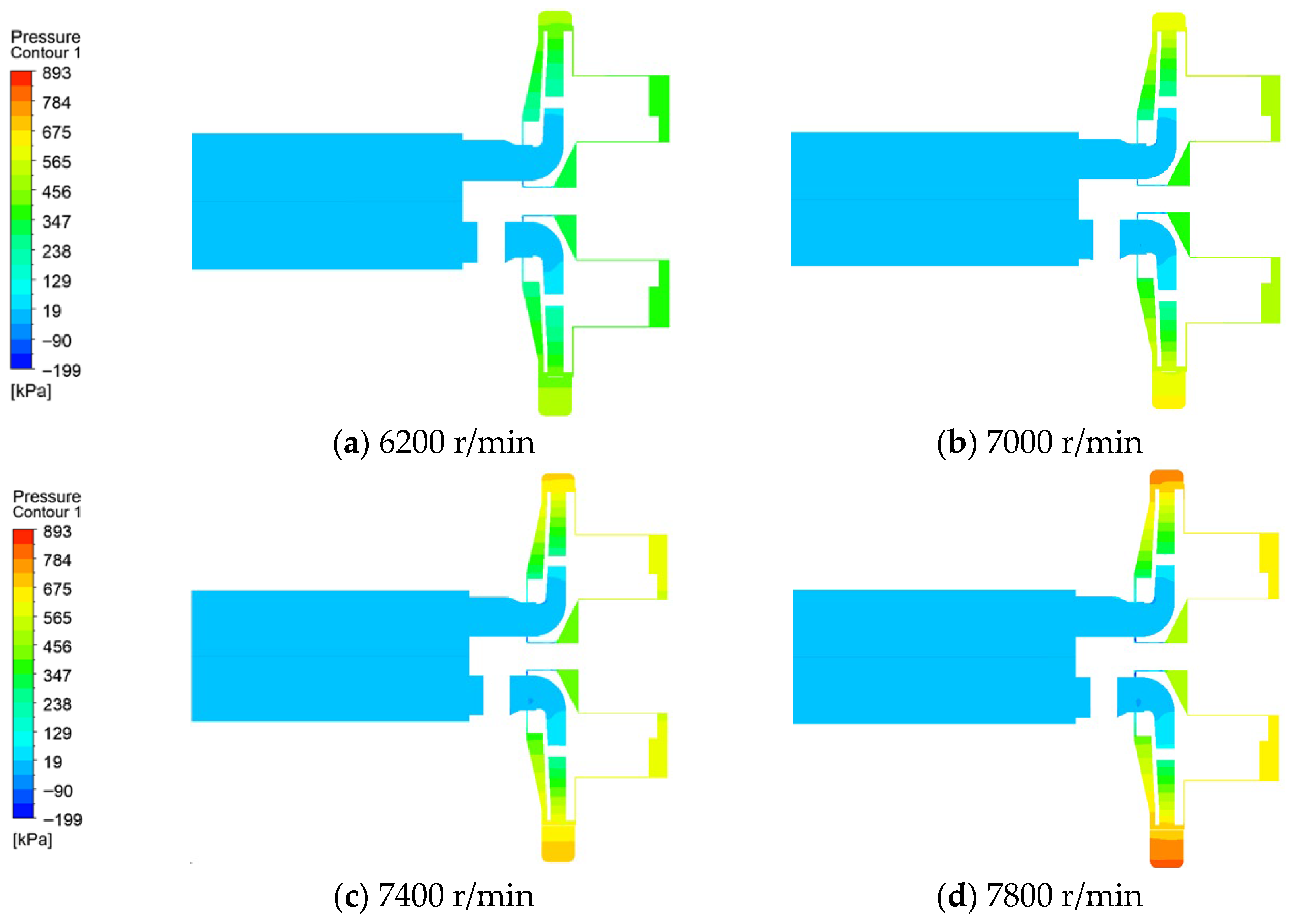
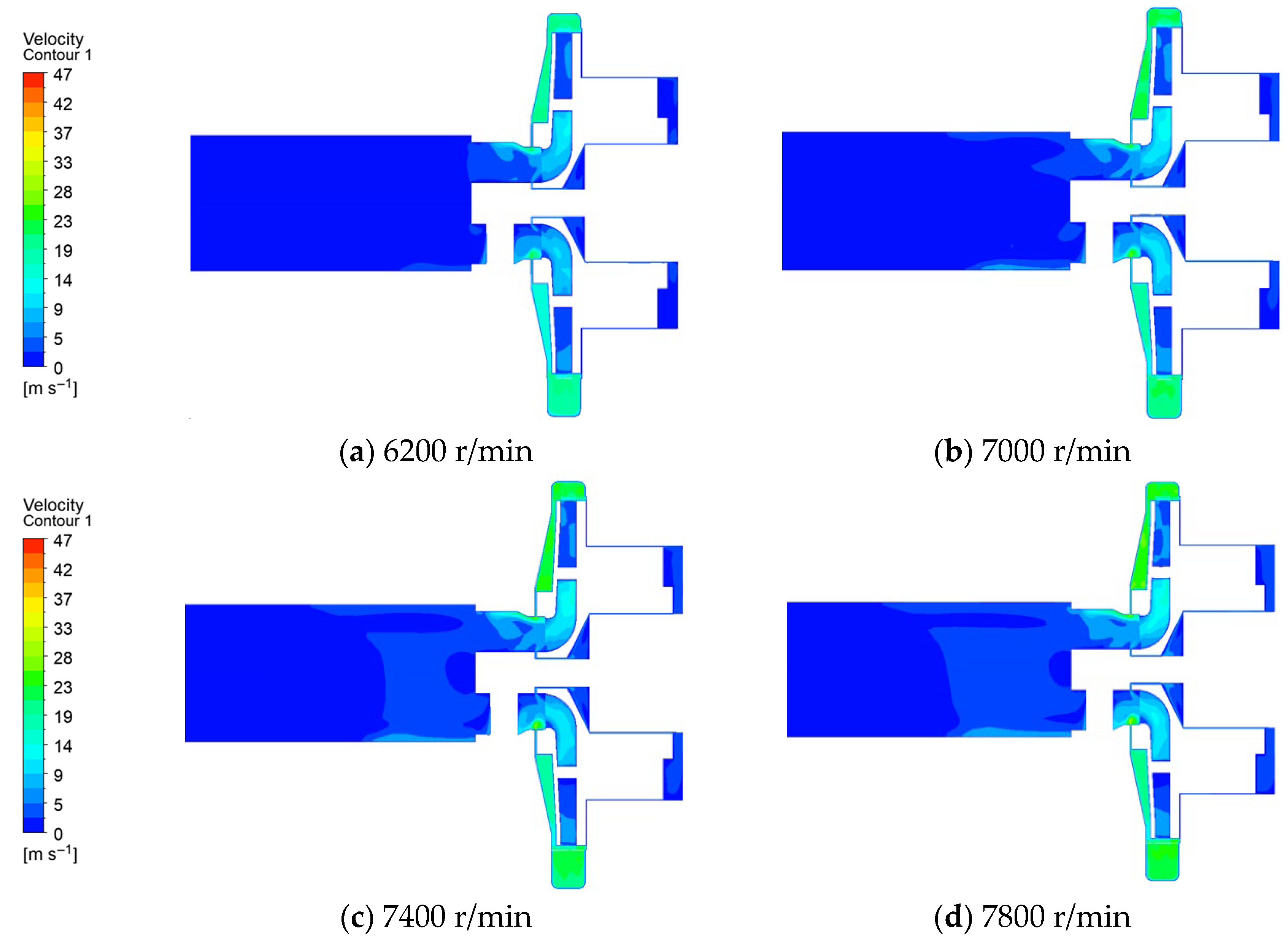
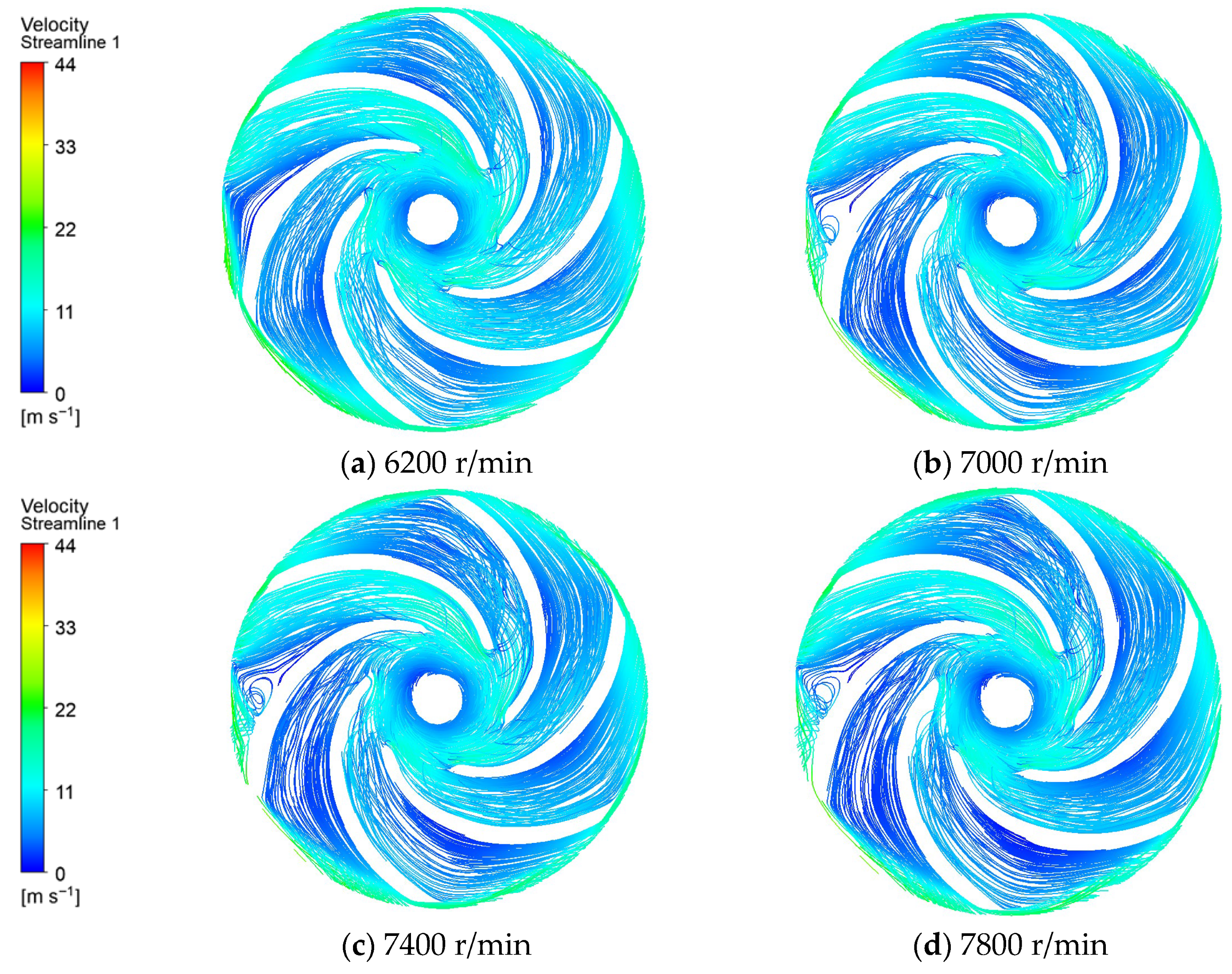
- Numerical simulation results show that with increasing speed, the work capacity of the pump impeller increases, and the pressure in the impeller passage and at the impeller outlet also increases accordingly. At the same time, the driving pressure difference in the backflow in the front pump chamber and the cooling circulation loop of the pump gradually increases.
- (2)
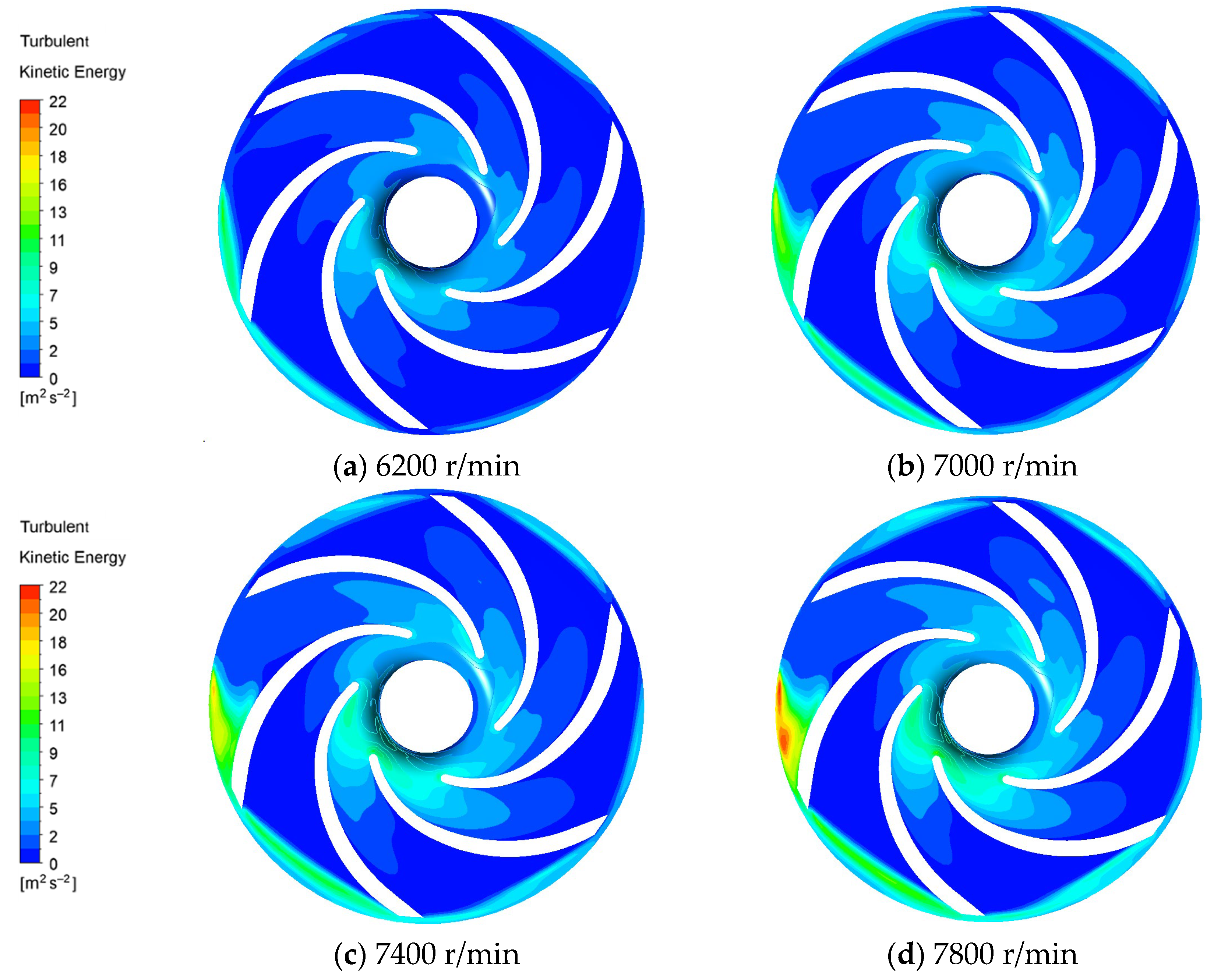
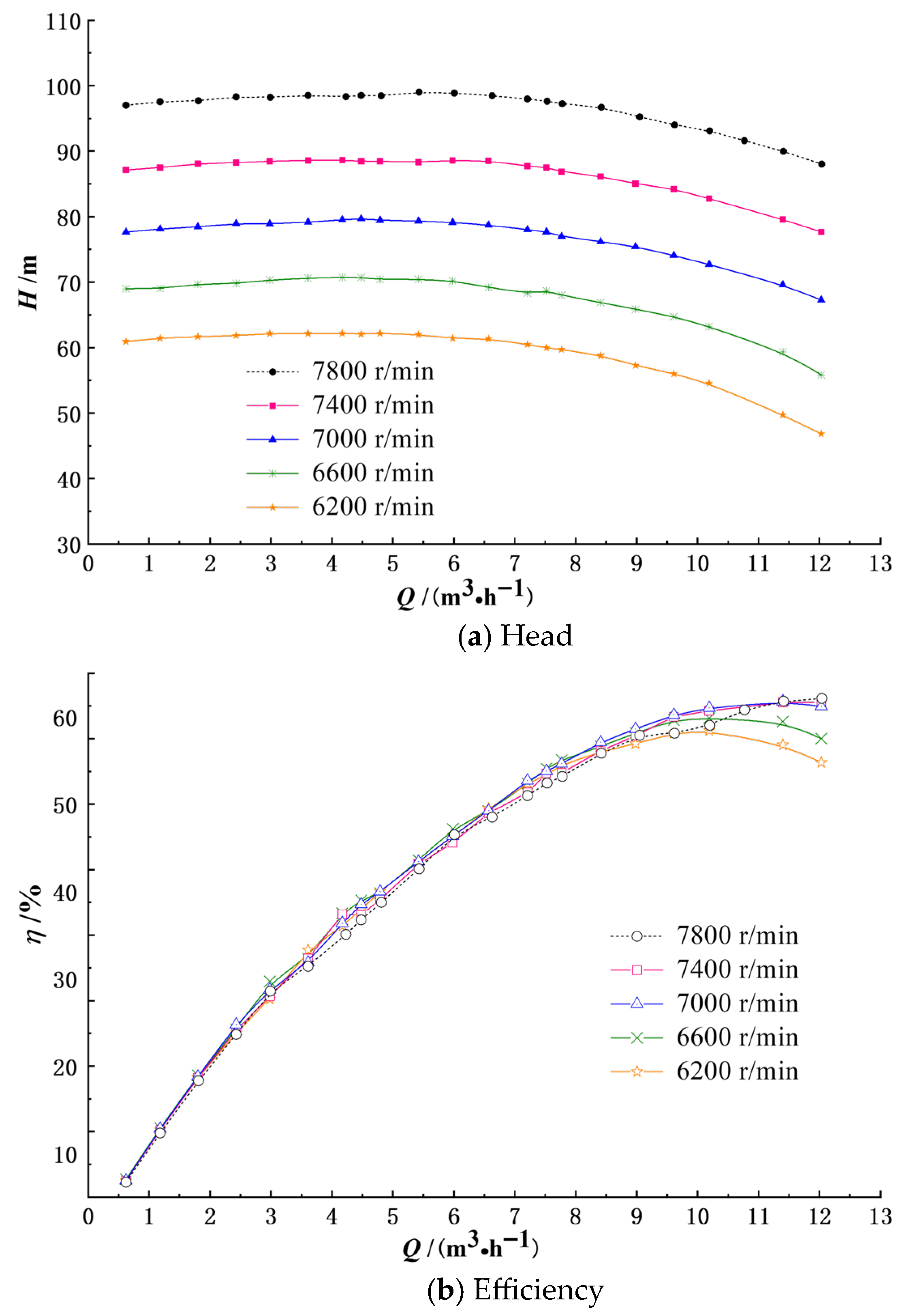
- Numerical simulation and external characteristic test results indicate that the TKE at the impeller inlet changes only slightly with increasing speed, while the outlet TKE increases significantly. Although higher rotational speeds intensify flow interactions and energy dissipation, the relative loss decreases, resulting in improved overall efficiency.
- (3)
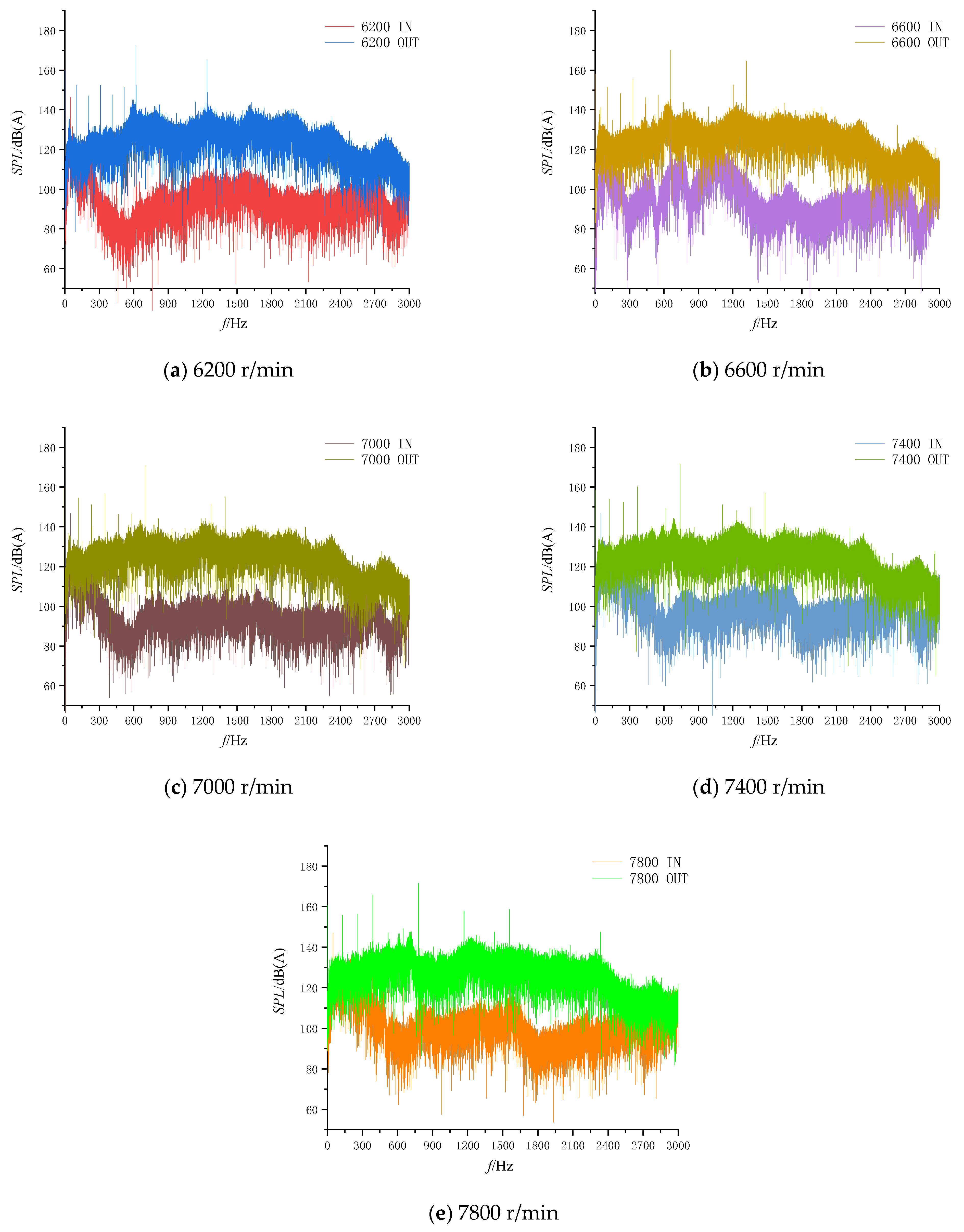
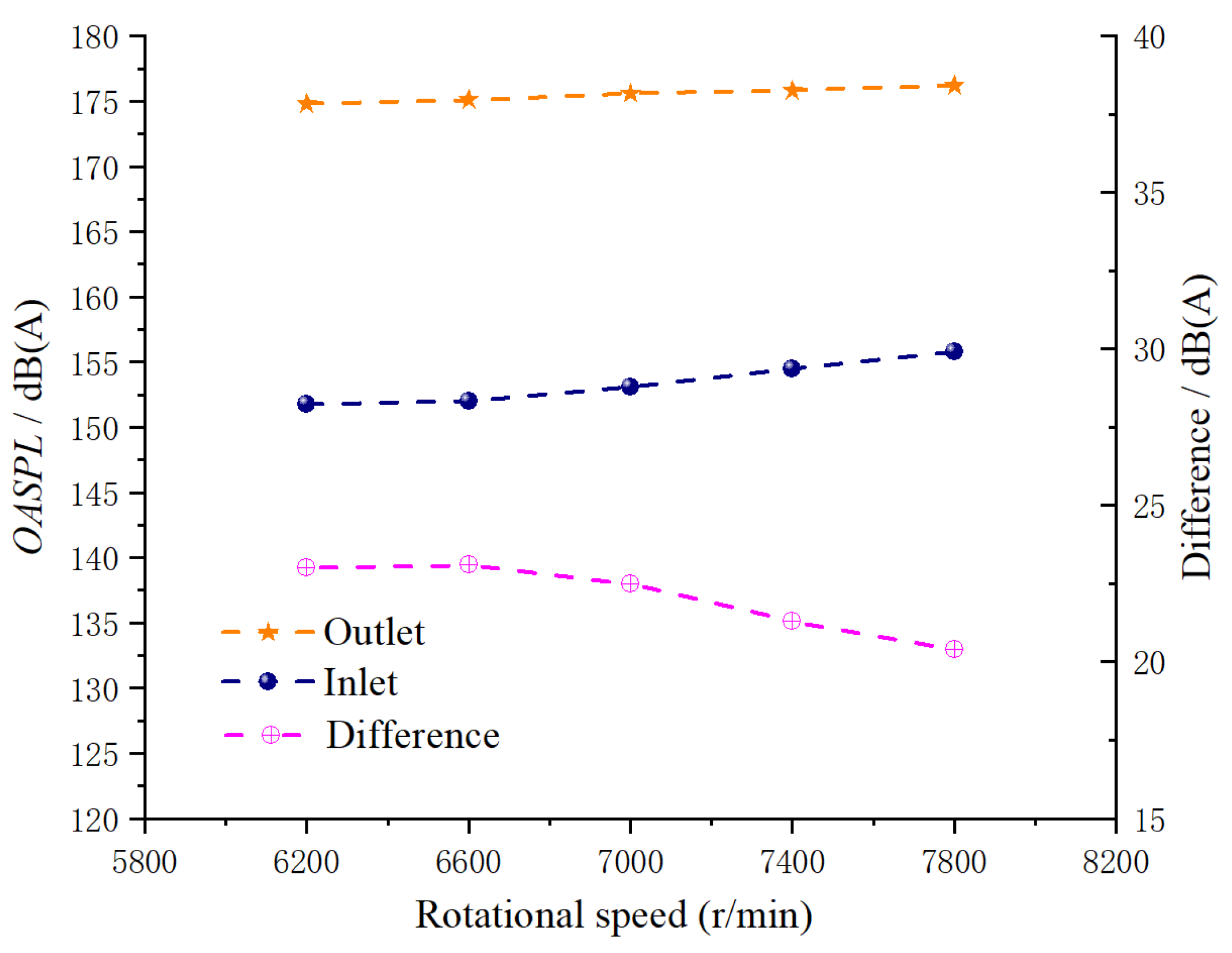
- The experimental results at different rotational speeds show that the outlet shows a higher SPL than the inlet. The hydrophone can sensitively capture and reflect changes in rotational speed. The deviation between the dominant outlet noise frequency and the blade frequency calculated based on the set rotational speed remains small, with a maximum deviation of 0.26% at 6600 r/min. As the speed increases, the OASPL at both the inlet and outlet monitoring points gradually increases.
- (4)
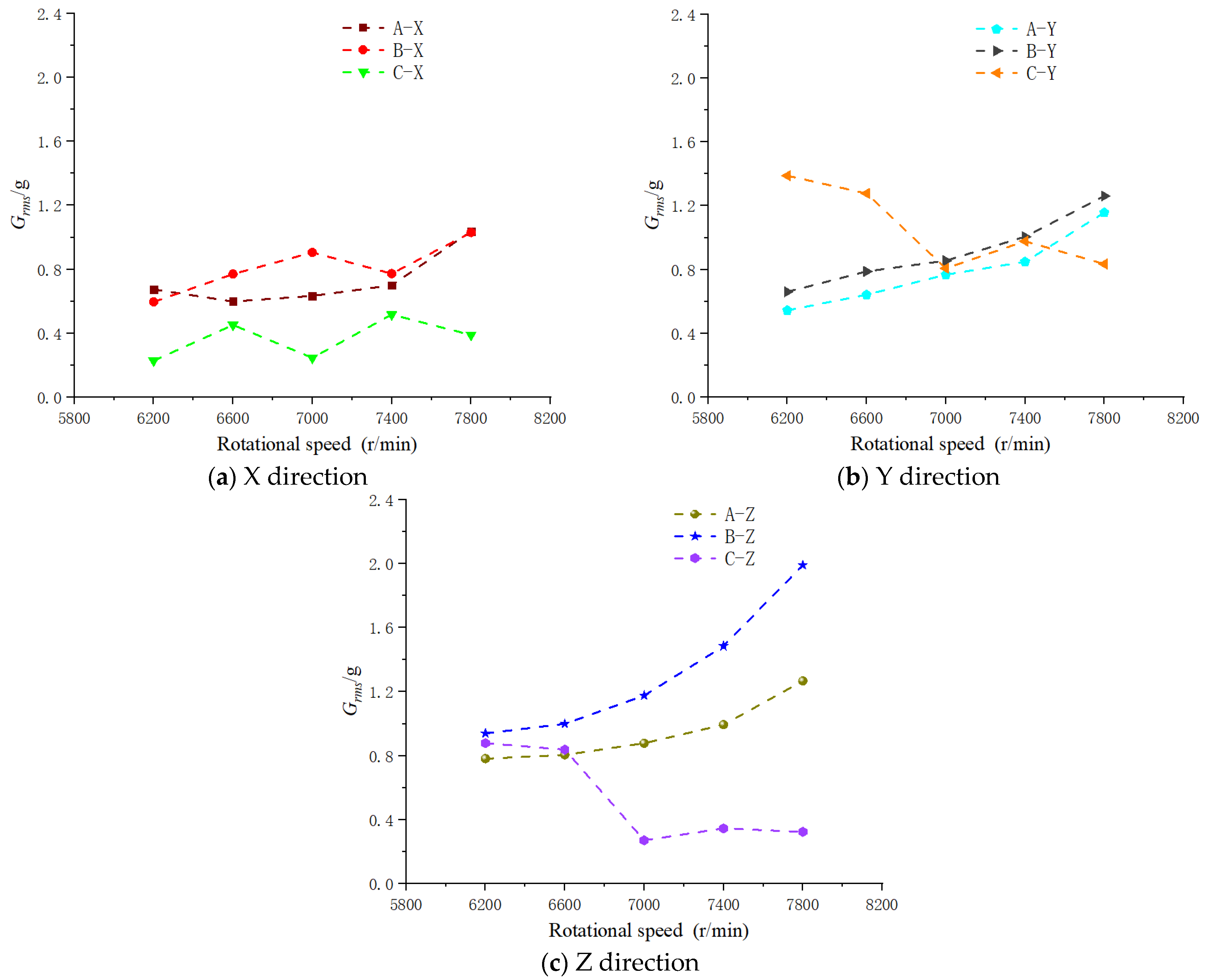
- The vibration test results at different rotational speeds show that as the speed rises from 6200 to 7800 r/min, the RMS values of accelerations in all directions of the pump body acceleration sensor B and the pump outlet acceleration sensor A generally exhibit an increasing trend. The RMS values of accelerations in the C–X direction at the base change slightly, while those in the C–Z and C–Y directions at the base show an overall decreasing trend. A possible reason is that, as the rotational speed increases, the motor gradually approaches its rated speed (7800 r/min), resulting in a more stable operating condition. Meanwhile, because the magnetic drive pump adopts magnetic coupling, the transmission of vibrations from the pump body to the external structure may be reduced.
- (5)
- The internal flow numerical simulation results at different rotational speeds can be corroborated by the experimental results obtained from pump body acceleration sensors and outlet hydrophones. Rotor–Stator Interference is an important excitation source of internal flow noise in the high-speed magnetic pump.
Author Contributions
Funding
Data Availability Statement
Conflicts of Interest
Abbreviations
| RSI | Rotor–Stator Interference |
| CFD | Computational Fluid Dynamics |
| TKE | Turbulent Kinetic Energy |
| SPL | Sound Pressure Level |
| OASPL | Overall Sound Pressure Level |
| RMS | Root Mean Square |
| Grms | RMS value of acceleration |
| Q | Flow rate |
| Qd | Design flow rate |
| Efficiency |
References
- Sun, H.; Hu, K.; Si, Q.; Lan, Q.; Yuan, S. Review of Fault Modes and Failure Diagnosis Methods for Magnetic-Driving Pump. Struct. Health Monit. 2025, 1–20. [Google Scholar] [CrossRef]
- Zhao, F.; Kong, F.; Zhou, Y.; Xia, B.; Bai, Y. Optimization Design of the Impeller Based on Orthogonal Test in an Ultra-Low Specific Speed Magnetic Drive Pump. Energies 2019, 12, 4767. [Google Scholar] [CrossRef]
- Zhang, H.; Kong, F.; Zhu, A.; Zhao, F.; Xu, Z. Effect of blade outlet angle on acoustics of marine centrifugal pump. Acoust. Aust. 2020, 48, 419–430. [Google Scholar] [CrossRef]
- Wang, J.; Duan, J.; Zhang, R.; Sun, J. Energy Loss of Magnetic Coupling for Pump. Energies 2025, 18, 455. [Google Scholar] [CrossRef]
- Zhou, W.; Ma, J.; Ma, Z.; Yu, W.; Gao, B. Multi-Scale Fluid-Induced Vibration Characteristics of Centrifugal Pump Based on Fluid–Structure Interaction Method. Phys. Fluids 2025, 37, 027163. [Google Scholar] [CrossRef]
- Yao, J.; Yang, T.; Bi, Z.; Liu, J.; He, Q.; Peng, Z. Coupled Vibration Model-Driven Intelligent Fault Diagnosis in Canned Motor Pumps. Int. J. Mech. Sci. 2025, 291–292, 110181. [Google Scholar] [CrossRef]
- Pedersen, N.; Larsen, P.S. Flow in a Centrifugal Pump Impeller at Design and Off-Design Conditions—Part I: Particle Image Velocimetry (PIV) and Laser Doppler Velocimetry (LDV) Measurements. J. Fluids Eng. 2003, 125, 61–72. [Google Scholar] [CrossRef]
- Zhou, D.; Zhang, N.; Zheng, F.; Gad, M.; Gao, B. Experimental Investigation on the Effect of the Rotor–Stator Matching Mode on Velocity Pulsation in the Centrifugal Pump with a Vaned Diffuser. Nucl. Eng. Technol. 2025, 57, 103255. [Google Scholar] [CrossRef]
- Tong, Z.; Shang, B. Investigating three-dimensional vortex evolution in centrifugal pump under rotating stall conditions using tomographic particle image velocimetry. Phys. Fluids 2024, 36, 067101. [Google Scholar] [CrossRef]
- Fonseca, W.D.P.; Cerqueira, R.F.L.; Perissinotto, R.M.; Monte Verde, W.; Castro, M.S.; Franklin, E.M. Particle Image Velocimetry in the Impeller of a Centrifugal Pump: A POD Analysis. Flow Meas. Instrum. 2023, 92, 102483. [Google Scholar] [CrossRef]
- Zhao, F.; Kong, F.; Duan, X.; Wu, H.; Wang, J. Numerical Investigation on the Transient Flow of a Boiler Circulating Pump Based on the Shear Stress Transport Turbulence Model. Processes 2020, 8, 1279. [Google Scholar] [CrossRef]
- Bai, L.; Hu, C.; Wang, Y.; Han, Y.; Agarwal, R.; Zhou, L. Evaluation of Various Turbulence Models and Large Eddy Simulation for Stall Prediction in a Centrifugal Pump. Water 2023, 15, 3432. [Google Scholar] [CrossRef]
- Al-Obaidi, A.R. Effects of Different Turbulence Models on Three-Dimensional Unsteady Cavitating Flows in the Centrifugal Pump and Performance Prediction. Int. J. Nonlinear Sci. Numer. Simul. 2019, 20, 487–509. [Google Scholar] [CrossRef]
- Chang, H.; Tang, G.; Zhou, L.; Peng, G.; Shi, W.; Huang, R. Investigation of Energy Dissipation Mechanisms and Unsteady Flow Characteristics of a Cooling Pump Based on Sweeping Jet Inflow. Energy Convers. Manag. 2026, 351, 120959. [Google Scholar] [CrossRef]
- Chang, H.; Wang, Z.; Peng, G.; Shi, W.; Lin, R.; Zhou, L. Role of wall roughness on energy dissipation and vortex dynamics in self-priming centrifugal pump: A study via entropy generation and Liutex vortex identification. Energy 2025, 337, 138733. [Google Scholar] [CrossRef]
- Cordisco, I.; Berni, F.; Paini, G.; Tonelli, R.; Fontanesi, S. Performance and Cavitation in Automotive Centrifugal Pumps: Experimental Analysis and 3D-CFD Modelling Assessment. Appl. Therm. Eng. 2026, 284, 129130. [Google Scholar] [CrossRef]
- Guo, C.; Gao, M.; Lu, D.; Guan, H. Experimental Study on Radiation Noise Frequency Characteristics of a Centrifugal Pump with Various Rotational Speeds. Appl. Sci. 2018, 8, 796. [Google Scholar] [CrossRef]
- Li, G.; Sun, L.; Wang, Z.; An, C.; Guo, C.; Cheng, S.; Gao, M. Investigation on the Changing Characteristics of Flow-Induced Noise in a Centrifugal Pump. Fluid Dyn. Mater. Process. 2021, 17, 989–1001. [Google Scholar] [CrossRef]
- Jin, Y.; Cheng, T.; Fu, J.; Shi, G.; He, L. Investigation of Flow Induced Noise Reduction in High Specific Speed Centrifugal Pumps Using Bionic Blades. Sci. Rep. 2025, 15, 19457. [Google Scholar] [CrossRef]
- Lu, J.; Li, L.; Gong, Y.; Liu, X.; Zhang, F.; Zhu, B. Experimental and Numerical Investigations of Noise Induced by Cavitation in a Centrifugal Pump. Iran. J. Sci. Technol. Trans. Mech. Eng. 2024, 48, 1937–1955. [Google Scholar] [CrossRef]
- Wang, D.; Ma, W.; Zhao, W.; Cao, R.; Yang, Y. Experimental Acoustic Analysis of Cavitation in a Centrifugal Pump. Fluid Dyn. Mater. Process. 2025, 21, 877–890. [Google Scholar] [CrossRef]
- Zhang, H.; You, H.; Lu, H.; Li, K.; Zhang, Z.; Jiang, L. CFD-Rotordynamics Sequential Coupling Simulation Approach for the Flow-Induced Vibration of Rotor System in Centrifugal Pump. Appl. Sci. 2020, 10, 1186. [Google Scholar] [CrossRef]
- Wang, C.; Chen, X.; Qiu, N.; Zhu, Y.; Shi, W. Numerical and Experimental Study on the Pressure Fluctuation, Vibration, and Noise of Multistage Pump with Radial Diffuser. J. Braz. Soc. Mech. Sci. Eng. 2018, 40, 481. [Google Scholar] [CrossRef]
- Han, Y.; Zou, J.; Presas, A.; Luo, Y.; Yuan, J. Off-Design Operation and Cavitation Detection in Centrifugal Pumps Using Vibration and Motor Stator Current Analyses. Sensors 2024, 24, 3410. [Google Scholar] [CrossRef]
- Zhang, Y.; Liu, J.; Yang, X.; Li, H.; Chen, S.; Lv, W.; Xu, W.; Zheng, J.; Wang, D. Vibration Analysis of a High-Pressure Multistage Centrifugal Pump. Sci. Rep. 2022, 12, 20293. [Google Scholar] [CrossRef]
- Luo, Y.; Yan, H. Research on Centrifugal Pump Speed Measurement Based on Vibration Measurement. Sensors 2025, 25, 3095. [Google Scholar] [CrossRef]
- Wang, F.J. Principle and Application of CFD Software for Computational Fluid Dynamics Analysis; Tsinghua University Press: Beijing, China, 2004; pp. 110–130. [Google Scholar]
- Menter, F.R. Zonal Two Equation k-w Turbulence Models for Aerodynamic Flows. In Proceedings of the AIAA 24th Fluid Dynamics Conference, Orlando, FL, USA, 6–9 July 1993. AIAA Paper 1993-2906. [Google Scholar] [CrossRef]
- Menter, F.R.; Kuntz, M.; Langtry, R. Ten Years of Industrial Experience with the SST Turbulence Model. In Proceedings of the 4th International Symposium on Turbulence, Heat and Mass Transfer; Begell House, Inc.: Redding, CT, USA, 2003; pp. 625–632. [Google Scholar]
- Guan, X.F. Modern Pump Theory and Design; China Aerospace Press: Beijing, China, 2011. [Google Scholar]
- Lin, G.H.; Zhu, Z.M.; Gong, X.F. Fundamentals of Acoustics; Nanjing University Press: Nanjing, China, 2016. [Google Scholar]
- Wu, S.J.; Zhang, M.D. Principles and Methods of Acoustic Measurement; Science Press: Beijing, China, 2017. [Google Scholar]
- Sha, Y.; Faber, J.; Gou, S.; Liu, B.; Li, W.; Schramm, S.; Stoecker, H.; Steckenreiter, T.; Vnucec, D.; Wetzstein, N.; et al. An Acoustic Signal Cavitation Detection Framework Based on XGBoost with Adaptive Selection Feature Engineering. Measurement 2022, 202, 110897. [Google Scholar] [CrossRef]








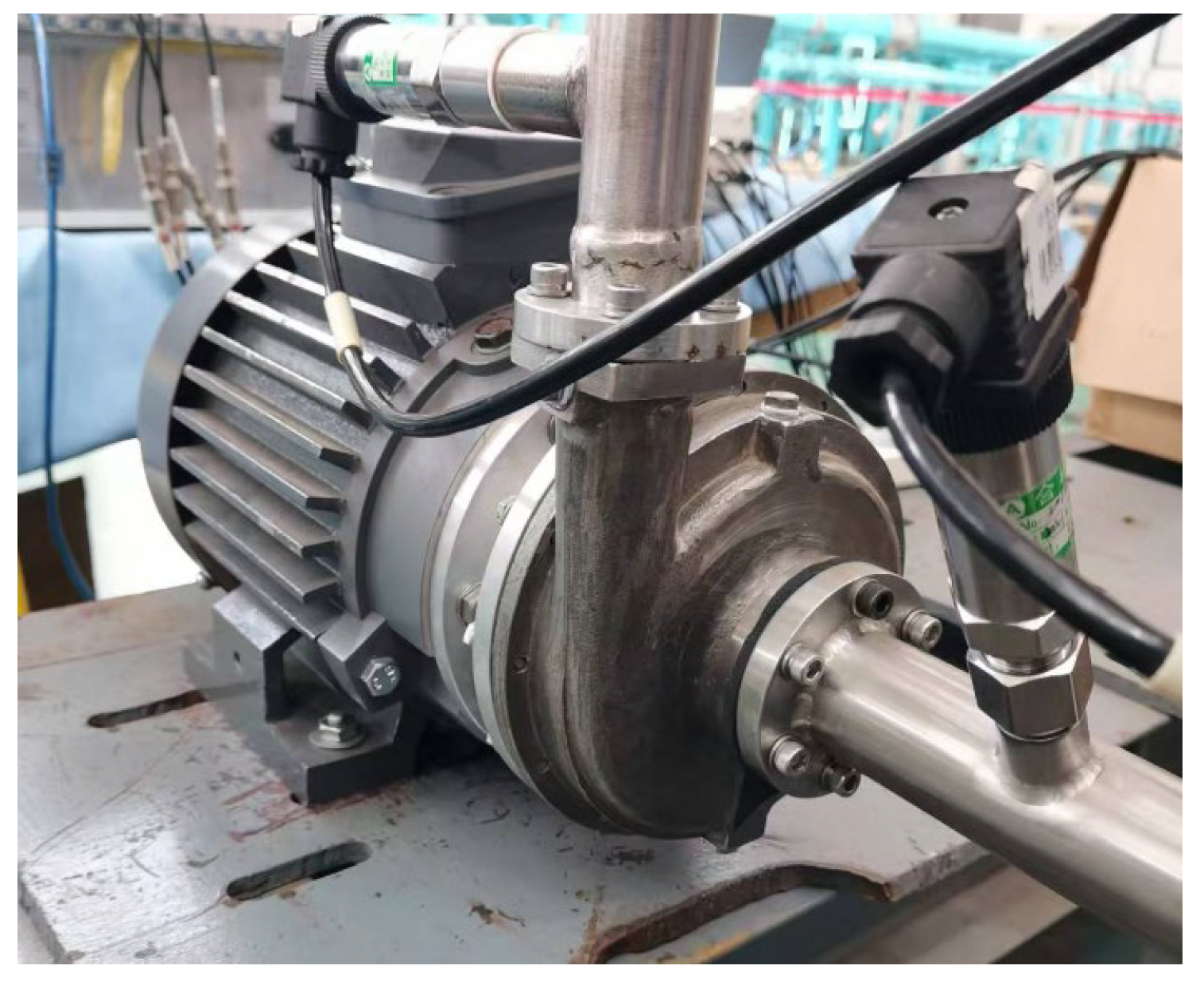
| Parameter | Unit | Value |
|---|---|---|
| Flow rate | m3/h | 6 |
| Rotational speed | r/min | 7800 |
| Head | m | 90 |
| Specific speed | - | 39.78 |
| Inlet diameter | mm | 40 |
| Outlet diameter | mm | 27 |
| Impeller inlet diameter | mm | 33 |
| Impeller outlet diameter | mm | 100 |
| Number of blades | - | 6 |
| Equipment | Model | Measurement Item | Measurement Range | Accuracy |
|---|---|---|---|---|
| Pressure sensor | YB131 | Inlet pressure | −0.1 MPa–0.1 MPa | ±0.25% |
| Pressure sensor | YB131 | Outlet pressure | 0–1.2 MPa | ±0.25% |
| Flow meter | LWGY-25 | Rate of flow | 1–12 m3/h | ±0.25% |
| Speed sensor | UT37R | Rotational speed | 0–20,000 r/min | ±0.05% |
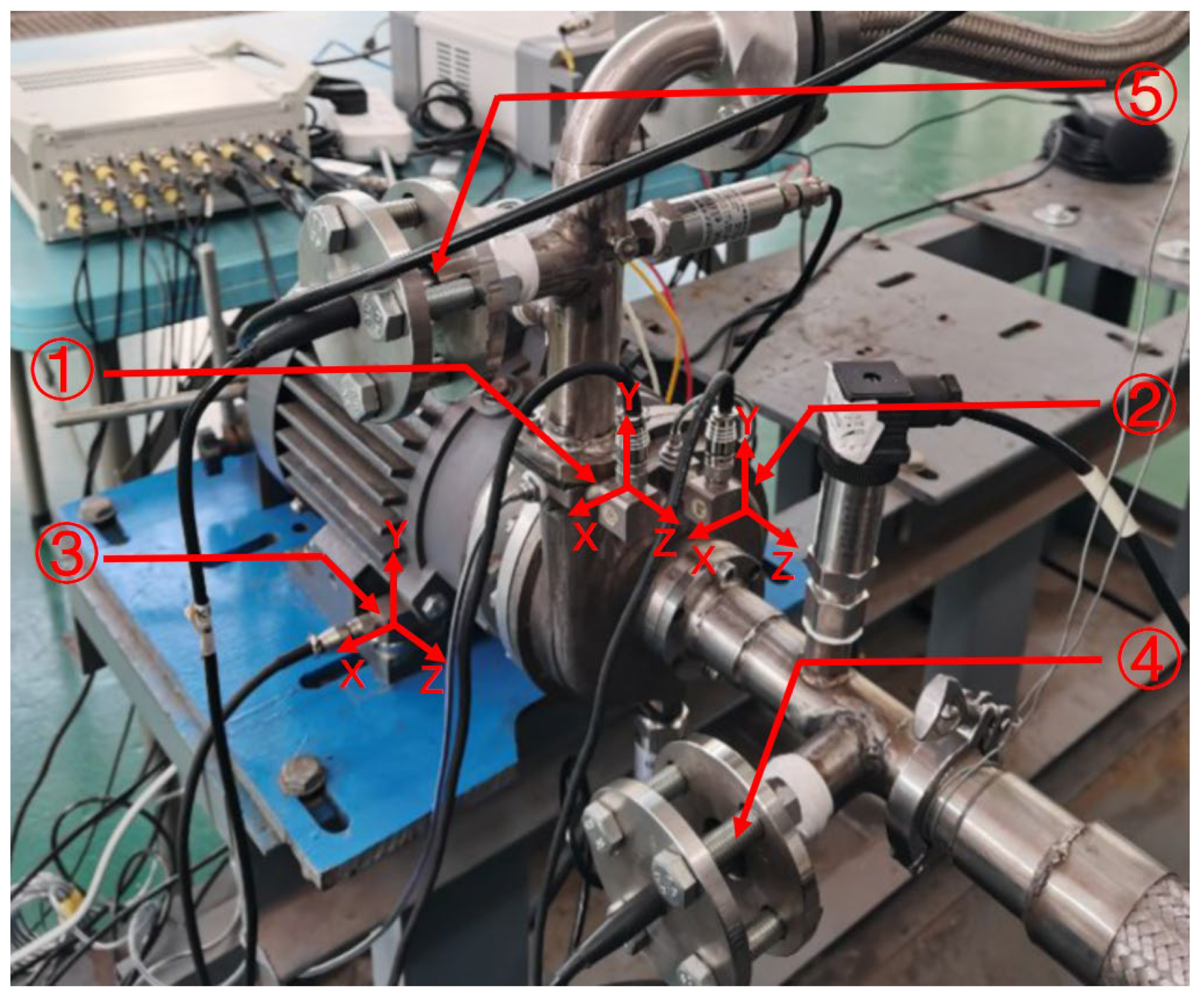
| Acceleration sensor | SAE3005 | Vibration | 0–50 g | ±0.25% |
| Hydrophone | RHT-10 | Internal sound field | 20 Hz–20 kHz | ±1 dB |
| Data acquisition instrument | SA6216 | Signal acquisition | 0–48 kHz | / |
| Speed/(r/min) | Blade Frequency/Hz | Dominant Noise Frequency/Hz | Relative Error/% |
|---|---|---|---|
| 6200 | 620 | 619.7 | −0.05 |
| 6600 | 660 | 658.3 | −0.26 |
| 7000 | 700 | 698.5 | −0.21 |
| 7400 | 740 | 739.7 | −0.04 |
| 7800 | 780 | 779.1 | −0.12 |
| Channel | Direction | Grms/g | ||||
|---|---|---|---|---|---|---|
| 6200 | 6600 | 7000 | 7400 | 7800 | ||
| 1 | A–Y | 0.54 | 0.64 | 0.77 | 0.85 | 1.16 |
| 2 | A–X | 0.67 | 0.60 | 0.63 | 0.70 | 1.04 |
| 3 | A–Z | 0.78 | 0.81 | 0.88 | 0.99 | 1.27 |
| 4 | B–Y | 0.66 | 0.79 | 0.86 | 1.01 | 1.26 |
| 5 | B–X | 0.60 | 0.77 | 0.91 | 0.77 | 1.05 |
| 6 | B–Z | 0.94 | 1.00 | 1.18 | 1.49 | 1.99 |
| 7 | C–X | 0.23 | 0.45 | 0.25 | 0.52 | 0.39 |
| 8 | C–Z | 0.88 | 0.84 | 0.27 | 0.34 | 0.32 |
| 9 | C–Y | 1.39 | 1.28 | 0.81 | 0.98 | 0.83 |
Disclaimer/Publisher’s Note: The statements, opinions and data contained in all publications are solely those of the individual author(s) and contributor(s) and not of MDPI and/or the editor(s). MDPI and/or the editor(s) disclaim responsibility for any injury to people or property resulting from any ideas, methods, instructions or products referred to in the content. |
© 2026 by the authors. Licensee MDPI, Basel, Switzerland. This article is an open access article distributed under the terms and conditions of the Creative Commons Attribution (CC BY) license.
Share and Cite
Zhao, F.; Xia, B.; Kong, F. Internal Flow, Vibration, and Noise Characteristics of a Magnetic Pump at Different Rotational Speeds. Water 2026, 18, 784. https://doi.org/10.3390/w18070784
Zhao F, Xia B, Kong F. Internal Flow, Vibration, and Noise Characteristics of a Magnetic Pump at Different Rotational Speeds. Water. 2026; 18(7):784. https://doi.org/10.3390/w18070784
Chicago/Turabian StyleZhao, Fei, Bin Xia, and Fanyu Kong. 2026. "Internal Flow, Vibration, and Noise Characteristics of a Magnetic Pump at Different Rotational Speeds" Water 18, no. 7: 784. https://doi.org/10.3390/w18070784
APA StyleZhao, F., Xia, B., & Kong, F. (2026). Internal Flow, Vibration, and Noise Characteristics of a Magnetic Pump at Different Rotational Speeds. Water, 18(7), 784. https://doi.org/10.3390/w18070784