Everything Comes Down to Timing: Optimal Green Infrastructure Placement and the Effect of Within-Storm Variability

Abstract
1. Introduction
2. Theoretical Framework and Methods
2.1. Overview: Timing as the Organizing Principle
2.2. Separable Rainfall Representation
2.3. Spatial Framework: From Continuum to Coarse-Grained Representation
2.3.1. General Convolution Formulation
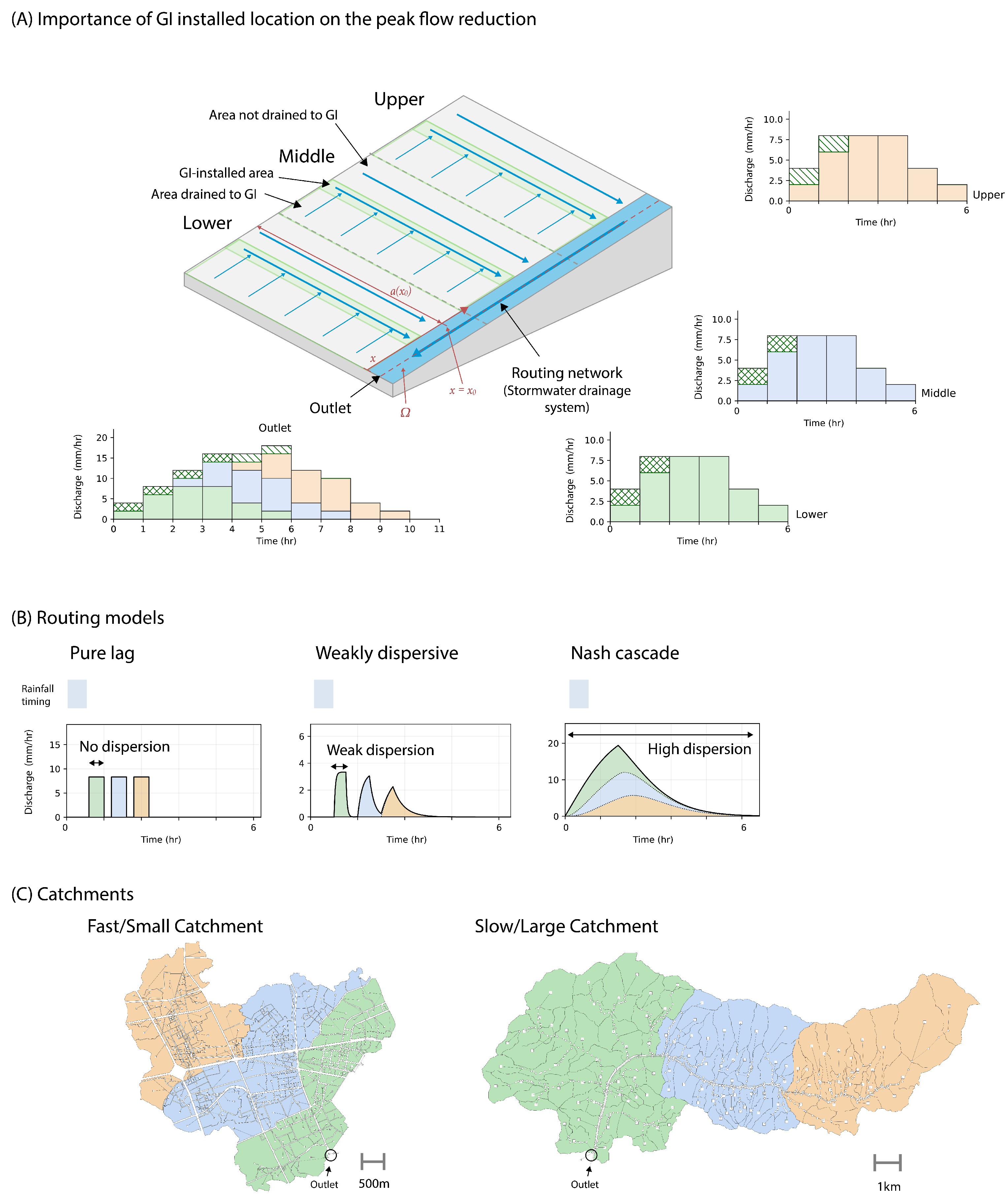
2.3.2. Three-Subcatchment Coarse-Graining
2.4. Network Routing Representations
2.4.1. No Dispersion and Weak Dispersion Kernels
2.4.2. Reference Dispersive Kernel
2.5. GI-Induced Peak Reduction and Optimal Installation Location
2.6. Nondimensionalization and the Framework
2.7. Evaluation Design: Virtual Catchments, Rainfall Ensembles, and Performance Metrics
2.7.1. Virtual Catchments and GI Design
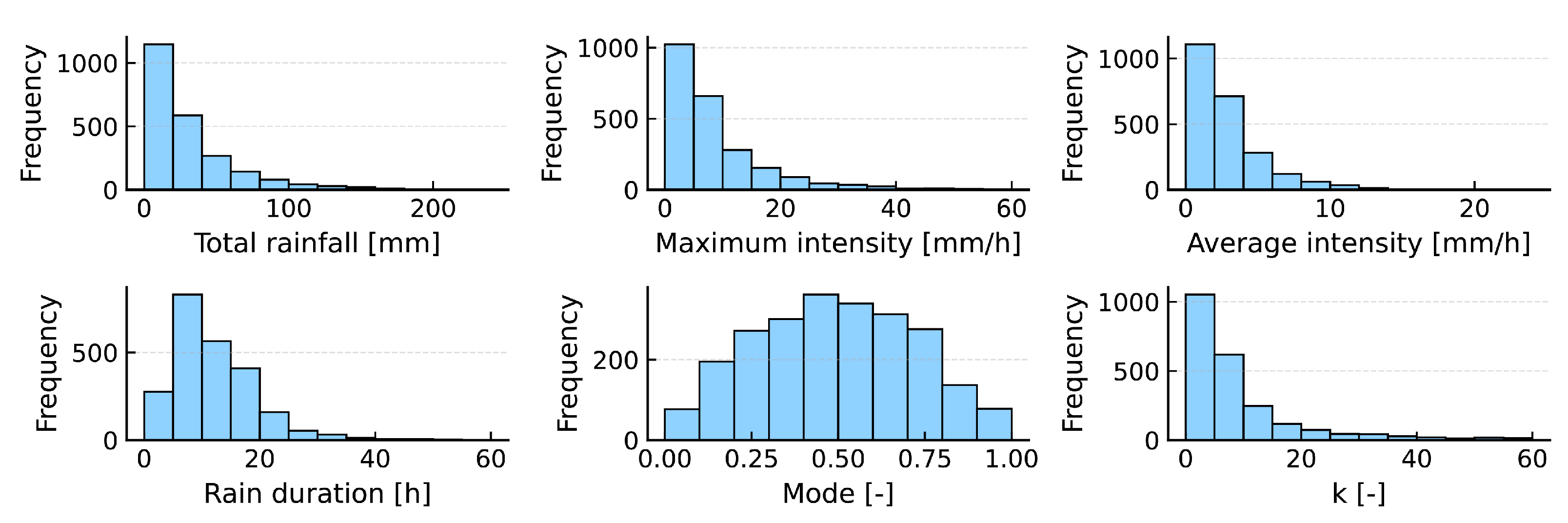
2.7.2. Observed Rainfall Events
2.7.3. Peak-Reduction Fraction and Regret
3. Results
3.1. Uniform Rainfall: Baseline
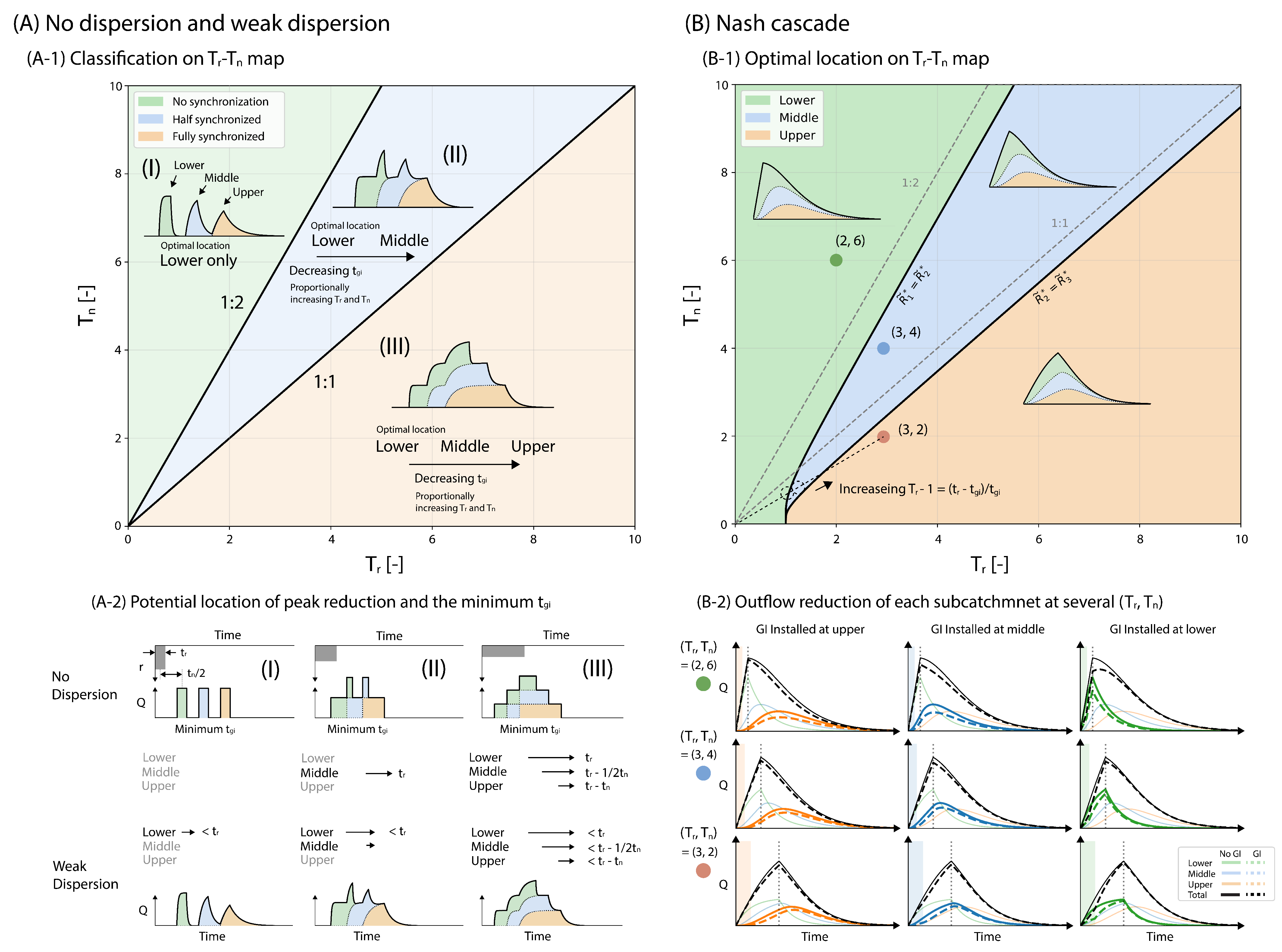
3.1.1. Uniform Rain with Pure Lag and Weak Dispersion
3.1.2. Uniform Rainfall with the Nash Cascade
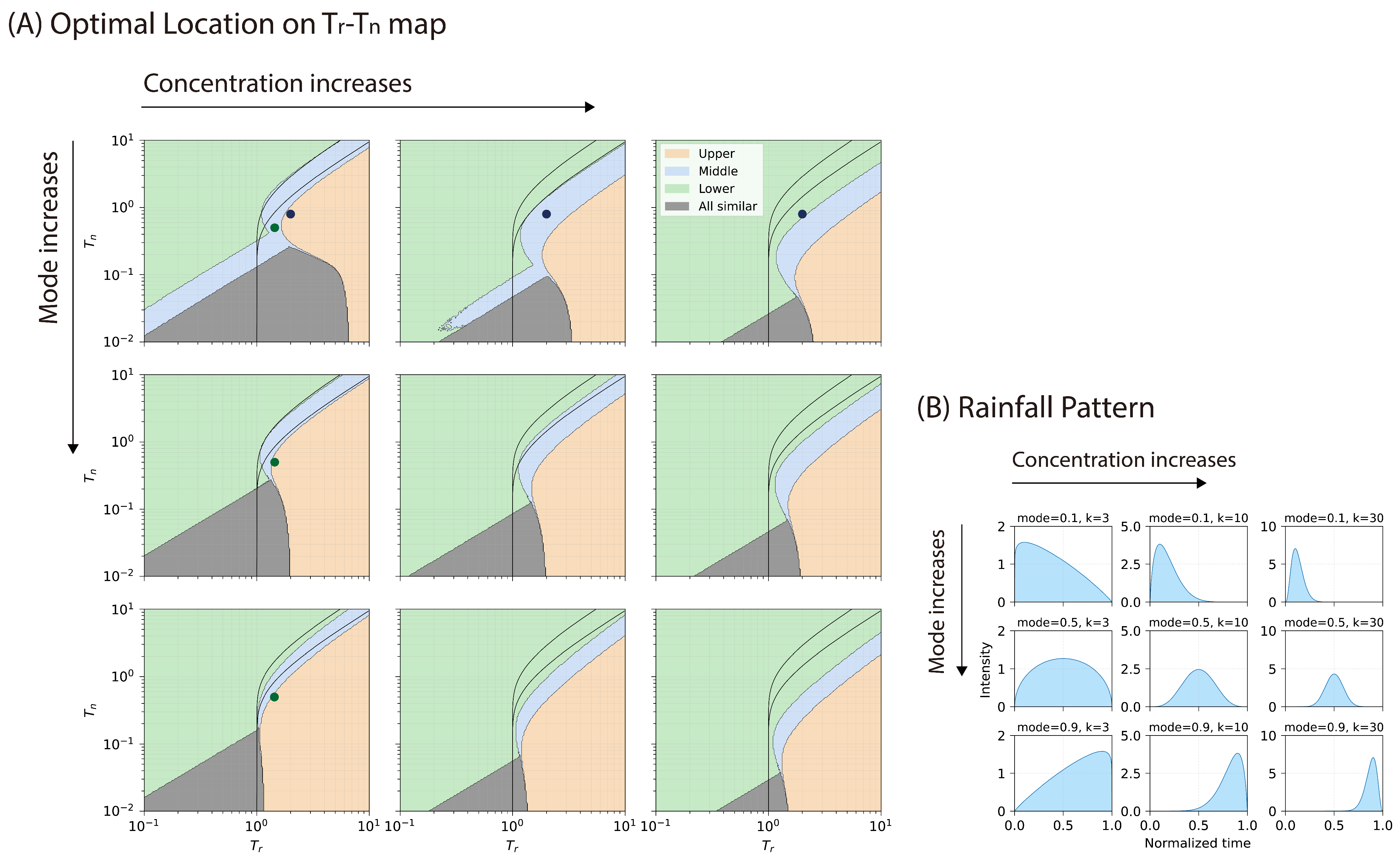
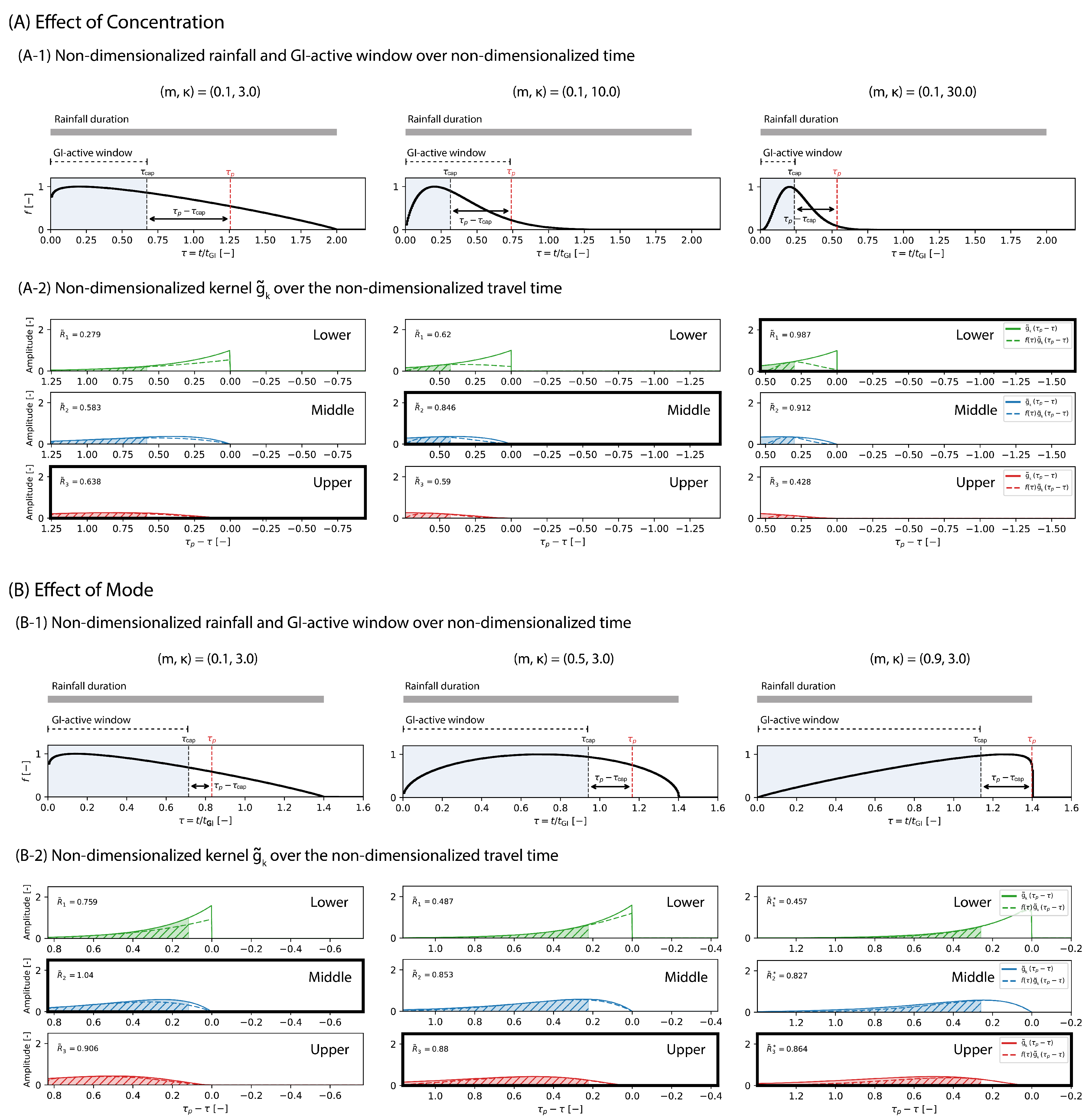
3.2. Within-Storm Variability
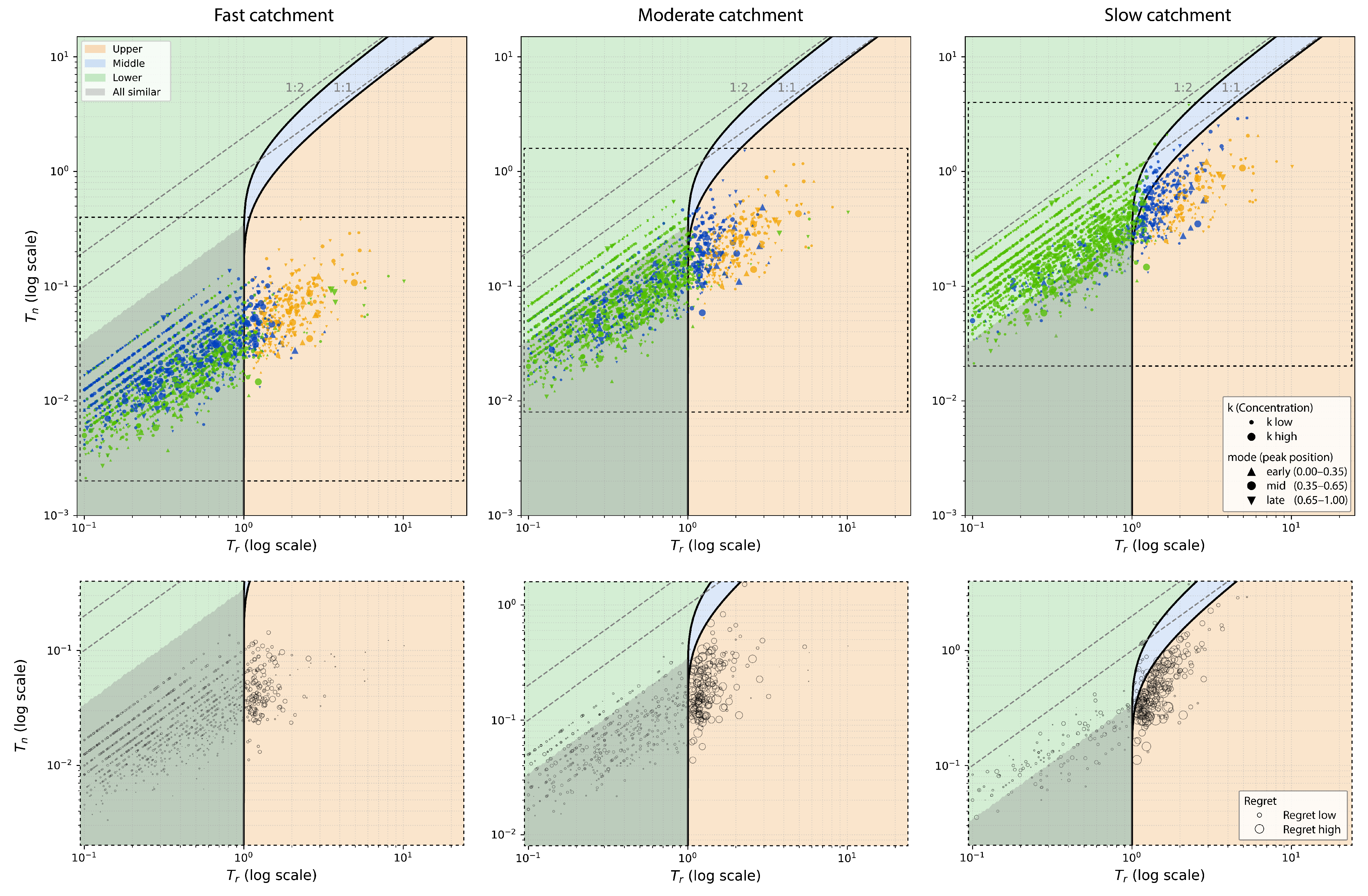
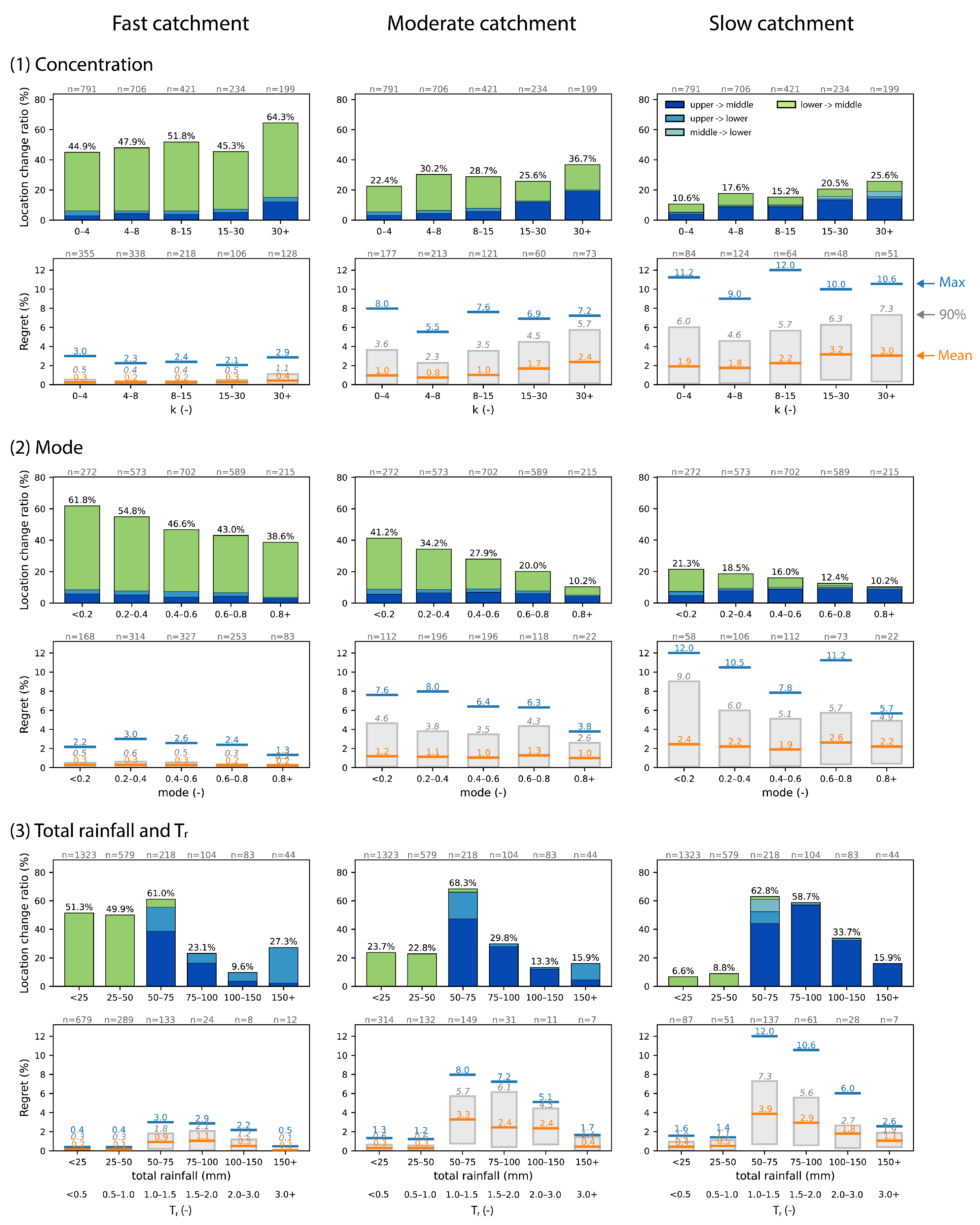
3.3. Analysis in the Virtual Catchments
4. Discussion
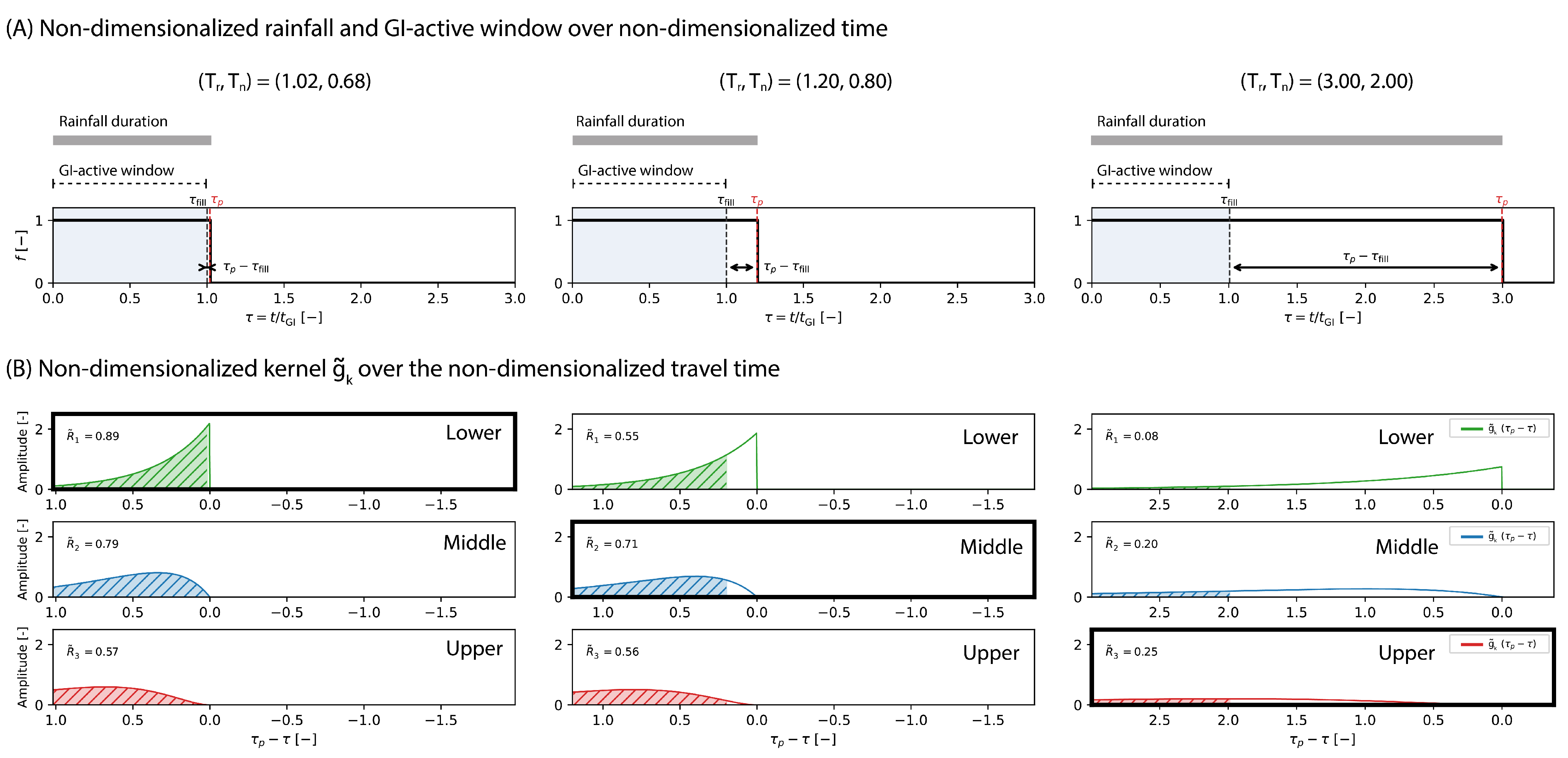
4.1. A Timing View of Optimal GI Placement: Peak Reduction as a Finite-Time Sampling Problem
4.2. Event-Wise Consequences Across Scales: How Often the Baseline Fails, and When It Matters Most
4.3. From a Single Optimal Site to Robustness Under Storm Variability
4.4. Reinterpreting Prior Findings Through the Timescale Framework
4.5. Limitations and Future Directions
5. Conclusions
Author Contributions
Funding
Data Availability Statement
Acknowledgments
Conflicts of Interest
Appendix A. Self-Similarity of the No-GI Hydrograph Under Constant Rainfall
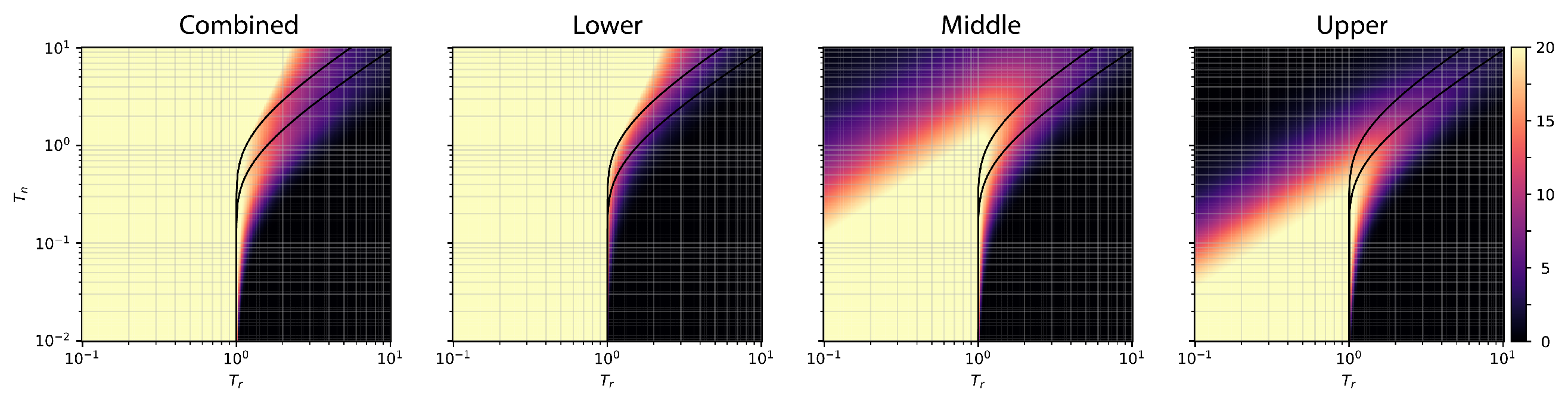
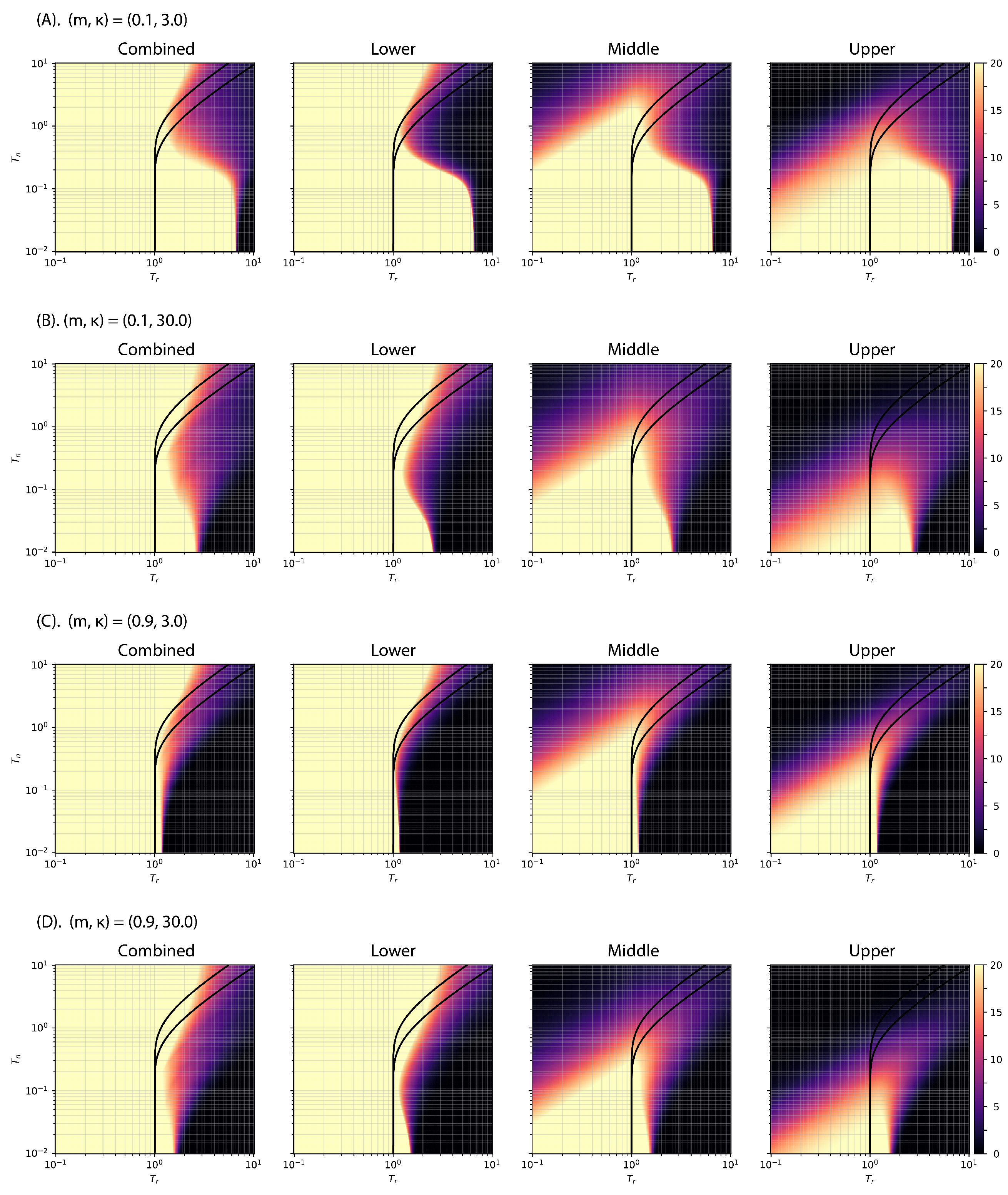
Appendix B. Efficacy Maps for Peak Reduction


References
- Intergovernmental Panel on Climate Change. Weather and climate extreme events in a changing climate. In Climate Change 2021: The Physical Science Basis; AR6 WG1; Cambridge University Press: Cambridge, UK, 2021; Chapter 11. [Google Scholar]
- Intergovernmental Panel on Climate Change. Cities, settlements and key infrastructure. In Climate Change 2022: Impacts, Adaptation and Vulnerability; AR6 WG2; Cambridge University Press: Cambridge, UK, 2022; Chapter 6. [Google Scholar]
- National Research Council. Urban Stormwater Management in the United States; The National Academies Press: Washington, DC, USA, 2009. [Google Scholar] [CrossRef]
- Benedict, M.A.; McMahon, E.T. Green Infrastructure: Linking Landscapes and Communities; Island Press: Washington, DC, USA, 2006. [Google Scholar]
- Fletcher, T.D.; Shuster, W.; Hunt, W.F.; Ashley, R.; Butler, D.; Arthur, S.; Trowsdale, S.; Barraud, S.; Semadeni-Davies, A.; Bertrand-Krajewski, J.L.; et al. SUDS, LID, BMPs, WSUD and more—The evolution and application of terminology surrounding urban drainage. Urban Water J. 2015, 12, 525–542. [Google Scholar] [CrossRef]
- Golden, H.E.; Hoghooghi, N. Green infrastructure and its catchment-scale effects: An emerging science. WIREs Water 2018, 5, e1254. [Google Scholar] [CrossRef]
- Gilroy, K.L.; McCuen, R.H. Spatio-temporal effects of low impact development practices. J. Hydrol. 2009, 367, 228–236. [Google Scholar] [CrossRef]
- Fry, T.J.; Maxwell, R.M. Evaluation of distributed BMPs in an urban watershed—High resolution modeling for stormwater management. Hydrol. Process. 2017, 31, 2700–2712. [Google Scholar] [CrossRef]
- Palla, A.; Gnecco, I. Hydrologic modeling of Low Impact Development systems at the urban catchment scale. J. Hydrol. 2015, 528, 361–368. [Google Scholar] [CrossRef]
- Chen, X.; Davitt-Liu, I.; Erickson, A.J.; Feng, X. Integrating the Spatial Configurations of Green and Gray Infrastructure in Urban Stormwater Networks. Water Resour. Res. 2023, 59, e2023WR034796. [Google Scholar] [CrossRef]
- Loperfido, J.V.; Noe, G.B.; Jarnagin, S.T.; Hogan, D.M. Effects of distributed and centralized stormwater best management practices and land cover on urban stream hydrology at the catchment scale. J. Hydrol. 2014, 519, 2584–2595. [Google Scholar] [CrossRef]
- Li, C.; Fletcher, T.D.; Duncan, H.P.; Burns, M.J. Can stormwater control measures restore altered urban flow regimes at the catchment scale? J. Hydrol. 2017, 549, 631–653. [Google Scholar] [CrossRef]
- Zhang, K.; Chui, T.F.M. A comprehensive review of spatial allocation of LID-BMP-GI practices: Strategies and optimization tools. Sci. Total Environ. 2018, 621, 915–929. [Google Scholar] [CrossRef]
- Avellaneda, P.M.; Jefferson, A.J.; Grieser, J.M.; Bush, S.A. Simulation of the cumulative hydrological response to green infrastructure. Water Resour. Res. 2017, 53, 3087–3101. [Google Scholar] [CrossRef]
- Le Floch, N.; Pons, V.; Hassan Abdalla, E.M.; Alfredsen, K. Catchment scale effects of low impact development implementation scenarios at different urbanization densities. J. Hydrol. 2022, 612, 128178. [Google Scholar] [CrossRef]
- Fiori, A.; Volpi, E. On the effectiveness of LID infrastructures for the attenuation of urban flooding at the catchment scale. Water Resour. Res. 2020, 56, e2020WR027121. [Google Scholar] [CrossRef]
- Hung, F.; Harman, C.J.; Hobbs, B.F.; Sivapalan, M. Assessment of climate, sizing, and location controls on green infrastructure efficacy: A timescale framework. Water Resour. Res. 2020, 56, e2019WR026141. [Google Scholar] [CrossRef]
- Robinson, J.S.; Sivapalan, M. Temporal scales and hydrological regimes: Implications for flood frequency scaling. Water Resour. Res. 1997, 33, 2981–2999. [Google Scholar] [CrossRef]
- Ochoa-Rodriguez, S.; Wang, L.P.; Gires, A.; Pina, R.D.; Reinoso-Rondinel, R.; Bruni, G.; Ichiba, A.; Gaitan, S.; Cristiano, E.; van Assel, J.; et al. Impact of spatial and temporal resolution of rainfall inputs on urban hydrodynamic modelling outputs: A multi-catchment investigation. J. Hydrol. 2015, 531, 389–407. [Google Scholar] [CrossRef]
- Cristiano, E.; ten Veldhuis, M.C.; van de Giesen, N. Spatial and temporal variability of rainfall and their effects on hydrological response in urban areas—A review. Hydrol. Earth Syst. Sci. 2017, 21, 3859–3878. [Google Scholar] [CrossRef]
- Qin, H.p.; Li, Z.x.; Fu, G. The effects of low impact development on urban flooding under different rainfall characteristics. J. Environ. Manag. 2013, 129, 577–585. [Google Scholar] [CrossRef]
- Wu, J.; Yang, R.; Song, J. Effectiveness of low-impact development for urban inundation risk mitigation under different scenarios: A case study in Shenzhen, China. Nat. Hazards Earth Syst. Sci. 2018, 18, 2525–2536. [Google Scholar] [CrossRef]
- Lu, L.; Johnson, M.; Zhu, F.; Xu, Y.; Ruan, T.; Chan, F.K.S. Harnessing the runoff reduction potential of urban bioswales as an adaptation response to climate change. Sci. Rep. 2024, 14, 12207. [Google Scholar] [CrossRef]
- Asher, M.; Trigg, M.; Böing, S.; Birch, C. The Sensitivity of Urban Pluvial Flooding to the Temporal Distribution of Rainfall Within Design Storms. J. Flood Risk Manag. 2025, 18, e70097. [Google Scholar] [CrossRef]
- Saaremäe, E.; Tamm, O.; Koivusalo, H.; Tamm, T. The Importance of Design Storm Hyetograph on Urban Flood Risk Management and Drainage System Design. J. Flood Risk Manag. 2025, 18, e70047. [Google Scholar] [CrossRef]
- Hogg, R.V.; Craig, A.T. Introduction to Mathematical Statistics, 4th ed.; Macmillan: New York, NY, USA, 1978. [Google Scholar]
- Johnson, N.L.; Kotz, S.; Balakrishnan, N. Continuous Univariate Distributions, 2nd ed.; John Wiley & Sons: New York, NY, USA, 1995; Volume 2. [Google Scholar]
- Cunge, J.A. On the Subject of a Flood Propagation Computation Method (Muskingum Method). J. Hydraul. Res. 1969, 7, 205–230. [Google Scholar] [CrossRef]
- Nash, J.E. The Form of the Instantaneous Unit Hydrograph. In Proceedings of the International Association of Hydrological Sciences (IAHS) Publication; General Assembly of Toronto: Toronto, ON, Canada, 1957; Volume 45, pp. 114–121. [Google Scholar]
- Dooge, J.C.I. A General Theory of the Unit Hydrograph. J. Geophys. Res. 1959, 64, 241–256. [Google Scholar] [CrossRef]
- Chow, V.T.; Maidment, D.R.; Mays, L.W. Applied Hydrology; McGraw–Hill: New York, NY, USA, 1988. [Google Scholar]
- McCuen, R.H. Hydrologic Analysis and Design, 3rd ed.; Pearson Prentice Hall: Upper Saddle River, NJ, USA, 2005. [Google Scholar]
- Natural Resources Conservation Service. National Engineering Handbook, Part 630: Hydrology; U.S. Department of Agriculture: Washington, DC, USA, 2010. [Google Scholar]
- Ahiablame, L.M.; Engel, B.A.; Chaubey, I. Effectiveness of Low Impact Development Practices: Literature review and suggestions for future research. Water Air Soil Pollut. 2012, 223, 4253–4273. [Google Scholar] [CrossRef]
- Eckart, K.; McPhee, Z.; Bolisetti, T. Performance and implementation of low impact development—A review. Sci. Total Environ. 2017, 607–608, 413–432. [Google Scholar] [CrossRef]
- Park, C.; Son, S.W.; Kim, J.; Chang, E.C.; Kim, J.H.; Jo, E.; Cha, D.H.; Jeong, S. Diverse Synoptic Weather Patterns of Warm-Season Heavy Rainfall Events in South Korea. Mon. Weather. Rev. 2021, 149, 3875–3893. [Google Scholar] [CrossRef]
- Do, Y.S.; Cho, H.G.; Kim, G.S. Analysis of the Temporal Distribution of Rainfall Using the Heavy Storm Distribution Method Reflecting Concentrated Duration Characteristics in Busan. J. Korean Soc. Hazard Mitig. 2018, 18, 613–620. [Google Scholar] [CrossRef]
- Herman, J.D.; Reed, P.M.; Zeff, H.B.; Characklis, G.W. How should robustness be defined for water systems planning under change? J. Water Resour. Plan. Manag. 2015, 141, 04015012. [Google Scholar] [CrossRef]
- McPhail, C.; Maier, H.R.; Kwakkel, J.H.; Giuliani, M.; Castelletti, A.; Westra, S. Robustness metrics: How are they calculated, when should they be used and why do they give different results? Earth’s Future 2018, 6, 169–191. [Google Scholar] [CrossRef]
- Giacomoni, M.H.; Joseph, J. Multi-Objective Evolutionary Optimization and Monte Carlo Simulation for Placement of Low Impact Development in the Catchment Scale. J. Water Resour. Plan. Manag. 2017, 143, 04017053. [Google Scholar] [CrossRef]



Disclaimer/Publisher’s Note: The statements, opinions and data contained in all publications are solely those of the individual author(s) and contributor(s) and not of MDPI and/or the editor(s). MDPI and/or the editor(s) disclaim responsibility for any injury to people or property resulting from any ideas, methods, instructions or products referred to in the content. |
© 2026 by the authors. Licensee MDPI, Basel, Switzerland. This article is an open access article distributed under the terms and conditions of the Creative Commons Attribution (CC BY) license.
Share and Cite
Nam, S.; Kim, M. Everything Comes Down to Timing: Optimal Green Infrastructure Placement and the Effect of Within-Storm Variability. Water 2026, 18, 790. https://doi.org/10.3390/w18070790
Nam S, Kim M. Everything Comes Down to Timing: Optimal Green Infrastructure Placement and the Effect of Within-Storm Variability. Water. 2026; 18(7):790. https://doi.org/10.3390/w18070790
Chicago/Turabian StyleNam, Seonwoo, and Minseok Kim. 2026. "Everything Comes Down to Timing: Optimal Green Infrastructure Placement and the Effect of Within-Storm Variability" Water 18, no. 7: 790. https://doi.org/10.3390/w18070790
APA StyleNam, S., & Kim, M. (2026). Everything Comes Down to Timing: Optimal Green Infrastructure Placement and the Effect of Within-Storm Variability. Water, 18(7), 790. https://doi.org/10.3390/w18070790