1. Introduction
Fresh groundwater is the primary source of water for public and private potable and agricultural uses in Florida because most of the state is underlain by prolific aquifers and the water usually requires minimal treatment, often just disinfection, before consumption. Fresh groundwater abstractions in Florida, especially in the more heavily populated areas, have approached or are exceeding sustainable limits. Lowering of potentiometric surfaces from groundwater pumping is causing saline-water intrusion and lowering of water levels in wetlands and lakes. A key element of water supply management in Florida is now the development of alternative water supplies, particularly the reuse of reclaimed wastewater and desalination of brackish groundwater.
A permitting criterion in Florida is that irrigators are required to use reclaimed water instead of fresh groundwater if it is available. The use of reclaimed water for irrigation reduces demands for higher quality fresh groundwater, which is more appropriately used for potable supply. Florida has a highly seasonal pattern of rainfall, with the majority of rainfall occurring during the summer wet season and less falling during the fall to spring dry season. Water demand also has a seasonality, with greater demands during peak tourism periods.
Potential users of reclaimed water require a reliable year-round supply. They are usually unwilling to commit to hooking up to reuse systems if they cannot count on water being available to them during dry and high demand periods when they need it most. Similarly, they are not interested in receiving water during wet periods when they do not need to irrigate and their storage ponds are full. Wastewater utilities need storage capacity to balance out variations in reclaimed water supply and demand as well as increase reuse system reliability.
Aquifer storage and recovery (ASR) is the underground recharge and recovery of water using wells. It has the great advantages of a minimal surface footprint (a major concern in developed areas with limited and expensive land availability), essentially no environmental impacts, as stored water is not in contact with surface ecosystems, and sometimes lower construction costs than surface storage options.
ASR has been widely implemented in Florida by water and wastewater utilities to store potable, treated surface water and reclaimed water [
1,
2,
3,
4]. The vast majority of systems in the state use a confined brackish carbonate aquifer as a storage zone.
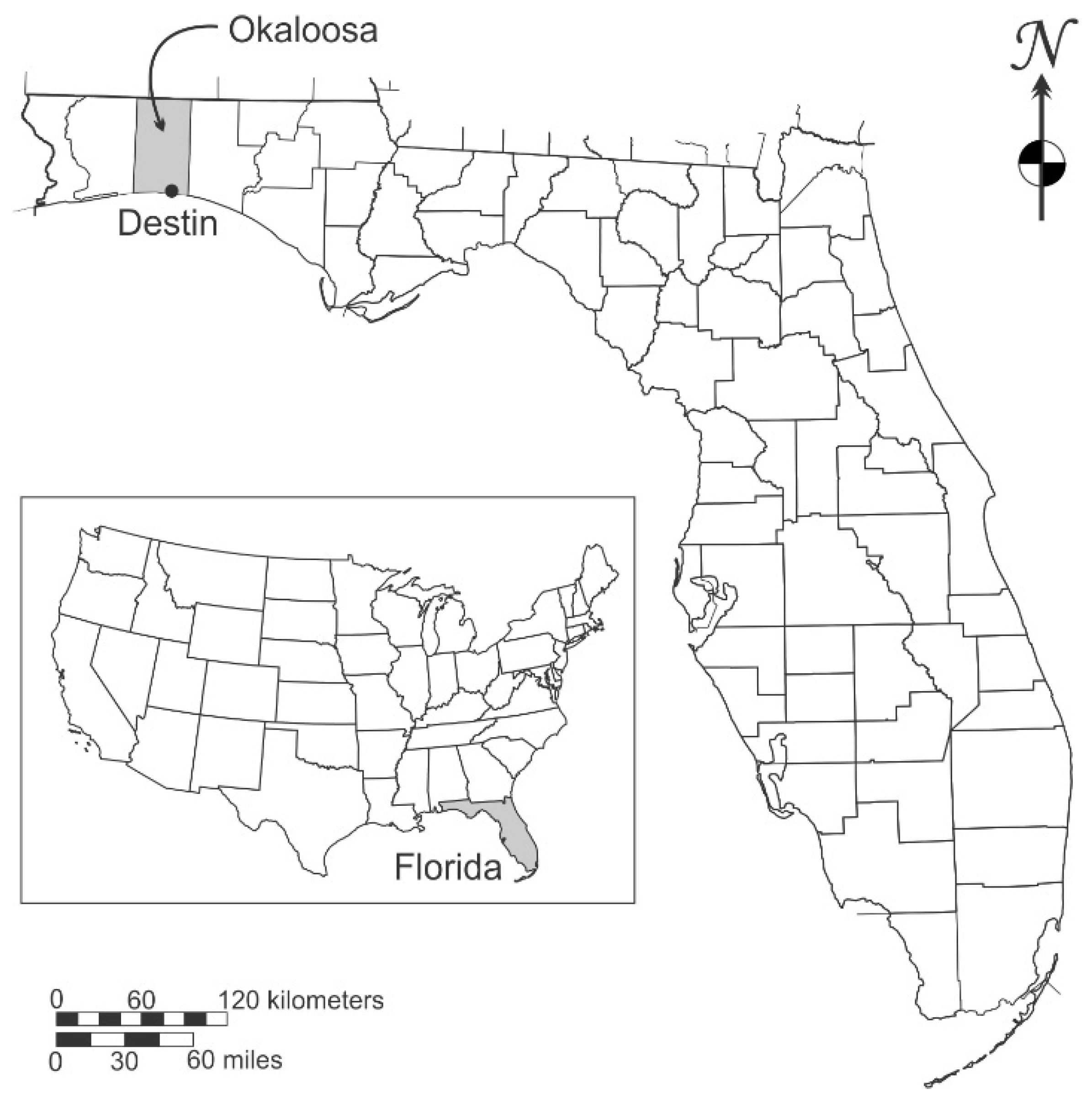
Destin Water Users, Inc. (DWU) is private not-for-profit corporation that provides water, wastewater, and reclaimed water services to the City of Destin and portions of unincorporated Okaloosa County, which are located on a barrier island on Florida’s panhandle (
Figure 1). DWU implemented a groundbreaking reclaimed water ASR system that uses a shallow freshwater sand-and-gravel aquifer as its storage zone. The ASR system provides additional environmentally sound and economical wet-weather disposal capacity and improves the reliability of its reuse system. This paper summarizes the history of the project and is an updated and expanded version of earlier conference presentations [
5].
2. Setting
The DWU reclaimed water ASR system is located at the George F. French Water Reclamation Facility (WRF). The DWU WRF has a capacity of 22.7 million liters/day (6 million gallons per day) and employs tertiary treatment. The wastewater initially undergoes mechanical treatment with rotating screens, grit separation, and an equalization basin. The wastewater then receives biological treatment using oxidation ditches, followed by clarification and disinfection with chlorine contact systems. The secondary effluent is further treated to produce reclaimed water by flocculation, filtration, and high-level disinfection with chlorine contact chambers. The reclaimed water meets Florida drinking water standards.
The highly treated reclaimed water is preferentially sent to the reuse system, where it is used for public access irrigation of the landscaping at shopping centers, condominium complexes, golf courses, parks, and individual residences, as well as for plant washdown and grounds irrigation. Reclaimed water flows in excess of immediate demands are either stored in three ground storage tanks, sent to on-site rapid infiltration basins to recharge the surficial aquifer, or sent to the ASR system.
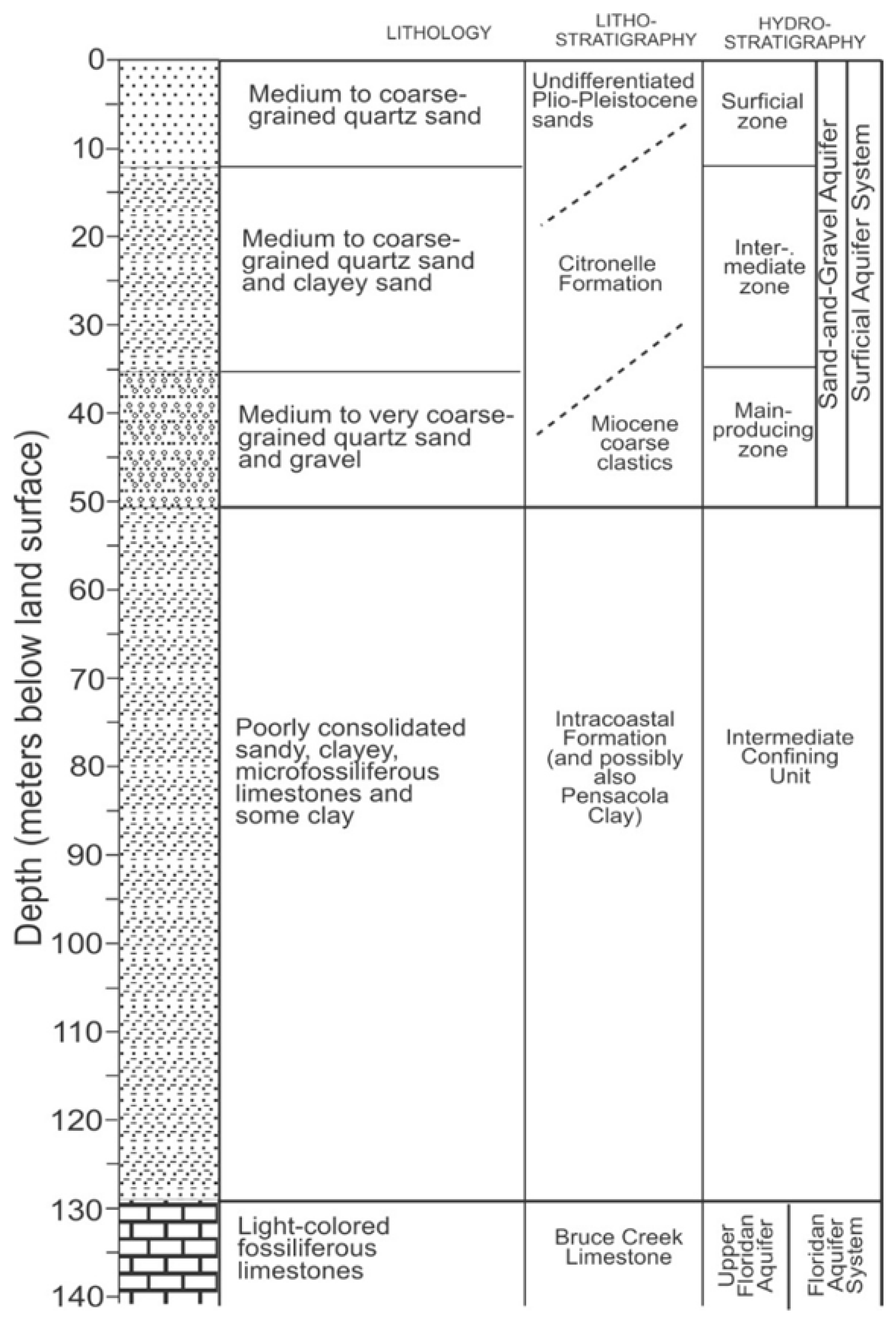
Three main hydrogeologic units are present in northwestern Florida: the surficial aquifer system, the intermediate confining unit (also known as the Pensacola confining unit), and the Floridan aquifer system (
Figure 2). The surficial aquifer system in Florida is defined as the “permeable hydrogeologic unit contiguous with land surface that is comprised principally of unconsolidated clastic deposits” [
6]. The surficial aquifer system in the Destin area consists of the sand-and-gravel aquifer, which stratigraphically contains undifferentiated Plio–Pleistocene sands, the underlying Citronelle Formation, and Miocene coarse clastics [
7,
8,
9,
10]. The sand-and-gravel aquifer in the Destin area contains freshwater but saline groundwater is present offshore.
The sand-and-gravel aquifer is divided into three hydraulic zones, in descending order, the surficial zone, intermediate zone, and main-producing zone [
8]. The surficial zone is composed of fine to medium-grained quartz sands and is approximately 12 m thick in the project site area. The surficial zone is widely used in the Destin area for residential irrigation wells.
The surficial zone is underlain by low-permeability clays, sandy clays, and clayey sands that constitute the intermediate zone. The intermediate zone is approximately 13 m thick in the project site area and extends downward to the top of the main-producing zone, which is located approximately 36 m below land surface. The main-producing zone is the most transmissive part of the sand-and-gravel aquifer and consists mostly of medium- to very coarse-grained sand and gravel. The main-producing zone, the ASR storage zone, is used for potable supply on the mainland but not in the Destin area.
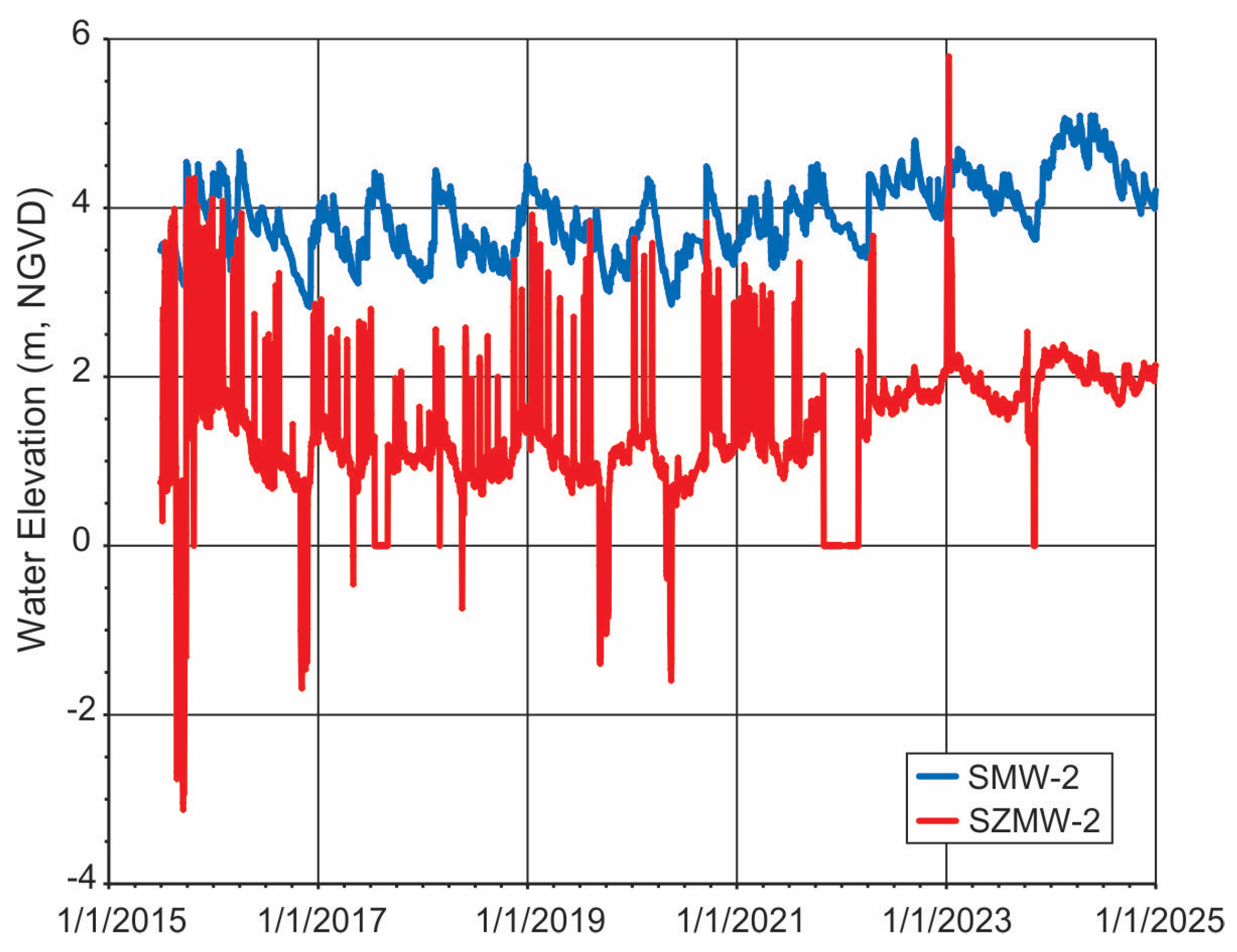
The surficial zone has an approximately 2 to 3 m greater static head than the main-producing zone at the project site, which is evidence for effective confinement between the zones. Sharp water-level changes in the main-producing zone due to injection and recovery in the ASR system are not transmitted to the surficial zone (
Figure 3). The surficial zone has a seasonal fluctuation in water levels.
The intermediate confining unit (ICU) is defined as including “all rocks that lie between and collectively retard the exchange of water between the overlying Surficial Aquifer System and the underlying Floridan Aquifer System” [
6]. The ICU in Destin consists of the Intracoastal Formation and Pensacola Clay [
7,
10]. The Intracoastal Formation consists of low-permeability, poorly consolidated, sandy, clayey microfossiliferous limestones, with a middle unit of phosphatic sand [
7]. The Pensacola Clay consists mostly of pale, yellow brown to olive gray, dense silty clay, which sometimes contains large quantities of sand (5–50%) [
7].
The base of the ICU is marked by a downward transition from predominantly low-permeability clastic rocks to underlying more permeable, light-colored carbonate strata of the Upper Floridan aquifer. The ICU is approximately 71 to 102 m thick in the Destin area [
11] and provides highly effective vertical confinement. The Upper Floridan aquifer consists of high-transmissivity fossiliferous limestones that contain freshwater and is the sole potable water source in the Destin area.
3. Regulatory Issues
Reclaimed water ASR systems in Florida are categorized as Class V, Group 3 injection wells and are permitted by the Florida Department of Environmental Protection (FDEP). The overriding requirement for injection wells is protection of underground sources of drinking water (USDWs), which are defined as non-exempt aquifers containing less the 10,000 mg/L of total dissolved solids (TDS). The construction and operation of injection wells shall not cause or allow the movement of fluid containing any contaminant into a USDW that results in a violation of any primary drinking water regulation or may adversely affect the health of persons (Florida Administrative Code 62-528.630(3)). The recharged water must meet drinking water standards at the wellhead. The operation of the ASR wells must not also cause standards to be exceeded in the storage zone aquifer due to fluid–rock interactions.
Reclaimed water ASR systems are additionally regulated in Florida under the reuse rules. Reclaimed water injected into aquifers containing less than 3000 mg/L of TDS is required to meet additional treatment and disinfection requirements, including limits on total organic carbon and total organic halogens (Florida Administrative Code 62-610.560 (2)), under the assumption that potable reuse is possible. The additional treatment and disinfection requirements would have made the DWU ASR system economically unviable. DWU was able to obtain a variance from these requirements because Section 10.05.05 (A) of the Destin City Code states that shallow wells, which draw water from the sand-and-gravel aquifer, shall be used for irrigation purposes only. An institutional control prevents potable reuse, making the need for additional treatment superfluous.
4. ASR System Development
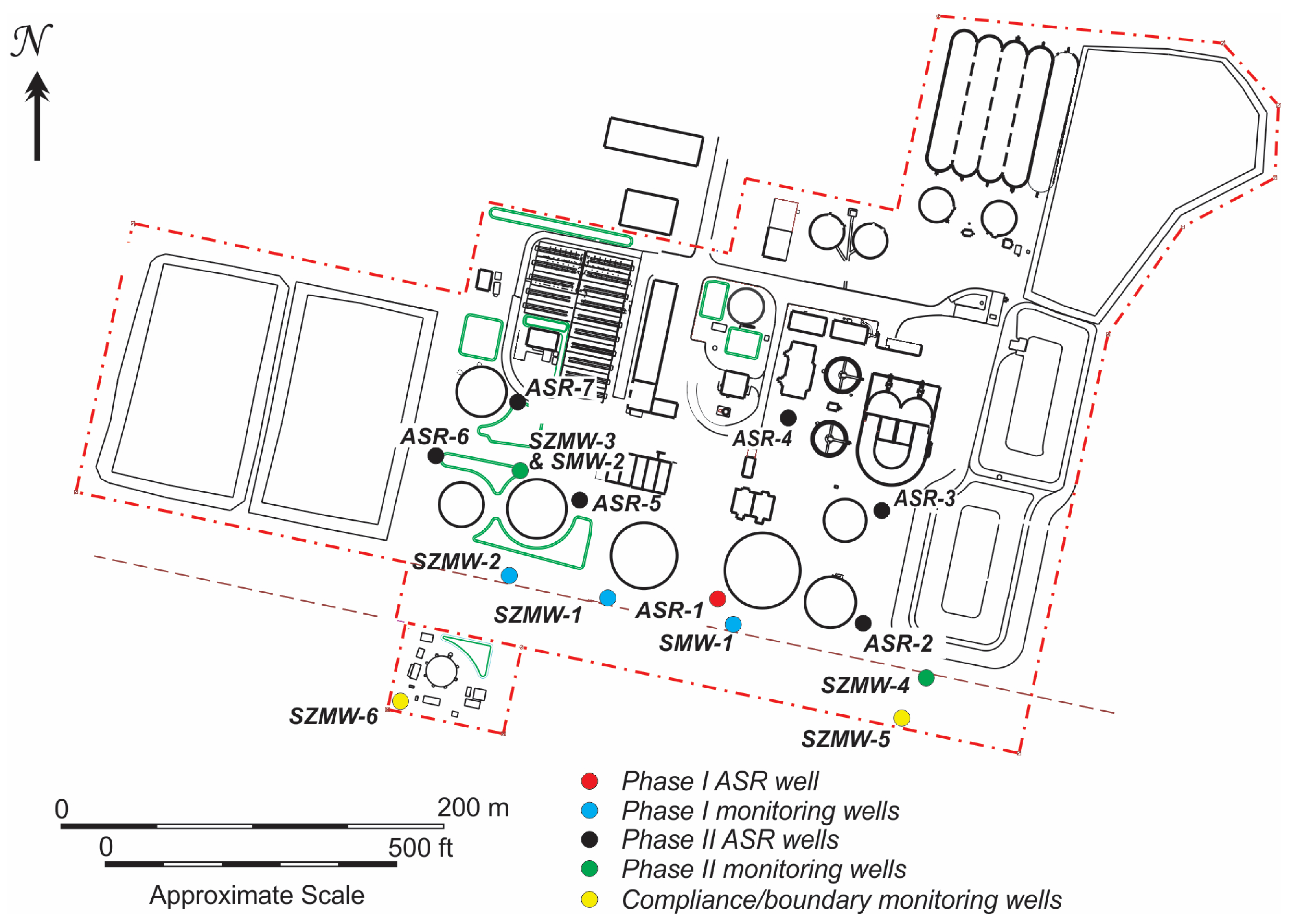
Development of the ASR system started in June 2002 with the installation of a surficial and a main-producing zone monitoring well and the performance of a 72 h aquifer pumping testing using an existing main-producing zone production well. An existing main-producing zone monitoring well was also used as an observation well. The two main-producing zone monitoring wells (SZMW-1 and SZMW-2) were retained for the ASR system (
Figure 4).
Using the Hantush and Jacob solution for leaky confined aquifers [
12], the aquifer pumping test data yielded a transmissivity of 446 to 474 m
2/day and leakance (vertical hydraulic conductivity/confining zone thickness) values of 8.0 × 10
−5 and 1.3 × 10
−4 day
−1. No impacts from pumping were detected in the surficial zone monitoring well.
The aquifer pumping testing data indicated that ASR was likely feasible at the DWU WRF. The next project phase involved obtaining an FDEP injection well construction permit and a variance from full treatment and disinfection requirements, which was issued on 20 October 2006.
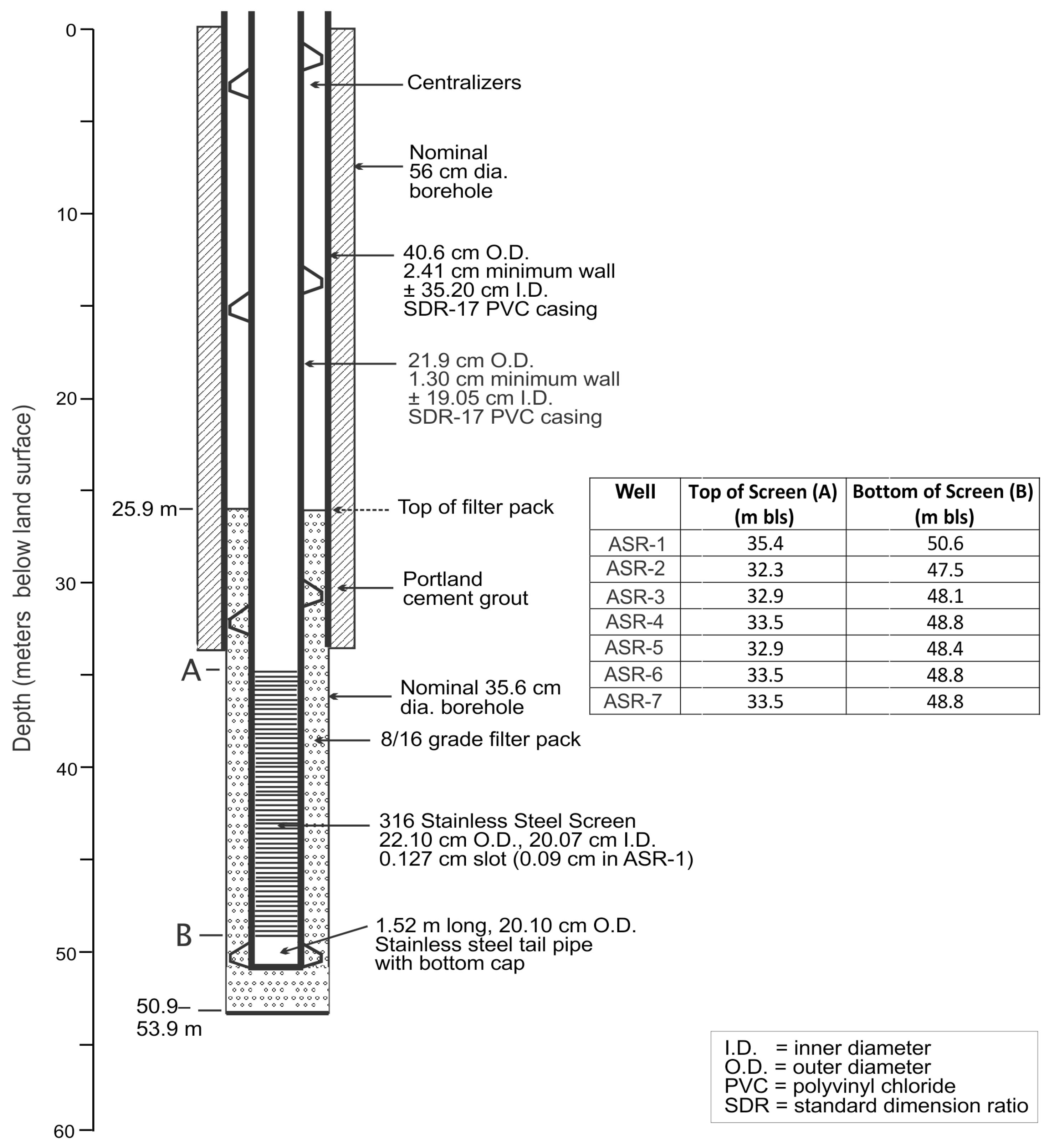
The first ASR well (ASR-1;
Figure 5) and shallow monitoring well SMW-1 were installed in March 2009. ASR-1 and subsequently constructed ASR wells have a 40.6 cm (16 inch) outer diameter (O.D.) PVC outer casing and 21.9 cm (8.6 inch) O.D. inner casing set to just above the top of the main-producing zone. The wells are completed with a 22.1 cm (8.7 inch) O.D. 316 stainless steel wire-wrapped screen with 0.089 cm (0.035 inch) slots in ASR-1 and 0.127 cm (0.050-inch) slots in ASR-2 through ASR-7. The seven-well ASR system has a total design and permitted capacity of 8.044 × 10
6 L/d (2.125 × 10
6 U.S. gallons per day).
The initial four injection and recovery cycle tests were performed from July 2009 through May 2011. Operational test 5, which consisted of using the ASR well in its planned long-term operational mode (injection and recovery upon demand), was performed from 8 February to 1 September 2011.
Six additional ASR wells (ASR-2 through ASR-7), two additional storage-zone monitoring wells (SZMW-3 and SZMW-4), and a shallow monitoring well (SMW-2) were constructed in June to October 2011. Operational testing of the expanded system started 1 July 2012. An Operation Permit for the system was issued on 7 January 2014, which was the first such permit issued in Florida for a reclaimed water ASR system and an ASR system using a shallow siliciclastic aquifer as a storage zone. Two additional storage-zone monitoring wells (SZMW-5 and SZMW-6) were constructed in June 2014 for detection of water quality changes at the southern boundary of the WRF site.
The DWU ASR system has been continuously operational but has been minimally used from 2022 onward because of limited need for disposal capacity or additional reclaimed water. Reclaimed water flows have been sent to the reuse system with minor excesses used to recharge the surficial aquifer in rapid infiltration basins. Nevertheless, the ASR system provides critical disposal capacity for times when the reuse system and RIBs cannot accept the reclaimed water flows. The net injected volume from 1 June 2012 to 31 December 2024 is 5.19 × 10⁸ L (138.18 × 10⁶ gallons).
5. Operational Results
The monitoring program for the DWU WRF ASR system is prescribed by the FDEP and includes continuous recording of water levels in the monitoring and ASR wells, as well as injection and recovery rates from which daily average, maximum, and minimum values are calculated. The monitoring wells, reclaimed water, and recovered water are sampled for a series of water-quality parameters either weekly, monthly, or annually depending on the parameter. The current monitoring program includes salinity related parameters (TDS, chloride, sodium, sulfate, and specific conductance), nutrients (nitrate), disinfection byproducts (trihalomethanes), arsenic, total and fecal coliform bacteria, and field parameters (temperature, pH, dissolved oxygen). The grab samples are analyzed using standard U.S. Environmental Protection Agency or Florida-approved methods.
A distinct difference in water chemistry occurs between the surficial and main-producing zones, which was recorded in the early (pre-2012) data obtained before operation of the ASR system impacted water chemistry in the monitoring wells completed in the latter (
Table 1). The surficial zone has a similar composition as that of the reclaimed water at the DWU WRF due to the on-site recharge of reclaimed water in the infiltration basins. The main-producing zone has a distinctly lower concentration of salinity correlated parameters and fluoride. The reclaimed water data compiled in this study had average nitrate (as N) concentration of 5.58 mg/L versus concentrations of ≤0.1 mg/L in the predominance of the main-producing zone samples. The native groundwater in the main-producing zone is sulfate-reducing, as indicated by a hydrogen sulfide odor and negative oxidation–reduction potential values, and is not suitable for direct potable consumption.
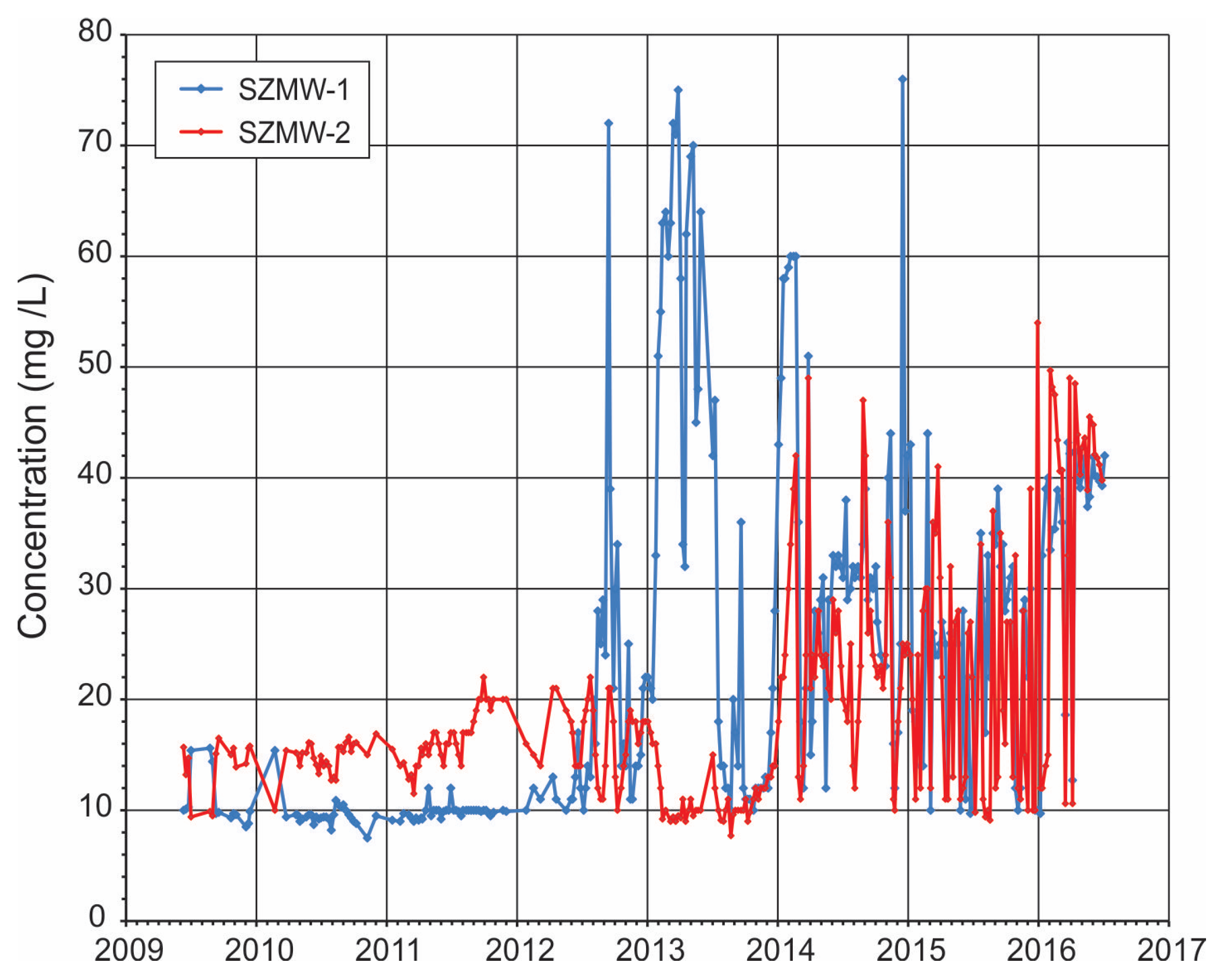
The arrival of the recharged reclaimed water in storage-zone monitoring wells is evident by an abrupt increase in the concentration of chloride and other salinity parameters (
Figure 6). Several years elapsed before the recharged water reached the monitoring wells.
5.1. Recovery Efficiency
A solute-transport model was developed for the DWU ASR system using the MODFLOW [
13] and MT3DMS [
14] codes to simulate the performance of the initial three cycle tests. The initial model grid had 6 m wide cells in the core area and was bounded by constant head cells located at least 1300 m from the ASR well to avoid significant boundary effects.
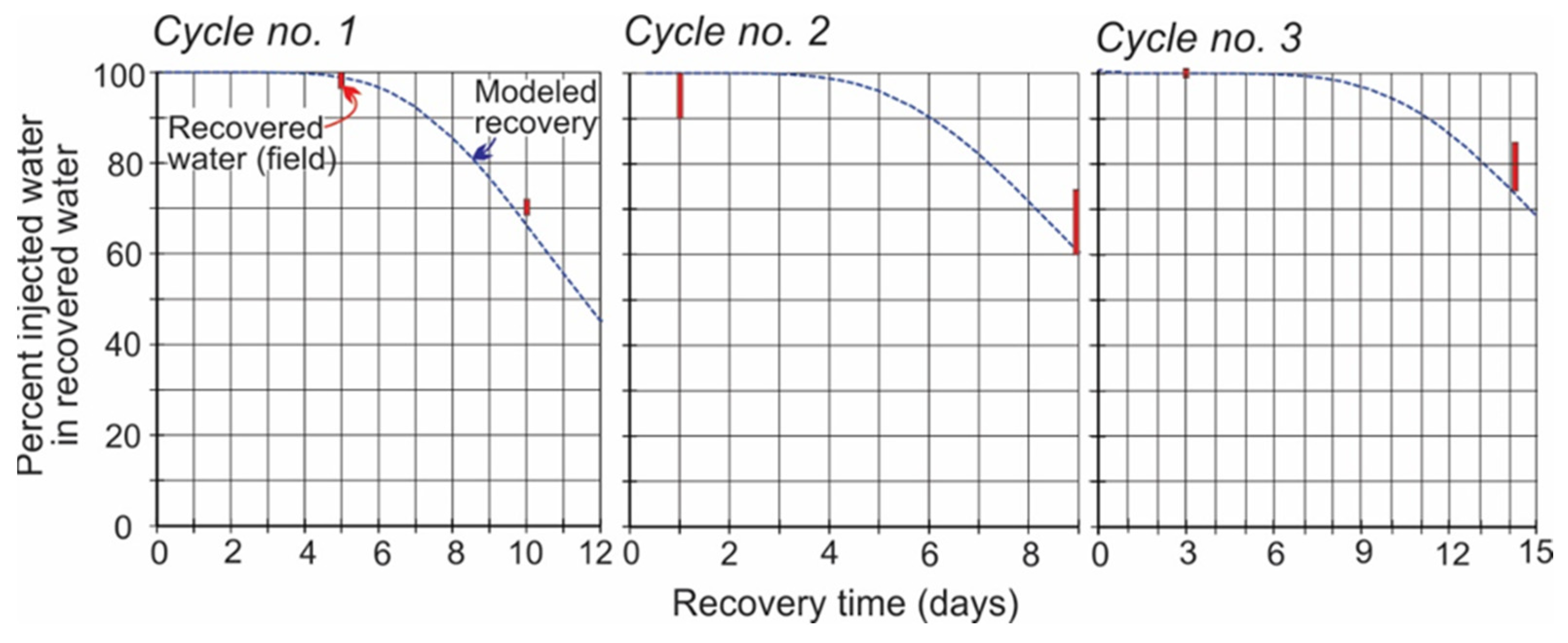
The model was calibrated for the fraction of reclaimed water in the recovered water using chloride, sodium, and fluoride concentrations as tracers. The model was calibrated for cycle no. 1 and verified using the data for cycles nos. 2 and 3 (
Figure 7). A small grid size (0.38 m in the core area of model) and longitudinal dispersivity value (0.09 m), as well as high effective porosity (0.35), were required to approximately match the field data. Nevertheless, the model still slightly underestimates the fraction of injected water in the late-stage recovered water due to the numerical dispersion.
The monitoring data and modeling results both indicate that the injected reclaimed water stayed close to the ASR well with a relatively low degree of dispersive mixing. The modeling results are consistent with a relatively homogenous aquifer that is dominated by intergranular matrix flow.
5.2. Operational Challenges
The main operational challenge that the DWU ASR system has experienced is reductions in well capacity (specific injectivity) due to clogging, which is a pervasive problem with injection wells in siliciclastic aquifers. The clogging management approach at the DWU ASR system includes periodic backflushing of the wells and occasional full-scale rehabilitation, which involves pulling the submersible pump and then some combination of jetting, surging, and chemical treatment. Managing clogging is an on-going operational challenge, and DWU is continuing to investigate options for the most cost-effective means for maintaining the capacity of the ASR wells.
5.3. Water Quality—Arsenic
Leaching of arsenic into water recharged in ASR systems is a widespread phenomenon in Florida, which appears to be caused by the oxidative dissolution of arsenic-bearing iron sulfide minerals (e.g., pyrite and arsenopyrite) present in trace quantities in the aquifer rock. Arsenic typically occurs below the Florida groundwater standard, which is now the drinking water maximum contaminant level (MCL) of 10 micrograms per liter (μg/L), in both the recharged water of ASR systems and the native groundwater. Arsenic leaching in many ASR systems in Florida caused the arsenic concentration in stored water to exceed the MCL, which is considered a regulatory violation [
15,
16,
17,
18]. Arsenic leaching in ASR systems became a more significant regulatory concern when the MCL for arsenic was reduced from 50 μg/L to 10 μg/L in 2006.
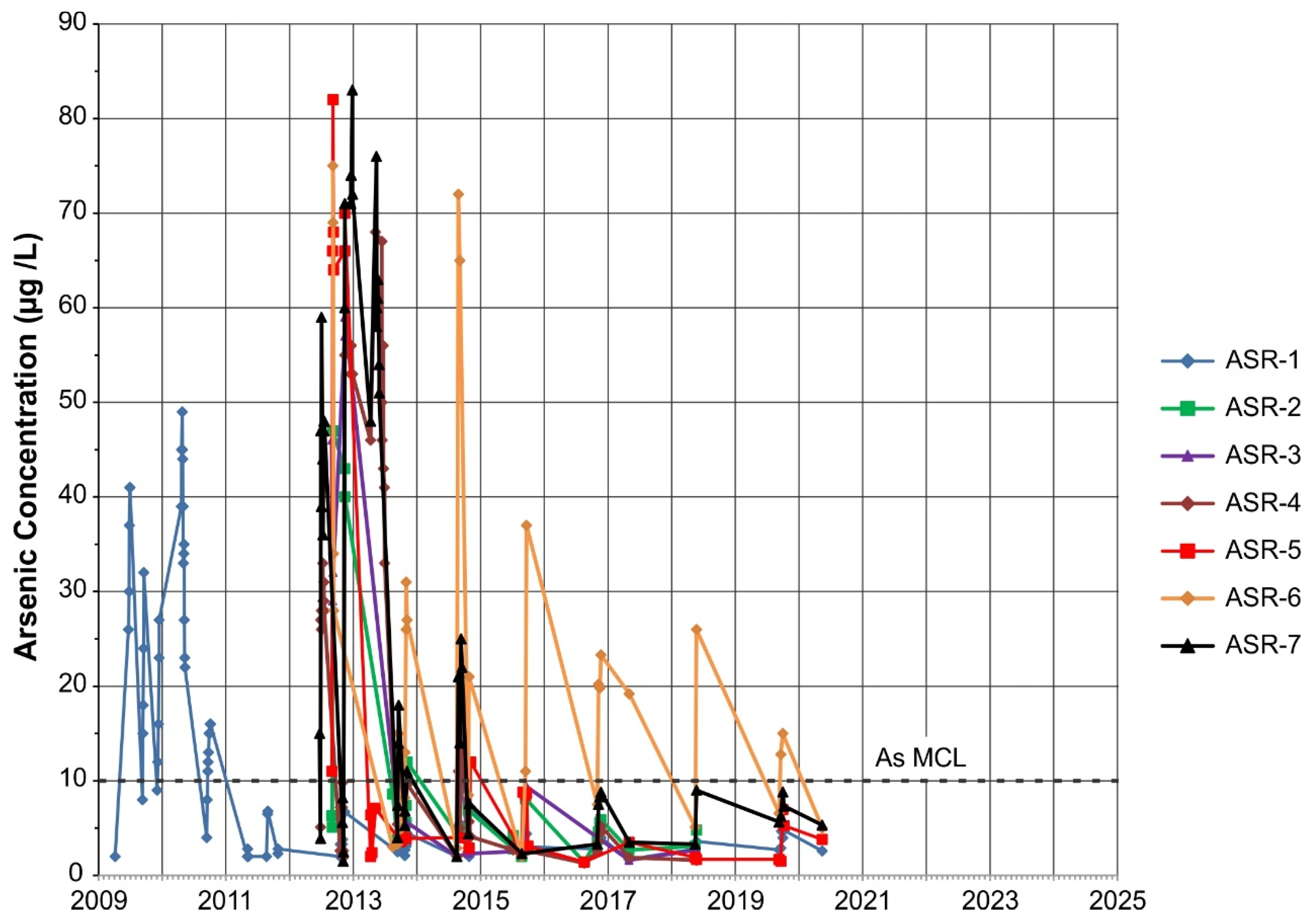
Arsenic leaching was not expected to occur in the DWU ASR system as pyrite was not visibly present in sand samples from the storage zone. Nevertheless, arsenic concentrations above the MCL were detected in the recovered water from all the ASR wells. The arsenic concentration data for recovered water from the ASR wells are plotted versus time in
Figure 8. The data show very well-developed trends of decreasing arsenic concentrations over time in each well, with the latest samples from each of the seven ASR wells being below the 10 μg/L MCL.
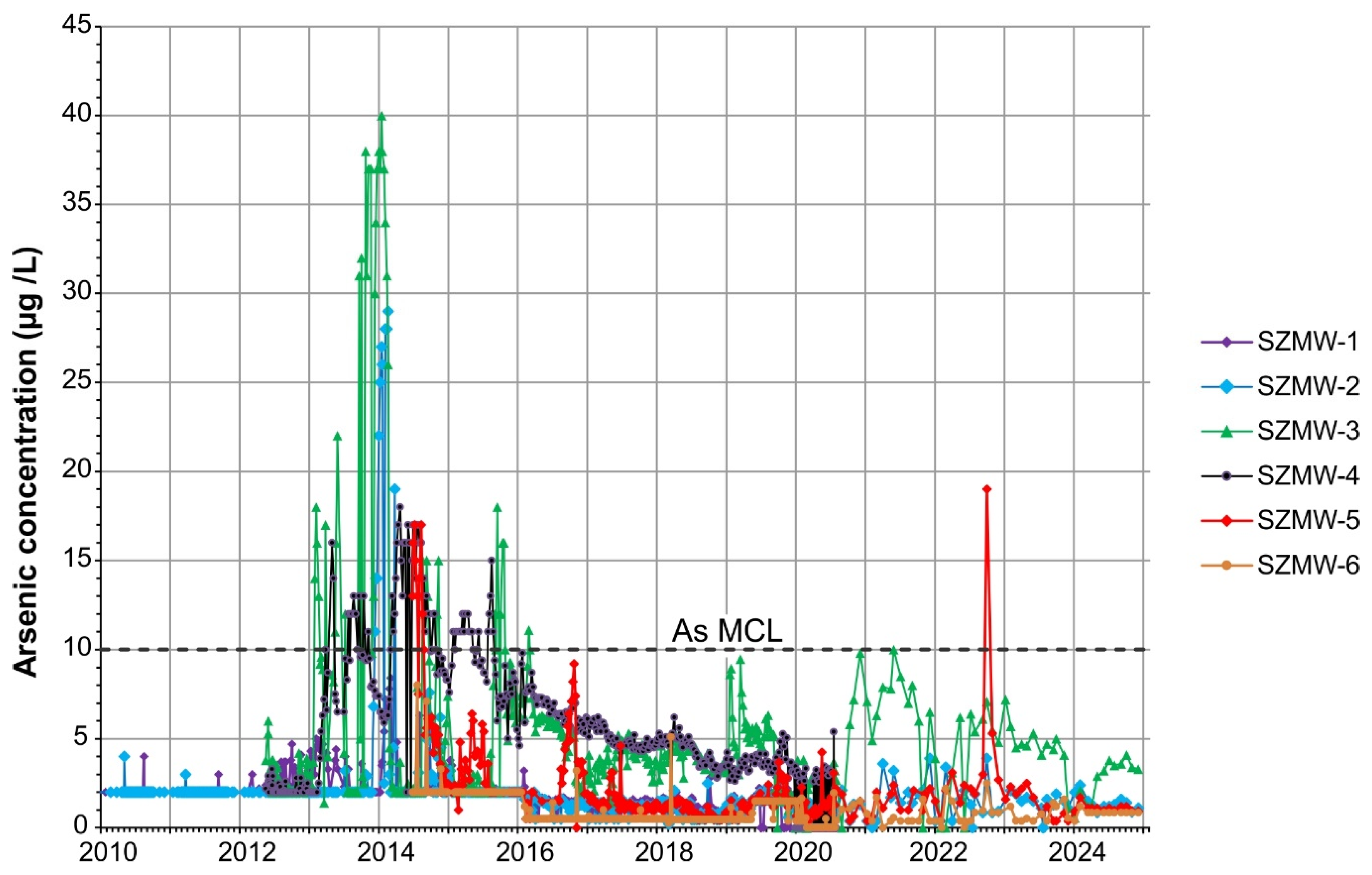
The arsenic concentration data from the storage-zone monitoring wells are plotted versus time in
Figure 9. Arsenic concentrations were initially very low (non-detectable) as the samples were native groundwater (i.e., injected reclaimed water had not yet reached the wells). Arsenic concentrations in some storage-zone monitoring wells increased once the injected reclaimed water reached the wells and then began to gradually decline over time. Arsenic concentrations in all the storage-zone monitoring wells have been below the 10 μg/L MCL for the past eight years, with only one outlying result.
The DWU arsenic data is consistent with the sequestration model of Mirecki et al. [
16], whereby arsenic released by iron sulfide mineral oxidation is removed further in the formation from ASR wells by coprecipitation with iron sulfide as sulfate-reducing conditions become reestablished.
The initial operational data from the testing of ASR-1 indicate that the amount of leachable arsenic present in the sand-and-gravel aquifer is limited and prone to exhaustion over successive operational cycles. Hence, the arsenic management strategy successfully employed for wells ASR-2 through ASR-7 was to allow arsenic concentrations to naturally decrease over time. Allowing arsenic leaching to naturally attenuate over time avoided the need (and costs) to perpetually pretreat the water by dissolved oxygen removal to prevent arsenic leaching from occurring.
5.4. Water Quality—Coliform Bacteria and Trihalomethanes
The applicable regulatory standard for total coliform bacteria is 4 cfu/100 mL and non-detection for fecal coliform bacteria. Occasional coliform bacteria detections have been a chronic problem at the DWU ASR site (and other project sites where microbiological sampling is performed), which is believed to be due mainly to contamination of the sampling port area. When sampling is infrequent, the sampling piping and port are only rarely immersed in water containing a residual disinfectant. Hence, the relatively high counts may occur at the start of a recharge period. There is now substantial data that indicate that both total and fecal coliform bacteria do not necessarily have a fecal origin (i.e., wastewater origin) and can survive and reproduce in natural environments such as wells [
19].
A non-fecal origin of the detections is suggested by much higher total versus fecal coliform counts. Coliform bacteria are also present in airborne dust; hence, it is not uncommon at any site to have occasional false (i.e., not representative of tested water) low-level total coliform bacteria detection. DWU performs confirmatory bacteria sampling after each detection.
The recharged water is required to meet the Florida drinking water standard (MCL) for total trihalomethanes (TTHMs), which is 80 μg/L. An operation challenge is adjusting the disinfectant dose so that bacterial (coliform) standards are met while not exceeding the MCL for TTHMs. The DWU ASR system initially had occasional exceedances of the TTHMs MCL. Since the addition of ammonium sulfate for TTHM reduction via chloramination in 2018, the injected water concentration was greatly reduced with an average of <20 μg/L.
The average measured total TTHM concentration of the injected water prior to 2018 was approximately 62.6 μg/L (n = 82). The concentration of TTHMs were below the detection limit (<0.5 μg/L or less) in more than 99% of the over 1000 water samples from the storage-zone monitoring wells, including samples consisting of recharged reclaimed water, as indicated by salinity parameters. TTHMs were attenuated before the recharged water reached the monitoring wells.
Previous studies have similarly documented that THMs in recharged waters are attenuated in aquifers with the rate of attenuation highly dependent of the geochemical environment. The rate of reduction in concentrations is greatest under reducing redox conditions. The half-lives of THMs in ASR systems under sulfate-reducing conditions were reported to be less than 50 days [
20,
21]. The multi-year travel time of recharged reclaimed water to storage-zone monitoring wells in the DWU ASR systems provides ample time for the removal of THMs by natural attenuation processes.
6. Conclusions
The DWU ASR system demonstrates the advantages of shallow sand-and-gravel aquifers as ASR storage zones. In addition to the modest well construction costs because of their shallow depth, unconsolidated sand storage zones have much lesser degrees of dispersive mixing between injected and native groundwater. The main operational challenge of siliciclastic storage zones is that the ASR wells have a relatively high susceptibility to clogging, necessitating periodic rehabilitation.
Operational data demonstrates the effectiveness of natural contaminant attenuation processes in reducing the health and environmental risks associated with reclaimed water ASR. Leaching of arsenic into stored water occurred but it was an ephemeral process and temporarily elevated arsenic concentrations above the 10 μg/L MCL were restricted to groundwater beneath the WRF site. Similarly, THMs in the recharged water were attenuated to below detection limits near the ASR wells and rarely reached a storage-zone monitoring well. A key additional health protection for the DWU ASR system is a prior restriction on the use of the sand-and-gravel aquifer to irrigation water use. Institutional controls thus allow DWU to avoid additional advanced treatment that would have rendered the project economically unviable.