Article

Effects of Sluice Interception on Water Quality and Spirogyra in the Typical Irrigation Ditches of Jianghan Plain, China

1
Changjiang River Scientific Research Institute, Wuhan 430010, China
2
Key Laboratory of Basin Water Resource and Eco-Environmental Science in Hubei Province, Wuhan 430010, China
3
School of Environment, Beijing Normal University, Beijing 100875, China
*
Author to whom correspondence should be addressed.
Water 2026, 18(5), 609; https://doi.org/10.3390/w18050609
Submission received: 28 January 2026 / Revised: 2 March 2026 / Accepted: 2 March 2026 / Published: 4 March 2026
(This article belongs to the Section Water Quality and Contamination)

Abstract

To elucidate water quality evolution and algal responses in sluice-controlled ditches, this study combined in situ monitoring (July–October 2025) in the Chong Lake Watershed of Jianghan Plain (China) with controlled experiments at Changjiang River Scientific Research Institute. This study provided the first evidence of how sluice-induced hydrodynamic changes affect water quality and Spirogyra outbreaks in Jianghan Plain irrigation ditches. In situ monitoring showed that sluice interception significantly altered hydrodynamics, reducing dissolved oxygen (DO) by 18% and increasing chlorophyll-a and total phosphorus by 32% and 12%, respectively, compared to control ditches. Simulation experiments confirmed these trends: under sluice control, suspended solids and DO decreased by 30% and 19%, while ammonia nitrogen and phosphate increased by 8% and 13%; nitrate nitrogen dropped by 20%. Spirogyra dominated both systems but shifted from attached filaments in controls to floating clumps in sluice-controlled ditches, with biomass rising 94%. Pearson correlation linked Spirogyra biomass negatively to DO and positively to ammonia and phosphate. Sluice interception promotes eutrophication and Spirogyra blooms by reducing DO and particulates, which inhibits nitrification and releases soluble phosphate. A flow velocity of 0.05 m·s−1 effectively suppresses such outbreaks.

1. Introduction

Ditches are vital for water allocation, flood control, and drainage [1]. However, industrial and agricultural development introduces nitrogen and phosphorus via runoff and wastewater, turning ditches into major pathways for non-point source pollution that threatens downstream water bodies [2,3]. To support irrigation and flood management, sluice gates are extensively used, altering natural river hydrodynamics [4]. Such hydraulic structures have fragmented 63% of the world’s large rivers, and in China, the coverage areal extent of river sluice gates reaches as high as 70% [5].
Sluice operations directly modify hydrological and water quality conditions by prolonging water retention and enhancing nutrient trapping, thereby elevating eutrophication risks. Studies indicate that impounded river segments experience more frequent algal blooms and higher chlorophyll-a levels due to reduced flow velocity [6,7,8]. Gate closure promotes pollutant sedimentation, while opening induces resuspension, causing secondary pollution [9,10]. Post-dam construction, nutrient and COD concentrations typically rise downstream [10]. For instance, the Esna Barrages in Egypt altered downstream turbidity and dissolved oxygen, impacting zooplankton communities [11]. In the U.S., mid-sized dams create most anthropogenic stream fragments, including ecologically harmful short segments (<10 km) [12].
Although pollutant behavior in sluice-controlled waters is clearly influenced by gate operations, existing research emphasizes large structures, overlooking the widespread small sluices in agricultural areas. These small gates, serving irrigation in medium–small rivers, differ in function and depth, potentially leading to distinct pollutant dynamics. Their cumulative impact across basins may be significant. This study, therefore, investigates small sluice-controlled farmland ditches, examining how gate-induced quasi-stagnant conditions affect nitrogen, phosphorus, and algal responses. Through field monitoring and simulations, we aim to clarify water quality changes and algal dynamics under sluice impoundment, supporting better water management in irrigated agricultural regions.

2. Materials and Methods

2.1. In Situ Observation Location

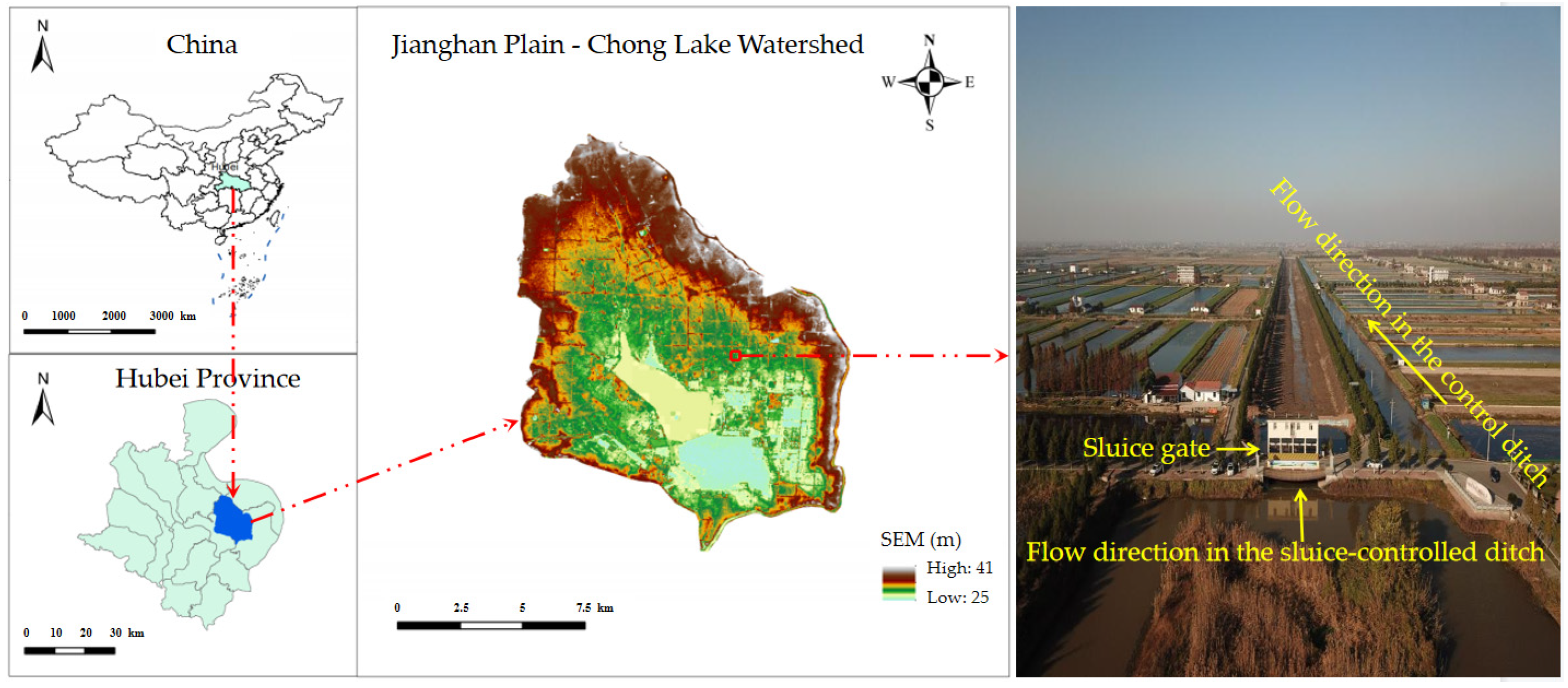
The Chong Lake Watershed (CLK), a typical plain lake-type small watershed in east-central Hubei Province (China), covers 121.3 km2, including 75 km2 of cultivated land and 38.6 km2 of water surface area. As a key grain-producing area, it features well-developed farmland water conservancy. A dense network of natural and artificial waterways, high river density, and numerous lakes provide ample irrigation water. The area has a multi-tiered canal system comprising main, branch, and field ditches.
For this study, representative sluice-controlled ditch sites were selected (Figure 1), with three monitoring sections established for water sampling. Field monitoring was conducted from July to October 2025. Key indicators included: (1) environmental parameters: water temperature (T), pH, electrical conductivity (EC), dissolved oxygen (DO), and suspended solids (SS); and (2) nutrient status: total nitrogen (TN) and total phosphorus (TP).

2.2. Simulation Experiment

2.2.1. Experimental Ditch

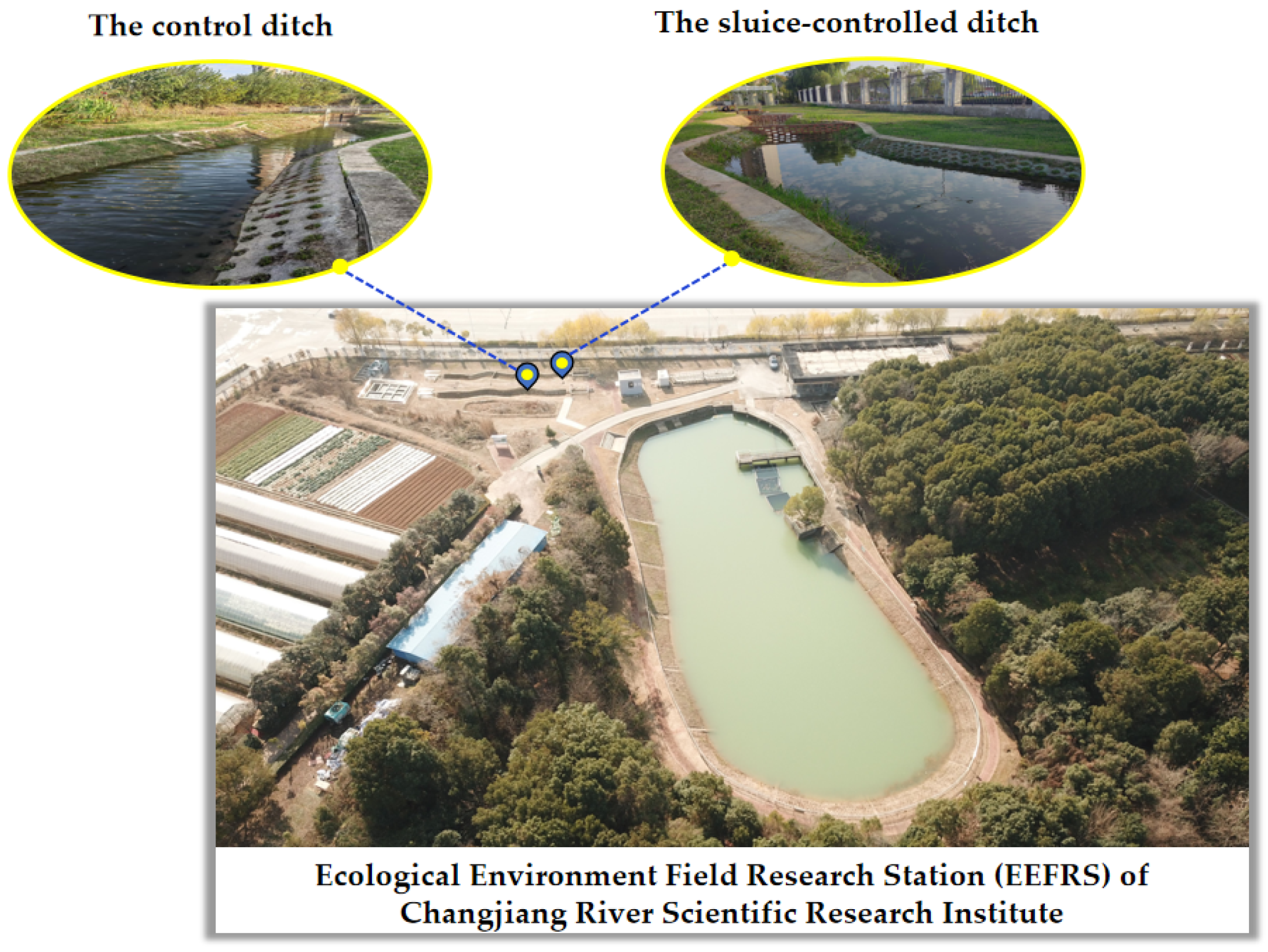
This simulation experiment was conducted from July to October at the Ecological Environment Field Research Station of the Changjiang River Scientific Research Institute. The three-month period was chosen to align with agricultural drainage from early- and late-season rice in the Changjiang River Basin, allowing simulation of water quality and algal responses under exogenous pollution loads. The experimental ditch (50 m length, 2 m bottom width, 1.5 m depth, and 1:1 side slope) was filled with 20 cm of homogenized local sediment and site water (Figure 2).
Two groups were established: (1) Sluice-controlled ditch: A gate at the downstream end maintained 0.8 m water depth to simulate quasi-stagnant conditions; and (2) control ditch: The gate remained fully open, with a circulation pump maintaining 0.05 m·s−1 flow velocity—the average observed in Jianghan Plain ditches (typical range: 0.01–0.12 m·s−1)—to simulate natural flowing conditions. Both systems underwent stabilization before formal experimentation.

2.2.2. Simulation of Exogenous Pollution Load

To simulate agricultural drainage or sewage inputs, exogenous pollutants were introduced into both ditch groups on days 30 and 60. The source water was collected from a catchment pond receiving local agricultural runoff and surface drainage. This simulated wastewater allowed observation of the ditch systems’ response and purification capacity under pollution shocks. Its water quality parameters are shown in Table 1.

2.2.3. Selection of Monitoring Indicators

This experiment selected the following observation indicators: (1) typical environmental parameters: T, pH, EC, DO, and SS concentration; (2) nutrient status indicators: ammonia nitrogen (NH3-N), nitrate nitrogen (NO3-N), TN, TP, and soluble reactive phosphorus (SRP); and (3) algal indicators: dominant algal species, biomass, etc.

2.3. Sample Collection and Measurement

2.3.1. Water Sample Collection and Analysis

For in situ observation, water samples were collected weekly from three sections per ditch. In simulation experiments, sampling occurred every three days. Water depth was maintained at 80 ± 2 cm, with samples taken from the surface layer at 10:00 a.m. each time. T, pH, EC, and DO were measured on-site using a multiparameter water quality analyzer (YSI Incorporated, Yellow Springs, OH, USA). Samples were stored on ice and analyzed within 24 h. Parameters included SS, NH3-N, NO3-N, TN, TP, and SRP, determined following standard methods (HJ 636-2012, etc.) [13] using an electronic balance (Sartorius AG, Göttingen, Germany) and a UV-Vis spectrophotometer (Shimadzu Corporation, Kyoto, Japan).

2.3.2. Algae Collection and Analysis

Phytoplankton were identified and quantified by a microscope (Axio Imager A2, Carl Zeiss AG, Oberkochen, Germany) following the Water quality–Determination of phytoplankton–Filtration membrane–Microscope counting method (HJ 1215-2021) [14]. Periphytic algae (e.g., Spirogyra) were analyzed according to the technological regulations for hydrobiological investigation (DB11/T 1721-2020) [15]. Samples were collected from three sections per ditch at each time point.
Strict QA/QC procedures were followed. Sample handling complied with the Water quality-Guidance on sampling techniques (HJ 494-2009) [16]. Glassware was acid-washed and rinsed with deionized water. Field blanks, duplicates, and spiked recoveries were analyzed per batch; duplicate RSD was <5%, and recoveries were 85–115%. Standard curves achieved R2 > 0.995. Data were double-checked independently.

2.4. Data Processing

Results are presented as mean ± standard deviation. Independent samples t-tests (p < 0.05) were used to compare groups, and Spearman correlation for relationships. Figures were generated using Origin 12.0.

3. Results

3.1. In Situ Observation Results

3.1.1. The Typical Environmental Parameters

During the in situ observation period, there were significant differences in DO and Chl-a concentrations between the water in the sluice-controlled ditch and the control ditch. Specifically, the average DO concentration in the sluice-controlled ditch was 4.27 ± 0.58 mg·L−1, which was approximately 18% lower (p < 0.05) than that in the control ditch (6.12 ± 0.45 mg·L−1). Meanwhile, the Chl-a concentration in the sluice-controlled ditch (42.24 ± 30.62 μg·L−1) was about 32% higher (p < 0.05) than that in the control ditch (31.97 ± 42.19 μg·L−1), indicating that sluice regulation may have intensified hypoxia and favored phytoplankton biomass accumulation. No significant differences were observed between the sluice-controlled ditch and the control ditch for the other monitored parameters, including T, pH, EC, and SS (Table 2). These results demonstrate that sluice operation could significantly influence dissolved oxygen conditions and primary productivity levels by altering hydrodynamic conditions and water retention time.

3.1.2. The Nutrient Status Indicators

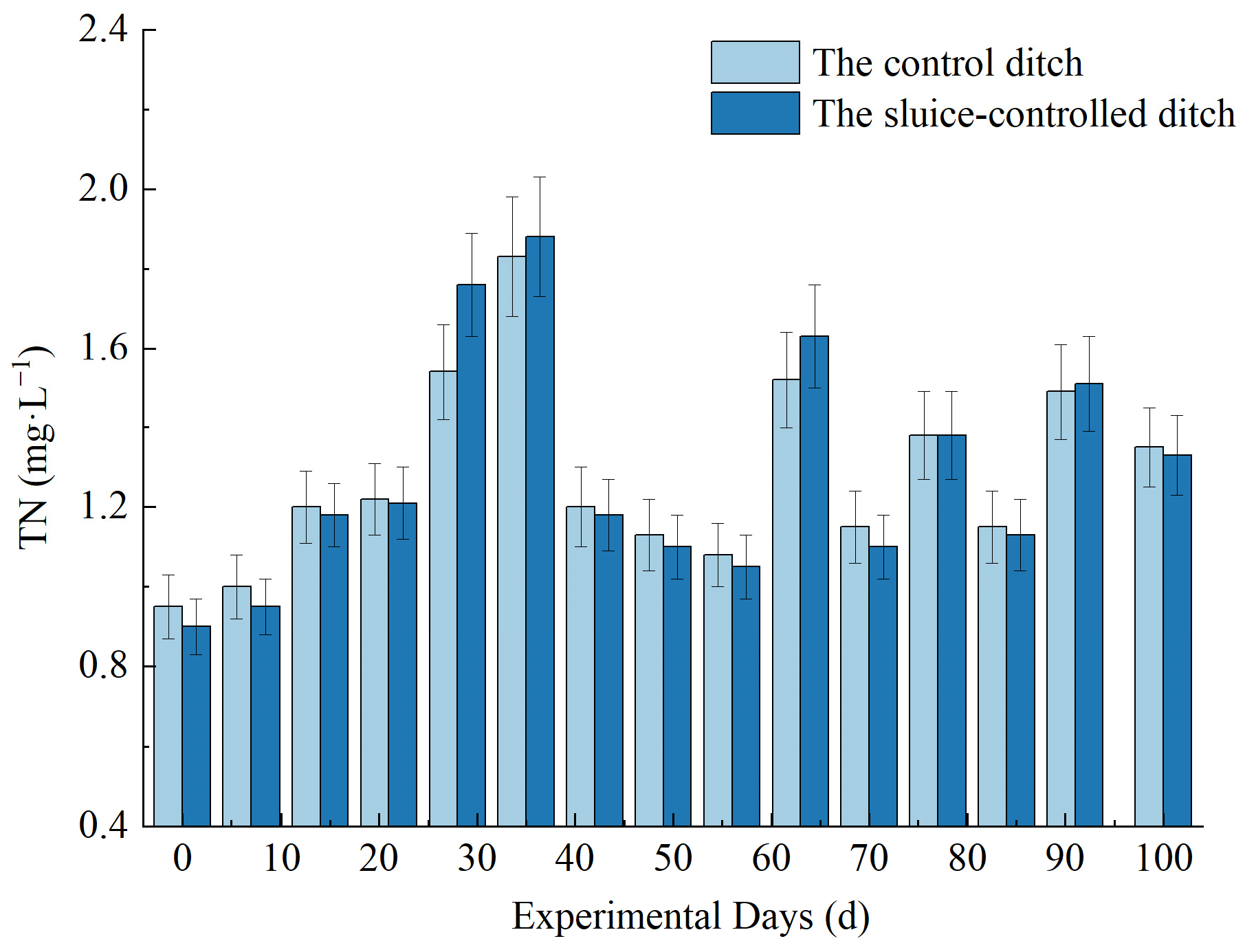
Driven by rice drainage, sluice operations, and rainfall, TN concentrations fluctuated considerably but showed no significant difference between the sluice-controlled and control ditches. During the first 35 days, influenced by surrounding rice field drainage, TN in the sluice-controlled ditch rose from 0.91 to 1.88 mg·L−1—a 107% increase. On days 28 and 35, TN was higher in the sluice-controlled ditch, indicating enhanced nitrogen accumulation under sluice regulation. Thereafter, TN fluctuated between 1.10 and 1.63 mg·L−1, suggesting dynamic equilibrium. Over the full period, mean TN was 1.28 mg·L−1 (control) and 1.29 mg·L−1 (sluice-controlled), with no significant difference (Figure 3).
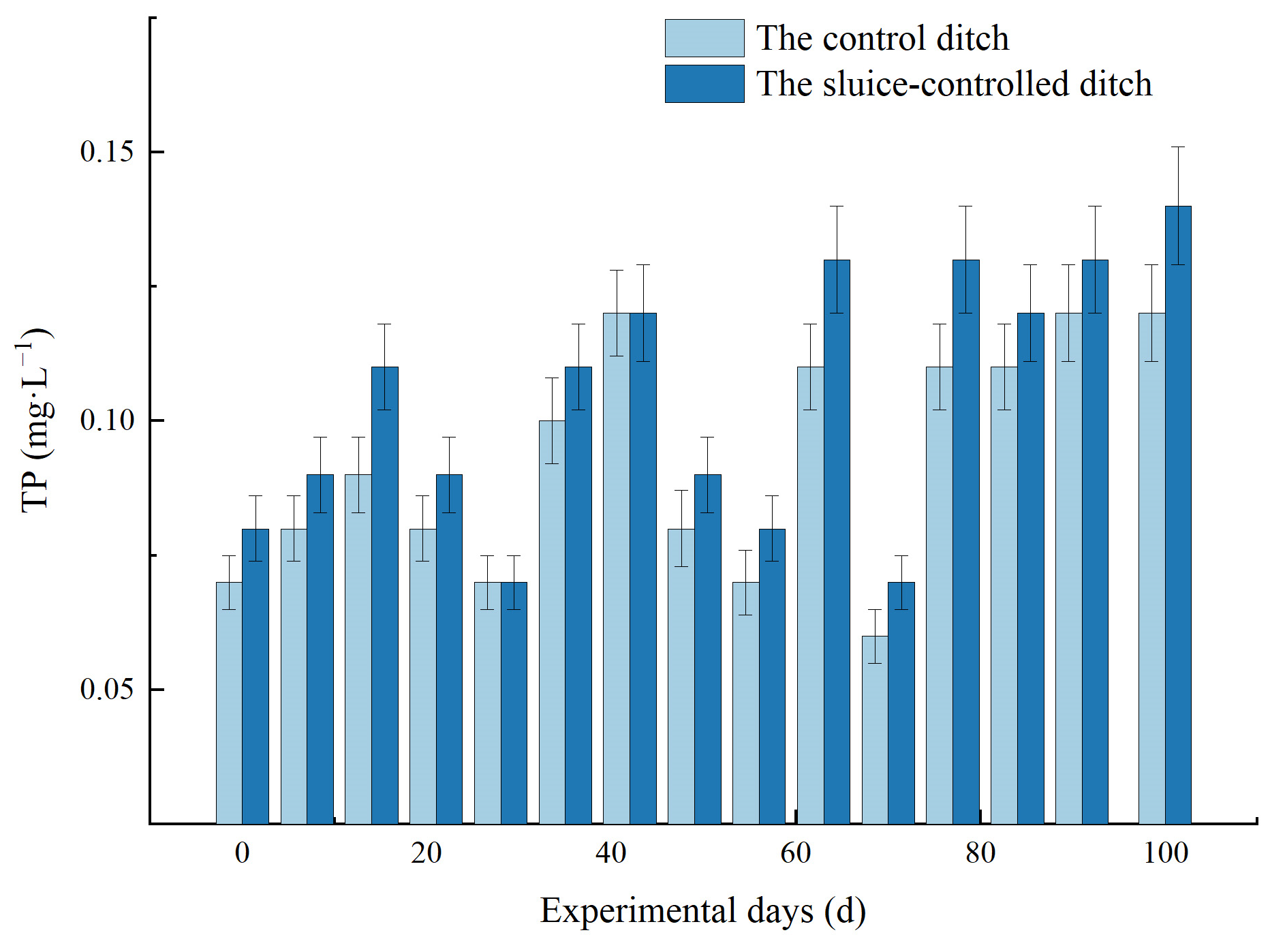
In contrast, TP was significantly higher in the sluice-controlled ditch (p < 0.05), averaging 0.10 mg·L−1 versus 0.09 mg·L−1 in the control—a 12% increase (Figure 4). This indicates that stagnant conditions under sluice control reduced reaeration and promoted organic matter decomposition in sediment, releasing phosphorus (especially inorganic phosphate) into pore water, which then diffused into the overlying water. In the control ditch, higher DO from flow disturbance limited sediment phosphorus release.

3.2. Simulation Experiment Results

3.2.1. Variation Characteristics of Typical Environmental Indicators in the Sluice-Controlled Ditch

During the experimental period, the differences in environmental factors between the sluice-controlled ditch and the control ditch were primarily observed in DO and SS concentrations, while no significant differences were found in water temperature, pH, and conductivity.
(1)
DO
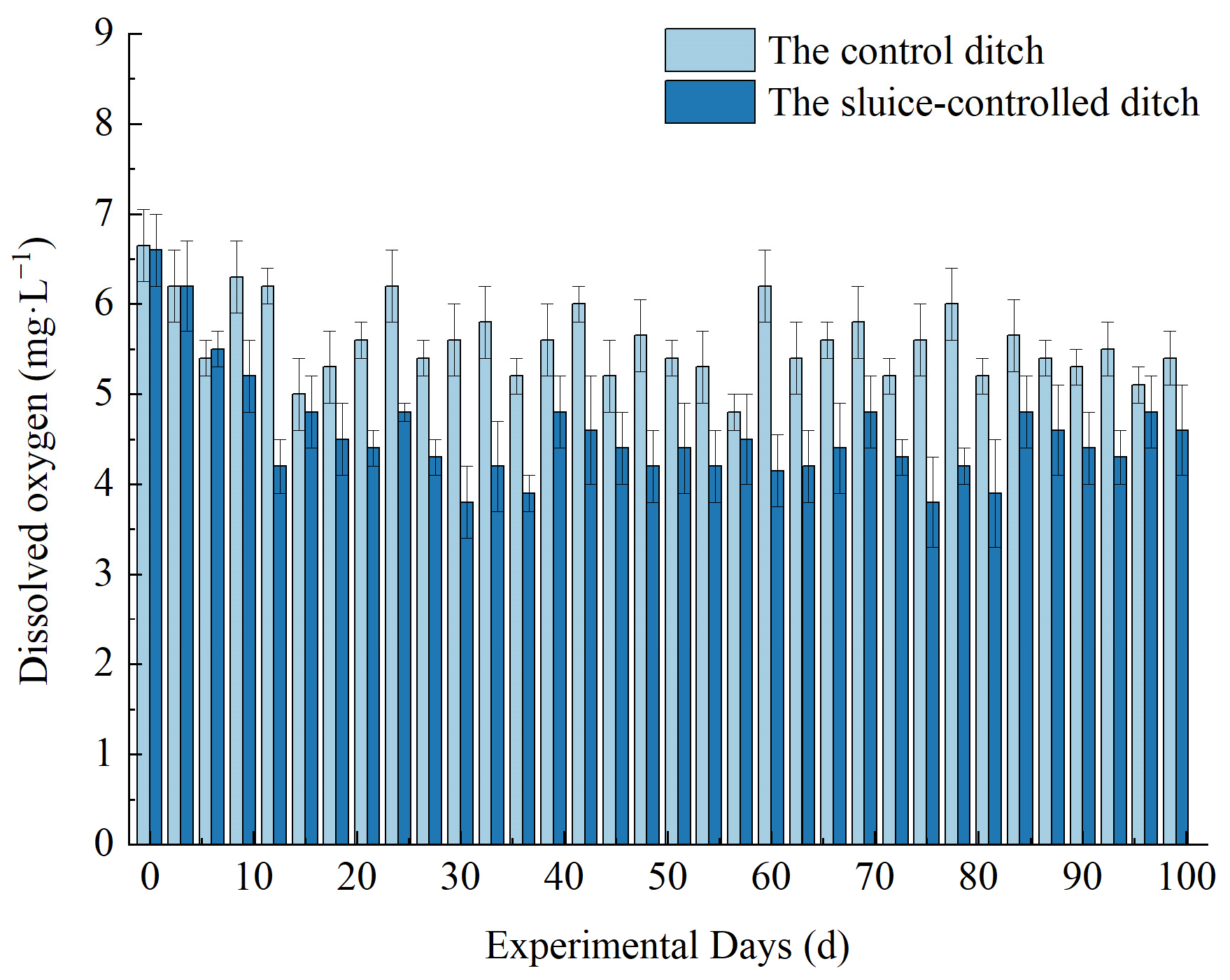
During the 100-day experiment, DO in the sluice-controlled ditch decreased from 6.61 to 4.62 mg·L−1 (30% reduction), with the sharpest drop (6.61→4.21 mg·L−1) occurring in the first 12 days. Thereafter, DO fluctuated between 3.85 and 4.84 mg·L−1, indicating dynamic equilibrium between oxygen consumption and reaeration. In contrast, DO in the control ditch remained stable at ~5.62 mg·L−1 throughout. Statistically, mean DO was significantly lower in the sluice-controlled ditch (4.55 mg·L−1) than in the control (5.59 mg·L−1)—a 19% decrease—confirming that sluice-induced stagnation exacerbates hypoxic conditions (Figure 5).
(2)
SS
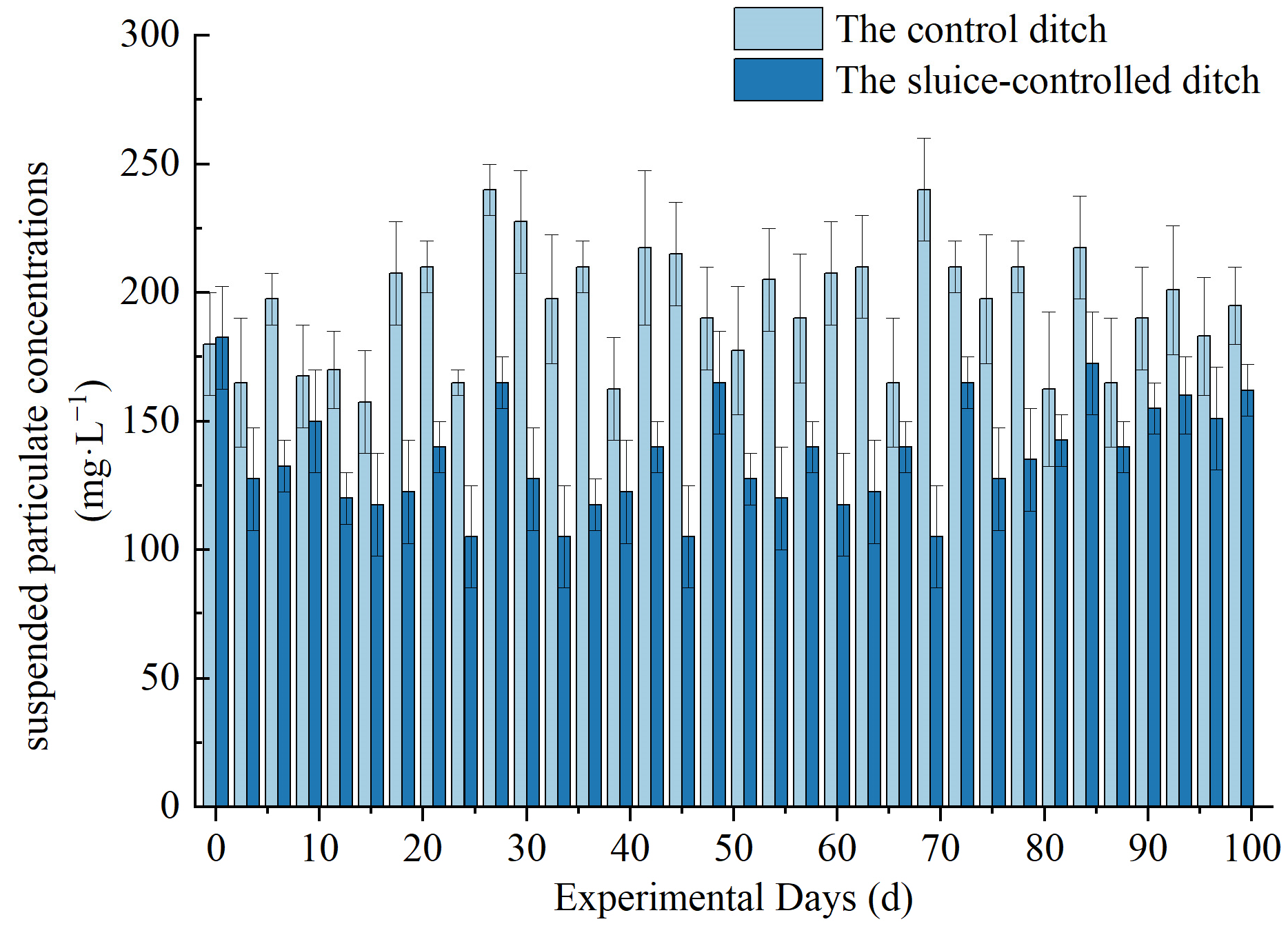
SS concentrations differed markedly between the two ditch systems. Throughout the experiment, SS in the sluice-controlled ditch remained relatively stable, fluctuating around 125 mg·L−1, and consistently lower than in the control ditch. In contrast, SS in the control ditch increased from 179 to 195 mg·L−1, showing greater temporal variability. Mean SS was significantly lower in the sluice-controlled ditch (136.1 mg·L−1) than in the control (194.3 mg·L−1)—a 30% reduction—indicating that altered hydrodynamics under sluice control enhanced particle settling and water column stability, while flow disturbances in the control ditch maintained higher and more variable SS levels (Figure 6).

3.2.2. Variation Characteristics of Nutrients in the Sluice-Controlled Ditch Water

(1)
Nitrogen
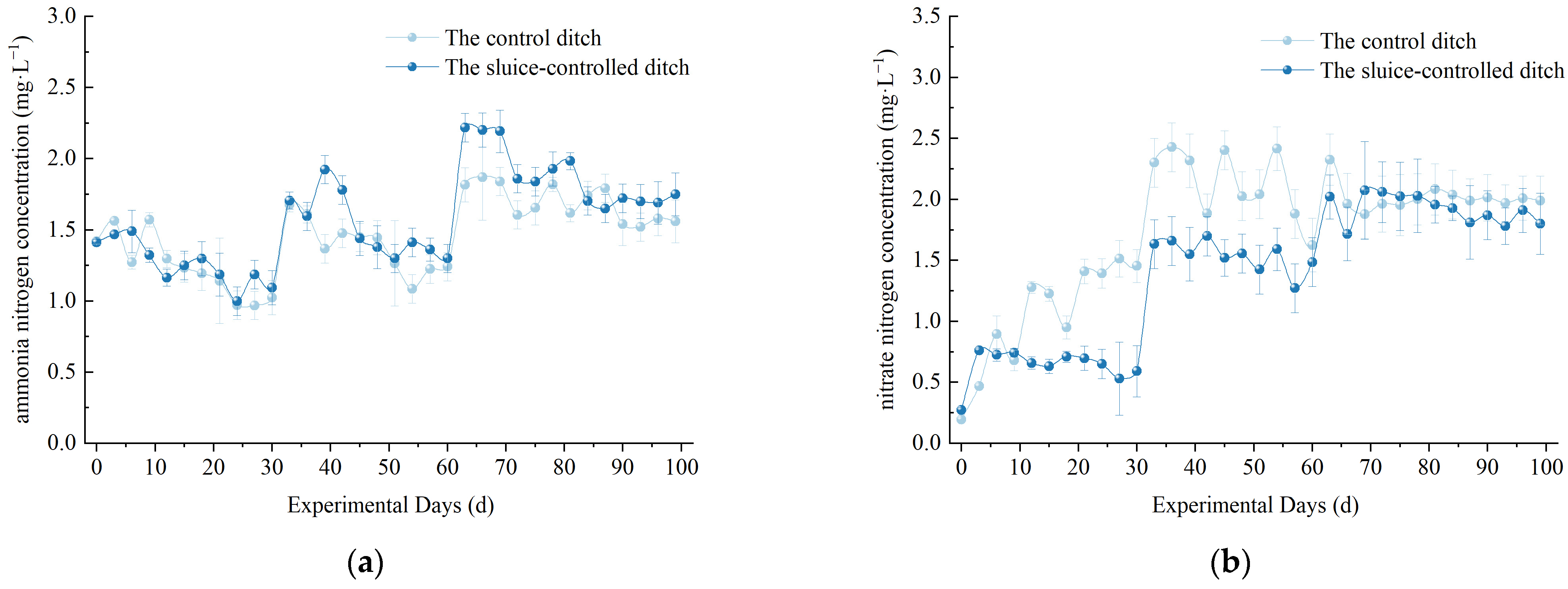
Following two high-concentration nitrogen and phosphorus additions on days 30 and 60, NH3-N and NO3-N concentrations in both ditches increased sharply, then showed fluctuating declines. Overall, the sluice-controlled ditch exhibited higher NH3-N but lower NO3-N compared to the control ditch.
During the three post-addition periods (Days 0–30, 33–60, and 63–100), NH3-N in the sluice-controlled ditch decreased by 23%, 24%, and 21%, respectively, while NO3-N first increased by 41% (Days 0–30), then decreased by 28% and 11%. In the control ditch, NH3-N decreased by 28%, 26%, and 14% (Figure 7a), while NO3-N increased by 94% (Days 0–30), then decreased by 38% and 14%(Figure 7b). The greater NO3-N increase in the control ditch during the initial period indicates higher nitrification rates. Throughout the experiment, the sluice-controlled ditch showed smaller magnitude changes in both nitrogen forms. Averaged over the entire period, NH3-N was 1.57 mg·L−1 in the sluice-controlled ditch versus 1.45 mg·L−1 in the control (8% higher), while NO3-N was 1.39 mg·L−1 versus 1.73 mg·L−1 (20% lower). This suggests that sluice-induced conditions, particularly reduced DO, inhibited nitrification in the nitrogen cycle.
(2)
SRP
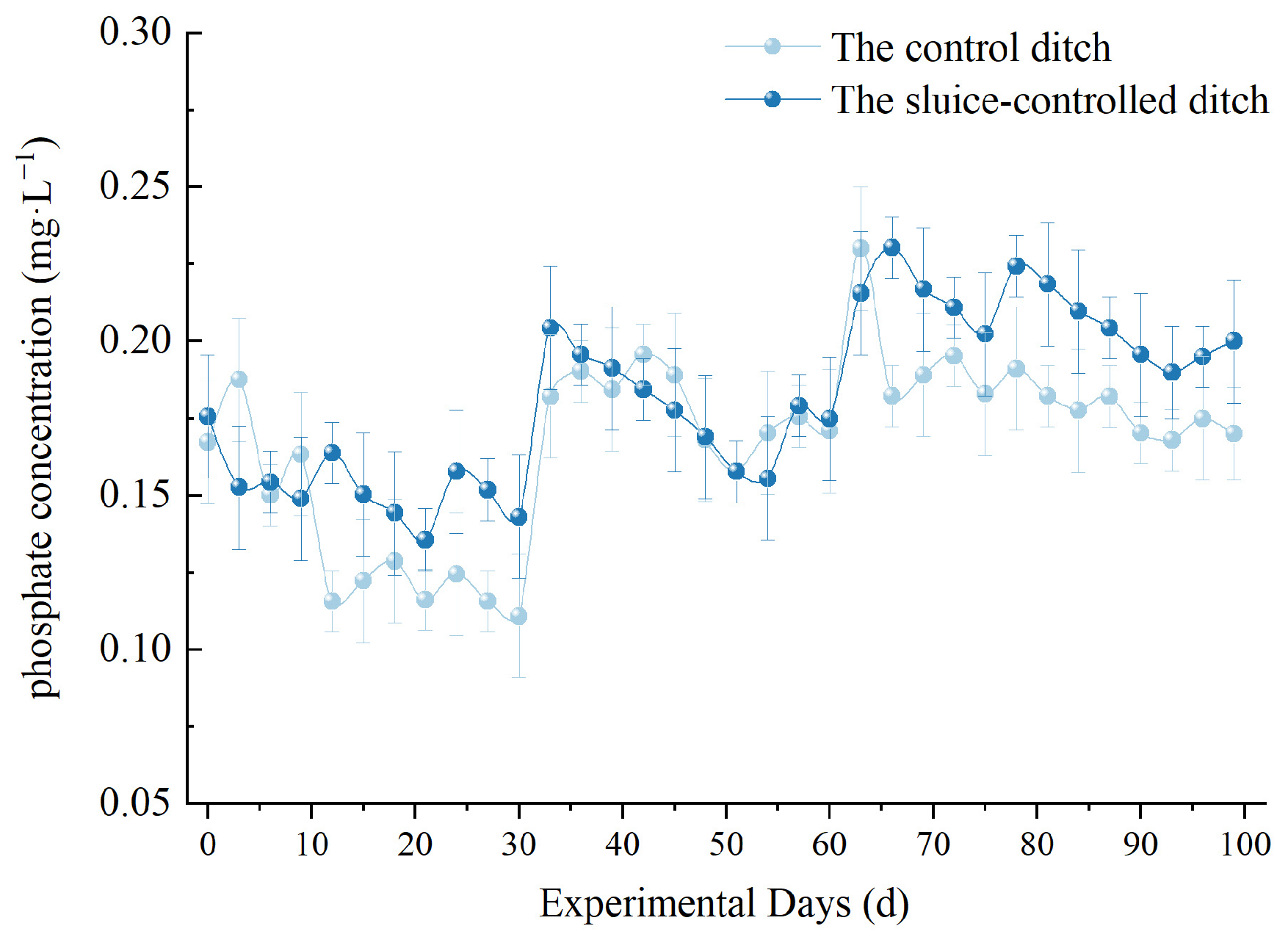
Following two high-concentration nitrogen and phosphorus additions on days 30 and 60, SRP concentrations in both ditches increased sharply, then gradually declined, with levels consistently higher in the sluice-controlled ditch than in the control.
During days 0–30, SRP in the sluice-controlled ditch decreased from 0.17 to 0.14 mg·L−1 (18% reduction), while the control showed a larger decrease from 0.17 to 0.11 mg·L−1 (35% reduction). In days 33–60, reductions were 10% (0.20→0.18 mg·L−1) in the sluice-controlled ditch versus 6% (0.18→0.17 mg·L−1) in the control. During days 63–100, SRP in the sluice-controlled ditch decreased by 9% (0.22→0.20 mg·L−1), compared to a 26% reduction (0.23→0.17 mg·L−1) in the control ditch (Figure 8). Overall, the control ditch demonstrated greater phosphate removal efficiency except during the middle period. Averaged over the entire experiment, phosphate concentration was 0.18 mg·L−1 in the sluice-controlled ditch versus 0.16 mg·L−1 in the control—13% higher—indicating that sluice impoundment elevates phosphate levels in the water column.

3.2.3. Growth Characteristics of Spirogyra in the Sluice-Controlled Ditch

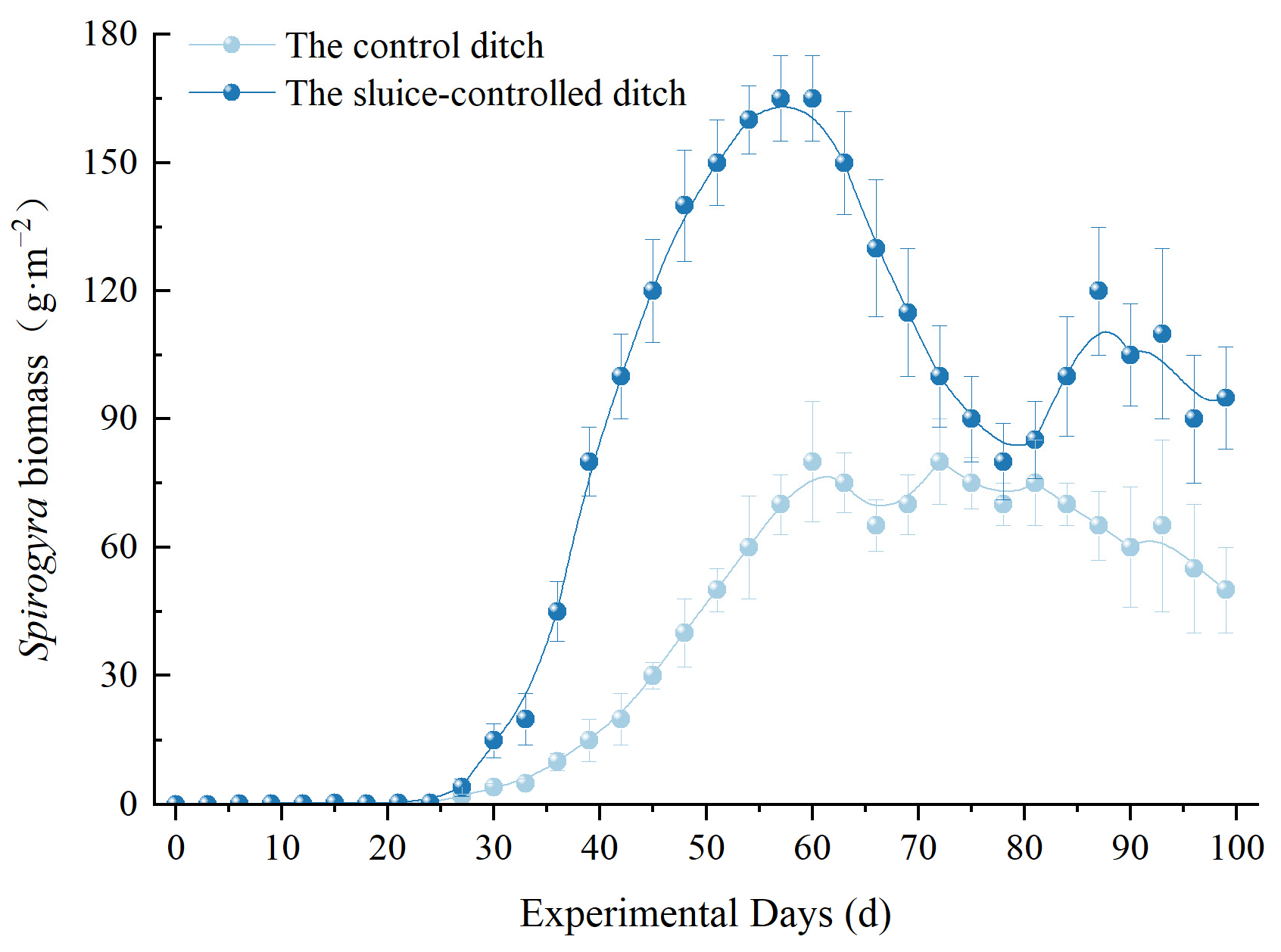
During the experimental period, the biomass of Spirogyra in both ditch types showed an initial increase followed by a decrease, peaking on day 60. The average biomass of the sluice-controlled ditch was 94% higher than that in the control ditch at its peak (Figure 9).
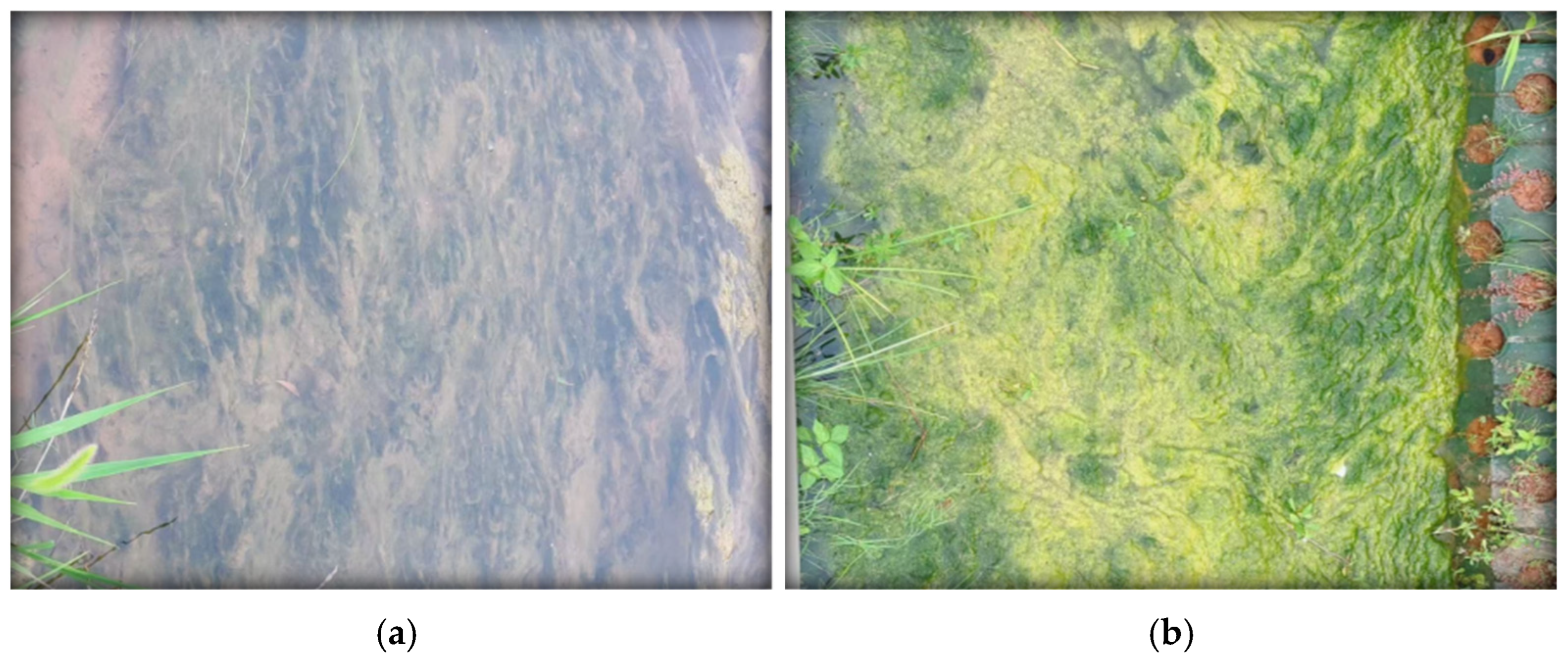
The dominant algal species in both the sluice-controlled and control ditches was Spirogyra. Its filaments consist of single rows of cells, and it often attaches to substrate surfaces at the bottom or floats on the water surface. In this experiment, Spirogyra in the control ditch primarily attached to the bottom substrate, distributed in a filamentous pattern (Figure 10a). In contrast, Spirogyra in the sluice-controlled ditch mainly floated on the water surface, forming clumped aggregates (Figure 10b).
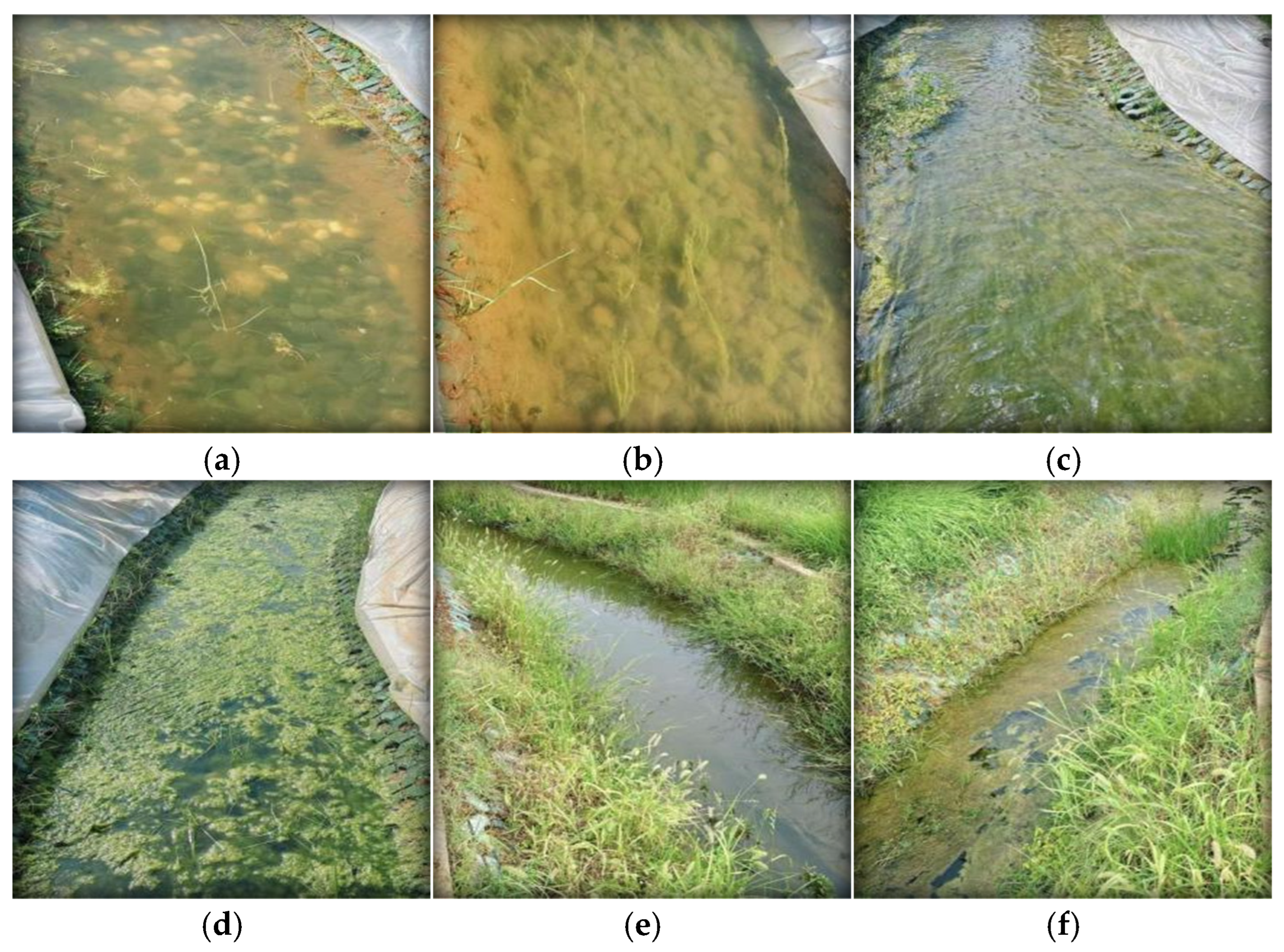
In the initial stage, no significant changes were observed in the water or substrate of the control ditch (Figure 11a). In the sluice-controlled ditch, however, the substrate began to show a green coloration, covered with abundant fungal hyphae (Figure 11b). By the mid-experimental stage, substantial proliferation of Spirogyra occurred in both ditches, but with distinct manifestations. In the control ditch, Spirogyra primarily aggregated at the bottom; under hydraulic shear stress, it remained filamentous, and the water maintained high transparency (Figure 11c). In the sluice-controlled ditch, Spirogyra predominantly floated on the surface, forming a thick green scum. The water appeared emerald green with low transparency (Figure 11d). In the final stage, the water in the control ditch remained highly transparent, with a small amount of Spirogyra in the substrate further aggregating into clumps (Figure 11e). In the sluice-controlled ditch, most of the Spirogyra entered a senescence phase. The water turned gray, emitted a sour, decaying odor, and appeared turbid (Figure 11f).
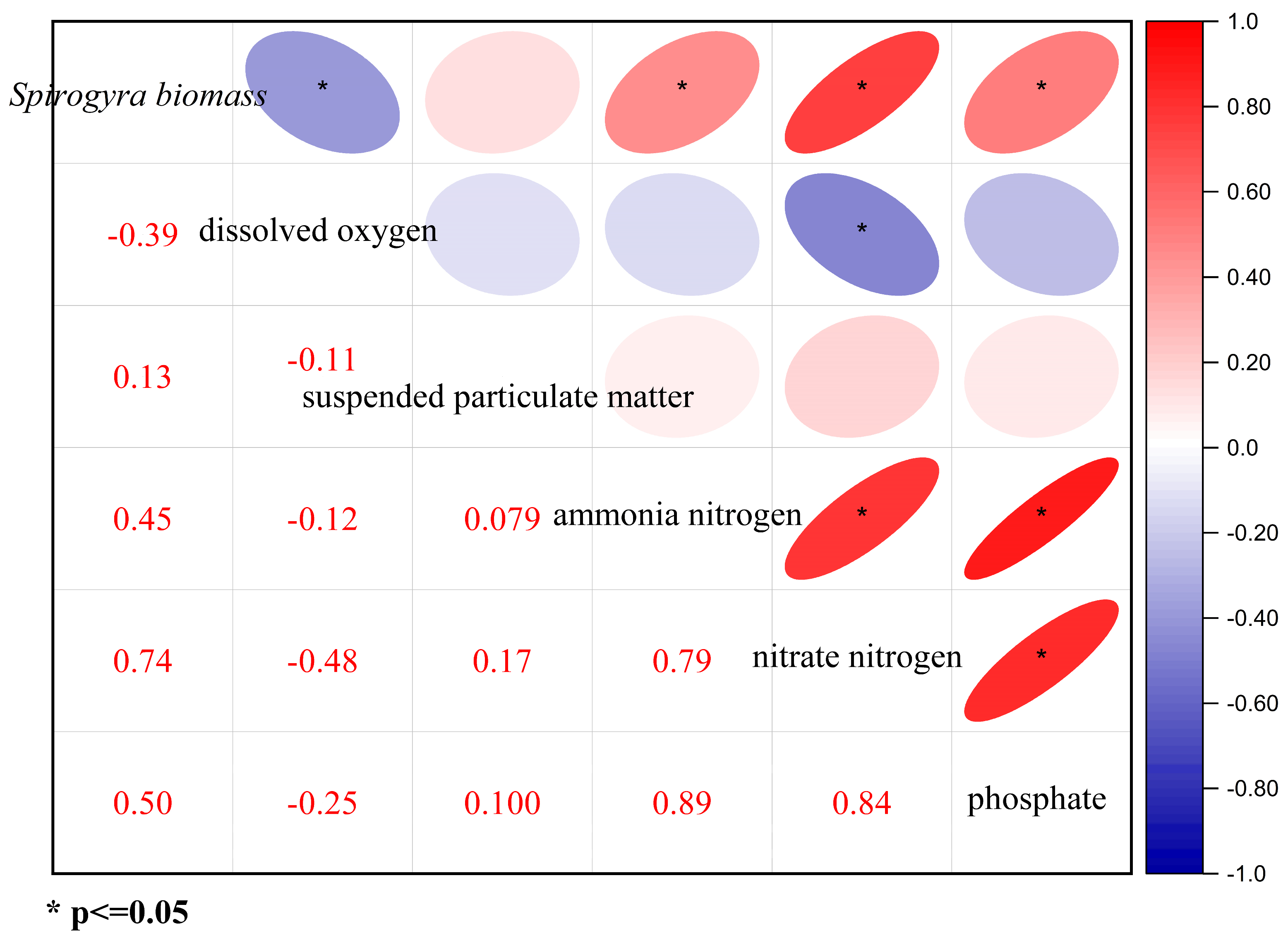
The results of the Pearson correlation analysis among various environmental factors and Spirogyra biomass in this experiment are presented in Figure 12. Spirogyra biomass showed a significant negative correlation with DO (p < 0.05), with a correlation coefficient of −0.39. In contrast, Spirogyra biomass was significantly positively correlated with water column HN4+-N, NO3-N, and phosphate, with correlation coefficients of 0.45, 0.74 y, and 0.50, respectively. DO exhibited a significant negative correlation with sediment total phosphorus (r = −0.60). Furthermore, a significant positive correlation was observed between sediment total phosphorus and phosphate in the water column, with a correlation coefficient of 0.78.

4. Discussion

4.1. Impact of Sluice Control on the Physicochemical Environment of Ditch Water

Sluice gates reduce hydrological connectivity and material exchange, affecting nutrient transport and transformation [5]. Nutrient biodegradation consumes DO, lowering its concentration. Zhang et al. [17] found that sluice operation slows upstream flow, reducing reaeration and decreasing DO. Dbska et al. [18] reported similar effects: Damming reduced DO and increased nutrients upstream, while downstream discharge enhanced aeration and pollutant degradation. In this experiment, continuous oxygen demand in the sluice-controlled ditch exacerbated DO depletion, whereas flow in the control ditch maintained higher DO via reaeration. Long-term DO differences may also drive aquatic community shifts [10,11]; in the sluice-controlled ditch, reduced transparency limited plant photosynthesis—a key oxygen source—further lowering DO. Thus, DO remained significantly higher in the control ditch.
Hydrodynamic conditions also shape SS composition and behavior [19]. Low flow favors particle adsorption by promoting contact between minerals and dissolved substances; high flow increases shear stress, inhibiting stable attachment. Flow velocity correlates positively with SS concentration: higher velocities enhance sediment transport, while stagnant conditions promote settling [10]. Here, flow in the control ditch reduced adsorption efficiency and caused sediment resuspension, raising SS. In contrast, static conditions in the sluice-controlled ditch enhanced adsorption and allowed particle settling, resulting in lower SS than in the control ditch.

4.2. Impact of Sluice Control on Nitrogen and Phosphorus Nutrients in Ditch Water

Dams and sluices alter flow velocity, affecting pollutant degradation. Flowing water enhances degradation and self-purification compared to static conditions [20]. Ammonia nitrogen transformations are regulated by flow velocity and DO. Wang et al. [21] found that after the Three Gorges Reservoir impoundment, reduced flow in the Xiaojiang River backwater area decreased NH3-N and SRP assimilative capacity by 22% and 23%, respectively. Nitrification, a key removal pathway [22], is enhanced in the control ditch where turbulence increases DO, promoting nitrifying bacteria. Turbulence also improves DO mass transfer and microbial activity, boosting NH3-N degradation. In contrast, lower DO in the sluice-controlled ditch favors anaerobic conditions, promoting nitrogen release from sediments. Higher DO in the control ditch facilitates the formation of iron/manganese hydroxides that adsorb dissolved ammonia nitrogen. Consequently, NH3-N concentrations were higher in the sluice-controlled ditch than in the control.
In quasi-stagnant sluice-controlled conditions, reduced flow velocity promotes particulate phosphorus settlement upstream [1]. The stability of sediment phosphorus depends on redox conditions. Weakened reaeration and organic matter decomposition create anaerobic conditions at the sediment–water interface, triggering microbial reduction in iron/manganese oxides and releasing previously adsorbed phosphate into pore water, which diffuses upward [23]. Simultaneously, anaerobic microorganisms secrete enzymes that mineralize organic phosphorus into bioavailable orthophosphate [8,24], increasing eutrophication risk and potentially causing algal blooms, DO depletion, and ecosystem degradation. Phosphorus migration also involves physical sedimentation. Sluice barriers increase particle concentrations upstream, promoting settling [25]. Following the construction of the Kürtün Dam, downstream nitrite and phosphate decreased while other nutrients increased [26]. High sluice discharge can disturb downstream sediment via hydraulic head differences, releasing internal pollutants [19]. In the control ditch, flow-induced shear stress inhibited particle settling, preventing phosphorus accumulation in sediment. In the sluice-controlled ditch, 19% DO reduction alters redox conditions at the sediment–water interface, promoting Fe3+ reduction and iron-bound phosphorus formation [27]. Anaerobic conditions also inhibit biological organic phosphorus removal, further increasing sediment phosphorus.

4.3. Impact of Sluice Control on Algal Growth in Ditch Water

Flow velocity critically regulates Spirogyra blooms. Unlike typical algal blooms in eutrophic waters, blooms in static shallow waters are often dominated by filamentous algae. Slow or stagnant flows provide favorable conditions for their growth and aggregation, while high velocities fragment filaments and inhibit biomass accumulation [28]. Gorain et al. [29] reported that weak hydrodynamics alter nutrient distribution, increasing availability for Spirogyra. During germination and expansion, Spirogyra attaches to rocks or submerged surfaces near the water surface to resist drifting [30]. During massive proliferation, filaments aggregate into floating mats, covering large areas, producing foul odors, and deteriorating water aesthetics. These mats shade light, potentially lowering water temperature by 2–3 °C, impairing submerged macrophyte photosynthesis, reducing DO, and degrading water quality [31]. Additionally, allelopathic compounds secreted by Spirogyra can cause aquatic organism mortality, altering ecosystem structure and function [32].
In this experiment, static conditions in the sluice-controlled ditch significantly reduced DO and increased Spirogyra biomass, explaining the observed significant negative correlation between them. Elevated nutrients (ammonia nitrogen, phosphate in water; total nitrogen and phosphorus in upstream sediments) provided the nutritional basis for Spirogyra proliferation. Significant positive correlations between nutrient concentrations and Spirogyra biomass confirm that nutrient enrichment promoted the outbreak.

5. Conclusions

Ditch sluice interception elevated eutrophication and promoted Spirogyra proliferation by reducing dissolved oxygen (DO) and suspended solids (SS), inhibiting nitrification, and facilitating soluble phosphate release. In situ monitoring showed that sluice operation altered hydrodynamics and retention time, significantly affecting DO and eutrophication. Compared to the control ditch, DO decreased by 18%, while chlorophyll-a and total phosphorus increased by 32% and 12%, respectively. Simulation experiments confirmed these trends: in the sluice-controlled ditch, SS and DO decreased by 30% and 19%, while ammonium and phosphate increased by 8% and 13%; nitrate decreased by 20%. Spirogyra dominated both systems but shifted from attached filaments in the control to floating clumps in the sluice-controlled ditch, with biomass 94% higher.
These findings provide a scientific basis for understanding water quality responses in sluice-regulated agricultural canals and offer preliminary data for developing targeted operation strategies (e.g., intermittent discharges considering ecological flow). Further multi-scale observational and modeling studies are needed.

Author Contributions

M.L.: Data curation, visualization, and writing—original draft. Z.W.: Conceptualization, methodology, and visualization. L.C.: Funding acquisition. Y.H.: Methodology and investigation. Y.W.: Investigation. Q.Z.: Data collection. All authors have read and agreed to the published version of the manuscript.

Funding

This research was supported by the Joint Funds of the National Natural Science Foundation of China (U2340219; U21A20156).

Data Availability Statement

The original contributions presented in this study are included in the article. Further inquiries can be directed to the corresponding author.

Conflicts of Interest

The authors declare no conflicts of interest.

References

  1. Maavara, T.; Chen, Q.W.; Meter, K.V.; Brown, L.E.; Zarfl, C. River dam impacts on biogeochemical cycling. Nat. Rev. Earth. Environ. 2020, 2, 103–116. [Google Scholar] [CrossRef]
  2. Bowes, M.J.; Loewenthal, M.; Read, D.S.; Hutchins, M.G.; Prudhomme, C.; Armstrong, L.K.; Harman, S.A.; Wickham, H.D.; Gozzard, E.; Carvalho, L. Identifying multiple stressor controls on phytoplankton dynamics in the River Thames (UK) using high-frequency water quality data. Sci. Total. Environ. 2016, 569, 1489–1499. [Google Scholar] [CrossRef] [PubMed]
  3. Gu, B.J.; Zhang, X.M.; Lam, S.K.; Yu, Y.L.; Grinsven, H.J.M.; Zhang, S.H.; Wang, X.X.; Bodirsky, B.L.; Wang, S.T.; Duan, J.K.; et al. Cost-effective Mitigation of Nitrogen Pollution from Global Croplands. Nature 2023, 613, 77–84. [Google Scholar] [CrossRef] [PubMed]
  4. Mason, R.E.; Craine, J.M.; Lany, N.K.; Jonard, M.; Ollinger, S.V.; Groffman, P.M.; Fulweiler, R.W.; Angerer, J.; Read, Q.D.; Reich, P.B. Evidence, Causes, and Consequences of Declining Nitrogen Availability in Terrestrial Ecosystems. Science 2022, 376, 3767. [Google Scholar] [CrossRef] [PubMed]
  5. Le, T.P.Q.; Billen, G.; Garnier, J.; Chau, V.M. Long-term biogeochemical functioning of the Red River (Vietnam): Past and present situations. Reg. Environ. Change 2015, 15, 329–339. [Google Scholar] [CrossRef]
  6. Grill, G.; Lehner, B.; Thieme, M.; Geenen, B.; Tickner, D.; Antonelli, F.; Babu, S.; Borrelli, P.; Cheng, L.; Crochetiere, H.; et al. Mapping the world’s free-flowing rivers. Nature 2019, 569, 215–221. [Google Scholar] [CrossRef]
  7. Hong, B.; Swaney, D.P.; Howarth, R.W. Estimating net an-thropogenic nitrogen inputs to U.S. watersheds: Comparison of methodologies. Environ. Sci. Technol. 2013, 47, 5199–5207. [Google Scholar] [CrossRef]
  8. Wang, F.S.; Wang, B.L.; Liu, C.Q.; Liu, X.L.; Gao, Y.; Zhang, J.; Li, S. Changes in nutrient ratios and phytoplankton community structure caused by hydropower development in the Maotiao River, China. Environ. Geochem. Health 2014, 36, 595–603. [Google Scholar] [CrossRef]
  9. Yan, H.Y.; Huang, Y.; Wang, G.Y.; Zhang, X.; Shang, M.; Feng, L.; Dong, J.; Shan, K.; Wu, D.; Zhou, B. Water eutrophication evaluation based on rough set and petri nets: A case study in Xiangxi-River, Three Gorges Reservoir. Ecol. Indic. 2016, 69, 463–472. [Google Scholar] [CrossRef]
  10. Xin, X.K.; Zhang, H.; Lei, P.; Tang, W.; Yin, W.; Li, J.; Zhong, H.; Li, K. Algal blooms in the middle and lower Han River: Characteristics, early warning and prevention. Sci. Total. Environ. 2020, 706, 135293. [Google Scholar] [CrossRef]
  11. Obuid-Allah, A.A.H.; Moustafa, A.S.; Hussien, E.H.M.; Gaber, A.; Mohammad, W.A. Distribution of zooplankton community in the River Nile at Esna Barrages, Egypt in relation to some ecological factors. Egypt. J. Aquat. Biol. Fish. 2020, 24, 131–143. [Google Scholar] [CrossRef]
  12. Spinti, R.A.; Condon, L.E.; Zhang, J. The Evolution of Dam Induced River Fragmentation in the United States. Nat. Commun. 2023, 14, 3820. [Google Scholar] [CrossRef] [PubMed]
  13. HJ 636-2012; Water quality-Determination of Total Nitrogen-Alkaline Potassium Persulfate Digestion UV Spectrophotometric Method. The Ministry of Ecology and Environment: Beijing, China, 2012.
  14. HJ 1215-2021; Water Quality–Determination of Phytoplankton–Filtration Membrane–Microscope Counting Method. The Ministry of Ecology and Environment: Beijing, China, 2021.
  15. DB11/T 1721-2020; Technological Regulations for Hydrobiological Investigation. Beijing Municipal Bureau of Market Supervision and Administration: Beijing, China, 2020.
  16. HJ 494-2009; Water Quality-Guidance on Sampling Techniques. The Ministry of Ecology and Environment: Beijing, China, 2009.
  17. Zhang, H.P.; Jiang, W.X.; Gu, G.W. Influence of tidal gate construction at huangpu river mouth on inner river water quality. J. Tongji Univ. 2007, 12, 1661–1665. (In Chinese) [Google Scholar]
  18. Dbska, K.; Rutkowska, B.; Szulc, W. The influence of a dam reservoir on water quality in a small lowland river. Environ. Monit. Assess. 2021, 193, 1–7. [Google Scholar] [CrossRef]
  19. Dou, M.; Liang, L.; Han, Y.; Jia, R.; Zhang, Y. Eutrophication model driven by light and nutrients condition change in sluice-controlled river reaches. Environ. Sci. Pollut. Res. 2021, 28, 647–664. [Google Scholar] [CrossRef] [PubMed]
  20. Kang, M.; Tian, Y.M.; Zhang, H.Y.; Wan, C. Effect of hydrodynamic conditions on the water quality in urban landscape water. Water Supply 2022, 22, 309–320. [Google Scholar] [CrossRef]
  21. Wang, X.Q.; Guo, J.S. Effects on the CODCr, NH3-N and TP capacities in the Xiaojiang River after the impoundment of the Three Gorges. Chin. Environ. Sci. 2012, 32, 674–678. (In Chinese) [Google Scholar]
  22. Wang, L.; Shang, S.H.; Liu, W.Z.; Liu, Y.; She, D.; Hu, W. Hydrodynamic controls on nitrogen distribution and removal in aquatic ecosystems. Water Res. 2023, 242, 120257. [Google Scholar] [CrossRef]
  23. Wang, Y.D.; Ouyang, W.; He, M.C.; Han, F.; Lin, C. Sorption dynamics, geochemical fraction and driving factors in phosphorus transport at large basin scale. J. Clean. Prod. 2021, 294, 126111. [Google Scholar] [CrossRef]
  24. Jin, J.Y.; Tian, X.; Liu, G.L. Novel Ecological Ditch System for Nutrient Removal from Farmland Drainage in Plain Area: Performance and Mechanism. J. Environ. Manag. 2022, 318, 115638. [Google Scholar] [CrossRef]
  25. Vav, D.T.; Xia, L.; Van, D.K. Internal loading of phosphate in rivers reduces at higher flow velocity and is reduced by iron rich sand application: An experimental study in flumes. Water Res. 2021, 198, 117160. [Google Scholar] [CrossRef]
  26. Bayram, A.; Önsoy, H.; Kömürcü, M.İ. Reciprocal influence of Kürtün Dam and wastewaters from the settlements on water quality in the stream Harşit, NE Turkey. Environ. Earth Sci. 2014, 72, 2849–2860. [Google Scholar] [CrossRef]
  27. Yuan, H.; Wang, H.; Zhou, Y.; Jia, B.C.; Yu, J.H.; Cai, Y.W.; Yang, Z.; Liu, E.F.; Li, Q.; Yin, H.B. Water-level fluctuations regulate the availability and diffusion kinetics process of phosphorus at lake water-sediment interface. Water Res. 2021, 200, 117258. [Google Scholar] [CrossRef] [PubMed]
  28. Chen, J.G.; Zhou, J.; Cao, Z.J.; Zheng, X.J. Investigation of prevention and control methods of aquatic plants in C3 area of Changdang lake. Ind. Microbiol. 2023, 53, 1–4. (In Chinese) [Google Scholar]
  29. Gorain, P.C.; Sengupta, S.; Satpati, G.G.; Paul, I.; Tripathi, S.; Pal, R. Carbon sequestration in macroalgal mats of brackish-water habitats in Indian Sunderbans: Potential as renewable organic resource. Sci. Total. Environ. 2018, 626, 689–702. [Google Scholar] [CrossRef]
  30. Ge, S.; Madill, M.; Champagne, P. Use of freshwatermacroalgae Spirogyra sp. for the treatment of municipal wastewaters and biomass production for biofuel applications. Biomass Bioenergy 2018, 111, 213–223. [Google Scholar] [CrossRef]
  31. Fan, C.M.; Liu, Y.G.; Guo, Y.M.; Mao, W.J.; Zheng, N.N. Effects of Spirogyra on the cyanobacteria recruitment and phytoplankton community structure. Acta. Sci. Circumst. 2011, 31, 2132–2137. (In Chinese) [Google Scholar]
  32. Volkova, E.A.; Bondarenko, N.A.; Timoshkin, O.A.Y. Morphotaxonomy, distribution and abundance of Spirogyra (Zygnematophyceae, Charophyta) in lake Baikal, East Siberia. Phycologia 2019, 57, 298–308. [Google Scholar] [CrossRef]
Figure 1. Schematic diagram of the study area in the CLK of Jianghan Plain, China.
Water 18 00609 g001
Figure 2. Experimental ditches.
Water 18 00609 g002
Figure 3. The variation trend of TN.
Water 18 00609 g003
Figure 4. The variation trend of TP.
Water 18 00609 g004
Figure 5. The variation trend of DO.
Water 18 00609 g005
Figure 6. The variation trend of SS.
Water 18 00609 g006
Figure 7. The variation trend of NH3-N (a) and NO3-N (b).
Water 18 00609 g007
Figure 8. The variation trend of SRP.
Water 18 00609 g008
Figure 9. The variation trend of Spirogyra biomass.
Water 18 00609 g009
Figure 10. The occurrence characteristics of Spirogyra in the control ditch (a) and sluice-controlled ditch (b).
Water 18 00609 g010
Figure 11. The apparent changes in Spirogyra in the water of the control ditch (a) and the sluice-controlled ditch (b) in the initial stage of the experiment; the control ditch (c) and the sluice-controlled ditch (d) in the middle stage; the control ditch (e) and the sluice-controlled ditch (f) in the later stage.
Water 18 00609 g011
Figure 12. Pearson correlation analysis results between environmental factors and spirogyra biomass.
Water 18 00609 g012
Table 1. Water quality of the prepared simulated sewage.
pHEC
(mS·cm−1)
TN
(mg·L−1)
NH3-N
(mg·L−1)
NO3-N
(mg·L−1)
TP
(mg·L−1)
COD
(mg·L−1)
7.41 ± 0.123.12 ± 0.056.27 ± 0.253.58 ± 0.172.36 ± 0.130.82 ± 0.0656.25 ± 3.64
Table 2. The water quality of the study area in Jianghan Plain drainage ditches.
TpHDO
(mg·L−1)
EC
(mS·cm−1)
SS
(mg·L−1)
Chl-a
(μg·L−1)
The control ditch28.6 ± 4.57.65 ± 0.826.42 ± 0.45 a536 ± 215150 ± 8431.97 ± 42.19 a
The sluice-controlled ditch28.2 ± 4.87.58 ± 0.785.27 ± 0.58 b555 ± 241123 ± 6742.24 ± 30.62 b
a,b: The different lowercase letters indicate significant differences among treatments (p < 0.05).
Disclaimer/Publisher’s Note: The statements, opinions and data contained in all publications are solely those of the individual author(s) and contributor(s) and not of MDPI and/or the editor(s). MDPI and/or the editor(s) disclaim responsibility for any injury to people or property resulting from any ideas, methods, instructions or products referred to in the content.