1. Introduction
Sub-Saharan Africa is currently facing a combination of major vulnerabilities. The intrinsic fragility of its ecosystems, coupled with the population’s vital dependence on natural resources, places climate variability at the core of development strategies [
1,
2]. In the Sahelian zone, this phenomenon not only impacts water availability but also shapes the entire hydrological dynamic. Wetlands, which are socio-economic lifelines and ecological refuges, bear the brunt of the repercussions [
3]. This hydroclimatic variability ma -nifests itself in significant deviations from historical averages in parameters such as rainfall and river flow due to the combined effect of natural cycles and external pressures [
4]. While this dynamism is inherent to all hydrosystems, it takes on a critical dimension in wetlands, which act as strategic reservoirs and hotspots of biodiversity where demographic pressure is greatest [
5].
The study of these variations has reached a milestone thanks to the rise of reanalysis products and satellite imagery, which compensate for the chronic lack of ground-based measuring stations in the Sahel. Tools such as ERA5 and ERA5-Land now offer high-resolution, consistent readings of complex variables such as evapotranspiration and soil moisture [
6,
7]. At the same time, the GRACE and GRACE-FO missions have revolution-nized the monitoring of water stocks at the scale of large basins [
8,
9]. While these techno-logies have made it possible to document changes in surface and groundwater under climatic and anthropogenic pressure [
10,
11,
12], a blind spot remains. Medium-sized endorheic lakes, nestled in the heart of the Sahelian belt, are still rarely the subject of integrated ana-lyses.
Lake Fitri perfectly illustrates this paradox. Located at about 400 km northeast of N’Djamena, this system, like its endorheic counterparts around the world, is extremely sensitive to climate fluctuations [
13,
14]. Its regime, driven by episodic flooding of the Batha River and direct rainfall, results in spectacular variations in its spatial extent [
15]. Often described as a “miniature model” of Lake Chad [
16,
17], Fitri is the hub of a socio-hydrological system where agriculture, fishing, and pastoralism intertwine [
18,
19]. However, it remains one of the neglected areas of limnological research in Chad. Current data, which is often qualitative or fragmentary, makes it difficult to accurately quantify its water balance or its response to climate forcings [
17,
20].
This lack of knowledge is all the more worrying given that surface water is the primary resource used by the rapidly growing populations of the Sahel [
21,
22]. This study aims to contribute to strengthening expertise by conducting a quantified hydroclimatic assessment of the Lake Fitri basin. Using ground-based data combined with satellite observations, we aim to characterize seasonal and interannual variability, groundwater recharge mechanisms, and surface–groundwater interactions.
2. Study Area
2.1. Geographic and Socio-Economic Setting
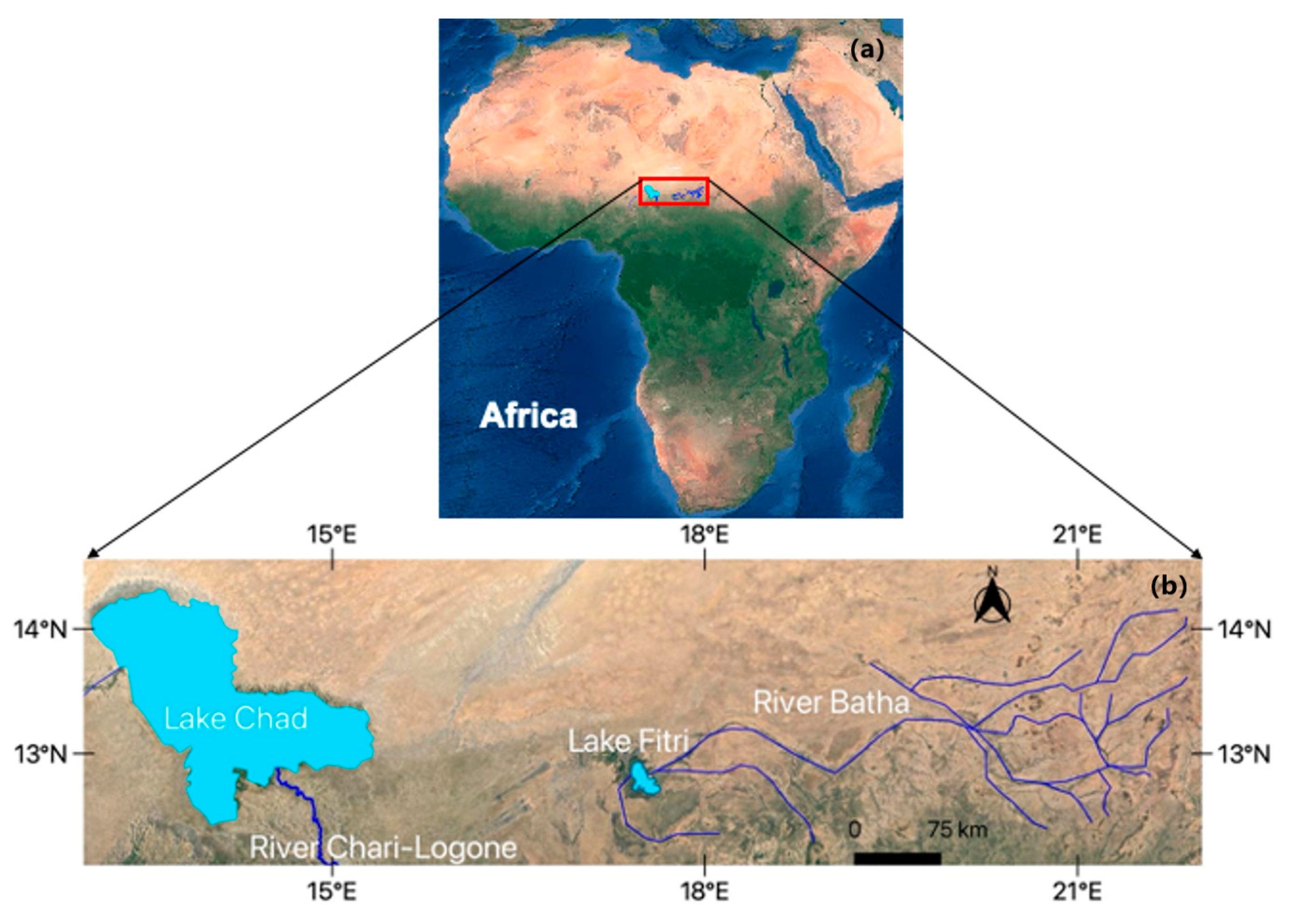
Lake Fitri is located in the Batha watershed, the entirety of which lies in the Sahelian zone [
23]. The upper Batha basin is located in eastern Chad, within the Ouaddaï massif, which forms the primary topographic divide for the basin’s headwaters. It has an area of about 96,000 km
2 (
Figure 1).
Its downstream point is Lake Fitri. The region has a very flat topography, except for the sandy cordon of Lake Mega-Chad, which overhangs the plain by about ten meters, the granitic inselbergs that can be observed at Yao or Guera, and the multiple dune formations of various shapes (transverse, linear or barchanoid) to the southwest of the lake [
24,
25]. The Fitri region is a very rich agricultural area (with Sorghum bicolor (L). Moench as the main culture)) with fishing and high pastoral potential. It is considered as a cereal granary and a refuge area for farmers, fishermen, transhumant herders and wildlife, mainly du-ring the dry period. However, it very often experiences grain deficits [
23]. Apart from a few fishermen and rare market gardens on the shores, Lake Fitri remains entirely natural, in a dry savanna zone.
2.2. Geological and Hydrogeological Context
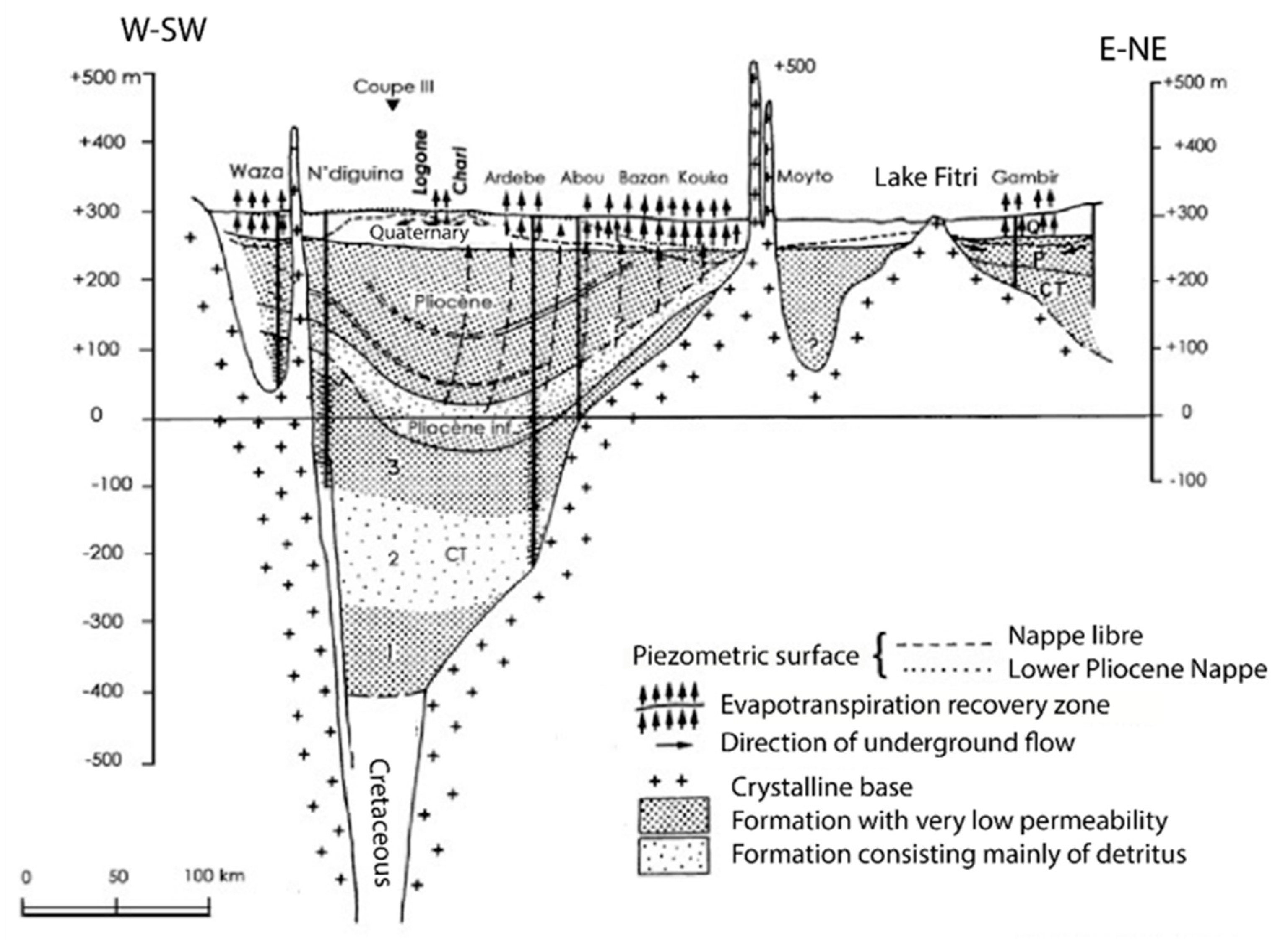
The study area is covered by Quaternary formations that extend to the Ouaddaï foothills in the east and the Guera in the south. Around the lake, the Precambrian bedrock is visible through the Quaternary cover, in the form of granitic inselbergs (
Figure 2). Lake Fitri is hydrologically distinct from Lake Chad, as the two basins are separated by a structural threshold formed by ancient dune fields. Nonetheless, during the humid middle Holocene period, it was included in Lake Mega-Chad [
17]. Groundwater resources are structured in two superimposed levels [
26]: a surface level, consisting of the Quaternary water table, and a deep level, comprising the Pliocene and Continental Terminal aquifers (
Figure 2). Although widespread, the productivity of these aquifers varies locally depen-ding on the nature of the formations encountered.
2.3. Hydro-Climatic Context
The climate is marked by the alternation of a four-to-five-month rainy season, centered on August, and a six-to-seven-month dry season [
23]. A true sentinel of the Sahelian climate, Lake Fitri is a terminal basin with a functioning directly reflecting regional water balances. It acts as a privileged hydroclimatic witness, recording with great sensitivity the variability of African monsoons and their historical impacts on the landscapes and ecosystems of the basin. The study of the climate variability of the Lake Fitri basin has been rarely addressed in previous works. The hydrographic network is made up of several intermittent rivers, the most important of which is the Batha River with its tributaries the Melmélé, Zilla, Zerzer, and Abourda Rivers [
27]. Lake Fitri is only fed for two or three months of the year by temporary streams because its watershed is located entirely in the Sahelian climate zone [
18]. It also receives significant inflows of ouaddis from the Aboutelfan. Its surface area is highly variable depending on the water inflow in its watershed. The lake can dry up almost completely in 1973, for example, but also in 1901 [
18]. At its maximum extension, it could reach 1300 km
2; this was the case in 1870. On average, its surface area is 800 km
2 [
16].
3. Methodology
In order to study the hydro-climatic variability of Lake Fitri, we collected all the climatic and hydrological data available on the study area. These data were collected from the National Agency of Meteorology (ANAM) and the Direction of Water Resources (DRE) in Chad. These data were completed by measurements that were carried out thanks to the instrumentation of Lake Fitri and its watershed in the framework of the LMI VIABELEAUX project since 2019.
3.1. Collection of Meteorological Data
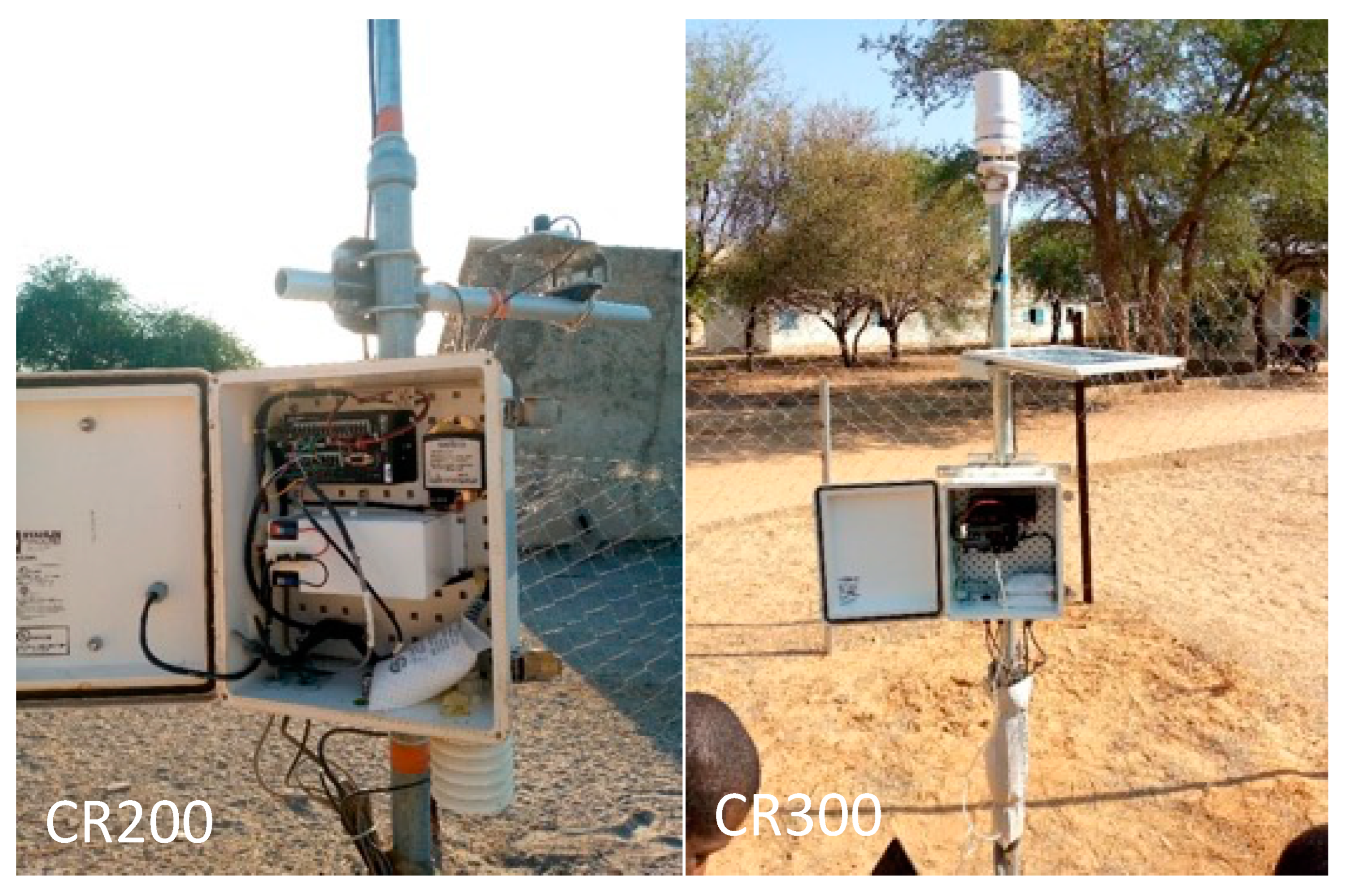
The meteorological dataset used in this study included precipitation, air temperature, relative humidity, wind speed and evaporation. Data were collected from three monitoring stations located at (i) Yao, on the shore of Lake Fitri, (ii) Ati, approximately 90 km upstream on the Batha River, and (iii) N’Djamena, the Chadian capital (
Figure 3). At Yao, monthly precipitation records are available from 1980 to 2018. These were complemented by a weather station installed in November 2019 on the lake shore, providing continuous hourly measurements of rainfall, air temperature, relative humidity, wind speed, and evapotranspiration. At Ati, monthly rainfall records cover the period 1985–2015. In April 2021, a new automatic station was installed, enabling hourly monitoring of precipitation, temperature, humidity, and wind speed. At N’Djamena, monthly precipitation data are available for the period 1980–2018, providing a complementary long-term climatic record for the region. All automatic stations are equipped with Campbell Scientific dataloggers: specifically the CR200 model at Yao and the ClimatVue 50 at Ati. This ensures that the measurements are high-resolution and continuous. The three stations were chosen because they could measure both local and regional changes in the Lake Fitri basin’s hydro-climate. Yao station, which is right on the shore of the lake, provides data that show how the local weather affects the lake and how the weather and the lake interact directly. Ati station, which is on the Batha River, the main river that feeds Lake Fitri, gives important information about the rainfall and hydro-climatic inputs that affect the lake’s seasonal changes. Finally, N’Djamena station provides the long-term behavior of the region’s climate, which is a good example of how the Sahelian climate changes over time. Together, these complementary datasets allow for a robust analysis of both spatial and temporal variability in hydro-climatic parameters, from local to regional scales, and ensure a better understanding of the drivers controlling water balance in the Lake Fitri basin.
Given the differences in observation periods between the stations (1980–2018 in Yao and N’Djamena, and 1985–2015 in Ati), we selected a common overlap period of 31 years, extending from 1985 to 2015, for all comparative and statistical analyses requiring the simultaneous use of the three datasets. Although this slightly reduced the time horizon of the study (compared to 1980–2018), this approach ensured perfect consistency and methodological robustness for the inter-station analyses.
3.2. Collection of Hydrological and Altimetric Data
The hydrological dataset included water level measurements from Lake Fitri and its main tributary, the Batha River, at its outlet into the lake. Since November 2019, in situ measurements have been carried out twice a month by a trained observer at Yao using a graduated limnimetric scale. These data are complemented by additional records provided by the Direction of Water Resources (DRE, Chadian Ministry of Water and Energy), which manages several observation stations in the basin. The periods of observation used in this study depend on the availability of records from the meteorological and hydrological services and were integrated to analyze hydro-climatic variability in time and space. Limnimetric scales are installed both on the Batha River (Ati and Yao) and on Lake Fitri. These instruments are regularly levelled and georeferenced to ensure the consistency of measurements. In the framework of the LMI VIABELEAUX project, an additional limnimetric scale was installed on the Batha River at its mouth into Lake Fitri, thereby strengthening the monitoring network and improving the spatial representativeness of water level data.
In addition to ground observations, satellite altimetry data were used to complement and extend the temporal coverage of hydrological records. Altimetric data for Lake Fitri covering the period April 2013 to August 2023 were downloaded from the Hydroweb database
https://hydroweb.next.theia-land.fr/ (accessed on 30 August 2023). Hydroweb is a hydrometric monitoring service of rivers and lakes developed by Theia, with the support of CNES and LEGOS (UMR CNES–CNRS–IRD–UPS), in the framework of the SWOT downstream program. This dataset, which is based on satellite radar altimetry, gives a constant and impartial source of information about water levels. This is especially useful in areas where in situ records are few and far between. Using both in situ limnimetric data and satellite altimetry is a strong way to obtain both short- and long-term hydro-climatic trends and local changes in the Lake Fitri basin.
3.3. Rainfall Variability Assessment Using the Standardized Precipitation Index (SPI)
Rainfall variability in the Lake Fitri basin was characterized using the Standardized Precipitation Index (SPI), calculated on a 12-month scale (SPI-12) to capture annual anomalies. The SPI was selected for its robustness in semi-arid contexts and its exclusive reliance on precipitation data [
28] (which are the most reliable records available for the study area). Following the method of [
4], the index was computed for the 1980–2020 period at Yao and N’Djamena stations as follows:
Xi is the total amount of rain that fell in year
i, and
and
σ is the standard deviation. Positive and negative SPI values indicate wetter and drier conditions than the long-term average, respectively [
4].
4. Results
4.1. Meteorological Characterization
The analysis of meteorological data from Lake Fitri basin, based on observations at Yao (2020–2022) and Ati (2021), highlights the contrasted seasonal fluctuations, typical of the Sahel, as well as notable interannual and spatial differences between the two sites.
4.1.1. Seasonal and Interannual Variability at Yao Station (2020–2022)
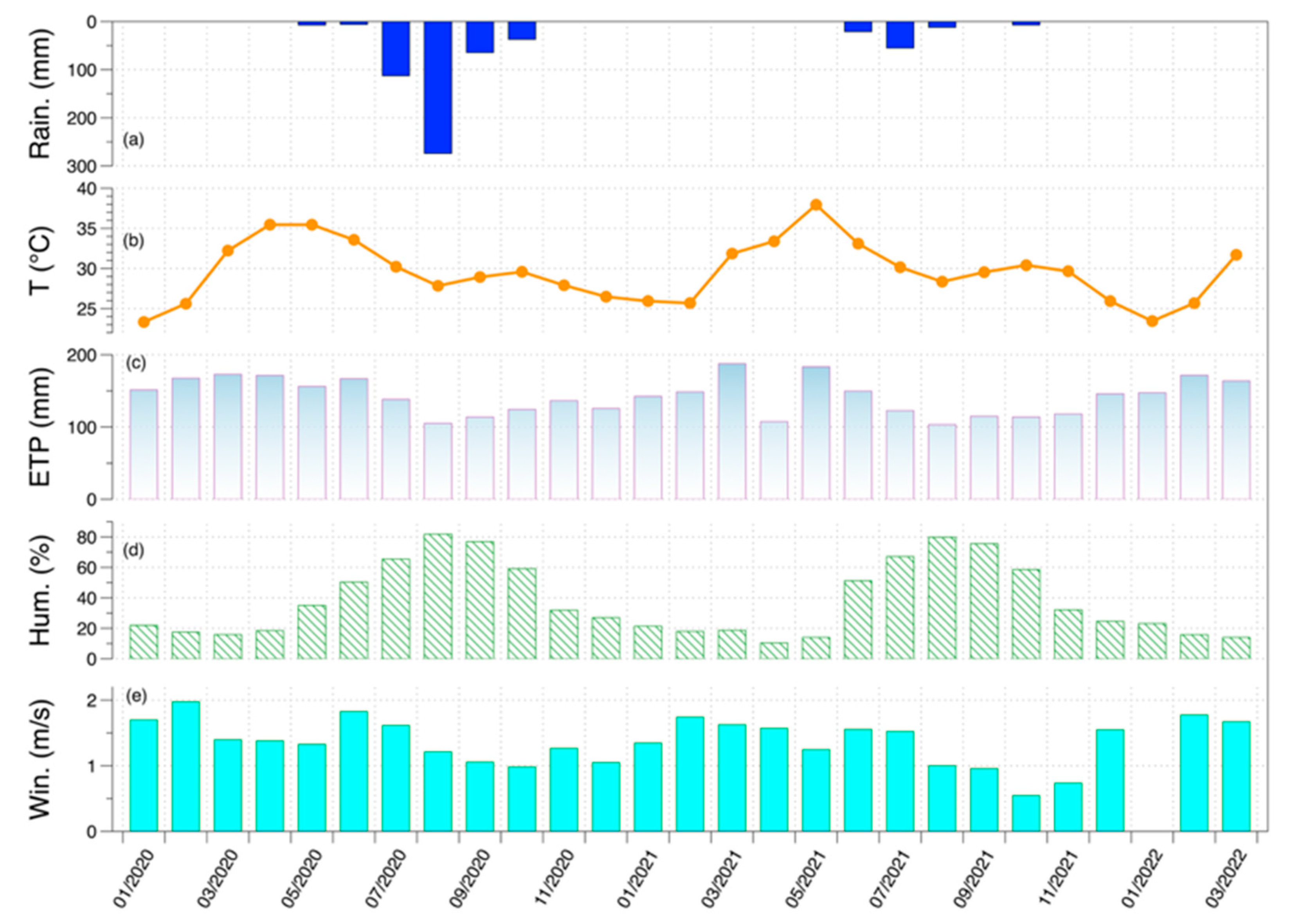
The rainy season belongs between June and September. The months of July and August alone accounted for nearly 75% of the total annual rainfall (
Figure 4,
Table S1). In 2020, precipitation was unusually abundant, with a peak of 274 mm in a single month and an average of 43.3 mm/month. In contrast, 2021 was considerably drier, recording a maximum of only 55 mm and a monthly mean of 9.3 mm. These contrasts are confirmed by the high standard deviation in 2020 (80.5 mm vs. 16.1 mm in 2021), reflecting the irregularity of rainfall events. Temperature exhibited a bimodal cycle, with maxima in March–April and October–November and minima in July–August. The mean values stayed the same (29.7 °C in 2020 vs. 30.2 °C in 2021), while the humidity changed more from year to year, going from above 80% in 2020 to a low of 10.4% in 2021. Evapotranspiration was quite similar to the thermal regime, with averages of about 140 mm/month and peaks in the hot, dry months. The wind speed was moderate and stayed about the same, but was a little higher during the dry season. Overall, the comparison shows that 2020 was wetter and more humid, whereas 2021 was hotter and dryer.
4.1.2. Seasonal Dynamics at Ati Station (2021)
Records from Ati (
Figure S1,
Table S2) confirmed the same seasonal rhythm but with lower annual rainfall. In 2021, the monthly rainfall ranged from 0 to 129 mm, with a sharp peak in August (>150 mm) and an annual mean of 35.7 mm. This heavy rain in a short amount of time is similar to what happened at Yao station, which strengthens the monsoonal control. The temperature of the air was 29.2 °C on average, with a range of 21.2 °C to 34 °C. August received the highest amount of rain, but it also had the coolest air temperature. During the wet season, the humidity was 80%, but it dropped to 12% in April, which shows that the long dry season was very dry. Evapotranspiration averaged 138 mm/month, exceeding 200 mm in April–May and falling to 60 mm in August. Wind speed was stable, with a mean of 0.9 m/s, slightly higher in the rainy months.
4.1.3. Rainfall–Temperature Interaction: Ombrothermal Diagram
The ombrothermal diagram (
Figure S2) highlights the strong seasonal contrast between rainfall and temperature in the Lake Fitri basin. Rainfall was almost entirely confined to July–September, with a sharp maximum in August (>270 mm), while the rest of the year remained nearly dry. On the other hand, temperature followed a bimodal pattern, with highs in March–April (before the rains) and October–November (after the rains), and lows in July–August when it rains the most. This inverse relationship shows how the West African monsoon affects the weather. It delivers humid air and cooler weather in the summer, while the Harmattan, which blows from the northeast, makes the weather drier and hotter. During the rainy months, more clouds and damp soil cause a brief cooling impact. In the dry season, intense insolation causes the most evapotranspiration requirement. Overall, the diagram gives a synthetic confirmation of what was found at Yao and Ati: that Lake Fitri basin’s water supply is closely tied to the brief monsoon season, which shows how sensitive the area is to changes in the weather conditions.
4.2. Hydrological Dynamics
4.2.1. Batha River at Ati
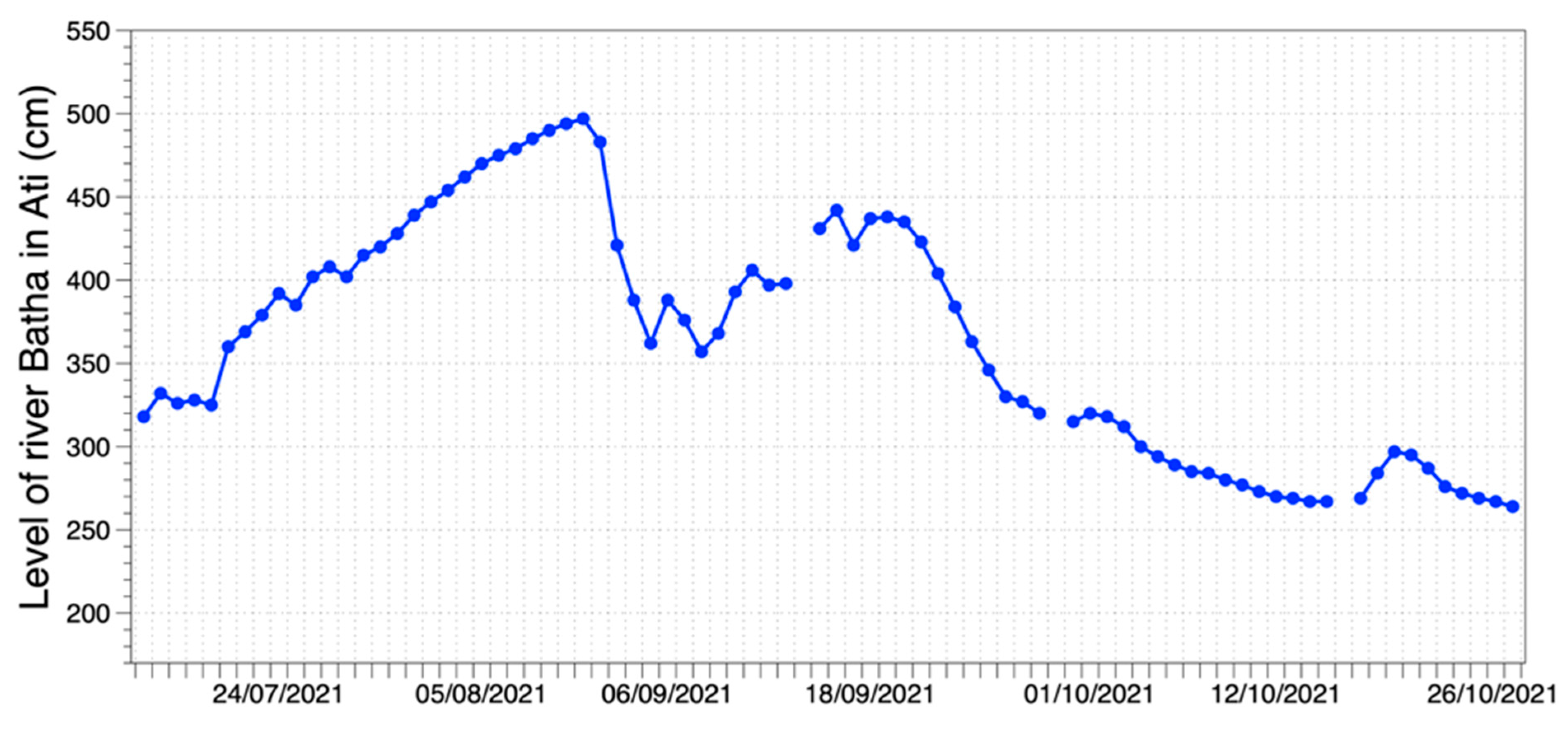
The water level of the Batha River at Ati between late July and October 2021 showed a pronounced seasonal flood pulse typical of Sahelian rivers (
Figure 5). When monitoring started in late July, the river stage was about 320 cm. During August, the river stage rose rapidly and continuously, attaining nearly 500 cm in early September, which corresponds to the main flood peak generated by intense rainfall in the upstream catchment. Following this maximum, water levels dropped sharply, falling to around 380 cm by mid-September. The lake level exhibited rapid short-term fluctuations driven by direct rainfall on the lake surface and pulsed inflows from its tributaries. A secondary rise occurred in mid- to late September (≈440 cm) before a gradual and sustained recession began in early October. By late October, the river had returned to lower levels, close to 260–280 cm. This hydrograph shows how closely linked the seasons of rainfall and river flow are in the Sahel. The Batha flood only lasts for a few months (2–3 months), and the water level rises and falls quickly because of heavy rain upstream and the basin’s low storage capacity. These kinds of changes show how important the Batha is as a temporary but important part of the water balance of Lake Fitri and its floodplains. A few isolated gaps (15–16 September 2021) in the water level series are due to a temporary malfunction of the water level gauge during the flood, linked to extreme hydrodynamic conditions (partial submersion). These missing data, limited in time, do not affect the overall analysis of the seasonal dynamics of the Batha River.
4.2.2. Batha River at Yao (Lake Inlet)
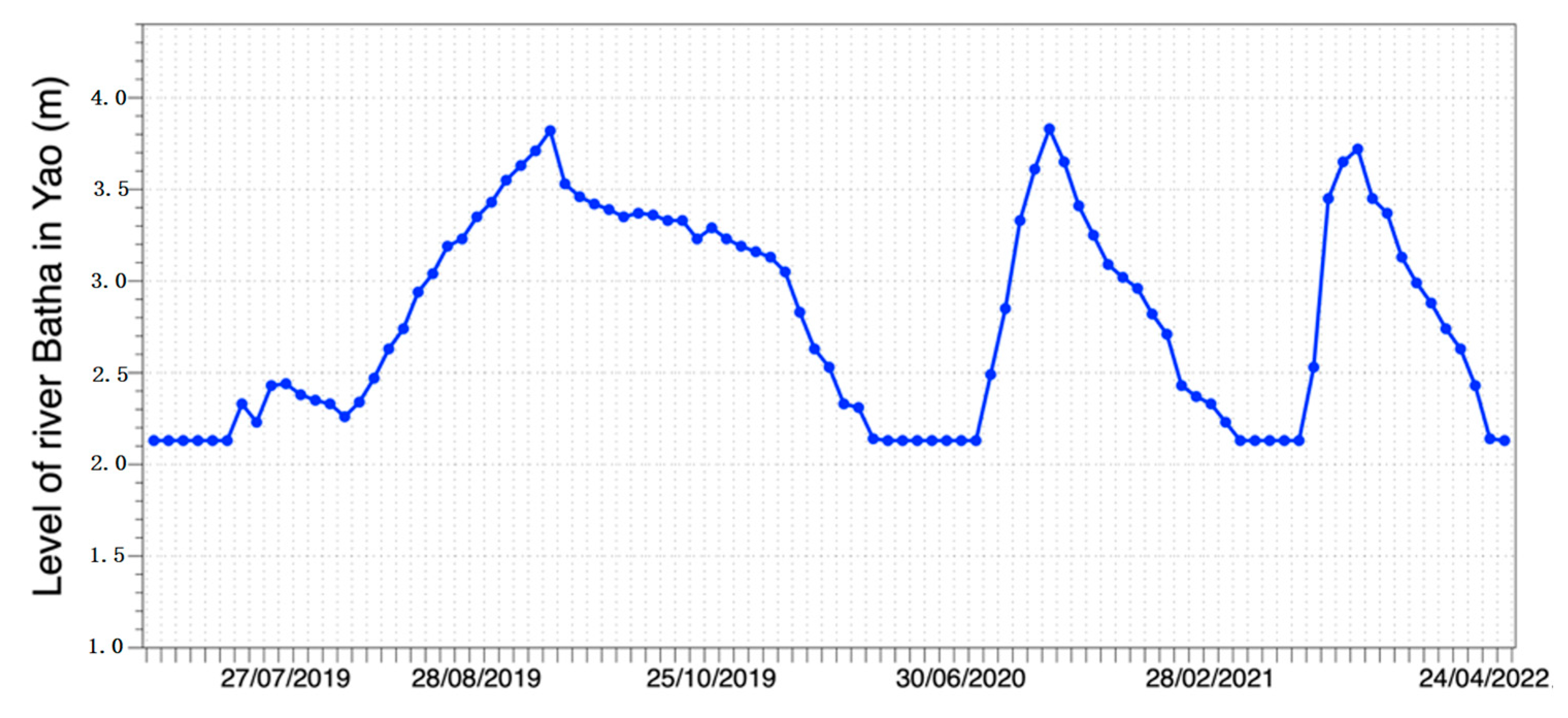
At Yao, where the Batha River flows into Lake Fitri, the river has a clear seasonal hydrological regime that is directly affected by changes in rainfall in the Sahel. Three different flood cycles were reported between July 2019 and April 2022 (
Figure 6). These were the rainy seasons of 2019, 2020, and 2021. In 2019, the water level rose gradually from ≈2.1 m in July to a peak of 3.8–3.9 m at the end of August before steadily declining from October onwards. A comparable pattern was observed in 2020, with a peak again close to 3.9 m in early September. The highest level in 2021 was a little lower (about 3.6–3.7 m), but the patterns were the same. There was a quick rise in July and August, followed by a slow drop to the dry-season baseflow of about 2.0–2.1 m. The river stayed at 2.0–2.2 m between November and June, which means that it is only there for a short time and depends on monsoon rains in the watershed above. The steep slopes of the hydrograph and the height of the seasonal flood (about 1.5–2.0 m) show that the basin does not have much room to store water and reacts quickly. These numbers show that the Batha only adds to the water balance of Lake Fitri for short periods of time. Its floods provide a critical, yet highly va-riable, input that governs recharge processes in the floodplain and connects shallow aquifers. Consequently, the sustainability of Lake Fitri’s hydrological regime is tightly coupled to the intensity and duration of the monsoonal rainy season.
4.2.3. Lake Fitri Level Variability
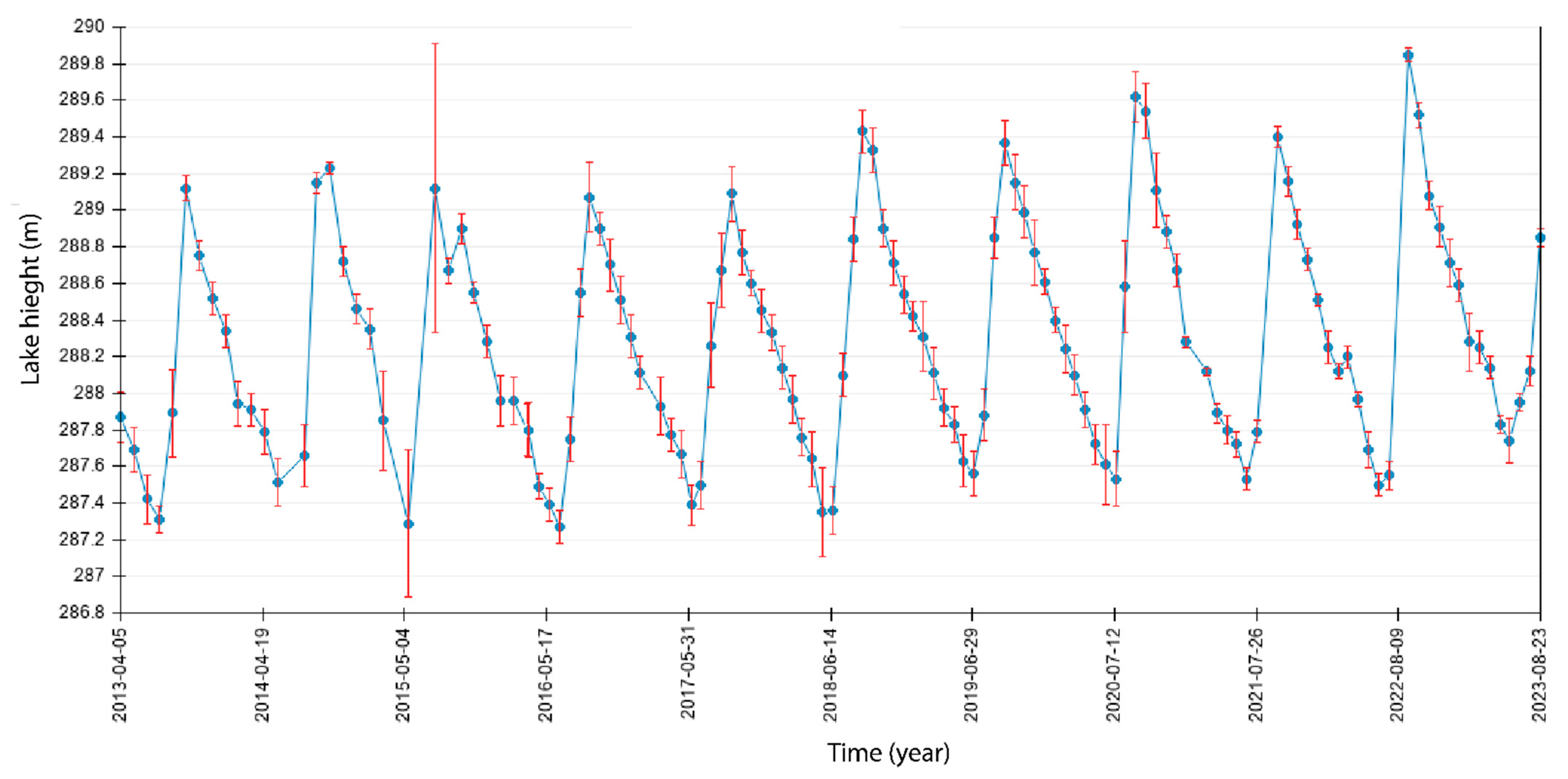
The hydrograph of Lake Fitri from 2013 to 2023 shows that it has a very seasonal regime that is strongly related to rainfall and water coming in from the Batha River (
Figure 7). The level of Lake Fitri generally fluctuates between 287.0 and 289.5 m, with an annual range of approximately 2.0 to 2.5 m. Flooding of the Batha River causes a rapid rise in water levels during the rainy season (July–September), followed by a steady decline throughout the dry season (October–May). This seasonal cycle highlights the lake’s heavy dependence on direct rainfall and inflows from its upstream tributary. There is also significant interannual variability. In wetter years, such as 2014, 2015, 2018, and the period 2020–2022, the lake reached higher water levels, while drier years, notably 2016–2017 and 2019, were characterized by reduced maxima and prolonged recession phases. Overall, analyses indicate that Lake Fitri functions as a highly dynamic system in which episodic but intense rainfall, irregular inflows from the Batha River and significant evaporation losses interact to control the hydrological balance. This sensitivity makes the lake parti-cularly vulnerable to extreme climatic events, highlighting the crucial role of flooding from the Batha River in maintaining water levels, ecological processes, and the livelihoods of surrounding communities.
5. Discussion
5.1. Rainfall Variability and Climatic Forcing in the Sahel
The analysis of rainfall indices (SPI) for N’Djamena and Yao over 1980–2020 revealed the typical alternation of wet and dry phases that characterizes Sahelian climates (
Figure S3). Analysis of the Standardized Precipitation Index (SPI) showed a robust correlation between rainfall anomalies and the hydrological responses of the Lake Fitri basin. A prolonged deficit period was observed between 1982 and 1993, characterized by an average SPI of −0.5 (
Table 1). This interval corresponds to the severe droughts that affected the entire Sahelian region, causing major hydrological and ecological disruptions [
2,
29]. Such conditions led to historical low water levels and episodes of near-total desiccation of the lake, as documented in 1973 and 1987. Since 1994, the basin has experienced a transition to a wetter climate, albeit marked by high interannual variability, a signature of the West African monsoon [
30]. This recovery period included distinct wet years (1994, 2005, 2008–2012, and since 2018) interspersed with dry intervals (2013–2017). Quantitative peaks in the SPI, such as the +2.1 recorded in 2005 at Yao, translated immediately into increased flood pulses in the Batha River and an expansion of the lake’s surface area beyond 800 km
2. These fluctuations underscore the direct control of rainfall variability on the basin’s hydrological processes, including Batha River discharge, lake level oscillations, and aquifer recharge.
5.2. Temporal Evolution of Rainfall at Yao and N’Djamena
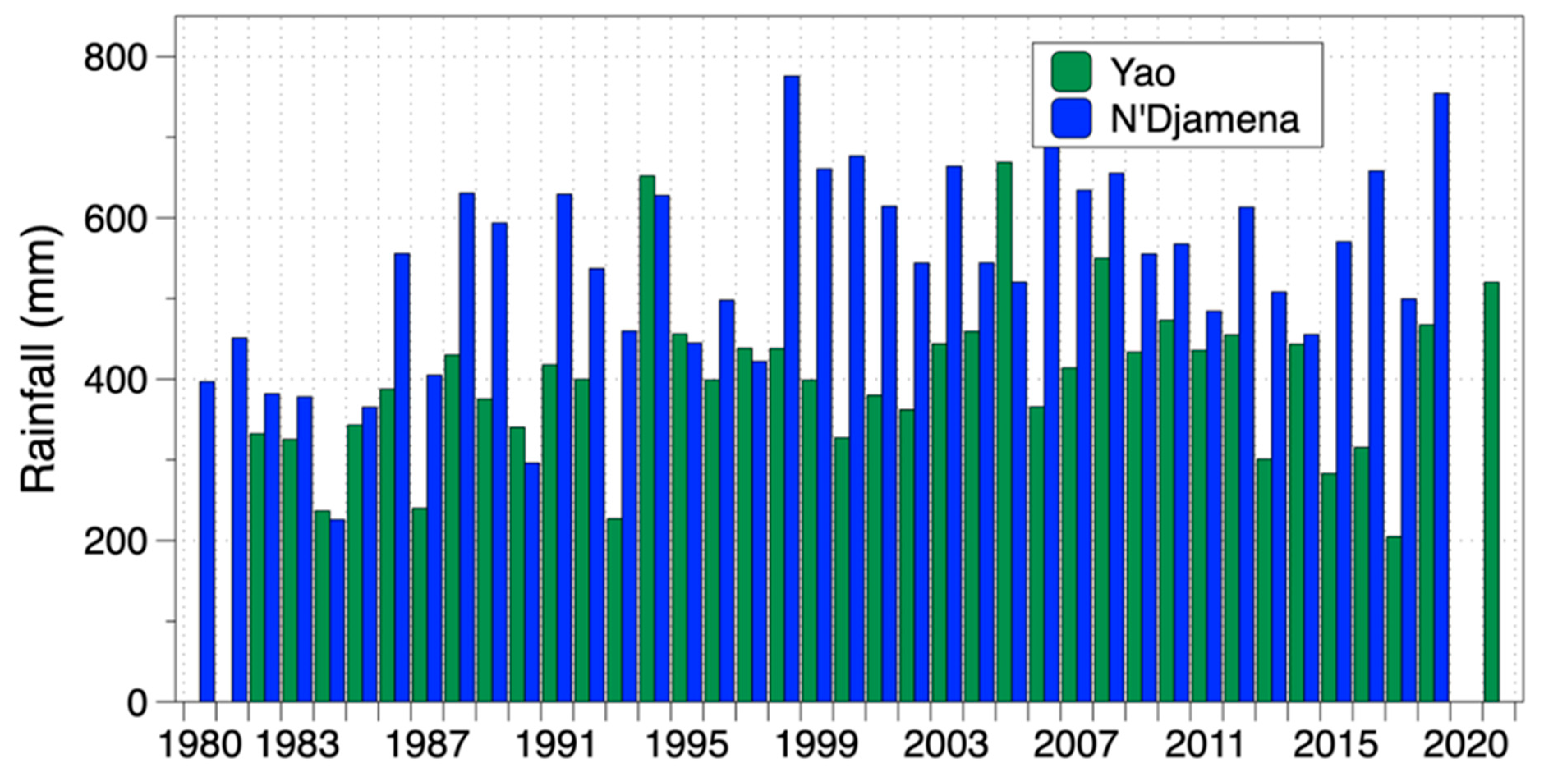
The comparison of rainfall data from Yao and N’Djamena (1980–2020) confirmed both the strong interannual variability and the spatial coherence of rainfall across the Lake Fitri basin (
Figure 8).
Precipitation at Yao station showed high interannual variability. Although the long-term average was around 402 mm, annual totals varied greatly from year to year, with a minimum of 205 mm recorded in 2017 and a maximum of 669 mm in 2005. In N’Djamena, the average annual precipitation was higher, at around 573 mm, but the temporal evolution of precipitation remained broadly similar to that observed in Yao. Several years stand out for their high precipitation at both stations, notably 1994, 2008, and 2018. The coincidence of these wet years suggests that rainfall variability in the Fitri basin is mainly controlled by regional climatic conditions rather than by local factors specific to each site. This interpretation was confirmed by statistical analyses. Annual precipitation in Yao and N’Djamena was strongly and significantly correlated (Pearson’s coefficient r = 0.78;
p < 0.01), indicating the existence of a common climate signal. Furthermore, the nonparametric Mann–Kendall test showed a significant upward trend in precipitation over the period 1980–2020, both in Yao (Z = 1.98) and N’Djamena (Z = 2.21). The associated Sen slopes, +3.1 and +3.6 mm/year, respectively (
Table 2), are consistent with the partial recovery in precipitation observed in the central Sahel since the early 1990s, following the severe droughts of the 1980s [
2,
30]. This variability in precipitation has a direct impact on the hydrological behavior of the Batha River. Wetter years are characterized by higher flood peaks, resulting from saturated soil conditions and increased surface runoff. Conversely, dry years result in lower flows and shorter flood durations. It is observed that during extreme rainfall events, the flood response is particularly complex. This complexity is linked to significant transmission losses within the sandy riverbed and temporary water storage in the floodplains, which play a crucial role in attenuating or delaying the flood wave before it reaches the lake.
5.3. Comparative Hydroclimatic Responses of Lake Fitri and Lake Chad
Satellite images confirm that Lake Fitri’s surface area is highly sensitive to rainfall variability. Moister years (1994, 2014, 2020) showed huge extension in both open water and swampy regions, while years with drier conditions (1972, 1986–1987) showed higher decreases in open water areas [
15]. The lake has been somewhat stable since the early 2000s, but it still changes a lot from year to year based on the amount of rainfall. This behavior is similar to that observed for Lake Chad, whose resources declined sharply du-ring the droughts of the 1970s and 1980s, before recovering slightly during the wetter de-cades that followed. Indeed, after changing from a state of “Greater Chad” to a fragmented “Lower Chad” during the Sahelian crises, the lake has undergone a period of stabilization since the 1990s, marked by a slight rise in its water level and a seasonal extension of its northern basin [
11,
31,
32]. Although comparable in terms of their dynamics, these two systems differ in scale and hydrological functioning.
Table 3 presents a quantitative comparison between it and Lake Chad. This table summarizes the surface area data and orders of magnitude from the Sahelian literature and satellite imagery, allowing for an assessment of the magnitude of variations in these two systems. Lake Chad is fed by a vast 610,000 km
2 catchment area stretching across the Sudano-Sahelian zone (
Table 3), capturing the inflows of major rivers such as the Chari-Logone and Komadougou-Yobé. In contrast, Lake Fitri depends on a smaller basin of 90,000 km
2, strictly confined to the Sahelian zone, and is fed mainly by the Batha River and direct rainfall. This difference in scale makes Lake Fitri particularly sensitive to local monsoon variability.
5.4. Groundwater Recharge and Water Balance
The residual water balance for Yao in 2020 (
Table 4 and
Table 5) provides helpful information about how groundwater recharges in these Sahelian conditions. In an area with very high potential evaporation (up to 1730 mm), the total annual rainfall was 502 mm, but most of it was lost to evapotranspiration (ET = 384–434 mm).
Recharge mostly happened in August, when the monthly rainfall (274 mm) was more than the soil’s ability to hold water, which let water flow beyond the root zone. The estimated recharge ranged from 69 to 119 mm, which was about 14–24% of the total annual rainfall. This was based on the assumption that the soil can hold 50 mm or 100 mm of water. This shows that recharge happens in short bursts and mostly in one wet month, which is what has been seen in other Sahelian environments [
21,
22]. We carried out water balance and recharge calculations for 2020, which was a relatively wet year for which we had a complete and consistent set of meteorological and hydrological data. In this way, 2020 can be seen as a good year for groundwater recharge in the Lake Fitri basin. The estimated recharge fraction for 2020 should not be applied to all years due to significant interannual variability in regional rainfall. Therefore, these numbers should be seen as an order of magnitude of how much water could recharge in a wet year, not as an average over several years. This limitation shows how fragile groundwater resources are when it is dry, like in 2017 when the annual rainfall fell to about 205 mm. Also included is an estimate of how uncertain the recharge calculation is. Taking into account the uncertainties about rainfall, estimates of potential evapotranspiration (PET), and the initial moisture levels in the soil, the annual recharge for 2020 is expected to be between ±10 and ±20 mm. This uncertainty highlights the issues raised by a simplified approach to water balance and means that the results should be treated with caution. The persistent imbalance between high potential evapotranspiration and limited precipitation leads to chronic water shortages, limiting groundwater recharge to exceptional rainfall events.
5.5. Socio-Hydrological Implications: Recharge Variability and Resilience of Rural Livelihoods
The analysis of recharge cannot be separated from the socio-economic realities of the basin. The results highlighting episodic recharge and chronic water deficit have direct repercussions on agro-pastoral systems, which are the pillars of the local economy. During periods of low recharge, the decline in groundwater stocks not only undermines the irrigation of subsistence crops, but also puts increased pressure on pastoralism by reducing the availability of water sources for livestock.
This water insecurity forces communities to constantly adapt, often to the detriment of economic stability. Thus, a detailed understanding of these recharge cycles, beyond the technical aspect, becomes an indispensable tool for strengthening the resilience of these populations in the face of extreme climate fluctuations.
6. Conclusions
This study provides an observation-based analysis of the hydrological functioning of the Lake Fitri basin, a strategic yet poorly documented Sahelian endorheic system. By combining field-based hydrometeorological observations and satellite data, our results highlight the decisive influence of climate variability on local hydrological processes. The dynamics of the Batha River flow and fluctuations in Lake Fitri’s water levels appear to be closely controlled by the West African monsoon, which is characterized by high interannual variability.
One of the main scientific contributions of this work lies in the quantitative characterization of groundwater recharge, which is highly episodic and limited to approximately 14–24% of annual precipitation. This recharge occurs almost exclusively during a limited number of intense rainfall events, generally concentrated in August. This result highlights the high vulnerability of groundwater resources to climate variability and the system’s low capacity to buffer prolonged periods of rainfall deficit. The comparative analysis also shows that Lake Fitri is more sensitive to local monsoon variability than Lake Chad due to the smaller size of its catchment area, which is entirely within the Sahelian zone and its almost exclusive dependence on a single temporary tributary.
These results imply concrete guidelines for water resource management and monitoring in the Lake Fitri basin. The episodic nature of recharge requires prioritizing the protection of temporary recharge areas, particularly the Batha floodplains and lake margins, which play a key role in infiltration and short-term storage processes. Land use policies and water abstraction practices should explicitly take into account the high interannual variability of resources in order to limit the pressure on groundwater during years of deficit. In addition, the hydrometeorological monitoring network would benefit from being strengthened and strategically positioned along the lower course of the Batha, at the entrance to Lake Fitri, and in the main flood zones, in order to better capture ephemeral floods and improve early warning capabilities for flood and water shortage risks.
As a vital resource for agriculture, pastoralism, and fishing, Lake Fitri is a pillar of the livelihoods of local populations. In a context of increased climate variability and growing demographic pressure, preserving its hydrological balance is therefore a major challenge for strengthening the socio-ecological resilience of Sahelian territories and supporting sustainable adaptation strategies.
Supplementary Materials
The following supporting information can be downloaded at:
https://www.mdpi.com/article/10.3390/w18040492/s1, Figure S1: Rainfall, temperature and evaporation trends for Ati for the year 2021.: (
a) rainfall, (
b) temperature, (
c) evapotranspiration, (
d) humidity, and (
e) wind speed; Figure S2: Ombrothermal diagram showing monthly rainfall (bars, mm) and temperature (line, °C) for the Yao station; Figure S3: Evolution of rainfall indices of Yao and N’Djamena from 1980–2020; Table S1: Monthly weather variables for the years 2020–2021 at Yao station; Table S2: Monthly weather variables for the year 2021 at the Ati station.
Author Contributions
Conceptualization, A.M.-N., F.S. and N.Y.; Methodology, A.M.-N., F.S. and N.Y.; Investigation, A.M.-N.; Resources, A.M.-N.; Data curation, A.M.-N. and F.S.; Writing—original draft, A.M.-N. and N.Y.; Writing—review & editing, A.M.-N. and F.S.; Visualization, A.M.-N.; Funding acquisition, A.M.-N. and F.S. All authors have read and agreed to the published version of the manuscript.
Funding
This research received financial support from the French National Research Institute for Sustainable Development (IRD) Laboratoire Mixte International VIABilité des socio-Ecosystèmes au SaheL au défi des changEments globAUX (LMI VIABELEAUX) project.
Data Availability Statement
The original contributions presented in this study are included in the article. Further inquiries can be directed to the corresponding author.
Acknowledgments
This work was supported by the French National Research Institute for Sustainable Development (IRD) as part of the LMI VIABELEAUX project. The authors thank the University of N’Djamena for its logistical support. They also thank the Chadian Water Resources Directorate for the data provided and the International Atomic Energy Agency for its support.
Conflicts of Interest
The authors declare no conflicts of interest.
References
- IPCC. Climate Change 2007: Impacts, Adaptation and Vulnerability Contribution of Working Group II to the Fourth Assessment Report of the Intergovernmental Panel on Climate Change; Parry, M.L., Canziani, O.F., Palutik, J.P., van der Linden, P.J., Hanson, C.E., Eds.; Cambridge University Press: Cambridge, UK, 2007; 976p. [Google Scholar]
- Nicholson, S.E. The West African Sahel: A review of recent studies on the rainfall regime and its interannual variability. Int. Sch. Res. Not. 2013, 2013, 453521. [Google Scholar] [CrossRef]
- Lemoalle, J.; Magrin, G.; Ngaressem, G.M.; Ngounou, N.; Raimond, C.; Issa, S.; Waziri, M. Le développement du Lac Tchad: Situation Actuelle et Futurs Possibles: Expertise Collégiale Réalisée par l’IRD à la Demande de la Commission du Lac Tchad. In Contributions Intégrales des Experts; IRD Éditions: Marseille, France, 2014. [Google Scholar]
- Kouassi, A.M.; Kouamé, K.F.; Goula, B.T.A.; Savane, I.; Bi, T.I. Analyse de la variabilité climatique et de ses influences sur les ressources en eau de surface en zone tropicale humide: Cas du bassin versant du N’zi (Bandama) en Côte d’Ivoire. Physio-Géo Géogr. Phys. Environ. 2010, 4, 1–19. [Google Scholar]
- Acreman, M.; Holden, J. How wetlands affect floods. Wetlands 2013, 33, 773–786. [Google Scholar] [CrossRef]
- Hersbach, H.; Bell, B.; Berrisford, P.; Hirahara, S.; Horányi, A.; Muñoz-Sabater, J.; Nicolas, J.; Peubey, C.; Radu, R.; Schepers, D.; et al. The ERA5 global reanalysis. Q. J. R. Meteorol. Soc. 2020, 146, 1999–2049. [Google Scholar] [CrossRef]
- Muñoz-Sabater, J.; Dutra, E.; Agustí-Panareda, A.; Albergel, C.; Arduini, G.; Balsamo, G.; Boussetta, S.; Choulga, M.; De Rosnay, P.; Hersbach, H.; et al. ERA5-Land: A state-of-the-art global land surface reanalysis dataset. Earth Syst. Sci. Data 2021, 13, 4349–4383. [Google Scholar] [CrossRef]
- Tapley, B.D.; Watkins, M.M.; Flechtner, F.; Reigber, C.; Bettadpur, S.; Rodell, M.; Sasgen, I.; Famiglietti, J.S.; Landerer, F.W.; Chambers, D.P.; et al. Contributions of GRACE to understanding climate change. Nat. Clim. Change 2019, 9, 358–369. [Google Scholar] [CrossRef] [PubMed]
- Scanlon, B.R.; Zhang, Z.; Save, H.; Sun, A.Y.; Müller Schmied, H.; Van Beek, L.P.; Wiese, D.N.; Wada, Y.; Long, D.; Reager, J.T.; et al. Global models underestimate large decadal declining and rising water storage trends relative to GRACE satellite data. Proc. Natl. Acad. Sci. USA 2020, 115, E1080–E1089. [Google Scholar] [CrossRef] [PubMed]
- Ahmed, M.; Sultan, M.; El-Dany, A.G.; Abouelmagd, A. Assessment of groundwater storage changes and their causes in Africa using GRACE data and hydrological modeling. J. Hydrol. 2022, 605, 127301. [Google Scholar] [CrossRef]
- Pham-Duc, B.; Sylvestre, F.; Papa, F.; Frappart, F.; Bouchez, C.; Crétaux, J.F. The Lake Chad hydrology under current climate change. Sci. Rep. 2020, 10, 5498. [Google Scholar] [CrossRef] [PubMed]
- Rateb, A.; Scanlon, B.R.; Pool, D.R.; Sun, A.; Zhang, Z.; Chen, J.; Clark, B.; Faunt, C.C.; Haugh, C.J.; Hill, M.; et al. Comparison of Groundwater Storage Changes from GRACE Satellites with Monitoring and Modeling of Major U.S. Aquifers. Environ. Res. Lett. 2020, 15, 0940B1. [Google Scholar] [CrossRef]
- Lemoalle, J. Lake Chad: A changing environment. In Dying and Dead Seas Climatic Versus Anthropic Causes; Springer: Dordrecht, The Netherlands, 2004; pp. 321–339. Available online: https://link.springer.com/chapter/10.1007/978-94-007-0967-6_13 (accessed on 17 December 2025).
- Coe, M.T.; Foley, J.A. Human and natural impacts on the water resources of the Lake Chad basin. J. Geophys. Res. Atmos. 2001, 106, 3349–3356. [Google Scholar] [CrossRef]
- Tashi, Y.; Raimond, C.; Nagorngar, A.K.; Zakinet, D.; Schuster, M.; Sylvestre, F. Variabilité des crues et des paysages du lac Fitri depuis les grandes sécheresses des années 1970–1980. In Le Tchad des Lacs: Les Zones Humides Sahéliennes au Défi du Changement Global; Raimond, C., Sylvestre, F., Zakinet, D., Deschamps, P., Eds.; IRD Éditions: Marseille, France, 2019; pp. 133–155. ISBN 978-2-7099-2716-1. [Google Scholar] [CrossRef][Green Version]
- Lemoalle, J.; Morgan, N.C. Eaux Intérieures D’Algérie et de Tunisie. Zones Humides et Lacs Peu Profonds d’Afrique; Orstom: Paris, France, 1987; Available online: https://horizon.documentation.ird.fr/exl-doc/pleins_textes/divers14-08/25331.pdf (accessed on 17 December 2025).
- Schuster, M.; Sylvestre, F.; Raimond, C.; Moussa, A.; Abakar, Y.; Yalikun, T. Changements environnementaux et climatiques à la période humide africaine Holocène dans le bassin du lac Fitri (Tchad). In Le Tchad Des Lacs; IRD Éditions: Marseille, France, 2019; p. 39. Available online: https://www.researchgate.net/profile/Moussa-Abderamane/publication/337150014_Changements_environnementaux_et_climatiques_a_la_periode_humide_africaine_Holocene_dans_le_bassin_du_lac_FitriTchad/links/62666ed7bca601538b66e07e/Changements-environnementaux-et-climatiques-a-la-periode-humide-africaine-Holocene-dans-le-bassin-du-lac-FitriTchad.pdf (accessed on 17 December 2025).
- Bédjaoué, M. Le lac Fitri: Dynamique du Système Hydrographique Quaternaire et Actuel (Sahel Tchadien). Ph.D. Thesis, Université de Provence, Avignon, France, 2006; 171p. [Google Scholar]
- Raimond, C.; Zakinet, D. Pour un observatoire au lac Fitri. In Une Exigence D’intégration de Points de Vue et D’enjeux Différents; IRD Éditions: Marseille, France, 2019. [Google Scholar]
- Poulin, C.; Hamelin, B.; Vallet-Coulomb, C.; Amngar, G.; Loukman, B.; Cretaux, J.-F.; Doumnang, J.-C.; Mahamat Nour, A.; Menot, G.; Sylvestre, F.; et al. Unraveling the hydrological budget of isolated and seasonally contrasted subtropical lakes. Hydrol. Earth Syst. Sci. 2019, 23, 1705–1724. [Google Scholar] [CrossRef]
- Leduc, C.; Favreau, G.; Schroeter, P. Long-term rise in a Sahelian water-table: The Continental Terminal in south-west Niger. J. Hydrol. 2001, 243, 43–54. [Google Scholar] [CrossRef]
- Favreau, G.; Cappelaere, B.; Massuel, S.; Leblanc, M.; Boucher, M.; Boulain, N.; Leduc, C. Land clearing, climate variability, and water resources increase in semiarid southwest Niger: A review. Water Resour. Res. 2009, 45, 2007WR006785. [Google Scholar] [CrossRef]
- Raimond, C.; Sylvestre, F.; Zakinet, D. Moussa Abderamane. In Le Tchad des Lacs; Collection Synthèse IRD: Marseille, France, 2019; 365p. [Google Scholar]
- Schuster, M.; Roquin, C.; Duringer, P.; Brunet, M.; Caugy, M.; Fontugne, M.; Mackaye, H.T.; Vignaud, P.; Ghienne, J.F. Holocene Lake Mega-Chad palaeoshorelines from space. Quat. Sci. Rev. 2005, 24, 1821–1827. [Google Scholar] [CrossRef]
- Schuster, M.; Nutzel, H.; Duringer, P. The Mega-Chad: A review of the largest Holocene lake in Africa. In Dans The Handbook of Environmental Chemistry; Ou Une Référence Similaire Traitant Des Archives Sédimentaires Du Fitri; Springer: Berlin/Heidelberg, Germany, 2021. [Google Scholar]
- Schneider, J.-L.; Wolf, J.P. Carte Géologique et Hydrogéologique de 1/500,000 de la Republique du Tchad, Mémoire Explicatif; BRGM: Paris, France, 1992; p. 531. Available online: https://www.worldcat.org/title/carte-geologique-et-cartes-hydrogeologiques-a-11-500-000-de-la-republique-du-tchad-memoire-explicatif/oclc/26094222/ (accessed on 17 December 2025).
- BIEP. Bureau Interministériel d’Etude et de Programmation Étude de Développement Rural Intégré du Lac Fitri. République du Tchad, Ministère de l’Agriculture, Banque Islamique de Développement, Cedrat-SA, Document de Synthèse et Annexes, 1989, 61p. Available online: https://books.openedition.org/irdeditions/30813 (accessed on 17 December 2025).
- McKee, T.B.; Doesken, N.J.; Kleist, J. The relationship of drought frequency and duration to time scales. In Proceedings of the 8th Conference on Applied Climatology, Anaheim, CA, USA, 17–22 January 1993; Volume 17, pp. 179–183. Available online: https://climate.colostate.edu/pdfs/relationshipofdroughtfrequency.pdf (accessed on 17 December 2025).
- Lebel, T.; Ali, A. Recent trends in the Central and Western Sahel rainfall regime (1990–2007). J. Hydrol. 2009, 375, 52–64. [Google Scholar] [CrossRef]
- Kabore, P.N.; Ouedraogo, A.; Sanon, M.; Yaka, P.; Some, L. Caractérisation de la variabilité climatique dans la région du centre-nord du Burkina Faso entre 1961 et 2015. Climatologie 2017, 14, 82–95. [Google Scholar] [CrossRef]
- Bader, J.C.; Lemoalle, J.; Leblanc, M. Modèle hydrologique du lac Tchad. Hydrol. Sci. J.—J. Sci. Hydrol. 2011, 56, 411–425. [Google Scholar] [CrossRef]
- Lemoalle, J.; Bader, J.C.; Leblanc, M.; Sedick, A. Recent changes in Lake Chad: Observations, simulations and management options (1973–2011). Glob. Planet. Change 2012, 80, 247–254. [Google Scholar] [CrossRef]
- Olivry, J.C.; Chouret, A.; Vuillaume, G.; Lemoalle, J.; Bricquet, J.P. Hydrologie du lac Tchad; Collection Monographies Hydrologiques, n°12; ORSTOM (IRD): Paris, France, 1996; 266p, ISBN 2-7099-1310-5. [Google Scholar]
- Mahamat Nour, A.; Vallet-Coulomb, C.; Gonçalves, J.; Sylvestre, F.; Deschamps, P. Rainfall-discharge relationship and water balance over the past 60 years within the Chari-Logone sub-basins, Lake Chad basin. J. Hydrol. Reg. Stud. 2021, 35, 100824. [Google Scholar] [CrossRef]
| Disclaimer/Publisher’s Note: The statements, opinions and data contained in all publications are solely those of the individual author(s) and contributor(s) and not of MDPI and/or the editor(s). MDPI and/or the editor(s) disclaim responsibility for any injury to people or property resulting from any ideas, methods, instructions or products referred to in the content. |