1. Introduction
Public drinking water in the United States is delivered through 152,000 public water systems (PWSs) [
1]. These systems provide water to at least 15 service connections or 25 people for a minimum of 60 days annually. Community water systems (CWSs), a subset of PWSs, serve the same population year-round. Currently, 51,000 CWSs provide drinking water to 90% of the U.S. population—approximately 301 million people [
2]. Despite technological and operational differences across rural and urban settings, the provision of safe drinking water remains intrinsically linked to a community’s public health.
Public water supply and water system performance are equally tied to local government oversight and the technical, managerial, and financial (TMF) capacity of municipal utilities. CWSs must implement several federal mandates, including the Safe Drinking Water Act (SDWA), including the Lead and Copper Rule (LCR), to safeguard public health; yet some systems struggle to meet these requirements [
3,
4,
5]. Patel and Schmidt [
6] note that the major vulnerabilities contributing to CWS noncompliance include aging infrastructure, distribution system contamination, and workforce capacity limitations, often compounded by external political or economic pressures.
Financial instability further exacerbates these challenges. CWSs rely on municipal bonds, federal grants and loan programs, and user fees [
7]. Smull et al. [
8] add that monetary policy, tax policy, market forces, and industrial activity greatly influence utility finances. TMF capacity has increasingly been recognized as a vulnerability affecting a water system’s ability to provide safe drinking water [
9,
10,
11]. When TMF capacity is stretched, and financial support is insufficient, regulatory compliance falters and public health risks emerge, which often intensify due to community sociodemographic characteristics and/or climate-related stressors.
These systemic vulnerabilities intersect with broader patterns of environmental inequality. Downey et al. [
12] argue that environmental inequality is strongly linked to race and emerges from historical and ongoing racialized inequities in income, political power, and residential segregation. Such inequalities are fundamentally rooted in environmental racism, or structures and systems that distribute environmental burdens and protections along racial and class lines. Evidence shows that Black and Hispanic communities bear disproportionate pollution burdens [
12,
13,
14] and remain underrepresented in regulatory and planning processes [
14]. This lack of representation limits the ability of marginalized communities to influence decisions that directly affect their health and safety.
These historical and structural dynamics are vividly reflected in the Jackson, Mississippi, water crisis. Exposing Jackson’s fragile infrastructure and prompting a visit by former EPA Administrator Michael Regan, winter storms in February 2021 caused multiple water main breaks. The City of Jackson also issued a public notice on 19 July 2022, outlining LCR violations and longstanding corrosion control failures dating back to 2015. The City noted that the water system had been under an Administrative Compliance Order on Consent with EPA Region 4 since July 2021 due to repeated noncompliance [
15]. Although water insecurity in Jackson dates back to 2015, the Crisis did not reach national prominence until 29 August 2022, when a historic rainfall caused flooding at the Ross Barnett Reservoir (the City’s primary water source) and overwhelmed the intake system at the O.B. Curtis Water Treatment Plant. The resulting pump failures left more than 150,000 residents without clean drinking water, and others under a boil-water notice for an indeterminate period of time [
16]. Jackson residents have endured intermittent boil-water notices for months at a time, with over 1000 notices issued between 2016 and 2022 [
16,
17].
Under the SDWA Public Notification Rule, CWSs must issue boil-water notices after disruptions such as water main breaks or exceedances [
18]. These notices instruct residents to boil water for three minutes to eliminate microbial contamination. However, boiling does not remove metals and may increase metal concentrations, including lead [
19,
20,
21]. Consequently, Jackson residents may have heightened their lead exposure during these notices.
Jackson’s water crisis cannot be understood without acknowledging structural racism in its water governance structure. Jackson’s population—now 82.5% Black, with 24.5% living below the poverty line—has steadily declined since the 1980s, even as the water system continued to serve a large and aging infrastructure footprint. Former Mayor Harvey Johnson, elected in 1997 as Jackson’s first Black mayor, identified four contributors to the City’s water system decline: population loss linked to safety concerns, rising poverty, suburban annexations that diverted tax revenue, and systemic racism. Johnson emphasized that portions of Jackson’s water distribution network still contain undersized pipes similar to those found in the landmark 1971
Hawkins v. Shaw case (where Black residents of Shaw, Mississippi successfully sued their town for discrimination after discovering that majority-Black neighborhoods were served by smaller, inadequate pipes that produced chronically low water pressure [
22]). Johnson pointedly noted that similar pipes in Jackson failed during the 2021 winter storm, contributing to City water main breaks [
23].
Systemic racism has also shaped state-level decisions regarding financial support in Jackson. In 2009, the state of Mississippi authorized a one-percent sales tax increase to support Jackson’s infrastructure only after creating a state-controlled commission to oversee spending—an unprecedented requirement not imposed on majority-White cities like Tupelo, where a similar measure passed without external oversight [
23,
24]. Such actions align with broader patterns of political disenfranchisement. As the Washington Post reports, “Mississippi has a long history of White political leaders purposefully, and sometimes illegally, steering needed funding away from Black communities” [
25] (p. 1). These dynamics illustrate how environmental racism operates through state-level decision-making, fiscal policy, and institutional power, which could exacerbate public health risks.
Health disparities in the region further underscore the magnitude of the water crisis. Qingmin Meng [
26,
27] examined public health disparities in connection to the water crisis between eight cities (Jackson, Flora, Ridgeland, Brandon, Canton, Flowood, Madison, and Byram) among 12 health outcomes (arthritis, cancer, high cholesterol, heart disease, kidney disease, obesity, asthma, high blood pressure, diabetes, stroke, lost teeth, and chronic obstructive pulmonary disorder [COPD]). Meng found that Jackson and Canton (both with Black populations totaling more than 70% of the population) had much worse outcomes when compared to neighboring cities for nine out of twelve indicators (COPD, stroke, kidney disease, asthma, high blood pressure, heart disease, diabetes, obesity, and loss of teeth). Subsequently, Meng [
27] operationalized the water crisis as an indicator of health outcomes and found a significant correlation between the percentage of Black residents, public health outcomes, and the ongoing crisis in Jackson, indicating that the crisis exacerbated poor health outcomes. According to the U.S. Census Bureau [
24], 29.1% of Jackson’s population is deemed vulnerable due to age, chronic disease, or disability: 7.1% of the population is under the age of five, 9.0% has a chronic disease such as Diabetes and High Blood Pressure or a disability, and 13.1% are over the age of 6511.
Against this backdrop, the Jackson Water Study was developed to examine water quality, exposure risks, and resident experiences in a community facing an active drinking water crisis. The study evaluated metallic and corrosive water quality parameters (lead, copper, iron, zinc, sulfate, chlorine, pH, and total dissolved solids) across household and business taps in Jackson, Byram, and Terry. It also assessed whether boiling water increased metal concentrations beyond EPA’s Maximum Contaminant Levels (MCLs), a concern given longstanding boil-water notices and EPA guidance noting that boiling does not remove metals and may increase concentrations [
19,
20,
21].
Existing research on lead exposure often examines long-term outcomes [
28,
29,
30], housing- and school-based exposure [
31,
32,
33], sampling strategies [
34], and lead transport modeling [
35,
36]. Other works detail how treatment practices influence lead mobility [
34,
37,
38,
39,
40]. Most pointedly, Schaider et al. [
41] demonstrate that millions of Americans were exposed to nitrate exceedances in chronically noncompliant CWSs, underscoring the importance of violation-based research, while Sadler et al. [
42] linked corroded plumbing, stagnation time, and older housing stock to elevated pediatric blood lead levels in Flint, Michigan.
Contributing to environmental exposure, public health, and regulatory compliance discourse, this study addresses three primary objectives: (1) characterize tap water quality across households and businesses in the Jackson metropolitan area, with special attention to lead using the 2024 Lead and Copper Rule Improvements (LCRI) protocol [
43]; (2) evaluate exposure to drinking water contaminants among vulnerable populations; and (3) assess whether boiling alters metal concentrations. Guiding these objectives, we expect water quality to vary across the metropolitan area, with concentrations of one or more contaminants surpassing EPA MCLs. We anticipate that households with vulnerable residents will be more likely to encounter exceedances, although substantial differences between homes with young children and those with older adults are not foreseen. Because Jackson residents have faced recurring boil-water notices, we further expect that boiling will appreciably change contaminant levels and that post-boil samples will not be compliant with EPA regulatory thresholds [
44,
45]. In light of recent federal regulatory changes, we also anticipate that lead concentrations measured using the 2024 LCRI sampling protocol, both before and after boiling, will fall below EPA’s lead action level. Finally, we expect sociodemographic characteristics such as household income, educational attainment, and residential location to influence susceptibility to contaminant exposure.
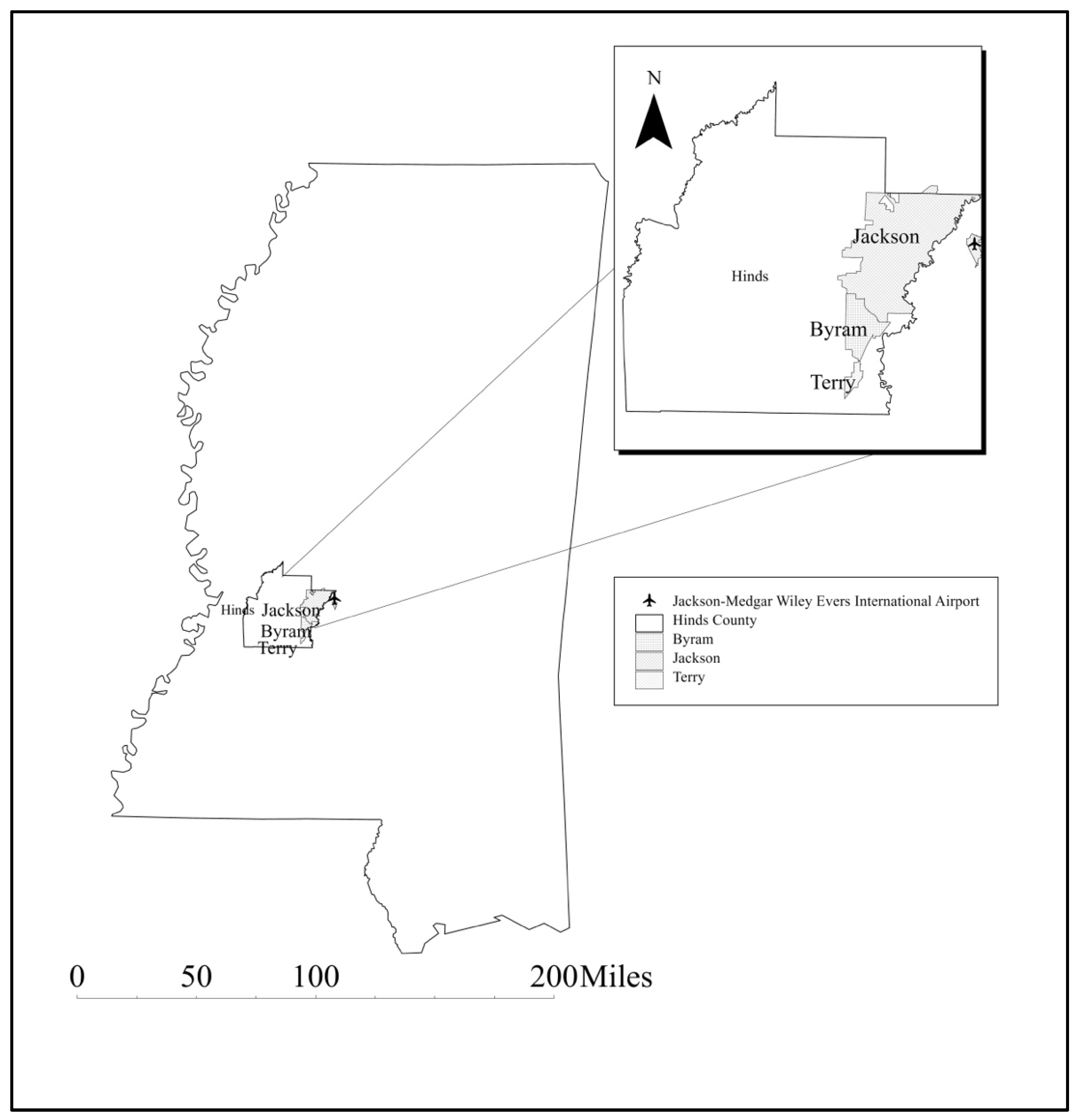
Figure 1 shows a map of Hinds County, Mississippi, United States of America, highlighting the three cities.
2. Methodology
2.1. Inclusion Criteria
Residents living in households with vulnerable populations and businesses serving vulnerable populations were encouraged to participate. Households were eligible if they included at least one pregnant or nursing woman, a child aged five or younger, or an individual aged 65 or older. Businesses qualified if they were early education or daycare centers supporting children aged five years or younger, or retirement communities, including nursing homes, assisting residents aged 65 or older. All locations had to receive drinking water from Jxn Water (the City’s municipality).
2.2. Participant Recruitment & Enrollment
Jackson metropolitan residents were invited to sign up for in-home or in-business water quality testing through newspaper advertisements (Jackson Advocate) and radio broadcasts (90.1 FM and 103.45 FM) during May 2024. The Jackson Advocate (a historical Black-owned newspaper) ran advertisements from 23 May 2024 to 5 June 2024, and featured a front-page news story about the study on 31 May 2024. The principal investigator also participated in talk-radio broadcasts on 19 May 2024 and 22 May 2024 to encourage participation.
Traditional methods, such as neighborhood canvassing and distributing flyers at coffee shops and libraries, were also employed. Residents could also express interest via a 24/7 phone line set up by Yale University’s Central IT Department. Further, given the significant role of religion in Mississippi, particularly within communities of color, church-based recruitment was also conducted. The principal investigator spoke at three churches across the metro area on 12 May 2024, 19 May 2024, and 26 May 2024.
Support from local leaders further bolstered recruitment efforts. Jackson Ward 4 Councilman Brian Grizzell helped identify churches and contacts. At the same time, Central District Public Service Commissioner De’Keither Stamps endorsed the study through a support letter and featured the principal investigator on his weekly podcast.
After recruitment ended on June 5th, all eligible participants were organized into a spreadsheet by geographic cluster (Jackson Wards 1–7, Byram, and Terry), de-identified, and selected through systematic random sampling using the RAND function in Microsoft Excel 365 [
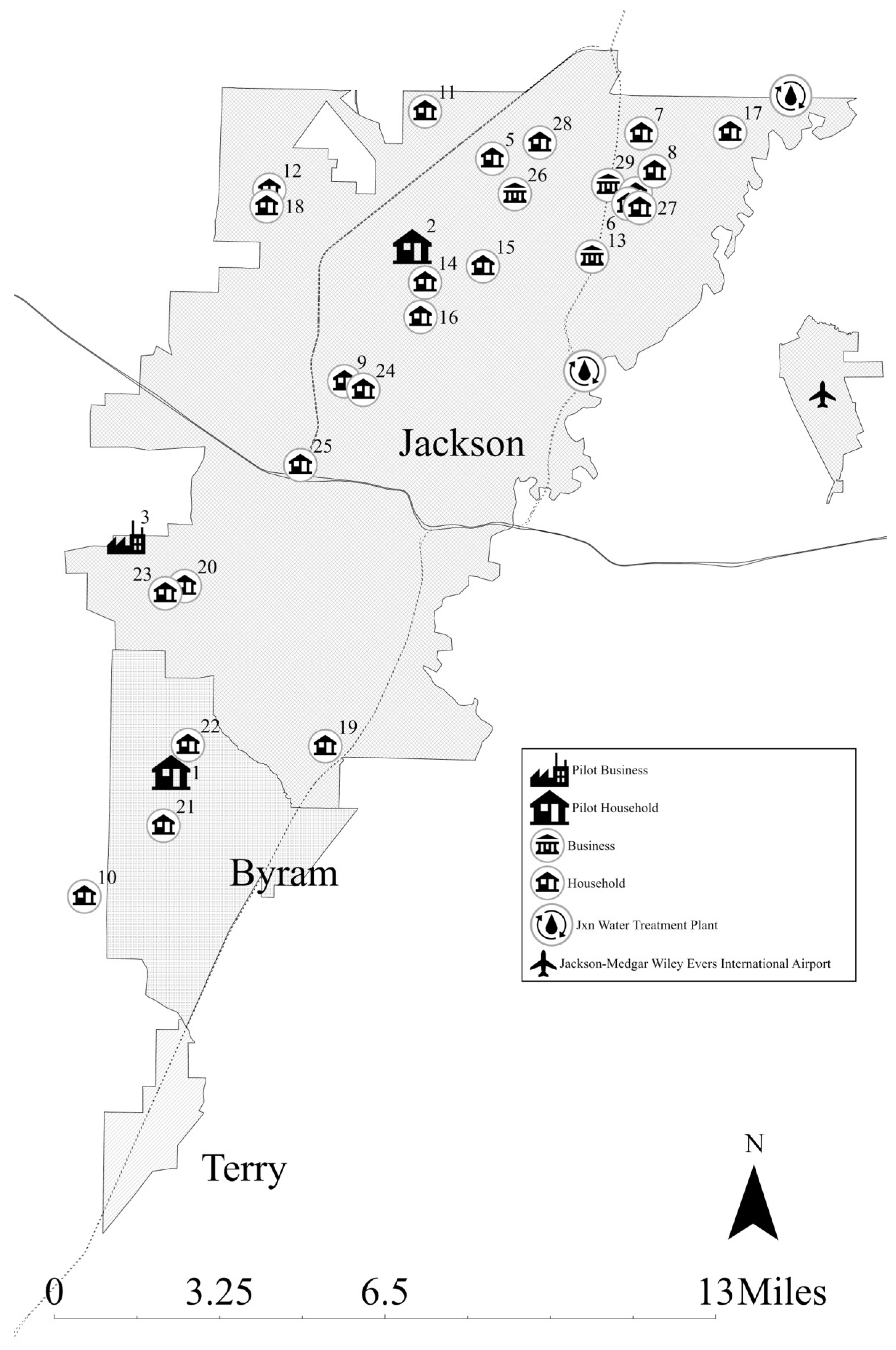
46]. A total of 29 participants were selected—26 households and three businesses. Participant addresses were geocoded into geographic coordinates and mapped using ArcGIS Pro Version 3.4 [
47]. We conducted a series of tabular and spatial joins to assign participants to the
Jxn Water service area and Jackson wards, enabling the creation of a sampling schedule.
Figure 2 depicts sampling locations in the study across Jackson, Byram, and Terry, MS.
Enrolled participants received a confirmation email with scheduling details and an overview of what to expect on sampling day. Each evening, participants were contacted by phone to confirm their appointment for the next business day and reminded not to use their water for six consecutive hours prior to sampling to comply with EPA tap sampling protocol [
48].
2.3. Parameter Selection
The water sampling protocol and parameters to be tested were informed by two Flint, Michigan studies [
49,
50]. Pieper et al.’s 2017 [
49] study examined lead and iron concentrations at a home that had been condemned by the City of Flint after increasingly toxic water lead levels were found across three months in 2015 (during the City’s mandated LCR sampling procedure). Deeming it the “ground zero home,” they found that indoor and outdoor lead service lines, both made of galvanized iron (composed of zinc, lead, and cadmium), were contributing to lead levels in the “ground zero home’s” water supply. Moreover, Pieper et al.’s 2018 [
50] study took a longitudinal approach of examining household water lead levels over the entire duration of the Flint Water Crisis (August 2015–August 2017) and used a community-based participatory research protocol. As members of the Virginia Polytechnic Institute and State University research team that supplied home water testing kits to Flint residents, 156 households participated in four waves of water quality research. During that study, the team quantified lead, iron, and phosphate (an indicator of corrosion control in the distribution system) levels.
Additionally, the selection of parameters was guided by the existing literature. Studies on chloride-to-sulfate mass ratios [(CSMR) a unitless measure of corrosion in service lines and premise plumbing that examines chloride and sulfate concentrations] [
40] and its fluctuation with treatment techniques [
38], and presence of corroded solder [
34,
37,
39] highlighted its importance in understanding potential corrosivity of Jackson’s water supply and hotspots of corroded distribution pipes or service lines. CSMR is measured on a scale between zero and one. A low CSMR (<0.2) indicates low corrosion potential, while a moderate CSMR (0.2–0.5) suggests increasing risk [
40]. Ratios above 0.5 are considered moderate to high and indicate greater lead-leaching potential. CSMR typically is measured by chloride ion concentrations, but for this study, total chlorine is used in lieu.
Zinc (Zn) was also selected because it is used as a corrosion inhibitor when combined with other metals to make alloys. Zinc often ends up in public water supply due to corrosion of galvanized steel or galvanized iron pipes, because it is used as a coating agent to prohibit corrosion of iron or steel [
35]. In both cases, zinc is easily mobilized in water supplies because it reacts with corrosive water (high dissolved solids, low pH) [
35]. Similarly, copper (Cu) is leached into the public water supply after being released from premise plumbing brass fittings [
31,
34,
51]. Total Dissolved Solids (TDS), pH, and temperature were selected due to their nature to promote corrosion of metals in public water supplies [
52].
2.4. Water Sample Collection
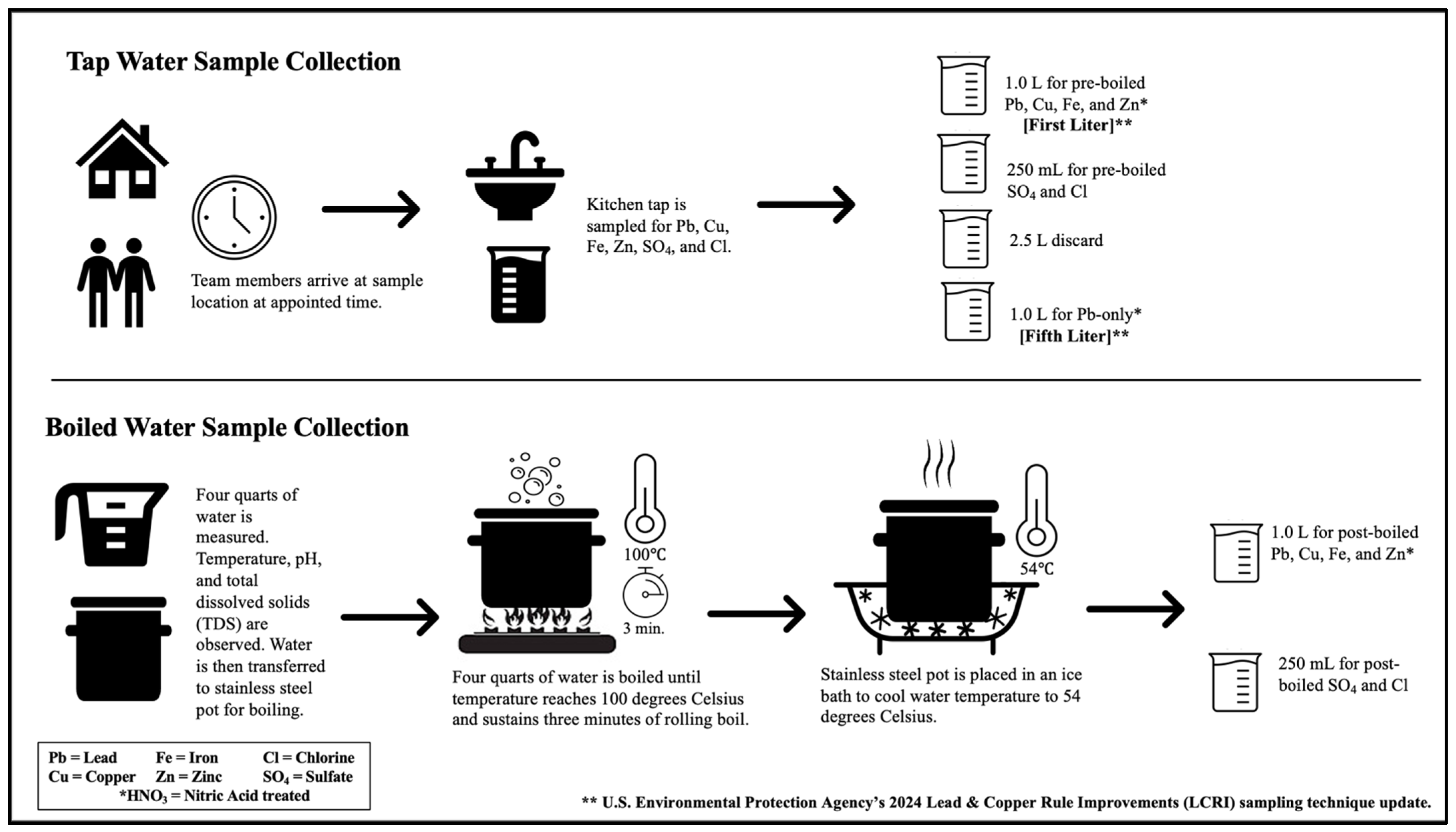
According to the EPA, for a CWS of Jackson’s size (with more than 100,000 service connections), at least 60 samples must be collected to determine compliance with tap testing protocols, unless otherwise specified in a formal agreement between federal and state agencies. Jackson’s water supply must adhere to the 60 sampling locations, but due to budget constraints, only 29 locations were sampled. Additionally, EPA published an updated tap sampling technique for the LCR in 2024. The changes outlined in the new legislation mandate that the first and fifth liters of water be collected to detect the lead level in the water supply accurately. Due to this update, the sampling protocol for this study was augmented to reflect these changes.
Water sampling was conducted for 11 days between 11 June 2024 and 25 June 2024, across two research teams. Sampling occurred only during weekdays (Monday through Friday) between 6:00 a.m. and 4:30 p.m. Ten analytes were assessed as indicators of water quality: lead (Pb), copper (Cu), iron (Fe), zinc (Zn), chlorine (Cl), sulfate (SO4), pH, total dissolved solids (TDS), temperature, and chlorine-to-sulfate mass ratio (CSMR).
According to EPA’s Environmental Sampling and Analytical Methods Program [
53], the kitchen tap water was collected in five vials at each location. The first vial (or the first liter/first draw) was a plastic container preserved with nitric acid, obtained for metal quantification (including Pb, Cu, Fe, and Zn). The second vial, a plastic container with no preservative, was used to collect a pint of water for chlorine and sulfate quantification. Two and a half liters (signifying the third and fourth liters) were collected in a blank plastic liter bottle and discarded. The third vial, a 1-L plastic container preserved with nitric acid, was obtained to measure lead levels only (the proposed change to the LCR tap sampling protocol). The last two vials (fourth and fifth)—measuring Pb, Cu, Zn, Fe, chlorine, and sulfate—were collected after the water was boiled. After each vial was collected, the tap was turned off to ensure accurate measurement. Only cold tap water was collected because hot water promotes lead leaching [
54,
55,
56].
2.5. Boiled Water Samples
After collecting the five liters for pre-boil samples, four more quarts of water were obtained from the kitchen sink and collected in a five-quart pitcher for boiling. The amount of water to boil was derived from dietary guidelines from the U.S. Department of Agriculture under the MyPlate Initiative [
57]. Guidelines for whole grains (e.g., pasta or rice) and vegetables were used, as they require the use of boiled water in their preparation. Calculation for the total amount of water to be boiled was averaged across the two food components: four ounces (or 0.5 cups) of whole grains per person equals 16 ounces for a family of four (about one to two quarts of water) and eight to 16 ounces (or one to two cups) of vegetables per person equals 32–64 ounces for a family of four (or about four to six quarts of water) [
58].
Before boiling, temperature, pH, and TDS were measured using an apparatus by JulyPanny [
59]. The tool was submerged no more than one inch below the water’s surface for the measurements. The water was then poured into a 5-quart stainless steel pot (without a lid) and placed on the stove’s largest burner, heated using the highest heat setting. The same pot and pitcher were used at each location to ensure uniformity of measurements, and no residuals from household or business cleaning products were introduced. The pot and pitcher were both cleaned with deionized water prior to sample collection and at the end of sample collection.
Using a kitchen thermometer, the boiling water was monitored until it reached 100 °C (212 °F). The temperature was measured at the center of the pot, no more than one inch below the surface. After the water reached boiling point, a timer was started to measure three minutes at a consistent rolling boil per CDC guidelines [
19]. The pot with the boiled water was then placed in an ice bath. To create the ice bath, a two- to three-inch layer of ice cubes covered the bottom of a large aluminum foil pan (30 cm × 40 cm × 8 cm).
After the pot was placed on top of the layer of ice cubes, more ice cubes were placed in the tray surrounding the pot to accelerate the cooling process. Cold tap water was then added until the ice was submerged. Also measured from the center of the pot, no more than one inch below the water surface, the water was cooled until it reached 54 °C or 130 °F—a temperature that reduces the risk of scalding [
60]. Once cooled, the water was poured into the pitcher to fill the fourth and fifth vials. The fourth vial was obtained for metal quantification (Pb, Cu, Fe, and Zn) after boiling, and the fifth vial was obtained for post-boil quantification of chlorine and sulfate.
Table 1 summarizes the water quality parameters examined in this study, and
Figure 3 illustrates the full methodology.
2.6. Water Sample Analysis
After collection, all samples were immediately stored in coolers, iced, and delivered daily to Waypoint Analytical Laboratory (WAL) in Ridgeland, Mississippi, then transported to their National Environmental Laboratory Accreditation Program (NELAP) laboratory, in Memphis, Tennessee for analysis.
Table 2 and
Table 3 highlight the water quality parameters, their test methodology, and the EPA’s MCL, respectively.
2.7. Statistical Models
All statistical analyses were conducted using Minitab Statistical Software Version 22 [
61]. The analytic strategy proceeded in sequential stages, beginning with descriptive statistics to characterize sample distributions, followed by bivariate tests to identify significant associations, and culminating in multivariable modeling. Several water quality parameters exhibited substantial positive skew and heteroscedasticity. To address these issues, a Box–Cox transformation (λ ≈ 0, equivalent to a natural log transformation) was applied to stabilize variance and normalize distributions before conducting analysis.
Pearson correlation coefficients and Chi-square tests were used to examine associations between independent and dependent variables. These tests informed model selection by identifying variables with statistically significant or theoretically meaningful relationships. Parametric (paired t-test) and non-parametric (Wilcoxon signed-rank test) models were used to evaluate the impact of boiling on water quality, while multiple linear regression models were constructed to assess whether household composition (households with children versus those with elderly residents) was associated with differing exposure levels. In these models, continuous water quality variables (lead, copper, iron, zinc, chlorine, sulfate, pH, and TDS) served as dependent outcomes.
Household sociodemographic characteristics including education level, employment status, income, home location, and length of residence were also operationalized as predictors of water quality concentrations and examined using a multiple regression model.
3. Results
3.1. Participant Demographics
Twenty-six households and three businesses (n = 29) met the inclusion criteria and were selected for sampling. Study participants reflected the majority racial demographics of Jackson, Byram, and Terry, with 93% identifying as Black or African-American alone. Household income was collected in ranges (e.g., $0–$10,000). The average median household income for study participants fell between $40,000 and $49,999, with the majority of participants reporting fixed incomes, such as retiree salaries or social security payments, as their primary source of income. Based on the median income of participants, the poverty level in this sample was 34.6%, which is higher than that reported for the city of Jackson, Byram, Terry, the state of Mississippi, and the United States overall. Despite the poverty levels, 53% of participants reported holding a Bachelor’s degree or higher, while 46% held a high school diploma or reported some college or an Associate’s degree.
To contextualize participant characteristics,
Table 4 compares the Jackson Water Study (JWS) sample to local, state, and national demographics (Jackson, Byram, Terry, Mississippi, and the United States), including population size, race/ethnicity, education, income, age distribution, and poverty. City, state, and national data were obtained from the 2022 U.S. Census American Community Survey five-year estimates.
3.2. Water Quality Parameters
At each location, water samples were collected for lead (Pb), copper (Cu), iron (Fe), zinc (Zn), chlorine (Cl), sulfate (SO4), pH, and total dissolved solids (TDS). Samples were collected in both pre-boiled (under normal tap conditions) and post-boiled states. Additionally, water analysis results for the metals were provided in micrograms per liter (µg/L), so they were converted to milligrams per liter (mg/L) for consistency across results and comparison to EPA’s MCLs for each parameter.
- I.
Lead, Copper, Iron & Zinc
Due to the LCRI, lead was monitored at both the first (L1) and fifth (L5) liter. For first liter samples, low levels of lead were detected in 19 of 29 samples, with the remaining samples at the minimum reporting limit. From L1 to L5, there was an overall decrease in mean lead concentration from 0.00144 to 0.000742 mg/L. This pattern suggests that Liter 1 captures lead leached during stagnation in household plumbing, while Liter 5 reflects lower levels following flushing, indicating that portions of household plumbing or premise plumbing fixtures are likely sources of lead. From L5 to the boiled sample, mean lead concentration declined further from 0.000742 to 0.0005678 mg/L.
The median lead concentration across all samples was 0.0005, corresponding to the lowest detectable limit, which indicates that most homes had lead levels below quantifiable thresholds. Notably, the standard deviation for L1 (0.0019) was higher than for L5 and boiled samples, reflecting greater variability in first-draw lead concentrations and suggesting household-specific differences in plumbing materials or stagnation conditions. In contrast, boiled samples exhibited the least variation, likely because many measurements were at or near the detection limit. Overall, these findings suggest that lead release in the distribution system is more closely associated with stagnation in household plumbing and mechanical disturbances (e.g., flushing) than with broader, uniform water chemistry conditions.
Table 5 provides lead concentrations for each location.
For the other metals, iron was detected at low levels in 28 first-liter samples, and zinc was detected at low levels in 14 first-liter samples, with the remaining samples in compliance with applicable standards. Copper was consistently detected in all 29 samples and was the only metal without any below-detection results. All measured concentrations for copper, iron, and zinc remained below EPA maximum contaminant levels (MCLs), and many were at or near minimum detection limits.
- II.
Chlorine, Sulfate, & Chlorine-to-Sulfate Mass Ratio (CSMR)
Chlorine and sulfate were measured in all 29 samples. Chlorine was below the detection limit in five samples; in the remaining 24 locations, chlorine concentrations decreased after boiling, which is consistent with the volatilization of chlorine when heated. Sulfate showed no below-detection results, and post-boil sulfate concentrations were generally stable.
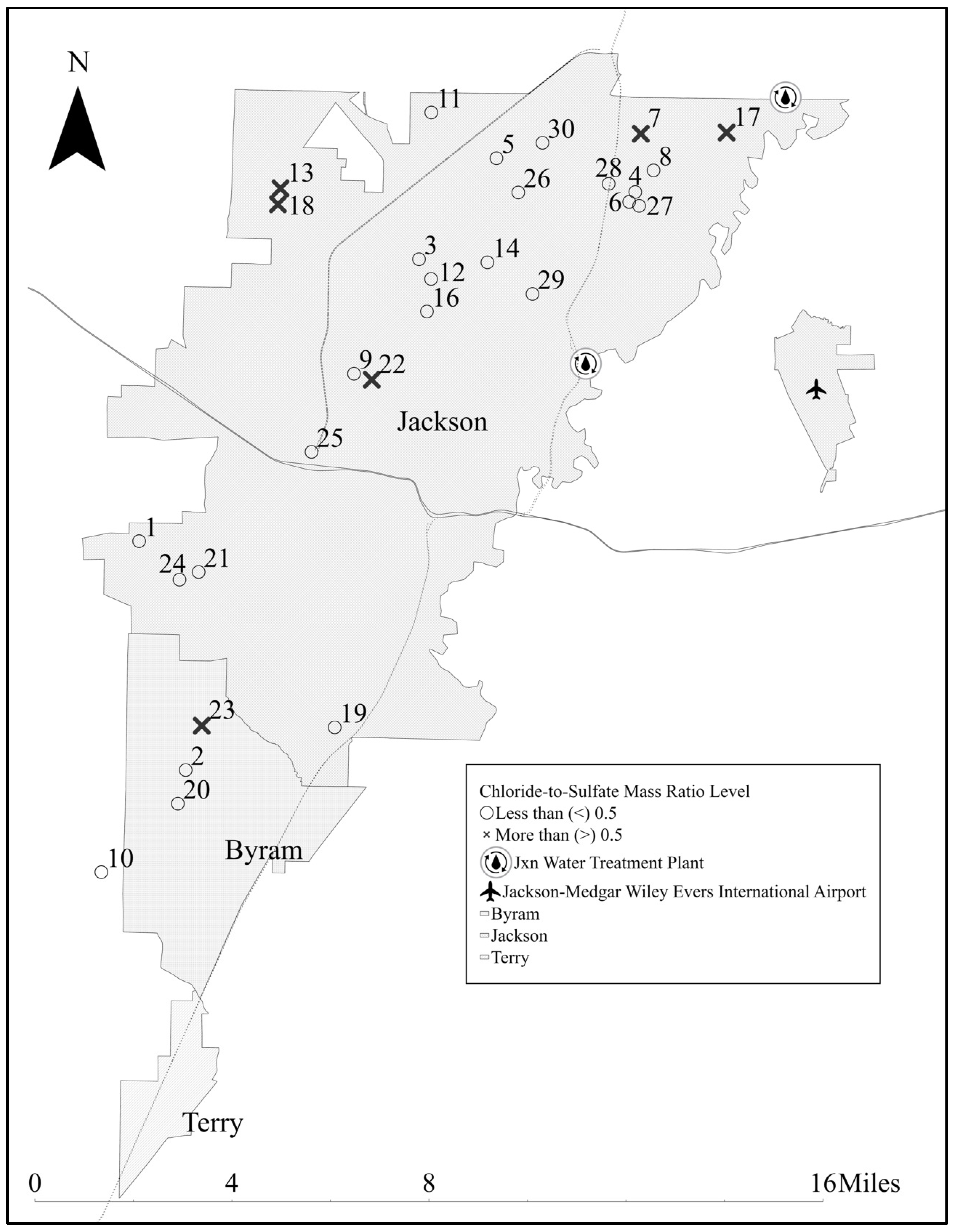
CSMR was calculated using the measured chlorine and sulfate concentrations. CSMR values exhibited substantial variability across the system, with seven locations having a corrosion factor greater than 0.5, indicating increased potential for galvanic corrosion at these sites. Spatially, the northern and northeastern portions of Jackson were more likely to exhibit lower CSMR values (<0.5), while higher CSMR values (>0.5) were observed primarily in the southern and southwestern portions of Jackson, including Byram. Clusters of high-CSMR points were observed in west Jackson and near the Byram boundary, potentially corresponding to areas with legacy infrastructure issues or known problem segments of the water distribution system.
Figure 4 shows the spatial distribution of CSMR values and highlights locations with CSMR above or below the 0.5 threshold.
- III.
pH, Total Dissolved Solids (TDS), and Temperature
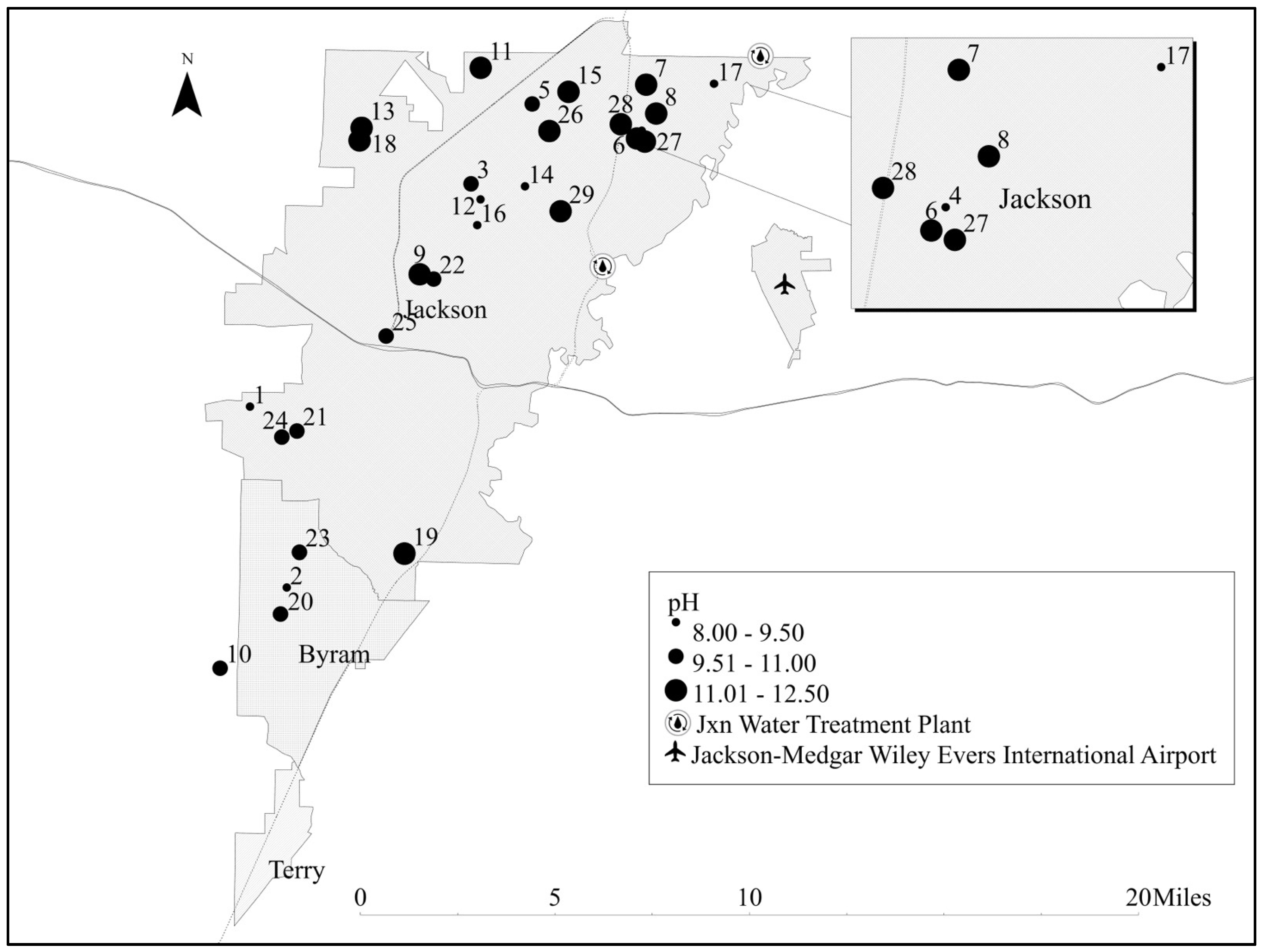
Field measurements were obtained for pH, TDS, and temperature, with temperature monitored at ambient, rolling boil, and post-boil stages. Across all 29 locations, pH levels exceeded the EPA secondary standard range, with values indicating high (9–10) to very high (>11) alkalinity. Some locations recorded pH values as high as 11.72, 12.03, and 12.21. Spatially, the highest pH values (11.01–12.5) were concentrated in central and northeastern Jackson, east of Interstate 55 and near Byram, while moderately elevated pH values (9.5–11.0) were more common in west Jackson, including clusters along Interstates 220 and 20.
Figure 5 illustrates the spatial distribution of pH values, and
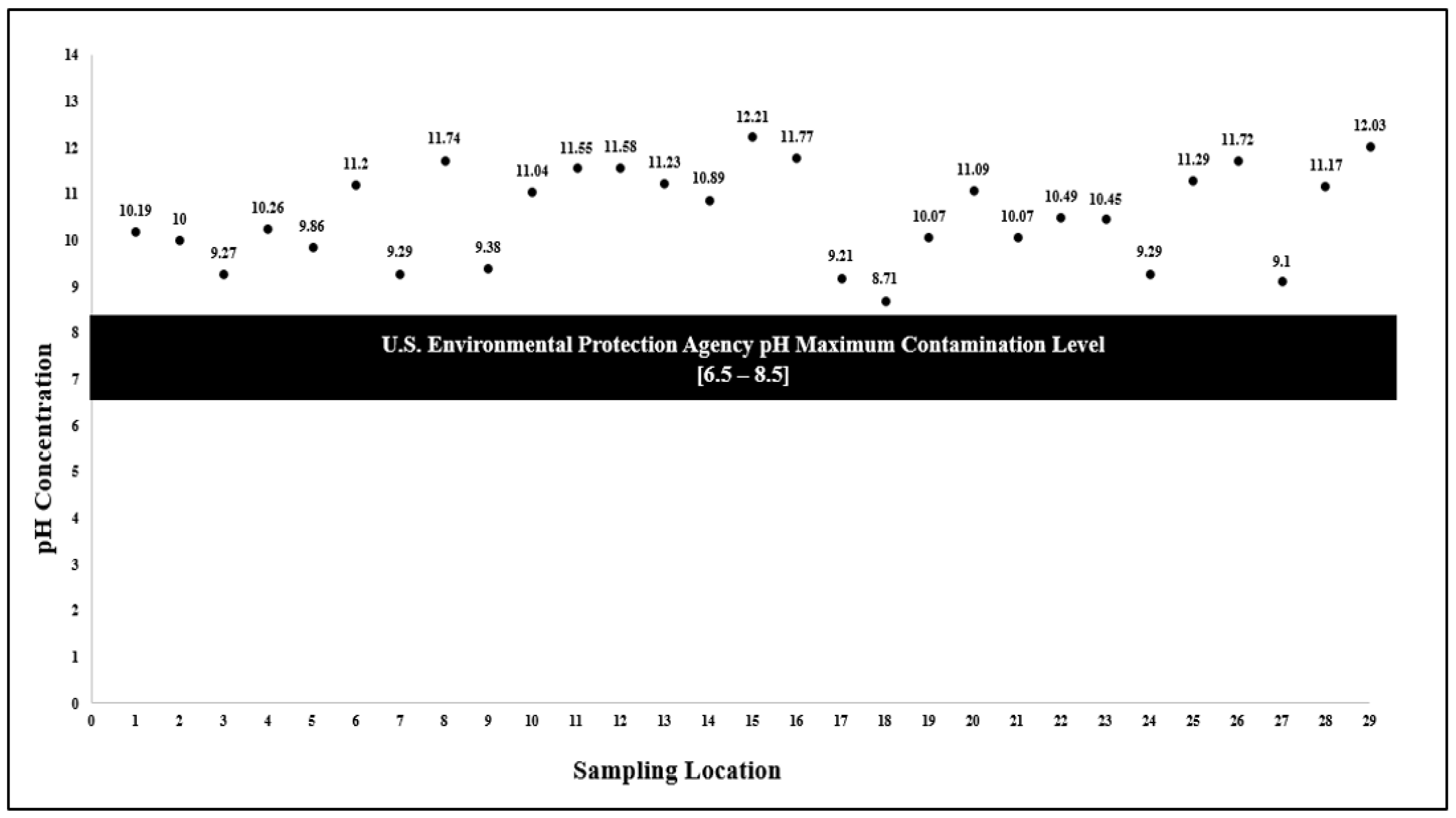
Figure 6 presents a scatterplot of pH levels for all sampling locations, highlighting exceedances relative to the EPA’s recommended range.
Supplemental Table S1 summarizes all the water quality parameter concentrations in the pre-boiled and post-boiled states for each sampling location, and
Supplemental Table S2 provides an overview of the mean, standard deviation, variance, skewness, and kurtosis for each parameter (
Tables S1 and S2).
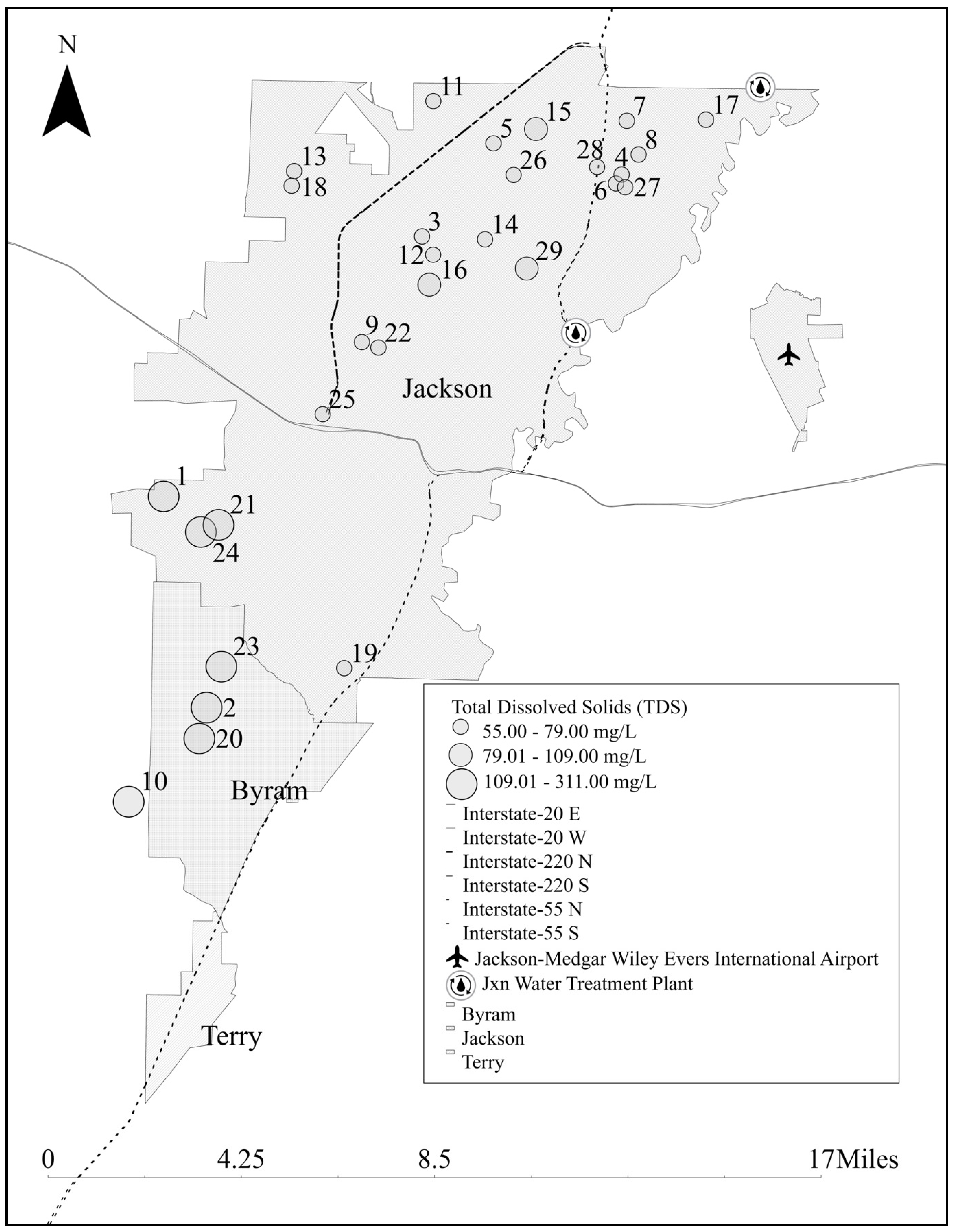
In terms of TDS, although TDS concentrations complied with the EPA secondary standard of 500 mg/L, many locations had TDS levels between 150 and 300 mg/L, indicating appreciable dissolved mineral content. Spatial visualization revealed a distinct area of concern: the highest densities of elevated TDS values (up to 311 mg/L) were concentrated in southwest Jackson, Byram, and Terry. While these TDS levels are not acutely hazardous, prolonged exposure to higher TDS can affect taste, contribute to household pipe scaling, and may contribute to bioaccumulation-related long-term health concerns [
52,
63].
Figure 7 depicts the localized nature of elevated TDS concentrations across the study area.
Figure 6.
Scatterplot of pH values measured at each of the 29 sampling locations in the Jackson Water Study, plotted against the U.S. EPA recommended pH range for drinking water (6.5–8.5). All sampling locations exhibited pH values above the upper regulatory threshold, indicating system-wide elevation in alkalinity with potential implications for corrosion control performance and the solubility and mobility of metals within the distribution system [
64,
65,
66].
Figure 6.
Scatterplot of pH values measured at each of the 29 sampling locations in the Jackson Water Study, plotted against the U.S. EPA recommended pH range for drinking water (6.5–8.5). All sampling locations exhibited pH values above the upper regulatory threshold, indicating system-wide elevation in alkalinity with potential implications for corrosion control performance and the solubility and mobility of metals within the distribution system [
64,
65,
66].
Figure 7.
Spatial distribution of total dissolved solids (TDS) across the Jackson metropolitan area, with circle size indicating magnitude. TDS levels varied substantially, with elevated values concentrated in the southern and southwestern portions of the service area. This spatial pattern suggests localized differences in water chemistry.
Figure 7.
Spatial distribution of total dissolved solids (TDS) across the Jackson metropolitan area, with circle size indicating magnitude. TDS levels varied substantially, with elevated values concentrated in the southern and southwestern portions of the service area. This spatial pattern suggests localized differences in water chemistry.
- IV.
Combined Water Quality Parameters (pH, TDS, & CSMR)
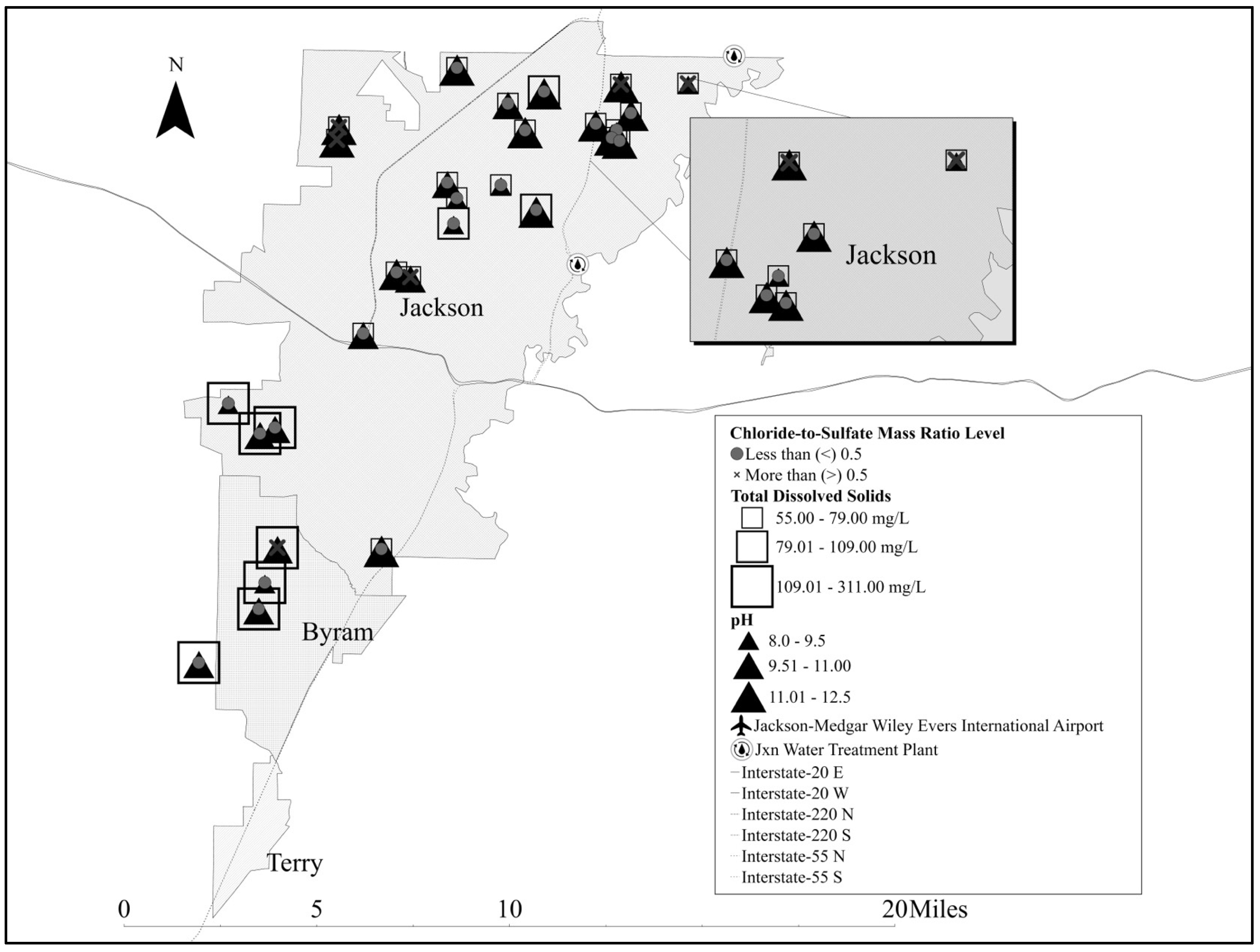
When pH, CSMR, and TDS are evaluated together, distinct spatial patterns emerge. Elevated pH and elevated CSMR values are distributed across much of the service area, reflecting a system-wide influence of treatment and overall water chemistry. In contrast, higher TDS concentrations are more concentrated in the southern and southwestern parts of the network.
Figure 8 combines pH, TDS, and CSMR values at each sampling location and demonstrates regions with higher TDS often overlap with zones of elevated CSMR, while high pH is more broadly distributed. These conditions are critical in shaping corrosion potential and metal release and have important implications for corrosion control and water treatment strategies tailored to different areas of the distribution network.
3.3. Statistical Analysis
Due to the presence of outliers in some water quality parameter concentrations, a Box–Cox transformation (natural log transformation) was applied to mitigate heteroskedasticity and skewness. Both parametric (paired t-test, linear regression) and non-parametric (Wilcoxon signed-rank) tests were performed on the transformed data, given that means are more sensitive to outliers.
- I.
Pre-boiled samples versus Post-boiled samples
To determine if there was a difference in water quality parameters between pre-boiled and post-boiled water, paired t-tests and Wilcoxon signed-rank tests were performed for lead, copper, iron, zinc, chlorine, sulfate, and CSMR values. Total dissolved solids and pH data were not collected for post-boiled measurements and were therefore excluded from these models.
For lead, both statistical tests showed that boiling significantly reduces its concentration, consistent with the small but measurable decrease in mean levels. However, residual lead remained detectable in many samples, underscoring that boiling does not fully remove lead from tap water. The paired t-test for copper suggested a statistically significant reduction, while the non-parametric test did not, indicating that the effect of boiling on copper is less certain and may be influenced by outliers or the small sample size. In the case of iron, iron displayed the least variance among the tested metals, and boiling did not significantly reduce concentrations. Zinc, on the other hand, significantly reduced concentration after boiling—confirmed by both statistical tests.
Chlorine showed a statistically significant decline in both tests, reflecting a substantial loss of free chlorine during boiling. Sulfate concentrations, however, reflected no meaningful change in the paired t-test, while the Wilcoxon signed-rank test indicated a small but statistically significant increase. These results are likely due to concentration effects or measurement variability rather than chemical transformation.
Finally, CSMR was significantly reduced by boiling in both parametric and non-parametric analyses, consistent with the decrease of chlorine concentrations relative to sulfate.
Table 6 summarizes pre- and post-boil concentrations, variances, and the results of both tests for each parameter.
- II.
Linear Regression
Given the known health risks of lead and other water contaminants on vulnerable populations, households with children and adults aged 65 years or older were enrolled to evaluate potential differences in exposure. Multiple linear regression models were used to examine whether the presence of children or elderly individuals in a household was associated with differences in water parameter concentrations.
The models revealed that households with elderly residents had significantly higher sulfate concentrations, with a coefficient of 0.875, a p-value of 0.030, and a 95% confidence interval of (0.093, 1.658). This suggests a meaningful association between households with elderly occupants and elevated sulfate levels, potentially reflecting differences in plumbing, water use patterns, or geographic location. Elevated sulfate in drinking water can arise from treatment processes, pipe corrosion, or environmental sources. This is particularly important given that high sulfate concentrations can have laxative effects and may exacerbate dehydration or digestive issues.
Similarly, households with children exhibited significantly higher TDS concentrations, with a coefficient of 0.558, a
p-value of 0.045, and a 95% confidence interval of (0.012, 1.104). TDS includes inorganic salts and small amounts of organic matter, which may indicate degradation of plumbing materials or localized or area-specific water chemistry. In both models, positive coefficients suggest that the presence of children or elderly occupants is associated with higher concentrations of the respective parameters.
Table 7 summarizes regression coefficients, standard errors,
p-values, and confidence intervals for lead, copper, iron, zinc, chlorine, sulfate, pH, TDS, and CSMR in households with children and households with elderly residents.
- III.
Multiple Regression
Multiple regression analyses were conducted using sociodemographic variables obtained from household surveys (education level, employment status, household income, location of home, and length of residency in home and City) as predictors of water quality concentrations for the 26 households in the study. In the full model, TDS emerged as the only water quality parameter that demonstrated a relationship with the sociodemographic predictors. After the model was restricted to TDS and the sociodemographic variables,
location of the home (north versus south of Interstate 20) was a statistically significant predictor, with a coefficient of 0.784, a
p-value of 0.004, and a 95% confidence interval of (0.286, 1.282). When non-informative sociodemographic variables were removed, the final model was refit with location as the sole predictor; location remained significant (coefficient 0.775,
p-value 0.001, and CI of [0.357, 1.193]), and model performance improved (adjusted R
2 = 35.31%). These results suggest that household-level sociodemographic factors have limited influence on TDS, but indicate that households south of Interstate 20 consistently experience higher TDS concentrations, which was also observed in the spatial patterns in
Figure 7. Together, these findings show that spatial position within the distribution network could influence exposure to higher TDS concentrations.
Table 8 summarizes the full and reduced models for TDS and sociodemographic variables.
4. Discussion
Annually, the United States produces roughly 270,000 metric tons of lead for uses ranging from car batteries and metal alloys to food additives and drinking water service line materials [
67]. As Jacobs and Brown [
68] (p. 235) emphasize, lead remains a “multimedia pollutant” that can be encountered through drinking water, food, consumer products, hobby activities, and other pathways. Within public water systems, especially those with lead service lines, lead contamination arises primarily from corrosion and leaching of legacy plumbing materials. The 1991 Lead and Copper Rule was designed to mitigate these risks by setting action levels for lead (0.015 mg/L) and copper (1.3 mg/L) and requiring corrective actions when exceedances occur. Today, between nine and twelve million lead service lines remain in service across U.S. community water systems, serving an estimated 22 million people daily [
69]. As LaNier [
70] (p. 173) observed, community water supply reflects the “political, social, and economic development of this country” and the degree to which public officials are attentive to public health. More recent work by Teodoro et al. [
71] (p. 25) shows that contamination episodes are most common in places that are “both poor and nonwhite”, underscoring the racialized and classed distribution of water-related harm.
This study examined water quality conditions across the Jackson, Mississippi, metropolitan area following the 2022 distribution system collapse, repeated noncompliance with the LCR, and numerous boil-water notices. Overall, the findings indicate that none of the studied metals (Pb, Cu, Fe, Zn) or the primary contaminants chlorine and sulfate exceeded U.S. EPA MCLs at the time of sampling. However, several parameters approached or exceeded secondary drinking water standards and revealed meaningful spatial and distributional patterns. Lead concentrations were generally at or near laboratory reporting limits, but localized elevation in first-draw or flushed samples suggests that household plumbing remains an important source of risk [
72]. Combined with the presence of lead service lines elsewhere in the system, these results highlight the need for ongoing lead service line replacement and targeted monitoring, especially in older housing stock and vulnerable populations, even when system-wide averages appear compliant.
This study also documented elevated TDS concentrations, though still below the EPA secondary standard of 500 mg/L. Many locations had TDS levels between 150 and 300 mg/L, a range at which taste and odor complaints commonly increase [
52,
73]. These values likely reflect a combination of groundwater intrusion, distance from treatment facilities, and interactions with aging pipes, particularly in South Jackson, Byram, and Terry—areas historically served by the J.H. Fewell Water Treatment Plant. Following infrastructure failures at J.H. Fewell, all drinking water is treated and distributed from the O.B. Curtis plant, which could be increasing hydraulic complexity and residence times in some downstream areas [
16,
74,
75]. Elevated TDS at the observed levels is not acutely toxic, but it can signal broader water quality issues, including the presence of metals, salts, and organic contaminants [
64]. Chronic exposure, especially among young children and older adults with preexisting health conditions, may exacerbate concerns related to hydration, kidney function, and the cumulative burden of contaminants [
76,
77].
Regression analyses reinforced the importance of spatial location within the distribution network. In the multiple regression models, some household-level socioeconomic indicators (i.e., income, education, employment, and length of residence) were not significant predictors of TDS. Instead, the location of the home emerged as the key determinant: residents living south of Interstate 20 consistently experienced higher TDS values. The reduced model, which retained only location as a predictor, explained a substantial proportion of the variation in TDS and aligned with spatial mapping that showed higher TDS in southwest Jackson, Byram, and Terry. These findings suggest that place-based infrastructure conditions, rather than individual household demographics, contribute to variability in dissolved mineral content. Nonetheless, because these higher-TDS areas are also socioeconomically marginalized, the burden of poorer aesthetic quality and potential long-term health risks still falls disproportionately on Black, lower-income communities.
Corrosion-related indicators further underscore the intersection of water chemistry and infrastructure aging. Seven sampling locations exhibited CSMRs above the 0.5 threshold, indicating that at least 24% of study participants may be consuming water with conditions favorable to galvanic corrosion. Mapping revealed that lower CSMR values tended to occur closer to the O.B. Curtis plant, with higher CSMR values emerging downstream, particularly in Byram and the southwestern portions of the service area. This pattern suggests that treatment may effectively control corrosivity at the plant, but that conditions change as water travels through older or more complex parts of the distribution system. While CSMR is not currently a regulated parameter, the present study supports its use as a secondary indicator of corrosion potential and a complementary tool for identifying locations where lead monitoring and infrastructure remediation should be prioritized.
The patterns observed for pH were equally notable. Every sampled location exceeded the EPA’s secondary standard range (6.5–8.5), with many pH readings above 11. Such high alkalinity can alter corrosion dynamics, potentially increasing metal leaching under certain conditions, undermining chlorine disinfection, and posing risks to sensitive individuals [
38,
39,
52]. The widespread, consistently elevated pH values suggest system-wide overcorrection in corrosion control. In communication with the court-appointed manager of Jackson’s water system, the research team learned that the high pH resulted from intensified corrosion control measures to address prior lead exceedances and from the consolidation of production at the O.B. Curtis plant following infrastructure collapse at J.H. Fewell. These adjustments may have reduced lead solubility under certain conditions, but when high pH coincides with elevated CSMR and TDS, the combined effect can still favor corrosion, scale formation, and plumbing damage [
34,
78].
Notwithstanding these notable results, a few limitations are disclosed. First, the boiling protocol used here was designed to reflect real-world practices in households and businesses responding to boil-water notices. However, these results must be interpreted in light of varying kitchen environments across the study sites (i.e., gas versus electric ranges, ventilation, or recent plumbing upgrades), which may influence heating dynamics, sedimentation of metals, and volatilization rates of gases. These variables were not explicitly modeled and may confound estimates of boiling effects. Second, the demographic composition of the study participants primarily reflects the impacts on Black households and businesses. Despite efforts to recruit a socioeconomically, racially, and ethnically diverse participant pool, resource constraints limited outreach via major media outlets (e.g., prime-time television, the Clarion Ledger). Attempts to partner with additional churches and businesses yielded limited success. While this focus is analytically valuable for understanding environmental inequities, it also limits generalizability to more racially or socioeconomically mixed populations. Third, the sample size is reflective of a pilot study (n = 29), and no statistical power calculation was performed, which may have reduced the ability to detect some associations. Fourth, this study did not explicitly incorporate environmental or infrastructure variables such as pipe materials, proximity to water mains, or precise building age into the regression models. These unmeasured factors could be important confounders and may explain some of the observed spatial variation in TDS, CSMR, and metals. Fifth, this study was conducted in the context of a single, large community water system serving more than 100,000 connections. Hence, findings may not be directly generalizable to smaller systems, rural utilities, or systems with different treatment practices and infrastructure histories.
Future studies should explore more controlled laboratory experiments to replicate boiling conditions and better isolate the effects of heating, evaporation, and particulate sedimentation. Integrating infrastructure data (e.g., service line material, pipe diameter, repair history) and more granular spatial modeling would also improve understanding of how distribution system characteristics shape household exposures.
5. Conclusions
Research has well-established that communities of color face disproportionate exposure to environmental hazards, including unsafe drinking water. The findings here align with this extensive research and highlight that longstanding inequities in public water infrastructure financing and regulatory oversight compound community impacts and exacerbate public health risks.
The results underscore the need for sustained water quality monitoring, long-term infrastructure investment, improved communication between public officials and residents, and offer actionable guidance for municipal and public health stakeholders. Spatial mapping of pH, TDS, and CSMR values also provides a basis for localized corrosion control, prioritization of pipe replacement programs, and community-specific health outreach. Finally, the results highlight that even when primary MCLs are not exceeded at a given sampling time, secondary standards, spatial patterns in TDS and CSMR, and persistently high pH levels can signal ongoing vulnerabilities in water quality and infrastructure. These findings challenge narrow interpretations of LCR compliance that focus on system-wide metrics rather than household-level exposures and cumulative risk in marginalized communities.
In this context, the Jackson Water Study offers critical insights into how regulatory noncompliance, infrastructural decay, and systemic racism intersect in the lived experience of a community in an active drinking water crisis. Policy efforts must prioritize lead service line replacement in historically marginalized communities; offer more flexible infrastructure financing options, and enhance transparency with the public regarding regulatory action. Ultimately, targeted and data-driven interventions remain essential for safeguarding public health and advancing environmental equity in affected communities, rather than episodic crisis response or punitive enforcement actions, they are critical to realize the promise of safe, equitable drinking water in Jackson and similarly situated communities around the world.




 ,
,