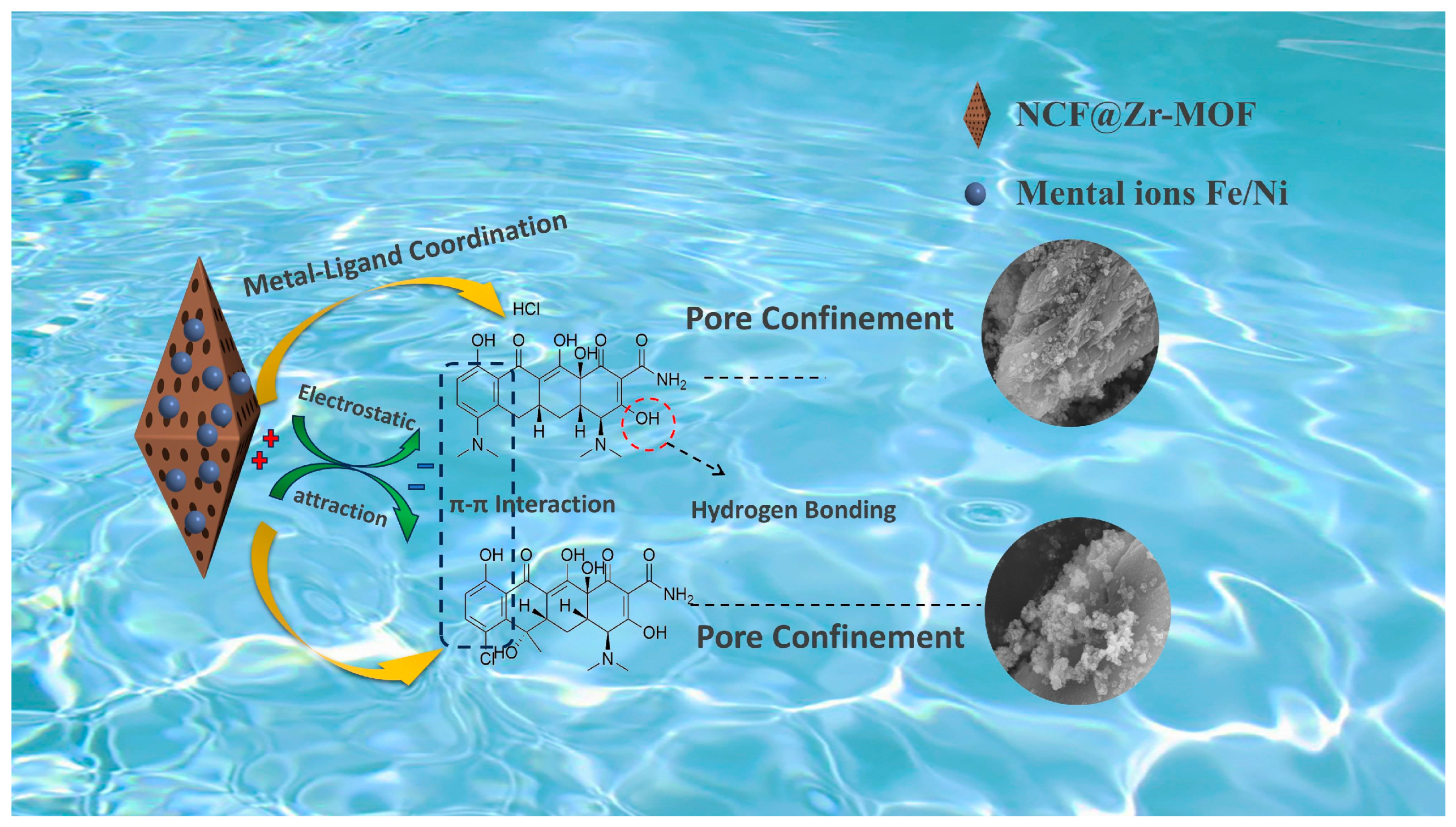
Article

Magnetic Metal–Organic Framework: An Innovative Nanocomposite Adsorbent for the Removal of Emerging Drug Contaminants from Water

1
Guangxi Key Laboratory of Environmental Pollution Control Theory and Technology, Guilin University of Technology, Guilin 541006, China
2
Key Laboratory of Agro-Forestry Environmental Processes and Ecological Regulation of Hainan Province, School of Environmental Science and Engineering, Hainan University, Haikou 570228, China
3
College of Earth Sciences, Guilin University of Technology, Guilin 541006, China
4
Department of Chemistry, College of Science, King Khalid University, Abha 62529, Saudi Arabia
*
Author to whom correspondence should be addressed.
Water 2026, 18(3), 321; https://doi.org/10.3390/w18030321
Submission received: 8 December 2025 / Revised: 15 January 2026 / Accepted: 23 January 2026 / Published: 28 January 2026

Abstract

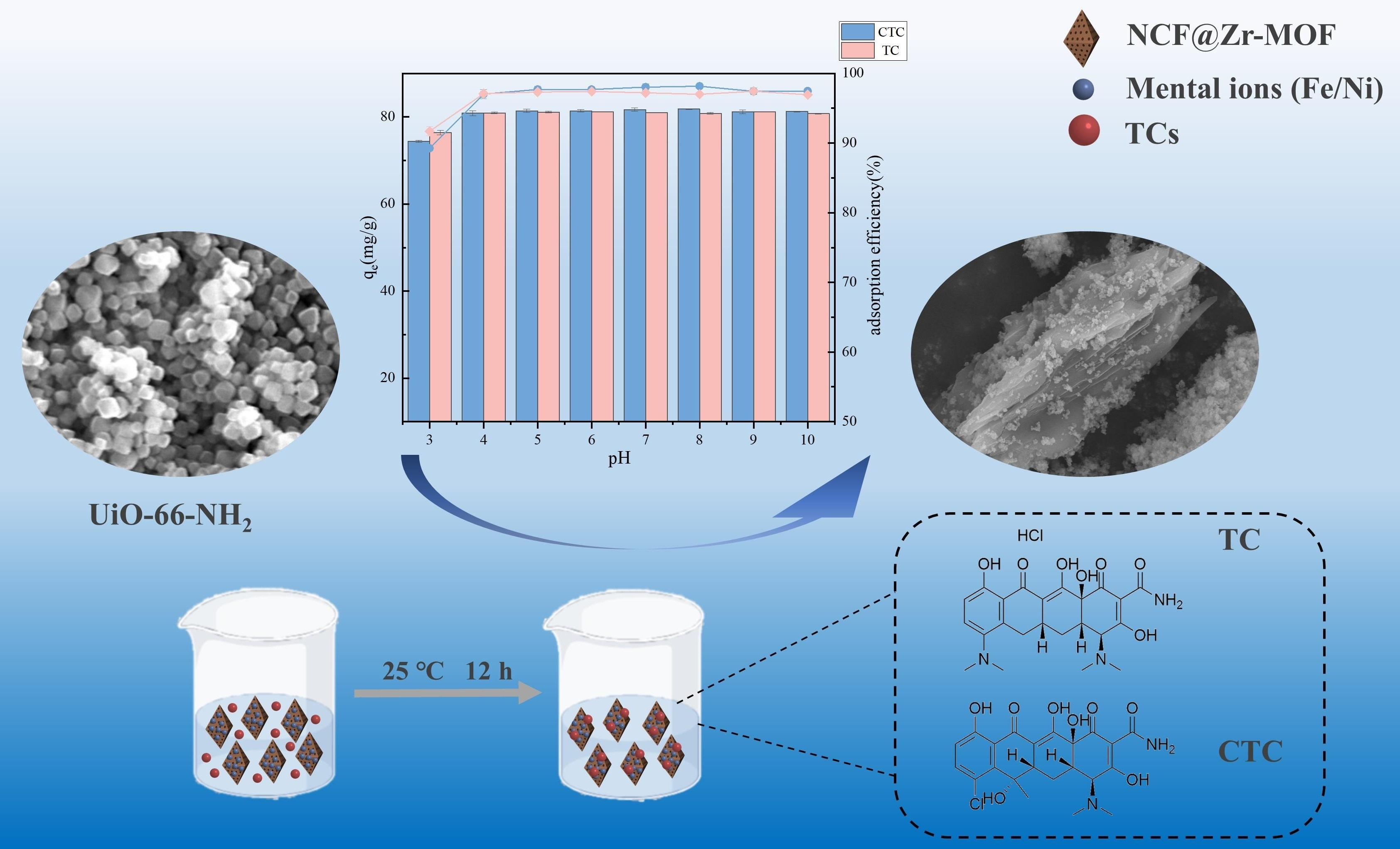
The widespread use of antibiotics has taken a heavy toll on the environment, which cannot be ignored. Tetracycline antibiotics (TCs), as representative pharmaceutical contaminants, have emerged as a growing environmental concern due to their persistence and potential ecological risks. This study utilized 1,3,5-benzenetricarboxylic acid (BTC) as a functionalizing reagent to synthesize magnetic nanoparticles NiFe2O4-COOH. These were then combined with Zr-MOF to create the magnetic adsorbent designated as NCF@Zr-MOF (where NCF represents carboxyl-functionalized nickel ferrite). Magnetic solid-phase extraction (MSPE) technology was employed to remove two representative tetracycline antibiotics, tetracycline (TC) and chlortetracycline (CTC) from the environment. The Langmuir model fitting revealed maximum adsorption reached 190.85 and 196.32 mg/g for TC and CTC, respectively, both of which conformed to the pseudo-second-order model during the adsorption process with spontaneous, heat-absorbing and entropy-increasing properties. Furthermore, following five cycles of adsorption and desorption, the removal rate for TCs was found to have decreased by 30%, yet the removal of CTCs remained at 95.32%. This adsorbent enables rapid separation via an external magnetic field. With its excellent stability and reusability, NCF@Zr-MOF shows great potential for removing antibiotics from water.

Graphical Abstract

1. Introduction

With the increasing detection of antibiotics in natural environments, antibiotic contamination has emerged as a critical global environmental issue. Among various antibiotic classes, tetracycline antibiotics (TCs) are extensively used for human disease treatment and as growth-promoting additives in animal husbandry [1]. Structurally, TCs can be categorized into three groups: natural tetracyclines such as tetracycline (TC), oxytetracycline (OTC), and chlortetracycline (CTC) produced via microbial fermentation, synthetic tetracyclines including doxycycline and minocycline; and semi-synthetic derivatives exemplified by tigecycline [2].
Due to their high chemical stability and resistance to biodegradation, less than 10% of administered TCs are metabolized by humans or animals, while approximately 40–90% are excreted as biologically active residues into aquatic and terrestrial environments [3]. These persistent residues maintain antibacterial activity and pose long-term ecological risks, including the induction of antibiotic resistance genes. Conventional municipal wastewater treatment plants are largely ineffective at completely removing TCs, leading to their continuous release into surface water and groundwater systems [4]. This limitation has driven extensive research into advanced treatment technologies, such as photocatalytic degradation, advanced oxidation processes, membrane separation, and biodegradation [5,6,7,8]. However, these methods often suffer from drawbacks including high energy consumption, membrane fouling, incomplete mineralization, or secondary pollutant generation, restricting their large-scale application.
In contrast, adsorption-based technologies have been widely recognized as a promising alternative for TCs removal due to their high efficiency, operational simplicity, pH adaptability, cost-effectiveness, and regeneration potential. In recent years, metal–organic frameworks (MOFs), composed of metal ions or clusters coordinated with organic ligands, have attracted significant attention as advanced adsorbents owing to their exceptionally high surface area, tunable pore structures, and abundant functional sites [9]. These features enable MOFs to effectively interact with tetracycline molecules through hydrogen bonding, electrostatic attraction, and π–π interactions. Nevertheless, most MOFs are typically synthesized as fine powders, which suffer from poor recoverability and potential secondary contamination when applied in aqueous environments, thereby limiting their practical implementation. To overcome these challenges, magnetic solid-phase extraction (MSPE) strategies have been introduced to integrate MOFs with magnetic nanoparticles, producing magnetically recoverable composite adsorbents [10].
In such systems, MOFs function as the primary adsorption matrix, while magnetic nanoparticles (e.g., Fe3O4) provide rapid solid–liquid separation under an external magnetic field. Numerous studies have demonstrated that magnetic MOF composites exhibit synergistically enhanced adsorption performance toward tetracycline antibiotics. For instance, Fe3O4-functionalized MIL-101(Fe)–chitosan composites achieved TC removal through combined π–π interactions, hydrogen bonding, and electrostatic effects [11], while HAP/MIL-101(Fe)/Fe3O4 ternary composites showed superior adsorption kinetics and capacity compared to individual components [12]. Similarly, Fe3O4@PDA-ZIF-8 exhibited high adsorption capacity and excellent reusability over multiple cycles [13].
Despite these advances, most reported magnetic MOF composites rely on physical encapsulation or weak interfacial interactions between the magnetic core and MOF shell, which may result in structural instability, component detachment, or performance deterioration during repeated adsorption–desorption cycles and hydraulic shear conditions [14]. Moreover, magnetic particles in many systems primarily serve as separation aids and contribute minimally to adsorption, leading to underutilization of the composite interface. Therefore, rational interfacial engineering that simultaneously enhances structural stability and adsorption functionality remains a critical challenge in the development of high-performance magnetic MOF adsorbents.
Surface functionalization of magnetic nanoparticles offers an effective strategy to address these limitations. In particular, carboxyl-functionalized surfaces can act as coordination anchors for Zr(IV)-based MOFs, whose secondary building units exhibit strong affinity toward carboxylate ligands [15,16,17,18]. Such coordination-driven heterogeneous nucleation enables the construction of robust core–shell architectures with strong chemical bonding (Zr–O–COO), significantly improving mechanical stability and resistance to regeneration-induced degradation [19]. Furthermore, carboxyl groups can serve as additional adsorption sites for tetracycline antibiotics, enhancing adsorption capacity through electrostatic interactions and hydrogen bonding [20].
Based on this, this study proposes an interface-enhancing strategy: carboxyl functionalization of magnetic NiFe2O4 using 1,3,5-benzenetricarboxylic acid (BTC). This design aims for dual optimization: (i) Enhancing application stability: The carboxyl group serves as a strong coordination site, forming robust chemical bonds (Zr-O-COO) with zirconium oxygen clusters in Zr-MOF to construct a solid core–shell structure. This structure withstands hydraulic shear and chemical regeneration shocks encountered in practical water treatment. (ii) Enhancing practical adsorption performance: The introduced -COOH group itself serves as an effective adsorption site for tetracycline. Electrostatic interactions and hydrogen bonding enhance capture capacity, generating synergistic effects between the magnetic core and MOF shell during adsorption. Using the novel carboxyl-functionalized nickel ferrite-loaded zirconium-based MOF magnetic composite (NCF@Zr-MOF), we systematically evaluated its performance in removing TC and CTC from water. This study aims to elucidate how interfacial functionalization design confers superior comprehensive practical performance to the material, providing new insights for developing efficient, stable, and easily recoverable antibiotic adsorbents.

2. Materials and Methods

2.1. Materials

All chemicals used in this study were of analytical reagent (AR, purity > 99%) grade and were used without further purification. Tetracycline (TC, C22H24N2O8, USP) and chlortetracycline (CTC, C22H23ClN2O8, USP) were stored refrigerated at 4 °C. Zirconium (IV) chloride (ZrCl4, AR), methanol (CH3OH, AR), N,N-dimethylformamide (DMF, C3H7NO, AR), glacial acetic acid (CH3COOH, AR), 1,3,5-benzenetricarboxylic acid (BTC, C9H6O6, AR), 2-aminoterephthalic acid (NH2-BDC, C8H7NO4, AR), sodium dodecylbenzene sulfonate (SDBS, C18H29NaO3S, AR), iron (III) chloride hexahydrate (FeCl3·6H2O, AR), nickel (II) chloride hexahydrate (NiCl2·6H2O, AR), sodium hydroxide (NaOH, AR), and hydrochloric acid (HCl, AR) were used. Above materials were all supplied by Shanghai Aladdin Biochemical Technology Co., Ltd. (Shanghai, China). The deionized water used in the experiment was prepared using the Milli-Q system from Merck Millipore, Germany (18.2 MΩ·cm at 25 °C).

2.2. Preparation of Magnetic NiFe2O4-COOH Nanoparticles

The preparation of NiFe2O4 is detailed in the Support Information (Text S1). To introduce carboxyl groups, 1 g of BTC and 1 g of NiFe2O4 were dispersed in 200 mL of ultrapure water and stirred in a water bath at 60 °C for 5 h. After the reaction, the product was collected by magnetic separation and washed 3 times with ultrapure water. Following drying, carboxyl-functionalized magnetic nanoparticles (denoted as NiFe2O4–COOH) were successfully obtained.

2.3. Preparation of NCF@Zr-MOF

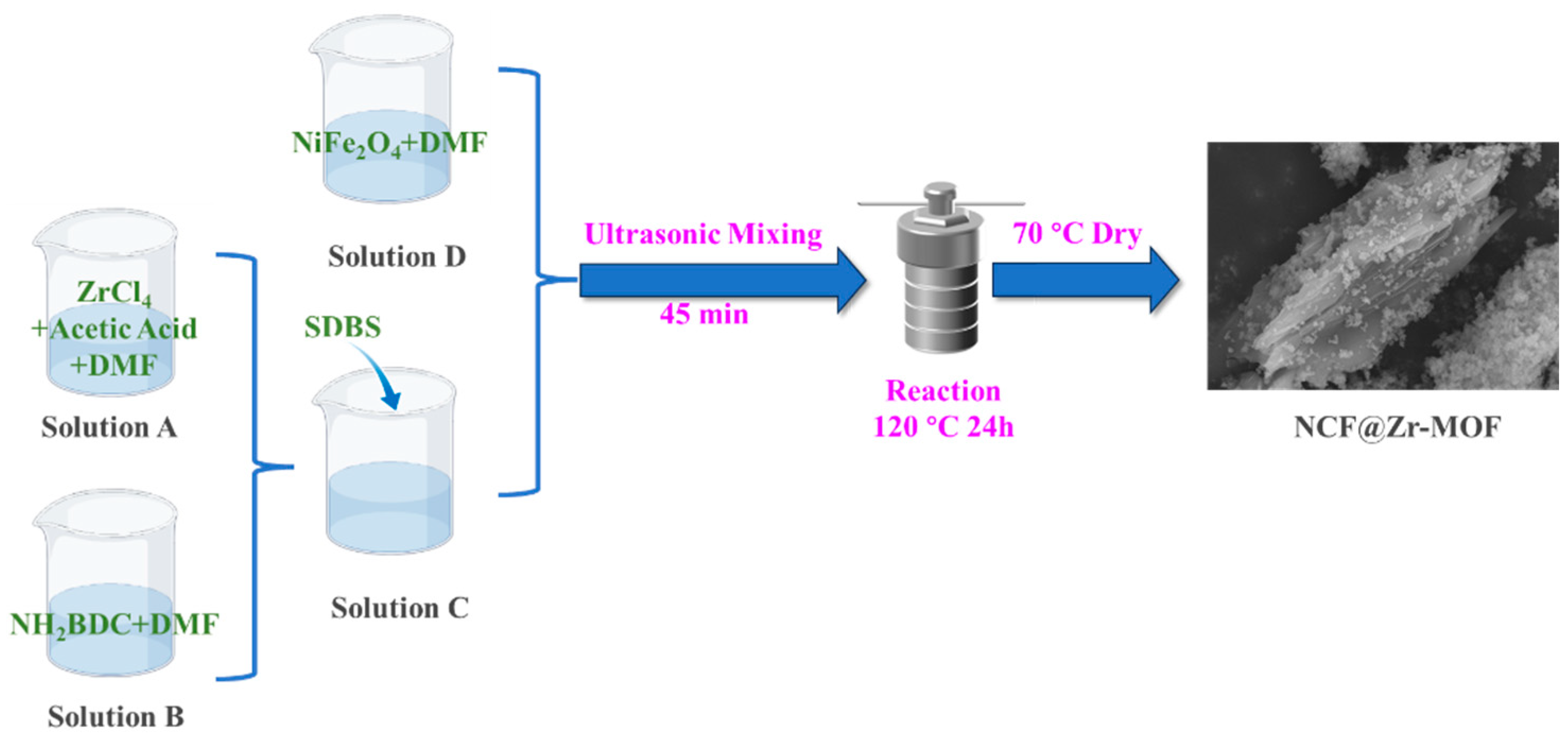
The hydrothermal synthesis of Zr-MOF was modified based on previous work [21]. Dissolve 0.233 g of ZrCl4 (1 mmol) in 20 mL of the DMF solution. Separately, dissolve 0.362 g of NH2BDC (2 mmol) in 20 mL of DMF solution. Those two solutions are then to be combined and add 0.3 g of SDBS, after which the mixture is to be subjected to ultrasonic treatment. In order to obtain the magnetic composite material, it is necessary to disperse 0.2 g of NiFe2O4-COOH in 20 mL of DMF solution. Then combine all solutions and subject them to ultrasonic treatment for 45 min. After complete dissolution, transfer the mixture to a 100 mL stainless steel reactor lined with polytetrafluoroethylene and conduct a hydrothermal reaction at 120 °C for 24 h. Following the completion of the reaction, the material was collected by magnet, then washed 3 times with DMF solution, and activated in methanol solution for 12 h. The final material was dried at 70 °C for 12 h, yielding a brown powder denoted as NCF@Zr-MOF (where NCF stands for carboxyl-functionalized nickel ferrite, NiFe2O4-COOH).
The preparation process of the NCF@Zr-MOF is shown in Figure 1.

2.4. Adsorption Experiments

Adsorption experiments were conducted using TCs working solutions prepared from a 250 mg/L stock solution. The effects of key parameters including pH, adsorbent dosage, contact time, initial concentration and temperature on adsorption performance were systematically investigated. All experiments were conducted in a thermostatic shaker at 240 rpm until the adsorption equilibrium was reached. Subsequently, the adsorbent was magnetically separated, and the supernatant was collected for the quantification of residual TCs.
The concentrations of TCs were quantified using a UV–Vis spectrometer (UV-9000). Full-wavelength scanning revealed distinct maximum absorption wavelengths at 375 nm for TC and 365 nm for CTC, respectively. Calibration curves were established with high linearity (R2 = 0.999), represented by the following equations:
TC: A = 31.5821c − 0.1147
CTC: A = 50.2601c − 0.1726
The strong linear correlations confirm the reliability of the spectrophotometric method for TCs analysis. Standard curve diagrams are provided in Figure S1.
All experiments were conducted in triplicate to ensure data reproducibility, and the comprehensive documentation of model fitting parameters is provided in Text S2.

2.5. Cyclic Adsorption Experiment

Adsorption–desorption experiments were conducted to evaluate the reusability of NCF@Zr-MOF, using a 0.1 mol/L NaOH solution as the regenerating agent. A solution of TC and CTC was prepared at a concentration of 50 mg/L, with the pH adjusted to 6. Subsequently, 50 mL of the TCs solution was introduced into 100 mL centrifuge tubes containing 0.6 g/L of the magnetic adsorbent. The tubes were then placed in a thermostatic gas-bath oscillator and agitated at 240 rpm at 25 °C for 12 h until adsorption equilibrium was reached. Upon completion of the reaction, the concentration of the separated filtrate was measured. Following this, 50 mL of 0.1 mol/L NaOH solution was added to the magnetic adsorbent and agitated for 6 h to ensure the complete regeneration of contaminants. The regenerated adsorbent was washed repeatedly with deionized water until a neutral pH was achieved, then dried at 70 °C to a constant weight. This process was repeated five times to assess the reusability and stability of NCF@Zr-MOF.

3. Results

3.1. Characterization of Adsorbents

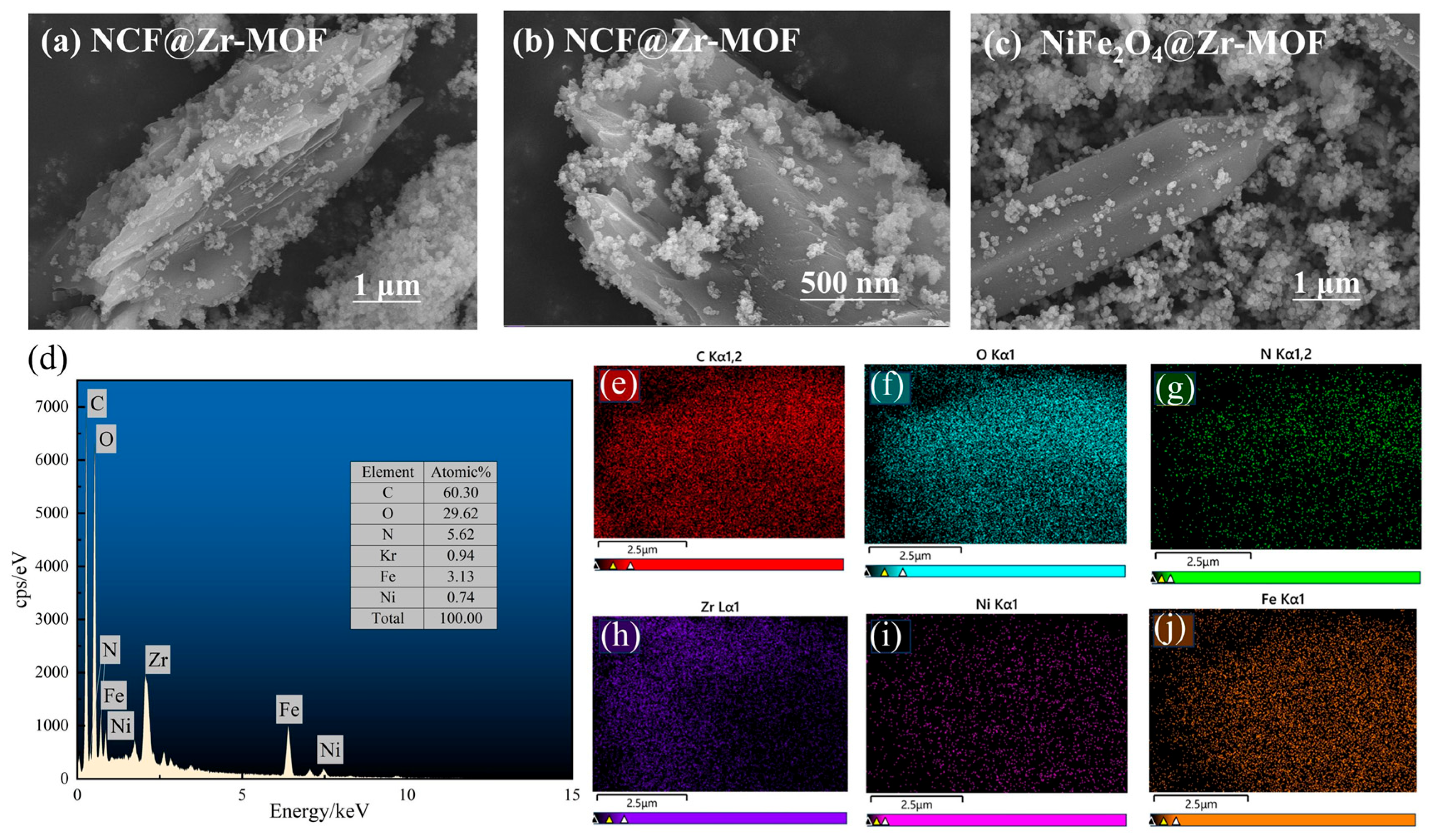
The surface of NCF@Zr-MOF was characterized by SEM, as illustrated in Figure 2. Compared to unmodified NiFe2O4 nanoparticles, the functionalization with BTC resulted in complete encapsulation of NiFe2O4, thereby blocking the accessibility of exposed Fe3+ metal nodes for coordination reactions with NH2BDC during Zr-MOF assembly. Meanwhile, the interaction between the -COOH group and -NH2 in NiFe2O4-COOH affects the nucleation process of MIL-type MOFs and prevents the formation of intact crystals [22]. This altered microstructure is a direct consequence of incorporating carboxyl-functionalized magnetic NiFe2O4-COOH nanoparticles. During synthesis, the surface -COOH interact with the Zr clusters and organic linkers, leading to a composite with a rougher texture and potentially higher surface accessibility [20,23]. The EDS patterns show that the composites contain six elements, C, N, O, Fe, Ni, and Zr, with a uniform distribution. Concurrently, the Fe and Ni signals are well-dispersed and strongly co-localized across the mapped region, indicating that the carbonylated NiFe2O4 nanoparticles are homogeneously embedded within the MOF rather than present as isolated aggregates [24,25]. Such micron-scale compositional homogeneity is pivotal to the composite performance, as it enables uniform magnetic responsiveness for efficient field-assisted separation and ensures that adsorption-accessible sites contributed by both UiO-66-NH2 and –COOH-functionalized magnetic surfaces remain pervasively available throughout the adsorbent particles [26]. SEM images (Figure 2a) show no visible exposed smooth magnetic nanoparticles, indicating they are coated by another phase. EDS images (Figure 2d) further corroborate this conclusion: signals from MOF-derived elements (Zr, N) exhibit uniform distribution, spatially overlapping with signals from magnetic core elements (Fe, Ni) while appearing to encapsulate them. This pattern indicates a core–shell structure, where functionalized magnetic nanoparticles (NCF) are embedded within a porous Zr-MOF matrix.
The N2 adsorption–desorption isotherms of the NCF@Zr-MOF exhibited a Type IV profile with an H3-type hysteresis loop, characteristic of mesoporous structures (Figure S2), a hallmark of mesoporous materials. This indicates that BTC encapsulation enhances the interparticle porosity of modified NiFe2O4-COOH [27]. The increase in specific surface area is accompanied by a significant expansion of mesoporous volume, indicating that the modified material possesses more accessible active sites for the adsorption of TCs, including TC and CTC. The specific surface area and pore size parameters of the adsorbent before and after modification are detailed in Table 1.
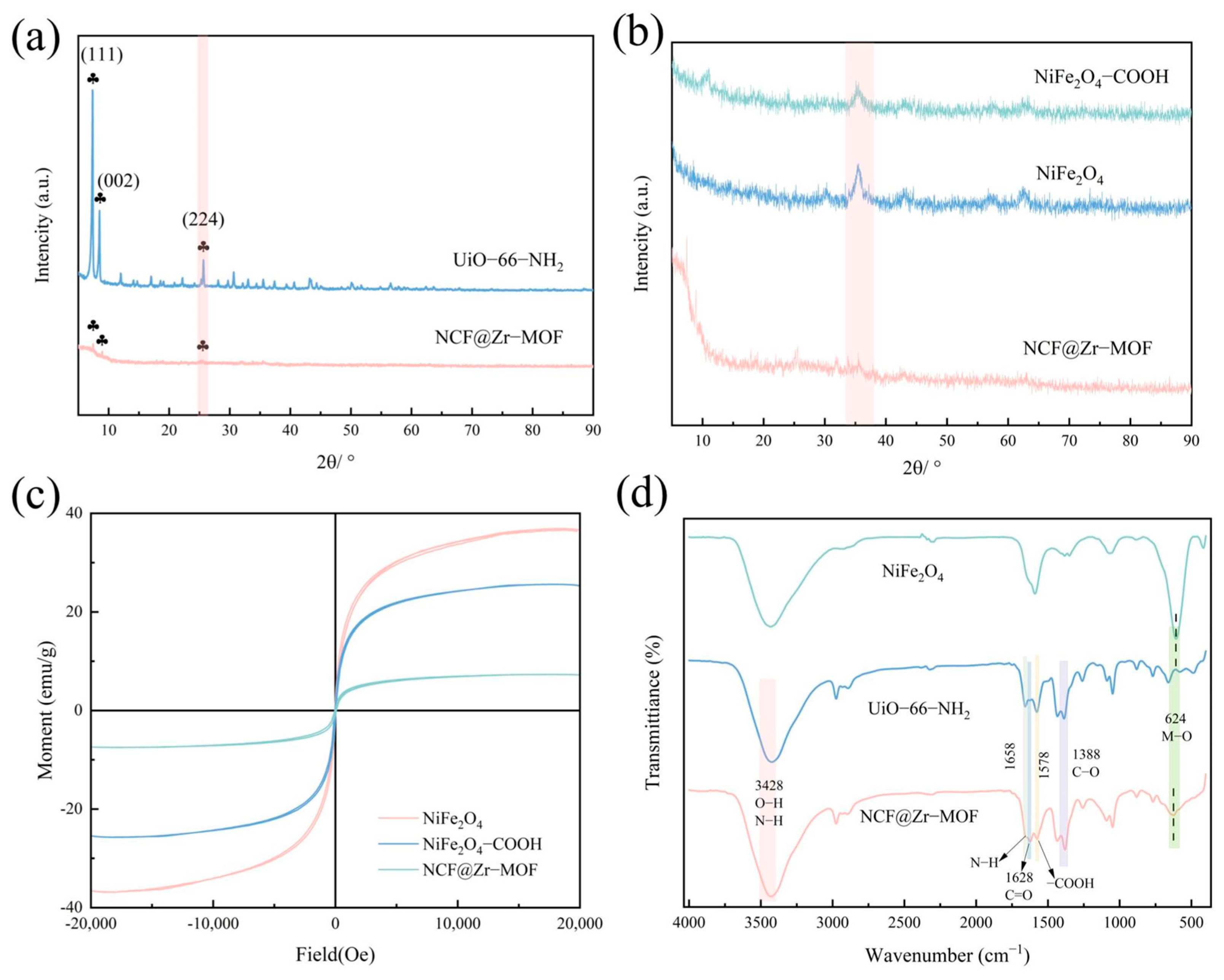
The XRD pattern of the synthesized material (Figure 3a) exhibits sharp reflections identical to those of simulated UiO-66-NH2, indicating that the carboxylation-modified NiFe2O4 is successfully attached to UiO-66-NH2. Characteristic peaks were found at 2θ = 7.45°, 8.94°and 25.21° in the prepared samples. These peaks are indexed to correspond to the (111), (002) and (224) facets of UiO-66, respectively. The carbonylated NiFe2O4 retained the characteristic diffraction peaks of the spinel NiFe2O4 phase, which match well with the standard JCPDS (Card No. 10-0325) [28]. A noticeable decrease in the intensity of these peaks was observed after compositing with UiO-66-NH2 (Figure 3b), likely due to the encapsulation or partial shielding of the magnetic crystals by the MOF matrix.
The saturation magnetization strength of NiFe2O4-COOH and NCF@Zr-MOF can be observed to be 25.58 and 7.31 emu/g, respectively, by the VSM test in Figure 3c. The figure indicates that the three hysteresis returns do not have any obvious hysteresis, remanent magnetism, and coercivity, which indicates that NCF@Zr-MOF has a superparamagnetic and possesses magnetic response characteristics that are easily recovered by the magnetic field.
The FTIR spectra of UiO-66-NH2, NCF@Zr-MOF, and NiFe2O4 are illustrated in Figure 3d. The characteristic peak at 3428 cm−1 in the spectrum of UiO-66-NH2 can be attributed to the overlapping of O-H and N-H stretching vibrations [29]. The strong peak at 1628 cm−1 is attributed to the stretching vibration of C=O in NH2BDC [30]. The peak at 1658 cm−1 corresponds to the amino N-H bond, the peak at 1578 cm−1 is attributed to the asymmetric vibration of -COOH, and the C-O bond in carboxylic acid corresponds to the characteristic peak at 1388 cm−1 [31]. Compared with pristine UiO-66-NH2, NCF@Zr-MOF exhibits similar characteristic absorption bands, indicating the preservation of the UiO-66-NH2 framework. Notably, the intensity of the N-H vibration at 1658 cm−1 decreases, whereas the peak at 1578 cm−1 becomes more pronounced, which can be attributed to the successful introduction of -COOH groups. The results of the above spectra demonstrate that the modified Zr-MOF has a decreased amino content and an increased -COOH content compared to the pristine UiO-66-NH2 [32]. Meanwhile, an absorption peak centered at 624 cm−1 was observed in this spectrogram, and this characteristic peak was attributed to the stretching vibrational mode of Fe/Ni-O (Figure 3d), suggesting the successful loading of NiFe2O4-COOH into NCF@Zr-MOF [33].
The weight losses observed for NCF@Zr-MOF in the temperature ranges of 35–100 °C, 100–350 °C and 350–950 °C were 5%, 22% and 32% (Figure S3), respectively, which can be divided into three phases: the first phase mainly involves the evaporation of water from the pores, the second phase involves the pyrolysis of the organic ligands and the amino-functional groups accompanied by NiFe2O4-COOH nanoparticles, and the third stage involves the disintegration of the skeletal structure and oxidative decomposition of the residual carbon, while the NiFe2O4 nanoparticles remain relatively stable at high temperatures [34]. The total weight loss of NCF@Zr-MOF is 59%, which demonstrates that the synthesized composites are moderately thermally stable.

3.2. Effect of Initial pH, Dosage and Ionic Strength

The pH of the solution, the amount of adsorbent added, and the ions co-existing in the environment are important factors affecting the adsorption performance. Therefore, we set different ranges of pH (3–10), dosage and did ionic strength test with Na+ ions to study the adsorption of TCs.
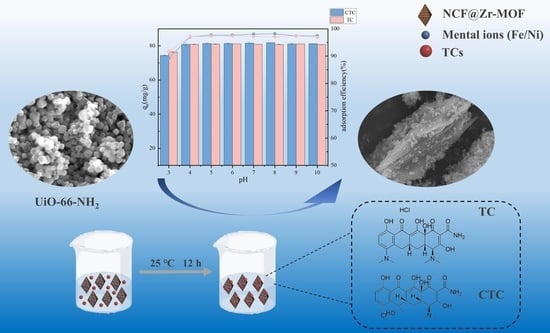
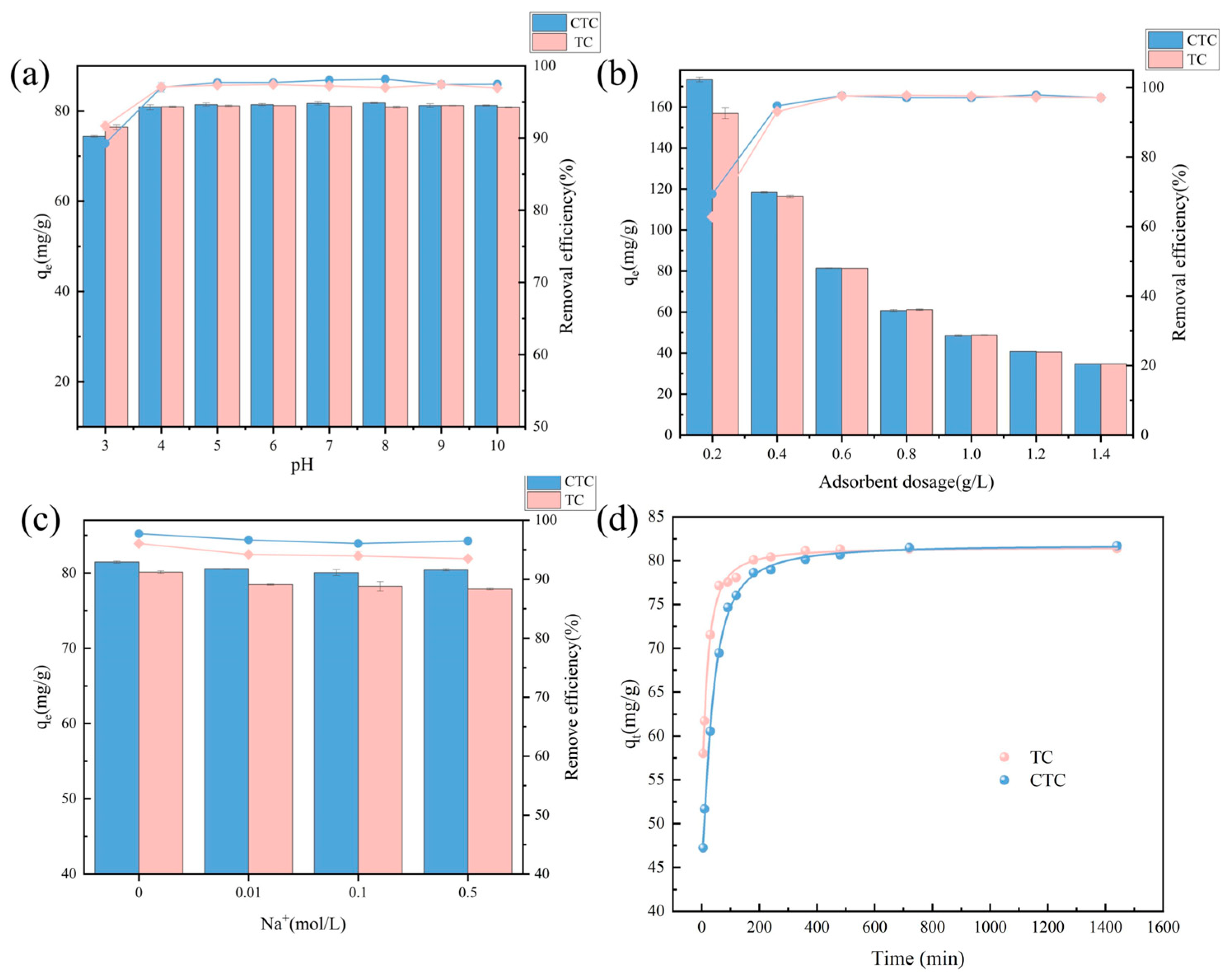
As shown in Figure 4a NCF@Zr-MOF showed good stability over a wide pH range and exhibited high removal efficiency (>96%) in the pH range of 4–10. However, a noticeable decline in adsorption efficiency is observed at pH 3. This phenomenon is attributed to the fact that TC and CTC are amphiphilic compounds with three molecular forms, while TC and CTC exist as cations (TCH3+/CTCH3+) at pH less than 3.3 [35]. It can be seen from the pHpzc potential of NCF@Zr-MOF (Figure S4) that the pHpzc of NCF@Zr-MOF is approximately 3.97. Positively charged NCF@Zr-MOF repel cationic species such as TCH3+/CTCH3+, leading to a decrease in adsorption force and a decrease in adsorption efficiency [36].
As shown in Figure 4b, the adsorbent dosage has a significant influence on the adsorption performance. With increasing NCF@Zr-MOF dosage from 0.2 to 1.4 g/L, the removal efficiencies of TC and CTC increase markedly from approximately 62% to 97%. The removal rate of the two pollutants reached more than 97%, especially when the dosage of the adsorbent was increased to 0.6 g/L, which was close to the complete removal. The enhanced adsorption capacity of NCF@Zr-MOF for both target pollutants can be attributed to the dosage-dependent availability of active adsorption sites. Increasing the adsorbent dosage expands the accessible surface area, thereby promoting interfacial contact between the adsorbent and TCs, which synergistically elevates removal efficiency through multi-mechanistic interactions [37]. However, despite the continuous increase in removal efficiency, the adsorption capacity gradually decreases at higher dosages. This phenomenon can be explained by the presence of excess unsaturated adsorption sites when the adsorbent dosage increases, while the initial pollutant concentration remains constant [38].
In Figure 4c, showing the effect of ionic strength on the adsorption efficiency, NCF@Zr-MOF still showed high removal efficiency for both pollutants under the increasing concentration of NaCl (0–0.5 mol/L), and the effect of ionic strength on the adsorption was not obvious. This indicates that NCF@Zr-MOF has an excellent ability to resist the interference of co-existing ions.

3.3. Effect of Reaction Time and Adsorption Kinetics

The equilibrium time is an important indicator for evaluating the removal performance of TC and CTC, which exhibited similar patterns in reaching adsorption equilibrium, and their adsorption processes could be mainly divided into two phases as depicted in Figure 4d. The first phase occurs within the first 60 min and shows a rapid adsorption rate, which is mainly attributed to the abundance of available adsorption sites on the adsorbent surface. Afterwards, the adsorption decreases due to the saturation of the adsorption sites and the reduced attraction of the remaining sites for TCs molecules until the adsorption equilibrium is reached at 180 min.
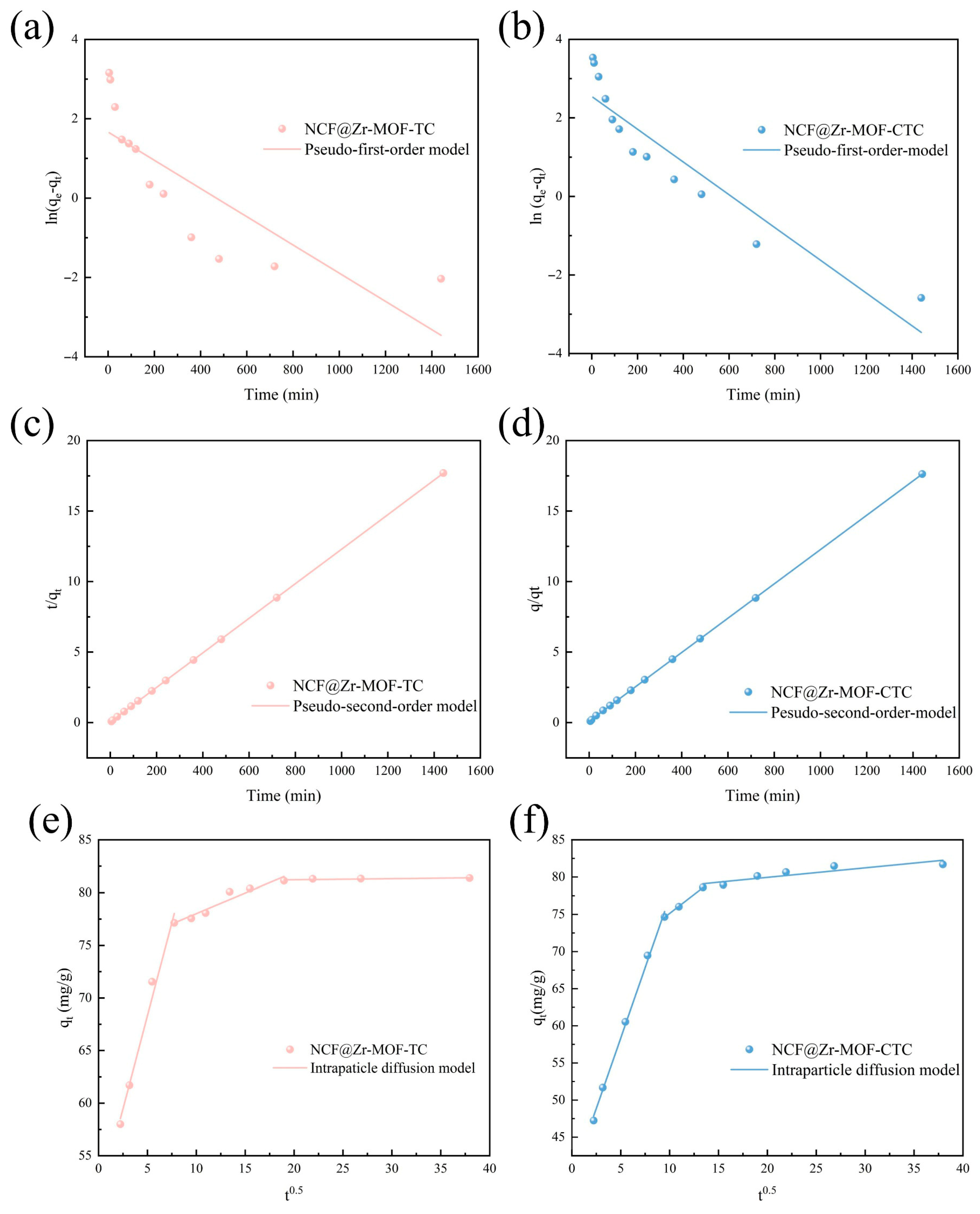
The adsorption kinetics of NCF@Zr-MOF for antibiotic solutions were evaluated using the pseudo-first-order (PFO) kinetic model, pseudo-second-order (PSO) kinetic model, and intra-particle diffusion (IPD) model. The PFO kinetic model represents the adsorption process as physical adsorption and the PSO kinetic model represents the chemical adsorption behavior. The calculated kinetic parameters and corresponding correlation coefficients (R2) are summarized in Table 2. According to the fitting results, the PSO model exhibited a significantly better fit (R2 = 0.9999) than the PFO model, and the calculated adsorption capacity was closer to the experimental value. This suggests that the adsorption process of NCF@Zr-MOF on TC and CTC is likely to be dominated by chemisorption [39].
Further the IPD model was used to determine the diffusion mechanism of adsorbed TCs. The results from Figure 5 showed that the adsorption process was divided into three linear phases. The first phase was characterized by a fast reaction rate, which was the rapid binding of TCs to the active sites on the adsorbent surface. The second stage exhibits a slower adsorption rate, which is mainly associated with the diffusion of TCs into the internal pores of the adsorbent. At the third stage, the adsorption efficiency becomes lower until equilibrium is reached, at which point no significant increase in adsorption with time is observed anymore. In addition, the intercept of the linear curve is not zero, indicating that intra-particle diffusion is not the only factor controlling adsorption [40].

3.4. Effect of Initial Concentration and Adsorption Isotherms

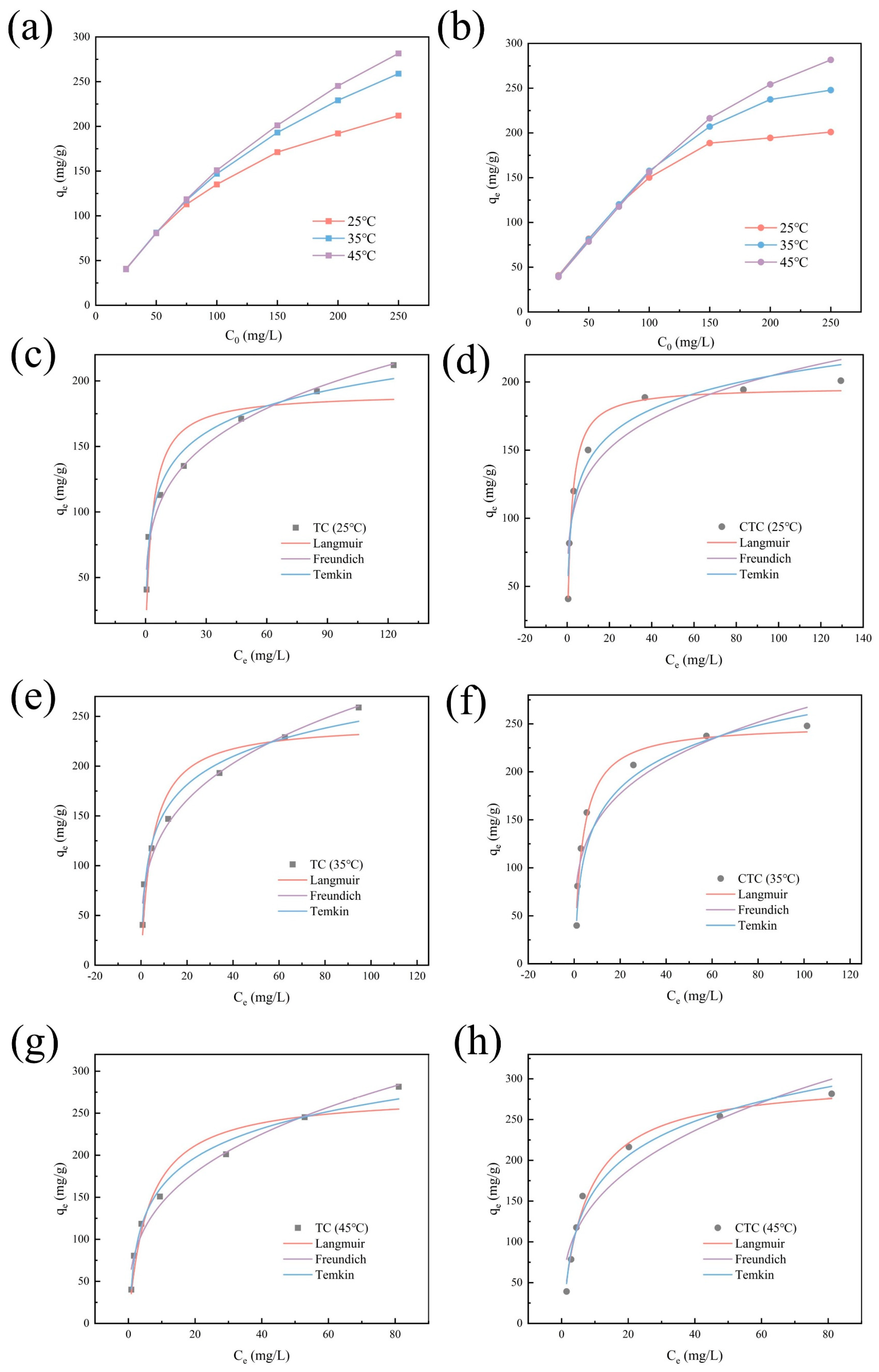
As depicted in Figure 6a,b, the adsorption capacity of NCF@Zr-MOF exhibited an enhancement with increasing TCs concentrations. This phenomenon can be attributed to the elevated concentration gradient overcoming interfacial mass transfer barriers between the aqueous phase and adsorbent surface, thereby driving the adsorption equilibrium toward saturation through concentration gradient-driven diffusion kinetics [41]. Furthermore, the adsorption capacity demonstrated a gradual enhancement as temperature rose from 289 K to 318 K, indicating the endothermic nature of the adsorption process. The increase in temperature likely enhanced molecular mobility of TCs in solution while simultaneously activating adsorption sites on NCF@Zr-MOF, which improved hydrophobic interactions.
To gain insight into the adsorption mechanisms of TCs on NCF@Zr-MOF, three isotherm models were applied to fit the experimental data. The Langmuir model assumes monolayer adsorption on homogeneous surfaces with finite active sites. The Freundlich model describes multilayer adsorption on heterogeneous surfaces through empirical exponential relationships. Meanwhile, the Temkin model incorporates the effects of adsorbate–adsorbate interactions and assumes a linear decrease in adsorption heat with increasing surface coverage.
Figure 5. Pseudo-first-order dynamics model of (a) TC and (b) CTC. Pseudo-second-order model of (c) TC and (d) CTC. Intraparticle diffusion model of (e) TC and (f) CTC.
Water 18 00321 g005
As shown in Figure 6, the adsorption of TC onto NCF@Zr-MOF aligns more closely with the Freundlich model, with the 1/n < 1 across all tested temperatures. This indicates a thermodynamically favorable and multilayer adsorption process occurring on energetically heterogeneous surfaces. The high correlation coefficient (R2 = 0.98) of the Temkin model further suggests the involvement of electrostatic interactions during adsorption, likely driven by the temperature-dependent ion exchange between the deprotonated carboxyl groups (-COO) on NCF@Zr-MOF and the zwitterionic TC molecules [42].
Figure 6. Effect of initial concentration on the adsorption of (a) TC and (b) CTC by NCF@Zr-MOF. TC adsorption isotherms fitted using Langmuir, Freundlich, and Temkin models at different temperatures: (c) T = 25 °C, (e) T = 35 °C, and (g) T = 45 °C, and CTC adsorption isotherms fitted using Langmuir, Freundlich, and Temkin models at different temperatures: (d) T = 25 °C, (f) T = 35 °C, and (h) T = 45 °C.
Water 18 00321 g006
As summarized in Table 3, the Langmuir model exhibited higher R2 values than the Freundlich model for CTC adsorption, indicating a monolayer adsorption mechanism dominated. The fundamental reason for this discrepancy lies in the structural disparity between TC and CTC, wherein the Cl- in CTC substitutes for the H+ in the TC molecule. During the process of adsorption, the Cl- group present within the CTC hinders the close packing of molecules on the surface of the adsorbent, thereby limiting the formation of multilayer adsorption [43,44].
In addition, in the Temkin isothermal model, both pollutants are fitted better. The high correlation coefficient (R2 = 0.98) of the Temkin model further suggests the involvement of electrostatic interactions during adsorption, likely driven by the temperature-dependent ion exchange between the deprotonated carboxyl groups on NCF@Zr-MOF and the zwitterionic TC molecules [45].
Table 4 summarizes the adsorption performance of NCF@Zr-MOF compared to other adsorbents under various conditions, providing a comprehensive characterization of its adsorption advantages. Notably, NCF@Zr-MOF exhibits high adsorption capacity for TCs.

3.5. Effect of Reaction Temperature and Adsorption Thermodynamics

The reaction temperature is also an important factor affecting the adsorption of TCs by NCF@Zr-MOF. In Figure 6, the influence of different temperatures (289 K, 308 K, 318 K) on the adsorption rate of the target TCs was investigated. When the temperature increases, the adsorption capacity of NCF@Zr-MOF for TCs also increases. That is, raising the reaction temperature is beneficial for NCF@Zr-MOF to remove TCs. Therefore, this adsorption reaction may be an endothermic reaction. To further determine the spontaneity and heat change in this reaction, three adsorption thermodynamic parameters, Gibbs free energy (ΔG0), enthalpy change (ΔH0) and entropy change (ΔS0), were calculated.
As summarized in Table 4, the negative ΔG0 values (−8.2 to −12.5 kJ/mol) for TC and CTC adsorption on NCF@Zr-MOF confirm the thermodynamically spontaneous nature of the process, requiring no external energy input under ambient conditions. The progressively more negative ΔG0 with increasing temperature (298–318 K) indicates enhanced spontaneity, likely driven by entropy gain (ΔS0 > 0) from solvent reorganization and adsorbate structural rearrangements at the solid–liquid interface [51].
The ΔG0 values (−20 to 0 kJ/mol) indicate that this is a spontaneous adsorption process. ΔH0 > 0 indicates that the adsorption process primarily involves chemical reactions [52]. This is further corroborated by the strong agreement with the PSO kinetic model (R2 > 0.99), which implies that chemisorption synergistically governs the adsorption process through hybrid interfacial interactions. Furthermore, the positive value of ΔH confirms that TC and CTC adsorption on NCF@Zr-MOF is a heat-absorbing process (Figure S5). Therefore, this provides a good validation of the previously deduced results which showed the increasing nature of the removal efficiency with increasing temperature. Positive ΔS0 values correspond to an increase in the degree of freedom of the adsorbed species. Thermodynamic parameters are shown in Table 5.

3.6. Adsorption Mechanism Analysis

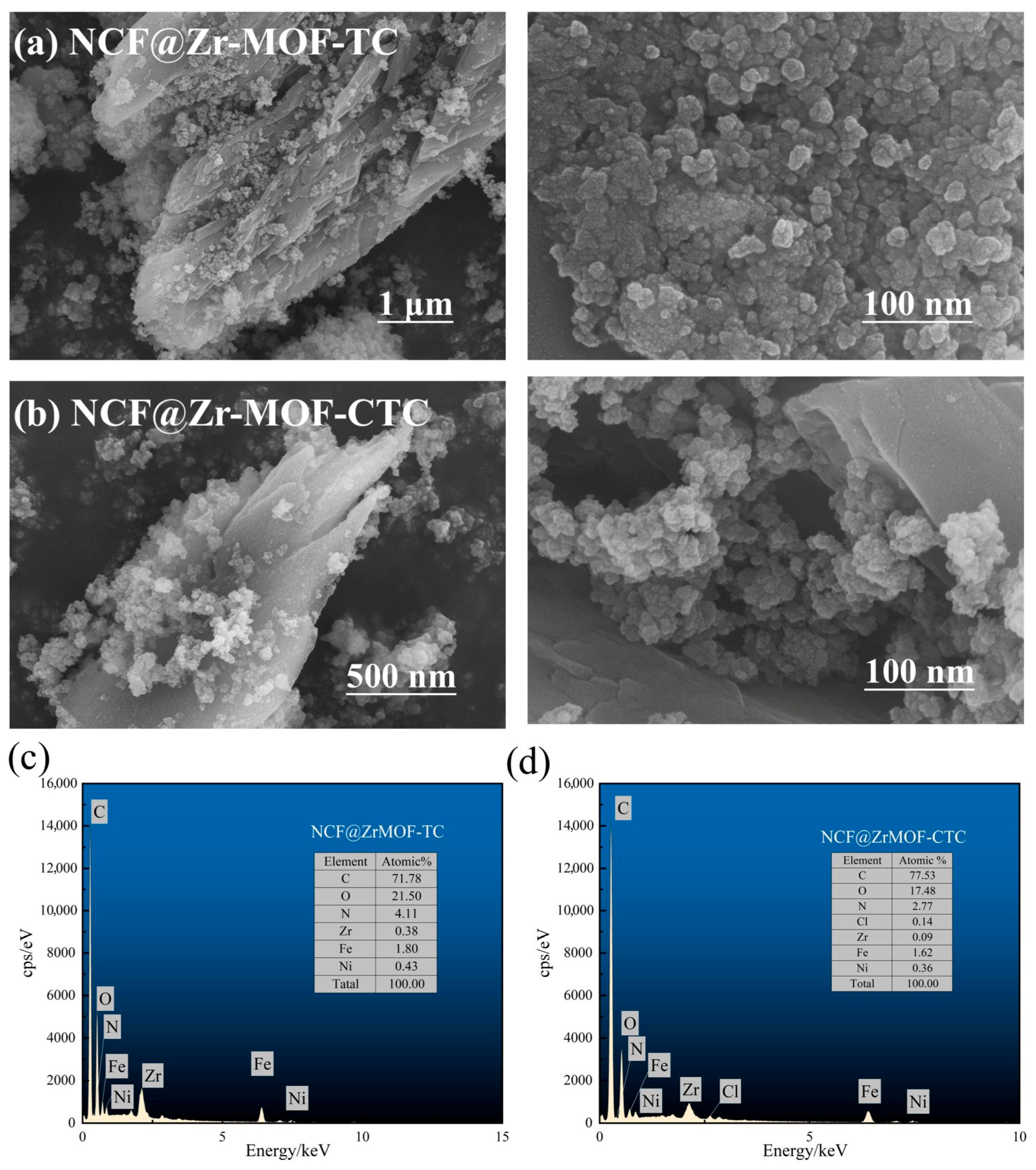
In order to evaluate the adsorption mechanism of NCF@Zr-MOF, a series of analytical techniques including XRD, SEM-EDS, XPS, and FTIR were employed to comprehensively analyze the material before and after the adsorption of TCs. The SEM images (Figure 7) showed that after adsorption of TC and CTC, a compact and disordered complex was formed on the surface of NCF@Zr-MOF due to the uniform loading of TCs, and the particulate matter proceeded to pile up on the surface of NCF@Zr-MOF, forming a rough surface. However, despite the rough surface of the adsorbent, its overall morphology remained stable, which demonstrated that the stability of the internal structure of NCF@Zr-MOF was not impaired by the influence of the TCs solution during the adsorption process. EDS analyses after adsorption detected changes in the mass of the elements C, O, N, Fe and Ni.
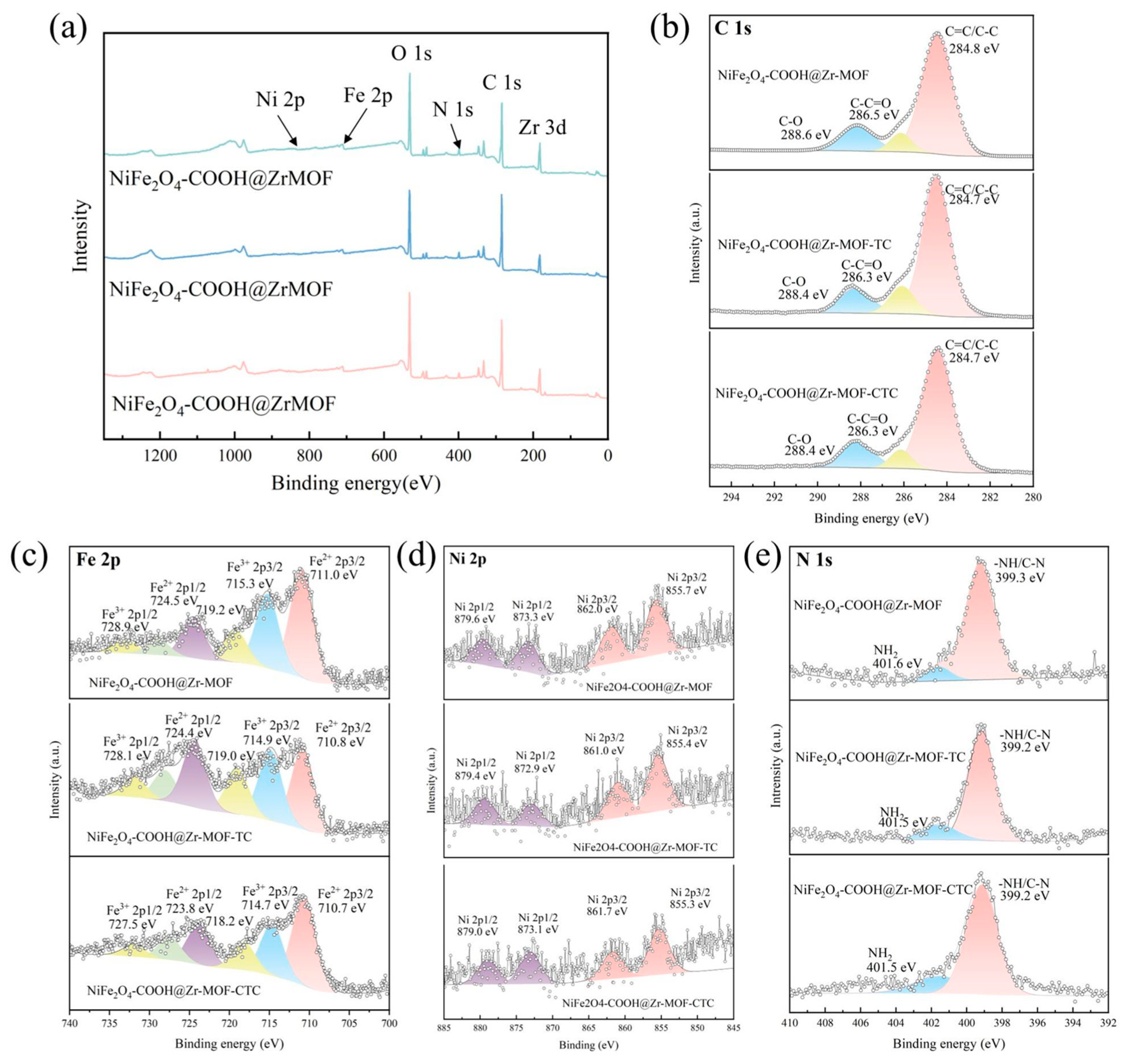
The presence of C1s, O1s, N1s, Zr3d, Fe2p, and N2p is shown on the XPS full spectrum (Figure 8a), which indicates the stability of the material after adsorption. In the C1s spectrum (Figure 8b), the peak attributed to C=C shifted from 284.8 eV after adsorption to 284.7 eV due to the π-π electron-donor interactions occurring between the conjugated alkenone structure of TCs and the benzene ring in NCF@Zr-MOF [53]. This suggests that -COOH on the NCF@Zr-MOF participates in the adsorption reaction of the TCs through surface complexation.
In the N1s spectrum (Figure 8e), the peaks initially observed at 399.3 eV and 401.6 eV shifted to 399.2 eV and 401.5 eV after TC adsorption, indicating the formation of Fe/Ni–N coordination bonds with –NH2 groups [54]. The Fe2p spectrum (Figure 8c) shows five peaks at 711.0, 715.3, 719.2, 724.5, and 728.9 eV. Peaks at 711.0 eV and 724.5 eV correspond to Fe2+, while 715.3 eV and 728.9 eV are for Fe3+. The satellite peak at 719.2 eV confirms Fe3+ presence in NCF@Zr-MOF [55].
In the Ni2p spectrogram (Figure 8d), four peaks are observed at 855.7, 862.0, 873.3, and 879.6 eV. Peaks at 855.7 eV and 862.0 eV are associated with Ni2p3/2, and those at 873.3 eV and 879.6 eV with Ni2p1/2 [56]. Upon TC and CTC adsorption, all Fe2p and Ni2p peaks shift to lower binding energies, indicating complex formation between TCs and Fe/Ni sites.
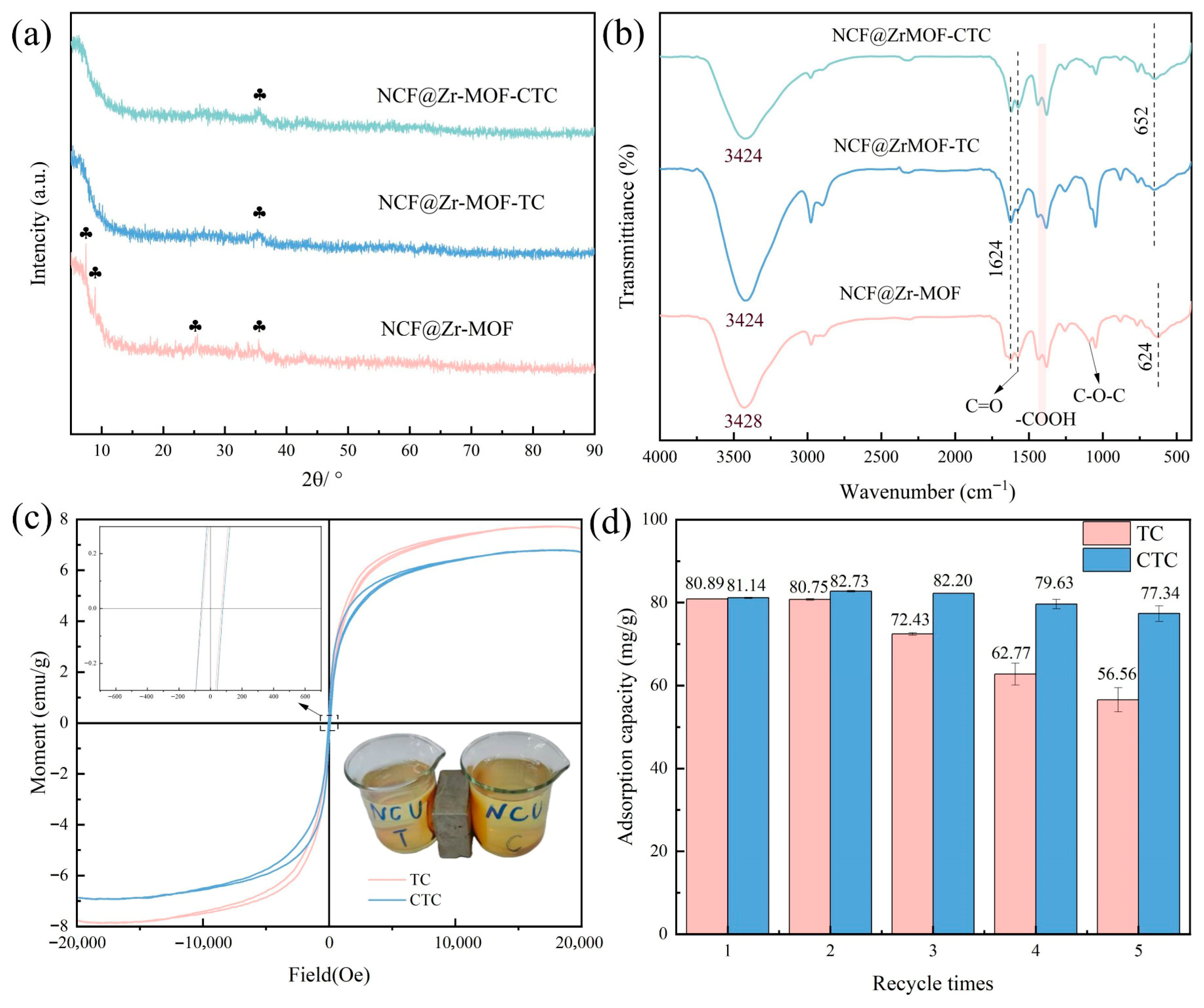
Figure 9a shows the XRD patterns of NCF@Zr-MOF before and after adsorption of TCs. After adsorption, the intensity of the main diffraction peak decreases markedly, which is attributed to pore blockage caused by TCs molecules occupying the surface and internal pores of the material, resulting in reduced diffraction intensity [57]. Despite the observed decrease in the intensity of the diffraction peaks, the characteristic peaks of NCF@Zr-MOF showed that it did not undergo any significant changes in crystalline shape and structure after adsorption of TCs.
The FTIR spectra of NCF@Zr-MOF before and after TCs adsorption are shown in Figure 9b. The main absorption bands of NCF@Zr-MOF material were only slightly adjusted compared with those before adsorption, while the absorption intensities of the peaks were significantly changed. This phenomenon indicates that the reaction with TCs did not cause damage to the structural framework of NCF@Zr-MOF, which is consistent with the results of XRD and SEM analyses. The small variations in the wave peaks may originate from the interaction between the adsorbent and the functional groups of the target pollutants. In particular, several peak positions were observed to be shifted after adsorption of TCs. For example, the peak located at 3428 cm−1 shifted to 3424 cm−1, which corresponds to the telescopic vibration of the O-H (or N-H) bond, probably due to the formation of hydrogen bonding between the -OH and -NH2 groups in tetracycline (acting as a hydrogen acceptor) and the oxygen or nitrogen-containing groups in NCF@Zr-MOF [58].
In addition, the peak at 1624 cm−1 originates from the stretching vibration of the benzene ring [59], whereas the peaks at 1386–1434 cm−1 and 1576 cm−1 are attributed to the antisymmetric stretching vibration of -COOH and the stretching vibration of C=O, respectively [60]. The intensities of these peaks were both enhanced upon adsorption of TCs, while the C-O-C stretching vibration peak at 1092 cm−1 disappeared upon adsorption, indicating that groups such as -COOH and C=O play an important role in the adsorption of TCs [61]. Notably, the peak located at 624 cm−1 shifted to 652 cm−1 after adsorption, which implies that M-O groups (M =Ni/Fe) are involved in the binding process with TCs. The variation in these peaks and their intensities in the FTIR plots confirms the involvement of tetracycline analogs in the adsorption process involving π-π interactions, complexation, and hydrogen bonding.
The magnetic properties of NCF@Zr-MOF before and after TCs adsorption were evaluated by VSM analysis (Figure 9c). After adsorption of TCs, the saturation magnetization strengths of the two were 7.728 emu/g and 6.787 emu/g, respectively, which were slightly decreased compared with the saturation magnetization strengths before adsorption, but the curves after adsorption all showed the typical S-type hysteresis regression lines, which indicated that the adsorbed materials were superparamagnetic without coercivity and remanent magnetism. As shown in the figure, solid–liquid separation can be rapidly achieved under appropriate external magnetic field, demonstrating its potential in water purification.
It can be concluded from the adsorption experiments and characterization analyses that the main adsorption mechanisms of NCF@Zr-MOF on TCs are, respectively, pore filling, complexation, hydrogen bonding formation, π-π interaction and electrostatic attraction. The synergistic effect of these reactions together endowed NCF@Zr-MOF with an efficient removal capability for TCs.

3.7. Cycling Performance Study

Cyclic adsorption experiments reveal the reusability of the NCF@Zr-MOF, as well as its potential for industrial application and cyclic utilization efficiency [62]. As demonstrated in Figure 9d, the removal efficiency for TC decreased to 56.56% after five cycles. In contrast, CTC exhibited superior reusability, with its removal efficiency exhibiting a decline of only 4.68% after five cycles. This discrepancy is primarily attributable to the NaOH solution’s inability to fully remove the TC molecules that have become entrapped within the pores of the adsorbent during desorption. These residual TC molecules not only occupy the active sites originally available for adsorption but also clog the pore structure of the adsorbent, thereby limiting the opportunity for new TC molecules to bind to additional adsorption sites [63]. Compared with TC, CTC shows higher desorption efficiency, which may be associated with its predominantly monolayer adsorption behavior. Although 0.1 M NaOH was used as the eluent in this study, developing more sustainable and efficient regeneration strategies is still essential for future large-scale applications. Based on the analysis of TCs adsorption mechanisms, the following alternative approaches can be proposed: (1) Mild organic solvents or solvent-water mixtures, such as ethanol, can dissolve TCs molecules, achieving efficient desorption while reducing the chemical erosion of the adsorbent structure [64]. (2) pH-Buffered Mild Elution Buffer: Given that both the adsorbent and TCs exhibit pH-dependent species transformations, employing a weakly acidic buffer solution is a viable approach [65].

3.8. Stability Analysis and Assessment of Practical Application

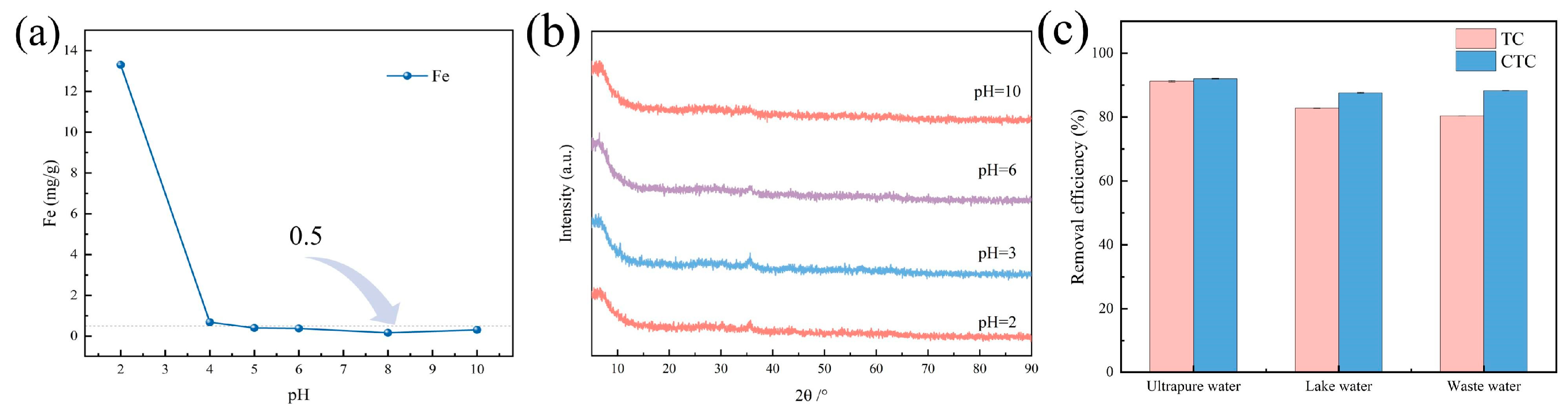
To verify the material’s excellent stability under varying acidic and alkaline conditions, Figure 10a illustrates the leaching rate of Fe at different pH levels. Results indicate that as pH increases, Fe release decreases significantly: at pH = 2, Fe leaching reaches a peak of 13.30 mg/L; subsequently, as pH continues to rise, Fe leaching rapidly declines and nearly approaches zero. Typically, wastewater from TCs tends to exhibit a weakly acidic environment, making NCF@Zr-MOF a promising candidate for application in such aquatic conditions [66]. Furthermore, the XRD pattern (Figure 10b) reveals that the sample retains identical characteristic diffraction peaks after treatment under acidic, neutral, and alkaline conditions, indicating no significant disruption to its crystal framework and demonstrating excellent resistance to diverse environments. This result aligns with the widely accepted conclusion that Zr-MOF exhibit outstanding water stability and acid-base stability due to their strong Zr–O coordination bonds.
To further evaluate the practical applicability of NCF@Zr-MOF, TCs removal experiments were conducted using laboratory ultrapure water, lake water from a site in Guangxi, and effluent from the secondary sedimentation tank of a wastewater treatment plant in Guilin, Guangxi. Encouragingly, compared to the ultrapure water results, the adsorption efficiency of TCs reached 80% across all environmental samples (Figure 10c). Based on these findings, NCF@Zr-MOF demonstrates significant potential for TCs removal applications.

4. Conclusions

In this study, NiFe2O4-COOH nanoparticles were synthesized via hydrothermal modification using BTC as a carboxylation ligand. and subsequently assembled with a Zr-MOF through solvothermal synthesis to obtain NCF@Zr-MOF. Comprehensive characterization via XRD, SEM-EDS, BET, XPS, FTIR, and VSM confirmed the successful integration of carboxyl groups and the hierarchical porous structure of NCF@Zr-MOF. Batch adsorption experiments using TC and CTC revealed optimal performance at pH 6, with maximum adsorption capacities of 190.85 mg/g and 196.32 mg/g, respectively, based on the Langmuir model. The carboxylation introduced additional active sites, enhancing affinity through hydrogen bonding and electrostatic interactions(Figure 11). Notably, NCF@Zr-MOF exhibited exceptional reusability, retaining 69.9% (TC) and 95.32% (CTC) of removal efficiency after five cycles, attributed to its robust magnetic recovery and structural stability. These results demonstrate that NCF@Zr-MOF is a highly efficient and sustainable adsorbent for tetracycline-class antibiotics, combining high capacity, rapid separation, and excellent cyclic performance for practical water treatment applications.

Supplementary Materials

The following supporting information can be downloaded at https://www.mdpi.com/article/10.3390/w18030321/s1, Text S1. Preparation of NiFe2O4; Text S2. Adsorption Model Fitting; Table S1. The element content derived from EDS spectra of NiFe2O4@Zr-MOF-COOH. Figure S1. Standard Curves for TC (a) and CTC (b); Figure S2. Absorption and desorption curves and pore size distribution of (a) NCF@ZrMOF and (b) NiFe2O4@Zr-MOF; Figure S3. TGA analysis of NCF@Zr-MOF; Figure S4. pHpzc potential of NCF@Zr-MOF; Figure S5. (a) Thermodynamic model fit for TC adsorption by NCF@ZrMOF. (b) Thermodynamic model fit for CTC adsorption by NCF@Zr-MOF.

Author Contributions

Conceptualization, X.L., H.Z. and D.W.; methodology, W.L. and L.P.; software, J.C.; formal analysis, X.T.; data curation, X.L., J.C. and M.B.; writing—original draft preparation, X.L.; writing—review and editing, A.S., W.L., H.Z. and D.W.; supervision, A.S., H.Z. and A.M.I.; funding acquisition, H.Z. All authors have read and agreed to the published version of the manuscript.

Funding

This research was supported by Guangxi Science and Technology Program (GuikeAB24010118), Guangxi Natural Science Foundation (2025GXNSFDA069043), National Natural Science Foundation of China (52260023).

Data Availability Statement

The original contributions presented in this study are included in theatrical/Supplementary Material. Further inquiries can be directed to the corresponding author.

Acknowledgments

The authors extend their appreciation to the Deanship of Scientific Research at King Khalid University through the Large Groups Project under grant number RGP.2/25/46. Additionally, the author thanks the Guangxi Talent Hub for Novel Materials and Equipment in Aquatic Ecosystem Restoration (Small High-Ground) for its support of this research.

Conflicts of Interest

The authors declare that they have no known competing financial interests or personal relationships that could have appeared to influence the work reported in this paper.

References

  1. Blake, K.S.; Xue, Y.-P.; Gillespie, V.J.; Fishbein, S.R.S.; Tolia, N.H.; Wencewicz, T.A.; Dantas, G. The tetracycline resistome is shaped by selection for specific resistance mechanisms by each antibiotic generation. Nat. Commun. 2025, 16, 1452. [Google Scholar] [CrossRef] [PubMed]
  2. Li, J.; Qin, Y.; Zhao, C.; Zhang, Z.; Zhou, Z. Tetracycline antibiotics: Potential anticancer drugs. Eur. J. Pharmacol. 2023, 956, 175949. [Google Scholar] [CrossRef]
  3. Zhang, X.; Cai, T.; Zhang, S.; Hou, J.; Cheng, L.; Chen, W.; Zhang, Q. Contamination distribution and non-biological removal pathways of typical tetracycline antibiotics in the environment: A review. J. Hazard. Mater. 2024, 463, 132862. [Google Scholar] [CrossRef]
  4. Chen, Y.; Yin, R.; Zeng, L.; Guo, W.; Zhu, M. Insight into the effects of hydroxyl groups on the rates and pathways of tetracycline antibiotics degradation in the carbon black activated peroxydisulfate oxidation process. J. Hazard. Mater. 2021, 412, 125256. [Google Scholar] [CrossRef]
  5. Liu, C.-X.; Xu, Q.-M.; Yu, S.-C.; Cheng, J.-S.; Yuan, Y.-J. Bio-removal of tetracycline antibiotics under the consortium with probiotics Bacillus clausii T and Bacillus amyloliquefaciens producing biosurfactants. Sci. Total Environ. 2020, 710, 136329. [Google Scholar] [CrossRef]
  6. Palacio, D.A.; Becerra, Y.; Urbano, B.F.; Rivas, B.L. Antibiotics removal using a chitosan-based polyelectrolyte in conjunction with ultrafiltration membranes. Chemosphere 2020, 258, 127416. [Google Scholar] [CrossRef]
  7. Shi, W.; Ren, H.; Li, M.; Shu, K.; Xu, Y.; Yan, C.; Tang, Y. Tetracycline removal from aqueous solution by visible-light-driven photocatalytic degradation with low cost red mud wastes. Chem. Eng. J. 2020, 382, 122876. [Google Scholar] [CrossRef]
  8. Liu, Y.-C.; Ge, Y.-D.; An, H.-L.; Ju, W.-T.; Zhou, X.-Y.; Xing, M.-Y.; Wang, Y.; Zhang, L.; Wang, X.; Xu, L. Synthesis of a novel double Z-scheme BiVO4/Cu2O/g-C3N4 sonocatalyst and research on sonocatalytic degradation of tetracycline. J. Environ. Chem. Eng. 2024, 12, 113668. [Google Scholar] [CrossRef]
  9. Heydarinasab, H.; Sadeghi, F.H.; Mohammadloo, H.E.; Ramezanzadeh, B. Multi-metal/ligand MOFs: Transformative materials for energy storage, photocatalysis, and sensor technologies. Adv. Colloid Interface Sci. 2025, 344, 103592. [Google Scholar] [CrossRef] [PubMed]
  10. Gao, J.; Zhang, H.; Zhou, C.; Tao, L.; Liu, S.; Liao, C.; Jiang, G. Hollow multi-shelled MOF derivative adsorbent for efficient magnetic solid-phase extraction of several typical endocrine disrupting compounds from water. Talanta 2024, 277, 126339. [Google Scholar] [CrossRef] [PubMed]
  11. Yadav, P.; Yadav, A.; Labhasetwar, P.K. Sustainable adsorptive removal of antibiotics from aqueous streams using Fe3O4-functionalized MIL101(Fe) chitosan composite beads. Environ. Sci. Pollut. Res. 2022, 29, 37204–37217. [Google Scholar] [CrossRef] [PubMed]
  12. Ramu, S.; Kainthla, I.; Chandrappa, L.; Shivanna, J.M.; Kumaran, B.; Balakrishna, R.G. Recent advances in metal organic frameworks–based magnetic nanomaterials for waste water treatment. Environ. Sci. Pollut. Res. 2023, 31, 167–190. [Google Scholar] [CrossRef]
  13. Du, M.; Zhang, J.; Rong, J.; Peng, T.; Chen, Y.; Ji, Y.; Guan, Y. Preparation of magnetic framework composites Fe3O4@MIL-100(Fe) and adsorption of lead in water. MRS Commun. 2024, 14, 1371–1379. [Google Scholar] [CrossRef]
  14. Abbasnia, A.; Zarei, A.; Yeganeh, M.; Sobhi, H.R.; Gholami, M.; Esrafili, A. Removal of tetracycline antibiotics by adsorption and photocatalytic-degradation processes in aqueous solutions using metal organic frameworks (MOFs): A systematic review. Inorg. Chem. Commun. 2022, 145, 109959. [Google Scholar] [CrossRef]
  15. Bui, T.T.; Nguyen, D.C.; Hua, S.H.; Chun, H.; Kim, Y.S. Sonochemical Preparation of a Magnet-Responsive Fe3O4@ZIF-8 Adsorbent for Efficient Cu2+ Removal. Nanomaterials 2022, 12, 753. [Google Scholar] [CrossRef]
  16. Sheng, D.; Ying, X.; Li, R.; Cheng, S.; Zhang, C.; Dong, W.; Pan, X. Polydopamine-mediated modification of ZIF-8 onto magnetic nanoparticles for enhanced tetracycline adsorption from wastewater. Chemosphere 2022, 308, 136249. [Google Scholar] [CrossRef]
  17. Yadav, S.; Dixit, R.; Sharma, S.; Dutta, S.; Solanki, K.; Sharma, R.K. Magnetic metal–organic framework composites: Structurally advanced catalytic materials for organic transformations. Mater. Adv. 2021, 2, 2153–2187. [Google Scholar] [CrossRef]
  18. Lee, G.; Ahmed, I.; Hossain, M.A.; Lee, H.J.; Jhung, S.H. Preparation and functionalization of metal-organic frameworks, MOF-808s, and their application in adsorption. Coord. Chem. Rev. 2025, 524, 216325. [Google Scholar] [CrossRef]
  19. Xie, J.; He, X.; Liu, K.; Li, W.; Li, Z. Carboxylic acid modulated in situ growth of Zr-based MOFs on carboxylated cotton fabrics for removal of Cr(VI) from aqueous solutions. Sep. Purif. Technol. 2024, 351, 128043. [Google Scholar] [CrossRef]
  20. Parsaei, M.; Akhbari, K. Magnetic UiO-66-NH2 Core–Shell Nanohybrid as a Promising Carrier for Quercetin Targeted Delivery toward Human Breast Cancer Cells. ACS Omega 2023, 8, 41321–41338. [Google Scholar] [CrossRef]
  21. Chen, J.; Zhang, H.; Shahab, A.; Shehnaz; Alrefaei, A.F.; Ge, S.; Sonne, C.; Mo, Z.; Huang, C. Efficient removal of heavy metals using 1,3,5-benzenetricarboxylic acid-modified zirconium-based organic frameworks. Environ. Technol. Innov. 2024, 33, 103516. [Google Scholar] [CrossRef]
  22. Ji, W.; Li, W.; Wang, Y.; Zhang, T.C.; Wei, Y.; Yuan, S. Zr-doped MIL-101(Fe)/Graphene oxide nanocomposites: An efficient and water-stable MOF-based adsorbent for As(V) adsorption in aqueous solution. Sep. Purif. Technol. 2024, 339, 126681. [Google Scholar] [CrossRef]
  23. Lin, X.; Sun, B.; Wang, P.; Zhao, M.; Liu, D.; Zhang, Q.; Wu, B.; Liu, D. Enhanced low-concentration phosphate adsorption using magnetic UiO-66@Fe3O4 composite with potential linker exchange. Chemosphere 2024, 364, 143126. [Google Scholar] [CrossRef]
  24. Moradi-Bieranvand, M.; Farhadi, S.; Zabardasti, A.; Mahmoudi, F. Construction of magnetic MoS2/NiFe2O4/MIL-101(Fe) hybrid nanostructures for separation of dyes and antibiotics from aqueous media. RSC Adv. 2024, 14, 11037–11056. [Google Scholar] [CrossRef] [PubMed]
  25. Patil, R.P.; Teli, S.B.; Jadhav, V.D.; Kamble, P.D.; Garadkar, K.M. Magnetically separable NiFe2O4 nanoparticles: Synthesis and photocatalytic activity. J. Mater. Sci. Mater. Electron. 2024, 35, 84. [Google Scholar] [CrossRef]
  26. Wang, H.; Yu, Y.-F.; Chen, Q.-W.; Cheng, K. Carboxyl-functionalized nanoparticles with magnetic core and mesopore carbon shell as adsorbents for the removal of heavy metal ions from aqueous solution. Dalton Trans. 2010, 40, 559–563. [Google Scholar] [CrossRef] [PubMed]
  27. Huang, J.; Xue, P.; Wang, S.; Han, S.; Lin, L.; Chen, X.; Wang, Z. Fabrication of zirconium-based metal-organic frameworks@tungsten trioxide (UiO-66-NH2@WO3) heterostructure on carbon cloth for efficient photocatalytic removal of tetracycline antibiotic under visible light. J. Colloid Interface Sci. 2022, 606, 1509–1523. [Google Scholar] [CrossRef]
  28. Hariani, P.L.; Said, M.; Rachmat, A.; Riyanti, F.; Pratiwi, H.C.; Rizki, W.T. Preparation of NiFe2O4 Nanoparticles by Solution Combustion Method as Photocatalyst of Congo red. Bull. Chem. React. Eng. Catal. 2021, 16, 481–490. [Google Scholar] [CrossRef]
  29. Zhao, R.; Ma, T.; Zhao, S.; Rong, H.; Tian, Y.; Zhu, G. Uniform and stable immobilization of metal-organic frameworks into chitosan matrix for enhanced tetracycline removal from water. Chem. Eng. J. 2020, 382, 122893. [Google Scholar] [CrossRef]
  30. Meng, Y.; Chen, X.; Ai, D.; Wei, T.; Fan, Z.; Wang, B. Sulfur-doped zero-valent iron supported on biochar for tetracycline adsorption and removal. J. Clean. Prod. 2022, 379, 134769. [Google Scholar] [CrossRef]
  31. Liu, A.; Liu, J.; He, S.; Zhang, J.; Shao, W. Bimetallic MOFs loaded cellulose as an environment friendly bioadsorbent for highly efficient tetracycline removal. Int. J. Biol. Macromol. 2023, 225, 40–50. [Google Scholar] [CrossRef]
  32. Huang, Z.; Wang, C.; Zhao, J.; Wang, S.; Zhou, Y.; Zhang, L. Adsorption behavior of Pd(II) ions from aqueous solution onto pyromellitic acid modified-UiO-66-NH2. Arab. J. Chem. 2020, 13, 7007–7019. [Google Scholar] [CrossRef]
  33. Chaturvedi, G.; Kaur, A.; Umar, A.; Khan, M.A.; Algarni, H.; Kansal, S.K. Removal of fluoroquinolone drug, levofloxacin, from aqueous phase over iron based MOFs, MIL-100(Fe). J. Solid State Chem. 2020, 281, 121029. [Google Scholar] [CrossRef]
  34. Yu, D.; Duan, C.; Gu, B. UiO-66-NH2@MnFe2O4 as a novel and retrievable MOF nanocatalyst for biodiesel synthesis from utilized edible oil in a microwave reactor: RSM design and CI engine studies. Renew. Energy 2023, 219, 119338. [Google Scholar] [CrossRef]
  35. Guo, J.; Jiang, L.; Liang, J.; Xu, W.; Yu, H.; Zhang, J.; Ye, S.; Xing, W.; Yuan, X. Photocatalytic degradation of tetracycline antibiotics using delafossite silver ferrite-based Z-scheme photocatalyst: Pathways and mechanism insight. Chemosphere 2021, 270, 128651. [Google Scholar] [CrossRef]
  36. Mei, Y.; Xu, J.; Zhang, Y.; Li, B.; Fan, S.; Xu, H. Effect of Fe–N modification on the properties of biochars and their adsorption behavior on tetracycline removal from aqueous solution. Bioresour. Technol. 2021, 325, 124732. [Google Scholar] [CrossRef]
  37. Fang, X.; Wu, S.; Wu, Y.; Yang, W.; Li, Y.; He, J.; Hong, P.; Nie, M.; Xie, C.; Wu, Z.; et al. High-efficiency adsorption of norfloxacin using octahedral UIO-66-NH2 nanomaterials: Dynamics, thermodynamics, and mechanisms. Appl. Surf. Sci. 2020, 518, 146226. [Google Scholar] [CrossRef]
  38. Nasiri, A.; Golestani, N.; Rajabi, S.; Hashemi, M. Facile and green synthesis of recyclable, environmentally friendly, chemically stable, and cost-effective magnetic nanohybrid adsorbent for tetracycline adsorption. Heliyon 2024, 10, e24179. [Google Scholar] [CrossRef] [PubMed]
  39. Long, C.; Li, X.; Jiang, Z.; Zhang, P.; Qing, Z.; Qing, T.; Feng, B. Adsorption-improved MoSe2 nanosheet by heteroatom doping and its application for simultaneous detection and removal of mercury (II). J. Hazard. Mater. 2021, 413, 125470. [Google Scholar] [CrossRef] [PubMed]
  40. Chen, L.; Yang, H.; Hong, R.; Xie, X.; Zuo, R.; Zhang, X.; Chen, S.; Xu, D.; Zhang, Q. Tetracycline adsorption on sludge-bamboo biochar prepared by gradient modification and co-pyrolysis: Performance evaluation and mechanism insight. J. Environ. Chem. Eng. 2024, 12, 114121. [Google Scholar] [CrossRef]
  41. Liang, J.; Fang, Y.; Luo, Y.; Zeng, G.; Deng, J.; Tan, X.; Tang, N.; Li, X.; He, X.; Feng, C.; et al. Magnetic nanoferromanganese oxides modified biochar derived from pine sawdust for adsorption of tetracycline hydrochloride. Environ. Sci. Pollut. Res. 2019, 26, 5892–5903. [Google Scholar] [CrossRef]
  42. Singh, H.O.; Murugesan, G.; Varadavenkatesan, T.; Selvaraj, R.; Vinayagam, R. High surface area activated carbon for sustainable tetracycline adsorption: Mechanism, regeneration and efficacy in realistic water matrices. Diam. Relat. Mater. 2025, 159, 112835. [Google Scholar] [CrossRef]
  43. Conde-Cid, M.; Ferreira-Coelho, G.; Arias-Estévez, M.; Álvarez-Esmorís, C.; Nóvoa-Muñoz, J.C.; Núñez-Delgado, A.; Fernández-Sanjurjo, M.J.; Álvarez-Rodríguez, E. Competitive adsorption/desorption of tetracycline, oxytetracycline and chlortetracycline on pine bark, oak ash and mussel shell. J. Environ. Manag. 2019, 250, 109509. [Google Scholar] [CrossRef] [PubMed]
  44. Xiang, W.; Liao, Y.; Cui, J.; Fang, Y.; Jiao, B.; Su, X. Room-temperature synthesis of Fe/Cu-BTC for effective removal of tetracycline antibiotic from aquatic environments. Inorg. Chem. Commun. 2024, 167, 112728. [Google Scholar] [CrossRef]
  45. Zhou, Y.; Fang, F.; Lv, Q.; Zhang, Y.; Li, X.; Li, J. Simultaneous removal of tetracycline and norfloxacin from water by iron-trimesic metal-organic frameworks. J. Environ. Chem. Eng. 2022, 10, 107403. [Google Scholar] [CrossRef]
  46. Zhu, H.; Chen, T.; Liu, J.; Li, D. Adsorption of tetracycline antibiotics from an aqueous solution onto graphene oxide/calcium alginate composite fibers. RSC Adv. 2018, 8, 2616–2621. [Google Scholar] [CrossRef]
  47. Maleky, S.; Asadipour, A.; Nasiri, A.; Luque, R.; Faraji, M. Tetracycline Adsorption from Aqueous Media by Magnetically Separable Fe3O4@Methylcellulose/APTMS: Isotherm, Kinetic and Thermodynamic Studies. J. Polym. Environ. 2022, 30, 3351–3367. [Google Scholar] [CrossRef]
  48. Pan, J.; Bai, X.; Li, Y.; Yang, B.; Yang, P.; Yu, F.; Ma, J. HKUST-1 derived carbon adsorbents for tetracycline removal with excellent adsorption performance. Environ. Res. 2022, 205, 112425. [Google Scholar] [CrossRef]
  49. Yang, J.; Han, L.; Yang, W.; Liu, Q.; Fei, Z.; Chen, X.; Zhang, Z.; Tang, J.; Cui, M.; Qiao, X. In situ synthetic hierarchical porous MIL-53(Cr) as an efficient adsorbent for mesopores-controlled adsorption of tetracycline. Microporous Mesoporous Mater. 2022, 332, 111667. [Google Scholar] [CrossRef]
  50. Kuang, X.; Zhu, M.; Liu, E.; Li, F.; Niu, F.; She, Q.; Li, B.; Li, D. Adsorption removal of chlortetracycline hydrochloride using the poly(styrene–divinylbenzene) matrix from aqueous solution. J. Iran. Chem. Soc. 2023, 20, 193–205. [Google Scholar] [CrossRef]
  51. Liang, C.; Tang, Y.; Zhang, X.; Chai, H.; Huang, Y.; Feng, P. ZIF-mediated N-doped hollow porous carbon as a high performance adsorbent for tetracycline removal from water with wide pH range. Environ. Res. 2020, 182, 109059. [Google Scholar] [CrossRef]
  52. Sheng, H.; Yin, Y.; Xiang, L.; Wang, Z.; Harindintwali, J.D.; Cheng, J.; Ge, J.; Zhang, L.; Jiang, X.; Yu, X.; et al. Sorption of N-acyl homoserine lactones on maize straw derived biochars: Characterization, kinetics and isotherm analysis. Chemosphere 2022, 299, 134446. [Google Scholar] [CrossRef]
  53. Zhao, F.; Fang, S.; Gao, Y.; Bi, J. Removal of aqueous pharmaceuticals by magnetically functionalized Zr-MOFs: Adsorption Kinetics, Isotherms, and regeneration. J. Colloid Interface Sci. 2022, 615, 876–886. [Google Scholar] [CrossRef] [PubMed]
  54. Gopal, G.; Natarajan, C.; Mukherjee, A. Synergistic removal of tetracycline and copper (II) by in-situ B-Fe/Ni nanocomposite—A novel and an environmentally sustainable green nanomaterial. Environ. Technol. Innov. 2022, 25, 102187. [Google Scholar] [CrossRef]
  55. Zhang, X.; Lin, B.; Li, X.; Wang, X.; Huang, K.; Chen, Z. MOF-derived magnetically recoverable Z-scheme ZnFe2O4/Fe2O3 perforated nanotube for efficient photocatalytic ciprofloxacin removal. Chem. Eng. J. 2022, 430, 132728. [Google Scholar] [CrossRef]
  56. Xiong, W.; Zeng, Z.; Li, X.; Zeng, G.; Xiao, R.; Yang, Z.; Xu, H.; Chen, H.; Cao, J.; Zhou, C.; et al. Ni-doped MIL-53(Fe) nanoparticles for optimized doxycycline removal by using response surface methodology from aqueous solution. Chemosphere 2019, 232, 186–194. [Google Scholar] [CrossRef]
  57. Wu, H.; Lv, H.; Yu, Y.; Du, Y.; Du, D. Ammonium persulfate-triggered modified chitosan biochar for co-adsorption of Cr(VI) and tetracycline antibiotics: Behavior and mechanisms. Int. J. Biol. Macromol. 2025, 311, 143432. [Google Scholar] [CrossRef]
  58. Zhang, X.; Lin, X.; He, Y.; Luo, X. Phenolic hydroxyl derived copper alginate microspheres as superior adsorbent for effective adsorption of tetracycline. Int. J. Biol. Macromol. 2019, 136, 445–459. [Google Scholar] [CrossRef]
  59. Predoi, D.; Iconaru, S.-L.; Predoi, M.-V.; Buton, N. Development of Novel Tetracycline and Ciprofloxacin Loaded Silver Doped Hydroxyapatite Suspensions for Biomedical Applications. Antibiotics 2023, 12, 74. [Google Scholar] [CrossRef] [PubMed]
  60. Jin, J.; Yang, Z.; Xiong, W.; Zhou, Y.; Xu, R.; Zhang, Y.; Cao, J.; Li, X.; Zhou, C. Cu and Co nanoparticles co-doped MIL-101 as a novel adsorbent for efficient removal of tetracycline from aqueous solutions. Sci. Total Environ. 2019, 650, 408–418. [Google Scholar] [CrossRef]
  61. Zhang, H.; Liu, T.; Li, K.; Qin, X. PI/SiO2@ZIF-8 nanofiber membrane with excellent high temperature exhaust gas filtration performance and efficiently formaldehyde adsorption capacity. Polymer 2025, 319, 127974. [Google Scholar] [CrossRef]
  62. Ren, X.; Zhang, C.; Zhang, X.; Zhang, Y.; Zhou, M. MOF-derived Fe-Cu doped biochar composites for synchronous adsorption, electro-Fenton oxidation and in-situ regeneration for efficient antibiotic removal. Water Res. 2025, 287, 124408. [Google Scholar] [CrossRef]
  63. Peng, H.; Cao, J.; Xiong, W.; Yang, Z.; Jia, M.; Sun, S.; Xu, Z.; Zhang, Y.; Cai, H. Two-dimension N-doped nanoporous carbon from KCl thermal exfoliation of Zn-ZIF-L: Efficient adsorption for tetracycline and optimizing of response surface model. J. Hazard. Mater. 2021, 402, 123498. [Google Scholar] [CrossRef]
  64. Li, Y.; Teng, Y.; Jia, S.; Lin, P.; Yang, T.; Zhang, H.; Li, L.; Wang, C.; Li, X. MOF-5 anchored polymer@carbon core–shell nanofibers for efficient removal of chlortetracycline from aqueous solution. Appl. Surf. Sci. Appl. Surf. Sci. 2024, 677, 161031. [Google Scholar] [CrossRef]
  65. Ngoc, D.M.; Hieu, N.C.; Trung, N.H.; Chien, H.H.; Thi, N.Q.; Hai, N.D.; Chao, H.-P. Tetracycline Removal from Water by Adsorption on Hydrochar and Hydrochar-Derived Activated Carbon: Performance, Mechanism, and Cost Calculation. Sustainability 2023, 15, 4412. [Google Scholar] [CrossRef]
  66. Chen, L.; Fu, H.; Ren, X.; Chen, Y.; Song, K.; Cheng, X.; Liu, Y. Electrochemical advanced oxidation processes for treating wastewater containing tetracycline antibiotics: Methods, mechanisms, and perspectives. J. Environ. Chem. Eng. 2025, 13, 119963. [Google Scholar] [CrossRef]
Figure 1. Preparation process of NCF@Zr-MOF.
Water 18 00321 g001
Figure 2. (a,b) SEM image of NCF@Zr-MOF, (c) NiFe2O4@Zr-MOF, (d) EDS elemental distribution of NCF@Zr-MOF, and (ej) elemental mapping of NCF@Zr-MOF synthesized.
Water 18 00321 g002
Figure 3. (a) XRD comparison of UiO-66-NH2 with NCF@Zr-MOF. (b) XRD comparison of NiFe2O4-COOH, NiFe2O4 and NCF@Zr-MOF. (c) Hysteresis loops of NiFe2O4, NiFe2O4-COOH and NCF@Zr-MOF. (d) FTIR of NiFe2O4, UiO-66-NH2 and NCF@Zr-MOF.
Water 18 00321 g003
Figure 4. (a) Effect of pH on the adsorption of TC and CTC by NCF@Zr-MOF. (b) Effect of NCF@Zr-MOF dosage on TC and CTC. (c) Effect of ionic strength on the adsorption of TC and CTC by NCF@Zr-MOF. (d) Time and adsorption capacity dependence curves of TC and CTC adsorption by NCF@Zr-MOF.
Water 18 00321 g004
Figure 7. SEM image of (a) NCF@Zr-MOF-TC and (b) NCF@Zr-MOF -CTC. EDS image of NCF@Zr-MOF after adsorption of (c) TC and (d) CTC.
Water 18 00321 g007
Figure 8. (a) XPS full spectrum of NCF@Zr-MOF and after adsorption of TCs. The XPS spectrum of C1s (b), Fe2p (c), Ni2p (d) and N1s (e).
Water 18 00321 g008
Figure 9. (a) XRD analysis of NCF@Zr-MOF before and after adsorption. (b) FTIR analysis before and after NCF@Zr-MOF adsorption. (c) Magnetic hysteresis loops after NCF@Zr-MOF adsorption and magnetic separation effect diagrams. (d) Cyclic regeneration performance of NCF@Zr-MOF.
Water 18 00321 g009
Figure 10. (a) Fe Leaching from NCF@Zr-MOF at different pH. (b) XRD patterns at different pH. (c) Removal efficiency of TCs on NCF@Zr-MOF in real water samples.
Water 18 00321 g010
Figure 11. Schematic diagram showing the adsorption mechanism of TCs on NCF@Zr-MOF.
Water 18 00321 g011
Table 1. Specific surface area and pore size parameters of adsorbents.
SampleSBET (m2/g)Vtot (cm3/g)Dp (nm)
NCF@Zr-MOF170.9240.15447.3709
NiFe2O4@Zr-MOF147.1750.13525.5662
Table 2. Adsorption kinetics fitting parameters.
KineticsParametersTCCTCKineticsParameterTCCTC
qexp (mg/g)81.513181.7698Intraparticle diffusion modelKid13.46543.7951
C150.626039.3788
Pseudo-first-order modelqe-cal (mg/g)5.283012.7306R120.98510.9969
k10.00360.0042Kid20.39071.0137
R20.65960.8670C274.105664.9947
R220.93430.9989
Pseudo-second-order modelqe-cal (mg/g)81.632782.1693Kid30.01020.1285
k20.00360.0014C381.005877.3750
R20.99990.9999R320.63260.8210
Table 3. Adsorption isotherm fitting parameters.
ParametersTCCTC
298 K308 K318 K298 K308 K318 K
LangmuirQe,cal (mg/g)190.849243.527273.389196.315249.909300.266
KL0.30460.20740.17010.54490.28690.1389
R20.87980.92250.95170.98010.98170.9884
Freundlichn4.12593.44193.05735.20563.95232.9813
KF66.394969.435767.367285.032883.037768.5981
R20.98380.98240.98080.90000.89930.9214
TemkinbT84.918162.511952.977289.051854.45443.6059
KT8.18394.17512.591816.09642.44951.4891
R20.98230.98220.98760.96440.98220.9839
Table 4. Comparison of TC adsorption by the NCF@Zr-MOF and other adsorbents.
AdsorptionTarget PollutionQmax (mg/g)pH/TemperatureReference
Graphene oxide/calcium alginate composite (GO/CA)TC131.6pH = 6, 298 K[46]
Fe3O4@MC/APTMSTC23.77pH = 6, 298 K[47]
HKUST-1 derived carbonTC136.88298 K[48]
hierarchical porous MIL-53(Cr)TC148.5pH = 6.5, 298 K[49]
poly(styrene–divinylbenzene) matrixCTC176298 K[50]
NCF@Zr-MOFTC190.849pH = 6, 298 KThis work
NCF@Zr-MOFCTC196.315pH = 6, 298 KThis work
Table 5. List of thermodynamic parameters.
Initial Concentration (mg/L)ΔG0ΔH0ΔS0
298 K308 K318 K
TC100−4.875−6.469−7.32731.800123.396
150−3.190−4.441−5.09825.36496.082
200−2.028−3.326−4.05928.347102.175
CTC100−6.728−8.605−8.48519.80190.022
150−4.051−5.341−6.26929.070111.279
200−2.098−3.629−4.43432.855117.612
Disclaimer/Publisher’s Note: The statements, opinions and data contained in all publications are solely those of the individual author(s) and contributor(s) and not of MDPI and/or the editor(s). MDPI and/or the editor(s) disclaim responsibility for any injury to people or property resulting from any ideas, methods, instructions or products referred to in the content.