4.2.2. Stable Isotope Composition
The isotopic composition of groundwater from the three sampling locations shows relatively stable values, with standard deviations comparable to analytical error (
Table 5). Mean δ
2H values vary between −45.1‰ (GW995) and −46.4‰ (GW890), while mean δ
18O values range from −7.67‰ (GW995) to −7.77‰ (GW890). The low standard deviations (δ
2H: 1.2–1.97‰, δ
18O: 0.40–0.47‰) indicate minimal temporal variation in isotopic composition at all three locations throughout the sampling period. The Kruskal–Wallis test followed by Dunn’s post hoc test revealed that the δ
2H composition of GW890 is significantly more depleted than that of GW995 (
p < 0.001) and GW490 (
p = 0.007).
The mean δ
2H values of the groundwater samples (
Table 5) were used with the regression equation relating the weighted mean δ
2H of precipitation to rain gauge altitude (Equation (1)) to estimate the mean recharge elevations. Considering the analytical uncertainty and the narrow range of groundwater isotopic values, precise recharge elevation estimations are limited. However, the results indicate that groundwater at all sampling locations are recharged predominantly from elevations above 900 m a.s.l. More depleted isotopic signature of GW890 suggests it may be recharged from somewhat higher elevations than GW995 and GW490.
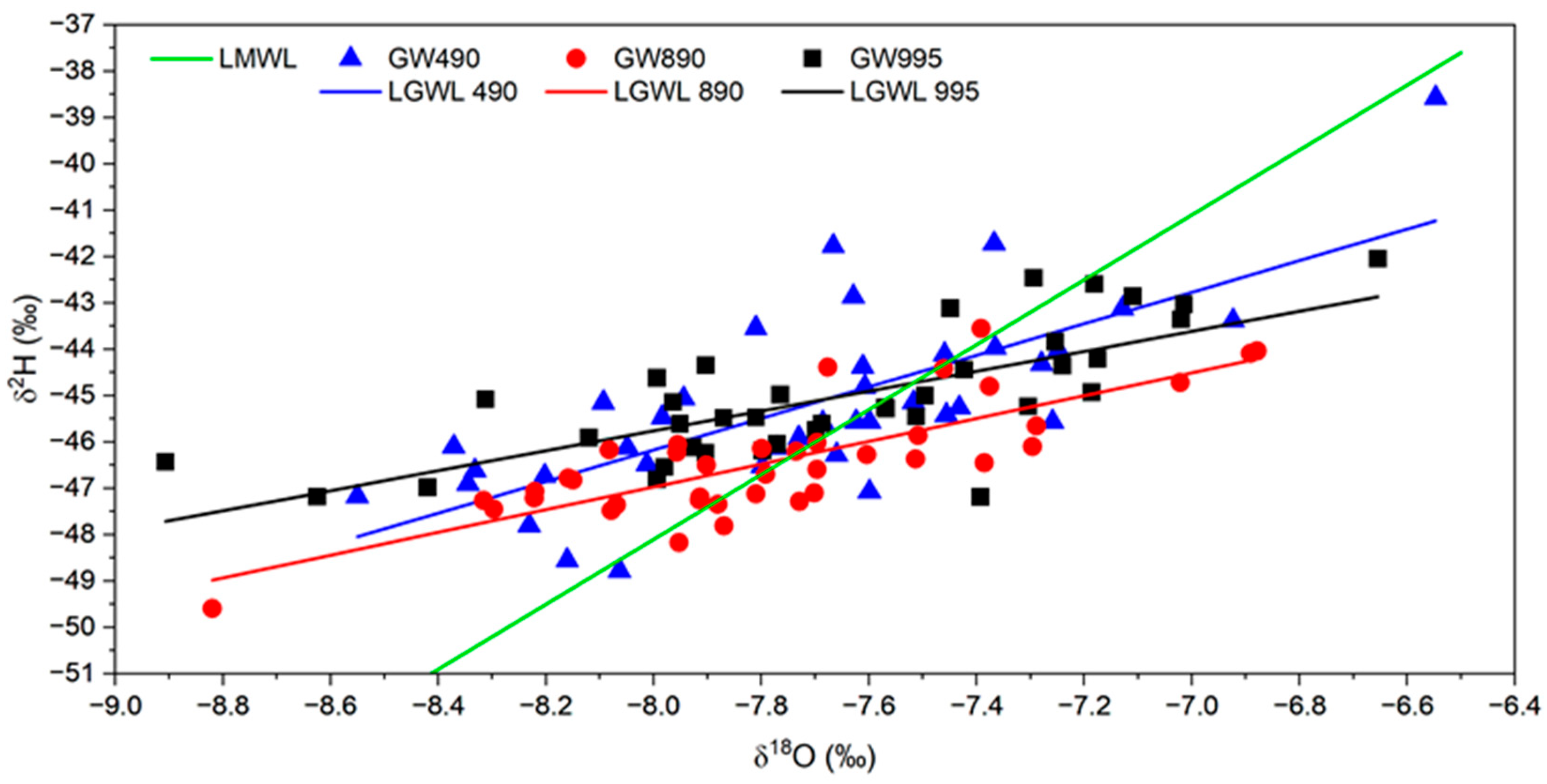
Figure 6 presents a scatter plot showing the relationship between δ
2H and δ
18O values in groundwater from different sources (GW480, GW890, and GW995), with their corresponding Local Groundwater Lines (LGWLs). The plot includes the LMWL shown in green.
The equations for the LGWLs are presented in
Table 6. The correlations between δ
18O and δ
2H in groundwater are statistically significant for all three groundwater sources. Corresponding R
2 values are in range from 0.54 to 0.64, indicating a moderate relationship between these isotopic values. However, given the narrow range of isotopic values (
Table 5), these correlations may be influenced by cluster geometry rather than representing robust hydrogeological relationships.
ANCOVA analysis of the three groundwater sources revealed a significant relationship between δ18O and δ2H (p < 0.001, R2 = 0.624). The omnibus ANOVA tests showed marginally non-significant differences among groundwater sources for both intercepts (p = 0.054) and slopes (p = 0.062), indicating overall similarity in isotopic characteristics. Pairwise comparisons revealed that GW995 differed significantly from GW490 in both slope (p = 0.022) and intercept (p = 0.022). However, neither GW890 vs. GW490 (p = 0.065 for intercept, p = 0.104 for slope) nor GW890 vs. GW995 (p = 0.769 for intercept, p = 0.578 for slope) showed statistically significant differences. This suggests that GW890 exhibits isotopic characteristics intermediate between those of GW490 and GW995. Model residuals showed slight deviation from normality (p = 0.044), though the large sample size (n = 116) provides robustness to this minor violation.
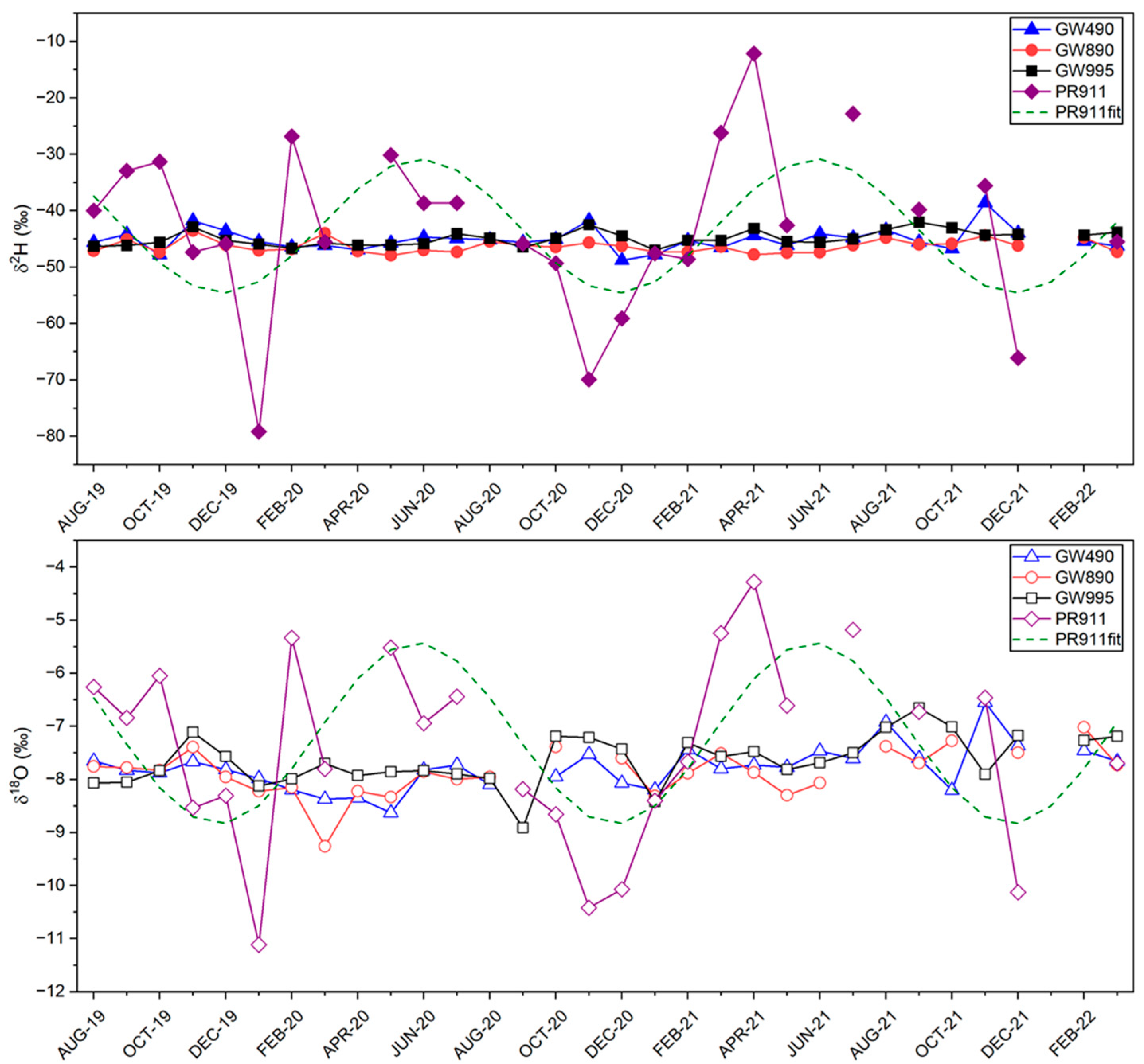
The temporal series of isotopic compositions in groundwater and precipitation, along with the precipitation-fitted sinusoidal model, are presented in
Figure 7. For seasonal modeling, monthly data were used. When multiple groundwater samples were collected within a single month, the arithmetic mean of those measurements was calculated to represent that month. For precipitation, amount-weighted monthly means were calculated. Precipitation from station PR911 was used as a representative of the isotopic composition of recharge water. Statistically significant seasonal variations in the isotopic composition of precipitation were observed (
Figure 7), with sinusoidal fit showing R
2 = 0.35 (
p < 0.001, amplitude 11.9‰) for δ
2H and showing R
2 = 0.45 (
p < 0.001, amplitude 1.7‰) for δ
18O.
Seasonal variability in groundwater was assessed using sinusoidal regression on monthly mean values. Modeling results showed that δ2H exhibited stronger seasonal patterns than δ18O across the sources: GW995 (R2 = 0.33 for δ2H vs. 0.03 for δ18O), GW890 (R2 = 0.19 for δ2H vs. 0.23 for δ18O), and GW490 (R2 = 0.10 for both isotopes). Only GW890 showed statistically significant seasonality in both isotopes, with strongly damped amplitudes (0.7‰ for δ2H, 0.3‰ for δ18O) approaching analytical uncertainty. This proximity to analytical uncertainty requires caution in interpreting seasonal fits, as they may partially reflect analytical noise rather than true seasonal signals.
Figure 8 presents the δ
2H time series, as this isotope demonstrated more consistent seasonal patterns across the groundwater sources.
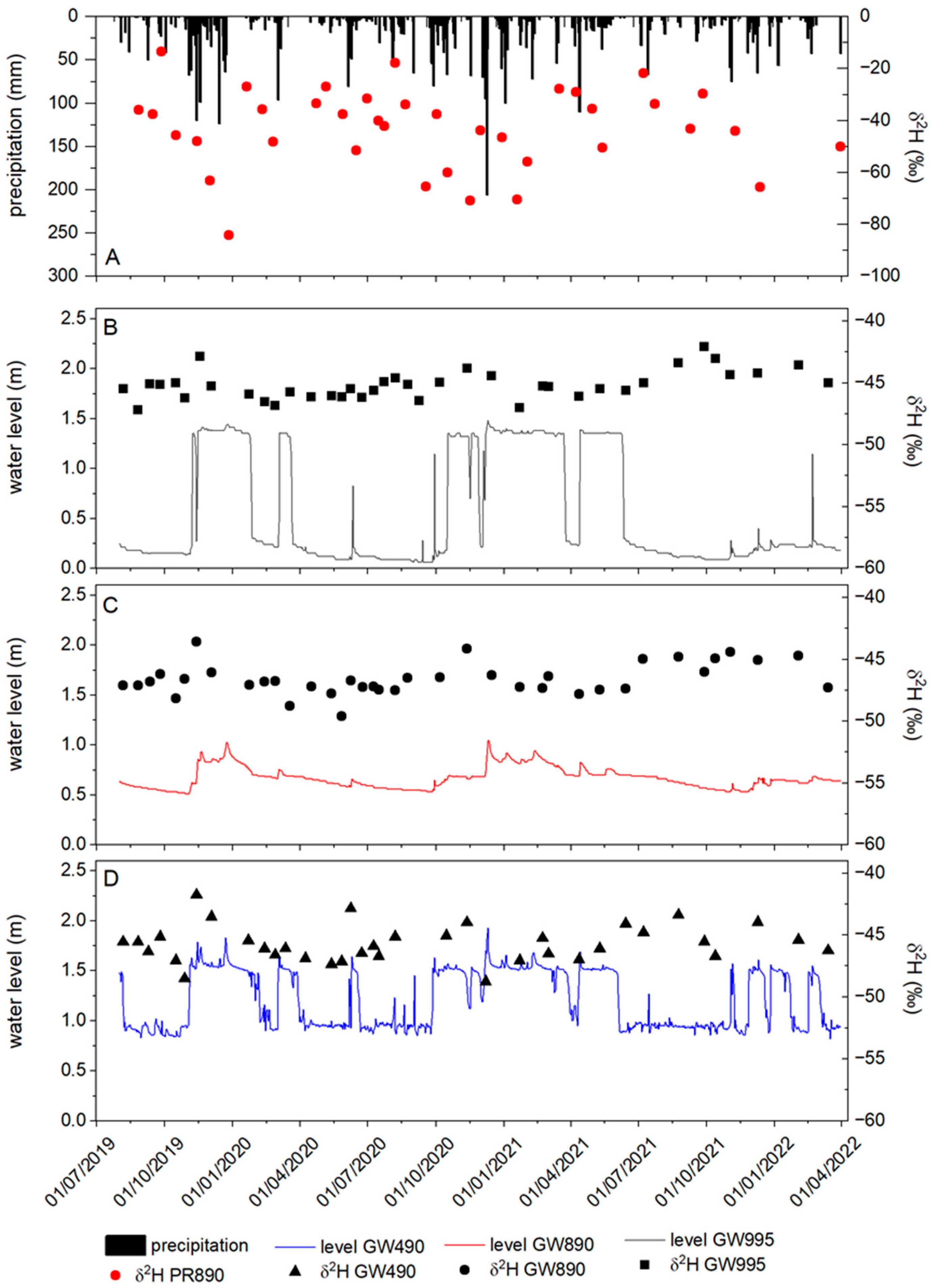
Figure 8 illustrates the temporal dynamics of δ
2H in precipitation (at location PR890) and groundwater alongside water level variations. Despite pronounced isotopic variability in precipitation (δ
2H ranging from approximately −10 to −85‰), groundwater exhibits strongly attenuated signals with minimal seasonal variation. No direct short-term correlation was observed between precipitation and spring water δ
2H values. Groundwater δ
2H values remain relatively stable throughout most of the monitoring period, with the most noticeable shifts occurring during water level rises following extended periods of low water levels. During these transitions, spring isotopic composition shows temporary displacement toward less depleted values. A clear example of this relationship is evident in October 2019 (
Figure 8), where rapid water level increases coincide with simultaneous shifts toward less depleted δ
2H values across all three springs. These patterns indicate that the degree of isotopic signal attenuation is influenced by aquifer storage state, with buffering effects being most pronounced during high-storage conditions.
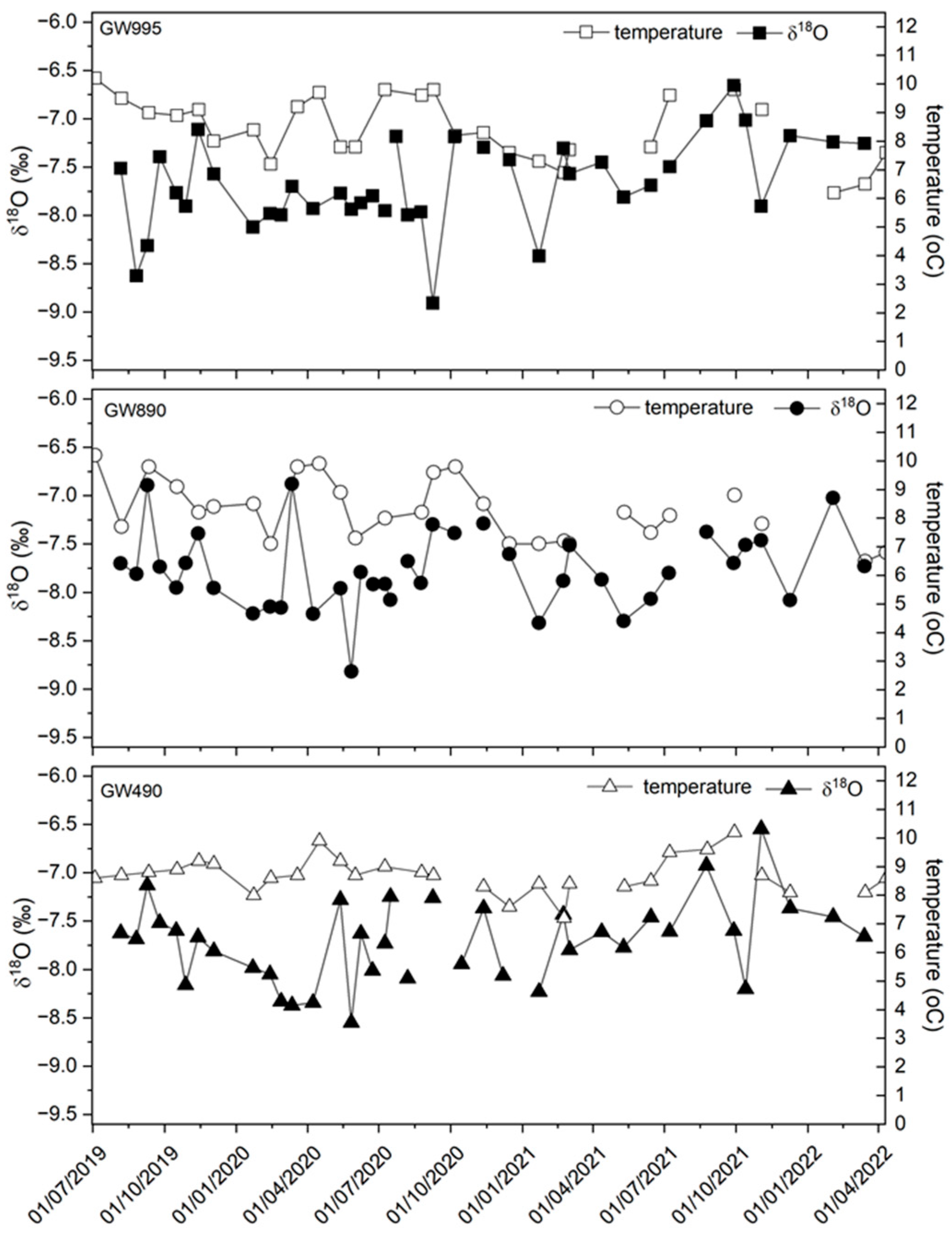
Figure 9 presents the temporal variation of δ
18O alongside water temperature for the three groundwater sources. No statistically significant differences were found in mean δ
18O values (ANOVA,
p = 0.607) or δ
18O variance (Levene’s test,
p = 0.566) among the three groundwater sources. Similarly, median water temperatures were not significantly different (Kruskal–Wallis,
p = 0.2). However, temporal temperature variability differed significantly among sources (Levene’s test,
p < 0.001), with GW490 exhibiting the most stable temperature (standard deviation = 0.63 °C) compared to GW995 and GW890 (standard deviation ≈ 1.1 °C). GW490’s thermal stability suggests effective thermal buffering within the extensive cave system, where heat exchange with rock mass and air circulation moderates seasonal temperature fluctuations. In contrast, the similar δ
18O variability across all three sources (standard deviation 0.40–0.47‰,
Table 5) indicates that evaporative enrichment and mixing processes affect all springs comparably.
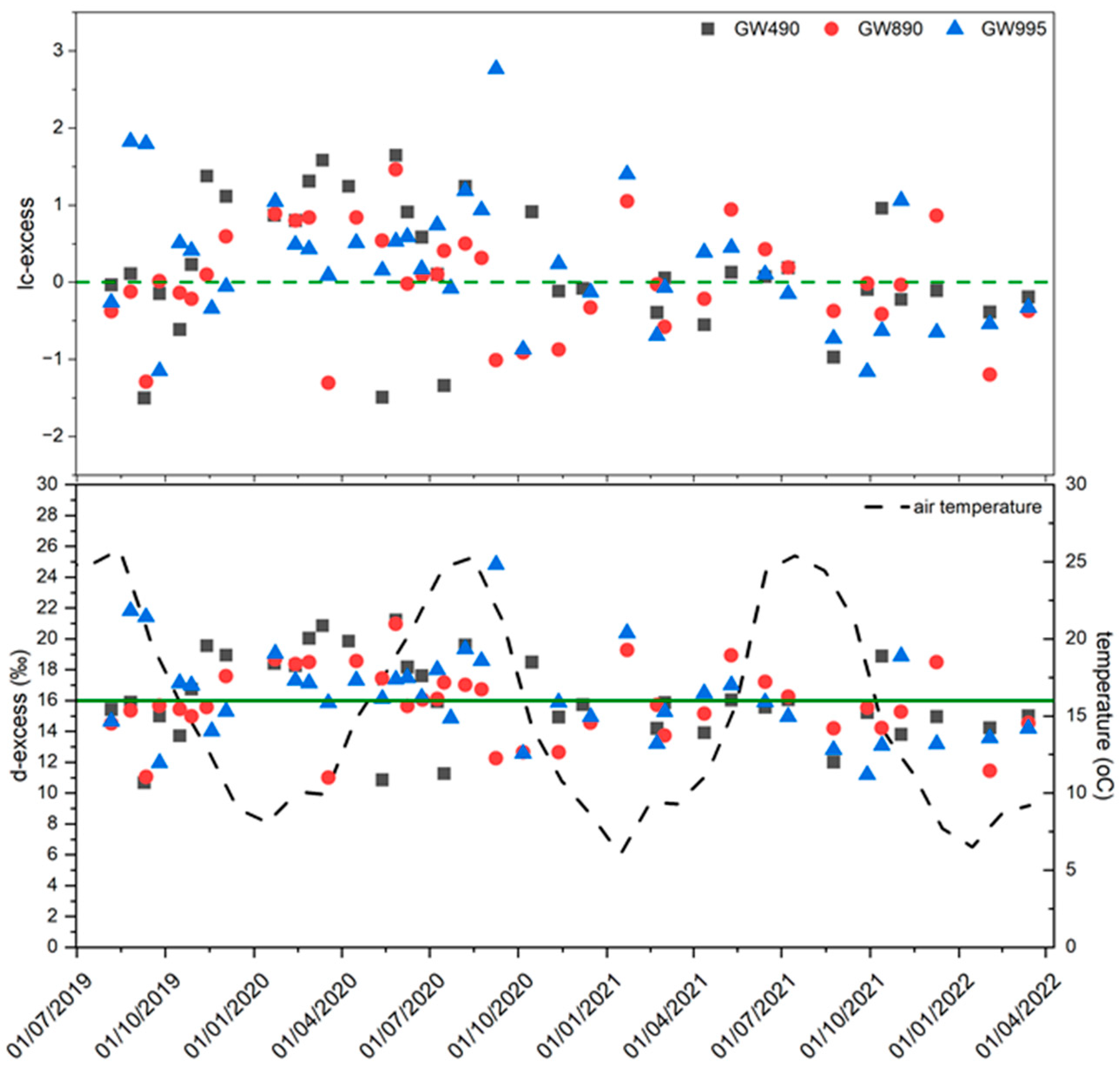
The d-excess groundwater values vary from a minimum of 11.2‰ to a maximum of 25.3‰. Mean values amount to (16.9 ± 2.3)‰ for GW490, (16.3 ± 2.5)‰ for GW890, and (16.4 ± 2.9)‰ for GW995, showing no statistically significant differences (ANOVA,
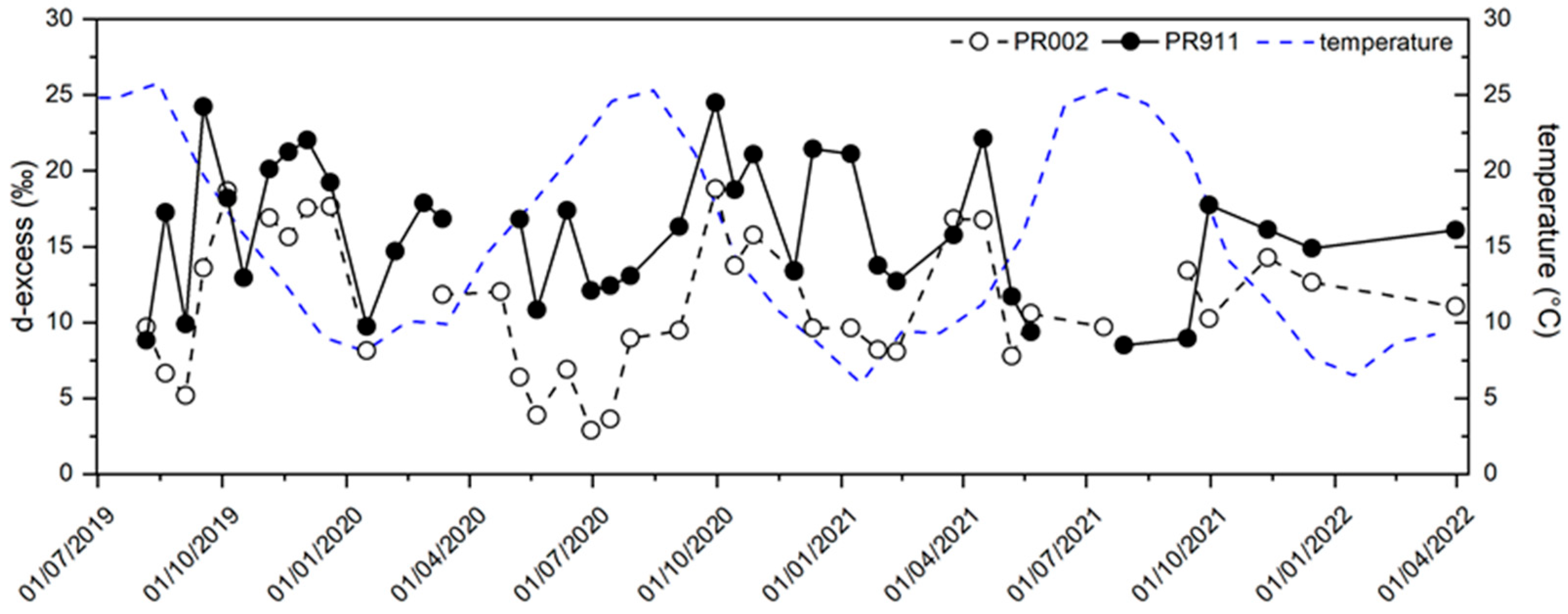
p = 0.56). The mean d-excess of groundwater (~16‰) matches that of precipitation collected at high-altitude stations (
Table 3 and
Table 7), confirming predominant recharge from elevations above 900 m a.s.l. No seasonal variability was observed in groundwater d-excess (
Figure 10).
The lc-excess groundwater values vary from a minimum of −1.5 to a maximum of 2.8. Mean values amount to (0.2 ± 0.8) for GW490, (0.03 ± 0.7) for GW890, and (0.3 ± 0.8) for GW995, showing no statistically significant differences between sources (ANOVA,
p = 0.38). Mean lc-excess values close to zero across all three sources indicate minimal deviation from the LMWL, reflecting meteoric origin without substantial evaporative enrichment. No seasonal variability was observed in groundwater lc-excess (
Figure 10), and the absence of systematically negative values confirms that evaporative fractionation during recharge or storage is negligible.
4.2.3. Water Quality Parameters
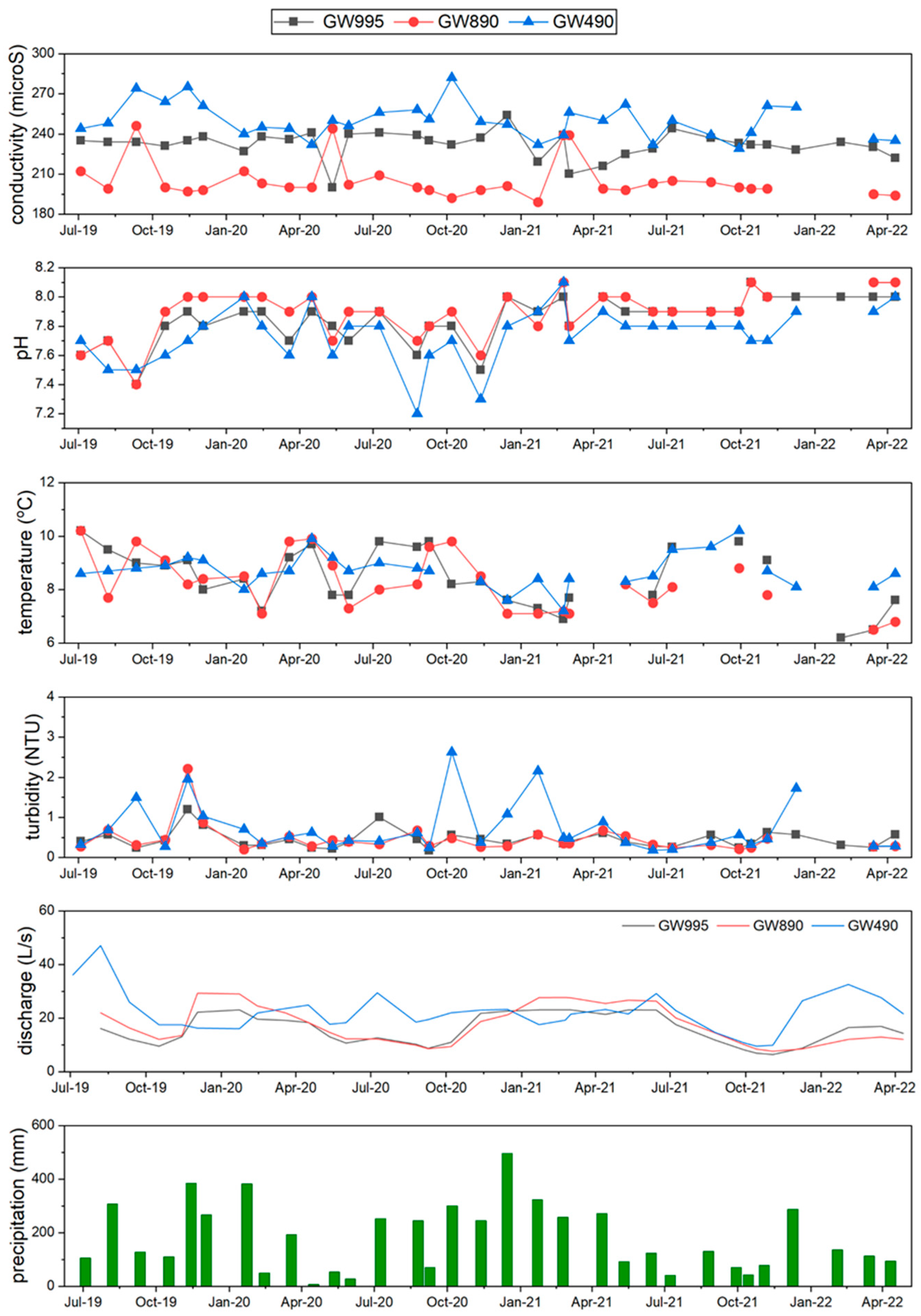
The temporal dynamics of hydrochemical parameters throughout the monitoring period (July 2019–April 2022) are presented in
Figure 11.
Electrical conductivity differed significantly among the three groundwater sources, as confirmed by the Dunn test (p < 0.001 for all pairwise comparisons). The median conductivity was lowest at GW890 (200 µS/cm), intermediate at GW995 (234 µS/cm), and highest at GW490 (249 µS/cm), with the maximum value (282 µS/cm) recorded at GW490 in October 2020. The systematic differences in electrical conductivity among springs reflect differential flow path characteristics within the karst aquifer. GW890’s consistently lower EC values, combined with its depleted isotopic signature, suggest predominant recharge from high-elevation sources with shorter water–rock interaction times along rapid conduit flow paths. The intermediate and higher EC values at GW995 and GW490, respectively, indicate greater water–rock interaction along matrix-dominated flow paths.
pH values showed minimal variability (7.2–8.1) across all sources and throughout the monitoring period, indicating consistent carbonate buffering. No statistically significant differences were observed among the three springs (ANOVA, p = 0.68), suggesting uniform water–rock interaction processes throughout the karst aquifer.
There was no statistically significant difference in water temperature among the groundwater sampling sites (Kruskal–Wallis, p = 0.2). The median water temperature ranged from 8.2 to 9.7 °C, with a minimum value of 6.2 °C recorded at GW995 (February 2022) and a maximum value of 10.2 °C recorded at all sites (GW995 and GW890—July 2019; GW490 September 2021).
Turbidity exhibited episodic peaks throughout the monitoring period, reflecting the mobilization of fine sediments through conduit networks during recharge events, characteristic of event-driven karst dynamics. Although median turbidity values did not differ significantly among springs (Kruskal–Wallis, p = 0.13), GW490 displayed more frequent high-turbidity events, suggesting greater susceptibility to sediment mobilization or more direct connection to recharge sources.
Notably, hydrochemical parameters showed minimal seasonal variability, with variations primarily driven by individual precipitation-recharge events rather than following systematic seasonal patterns.




 ,
,