Article

The Influence of Water and Sediment Regulation on the Erosion and Deposition of the Yellow River Subaqueous Delta


1
College of Oceanography and Space Informatics, China University of Petroleum (East China), Qingdao 266580, China
2
Technology Innovation Center for Maritime Silk Road Marine Resources and Environment Networked Observation, Ministry of Natural Resources, Qingdao 266580, China
*
Author to whom correspondence should be addressed.
Water 2026, 18(2), 140; https://doi.org/10.3390/w18020140
Submission received: 28 October 2025 / Revised: 30 December 2025 / Accepted: 4 January 2026 / Published: 6 January 2026
(This article belongs to the Section Water Erosion and Sediment Transport)

Abstract

Based on the numerical simulation software Delft3D v4.01.00, this study established a three-dimensional water and sediment transport model for the Yellow River subaqueous delta, and simulated the water and sediment diffusion as well as erosion/deposition processes in the study area in 2019. By comparing the water discharge, sediment discharge, and deposition volume of 2019 (a year with water and sediment regulation) and 2017 (a year without water and sediment regulation), the influence of water and sediment regulation on the Yellow River subaqueous delta was explored. The results showed that water and sediment regulation projects change the distribution and diffusion of suspended sediment. Suspended sediment concentration in nearshore areas showed a significant correlation with deposition depth, particularly in the estuary area. When the water and sediment regulation was interrupted in 2017, the overall performance of the study area showed erosion, while when the water and sediment regulation was implemented in 2019, the study area exhibited sedimentation. The implementation of the water and sediment regulation project can promote the sedimentation of the subaqueous delta of the Yellow River.

1. Introduction

As the second-longest river in China, the hydrological dynamics and geomorphological evolution of the Yellow River delta region have long been focal points in China’s geoscience and environmental science. The Yellow River is renowned for its high sediment transport capacity, historically reaching up to 1.3 billion tons annually [1]. This sediment-related issue has a deep historical background and far-reaching impacts. Historically, the Yellow River experienced “two breaches every three years and one major diversion every hundred years [2],” causing severe disasters for coastal populations. The root cause of this phenomenon lies in the imbalance between water and sediment in the river system—characterized by insufficient water and excessive sediment—which has led to frequent flooding and channel diversions. Although long-term management efforts have alleviated the sediment problem to some extent, it remains significant, making the Yellow River one of the most challenging rivers globally due to its exceptionally high sediment load.
In recent decades, the Yellow River Delta has faced dual threats from global climate change and human interventions in both the basin and deltaic regions [3]. The increasing frequency of extreme events such as storm surges and high-energy floods has altered the hydrodynamic characteristics and erosion/deposition patterns of the Yellow River Delta, posing serious risks to its geomorphological stability [4,5]. Large-scale water conservancy projects constructed within the basin have modified the sediment flux entering the sea and its seasonal distribution pattern. These reservoirs also function as sediment traps, leading to a sharp decline in sediment discharge into the estuary [6,7]. Notably, since the initiation of the reservoir-linked water and sediment regulation project in 2002, the flow of the Yellow River into the sea has exhibited new characteristics [8], significantly altering the natural properties of the Yellow River system. Approximately 30% to 50% of the annual water and sediment are now transported to the sea over a short period (10 to 20 days), shifting the seasonal flood discharge and sediment transport patterns in the Yellow River Basin from “natural runoff” to “remote-controlled pulses” [9]. In this complex context, the delta’s geomorphic evolution is not only governed by fluvial inputs but also profoundly modulated by marine dynamics, particularly the regional tidal currents and wind waves associated with the East Asian monsoon [10,11,12].
The dynamic geomorphological evolution of the Yellow River Delta results from the cumulative effects of sediment diffusion and deposition under hydrodynamic forces [13] and is further influenced by processes such as sediment resuspension and transport [14]. The implementation of the water and sediment regulation project and changes in the delta’s topography profoundly affect land reclamation status, geomorphological evolution, ecological environment improvement, and water resource utilization in the region. Therefore, evaluating the influence of sediments on the subaqueous delta before and after water regulation is critically important.
Over the years, numerous domestic and international scholars have extensively studied the dynamic geomorphic processes of the Yellow River Delta and its adjacent waters, covering topics such as sediment inflow characteristics [15,16], water–sediment transport mechanisms [17,18,19], landform erosion/deposition evolution [20,21,22], and numerical simulations of dynamic geomorphology [9,23,24]. These research findings hold substantial scientific value and provide critical references for studying other deltas worldwide, enhancing our understanding of geographical evolution and sedimentary processes in these environments.
Nevertheless, observational data in the Yellow River subaqueous delta remain scarce, with monitoring of the water and sediment regulation process relying more on short-term, large-scale station surveys than on long-term time-series datasets [25]. As a result, the overall sediment transport mechanism and processes remain incompletely understood. In this context, numerical simulation emerges as an efficient research method due to its temporal and spatial advantages [18]. From a dynamic perspective, numerical simulations based on extensive measured data have become essential tools for exploring hydrodynamic characteristics, sediment transport, and dynamic mechanisms in the Yellow River subaqueous delta [5,26,27,28,29].
Although domestic and foreign scholars have achieved significant progress in the numerical simulation of the Yellow River Delta, including clarifying the diffusion characteristics and driving factors of suspended sediment [30,31,32], there remains a lack of studies on the three-dimensional water and sediment transport model concerning the impact of seawater inflow on the Yellow River’s subaqueous delta before and after water and sediment regulation. Additionally, the assessment of seawater inflow’s influence on the subaqueous delta is still incomplete. Therefore, based on research into sediment diffusion and erosion, it is essential to develop a highly reliable numerical model from the perspective of dynamic coupling. This would enhance our understanding of the dynamic geomorphological evolution process of the Yellow River Delta and provide a scientific basis for its future management and protection.

2. Materials and Methods

The geographical location of the study area is shown in Figure 1. It is located in the northeastern part of Shandong Province, China, covering the Yellow River Estuary, and parts of the Bohai Bay and Laizhou Bay. Based on the numerical simulation software Delft3D, this study established a three-dimensional water and sediment transport model for the Yellow River subaqueous delta to simulate the distribution of suspended sediment, water and sediment transport, and sediment erosion states in the study area. By comparing and analyzing water discharge, sediment discharge and deposition volume from 2019 (a year with water and sediment regulation) and 2017 (a year without water and sediment regulation), the influence mechanism of water and sediment regulation activities on the Yellow River subaqueous delta is explored—specifically, such regulation elevates river water and sediment supply, thereby rebalancing the relationship between sediment input and marine erosion forces in the Yellow River subaqueous delta.
Given the relatively shallow water depth and limited field measurement data in the study area, the Delft 3D model was employed to simulate the sediment distribution, diffusion, and erosion/deposition conditions in this study. The simulation computations in Delft3D software are performed based on a 3D layered σ-coordinate shallow water mathematical model, with the alternating-direction implicit (ADI) method employed for numerical solution [33]. Delft 3D comprises seven modules, such as FLOW and WAVE, which can be mutually coupled to realize hydrodynamic simulations considering the impacts of multiple dynamic factors. It can be applied to free-surface water environments and is capable of performing numerical simulations of hydrodynamic environments influenced by the combined effects of multiple factors such as wind-induced waves, tides, and sediment transport. The Delft 3D model has been introduced and verified in a previous study [34]. For the quantification of erosion/deposition results via this model, the deposition volume of each grid cell was determined by multiplying its erosion/deposition depth at a specific time by the corresponding grid area; by aggregating these individual volumes, the total deposition volume within the study area was obtained. The model simulation period was two years, from 1 January to 31 December 2017, and from 1 January to 31 December 2019. The data for the water discharge and sediment discharge from the Yellow River into its delta required for the simulation were obtained from the Yellow River Sediment Bulletin published by the Yellow River Water Conservancy Commission. The specific data are presented in Table 1.

3. Simulation Results

3.1. Diffusion/Transport Dynamics

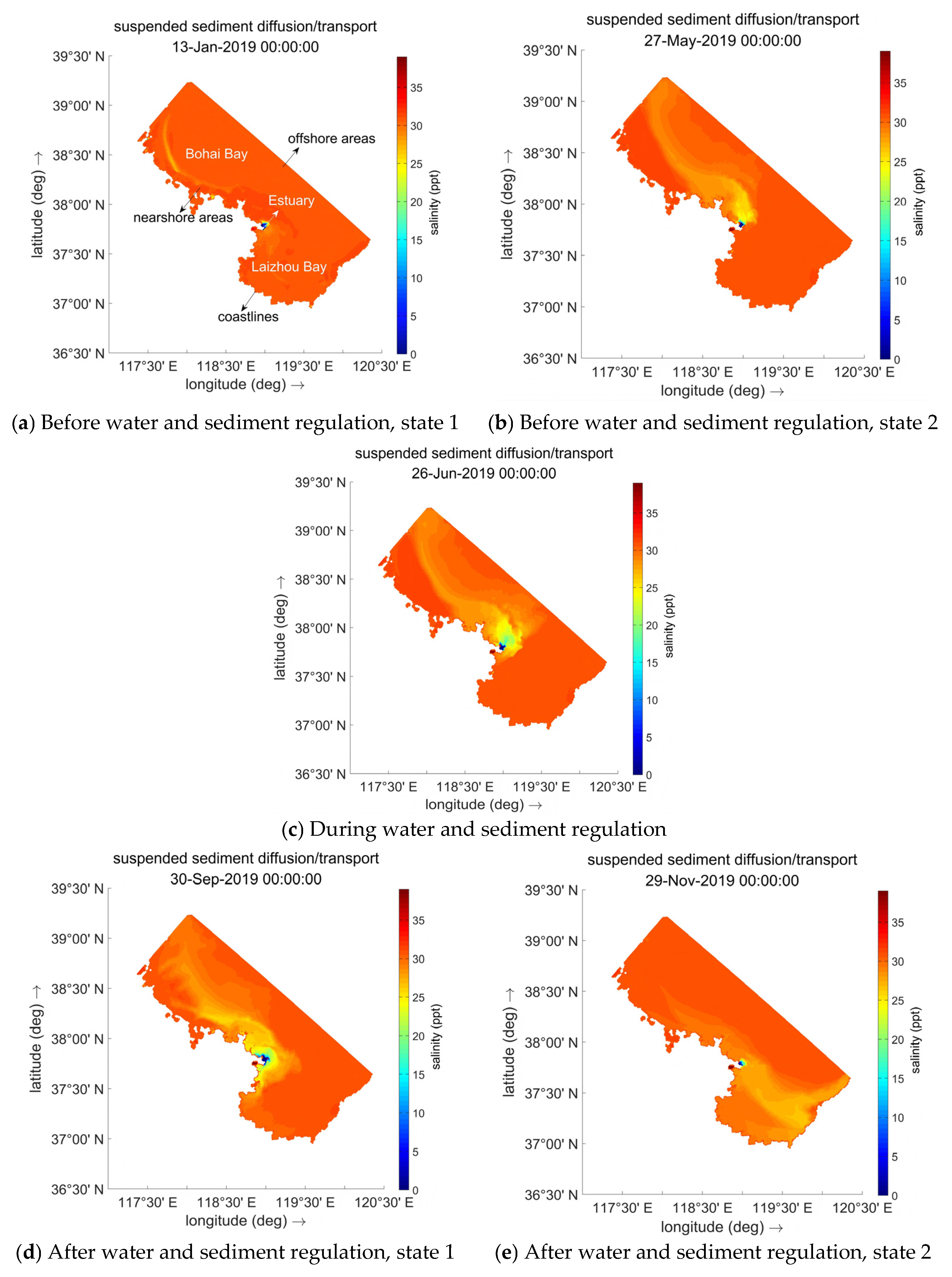
The transport and diffusion patterns of suspended sediments in the same period exhibit high similarity; therefore, this study selects typical cases for analysis. Since salinity and sediments are controlled by the same hydrodynamic forces (such as water flow and tides) and their paths are highly synchronized, given the clear distribution of salinity, salinity is considered capable of directly indicating the transport direction and diffusion range of sediments. As shown in Figure 2, the diffusion/transport patterns of suspended sediments before and after water and sediment regulation can be observed through changes in salinity. The suspended sediments in the study area mainly come from the diffusion and transport of estuarine sediments, followed by the resuspension of seabed sediments. Before the implementation of water and sediment regulation, there were two main states of suspended sediment transport (Figure 2a,b). First, sediment in the coastal areas of Bohai Bay and Laizhou Bay diffuses toward the sea, and the diffusion range of sediment in the western parts of the two bays is greater than in the eastern parts. Second, a minor portion of estuarine sediment reaches the coast of Laizhou Bay, while over 80% is transported northward and subsequently moves westward into Bohai Bay. During the water and sediment regulation (Figure 2c), estuarine sediment diffuses farther, increasing the range and enhancing northward diffusion. The largest proportion diffuses northwestward into Bohai Bay, followed by northeastward diffusion, with only a small fraction transported southward from the eastern side of the estuary to Laizhou Bay. After water and sediment regulation, sediment transport is also manifested in two states (Figure 2d,e). First, in autumn, sediment diffusion around the estuary becomes more uniform. Beyond a certain distance near the estuary, westward sediment transport is notably stronger, spreading further offshore and extending from southeast to northwest into Bohai Bay. Sediment transported to Laizhou Bay diffuses from the western coast toward the southern and central parts of the bay, although sediment transport in Laizhou Bay is significantly weaker than in Bohai Bay. Second, in winter, southeastward transport exceeds northwestward transport. Most estuarine sediment spreads southeastward through the center of Laizhou Bay to its eastern coast, while only a small fraction moves westward along the Bohai Bay coast.

3.2. Erosion/Deposition

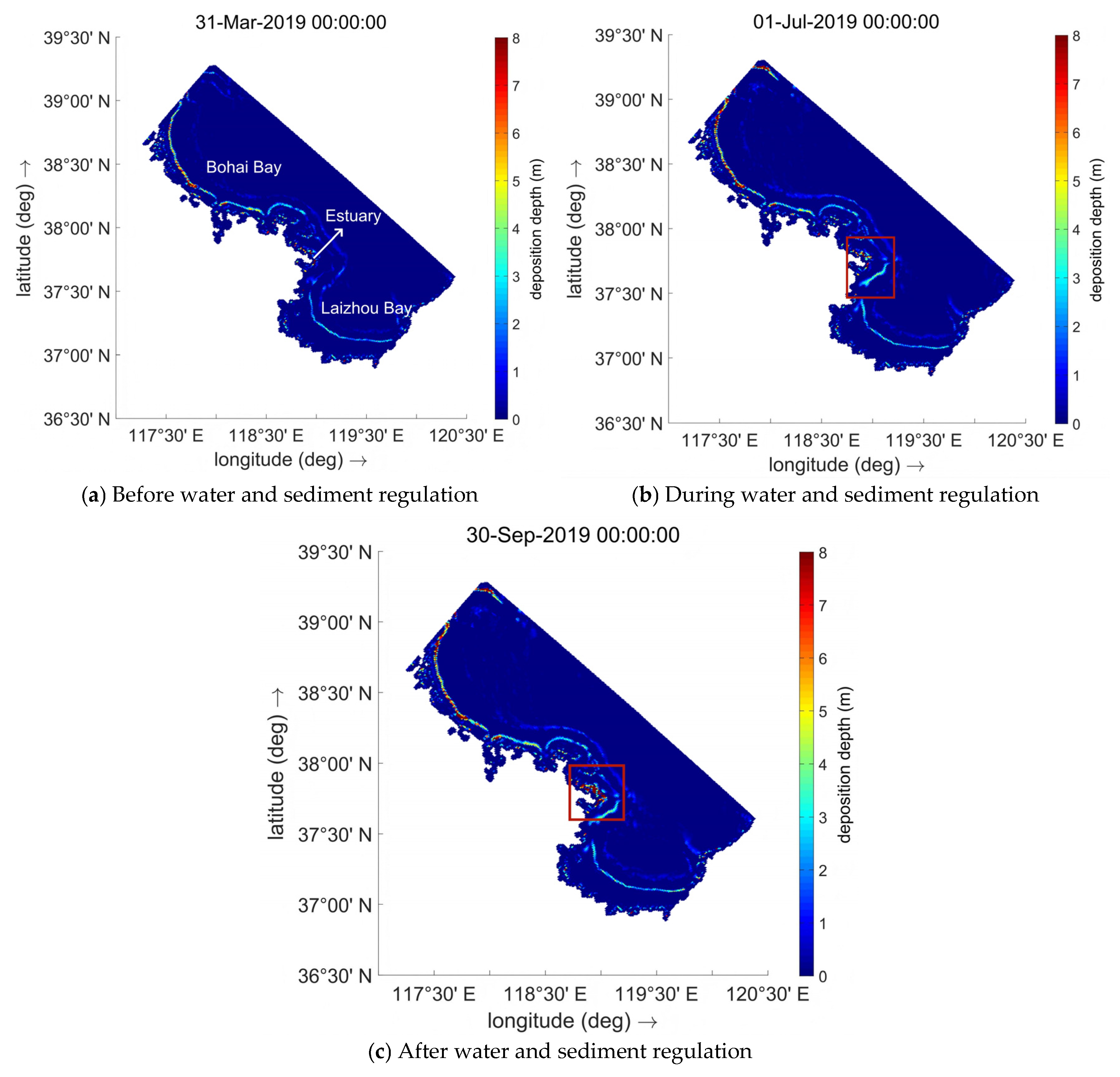
The distribution of deposition thickness in the study area before and after water and sediment regulation is shown in Figure 3. Sediment is deposited at a specific distance from the shoreline, forming a deposition zone. Specifically, the deposition zone in Bohai Bay is approximately 10 km from the shore, while that in Laizhou Bay is approximately 20 km from the shore, with a width of roughly 2 km. The deposition thickness is mostly less than 5 m, but it exceeds 5 m in estuaries and some coastal areas of the Bohai Bay. The deposition patterns in the study area vary between the periods before and after water and sediment regulation. Before water and sediment regulation (Figure 3a), deposition primarily occurred in the coastal areas of Bohai Bay and Laizhou Bay, with greater intensity in the western parts than in the eastern parts of the two bays. During water and sediment regulation (Figure 3b), the deposition increased significantly from the estuary to the west bank of Laizhou Bay, resulting in a wider deposition area. After water and sediment regulation (Figure 3c), deposition was primarily concentrated in the estuarine areas, particularly in its northern part.
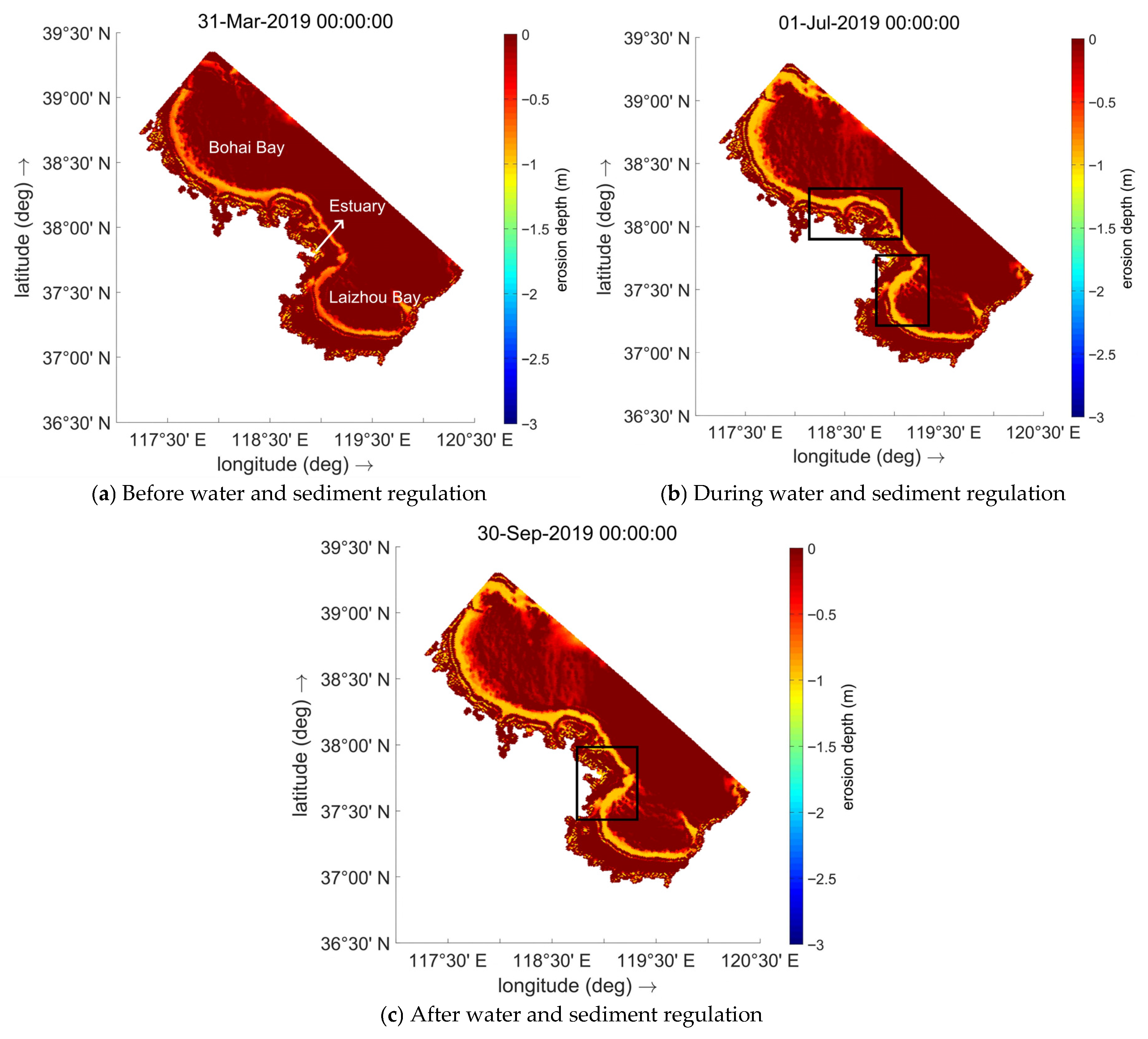
The distribution of erosion depth in the study area before and after water and sediment regulation is shown in Figure 4. The erosion zone already existed before water and sediment regulation (Figure 4a). The distribution was on the seaward side of the deposition zone, with the narrowest part north of the river mouth and gradually widening to reach the two bays. The width of the erosion zone is significantly greater than that of the deposition zone. During water and sediment regulation (Figure 4b), the overall erosion intensity increases, and the erosion zone widens along the eastern coast of Bohai Bay and the western coast of Laizhou Bay. After water and sediment regulation (Figure 4c), the erosion zone in Bohai Bay widened slightly, and the overall erosion situation did not significantly differ from that during water and sediment regulation, except for local changes near the estuary and the west side of Laizhou Bay.

4. Discussion

4.1. Distribution and Diffusion of Suspended Sediment Concentration

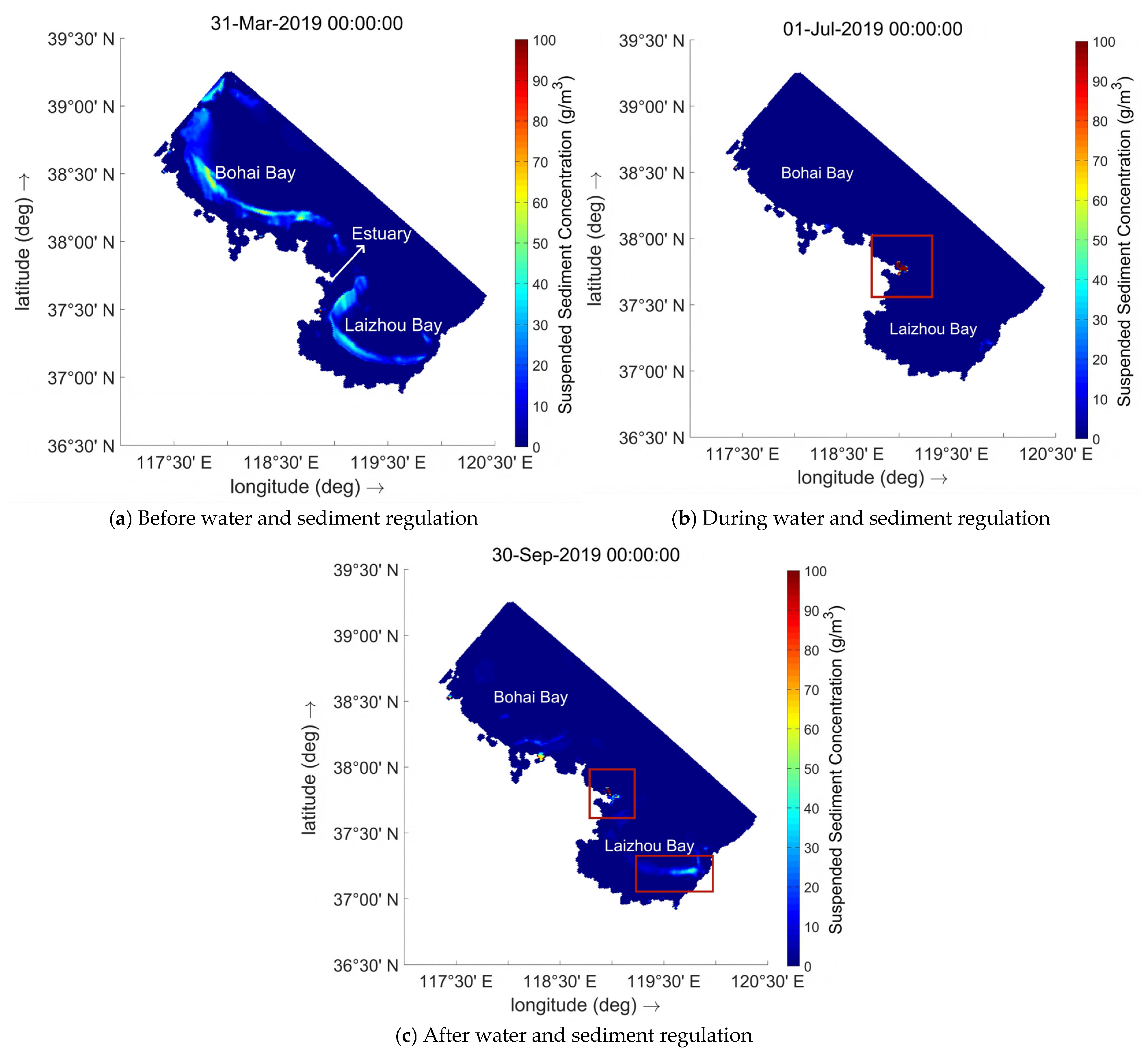
The distribution of suspended sediment concentration in the study area before and after water and sediment regulation is shown in Figure 5. In spring, before water and sediment regulation, the primary cause of suspended sediment formation was wind-wave-induced resuspension of bottom sand [35]. The resuspension of coastal bottom sediment in the two bays led to higher suspended sediment concentrations in the region. Simultaneously, the prevailing southeast winds during this period caused the sediment lifted nearshore and estuarine areas to move westward, leading to higher suspended sediment concentrations on the west coasts of Bohai Bay and Laizhou Bay than on the east, as well as a high-concentration area extending from the east of Bohai Bay to the north side of the estuary (Figure 5a). In summer, during water and sediment regulation, the Yellow River’s water and sediment discharge increased, and the amount of sediment entering the sea reached its maximum. Although the sediment spreads around, tides, wind, waves, and the Yellow River’s runoff cannot move all the sediment away from the estuarine area due to the mutual offset between runoff and marine hydrodynamics [31,36]. The amount of sediment transported to the two bays is much less than that remaining in the estuarine areas, resulting in significant sediment deposition in the estuarine area. The suspended sediment concentration exceeds 100 g/m3, which is significantly higher than that in other areas (Figure 5b). In autumn, after the completion of water and sediment regulation, the Yellow River’s water and sediment transport into the sea remained high. Most sediment was transported by runoff and tides, and some diffused northwestward into Bohai Bay during this period due to the southeast monsoon [37]. In winter, north- and northwestward winds dominated the study area, resulting in greater sediment transport toward the southeast than toward the northwest. This causes part of the sediment to spread from the estuary southeastward into Laizhou Bay, passing through the center of the bay and reaching the eastern coast, forming the distribution pattern shown in Figure 5c.

4.2. Influence of Water and Sediment Regulation of the Yellow River on Its Subaqueous Delta

The study area was divided into several parts, including the offshore areas of Laizhou Bay and Bohai Bay, the nearshore areas of Laizhou Bay and Bohai Bay, the estuarine areas, and the central shallow sea basin of Bohai Sea. Within each area, 100~300 points were randomly selected, and the suspended sediment concentration and erosion/deposition depth of each point for each month in 2019 were output. The average values of all points in each respective area were calculated to represent the changes in suspended sediment concentration and erosion/deposition depth for that area.

4.2.1. Offshore Areas of Bohai Bay and Laizhou Bay

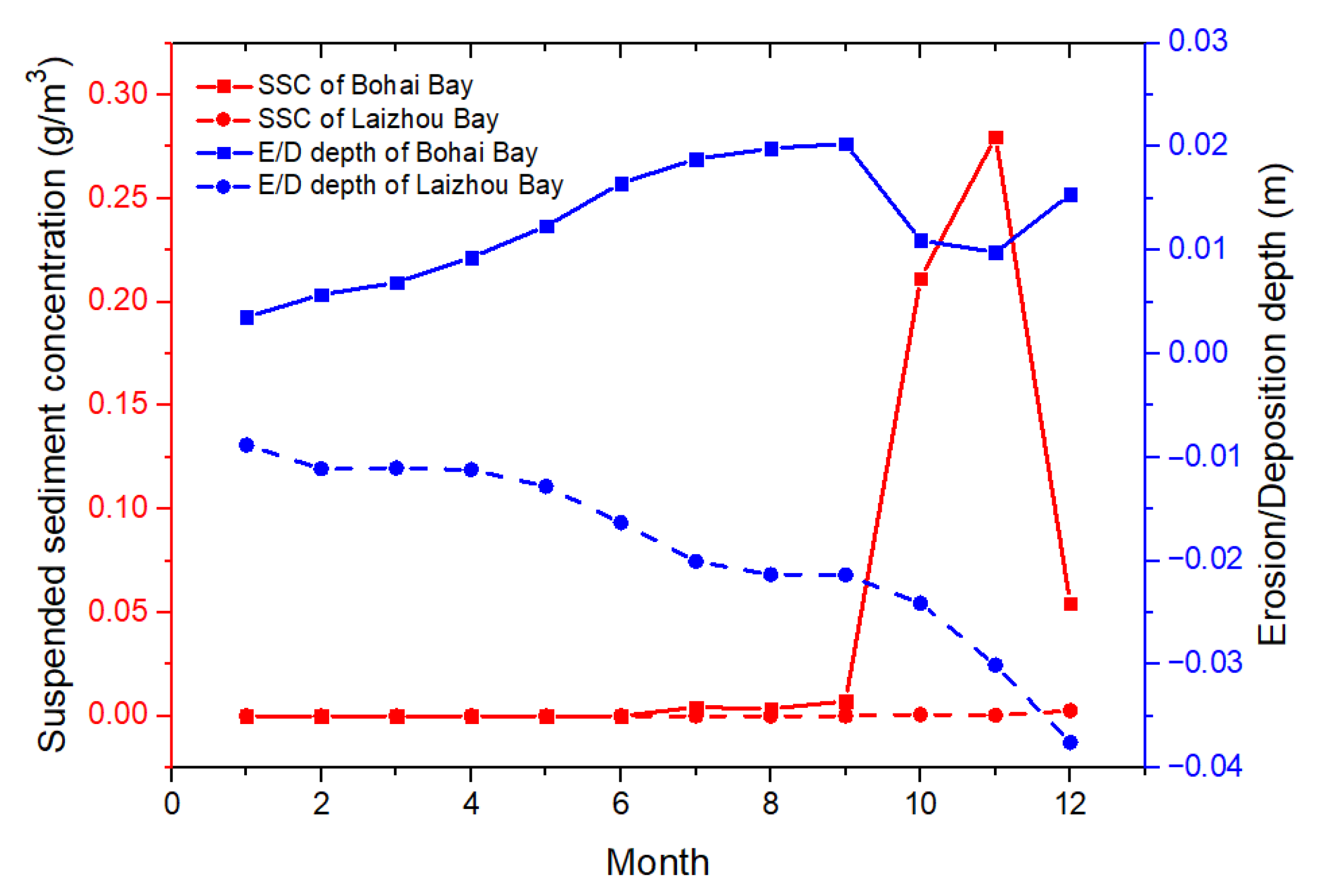
The changes in suspended sediment concentration and erosion/deposition depth in the offshore areas of Bohai Bay and Laizhou Bay in 2019 are shown in Figure 6. In the figure, red represents suspended sediment concentration (SSC), and blue represents erosion/deposition depth. The solid line in Figure 6 shows the average suspended sediment concentration and erosion/deposition depth in the offshore areas of Bohai Bay. The average suspended sediment concentration is less than 0.3 g/m3, and the average deposition thickness is less than 3 cm. Compared with the first five months, the SSC in the offshore areas of Bohai Bay slightly increased from June to September, and the deposition thickness also rose. The reason is that during the water and sediment regulation period, the sediment volume at the estuarine areas is relatively large, and under the action of marine hydrodynamic forces [38], the sediment is gradually transported to the offshore areas. In winter, the combined effect of tidal current and wind results in a greater bed shear stress, which resuspends seabed sediments [39], leading to a high SSC here but with relatively thin deposition.
The dashed line in Figure 6 represents the average suspended sediment concentration and erosion/deposition depth in Laizhou Bay. The SSC remains very low, with minimal fluctuation throughout the year and an average of less than 0.003 g/m3. Erosion is also minimal, with an average erosion depth of less than 4 cm. After water and sediment regulation, the erosion depth in this area increased slightly, indicating that the impact of water and sediment regulation on the offshore areas of Laizhou Bay may manifest as erosion.
Based on the suspended sediment concentration (Figure 6), during the first five months, the average SSC in the offshore areas of both bays remains close to zero and shows little variation. However, after July, the SSC in Bohai Bay increases slightly, peaking in October before decreasing in December. This indicates that although the SSC in the offshore areas of Bohai Bay is influenced by water and sediment transfer [29], it is more significantly affected by the resuspension of bottom sediments [40]. In contrast, the offshore areas of Laizhou Bay remain largely unaffected. As shown in Figure 6, although the deposition/erosion depth in both bays is not substantial (only a few centimeters), the deposition patterns differ markedly between Bohai Bay and Laizhou Bay. Bohai Bay exhibits deposition, while Laizhou Bay shows erosion. During the summer water and sediment regulation period, the deposition thickness in Bohai Bay and the erosion depth in Laizhou Bay both increase slightly, indicating that water and sediment transfer may enhance the original erosion/deposition states of the offshore areas of the two bays [41].

4.2.2. Nearshore Areas of Bohai Bay and Laizhou Bay

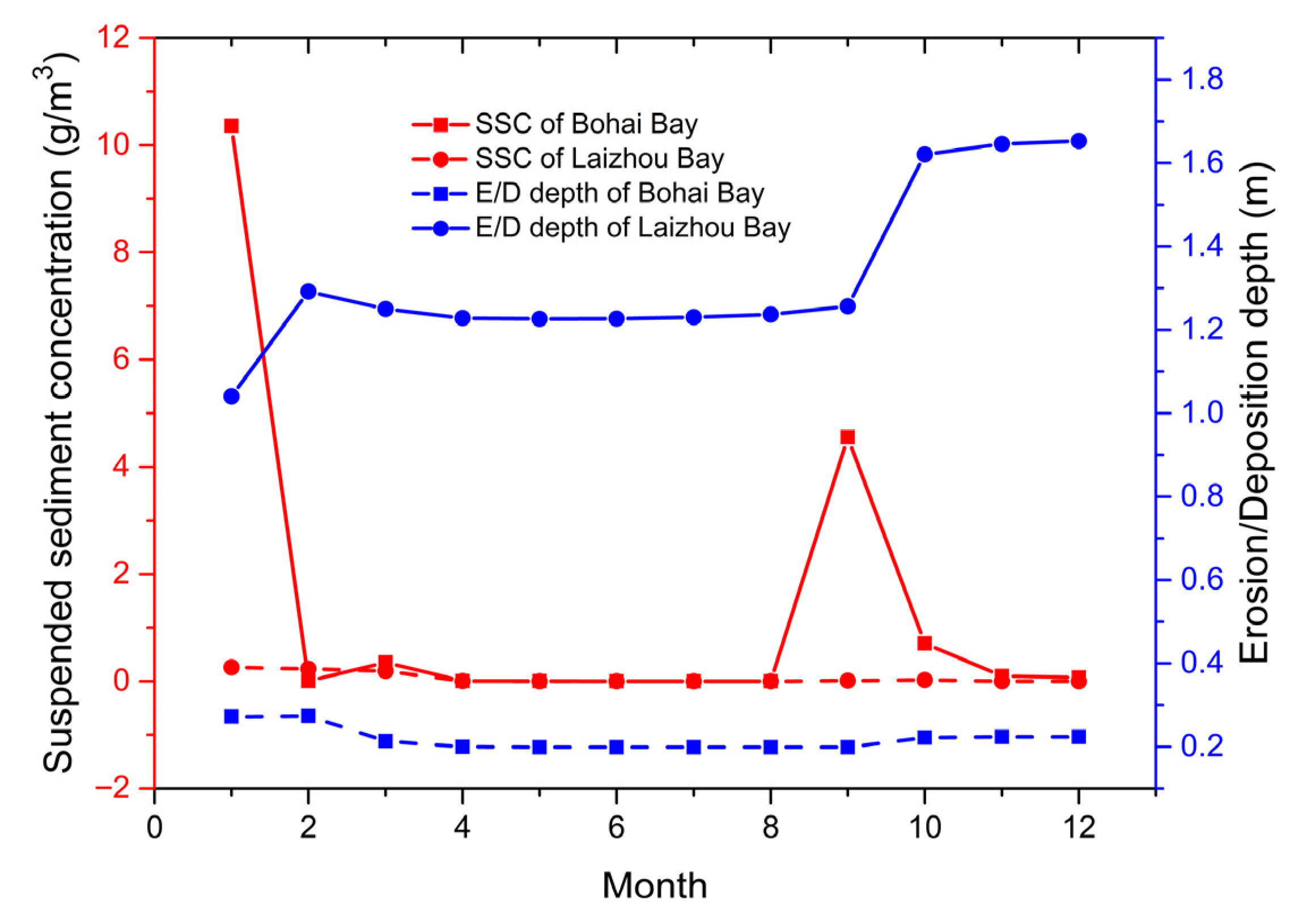
The changes in suspended sediment concentration and erosion/deposition depth in the nearshore areas of Bohai Bay and Laizhou Bay in 2019 are shown in Figure 7. As indicated by the solid line in the figure, the average SSC and erosion/deposition depth in the nearshore areas of Bohai Bay are significantly higher than those in the offshore areas. The SSC peaks in autumn and winter but decreases in summer [42]. The average deposition thickness in the nearshore areas of Bohai Bay ranges from 1 to 1.7 m, with notable increases observed in February and October. When the SSC rises, there is no significant change in deposition thickness; however, when the SSC decreases, the deposition thickness becomes larger. This suggests that the deposited sediments originate primarily from the settlement of suspended grains [43]. When sediment transitions from a suspended state to a deposited state, it accumulates on the seabed, resulting in an increase in deposition thickness.
The average SSC and erosion/deposition depth in the nearshore areas of Laizhou Bay are depicted by the dashed line in Figure 7. The SSC does not exceed 0.3 g/m3, and the average deposition thickness is approximately 0.2 m. The SSC in the first three months is higher than in other months, and there is a general proportional relationship between SSC and deposition thickness. When the SSC decreases, the deposition thickness also decreases, and when the SSC increases, so does the deposition thickness.
According to the monthly average (Figure 7), the variation of SSC in the nearshore areas of Laizhou Bay is more stable compared to the significant fluctuations of the nearshore areas in Bohai Bay during autumn and winter. Both bays generally exhibit deposition, but the deposition thickness in the nearshore areas of Bohai Bay is significantly greater than that in the nearshore areas of Laizhou Bay. The average deposition thickness in the nearshore areas of Laizhou Bay fluctuates around 0.2 m, whereas the average deposition thickness in the nearshore areas of Bohai Bay exceeds 1 m. The sediment thickness in Bohai Bay increases significantly in autumn, unlike in Laizhou Bay, suggesting that the resuspension effect of sediment under the combined action of tidal flow and wind has a stronger impact on Bohai Bay than on Laizhou Bay [39].

4.2.3. Estuarine Areas and Bohai Central Shallow Sea Basin

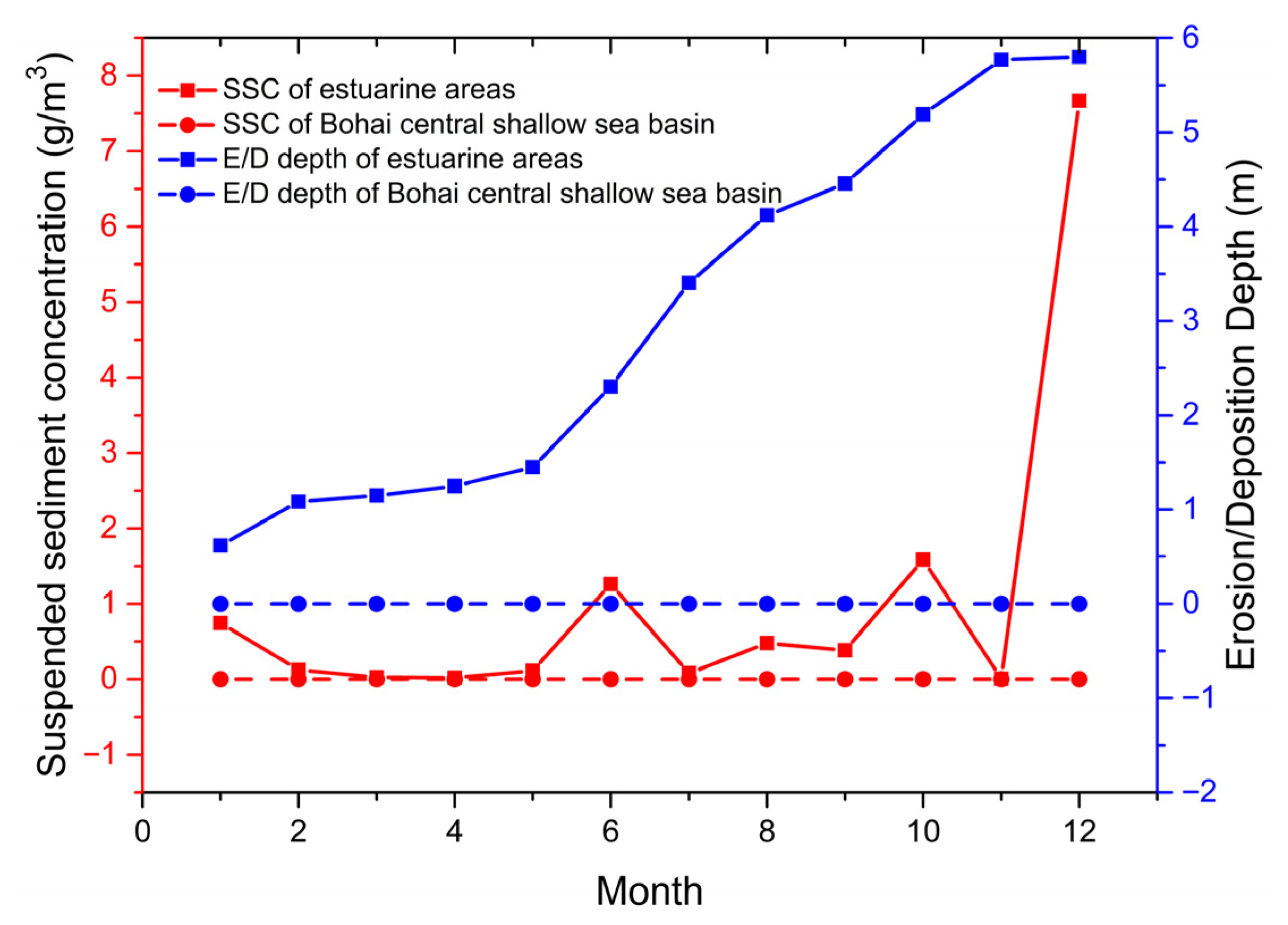
The changes in suspended sediment concentration and erosion/deposition depth in the estuarine areas and Bohai central shallow sea basin in 2019 are shown in Figure 8. The dashed line shows the monthly variation of average SSC and the depth of erosion/deposition in the estuarine areas. The SSC in this region was generally high, with a notable increase observed in June due to water and sediment regulation processes. And the SSC in the second half of the year exceeded that of the first half. The deposition status was characterized by deposition, with the deposition thickness gradually increasing over time. Notably, the most significant increase in deposition thickness occurred in June and July during the water and sediment regulation period. By the end of the year, the average deposition thickness had increased to 5.8 m.
In contrast (as shown by the solid line in Figure 8), the SSC in the Bohai central shallow sea basin, where sediment transported by river mouths is difficult to reach, remains consistently low. The SSC in this basin was consistently low, with minimal fluctuations throughout the year except for a slight increase in July, potentially attributed to the transport of sediments influenced by seawater dynamics [44]. The deposition thickness remained nearly zero, with minor erosion occurring in autumn and winter following the water and sediment regulation. This erosion may result from normal fluctuations caused by sea waves and monsoons [45,46]. However, the magnitude of change was negligible. It can be inferred that there is no apparent correlation between SSC and sediment erosion status in this region, possibly due to its considerable distance from the estuary and coast, which limits the influence of estuarine sediments.
Based on the analysis of the aforementioned three sections, it is evident that the correlation between SSC and erosion/deposition is strongest in the estuarine areas, followed by the nearshore areas of Bohai Bay and Laizhou Bay. As the distance offshore increases, the correlation between SSC and deposition volume diminishes. From an individual regional perspective, the differing causes and influencing factors of SSC and deposition formation lead to variations in the SSC and deposition status.

4.3. Threshold Analysis of Erosion in the Yellow River Subaqueous Delta

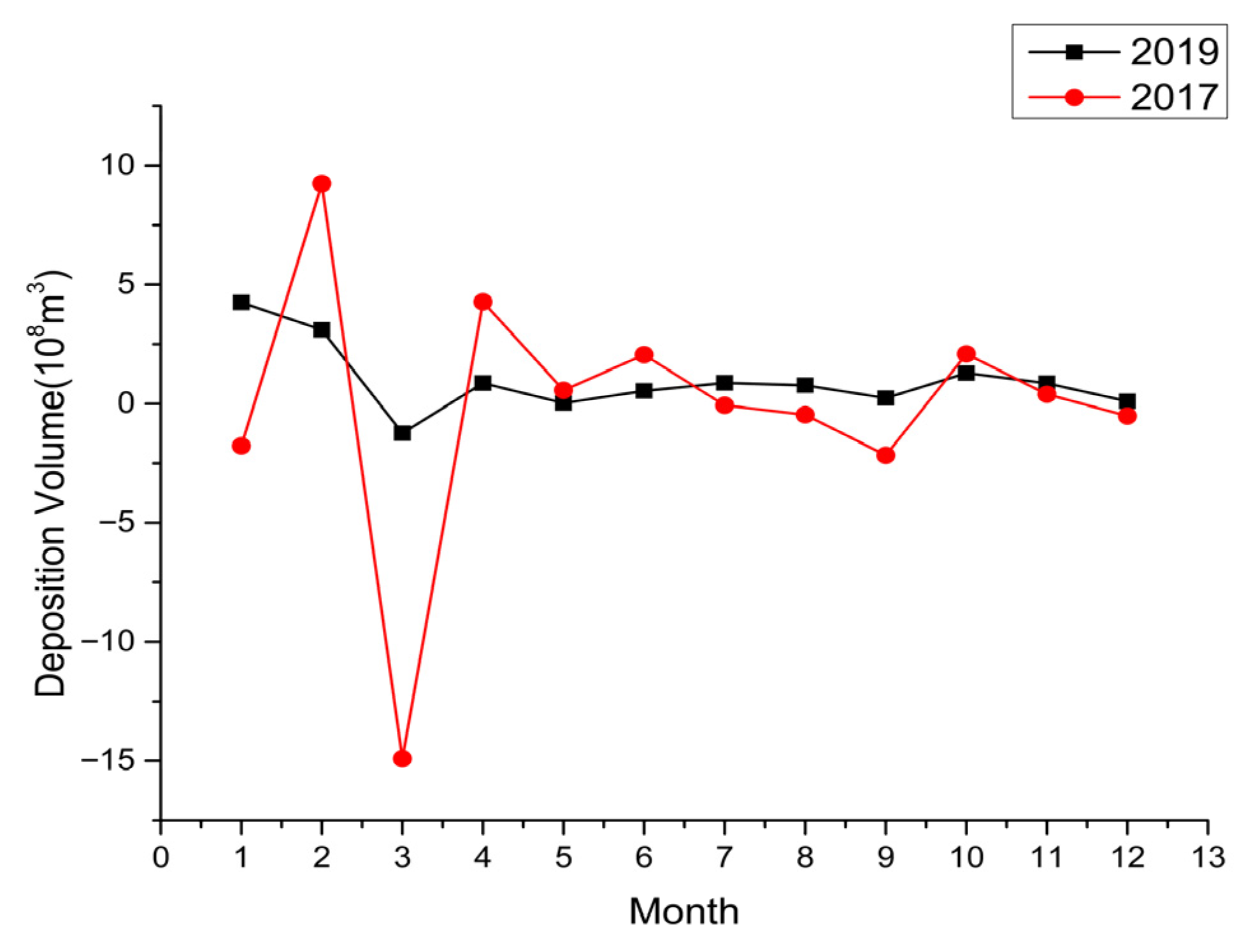
The deposition volume of each grid cell was determined by multiplying its erosion/deposition depth at a specific time by the corresponding grid area. By aggregating these individual volumes, the total deposition volume within the study area for that specific time period was obtained. Applying this calculation approach, the total deposition volume of the study area across the 12 months of 2019 was computed. As shown in Table 2, 11 months were marked by deposition, with the highest deposition occurring in January, reaching 425 million cubic meters. Only March exhibited erosion, with a value of 124 million cubic meters. Overall, the subaqueous delta of the Yellow River experienced net deposition in 2019, with the annual total sediment accumulation calculated to be 1165.9 billion cubic meters.
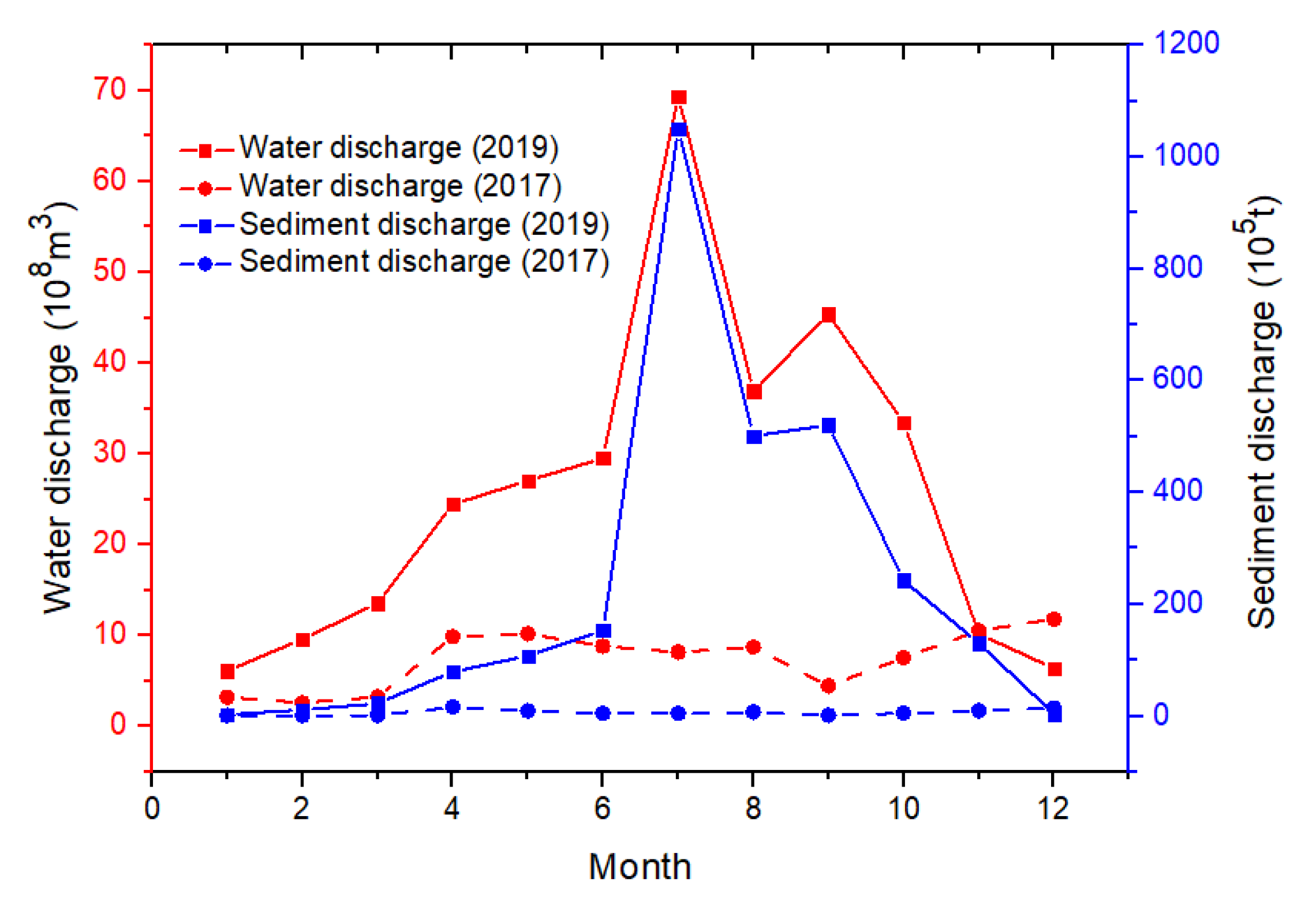
The comparison of water discharge and sediment discharge in 2019 with those in 2017 (a year without water and sediment regulation) is shown in Figure 9. The water discharge in 2019 was 3.5 times greater than in 2017, while sediment transport was 36.6 times higher. In 2019, the water discharge exhibited a gradual upward trend from January to July, peaking at 6.937 billion cubic meters in July, before declining from August to December. Despite this decline, the overall level remained high. In contrast, the water discharge in 2017 was relatively stable, with a peak in December but significantly lower values compared to 2019. The sediment transport in 2017 was stable throughout the year, with a peak in April. In 2019, sediment transport progressively increased from January to July, particularly in June and July, peaking at 105 million tons in July. Thereafter, sediment transport gradually decreased. The sediment transport in 2019 was substantially higher than in 2017.
Regarding the amount of deposition (Figure 10), the Yellow River’s subaqueous delta experienced erosion in 2017 and deposition in 2019 [47]. The fluctuation of deposition amounts in 2019 during water and sediment regulation was significantly smaller compared to 2017, without water and sediment regulation. After water and sediment regulation, the deposition volume became more stable with a notably reduced range of variation. Without water and sediment regulation in 2017, the study area generally exhibits an erosion trend after July; however, with water and sediment regulation in 2019, due to a substantial increase in sediment transport in June and July, some degree of deposition persisted in the second half of the year.
It can be observed that in 2019, water and sediment regulation substantially altered the water and sediment transport conditions, leading to a significant increase in sediment transport and causing the Yellow River subaqueous delta to generally exhibit a depositional state [38]. The implementation of water and sediment regulation significantly increased the water and sediment transport of the Yellow River, allowing a large volume of sediment to enter the sea. However, the transport force was insufficient to remove all of the sediment, resulting in most being deposited at the estuarine areas [9,48]. This led to a significant increase in sediment deposition in the study area, with the sediment spreading due to the influence of seawater dynamics [31]. Driven by wind, waves, and tides, the sediment spread westward into Bohai Bay and southeastward into Laizhou Bay, enhancing the overall deposition of the Yellow River’s subaqueous delta.

5. Conclusions

In this study, a three-dimensional water and sediment transport model for the Yellow River subaqueous delta was established using Delft3D, and the model was employed to simulate the area in 2019. The suspended sediment concentration, sediment diffusion, and erosion/deposition depth of the subaqueous delta area before and after water and sediment regulation were obtained, and the impact of the Yellow River’s water and sediment regulation on the subaqueous delta was analyzed by region. The following conclusions were drawn:
(1)
The water and sediment regulation project significantly influences the distribution and diffusion patterns of suspended sediment in the study area. Before the water and sediment regulation, the high-value areas of suspended sediment concentration were distributed in the nearshore areas of the two bays. After the water and sediment regulation, high-value areas shifted to the estuarine areas.
(2)
The suspended sediment concentration in the estuarine areas and nearshore areas of two Bays exhibits a relatively clear correlation with erosion/deposition dynamics. Among these, the suspended sediment concentration and deposition thickness in the estuarine areas are most affected by water and sediment regulation. In contrast, in offshore areas and the Bohai central shallow sea basin, the correlation between suspended sediment concentration and erosion/deposition dynamics is relatively weak and subject to less influence from factors such as runoff.
(3)
In 2017, due to the interruption of water and sediment regulation in the Yellow River, the amount of sediment entering the sea decreased significantly, and the study area exhibited an overall pattern of erosion. Conversely, after the restoration of water and sediment regulation in 2019, the amount of sediment entering the seawater increased considerably, and the study area showed an overall pattern of deposition. Water and sediment transfer significantly increased the water and sediment discharge of the Yellow River, enabling a large volume of sediment to enter the sea and accumulate in the subaqueous delta area, thereby promoting the overall deposition of the Yellow River’s subaqueous delta.
The results indicate that the suspension or implementation of the water and sediment regulation project exerts a relatively significant impact on the erosion or deposition status of the Yellow River subaqueous delta, which implies that this project is a crucial measure for maintaining the stability of the Yellow River Delta. Therefore, it is recommended to optimize the rhythm of water and sediment regulation to sustain the stability of erosion and accretion in the Yellow River subaqueous delta.
In addition, this model has insufficient accuracy when simulating large-scale sediment diffusion and fails to consider the impact of extreme climate conditions. The next phase of the study will introduce extreme climate scenario simulations to improve the evaluation system; meanwhile, in-depth optimization of the model settings will be conducted, and parameters will be adjusted more precisely to enhance the accuracy and reliability of the research conclusions.

Author Contributions

Formal analysis, J.S.; data curation, B.L.; writing—original draft preparation, J.S.; writing—review and editing, Y.L.; supervision, B.L.; funding acquisition, B.L.; visualization, J.L. All authors have read and agreed to the published version of the manuscript.

Funding

This research was funded by the “National Natural Science Foundation of China” (42107157); the “Fundamental Research Funds for the Central Universities” (24CX02031A); and the “annual sediment movement characteristics of the seabed boundary layer in Chengdao Oilfield” supported by Shandong Continental Shelf Marine Technology Co., Ltd. (HX20230616).

Data Availability Statement

The data presented in this study are available upon request from the corresponding author. The data are not publicly available due to privacy restrictions.

Conflicts of Interest

The authors declare no conflicts of interest. The authors declare that the funder was not involved in the study design, collection, analysis, interpretation of data, the writing of this article, or the decision to submit it for publication.

References

  1. Wu, X.; Wang, H.; Bi, N.; Saito, Y.; Xu, J.; Zhang, Y.; Lu, T.; Cong, S.; Yang, Z. Climate and Human Battle for Dominance over the Yellow River’s Sediment Discharge: From the Mid-Holocene to the Anthropocene. Mar. Geol. 2020, 425, 106188. [Google Scholar] [CrossRef]
  2. Yang, J.; Liu, L.; Zhao, H.; Liu, Z.; Song, L.; Zhang, P.; Tang, L. Late Holocene sedimentary records along the abandonedchannel areas of the Yellow River and their response to flood hazards. Geol. China 2023, 50, 1004–1015. [Google Scholar] [CrossRef]
  3. Xu, M.; Wang, G.; Wang, Z.; Hu, H.; Singh, D.; Tian, S. Temporal and Spatial Hydrological Variations of the Yellow River in the Past 60 Years. J. Hydrol. 2022, 609, 127750. [Google Scholar] [CrossRef]
  4. Fan, Y.; Chen, S.; Pan, S.; Dou, S. Storm-Induced Hydrodynamic Changes and Seabed Erosion in the Littoral Area of Yellow River Delta: A Model-Guided Mechanism Study. Cont. Shelf Res. 2020, 205, 104171. [Google Scholar] [CrossRef]
  5. Fu, Y.; Bellerby, R.; Ji, H.; Chen, S.; Fan, Y.; Li, P. Impacts of Riverine Floods on Morphodynamics in the Yellow River Delta. Water 2023, 15, 1568. [Google Scholar] [CrossRef]
  6. Ji, H.; Chen, S.; Pan, S.; Xu, C.; Jiang, C.; Fan, Y. Morphological Variability of the Active Yellow River Mouth under the New Regime of Riverine Delivery. J. Hydrol. 2018, 564, 329–341. [Google Scholar] [CrossRef]
  7. Peng, J.; Chen, S.; Dong, P. Temporal Variation of Sediment Load in the Yellow River Basin, China, and Its Impacts on the Lower Reaches and the River Delta. Catena 2010, 83, 135–147. [Google Scholar] [CrossRef]
  8. Chen, S.; Gu, S.; Ji, H.; Xu, C. Processes of the Yellow River Mouth on New Water and Sediment Condition. J. Sediment Res. 2019, 44, 61–67. [Google Scholar] [CrossRef]
  9. Wang, H.; Wu, X.; Bi, N.; Li, S.; Yuan, P.; Wang, A.; Syvitski, J.; Saito, Y.; Yang, Z.; Liu, S.; et al. Impacts of the Dam-Orientated Water-Sediment Regulation Scheme on the Lower Reaches and Delta of the Yellow River (Huanghe): A Review. Glob. Planet. Change 2017, 157, 93–113. [Google Scholar] [CrossRef]
  10. Zuo, X.; He, R.; Liu, J.; Warner, J. Modeling transport and deposition of the Mekong River sediment. Cont. Shelf Res. 2012, 37, 66–78. [Google Scholar] [CrossRef]
  11. Meng, L.; Tu, J.; Wu, X.; Lou, S.; Cheng, J.; Chalov, S.; Han, X.; Fan, D. Wave, flow, and suspended sediment dynamics under strong winds on a tidal beach. Estuar. Coast. Shelf Sci. 2024, 303, 108799. [Google Scholar] [CrossRef]
  12. Green, M.; Coco, G. Review of wave-driven sediment resuspension and transport in estuaries. Rev. Geophys. 2014, 52, 77–117. [Google Scholar] [CrossRef]
  13. Zhang, S.; Jia, Y.; Liu, X.; Guo, L.; Shan, H. Feature and Mechanism of Sediment Dynamic Changing Processes in the Modern Yellow River Delta. Mar. Geol. Quat. Geol. 2016, 36, 33–44. [Google Scholar] [CrossRef]
  14. Lin, C.; Chen, S.; Li, P.; Ji, H.; Fan, Y.; Yu, D. Seasonal Distribution and Driving Forces of Suspended Particulate Matter in the Northern Yellow River Delta. Haiyang Xuebao 2021, 43, 152–160. [Google Scholar]
  15. Zeng, M.; Sun, X.; Fan, D. Numerical Simulating on Sediment Transportation in the Estuary and Its Adjacent Areas during the Water and Sediment Regulation Period of the Huanghe River. Period. Ocean. Univ. China 2017, 47, 81–92. [Google Scholar] [CrossRef]
  16. Nittrouer, J.; Viparelli, E. Sand as a stable and sustainable resource for nourishing the Mississippi River delta. Nat. Geosci. 2014, 7, 350–354. [Google Scholar] [CrossRef]
  17. Wang, H.; Wang, A.; Bi, N.; Zeng, X.; Xiao, H. Seasonal Distribution of Suspended Sediment in the Bohai Sea, China. Cont. Shelf Res. 2014, 90, 17–32. [Google Scholar] [CrossRef]
  18. Ma, H.; Nittrouer, J.; Naito, K.; Fu, X.; Zhang, Y.; Moodie, A.; Wang, Y.; Wu, B.; Parker, G. The exceptional sediment load of fine-grained dispersal systems: Example of the Yellow River, China. Sci. Adv. 2017, 3, e1603114. [Google Scholar] [CrossRef]
  19. Canestrelli, A.; Nardin, W.; Edmonds, D.; Fagherazzi, S.; Slingerland, R. Importance of frictional effects and jet instability on the morphodynamics of river mouth bars and levees. J. Geophys. Res. Ocean. 2014, 119, 509–522. [Google Scholar] [CrossRef]
  20. Shi, H.; Li, L.; Sun, J.; Zhao, S.; Li, Y.; Zhang, L.; Li, Q. Numerical Simulation Prediction of Sediment Erosion and Deposition in the Yellow River Delta Based on MIKE21. J. Ludong Univ. (Nat. Sci. Ed.) 2024, 40, 201–209. [Google Scholar] [CrossRef]
  21. Wang, Y.; Yang, H.; Zhang, W. Simulation of Sediment Erosion and Silting on Rudong Offshore Wind Farm Project in Jiangsu Province by MIKE21. Trans. Oceanol. Limnol. 2021, 43, 48–57. [Google Scholar] [CrossRef]
  22. Jaap, H.; Andrew, D.; Liviu, G. What makes a delta wave-dominated? Geology 2015, 43, 511–514. [Google Scholar] [CrossRef]
  23. Zhou, Y.; Zhang, H.; Sun, T.; Cao, H.; Zhou, Z. Numerical simulation of micro-geomorphic evolution under the influence of benthic organisms in a tidal flat. Acta Ecol. Sin. 2023, 43, 2024–2033. [Google Scholar] [CrossRef]
  24. Meselhe, E.; Sadid, K.; Khadka, A. Sediment Distribution, Retention and Morphodynamic Analysis of a River-Dominated Deltaic System. Water 2021, 13, 1341. [Google Scholar] [CrossRef]
  25. Song, Z.; Bi, N.; Wu, X.; Xing, G.; Wang, H. Numerical Simulation on the Process of Sediment Transport off the Yellow River Mouth during the Water-Sediment Regulation Scheme in 2010. Trans. Oceanol. Limnol. 2018, 1, 34–45. [Google Scholar] [CrossRef]
  26. Wei, H.; Li, S.; Wang, W. Current Status and Prospects of Numerical Simulation Algorithms In. J. Jilin Univ. (Earth Sci. Ed.) 2025, 55, 98–124. [Google Scholar] [CrossRef]
  27. Cheng, X.; Zhu, J.; Chen, S. Dynamics of the Extension of the Yellow River Plume in the Bohai Sea. Cont. Shelf Res. 2021, 222, 104438. [Google Scholar] [CrossRef]
  28. Ji, H.; Pan, S.; Chen, S. Impact of River Discharge on Hydrodynamics and Sedimentary Processes at Yellow River Delta. Mar. Geol. 2020, 425, 106210. [Google Scholar] [CrossRef]
  29. Zhou, Z.; Liu, Y.; Wu, Y.; Xu, F.; Fan, D.; Zhang, C. Sedimentary Stratigraphic Characteristics and Formation Mechanisms of Estuarine Coasts. Adv. Water Sci. 2024, 35, 167–182. [Google Scholar] [CrossRef]
  30. Burchard, H.; Schuttelaars, H.; Ralston, D. Sediment Trapping in Estuaries. Annu. Rev. Mar. Sci. 2018, 10, 371–395. [Google Scholar] [CrossRef]
  31. Chu, Y.; Wu, W.; Li, P.; Chen, S. Temporal and Spatial Dynamics of Suspended Sediment and Its Driving Mechanism in the Yellow River Estuary. Haiyang Xuebao 2022, 44, 150–163. [Google Scholar]
  32. Huang, L.; Chen, S.; Li, P.; Yang, M.; Liu, Q. Spatiotemporal Distribution of Suspended Sediment in the Tail Channel of the Huanghe River Delta from 2016 to 2020. Mar. Sci. Bull. 2023, 42, 303–313. [Google Scholar]
  33. Li, M.; Sun, Z.; Gong, Y.; Hu, Y. Numerical simulation of sand-mud coexisting beach based on Delft-3D. Bull. Sci. Technol. 2019, 35, 109–113. [Google Scholar] [CrossRef]
  34. Song, J.; Li, B.; He, K.; Cui, X. The Influence of the Sediment and Water Transported by the Yellow River on the Subaqueous Delta Without Water and Sediment Regulation. Water 2025, 17, 2493. [Google Scholar] [CrossRef]
  35. Guo, L.; Wen, M.; Shan, H.; Liu, X.; Zhang, S.; Wang, Z.; Jia, Y. Study on Re-Suspension Process of Seabed Sediment Induced by Wave. Mar. Geol. Quat. Geol. 2016, 36, 181–188. [Google Scholar] [CrossRef]
  36. Wu, W.; Fu, H. Spatial-Temporal Distribution of Suspended Sediment in the Yellow River Estuary Based on GF-1 Remote Sensing Satellite. In Proceedings of the 2021 (9th) China Water Conservancy Information Technology Forum, Jinan, China, 27 May 2021. [Google Scholar] [CrossRef]
  37. Cai, X. Retrieve of Spatial and Temporal Distribution of Suspended Sediment in Bohai Bay Based on GF-1 Remote Sensing Satellite. J. Atmos. Environ. Opt. 2020, 15, 134–142. [Google Scholar]
  38. Bi, N.; Shi, Y.; Ge, C.; Ba, Q.; Wu, X.; Wang, H. Impacts of Morphological Evolution of the Huanghe River Mouth by Artificial Regulation on Deltaic Sedimentation. Mar. Geol. Quat. Geol. 2024, 44, 1–14. [Google Scholar] [CrossRef]
  39. Xie, W.; Wang, X.; Guo, L.; He, Q.; Dou, S.; Yu, X. Impacts of a Storm on the Erosion Process of a Tidal Wetland in the Yellow River Delta. Catena 2021, 205, 105461. [Google Scholar] [CrossRef]
  40. Li, S.; Li, G.; Xu, J.; Liu, S.; Ding, D.; Wang, X.; Min, J.; Tian, J.; Zhang, Y. Annual Variation of Suspended Sediment Concentration in Bohai Bay Based on ADCP. Mar. Geol. Front. 2020, 36, 30–41. [Google Scholar] [CrossRef]
  41. Li, Q.; Wang, A.; Wu, X.; Tu, D.; Wang, H. Water and sediment regulation of the yellow river and its impact on hyperpycnal flow in the estuary. Mar. Geol. Front. 2021, 37, 52–63. [Google Scholar] [CrossRef]
  42. Zhang, D.; Pang, Z.; Wang, Y.; Chen, X. Numerical Study on Seasonal Distribution of Surface Suspended Sediment in the Bohai Sea and the Controlling Factors. Oceanol. Limnol. Sin. 2023, 54, 1015–1027. [Google Scholar]
  43. Zhang, S.; Jia, Y.; Guo, L.; Liu, X.; Wen, M.; Shan, H. In-Situ Observation of Sediment Deposition Process in Chengdao Sea Area of the Yellow River Estuary. Mar. Geol. Quat. Geol. 2016, 36, 171–181. [Google Scholar] [CrossRef]
  44. Pang, C.; Li, K.; Yu, W. Distribution Characteristics, Seasonal Variability and Dynamical Mechanism of Suspended Sediment in the Surface Layer of the Bohai Sea. Adv. Mar. Sci. 2014, 32, 450–458. [Google Scholar] [CrossRef]
  45. Liu, X.; Zhang, H.; Zheng, J.; Guo, L.; Jia, Y.; Bian, C.; Li, M.; Ma, L.; Zhang, S. Critical Role of Wave-Seabed Interactions in the Extensive Erosion of Yellow River Estuarine Sediments. Mar. Geol. 2020, 426, 106208. [Google Scholar] [CrossRef]
  46. Niu, J.; Xie, J.; Lin, S.; Lin, P.; Gao, F.; Zhang, J.; Cai, S. Importance of Bed Liquefaction-Induced Erosion During the Winter Wind Storm in the Yellow River Delta, China. J. Geophys. Res. Ocean. 2023, 128, e2022JC019256. [Google Scholar] [CrossRef]
  47. Zuo, J.; Gao, Y.; Xu, C. Analysis of sandbar at Yellow River Estuary Based on DEM Technology. People’s Yellow River 2022, 44, 33–36. [Google Scholar] [CrossRef]
  48. Tu, D.; Wang, H.; Ren, Y.; Lu, T.; Bi, N.; Wu, X.; Wang, A. Modeling of the sediment transport and deposition in the Yellow River Estuary during the water-sediment regulation scheme. Catena 2025, 251, 108806. [Google Scholar] [CrossRef]
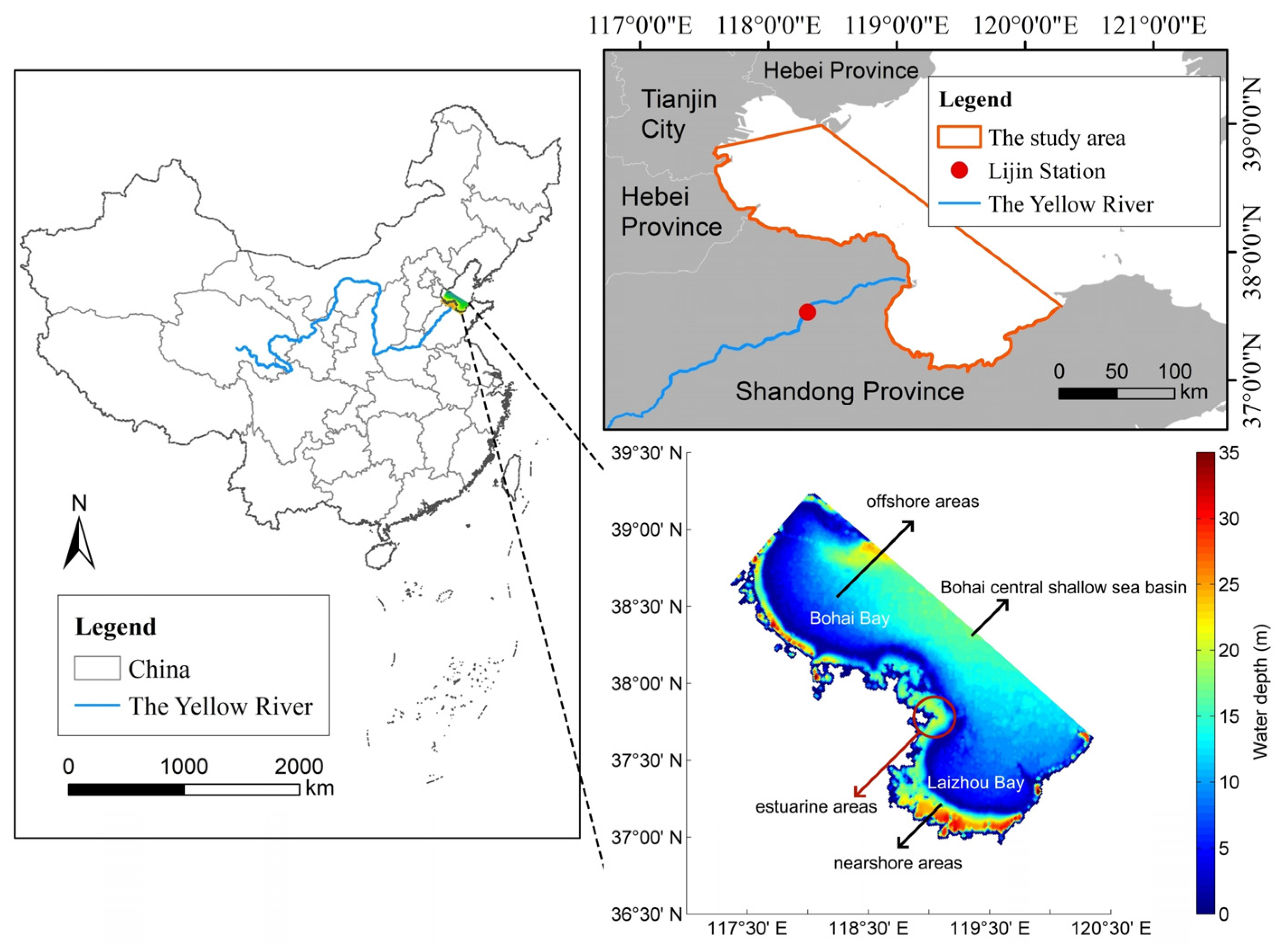
Figure 1. Location of the study area.
Water 18 00140 g001
Figure 2. Distribution map of suspended sediment diffusion/transport (a,b) before, (c) during, and (d,e) after water and sediment regulation.
Water 18 00140 g002
Figure 3. Distribution map of the deposition situation (a) before, (b) during, and (c) after water and sediment regulation.
Water 18 00140 g003
Figure 4. Distribution map of the erosion situation (a) before, (b) during, and (c) after water and sediment regulation.
Water 18 00140 g004
Figure 5. Distribution map of the suspended sediment concentration (a) before, (b) during, and (c) after water and sediment regulation.
Water 18 00140 g005
Figure 6. Comparison of the monthly changes in the offshore areas of Bohai Bay and Laizhou Bay.
Water 18 00140 g006
Figure 7. Comparison of the monthly changes in the nearshore areas of Bohai Bay and Laizhou Bay.
Water 18 00140 g007
Figure 8. Comparison of the monthly changes in the estuarine areas and Bohai central shallow sea basin.
Water 18 00140 g008
Figure 9. Comparison of water discharge and sediment discharge between 2019 and 2017.
Water 18 00140 g009
Figure 10. Comparison of the deposition volume between 2019 and 2017.
Water 18 00140 g010
Table 1. Water discharge and sediment discharge in the study area for each month.
20172019
MonthWater Discharge
(108 m3)
Sediment Discharge (104 t)Water Discharge
(108 m3)
Sediment Discharge (104 t)
13.2418.846.1342.71
22.63710.29.62811.4
33.26815.313.5822.8
49.90116024.4779.3
510.2394.327.05108
68.83951.329.55153
78.19650.469.371050
88.75873.936.96501
94.48416.845.36521
107.5849.633.48243
1110.5596.410.21130
1211.841456.4013.86
Table 2. The monthly deposition volume in the Yellow River subaqueous delta in 2019.
MonthDeposition Volume (108 m3)
January4.250
February3.096
March−1.243
April0.870
May0.026
June0.538
July0.875
August0.770
September0.237
October1.284
November0.855
December0.102
Disclaimer/Publisher’s Note: The statements, opinions and data contained in all publications are solely those of the individual author(s) and contributor(s) and not of MDPI and/or the editor(s). MDPI and/or the editor(s) disclaim responsibility for any injury to people or property resulting from any ideas, methods, instructions or products referred to in the content.