Article

GA–SQP Hybrid Optimization Control Strategy for Hydropower Units Oriented to Multiple Operating Conditions Under Isolated Grid Mode


1
Baozhusi Hydropower Plant, Huadian Sichuan Power Generation Co., Ltd., Guangyuan 628007, China
2
Huadian Sichuan Power Generation Co., Ltd., Chengdu 430078, China
3
School of Civil and Hydraulic Engineering, Huazhong University of Science and Technology, Wuhan 430074, China
*
Author to whom correspondence should be addressed.
Water 2026, 18(16), 2008; https://doi.org/10.3390/w18162008
Submission received: 22 July 2026 / Revised: 13 August 2026 / Accepted: 14 August 2026 / Published: 17 August 2026

Abstract

Hydropower units operating in isolated grids are characterized by low rotational inertia and weak damping, making it difficult to balance rapid frequency regulation and overshoot suppression. To address this issue, this paper proposes a GA–SQP hybrid optimization control strategy for multiple operating conditions based on a high-fidelity nonlinear dynamic model. Deep feedforward neural networks are first employed to reconstruct the nonlinear torque and discharge characteristics of the hydro-turbine, providing smooth and continuously differentiable mappings for subsequent gradient-based optimization. An improved performance index combining the Integral of Time-Cubed Absolute Error (ITCAE) with a transient overshoot penalty is then formulated to suppress long-tail errors and prioritize smooth responses with reduced transient overshoot. A two-stage optimization framework is further developed, in which the Genetic Algorithm (GA) performs global exploration to identify a promising parameter region, followed by Sequential Quadratic Programming (SQP) for high-precision local refinement. Comparative simulations under low-, rated-, and high-head high-load conditions show that the proposed strategy achieves higher optimization accuracy with fewer iterative resources. Within the investigated operating range, the optimized controller maintains a very low overshoot level while preserving satisfactory response speed, effectively improving the balance between rapidity and stability in isolated-grid frequency regulation.

1. Introduction

1.1. Background and Literature Review

With the massive integration of renewable energy sources such as wind and solar power, modern power systems are experiencing increased interconnection scales and increasingly complex operational control [1,2]. When grid faults occur or in remote microgrid environments, the system often needs to be split into an isolated grid for independent operation to ensure the power supply to critical loads [3]. As a high-quality supporting power source with high flexibility, hydropower units (HPUs) in this scenario will switch from power control mode to frequency control mode (FCM) [4]. Under isolated grid conditions, the system is detached from the capacity and inertia support of the main grid, presenting the characteristics of low rotational inertia and weak damping [5]. At this time, the primary task of the hydro-turbine regulating system (HTRS) is to ensure frequency stability, and its dynamic response characteristics face severe challenges. In particular, the coupling between the elastic water hammer effect of the diversion penstock and the strong nonlinearity of the hydro-turbine’s internal characteristics makes improving the regulation quality of HPUs in isolated grid mode a difficulty in the field of parameter optimization [6,7].
The PID control strategy is widely applied in industrial production due to its advantages of simple structure, strong reliability, and convenient adjustment [8]. In recent years, to further improve the control performance of HPUs, scholars have conducted extensive research on PID parameter optimization and the application of advanced control theories. Regarding conventional heuristic algorithm optimization, Magdy et al. [9] applied particle swarm optimization (PSO) to achieve optimal load frequency control for a decentralized digital model of the HTRS; Lv et al. [10] and Li et al. [11] employed the gravitational search algorithm (GSA) and its improved versions to enhance the dynamic response characteristics of the HTRS under low-head conditions; Piraisoodi et al. [12] applied an improved genetic algorithm (GA) to optimize controller parameters under specific disturbance conditions. Furthermore, some scholars have combined fuzzy logic to propose multi-objective adaptive fuzzy PID control strategies [13,14] to cope with the uncertainties of the system’s operating states.
On the other hand, with the development of modern control theory, numerous advanced control strategies have been gradually introduced into the HTRS. For instance, Beus et al. [15] and Zheng et al. [16] designed model predictive control (MPC) strategies to handle multiple physical constraints in complex pipeline systems; Wang et al. [17] and Fu et al. [18] proposed sliding mode control (SMC) for the transient process of the units, aiming to suppress sudden oscillations when the system is subjected to external disturbances; Zhang et al. [19] and Yin et al. [20] utilized deep reinforcement learning (DRL) algorithms to achieve adaptive scheduling of control parameters through continuous interaction between the agent and the environment.

1.2. Research Gaps and Expected Contributions

Although the aforementioned advanced control algorithms (such as MPC, SMC, and reinforcement learning) have shown good potential in theoretical simulations, they are typically complex in structure and difficult to tune in terms of parameters, facing limited reliability in practical engineering deployment [21]. Therefore, optimizing traditional PID parameters based on intelligent optimization algorithms remains a pragmatic choice for improving control quality in the industry currently. However, existing PID optimization schemes still face the following significant limitations:
Firstly, most studies insufficiently consider wide-range variations in water head or guide vane opening. Some adaptive control schemes rely excessively on local linearized models, ignoring the strong nonlinear coupling characteristics of the hydro-turbine across full operating conditions, making it difficult to meet the stability requirements of the unit operating under different conditions with high load [22,23]. Secondly, conventional single heuristic algorithms lack the guidance of high-fidelity gradient information in the middle and late stages of optimization, often exhibiting slow convergence and a tendency to fall into local minima. More crucially, the core requirement of isolated grid frequency regulation lies in effectively suppressing overshoot while maintaining the fast response of the system. Standard evaluation indices such as the Integral of Time-multiplied Absolute Error (ITAE) lack an effective temporal penalty mechanism when facing the negative impact of non-minimum phase systems [24]. This causes existing optimization algorithms to frequently compromise between response speed and overshoot, making it difficult to balance both.
To address the above issues, relying on a nonlinear dynamic simulation benchmark that encompasses the dynamic characteristics of the elastic water hammer and the continuous neural network fitting of the hydro-turbine’s internal characteristics, this paper investigates the parameter optimization strategy under isolated grid frequency regulation mode. The main contributions of this paper are as follows:
(1) To achieve the control objective of effectively suppressing overshoot while maintaining fast response, a higher-order temporal penalty mechanism is introduced. An improved objective function integrating the Integral of Time-Cubed Absolute Error (ITCAE) and transient overshoot penalty is adopted, assigning a higher priority to smooth responses with suppressed transient overshoot in the optimization objective space;
(2) A two-stage GA–SQP hybrid optimization architecture that integrates global coarse search and local fine-tuning is proposed. Relying on the continuous differentiability of the underlying model for gradient tracking, it overcomes the convergence bottleneck of traditional random blind search in the late stages of optimization;
(3) Multi-algorithm comparative analyses are conducted at three nodes of different operating conditions with high load: low head, rated head, and high head. The verification results show that the proposed strategy achieves higher convergence accuracy with fewer iterative resources, effectively suppresses transient overshoot within the investigated operating range, and effectively resolves the difficulty of balancing fast response and overshoot in the isolated grid frequency regulation of HPUs.

1.3. Paper Organization

The remainder of this paper is organized as follows: Section 2 details the nonlinear mathematical modeling process of the HTRS under the isolated grid frequency regulation mode, covering subsystems such as the diversion system, the neural network hydro-turbine model, and the servomechanism. Section 3 proposes the improved objective function considering the higher-order temporal penalty mechanism, and completely constructs the execution architecture of the GA–SQP two-stage hybrid optimization strategy. Section 4 comprehensively compares and evaluates the control performance of the proposed algorithm with various classical algorithms under multiple nodes of different operating conditions with high load. Finally, Section 5 summarizes the conclusions of this paper.

2. Mathematical Modeling of the Hydro-Turbine Regulating System

The hydro-turbine regulating system (HTRS) is a complex nonlinear coupled system integrating hydraulic transients, mechanical rotation, and electromagnetic dynamics. To achieve continuous optimization of PID parameters under different operating conditions with high load, a nonlinear dynamic model of the hydropower system is established in this section, covering the second-order elastic diversion system, nonlinear hydro-turbine model, classical first-order generator, and second-order hydraulic servomechanism. This provides a high-fidelity simulation test benchmark for algorithm optimization under the isolated grid frequency control mode (FCM).

2.1. Diversion System Model

The diversion system in this paper adopts the second-order elastic penstock model. Its analytical transfer function is expressed as:
G h ( s ) = h ( s ) q ( s ) = T w s 1 + 1 8 T r 2 s 2
where q ( s ) and h ( s ) are the relative deviations of discharge and water head, respectively; T r is the elastic water hammer phase ( T r = 2 L / a , where L is the penstock length and a is the wave propagation velocity); and T w is the water flow inertia time constant. In the physical environment of different operating conditions with high load, T w is not a fixed constant but has an exact dynamic mathematical mapping relationship with the real-time working head H of the system, which serves as the underlying constraint for adaptive optimization.

2.2. Hydro-Turbine Model

In this paper, feedforward neural networks with smooth activation functions are employed to reconstruct the nonlinear internal characteristic surfaces of the hydro-turbine. Compared with conventional discrete look-up tables or piecewise interpolation-based representations, the neural-network model provides a unified smooth mapping over the operating domain, which facilitates stable gradient evaluation in the subsequent SQP optimization. Introducing the unit speed n 11 and the relative guide vane opening y , the nonlinear mapping mechanism of the hydro-turbine is strictly described by the high-dimensional neural network functions as follows:
Q 11 = F NN _ Q ( n 11 , y ) M 11 = F NN _ M ( n 11 , y ) Q = Q 11 D 1 2 H M = M 11 D 1 3 H
where n 11 is the unit speed, expressed as n 11 = n D 1 H ; D 1 is the runner diameter of the hydro-turbine; H is the working water head; n is the actual rotational speed of the unit; and y is the guide vane opening. F NN _ Q and F NN _ M denote the feedforward-neural-network mappings for unit discharge and unit torque, respectively, which are obtained through offline training. The detailed network architecture, training procedure, and reconstruction accuracy are presented in Section 4.1.

2.3. Generator and Load Model

The characteristics of the generator and load are described using a classical first-order model, as follows:
G g ( s ) = 1 T a s + e g
where T a is the inertia time constant of the unit; and e g is the load self-regulation coefficient of the generator, reflecting the comprehensive damping effect of the system load spontaneously increasing or decreasing with frequency variations.

2.4. Governor Model

The actuator of the governor adopts a classical second-order hydraulic servomechanism model to describe the action characteristics of the servomotor, accurately depicting its inertia and damping features under hydraulic drive. Its transfer function is:
G y ( s ) = 1 ( 1 + T y 1 s ) ( 1 + T y s )
where T y 1 is the response time constant of the auxiliary servomotor; and T y is the response time constant of the main servomotor.
In the dynamic benchmark construction of the isolated grid frequency control mode, the controller adopts the standard parallel PID control model widely applied in the industry:
u ( t ) = K p e ( t ) + K i e ( t ) d t + K d d e ( t ) d t
where K p , K i , and K d are the proportional, integral, and derivative gains, respectively. In the current modeling stage, this parameter set θ = { K p , K i , K d } is tentatively fixed as constants to maintain basic stability under nominal operating conditions, serving as the simulation test benchmark for the nonlinear dynamics of the entire system.

2.5. Overall Model of the Hydro-Turbine Regulating System

By integrating the mathematical models of the aforementioned subsystems—including the controller, servomechanism, hydro-turbine and diversion system, and generator and load—the overall nonlinear closed-loop model of the hydro-turbine regulating system under the isolated grid frequency control mode can be constructed, as shown in Figure 1.
Where f c and f are the given frequency command and unit feedback frequency, respectively, both as relative deviation values; e is the frequency deviation; u is the controller output; y is the relative guide vane opening; Y and Y 0 are the absolute guide vane opening and its initial value, respectively; n and n 0 are the relative rotational speed of the unit and its initial per-unit value, respectively; n r is the rated rotational speed; X is the actual physical rotational speed; H , H 0 , and H r are the working water head, initial water head, and rated water head, respectively; h is the relative deviation of the water head; n 11 , Q 11 , and M 11 are the unit speed, unit discharge, and unit torque of the hydro-turbine, respectively; D is the runner diameter of the hydro-turbine; Q , Q 0 , and Q r are the actual discharge, initial discharge, and rated discharge of the unit, respectively; q is the relative deviation of the discharge; M t , M 0 , and M r are the actual mechanical torque, initial torque, and rated torque of the hydro-turbine, respectively; m t is the relative deviation of the torque; and m g is the grid load disturbance.

3. Proposed PID Optimization Framework

After completing the dynamic modeling of the nonlinear hydro-turbine regulating system, the parameter tuning of the controller is transformed into a nonlinear optimization problem under complex multi-dimensional constraints. Aiming at the inherent contradiction between maintaining the fast response of the system and suppressing overshoot under the isolated grid frequency control mode, this chapter designs an improved higher-order temporally weighted objective function and proposes a two-stage hybrid optimization architecture integrating the global Genetic Algorithm (GA) and local Sequential Quadratic Programming (SQP) to achieve efficient solving of PID parameters under different operating conditions.

3.1. Design of Improved Objective Function

In the isolated grid frequency control mode of hydropower units, traditional PID parameter tuning mostly uses the Integral of Time-multiplied Absolute Error (ITAE). However, since the penalty gradient of the first-order time factor increases linearly with time, the traditional ITAE index has significantly limited penalty strength for long-tail errors in the late stage of system regulation, easily making the optimization algorithm insensitive to minor oscillations or residual deviations at the tail of the response. Affected by the complex nonlinear dynamic characteristics of the unit, conventional optimization schemes can often only compromise between response speed and overshoot, making it difficult to achieve both. To improve the optimization efficiency of the algorithm and effectively suppress overshoot while maintaining the fast response of the system, this paper designs an improved objective function integrating higher-order temporal weighting and directed overshoot penalty, tailored to the dynamic characteristics of isolated grid frequency regulation.
First, this paper constructs the Integral of Time-Cubed Absolute Error (ITCAE) as the dynamic error penalty term. By introducing higher-order temporal penalties, the optimization algorithm is prompted to approach the steady state while ensuring response speed:
J err = 0 T t 3 | e r ( t ) | d t
where e r ( t ) is the normalized relative tracking error; and T is the observation duration. By introducing a nonlinear penalty gradient in the time dimension through the time-cubed factor t 3 , this strategy makes the algorithm extremely sensitive to minor disturbances in the late stage of the transient process, effectively overcomes the defect of insufficient constraint on long-tail errors by traditional indices, and significantly improves the convergence accuracy of parameter optimization.
Targeting the overshoot problem during the system regulation process, this paper introduces a transient overshoot penalty term J over to directly quantify the degree of deviation of the frequency response from the target value, thereby assigning a higher priority to smooth responses with reduced transient overshoot in the optimization objective space:
J over = max ( 0 , σ r )
where σ r is the maximum relative overshoot of the system. This term, combined with the higher-order weighted integral, achieves a quantitative evaluation of control performance.
Finally, the comprehensive objective function J of this paper is designed as follows:
J = 0 T τ 3 | e r ( τ ) | d τ + ω max ( 0 , σ r )
where ω is the overshoot penalty weight coefficient. By introducing ω , the optimization algorithm will actively avoid parameter regions that cause excessive overshoot during the iteration process, thereby eliminating inferior candidate solutions at the early stage of calculation. The specific selection of the optimal weight coefficient will be subjected to sensitivity analysis in subsequent chapters.

3.2. GA–SQP Hybrid Optimization Strategy

The complex nonlinear dynamic evolution and elastic water hammer effect of the hydro-turbine regulating system make the optimization space of PID parameters exhibit multi-peak and non-convex characteristics. Conventional heuristic algorithms (such as GA) possess the ability to cross local minima during global search but suffer from slow convergence in the late stage of optimization, making it difficult to precisely obtain the optimal solution. Gradient-based local optimization algorithms (such as SQP) have high convergence efficiency but are sensitive to the selection of initial points and easily fall into local optima. To this end, this paper proposes a GA–SQP two-stage hybrid optimization strategy that integrates global exploration and local gradient tracking.
Combining actual computational efficiency requirements, this paper divides the parameter solving process into two stages: global search and local fine-tuning.
Phase 1: Global Parameter Optimization Based on GA
In the early stage of the algorithm, the PID parameters to be optimized are constructed into a parameter vector x = [ K p , K i , K d ] T , and the population is initialized within the set physical boundaries. The Genetic Algorithm (GA) conducts global space exploration based on the comprehensive objective function constructed in Section 3.1 as the fitness evaluation basis. In the present GA–SQP framework, the switching generation is prescribed as a fixed hyperparameter and is uniformly set to five generations for all operating conditions. After the fifth generation, the best individual obtained by GA is directly transferred to the subsequent SQP stage as its initial solution. The purpose of this phase is to utilize genetic operators to rapidly exclude inferior parameter regions associated with system divergence or excessive overshoot, thereby providing a promising initial solution for subsequent gradient-based local refinement.
Phase 2: Local Continuous Gradient Tracking Based on SQP
After receiving the initial solution provided by GA (i.e., let x 0 = x G A ), the optimization method switches to the Sequential Quadratic Programming (SQP) algorithm. Thanks to the continuous differentiability of the neural network hydro-turbine model across the entire domain, the underlying simulation test benchmark eliminates the risk of singular jumps in the Jacobian matrix found in traditional interpolation methods, providing a robust gradient calculation environment for SQP.
In each iteration k , the SQP algorithm translates the original nonlinear optimization problem into the following quadratic programming (QP) subproblem around the current point x k to solve:
min d k Q ( d k ) = 1 2 d k T H k d k + J ( x k ) T d k
where Q ( d k ) is the local quadratic objective function of the subproblem; d k is the search direction of the current step; J ( x k ) is the first-order gradient vector of the original objective function at x k ; and H k is the Hessian approximation matrix updated based on the BFGS quasi-Newton method.
After solving for the search direction d k , the algorithm conducts a line search along this direction to determine the step size α k and executes the parameter update:
x k + 1 = x k + α k d k
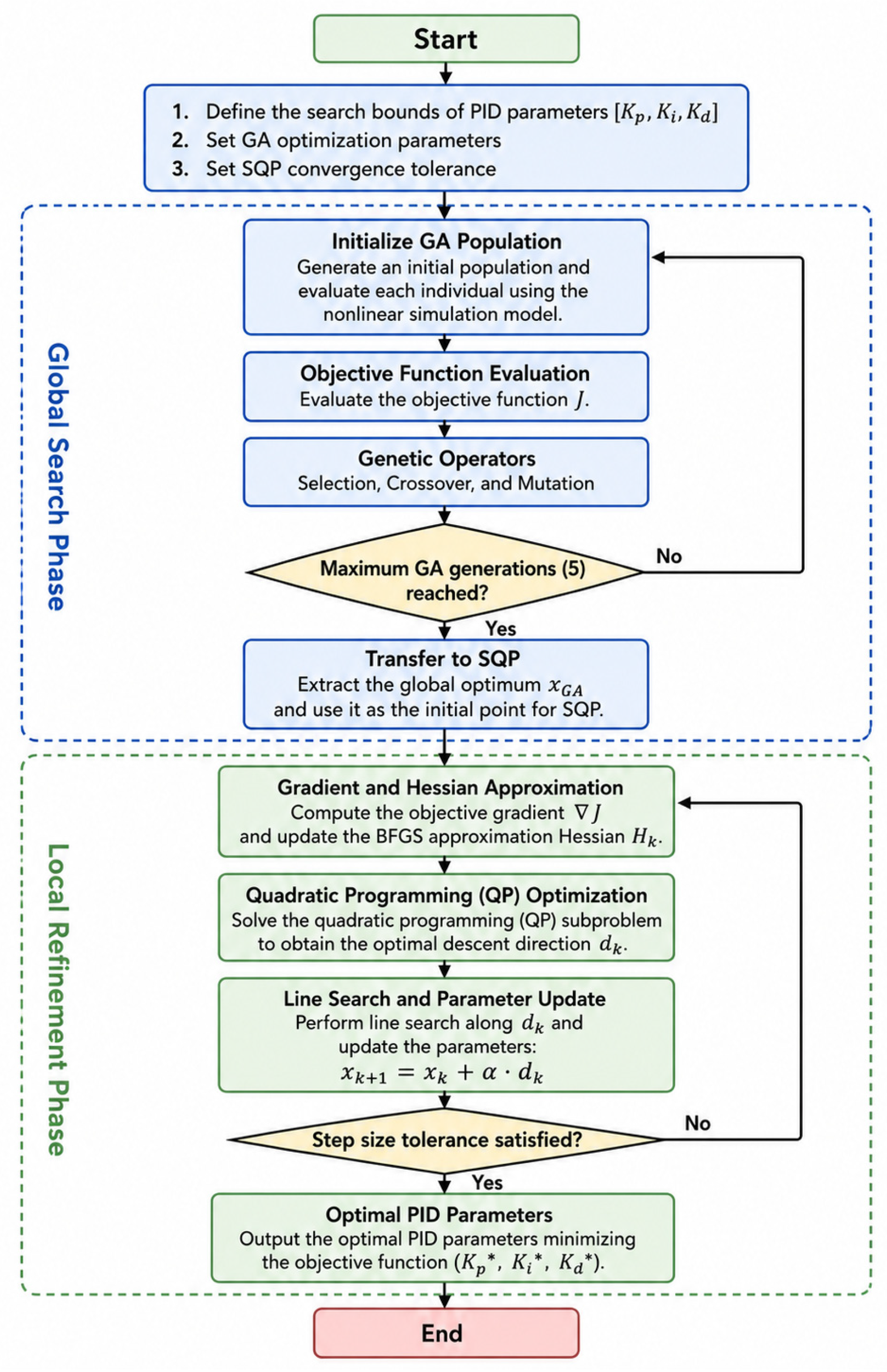
To precisely lock onto the optimal parameters, a higher solving accuracy is assigned to SQP in this phase. This hybrid architecture quickly bounds the stability region via GA and combines the high-precision tracking of SQP under smooth gradients, effectively improving the tuning efficiency and solution quality of frequency regulation PID parameters under different operating conditions with high load. The specific execution flow of the GA–SQP hybrid optimization strategy proposed in this paper is shown in Figure 2.

4. Simulation Verification and Performance Analysis

To comprehensively verify the control efficacy of the proposed GA–SQP hybrid optimization strategy and the improved objective function under the frequency regulation mode, this section conducts multi-dimensional control performance comparisons and analyses based on the constructed nonlinear dynamic model benchmark of the hydropower unit.

4.1. Neural Network Fitting of the Hydro-Turbine

To comprehensively evaluate the performance of the proposed control strategy in isolated-grid mode, a representative hydropower unit and its diversion system are adopted as the simulation test benchmark. The main physical parameters of the unit and governing system are summarized in Table 1.
The hydro-turbine exhibits strong nonlinear and non-minimum-phase characteristics over variations in unit speed and guide vane opening. In conventional simulation models, discrete turbine characteristic data are commonly reconstructed using look-up tables or interpolation techniques. Although these approaches provide effective numerical representations, the resulting local mapping and derivative information may depend on the grid resolution and interpolation scheme, which is undesirable for subsequent gradient-based optimization. Therefore, a smooth nonlinear surrogate model is constructed in this study to preserve the original turbine characteristics while providing a more consistent numerical mapping for SQP refinement.
Two independent deep feedforward neural networks are employed to reconstruct the unit torque M 11 and unit discharge Q 11 , respectively. Taking the unit speed n 11 and relative guide vane opening y as the input vector x = [ n 11 , y ] T , and either the unit torque M 11 or unit discharge Q 11 as the output O , the nonlinear mapping of the network can be expressed as:
O = W 4 tanh ( W 3 tanh ( W 2 tanh ( W 1 x + b 1 ) + b 2 ) + b 3 ) + b 4
where W i and b i ( i = 1 , 2 , 3 , 4 ) represent the weight matrices and bias vectors of the i-th layer, respectively.
The training data were derived from the comprehensive characteristic curves obtained from hydro-turbine model tests. The torque and discharge interpolation tables constructed through polynomial fitting were used as the data basis for offline neural-network training. The detailed network architecture and training settings are summarized in Table 2.
A key advantage of the neural-network surrogate lies in its smooth mathematical representation. Since the hyperbolic tangent activation function is infinitely differentiable over the real domain, the finite composition of affine transformations and tanh nonlinearities yields a smooth and continuously differentiable mapping. Consequently, the reconstructed torque and discharge surfaces possess continuous derivatives throughout the investigated operating domain. This property avoids abrupt derivative variations associated with discrete numerical representations and provides a favorable numerical environment for the subsequent gradient-based SQP refinement. It should be emphasized that the neural network is employed here as a smooth surrogate representation of the original turbine characteristics rather than as a replacement for their underlying physical information.
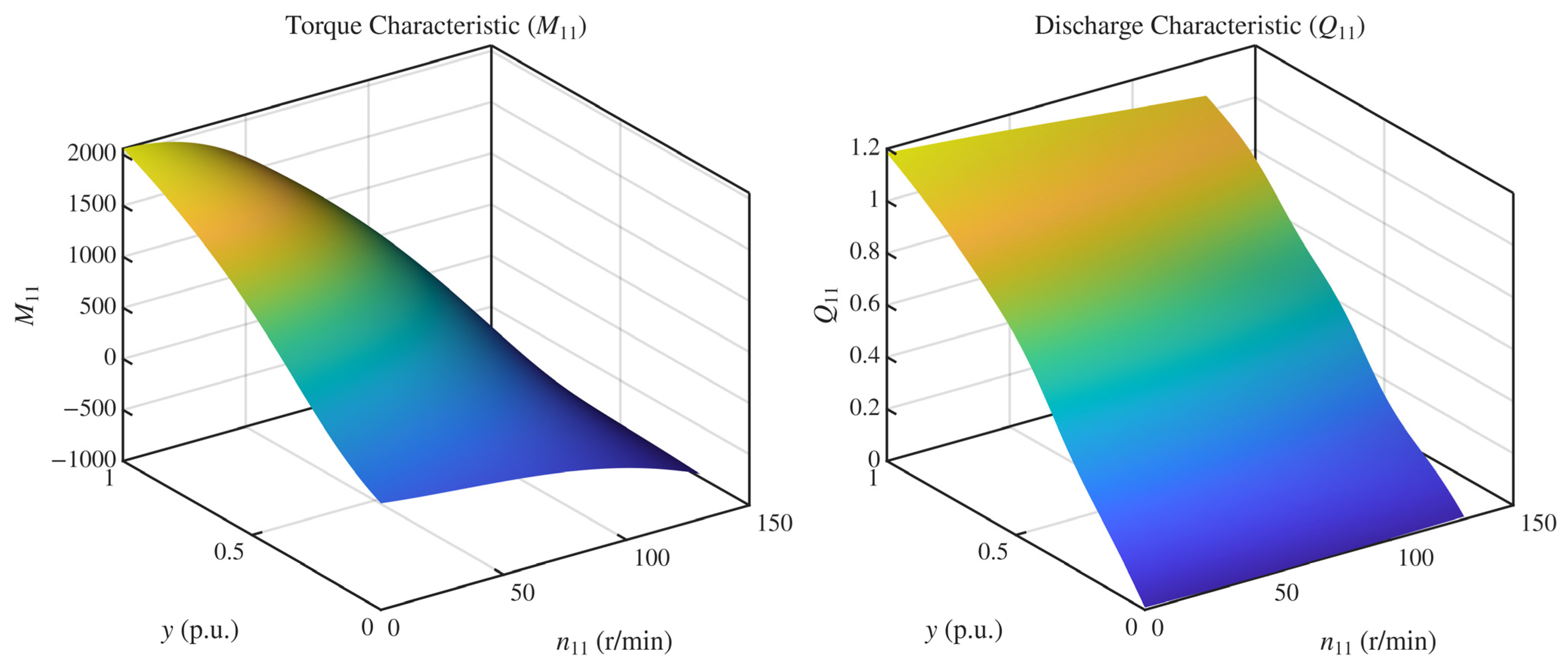
The three-dimensional torque and discharge characteristic surfaces reconstructed by the neural networks are shown in Figure 3. Both surfaces preserve the nonlinear variation trends of the reference turbine characteristics while exhibiting smooth transitions over the investigated operating domain.
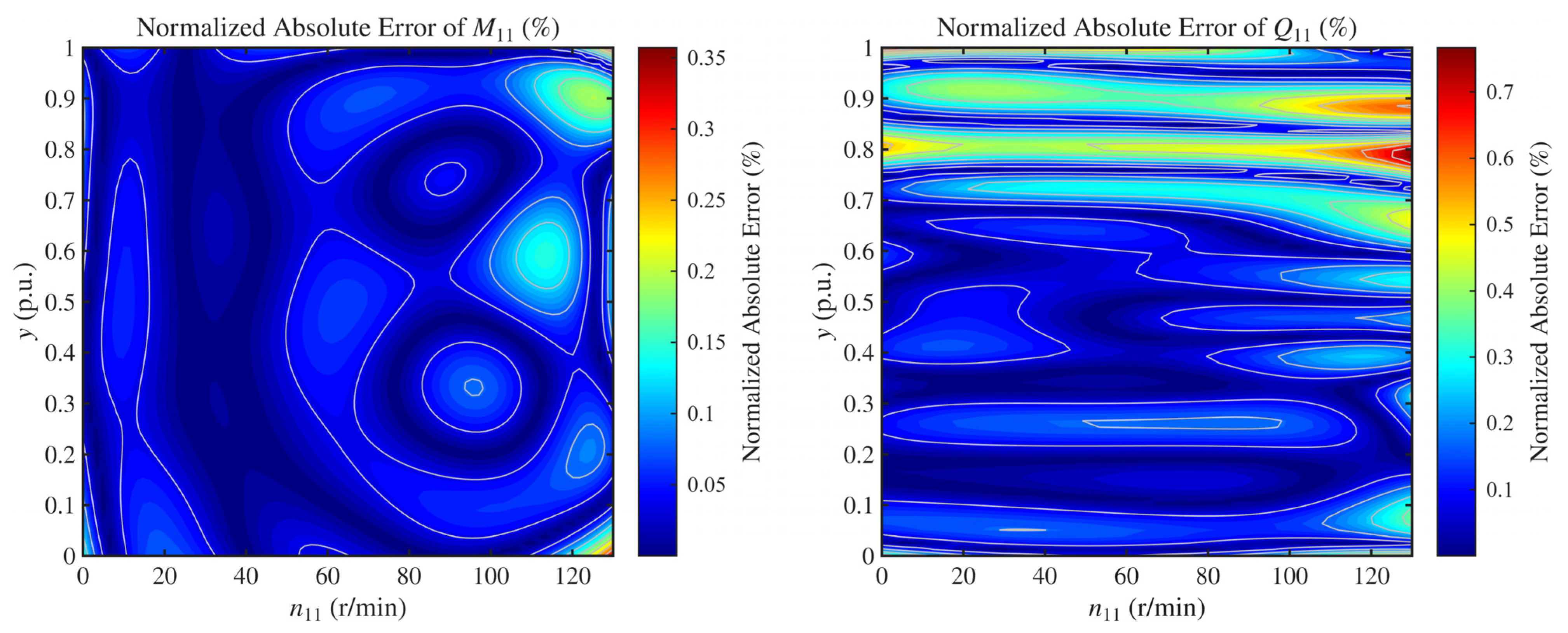
To further quantify the reconstruction accuracy of the neural-network model, Figure 4 presents the distributions of the normalized absolute errors for the reconstructed torque and discharge characteristics. The error is defined as the absolute reconstruction deviation normalized by the maximum absolute value of the corresponding reference characteristic. As shown in Figure 4, low-error regions dominate over the investigated operating domain, and the normalized errors remain below 1% for both characteristic surfaces. These results demonstrate that the neural-network surrogate maintains high agreement with the reference turbine characteristics while providing the smooth mapping required for subsequent optimization.

4.2. Comparative Analysis of Objective Functions

The conventional Integral of Time-multiplied Absolute Error (ITAE) evaluates tracking performance by assigning a linear time weight to the control error. However, for the hydro-turbine regulating system with non-minimum-phase characteristics, ITAE does not explicitly penalize transient overshoot and provides only linear temporal weighting for residual errors. To separately identify the effects of the overshoot penalty and the higher-order temporal weighting introduced in Section 3.1, three objective functions are compared under identical nonlinear hydropower models, operating conditions, PID parameter bounds, and GA–SQP optimization settings.
The traditional objective function is defined as
J 1 = 0 T t | e ( t ) | d t
To isolate the effect of the explicit overshoot penalty, a second objective function is constructed by retaining the conventional ITAE term and adding the same normalized transient overshoot penalty used in the proposed objective function:
J 2 = 0 T t | e ( t ) | d t + ω σ
The final objective function proposed in this study further replaces the linear temporal weighting by the time-cubed weighting, yielding
J 3 = 0 T t 3 | e ( t ) | d t + ω σ
Here, σ denotes the normalized transient overshoot and ω is its penalty coefficient. The same value ω = 2000 is adopted for J 2 and J 3 , so that their difference is restricted to the temporal weighting term, thereby enabling the contribution of the t 3 mechanism to be examined independently. The quantitative selection of ω is discussed in Section 4.3.
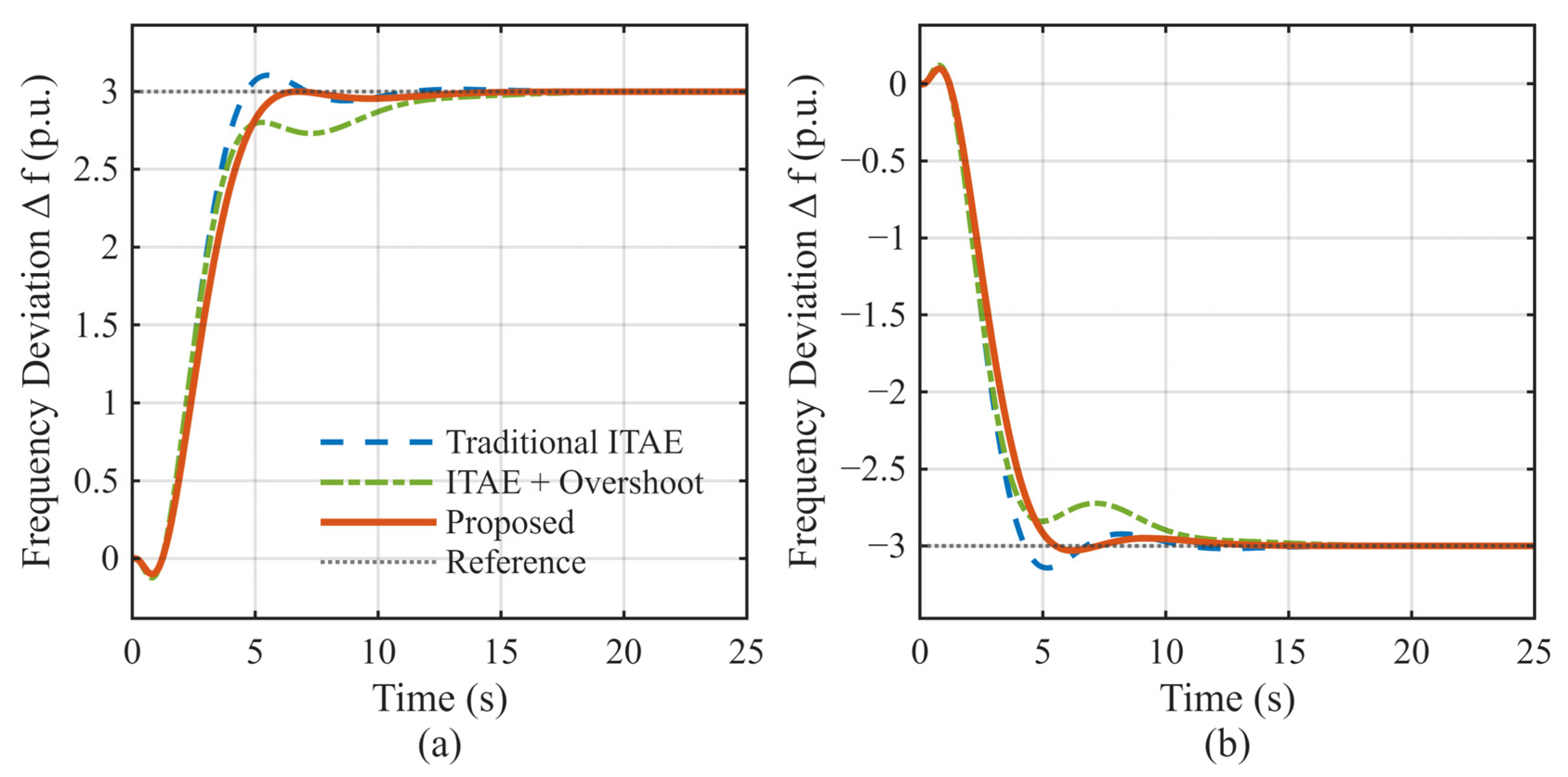
A representative operating condition of H = 85   m and P m 0 = 0.6   p . u . is selected. To reduce the influence of stochastic initialization, all three cases employ the same initial GA population, random seed, and GA–SQP parameter settings. The resulting frequency responses are shown in Figure 5. The PID parameters obtained under the positive-step condition are subsequently applied directly to an equal-amplitude reverse-step disturbance without additional retuning. Therefore, Figure 5a provides the primary objective-function comparison, whereas Figure 5b serves as an additional bidirectional-response verification.
As shown in Figure 5a, the traditional ITAE produces the fastest initial response but also exhibits a distinct positive overshoot. Introducing the overshoot penalty into ITAE effectively removes this overshoot, but results in a pronounced slow recovery after the response approaches the reference. In contrast, the proposed objective function retains the zero-overshoot characteristic while markedly shortening the long-tail recovery process. A similar overall tendency is observed in Figure 5b, indicating that the performance differences are not restricted to the disturbance direction used during parameter optimization.
To quantitatively characterize the differences observed in Figure 5a, the optimized PID parameters and the main dynamic performance indices under the positive-step condition are summarized in Table 3. The reverse-step results are not repeated in the table because they are used only as an additional verification rather than as an independent optimization case.
The quantitative results in Table 3 confirm the response characteristics observed in Figure 5a. Traditional ITAE provides the fastest response, with a settling time of 4.21 s, but produces a 3.4294% overshoot. Introducing the overshoot penalty eliminates the positive overshoot, but increases the settling time to 9.67 s and the ITCAE to 1.3472, indicating a pronounced long-tail response.
When the linear time weighting is further replaced by the t 3 weighting, the proposed objective function retains zero overshoot while reducing the settling time from 9.67 s to 5.12 s and the ITCAE from 1.3472 to 0.4152. Compared with conventional ITAE, the proposed formulation eliminates the 3.4294% overshoot while maintaining only a moderate increase in settling time. These results show that the overshoot penalty primarily suppresses transient peaks, whereas the higher-order temporal weighting further mitigates long-tail errors, thereby providing a more balanced compromise between overshoot suppression and response rapidity.

4.3. Sensitivity Analysis of Overshoot Penalty Weight

The hydro-turbine regulating system has highly nonlinear dynamic characteristics, and the interaction between rotational inertia and water flow inertia of the unit varies significantly under different operating head boundaries. If the overshoot penalty weight in the objective function is set solely based on the experience of a single rated condition, it is highly likely to cause dynamic quality degradation when the system operates across different conditions. To objectively determine the optimal fitness function evaluation benchmark, this section uses a multi-condition discrete weight comparison method to conduct sensitivity analysis and selection of the penalty weight.
To fully cover the actual operating head boundary of the unit, 3 typical physical operating nodes are selected to construct a test array, and 7 representative weight comparison schemes are set for the single-objective fitness function. The specific operating condition boundaries and weight scheme parameter settings are shown in Table 4.
Under each weight scheme, the GA–SQP hybrid algorithm is utilized to perform independent PID parameter optimization for the 3 typical conditions in Table 4, and the average Integral of Time-Cubed Absolute Error (ITCAE) and average overshoot under all conditions for each scheme are calculated. The two indices characterize the response rapidity and overshoot-suppression capability of the controller from complementary perspectives, respectively.
To further reduce the heuristic component in penalty-weight selection, a marginal benefit-to-cost criterion is introduced to quantitatively characterize the trade-off between overshoot suppression and response rapidity. For two adjacent penalty weights ω i 1 and ω i , the relative reduction in average overshoot is defined as
R σ , i = σ ¯ ω i 1 σ ¯ ω i σ ¯ ω i 1 × 100 % ,
where σ ¯ ω denotes the average overshoot over the three representative operating conditions. Correspondingly, the relative increase in the average ITCAE is defined as
R J , i = J ¯ ITCAE   ω i J ¯ ITCAE   ω i 1 J ¯ ITCAE   ω i 1 × 100 % .
Accordingly, the marginal benefit-to-cost ratio is defined as
η i = R σ , i R J , i ,
where η i represents the percentage reduction in average overshoot obtained per 1% increase in average ITCAE. A larger value of η i indicates that a greater overshoot-suppression benefit can be achieved at the same relative cost in response rapidity. The quantitative results for different adjacent penalty-weight transitions are summarized in Table 5.
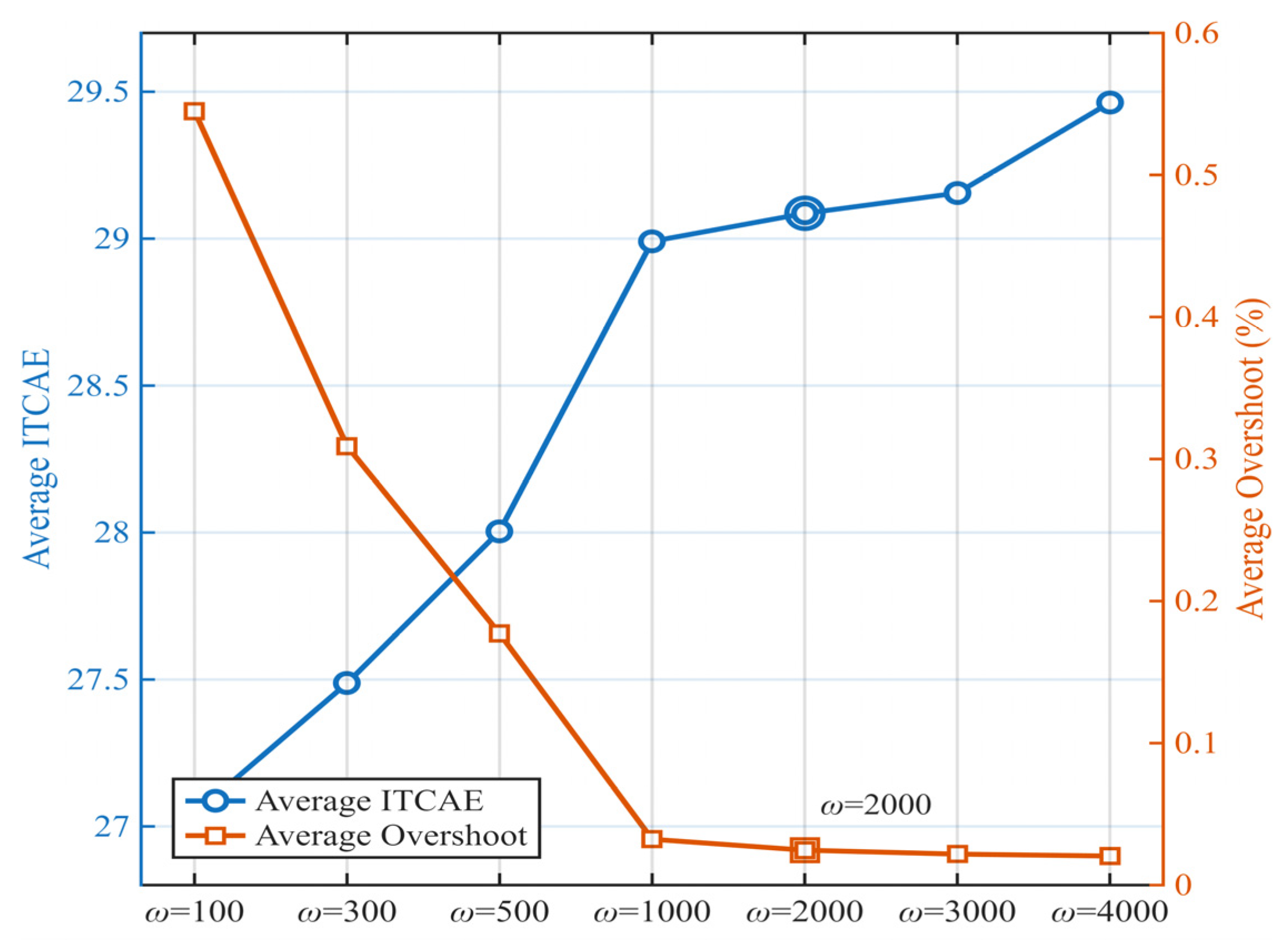
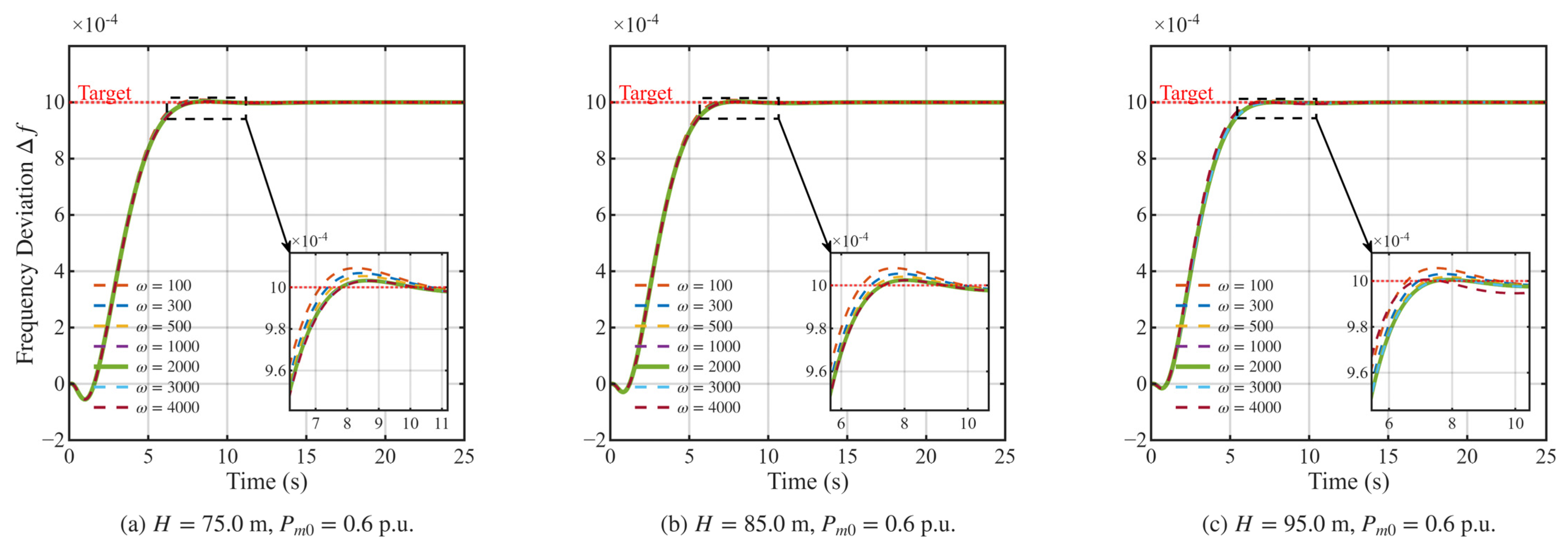
The trade-off between the average ITCAE and average overshoot under different penalty weights is shown in Figure 6. As ω increases, the average overshoot decreases rapidly at first and then gradually approaches a low level, whereas the average ITCAE exhibits an overall increasing trend, indicating an evident trade-off between overshoot suppression and response rapidity.
As further quantified in Table 5, when ω increases from 1000 to 2000, the average overshoot decreases from 0.03232% to 0.02462%, corresponding to a relative improvement of 23.81%, whereas the average ITCAE increases only from 28.9910 to 29.0860, corresponding to a relative cost of 0.33%. Consequently, the marginal benefit-to-cost ratio reaches η = 72.7 , which is the highest among all adjacent weight transitions.
When ω is further increased from 2000 to 3000 and from 3000 to 4000, the corresponding marginal overshoot improvements decrease to 11.30% and 6.21%, respectively. This indicates that further increasing the penalty weight beyond 2000 produces progressively diminishing benefits in overshoot suppression. Therefore, considering both the quantitative marginal trade-off and the requirement for a low-overshoot response, ω = 2000 is selected as the final overshoot penalty weight.
Adopting the weight benchmark selected above, the frequency step response waveform matrix and multi-weight horizontal comparison of the system under 3 different head conditions are shown in Figure 7. By capturing the fine local magnification window before the frequency response enters the steady state, it can be seen that under this uniform evaluation benchmark ( ω = 2000 , highlighted curve in Figure 7), the algorithm can tune control parameters that make the system converge under different operating conditions with high load. Compared to the obvious overshoot phenomenon caused by a smaller weight (such as ω = 300 ) and the response delay caused by an excessively large weight, the dynamic response corresponding to ω = 2000 maintains a low-overshoot characteristic while preserving a relatively fast regulation process, which is consistent with the quantitative marginal trade-off analysis above.

4.4. Performance Comparison of Control Algorithms Under Different Conditions

To further evaluate the engineering applicability of the GA–SQP hybrid optimization strategy proposed in this paper when dealing with hydro-turbine models featuring strong water flow inertia and nonlinear coupling, this section conducts multi-algorithm horizontal comparative verification under 3 different operating conditions with high load nodes ( H { 75 , 85 , 95 } m, P m 0 = 0.6 p.u.) based on the comprehensive optimal fitness function benchmark established previously.
The algorithm set participating in the comparison includes the Genetic Algorithm (GA), Particle Swarm Optimization (PSO), Gravitational Search Algorithm (GSA), and the GA–SQP hybrid algorithm proposed in this paper. The population size and iteration hyperparameter configurations of each algorithm are shown in Table 6.
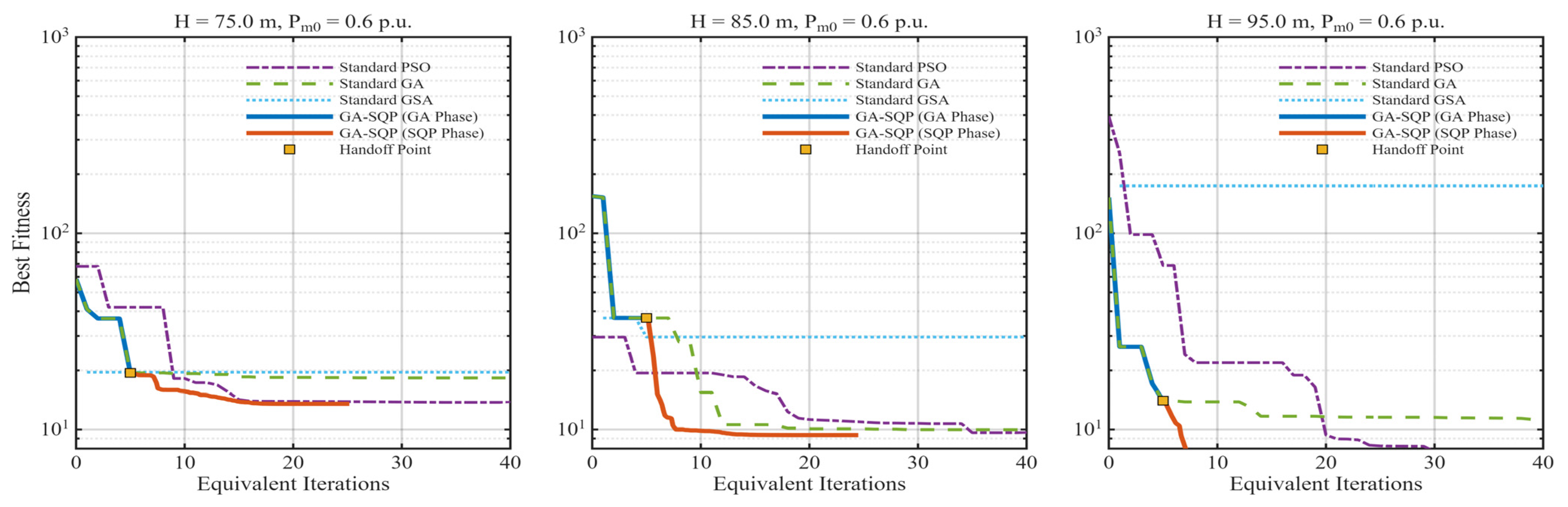
The comparison matrix of the iterative convergence trajectories of each algorithm optimizing independently under different operating conditions is shown in Figure 8. The four algorithms exhibit distinct convergence characteristics in the nonlinear PID parameter space. Under the prescribed equivalent-iteration budget, GSA generally shows slower convergence or stagnation at a relatively high fitness level, whereas GA and PSO progressively approach lower-fitness regions but require more iterations under some operating conditions. In contrast, GA–SQP uses GA during the first five generations to identify a promising parameter region and subsequently switches to the SQP stage at the handover point. After the switch, the fitness value decreases rapidly and reaches a lower level within fewer equivalent iterations. These results indicate that the local SQP refinement effectively improves the late-stage convergence efficiency and solution accuracy of the initial GA search.
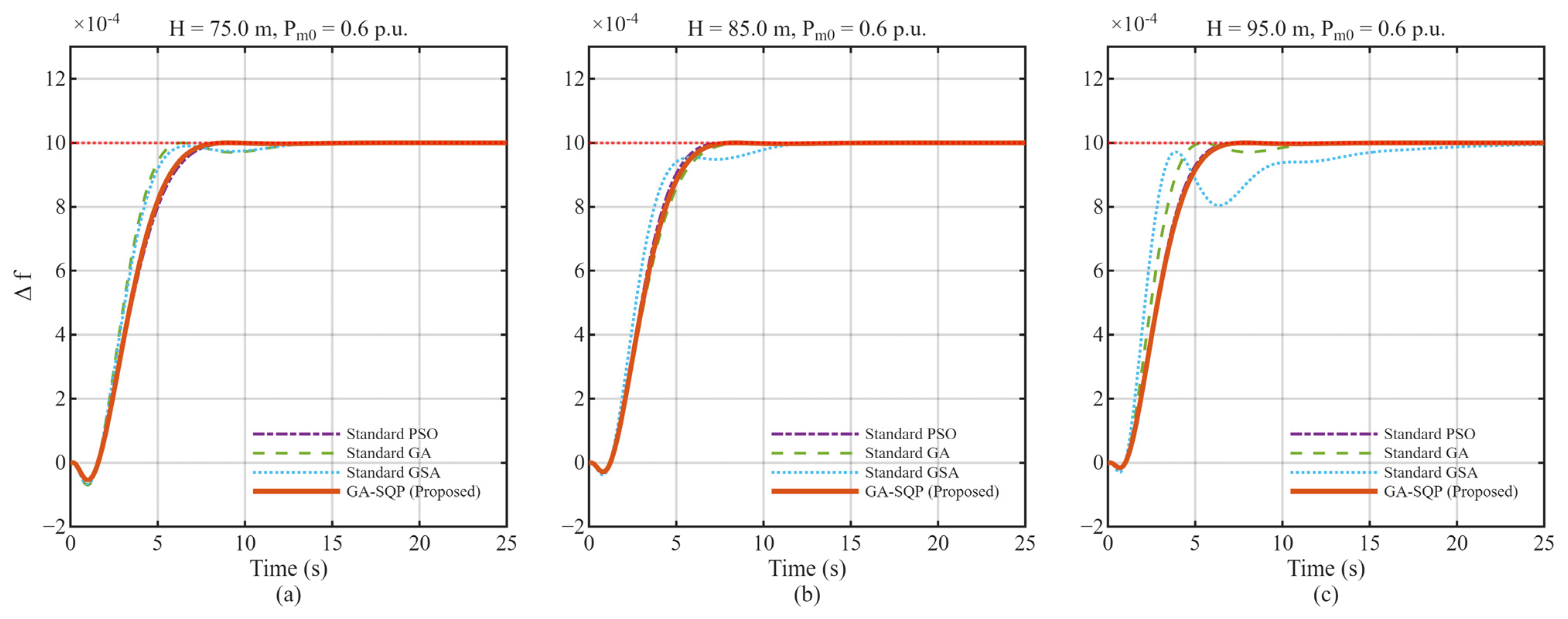
Substituting the PID control parameters obtained by the optimization of the aforementioned four algorithms into the closed-loop system model for frequency step response tests, the time-domain dynamic waveform comparison matrix is shown in Figure 9, and the corresponding statistical quantitative indicators of transient dynamics are shown in Table 7. The dynamic responses show that different optimization algorithms lead to distinct compromises among response rapidity, overshoot, undershoot, and accumulated regulation error. Under the low-head condition (H = 75 m), GA and GSA provide relatively short rise times but produce larger undershoots of 7.0473% and 6.7858%, respectively, whereas GA–SQP limits the undershoot to 5.4024% and achieves the lowest ITCAE of 0.1305. Under the medium- and high-head conditions, the performance differences become more evident, particularly for GSA, which exhibits comparatively large transient deviations or prolonged recovery. Overall, GA–SQP maintains relatively smooth responses across the three tested operating conditions without relying on the minimization of any single time-domain index.
Table 7 further reports the PID gain parameters obtained by the four optimization algorithms. The optimized K p , K i , and K d values vary among the different algorithms and operating heads, indicating that the algorithms converge to different parameter combinations in the nonlinear PID search space. Taking PSO as a representative reference, the relative deviations of K p , K i , and K d obtained by GA–SQP are approximately 3.74%, 2.07%, and 12.25%, respectively, at H = 75 m; 4.97%, 2.56%, and 10.40% at H = 85 m; and 3.23%, 1.82%, and 22.61% at H = 95 m. Compared with K p and K i , the derivative gain K d exhibits a relatively larger numerical variation among the optimized solutions. Moreover, the GA–SQP gains decrease from (3.0344, 1.6724, 0.2043) at H = 75 m to (1.3765, 0.7435, 0.0623) at H = 95 m, further demonstrating the operating-condition dependence of the optimized PID parameters.
The differences in the optimized PID gains are further reflected in the closed-loop dynamic performance. GA–SQP achieves the lowest ITCAE among the four algorithms at all three tested heads, with values of 0.1305, 0.0908, and 0.0722 at H = 75, 85, and 95 m, respectively. Compared with PSO, these values correspond to ITCAE reductions of approximately 2.03%, 3.51%, and 2.56%, respectively. Meanwhile, the overshoot of GA–SQP remains at a low level throughout the tested range, although the method does not necessarily minimize every individual transient indicator. In particular, at H = 95 m, GA–SQP achieves an overshoot of 0.0110%, the lowest undershoot of 1.5621%, and the lowest ITCAE of 0.0722 while maintaining a settling time of 5.44 s. Therefore, the advantage of GA–SQP is better characterized by its ability to obtain a balanced PID parameter combination with low accumulated regulation error and well-controlled transient deviations, rather than by the simultaneous minimization of every individual time-domain index.

5. Conclusions

This study addresses the severe control challenges of hydropower units operating in isolated grid modes, which are inherently constrained by low rotational inertia and weak damping. To effectively balance system rapidity and stability, a high-fidelity nonlinear dynamic model—incorporating elastic water hammer effects and neural network-fitted turbine characteristics—was established as a simulation benchmark. Recognizing the limitations of traditional evaluation indices when applied to non-minimum phase systems, we designed an improved objective function that integrates the Integral of Time-Cubed Absolute Error (ITCAE) with a directed transient overshoot penalty. Sensitivity analyses confirm that this mechanism successfully assigns a higher priority to smooth responses with suppressed transient overshoot, thereby providing a scientific evaluation foundation for controller tuning.
Building upon this benchmark, a two-stage GA–SQP hybrid optimization architecture was proposed to overcome the late-stage convergence bottlenecks typical of standalone heuristic algorithms. By utilizing the genetic algorithm to rapidly lock into the parameter stability region, followed by sequential quadratic programming for precise gradient tracking, this strategy achieves higher convergence accuracy with fewer iterative resources. Comprehensive evaluations across multiple high-load operating nodes demonstrate that the GA–SQP tuned systems exhibit superior transient dynamic quality. Particularly under high-head conditions with severe water hammer impacts, the strategy effectively suppresses transient overshoot and maintains the initial undershoot at a relatively low level. Ultimately, this approach effectively resolves the inherent contradiction between rapidity and overshoot in isolated grid frequency control, offering a robust and highly adaptable theoretical framework for PID parameter tuning in engineering practice.

Author Contributions

Conceptualization, C.L.; methodology, F.W.; software, F.W. and J.D.; validation, K.K. and X.T.; investigation, F.G. and X.L.; resources, F.L.; data curation, F.G.; writing—original draft preparation, F.W.; writing—review and editing, C.L.; supervision, X.T. and C.L. All authors have read and agreed to the published version of the manuscript.

Funding

The authors acknowledge financial support from the Smart Grid-National Science and Technology Major Project (2024ZD0801800), the National Natural Science Foundation of China (No. 52509120), the National Natural Science Foundation of China (No. 52279085), the Hubei Provincial Natural Science Foundation of China (2023AFD186), and the National Natural Science Foundation of China (No. U23B20143) for the research, authorship, and publication of this article.

Data Availability Statement

The research and simulations conducted in this study rely on highly sensitive operational parameters and real-world grid data associated with actual hydropower facilities. The datasets presented in this article are not readily available because these operational parameters represent critical national energy infrastructure, the raw data is strictly classified. Openly sharing or distributing this information in any form is prohibited by corporate confidentiality agreements and national data security regulations regarding the power grid.

Conflicts of Interest

Authors Fanglin Wang, Feng Gu, Ke Kang, Xingmao Li, and Fujing Long were employed by the company Huadian Sichuan Power Generation Co., Ltd. The remaining authors declare that the research was conducted in the absence of any commercial or financial relationships that could be construed as a potential conflict of interest.

References

  1. Steele, A.J.H.; Burnett, J.W.; Bergstrom, J.C. The impact of variable renewable energy resources on power system reliability. Energy Policy 2021, 151, 111947. [Google Scholar] [CrossRef] [Scilit]
  2. Liu, D.; Li, C.S.; Malik, O.P. Nonlinear modeling and multi-scale damping characteristics of hydro-turbine regulation systems under complex variable hydraulic and electrical network structures. Appl. Energy 2021, 293, 116949. [Google Scholar] [CrossRef] [Scilit]
  3. Saleem, M.I.; Saha, S.; Roy, T.K. A frequency stability assessment framework for renewable energy rich power grids. Sustain. Energy Grids Netw. 2024, 38, 101380. [Google Scholar] [CrossRef] [Scilit]
  4. Yang, W.J.; Norrlund, P.; Saarinen, L.; Yang, J.D.; Guo, W.C.; Zeng, W. Wear and tear on hydro power turbines—Influence from primary frequency control. Renew. Energy 2016, 87, 88–95. [Google Scholar] [CrossRef] [Scilit]
  5. Liu, W.Y.; Zheng, Y.; Zhou, X.; Lv, Y.J.; Chen, Q.J. Enhanced frequency regulation in pumped hydro storage integrated power systems: An innovative modeling method and GPC-PI control strategy. J. Energy Storage 2024, 103, 114251. [Google Scholar] [CrossRef] [Scilit]
  6. Liu, D.; Wang, X.; Peng, Y.S.; Zhang, H.; Xiao, Z.H.; Han, X.D.; Malik, O.P. Stability analysis of hydropower units under full operating conditions considering turbine nonlinearity. Renew. Energy 2020, 154, 723–742. [Google Scholar] [CrossRef] [Scilit]
  7. Xu, R.L.; Tan, X.; Wang, H.; Zhu, Z.; Lu, X.; Li, C. Stability of hydropower units under full operating conditions considering nonlinear coupling of turbine characteristics. Renew. Energy 2024, 223, 120009. [Google Scholar] [CrossRef] [Scilit]
  8. Esfandyari, M.; Fanaei, M.A.; Zohreie, H. Adaptive fuzzy tuning of PID controllers. Neural Comput. Appl. 2013, 23, 19–28. [Google Scholar] [CrossRef] [Scilit]
  9. Magdy, G.; Shabib, G.; Elbaset, A.A.; Kerdphol, T.; Qudaih, Y.; Mitani, Y. Decentralized optimal LFC for a real hybrid power system considering renewable energy sources. J. Eng. Sci. Technol. 2019, 14, 682–697. [Google Scholar]
  10. Lv, C.; Xu, Y.H.; Wu, X.; Zhang, Q. Characteristic analysis and optimal regulation of primary frequency regulation condition in low water head area based on hydraulic-mechanical-electrical coupling model of pumped storage unit. Complexity 2020, 2020, 6161784. [Google Scholar] [CrossRef] [Scilit]
  11. Li, C.S.; Mao, Y.F.; Zhou, J.Z.; Zhang, N.; An, X.L. Design of a fuzzy-PID controller for a nonlinear hydraulic turbine governing system by using a novel gravitational search algorithm based on Cauchy mutation and mass weighting. Appl. Soft Comput. 2017, 52, 290–305. [Google Scholar] [CrossRef] [Scilit]
  12. Piraisoodi, T.; Siluvairaj, W.I.M.; Kappuva, M.A.K. Multi-objective robust fuzzy fractional order proportional-integral-derivative controller design for nonlinear hydraulic turbine governing system using evolutionary computation techniques. Expert Syst. 2019, 36, e12366. [Google Scholar] [CrossRef] [Scilit]
  13. Xu, Y.H.; Zheng, Y.; Du, Y.; Yang, W.; Peng, X.Y.; Li, C.S. Adaptive condition predictive-fuzzy PID optimal control of start-up process for pumped storage unit at low head area. Energy Convers. Manag. 2018, 177, 592–604. [Google Scholar] [CrossRef] [Scilit]
  14. Xu, Y.H.; Zhao, K.J.; Guo, P.C.; Jiang, W.; Wu, X.; Sun, W.P. Design of type-2 fuzzy fractional-order proportional-integral-derivative controller and multi-objective parameter optimization under load reduction condition of the pumped storage unit. J. Energy Storage 2022, 50, 104227. [Google Scholar] [CrossRef] [Scilit]
  15. Beus, M.; Pandzic, H. Practical Implementation of a Hydro Power Unit Active Power Regulation Based on an MPC Algorithm. IEEE Trans. Energy Convers. 2022, 37, 243–253. [Google Scholar] [CrossRef] [Scilit]
  16. Zheng, Y.; Chen, Q.J.; Xu, Y.H.; Wang, W.Y.; Yan, D.L.; Liu, W.Y. Hierarchical MPC scheme for the speed governing of PSU with complex conduit system. IET Gener. Transm. Distrib. 2019, 14, 316–329. [Google Scholar] [CrossRef] [Scilit]
  17. Wang, C.; Li, D.H.; Zhang, H.L.; Ma, P.; Li, X.K.; Zhang, S.H.; Dong, Y.C. Prescribed performance sliding mode control for the bursting oscillation of a fractional-order hydro-turbine governing system based on time-varying tangent barrier Lyapunov function. Appl. Energy 2024, 356, 122414. [Google Scholar] [CrossRef] [Scilit]
  18. Fu, J.N.; Yu, X.Y.; Gao, C.Y.; Cui, J.D.; Li, Y.T. Nonsingular fast terminal control for the DFIG-based variable-speed hydro-unit. Energy 2022, 244, 122672. [Google Scholar] [CrossRef] [Scilit]
  19. Zhang, G.Z.; Zhao, J.B.; Hu, W.H. Deep Reinforcement Learning Enabled Bi-Level Robust Parameter Optimization of Hydropower Dominated Systems for Damping Ultra-Low Frequency Oscillation. J. Mod. Power Syst. Clean Energy 2023, 11, 1770–1783. [Google Scholar] [CrossRef] [Scilit]
  20. Yin, L.F.; Huang, W.X. Informer-embedded prioritized experience replay-based soft actor-critic for ultra-low frequency oscillation suppression of pumped hydropower storage systems. J. Energy Storage 2025, 114, 115802. [Google Scholar] [CrossRef] [Scilit]
  21. Zeng, Y.L.; Hussein, Z.A.; Chyad, M.H.; Farhadi, A.; Yu, J.Y.; Rahbarimagham, H. Integrating type-2 fuzzy logic controllers with digital twin and neural networks for advanced hydropower system management. Sci. Rep. 2025, 15, 5140. [Google Scholar] [CrossRef] [Scilit] [PubMed]
  22. Liu, D.; Li, C.; Tan, X.; Lu, X.; Malik, O. Damping characteristics analysis of hydropower units under full operating conditions and control parameters: Accurate quantitative evaluation based on refined models. Appl. Energy 2021, 292, 116881. [Google Scholar] [CrossRef] [Scilit]
  23. Chen, J.B.; Zeng, Q.; Zou, Y.D.; Li, S.J.; Zheng, Y.; Liu, D.; Xiao, Z.H. Intelligent robust control for nonlinear complex hydro-turbine regulation system based on a novel state space equation and dynamic feedback linearization. Energy 2024, 302, 131798. [Google Scholar] [CrossRef] [Scilit]
  24. Shi, Y.S.; Zhou, J.Z. Stability and sensitivity analyses and multi-objective optimization control of the hydro-turbine generator unit. Nonlinear Dyn. 2022, 107, 2245–2273. [Google Scholar] [CrossRef] [Scilit]
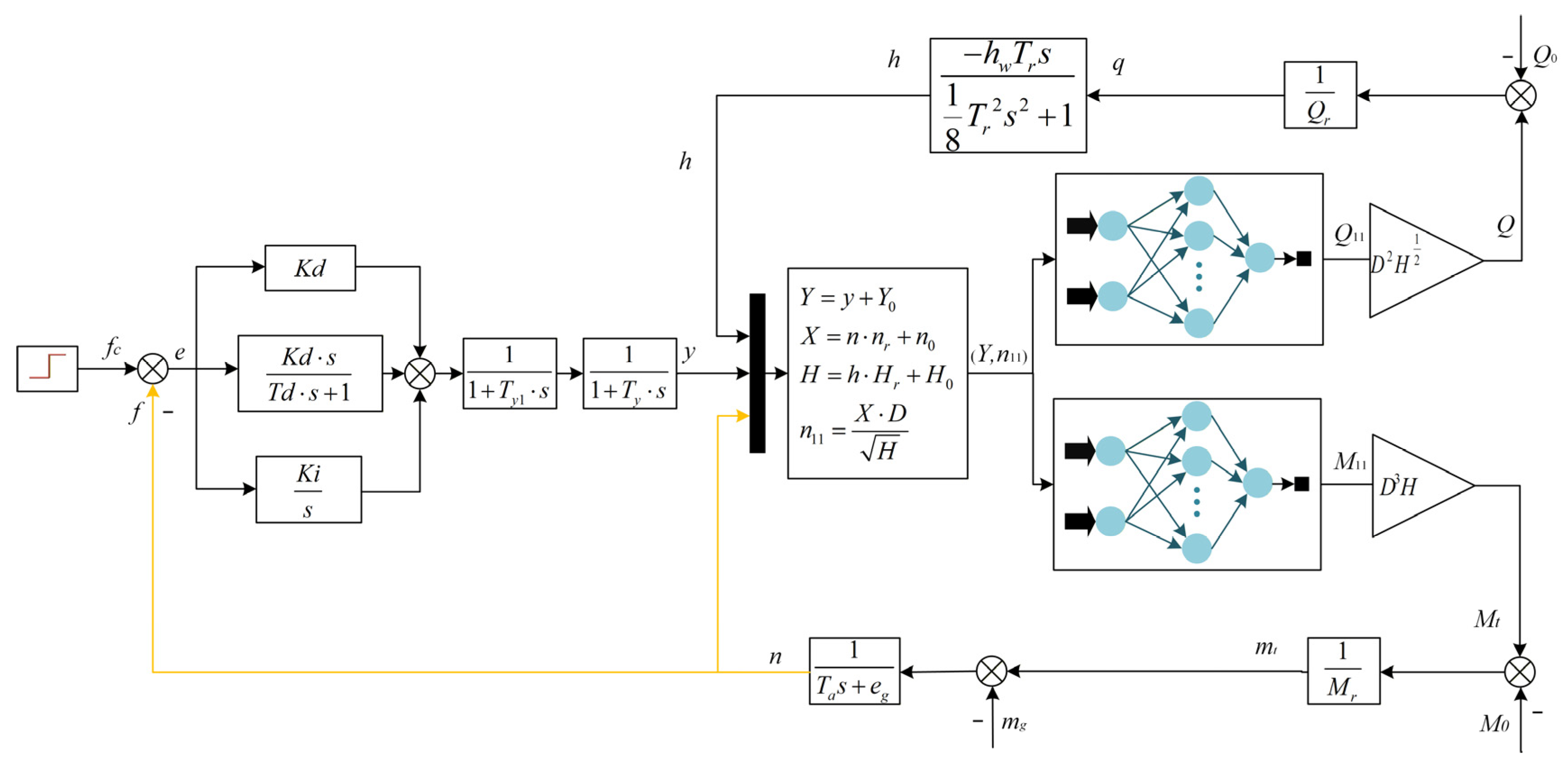
Figure 1. Overall model of the hydro-turbine.
Water 18 02008 g001
Figure 2. Flowchart of the hybrid optimization.
Water 18 02008 g002
Figure 3. Three-dimensional fitted surfaces of hydro-turbine torque and discharge characteristics.
Water 18 02008 g003
Figure 4. Heat map of fitting errors.
Water 18 02008 g004
Figure 5. Frequency responses optimized using three objective functions under bidirectional step disturbances: (a) positive step; (b) reverse step.
Water 18 02008 g005
Figure 6. Trade-off between average ITCAE and average overshoot under different overshoot penalty weights.
Water 18 02008 g006
Figure 7. Frequency step responses under different overshoot penalty weights at three representative operating conditions: (a) H = 75 m, P m 0 = 0.6 p.u.; (b) H = 85 m, P m 0 = 0.6 p.u.; (c) H = 95 m, P m 0 = 0.6 p.u.
Water 18 02008 g007
Figure 8. Comparison curves of optimization iteration convergence of multiple algorithms.
Water 18 02008 g008
Figure 9. Dynamic comparison of frequency step responses of different algorithms.
Water 18 02008 g009
Table 1. Basic parameters of the simulation test unit and control system.
Parameter CategoryParameters
Controller K p = 3 , K i = 0.6 ,   K d = 0.015 , T d = 2.5
Servo System T y 1 = 0.3   s , T y 2 = 0.3   s
Diversion System T w = 1.473   s , h w = 3.75 , T r = 0.308   s
Generator T a = 10   s , e g = 5
Hydro-turbine D 1 = 5   m , n r = 136.4   r / min ,
Q r = 239   m 3 / s , M r = 1.225 × 10 7   N m
Table 2. Architecture and hyperparameter settings of the deep neural network.
Parameter CategorySettings
Network Topology2-64-32-16-1
Hidden Layer ActivationHyperbolic Tangent (tanh)
Output Layer ActivationLinear
OptimizerAdam
Mini-Batch Size1024
Max Epochs10,000
Learning Rate StrategyInitial 0.005, decayed by 50%
every 3000 epochs
Loss FunctionMean Squared Error (MSE)
Table 3. Comparison of PID parameters and dynamic performance under different objective functions.
Objective Function K p K i K d t s t r Overshoot (%)Undershoot (%)ITCAE
ITAE2.43961.24860.79854.212.333.42944.12130.4719
ITAE + Overshoot Penalty2.55751.01910.81099.672.7704.17511.3472
Proposed2.17381.07860.07695.122.9603.35220.4152
Table 4. Parameter settings for multi-condition and discrete weight test schemes.
Parameter CategoryPhysical SymbolSet ValueUnit
Test head H 75, 85, 95m
Overshoot penalty weight ω 100, 300, 500, 1000,
2000, 3000, 4000
-
Initial load P m 0 0.6p.u.
Table 5. Quantitative marginal trade-off under different penalty-weight transitions.
Weight TransitionOvershoot Improvement (%)ITCAE Cost (%) η
100→30043.281.6526.3
300→50042.691.8822.7
500→100081.753.5223.2
1000→200023.810.3372.7
2000→300011.300.2447.5
3000→40006.211.055.9
Table 6. Parameter settings of comparative optimization algorithms.
Optimization AlgorithmParameter Settings
GAPopulation size N = 30, maximum iterations 40
PSOPopulation size N = 30, maximum iterations 40
GSAPopulation size N = 30, maximum iterations 40
GA–SQPInitial population size N = 30, handover generation
of GA phase 5, maximum equivalent iterations 40
Table 7. Comparison of optimized PID gains and dynamic performance indicators obtained by different algorithms.
ConditionAlgorithmKpKiKdts (s)tr (s)Overshoot (%)Undershoot
(%)
ITCAE
Low Head (H = 75 m)PSO2.92511.63850.18206.603.820.02165.20360.1332
GA3.88311.85850.67095.092.730.03257.04730.1765
GSA3.72951.81500.67605.352.900.03776.78580.1882
GA–SQP3.03441.67240.20436.363.650.02355.40240.1305
Medium Head (H = 85 m)PSO1.92201.02430.10585.543.270.01142.98020.0941
GA1.72920.96900.10476.123.680.02612.70440.0945
GSA2.24071.06981.00007.822.830.19033.82120.2581
GA–SQP1.82650.99810.09485.813.460.01462.83930.0908
High Head (H = 95 m)PSO1.42240.75730.08055.283.190.01471.61730.0741
GA1.78280.84220.31944.282.480.02782.07910.1069
GSA2.68530.67430.494212.871.860.00002.99061.7456
GA–SQP1.37650.74350.06235.443.300.01101.56210.0722
Disclaimer/Publisher’s Note: The statements, opinions and data contained in all publications are solely those of the individual author(s) and contributor(s) and not of MDPI and/or the editor(s). MDPI and/or the editor(s) disclaim responsibility for any injury to people or property resulting from any ideas, methods, instructions or products referred to in the content.