Winners and Losers of Water Stress: Does the Drying Up of Peat Ponds Affect All Groups of Aquatic Organisms in the Same Way?


Abstract
1. Introduction
2. Materials and Methods
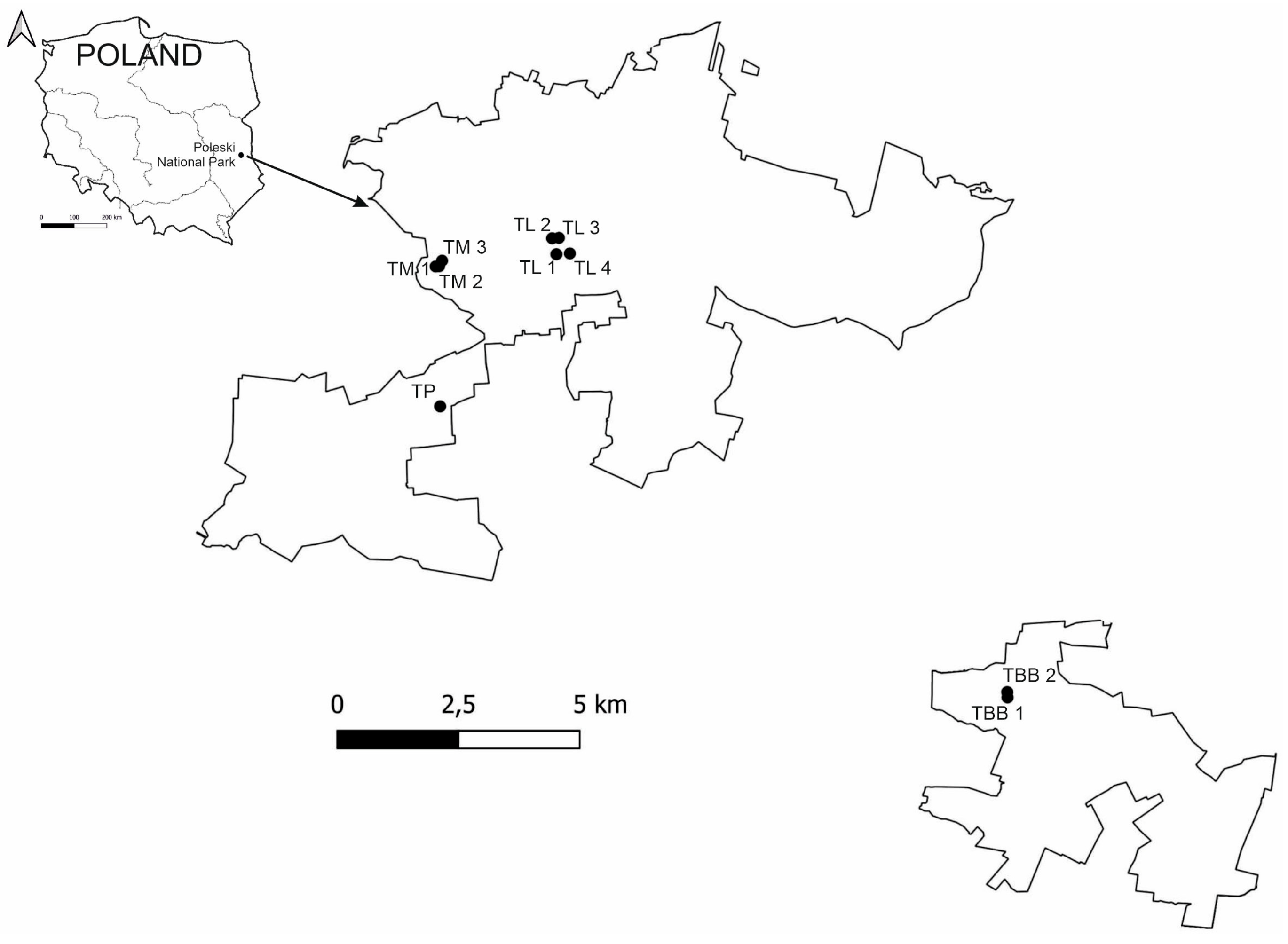
2.1. Study Area
2.2. Hydrological and Physico-Chemical Analyses
2.3. Aquatic Organisms
2.4. Statistical Analysis
3. Results
3.1. Hydrological and Physicochemical Parameters
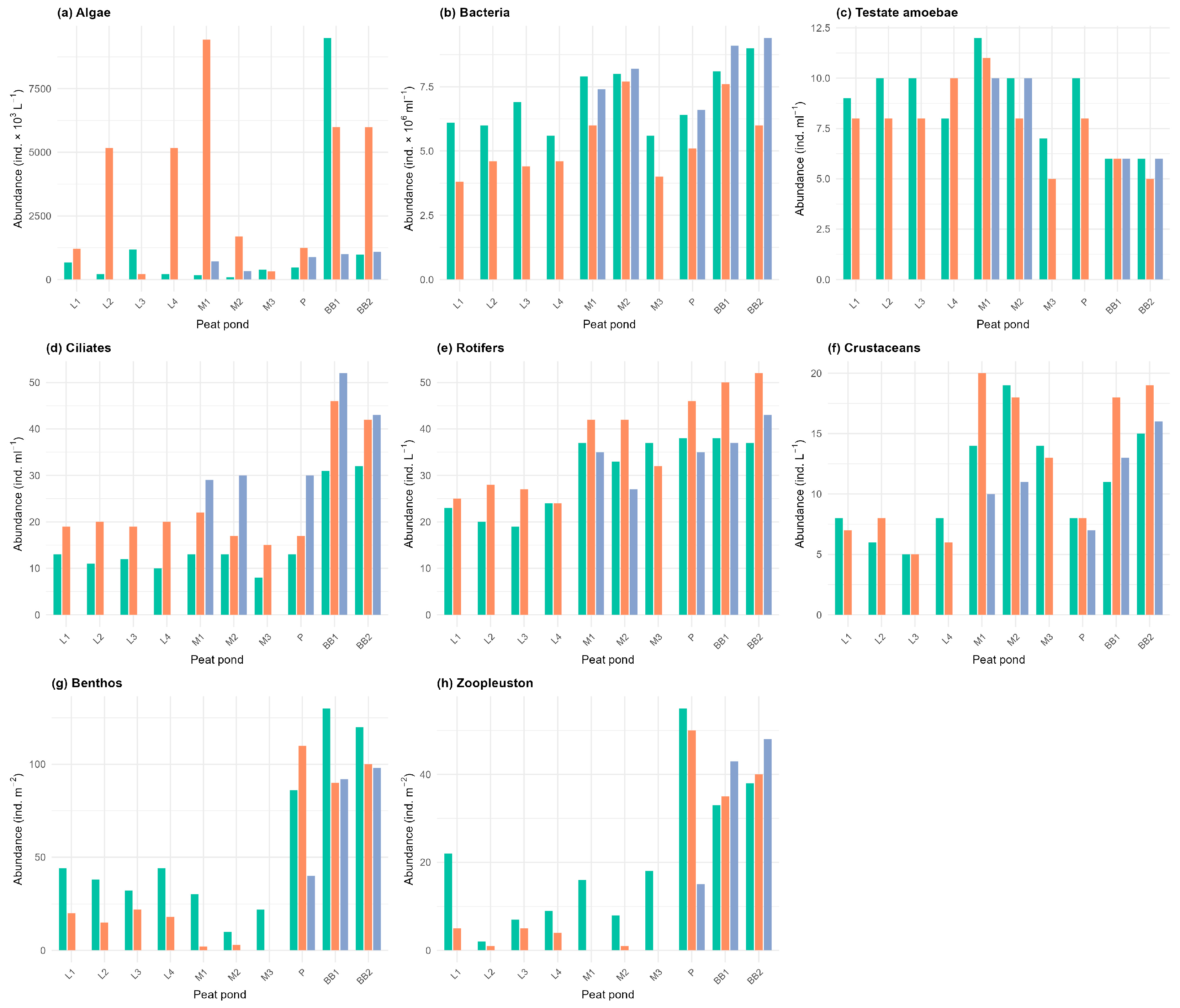
3.2. Bacterioplankton and Phytoplankton
3.3. Zooplankton
3.4. Macroinvertebrates
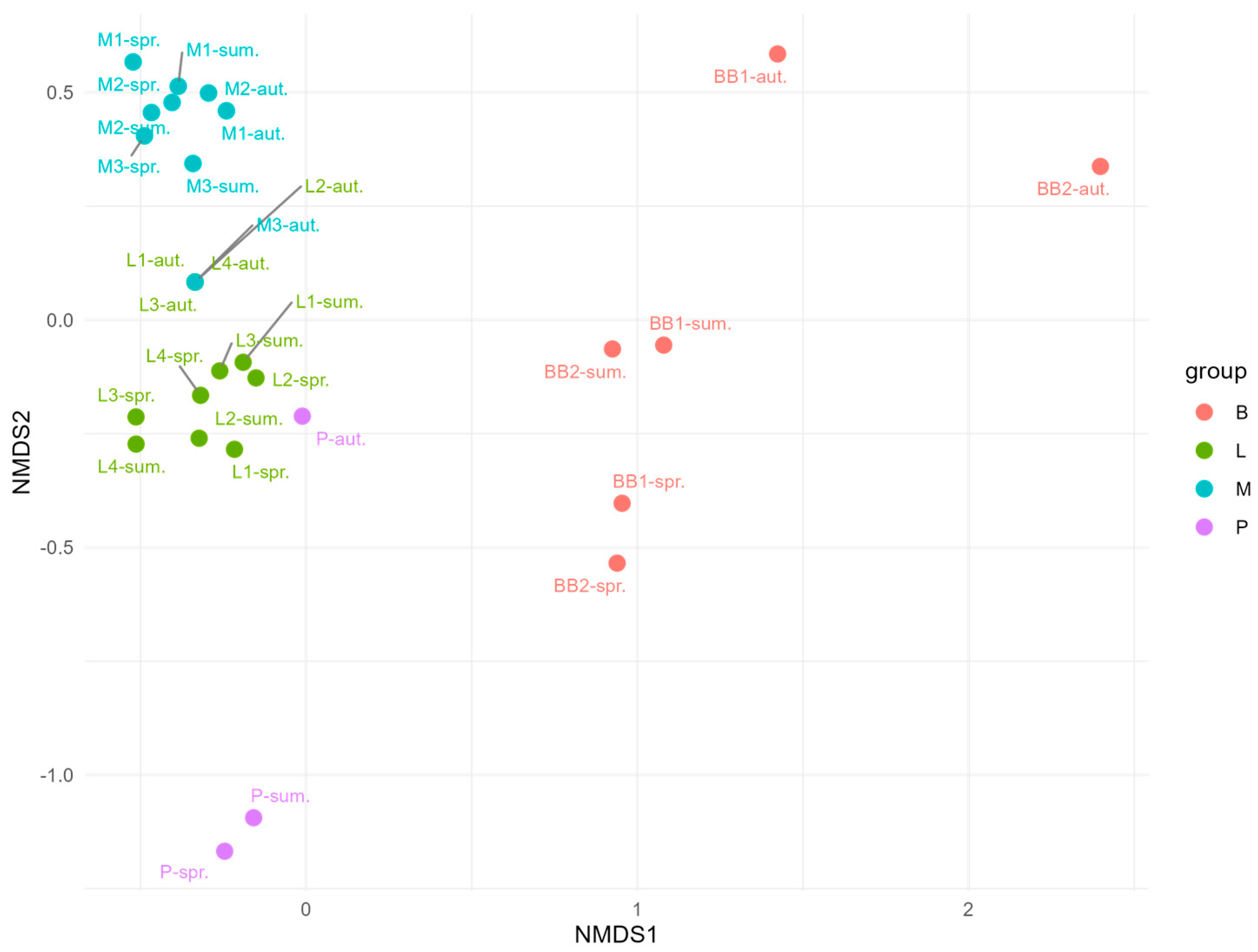
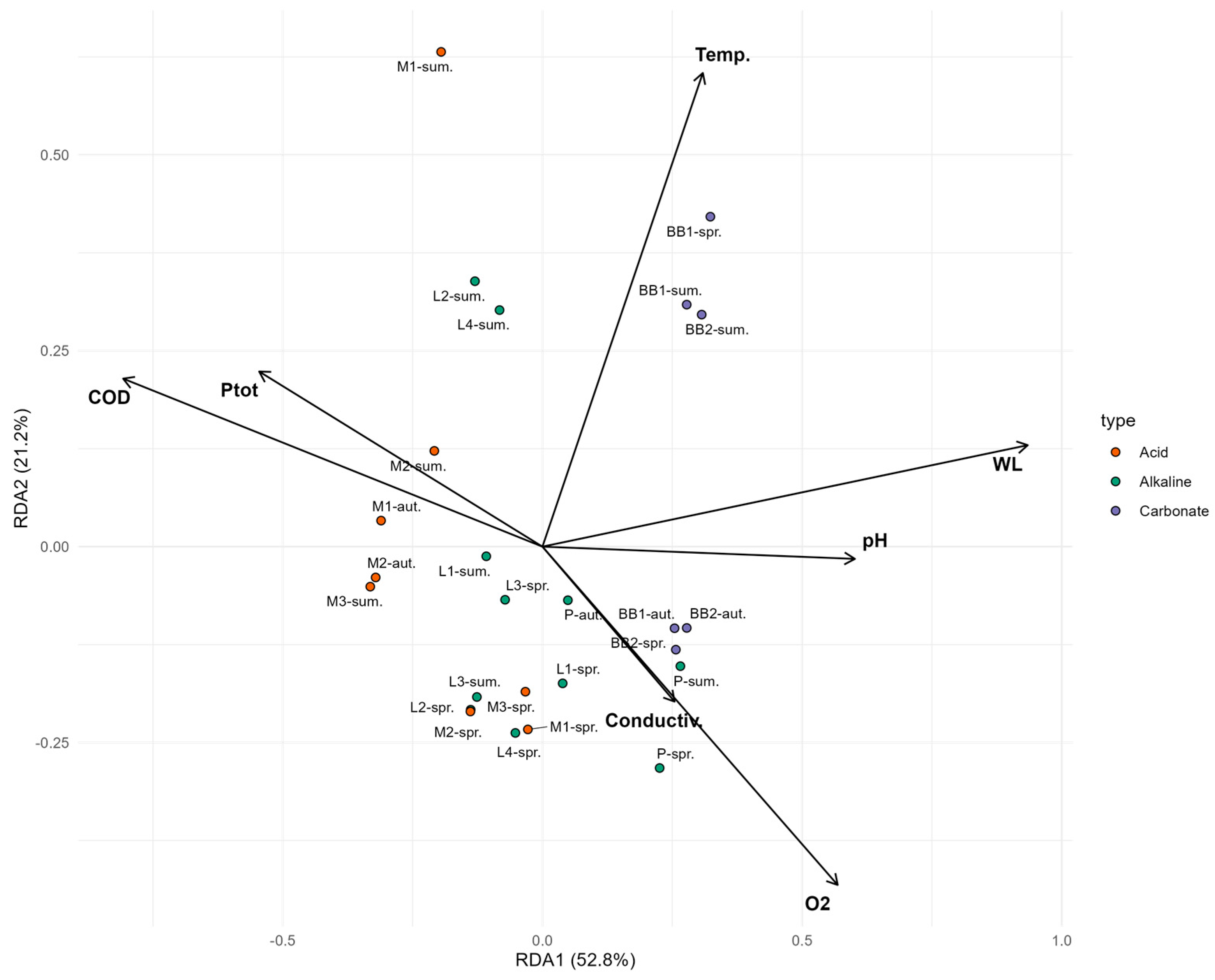
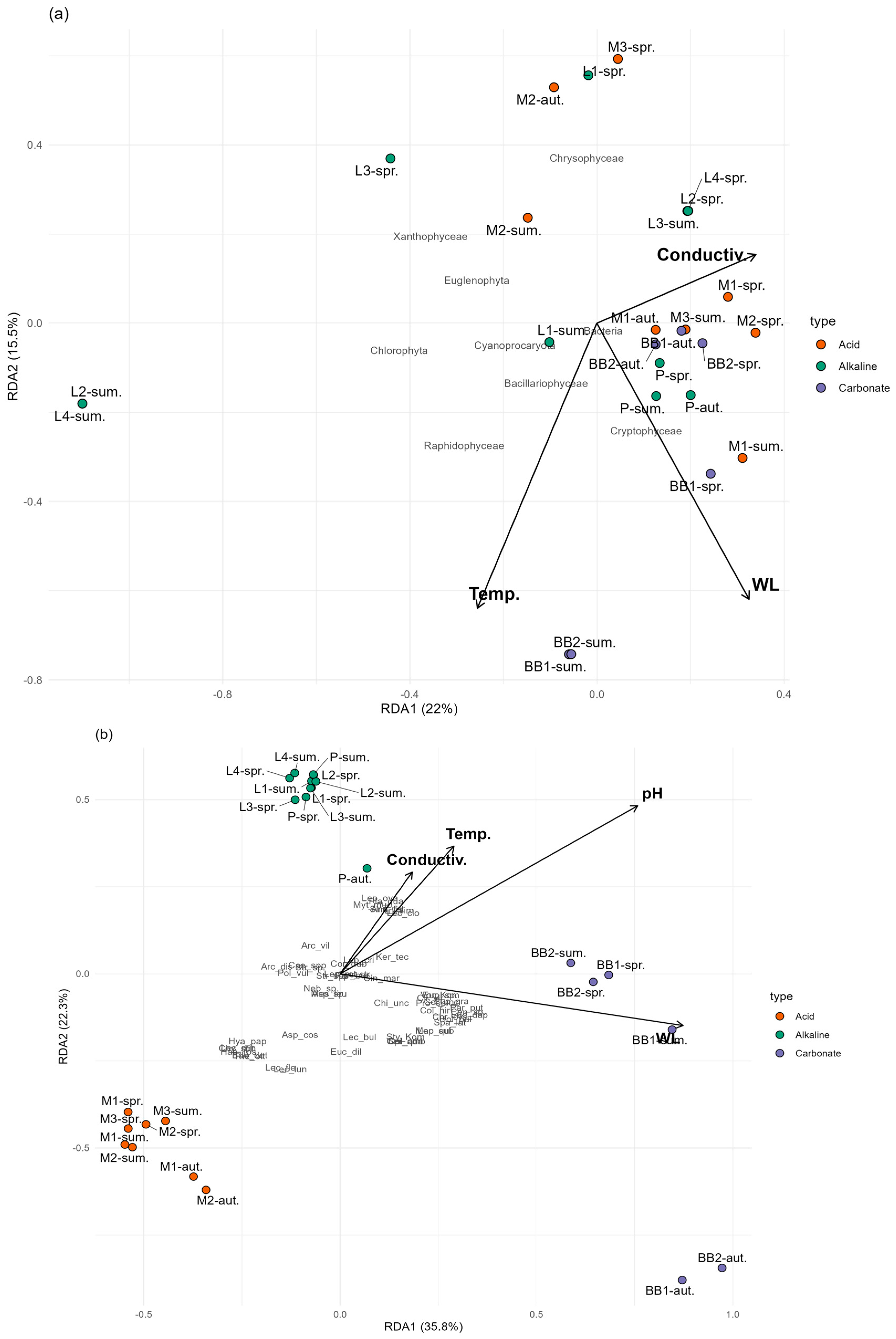
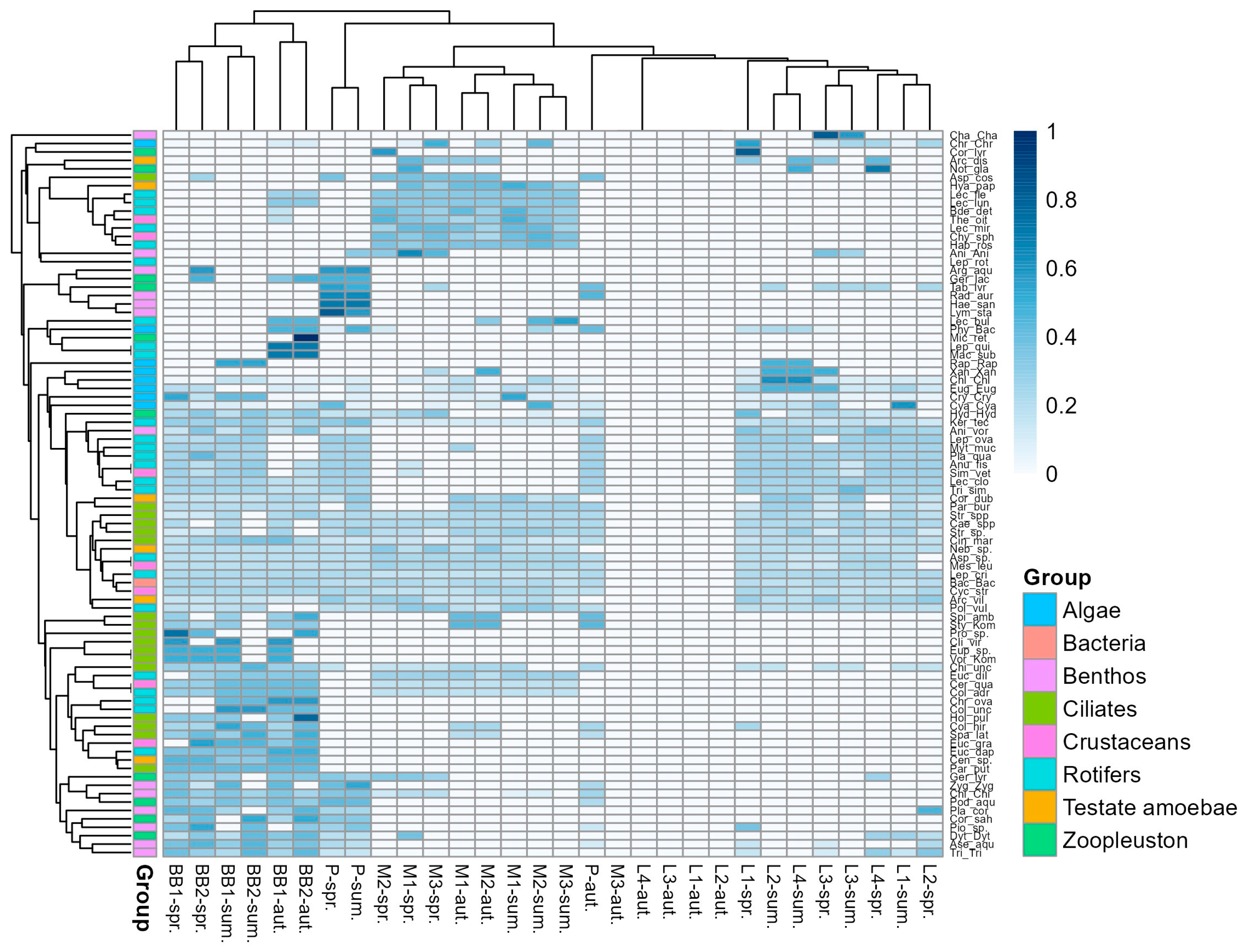
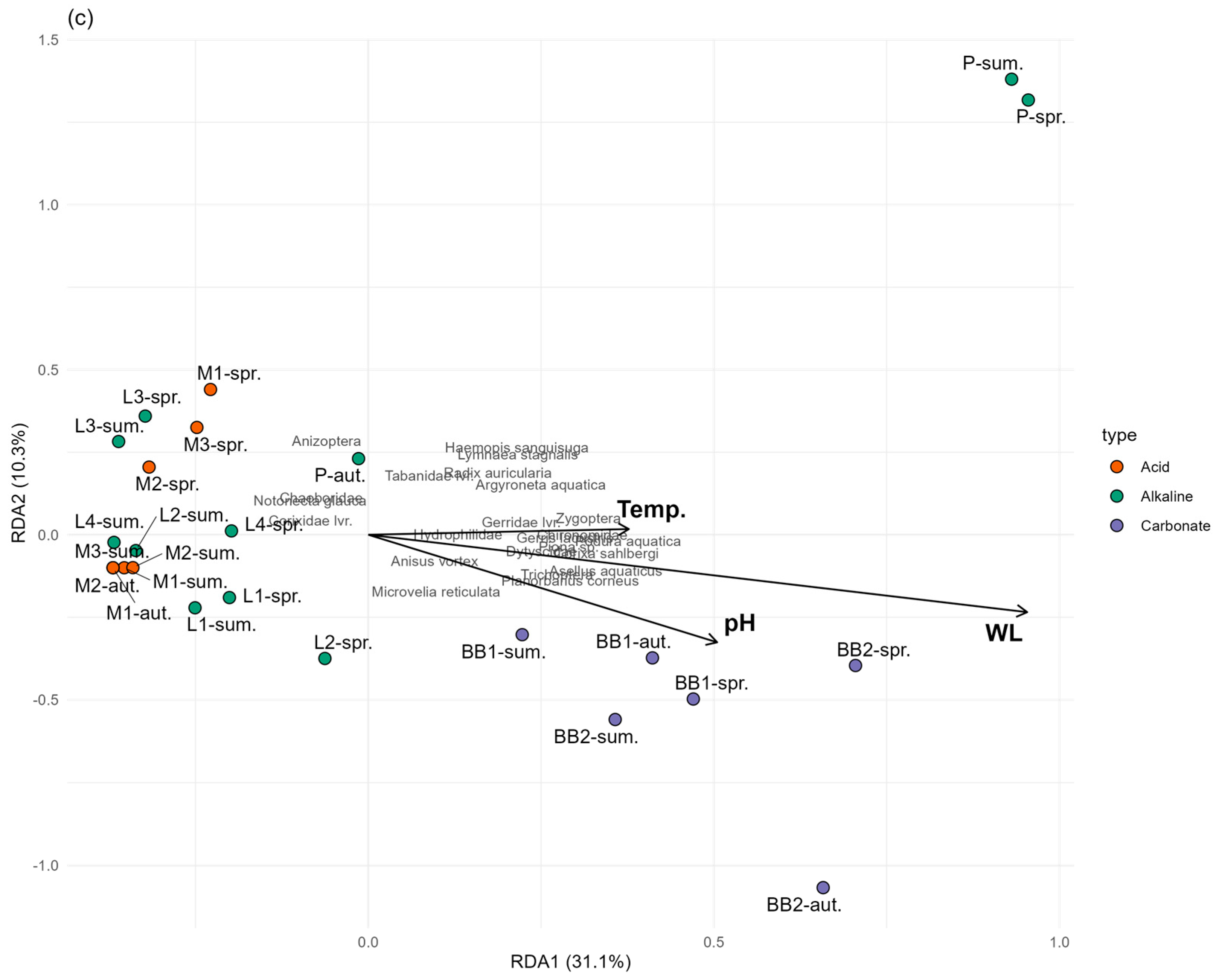
3.5. Ordination Analyses and Correlations Between the Physicochemical Parameters of the Water and Aquatic Organisms
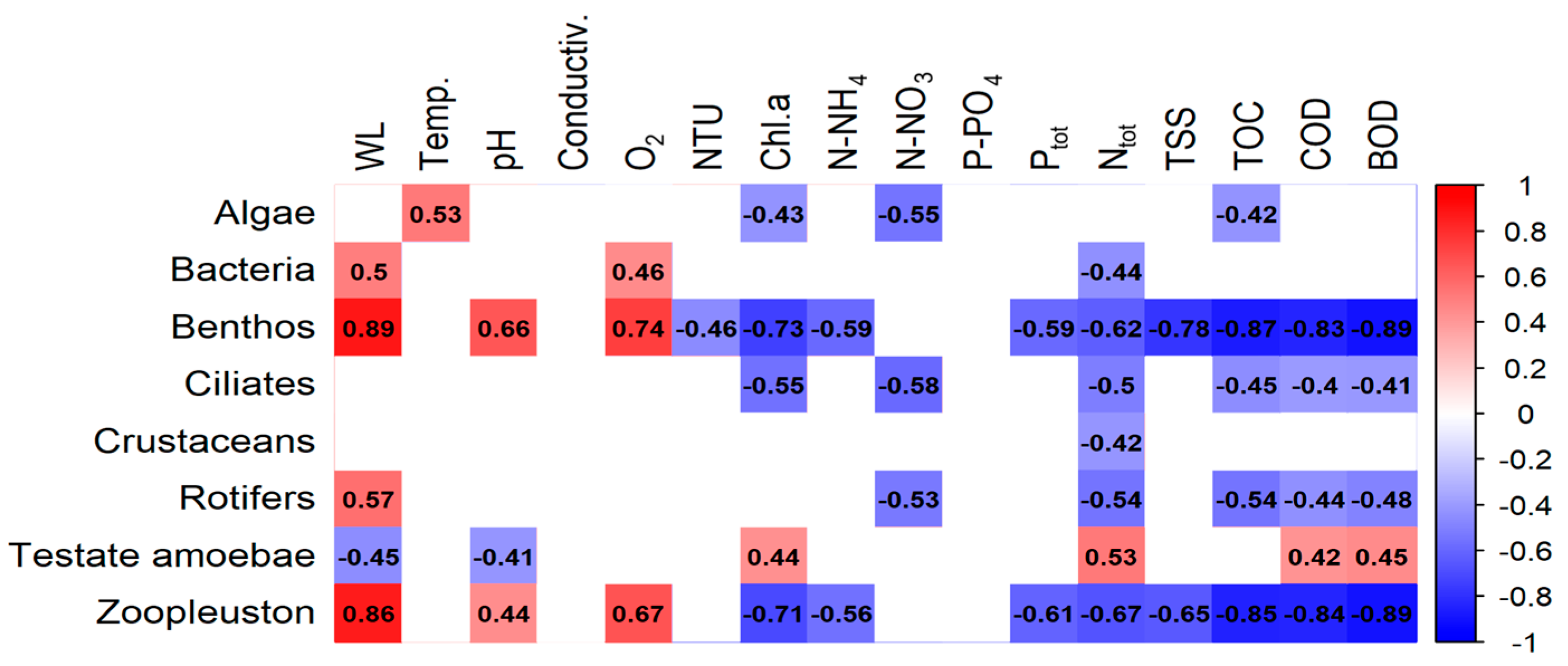
3.6. Correlations Between Food Web Components
4. Discussion
4.1. Physicochemical Parameters
4.2. Bacterioplankton and Phytoplankton
4.3. Zooplankton
4.4. Macroinvertebrates
5. Conclusions
Author Contributions
Funding

Data Availability Statement
Conflicts of Interest
References
- Mieczan, T.; Bielańska-Grajner, I.; Tarkowska-Kukuryk, M. Hydrochemical and microbiological distinction and function of ombrotrophic peatland lagg as ecotone between Sphagnum peatland and forest catchment (Poleski National Park, eastern Poland). Ann. Limnol.-Int. J. Lim. 2012, 48, 323–336. [Google Scholar] [CrossRef][Green Version]
- Küppers, G.C.; Gonzàlez Garraza, G.C.; Quiroga, M.V.; Lombardo, R.; Marinone, M.C.; Vinocur, A.; Mataloni, G. Drivers of highly diverse planktonic ciliate assemblages in peat bog pools from Tierra del Fuego (Argentina). Hydrobiologia 2016, 773, 117–134. [Google Scholar] [CrossRef]
- Lara, E.; Seppey, C.V.W.; Gonzàlez Garraza, G.C.; Singer, D.; Quiroga, M.V.; Mataloni, G. Planktonic eukaryote molecular diversity: Discrimination of minerotrophic and ombrotrophic peatland pools in Tierra del Fuego (Argentina). J. Plankton Res. 2015, 3, 645–655. [Google Scholar] [CrossRef]
- Cao, Y.; Machado, Ĕ.M.N.; Coppens, J.; Filiz, N.; Lauridsen, T.L.; Davidson, T.A.; Sondergaard, M.; Jeppesen, E. Heat wave effects on biomass and vegetative growth of macrophytes after long-term adaptation to different temperatures: A mesocosm study. Clim. Res. 2015, 66, 265–274. [Google Scholar] [CrossRef]
- Moss, B. Cogs in the endless machine: Lakes, climate change and nutrient cycles: A review. Sci. Total Environ. 2012, 434, 130–142. [Google Scholar] [CrossRef] [PubMed]
- Audet, J.; Neif, E.M.; Cao, Y.; Hoffmann, C.C.; Lauridsen, T.N.; Larsen, S.E.; Sondergaard, M.; Jeppesen, E.; Davidson, T.A. Heatwave effects on greenhouse gas emission from shallow lake mesocosms. Freshwat. Biol. 2017, 62, 1130–1142. [Google Scholar] [CrossRef]
- Mieczan, T.; Pawlik-Skowrońska, B. Effects of Arcella vulgaris on microbial loop communities in peat pools (an experimental approach). Fundam. Appl. Limnol. 2018, 2, 103–113. [Google Scholar] [CrossRef]
- Quiroga, M.V.; Unrein, F.; Garraza, G.G.; Küppers, G.; Lombardo, R.; Marinone, M.C.; Marque, S.M.; Vinocur, A.; Mataloni, G. The plankton communities from peat bog pools: Structure, temporal variation and environmental factors. J. Plankton Res. 2013, 35, 1234–1253. [Google Scholar] [CrossRef]
- Mieczan, T.; Tarkowska-Kukuryk, M. Diurnal dynamics of the microbial loop in peatlands: Structure, function and relationship to environmental parameters. Hydrobiologia 2013, 717, 189–201. [Google Scholar] [CrossRef]
- Bielańska-Grajner, I.; Mieczan, T.; Cudak, A. Co-Occurrence of Ciliates and Rotifers in Peat Mosses. Pol. J. Environ. Stud. 2011, 20, 533–540. [Google Scholar]
- Błędzki, L.A.; Bubier, J.L.; Ellison, A.M.; Moore, T.R. Ecology of rotifers and their unappreciated source of nitrogen and phosphorus in temperate northeastern American bogs. Fundam. Appl. Limnol. 2018, 191, 277–287. [Google Scholar] [CrossRef]
- Bragazza, L.; Buttler, A.; Habermacher, J.; Brancaleoni, L.; Gerdol, R.; Fritze, H.; Hanaji, P.K.; Laiho, R.; Johnson, D. High nitrogen deposition walters the decomposition of bog plant litter and reduces carbon accumulation. Glob. Change Biol. 2012, 18, 1163–1172. [Google Scholar] [CrossRef]
- Gilbert, D.; Amblard, C.; Bourdier, G.; Francez, A.J. The microbial loop at the surface of a peatland: Structure, functioning and impact of nutrients inputs. Microb. Ecol. 1998, 35, 89–93. [Google Scholar] [CrossRef] [PubMed]
- Mitchell, E.A.D.; Gilbert, D.; Buttler, A.; Amblard, C.; Grosverinier, P.; Gobat, J.M. Structure of microbial communities in Sphagnum peatlands and effect of atmospheric carbon dioxide enrichment. Microb. Ecol. 2003, 46, 187–199. [Google Scholar] [CrossRef] [PubMed]
- Wardle, D.A.; Jansson, M.; Bansal, S.; Bardgett, R.D.; Gundale, M.J.; Metcalfe, D.B. Linking vegetation change, carbon sequestration and biodiversity: Insights from island ecosystems in a long-term natural experiment. J. Ecol. 2012, 100, 16–30. [Google Scholar] [CrossRef]
- Berendse, F.; Van Breemen, N.; Rydin, H.; Buttler, A.; Heijmans, M.; Hoosbeek, M.R.; Vasander, H.; Wallén, B. Raised atmospheric CO2 levels and increased N deposition cause shifts in plant species composition and production in Sphagnum bogs. Glob. Change Biol. 2001, 7, 591–598. [Google Scholar] [CrossRef]
- Bragazza, L.; Limpens, J.; Gerdol, R.; Grosvernier, P.; Hájek, M.; Hajkova, P.; Iacumin, P.; Kutnar, L.; Rydin, H.; Tahvanainen, T. Nitrogen content and δ15N signature of ombrotrophic Sphagnum plants in Europe: To what extent is the increasing atmospheric N deposition altering the N-status of nutrient-poor mires? Glob. Change Biol. 2005, 11, 106–114. [Google Scholar] [CrossRef]
- Andersen, R.; Wells, C.; Macrae, M.; Price, J. Nutrient mineralization and microbial functional diversity in a restored bog approach natural conditions 10 years post restoration. Soil Biol. Biochem. 2013, 64, 37–47. [Google Scholar] [CrossRef]
- Mieczan, T.; Niedźwiecki, M.; Tarkowska-Kukuryk, M. Effect of rotifers, copepods and chironomid larvae on microbial communities in peatlands. Eur. J. Protistol. 2015, 51, 386–400. [Google Scholar] [CrossRef] [PubMed]
- Golterman, H.L. Methods for Chemical Analysis of Freshwaters; Blackwell, Scientific Publications: Oxford, UK; Edinburgh, UK, 1969. [Google Scholar]
- Hillebrand, H.; Dürselen, C.D.; Kirschtel, D.; Pollingher, U.; Zohary, T. Biovolume calculation for pelagic and benthic microalgae. J. Phycol. 1999, 35, 403–424. [Google Scholar] [CrossRef]
- Van den Hoek, C.; Mann, D.G.; Jahns, H.M. Algae. An Introduction to Phycology; Cambridge University Press: Cambridge, UK, 1995. [Google Scholar]
- Porter, K.G.; Feig, Y.S. The use of DAPI for identification and counting aquatic microflora. Limnol. Oceanogr. 1980, 25, 943–984. [Google Scholar] [CrossRef]
- Utermöhl, H. Zur vervollkommung der quantative phytoplankton methodic. Mitt. Int. Ver. Limnol. 1958, 9, 1–38. [Google Scholar] [CrossRef]
- Foissner, W.; Berger, H. A user-friendly guide to the ciliates (Protozoa, Ciliophora) commonly used by hydrobiologists as bioindicators in rivers, lakes and waste waters, with notes on their ecology. Freshw. Biol. 1996, 35, 375–470. [Google Scholar] [CrossRef]
- Foissner, W.; Berger, H.; Schaumburg, J. Identification and Ecology of Limnetic Plankton Ciliates; Informationsberichte des Bayer; Landesamtes für Wasserwirtschaft: München, Germany, 1999.
- Charman, D.J.; Hendon, D.; Woodland, W. The identification of testate amoebae (Protozoa: Rhizopoda) in peats. In Quaternary Research. Technical Guide; Quaternary Research Association: London, UK, 2000; Volume 9, pp. 1–147. [Google Scholar]
- Ruttner-Kolisko, A. Plankton Rotifers. Biology and Taxonomy; Schweitzerbartsche: Stuttgart, Germany, 1974. [Google Scholar]
- Koste, W. Rotatoria. Die Rädertiere Mitteleuropas. Ein Bestimmungswerk; begründet von Max Voigt. Űberordnung Monogononta 2. Auflage neubearbeitet von Walter Koste, vol. 1,2; Gebrüder Borntraeger: Stuttgart, Germany, 1978. [Google Scholar]
- Bottrell, H.H.; Duncan, A.; Gliwicz, Z.M.; Grygierek, E.; Herzig, A.; Hillbricht-Ilkowska, A. A reviewer of some problems in zooplankton production studied. Nor. J. Zool. 1976, 24, 419–456. [Google Scholar]
- Dumont, H.J.; Van de Velde, I.; Dumont, S. The dry weight estimate of biomass in selection of Cladocera, Copepoda and Rotifera from the plankton, periphyton and benthos of continental waters. Oecologia 1975, 19, 75–97. [Google Scholar] [CrossRef] [PubMed]
- Andersen, T.; Hessen, D.O. Carbon, nitrogen and phosphorus content of freshwater zooplankton. Limnol. Oceanogr. 1991, 36, 807–814. [Google Scholar] [CrossRef]
- Kołodziejczyk, A.; Koperski, P. Bezkręgowce Słodkowodne Polski. Klucz do Oznaczania oraz Podstawy Biologii i Ekologii Makrofauny; Wydawnictwa Uniwersytetu Warszawskiego: Warszawa, Poland, 2000. [Google Scholar]
- Tończyk, G.; Siciński, J. Klucz do Oznaczania Makrobezkręgowców Bentosowych dla Potrzeb Oceny Stanu Ekologicznego wód Powierzchniowych Opracowanie Zbiorowe na Zlecenie Głównego Inspektoratu Ochrony Środowiska w Warszawie, Uniwersytet Łódzki; Główny Inspektorat Ochrony Środowiska: Warszawa, Poland, 2012.
- Karpowicz, M.; Ejsmont-Karabin, J.; Kalinowska, K.; Grabowska, M.; Zawiska, I.; Więcko, A.; López, C.; Kuczyńska-Kippen, N. One lake—Three worlds for plankton: A case of dystrophic lakes. Hydrobiologia 2026, 853, 537–558. [Google Scholar] [CrossRef]
- Taipale, S.; Kankaala, P.; Hämäläinen, H.; Jones, R.I. Seasonal shifts in the diet of lake zooplankton revealed by phospholipid fatty acid analysis. Freshw. Biol. 2009, 54, 90–104. [Google Scholar] [CrossRef]
- Chróst, R.J.; Adamczewski, T.; Kalinowska, K.; Skowrońska, A. Abundance and structure of microbial loop components (bacteria and protists) in lakes of different trophic status. J. Microb. Biotechn. 2009, 19, 858–868. [Google Scholar] [CrossRef]
- Gollnisch, R.; Alling, T.; Stockenreiter, M.; Ahrén, D.; Grabowska, M.; Rengefors, K. Calcium and pH interaction limits bloom formation and expansion of a nuisance microalga. Limnol. Oceanogr. 2021, 66, 3523–3534. [Google Scholar] [CrossRef]
- Jassey, V.E.J.; Shimano, S.; Dupuy, C.; Toussaint, M.; Gilbert, D. Characterizing the feeding habits on the testate amoebae Hyalosphenia papilio and Nebela tincta along narrow “fen-bog” gradient using digestive vacuole content and 13C and 15N isotopic analyses. Protist 2012, 163, 451–464. [Google Scholar] [CrossRef] [PubMed]
- Marcisz, K.; Lamentowicz, Ł.; Słowinska, S.; Słowinski, M.; Muszaka, W.; Lamentowicz, M. Seasonal changes in Sphagnum peatland testate amoeba communities along a hydrological gradient. Eur. J. Protistol. 2014, 50, 445–455. [Google Scholar] [CrossRef] [PubMed]
- Gilbert, D.; Mitchell, E.; Bourdier, G.; Francez, A.J. Population dynamics and food preferences of the Testate amoebae Nebela tincta major-bohemica-collaris Complex (Protozoa) in Sphagnum peatland. Acta Protozool. 2003, 42, 99–104. [Google Scholar]
- Karpowicz, M.; Grabowska, M.; Ejsmont-Karabin, J.; Ochocka, A. Humic lakes with inefficient and efficient transfer of matter in planktonic food webs. Sci. Rep. 2023, 13, 7913. [Google Scholar] [CrossRef] [PubMed]
- Kuczyńska-Kippen, N.; Špoljar, M.; Mleczek, M.; Zhang, C. Elodeids, but not helophytes, increase community diversity and reduce trophic state: Case study with rotifer indices in field ponds. Ecol. Indic. 2021, 128, 107829. [Google Scholar] [CrossRef]
- Kuczyńska-Kippen, N. Spatial distribution of zooplankton communities between the Sphagnum mat and open water in a dystrophic lake. Pol. J. Ecol. 2008, 56, 57–64. [Google Scholar]
- Niedźwiecki, M.; Adamczuk, M.; Mieczan, T. Trophic interactions among the heterotrophic components of plankton in man-made peat pools. J. Limnol. 2019, 76, 524–533. [Google Scholar] [CrossRef][Green Version]
- Vandekerkhove, J.; Namiotko, T.; Hallmann, E.; Martens, K. Predation by macroinvertebrates on Heterocypris incongruens (Ostracoda) in temporary ponds: Impacts and responses. Fundam. Appl. Limnol. 2012, 181, 39–47. [Google Scholar] [CrossRef]
- Saha, N.; Aditya, G.; Goutam, K.; Saha, S.; Hampton, E. Opportunistic foraging by heteropteran mosquito predators. Aquat. Ecol. 2010, 44, 167–176. [Google Scholar] [CrossRef]
- Eitam, A.; Blaustein, L. Effects of predator density and duration of predator occupancy on crustacean abundance and diversity in experimental pools. Hydrobiologia 2010, 652, 269–276. [Google Scholar] [CrossRef]





| Site/Peat Pond | Abbreviation of the Position Name | Location |
|---|---|---|
| Peat pond Lipniak 1 | TL1 | 51,458 N, 23,147 E |
| Peat pond Lipniak 2 | TL2 | 51,461 N, 23,146 E |
| Peat pond Lipniak 3 | TL3 | 51,461 N, 23,148 E |
| Peat pond Lipniak 4 | TL4 | 51,458 N, 23,151 E |
| Peat pond Moszne 1 | TM1 | 51,457 N, 23,111 E |
| Peat pond Moszne 2 | TM2 | 51,457 N, 23,112 E |
| Peat pond Moszne 3 | TM3 | 51,458 N, 23,113 E |
| Peat pond Podkaraśne | TP | 51,431 N, 23,110 E |
| Peat pond Bagno Bubnów 1 | TBB1 | 51,371 N, 23,273 E |
| Peat pond Bagno Bubnów 2 | TBB2 | 51,372 N, 23,273 E |
| Parameter | Unit | TL1 | TL2 | TL3 | TL4 | TM1 | TM2 | TM3 | TP | TBB1 | TBB2 |
|---|---|---|---|---|---|---|---|---|---|---|---|
| Water level | cm | 4 | 5 | 4 | 4 | 5 | 5 | 5 | 43 | 66 | 70 |
| Temperature | °C | 19.1 | 20.2 | 19.2 | 19.4 | 19.1 | 18.2 | 17.9 | 20.1 | 20.8 | 20.53 |
| pH | pH | 7.2 | 7.1 | 7.0 | 7.1 | 4.8 | 4.3 | 5.2 | 6.8 | 7.4 | 7.30 |
| Conductivity | µS/cm | 360.5 | 241.2 | 140.4 | 192.7 | 246.2 | 69.7 | 80.9 | 124.6 | 251.9 | 250.90 |
| O2 | %O2 | 58.7 | 72.3 | 63.4 | 76.4 | 39.6 | 60.8 | 39.1 | 74.9 | 82.6 | 79.77 |
| O2 | mg O2/dm3 | 5.5 | 6.4 | 6.0 | 7.5 | 3.8 | 5.6 | 3.8 | 6.7 | 7.4 | 6.93 |
| NTU | NTU | 166.4 | 60.5 | 74.3 | 65.3 | 50.8 | 123.1 | 45.3 | 43.0 | 46.8 | 46.68 |
| Chlorophyll a | µg/L | 22.0 | 34.7 | 22.1 | 32.4 | 81.5 | 33.3 | 47.9 | 21.6 | 13.1 | 11.93 |
| N-NH4+ | mg N/L | 0.071 | 0.930 | 0.012 | 0.9 | 2.182 | 1.402 | 1.207 | 0.307 | 0.031 | 0.021 |
| N-NO3 | mg N/L | 0.093 | 1.063 | 0.725 | 1.913 | 0.015 | 0.029 | 0.043 | 0.022 | 0.012 | 0.013 |
| P-PO43− | mg P/L | 0.006 | 0.087 | 0.005 | 0.005 | 0.017 | 0.047 | 0.015 | 0.048 | 0.027 | 0.024 |
| P tot | mg P/L | 0.081 | 0.489 | 0.072 | 0.057 | 0.479 | 0.264 | 0.242 | 0.134 | 0.072 | 0.070 |
| N tot | mgN/L | 2.528 | 7.300 | 2.796 | 2.066 | 5.109 | 2.764 | 4.021 | 2.263 | 1.291 | 1.327 |
| TSS | mg/L | 103.5 | 450.0 | 160.5 | 202.0 | 401.5 | 713.3 | 460.0 | 59.4 | 70.3 | 69.47 |
| TOC | mg C/L | 35.0 | 78.0 | 34.5 | 34.2 | 31.1 | 81.2 | 72.0 | 16.5 | 17.1 | 17.10 |
| COD | mg O2/L | 78.5 | 180.0 | 47.8 | 80.3 | 143.3 | 187.3 | 163.7 | 37.8 | 36.1 | 36.13 |
| BOD | mg O2/L | 47.3 | 106.5 | 46.3 | 46.8 | 81.8 | 108.8 | 95.7 | 22.5 | 22.6 | 21.20 |
Disclaimer/Publisher’s Note: The statements, opinions and data contained in all publications are solely those of the individual author(s) and contributor(s) and not of MDPI and/or the editor(s). MDPI and/or the editor(s) disclaim responsibility for any injury to people or property resulting from any ideas, methods, instructions or products referred to in the content. |
© 2026 by the authors. Licensee MDPI, Basel, Switzerland. This article is an open access article distributed under the terms and conditions of the Creative Commons Attribution (CC BY) license.
Share and Cite
Mieczan, T.; Płaska, W.; Bronowicka-Mielniczuk, U. Winners and Losers of Water Stress: Does the Drying Up of Peat Ponds Affect All Groups of Aquatic Organisms in the Same Way? Water 2026, 18, 1662. https://doi.org/10.3390/w18141662
Mieczan T, Płaska W, Bronowicka-Mielniczuk U. Winners and Losers of Water Stress: Does the Drying Up of Peat Ponds Affect All Groups of Aquatic Organisms in the Same Way? Water. 2026; 18(14):1662. https://doi.org/10.3390/w18141662
Chicago/Turabian StyleMieczan, Tomasz, Wojciech Płaska, and Urszula Bronowicka-Mielniczuk. 2026. "Winners and Losers of Water Stress: Does the Drying Up of Peat Ponds Affect All Groups of Aquatic Organisms in the Same Way?" Water 18, no. 14: 1662. https://doi.org/10.3390/w18141662
APA StyleMieczan, T., Płaska, W., & Bronowicka-Mielniczuk, U. (2026). Winners and Losers of Water Stress: Does the Drying Up of Peat Ponds Affect All Groups of Aquatic Organisms in the Same Way? Water, 18(14), 1662. https://doi.org/10.3390/w18141662