Modelling the Hydrological and Flooding Behavior of a Caribbean Basin Merging Satellite Rainfall Data and Field Data

 ,
,  ,
,  , and
, and
Abstract
1. Introduction
2. Materials and Methods
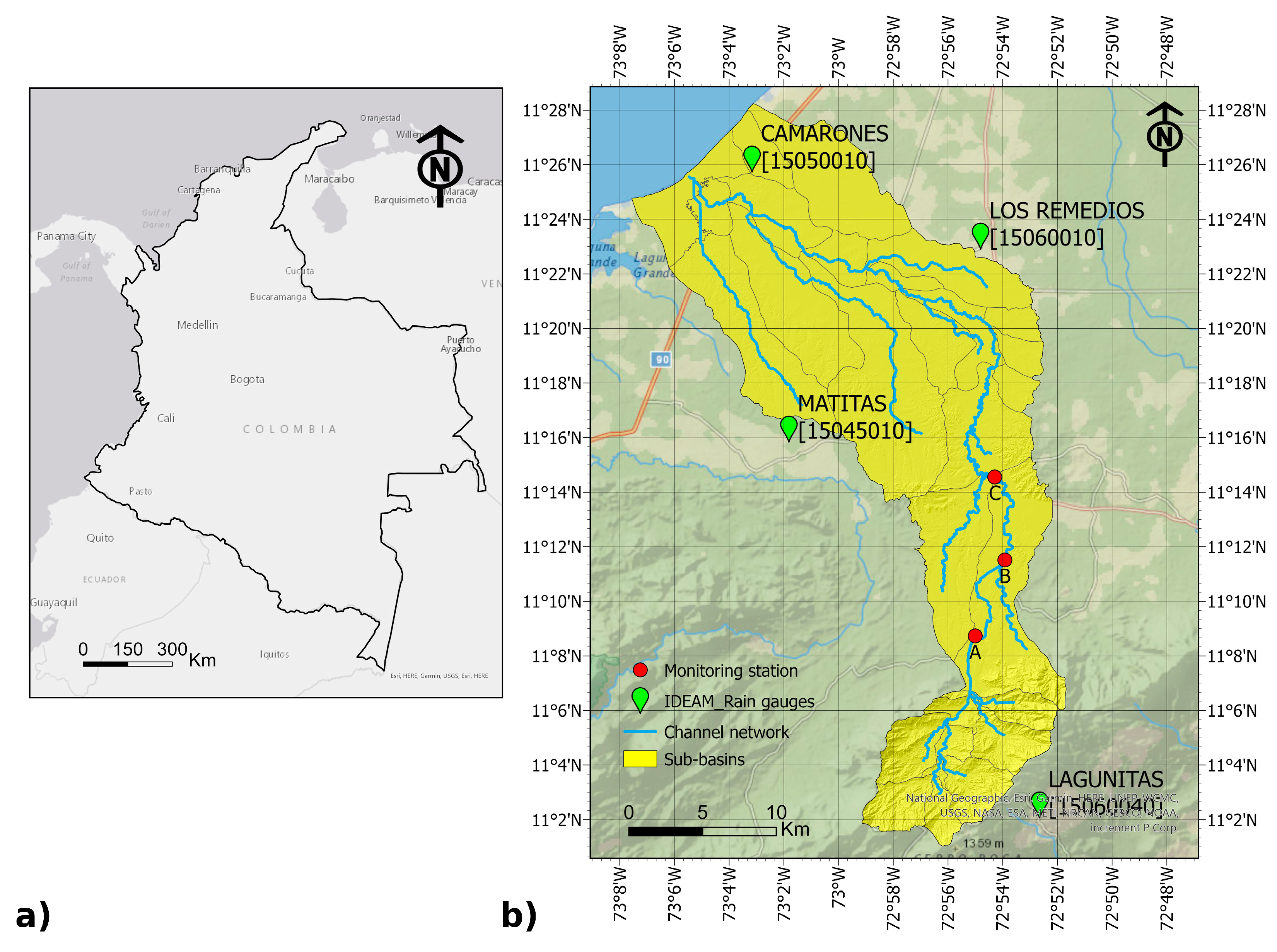
2.1. Study Area and Problem Delineation
- -
- -
- tropical climate with heavy convective rainfall events exacerbated by the orographic effect with very high precipitation intensities (average monthly values ranging from about 1400 mm yr−1 in the upper basin to 700 mm yr−1 in the lower basin [2]);
- -
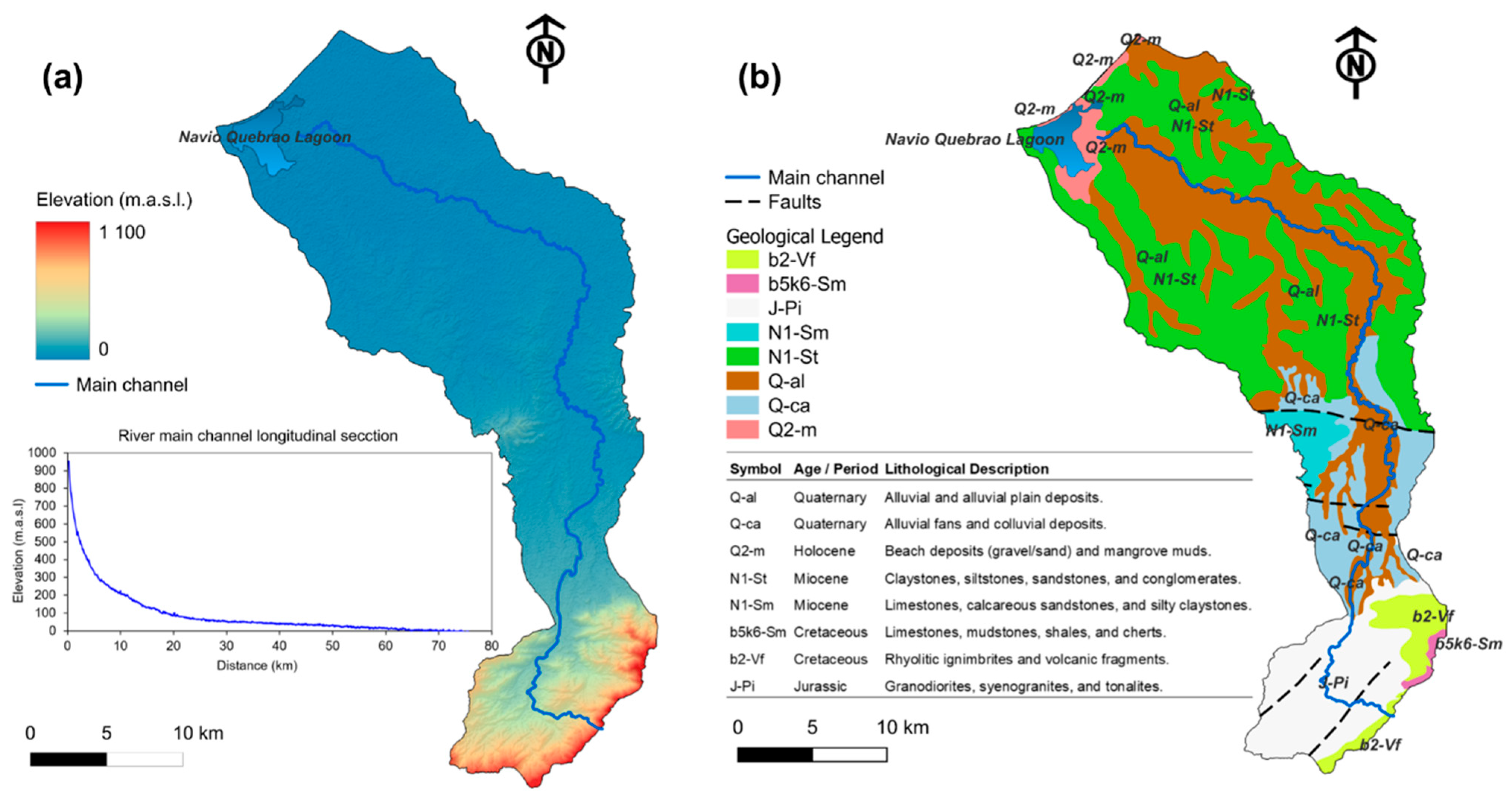
- very steep mountain slopes and small-sized basins with flashy hydrological responses and high sediment supply also linked to accelerated deterioration of granite rock formations with very thick layers of regolith ready to be eroded. Indeed, most of the basins see a geological transition from a consolidated Mesozoic basement (Jurassic granodiorites and Cretaceous ignimbrites), in the steep upper catchment, to Neogene sedimentary sequences and Quaternary alluvial-coastal deposits in the lower plains [2,3,4];
- -
- -
- impressive deforestation legacy (“marimba” period from the seventies golden age of marijuana):
- -
- generalized indigenous population;
- -
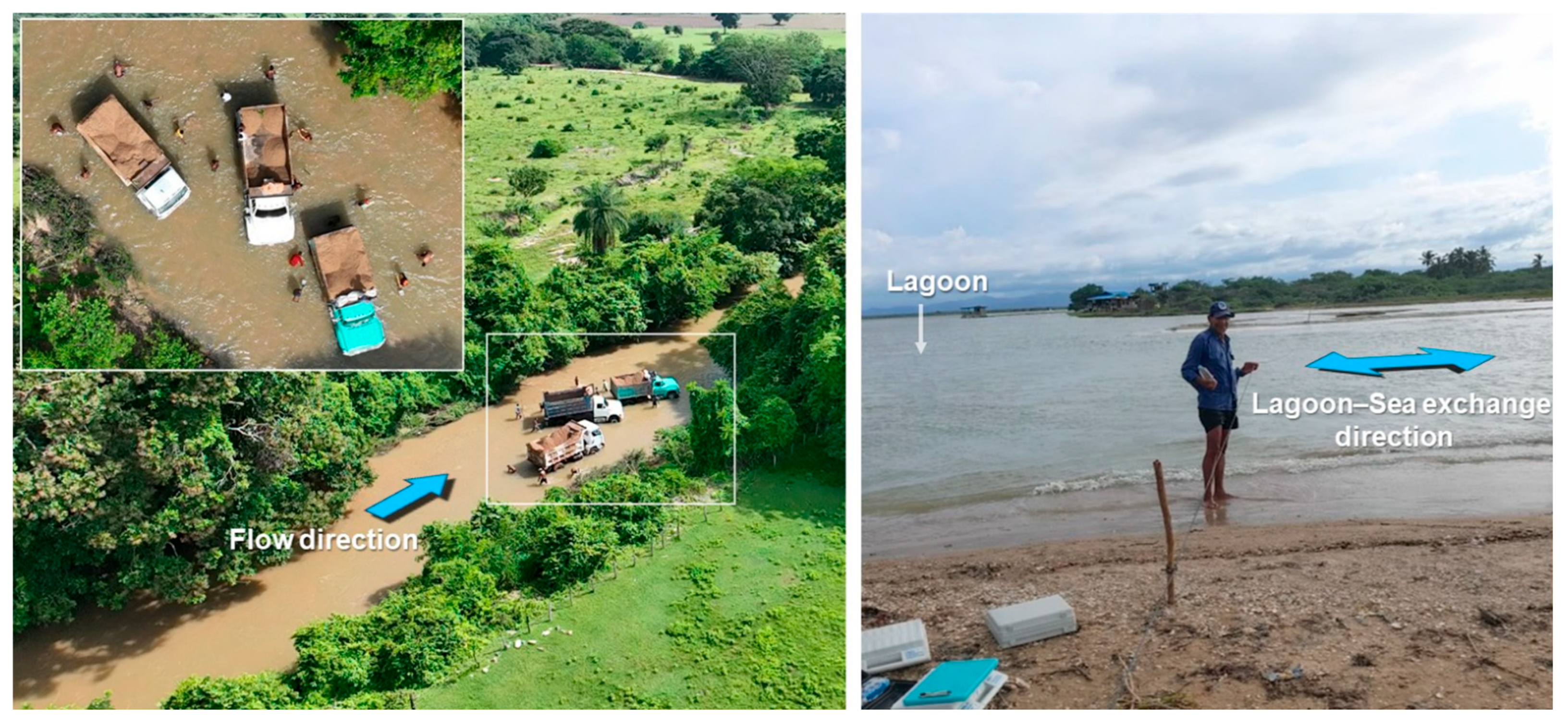
- widespread socio-political problems which make hazardous the access to the river and pose challenges to the conservation of any device and sometimes to the life of researchers.
2.2. Methodology
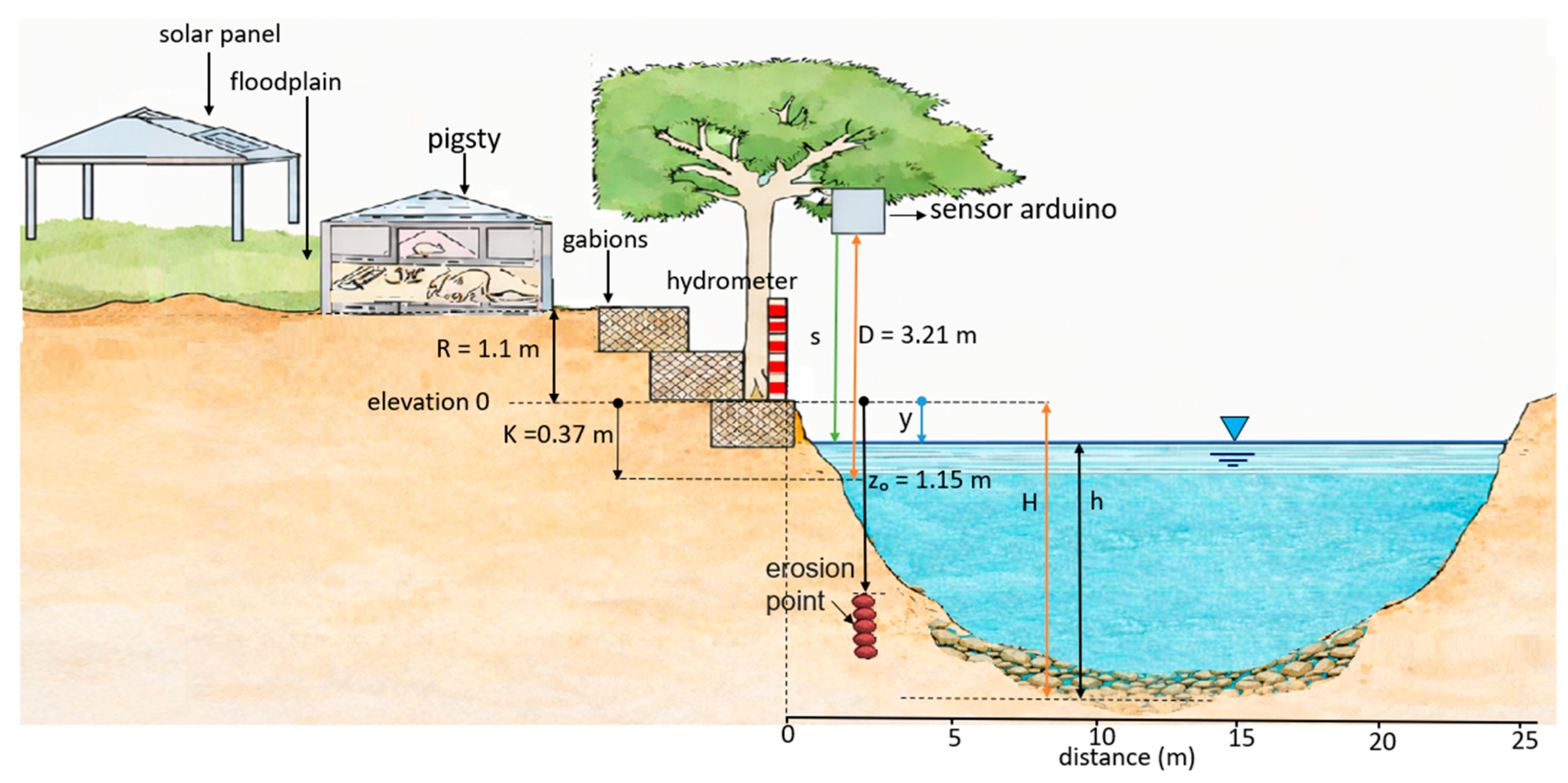
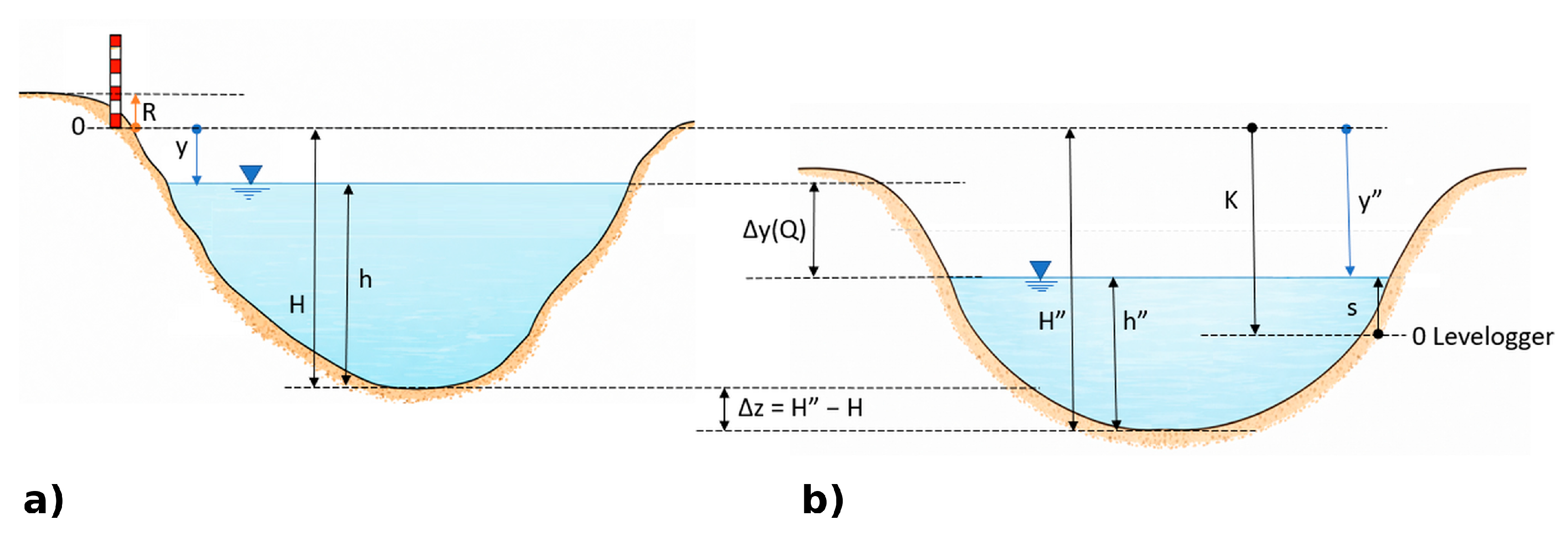
- H, H″ [m]: depth of river bed with respect to the hydrometer conventional zero (m) in the original (hydrometer) and sensor sections, respectively
- K [m]: (positive or negative) vertical distance from conventional zero to Sonlist sensor (m) in the sensor sections
- s [m]: water height measured by the sensor (m) in its section
- h, h″ [m]: water depth at the original and sensor sections, respectively
- y, y″ [m]: water elevation, i.e., (positive or negative) segment length from the hydrometer conventional zero to the water surface, at the original and sensor sections, respectively.
- Δy(Q) [m]: height difference between water surface in hydrometer and sensor sections.
- Δy* [m]: reference fixed value of the same height difference.
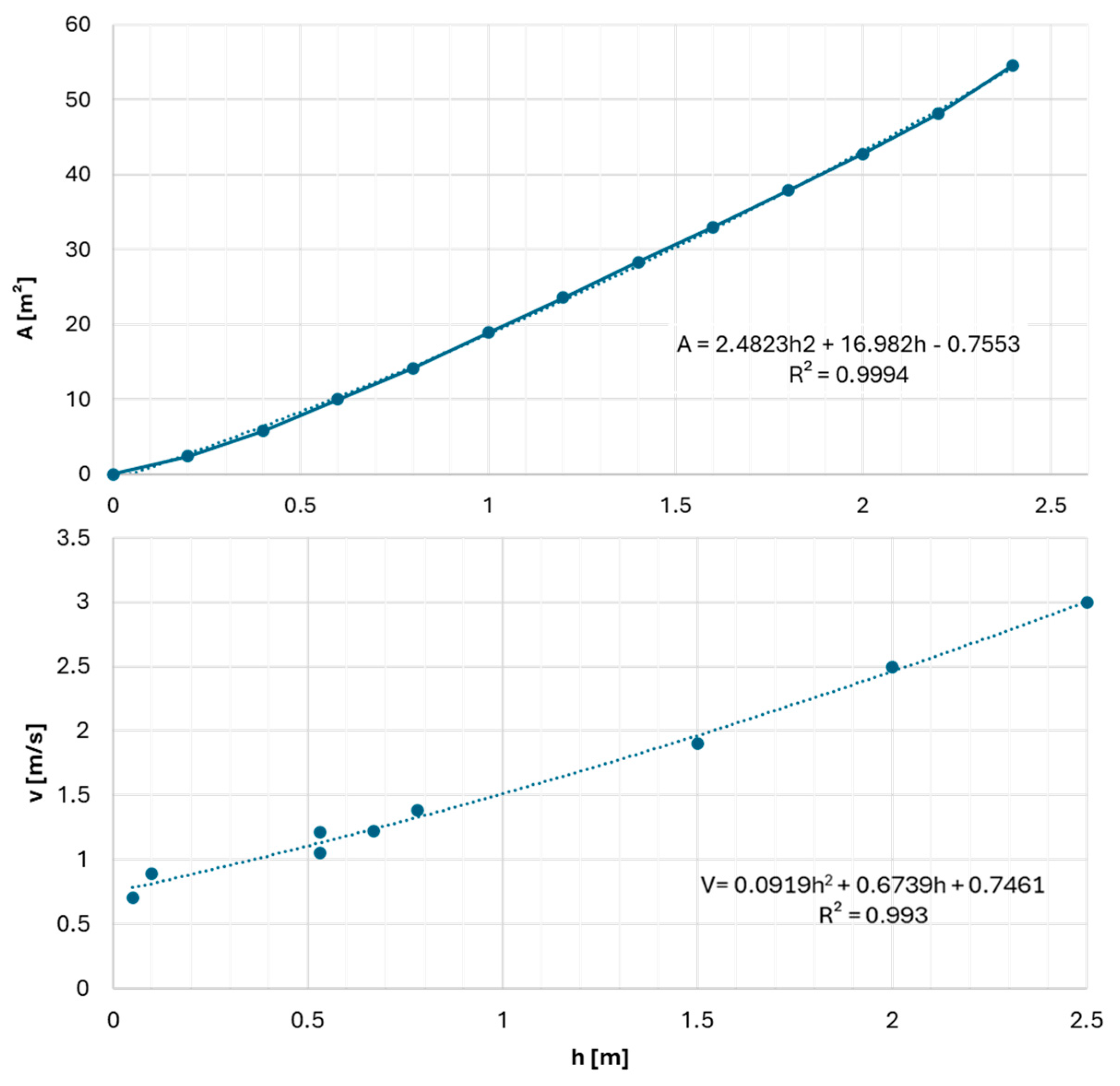
- v: velocity (m/s)
- A: wetted area (m2)
- *: denotes a field measurement at a time ti
- v(h): denotes an analytical relationship between the velocity and the water depth, built by interpolating and extrapolating, for higher flows, via Manning equation the field measurements obtained
- A(h): analogously indicated an analytical relationship built on the geometry of the section surveyed on the field (Figure 9).
- a
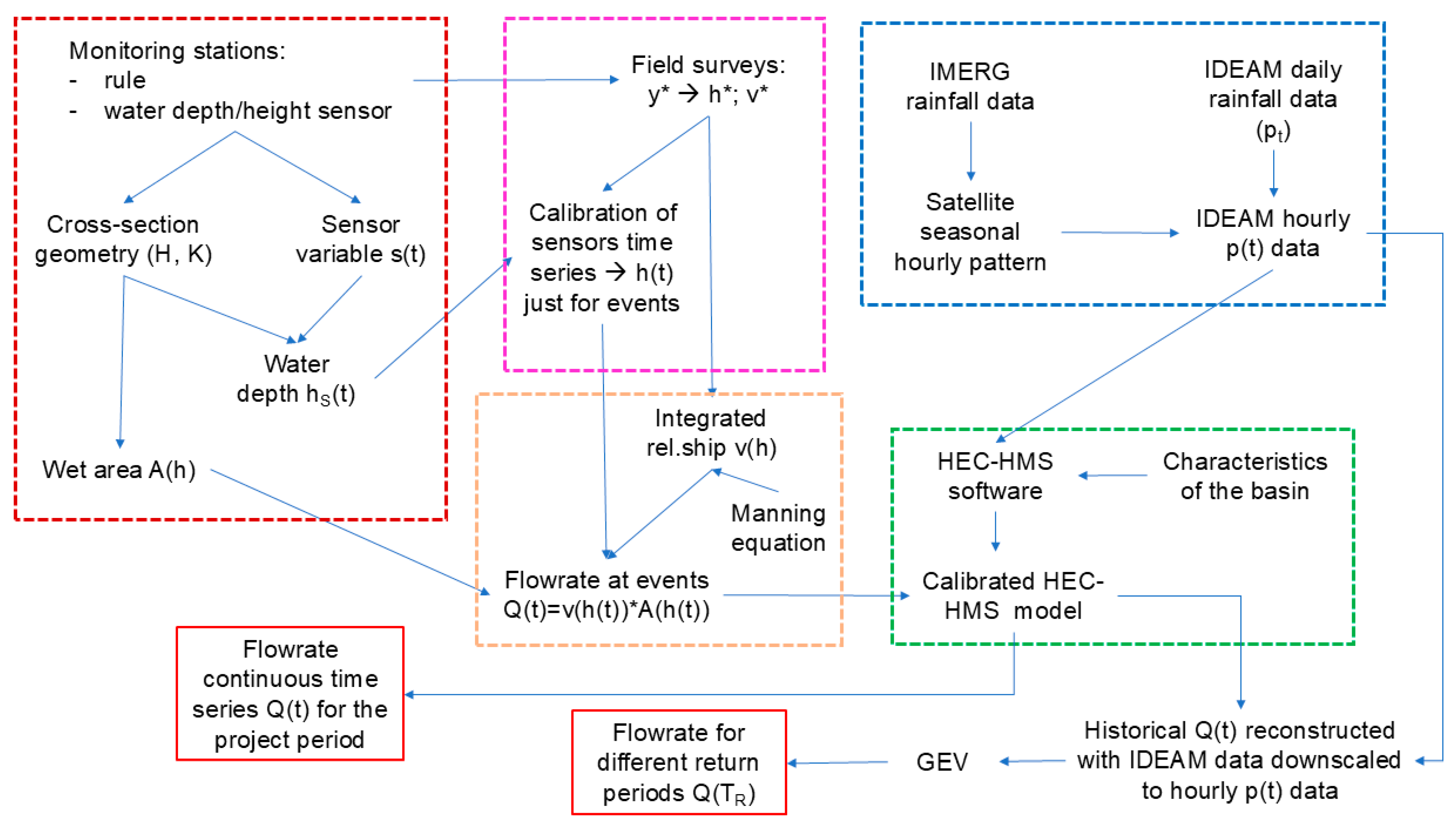
- to determine the duration curve and, with that, estimate the expected sediment transport during the project period and, then, during the average historical hydrology, provided that a calibrated sediment transport formula be available (this is the object of another forthcoming paper). With that, it is possible to address key questions related to sediment mining like comparing extraction with supply and perform a sediment budget to investigate the effect on river morphology;
- b
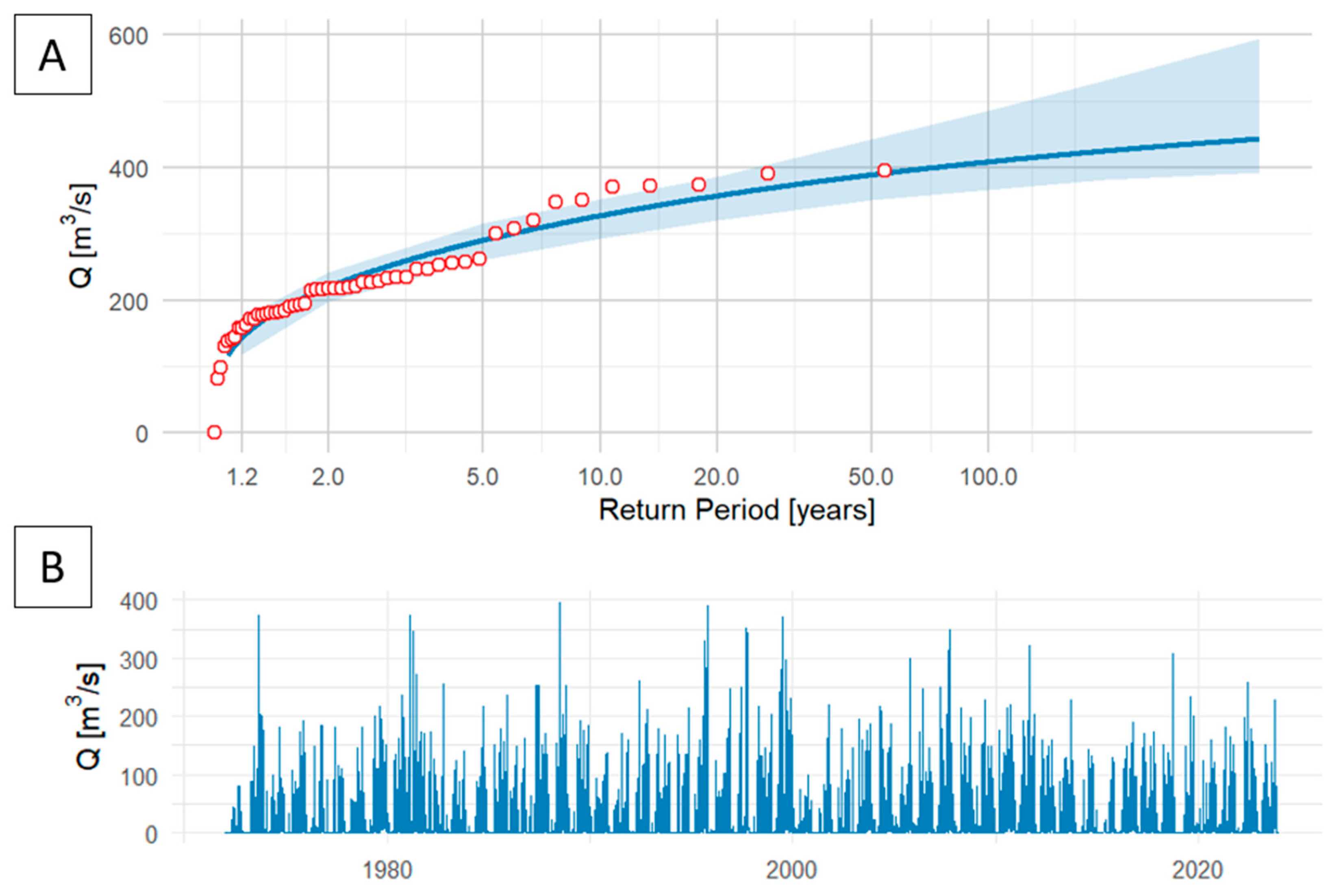
- to estimate the discharge Q(TR) associated with different return period TR, and hence derive flood maps to guide land use planning. This implies reconstructing the whole historical regime.
- (a)
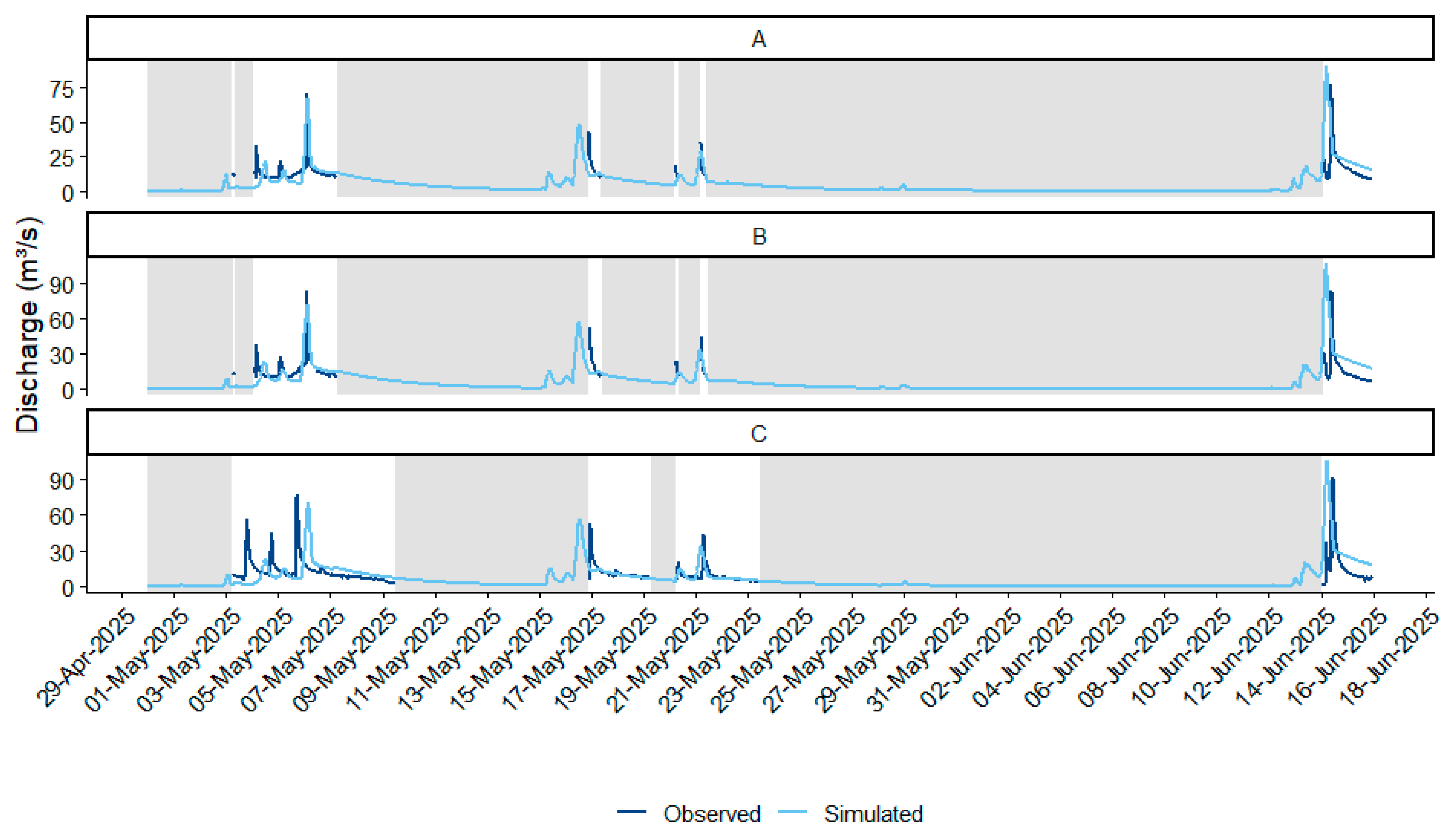
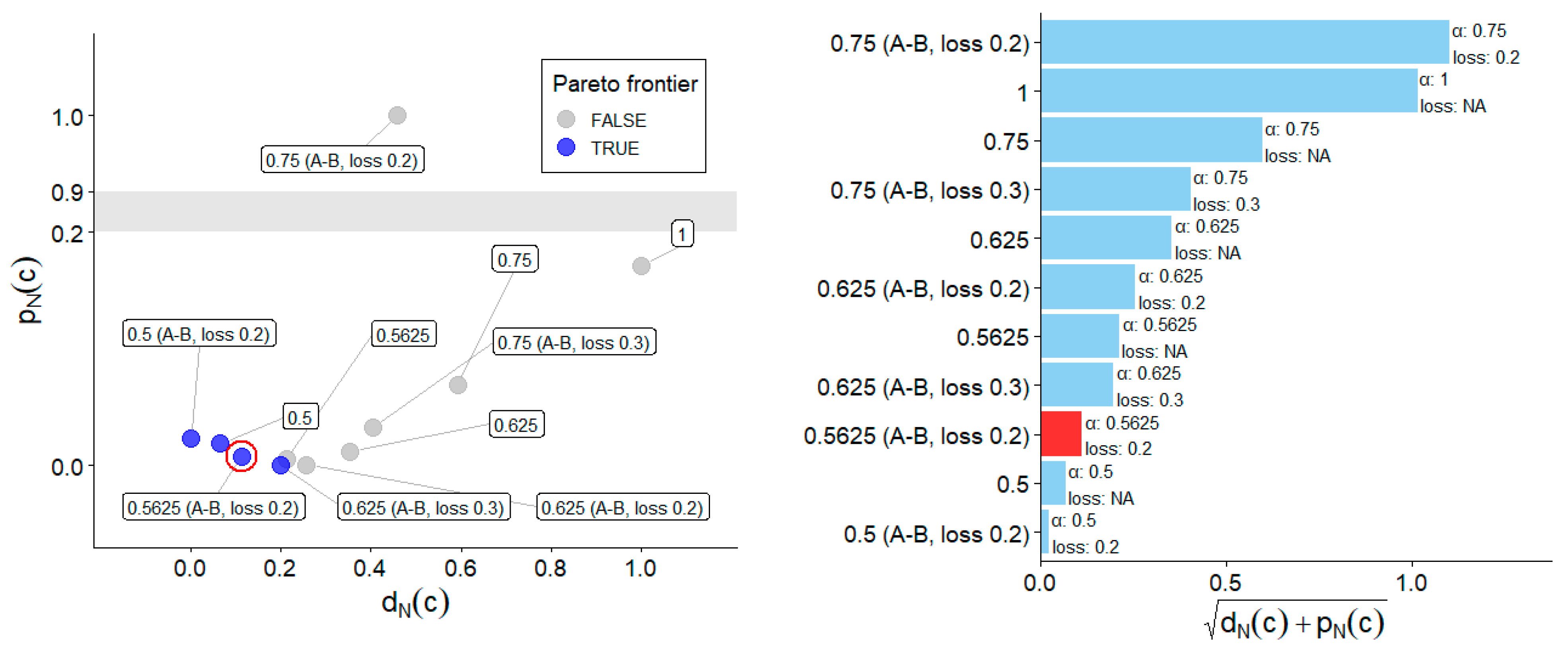
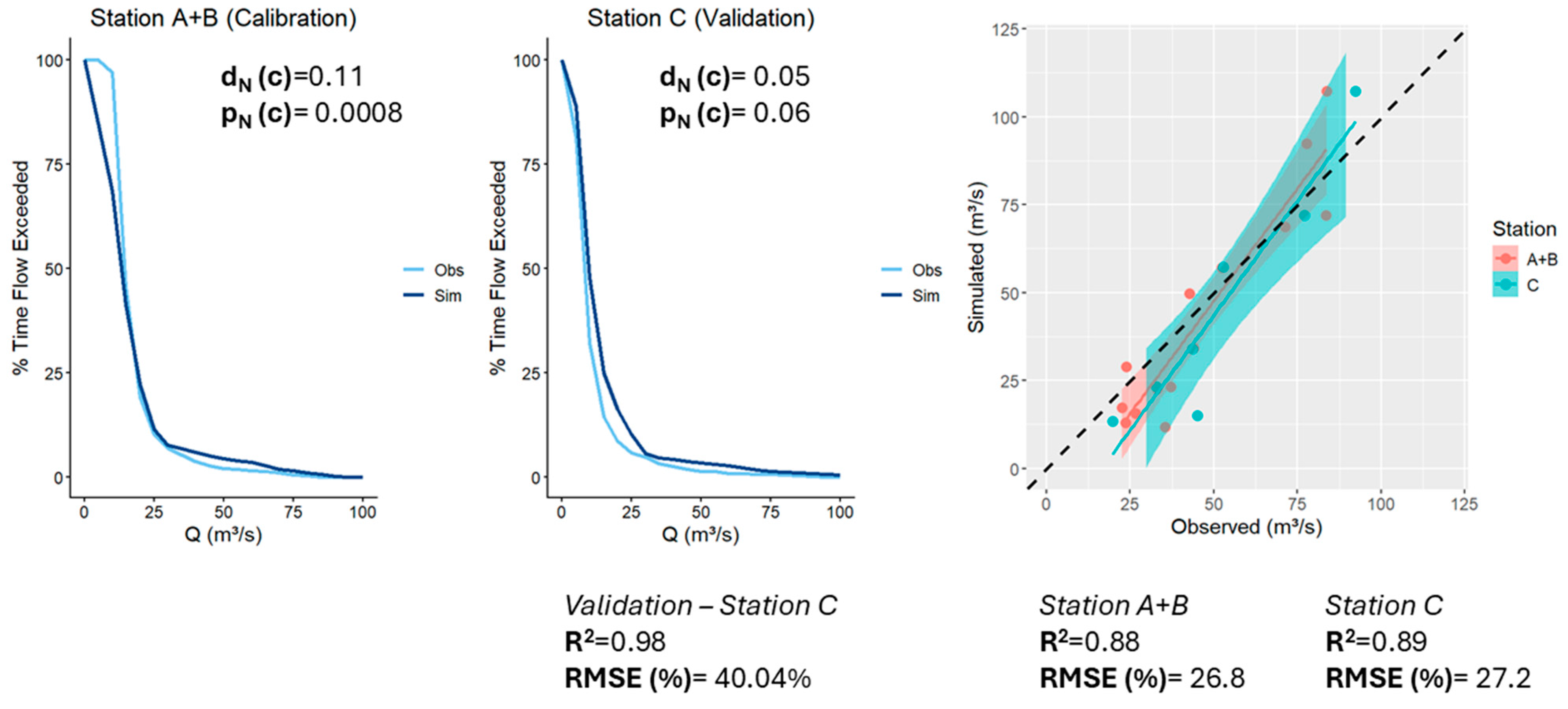
- minimize the deviation of peak flows (Equations (8) and (9)) measured by a normalized index pN(c); the lower the better. This quantifies the normalized sum of the relative deviations between simulated and observed peak flows for all flood events, given a model parametrization c. The normalization is based on the min-max across all model parametrizations considered:pN(c) = [p(c) − min C p(c)]/[max C p(c) − min C p(c)]where QfS(c), QfO(c) are the simulated and observed peak flows, respectively, for flood event f belonging to the set M of flood events (hence, the phase mismatching is totally transparent to this formulation). Notice that they depend on the particular parametrization c considered. The symbol p(c) denotes the overall deviation index; while pN(c) is its normalized version 0÷1).p(c)= sum f∈M [QfS(c) − QfO(c)]/QfO(c)
- (b)
- (reproduce as accurately as possible the duration curve (Equations (10) and (11)). The accuracy is assessed by a normalized deviation index dN(c) that quantifies the overall difference between simulated and observed flow duration curves; again, the lower the better. For each flow value Qk(c) in the time series, the exceedance probability Fkx(c) is the fraction of time that the flow equals or exceeds that value; this holds for both observed (x = o) and simulated (x = s) series. The relative absolute difference between simulated and observed exceedance probabilities is hence calculated for each flow level k. The overall index d(c) is obtained by summing these differences across all flow levels k; while the final index dN(c) is obtained by applying a min-max normalization across all configurations:dN(c) = [d(c) − min C d(c)]/[max C d(c) − min C d(c)]where the terms have already been defined. Notice that again the temporal phase mismatching is irrelevant to this index.d(c)= sumkÎC [abs(FkS(c) − FkO(c))]/FkO(c)
3. Results
4. Discussion
- (a)
- period-related geometry and morphology data like the cross-section area A vs stage h relationship A(h) (representative of the associated reach) that typically changes after each significant flood or after sediment miners operate intensely for a time: a more appropriate notation is hence A (h, period).
- (b)
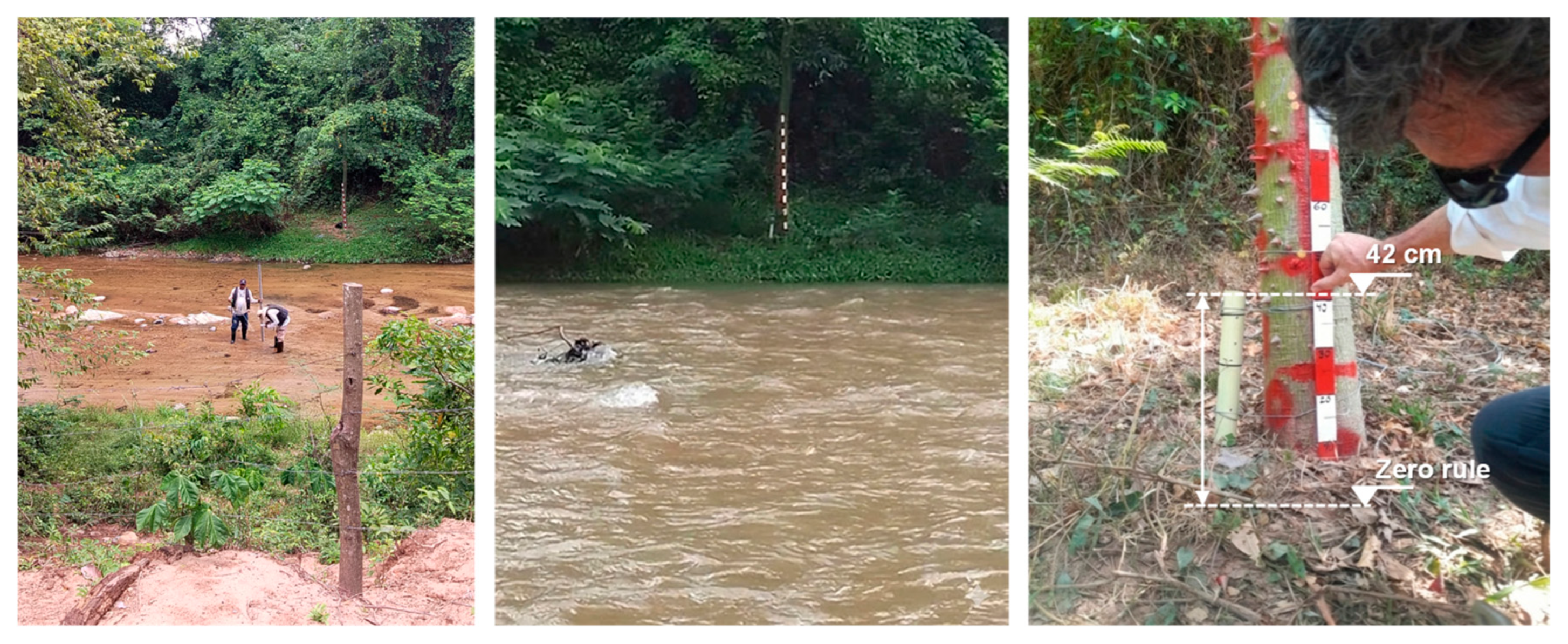
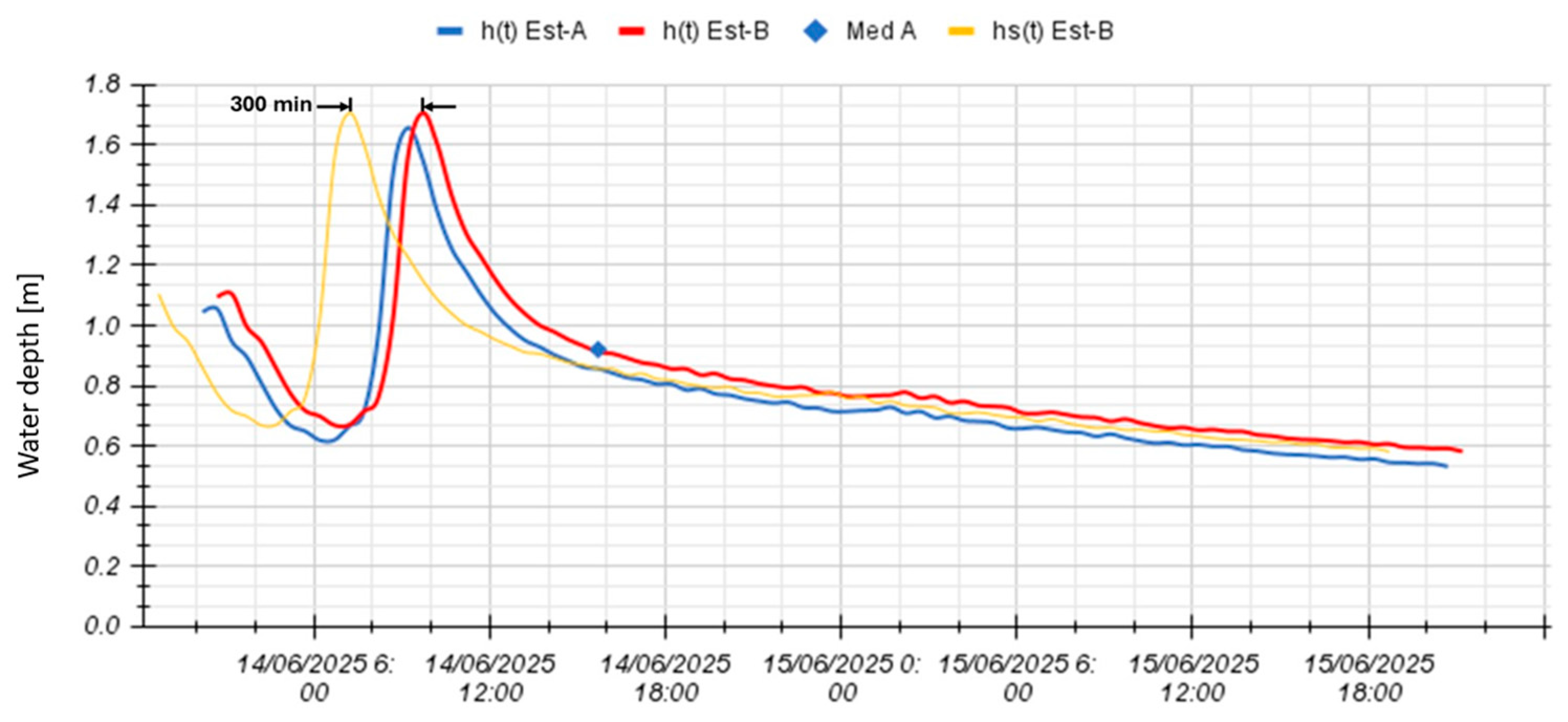
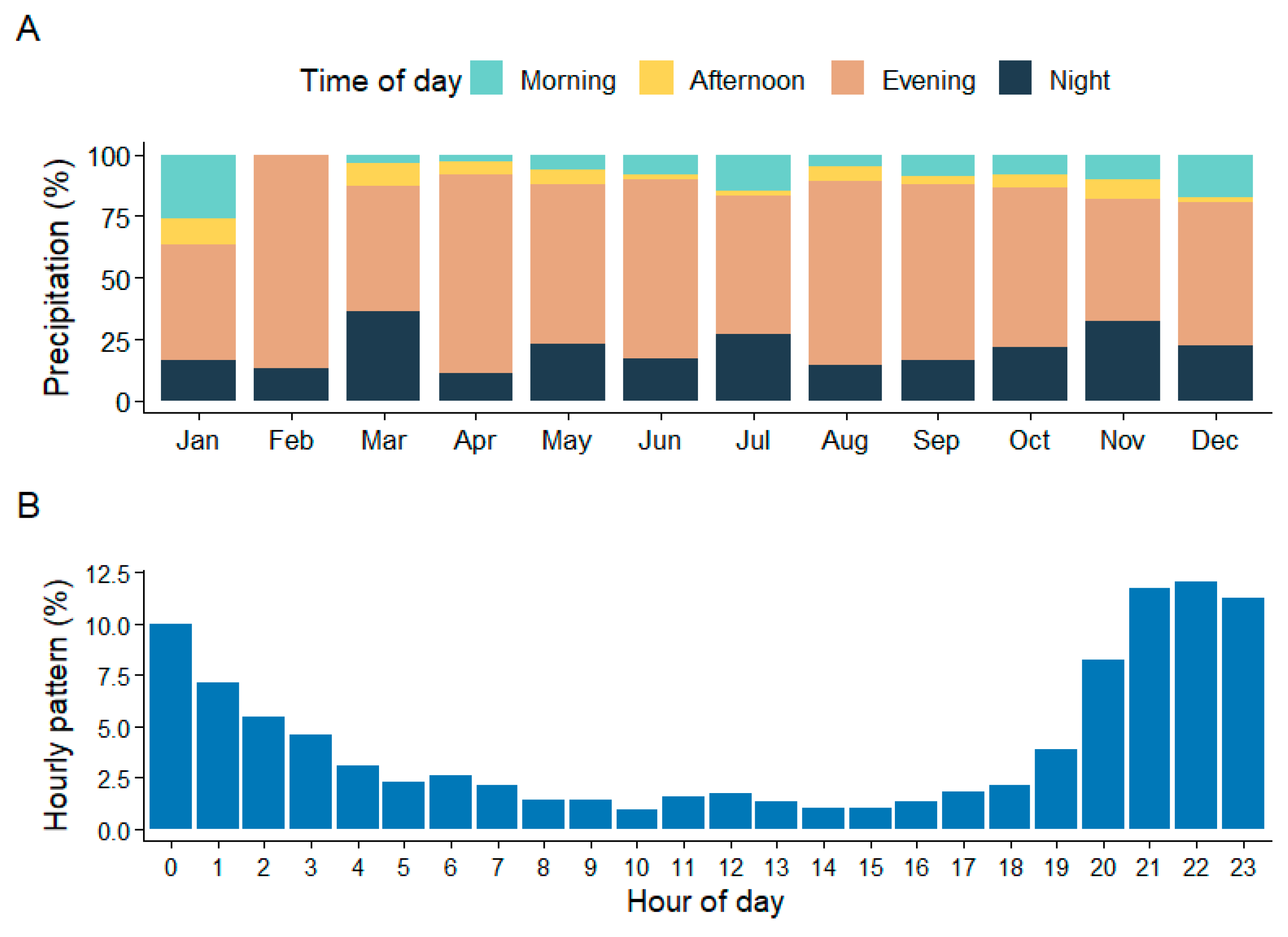
- direct measurements of water depth (h) or water elevation (y) and velocity (v), which occur at some (few) instants of time, typically just after a flood has already occurred, so inevitably missing the peak. Indeed, as already noticed, in our basin, as in several others of the region, rainfall tends to occur at night [39]; Figure 10 and floods are flashy (and very dangerous), so that it is virtually impossible to be at the station and capture the peak moment or the like.
- (c)
- “continuous” (actually discrete with a fine time step of one hour in our case) water depth related data s(t) from sensors. The procedure is to first transform s(t) into water depth h(t) data, an exercise involving the geometry of the section and the few measurements needed to calibrate the relationship (through the described process: s(t) → hs”(t) →h”(t) at the sensor section, and then h”(t) → h(t) at the hydrometer section); and then, to determine the discharge Q(t) by means of time-varying stage-discharge relationships Q(h, period) = v(h, period)*A(h, period). A weak point here is the manual correction of the delay of the sensors time series, which, unfortunately, is not constant; as in the Arduino case, it accumulates progressively as days elapse and it is not that straightforward to eliminate; furthermore, each time a manual download of data takes place (approx. every three months), a new, different bias can be introduced. The weakest point here, however, certainly is the relationship v(h, period) (Equation (2)) because, until the time of writing, there has been no opportunity to directly measure velocity during a flood event; only low flow or, at most, regular conditions, have been captured (only a permanent video camera could capture the event). This means that the values for high floods have been extrapolated by using Manning equation calibrated on the available data. This introduces a significant uncertainty because relatively small variations in velocity imply a more than proportional change in discharge. In addition, it is worth noting that the float tracer method adopted for field velocity measurements is also inherently affected by non-negligible uncertainty: [40] reported a discharge measurement uncertainty of approximately 22% when using surface velocity methods, further confirming the challenges of accurate discharge estimation in data-scarce field conditions.
5. Conclusions
Author Contributions
Funding
Data Availability Statement
Acknowledgments
Conflicts of Interest
Abbreviations
| a.s.l. | above sea level |
| ADCP | Acoustic Doppler Current Profiler |
| CN | Curve Number |
| CMORPH | Climate Prediction Center Morphing Technique |
| DTM | Digital Terrain Model |
| ERA5 | ECMWF Reanalysis 5 |
| ERA5-Land | ERA5 Land Reanalysis |
| GCBC | Global Centre on Biodiversity for Climate |
| GPM | Global Precipitation Measurement |
| GSMaP | Global Satellite Mapping of Precipitation |
| HEC-HMS | Hydrologic Engineering Center—Hydrologic Modeling System |
| HEC-RAS | Hydrologic Engineering Center—River Analysis System |
| IDEAM | Instituto de Hidrología, Meteorología y Estudios Ambientales (Colombia) |
| IMERG | Integrated Multi-Satellite Retrievals for GPM |
| LA | Latin America |
| NATIVE | sustaiNAble riverscape managemenT for resIlient riVerine communitiEs |
| NGO | Non-Governmental Organization |
| SCS-CN | Soil Conservation Service—Curve Number method |
| TR | Return Period |
| TRMM | Tropical Rainfall Measuring Mission |
References
- Nearing, G.; Cohen, D.; Dube, V.; Gauch, M.; Gilon, O.; Harrigan, S.; Hassidim, A.; Klotz, D.; Kratzert, F.; Metzger, A.; et al. Global Prediction of Extreme Floods in Ungauged Watersheds. Nature 2024, 627, 559–563. [Google Scholar] [CrossRef] [PubMed]
- Amorim, J.D.S.; Viola, M.R.; Junqueira, R.; De Mello, C.R.; Bento, N.L.; Avanzi, J.C. Quantifying the Climate Change-driven Impacts on the Hydrology of a Data-scarce Watershed Located in the Brazilian Tropical Savanna. Hydrol. Process. 2022, 36, e14638. [Google Scholar] [CrossRef]
- Rodríguez, E.; Sánchez, I.; Duque, N.; Arboleda, P.; Vega, C.; Zamora, D.; López, P.; Kaune, A.; Werner, M.; García, C.; et al. Combined Use of Local and Global Hydro Meteorological Data with Hydrological Models for Water Resources Management in the Magdalena—Cauca Macro Basin—Colombia. Water Resour. Manag. 2020, 34, 2179–2199. [Google Scholar] [CrossRef]
- Cerón, W.L.; Andreoli, R.V.; Kayano, M.T.; Canchala, T.; Ocampo-Marulanda, C.; Avila-Diaz, A.; Antunes, J. Trend Pattern of Heavy and Intense Rainfall Events in Colombia from 1981–2018: A Trend-EOF Approach. Atmosphere 2022, 13, 156. [Google Scholar] [CrossRef]
- Dembélé, M.; Oriani, F.; Tumbulto, J.; Mariéthoz, G.; Schaefli, B. Gap-Filling of Daily Streamflow Time Series Using Direct Sampling in Various Hydroclimatic Settings. J. Hydrol. 2019, 569, 573–586. [Google Scholar] [CrossRef]
- Tan, J.; Jakob, C.; Rossow, W.B.; Tselioudis, G. Increases in Tropical Rainfall Driven by Changes in Frequency of Organized Deep Convection. Nature 2015, 519, 451–454. [Google Scholar] [CrossRef] [PubMed]
- Joyce, R.J.; Janowiak, J.E.; Arkin, P.A.; Xie, P. CMORPH: A Method That Produces Global Precipitation Estimates from Passive Microwave and Infrared Data at High Spatial and Temporal Resolution. J. Hydrometeorol. 2004, 5, 487–503. [Google Scholar] [CrossRef]
- Huffman, G.J.; Bolvin, D.T.; Nelkin, E.J.; Wolff, D.B.; Adler, R.F.; Gu, G.; Hong, Y.; Bowman, K.P.; Stocker, E.F. The TRMM Multisatellite Precipitation Analysis (TMPA): Quasi-Global, Multiyear, Combined-Sensor Precipitation Estimates at Fine Scales. J. Hydrometeorol. 2007, 8, 38–55. [Google Scholar] [CrossRef]
- Ushio, T.; Sasashige, K.; Kubota, T.; Shige, S.; Okamoto, K.; Aonashi, K.; Inoue, T.; Takahashi, N.; Iguchi, T.; Kachi, M.; et al. A Kalman Filter Approach to the Global Satellite Mapping of Precipitation (GSMaP) from Combined Passive Microwave and Infrared Radiometric Data. J. Meteorol. Soc. Jpn. Ser. II 2009, 87A, 137–151. [Google Scholar] [CrossRef]
- Huffman, G.J.; Bolvin, D.T.; Braithwaite, D.; Hsu, K.-L.; Joyce, R.J.; Kidd, C.; Nelkin, E.J.; Sorooshian, S.; Stocker, E.F.; Tan, J.; et al. Integrated Multi-Satellite Retrievals for the Global Precipitation Measurement (GPM) Mission (IMERG). In Satellite Precipitation Measurement; Levizzani, V., Kidd, C., Kirschbaum, D.B., Kummerow, C.D., Nakamura, K., Turk, F.J., Eds.; Springer: Cham, Switzerland, 2020; Volume 67, pp. 343–353. ISBN 978-3-030-24567-2. [Google Scholar]
- Hersbach, H.; Bell, B.; Berrisford, P.; Hirahara, S.; Horányi, A.; Muñoz-Sabater, J.; Nicolas, J.; Peubey, C.; Radu, R.; Schepers, D.; et al. The ERA5 Global Reanalysis. Q. J. R. Meteorol. Soc. 2020, 146, 1999–2049. [Google Scholar] [CrossRef]
- Chen, H.; Yong, B.; Qi, W.; Wu, H.; Ren, L.; Hong, Y. Investigating the Evaluation Uncertainty for Satellite Precipitation Estimates Based on Two Different Ground Precipitation Observation Products. J. Hydrometeorol. 2020, 21, 2595–2606. [Google Scholar] [CrossRef]
- Chang, Y.; Qi, Y.; Wang, Z. Comprehensive Evaluation of IMERG, ERA5-Land and Their Fusion Products in the Hydrological Simulation of Three Karst Catchments in Southwest China. J. Hydrol. Reg. Stud. 2024, 52, 101671. [Google Scholar] [CrossRef]
- Masood, M.; Naveed, M.; Iqbal, M.; Nabi, G.; Kashif, H.M.; Jawad, M.; Mujtaba, A. Evaluation of Satellite Precipitation Products for Estimation of Floods in Data-Scarce Environment. Adv. Meteorol. 2023, 1685720. [Google Scholar] [CrossRef]
- Tedla, M.G.; Rasmy, M.; Koike, T.; Zhou, L. Evaluation of Satellite Precipitation Products for Real-Time Extreme River Flow Modeling in Data Scarce Regions. Proc. IAHS 2024, 386, 223–228. [Google Scholar] [CrossRef]
- Brocca, L.; Massari, C.; Pellarin, T.; Filippucci, P.; Ciabatta, L.; Camici, S.; Kerr, Y.H.; Fernández-Prieto, D. River Flow Prediction in Data Scarce Regions: Soil Moisture Integrated Satellite Rainfall Products Outperform Rain Gauge Observations in West Africa. Sci. Rep. 2020, 10, 12517. [Google Scholar] [CrossRef] [PubMed]
- Ang, R.; Kinouchi, T.; Zhao, W. Evaluation of Daily Gridded Meteorological Datasets for Hydrological Modeling in Data-Sparse Basins of the Largest Lake in Southeast Asia. J. Hydrol. Reg. Stud. 2022, 42, 101135. [Google Scholar] [CrossRef]
- Freitas, E.D.S.; Coelho, V.H.R.; Xuan, Y.; Melo, D.D.C.D.; Gadelha, A.N.; Santos, E.A.; Galvão, C.D.O.; Ramos Filho, G.M.; Barbosa, L.R.; Huffman, G.J.; et al. The Performance of the IMERG Satellite-Based Product in Identifying Sub-Daily Rainfall Events and Their Properties. J. Hydrol. 2020, 589, 125128. [Google Scholar] [CrossRef]
- Maggioni, V.; Meyers, P.C.; Robinson, M.D. A Review of Merged High-Resolution Satellite Precipitation Product Accuracy during the Tropical Rainfall Measuring Mission (TRMM) Era. J. Hydrometeorol. 2016, 17, 1101–1117. [Google Scholar] [CrossRef]
- Maggioni, V.; Massari, C. On the Performance of Satellite Precipitation Products in Riverine Flood Modeling: A Review. J. Hydrol. 2018, 558, 214–224. [Google Scholar] [CrossRef]
- Pellegrini, G.; Mao, L.; Rainato, R.; Picco, L. Surprising Suspended Sediment Dynamics of an Alpine Basin Affected by a Large Infrequent Disturbance. J. Hydrol. 2023, 617, 128933. [Google Scholar] [CrossRef]
- Refsgaard, J.C. Parameterisation, Calibration and Validation of Distributed Hydrological Models. J. Hydrol. 1997, 198, 69–97. [Google Scholar] [CrossRef]
- Westerberg, I.K.; Guerrero, J.-L.; Younger, P.M.; Beven, K.J.; Seibert, J.; Halldin, S.; Freer, J.E.; Xu, C.-Y. Calibration of Hydrological Models Using Flow-Duration Curves. Hydrol. Earth Syst. Sci. 2011, 15, 2205–2227. [Google Scholar] [CrossRef]
- Nardini, A.G.C.; Escobar Villanueva, J.R.; Pérez-Montiel, J.I. Hydrological Monitoring System of the Navío-Quebrado Coastal Lagoon (Colombia): A Very Low-Cost, High-Value, Replicable, Semi-Participatory Solution with Preliminary Results. Water 2024, 16, 2248. [Google Scholar] [CrossRef]
- Nardini, A.G.C.; Torres-Bejarano, F.; Escobar Villanueva, J.R.; Rodríguez Fernández, R.-A.; Fragozo Arevalo, J.M.; Pérez-Montiel, J.I. Hydrological 0D and 2D Modelling of the Navio-Quebrado Coastal Lagoon (La Guajira, Colombia): A Challenging Exercise. Water 2025, 17, 636. [Google Scholar] [CrossRef]
- Corpoguajira. Plan de Ordenamiento y Manejo de La Cuenca Del Río Camarones–Tomarrazón; Internal Report; CORPOGUAJIRA: Riohacha, Colombia, 2007. [Google Scholar]
- Salama, S. Achieving SDG 6: Remote Sensing Applications in Sustainable Water Management. Front. Remote Sens. 2025, 6, 1659681. [Google Scholar] [CrossRef]
- Rentier, E.S.; Cammeraat, L.H. The Environmental Impacts of River Sand Mining. Sci. Total Environ. 2022, 838, 155877. [Google Scholar] [CrossRef] [PubMed]
- Bunte, K.; Abt, S.R. Sampling Surface and Subsurface Particle-Size Distributions in Wadable Gravel-and Cobble-Bed Streams for Analyses in Sediment Transport, Hydraulics, and Streambed Monitoring; U.S. Department of Agriculture, Forest Service, Rocky Mountain Research Station: Fort Collins, CO, USA, 2001; p. RMRS-GTR-74.
- Helley, E.; Smith, W. Development and Calibration of a Pressure-Difference Bedload Sampler; U.S. Department of the Interior, Geological Survey, Water Resources Division: Reston, VA, USA, 1971; p. 18.
- Shannon, C.E. Communication in the Presence of Noise. Proc. IRE 1949, 37, 10–21. [Google Scholar] [CrossRef]
- Huffman, G.; Stocker, E.; Bolvin, D.; Nelkin, E.; Tan, J. GPM IMERG Final Precipitation L3 Half Hourly 0.1 Degree × 0.1 Degree V07; NASA Goddard Earth Sciences Data and Information Services Center: Greenbelt, MD, USA, 2023.
- Jaafar, H.H.; Ahmad, F.A.; El Beyrouthy, N. GCN250, New Global Gridded Curve Numbers for Hydrologic Modeling and Design. Sci. Data 2019, 6, 145. [Google Scholar] [CrossRef] [PubMed]
- Sahu, M.K.; Shwetha, H.R.; Dwarakish, G.S. State-of-the-Art Hydrological Models and Application of the HEC-HMS Model: A Review. Model. Earth Syst. Environ. 2023, 9, 3029–3051. [Google Scholar] [CrossRef]
- Singh, H.; Alam, M.A.; Sharma, P.J.; Rautela, K.S. A Comparison of the SCS-CN-Based Models for Hydrological Simulation of the Aghanashini River, Karnataka, India. AQUA—Water Infrastruct. Ecosyst. Soc. 2023, 72, 507–519. [Google Scholar] [CrossRef]
- Tibangayuka, N.; Mulungu, D.M.M.; Izdori, F. Evaluating the Performance of HBV, HEC-HMS and ANN Models in Simulating Streamflow for a Data Scarce High-Humid Tropical Catchment in Tanzania. Hydrol. Sci. J. 2022, 67, 2191–2204. [Google Scholar] [CrossRef]
- Halwatura, D.; Najim, M.M.M. Application of the HEC-HMS Model for Runoff Simulation in a Tropical Catchment. Environ. Model. Softw. 2013, 46, 155–162. [Google Scholar] [CrossRef]
- McMillan, H.K.; Westerberg, I.K.; Krueger, T. Hydrological Data Uncertainty and Its Implications. WIREs Water 2018, 5, e1319. [Google Scholar] [CrossRef]
- Bedoya-Soto, J.M.; Aristizábal, E.; Carmona, A.M.; Poveda, G. Seasonal Shift of the Diurnal Cycle of Rainfall Over Medellin’s Valley, Central Andes of Colombia (1998–2005). Front. Earth Sci. 2019, 7, 92. [Google Scholar] [CrossRef]
- Stepenuck, K.F.; Diebel, M.; Smith, H.; Anderson, I.; Wiseman, D. Surface Velocity Coefficients for Discharge Monitoring with a Surface Float Method in Shallow Streams. J. Hydrol. 2024, 632, 130852. [Google Scholar] [CrossRef]



| Product Name | Spatial Resolution | Temporal | Period | Free Access | Access Platform | Required Processing |
|---|---|---|---|---|---|---|
| IMERG | 0.1° × 0.1° (~10 km) | 30 min | January 2014–December 2023 | Yes | GE® | Basin-scale spatial extraction and aggregation (spatialization) |
| Sub-Basin | Area (km2) | CN (Tabular) |
|---|---|---|
| SB-01 | 14 | 62 |
| SB-02 | 21 | 62 |
| SB-03 | 15 | 62 |
| SB-04 | 5 | 62 |
| SB-05 | 14 | 62 |
| SB-06 | 5 | 64 |
| SB-07 | 9 | 62 |
| SB-08 | 20 | 62 |
| SB-09 | 15 | 66 |
| SB-10 | 40 | 66 |
| SB-11 | 21 | 62 |
| SB-12 | 10 | 64 |
| SB-13 | 7 | 66 |
| SB-14 | 52 | 66 |
| SB-15 | 12 | 64 |
| SB-16 | 32 | 66 |
| SB-17 | 3 | 62 |
| SB-18 | 121 | 64 |
| SB-19 | 21 | 66 |
| SB-20 | 54 | 62 |
| SB-21 | 20 | 64 |
| SB-22 | 87 | 65 |
| Total | 598 | 62–66 |
| Event # | Date | Observed Peak Q (m3/s) | Simulated Peak Q (m3/s) | Relative Error (%) |
|---|---|---|---|---|
| 1 | 4 May 2025 | 61.9 | 32.81 | −47.0 |
| 2 | 5 May 2025 | 46.0 | 45.17 | −1.8 |
| 3 | 6 May 2025 | 85.9 | 77.01 | −10.4 |
| 4 | 16 May 2025 | 59.2 | 52.72 | −10.9 |
| 5 | 20 May 2025 | 19.8 | 19.67 | −0.7 |
| 6 | 21 May 2025 | 41.5 | 43.60 | +5.1 |
| 7 | 14 June 2025 | 118.1 | 92.30 | −21.8 |
| Mean | — | 61.9 | 51.61 | −12.5 |
Disclaimer/Publisher’s Note: The statements, opinions and data contained in all publications are solely those of the individual author(s) and contributor(s) and not of MDPI and/or the editor(s). MDPI and/or the editor(s) disclaim responsibility for any injury to people or property resulting from any ideas, methods, instructions or products referred to in the content. |
© 2026 by the authors. Licensee MDPI, Basel, Switzerland. This article is an open access article distributed under the terms and conditions of the Creative Commons Attribution (CC BY) license.
Share and Cite
Nardini, A.G.C.; Pellegrini, G.; Mao, L.; Ariza, Y.; Herrera, F.; Villanueva, J.R.E.; Navarro, E.A.O. Modelling the Hydrological and Flooding Behavior of a Caribbean Basin Merging Satellite Rainfall Data and Field Data. Water 2026, 18, 1527. https://doi.org/10.3390/w18121527
Nardini AGC, Pellegrini G, Mao L, Ariza Y, Herrera F, Villanueva JRE, Navarro EAO. Modelling the Hydrological and Flooding Behavior of a Caribbean Basin Merging Satellite Rainfall Data and Field Data. Water. 2026; 18(12):1527. https://doi.org/10.3390/w18121527
Chicago/Turabian StyleNardini, Andrea Gianni Cristoforo, Giacomo Pellegrini, Luca Mao, Yoiner Ariza, Fayder Herrera, Jairo René Escobar Villanueva, and Emirielys Andrea Ospino Navarro. 2026. "Modelling the Hydrological and Flooding Behavior of a Caribbean Basin Merging Satellite Rainfall Data and Field Data" Water 18, no. 12: 1527. https://doi.org/10.3390/w18121527
APA StyleNardini, A. G. C., Pellegrini, G., Mao, L., Ariza, Y., Herrera, F., Villanueva, J. R. E., & Navarro, E. A. O. (2026). Modelling the Hydrological and Flooding Behavior of a Caribbean Basin Merging Satellite Rainfall Data and Field Data. Water, 18(12), 1527. https://doi.org/10.3390/w18121527