Article

A Simplified Whole-Plant Model to Predict Biosorption in a High-Rate Biological Contactor—Activated Sludge Process

Department of Civil and Environmental Engineering, University of Hawaiʻi at Mānoa, Honolulu, HI 96822, USA
*
Author to whom correspondence should be addressed.
Water 2026, 18(12), 1472; https://doi.org/10.3390/w18121472 (registering DOI)
Submission received: 30 March 2026 / Revised: 10 June 2026 / Accepted: 12 June 2026 / Published: 15 June 2026

Abstract

The high-rate biological contactor (HRBC) is an enhanced-primary, biosorption-based, carbon-diversion wastewater treatment process with short hydraulic retention time (HRT), short solids retention time (SRT), low dissolved oxygen (DO), and high food-to-microorganism ratio (F/M). This paper presents modifications to a commercial full-plant wastewater biodegradation model using extracellular polymeric substances (EPS) in waste activated sludge (WAS) to simulate pilot test biosorption data. Bench-scale HRBC tests found that each mg of EPS as COD (CODEPS) biosorbed 1.02 mg sCOD contained in raw wastewater. The fraction of AS organics identified as EPS in terms of COD was 37% in a conventional AS (CAS), 33% in a trickling filter-solids contact (TF/SC), and 18% in a membrane bioreactor (MBR). The modeling process used stoichiometry equations to convert EPS from its constituent concentrations (carbohydrates, proteins, humic acids, uronic acids) into COD. The conversion did not alter the finding that the normalized total EPS showed a positive relationship with soluble chemical oxygen demand sCOD biosorption with a 0.91 coefficient of determination. The modified commercial biodegradation model gave a maximum error of −12.6% when simulating pilot-scale results, and 80% of all data points were less than ±10% error. The modified model predicted 16% sCOD biosorption by EPS using the design data for a full-scale HRBC facility currently under construction.

1. Introduction

Carbon diversion to methane production instead of oxidation can be accomplished in a wastewater treatment plant (WWTP) using high-rate secondary biological technologies including a adsorption/bio-oxidation (A/B) process, high-rate activated sludge (HRAS) process, or high-rate contact stabilization process [1], as well as via enhanced primary treatment processes. Typically, primary sludge (PS) has the highest biochemical methane potential (BMP) when compared with biological sludge (BS), a mixture of PS and BS, or tertiary sludge [2]. Thus, selecting for more PS compared to BS can result in enhanced methane production. Methane produced in anaerobic digestion can be used to generate electricity to offset energy consumption for aeration [1,2].
Conventional primary sedimentation removes approximately 30% of chemical oxygen demand (COD) and 50–70% of total suspended solids (TSS) [1]. Advanced primary treatment processes such as primary filtration can achieve 40–55% and 50–70% COD and TSS removal, respectively [3]. Both conventional and advanced primary treatment processes only remove the particulate fraction of the COD (pCOD). The high-rate biological contactor (HRBC) is a new advanced primary treatment technology described previously by the authors [4] that removes both pCOD and a portion of the soluble COD (sCOD) via biosorption [5]. An equipment manufacturer (Xylem Inc.) holds a patent on a different version of this process known as the “Captivator System” [4,6], which uses a contact time of 30–40 min. In a HRBC, waste activated sludge (WAS) serves as the biosorbent which is mixed with the screened and de-gritted raw wastewater in a small contact tank. The contact tank is operated with a low dissolved oxygen (DO) concentration (≤1 mg L−1) and short hydraulic retention time (HRT) (≤30 min). The HRBC solids retention time (SRT) is equal to the HRT [4,5] and is so short as to facilitate only biosorption/biological storage and preclude biodegradation. The WAS and biosorbed organics are separated from primary effluent using dissolved air flotation (DAF), and float goes to anaerobic digestion [4]. The Captivator variation of this process used at Agua Nueva Water Reclamation in Tucson, Arizona achieves 65% TSS and 25–30% soluble biochemical oxygen demand (sBOD) removal via biosorption [6].
Most AS process models for COD removal are generally applicable for systems operating at long SRT (≥3 days) and unsuitable for systems operating with shorter SRTs [7]. However, new models were recently developed to simulate HRAS and A/B processes with short SRT. Nagaj et al. [8] modified AS model No. 1 (ASM1) by incorporating dual soluble substrate utilization, extracellular polymeric substance (EPS) production, soluble substrate absorption, and colloidal substrate adsorption to simulate the HRAS process. Smitshuijzen et al. [9] proposed modifying ASM1 by having a fixed fraction of particulate substrate absorbed in the A-stage to account for colloidal removal. This proposed model included kinetics for the A-stage, but the model could not be used as a whole-plant model [7]. Hauduc et al. [7] modified Sumo2, a whole-plant model developed by Dynamita also based on ASM1, by including colloidal COD (cCOD) removal, EPS generation, flocculation, and intracellular storage so that this whole-plant model could be used for short SRT systems. The model added fast-growing heterotrophic biomass to represent the HRAS and the ordinary heterotrophic organisms with a lower growth rate to represent the downstream biological process. The model results were shown to match the COD and cCOD removals of the A-stage pilot reactor performance data for SRT as low as 0.3 days. This modified Sumo2 was named Sumo 2C. It was commercially available in 2019. According to Dynamita, this Sumo2C model had been calibrated with A-stage performance data for SRT as low as 3 h [10].
The new models for biological systems with very short SRTs have been developed and calibrated for the HRAS and/or A/B process. Although HRBC has some similarities in process operating conditions with HRAS and A/B (i.e., high food-to-microorganism ratio (F/M), low DO, and short HRT [11]), a significant difference between the processes is that the HRBC uses WAS from the downstream secondary process as a biosorbent. The HRBC does not maintain an “inventory” of microorganisms in the contactor. Therefore, the SRT of the HRBC is equal to the HRT, which is much shorter than in the HRAS or A/B process. Currently, no known model can be used to estimate the performance of the HRBC process.
Based on Wong et al. [5], sCOD removal in a HRBC is closely related to the total amount of EPS contained in the WAS. This paper presents steps and modifications made to a simplified whole-plant model called Mini_Sumo from Dynamita and demonstrates it utilizing pilot test data for calibration. Dynamita defines a whole-plant model as a model containing mainstream, sidestream, and digestion processes in one model [12]. The developed model is applied to the full-scale design parameters of a 138.9-million-liter-per-day (MLD) (36.7 million gallons per day, MGD) HRBC currently under construction in Hawaii and scheduled to begin operation in 2027. The objective of this work was to create a model to simulate sCOD biosorption removal in the novel HRBC process based on EPS fractions.

2. Materials and Methods

2.1. EPS Conversion to COD

The EPS concentration in the models of Hauduc et al. [7] and Nogaj et al. [8] was reported in terms of COD. The EPS data from Wong et al. [5] were converted to COD using the stoichiometry Equations (1)–(4) below. These gave 1.5 g COD per gram of protein, 1.07 g COD per gram of carbohydrate, 1.06 g COD per gram of humic acids, and 0.83 g COD per gram of uronic acids.
Protein: C16H24O5N4 + 16.5O2 → 16CO2 + 6H2O + 4NH3
Carbohydrate: CH2O + O2 → CO2 + H2O
Humic acids: 2C9H9NO6 + 15O2 → 18CO2 + 6H2O + 2NH3
Uronic acids: C6H10O7 + 5O2 → 6CO2 + 5H2O

2.2. Model Description

To predict the performance of the HRBC process, Mini_Sumo developed by Dynamita was modified to incorporate using the EPS content of the WAS (EPSWAS) to predict sCOD removal, production of the storage product, and downstream hydrolysis of the storage product to readily biodegradable substrate (SB) during anaerobic digestion. Mini_Sumo was selected because this model only uses sCOD and does not include cCOD or the truly soluble, filtered and flocculated COD (ffCOD) fraction. sCOD is defined as the portion that passes through a 1.5 µm glass filter. In Mini_Sumo, sCOD equals the sum of soluble unbiodegradable organics (SU) and SB. The model characterizes the biochemical oxygen demand (BOD) removal as soluble substrate component uptake by heterotrophs for growth and respiration under aerobic conditions [12] and uses Equation (5) in the model. Therefore, overall removal of sCOD is due to consumption of SB, as shown in Figure 1. In the modified Mini_Sumo model, a portion of SB is stored by the biomass in the low-DO, short-HRT environment of the HRBC. The SB storage is the only mechanism that occurs in the HRBC and is how biosorption is modeled. Use of sCOD for growth and energy does not occur in the HRBC due to the short 30 min contact time but instead occurs in the downstream secondary aerobic process and in the anaerobic digester.
XOHO growth rate on SB = µOHO × (SB/(KSB + SB)) × (SO2/(KSO2 + SO2)) × (SNHX/(KNHX + SNHX)) ×
(SALK/(KSALK + SALK)) × XOHO
where µOHO is the maximum specific growth rate of the ordinary heterotrophic organism (OHO), KSB is the half-saturation of readily biodegradable substrate for OHO, SO2 is dissolved oxygen, KSO2 is the half-saturation of dissolved oxygen for OHO, SNHX is total nitrogen, KNHX is the half-saturation of total nitrogen as nutrient for biomasses, SALK is alkalinity, and KSALK is the half-saturation of alkalinity.
The EPSWAS concentration is input to the model as the ratio of EPS to WAS volatile suspended solids (XVSS), as shown in Equation (6). The cation exchange resin (CER) method with an extraction time of 24 h should be used to extract the EPSWAS [5]. Protein [13], carbohydrates [14], humic acids [15], and uronic acids [16] can be measured using colorimetric methods [17]. The EPS is then converted to COD using the stoichiometric Equations (1)–(4) above.
fEPS = EPS [mg COD L−1]/XVSS [mg L−1]
Schneider et al. [18] showed that sCOD removal by biosorption was linearly proportional to contact time. Thus, Equation (7) described in Guven et al. [1] was used in the modified model to represent the biosorption rate (sCOD removal). In this case, ΔS is the sCOD removed [mg COD L−1], Δt is time [d], biosorbent is the EPSWAS [mg COD L−1], and qBiosp is the biosorption rate [mg COD mg COD−1 d−1].
qBiosp = ΔS/(Δt × biosorbent)
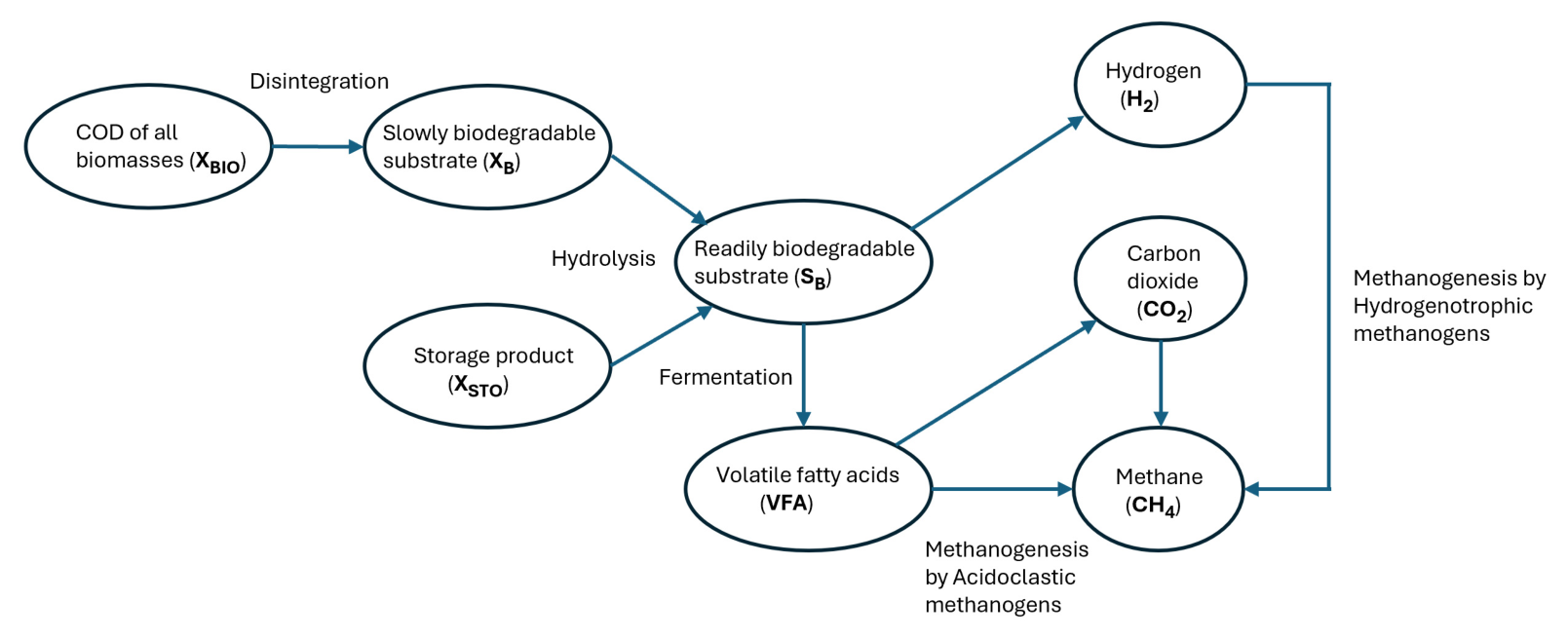
The storage product (XSTO) equals qBiosp multiplied by EPS minus the growth metabolism, as shown in Figure 1. Since the HRBC process uses the WAS from secondary treatment, the kinetic coefficients for the heterotrophic organisms are assumed to be the same in the model. After the HRBC liquid–solid separation process (DAF), the remaining XSTO in the effluent is consumed by the heterotrophic organisms in the aerated downstream secondary treatment process. The XSTO in the float of the DAF, similarly to the slowly biodegradable substrate, would then be hydrolyzed by the heterotrophic organisms in the anaerobic digestion process to readily biodegradable substrate (hydrolyzed), as shown in Figure 2. In Sumo, the slowly biodegrading substrate represents the high-molecular-weight particulates coming directly from the influent and released during the bacterial decay process [12]. The modified model uses three conditions to determine if the process is the HRBC process: (1) DO is less than or equal to 1 mg L−1, (2) HRT is less than or equal to 30 min, and (3) SRT is equal to HRT. Thirty minutes was used based on the results of Wong et al. [4] and Guellil et al. [19].

3. Results and Discussion

3.1. EPS in COD Correlation with sCOD and ffCOD Removal

Table 1 shows the WAS chemical composition in mg COD g VSS−1 for the three different WWTPs studied by Wong et al. [5]. For the trickling filter-solids contact (TF/SC) facility, 30–36% of the organic fraction of the WAS was EPS in terms of COD (CODEPS), 17–19% for the membrane bioreactor (MBR) facility, and 33–41% for the conventional AS (CAS) facility. The WAS from the CAS facility had the highest EPS, whereas the MBR facility had the lowest EPS. Protein and humic acid were the two largest EPS components for all three facilities.
Table 2 shows the mass of sCOD and ffCOD removed per unit mass of total EPS (actual EPS measurements) and per unit mass CODEPS (obtained from stoichiometry equations). The data show that each mg of CODEPS can remove about 1.02 mg of sCOD and 0.88 mg of ffCOD versus 1.43 mg of sCOD and 1.20 mg ffCOD per mg of EPS, respectively. When comparing the variations in the unit mass of COD removed by the three different processes, the data shows less variation in the mass of sCOD removed using CODEPS. This is consistent with the conclusion made by Wong et al. [5] that the EPS in the WAS behaves the same way in each process and is responsible for biosorption, meaning that EPS can estimate biosorption in the HRBC process.
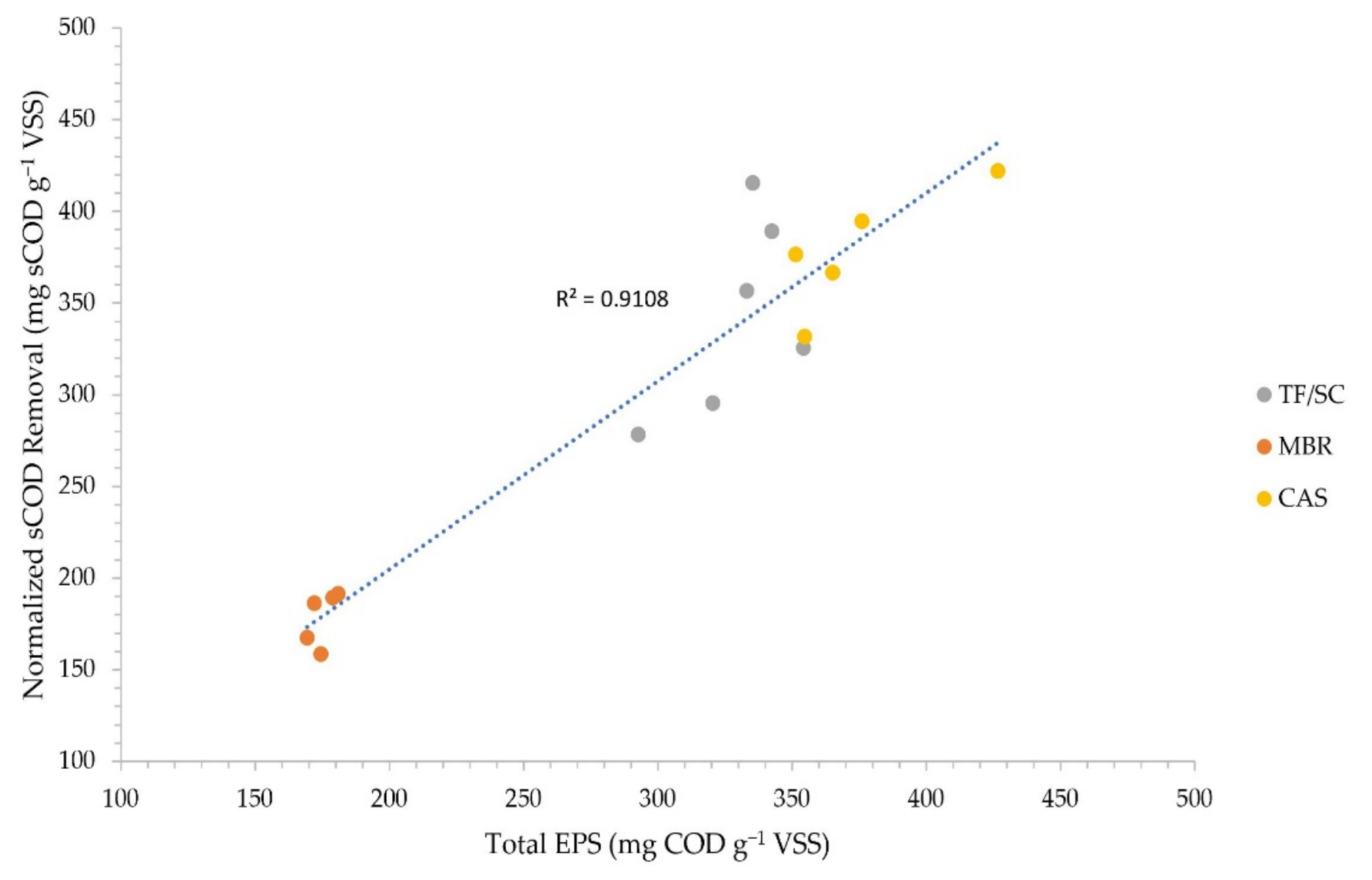
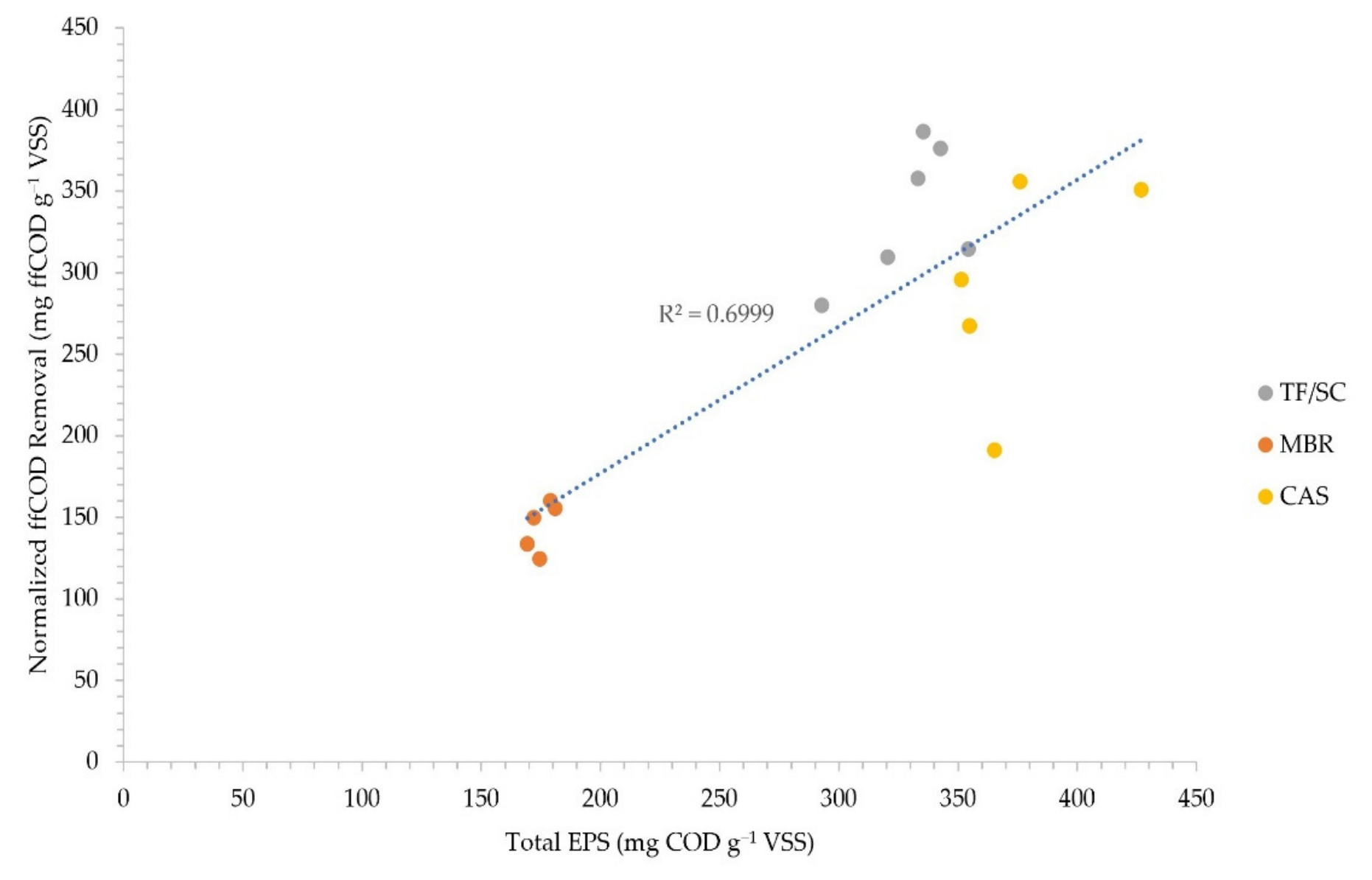
Figure 3 and Figure 4 show the normalized sCOD and ffCOD organic removals versus the normalized amount of total CODEPS for the three different processes. Figure 3 shows a positive linear relationship with a good 0.91 coefficient of determination for the normalized sCOD organic removals. This is slightly better than the 0.89 coefficient of determination obtained by Wong et al. [5]. The plot shows that using the total CODEPS does not change the finding that the sCOD organic removal in the HRBC biosorption process is related to the total EPS in the WAS, and the EPS in the three evaluated facilities behaves the same. However, the correlation between the normalized ffCOD organic removal and normalized total CODEPS is not as good. Although Figure 4 shows a positive linear relationship between the normalized total CODEPS and normalized ffCOD organic removal, the coefficient of determination is only 0.70. This coefficient of determination is much lower than the 0.81 obtained by Wong et al. [5]. Because sCOD consists of ffCOD plus colloidal COD (cCOD), the poorer relationship is postulated to mean that both cCOD and ffCOD are important in biosorption, and thus, total CODEPS is used to simulate sCOD biosorption in the modified model.

3.2. HRBC Model Calibration Using Pilot Test Data

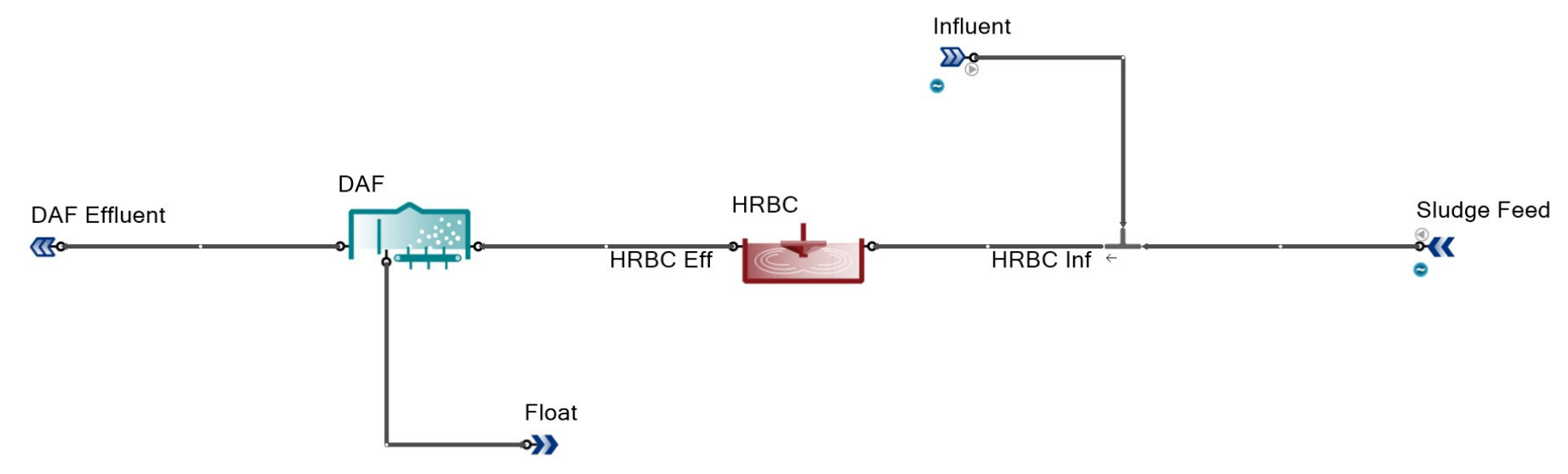
The model configuration for a HRBC is presented in Figure 5. The details of the pilot units and the pilot test can be found in Wong et al. [4]. The sludge feed in the figure represents the WAS from the downstream secondary treatment process.
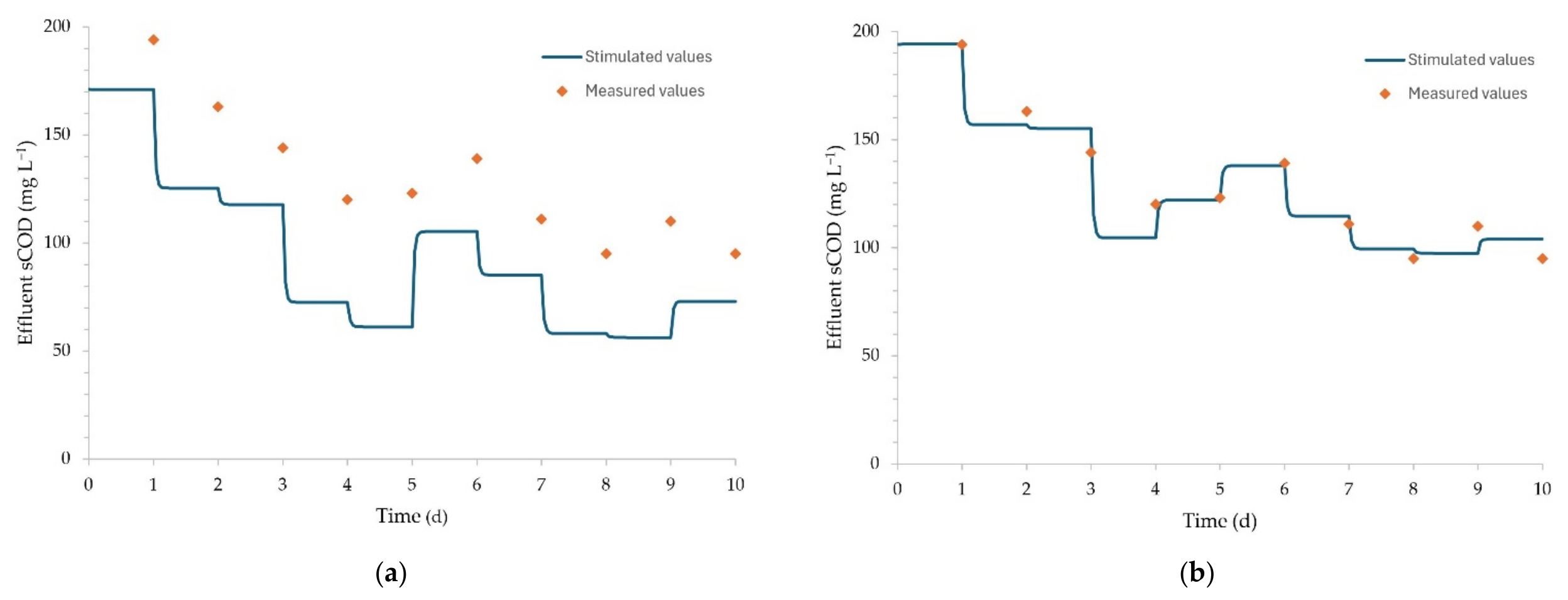
The pilot test parameters were used in the modified Mini_Sumo model to estimate the sCOD removals and compare the results with the pilot test results. Table 3 and Table 4 present the influent and WAS data used for the model. These data were first converted into various model input fractions using the influent tool supplied with the model program, and then these were input into the model as dynamic inputs. During the pilot test, the EPS concentrations in the WAS were not measured. Therefore, fEPS, equal to 0.33, which is obtained from Table 1, and qBiosp, equal to 49.15 mg COD mg−1 COD d−1, based on 1.02 mg sCOD removal per mg CODEPS in 30 min, were initially used in the model. For the Sumo model, in order for the biokinetic model to use parameters from a process unit, a plant-wide mapping feature [12] was used to obtain values of XVSS, the ratio of WAS to influent flow rate, and the HRBC SRT for the biokinetic model. The modified model was then executed using the steady-state start dynamic stimulation feature for 10 days. The simulated effluent sCOD concentrations of the model, before and after calibration, and the pilot test data are shown in Figure 6.
Figure 6a shows the modified model results prior to changing any parameters in the model. Based on the figure, the modified model underestimated the actual HRBC effluent sCOD measurements. After reducing the fEPS from 0.33 to 0.16, Figure 6b shows that the simulated HRBC effluent sCOD concentrations better match the pilot data. The value of 0.33 from Table 1 represents the 24 h extractable EPS contained in the TF/SC WAS. The calibration to 0.16 potentially indicates that only about half (0.16 of 0.33) of the EPS participates in biosorption. Further research is needed to determine why this is so. Table 5 shows that 80% of the simulated values are less than ±10% error with a maximum error of −12.6%, indicating that the calibrated model is able to predict the performance of the new HRBC process.

3.3. Full-Scale HRBC Design Prediction

The first full-scale HRBC process is currently under construction in Honolulu, Hawaiʻi, USA. The design average annual flow of the plant is 138.9 million liters per day. The plant’s secondary process was upgraded in mid-2024 from a TF/SC to a step-feed activated sludge (SFAS) process. Instead of using underdrain wasting from the secondary clarifier, this plant uses surface wasting from the effluent mixed liquor channel (which will go to the new HRBC when completed). All of the previous bench and pilot work on EPS and biosorption took place prior to start-up of the new SFAS process. Thus, there is no EPS or other data available to estimate the performance of the new HRBC process. The plant produces a secondary effluent with less than 10 mg L−1 BOD and less than 5 mg L−1 TSS. The plant effluent limits are 30 mg L−1 BOD and 30 mg L−1 TSS. Enhanced carbon diversion, downstream secondary treatment footprint reduction, and reduced power consumption are why the HRBC process was designed to replace the existing conventional sedimentation for primary treatment.
Table 6 presents partial design data for average annual flow related to the HRBC process at the Honolulu plant. This design data was obtained from a mass balance generated by another proprietary wastewater modeling program. This program assumed the HRBC process removed 21% of the HRBC influent sCOD based on the pilot data using TF/SC WAS. The data in Table 6 were input to the modified model using the model configuration shown in Figure 5 to evaluate the performance of the HRBC. The raw wastewater plus return flows are the influent to the HRBC prior to mixing with the WAS. The return flows consist of tertiary filter backwash, pre-thermal hydrolysis (preTHP) dewatering centrate, post-THP dewatering centrate, and sludge dryer condensate. The flow rate for the return flows is 3.44 million liters per day (0.91 MGD) with a VSS concentration of 897 mg L−1. When combined with WAS, this will add approximately 23% of VSS mass. For the purpose of the present modeling effort, it is assumed that the VSS of these return flows does not contribute to the biosorption in the HRBC process. This assumption can be corrected in the future when these flows exist and the EPS content can be measured.
The total working volume of the HRBC contact tank is 3.07 million liters (0.81 million gallons). Based on the total influent flow of 150.05 million liters per day, the HRT is 29 min. The DO in the contact tank is set at 0.5 mg L−1. Since the CAS WAS is the best match with the SFAS WAS, fEPS equal to 37% (from Table 1) was used in the modified model. The performance of the DAF was assumed to be 70% solids capture. Table 6 presents the comparison of the modified Mini_Sumo and the proprietary model results. The HRBC influent is the sum of raw wastewater, return flows, and WAS.
Based on the data shown in Table 7, the concentrations of all the wastewater constituents between the two models aligned with each other, except the total COD (TCOD) and sCOD. The difference in TCOD is due to the difference in sCOD. The modified model predicted approximately 35 mg L−1 (16%) sCOD removal versus 46 mg L−1 (21%) removal by the other model. This difference is considered to be within the margin of error for both models, considering both models did not have actual HRBC data for model calibration/verification. The actual future HRBC performance may be greater than 16% sCOD removal since there is additional VSS in the return flows. The sludge volume index (SVI) is a measurement of the AS settleability. The lower the SVI, the faster the sludge settles and compacts. Presently, the SFAS plant continues to achieve a low SVI. The results from Wong et al. [5] showed that higher total EPS/VSS for AS gives good settling. This finding suggests that the WAS from the SFAS could have a higher fEPS than the WAS from the CAS and achieve a higher sCOD removal. However, even if the HRBC can only achieve 16% sCOD removal, it would still be a significant reduction in aeration energy needs in the downstream SFAS process.

4. Conclusions

Current wastewater models input EPS in terms of COD. Converting direct measurements of EPS constituents into COD using stoichiometry equations did not alter the finding that the total EPS can be used to predict sCOD removal via biosorption in the HRBC process. The relationship is a positive linear relationship, and the coefficient of determination is 0.91. sCOD removal includes the removal of both colloidal and truly soluble fractions of the COD. However, the normalized total EPS did not have a reasonable correlation relationship (r2 = 0.70) with the normalized ffCOD removal. The fEPS in three types of AS were 37% for CAS, 33% for TF/SC, and 18% for MBR. The results showed that 1 mg of CODEPS removes 1.02 mg of sCOD. These findings are based on a series of studies on municipal wastewater in a warm climate with low wastewater composition variability and may not be generalizable to all wastewaters or cold climates. The Sumo full-plant wastewater model, Sumo 2C, by Dynamita has been used for pilot-scale plant data for SRTs as short as 3 h for HRAS and A/B. However, the SRT for the HRBC is equal to the HRT and is only 30 min; thus, the 2C formulation cannot work for the HRBC process. A new wastewater model is required to simulate the results of this new HRBC process. A modified Mini_Sumo whole-plant model using EPS in WAS as the biosorbent was able to simulate sCOD biosorption as storage of soluble substrate with results that matched well with the pilot test data without having the actual EPS measurements of the WAS. The maximum model error was −12.6%, with most of the simulated values being less than ±10% error. Data for the float of the full-scale DAF once constructed, including whether the float will generate greater biogas and have higher volatile solids reduction (VSR) in the anaerobic digestion process, are required for further development of the modified model. A full-scale HRBC facility with a designed annual average raw wastewater flow of 138.9 million liters per day is presently under construction in Honolulu, Hawaiʻi, USA. There is no EPS data for the surface-wasted WAS from the newly constructed SFAS process. By assuming the SFAS WAS has the same fEPS as CAS, the modified model predicted 16% sCOD removal in the HRBC process. Based on a sensitivity analysis, reducing the SRT of the SFAS process will increase the total WAS mass to the HRBC, which would increase sCOD removal. Although measuring EPS is complicated and time-consuming, the variables of fEPS and qBiosp should be determined (when available) for the SFAS surface wasted WAS to better predict the full-scale HRBC performance using the modified model. Moreover, the impact of additional VSS from the return flows should also be examined after the HRBC is constructed.

Author Contributions

Conceptualization, T.P.W. and R.W.B.J.; methodology, T.U., J.S., T.P.W. and R.W.B.J.; validation, T.P.W. and R.W.B.J.; formal analysis, T.P.W. and R.W.B.J.; investigation, T.P.W. and R.W.B.J.; writing—original draft preparation, T.P.W.; writing—review and editing, T.P.W. and R.W.B.J.; visualization, T.P.W. and R.W.B.J.; supervision, R.W.B.J.; project administration, R.W.B.J.; funding acquisition, R.W.B.J. All authors have read and agreed to the published version of the manuscript.

Funding

This research received funding from R. M. Towill Corporation.

Data Availability Statement

The original contributions presented in this study are included in the article. Further inquiries can be directed to the corresponding author.

Acknowledgments

The authors also thank Jacobs and its staff, Bruce Johnson, for providing the HRBC design data.

Conflicts of Interest

The authors declare that this study received funding from R. M. Towill Corporation. The funder was not involved in the study design, collection, analysis, interpretation of data, the writing of this article or the decision to submit it for publication.

References

  1. Guven, H.; Dereli, R.K.; Ozgun, H.; Ersahin, M.E.; Ozturk, I. Towards sustainable and energy efficient municipal wastewater treatment by up-concentration of organics. Prog. Energy Combust. Sci. 2019, 70, 145–168. [Google Scholar] [CrossRef]
  2. Bellation, S.; Guerin, S.; Pautremat, N.; Bernier, J.; Muller, M.; Motellet, S.; Azimi, S.; Pauss, A.; Rocher, V. Early assessment of a rapid alternative method for the estimation of the biomethane potential of sewage sludge. Bioresour. Technol. 2016, 206, 279–284. [Google Scholar] [CrossRef] [PubMed]
  3. Caliskaner, O.; Tchobanoglous, G.; Wu, Z.; Young, R.; Paez, C.; Davis, B.; Mansell, B.; Ackman, P.; Reid, T.; Dyson, J. Performance of full scale and demonstration-scale primary filtration projects. In WEFTEC 2018; Water Environment Federation: Washington, DC, USA, 2018; pp. 70–84. [Google Scholar]
  4. Wong, T.P.; Babcock, R.W., Jr.; Hu, B.; Schneider, J.; Milan, S. High-rate biological contactor system using waste activated sludge from trickling filter/solids contact process. Water Sci. Technol. 2020, 81, 2202–2210. [Google Scholar] [CrossRef] [PubMed]
  5. Wong, T.P.; Babcock, R.W., Jr.; Uekawa, T.; Schneider, J. Extracellular polymeric substance composition effects on biosorption for primary carbon diversion. Water 2024, 16, 1116. [Google Scholar] [CrossRef]
  6. Doyle, M.; Erdogan, A.; Antonneau, N.; Johnson, B.; Babcock, R.; Wong, T.P.; Eljerdi, H.B. Biological enhanced primary treatment: A summary of experience from pilot, demonstration, and full-scale system. In Residuals and Biosolids Conference 2018; Water Environment Federation: Washington, DC, USA, 2018. [Google Scholar]
  7. Hauduc, H.; Al-Omari, A.; Wett, B.; Jimenez, J.; Clippeleir, H.D.; Rahman, A.; Wadhawan, T.; Takacs, I. Colloids, flocculation and carbon capture—A comprehensive plant-wide model. Water Sci. Technol. 2019, 79, 15–25. [Google Scholar] [CrossRef] [PubMed]
  8. Nogaj, T.; Randall, A.; Jimenez, J.; Takacs, I.; Bott, C.; Miller, M.; Murthy, S.; Wett, B. Modeling of organic substrate transformation in the high-rate activated sludge process. Water Sci. Technol. 2015, 71, 971–979. [Google Scholar] [CrossRef] [PubMed]
  9. Smitshuijzen, J.; Perez, J.; Duin, O.; van Loosdrecht, M.C. A simple model to describe the performance of highly-loaded aerobic COD removal reactors. Biochem. Eng. J. 2016, 112, 94–102. [Google Scholar] [CrossRef]
  10. What’s New in Sumo19. Available online: https://dynamita.com/uploads/What%E2%80%99s-new-in-Sumo19.pdf (accessed on 17 November 2024).
  11. Canals, J.; Cabrera-Codony, A.; Carbom, O.; Toran, J.; Martin, M.; Baldi, M.; Gutierrez, B.; Poch, M.; Ordonez, A.; Monclus, H. High-rate activated sludge at very short SRT: Key factors for process stability and performance of COD fractions removal. Water Res. 2023, 231, 119610. [Google Scholar] [CrossRef] [PubMed]
  12. Dynamita. Sumo22.1 Technical Reference. 2023. Available online: https://dynamita.com/sumo22.1/Sumo22.1%20documentation.pdf (accessed on 11 June 2026).
  13. Waterborg, J.H.; Matthews, H.R. The Lowry Method for Protein Quantitation. In Methods in Molecular Biology, 1st ed.; Walker, J.M., Ed.; Humana Press: Clifton, NJ, USA, 1984; Volume 1, pp. 1–3. [Google Scholar]
  14. Gaudy, A.F., Jr. Colorimetric Determination of Protein and Carbohydrate. Ind. Water Wastes 1962, 7, 17–22. [Google Scholar]
  15. Frolund, B.; Griebe, T.; Nielsen, P.H. Enzymatic activity in the activated-sludge floc matrix. Appl. Microbiol. Biotechnol. 1995, 43, 755–761. [Google Scholar] [CrossRef] [PubMed]
  16. Kintner, P.K., III; Buren, J.P.V. Carbohydrate Interference and Its Correction in Pectin Analysis Using the m-Hydroxydiphenyl Method. J. Food Sci. 1982, 47, 756–759. [Google Scholar] [CrossRef]
  17. Liu, H.; Fang, H.H.P. Extraction of extracellular polymeric substances (EPS) of sludges. J. Biotechnol. 2002, 95, 249–256. [Google Scholar] [CrossRef] [PubMed]
  18. Schneider, J.; Babcock, R.W., Jr.; Wong, T.P.; Hu, B. Effects of mixing ratio, contact time and dissolved oxygen on efficiency of biosorption for primary carbon diversion. Int. J. Water Wastewater Treat 2020, 6, 1–7. [Google Scholar]
  19. Guellil, A.; Thomas, F.; Block, J.C.; Bersillon, J.L.; Ginestet, P. Transfer of organic matter between wastewater and activated sludge flocs. Water Res. 2001, 35, 143–150. [Google Scholar] [CrossRef] [PubMed]
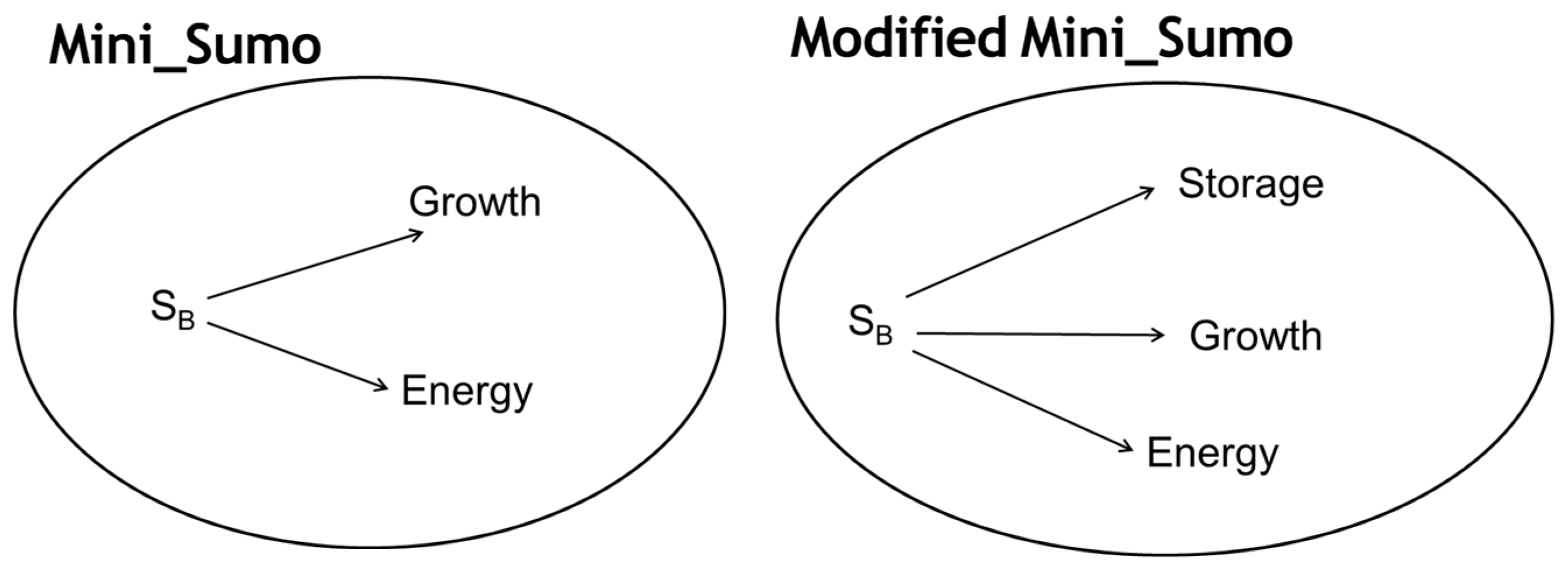
Figure 1. SB consumption in Mini_Sumo and modified Mini_Sumo models.
Water 18 01472 g001
Figure 2. Proposed XSTO in the typical anaerobic digestion processes pathway in Sumo.
Water 18 01472 g002
Figure 3. Normalized sCOD removal correlation with the amount of CER-extracted EPS (in COD) in the organic fraction of WAS.
Water 18 01472 g003
Figure 4. Normalized ffCOD removal correlation with the amount of CER-extracted EPS (in COD) in the organic fraction of WAS.
Water 18 01472 g004
Figure 5. Pilot test model configuration.
Water 18 01472 g005
Figure 6. Model simulated results versus pilot test measured effluent sCOD concentrations before (a) and after (b) calibration.
Water 18 01472 g006
Table 1. EPS composition of WAS using CER extraction (24 h) and converted to COD (WWTP A; n = 6, WWTP B; n = 5, WWTP C; n = 5).
mg COD g VSS−1
WWTPProcessfEPS (%)CarbohydrateProteinHumic AcidUronic Acid
ATF/SC33 ± 2.134 ± 2.1133 ± 16.8160 ± 12.43 ± 0.6
BMBR18 ± 0.529 ± 1.686 ± 2.056 ± 2.15 ± 0.2
CCAS37 ± 3.150 ± 5.9186 ± 18.4135 ± 28.84 ± 0.7
Table 2. Mass of soluble COD removed during biosorption per unit mass of total EPS versus total EPS in COD (WWTP A; n = 6, WWTP B; n = 5, WWTP C; n = 5).
mg Removed per mg Total EPS 1mg Removed per mg Total CODEPS
WWTPProcesssCODffCODsCODffCOD
ATF/SC1.41 ± 0.161.33 ± 0.151.04 ± 0.131.02 ± 0.10
BMBR1.39 ± 0.081.11 ± 0.081.02 ± 0.070.83 ± 0.07
CCAS1.50 ± 0.181.14 ± 0.211.01 ± 0.050.78 ± 0.16
Average 1.43 ± 0.151.20 ± 0.181.02 ± 0.110.88 ± 0.16
Note: 1. From Wong et al. [5].
Table 3. Influent pilot test data used for the modified Mini_Sumo model.
TimeFlowTCODsCODBODTSSVSS
[Day][L Min−1][mg L−1][mg L−1][mg L−1][mg L−1][mg L−1]
1833622220270200192
2833617170247340328
3833521190263252136
4833501137234244196
5681540166253200148
6833511170259196172
7833496148240196176
8719657142312553513
9712687135296400300
10833663137448433380
Table 4. Pilot test WAS data used for the modified Mini_Sumo model
TimeFlowTCODsCODTSSVSS
[Day][L Min−1][mg L−1][mg L−1][mg L−1][mg L−1]
137.9394010524202380
264.3497238721402040
341.6665618041803560
441.684208436403080
564.3395231231402740
641.6465612234603100
741.647168732202800
837.950165437003267
938.6480413735003133
1047.337324829332633
Table 5. Comparison of the HRBC pilot test simulation results with measured values.
Time
[d]
Measured Effluent
sCOD
[mg L−1]
Modeled Effluent
sCOD
[mg L−1]
Model Error
1194194.30.1%
2163157.1−3.6%
3144155.58.0%
4120104.9−12.6%
5123122.5−0.4%
6139138.1−0.6%
7111114.83.4%
89599.74.9%
911097.7−11.2%
1095104.29.7%
Table 6. Partial design data for average annual flow for HRBC under construction in Honolulu.
Raw Wastewater Plus Return FlowsWAS
Flow [MLD]142.337.72
Total COD [mg L−1]5412549
sCOD [mg L−1]22440
TSS [mg L−1]2692131
VSS [mg L−1]2411762
Total Kjeldahl nitrogen, TKN [mg N L−1]46126
Ammonia [mg N L−1] 402
Nitrite + Nitrate [mg N L−1] 010
Total phosphorus [mg P L−1]1091
Ortho-phosphates [mg P L−1]64
Table 7. Model results comparison for full-scale HRBC.
Proprietary ModelModified Model
HRBC InfluentDAF EffluentHRBC InfluentDAF Effluent
Flow [MLD]150.05150.05150.05150.05
Total COD [mg L−1]644309644320
Particulate COD [mg L−1]429140429140
sCOD [mg L−1]215169215180
TSS [mg L−1]364117367118
VSS [mg L−1]319102321104
TKN [mg N L−1]50425043
Ammonia [mg N L−1] 38373838
Nitrite + Nitrate [mg N L−1]1111
Total phosphorus [mg P L−1]148148
Ortho-phosphates [mg P L−1]6666
Disclaimer/Publisher’s Note: The statements, opinions and data contained in all publications are solely those of the individual author(s) and contributor(s) and not of MDPI and/or the editor(s). MDPI and/or the editor(s) disclaim responsibility for any injury to people or property resulting from any ideas, methods, instructions or products referred to in the content.