Article

Seasonal Variations in Shallow Groundwater Quality and Potential Health Risks in Middle Part of Jianghan Plain, China: Impacts of Petroleum-Related Activities

1
College of Hydraulic Science and Engineering, Yangzhou University, Yangzhou 225009, China
2
Hubei Key Laboratory of Resources and Eco-Environment Geology (Hubei Geological Bureau), Wuhan 430034, China
*
Author to whom correspondence should be addressed.
These authors contributed equally to this work.
Water 2026, 18(11), 1366; https://doi.org/10.3390/w18111366
Submission received: 29 April 2026 / Revised: 29 May 2026 / Accepted: 1 June 2026 / Published: 4 June 2026

Abstract

Groundwater is an important water source in China, yet its quality is increasingly threatened by industrial activities, including petroleum exploration. This study assessed seasonal hydrochemical characteristics, groundwater quality, and human health risks of shallow groundwater in the central Jianghan Plain, with emphasis on potential influences of petroleum-related activities. Groundwater samples collected during dry and wet seasons were analyzed for hydrochemical parameters, classified by hydrochemical facies, and evaluated using the water quality index (WQI), non-carcinogenic health risk assessment, and spatial distribution analysis. Groundwater was generally weakly alkaline and mainly hard to extremely hard, with HCO3–Ca·Mg as the dominant hydrochemical facies and some samples shifting toward mixed HCO3–Cl–Ca·Mg types. Most parameters had higher mean concentrations in the dry season, indicating wet-season dilution. Rock weathering dominated groundwater chemistry, whereas evaporation had limited influence. Elevated Cl suggested possible effects of petroleum-related activities. Overall groundwater quality was poor, with mean WQI values of 394.23 and 292.50 in the dry and wet seasons, respectively. Children showed greater vulnerability than adults, and Fe and As were the main contributors to non-carcinogenic risk. WQI and health-risk hotspots were concentrated near Zhouji and adjacent petroleum exploration areas, indicating the need for long-term monitoring and risk management.

1. Introduction

Groundwater is an important source of drinking water worldwide, and its quality is closely related to ecological security and public health [1]. In recent decades, groundwater systems have been increasingly affected by industrialization, agricultural intensification, urban expansion, and resource exploitation, leading to changes in hydrochemical composition and potential risks to drinking-water safety [2,3]. In petroleum-producing regions, shallow groundwater is particularly vulnerable because oil exploration, extraction, storage, and wastewater handling may introduce chloride-rich fluids, trace elements, and petroleum-related contaminants into aquifers through leakage, seepage, percolation, or other migration pathways [4,5]. These inputs may alter groundwater salinity, modify hydrochemical facies, deteriorate water quality, and increase potential health risks when shallow groundwater is used for domestic or drinking purposes [6,7]. Qianjiang City, located in the core extraction area of the Jianghan Oilfield in Hubei Province, has experienced long-term petroleum exploitation. Although petroleum development has contributed substantially to the local economy, its potential influence on shallow groundwater quality requires systematic investigation.
Groundwater chemistry is controlled by the combined effects of natural hydrogeochemical processes and anthropogenic disturbances. In shallow alluvial aquifers, water-rock interaction, carbonate and silicate weathering, evaporite dissolution, evaporation concentration, cation exchange, recharge mixing, and redox reactions jointly determine the baseline hydrochemical composition of groundwater [8,9,10]. In petroleum-producing regions, these natural processes may be locally modified by oilfield-related activities, such as the infiltration of saline produced water or oilfield wastewater, which can increase ionic strength, cause chloride enrichment, alter mixing relationships, and disturb redox conditions [11,12,13]. These changes may further influence the mobility of redox-sensitive elements such as Fe, Mn, and As, because shifts from oxic to reducing conditions can promote the dissolution of Fe/Mn oxides and the release or desorption of associated trace elements, including arsenic [14,15]. Meanwhile, seasonal hydrological variation adds further complexity to the interpretation of groundwater quality. In monsoon-influenced alluvial plains, wet-season recharge may dilute some dissolved ions and change groundwater flow paths, but it may also promote the migration of contaminants from surface or shallow subsurface sources. In contrast, dry-season conditions, characterized by reduced recharge and stronger evaporation, may increase solute concentrations and intensify apparent groundwater quality deterioration [16,17]. Therefore, distinguishing natural geochemical controls, seasonal hydrological effects, and possible petroleum-related influences remains a key challenge in groundwater studies of oil-producing alluvial plains.
Previous studies have investigated groundwater contamination and hydrochemical evolution in petroleum-producing basins and alluvial plains, including Karamay in the Junggar Basin, the lower Liaohe River Plain, the Guanzhong Plain, and Daqing [18,19,20,21]. These studies have shown that groundwater in oil-producing regions may be characterized by salinity enrichment, chloride anomalies, trace-element release, and shifts in hydrochemical facies. Meanwhile, integrated approaches such as the Water Quality Index (WQI), spatial interpolation, and non-carcinogenic health-risk assessment based on hazard quotient (HQ) and hazard index (HI) have been widely used to evaluate drinking-water suitability and human exposure risks. However, many previous studies have focused primarily on either hydrochemical evolution or health-risk assessment, while fewer have integrated both perspectives under contrasting seasonal conditions. In the Jianghan Plain, regional studies have described groundwater hydrochemistry and its evolution [22], yet process-oriented investigations focusing on the core extraction area of the Jianghan Oilfield remain limited. In particular, the seasonal variability of hydrochemical controls, groundwater quality, and associated health risks has not been sufficiently clarified.
Accordingly, this study investigated shallow groundwater in the middle Jianghan Plain during the dry and wet seasons by integrating hydrochemical analysis, groundwater quality evaluation, spatial analysis, and health-risk assessment. It should be noted that organic petroleum contaminants, such as BTEX, PAHs, and total petroleum hydrocarbons, were not analyzed in this study. Therefore, possible petroleum-related influences were interpreted cautiously on the basis of inorganic hydrochemical indicators, spatial distribution patterns, and seasonal contrasts, rather than direct organic pollution fingerprints. The specific objectives were to: (i) characterize the seasonal hydrochemical features of shallow groundwater; (ii) identify the main processes controlling groundwater chemistry, including rock weathering, ion exchange, and possible petroleum-related influences; (iii) evaluate groundwater quality and its spatial distribution using the Water Quality Index (WQI); and (iv) assess the associated human health risks for different population groups. By combining seasonal hydrochemical evidence with water quality and health risk assessments, this study provides a more comprehensive understanding of groundwater deterioration in petroleum-affected areas and offers a scientific basis for groundwater protection, pollution prevention, and sustainable water resource management in petroleum-producing regions.

2. Materials and Methods

2.1. Study Area Description

Qianjiang is located in the central Jianghan Plain of Hubei Province, China. The area is characterized by flat alluvial topography with a gentle southeastward slope, and ground elevations range from 22 to 36 m. The region has a humid subtropical monsoon climate with distinct seasonal variations. The annual precipitation is approximately 1000–1300 mm, and the mean annual temperature ranges from 15 to 17 °C, providing favorable conditions for agricultural and industrial development. Groundwater resources in the study area are relatively abundant and mainly occur in three aquifer systems, including Quaternary silt and fine sand aquifers, Pleistocene gravel aquifers, and Neogene sandstone–gravel aquifers. These strata are widely distributed and laterally continuous, with relatively consistent lithological structures and strong hydraulic connectivity, together constituting an integrated hydrogeological system. In this study, shallow groundwater refers specifically to groundwater tapped by local wells from the upper Quaternary porous aquifer, which occurs above the deeper gravel-bearing aquifer systems. The depth to the water table in the sampled wells is generally approximately 10–30 m. This shallow aquifer is characterized by vertical alternations of silty clay, silt, and fine sand, which can create local permeability contrasts, although the broader aquifer system remains laterally continuous [2,7,8]. The hydrological network is well developed, and rivers, lakes, and other surface-water bodies form an interconnected system. Groundwater is primarily recharged by precipitation, surface-water infiltration, and hydraulic exchange among different water bodies. Geological structures also play an important role in controlling groundwater flow patterns. The Jianghan Oilfield, one of the major oil and gas production bases in China, is located within the study area. Long-term petroleum exploration and extraction activities may have affected the local groundwater system, particularly in areas where oilfield operations overlap with water supply zones. Under such conditions, groundwater quality deterioration and water-level fluctuations have become issues of increasing concern, highlighting the need for continuous monitoring and effective management. The monthly precipitation pattern in Qianjiang is shown in Figure S1. According to local hydrological and meteorological records, precipitation in Qianjiang exhibits a pronounced seasonal pattern under the East Asian monsoon climate, with most annual rainfall concentrated from May to September, whereas the winter months are comparatively dry [6]. This wet–dry seasonal pattern provides important hydrological context for interpreting the dry-season concentration effect and wet-season dilution discussed below. In addition, urban domestic water in Qianjiang is generally supplied through centralized waterworks, which is municipally treated and disinfected. However, the groundwater samples analyzed in this study were collected from rural areas, where shallow groundwater is still used for domestic and drinking purposes without centralized treatment or disinfection. Therefore, the results should be interpreted as reflecting untreated rural shallow groundwater quality and a potential private-well exposure scenario, rather than finished municipal tap water.

2.2. Groundwater Sample Collection and Analytical Methods

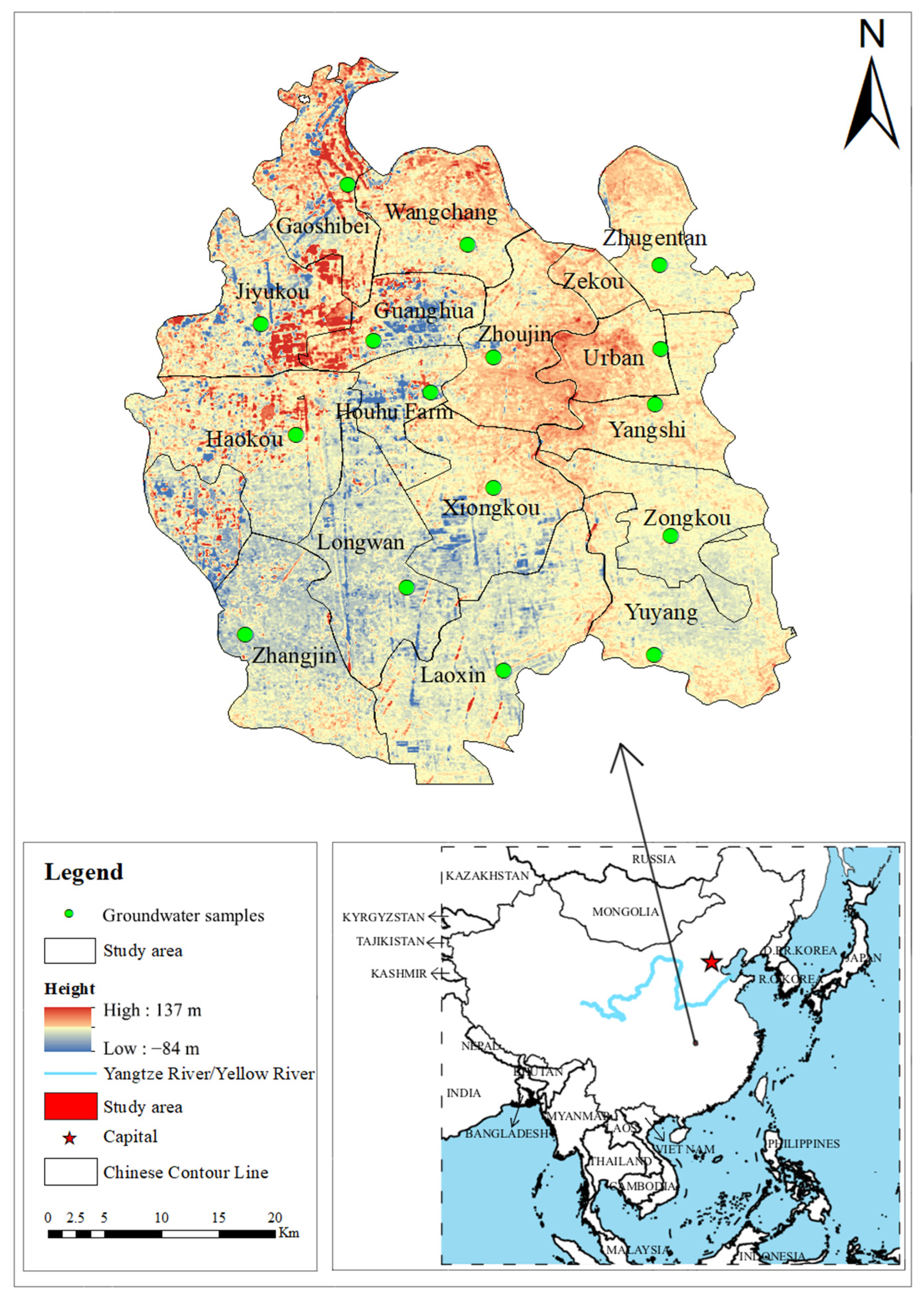
Between February and March 2022 (dry season) and in August 2022 (wet season), 32 shallow groundwater samples were collected across the study area (Figure 1). To ensure seasonal comparability, samples in both seasons were collected from the same sampling locations. The sampling sites were selected to cover both the central petroleum production area and the surrounding peripheral zones while maintaining comparable shallow aquifer conditions. All samples were obtained from the Quaternary Holocene porous aquifer. Prior to sampling, each well was purged for 5–10 min to remove stagnant water. The collected groundwater was filtered through 0.45 μm membrane filters (Sartorius Minisart, Hannover, Germany) and divided into four containers: two 50 mL amber HDPE bottles (ANPEL Laboratory Technologies (Shanghai) Inc., Shanghai, China), one 2 L HDPE bottle (ANPEL Laboratory Technologies (Shanghai) Inc., Shanghai, China). All HDPE bottles were pre-cleaned with acid and rinsed with deionized water. One 50 mL HDPE bottle was acidified with ultrapure nitric acid to pH < 2 for cation analysis, while the other was preserved for anion analysis. The 2 L HDPE bottle was used for HCO3 determination by titration. After sampling, all samples were sealed, transported under refrigerated conditions, stored at 4 °C, and analyzed within seven days. On-site physicochemical parameters, including pH and total dissolved solids (TDS), were measured using a portable Hach multiparameter analyzer (HQ40D, Hach Company, Loveland, CO, USA). Major anions (F, Cl, NO3, NO2, SO42−, and I) were determined by ion chromatography (IC, CIC-D120, Qingdao Shenghan Chromatograph Technology Co., Ltd., Qingdao, Shandong, China), and HCO3 was measured by hydrochloric acid titration. Major cations (Ca2+, Mg2+, Na+, and K+) and trace elements (e.g., As and Pb) were analyzed using inductively coupled plasma mass spectrometry (ICP-MS, EXPEC 7000, Focused Photonics (Hangzhou) Inc., Hangzhou, Zhejiang, China). Quality assurance and quality control were implemented during both sampling and laboratory analysis. All HDPE bottles were pre-cleaned with acid and rinsed with deionized water before use. Instrument calibration was checked after every ten samples using standard solutions, and analytical accuracy was further controlled using standard reference materials. Recovery rates ranged from 90% to 110%, and relative standard deviations were below 10%. Field blanks and duplicate samples were collected at a rate of 5% to monitor potential contamination and analytical reproducibility.
Descriptive statistical analyses were performed using Origin (version 2024). Pearson correlation analysis and principal component analysis (PCA) were conducted using SPSS (version 27.0 by IBM)on standardized variables to explore covariation among major ions and trace elements and to infer potential hydrochemical controls. Spatial distributions of the Water Quality Index (WQI) and Hazard Index (HI) were mapped in ArcGIS (version 10.5) using the inverse distance weighting (IDW) interpolation method. IDW was selected because the dataset contained 32 irregularly distributed sampling points and the maps were intended to provide comparative descriptive surfaces for the same sites in two seasons. Compared with geostatistical methods such as ordinary kriging, IDW requires fewer assumptions about variogram structure and was therefore considered suitable for visualizing regional spatial tendencies in this dataset.
Several methodological uncertainties should be noted. First, these wells are mainly used by rural residents for domestic and drinking purposes. Because several wells are long-used local wells rather than standardized monitoring wells, complete construction logs and screened-interval records were not available. Second, the relatively limited number and uneven distribution of sampling points restrict the predictive capacity of spatial interpolation. Therefore, the IDW maps are interpreted as descriptive summaries of spatial tendencies rather than as fully predictive geostatistical models. Third, the two sampling campaigns represent paired dry- and wet-season observations and should not be interpreted as a complete characterization of interannual variability. long-term monitoring is needed to fully assess seasonal and interannual variability in groundwater chemistry.

2.3. Evaluation of Drinking Water Quality and Health Risks

Groundwater quality was evaluated using the Water Quality Index (WQI), while potential health risks associated with shallow groundwater were assessed through the Hazard Index (HI). The WQI is a widely adopted metric for characterizing the overall quality and composite pollution status of both surface water and groundwater [23]. According to established classification standards, WQI values are divided into five categories: <50 indicates excellent water quality; 50–100, good; 100–200, moderate; 200–300, poor; and ≥300, very poor [24]. Accordingly, the present study applied the WQI framework to assess groundwater quality in the Qianjiang city.
W i = P i Σ P i
W Q I = Σ W i × C i S i × 100
In Equation (1), Pi represents the importance score assigned to water quality indicator i, ranging from 1 to 5. A value of 1 denotes minimal influence on overall water quality, whereas a value of 5 reflects the highest degree of influence. For example, heavy metals such as As, Cd, Cr, and Pb are considered highly detrimental to human health; thus, their p values are 5. The detailed weighting scheme for all indicators is provided in Table S1. In Equation (2), Ci denotes the measured concentration of water quality indicator i in a given sample, while Si represents the permissible limit for indicator i as specified in the national standard for drinking water quality (GB 5749-2022). The detailed method for calculating the weighting values was provided in the Supplementary Materials. For the chemical indicators evaluated in this study, GB 5749-2022 was used as a reference standard for assessing the suitability of groundwater for long-term drinking water use [12]. Although some drinking-water parameters may also have short-term health or acceptability implications, exceedances of As and Mn in this study were interpreted mainly as potential concerns related to prolonged exposure rather than acute toxicity [13,14]. Therefore, the following health-risk discussion focuses on long-term non-carcinogenic exposure.
The risk index provides a comprehensive measure of health risks associated with trace elements, based on the non-carcinogenic effects of human exposure. Given that children are more vulnerable to such risks, the present study emphasizes the assessment of risk indices for children exposed to drinking water. In Qianjiang City, approximately 16% of the rural population depends on shallow groundwater as the primary source of drinking water [23]; accordingly, this evaluation focuses on groundwater used for domestic consumption. The principal exposure pathways for pollutants in drinking water include dermal absorption (e.g., bathing) and oral ingestion (e.g., direct consumption) [25]. Therefore, the health risk assessment in this study is primarily based on these two pathways, with the Hazard Index (HI) applied to quantify the associated risks.
The HI was calculated using the following equation [26]:
H Q o r a l i = C i × D R × E F × E D B W × A T × R f D
H Q d e r m a l i = K p × C i × E T × E D × E F × S A × 10 3 B W × A T × 1 R f D × G I A B S
H I = Σ H Q o r a l i + Σ H Q d e r m a l i
In the equation, HQoral(i) denotes the non-carcinogenic health risk associated with oral ingestion of element i, while HQdermal(i) represents the risk arising from dermal exposure to element i; Ci is the measured concentration of element i in water (mg/L); DR is the daily water intake (1.0 L/day for children) [27]; EF is the exposure frequency (350 days/year) [28,29]; ED is the exposure duration (6 years) [28,29]; BW is body weight (26.8 kg for children) [27]; AT is the average exposure time (2190 days) [28]; RfD refers to the oral reference dose for chemical exposure (mg/kg/day); KP is the skin permeability coefficient of the pollutant (cm/h); ET is the daily exposure time via dermal contact (0.22 h/d) [27]; GIABS is the gastrointestinal absorption factor, SA is the exposed skin surface area (9400 cm2) [27]; and 10−3 is the volume conversion factor (L/cm3). The values of RfD and GIABS for each trace element were obtained from the U.S. Environmental Protection Agency’s Risk Assessment Information System (RSL) tables (see Table S2). An HI threshold of 1 is generally considered the criterion for acceptability. Values of HI < 1 indicate no appreciable health risk, and any potential effects are regarded as negligible and difficult to detect. In contrast, HI > 1 suggests the possibility of adverse health outcomes. For risk classification, HI < 1 corresponds to no risk; 1 < HI < 2 indicates low risk; 2 < HI < 3 indicates moderate risk; 3 < HI < 4 indicates high risk; and HI > 4 represents extreme risk [30].

3. Results

3.1. Hydrochemical Features of Shallow Groundwater in the Study Area

The statistical characteristics of the major hydrochemical parameters of shallow groundwater in Qianjiang during the dry and wet seasons are summarized in Table 1. Overall, the groundwater was weakly alkaline in both seasons. The pH ranged from 7.15 to 8.40, with a mean value of 7.61, in the dry season, and from 6.75 to 7.91, with a mean value of 7.25, in the wet season, indicating slightly lower pH values during the wet season. Total hardness (TH) and total dissolved solids (TDS) are important indicators of groundwater chemistry and water quality. TH (expressed as CaCO3) ranged from 128.20 to 636.86 mg/L in the dry season and from 150.47 to 605.63 mg/L in the wet season, indicating that most groundwater samples were classified as hard to extremely hard water. TDS values were all below 1000 mg/L in both seasons, suggesting that the groundwater was freshwater. As shown by the relationship between TH and TDS (Figure S2a), most samples fell into the hard- and extremely hard-water categories, although a few samples were classified as soft water. The groundwater chemistry was dominated by Ca2+, Mg2+, and HCO3 in both seasons. In the dry season, the major cations were ranked as Ca2+ > Mg2+ > Na+ > K+, with mean concentrations of 120.90, 32.36, 24.38, and 1.60 mg/L, respectively, whereas the dominant anions followed the order HCO3 > Cl > NO3 > SO42−, with mean concentrations of 552.23, 34.37, 1.60, and 1.33 mg/L, respectively. A similar ionic pattern was observed in the wet season, although the mean concentrations of most major ions were lower, reflecting the influence of seasonal dilution associated with wet-season recharge. Among the major ions, Cl showed relatively high variability, with maximum values of 344.93 mg/L in the dry season and 328.92 mg/L in the wet season. Several samples exceeded the limit of 250 mg/L specified in the Chinese drinking water standard (GB 5749–2022), indicating possible anthropogenic inputs in parts of the study area. The Piper diagram (Figure S2b) showed that shallow groundwater was predominantly of the HCO3–Ca·Mg type in both seasons, although several samples tended toward a mixed HCO3–Cl–Ca·Mg type. This hydrochemical facies suggests that alkaline earth metals (Ca2+ and Mg2+) and weak acid anions, particularly HCO3, dominated groundwater chemistry. In addition, H2SiO3 concentrations ranged from 7.50 to 62.76 mg/L (mean 38.08 mg/L) in the dry season and from 2.33 to 52.08 mg/L (mean 32.84 mg/L) in the wet season, further indicating the contribution of silicate weathering to groundwater composition.
Minor constituents and trace elements also showed evident seasonal variation. In general, their mean concentrations were higher in the dry season than in the wet season. In the dry season, the average concentrations followed the order Fe > Ba > Mn > F > Al > I > As > Zn > Ni > Mo > Co > Pb, whereas in the wet season the order was Fe > Mn > Ba > F > Al > I > As > Zn > Ni > Mo > Co > Pb. The maximum concentrations of Fe, Mn, Al, and As exceeded the limits of the Chinese drinking water standard in both seasons, while Ba exceeded the standard only in the dry season. Overall, parameters such as TH, TDS, Na+, Ca2+, Mg2+, HCO3, Cl, Fe, Al, and As generally exhibited higher mean concentrations in the dry season, which is consistent with a seasonal dilution effect during the wet season.

3.2. Evaluation of Drinking Water Quality and Health Risks in the Study Area

Figure S3 summarized the seasonal exceedance factors (Efs; measured concentration divided by the national drinking-water standard) for all parameters. Across the dataset, only pH, TDS, Na, K, SO42−, NO3, F, Zn, Pb, Ni, CO, Mo, and NO2 did not exceed the standard limits. In contrast, Fe, Mn, and As exhibited the highest exceedance levels and were the dominant contaminants affecting groundwater quality. The maximum Efs values of Fe were 85.4 in the dry season and 51.5 in the wet season, whereas Mn reached 10.7 and 12.7, and As reached 10.1 and 8.3, respectively. In addition, Al and Ba exceeded the standard in a limited number of groundwater samples, particularly in the dry season. These results suggested that groundwater quality in the study area was primarily threatened by redox-sensitive trace elements, especially Fe, Mn, and As.
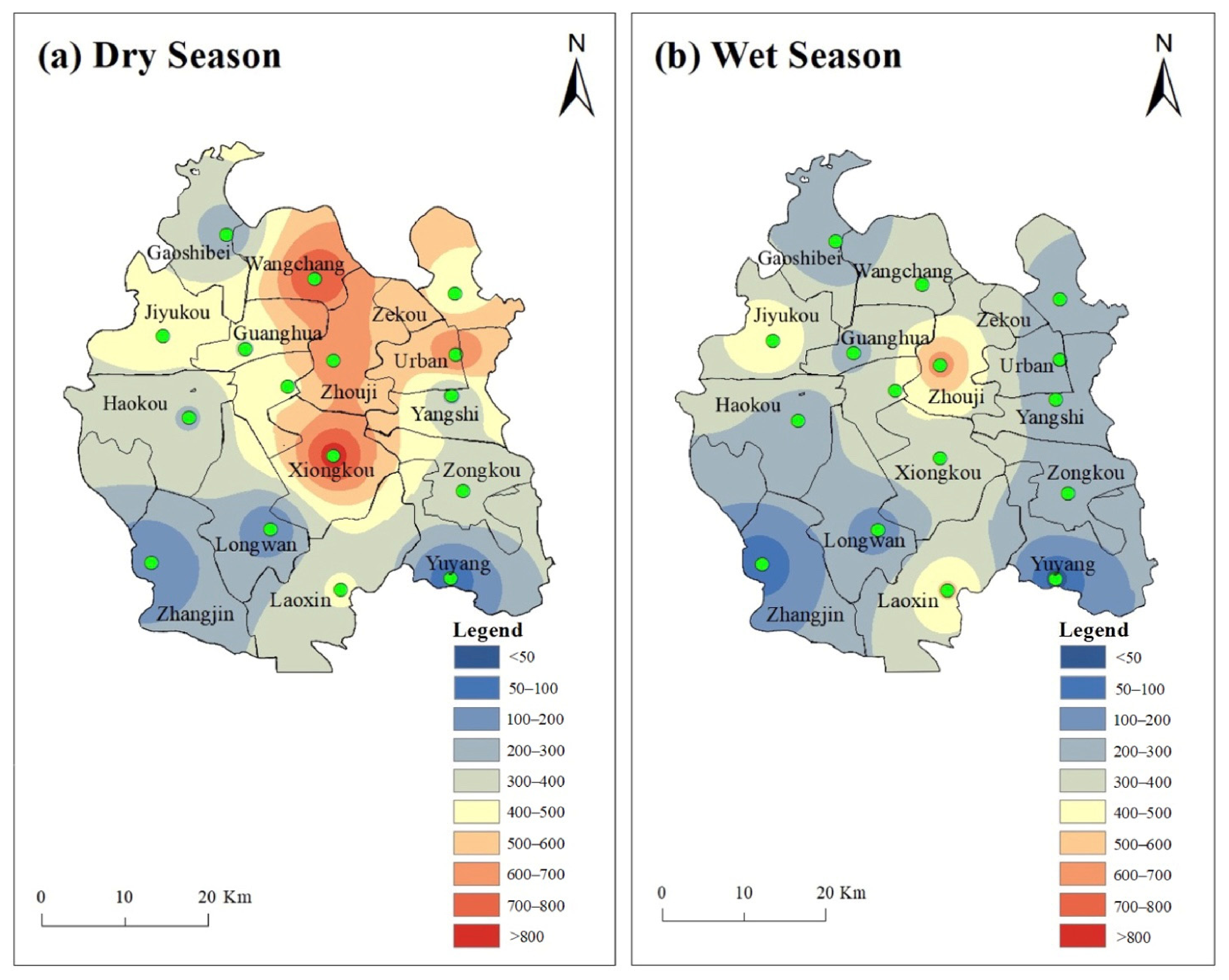
To further assess the suitability of groundwater for drinking purposes, the water quality index (WQI) was calculated for all sampling points. As shown in Figure S4a,c and Table S3, groundwater quality was generally poor in both seasons. WQI values ranged from 40.47 to 781.99 in the dry season Figure S4a, with a mean of 394.23, and from 35.10 to 616.30 in the wet season Figure S4c, with a mean of 292.50. Although the average WQI decreased in the wet season, indicating a slight seasonal improvement, the overall water quality remained unsatisfactory. In both seasons, 81.25% of the samples had WQI > 200, indicating very poor to unsuitable quality for drinking. The spatial distribution of WQI exhibited clear seasonal variation. In the wet season (Figure 2a), high WQI values were mainly concentrated in the central part of the study area, especially around Zhouji, with secondary hotspots near Laoxin and Jiyukou. Low WQI values were mainly distributed in the southwestern and southeastern areas, particularly around Zhangjin, Longwan, and Yuyang. In the dry season (Figure 2b), the high-WQI zone became more extensive and pronounced, expanding from Zhouji toward Wangchang, Xiongkou, and the eastern part of the study area. Overall, groundwater quality deterioration was concentrated in the central area in both seasons, but was more severe and spatially extensive in the dry season. The high WQI values were primarily driven by Fe, which was the dominant contributor at most sampling points in both seasons, with As, to a lesser extent, Mn providing additional contributions at several sites (Figure S4b,d). Excessive exposure to these elements may pose adverse health effects. As exposure can damage the gastrointestinal and nervous systems and increase the risk of severe diseases such as skin cancer and leukaemia [31]. Excess Fe intake has been associated with tissue injury, hepatic and splenic dysfunction, and disorders of skin pigmentation [32]. Mn exposure is linked to parkinsonism-like symptoms and adverse effects on the reproductive system and liver [33].
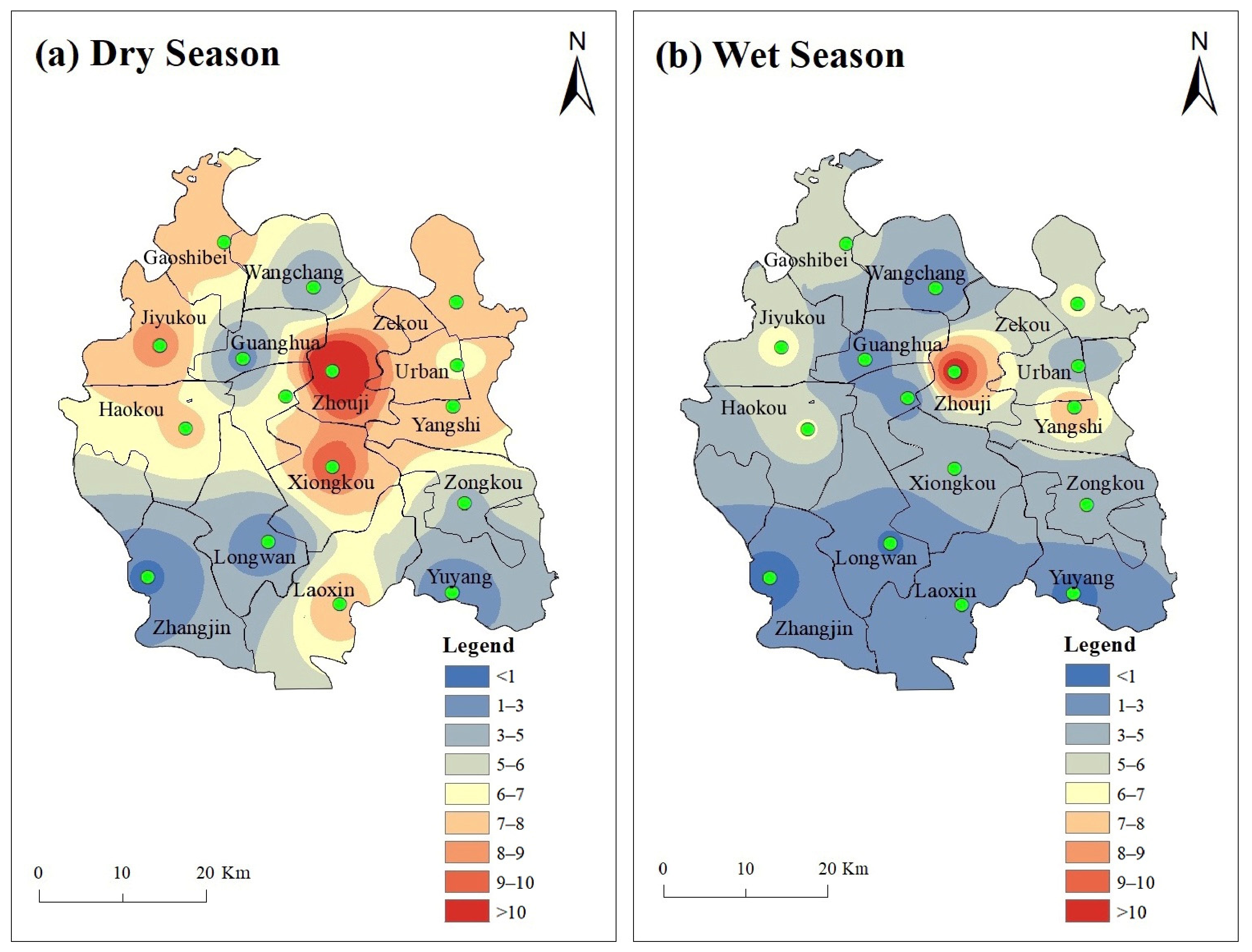
The calculated hazard index (HI) values for children ranged from 0.66 to 14.08 in the dry season and from 0.48 to 11.66 in the wet season, with mean values of 6.13 and 3.95, respectively (Table S3). The generally higher HI values in the dry season suggest that health risks were more pronounced under dry-season hydrogeochemical conditions. As shown in Figure 3a,b, the spatial distribution of HI for children exhibited clear clustering patterns in both seasons. High HI areas were mainly concentrated in the central part of the study area, especially around Zhouji. In the wet season, the main hotspot was centered on Zhouji, with relatively lower HI values in the southwestern and southeastern marginal areas. In the dry season, the high risk zone became broader and more pronounced, extending from Zhouji toward Xiongkou and nearby areas. This spatial pattern indicates that non-carcinogenic health risks to children were greatest in the central petroleum-affected zone of the study area. Further analysis (Figure S5) showed that the contribution of non-carcinogenic risk differed by exposure pathway: the hazard quotients for oral ingestion (HQoral) were approximately two orders of magnitude higher than those for dermal absorption (HQoral). This finding highlights oral ingestion as the dominant pathway of health risk, whereas risks associated with dermal absorption are negligible. The average HI contributions of individual contaminants showed only limited seasonal variation. In the dry season, the major contributors followed the order: As (4.766) > Fe (0.560) > F (0.234) > Ba (0.120) > Mn (0.114) > Co (0.111) > I (0.167) > Ni (0.015) > Mo (0.014) > Pb (0.011) > NO3 (0.0045) > Al (0.0041) > Zn (0.004) > NO2 (0.002), whereas the wet season showed slightly greater contributions from Fe and particularly Mn.
Because the integrated WQI is sensitive to parameters with high exceedance levels and low drinking-water standard limits, the WQI results in this study were strongly influenced by Fe, As, and Mn. Therefore, the mapped WQI values were interpreted together with the parameter-specific exceedance factors, contribution plots (Figure S4), and HI results (Figure S5), rather than being attributed to a single index or parameter alone. Based on these results, Fe, Mn, and As played different roles in groundwater quality deterioration and non-carcinogenic health risk. To clarify their relative importance, their seasonal exceedance magnitudes and contributions to WQI and HI are summarized in Table 2. Fe showed the largest exceedance factors and was the dominant contributor to WQI at most sampling sites, indicating its primary role in overall groundwater quality deterioration. In contrast, As was the principal contributor to HI, suggesting that arsenic exposure was the main driver of non-carcinogenic health risk. Mn provided an additional contribution, particularly in the wet season, but its overall influence was secondary compared with Fe in WQI and As in HI. These results indicate that groundwater quality deterioration and non-carcinogenic health risk were related but were not controlled by exactly the same elements.

3.3. Sensitivity Analysis and Limitations of the Health-Risk Assessment

A Monte Carlo-based screening-level sensitivity analysis was conducted with 10,000 iterations to examine how variability in exposure parameters and contaminant concentrations may affect the non-carcinogenic HI for children [31]. The analysis was not intended as a full site-specific probabilistic risk forecast, but rather as an auxiliary tool to identify the relative influence of uncertain input variables. Sensitivity was evaluated based on the contribution of each input variable to the variance of the simulated HI. As shown in Figure S6, BW was the most influential parameter in both seasons, indicating that child body weight strongly affected the calculated health risk. Among contaminant-related variables, As and Fe contributed most to HI variability, consistent with their dominant roles in the deterministic HI results, while Mn showed a relatively stronger influence in the wet season. In contrast, IR, F, Ba, and other parameters had smaller contributions. These results suggest that uncertainty in child exposure characteristics and As–Fe–Mn concentrations is the main source of variability in the HI assessment.
Several limitations should be acknowledged. First, because detailed probability distributions, uncertainty ranges, and convergence diagnostics were not fully established for all input variables, the Monte Carlo results should be interpreted only as a screening-level sensitivity analysis rather than a fully site-specific probabilistic risk forecast. Future risk assessments should incorporate longer monitoring records, site-specific exposure surveys, and fully specified probabilistic input assumptions. Second, the present risk analysis focused on non-carcinogenic effects in children using the HQ/HI framework. However, inorganic arsenic is a well-established human carcinogen under long-term drinking-water exposure [30]. Because lifetime carcinogenic risk assessment requires additional parameters, such as cancer slope factors, lifetime exposure assumptions, long-term drinking-water behavior, and preferably site-specific arsenic speciation, it was not included in the present HI-based assessment. Future studies should therefore evaluate lifetime carcinogenic risk when longer-term exposure scenarios and site-specific carcinogenic-risk inputs are available. Third, although the central high-risk zone broadly overlaps areas with relatively intensive petroleum production, the current dataset does not include source-specific organic tracers or a quantitative analysis of oil-well density or proximity. Petroleum-related activity should therefore be interpreted as a plausible co-factor that may contribute to local groundwater deterioration, rather than as a uniquely demonstrated source of the observed WQI and HI patterns.

4. Discussion

4.1. Processes Controlling the Chemical Characteristics of Shallow Groundwater

Groundwater hydrochemistry is generally controlled by three major natural processes: water-rock interaction, evaporation, and atmospheric precipitation [34]. To identify the dominant mechanisms governing shallow groundwater chemistry in the study area, Gibbs diagrams were constructed (Figure S7) [35]. Most groundwater samples from both the dry and wet seasons fell within the rock dominance zone, indicating that rock weathering is the principal natural process controlling groundwater chemistry in Qianjiang. Only a small number of samples show relatively high ionic ratios, suggesting limited influence from evaporation and/or localized saline inputs.
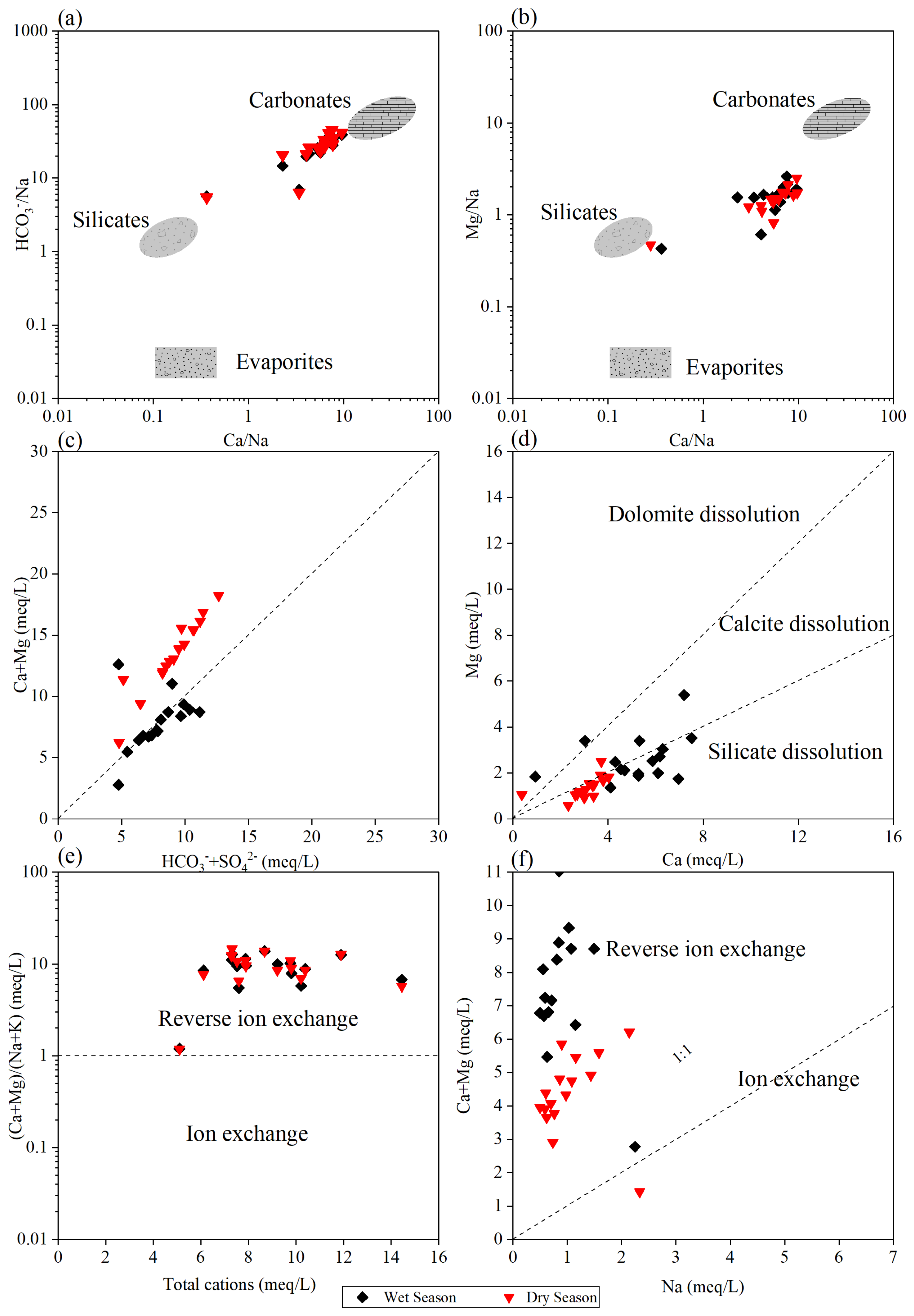
To further elucidate the impact of rock weathering on groundwater chemistry, it is essential to analyze the specific types of weathering processes. Different rock types contribute distinct ion compositions to groundwater through weathering, and the ratios of major ions serve as reliable indicators for identifying the dominant geochemical processes. Rock weathering sources generally include carbonate rocks, silicate rocks, and evaporite rocks [36]. The ratios of (HCO3/Na) and (Ca/Na) are widely employed to differentiate the contributions of various rock types to groundwater evolution [37]. As illustrated in Figure 4a,b, most groundwater samples from both seasons were distributed between the silicate and carbonate end-members, suggesting that groundwater chemistry was mainly influenced by the combined weathering of silicate and carbonate minerals. This interpretation was supported by the relatively high H2SiO3 concentrations in groundwater, particularly in the dry season, suggesting that silicate weathering may have contributed to solute acquisition. Additionally, the ratio of (Ca + Mg) to (HCO3 + SO42−) provides further insight into mineral dissolution processes. If carbonate and gypsum dissolution are the dominant sources of Ca2+ and Mg2+, the samples are expected to plot near the 1:1 line [38,39]. As shown in Figure 4c, most samples from both the dry and wet seasons were located above the 1:1 line, indicating an excess of Ca2+ and Mg2+ relative to HCO3 and SO4. This pattern suggests that carbonate and gypsum dissolution alone may not fully explain the Ca2+ and Mg2+ enrichment. Compared with the wet season, the dry-season samples generally showed a greater deviation from the 1:1 line, implying a relatively stronger enrichment of Ca2+ and Mg2+. Combined with the Ca–Mg relationship shown in Figure 4d, these results suggest that silicate weathering, together with carbonate dissolution, may have contributed to the hydrochemical evolution of shallow groundwater. The wet season samples exhibited slightly greater dispersion in the Ca–Mg plot, suggesting that the relative contribution of mineral dissolution processes may vary with seasonal hydrological conditions. Given that the aquifer sediments in the study area are dominated by sandstone and other clastic deposits, dissolution of silicate minerals may be an important source of dissolved ions. Additionally, the ratio of (Ca + Mg) to (HCO3 + SO42−) was greater than 1, indicating that Ca and Mg may originate from ion exchange [40]. As shown in Figure 4e,f, most samples from both seasons fell within the reverse ion-exchange domain. This pattern is consistent with preferential adsorption of Na+ onto aquifer materials and the release of Ca2+ and Mg2+ into groundwater [41]. Such a process contributed to the dominance of Ca2+ and Mg2+ in the shallow groundwater of the study area. Overall, although the aquifer framework in the study area is dominated by sandstone and other clastic sediments, the observed Ca2+ and Mg2+ enrichment does not necessarily indicate the presence of a regionally extensive carbonate bedrock aquifer. In alluvial clastic aquifers, Ca2+ and Mg2+ can also be released from carbonate cements, local calcareous components within Quaternary sediments, silicate mineral weathering, and reverse cation exchange [42,43,44]. Therefore, the dry-season Ca–Mg enrichment is best interpreted as the combined result of local carbonate dissolution, silicate weathering, cation exchange, and seasonal concentration effects, rather than as evidence of a widespread carbonate aquifer [45].
Although natural geochemical processes dominate the overall hydrochemical evolution, localized anthropogenic inputs may also have modified groundwater composition. Several samples exhibited elevated Cl concentrations and a tendency toward mixed HCO3–Cl–Ca·Mg water types, indicating localized chloride enrichment. This enrichment may reflect multiple sources. Natural sources may include dissolution of regional saline geological materials, such as rock salt and evaporite-bearing sediments, as well as evaporation concentration in shallow groundwater [46]. Anthropogenic sources may include agricultural return flow, domestic sewage, and chloride-rich fluids associated with petroleum-related activities [47,48,49]. Qianjiang is located within the core production area of the Jianghan Oilfield, where long-term oilfield operations may introduce saline fluids through produced-water leakage, seepage, or other operational pathways [2,4,22]. Therefore, the elevated Cl concentrations observed in some samples are treated as a mixed-source signal.

4.2. Trace Element Enrichment Mechanisms and Source Interpretation

The concentrations of several trace elements, including Fe, Mn, As, Al, and Ba, exceeded the limits of the Chinese drinking water standard (GB 5749–2022) in some groundwater samples, indicating potential threats to drinking water safety. Their enrichment is commonly influenced by mineral dissolution, redox reactions, and anthropogenic disturbance [50,51]. Therefore, seasonal Pearson correlation analysis and principal component analysis (PCA) were used to identify the main controls on trace element enrichment in shallow groundwater.
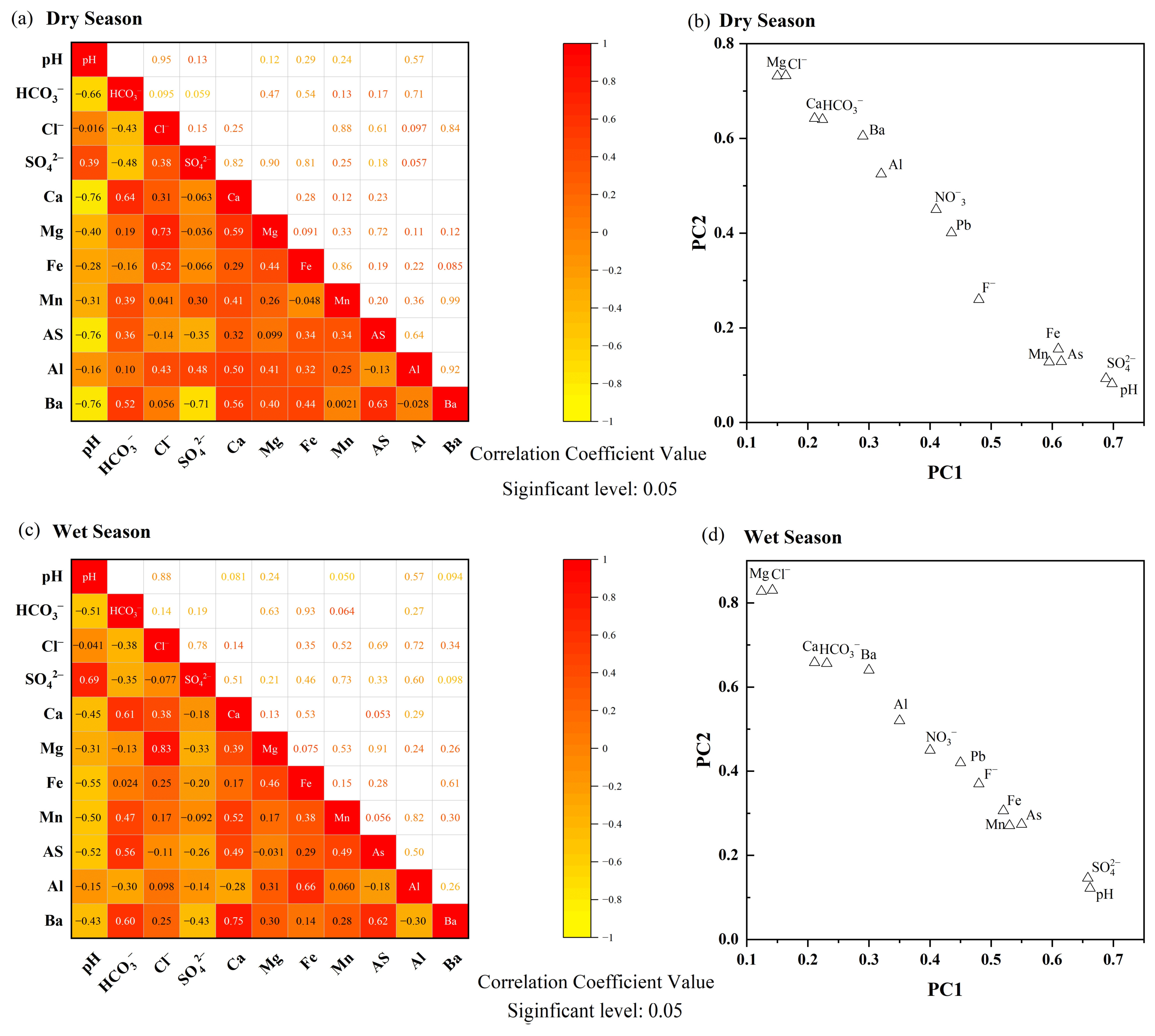
The Pearson correlation analysis (p < 0.05; Figure 5a,c) suggests that Fe, Mn, As, Al, and Ba were influenced by multiple geochemical processes with clear seasonal differences. In both seasons, As showed positive associations with Fe, Mn, Ba, HCO3, and Ca2+ and negative associations with pH and SO42−. This pattern is consistent with coupled water–rock interaction and possible redox-sensitive mobilization. However, redox parameters such as Eh, dissolved oxygen, and Fe2+/Fe3+ were not measured during the present campaigns; thus, Fe–Mn redox cycling can only be inferred indirectly from covariance patterns rather than demonstrated directly. The same caution applies to the interpretation of possible salinity-related inputs inferred from the Mg–Cl relationship. Accordingly, these correlations are used to identify plausible mechanisms and co-occurring processes, not to establish a unique causal pathway.
The PCA results (Figure 5b,d; Table S4) provide an exploratory complement to the correlation analysis, with the detailed loading values listed in the Supplementary Materials. In the dry season, PC1 and PC2 explained approximately 38.2% and 24.9% of the variance, respectively, whereas in the wet season they explained 37.8% and 22.5%. In both seasons, PC1 was characterized mainly by positive loadings of Ca, HCO3, Ba, As, and, to a lesser extent, Mg and Fe, together with a negative loading of pH, indicating a broad water–rock interaction and trace-element association. PC2 was dominated by Cl, SO42−, Al, and Mg in the dry season and by Cl, Mg, Al, and Fe in the wet season, highlighting a separate salinity/trace-metal gradient. These patterns are consistent with mixed hydrogeochemical controls, but PCA remains an exploratory statistical tool. Therefore, PCA is used here to support, rather than prove, hypotheses regarding trace-element mobilization and possible petroleum-related disturbance. Because no spatial regression against oil-well density or proximity was performed, the petroleum–groundwater linkage in this study remains contextual rather than quantitatively causal.
A plausible geochemical pathway linking petroleum operations to Fe and As mobilization is that chloride-rich produced water or related seepage may locally increase salinity and ionic strength and alter groundwater redox conditions. Produced water and oilfield brines are commonly characterized by elevated salinity and chloride, and previous studies have reported increases in Cl, Br, Ba, and related dissolved constituents in groundwater affected by oil/gas wells or brine leakage [52,53]. Under more reducing conditions, Fe-bearing oxides and hydroxides can dissolve, releasing Fe into groundwater. Because arsenic is commonly adsorbed onto Fe–Mn oxide surfaces, reductive dissolution and/or competitive desorption may further promote the release and co-mobilization of As [54,55]. Petroleum-related organic residues may also enhance As dissolution and speciation transformation in soil–mineral systems [56]. Therefore, the observed spatial association among elevated Cl, Fe, As, and high-risk areas may reflect a combined effect of salinity input and redox-driven Fe–As mobilization.

5. Conclusions

This study systematically investigated the seasonal hydrochemical characteristics, groundwater quality, and non-carcinogenic health risks of shallow groundwater in Qianjiang, a petroleum-affected area of the Jianghan Plain. Groundwater was generally weakly alkaline in both seasons and mainly belonged to the HCO3–Ca·Mg type, although some samples evolved toward a mixed HCO3–Cl–Ca·Mg type. Most hydrochemical parameters showed higher mean concentrations in the dry season than in the wet season, indicating an overall dilution effect. Rock weathering was the dominant natural process controlling groundwater chemistry, with additional influences from carbonate dissolution, silicate weathering, reverse ion exchange, and localized chloride enrichment. High Cl and the strong Mg–Cl relationship further suggested that deep brine input and petroleum-related disturbance might have affected shallow groundwater chemistry in some areas. Seasonal correlation analysis and PCA indicated that the enrichment of trace elements, particularly Fe, Mn, As, Al, and Ba, was controlled by multiple coupled processes, mainly including Fe–Mn redox cycling, mineral dissolution, and seasonal hydrological variation. Salinity input from deep formation brines and petroleum-related disturbance may also have indirectly influenced the mobilization of redox-sensitive elements. Groundwater quality was generally poor in both seasons, with mean WQI values of 394.23 in the dry season and 292.50 in the wet season, indicating more severe deterioration in the dry season. Fe was the dominant contributor to WQI at most sites, with As and Mn providing additional contributions. Health-risk assessment further showed substantial non-carcinogenic risks to children, with mean HI values of 6.13 and 3.95 in the dry and wet seasons, respectively. High WQI and HI hotspots were concentrated in the central part of the study area, especially around Zhouji and adjacent petroleum-affected zones. Overall, these findings highlight the need for long-term monitoring and targeted management of As- and Fe- related groundwater contamination in petroleum production regions.

Supplementary Materials

The following supporting information can be downloaded at: https://www.mdpi.com/article/10.3390/w18111366/s1, Table S1. Water quality standards and weights. Table S2. Skin permeability coefficient (KP) and reference does (RfD) for various elements. Table S3. Calculated values of the water quality index (WQI) and hazard index (HI) for children in groundwater samples from the study area. Table S4. PCA loading values of hydrochemical indicators in the dry and wet seasons. Figure S1. Monthly precipitation pattern in Qianjiang. Precipitation data are based on records from the China Meteorological Administration [57]. Figure S2. (a) The evaluation of groundwater hardness in the study area; (b) Piper diagrams showing proportions among the major chemical components for all water samples. Hydrochemical facies (Piper diagram): 1: Ca–Cl, 2: Ca/Mg–Cl, 3: Ca/Mg–HCO3, 4: Na–Cl, 5: Ca/Na–HCO3, 6: Na–HCO3. Figure S3. Enrichment patterns of elements in groundwater samples from the study area during the (a) dry season and (b) wet season, relative to the drinking-water standards of GB 5749–2022 and the WHO guidelines. Efs represents the ratio of the measured element concentration in groundwater to the corresponding standard value. Figure S4. Calculated WQI values for groundwater samples in the study area and the contributions of individual water-quality parameters to WQI during the (a,b) dry season and (c,d) wet season. Figure S5. Box plots of the hazard index (HI) for groundwater samples in the study area during the dry and wet seasons. Figure S6. Sensitivity analysis of HI model parameters for children during the (a) dry season and (b) wet season. Figure S7. Gibbs diagrams of groundwater in the study area: (a) TDS vs. Cl/(Cl+HCO3); (b) TDS vs. Na+/(Na++Ca2+). References [57,58,59,60,61] are cited in the supplementary materials.

Author Contributions

L.X.: Conceptualization, Methodology, Investigation, Writing—Original draft; M.H.: Methodology, Investigation; X.L.: Investigation; T.L.: Supervision, Formal analysis; S.T.: Writing—Original draft, Writing-Reviewing and Editing. All authors reviewed the manuscript. All authors have read and agreed to the published version of the manuscript.

Funding

This research was funded by the Yangzhou Talent Program “LvYangJingFeng” (YZLYJFJH2022YXBS124).

Data Availability Statement

The original contributions presented in this study are included in the article. Further inquiries can be directed to the corresponding author.

Acknowledgments

Sincere gratitude is extended to the editor and the anonymous reviewers for their professional comments and corrections.

Conflicts of Interest

The authors declare that they have no known competing financial interests or personal relationships that could have appeared to influence the work reported in this paper.

References

  1. Wang, Y.X.; Deng, Y.M.; Zhang, J.W.; Yan, B.; Xiao, Z.Y.; Fan, R.Y.; Xie, X.J. Advances in groundwater quality and health studies: A comprehensive review. Sci. China Earth Sci. 2025, 68, 2753–2766. [Google Scholar] [CrossRef]
  2. Li, P.Y.; Karunanidhi, D.; Subramani, T.; Srinivasamoorthy, K. Sources and consequences of groundwater contamination. Arch. Environ. Contam. Toxicol. 2021, 80, 1–10. [Google Scholar] [CrossRef]
  3. Burri, N.M.; Weatherl, R.; Moeck, C.; Schirmer, M. A review of threats to groundwater quality in the anthropocene. Sci. Total Environ. 2019, 684, 136–154. [Google Scholar] [CrossRef] [PubMed]
  4. Shaheen, S.W.; Wen, T.; Herman, A.; Brantley, S.L. Geochemical evidence of potential groundwater contamination with human health risks where hydraulic fracturing overlaps with extensive legacy hydrocarbon extraction. Environ. Sci. Technol. 2022, 56, 10010–10019. [Google Scholar] [CrossRef]
  5. Cozzarelli, I.M.; Skalak, K.J.; Kent, D.B.; Engle, M.A.; Benthem, A.; Mumford, A.C.; Haase, K.; Farag, A.; Harper, D.; Nagel, S.C.; et al. Environmental signatures and effects of an oil and gas wastewater spill in the Williston Basin, North Dakota. Sci. Total Environ. 2017, 579, 1781–1793. [Google Scholar] [CrossRef]
  6. Hosseini, K.; Taghavi, L.; Ghasemi, S.; Ghanatghestani, M.D. Health risk assessment of total petroleum hydrocarbons and heavy metals in groundwater and soils in petrochemical pipelines. Int. J. Environ. Sci. Technol. 2023, 20, 1411–1420. [Google Scholar] [CrossRef]
  7. Yuan, L.Z.; Wang, K.; Zhao, Q.L.; Yang, L.; Wang, G.Z.; Jiang, M.; Li, L.L. An overview of in situ remediation for groundwater co-contaminated with heavy metals and petroleum hydrocarbons. J. Environ. Manag. 2024, 349, 119342. [Google Scholar] [CrossRef]
  8. Xing, L.N.; Guo, H.M.; Zhan, Y.H. Groundwater hydrochemical characteristics and processes along flow paths in the North China Plain. J. Asian Earth Sci. 2013, 70, 250–264. [Google Scholar] [CrossRef]
  9. Gao, Z.J.; Liu, J.T.; Feng, J.G.; Wang, M.; Wu, G.W. Hydrogeochemical characteristics and the suitability of groundwater in the alluvial-diluvial plain of southwest Shandong province, China. Water 2019, 11, 1577. [Google Scholar] [CrossRef]
  10. Panneerselvam, B.; Muniraj, K.; Pande, C.; Ravichandran, N. Prediction and evaluation of groundwater characteristics using the radial basic model in Semi-arid region, India. Int. J. Environ. Anal. Chem. 2023, 103, 1377–1393. [Google Scholar] [CrossRef]
  11. Kharaka, Y.K.; Rice, C.A. Organic and Inorganic Species in Produced Water: Implications for Water Reuse. 2004. Available online: https://pubs.usgs.gov/publication/70027775 (accessed on 19 May 2026).
  12. Benko, K.L.; Drewes, J.E. Produced 1ater in the western United States: Geographical distribution, occurrence, and composition. Environ. Eng. Sci. 2008, 25, 239–246. [Google Scholar] [CrossRef]
  13. Rossi, R.J.; Tisherman, R.A.; Jaeger, J.M.; Domen, J.; Shonkoff, S.B.C.; DiGiulio, D.C. Historic and contemporary surface disposal of produced water likely inputs arsenic and selenium to surficial aquifers. Environ. Sci. Technol. 2023, 57, 7559–7567. [Google Scholar] [CrossRef] [PubMed]
  14. Smedley, P.L.; Kinniburgh, D.G. A review of the source, behaviour and distribution of arsenic in natural waters. Appl. Geochem. 2002, 17, 517–568. [Google Scholar] [CrossRef]
  15. McMahon, P.B.; Chapelle, F.H. Redox processes and water quality of selected principal aquifer systems. Ground Water 2008, 46, 259–271. [Google Scholar] [CrossRef] [PubMed]
  16. Guo, Q.N.; Zhou, Z.F.; Wang, S. The source, flow rates, and hydrochemical evolution of groundwater in an alluvial fan of Qilian Mountain, Northwest China. Water 2017, 9, 912. [Google Scholar] [CrossRef]
  17. Jiang, T.; Qi, J.; Wang, M.; Liu, Q.; Qu, C.; Chu, J. Seasonal variations of hydrochemical characteristics of groundwater in Changping Plain, Beijing. J. Resour. Ecol. 2017, 8, 655–663. [Google Scholar] [CrossRef]
  18. Li, X.B.; Zuo, R.; Teng, Y.G.; Wang, J.S.; Wang, B. Development of relative risk model for regional groundwater risk assessment: A case study in the lower Liaohe River Plain, China. PLoS ONE 2015, 10, e0128249. [Google Scholar] [CrossRef]
  19. Zhang, H.; Bian, J.M.; Wan, H.L. Hydrochemical appraisal of groundwater quality and pollution source analysis of oil field area: A case study in Daqing City, China. Environ. Sci. Pollut. Res. 2021, 28, 18667–18685. [Google Scholar] [CrossRef]
  20. Nsabimana, A.; Li, P.Y. Hydrogeochemical characterization and appraisal of groundwater quality for industrial purpose using a novel industrial water quality index (IndWQI) in the Guanzhong Basin, China. Geochemistry 2023, 83, 125922. [Google Scholar] [CrossRef]
  21. Xiong, Y.N.; Zhang, T.Y.; Sun, X.; Yuan, W.C.; Gao, M.J.; Wu, J.; Han, Z.J. Groundwater quality assessment based on the random forest water quality index-taking Karamay City as an example. Sustainability 2023, 15, 14477. [Google Scholar] [CrossRef]
  22. Niu, B.B.; Wang, H.H.; Loáiciga, H.A.; Hong, S.; Shao, W. Temporal variations of groundwater quality in the Western Jianghan Plain, China. Sci. Total Environ. 2017, 578, 542–550. [Google Scholar] [CrossRef]
  23. Zeng, X.X.; Liu, Y.G.; You, S.H.; Zeng, G.M.; Tan, X.F.; Hu, X.J.; Hu, X.; Huang, L.; Li, F. Spatial distribution, health risk assessment and statistical source identification of the trace elements in surface water from the Xiangjiang River, China. Environ. Sci. Pollut. Res. 2015, 22, 9400–9412. [Google Scholar] [CrossRef]
  24. Xiao, J.; Wang, L.Q.; Deng, L.; Jin, Z.D. Characteristics, sources, water quality and health risk assessment of trace elements in river water and well water in the Chinese Loess Plateau. Sci. Total Environ. 2019, 650, 2004–2012. [Google Scholar] [CrossRef] [PubMed]
  25. Zhang, L.; Huang, D.Z.; Yang, J.; Wei, X.; Qin, J.; Ou, S.; Zhang, Z.; Zou, Y. Probabilistic risk assessment of Chinese residents’ exposure to fluoride in improved drinking water in endemic fluorosis areas. Environ. Pollut. 2017, 222, 118–125. [Google Scholar] [CrossRef]
  26. Liu, X.; Wang, X.L.; Zhang, L.; Fan, W.Y.; Yang, C.; Li, E.H.; Wang, Z. Impact of land use on shallow groundwater quality characteristics associated with human health risks in a typical agricultural area in Central China. Environ. Sci. Pollut. Res. 2021, 28, 1712–1724. [Google Scholar] [CrossRef]
  27. Duan, X. Exposure Factors Handbook of Chinese Population (Children); China Environment Press: Beijing, China, 2016. [Google Scholar]
  28. USEPA. Risk Assessment Guidance for Superfund, Volume I: Human Health Evaluation Manual (Part B, Development of Risk-Based Preliminary Remediation Goals); United States Environmental Protection Agency: Washington, DC, USA, 1991.
  29. USEPA. Risk Assessment Guidance for Superfund Volume I: Human Health EvaluationManual (Part E, Supplemental Guidance for Dermal Risk Assessment); United States Environmental Protection Agency: Washington, DC, USA, 2004.
  30. Judran, N.H.; Kumar, A. Evaluation of water quality of Al-Gharraf River using the water quality index (WQI). Model. Earth Syst. Environ. 2020, 6, 1581–1588. [Google Scholar] [CrossRef]
  31. Villaescusa, I.; Bollinger, J. Arsenic in drinking water: Sources, occurrence and health effects (a review). Rev. Environ. Sci. Biotechnol. 2008, 7, 307–323. [Google Scholar] [CrossRef]
  32. Mukhopadhyay, B.P.; Barua, S.; Bera, A.; Mitra, A.K. Study on the quality of groundwater and its impact on human health: A Case study from murshidabad district, West Bengal. J. Geol. Soc. India. 2020, 96, 597–602. [Google Scholar] [CrossRef]
  33. Khindri, N.M.; Maj, M.C. Manganese-induced parkinsonism: A review of etiologies and treatments. Degener. Neurol. Neuromuscul. Dis. 2025, 15, 65–79. [Google Scholar] [CrossRef]
  34. Barzegar, R.; Moghaddam, A.A.; Tziritis, E.; Fakhri, M.S.; Soltani, S. Identification of hydrogeochemical processes and pollution sources of groundwater resources in the Marand plain, northwest of Iran. Environ. Earth Sci. 2017, 76, 297. [Google Scholar] [CrossRef]
  35. Gibbs, R.J. Mechanisms controlling world water chemistry. Science 1970, 170, 1088–1090. [Google Scholar] [CrossRef]
  36. Gaillardet, J.D.B.L.; Dupré, B.; Louvat, P.; Allegre, C.J. Global silicate weathering and CO2 consumption rates deduced from the chemistry of large rivers. Chem. Geol. 1999, 159, 3–30. [Google Scholar] [CrossRef]
  37. Lu, T.T.; Li, R.Z.; Ferrer, A.S.N.; Xiong, S.; Zou, P.F.; Peng, H. Hydrochemical characteristics and quality assessment of shallow groundwater in Yangtze River Delta of eastern China. Environ. Sci. Pollut. Res. 2022, 29, 57215–57231. [Google Scholar] [CrossRef]
  38. Li, P.Y.; Zhang, Y.T.; Yang, N.A.; Jing, L.J.; Yu, P.Y. Major ion chemistry and quality assessment of groundwater in and around a mountainous tourist town of China. Expo. Health 2016, 8, 239–252. [Google Scholar] [CrossRef]
  39. Zhang, B.; Zhao, D.; Zhou, P.P.; Qu, S.; Liao, F.; Wang, G.C. Hydrochemical characteristics of groundwater and dominant water-rock interactions in the delingha area, Qaidam basin, Northwest China. Water 2020, 12, 836. [Google Scholar] [CrossRef]
  40. Zaidi, F.K.; Nazzal, Y.; Jafri, M.K.; Naeem, M.; Ahmed, I. Reverse ion exchange as a major process controlling the groundwater chemistry in an arid environment: A case study from northwestern Saudi Arabia. Environ. Monit. Assess. 2015, 187, 607. [Google Scholar] [CrossRef]
  41. Mahmoudi, N.; Nakhaei, M.; Porhemmat, J. Assessment of hydrogeochemistry and contamination of Varamin deep aquifer, Tehran Province, Iran. Environ. Earth Sci. 2017, 76, 370. [Google Scholar] [CrossRef]
  42. Wagh, V.M.; Panaskar, D.B.; Jacobs, J.A.; Mukate, S.V.; Muley, A.A.; Kadam, A.K. Influence of hydro-geochemical processes on groundwater quality through geostatistical techniques in Kadava River basin, Western India. Arab. J. Geosci. 2019, 12, 7. [Google Scholar] [CrossRef]
  43. Nikiema, J.; Schirmer, M.; Glaesser, W.; Krieg, R. Correlative and comparative characterization of main ion concentrations in laterite groundwater in semi-arid northern Burkina Faso. Environ. Earth Sci. 2010, 61, 11–26. [Google Scholar] [CrossRef]
  44. Burns, S.J.; Matter, A. Geochemistry of carbonate cements in surficial alluvial conglomerates and their paleoclimatic implications, sultanate-of-oman. J. Sediment. Res. 1995, 65, 170–177. [Google Scholar] [CrossRef]
  45. Gan, Y.Q.; Zhao, K.; Deng, Y.M.; Liang, X.; Ma, T.; Wang, Y.X. Groundwater flow and hydrogeochemical evolution in the Jianghan Plain, central China. Hydrogeol. J. 2018, 26, 1609–1623. [Google Scholar] [CrossRef]
  46. Li, C.C.; Gao, X.B.; Li, S.Q.; Bundschuh, J. A review of the distribution, sources, genesis, and environmental concerns of salinity in groundwater. Environ. Sci. Pollut. Res. 2020, 27, 41157–41174. [Google Scholar] [CrossRef]
  47. Birkle, P. Produced water chemistry as a practical tool for petroleum exploration, reservoir characterization, and production: A review. Geoenergy Sci. Eng. 2026, 262, 214480. [Google Scholar] [CrossRef]
  48. Foster, S. Salinization of groundwater by irrigation return flows. Irrig. Drain. 2022, 71, 728–734. [Google Scholar] [CrossRef]
  49. Vengosh, A.; Pankratov, I. Chloride/bromide and chloride/fluoride ratios of domestic sewage effluents and associated contaminated ground water. Ground Water 1998, 36, 815–824. [Google Scholar] [CrossRef]
  50. Brindha, K.; Paul, R.; Walter, J.; Tan, M.L.; Singh, M.K. Trace metals contamination in groundwater and implications on human health: Comprehensive assessment using hydrogeochemical and geostatistical methods. Environ. Geochem. Health 2020, 42, 3819–3839. [Google Scholar] [CrossRef]
  51. Islam, M.S.; Ahmed, M.K.; Raknuzzaman, M.; Habibullah-Al-Mamun, M.; Islam, M.K. Heavy metal pollution in surface water and sediment: A preliminary assessment of an urban river in a developing country. Ecol. Indic. 2015, 48, 282–291. [Google Scholar] [CrossRef]
  52. Hudak, P.F.; Wachal, D.J. Effects of brine injection wells, dry holes, and plugged oil/gas wells on chloride, bromide, and barium concentrations in the Gulf Coast Aquifer, southeast Texas, USA. Environ. Int. 2001, 26, 497–503. [Google Scholar] [CrossRef]
  53. Neff, J.; Lee, K.; DeBlois, E.M. Produced water: Overview of composition, fates, and effects. In Produced Water: Environmental Risks and Advances in Mitigation Technologies; Lee, K., Neff, J., Eds.; Springer: New York, NY, USA, 2011; pp. 3–54. [Google Scholar]
  54. Zhang, D.; Guo, H.M.; Xiu, W.; Ni, P.; Zheng, H.; Wei, C. In-situ mobilization and transformation of iron oxides-adsorbed arsenate in natural groundwater. J. Hazard. Mater. 2017, 321, 228–237. [Google Scholar] [CrossRef]
  55. Wang, Z.; Guo, H.M.; Liu, H.Y.; Zhang, W.M. Source, migration, distribution, toxicological effects and remediation technologies of arsenic in groundwater in China. China Geol. 2023, 6, 476–493. [Google Scholar]
  56. Chen, T.T.; Su, Y.H. Influences of simulated organic residues in petroleum-exploiting areas on the dissolution and speciation of arsenic in soil-mineral solid. Soil Sediment Contam. 2020, 29, 613–627. [Google Scholar] [CrossRef]
  57. China Meteorological Administration Qianjiang Weather Forecast. Available online: http://www.nmc.cn (accessed on 23 May 2026).
  58. Islam, A.R.M.T.; Al Mamun, A.; Rahman, M.M.; Zahid, A. Simultaneous comparison of modified-integrated water quality and entropy weighted indices: Implication for safe drinking water in the coastal region of Bangladesh. Ecol. Indic. 2020, 113, 106229. [Google Scholar] [CrossRef]
  59. Xiao, J.; Jin, Z.D.; Wang, J. Geochemistry of trace elements and water quality assessment of natural water within the Tarim River Basin in the extreme arid region, NW China. J. Geochem. Explor. 2014, 136, 118–126. [Google Scholar] [CrossRef]
  60. Githaiga, K.B.; Njuguna, S.M.; Gituru, R.W.; Yan, X. Water quality assessment, multivariate analysis and human health risks of heavy metals in eight major lakes in Kenya. J. Environ. Manag. 2021, 297, 113410. [Google Scholar] [CrossRef]
  61. Xiao, J.; Wang, L.; Chai, N.; Liu, T.; Jin, Z.; Rinklebe, J. Groundwater hydrochemistry, source identification and pollution assessment in intensive industrial areas, eastern Chinese loess plateau. Environ. Pollut. 2021, 278, 106930. [Google Scholar] [CrossRef]
Figure 1. Location of the study area and distribution of shallow groundwater sampling sites.
Water 18 01366 g001
Figure 2. Spatial distribution of the groundwater water quality index (WQI) in the study area during the (a) dry season and (b) wet season.
Water 18 01366 g002
Figure 3. Spatial distribution of the hazard index (HI) for children in groundwater of the study area during the (a) dry season and (b) wet season.
Water 18 01366 g003
Figure 4. Major ion ratios in groundwater from the study area. (a) HCO3/Na vs. Ca/Na; (b) Mg/Na vs. Ca/Na; (c) (Ca+Mg) vs. (HCO3+SO42−); (d) Mg vs. Ca; (e) (Ca+Mg)/(Na+K) vs. Total cations; (f) (Ca+Mg) vs. Na.
Water 18 01366 g004
Figure 5. Seasonal Pearson correlation heatmaps (a,c) and principal component analysis (PCA) plots (b,d) of selected hydrochemical indicators in shallow groundwater from Qianjiang City.
Water 18 01366 g005
Table 1. Statistical characteristics of groundwater chemical components in the study area.
UnitProjectDry SeasonWet Season
Min. 1Max. 2Ave. 3Med. 4SD 5Shapiro–Wilk TestMin. 1Max. 2Ave. 3Med. 4SD 5Shapiro–Wilk Test
W-Valuep-ValueW-Valuep-Value
pH7.1508.4007.6087.5900.3050.898>0.056.7507.9107.2487.2250.2480.930>0.05
mg/LTH128.200636.860435.136433.770120.7820.955>0.05150.470605.630394.511385.835111.4870.985>0.05
mg/LTDS261.360780.600522.626515.015125.9300.984>0.05261.250730.880461.177439.910121.1850.967>0.05
mg/LNa11.45053.65024.38020.21012.6690.842≤0.0511.38051.65022.28918.94511.1240.827≤0.05
mg/LCa15.000161.070120.903125.54033.9300.812≤0.0518.780150.210104.515106.01032.1870.932>0.05
mg/LMg13.76059.79032.35729.42011.1730.950≤0.0516.28064.65031.08827.77511.4970.865≤0.05
mg/LK0.7103.2701.5961.2200.7690.903>0.050.6903.2001.3841.2400.6330.800≤0.05
mg/LH2SiO37.50062.76038.07842.10514.0470.951>0.052.33052.08032.83637.83014.4350.907>0.05
mg/LNH4-N0.0003.8901.7211.8151.2760.936>0.050.0003.1501.2571.0500.9730.932>0.05
mg/LSO42−0.0005.5001.3271.3651.5470.819≤0.050.0008.6100.5380.0002.0840.273≤0.05
mg/LHCO3291.780771.310552.233567.065133.5830.952≤0.05290.310680.560475.668476.770115.0690.968>0.05
mg/LCl0.570344.93034.3704.28086.9000.439≤0.051.520328.92032.9394.15080.4970.429≤0.05
mg/LNO20.0010.0460.0130.0050.0190.422≤0.050.0010.0120.0050.0010.0050.330≤0.05
mg/LNO30.7602.4301.5951.5951.1810.374≤0.050.3702.5301.0670.6900.8240.656≤0.05
mg/LF0.1100.4400.2610.2750.0930.968>0.050.0500.4400.1970.1700.1210.890>0.05
mg/LI0.0070.1330.0470.0270.0370.881≤0.050.0020.1240.04240.0330.03550.879≤0.05
mg/LFe0.08025.61010.8429.6908.0780.924≤0.050.08015.4407.27756.1754.55390.940>0.05
mg/LMn0.0201.0700.3410.1900.3320.774≤0.050.0601.2700.35730.2400.32060.688≤0.05
mg/LZn0.0010.4570.0390.0040.1210.314≤0.050.0040.0190.00940.00810.00460.897>0.05
mg/LAl0.0400.2500.1140.1150.0520.929>0.050.0200.1200.04500.0350.03450.607≤0.05
mg/LAs0.0030.1010.0460.0520.0270.915≤0.050.0020.0830.03360.0340.02310.880≤0.05
mg/LPb0.00010.00180.00070.00030.00070.705≤0.050.00010.00100.00030.00020.00030.753≤0.05
mg/LBa0.0351.0810.6700.7550.3000.897≤0.050.0280.5580.32690.38030.18040.905>0.05
mg/LNi0.00080.00770.00410.00380.00150.816≤0.050.00020.00360.00220.00210.00070.905≤0.05
mg/LCo0.00010.00410.00090.00070.00090.607≤0.050.00010.00440.00080.00050.00100.544>0.05
mg/LMo0.00030.00470.00190.00150.00140.897>0.050.00030.00450.00180.00160.00110.900>0.05
Notes: 1 minimum value; 2 maximum value; 3 average value; 4 median value; 5 standard deviation.
Table 2. Relative importance of Fe, Mn, and As in groundwater quality deterioration and non-carcinogenic health risk assessment.
IndicatorMaximum Exceedance Factor (Dry Season)Maximum Exceedance Factor (Wet Season)Primary Role in WQIPrimary Role in HI
Fe85.451.5Dominant contributor at most sampling sitesConsistent secondary contributor
Mn10.712.7Additional contributor at selected sitesSecondary contribution; relatively stronger in the wet season
As10.18.3Additional contributor at several sitesDominant contributor to non-carcinogenic risk
Disclaimer/Publisher’s Note: The statements, opinions and data contained in all publications are solely those of the individual author(s) and contributor(s) and not of MDPI and/or the editor(s). MDPI and/or the editor(s) disclaim responsibility for any injury to people or property resulting from any ideas, methods, instructions or products referred to in the content.