Natural Attenuation of Petroleum Hydrocarbons: Distinct Microbial Mechanisms in Soil Versus Groundwater


Abstract
1. Introduction
2. Materials and Methods
2.1. Selection of TPH-Contaminated Site
2.2. Sample Collection and TPH Analysis
2.3. DNA Extraction
2.4. Metagenomic Sequencing and Annotation
2.5. Statistical Analysis
3. Results and Discussion
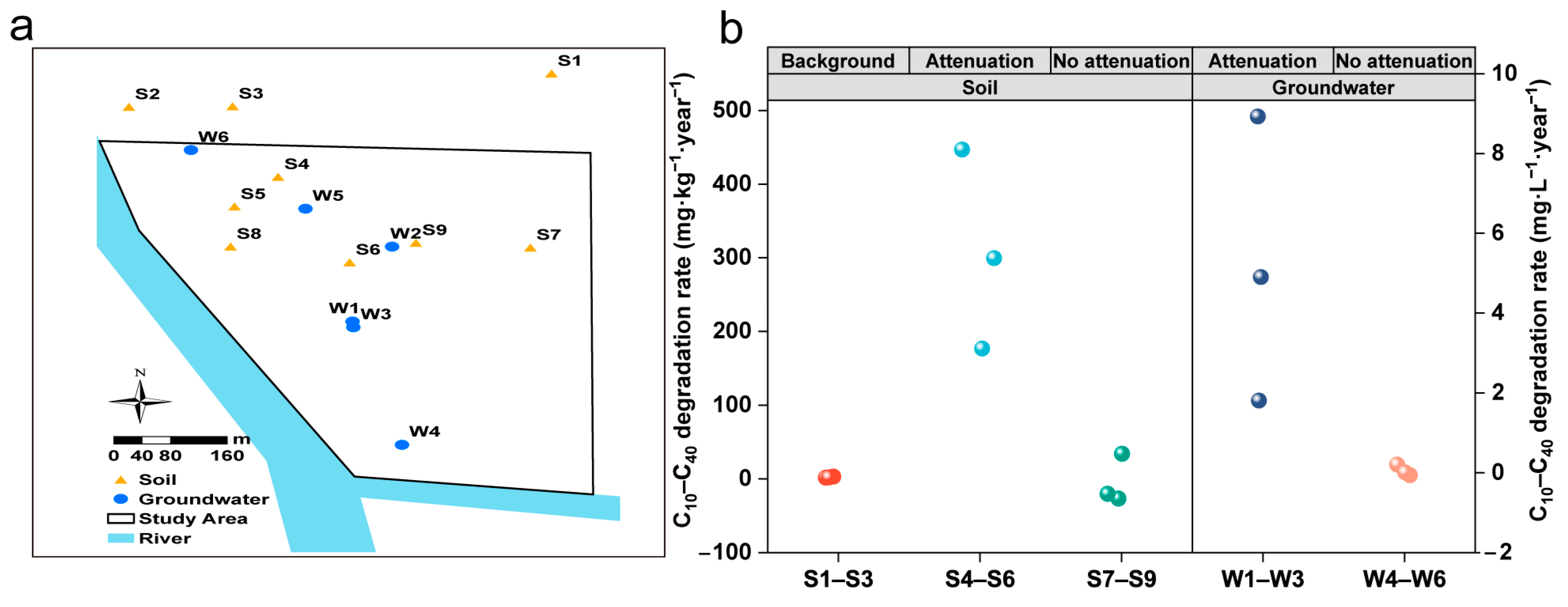
3.1. Spatial Heterogeneity of TPH Attenuation at the Site
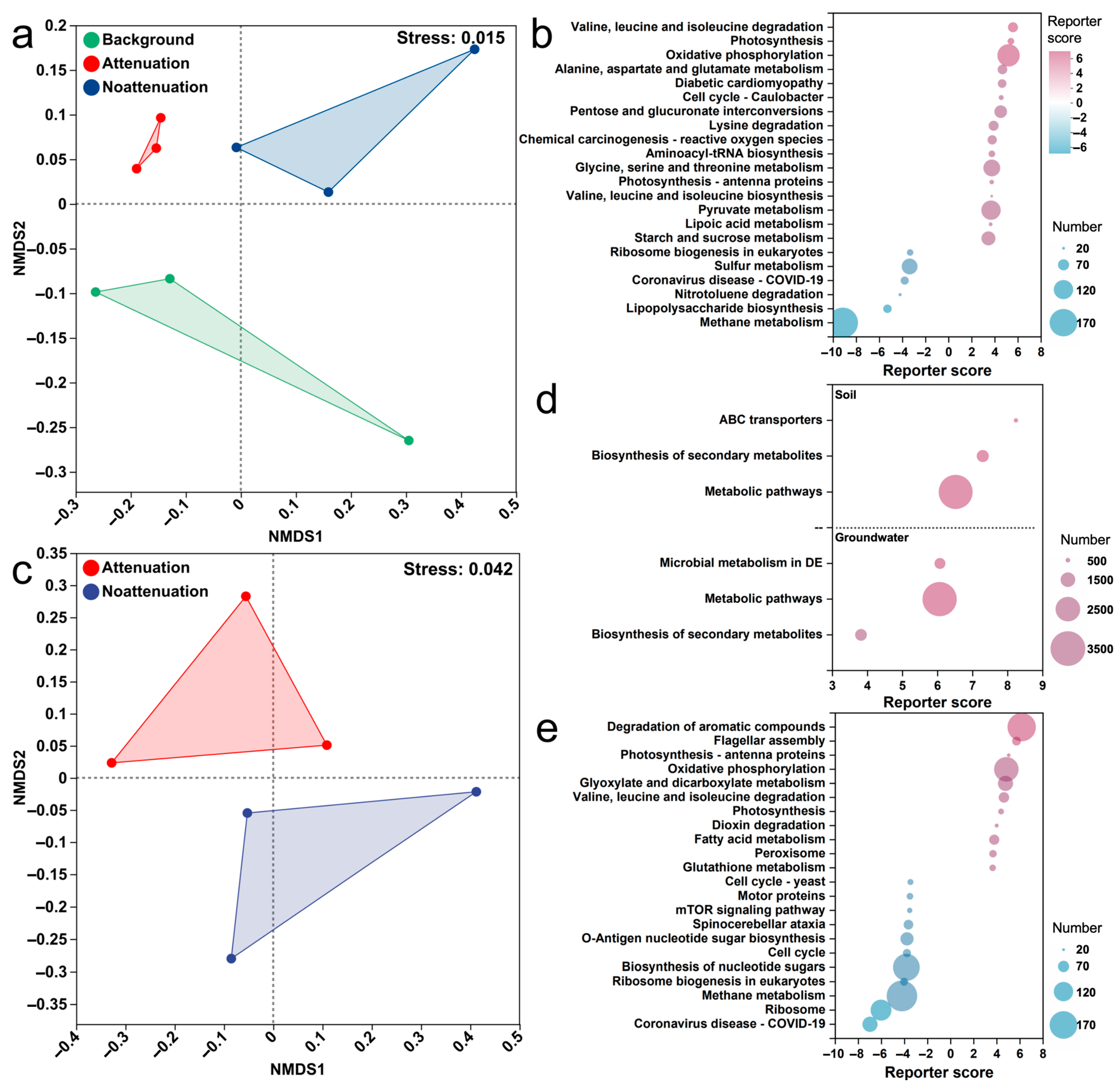
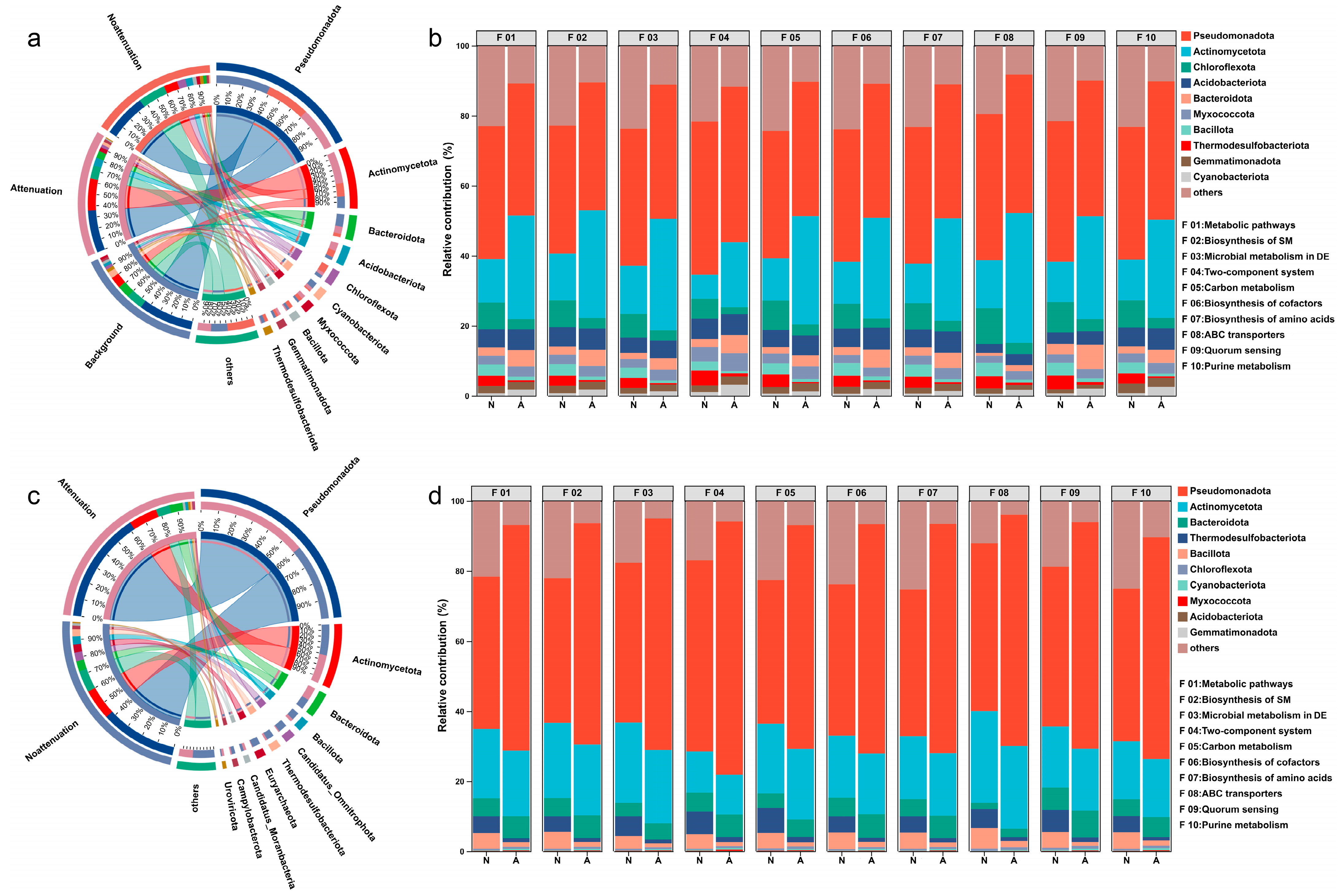
3.2. Microbial Community Diversity of Different Samples
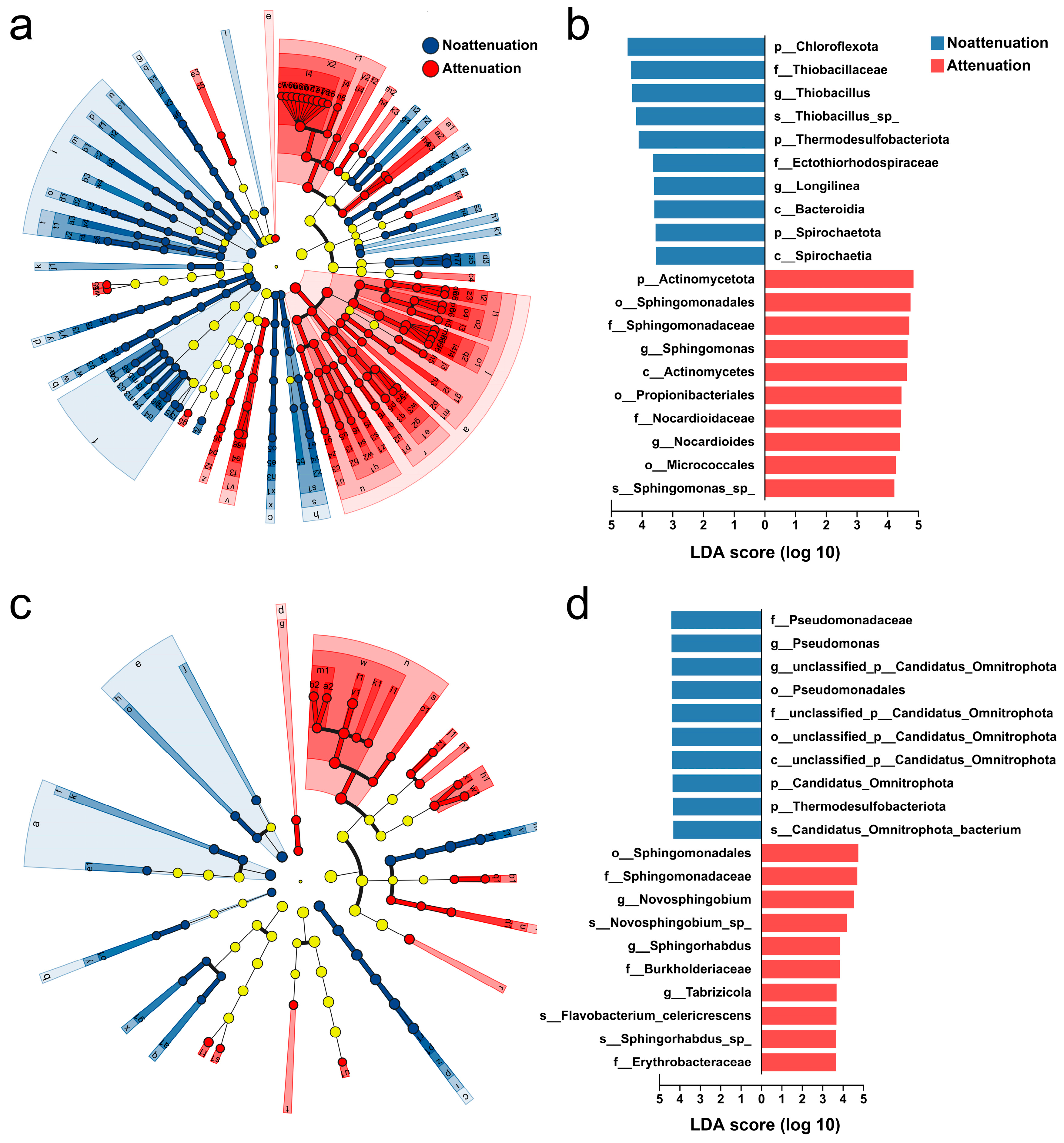
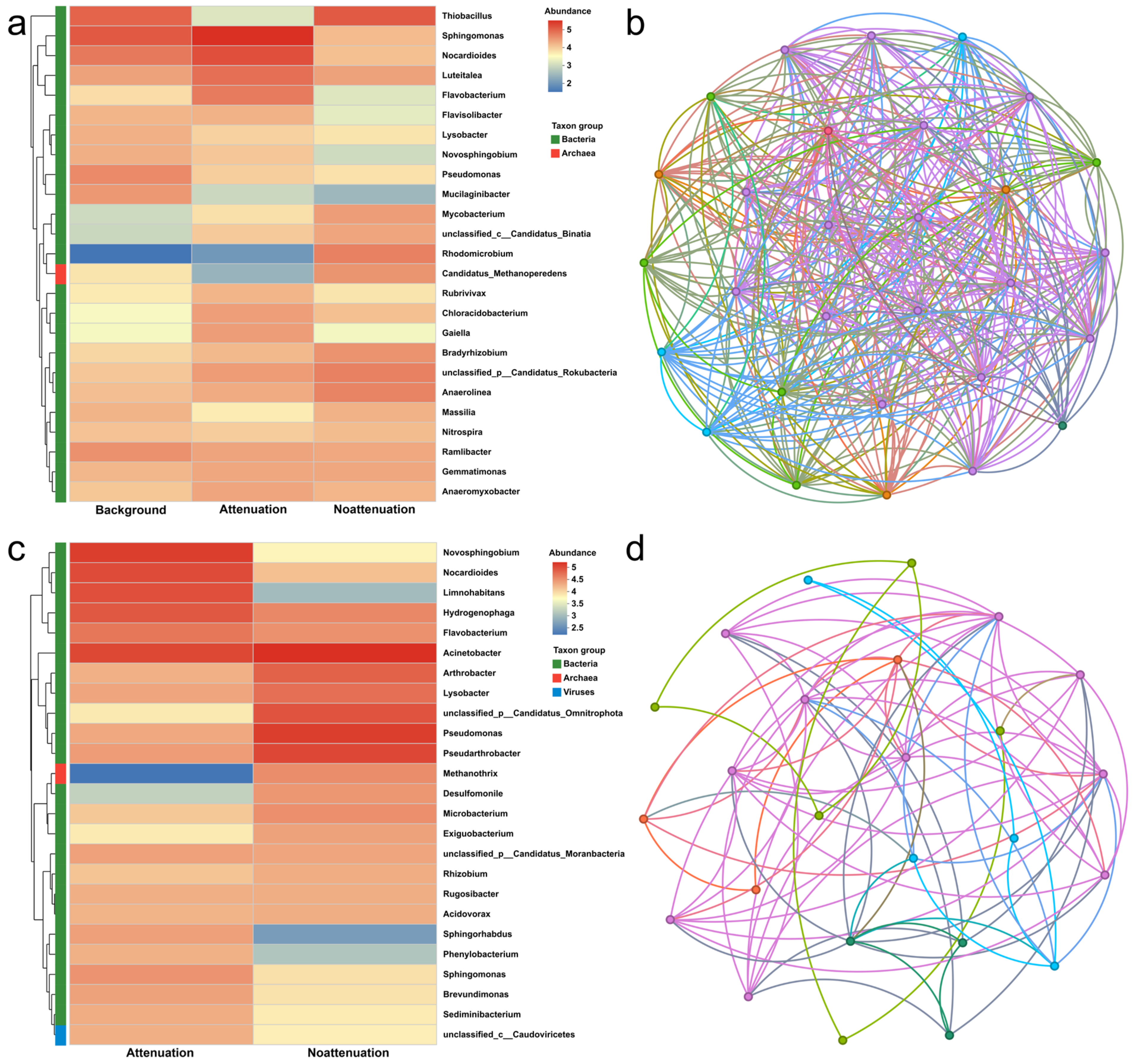
3.3. Biomarkers Associated with TPH Attenuation
3.3.1. Diversification of Dominant Taxa in Attenuation Soil
3.3.2. Dominance of Key Taxa in Attenuation Groundwater
3.4. Microbially Mediated TPH Degradation Mechanism
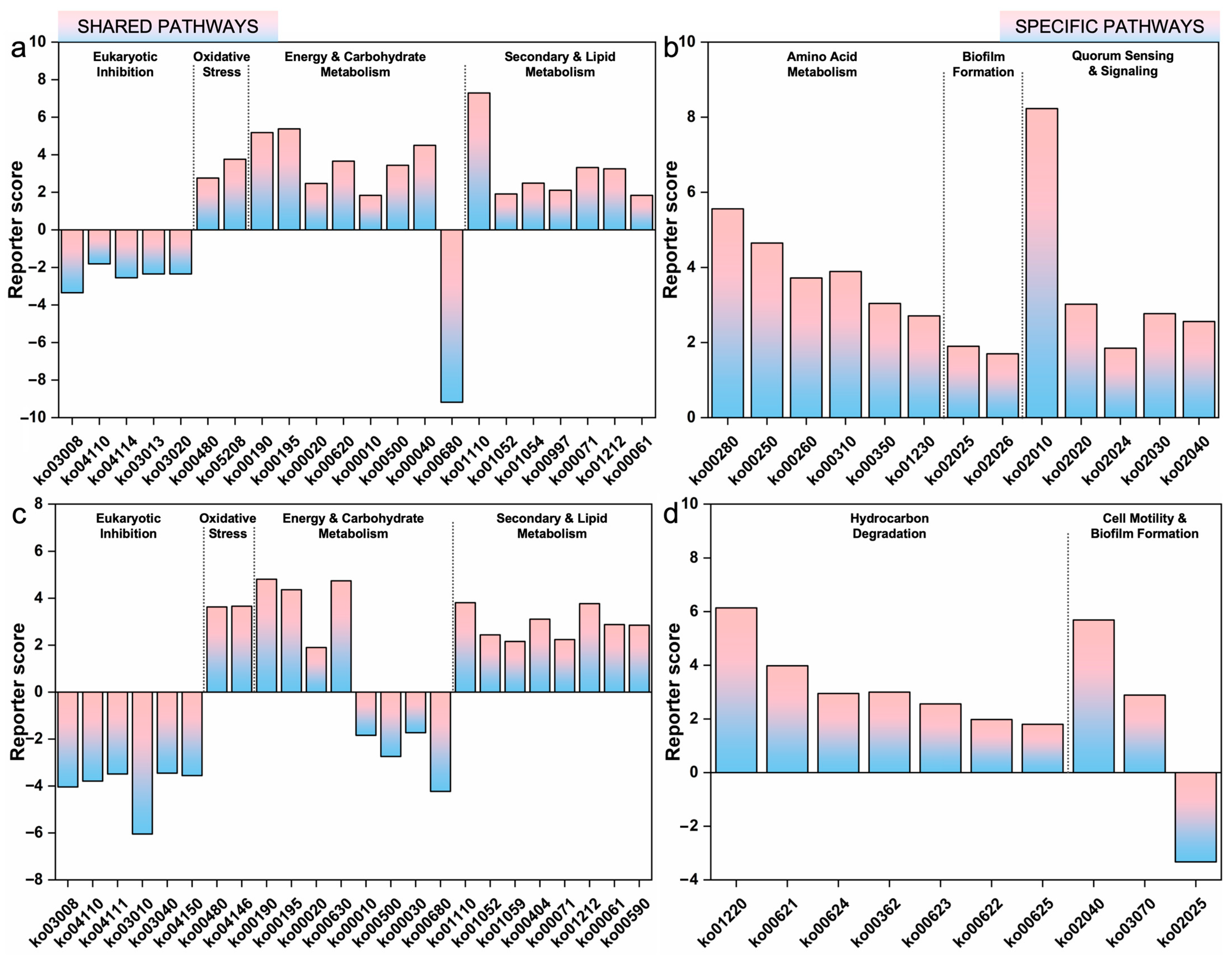
3.4.1. Shared Features of Soil and Groundwater Attenuation Systems
- (i)
- Reduced eukaryotic functions and enhanced oxidative stress response
- (ii)
- Convergence on energy-generating metabolic pathways
- (iii)
- Synergy of secondary metabolites and lipid catabolism
3.4.2. A Sessile and Cooperative Consortium in Soil
3.4.3. A Motile and TPH-Targeting Consortium in Groundwater
4. Conclusions
Environmental Implication
Supplementary Materials
Author Contributions
Funding
Data Availability Statement
Conflicts of Interest
References
- Lu, L.; Huggins, T.; Jin, S.; Zuo, Y.; Ren, Z.J. Microbial metabolism and community structure in response to bioelectrochemically enhanced remediation of petroleum hydrocarbon-contaminated soil. Environ. Sci. Technol. 2014, 48, 4021–4029. [Google Scholar] [CrossRef] [PubMed]
- Sihota, N.J.; Singurindy, O.; Mayer, K.U. CO2-efflux measurements for evaluating source zone natural attenuation rates in a petroleum hydrocarbon contaminated aquifer. Environ. Sci. Technol. 2011, 45, 482–488. [Google Scholar] [CrossRef]
- Kao, C.M.; Wang, C.C. Control of BTEX migration by intrinsic bioremediation at a gasoline spill site. Water Res. 2000, 34, 3413–3423. [Google Scholar] [CrossRef]
- Lee, J.Y.; Lee, K.K. Viability of natural attenuation in a petroleum-contaminated shallow sandy aquifer. Environ. Pollut. 2003, 126, 201–212. [Google Scholar] [CrossRef]
- Kao, C.M.; Huang, W.Y.; Chang, L.J.; Chen, T.Y.; Chien, H.Y.; Hou, F. Application of monitored natural attenuation to remediate a petroleum-hydrocarbon spill site. Water Sci. Technol. 2006, 53, 321–328. [Google Scholar] [CrossRef]
- Kao, C.M.; Chien, H.Y.; Surampalli, R.Y.; Chien, C.C.; Chen, C.Y. Assessing of natural attenuation and intrinsic bioremediation rates at a petroleum-hydrocarbon spill site: Laboratory and field studies. J. Environ. Eng. 2010, 136, 54–67. [Google Scholar] [CrossRef]
- Chiu, H.Y.; Hong, A.; Lin, S.L.; Surampalli, R.Y.; Kao, C.M. Application of natural attenuation for the control of petroleum hydrocarbon plume: Mechanisms and effectiveness evaluation. J. Hydrol. 2013, 505, 126–137. [Google Scholar] [CrossRef]
- Zhang, X.D.; Luo, M.Y.; Deng, S.P.; Long, T.; Sun, L.W.; Yu, R. Field study of microbial community structure and dechlorination activity in a multi-solvents co-contaminated site undergoing natural attenuation. J. Hazard. Mater. 2022, 423, 127010. [Google Scholar] [CrossRef]
- Naidu, R.; Nandy, S.; Megharaj, M.; Kumar, R.P.; Chadalavada, S.; Chen, Z.L.; Bowman, M. Monitored natural attenuation of a long-term petroleum hydrocarbon contaminated sites: A case study. Biodegradation 2012, 23, 881–895. [Google Scholar] [CrossRef] [PubMed]
- Lv, H.; Su, X.S.; Wang, Y.; Dai, Z.X.; Liu, M.Y. Effectiveness and mechanism of natural attenuation at a petroleum-hydrocarbon contaminated site. Chemosphere 2018, 206, 293–301. [Google Scholar] [CrossRef]
- Song, Q.W.; Xue, Z.K.; Wu, H.J.; Zhai, Y.; Lu, T.T.; Du, X.Y.; Zheng, J.; Chen, H.K.; Zuo, R. The collaborative monitored natural attenuation (CMNA) of soil and groundwater pollution in large petrochemical enterprises: A case study. Environ. Res. 2023, 216, 114816. [Google Scholar] [CrossRef]
- Xia, Y.B.; Wang, B.; Yang, Y.S.; Du, X.Q.; Yang, M.X. Quantitative assessment of organic mass fluxes and natural attenuation processes in a petroleum-contaminated subsurface environment. Appl. Sci. 2023, 13, 12782. [Google Scholar] [CrossRef]
- Kulkarni, P.R.; Walker, K.L.; Newell, C.J.; Askarani, K.K.; Li, Y.; McHugh, T.E. Natural source zone depletion (NSZD) insights from over 15 years of research and measurements: A multi-site study. Water Res. 2022, 225, 119170. [Google Scholar] [CrossRef] [PubMed]
- Xu, C.Y.; Qaria, M.A.; Xu, Q.; Zhu, D.C. The role of microorganisms in petroleum degradation: Current development and prospects. Sci. Total Environ. 2023, 865, 161112. [Google Scholar] [CrossRef]
- Tuomi, P.M.; Salminen, J.M.; Jørgensen, K.S. The abundance of nahAc genes correlates with the 14C-naphthalene mineralization potential in petroleum hydrocarbon-contaminated oxic soil layers. FEMS Microbiol. Ecol. 2004, 51, 99–107. [Google Scholar] [CrossRef]
- Sakshi; Singh, S.K.; Haritash, A.K. Bacterial degradation of mixed-PAHs and expression of PAH-catabolic genes. World J. Microbiol. Biotechnol. 2022, 39, 47. [Google Scholar] [CrossRef] [PubMed]
- Liu, C.L.; Wang, W.P.; Wu, Y.H.; Zhou, Z.W.; Lai, Q.L.; Shao, Z.Z. Multiple alkane hydroxylase systems in a marine alkane degrader, Alcanivorax dieselolei B-5. Environ. Microbiol. 2011, 13, 1168–1178. [Google Scholar] [CrossRef] [PubMed]
- Nie, Y.; Liang, J.L.; Fang, H.; Tang, Y.Q.; Wu, X.L. Characterization of a CYP153 alkane hydroxylase gene in a Gram-positive Dietzia sp. DQ12-45-1b and its “team role” with alkW1 in alkane degradation. Appl. Microbiol. Biotechnol. 2014, 98, 163–173. [Google Scholar] [CrossRef]
- Li, J.; Luo, C.; Cai, X.; Zhang, D.; Guan, G.; Li, B.; Zhang, G. Microbial consortium assembly and functional analysis via isotope labelling and single-cell manipulation of polycyclic aromatic hydrocarbon degraders. ISME J. 2024, 18, wrae115. [Google Scholar] [CrossRef]
- Yao, S.; Luo, Y.; Zhou, Y.; Wang, Y.; Yang, L.; Kong, Q.; Zhang, H. Microbial functional shifts in a paradigmatic petrochemical brownfield: Mechanisms of adaptation in soil and groundwater. Ecotoxicol. Environ. Saf. 2025, 306, 119380. [Google Scholar] [CrossRef]
- Tian, G.; Zhang, R.; Zhao, M.; Ye, Z.; Dai, T.; Chen, D.; Zeng, Y.; Yang, Y.; Zhou, J.; Zhang, B.; et al. Biogeochemical stratification governs microbial hydrocarbon degradation potential in a petrochemical contaminated site. Environ. Res. 2025, 285, 122286. [Google Scholar] [CrossRef] [PubMed]
- Chen, Y.; Jiang, Y.M.; Huang, H.Y.; Mou, L.C.; Ru, J.L.; Zhao, J.H.; Xiao, S. Long-term and high-concentration heavy-metal contamination strongly influences the microbiome and functional genes in Yellow River sediments. Sci. Total Environ. 2018, 637–638, 1400–1412. [Google Scholar] [CrossRef] [PubMed]
- Zhang, X.P.; Huang, Z.Y.; Zhong, Z.K.; Li, Q.L.; Bian, F.Y.; Yang, C.B. Metagenomic insights into the characteristics of soil microbial communities in the decomposing biomass of Moso bamboo forests under different management practices. Front. Microbiol. 2022, 13, 1051721. [Google Scholar] [CrossRef]
- McHugh, T.E.; Beckley, L.M.; DeVaull, G.E.; Lahvis, M.A. Long-term assessment of petroleum hydrocarbon attenuation at petroleum release sites in California. Groundw. Monit. Remediat. 2022, 42, 75–85. [Google Scholar] [CrossRef]
- Yang, Z.; Shah, K.; Fieldhouse, B.; Mirnaghi, F.; Hollebone, B.P.; Lambert, P.; Goldthorp, M.; Brown, C.E.; Yang, C. Characterization, occurrence and natural attenuation of spilled light synthetic crude oil in a boreal freshwater ecosystem. Fuel 2021, 285, 119276. [Google Scholar] [CrossRef]
- Martirosyan, V.; Stavi, I.; Doniger, T.; Applebaum, I.; Sherman, C.; Levi, M.; Steinberger, Y. Bacterial community dynamics in oil-contaminated soils in the hyper-arid Arava Valley. Agronomy 2025, 15, 1198. [Google Scholar] [CrossRef]
- Ma, Y.; Zhao, H.; Shan, Q.; Xu, Y.; Yu, M.; Cui, J.; Liu, T.; Qiao, L.; He, X. K-strategy species plays a pivotal role in the natural attenuation of petroleum hydrocarbon pollution in aquifers. J. Hazard. Mater. 2021, 420, 126559. [Google Scholar] [CrossRef]
- Safdari, M.-S.; Kariminia, H.-R.; Rahmati, M.; Fazlollahi, F.; Polasko, A.; Mahendra, S.; Wilding, W.V.; Fletcher, T.H. Development of bioreactors for comparative study of natural attenuation, biostimulation, and bioaugmentation of petroleum-hydrocarbon contaminated soil. J. Hazard. Mater. 2018, 342, 270–278. [Google Scholar] [CrossRef]
- Chen, T.; Zhang, Y.F.; Fu, B.; Huang, W.B. An evaluation model for in-situ bioremediation technology of petroleum hydrocarbon contaminated soil. Environ. Pollut. 2024, 344, 123299. [Google Scholar] [CrossRef]
- Czarny, J.; Staninska-Pieta, J.; Piotrowska-Cyplik, A.; Wolko, L.; Staninski, K.; Hornik, B.; Cyplik, P. Assessment of soil potential to natural attenuation and autochthonous bioaugmentation using microarray and functional predictions from metagenome profiling. Ann. Microbiol. 2019, 69, 945–955. [Google Scholar] [CrossRef]
- Yang, L.; Chen, Q.; Wei, J.; Fan, T.; Kong, L.; Long, T.; Zhang, S.; Deng, S. Response of microbial communities in aquifers with multiple organic solvent contamination: Implications for MNA remedy. J. Hazard. Mater. 2024, 474, 134798. [Google Scholar] [CrossRef]
- Bacosa, H.P.; Erdner, D.L.; Rosenheim, B.E.; Shetty, P.; Seitz, K.W.; Baker, B.J.; Liu, Z.F. Hydrocarbon degradation and response of seafloor sediment bacterial community in the northern Gulf of Mexico to light Louisiana sweet crude oil. ISME J. 2018, 12, 2532–2543. [Google Scholar] [CrossRef]
- Auti, A.M.; Narwade, N.P.; Deshpande, N.M.; Dhotre, D.P. Microbiome and imputed metagenome study of crude and refined petroleum-oil-contaminated soils: Potential for hydrocarbon degradation and plant-growth promotion. J. Biosci. 2019, 44, 114. [Google Scholar] [CrossRef] [PubMed]
- Cai, P.P.; Ning, Z.; Zhang, N.N.; Zhang, M.; Guo, C.J.; Niu, M.L.; Shi, J.S. Insights into biodegradation related metabolism in an abnormally low dissolved inorganic carbon (DIC) petroleum-contaminated aquifer by metagenomics analysis. Microorganisms 2019, 7, 412. [Google Scholar] [CrossRef]
- Jiao, S.; Liu, Z.S.; Lin, Y.B.; Yang, J.; Chen, W.M.; Wei, G.H. Bacterial communities in oil contaminated soils: Biogeography and co-occurrence patterns. Soil Biol. Biochem. 2016, 98, 64–73. [Google Scholar] [CrossRef]
- Das, N.; Bhuyan, B.; Pandey, P. Correlation of soil microbiome with crude oil contamination drives detection of hydrocarbon degrading genes which are independent to quantity and type of contaminants. Environ. Res. 2022, 215, 114185. [Google Scholar] [CrossRef] [PubMed]
- Liu, Y.S.; Zhang, J.; Zhang, Z.Z. Isolation and characterization of polycyclic aromatic hydrocarbons-degrading Sphingomonas sp. strain ZL5. Biodegradation 2004, 15, 205–212. [Google Scholar] [CrossRef]
- Zhou, M.; Liu, Z.; Wang, J.; Zhao, Y.; Hu, B. Sphingomonas relies on chemotaxis to degrade polycyclic aromatic hydrocarbons and maintain dominance in coking sites. Microorganisms 2022, 10, 1109. [Google Scholar] [CrossRef] [PubMed]
- Gulati, P.; Ghosh, M. Biofilm forming ability of Sphingomonas paucimobilis isolated from community drinking water systems on plumbing materials used in water distribution. J. Water Health 2017, 15, 942–954. [Google Scholar] [CrossRef]
- Ma, Y.; Wang, J.; Liu, Y.; Wang, X.; Zhang, B.; Zhang, W.; Chen, T.; Liu, G.; Xue, L.; Cui, X. Nocardioides: “Specialists” for hard-to-degrade pollutants in the environment. Molecules 2023, 28, 7433. [Google Scholar] [CrossRef]
- Tiirola Marja, A.; Männistö Minna, K.; Puhakka Jaakko, A.; Kulomaa Markku, S. Isolation and characterization of Novosphingobium sp. strain MT1, a dominant polychlorophenol-degrading strain in a groundwater bioremediation system. Appl. Environ. Microbiol. 2002, 68, 173–180. [Google Scholar] [CrossRef]
- Jeong, H.I.; Jin, H.M.; Jeon, C.O. Complete genome sequence of Sphingorhabdus sp. M41, a versatile hydrocarbon degrader, isolated from crude oil-contaminated costal sediment. J. Biotechnol. 2016, 227, 41–42. [Google Scholar] [CrossRef]
- Ko, D.J.; Kim, J.S.; Park, D.S.; Lee, D.H.; Heo, S.Y.; Seo, J.W.; Kim, C.H.; Oh, B.R. Tabrizicola fusiformis sp nov., isolated from an industrial wastewater treatment plant. Int. J. Syst. Evol. Microbiol. 2018, 68, 1800–1805. [Google Scholar] [CrossRef]
- Liu, Z.P.; Wang, B.J.; Liu, Y.H.; Liu, S.J. Novosphingobium taihuense sp nov., a novel aromatic-compound-degrading bacterium isolated from Taihu Lake, China. Int. J. Syst. Evol. Microbiol. 2005, 55, 1229–1232. [Google Scholar] [CrossRef]
- Rohde, J.; Heitman, J.; Cardenas, M.E. The TOR kinases link nutrient sensing to cell growth. J. Biol. Chem. 2001, 276, 9583–9586. [Google Scholar] [CrossRef] [PubMed]
- Das, N.; Chandran, P. Microbial degradation of petroleum hydrocarbon contaminants: An overview. Biotechnol. Res. Int. 2011, 2011, 941810. [Google Scholar] [CrossRef]
- Pandey, P.; Pathak, H.; Dave, S. Microbial ecology of hydrocarbon degradation in the soil: A review. Res. J. Environ. Toxicol. 2016, 10, 1. [Google Scholar] [CrossRef]
- Liu, P.W.G.; Chang, T.C.; Whang, L.M.; Kao, C.H.; Pan, P.T.; Cheng, S.S. Bioremediation of petroleum hydrocarbon contaminated soil: Effects of strategies and microbial community shift. Int. Biodeterior. Biodegrad. 2011, 65, 1119–1127. [Google Scholar] [CrossRef]
- Pandolfo, E.; Barra Caracciolo, A.; Rolando, L. Recent advances in bacterial degradation of hydrocarbons. Water 2023, 15, 375. [Google Scholar] [CrossRef]
- Ou, Y.; Wu, M.; Yu, Y.; Liu, Z.; Kang, H.; Hu, M.; Zhang, C.; Chen, X. Influence mechanisms underlying the degradation of petroleum hydrocarbons in response to various nitrogen dosages supplementation through metatranscriptomics analysis. J. Hazard. Mater. 2025, 487, 137074. [Google Scholar] [CrossRef] [PubMed]
- Stapleton, R.D.; Sayler, G.S.; Boggs, J.M.; Libelo, E.L.; Stauffer, T.; MacIntyre, W.G. Changes in subsurface catabolic gene frequencies during natural attenuation of petroleum hydrocarbons. Environ. Sci. Technol. 2000, 34, 1991–1999. [Google Scholar] [CrossRef]
- Fuchs, G.; Boll, M.; Heider, J. Microbial degradation of aromatic compounds—From one strategy to four. Nat. Rev. Microbiol. 2011, 9, 803–816. [Google Scholar] [CrossRef] [PubMed]
- Liu, N.; Wang, L.P.; Cao, D.F.; Li, D.; Zhu, Y.F.; Huang, S.M.; Shi, J.J. Remediation of petroleum contaminated soil by persulfate oxidation coupled with microbial degradation. J. Environ. Chem. Eng. 2023, 11, 109910. [Google Scholar] [CrossRef]
- Singha, L.P.; Kumari, R.; Singha, K.M.; Pandey, P.; Shukla, P. Synergistic co-metabolism enhancing the crude oil degradation by Acinetobacter oleivorans DR1 and its metabolic potential. Microbiol. Spectr. 2025, 13, e03023–03024. [Google Scholar] [CrossRef]
- Zhao, X.; Cheng, X.; Cai, X.; Wang, S.; Li, J.; Dai, Y.; Jiang, L.; Luo, C.; Zhang, G. SIP-metagenomics reveals key drivers of rhizospheric Benzo[a]pyrene bioremediation via bioaugmentation with indigenous soil microbes. Environ. Pollut. 2024, 360, 124620. [Google Scholar] [CrossRef]
- Du, Y.; Han, W.; Hao, P.Y.; Hu, Y.Q.; Hu, T.; Zeng, Y.X. A genomics-based discovery of secondary metabolite biosynthetic gene clusters in the potential novel strain Streptomyces sp. 21So2-11 isolated from Antarctic soil. Microorganisms 2024, 12, 1228. [Google Scholar] [CrossRef]
- Mullis, M.M.; Rambo, I.M.; Baker, B.J.; Reese, B.K. Diversity, ecology, and prevalence of antimicrobials in nature. Front. Microbiol. 2019, 10, 2518. [Google Scholar] [CrossRef] [PubMed]
- Garrido-Sanz, D.; Redondo-Nieto, M.; Guirado, M.; Pindado Jiménez, O.; Millán, R.; Martin, M.; Rivilla, R. Metagenomic insights into the bacterial functions of a diesel-degrading consortium for the rhizoremediation of diesel-polluted soil. Genes 2019, 10, 456. [Google Scholar] [CrossRef] [PubMed]
- Li, X.N.; Song, Y.; Bian, Y.R.; Gu, C.G.; Yang, X.L.; Wang, F.; Jiang, X. Insights into the mechanisms underlying efficient Rhizodegradation of PAHs in biochar-amended soil: From microbial communities to soil metabolomics. Environ. Int. 2020, 144, 105995. [Google Scholar] [CrossRef]
- Xu, J.; Wang, L.; Lv, W.; Song, X.; Nie, Y.; Wu, X.L. Metabolic profiling of petroleum-degrading microbial communities incubated under high-pressure conditions. Front. Microbiol. 2023, 14, 1305731. [Google Scholar] [CrossRef]
- Phulpoto, I.A.; Qi, Z.; Qazi, M.A.; Yu, Z. Biosurfactants-based mixed polycyclic aromatic hydrocarbon degradation: From microbial community structure toward non-targeted metabolomic profile determination. Environ. Int. 2024, 184, 108448. [Google Scholar] [CrossRef] [PubMed]
- Öztürk, F.Y.; Darcan, C.; Kariptaş, E. The determination, monitoring, molecular mechanisms and formation of biofilm in E. coli. Braz. J. Microbiol. 2023, 54, 259–277. [Google Scholar] [CrossRef]
- Kuchma, S.L.; Geiger, C.J.; Webster, S.S.; Fu, Y.; Montoya, R.; O’Toole, G.A. Genetic analysis of flagellar-mediated surface sensing by Pseudomonas aeruginosa PA14. J. Bacteriol. 2025, 207, e00520-24. [Google Scholar] [CrossRef]
- Mangwani, N.; Kumari, S.; Das, S. Bacterial biofilms and quorum sensing: Fidelity in bioremediation technology. Biotechnol. Genet. Eng. Rev. 2016, 32, 43–73. [Google Scholar] [CrossRef]
- Xie, Y.; Li, J.; Ding, Y.; Shao, X.; Sun, Y.; Xie, F.; Liu, S.; Tang, S.; Deng, X. An atlas of bacterial two-component systems reveals function and plasticity in signal transduction. Cell Rep. 2022, 41, 111502. [Google Scholar] [CrossRef]
- Yu, J.; Ge, J.; Heuveling, J.; Schneider, E.; Yang, M. Structural basis for substrate specificity of an amino acid ABC transporter. Proc. Natl. Acad. Sci. USA 2015, 112, 5243–5248. [Google Scholar] [CrossRef]
- Zeng, Y.; Charkowski, A.O. The role of ATP-binding cassette transporters in bacterial phytopathogenesis. Phytopathology 2021, 111, 600–610. [Google Scholar] [CrossRef] [PubMed]
- Hidalgo, K.J.; Sierra-Garcia, I.N.; Dellagnezze, B.M.; de Oliveira, V.M. Metagenomic insights into the mechanisms for biodegradation of polycyclic aromatic hydrocarbons in the oil supply chain. Front. Microbiol. 2020, 11, 561506. [Google Scholar] [CrossRef]
- Zhou, Y.; Wang, Y.; Yao, S.; Zhao, X.; Kong, Q.; Cui, L.; Zhang, H. Driving mechanisms for the adaptation and degradation of petroleum hydrocarbons by native microbiota from seas prone to oil spills. J. Hazard. Mater. 2024, 476, 135060. [Google Scholar] [CrossRef] [PubMed]
- Ou, Y.; Wu, M.; Zhang, X.; Liu, Z.; Hu, M.; Huang, X.; Gao, H.; Wu, X. Differential microbial mechanisms of TPH degradation and detoxification during stepwise bioremediation of petroleum-contaminated soil. J. Environ. Chem. Eng. 2025, 13, 119642. [Google Scholar] [CrossRef]
- Colin, R.; Ni, B.; Laganenka, L.; Sourjik, V. Multiple functions of flagellar motility and chemotaxis in bacterial physiology. FEMS Microbiol. Rev. 2021, 45, fuab038. [Google Scholar] [CrossRef] [PubMed]
- Green, E.R.; Mecsas, J. Bacterial secretion systems: An overview. Microbiol. Spectr. 2016, 4, 1. [Google Scholar] [CrossRef] [PubMed]
- Maphosa, S.; Moleleki, L.N.; Motaung, T.E. Bacterial secretion system functions: Evidence of interactions and downstream implications. Microbiology 2023, 169, 001326. [Google Scholar] [CrossRef]




Disclaimer/Publisher’s Note: The statements, opinions and data contained in all publications are solely those of the individual author(s) and contributor(s) and not of MDPI and/or the editor(s). MDPI and/or the editor(s) disclaim responsibility for any injury to people or property resulting from any ideas, methods, instructions or products referred to in the content. |
© 2026 by the authors. Licensee MDPI, Basel, Switzerland. This article is an open access article distributed under the terms and conditions of the Creative Commons Attribution (CC BY) license.
Share and Cite
Pang, J.; Feng, Y.; Ma, X.; Yu, Y.; Wang, M.; Zhang, C. Natural Attenuation of Petroleum Hydrocarbons: Distinct Microbial Mechanisms in Soil Versus Groundwater. Water 2026, 18, 1245. https://doi.org/10.3390/w18101245
Pang J, Feng Y, Ma X, Yu Y, Wang M, Zhang C. Natural Attenuation of Petroleum Hydrocarbons: Distinct Microbial Mechanisms in Soil Versus Groundwater. Water. 2026; 18(10):1245. https://doi.org/10.3390/w18101245
Chicago/Turabian StylePang, Jingli, Yijian Feng, Xia Ma, Yiqin Yu, Maoyue Wang, and Chi Zhang. 2026. "Natural Attenuation of Petroleum Hydrocarbons: Distinct Microbial Mechanisms in Soil Versus Groundwater" Water 18, no. 10: 1245. https://doi.org/10.3390/w18101245
APA StylePang, J., Feng, Y., Ma, X., Yu, Y., Wang, M., & Zhang, C. (2026). Natural Attenuation of Petroleum Hydrocarbons: Distinct Microbial Mechanisms in Soil Versus Groundwater. Water, 18(10), 1245. https://doi.org/10.3390/w18101245