Research on the Evaluation Method of Urban Water Resources Resilience Based on the DPSIR Model: A Case Study of Dalian City


Abstract
1. Introduction
2. Materials and Methods
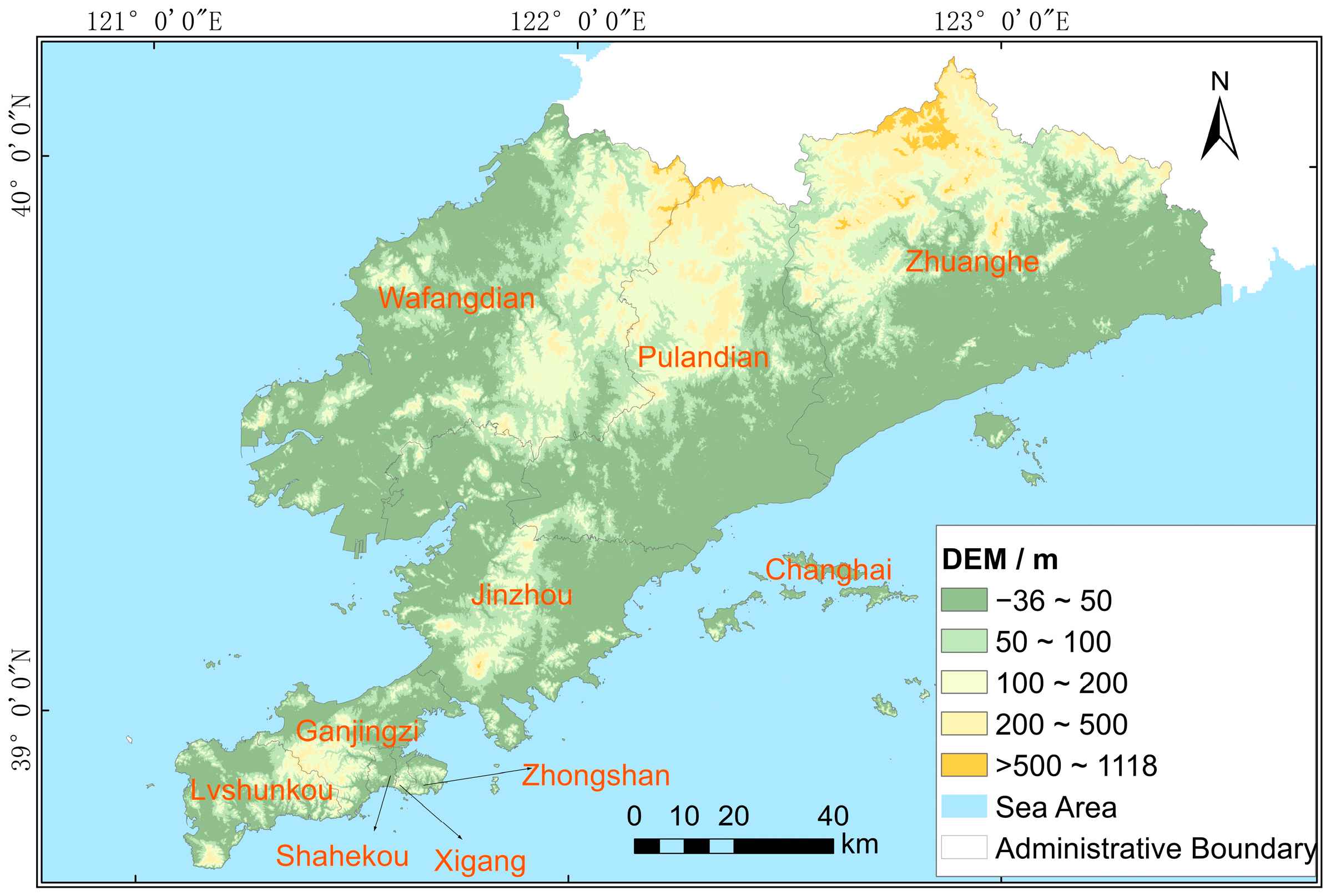
2.1. Study Area
2.2. Data Sources
2.3. Methods
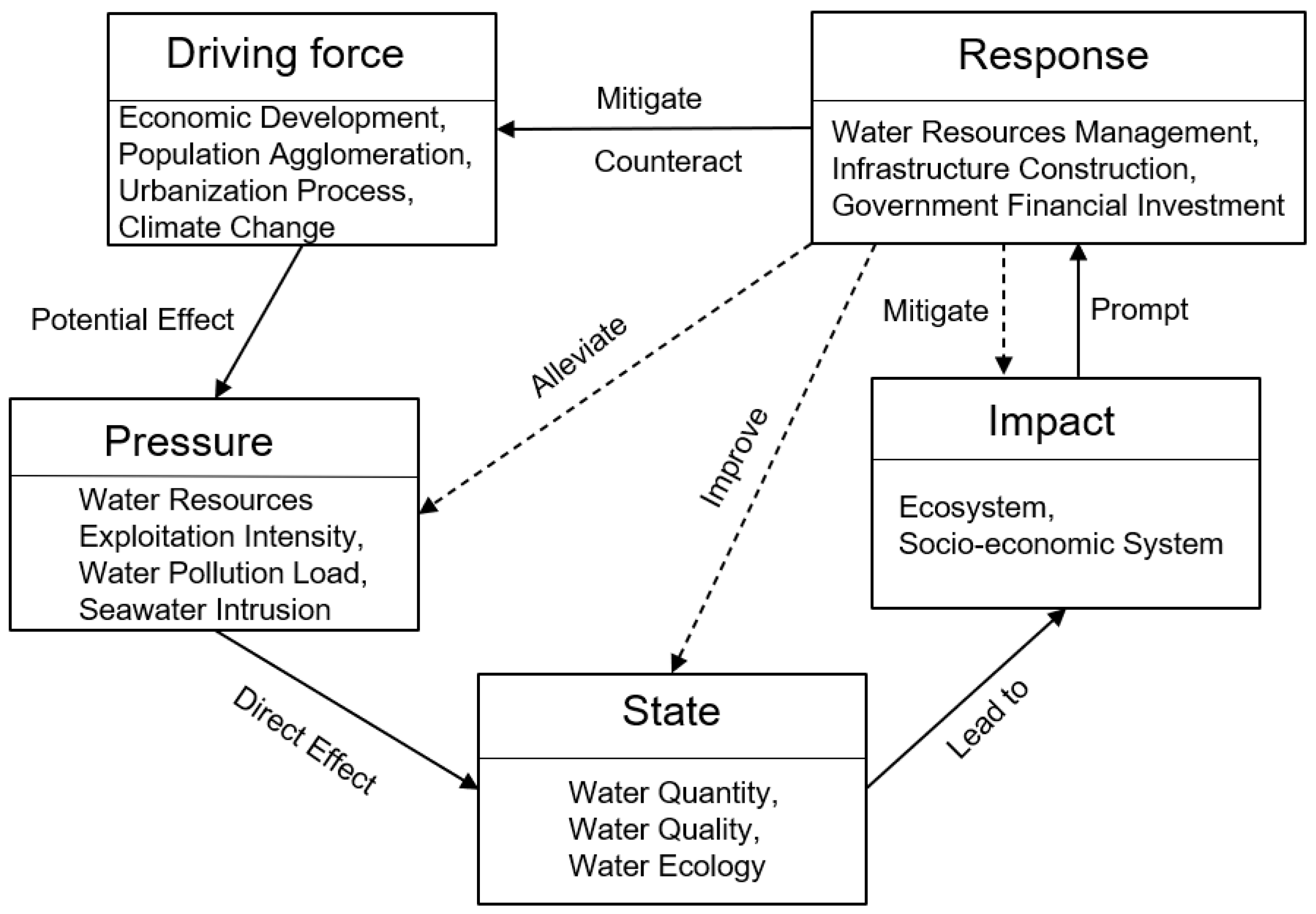
2.3.1. DPSIR Model
2.3.2. Indicator System
2.3.3. Entropy Weight Method
- (1)
- The range method was applied to standardize the indicator data. The processed data are all dimensionless values, which mitigates computational difficulties arising from differences in data magnitude and units.
- (2)
- Calculate the entropy value for the j-th indicator.
- (3)
- Calculate the weight wj for each indicator:
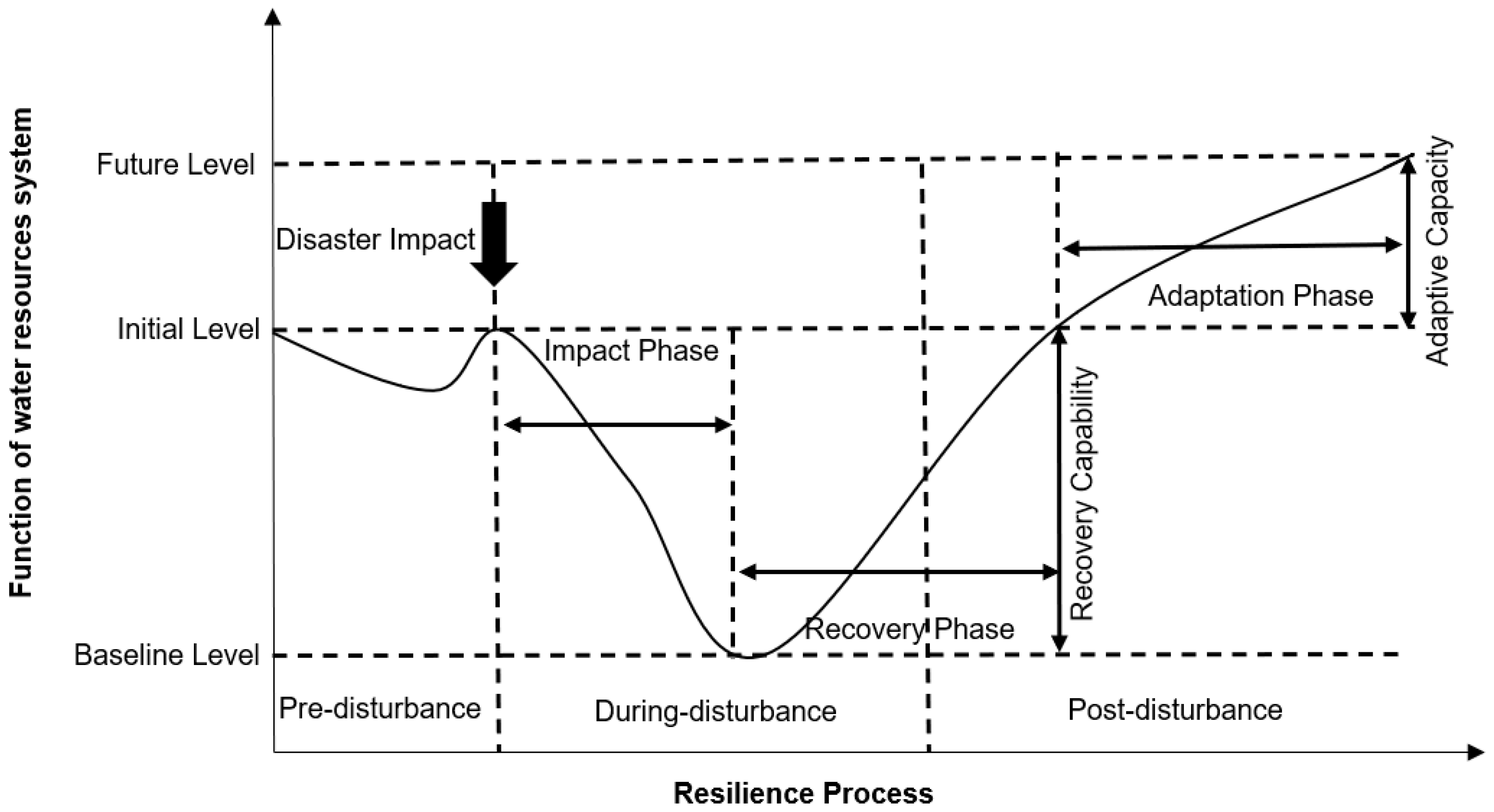
2.3.4. Calculation of the Water Resources Resilience Index (WRRI) and Classification Criteria
2.3.5. Geodetector Method
- (1)
- Factor Detector
- (2)
- Interaction Detector
2.3.6. Obstacle Degree Model
3. Results
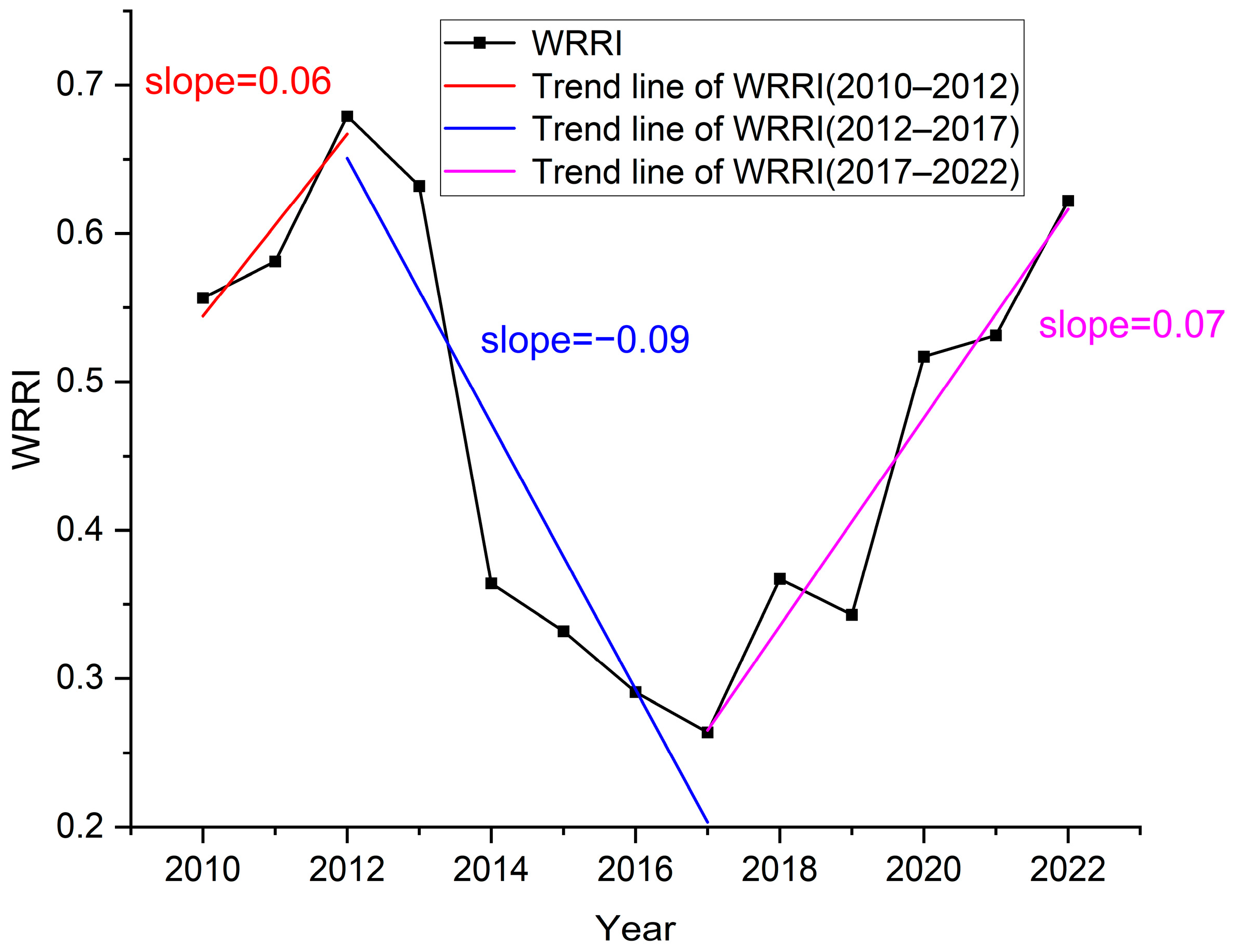
3.1. Temporal Dynamics of WRR
3.2. Spatial Distribution Characteristics of WRR in 2020
3.3. Driving Factors Analysis of Spatial Heterogeneity in WRR
3.4. Obstacle Degree Analysis
3.4.1. Analysis of Obstacle Degrees to WRR from 2010 to 2022
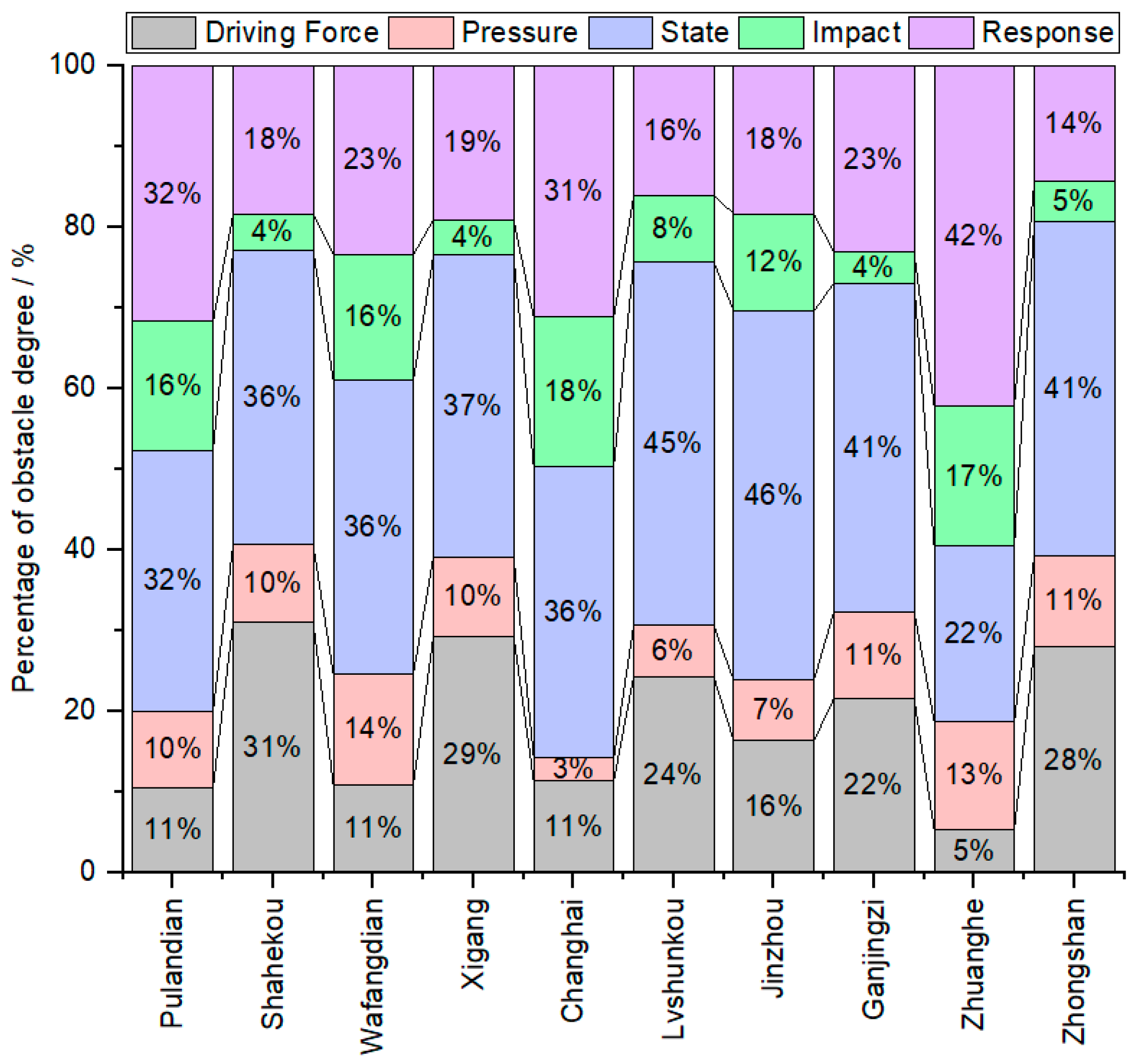
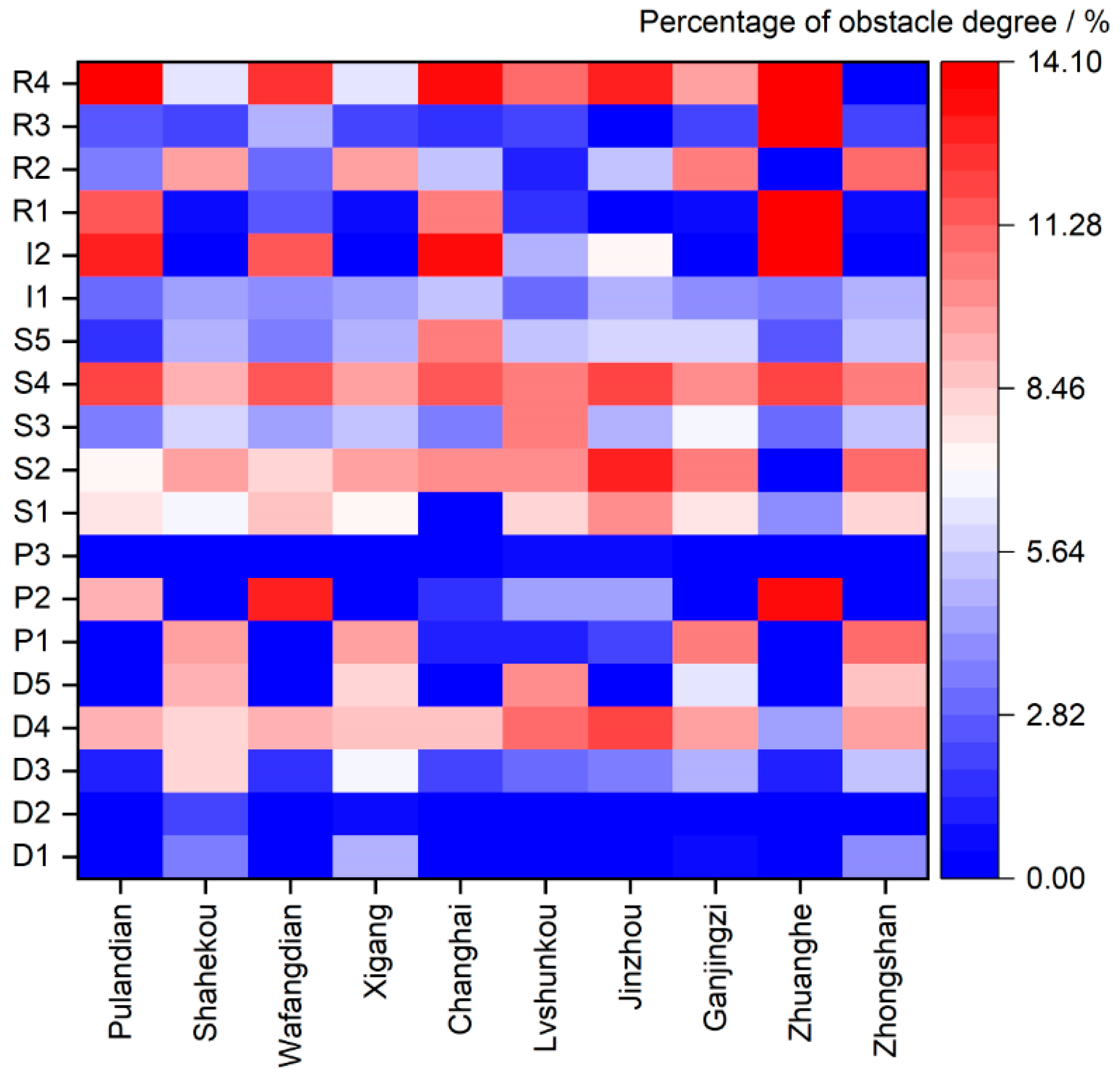
3.4.2. Analysis of Obstacle Degrees to WRR at the Country Level
4. Discussion
4.1. Discussion on the Trend and Spatial Distribution of WRR Changes
4.2. Discussion on the Driving Factors of WRR
4.3. Discussion on Enhancing WRR Strategies
4.4. Limitations and Uncertainties
4.4.1. Data Availability and Indicator Representation
4.4.2. Methodological Constraints of Indicator Standardization and Weighting
4.4.3. Static Nature of the Assessment Framework
5. Conclusions
- (1)
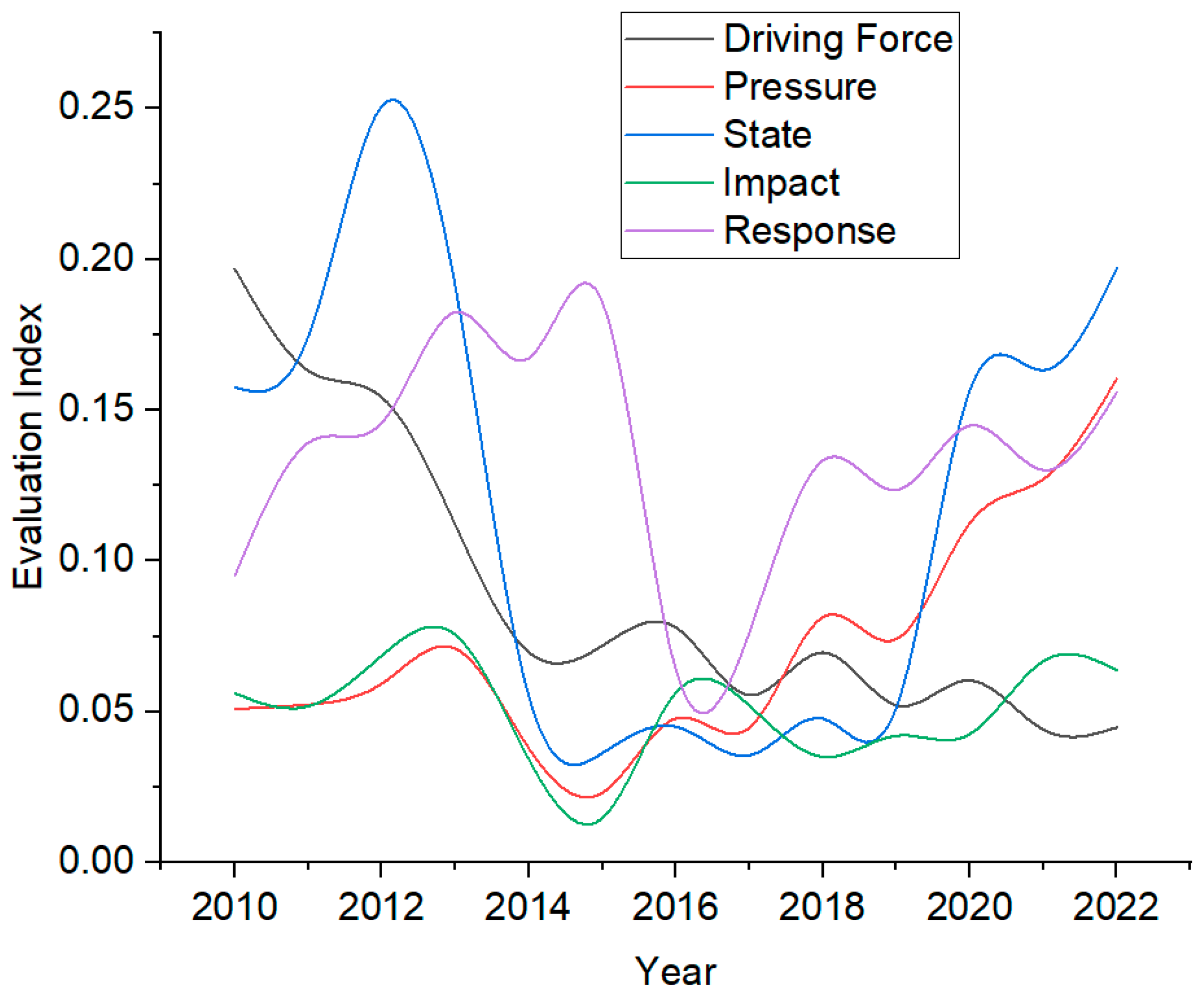
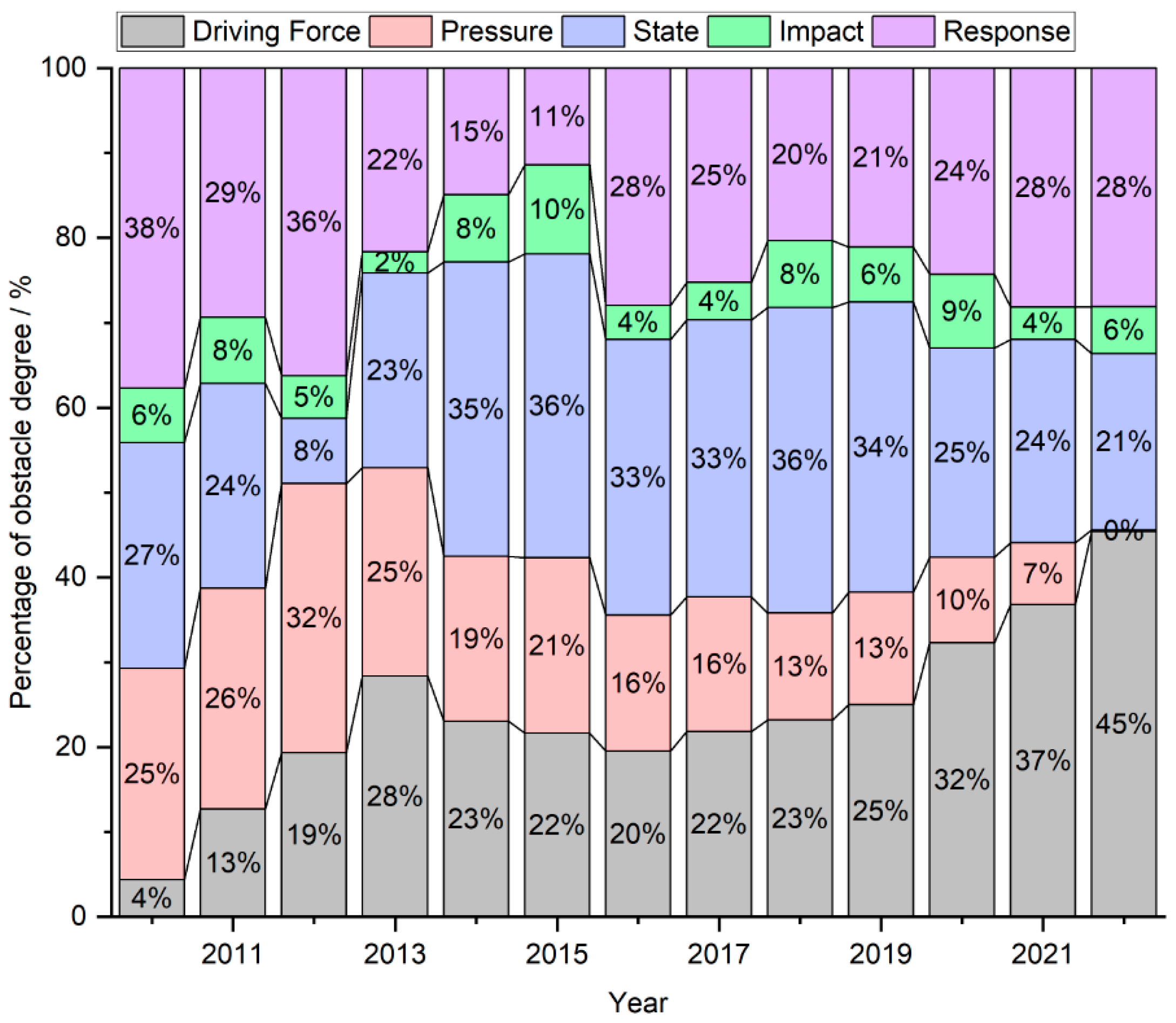
- The WRR of Dalian exhibited significant fluctuations over the study period, with a multi-year average indicating a generally low resilience level. The sharp decline observed between 2012 and 2017, followed by a rapid recovery, underscores the high sensitivity of the city’s water system to climatic variability and the critical impact of human management interventions. The divergent trends among the DPSIR criteria layers—notably the increasing pressure from socio-economic drivers and the crucial counterbalancing role of policy responses—reveal the complex interplay of forces shaping the system’s trajectory.
- (2)
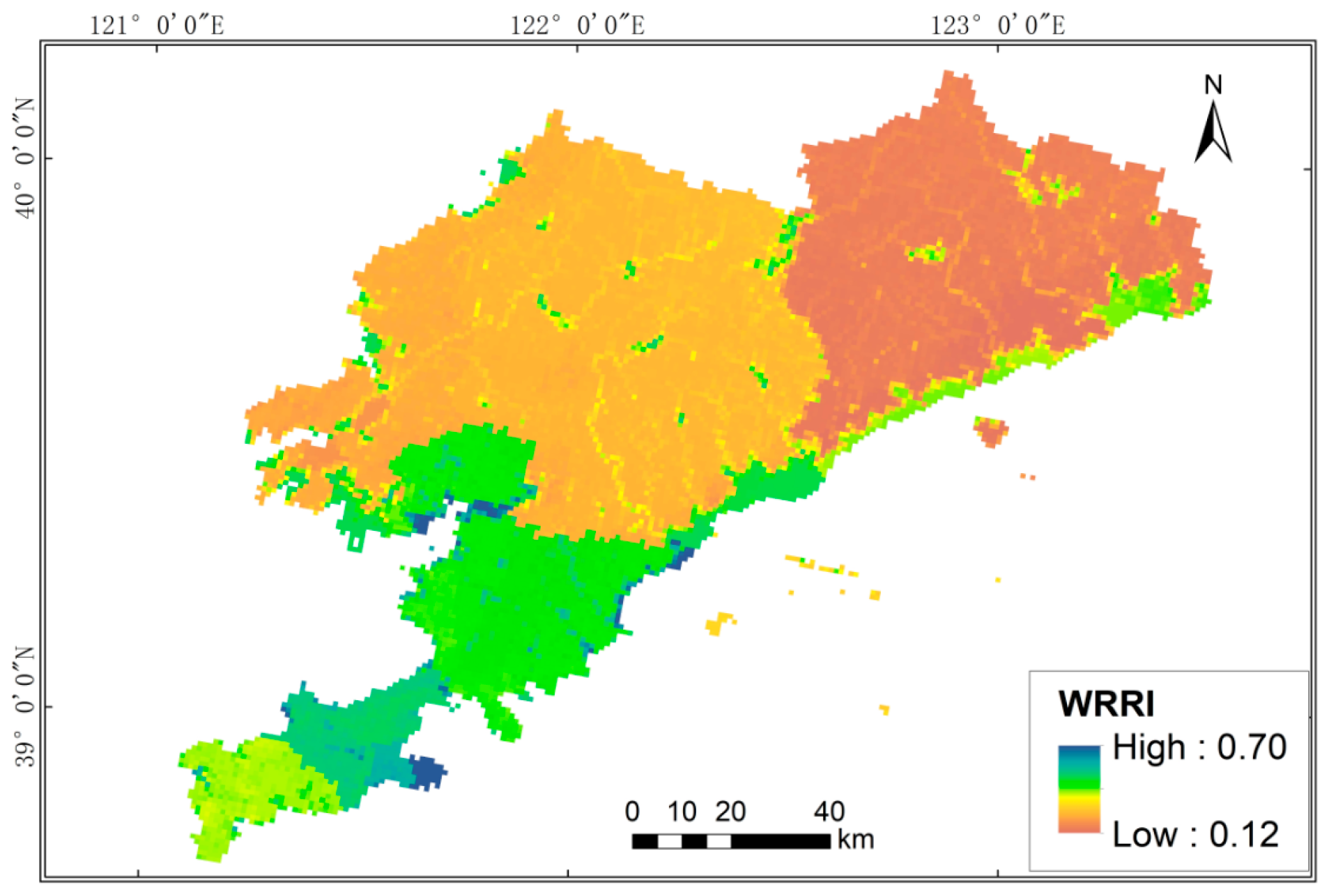
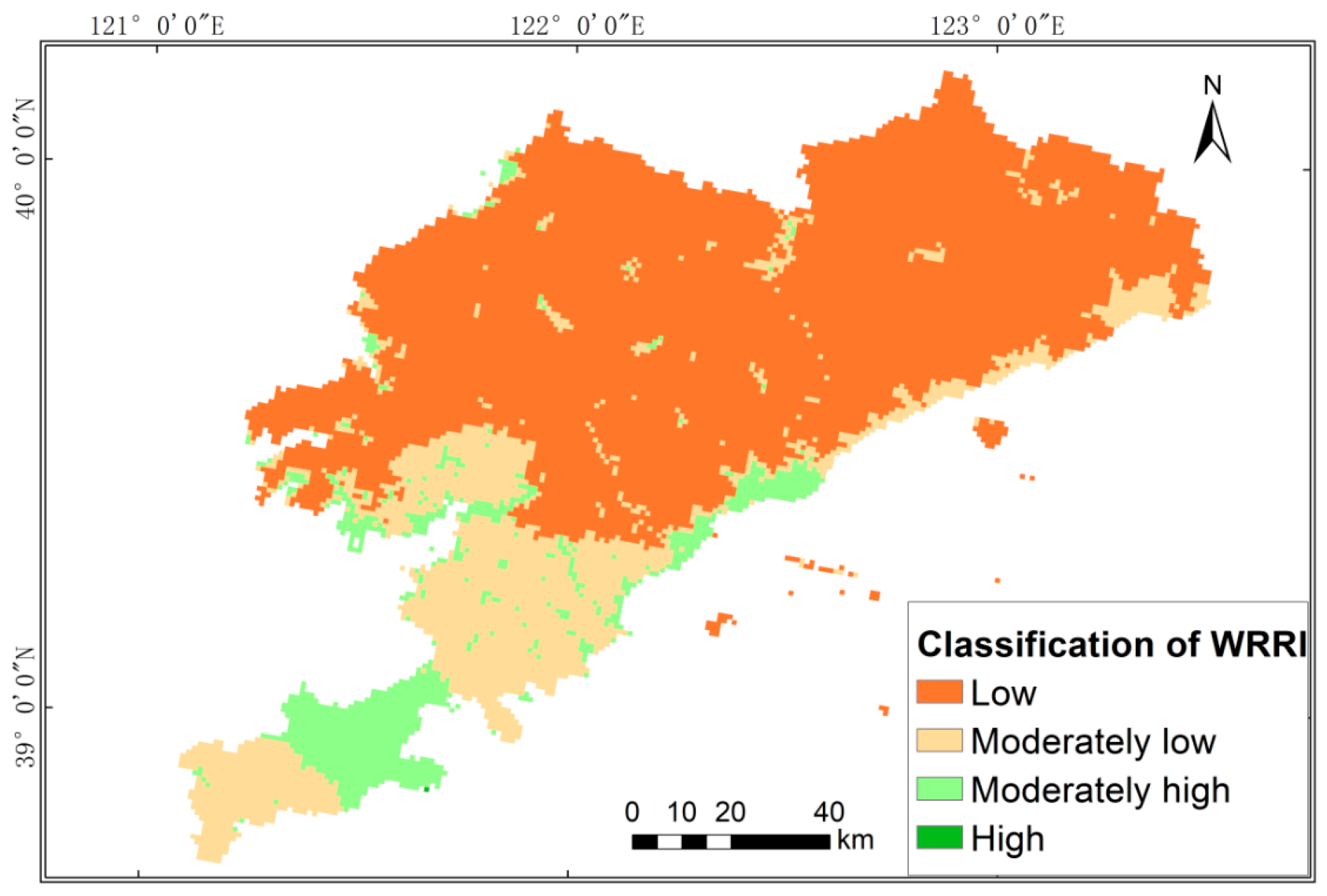
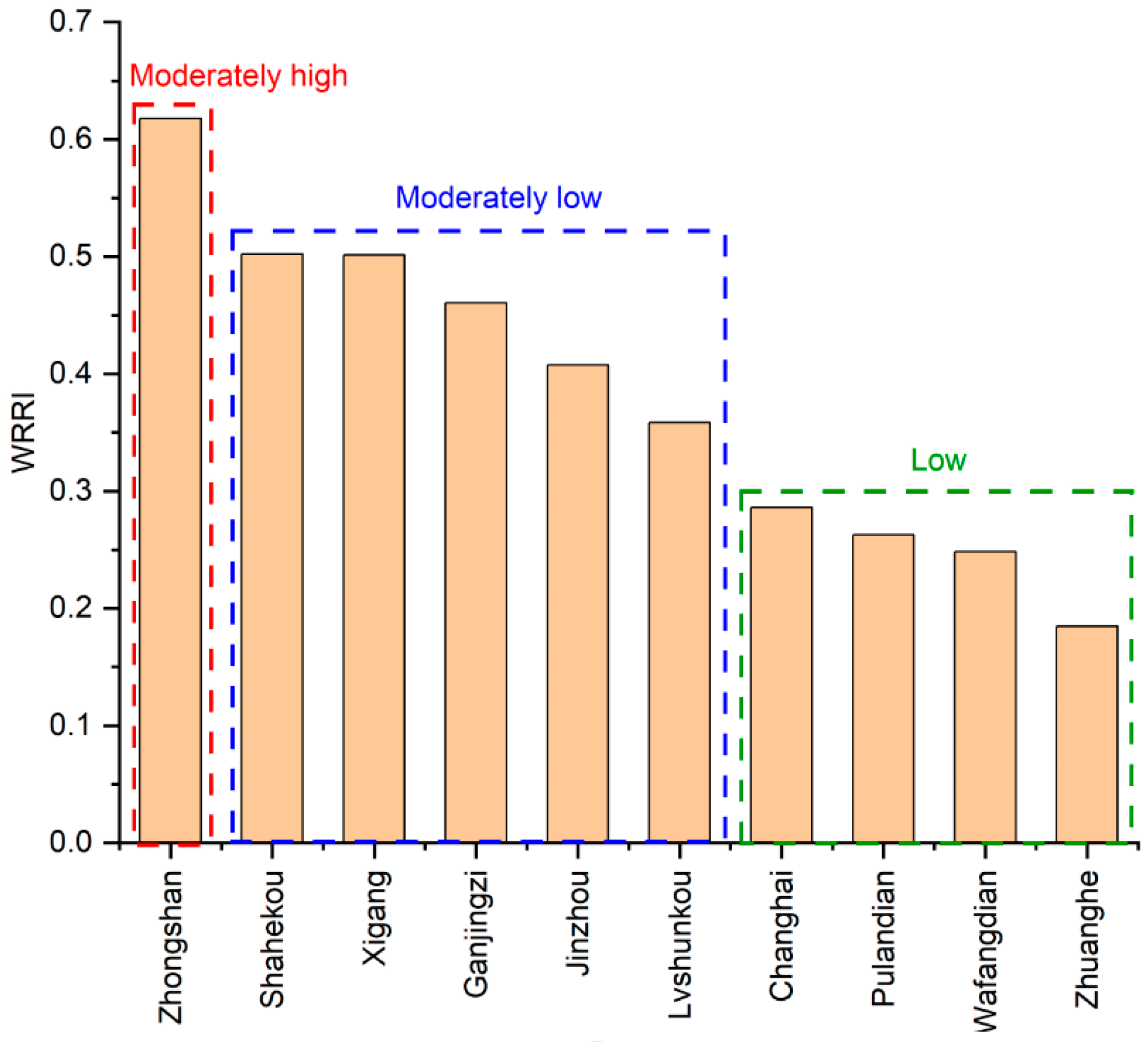
- Spatially, WRR demonstrated a pronounced “high in the south, low in the north” pattern. The overwhelming predominance of areas with low and moderately low resilience highlights the pervasiveness of water security challenges across most of Dalian. The spatial heterogeneity, driven by a combination of natural endowment and socio-economic factors, necessitates a departure from one-size-fits-all water governance policies.
- (3)
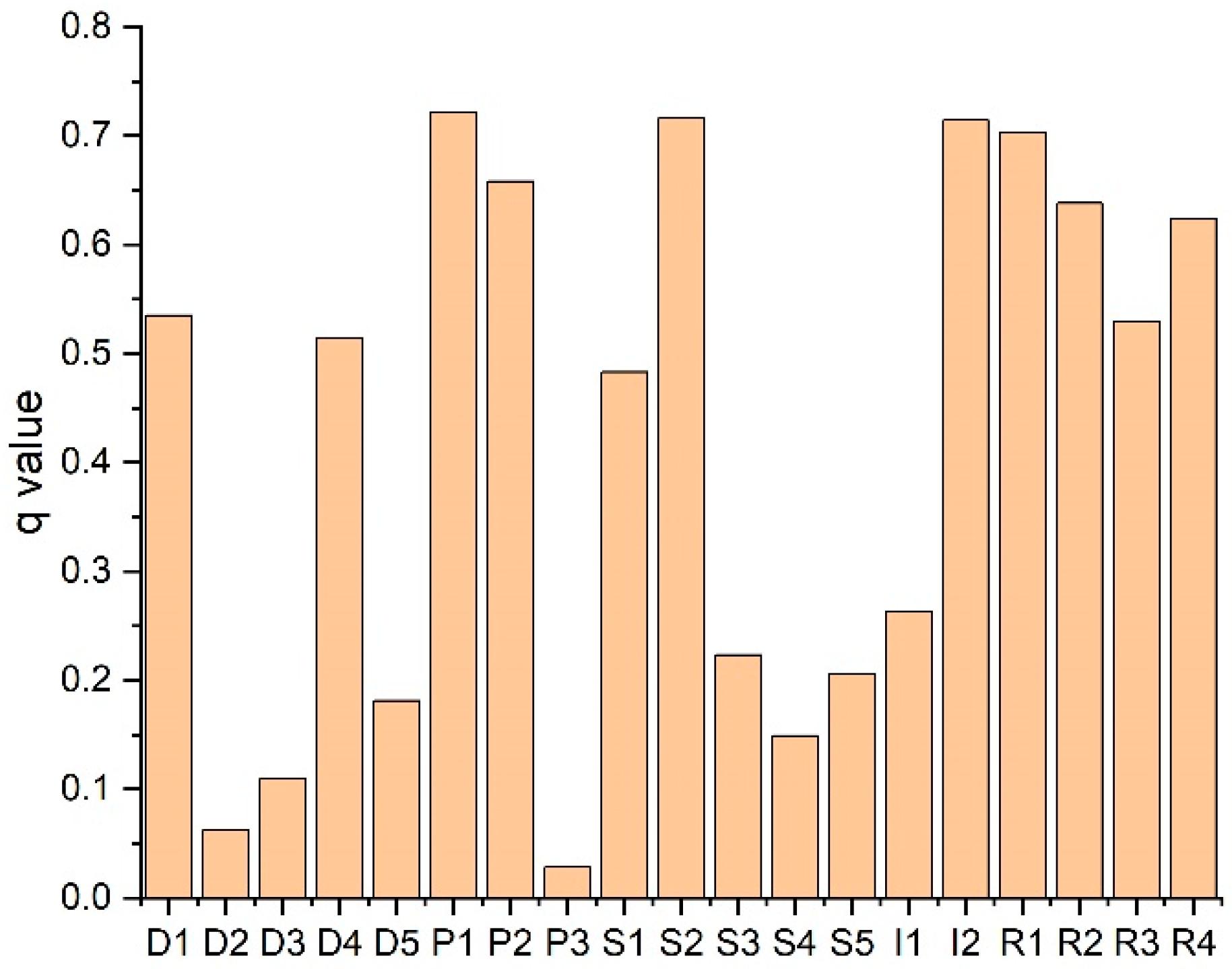
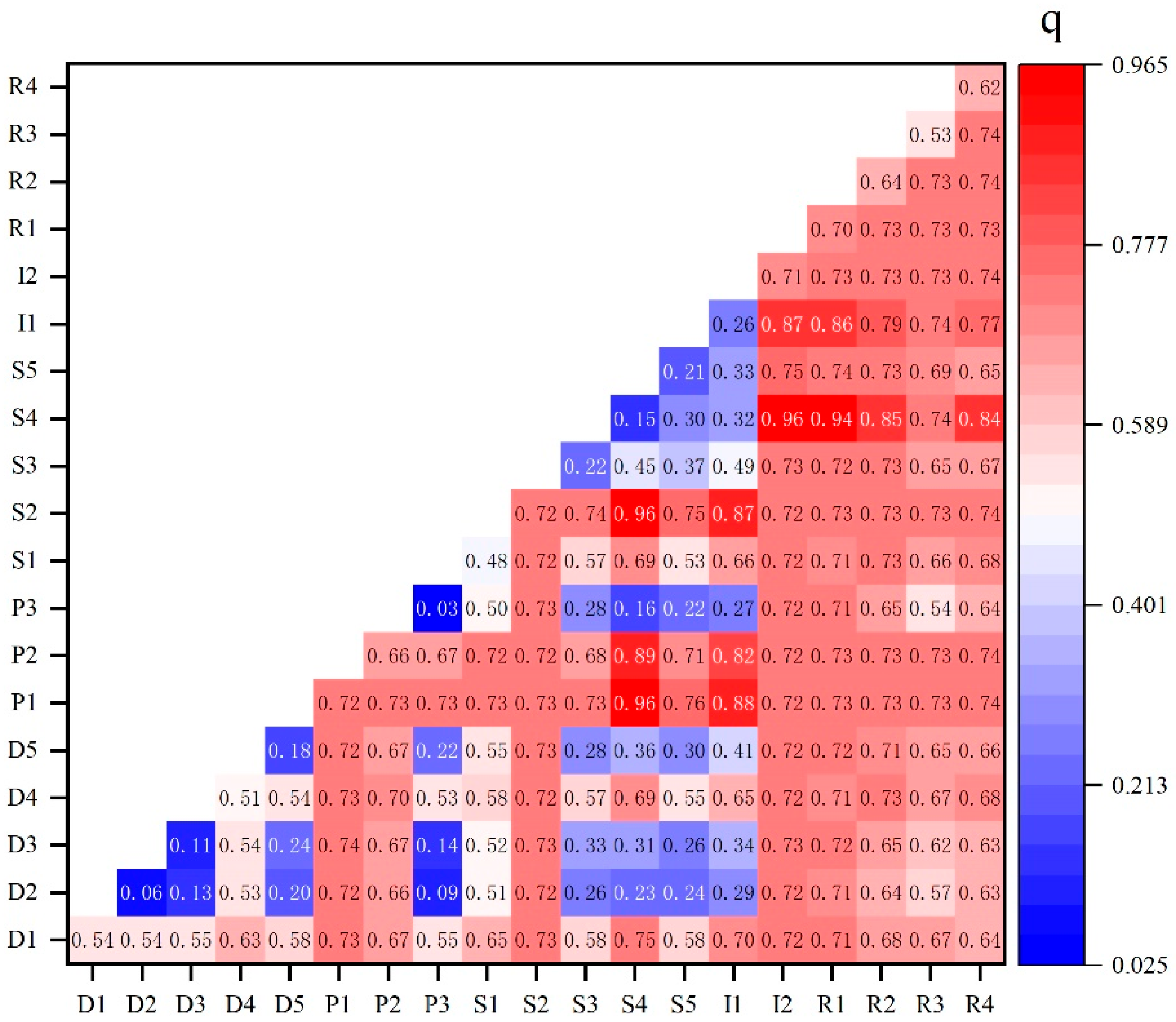
- The Geodetector analysis identified water resources development and utilization rate, per capita water resources, proportion of the tertiary industry, and water use per 10,000 yuan of GDP as the most influential factors governing the spatial heterogeneity of WRR. A key finding is that the interaction of any two factors produced a non-linear enhancement effect, demonstrating that WRR is shaped by complex, synergistic drivers rather than isolated variables. This result strongly advocates for integrated and adaptive management strategies.
- (4)
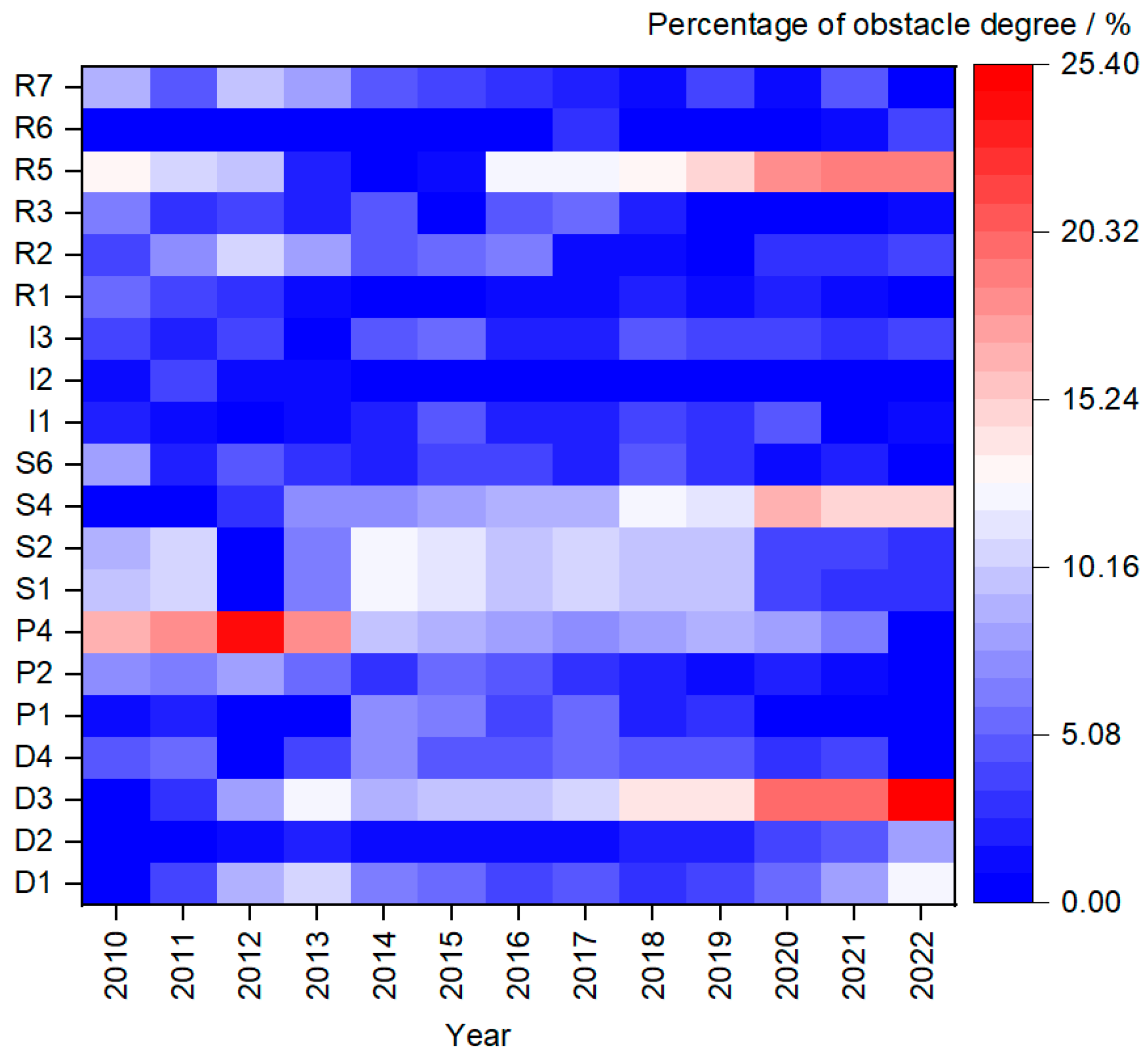
- The obstacle degree model effectively diagnosed distinct primary constraints for different districts and counties. Core urban areas are primarily constrained by high water resources development utilization and low per capita water availability, while northern counties are significantly affected by obstacles associated with water use efficiency, industrial structure, and infrastructure investment. This granular diagnosis provides a solid scientific basis for formulating precise, location-specific resilience enhancement strategies.
Author Contributions
Funding
Data Availability Statement
Acknowledgments
Conflicts of Interest
References
- Rose, A. Economic resilience to natural and man- made disasters: Multidisciplinary origins and contextual dimensions. Environ. Hazards 2007, 7, 383–398. [Google Scholar] [CrossRef]
- Martin, R. Regional economic resilience, hysteresis and recessionary shocks. J. Econ. Geogr. 2012, 12, 1–32. [Google Scholar] [CrossRef]
- Reggiani, A. Network resilience for transport security: Some methodological considerations. Transp. Policy 2013, 28, 63–68. [Google Scholar] [CrossRef]
- Holling, C.S. Resilience and stability of ecological systems. Annu. Rev. Ecol. Syst. 1973, 4, 1–23. [Google Scholar] [CrossRef]
- Morrison, A.; Westbrook, C.; Noble, B. A review of the flood risk management governance and resilience literature. J. Flood Risk Manag. 2018, 11, 291–304. [Google Scholar] [CrossRef]
- Simmie, J.; Martin, R. The economic resilience of regions: Towards an evolutionary approach. Camb. J. Reg. Econ. Soc. 2010, 3, 27–43. [Google Scholar] [CrossRef]
- Marchese, D.; Reynolds, E.; Bates, M.E.; Morgan, H.; Clark, S.S.; Linkov, I. Resilience and sustainability: Similarities and differences in environmental management applications. Sci. Total Environ. 2018, 613–614, 1275–1283. [Google Scholar] [CrossRef] [PubMed]
- Zhang, Q.R.; Ma, H.Z.; Zhu, X.T.; Xu, S.J. The driving effects of ecosystem services on urban ecological resilience in urban agglomeration. Ecosyst. Health Sustain. 2024, 3, 0207. [Google Scholar] [CrossRef]
- Herrera-Franco, G.; Carrion-Mero, P.; Aguilar-Aguilar, M.; Morante-Carballo, F.; Jaya-Montalvo, M.; Morillo-Balsera, M.C. Groundwater resilience assessment in a communal coastal aquifer system: The case of Manglaralto in Santa Elena, Ecuador. Sustainability 2020, 12, 8290. [Google Scholar] [CrossRef]
- Jiao, L.D.; Luo, Z.R.; Han, B.W.; Wu, L.; Huo, X.S.; Zhang, Y.; Wu, Y. Resilient urbanization assessment framework: A new perspective on urban resilience. Urban Clim. 2025, 61, 102481. [Google Scholar] [CrossRef]
- Rahimi, F.; Sadeghi-Niaraki, A.; Ghodousi, M.; Choi, S.M. Spatial-temporal modeling of urban resilience and risk to earthquakes. Sci. Rep. 2025, 15, 8321. [Google Scholar] [CrossRef]
- Sweya, N.L.; Wilkinson, S. A tool for measuring environmental resilience to floods in Tanzania water supply systems. Ecol. Indic. 2020, 112, 106165. [Google Scholar] [CrossRef]
- Sun, J.W.; Sun, X.Y. Research progress of regional economic resilience and exploration of its application in China. Econ. Geogr. 2017, 37, 1–9. [Google Scholar]
- Deng, M.J.; Huang, Q.; Chang, J.X.; Huang, S.Z.; Guo, A.J. The connotation, process and dimension of generalized ecological water conservancy. Adv. Water Sci. 2020, 31, 775–792. [Google Scholar] [CrossRef]
- An, M.; Song, M.F.; He, W.J.; Huang, J.; Fang, X. Evaluate cities’ urban water resources system resilience along a river and identify its critical driving factors. Environ. Sci. Pollut. Res. Int. 2022, 30, 16355–16371. [Google Scholar] [CrossRef]
- Zhao, Z.L.; Yang, Y.F.; Xu, D.M.; Liu, C.M.; Wang, H.R. Resilience evaluation and regulation model of water resources system based on two-level fuzzy comprehensive evaluation and its application. Water Resour. Power 2022, 40, 39–43. [Google Scholar] [CrossRef]
- Yang, Y.F.; Wang, H.R.; Zhao, Y.; Gong, S.X. A three-way decision approach for water resources system resilience evaluation and its application. Water Resour. 2022, 49, 1093–1104. [Google Scholar] [CrossRef]
- Zhou, S.B.; Wang, X.Y.; Tong, J. Resilience analysis of water resources system of the Yangtze River Basin based on pressure-state-response model. J. Econ. Water Resour. 2023, 41, 23–28. [Google Scholar] [CrossRef]
- Hu, Y.; Zaoyang, X.Z.; Lei, J.Y.; Shi, Y.Y.; Chen, Y.L. Research on the construction and spatiotemporal evolution of urban resilience evaluation system in the four major urban areas of Chongqing. Theor. Res. Urban Constr. 2024, 31, 211–215. [Google Scholar] [CrossRef]
- Wang, S.L.; Na, R.; Guo, E.L.; Bu, R.; Te, L.; Cheng, Z.Y.; Bai, J.W. Research on urban resilience evaluation in Inner Mongolia based on entropy weight TOPSIS model. J. Chifeng Univ. (Nat. Sci. Ed.) 2022, 38, 17–21. [Google Scholar] [CrossRef]
- Sun, Q.M.; Gao, M.S.; Hou, G.H.; Liu, Z.L.; Liu, X.G.; Ren, R. Response of hydrodynamics and hydrochemistry at multiple-water quality interfaces to extreme rainfall on a muddy coast. J. Clean. Prod. 2025, 513, 145746. [Google Scholar] [CrossRef]
- Wu, J.R.; Zhou, Y.; Lei, J.Q. Coupling the stormwater management model with long short-term memory networks to predict node overflow. Desalination Water Treat. 2025, 323, 101378. [Google Scholar] [CrossRef]
- Yang, J.; Huang, X. The 30 m annual land cover dataset and its dynamics in China from 1990 to 2019. Earth Syst. Sci. Data 2021, 13, 3907–3925. [Google Scholar] [CrossRef]
- Geng, X.L. Application and comparison of multiple models on agricultural sustainability assessments: A case study of the Yangtze River Delta Urban Agglomeration, China. Sustainability 2021, 13, 121. [Google Scholar] [CrossRef]
- Liu, J.P.; Tian, Y.; Huang, K.; Yi, T. Spatial-temporal differentiation of the coupling coordinated development of regional energy-economy-ecology system: A case study of the Yangtze River Economic Belt. Ecol. Indic. 2021, 124, 107394. [Google Scholar] [CrossRef]
- GB/T 14848-2017; Standard for Groundwater Quality. China Standard Press: Beijing, China, 2017.
- Gu, T.; Ren, P.Y.; Jin, M.Z.; Wang, H. Tourism destination competitiveness evaluation in Sichuan province using TOPSIS model based on information entropy weights. Am. Inst. Math. Sci. 2019, 12, 771–782. [Google Scholar] [CrossRef]
- Wang, J.F.; Li, X.H.; Christakos, G.; Liao, Y.L.; Zhang, T.; Gu, X.; Zheng, X.Y. Geographical detectors-based health risk assessment and its application in the neural tube defects study of the Heshun Region, China. Int. J. Geogr. Inf. Sci. 2010, 24, 107–127. [Google Scholar] [CrossRef]
- Liu, C.; Li, W.; Zhu, G.; Zhou, H.; Yan, H.; Xue, P. Land use/land cover changes and their driving factors in the Northeastern Tibetan Plateau based on Geographical Detectors and Google Earth Engine: A case study in Gannan Prefecture. Remote Sens. 2020, 12, 3139. [Google Scholar] [CrossRef]
- Shamuxi, A.; Han, B.; Jin, X.B.; Wusimanjiang, P.; Abudukerimu, A.; Chen, Q.L.; Zhou, H.T.; Gong, M. Spatial pattern and driving mechanisms of dryland landscape ecological risk: Insights from an integrated geographic detector and machine learning model. Ecol. Indic. 2025, 172, 113305. [Google Scholar] [CrossRef]
- Li, M.R.; Abuduwaili, J.; Liu, W.; Feng, S.; Saparov, G.; Ma, L. Application of geographical detector and geographically weighted regression for assessing landscape ecological risk in the Irtysh River Basin, Central Asia. Ecol. Indic. 2024, 158, 111540. [Google Scholar] [CrossRef]
- Nie, T.; Dong, G.T.; Jiang, X.H.; Lei, Y.X. Spatio-temporal changes and driving forces of vegetation coverage on the Loess Plateau of Northern Shaanxi. Remote Sens. 2021, 13, 613. [Google Scholar] [CrossRef]
- Li, J.H.; Han, Y.P.; Zhao, M.D.; Jiang, Z. Collaborative optimization path of the “water-carbon-ecology” system in the Yellow River Basin: Spatio-temporal evolution and driving factors. Front. Ecol. Evol. 2025, 13, 1586301. [Google Scholar] [CrossRef]
- Tan, Y.M.X.; Zhou, Y.F.; Zhou, H.B.; Gao, L.J.; Shi, L.Y. Analysis of the coordinated development and influencing factors between urban population and environment: A case study of 35 metropolises in China. Sustain. Cities Soc. 2025, 121, 106160. [Google Scholar] [CrossRef]
- Bates, B.C.; Kundzewicz, Z.W.; Wu, S.; Palutikof, J.P. Climate Change and Water; IPCC Secretariat: Geneva, Switzerland, 2008. [Google Scholar]
- Sherif, M.; Liaqat, M.U.; Baig, F.; Al-Rashed, M. Water resources availability, sustainability and challenges in the GCC countries: An overview. Heliyon 2023, 9, e20543. [Google Scholar] [CrossRef]
- Borah, G. Urban water stress: Climate change implications for water supply in cities. Water Conserv. Sci. Eng. 2025, 10, 20. [Google Scholar] [CrossRef]
- O’Connell, E. Towards adaptation of water resource systems to climatic and socio-economic change. Water Resour. Manag. 2017, 31, 2965–2984. [Google Scholar] [CrossRef]
- Li, C.; Ni, J.; Song, Q.C.; Ma, H.W.; Wu, M.J.; Wang, F.G. Suitability and rational utilization strategy of groundwater supply in a typical seawater intrusion area of Dalian. Water Sav. Irrig. 2023, 7, 65–70. [Google Scholar]
- Pahl-Wostl, C. Transitions towards adaptive management of water facing climate and global change. Water Resour. Manag. 2007, 21, 49–62. [Google Scholar] [CrossRef]
- An, Z.Y.; Yan, J.J.; Sha, J.H.; Ma, Y.F.; Mou, S.Y. Dynamic simulation for comprehensive water resources policies to improve water-use efficiency in coastal city. Environ. Sci. Pollut. Res. 2021, 28, 25628–25649. [Google Scholar] [CrossRef] [PubMed]
- Valle-García, Á.; Montilla López, N.M.; Parrado, R.; Berbel, J.; Martínez-Dalmau, J.; Kahil, T.; Gutiérrez-Martín, C. Integrated assessment of resilience to drought by coupling hydro-economic and macroeconomic models. J. Hydrol. 2025, 661, 133549. [Google Scholar] [CrossRef]
- Sivapalan, M.; Blöschl, G. Time scale interactions and the coevolution of humans and water. Water Resour. Res. 2015, 51, 6988–7022. [Google Scholar] [CrossRef]
- Zhang, Q.; Wang, B.D.; Cao, M.L. Analysis of water resource utilization change based on factor decomposition model. J. Nat. Resour. 2011, 26, 1209–1216. [Google Scholar] [CrossRef]
- Cambra, M.M.P.; Santafé, M.D.M.; Cladera, J.R. Exploring the mitigation of compound events in Barcelona: Urban water scarcity, flood risk and reduction of surface temperatures through water-sensitive urban design. Urban Clim. 2025, 59, 102298. [Google Scholar] [CrossRef]
- Chen, Z.D.; Qiu, B.X.; Chen, H. Research on resiliency level promotion and robustness strategy of resilient city system: From complex adaptive system (CAS) perspective. Urban Stud. 2021, 28, 1–9. [Google Scholar] [CrossRef]



| Type | Description | Data Sources |
|---|---|---|
| Water resources data | Including data on water resources quantity, total water usage, and water usage structure. | Dalian Water Resources Bulletin, Dalian Water Resources Investigation and Assessment Report |
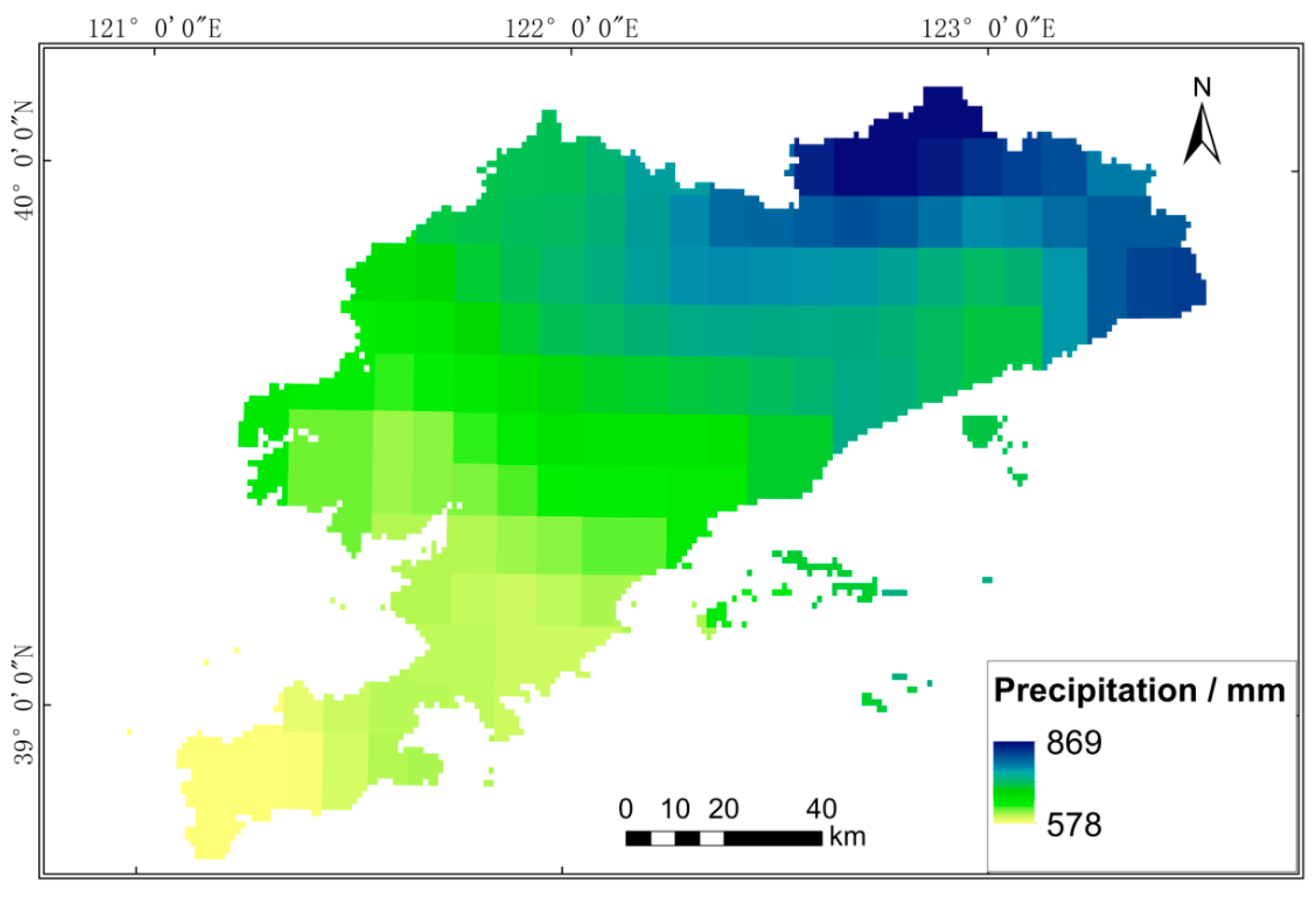
| Meteorological data | Including data on precipitation and extreme weather events, such as extreme high and low temperatures. | China Meteorological Data Service Center (https://data.cma.cn) |
| Land use data | Land use data with 30 m spatial resolution, providing the construction land and water area data required for this study | the annual China Land Cover Dataset [23] |
| NDVI data | At a spatial resolution of 1 km | Resource and Environmental Science Data Platform (https://www.resdc.cn/Default.aspx (accessed on 2 March 2025)) |
| GDP data | At a spatial resolution of 1 km in 2020, the GDP statistical data | Resource and Environmental Science Data Platform (https://www.resdc.cn/Default.aspx); Dalian Statistical Yearbook |
| Population data | Population density data with 1 km spatial resolution, Population density statistics | Worldpop Center (https://hub.worldpop.org/), Dalian Statistical Yearbook |
| Seawater intrusion data | The distribution and area of seawater intrusion. | Dalian City Hydrogeological and Engineering Geological Survey and Assessment Project, Dalian City Seawater Intrusion Zoning Map (1:250,000) |
| Water quality data | Groundwater quality, Water quality compliance rate | Observation Data from Groundwater Monitoring Wells in China, Dalian Statistical Yearbook |
| Other statistical data | Including the proportion of the tertiary industry in GDP, grain production, urban sewage treatment rate, water supply coverage rate, length of water supply and drainage networks in built-up areas, fixed-asset investment, etc. | Dalian Statistical Yearbook |
| Target Layer | Criteria Layer | Indicator Focus | Indicator Layer | Meaning of Index | Unit | Attribute | Time | Space |
|---|---|---|---|---|---|---|---|---|
| Water resources resilience (WRR) | Driving force (D) | Economic development | GDP per capita [D1] | The ratio of a region’s gross domestic product (GDP) to its total population. | Yuan/ person | Negative | √ | √ |
| Population agglomeration | Population density [D2] | The number of people living per unit of land area. | persons/ km2 | Negative | √ | √ | ||
| Urbanization process | Proportion of built-up area [D3] | The percentage of land area occupied for construction purposes. | % | Negative | √ | √ | ||
| Climate change | Annual precipitation [D4] | Annual precipitation in a region. | mm | Positive | √ | √ | ||
| Meteorological disaster grade [D5] | A classification based on the intensity, spatial extent, and duration of meteorological disasters. | % | Negative | × | √ | |||
| Pressure (P) | Water resources exploitation intensity | Water resources development and utilization rate [P1] | The ratio of the total annual water withdrawal to the total annual water resources in a region. | % | Negative | √ | √ | |
| Proportion of groundwater utilization [P2] | The share of groundwater extraction in the total water consumption. | % | Negative | √ | √ | |||
| Seawater intrusion | Seawater intrusion degree [P3] | The extent to which seawater has advanced into continental freshwater aquifers, often measured by indicators like groundwater chloride concentration. | Unitless | Negative | × | √ | ||
| Seawater intrusion area [P4] | The geographical area affected by seawater intrusion. | km2 | Negative | √ | × | |||
| State (S) | Water quantity | Water resources modulus [S1] | The amount of water resources per unit area. | 10,000 m3/km2 | Positive | √ | √ | |
| Per capita water resources [S2] | The ratio of total water resources to the total population. | m3/person | Positive | √ | √ | |||
| Groundwater level depth [S3] | The vertical distance from the land surface to the groundwater table. | m | Positive | × | √ | |||
| Water ecology | Proportion of water area [S4] | The percentage of a region’s total area covered by water bodies. | % | Positive | √ | √ | ||
| Water quality | Groundwater quality categories [S5] | A classification of groundwater quality according to national standards. | Unitless | Negative | × | √ | ||
| Water quality compliance rate [S6] | The percentage of monitored water quality sections that meet predetermined water quality standards. | % | Positive | √ | × | |||
| Impact (I) | Ecosystem | Normalized Difference Vegetation Index (NDVI) [I1] | A normalized difference vegetation index calculated from remote sensing data. | Unitless | Positive | √ | √ | |
| Socio-economic system | Proportion of the tertiary industry in GDP [I2] | The share of the value-added from the tertiary industry in the GDP. | % | Positive | √ | √ | ||
| Per capita Grain production [I3] | The ratio of total grain production to the total population. | kg/person | Positive | √ | × | |||
| Response (R) | Water resources management | Water use per 10,000 yuan of GDP [R1] | The amount of water consumed to generate every 10,000 Yuan of GDP. | m3/10,000 Yuan | Negative | √ | √ | |
| Per capita domestic water use [R2] | The average annual water consumption per person for domestic activities. | m3/(person·year) | Negative | √ | √ | |||
| Urban sewage treatment rate [R3] | The proportion of urban sewage that is treated before discharge. | % | Positive | √ | √ | |||
| Infrastructure construction | Fixed-asset investment per unit area [R4] | The amount of fixed asset investment per unit of land area. | 10,000 Yuan/km2 | Positive | × | √ | ||
| Investment per unit area in water conservancy, environment, and public facilities [R5] | The amount of investment in water conservancy, environment, and public facilities per unit of land area. | 10,000 Yuan/km2 | Positive | √ | × | |||
| Government financial investment | Water supply coverage rate [R6] | The percentage of the population with access to centralized water supply services. | % | Positive | √ | × | ||
| Density of water supply and drainage pipelines in built-up areas [R7] | The total length of water supply and drainage pipelines per unit area within urban built-up areas. | km/km2 | Positive | √ | × |
| Classification | WRRI |
|---|---|
| Low | 0–0.3 |
| Moderately low | 0.3–0.5 |
| Moderately high | 0.5–0.7 |
| High | 0.7–1 |
Disclaimer/Publisher’s Note: The statements, opinions and data contained in all publications are solely those of the individual author(s) and contributor(s) and not of MDPI and/or the editor(s). MDPI and/or the editor(s) disclaim responsibility for any injury to people or property resulting from any ideas, methods, instructions or products referred to in the content. |
© 2025 by the authors. Licensee MDPI, Basel, Switzerland. This article is an open access article distributed under the terms and conditions of the Creative Commons Attribution (CC BY) license.
Share and Cite
Gao, M.; Yang, N.; Wang, Y.; Liu, Q. Research on the Evaluation Method of Urban Water Resources Resilience Based on the DPSIR Model: A Case Study of Dalian City. Water 2026, 18, 72. https://doi.org/10.3390/w18010072
Gao M, Yang N, Wang Y, Liu Q. Research on the Evaluation Method of Urban Water Resources Resilience Based on the DPSIR Model: A Case Study of Dalian City. Water. 2026; 18(1):72. https://doi.org/10.3390/w18010072
Chicago/Turabian StyleGao, Mengmeng, Nan Yang, Yi Wang, and Qiong Liu. 2026. "Research on the Evaluation Method of Urban Water Resources Resilience Based on the DPSIR Model: A Case Study of Dalian City" Water 18, no. 1: 72. https://doi.org/10.3390/w18010072
APA StyleGao, M., Yang, N., Wang, Y., & Liu, Q. (2026). Research on the Evaluation Method of Urban Water Resources Resilience Based on the DPSIR Model: A Case Study of Dalian City. Water, 18(1), 72. https://doi.org/10.3390/w18010072